- Mature height
- This refers to a pruned topiary form. Naturally, Ficus microcarpa (often used for this) can grow 10m to 20m+ (approx.). The actual height depends on pruning.
- Mature width
- 1m to 2m
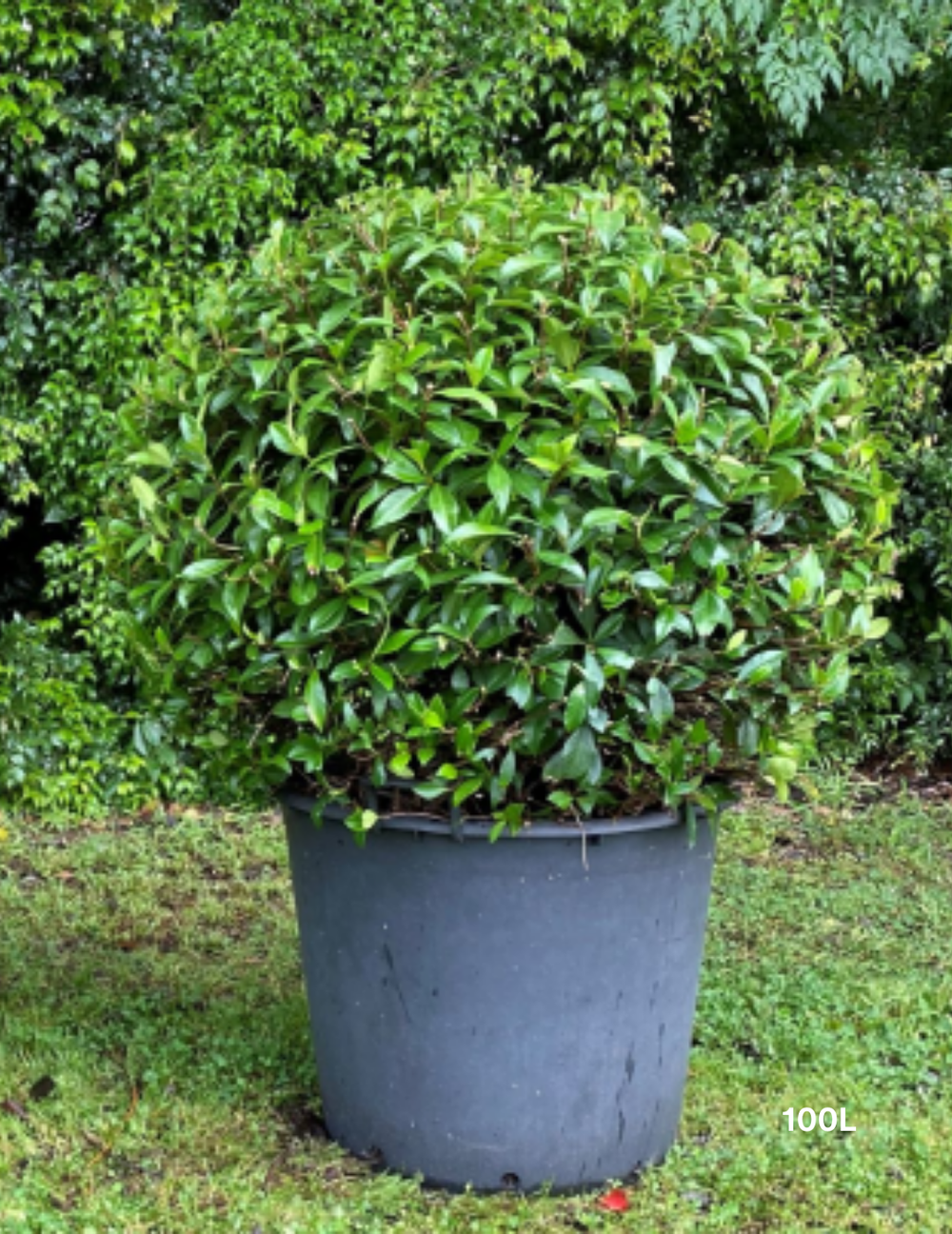
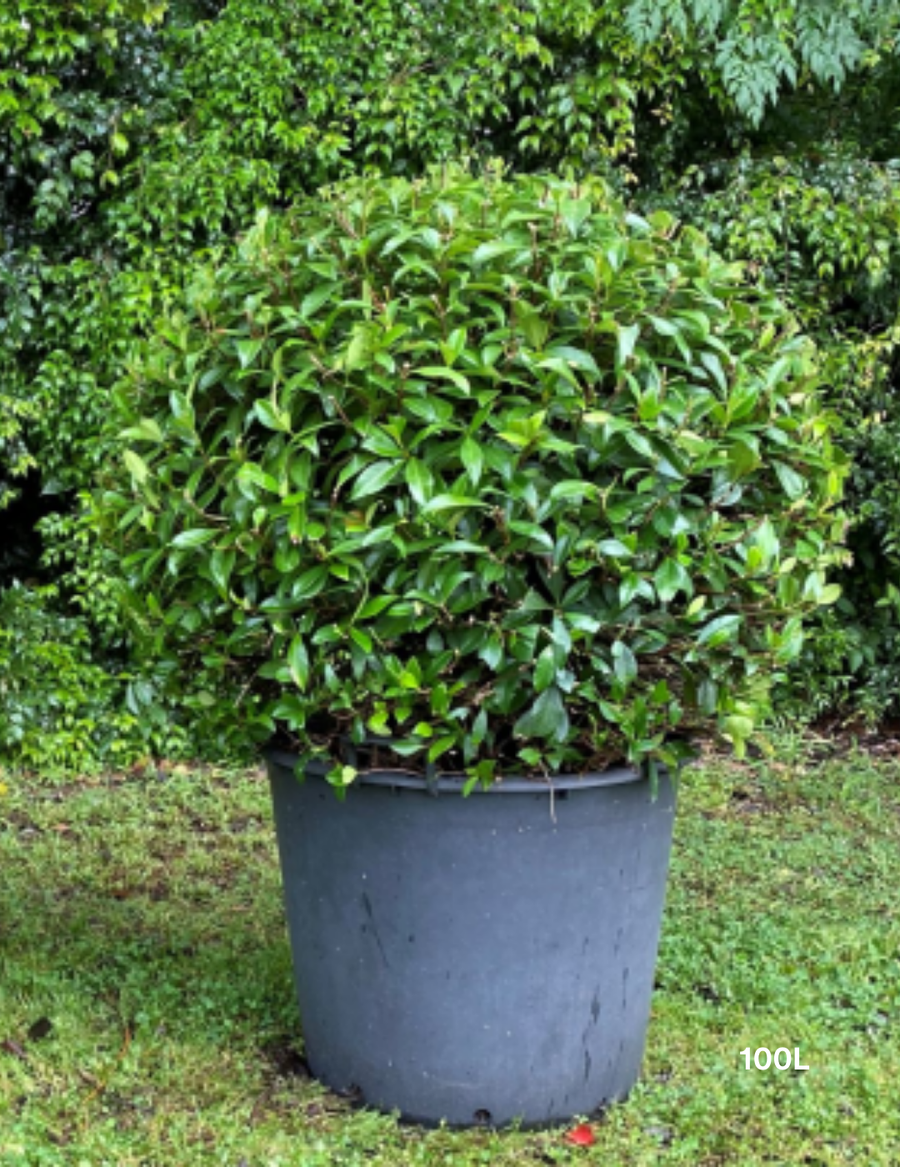
Ficus microcarpa 'Cloud' is an evergreen fig trained into tiered pads of dense glossy foliage, a style borrowed from Japanese cloud pruning. Small rounded leaves sit tight along sculpted branches above a clear trunk, so the plant reads as a piece of green architecture rather than an ordinary shade tree.
It takes full sun to part shade, tolerates most soils and shrugs off heat, wind and reflected glare in built up areas. Moderate drought tolerance follows establishment. Growth of roughly 30 to 50 centimetres a year needs trimming back two or three times through the warmer months to keep the tiers clean.
Standing 2.5 to 4.5 metres tall and 1 to 2 metres wide, it fits courtyards, entry statements, pool surrounds and civic forecourts where a narrow specimen has to carry the space. The roots are vigorous, so keep it clear of pipes and paving or grow it in a large planter.
Frequently Asked Questions
About Ficus Cloud
What is a Ficus Cloud?
Ficus Cloud is Ficus microcarpa trained by repeated pruning into distinct rounded pads of foliage, a technique known as cloud pruning. The plant is an evergreen fig with small glossy leaves, also sold as Chinese Banyan. The tiers are created and held by the grower, they are not a natural growth habit.
How big does Ficus Cloud grow?
As a trained specimen it stands 2.5 to 4.5 metres tall and 1 to 2 metres wide. That narrow footprint is the appeal, since it delivers height in a tight courtyard without a wide canopy. Left entirely unpruned the underlying species grows far larger, so ongoing trimming is what defines the final size.
Is it evergreen?
Yes, it holds glossy foliage year round with no leafless season, which is why it works as a permanent structural element. Some leaf drop happens after transplanting or a sudden change in light or temperature, and the plant refoliates quickly once it settles. It rarely flowers in any noticeable way.
Does it need sun or shade?
Full sun to part shade both work. Full sun gives the densest pads and the strongest leaf colour, while part shade produces slightly softer, looser growth. It copes with reflected heat off paving and walls, so hot courtyards and pool surrounds are well within range. Deep shade thins the tiers noticeably.
Is it frost tolerant?
Not particularly. Ficus microcarpa is a subtropical species and frost burns the foliage, especially on young plants, so it is best kept to frost free coastal, subtropical and warm temperate positions. In cooler districts grow it in a large planter against a north facing wall where it can be sheltered.
Does it have invasive roots?
Yes. Figs are known for vigorous surface and subsurface roots that seek out moisture, and Ficus microcarpa is no exception. Keep it several metres clear of sewer lines, tanks, pool shells and paved edges, or plant it into a large above ground container where the root run stays contained.
How do I maintain the cloud shape?
Trim two or three times through the warmer months, cutting new shoots back to the outline of each pad rather than shearing the whole plant. Clear any growth appearing between the tiers or along the trunk. Water regularly, feed in spring, and check underneath the foliage for scale and mealybug.