Lagerstroemia indica 'Acoma' - Dwarf White Crepe Myrtle
Lagerstroemia indica 'Acoma' - Dwarf White Crepe Myrtle
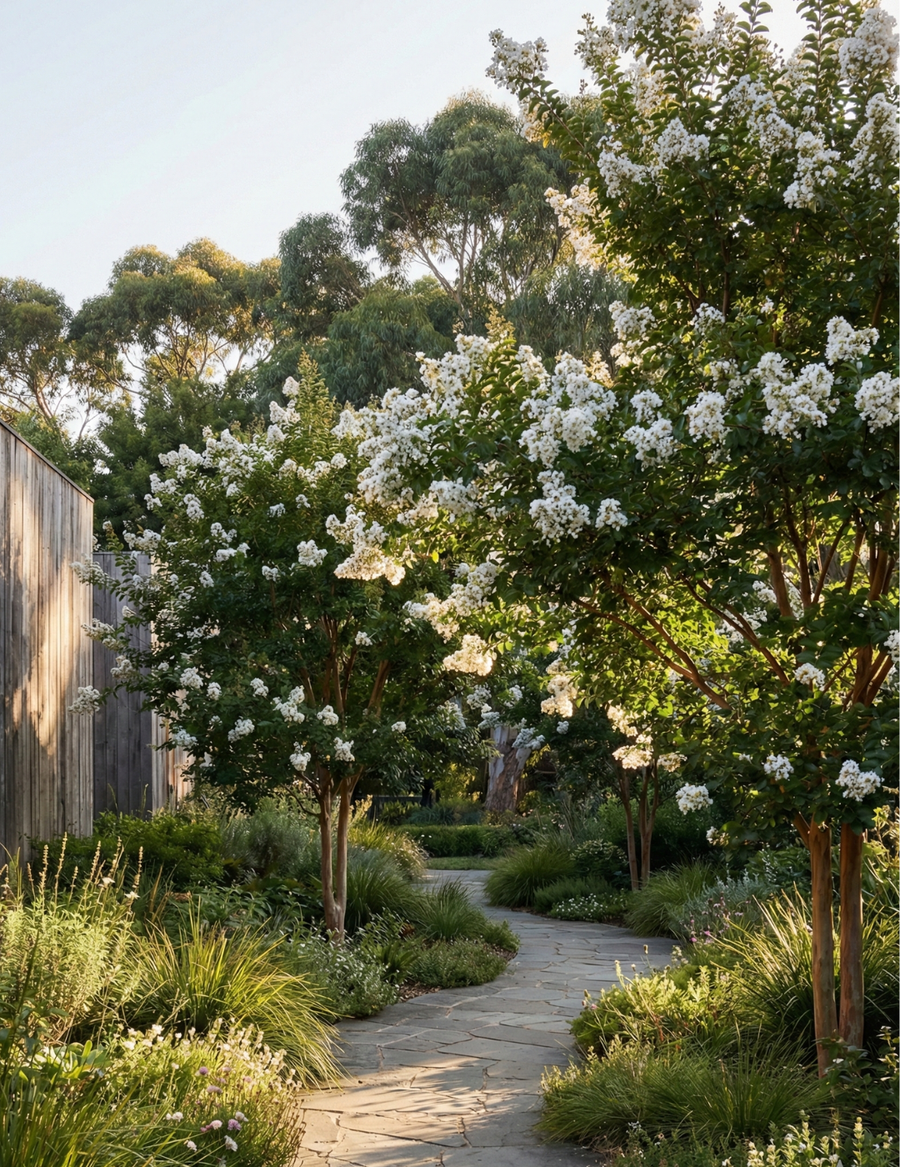
Most loved for its compact dwarf form, masses of white summer flowers, and golden autumn foliage, making it ideal for smaller gardens and courtyards.
Regular price
$280.00
Sale price
$280.00
Regular price
Tax included.
Shipping calculated at checkout.
Pot size
Available batches
- Current height guide
- Please enquire
- Pot size
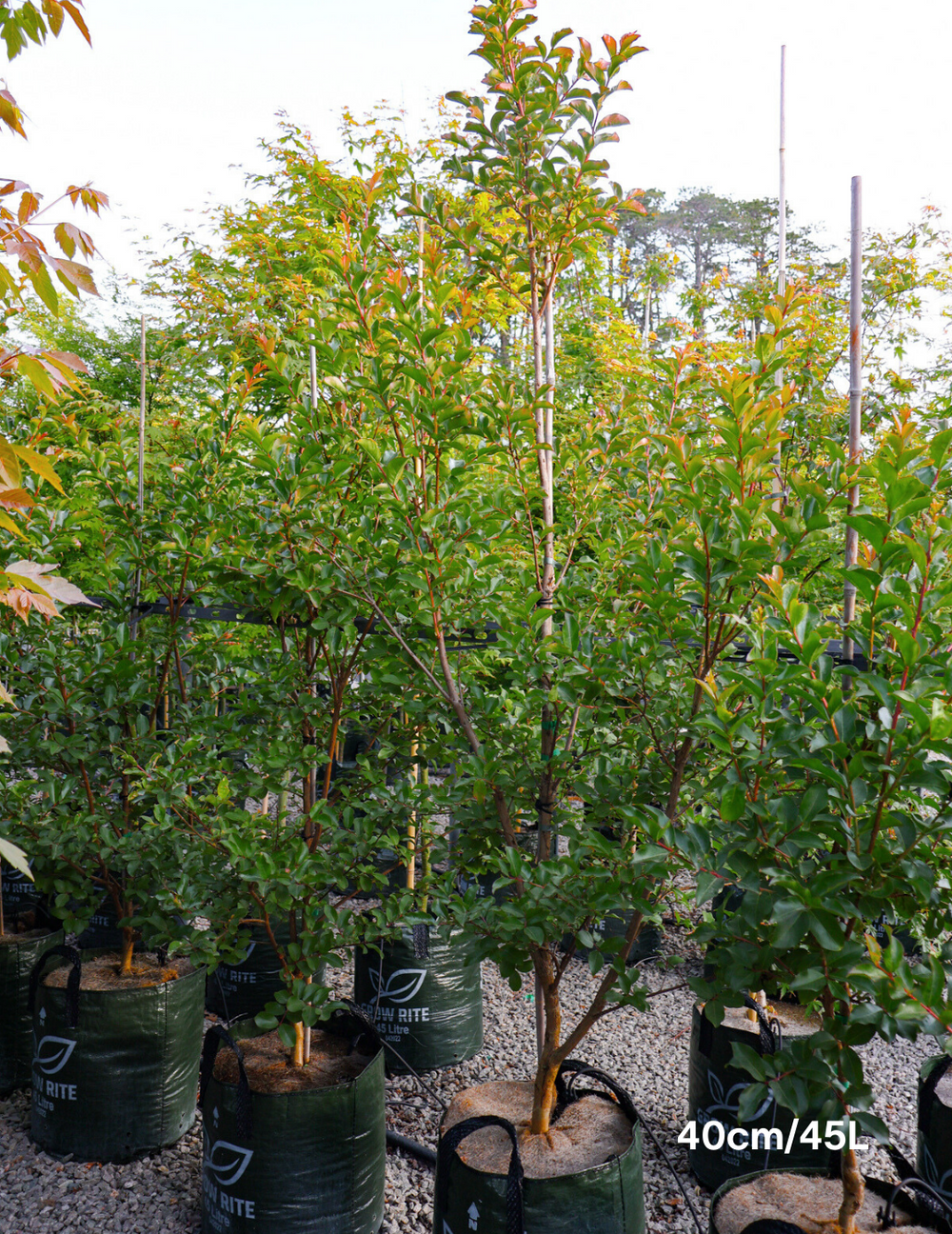
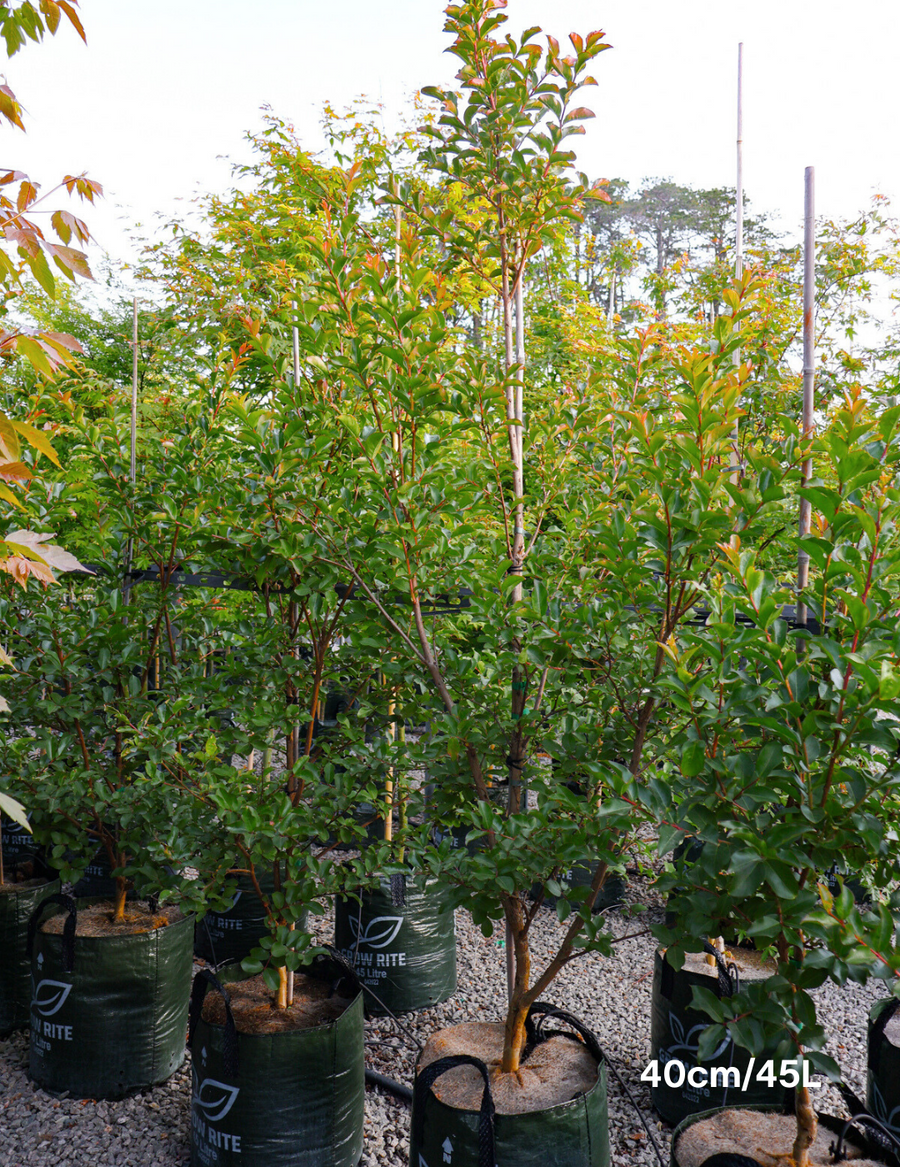
- 40cm/45L
Approximate only. Minimum height important? Confirm with us.
Height guide & disclaimer
Height guide disclaimer: Height ranges are approximate only. As living products, plant heights naturally vary between individual plants, batches, and seasons. No guarantee is given that supplied plants will fall within the stated range. If minimum heights are required, you must confirm current batch heights with Evergreen Trees Direct prior to purchase. Variation in height is normal and is not grounds for return, refund, replacement, or compensation.
Quantity
Couldn't load pickup availability
About this tree
About this tree
- Mature height
- 2m to 3m (approx.)
- Mature width
- 2m to 3m
Lagerstroemia indica 'Acoma' carries masses of pure white crepe-textured flowers through summer on a semi-weeping frame, giving one of the longest flowering displays available in a tree this size. Autumn brings warm golden foliage, and winter reveals smooth mottled cinnamon bark on bare stems.
'Acoma' is a genuine dwarf, growing to 2 to 3 metres tall and 2 to 3 metres wide at 30 to 60 centimetres per year. That compact scale makes it one of the few flowering feature trees that works properly in a courtyard, a small front garden, a narrow nature strip or a large pot without outgrowing the space.
'Acoma' is frost hardy, surviving heavy and frequent frost without damage, and thrives in full sun across most of southern and eastern Australia. It is mildew resistant, drops cleanly, and needs very little beyond an annual winter prune to keep flowering heavily.
Frequently Asked Questions
About Lagerstroemia indica 'Acoma'
How tall does Lagerstroemia indica 'Acoma' grow?
'Acoma' is a dwarf crepe myrtle growing to 2 to 3 metres tall and 2 to 3 metres wide. It is the smallest of the commonly grown white crepe myrtles and suits courtyards and small gardens.
When does 'Acoma' flower?
'Acoma' flowers through summer, carrying masses of pure white crepe-textured blooms for many weeks. It is one of the longest flowering small trees available in Australia.
Is 'Acoma' deciduous?
Yes. 'Acoma' is fully deciduous. Foliage turns golden through autumn before dropping, exposing smooth mottled cinnamon-coloured bark that is a feature in its own right through winter.
Is 'Acoma' frost hardy?
Yes. 'Acoma' is frost hardy and survives heavy and frequent frost without damage, which makes it suitable for inland tablelands districts as well as coastal gardens.
Can 'Acoma' be grown in a pot?
Yes. Its dwarf size makes it well suited to large pots on patios and courtyards. Use a free-draining mix, keep it in full sun, and water consistently through the flowering period.
How far apart should I plant 'Acoma'?
Plant 3 to 4 metres apart as individual feature trees to allow the canopy to develop, or 3 metres apart for a small-scale avenue along a driveway or path.
When should I prune 'Acoma'?
Prune in late winter while the tree is bare, removing spent flower heads and thin interior growth. Crepe myrtles flower on new wood, so a winter prune directly increases the following summer's display.
Mature height & width
Mature height & width
- Mature height
- 2m to 3m (approx.)
- Mature width
- 2m to 3m
Pot sizes & dimensions
Pot sizes & dimensions
| Pot / bag size | Width | Depth |
|---|---|---|
| 30cm Pot | 33cm | 30cm |
| 40cm/45L Pot | 44cm | 41.5cm |
| 50cm Pot / 70L Pot | 55cm | 41.8cm |
| 100L Bag | 50.6cm | 52.8cm |
| 150L Bag | 66cm | 55cm |
| 200L Bag | 71.5cm | 60.5cm |
| 300L Bag | 88cm | 63.8cm |
| 400L Bag | 99cm | 66cm |
| 500L Bag | 122cm | 66cm |
| 750L Bag | 134cm | 69cm |
| 1000L Bag | 146.3cm | 71.5cm |
| 2000L Bag | 176cm | 82.5cm |
General planting reference from our existing size guide. Actual containers can vary by supplier and batch; confirm exact dimensions if required.
Delivery & pickup
Delivery & pickup
Trade enquiries
Trade enquiries
We supply advanced trees to landscapers, developers, architects, and councils Australia-wide. Trade clients receive fast quotes, expert advice, and access to premium stock with reliable freight.
Freight estimate
Based on the items currently in your cart.
Final delivery cost is confirmed at checkout using your full address.
About Lagerstroemia indica 'Acoma'
Lagerstroemia indica 'Acoma' carries masses of pure white crepe-textured flowers through summer on a semi-weeping frame, giving one of the longest flowering displays available in a tree this size. Autumn brings warm golden foliage, and winter reveals smooth mottled cinnamon bark on bare stems.
'Acoma' is a genuine dwarf, growing to 2 to 3 metres tall and 2 to 3 metres wide at 30 to 60 centimetres per year. That compact scale makes it one of the few flowering feature trees that works properly in a courtyard, a small front garden, a narrow nature strip or a large pot without outgrowing the space.
'Acoma' is frost hardy, surviving heavy and frequent frost without damage, and thrives in full sun across most of southern and eastern Australia. It is mildew resistant, drops cleanly, and needs very little beyond an annual winter prune to keep flowering heavily.
Frequently Asked Questions
About Lagerstroemia indica 'Acoma'
How tall does Lagerstroemia indica 'Acoma' grow?
'Acoma' is a dwarf crepe myrtle growing to 2 to 3 metres tall and 2 to 3 metres wide. It is the smallest of the commonly grown white crepe myrtles and suits courtyards and small gardens.
When does 'Acoma' flower?
'Acoma' flowers through summer, carrying masses of pure white crepe-textured blooms for many weeks. It is one of the longest flowering small trees available in Australia.
Is 'Acoma' deciduous?
Yes. 'Acoma' is fully deciduous. Foliage turns golden through autumn before dropping, exposing smooth mottled cinnamon-coloured bark that is a feature in its own right through winter.
Is 'Acoma' frost hardy?
Yes. 'Acoma' is frost hardy and survives heavy and frequent frost without damage, which makes it suitable for inland tablelands districts as well as coastal gardens.
Can 'Acoma' be grown in a pot?
Yes. Its dwarf size makes it well suited to large pots on patios and courtyards. Use a free-draining mix, keep it in full sun, and water consistently through the flowering period.
How far apart should I plant 'Acoma'?
Plant 3 to 4 metres apart as individual feature trees to allow the canopy to develop, or 3 metres apart for a small-scale avenue along a driveway or path.
When should I prune 'Acoma'?
Prune in late winter while the tree is bare, removing spent flower heads and thin interior growth. Crepe myrtles flower on new wood, so a winter prune directly increases the following summer's display.
- Foliage
Deciduous (Defoliates throughout colder months)
- Position
- Form
- Use
- Mature height
- 2m to 3m (approx.)
- Mature width
- 2m to 3m
Planting Information
Recommended Planting Spacing For Your Lagerstroemia indica 'Acoma' - Dwarf White Crepe Myrtle
Lagerstroemia indica 'Acoma' - Dwarf White Crepe Myrtle is expected to grow 30cm to 60cm per year (approx.).
Long Term Care For Your Lagerstroemia indica 'Acoma' - Dwarf White Crepe Myrtle
Planting Your Lagerstroemia indica 'Acoma' - Dwarf White Crepe Myrtle in Different Soil
Uses in my Garden
Uses in my Garden
Lagerstroemia indica 'Acoma' - Dwarf White Crepe Myrtle works in an:
Is Lagerstroemia indica 'Acoma' - Dwarf White Crepe Myrtle Evergreen or Deciduous?
Lagerstroemia indica 'Acoma' - Dwarf White Crepe Myrtle is an Deciduous (Defoliates throughout colder months) Tree
Mature Height & Width
Mature Height: 2m to 3m (approx.)
Mature Width: 2m to 3m
Lagerstroemia indica 'Acoma' - Dwarf White Crepe Myrtle is expected to grow 30cm to 60cm per year (approx.).
Growth Rate of Lagerstroemia indica 'Acoma' - Dwarf White Crepe Myrtle
Lagerstroemia indica 'Acoma' - Dwarf White Crepe Myrtle is expected to grow 30cm to 60cm per year (approx.).
They are considered to have a:
Frost Tolerance & Ideal Climate to plant Lagerstroemia indica 'Acoma' - Dwarf White Crepe Myrtle
Is Lagerstroemia indica 'Acoma' - Dwarf White Crepe Myrtle frost tolerant?
Lagerstroemia indica 'Acoma' - Dwarf White Crepe Myrtle is Frost Hardy – Survives heavy and frequent frost without damage.
Does Lagerstroemia indica 'Acoma' - Dwarf White Crepe Myrtle Flower?
Lagerstroemia indica ‘Acoma’ produces abundant clusters of pure white, softly crinkled flowers from mid-summer into early autumn. These graceful panicles arch elegantly over the branches, creating a long-lasting and luminous seasonal display that pairs beautifully with its smooth, mottled bark.
Does Lagerstroemia indica 'Acoma' - Dwarf White Crepe Myrtle flower?
Flowering Period:
Flower Type:
Flower Colour:
White
Is Lagerstroemia indica 'Acoma' - Dwarf White Crepe Myrtle an Australian Native Tree?
No
Lagerstroemia indica 'Acoma' - Dwarf White Crepe Myrtle is Native to China and Korea, where Lagerstroemia indica originates, thriving in warm temperate and subtropical regions.
What is the Wildlife Value of Lagerstroemia indica 'Acoma' - Dwarf White Crepe Myrtle ?
Its nectar-rich blooms attract bees, butterflies, hoverflies and other key pollinators throughout summer. The branching structure also provides perching and shelter for small birds, while the exfoliating bark subtly supports insects that contribute to overall garden biodiversity.
How much Sunlight does Lagerstroemia indica 'Acoma' - Dwarf White Crepe Myrtle need?
Lagerstroemia indica 'Acoma' - Dwarf White Crepe Myrtle will thrive best in:
Preferred Soil?
Lagerstroemia indica ‘Acoma’ performs best in well-drained sandy or loam soils and tolerates slightly acidic to slightly alkaline conditions. It may struggle in poorly drained clay unless improved with organic matter and coarse material to enhance aeration. Keep soil evenly moist during establishment, then transition to deep, occasional watering as it matures to support its excellent drought resilience, smooth bark texture and prolific summer flowering.
Is Lagerstroemia indica 'Acoma' - Dwarf White Crepe Myrtle Drought Tolerant?
Is Lagerstroemia indica 'Acoma' - Dwarf White Crepe Myrtle Drought tolerant?
As a young plant it requires regular watering, but once established ‘Acoma’ develops excellent drought tolerance. Compact and hardy, it thrives in hot, dry and coastal environments and maintains reliable flowering with only occasional deep watering during extended dry periods.
Frequently Asked Questions
Frequently Asked Questions
Compare sizes side by side
40cm/45L
Enquire for current heights
100L
Enquire for current heights
150L
Enquire for current heights
Heights are approximate and vary between individual trees.
Lagerstroemia indica 'Acoma' is loved for its compact dwarf form, masses of white summer flowers, and golden autumn foliage, making it ideal for smaller gardens and courtyards.
We take pride in supplying A+ grade advanced trees. When stock at our farm is not yet ready, we work with our trusted trade suppliers to source the best available trees for your garden.
Plant Your Lagerstroemia indica 'Acoma' - Dwarf White Crepe Myrtle With:
Enriched Planting Mix (AO Certified)
Enriched Planting Mix is a certified organic blend of Pure Magic Compost, composted animal manure, gypsum, composted coarse bark and a wetting agent, bagged in 30L. It is built to be dug through existing garden soil at planting time rather than used on its own, and the gypsum is what sets it apart from a plain compost.
Gypsum helps break up heavy clay so water and roots can move through it, while the compost and manure return organic matter and nutrient to tired ground. The coarse bark holds structure and keeps air around the root zone, and the wetting agent keeps moisture in the soil longer after rain or watering.
Use it when planting trees, shrubs, roses, fruit trees and exotic garden plants, particularly into clay. Dig a hole twice the width of the pot and 7 centimetres deeper, then mix roughly one third planting mix through the excavated soil. Spread 7 centimetres of that improved soil in the base before setting the plant in.
Frequently Asked Questions
About Enriched Planting Mix
What is Enriched Planting Mix made from?
It is a blend of Pure Magic Compost, composted animal manure, gypsum, composted coarse bark and a wetting agent. Each part has a job. The compost and manure supply organic matter and nutrient, the gypsum works on clay structure, the bark keeps air around the roots and the wetting agent holds moisture in the soil.
What plants is it suitable for?
It suits exotic garden plants, including roses, ornamental and deciduous trees, fruit trees, shrubs and perennials, and it earns its keep most on heavy clay sites. It is a planting mix rather than a potting mix, so its job is improving soil at planting time. Phosphorus sensitive natives are the one clear exception.
Is it safe for natives?
No, not for the phosphorus sensitive ones. The composted animal manure in this blend lifts phosphorus well above what Proteaceae such as Banksia, Grevillea, Hakea and Protea will tolerate, and the result can be leaf burn, dieback and plant death. Use the Native Potting Mix for those species, or plant them into unimproved local soil.
Is it certified organic?
Yes. It is a certified organic product with no chemical additives, which is why the manure and compost in it are fully composted rather than raw. That makes it sound around fruit trees and vegetable beds, and it means you are adding genuine organic matter to your soil rather than a synthetic conditioner.
How much do I need?
Work on roughly one third planting mix to two thirds of the soil you dug out of the hole. For a shrub out of a 200 millimetre pot that is only a few litres. An advanced tree going into a large hole will take considerably more. Judge the quantity by the volume of the hole rather than the size of the plant.
Can I use it in pots?
It is not a potting mix and should not be used on its own in a container. The blend is designed to be diluted through garden soil, and used straight in a pot it holds too much water and settles badly. For containers, reach for a premium potting mix, or the native mix if you are potting natives.
Does it need to be watered in?
Yes. Water the plant well several hours before you plant it, then water thoroughly again once the hole is backfilled and the soil firmed down. That first deep watering settles the improved soil around the root ball and drives out air pockets. Keep the water up over the first few months while the roots establish.

Enriched Planting Mix (AO Certified)
Enriched Planting Mix (AO Certified)
Enriched Planting Mix is a certified organic blend of Pure Magic Compost, composted animal manure, gypsum, composted coarse bark and a wetting agent, bagged in 30L. It is built to be dug through existing garden soil at planting time rather than used on its own, and the gypsum is what sets it apart from a plain compost.
Gypsum helps break up heavy clay so water and roots can move through it, while the compost and manure return organic matter and nutrient to tired ground. The coarse bark holds structure and keeps air around the root zone, and the wetting agent keeps moisture in the soil longer after rain or watering.
Use it when planting trees, shrubs, roses, fruit trees and exotic garden plants, particularly into clay. Dig a hole twice the width of the pot and 7 centimetres deeper, then mix roughly one third planting mix through the excavated soil. Spread 7 centimetres of that improved soil in the base before setting the plant in.
Frequently Asked Questions
About Enriched Planting Mix
What is Enriched Planting Mix made from?
It is a blend of Pure Magic Compost, composted animal manure, gypsum, composted coarse bark and a wetting agent. Each part has a job. The compost and manure supply organic matter and nutrient, the gypsum works on clay structure, the bark keeps air around the roots and the wetting agent holds moisture in the soil.
What plants is it suitable for?
It suits exotic garden plants, including roses, ornamental and deciduous trees, fruit trees, shrubs and perennials, and it earns its keep most on heavy clay sites. It is a planting mix rather than a potting mix, so its job is improving soil at planting time. Phosphorus sensitive natives are the one clear exception.
Is it safe for natives?
No, not for the phosphorus sensitive ones. The composted animal manure in this blend lifts phosphorus well above what Proteaceae such as Banksia, Grevillea, Hakea and Protea will tolerate, and the result can be leaf burn, dieback and plant death. Use the Native Potting Mix for those species, or plant them into unimproved local soil.
Is it certified organic?
Yes. It is a certified organic product with no chemical additives, which is why the manure and compost in it are fully composted rather than raw. That makes it sound around fruit trees and vegetable beds, and it means you are adding genuine organic matter to your soil rather than a synthetic conditioner.
How much do I need?
Work on roughly one third planting mix to two thirds of the soil you dug out of the hole. For a shrub out of a 200 millimetre pot that is only a few litres. An advanced tree going into a large hole will take considerably more. Judge the quantity by the volume of the hole rather than the size of the plant.
Can I use it in pots?
It is not a potting mix and should not be used on its own in a container. The blend is designed to be diluted through garden soil, and used straight in a pot it holds too much water and settles badly. For containers, reach for a premium potting mix, or the native mix if you are potting natives.
Does it need to be watered in?
Yes. Water the plant well several hours before you plant it, then water thoroughly again once the hole is backfilled and the soil firmed down. That first deep watering settles the improved soil around the root ball and drives out air pockets. Keep the water up over the first few months while the roots establish.
Enriched Planting Mix (AO Certified)

Pittosporum tenuifolium 'Wonder Screen'
Pittosporum tenuifolium 'Wonder Screen'
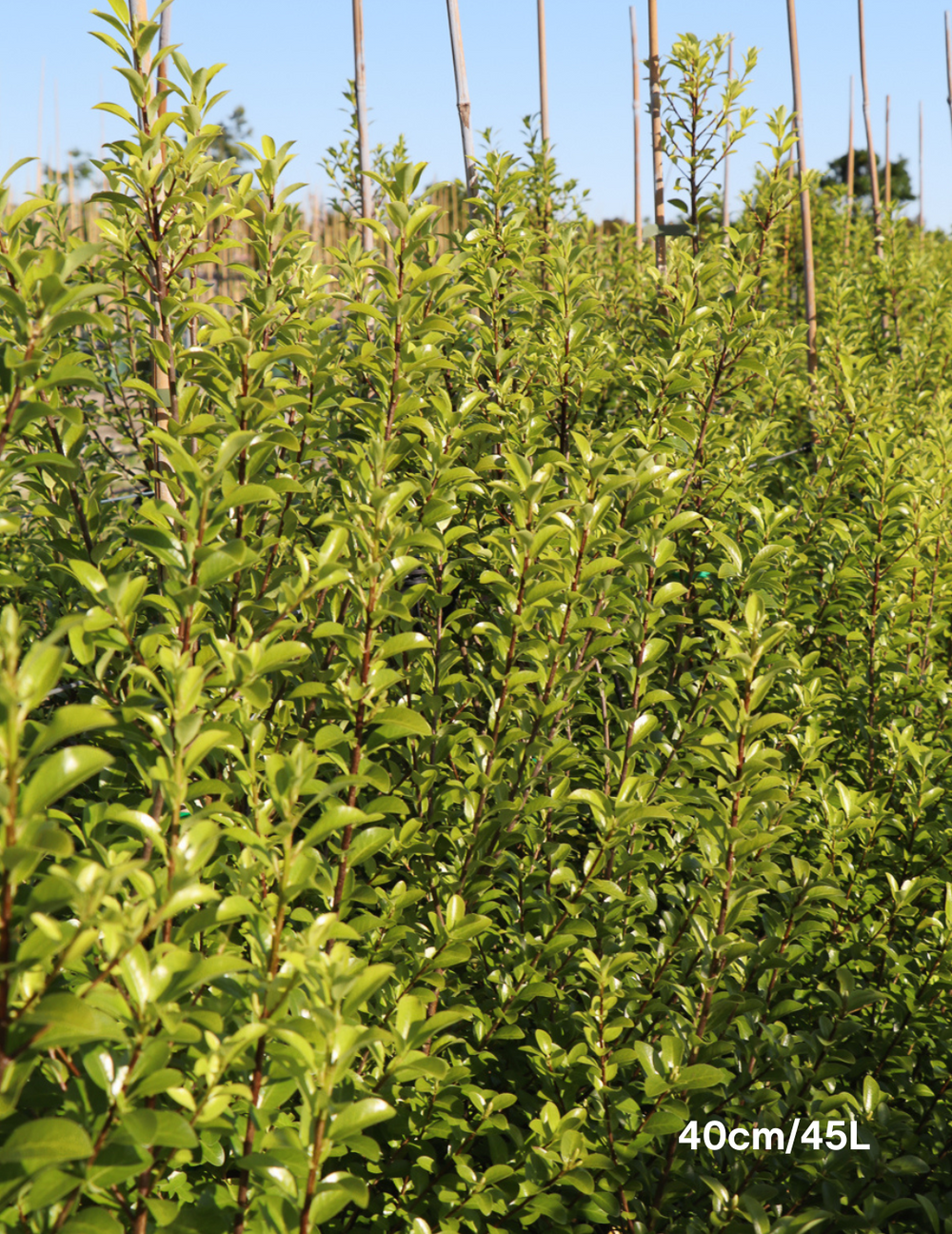
Pittosporum tenuifolium 'Wonder Screen' is a dense evergreen shrub with a naturally upright habit and glossy dark green leaves held on fine, near black stems. The foliage is narrow and lightly waved, which gives the plant a soft texture, and small dark purple flowers open in spring with a faint honey scent.
It takes full sun to part shade and wants soil that drains, though it copes with most soil types once established. Growth is steady at roughly 30 to 60 centimetres a year. Light to moderate frost is no trouble for settled plants, and watering through the first two summers builds its drought tolerance.
Mature size is 2 to 3 metres tall and 1 to 2 metres wide, which suits boundary screening, courtyard privacy and clipped hedges along fences and driveways. It also holds a formal line in a row in front of a wall or under windows. On a suburban block it screens without taking over.
Frequently Asked Questions
About Wonder Screen Pittosporum
How big does Wonder Screen Pittosporum grow?
Mature plants reach 2 to 3 metres tall and 1 to 2 metres wide in the ground. Regular clipping holds it lower and narrower if you need a tighter hedge, and it responds well to being kept at around 1.5 metres. Growing it in a large container will also keep the final size down.
How fast does it grow?
Expect roughly 30 to 60 centimetres of growth a year once the plant has settled in, which is moderate for a screening shrub. Growth is quicker in the first few seasons with good soil preparation and consistent water, and slows as the plant nears full height. Feeding in early spring keeps the rate up.
How far apart should I plant it for a hedge or screen?
For a dense informal screen, plant 1 to 1.5 metres apart. For a tighter formal hedge, bring the spacing in to 80 centimetres. If you are using it as a soft textured avenue along a driveway, 3 metres apart gives each plant room to develop its own shape and stay full to the ground.
Does it need sun or shade?
Full sun gives the densest growth and the best leaf colour. It also grows well in part shade, though plants in deeper shade tend to open up and thin at the base, which matters if you are relying on it for privacy. Morning sun with afternoon shade works well in hot inland gardens.
When does it flower?
Small dark purple flowers appear in spring, from about September to November. They sit close to the stems and are easy to miss, but they carry a light honey fragrance that is most noticeable in the evening. The plant is grown for its foliage and form, so treat the flowers as a bonus.
Is it frost tolerant?
Yes. Established plants handle light to moderate frost without damage, which covers most temperate and cool temperate districts. Young plants in their first winter are more vulnerable, so mulch over the root zone and shelter from cold wind helps them through. Severe repeated frost can burn the newest growth at the tips.
How do I care for Wonder Screen Pittosporum?
Water deeply through the first two summers, then only in long dry spells. Mulch to about 75 millimetres, keeping it clear of the trunk. Trim once or twice a year, in late spring and again in late summer, cutting into soft growth rather than bare wood. A general fertiliser in early spring is enough.
Pittosporum tenuifolium 'Wonder Screen'
Pittosporum tenuifolium 'Green Pillar'
Pittosporum tenuifolium 'Green Pillar'
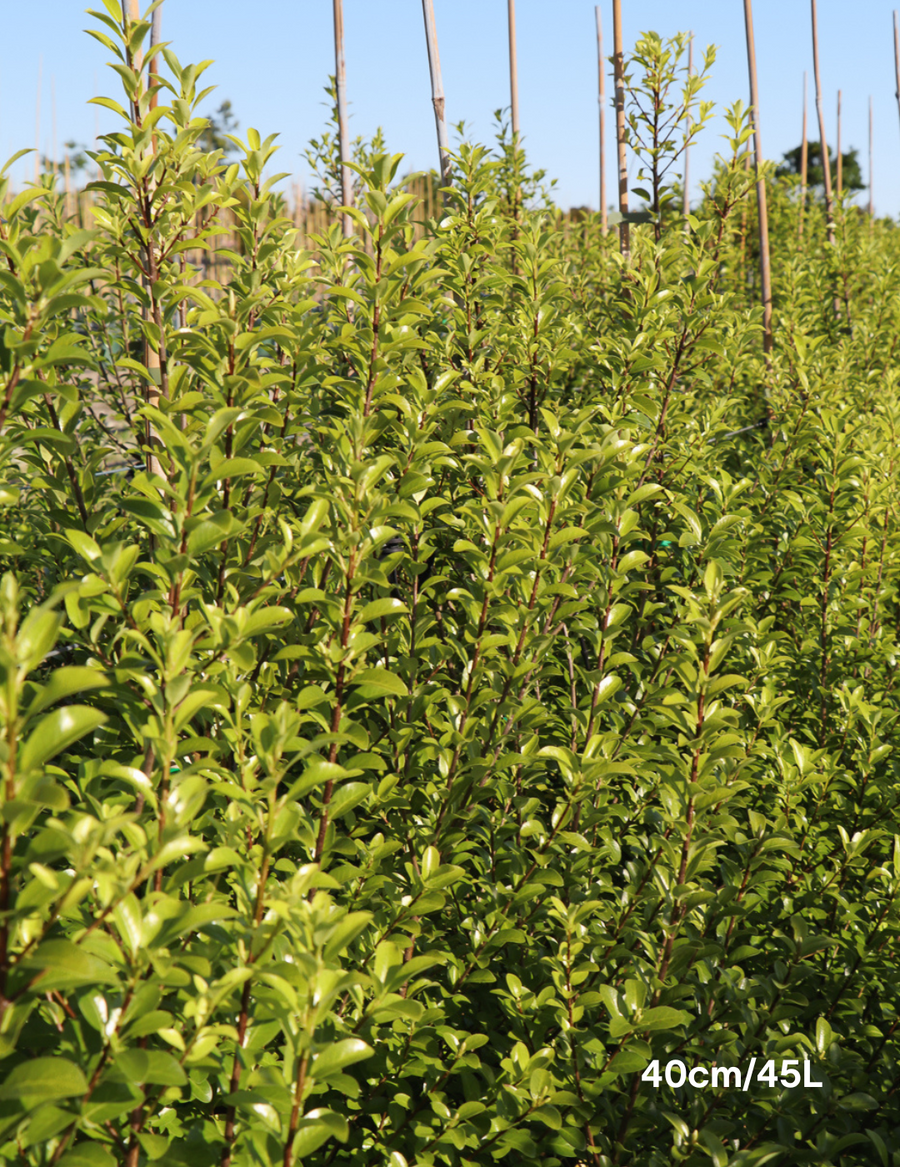
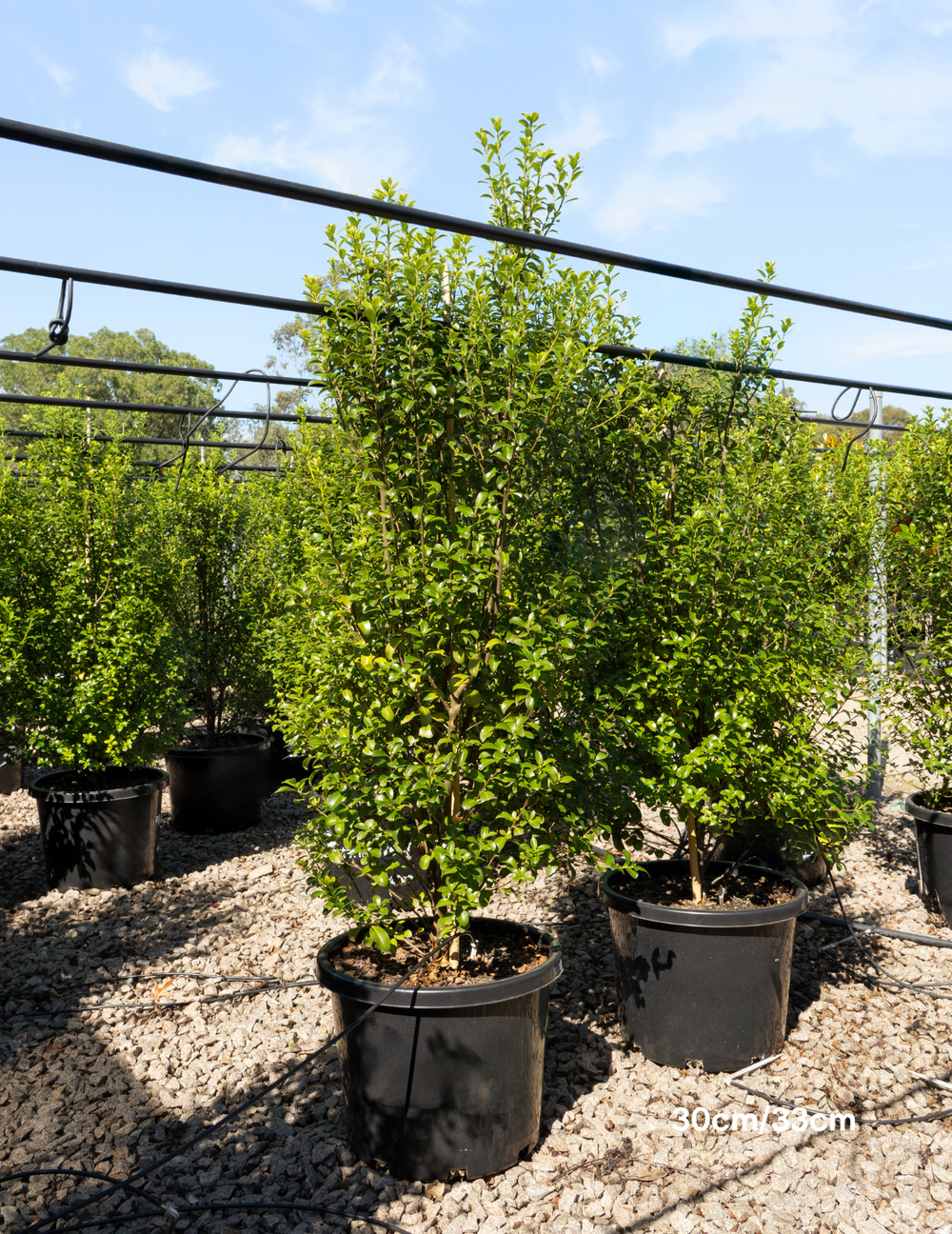
Pittosporum tenuifolium 'Green Pillar' is one of the best evergreen hedges available for narrow spaces in Australia. The naturally columnar growth habit holds a tight vertical form of just 1 metre wide at the base, with dense glossy dark green foliage from ground level to the top, requiring almost no shaping to maintain its shape.
Green Pillar grows to 3 metres tall with a naturally narrow columnar form ideal for tight side gardens, fence-line plantings, courtyard screens, and narrow planting strips between buildings. The clean upright structure also makes it a striking option for framing entrances, lining driveways, or creating tall potted features either side of a doorway.
Green Pillar thrives across most Australian climates, performing well in NSW, VIC, SA, WA and southern QLD. It tolerates light frost and coastal exposure once established, is low maintenance, and requires only a light trim once or twice a year to keep the form crisp.
Frequently Asked Questions
About Pittosporum tenuifolium 'Green Pillar'
How tall does Green Pillar Pittosporum grow?
Green Pillar grows to 3 metres tall and just 1 metre wide, with a naturally narrow columnar form that needs minimal pruning to maintain its shape.
How fast does Green Pillar grow?
Green Pillar is moderately fast-growing, adding 30-50cm per year once established.
Is Green Pillar suitable for narrow spaces?
Yes. Green Pillar is one of the best evergreen hedges for narrow spaces in Australia, holding a tight columnar form just 1 metre wide. It is ideal for tight side gardens, courtyard screens, and fence-line plantings.
How far apart should I plant Green Pillar for a hedge?
Plant 50-70cm apart for a tight continuous columnar hedge, or 1 metre apart for individual feature spacing.
Can Green Pillar grow in pots?
Yes. Green Pillar is excellent in tall pots (40L+) and is widely used to frame entrances, courtyards and balconies in a formal style.
Does Green Pillar need pruning?
Minimal pruning is needed thanks to the naturally columnar growth habit. A light trim once or twice a year keeps it crisp.
Where does Green Pillar grow best in Australia?
Green Pillar thrives across most Australian climates, performing well in NSW, VIC, SA, WA and southern QLD. It tolerates light frost and coastal exposure once established.
Pittosporum tenuifolium 'Green Pillar'

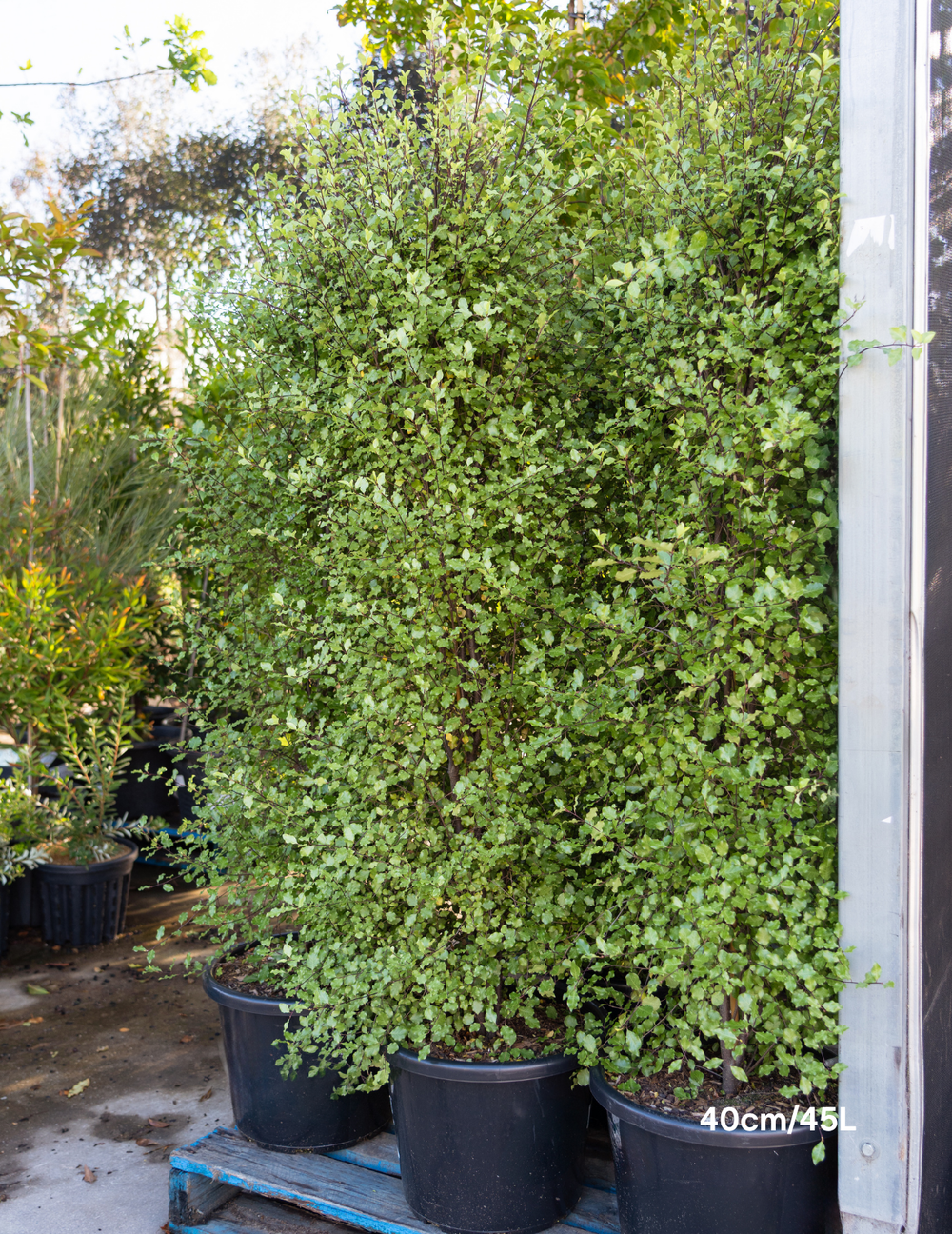
Pittosporum tenuifolium 'Silver Sheen'
Pittosporum tenuifolium 'Silver Sheen'
Pittosporum tenuifolium 'Silver Sheen' carries small shimmering silver-green leaves on near-black stems, giving a light airy screen that moves in the wind rather than reading as a solid green wall. It is one of the most widely specified screening plants in Australian landscape design for exactly that reason.
'Silver Sheen' grows to 4 to 6 metres tall but only 1.5 to 2 metres wide at 30 to 60 centimetres per year, which makes it a genuine solution for narrow beds along fence lines and between buildings where height is needed but width is not available. Small cream flowers appear in spring and are lightly fragrant.
'Silver Sheen' grows in full sun to part shade and tolerates light to moderate frost once established, performing from subtropical Queensland through Sydney, Melbourne, Gippsland and Adelaide. It clips well, holds density under regular trimming, and is equally effective as a formal hedge or a loose screen.
Frequently Asked Questions
About Pittosporum tenuifolium 'Silver Sheen'
How tall does Pittosporum 'Silver Sheen' grow?
'Silver Sheen' grows to 4 to 6 metres tall and only 1.5 to 2 metres wide, which makes it one of the best options for narrow screening where a tall hedge is needed in a shallow bed.
How fast does 'Silver Sheen' grow?
It grows at 30 to 60 centimetres per year once established, reaching a usable screening height within three to four years with regular water and feeding.
How narrow can I keep 'Silver Sheen'?
It naturally holds to 1.5 to 2 metres wide and can be trimmed to under a metre with regular clipping, which is why it is so often used in tight side-boundary positions.
How far apart should I plant 'Silver Sheen' for a hedge?
Plant 1 to 1.5 metres apart for a dense informal screen, or 80 centimetres apart for a tighter formal hedge. Closer spacing fills in faster but needs more trimming.
Is 'Silver Sheen' frost tolerant?
'Silver Sheen' handles light to moderate frost once established. Young plants benefit from protection through their first winter in colder inland districts.
Does 'Silver Sheen' grow in shade?
Yes. It performs in full sun through to part shade. In shadier positions growth is slightly more open, which suits a softer informal screen.
Where does 'Silver Sheen' grow best in Australia?
It performs from subtropical Queensland through Northern NSW, Sydney, the South Coast and tablelands, Melbourne and surrounds, the Western District, Gippsland and Adelaide.
Pittosporum tenuifolium 'Silver Sheen'
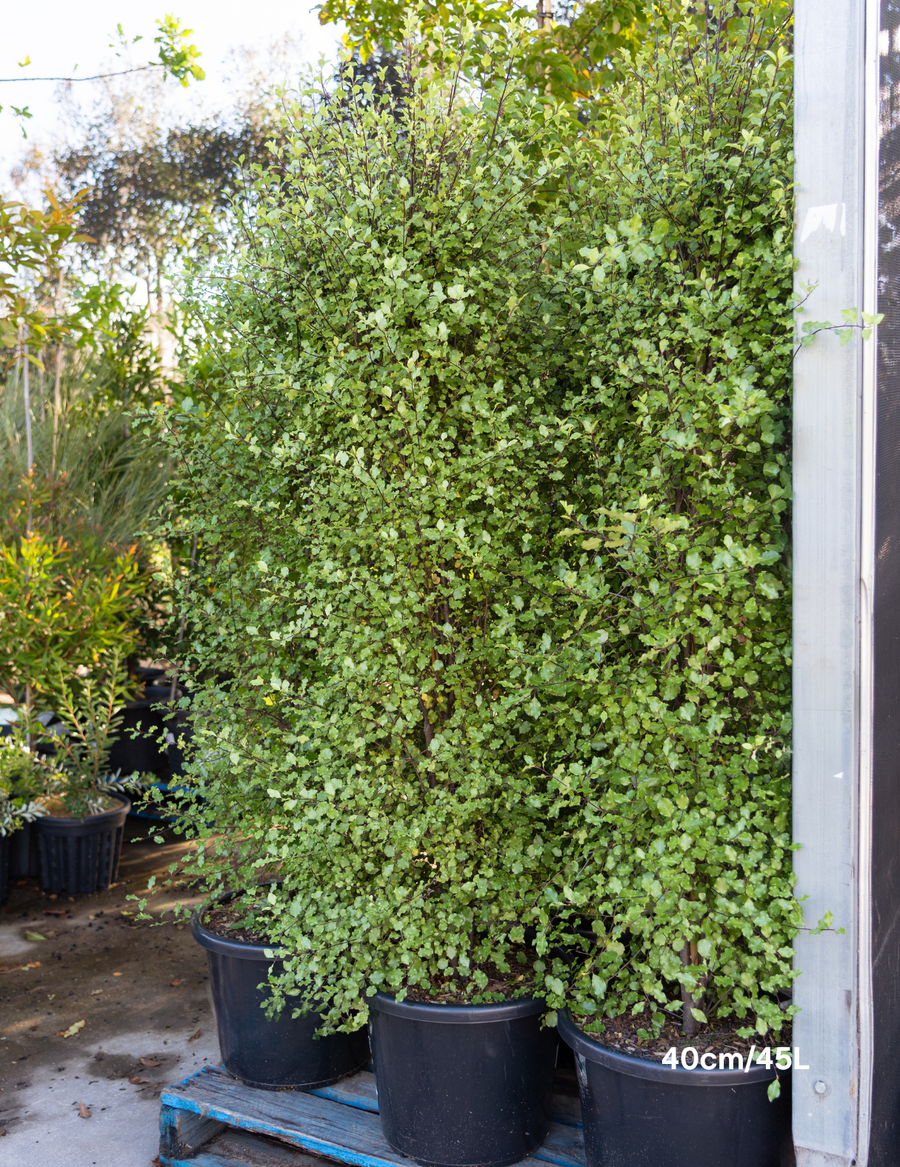

Pittosporum tobira 'Miss Muffet'
Pittosporum tobira 'Miss Muffet'
Pittosporum tobira 'Miss Muffet' forms a naturally tidy dome of glossy dark green foliage without ever needing to be clipped into shape, and carries clusters of intensely fragrant creamy-white flowers through spring. It is the low structural plant that does the work of a clipped hedge with none of the trimming.
'Miss Muffet' grows to just 0.5 to 1 metre tall and around 1.5 metres wide at 20 to 40 centimetres per year, holding density right to ground level. That compact scale suits low borders along paths and driveways, underplanting beneath feature trees, and mass planting in courtyards and civic beds.
'Miss Muffet' grows in full sun to part shade, tolerates light to moderate frost once established, and copes with coastal exposure and extended dry. It performs well in pots, and maintenance is limited to removing the occasional wayward shoot.
Frequently Asked Questions
About Pittosporum tobira 'Miss Muffet'
How big does Pittosporum 'Miss Muffet' grow?
'Miss Muffet' grows to 0.5 to 1 metre tall and around 1.5 metres wide, forming a naturally rounded dome. It is a true dwarf and will not need cutting back to stay low.
Does 'Miss Muffet' need pruning?
No. It holds a tidy rounded shape naturally. An occasional trim to remove a wayward shoot is all that is required, which is its main advantage over clipped alternatives.
When does 'Miss Muffet' flower and is it fragrant?
Clusters of creamy-white flowers appear through spring and are strongly fragrant, with a scent often compared to orange blossom.
Can 'Miss Muffet' be used as a low hedge?
Yes. Plant 0.8 to 1 metre apart for a continuous low evergreen border. Because it is naturally dense and low, it forms a hedge line without formal clipping.
Does 'Miss Muffet' grow in shade?
Yes. It performs in full sun through to part shade, which makes it useful for underplanting beneath established canopy trees where light is limited.
Is 'Miss Muffet' suitable for coastal gardens?
Yes. Pittosporum tobira tolerates salt-laden wind and sandy soils well, and 'Miss Muffet' is widely used in coastal courtyard and foreshore plantings.
Can 'Miss Muffet' be grown in pots?
Yes. Its compact rounded habit makes it an excellent pot plant for entries, balconies and courtyards. Use a free-draining mix and water regularly through summer.
Pittosporum tobira 'Miss Muffet'


Pittosporum eugenioides 'Variegated'
Pittosporum eugenioides 'Variegated'
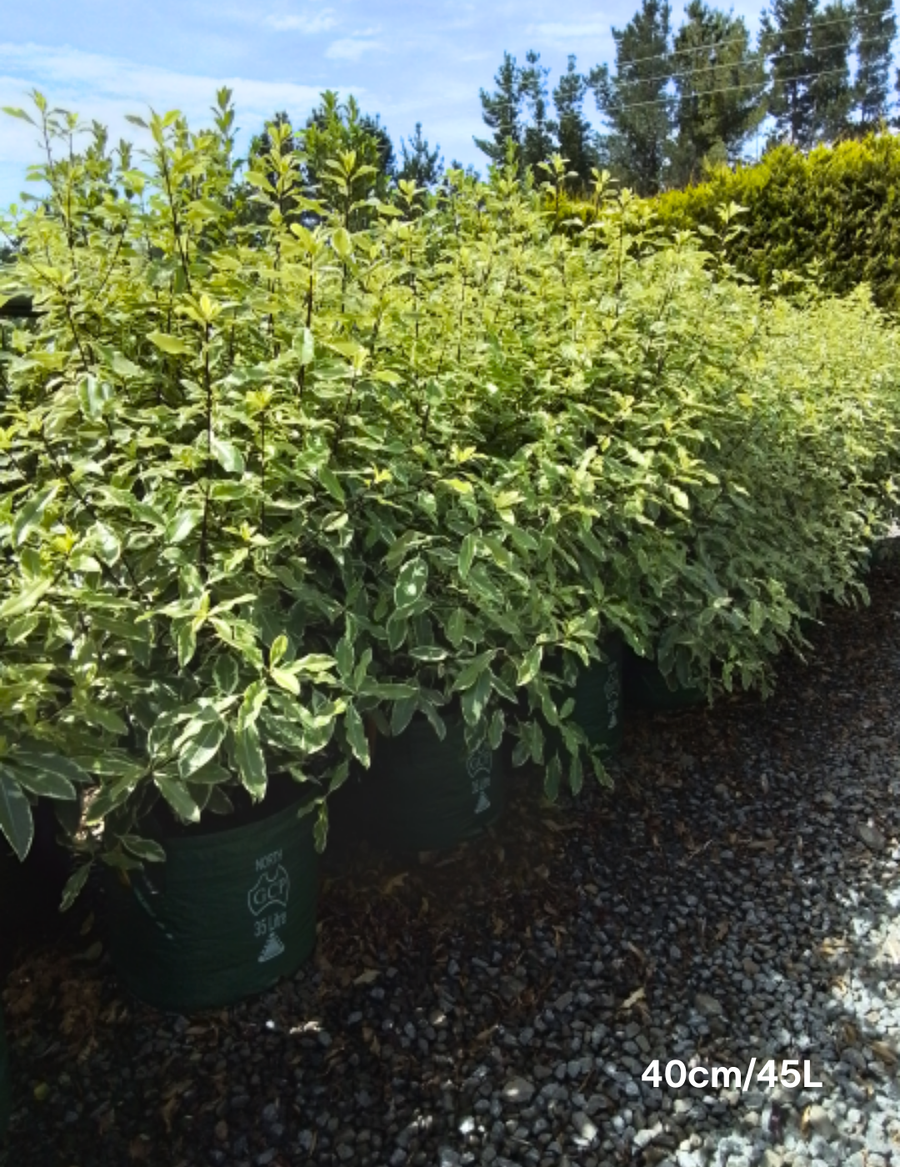
Pittosporum eugenioides 'Variegatum' carries wavy apple-green leaves edged in creamy-yellow that lift a shaded or dull corner without needing flowers to do it. Crushed foliage releases a distinct lemon scent, which is where the common name Lemonwood comes from.
'Variegatum' grows to 4 to 6 metres tall and only 2 to 3 metres wide at 30 to 60 centimetres per year, holding a dense upright habit with near-black stems that contrast against the pale foliage. The narrow footprint suits boundary hedging, courtyard screening and formal clipped shapes.
'Variegatum' grows in full sun to part shade and tolerates light to moderate frost once established. It clips cleanly and holds density under regular trimming, which makes it equally effective as a crisp formal hedge or a looser informal screen.
Frequently Asked Questions
About Pittosporum eugenioides 'Variegatum'
How tall does Pittosporum eugenioides 'Variegatum' grow?
It reaches 4 to 6 metres tall and only 2 to 3 metres wide, which makes it a strong choice for tall narrow hedging where bed width is limited.
Why is it called Lemonwood?
The leaves release a distinct lemon scent when crushed. The common name Lemonwood refers to this, and the species is widely known by it in New Zealand where it originates.
How fast does it grow?
It grows at 30 to 60 centimetres per year once established, reaching a usable hedge height within three to four years with regular water and feeding.
How far apart should I plant it for a hedge?
Plant 1 to 1.5 metres apart for a dense informal screen, or 80 centimetres apart for a tighter formal hedge.
Does the variegation hold in shade?
The cream-yellow edging is brightest in full sun and softens in shade. The plant grows well in part shade but the variegation is less pronounced.
Is 'Variegatum' frost tolerant?
It handles light to moderate frost once established. Protect young plants through their first winter in colder inland districts.
When should I trim it?
Trim two to three times through the growing season to build density and keep lines crisp. It responds well to regular light clipping rather than occasional hard cutting.
Pittosporum eugenioides 'Variegated'
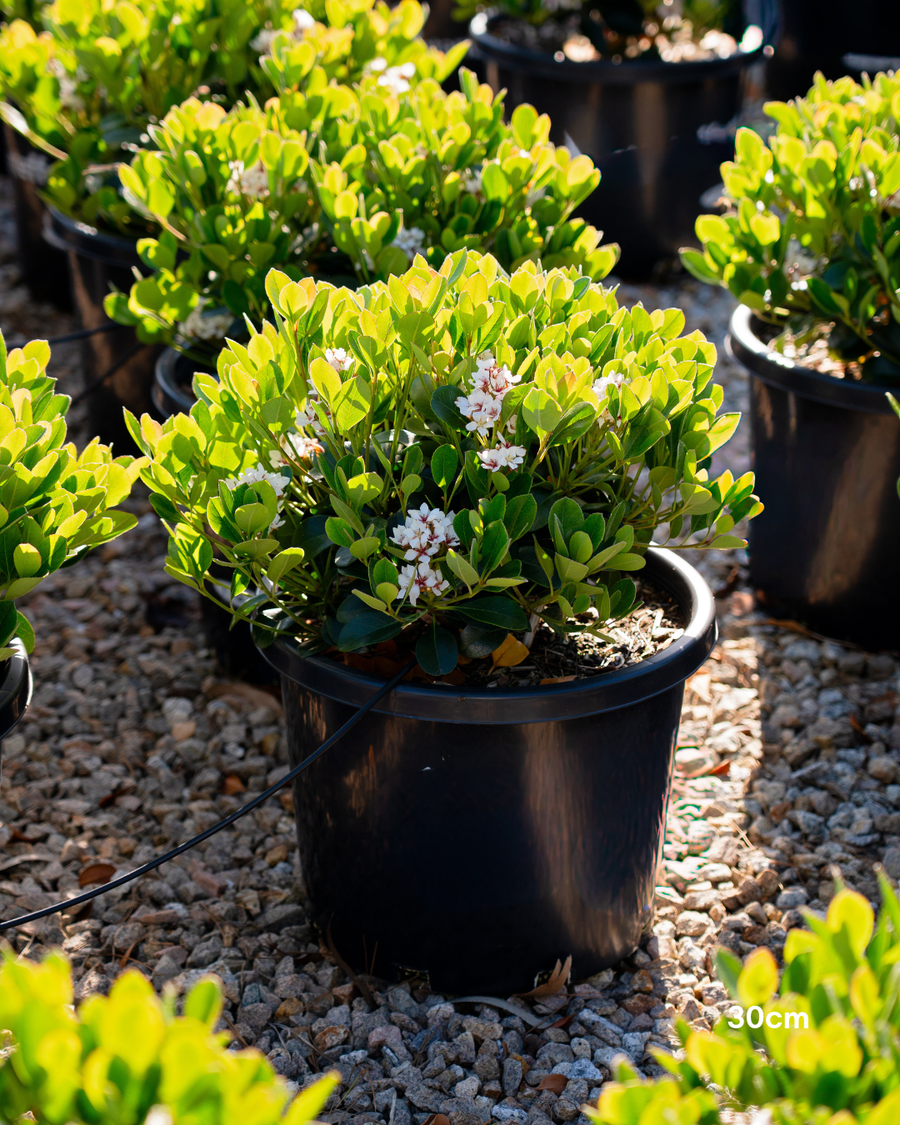
Rhaphiolepis indica 'Oriental Pearl'
Rhaphiolepis indica 'Oriental Pearl'
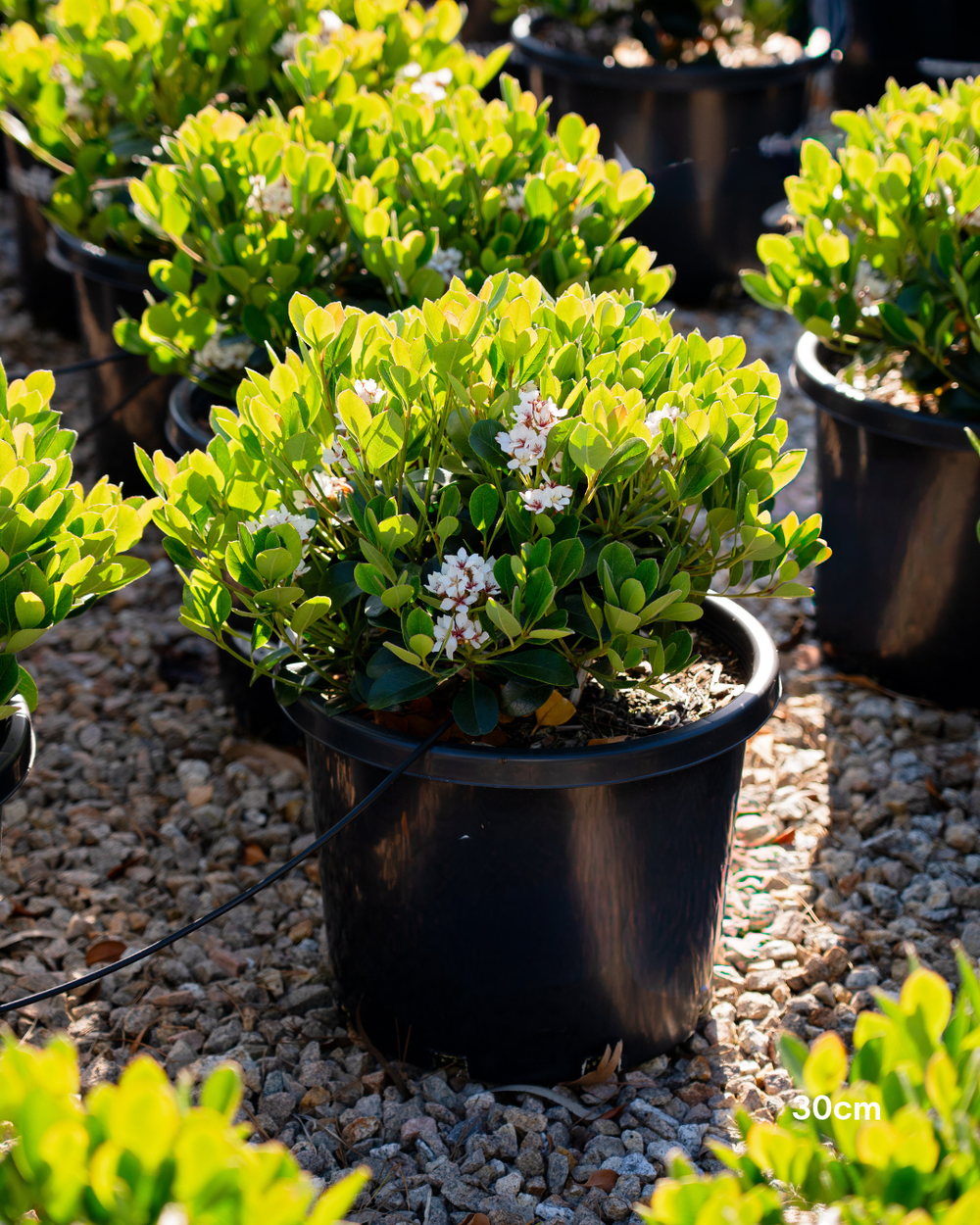
Rhaphiolepis indica 'Oriental Pearl' is one of the best compact evergreen shrubs available for low hedges and borders. The glossy dark green foliage forms a naturally tidy rounded mound, and clusters of soft white to pale pink flowers appear from late winter into spring, followed by small dark berries.
Oriental Pearl grows to just 1-1.5 metres tall and wide, holding a neat uniform shape with minimal pruning. The compact form makes it ideal for low clipped hedges, narrow borders, mass plantings, and container planting, particularly where space is limited and a formal finish is wanted.
Oriental Pearl thrives across most Australian climates in full sun to part shade, tolerating heat, coastal exposure, salt spray, light frost, and a wide range of well-drained soils. It is both drought tolerant and salt tolerant once established, making it a reliable low-maintenance choice for coastal and low-water gardens.
Frequently Asked Questions
About Rhaphiolepis indica 'Oriental Pearl'
How tall does Oriental Pearl Rhaphiolepis grow?
Rhaphiolepis indica 'Oriental Pearl' grows to 1-1.5 metres tall and wide, forming a naturally compact dense mound.
How fast does Oriental Pearl grow?
Oriental Pearl has a moderate growth rate of 20-40cm per year once established.
Is Oriental Pearl good for low hedges?
Yes. Oriental Pearl is one of the best compact evergreen shrubs for low hedges, borders, and mass plantings, holding a tidy rounded form with minimal pruning.
When does Oriental Pearl flower?
Oriental Pearl produces clusters of soft white to pale pink flowers from late winter into spring, followed by small dark berries.
Is Oriental Pearl drought and salt tolerant?
Yes. Oriental Pearl is both drought tolerant and salt tolerant once established, making it well suited to coastal gardens and low-water landscapes.
How far apart should I plant Oriental Pearl for a low hedge?
Plant 50-70cm apart for a continuous low hedge, or 80cm-1 metre for a softer informal border.
Where does Oriental Pearl grow best in Australia?
Oriental Pearl thrives across most Australian climates in full sun to part shade, tolerating heat, coastal exposure, and a wide range of well-drained soils.
Rhaphiolepis indica 'Oriental Pearl'
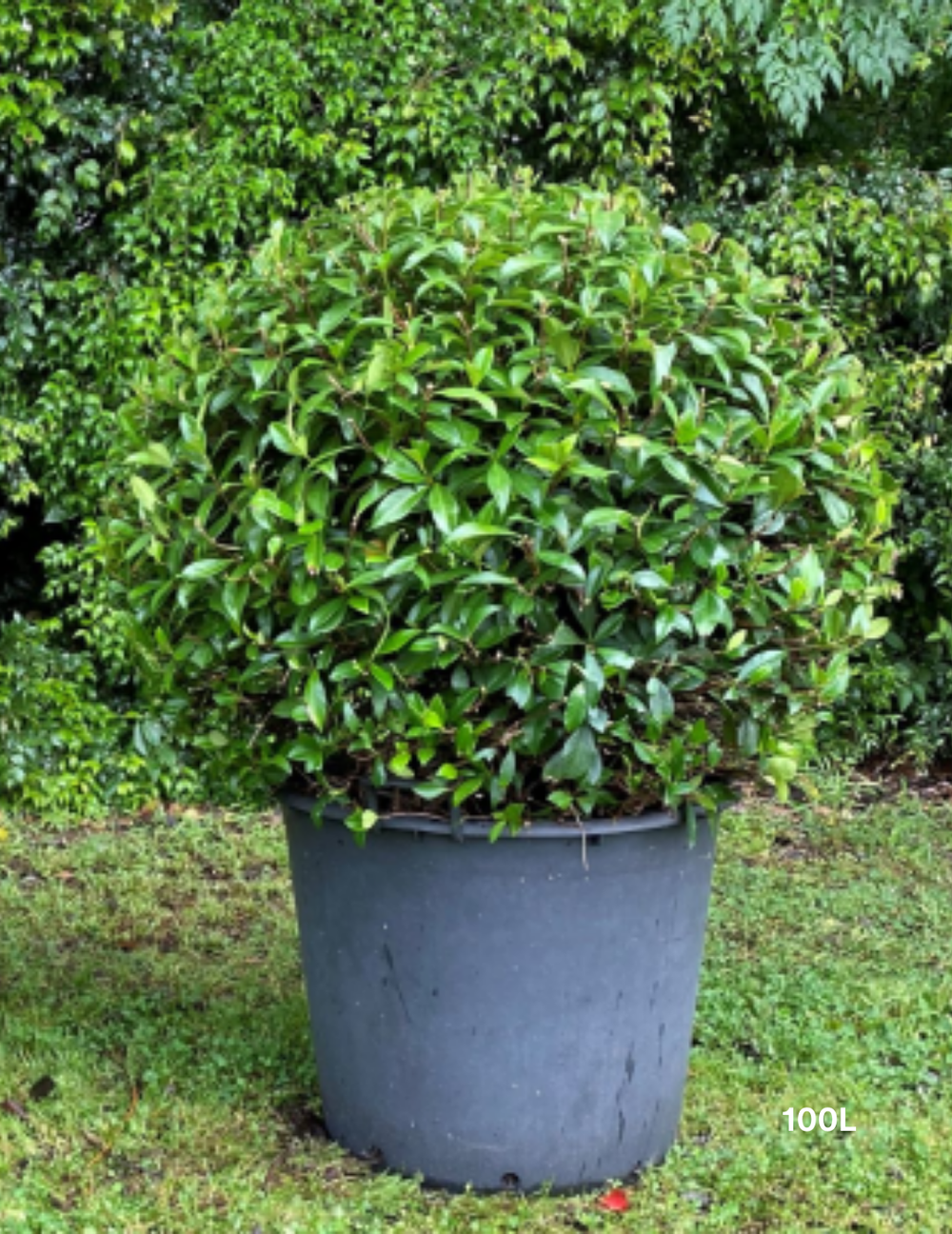
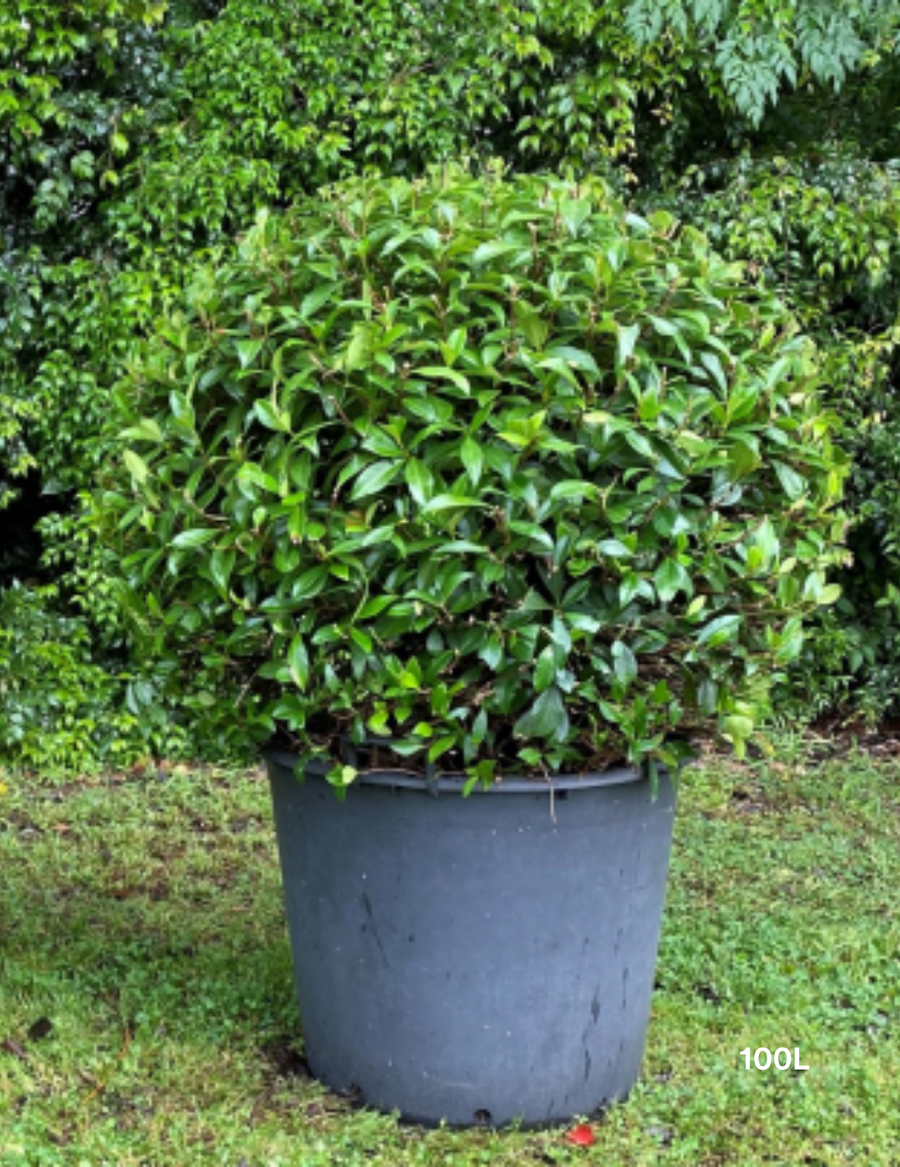
Trachelospermum jasminoides Balls – Star Jasmine Balls
Trachelospermum jasminoides Balls – Star Jasmine Balls
Trachelospermum jasminoides 'Balls' is Star Jasmine grown and clipped into a dense evergreen sphere. The small glossy leaves sit tight on a woody framework, holding a clean rounded outline year round. White pinwheel flowers open in spring and carry a strong sweet scent right across a courtyard.
Ball specimens hold at about 1 to 1.5 metres tall and wide with light clipping. Full sun to part shade suits them, in any free draining soil. Growth is slow to moderate at 30 to 50 centimetres a year. They handle coastal exposure, light frost and dry spells once the roots are down.
Repeat them along a driveway, either side of an entry, or in pots on a terrace where a formal shape is wanted straight away. They read as structure in a planting scheme without the height of a hedge, and because the form is already trained, a new garden looks settled from the day it goes in.
Frequently Asked Questions
About Star Jasmine Balls
What are Star Jasmine Balls?
They are Trachelospermum jasminoides, the common Star Jasmine, grown and clipped into a dense evergreen sphere on a woody framework. Instead of climbing, the plant is trained into a self supporting rounded shape. The foliage is small, glossy and dark green, and the plant carries scented white flowers through spring.
How big do Star Jasmine Balls grow?
They hold at roughly 1 to 1.5 metres tall and 1 to 1.5 metres wide. Growth is slow to moderate at 30 to 50 centimetres a year, so a light clip once or twice a year keeps the ball tight at whatever size within that range suits the setting.
Do Star Jasmine Balls need sun or shade?
Full sun to part shade both work. Full sun gives the densest foliage and the heaviest flowering, while part shade produces slightly softer, more open growth and fewer flowers. Avoid deep shade, where the ball thins out and loses its outline. Morning sun with afternoon protection suits hot inland gardens.
Can Star Jasmine Balls be grown in pots?
Yes, and pots are one of the main uses. A container 50 to 60 centimetres wide with a quality free draining mix will hold a ball for years. Water more often than you would in the ground, especially in summer, and feed in spring and again in late summer. Refresh the mix every few years.
Are Star Jasmine Balls evergreen?
Yes, the foliage is held year round. The glossy dark green leaves take on a bronze tinge in cold weather and green up again in spring, but the plant never goes bare. That is what makes it useful as permanent structure in a scheme, particularly in winter once perennials have died back.
When do Star Jasmine Balls flower?
Flowering runs through spring, roughly September to November, and often carries into early summer in warmer districts. The white pinwheel flowers are small but produced in quantity, and the scent is strong on still evenings. Flowering is heaviest on plants in full sun that were not clipped hard just before bud set.
How do I prune and care for Star Jasmine Balls?
Clip lightly with hedging shears once after flowering and again in late summer if needed, taking only the new growth to keep the outline crisp. Water deeply in dry weather, mulch the base, and feed in early spring. The sap is milky and can irritate skin, so wear gloves when trimming.
Trachelospermum jasminoides Balls – Star Jasmine Balls

Evergreen Trees Direct Has Been Featured In:


Perfect Substitutes for Lagerstroemia indica 'Acoma' - Dwarf White Crepe Myrtle

Lagerstroemia fauriei 'Fantasy' White Crepe Myrtle
Lagerstroemia fauriei 'Fantasy' White Crepe Myrtle
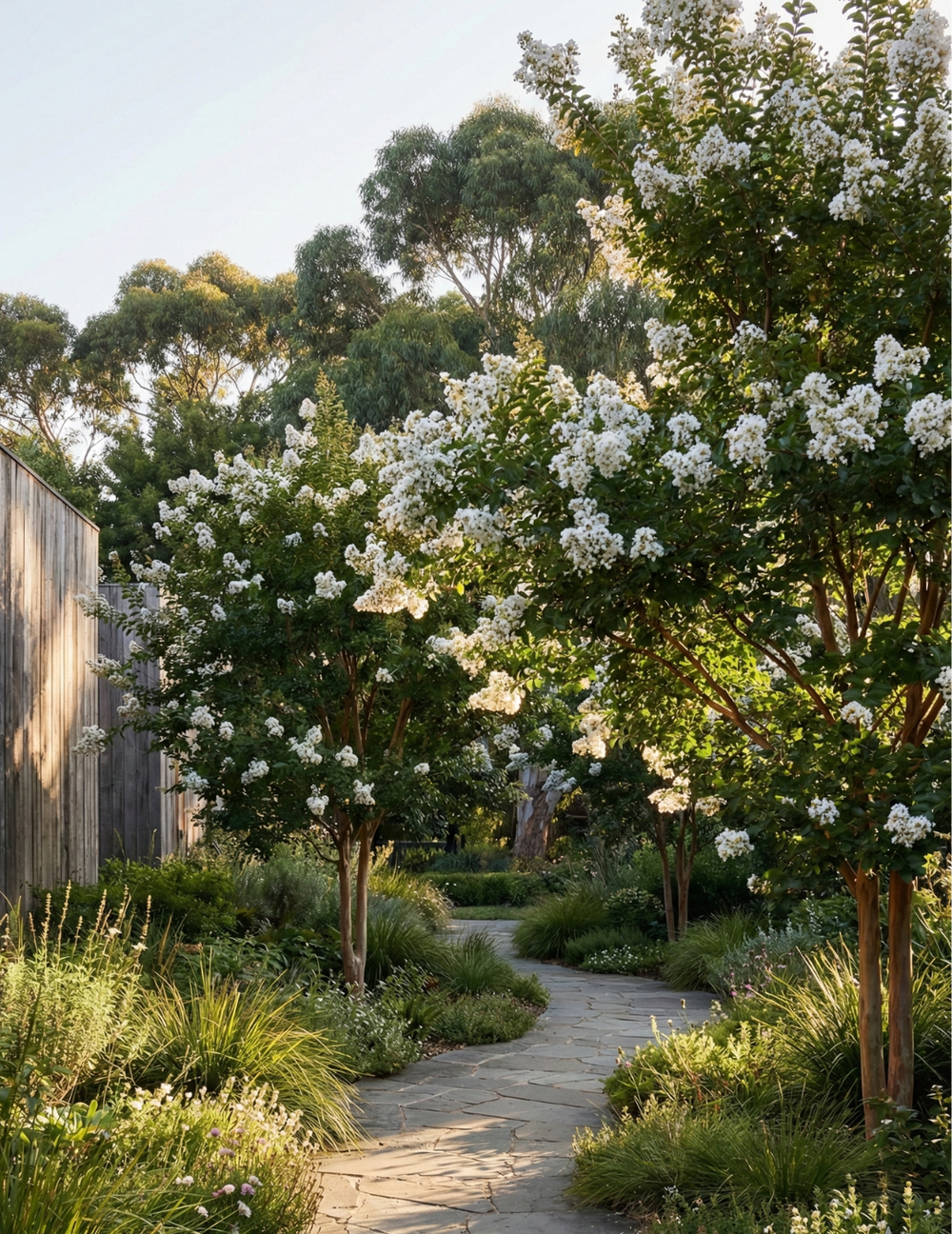
Lagerstroemia fauriei 'Fantasy' is a fast-growing crepe myrtle admired as much for its outstanding bark as its flowers. Masses of white blooms appear from early summer to autumn, while the smooth cinnamon-brown exfoliating bark provides exceptional year-round interest.
Fantasy Crepe Myrtle is one of the taller crepe myrtles, with a strong upright branching structure. The size suits street planting, avenues, large gardens, and public spaces. Dark green foliage turns vibrant red-orange in autumn for striking seasonal contrast.
Fantasy is highly drought and heat tolerant once established, thriving in full sun across most Australian climates. It tolerates pollution and poor soils with minimal maintenance, making it a reliable, elegant choice for councils, landscapers, and gardeners seeking extended flowering and year-round structure.
Fantasy, Natchez or Acoma? All three are white-flowering crepe myrtles, which is exactly why they get confused. The real difference is scale and what you are buying the tree for.
Fantasy is the big one. It is a pure Lagerstroemia fauriei, the Japanese crepe myrtle, rather than a hybrid, and it is the tallest and fastest growing of the three. It is grown as much for its cinnamon-brown exfoliating bark as its flowers. Choose it when you want a genuine tree with a trunk worth looking at in winter, for an avenue, a streetscape or a large garden.
Natchez is the flower one. An indica and fauriei hybrid at a mid-size, it carries the largest and showiest white flower trusses of the three and has excellent cinnamon bark of its own. It is the all-round choice where the summer flowering is the point.
Acoma is the small one. Also an indica and fauriei hybrid, but dwarf at 2 to 3 metres with a low, spreading habit. It is the answer for courtyards, small gardens, tight beds and planting under powerlines, where Fantasy and Natchez would both outgrow the space.
Frequently Asked Questions
About Lagerstroemia fauriei 'Fantasy' White Crepe Myrtle
How is 'Fantasy' different from 'Natchez'?
Size and parentage. Fantasy is a pure Lagerstroemia fauriei, the Japanese crepe myrtle, while Natchez is a hybrid between L. indica and L. fauriei. Fantasy grows taller and faster and is grown as much for its cinnamon bark as its flowers. Natchez carries the larger, showier white flower trusses. Choose Fantasy for scale and trunk character, Natchez when the flowering display matters most.
How is 'Fantasy' different from 'Acoma'?
Almost entirely scale. Acoma is a dwarf hybrid reaching only 2 to 3 metres with a low, spreading habit, suited to courtyards, small gardens and planting under powerlines. Fantasy is a full-sized tree several times that height. Both flower white, so if you have picked Acoma for the flower colour but need a tree rather than a shrub, Fantasy is the one to plant.
Which white crepe myrtle should I choose?
A simple rule: Fantasy for scale and bark, Natchez for the flowering display, Acoma for small spaces. All three are white-flowering, drought hardy once established and deciduous with autumn colour, so the decision comes down to the size of the space and whether you want a tree or a shrub.
How fast does 'Fantasy' grow?
'Fantasy' is fast-growing, adding 60cm to 1 metre per year in warm conditions with adequate water. It is the quickest of the white crepe myrtles to make a tree.
When does 'Fantasy' flower?
'Fantasy' produces masses of pure white flower panicles through summer, typically December to March across most Australian climates.
What makes 'Fantasy' special?
'Fantasy' is grown as much for its outstanding cinnamon-brown exfoliating bark as for its flowers. The smooth peeling bark provides exceptional year-round interest, particularly in winter once the leaves have dropped.
Is 'Fantasy' deciduous?
Yes. 'Fantasy' is fully deciduous. Green summer foliage turns orange-red in autumn before dropping in winter to reveal the striking bark.
Is 'Fantasy' drought tolerant?
Yes. 'Fantasy' is highly drought and heat tolerant once established and thrives in full sun across most Australian climates.
How far apart should I plant 'Fantasy' for an avenue?
Plant 4-6 metres apart for a full canopy avenue, or 3-4 metres for a denser flowering screen.
Lagerstroemia fauriei 'Fantasy' White Crepe Myrtle

Lagerstroemia indica 'Natchez' White Crepe Myrtle
Lagerstroemia indica 'Natchez' White Crepe Myrtle
Lagerstroemia indica 'Natchez', known as White Crepe Myrtle, is a fast-growing, drought-tolerant flowering tree admired for its profuse white blooms, lush dark green foliage, and striking exfoliating bark. Growing 6-8 metres tall and 3-4 metres wide, it makes a bold statement in avenue plantings, residential gardens, and public landscapes.
Blooming from early summer through autumn, Natchez Crepe Myrtle offers months of beautiful floral display while its glossy leaves turn vibrant red-orange in autumn, adding seasonal contrast. The cinnamon-brown peeling bark reveals smooth cream and tan patches, providing visual interest year-round.
Thriving in full sun, this resilient tree tolerates heat, urban pollution, and poor soils. Its low-maintenance nature makes it perfect for busy homeowners, landscapers, and councils seeking reliable, long-lasting beauty. It looks excellent in sunny spaces, resonating with those who want a stunning, easy-care tree that brightens any landscape.
Frequently Asked Questions
About Lagerstroemia indica 'Natchez' White Crepe Myrtle
How tall does Natchez Crepe Myrtle grow?
Natchez grows to 6-8 metres tall and 3-4 metres wide, making it one of the larger crepe myrtle cultivars.
How fast does Natchez grow?
Natchez is moderately fast-growing, adding 50-80cm per year in warm conditions with adequate water.
When does Natchez flower?
Natchez produces masses of pure white blooms from early summer through to autumn, typically December to April across most Australian climates.
Is Natchez drought tolerant?
Yes. Natchez is highly drought and heat tolerant once established, and thrives in full sun positions across most Australian climates.
How far apart should I plant Natchez for an avenue?
Plant 4-5 metres apart for a full canopy avenue, or 2-3 metres for a denser flowering screen.
Is Natchez deciduous?
Yes. Natchez is deciduous. Leaves turn vibrant red-orange in autumn and drop in winter, revealing its striking cinnamon-brown exfoliating bark.
How do I prune Natchez Crepe Myrtle?
Prune in late winter while the tree is bare, taking out crossing branches, thin twiggy growth and any suckers from the base. Avoid the hard topping often inflicted on crepe myrtles, which spoils the natural vase shape and hides the exfoliating bark. Light structural pruning is enough. Flowers form on new wood, so a tidy up before spring costs you nothing in summer.
Lagerstroemia indica 'Natchez' White Crepe Myrtle
Lagerstroemia indica 'Biloxi' - Crepe Myrtle
Lagerstroemia indica 'Biloxi' - Crepe Myrtle
Lagerstroemia indica 'Biloxi' is a deciduous flowering tree with an upright vase-shaped frame and smooth cinnamon bark that peels to show paler wood beneath. Crinkled pale pink flowers cover the canopy through summer, and the dark green leaves finish the year in orange and red before dropping.
It flowers best in full sun and grows in most soils that drain, including improved clay. Height gain is 20 to 40 centimetres a year to a mature 3 to 4 metres tall and 2 to 3 metres wide. It is frost hardy when dormant, heat tolerant, and drought tolerant once established. Maintenance is low.
It is used as a feature tree in courtyards, as a flowering avenue along a drive, in mixed shrub borders, and in narrow beds beside a building. Spacing is 3 to 4 metres as a feature or 3 metres for an avenue. It gives summer flower, autumn colour and winter bark from a tree that fits a small garden.
Frequently Asked Questions
About Biloxi Crepe Myrtle
What is Lagerstroemia indica 'Biloxi'?
Biloxi is a named crepe myrtle, a deciduous flowering tree in the Lythraceae family. It carries pale pink crinkled flowers through summer on an upright vase-shaped frame, with smooth mottled bark and strong autumn leaf colour. It is one of the cultivars selected for good mildew resistance and a clean trunk.
How big does Biloxi Crepe Myrtle grow?
It reaches 3 to 4 metres tall and 2 to 3 metres wide at maturity, which keeps it within the scale of an average suburban garden. The habit is upright, so it takes up less width than height. The larger container sizes are supplied well advanced, giving immediate height at planting.
When does it flower?
Flowering is through summer, broadly December to February, with the peak in the hottest weeks. The flowers are held in dense terminal panicles and hold on the tree for weeks at a time. Cutting off spent flower heads soon after they fade often brings a lighter second flush before the season ends.
Is it evergreen or deciduous?
Deciduous. The leaves colour orange and red in autumn, then the tree stands bare through winter, which is when the smooth cinnamon-toned trunk is at its best. New leaves come away in spring. That winter bareness is useful where you want sun reaching a window or courtyard in the cold months.
Does it need sun or shade?
Full sun, and it matters more here than with most trees. Flowering falls away sharply in shade and the canopy becomes open and leggy. Six or more hours of direct sun gives dense flowering, better autumn colour and less risk of powdery mildew, which is worse in shaded, still positions.
Is it drought tolerant?
Yes, once established after the first two summers. It handles hot dry summers and reflected heat well, which is why it is common in inland and western suburban streets. Watering through the flowering period will improve the display, but the tree will not fail without it in an average dry spell.
How do I prune and care for a crepe myrtle?
Prune in late winter while it is bare. Remove spent seed heads, thin crossing branches and take out basal suckers to keep a clear trunk. Avoid cutting all the main limbs back to stubs, which ruins the shape and gives weak growth. Mulch, water through establishment, and feed in early spring.
Lagerstroemia indica 'Biloxi' - Crepe Myrtle

Magnolia x soulangeana
Magnolia x soulangeana
Magnolia x soulangeana, the Saucer Magnolia, is one of the most spectacular spring-flowering trees in cool to temperate Australian gardens. Large goblet-shaped pink-purple flowers open on bare branches in early spring, creating a striking sculptural display before the first leaves emerge.
Saucer Magnolia grows to 6-8 metres tall and 4-6 metres wide with a broad rounded canopy. The compact spreading habit, dramatic flower display, and yellow autumn foliage make it an excellent specimen tree for residential gardens, courtyards, and feature lawn planting where a strong seasonal moment is wanted.
Magnolia x soulangeana performs best in cool to temperate regions including VIC, NSW, ACT, Tasmania, and elevated parts of SA and WA. It needs cool winters for reliable flowering, well-drained soil, and a sheltered position to protect the spring blooms from late frost damage.
Frequently Asked Questions
About Magnolia x soulangeana
How tall does Saucer Magnolia grow?
Magnolia x soulangeana grows to 6-8 metres tall and 4-6 metres wide, with a broad rounded canopy.
When does Saucer Magnolia flower?
Saucer Magnolia produces large goblet-shaped pink-purple flowers on bare branches in early spring, typically August to September across Australia.
Is Saucer Magnolia deciduous?
Yes. Magnolia x soulangeana is fully deciduous, flowering on bare branches before leaves emerge. Foliage turns yellow in autumn before dropping in winter.
Where does Saucer Magnolia grow best in Australia?
Saucer Magnolia performs best in cool to temperate regions including VIC, NSW, ACT, Tasmania, and elevated parts of SA and WA. It needs cool winters for reliable flowering.
How fast does Saucer Magnolia grow?
Magnolia x soulangeana has a moderate growth rate of 30-50cm per year once established.
Can Saucer Magnolia grow in pots?
Yes. Saucer Magnolia performs well in large pots (80L+) for a number of years, but is better suited to in-ground planting long term to support its spreading habit.
How far apart should I plant Saucer Magnolia?
Plant 4-5 metres apart for a flowering grove, or 6 metres for individual feature trees with full canopy spread.
Magnolia x soulangeana

Follow Us On Instagram
@evergreentreesdirect ↗

Tips & Tricks
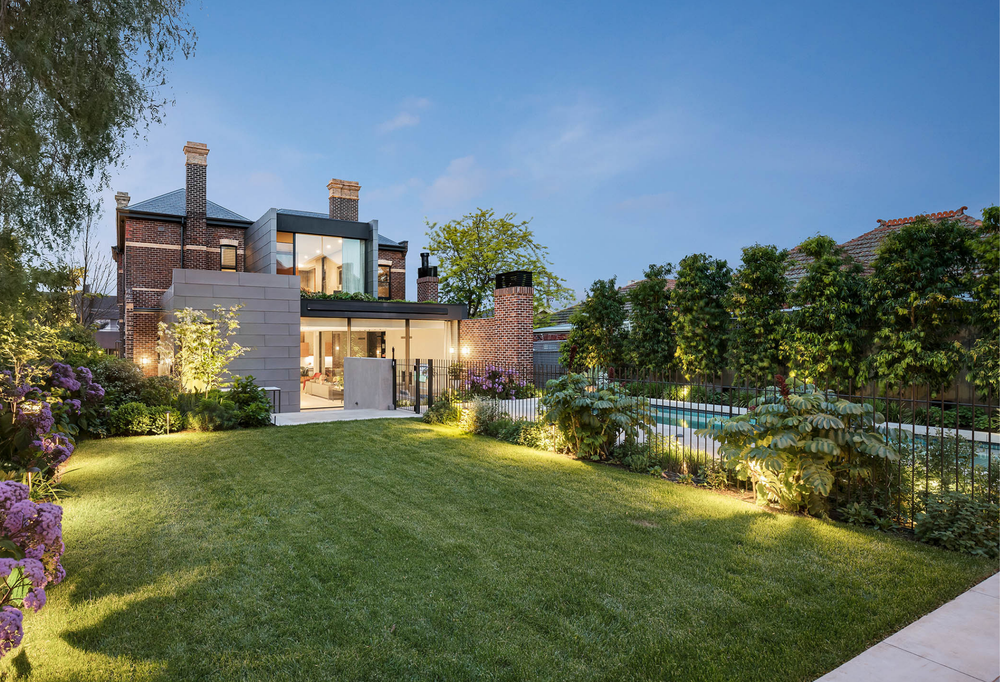
Best Trees for Creating a Privacy Screen: 10 Picks Across Fast Formal, Native and Narrow Column Options
Read the story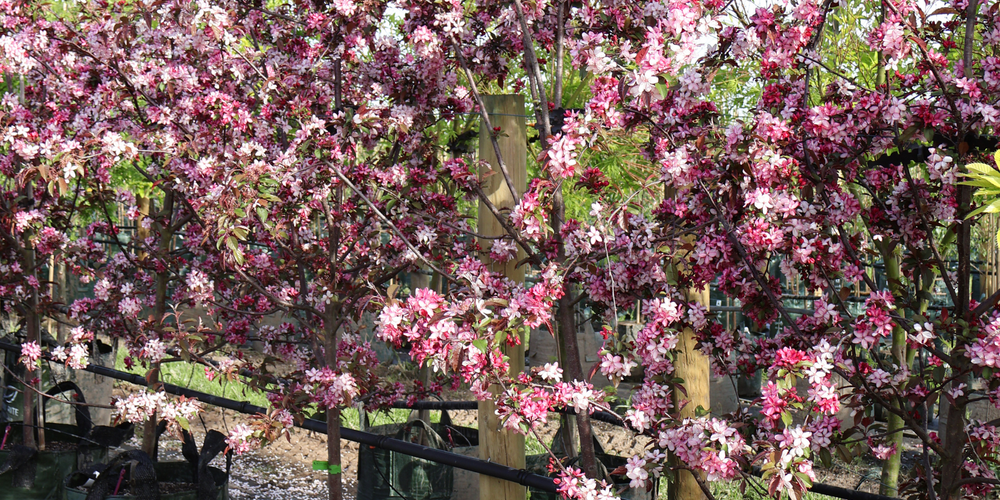
How to Incorporate Trees into Your Modern Landscape Design
Read the story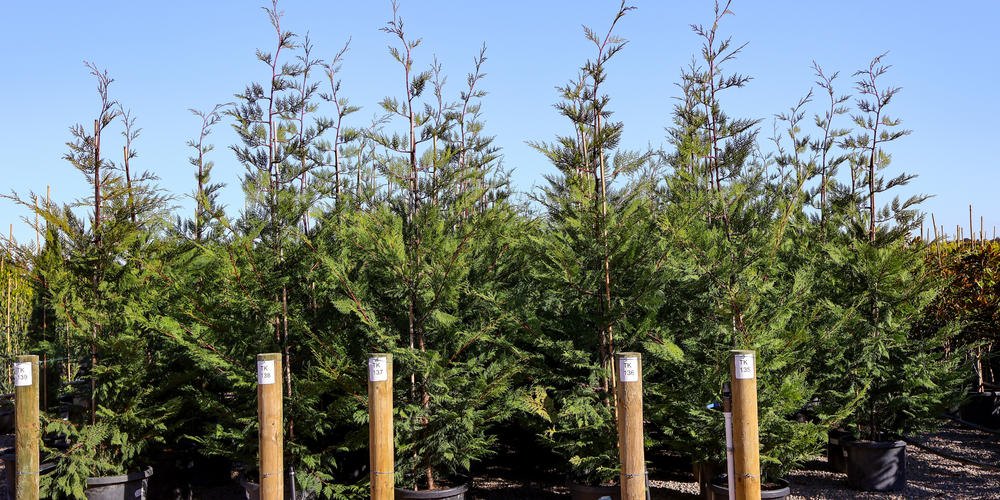
The Importance of Root Health: How to Choose Quality Trees
Read the story