- Mature height
- 10m to 15m (approx.)
- Mature width
- 4m to 5m
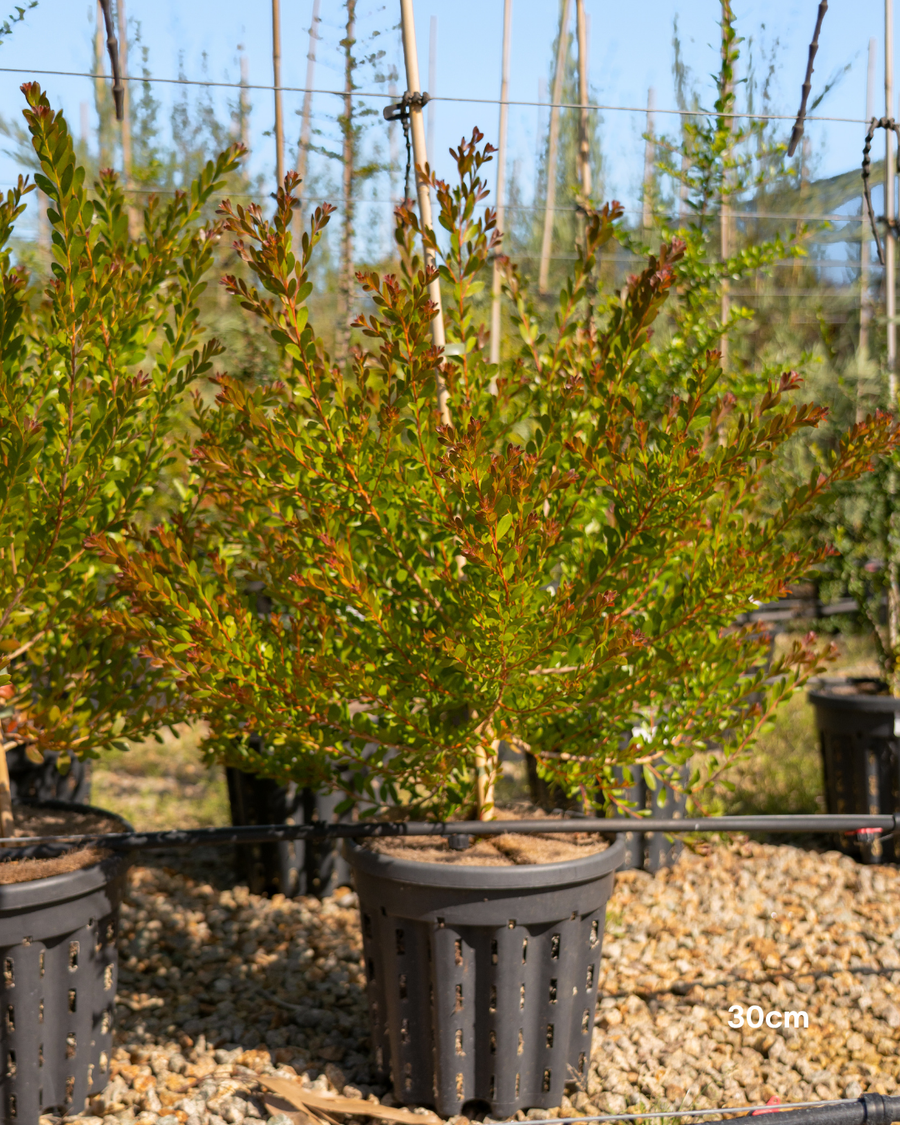
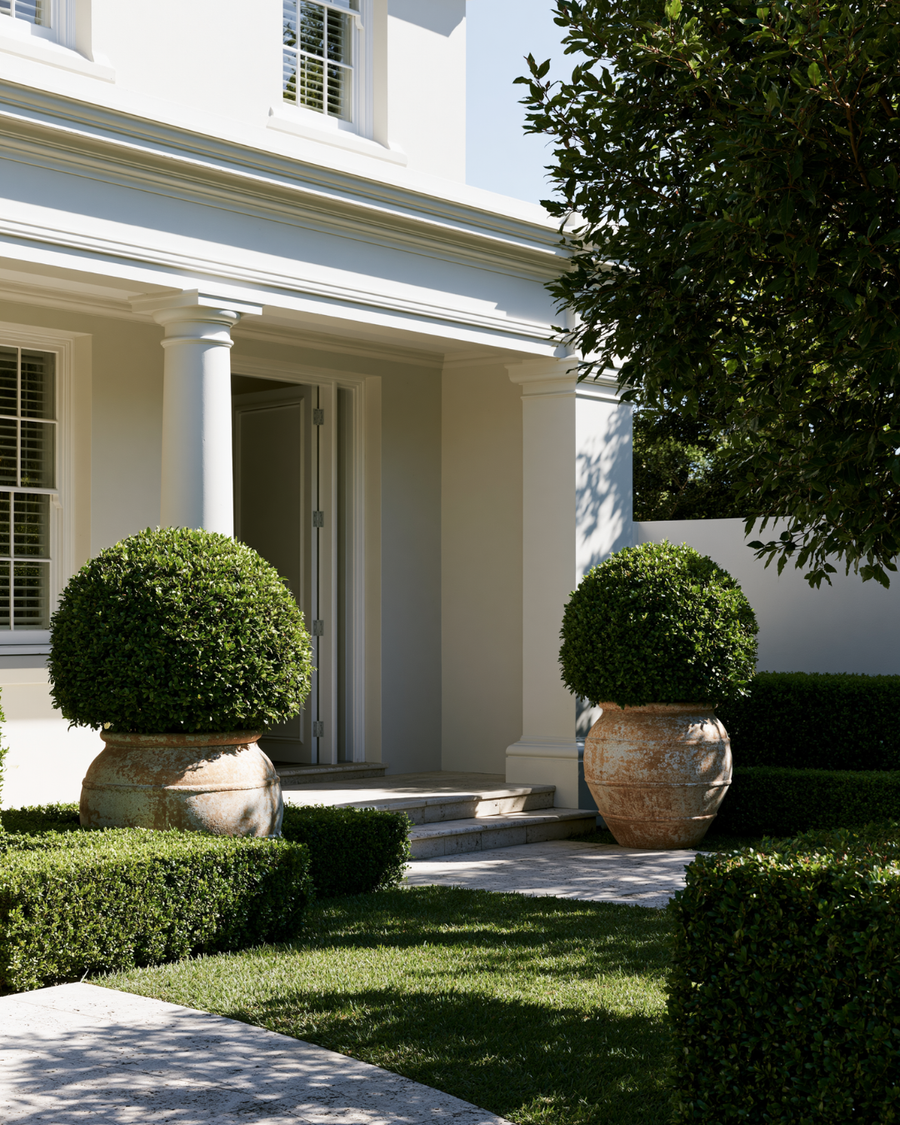
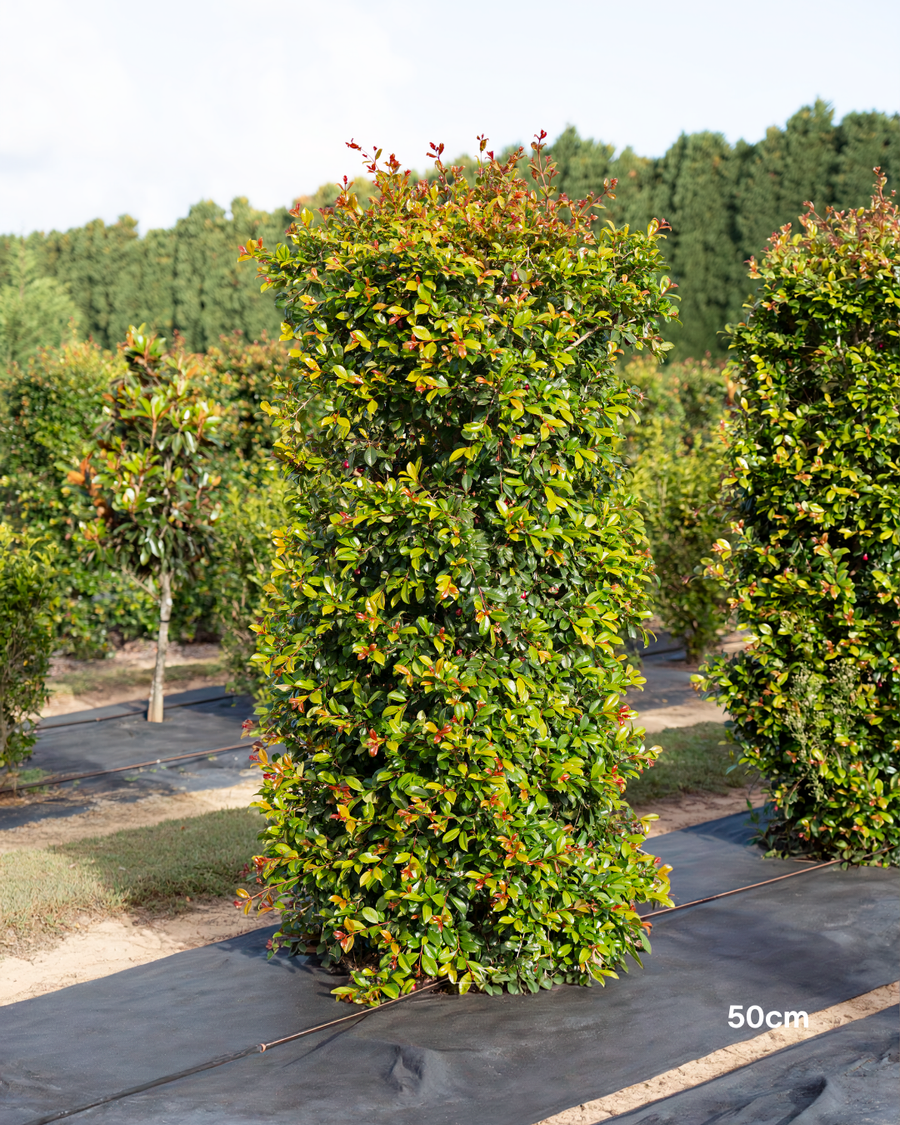
Tristaniopsis laurina 'Luscious' / Watergum Trees is a dependable choice for structured feature and street tree planting in urban and coastal landscapes. Its compact, upright form with dense, glossy evergreen foliage and striking copper-bronze new growth creates year-round visual interest and clean architectural lines.
Growing 7-10 metres tall with a 4-5 metre spread, it thrives in full sun to part shade and tolerates coastal exposure, urban pollution, and moderate drought. Its fragrant yellow flowers in late spring to summer add seasonal appeal.
For greater landscape impact, plant 'Luscious' with low-growing groundcovers or shade-tolerant shrubs beneath to enhance layered texture and biodiversity. Its tidy habit and pruning tolerance make it ideal for formal streetscapes, courtyards, or informal screening in medium to large gardens.
Frequently Asked Questions
About Tristaniopsis laurina 'Luscious' Watergum
How tall does Luscious Watergum grow?
Luscious grows to 7-10 metres tall with a 4-5 metre spread, with a compact upright form.
How fast does Luscious grow?
Luscious has a moderate growth rate of 40-60cm per year once established.
Is Luscious suitable for street planting?
Yes. Luscious is widely used by Australian councils as a street tree thanks to its tolerance of urban pollution, coastal exposure, and tight pavement conditions.
Is Luscious an Australian native?
Yes. Tristaniopsis laurina is an Australian native, naturally found along watercourses on the east coast.
When does Luscious flower?
Fragrant yellow flowers appear in late spring to summer, typically November to January.
How far apart should I plant Luscious for a row or hedge?
Plant 1.5-2 metres apart for a continuous canopy or row, or 3-4 metres for individual feature trees.
Is Luscious frost tolerant?
Luscious handles light to moderate frost once established, which suits most temperate and coastal gardens along the east coast. Young trees are more sensitive, so protect them through their first winter or two in areas that get regular heavy frost. In cold inland districts, plant in a sheltered position with good drainage and mulch the root zone to keep soil temperatures steadier.