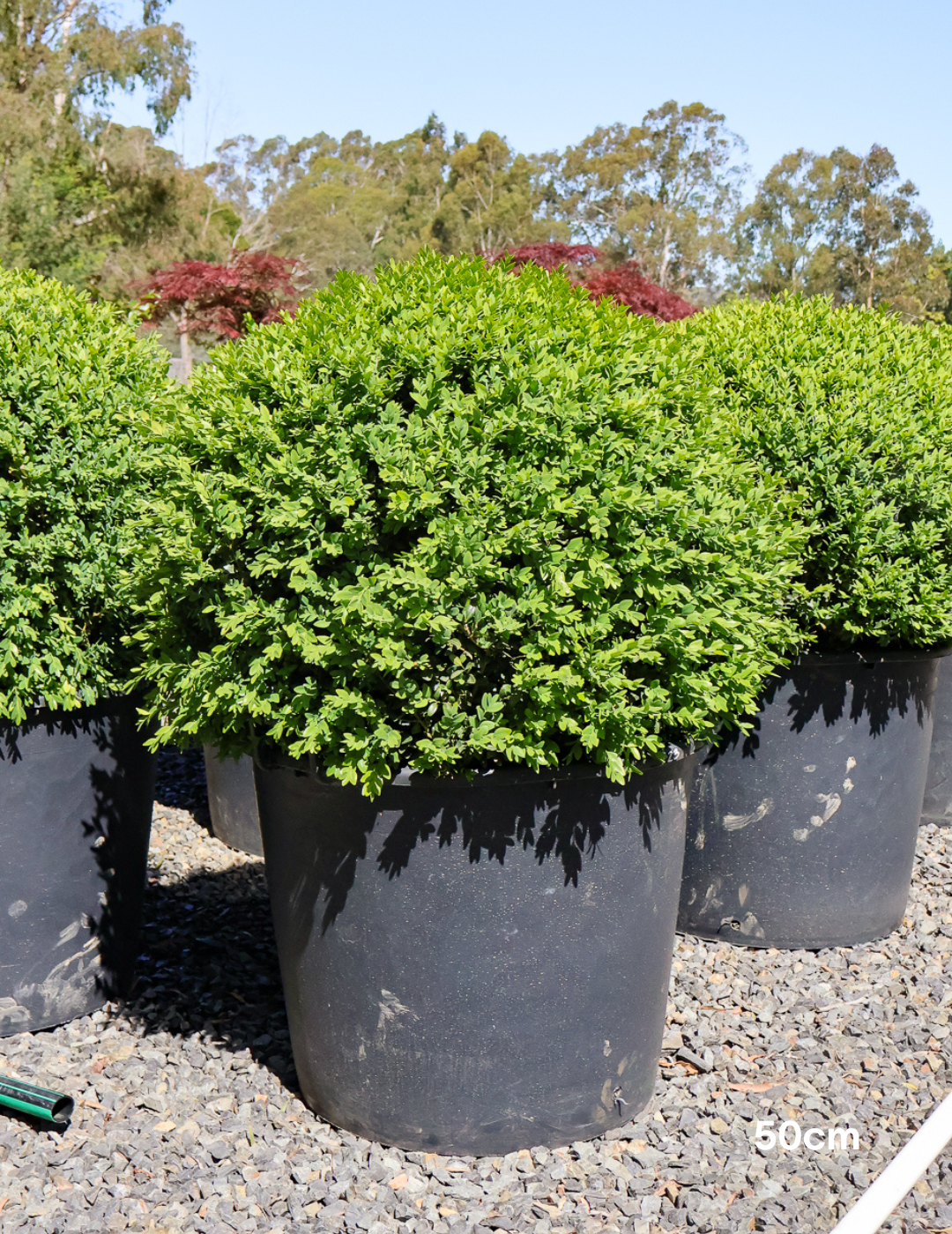
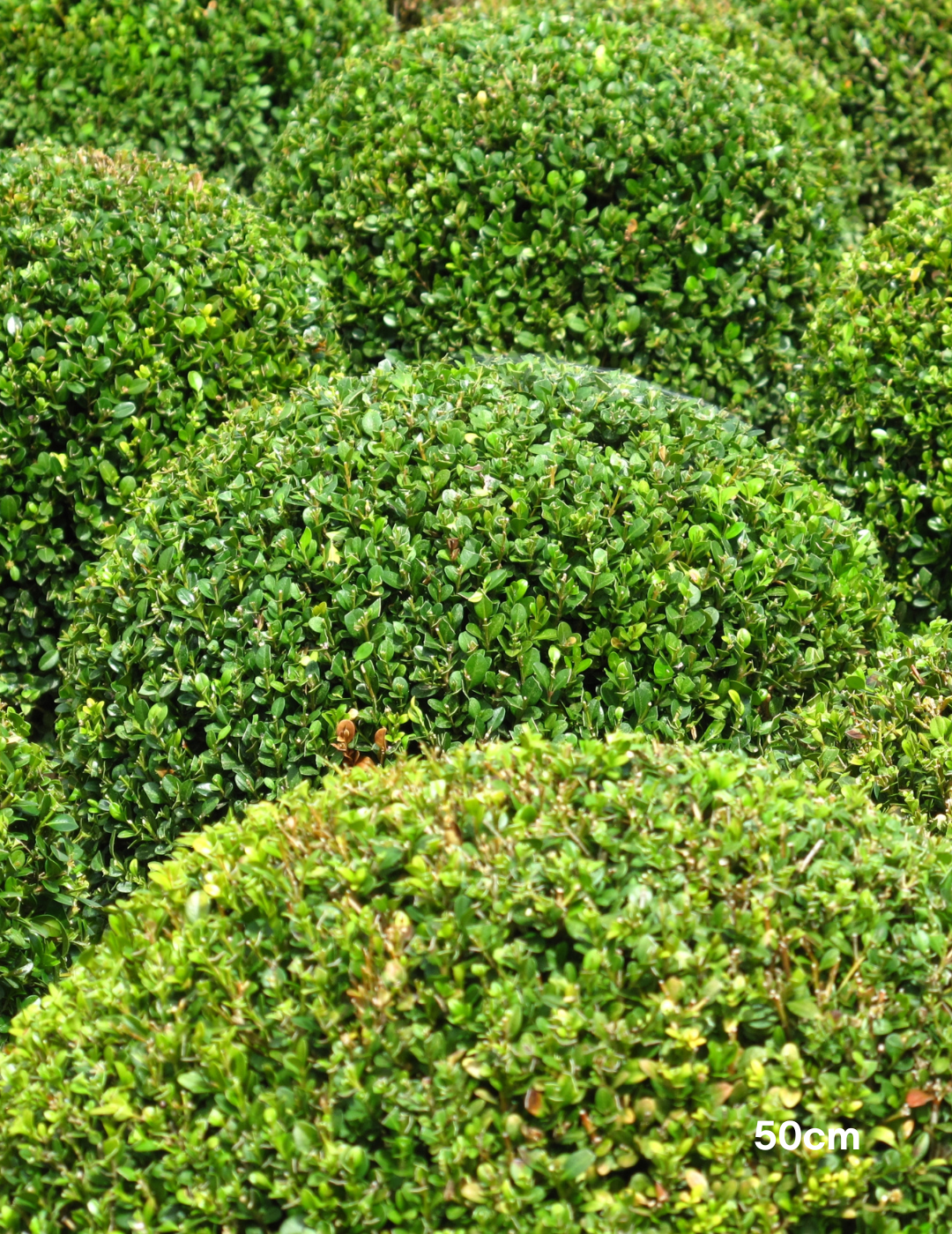
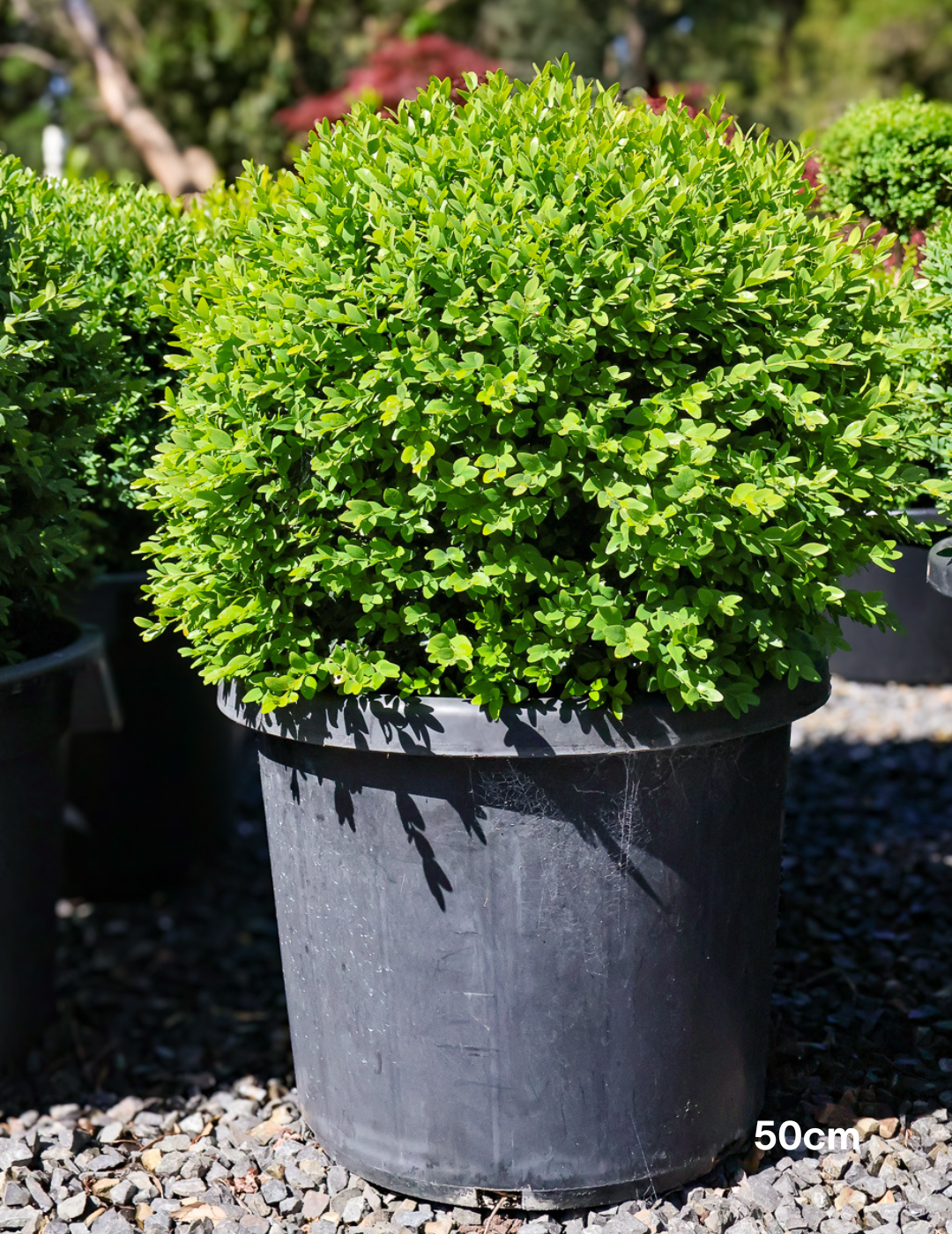
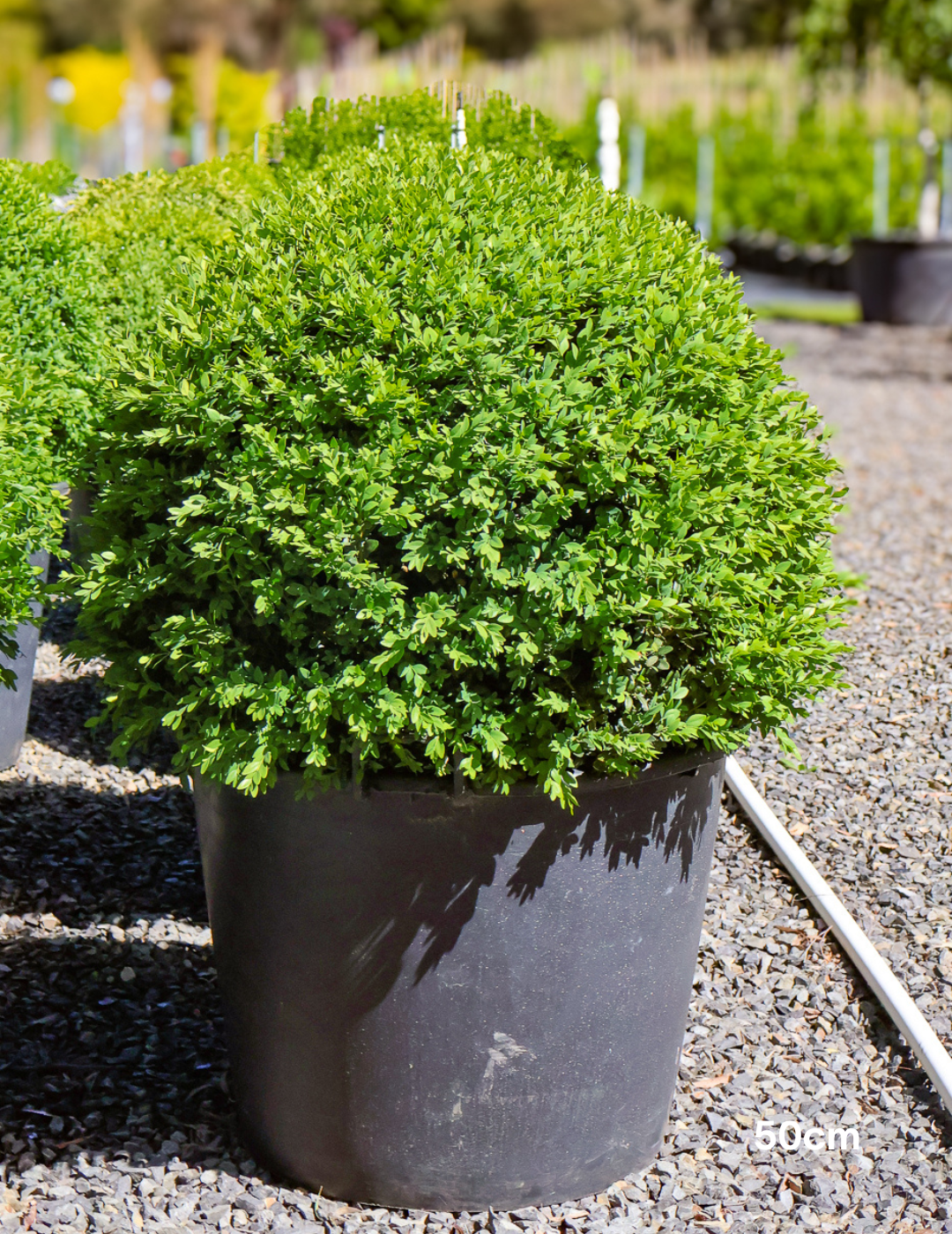
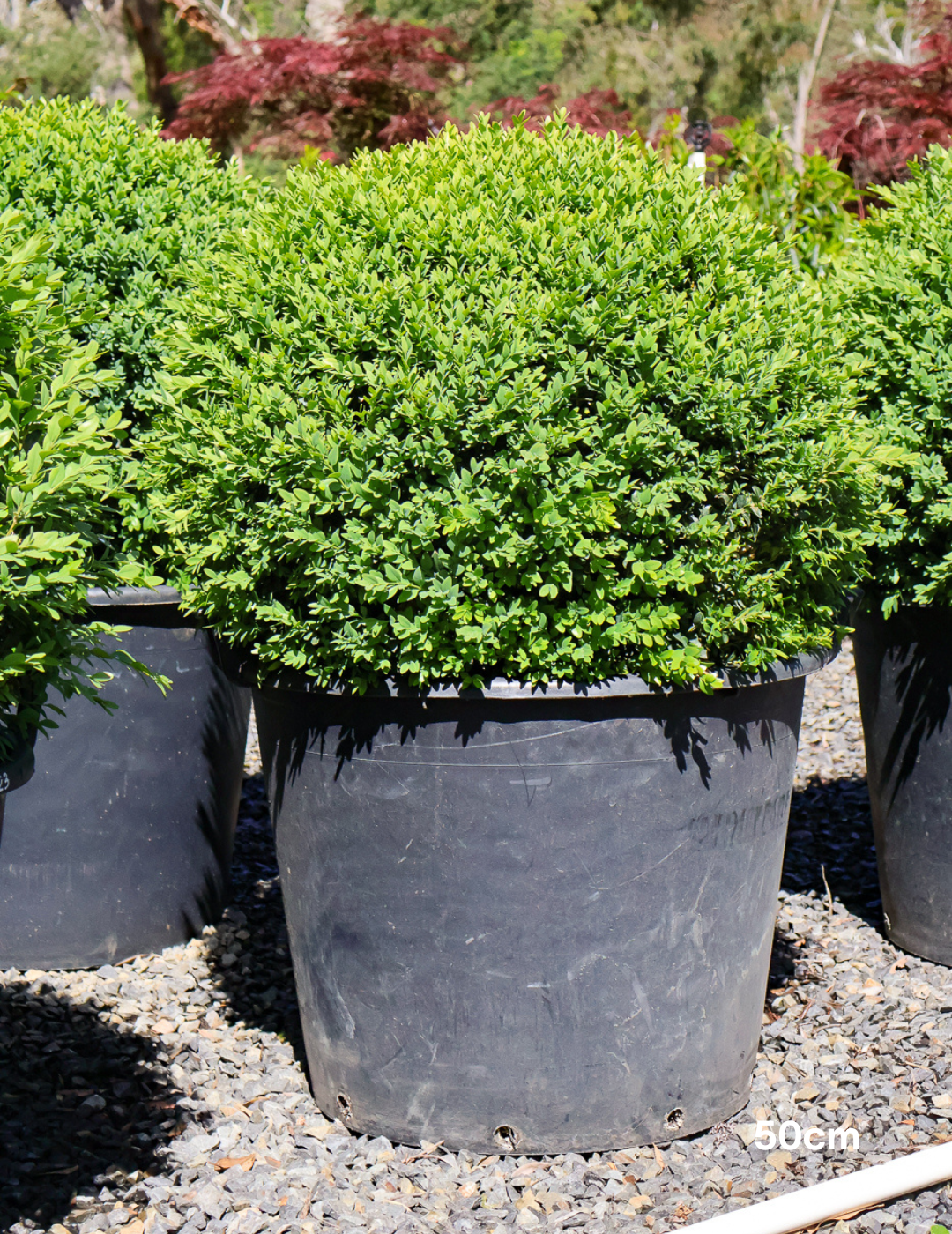
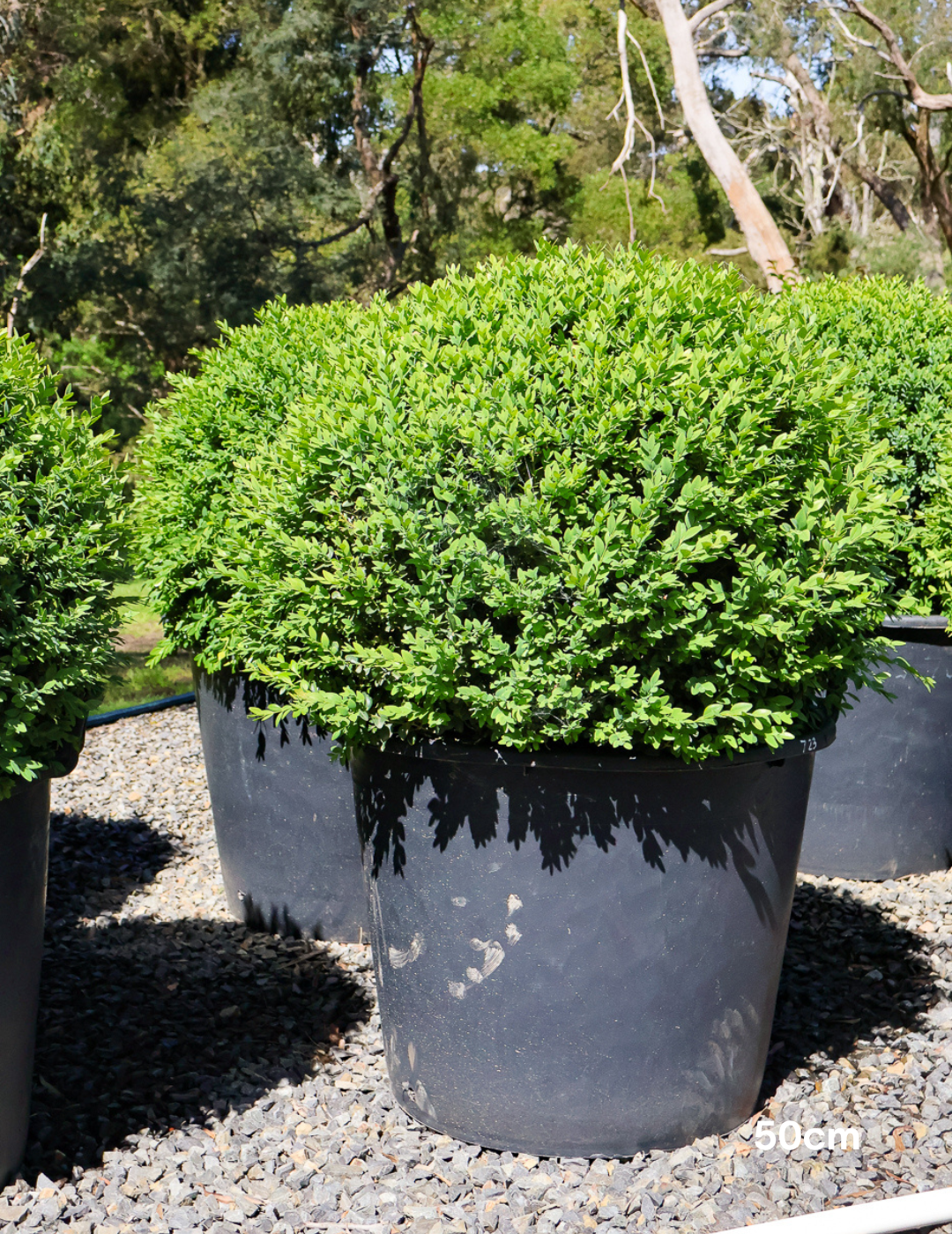
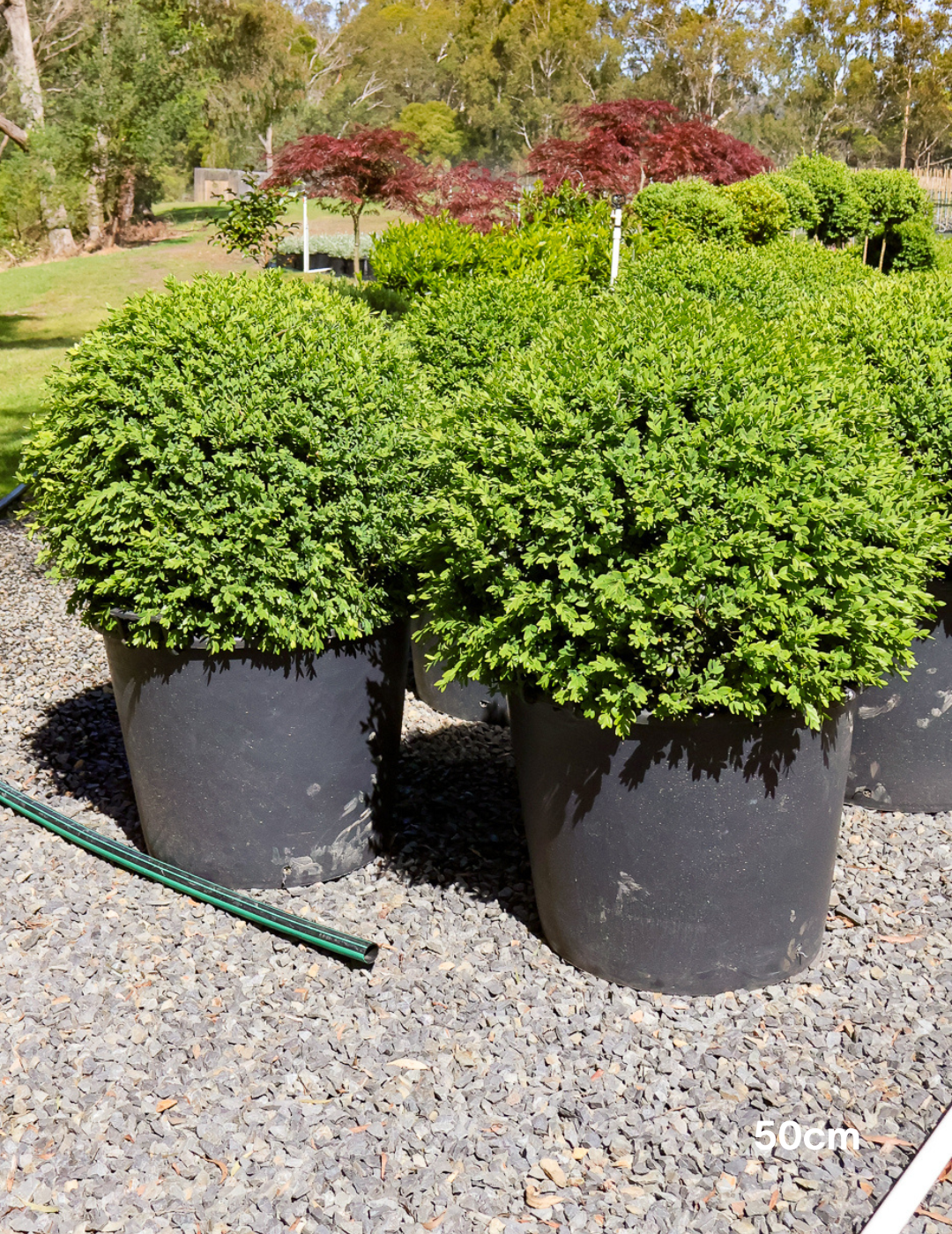
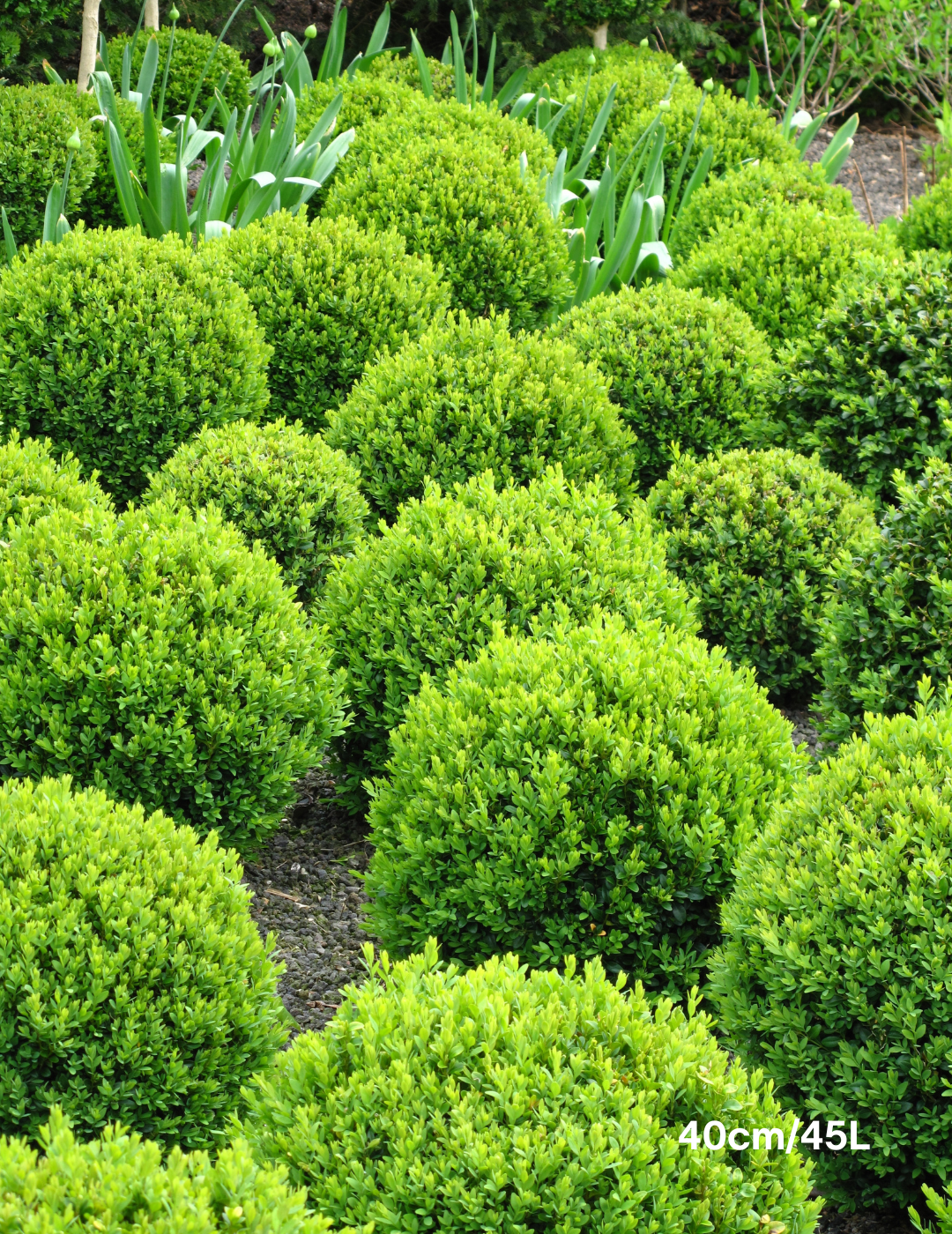
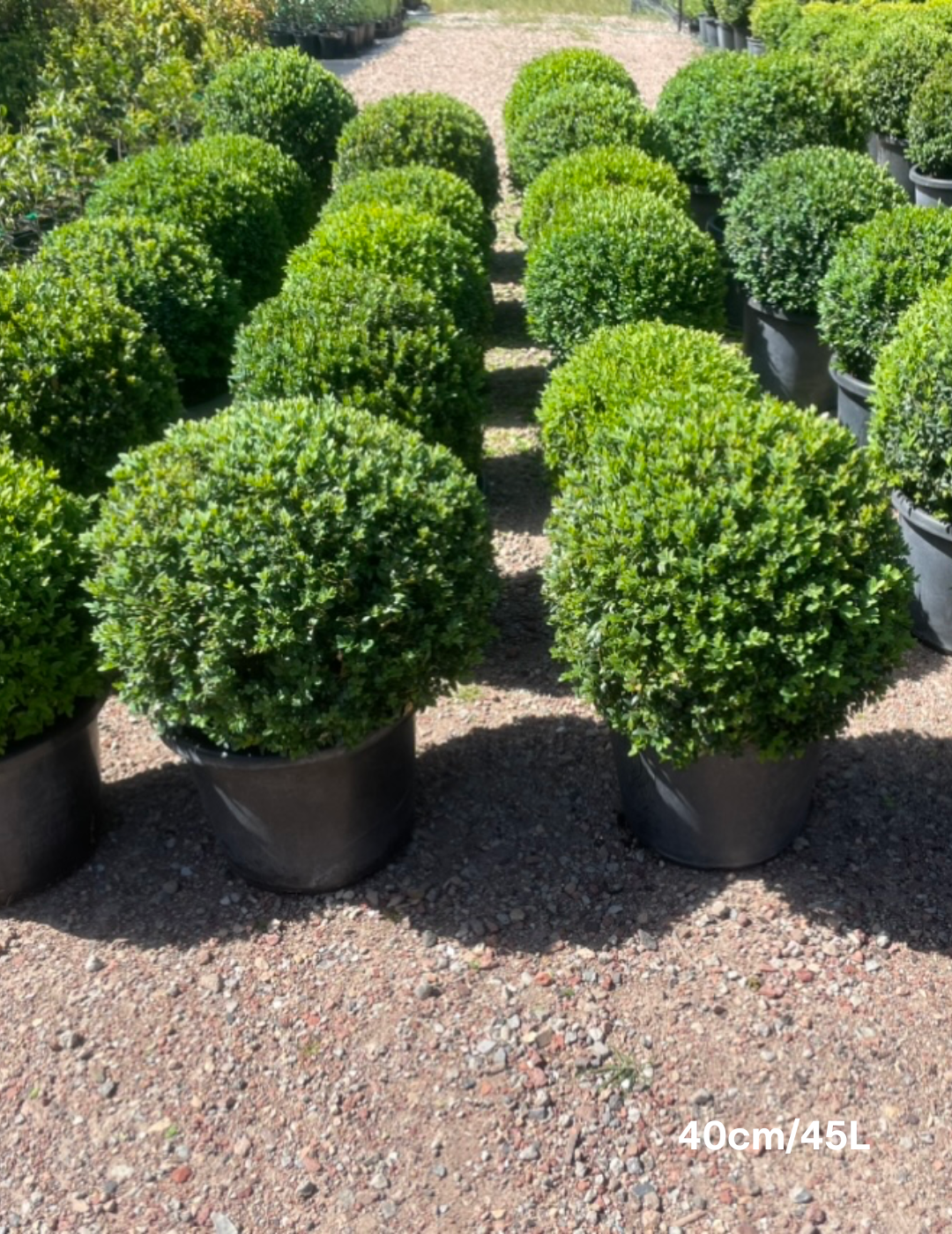
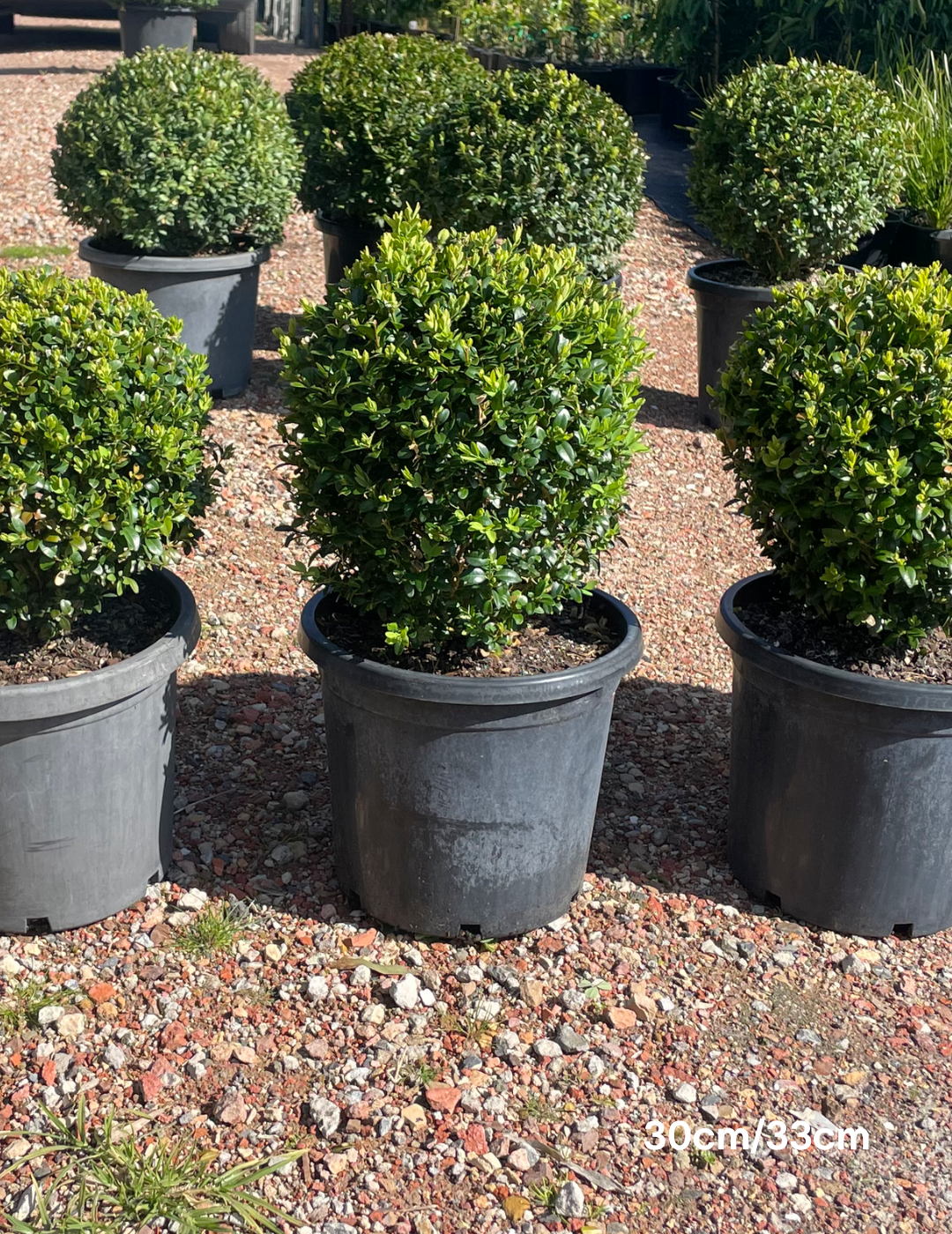
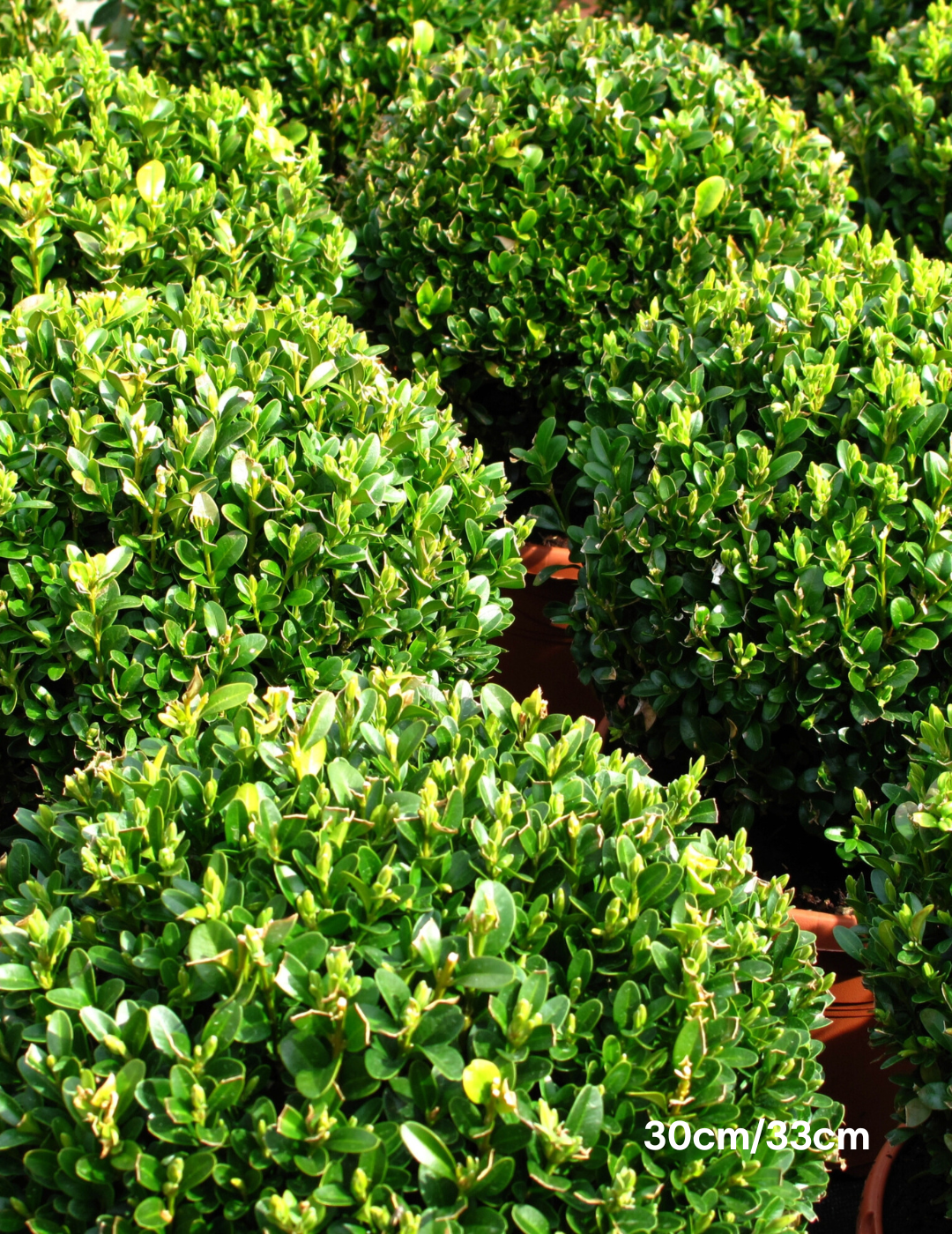
Buxus sempervirens English Box Topiary Balls
Buxus sempervirens English Box Topiary Balls
Couldn't load pickup availability
Current Stock Height Guides
Current Stock Height Guides
Trade Customers
Trade Customers
We supply advanced trees to landscapers, developers, architects, and councils Australia-wide. Trade clients receive fast quotes, expert advice, and access to premium stock with reliable freight.
Share this product
About Buxus sempervirens English Box Topiary Balls
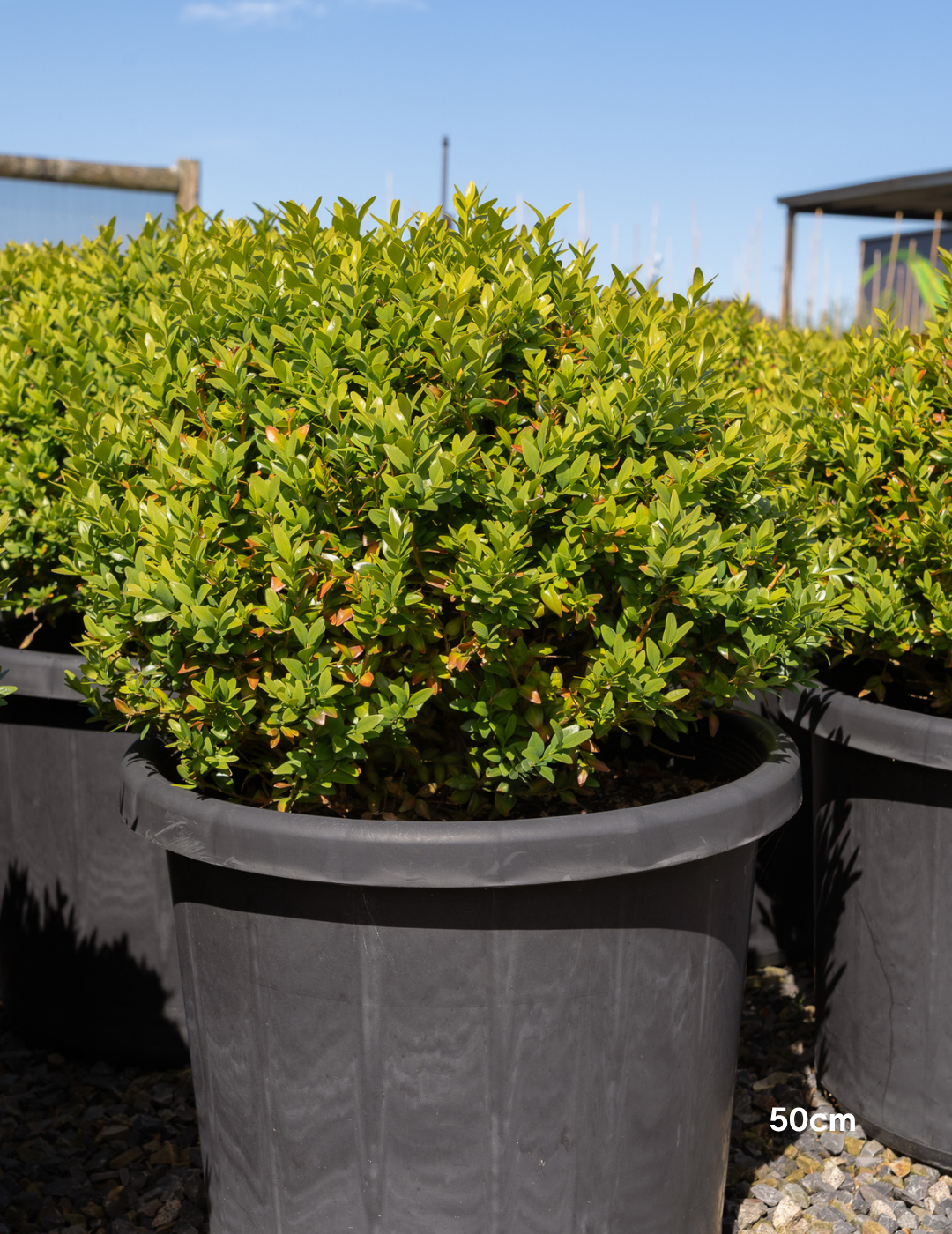
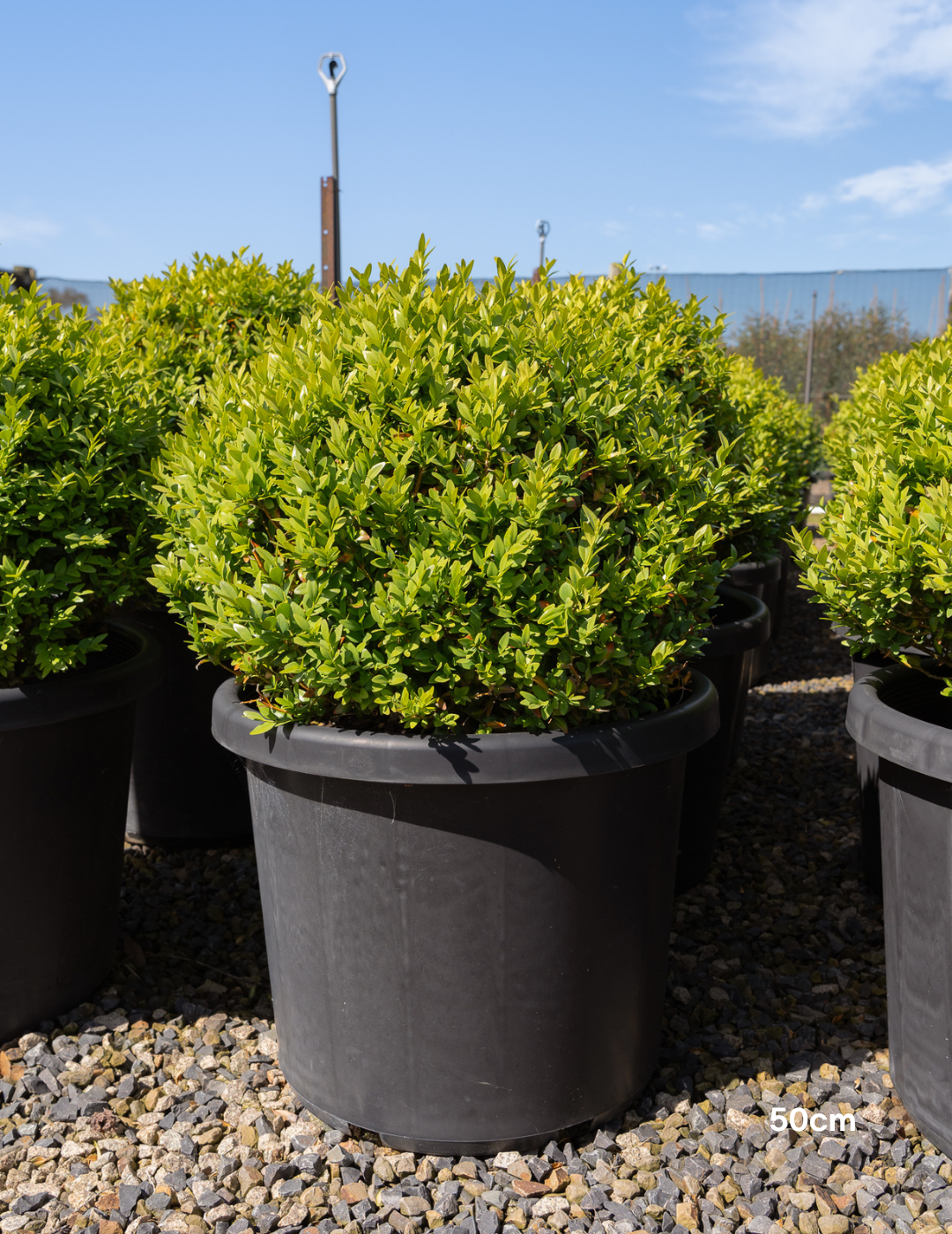
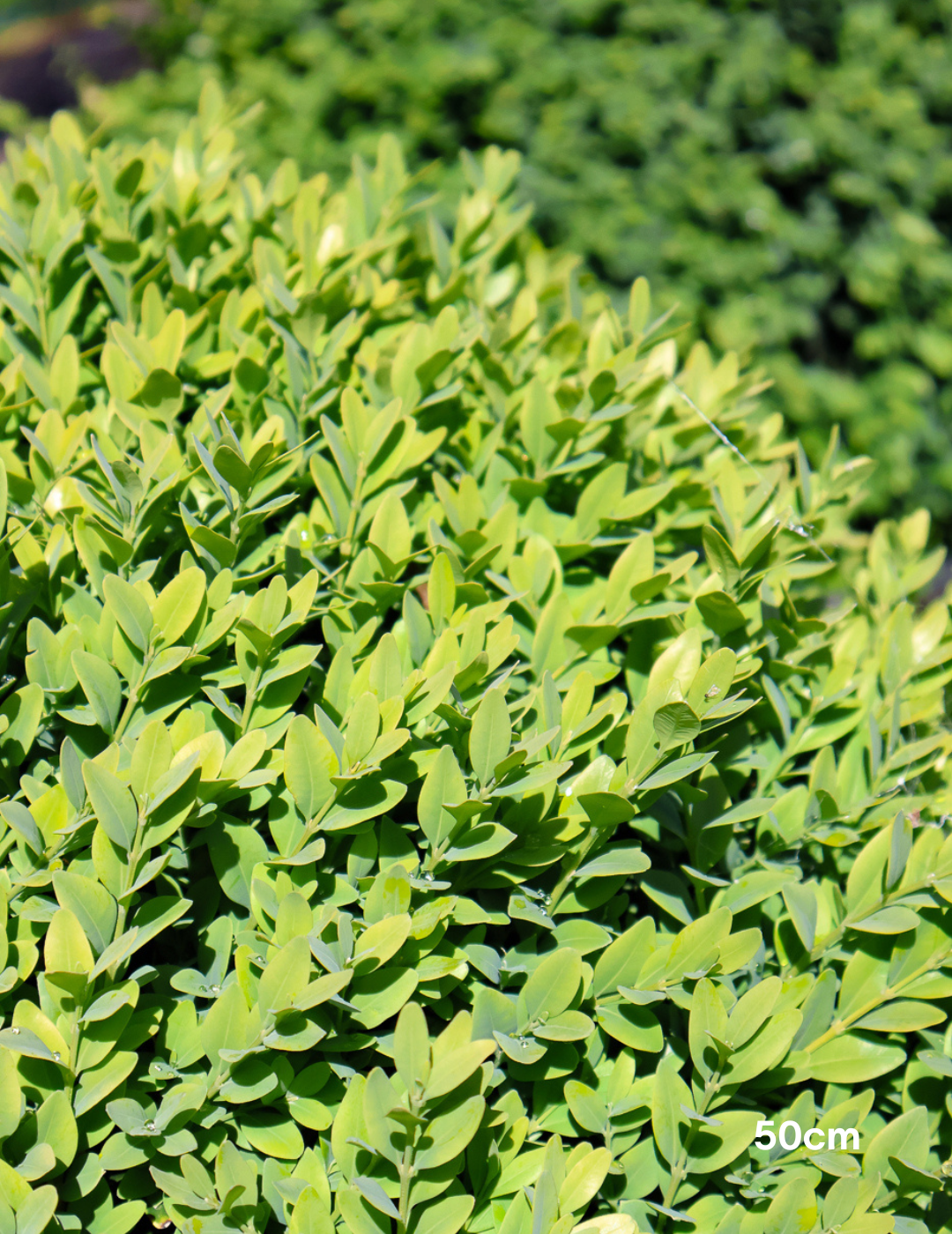
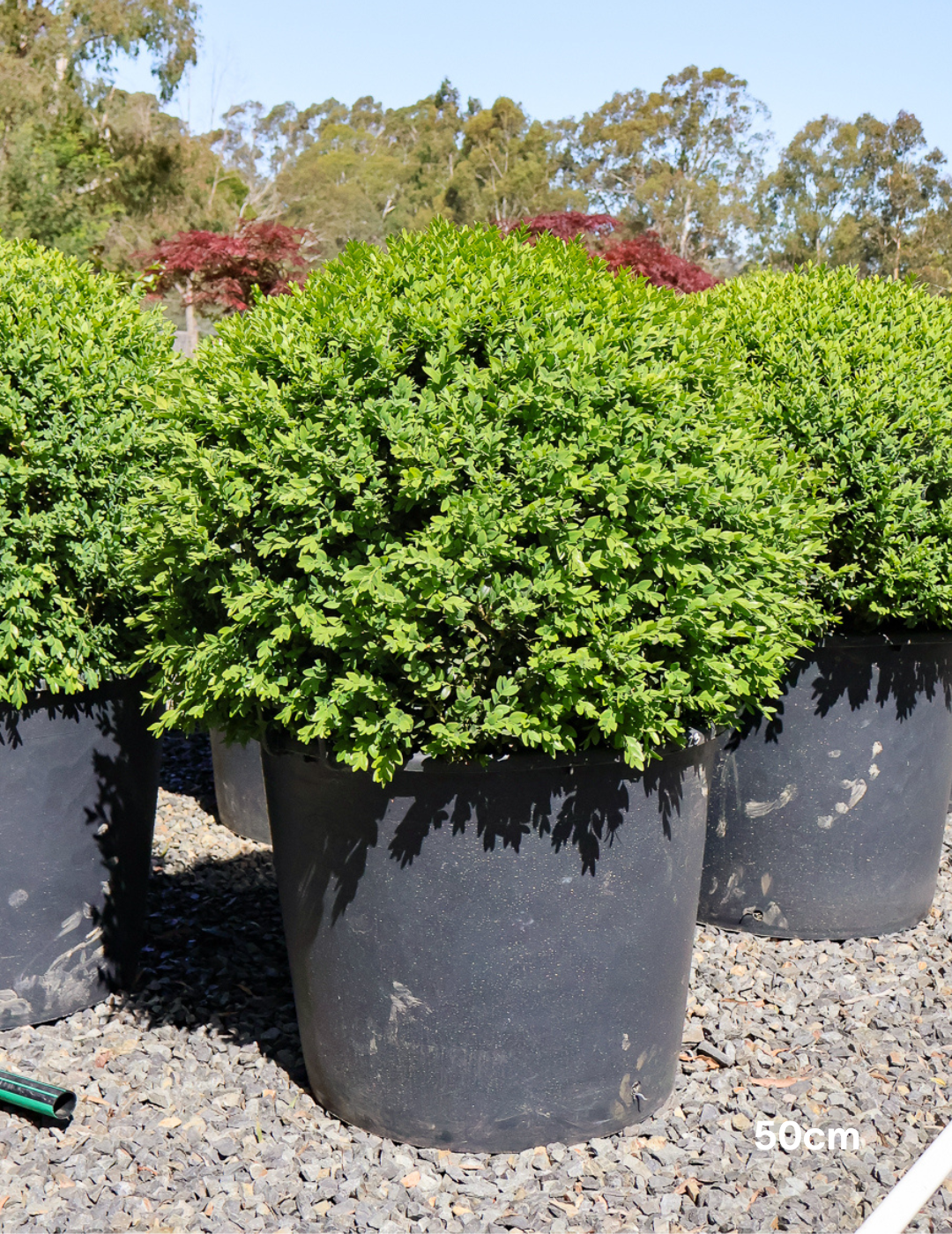
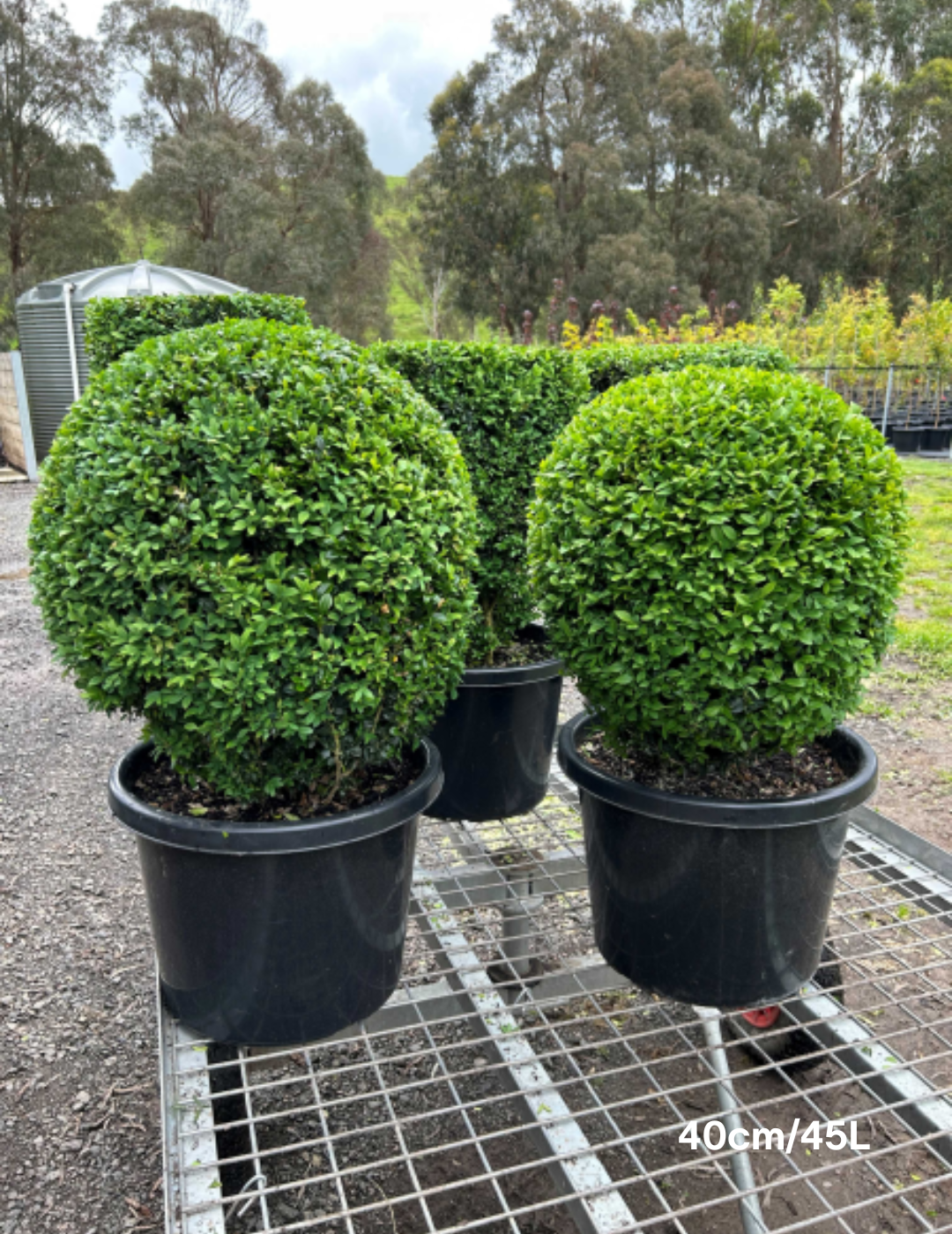
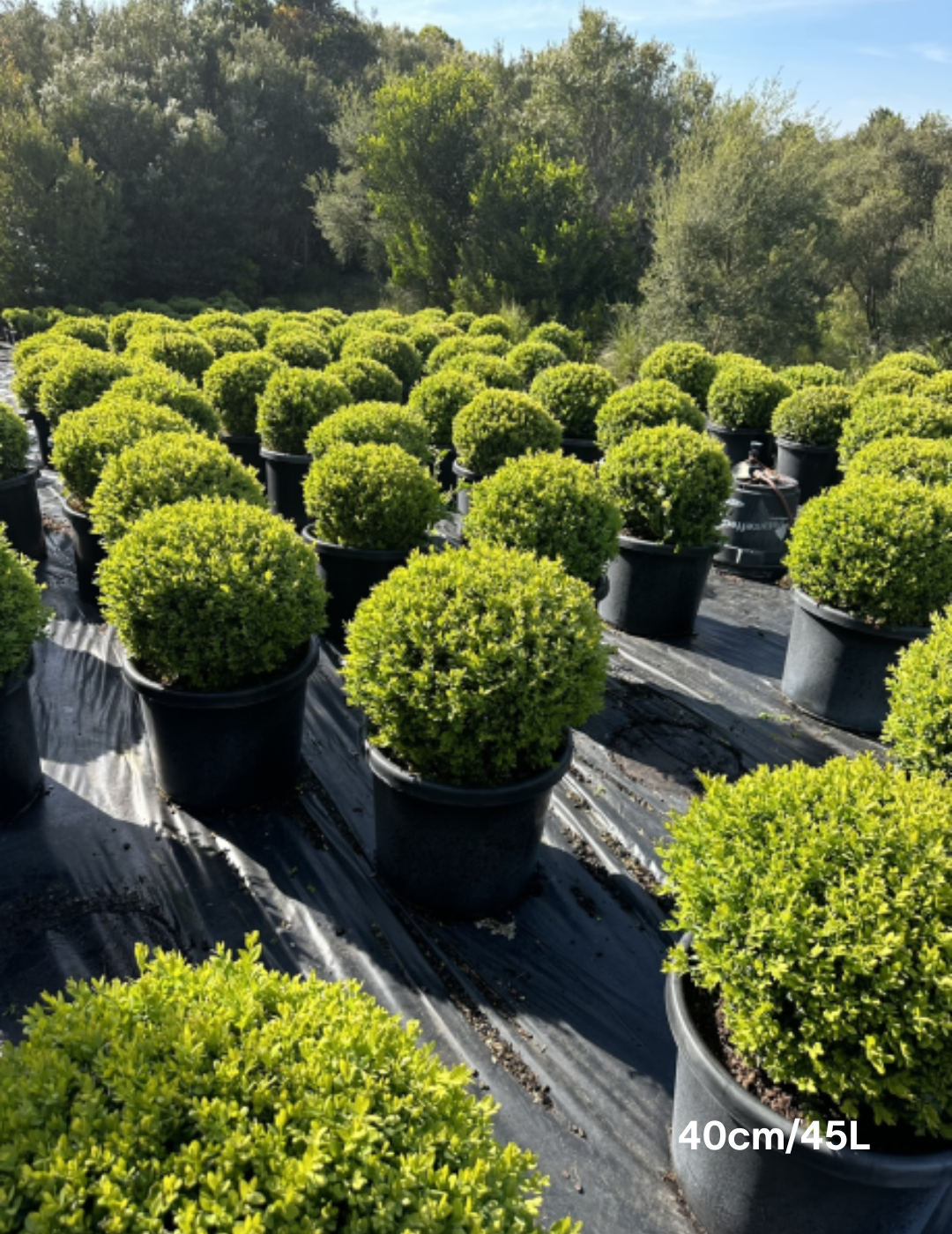
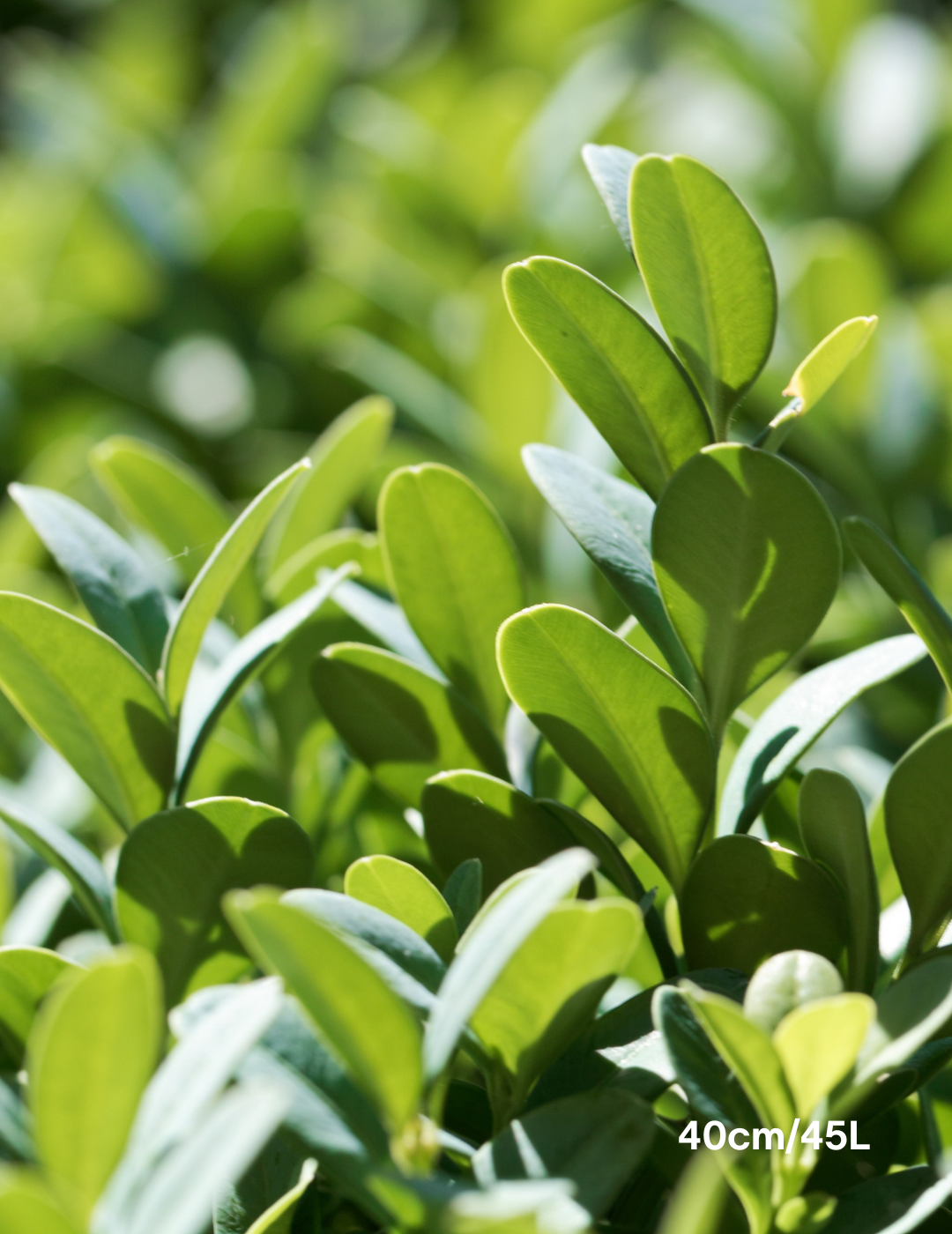
Buxus sempervirens (English Box) Topiary Balls are classic evergreen features, valued for their dense foliage and ability to maintain sharp, sculpted forms. Their small, dark green leaves respond well to trimming, allowing for clean lines and defined shapes.
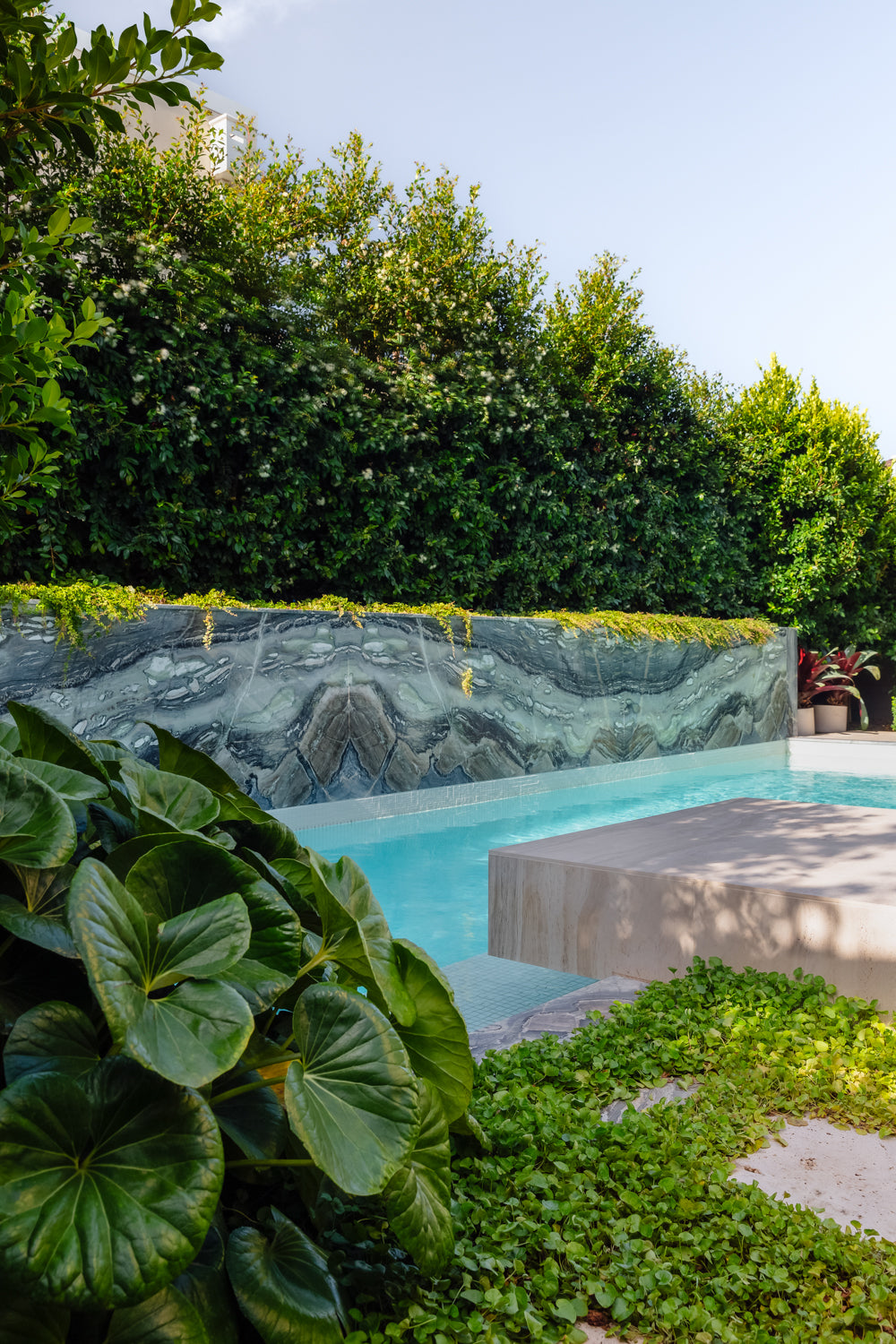
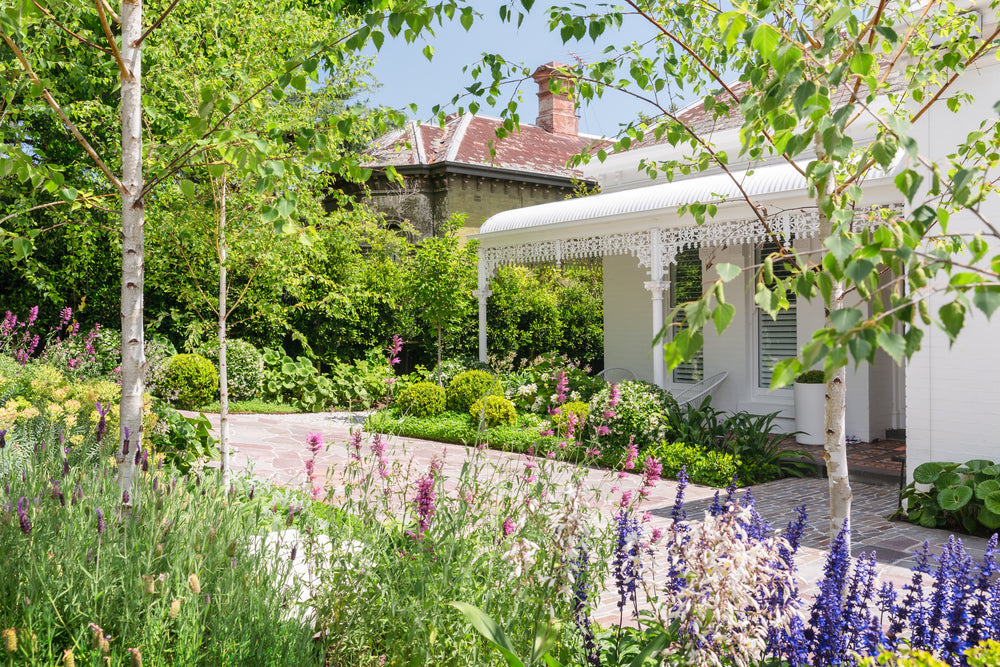
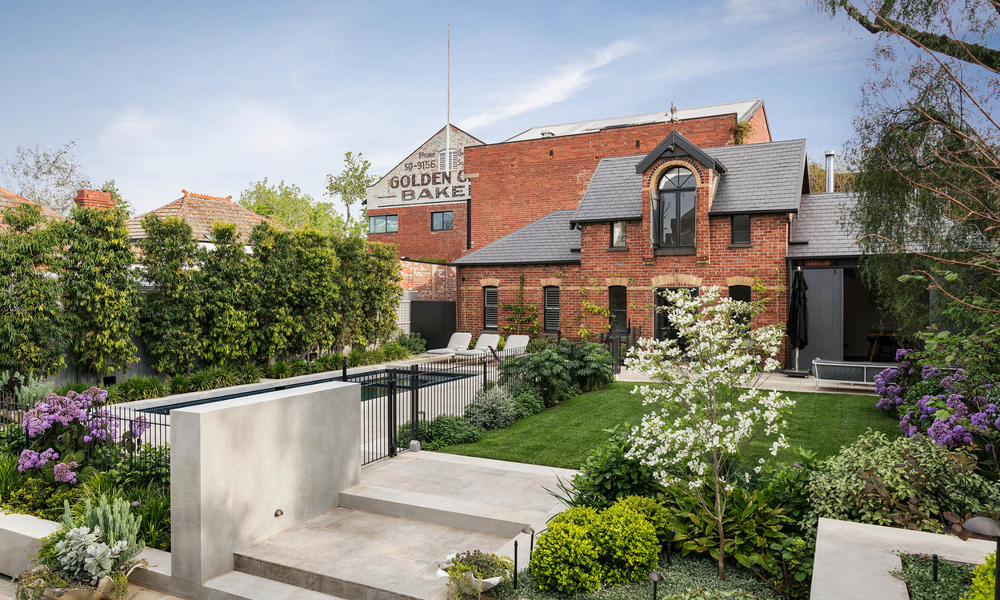
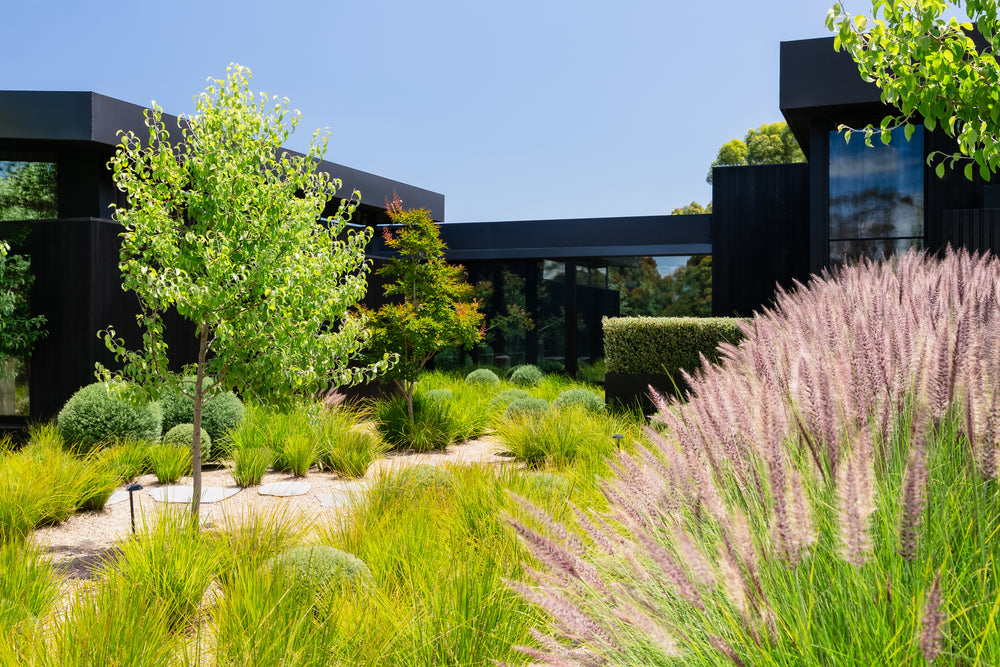
They look excellent placed along formal pathways, in symmetrical garden beds, or as a pair in containers by entrances, adding structure and year-round greenery to any space.
Key Information to Know

Mature Height & Width
Mature Height: Naturally grows 2m - 5m Approximately (Topiary height is maintained by pruning)
Mature Width: 0.5m – 1.2m
Buxus sempervirens English Box Topiary Balls is expected to grow Approx. 15 – 25 cm per year.

Native Information
Is Buxus sempervirens English Box Topiary Balls an Australian Native? No
Buxus sempervirens English Box Topiary Balls is Native to Europe, North Africa, and western Asia, where Buxus sempervirens grows naturally in woodlands and rocky slopes.

Evergreen / Deciduous
Buxus sempervirens English Box Topiary Balls is an Evergreen (foliage year round) Tree

Wildlife Value
What Wildlife Value does Buxus sempervirens English Box Topiary Balls bring to your garden?
Its evergreen, tightly branched structure offers shelter for small insects and ground-dwelling wildlife, while its fragrant spring flowers support early-season pollinators. The dense canopy also enhances micro-habitats within classic, formal and cottage-style gardens.

Frost Tolerance
Is Buxus sempervirens English Box Topiary Balls frost tolerant?
Buxus sempervirens English Box Topiary Balls is Frost Hardy – Survives heavy and frequent frost without damage.

Sunlight Information
Buxus sempervirens English Box Topiary Balls will thrive best in:

Flowering Information
Does Buxus sempervirens English Box Topiary Balls Flower?
Buxus sempervirens produces tiny, pale yellow spring flowers that are subtle but pleasantly fragrant. These little blooms provide a valuable early pollen source for native bees and hoverflies, even though they are not showy.

Drought Tolerance
Is Buxus sempervirens English Box Topiary Balls Drought tolerant?
As a young plant it requires regular watering, but once established Buxus sempervirens develops moderate drought tolerance. It performs reliably in low-water gardens and maintains its dense, formal topiary shape with occasional deep watering during extended dry periods.

Preffered Soil
What is the preferred soil type for Buxus sempervirens English Box Topiary Balls?
Buxus sempervirens performs best in well-drained loam or sandy loam soils and prefers slightly acidic to neutral conditions. It may struggle in heavy clay or poorly drained areas unless improved with organic matter to enhance aeration and reduce compaction. Keep soil evenly moist during establishment, then transition to deep, occasional watering as it matures and maintains its strong, compact form.
Botanical Information

Botanical Information
Botanical Information
Common Name: English Box Topiary
Genus: Buxus
Botanical Species: sempervirens
Family: Buxaceae
Botanical Name: Buxus sempervirens
Landscape Uses
Landscape Uses
Buxus sempervirens English Box Topiary Balls works in an:
Planting, Spacing & Care
Planting, Spacing & Care
-
-
-
-
Buxus sempervirens English Box Topiary Balls is expected to grow Approx. 15 – 25 cm per year.
Root Ball Dimensions (Width × Depth) For Planting
Root Ball Dimensions (Width × Depth) For Planting
Use this as a reference when digging your planting hole. We recommend digging at least 10% wider than the dimensions below to encourage strong root development.
- 30cm Pot: 33cm (W) × 30cm (D)
- 40cm/45L Pot: 44cm (W) × 41.5cm (D)
- 50cm Pot / 70L Pot: 55cm (W) × 41.8cm (D)
- 100L Bag: 50.6cm (W) × 52.8cm (D)
- 150L Bag: 66cm (W) × 55cm (D)
- 200L Bag: 71.5cm (W) × 60.5cm (D)
- 300L Bag: 88cm (W) × 63.8cm (D)
- 400L Bag: 99cm (W) × 66cm (D)
- 500L Bag: 122cm (W) × 66cm (D)
- 750L Bag: 134cm (W) × 69cm (D)
- 1000L Bag: 146.3cm (W) × 71.5cm (D)
- 2000L Bag: 176cm (W) × 82.5cm (D)
Ideal Conditions
Ideal Conditions
Thrives in
Frost Tolerance
Frost Hardy – Survives heavy and frequent frost without damage.
Drought Tolerance
As a young plant it requires regular watering, but once established Buxus sempervirens develops moderate drought tolerance. It performs reliably in low-water gardens and maintains its dense, formal topiary shape with occasional deep watering during extended dry periods.
Flowering Information
Flowering Information
Does Buxus sempervirens English Box Topiary Balls flower?
Flowering Period:
Flower Type:
Flower Colour:
Not Applicable
Buxus sempervirens produces tiny, pale yellow spring flowers that are subtle but pleasantly fragrant. These little blooms provide a valuable early pollen source for native bees and hoverflies, even though they are not showy.
Frequently Asked Questions
Frequently Asked Questions

We have been featured in