



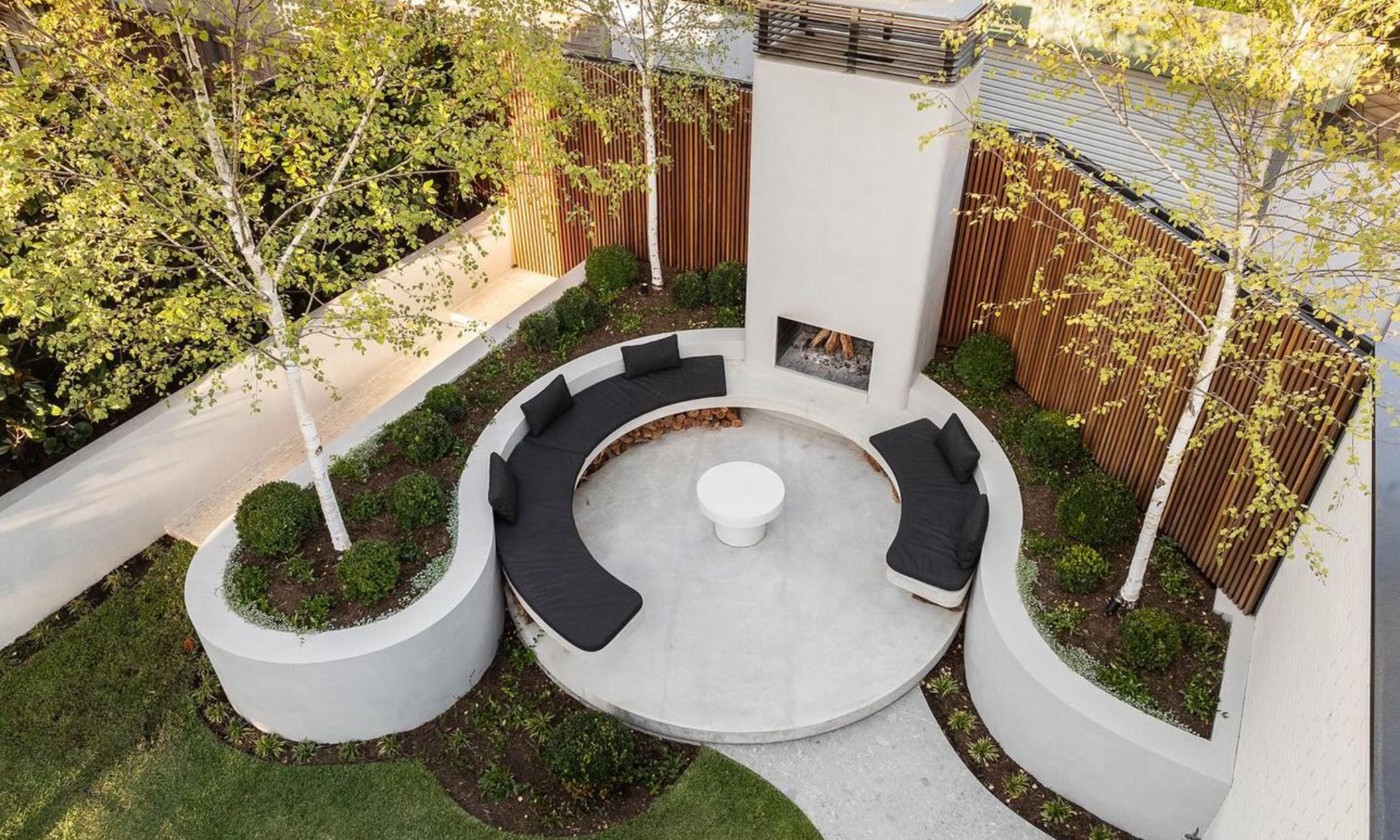
Canterbury Project
A refined Canterbury garden featuring advanced trees supplied by Evergreen Trees Direct, bringing structure, screening and established greenery to the property.
The Canterbury project brings advanced trees and considered planting to a refined residential garden, creating structure, screening and established greenery from the outset. Take a look through the finished landscape.


Products Used
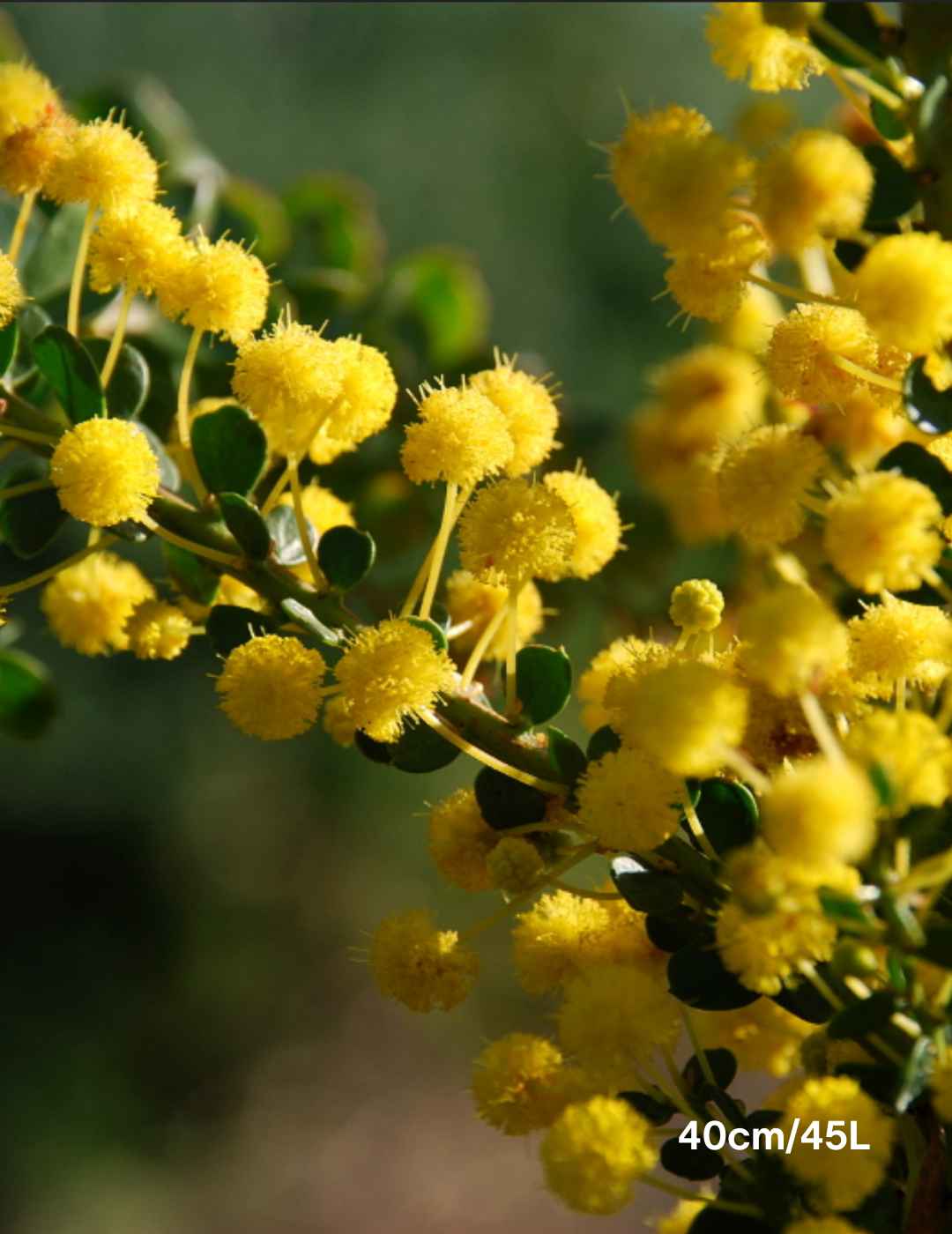
Acacia acinacea - Golden Dust Wattle
Acacia acinacea is smothered in masses of bright golden ball-shaped flowers each spring, carried along arching branches of fine blue-green foliage so densely that the whole plant appears dusted in gold. That display is where the common name Gold Dust Wattle comes from.
Acacia acinacea is compact, growing to 1 to 3 metres tall and 1 to 2 metres wide at 30 to 60 centimetres per year with a graceful arching habit. That modest scale makes it one of the few wattles that suits a suburban garden bed, a low informal screen, or mass planting along a rural fence line.
This Australian native tolerates light to moderate frost once established, along with poor sandy soils, drought and part shade. It grows in full sun to part shade and, like all wattles, needs low-phosphorus feeding and free drainage.
Frequently Asked Questions
About Acacia acinacea
How big does Acacia acinacea grow?
The Gold Dust Wattle grows to 1 to 3 metres tall and 1 to 2 metres wide with an arching habit. It is one of the more compact wattles and suits suburban gardens.
When does Acacia acinacea flower?
Masses of golden ball-shaped flowers appear through spring and into summer, carried so densely along the branches that the plant appears dusted in gold.
Is Acacia acinacea an Australian native?
Yes. It is native to south-eastern Australia and is widely used in revegetation and habitat planting as well as in gardens.
Does it attract wildlife?
Yes. The flowers attract native bees, butterflies and other pollinators, and the dense fine branching provides shelter for small birds.
Can it be used as a hedge or screen?
Yes. Plant 1 to 1.5 metres apart for a low informal screen. Its arching habit gives a softer, looser line than a formally clipped hedge.
Is Acacia acinacea frost tolerant?
It handles light to moderate frost once established. Protect young plants through their first winter in colder inland districts.
What feeding does it need?
Use only low-phosphorus native fertiliser. Like all wattles it is damaged by high-phosphorus formulations, and it also requires free-draining soil.

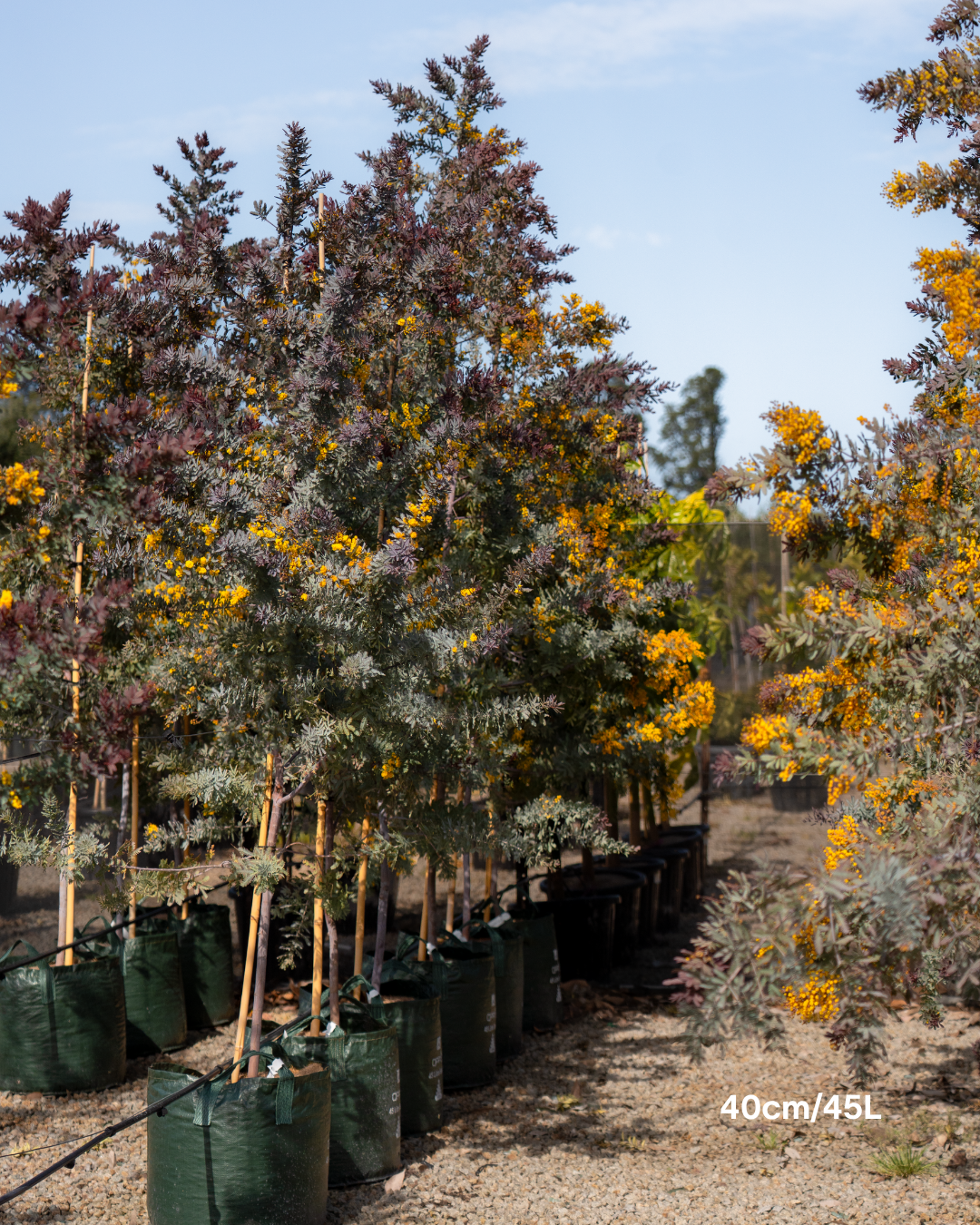
Acacia baileyana 'Purpurea' - Purple-Leaf Wattle
Acacia baileyana 'Purpurea' flushes striking purple new foliage over fine silver-grey mature growth, then covers itself in masses of golden ball flowers through late winter and early spring. The purple and gold combination is unmatched among Australian natives.
'Purpurea' grows to 4 to 6 metres tall and 3 to 5 metres wide at 1 to 2 metres per year, which makes it one of the fastest ways to establish a feature tree or soften a boundary. The weeping fine-textured canopy works as a specimen, a driveway border or an informal screen.
This Australian native grows in full sun and tolerates light to moderate frost once established, along with drought and poor soils. Like most fast wattles it is relatively short-lived at 15 to 20 years, so it is best used where quick impact matters more than longevity.
Frequently Asked Questions
About Acacia baileyana 'Purpurea'
How tall does Acacia baileyana 'Purpurea' grow?
'Purpurea' grows to 4 to 6 metres tall and 3 to 5 metres wide, forming a spreading weeping canopy. It is a small to medium feature tree suited to most suburban gardens.
What makes the foliage purple?
New growth emerges deep purple before hardening to fine silver-grey. Flushes occur through the growing season, so the purple and silver contrast is present for much of the year.
When does 'Purpurea' flower?
Masses of golden-yellow ball flowers appear through late winter and early spring, contrasting strongly with the purple new foliage.
How fast does 'Purpurea' grow?
Very fast, at 1 to 2 metres per year. It will deliver a usable feature tree or screen within two to three years of planting.
How long does Acacia baileyana 'Purpurea' live?
Like most fast-growing wattles it is relatively short-lived, typically 15 to 20 years. Plan for replacement, or use it as a quick screen while slower long-term trees establish.
Is 'Purpurea' frost tolerant?
It handles light to moderate frost once established. Protect young plants through their first winter in colder inland districts.
How far apart should I plant 'Purpurea' for a screen?
Plant 2 to 3 metres apart for an informal screen, or 3 to 4 metres apart as individual feature trees so the weeping canopy can develop fully.


Acacia cognata 'Lime Magik'
Acacia cognata 'Lime Magik' holds soft weeping lime-green foliage year round on a neat mounding frame, giving colour and movement in positions where a flowering plant would only deliver for a few weeks. The fine texture reads as a bright accent against darker foliage and hard landscaping.
'Lime Magik' grows to 1 to 2 metres tall and 1 to 2 metres wide at 50 to 70 centimetres per year, holding a naturally rounded shape without pruning. That compact size suits mass planting along a border, underplanting beneath established trees, or a single specimen in a decorative pot.
This Australian native prefers full sun and free-draining soil, and grows across a wide range from subtropical Queensland through to Melbourne and Adelaide. It is frost sensitive, so in cold inland districts choose a protected position or grow it in a pot that can be moved.
Frequently Asked Questions
About Acacia cognata 'Lime Magik'
How tall does Acacia cognata 'Lime Magik' grow?
'Lime Magik' grows to 1 to 2 metres tall and 1 to 2 metres wide, forming a neat rounded mound. It is one of the more compact Acacia cognata selections and holds its shape without pruning.
How fast does 'Lime Magik' grow?
It grows at 50 to 70 centimetres per year once established, reaching its mature size within two to three seasons in a warm, free-draining position.
Is 'Lime Magik' frost tolerant?
No. 'Lime Magik' is frost sensitive and may suffer damage in frost. Choose a protected position in cold districts, or grow it in a pot that can be moved under cover through winter.
Can 'Lime Magik' be grown in a pot?
Yes. Its compact mounding habit and weeping foliage make it an excellent pot specimen for courtyards and entries. Use a free-draining mix and avoid letting the pot sit wet.
Is 'Lime Magik' an Australian native?
Yes. Acacia cognata is an Australian native and 'Lime Magik' is a compact cultivar selected for its bright lime foliage and tidy mounding form.
Where should I plant 'Lime Magik' in the garden?
It works best in mass plantings along borders and driveways, as underplanting beneath taller feature trees, or as a single specimen in a pot. Give it full sun for the brightest foliage colour.
Does 'Lime Magik' need pruning?
Very little. A light tip prune after the main growth flush keeps the mound tight, but it holds a rounded shape naturally. Avoid cutting back hard into old wood.


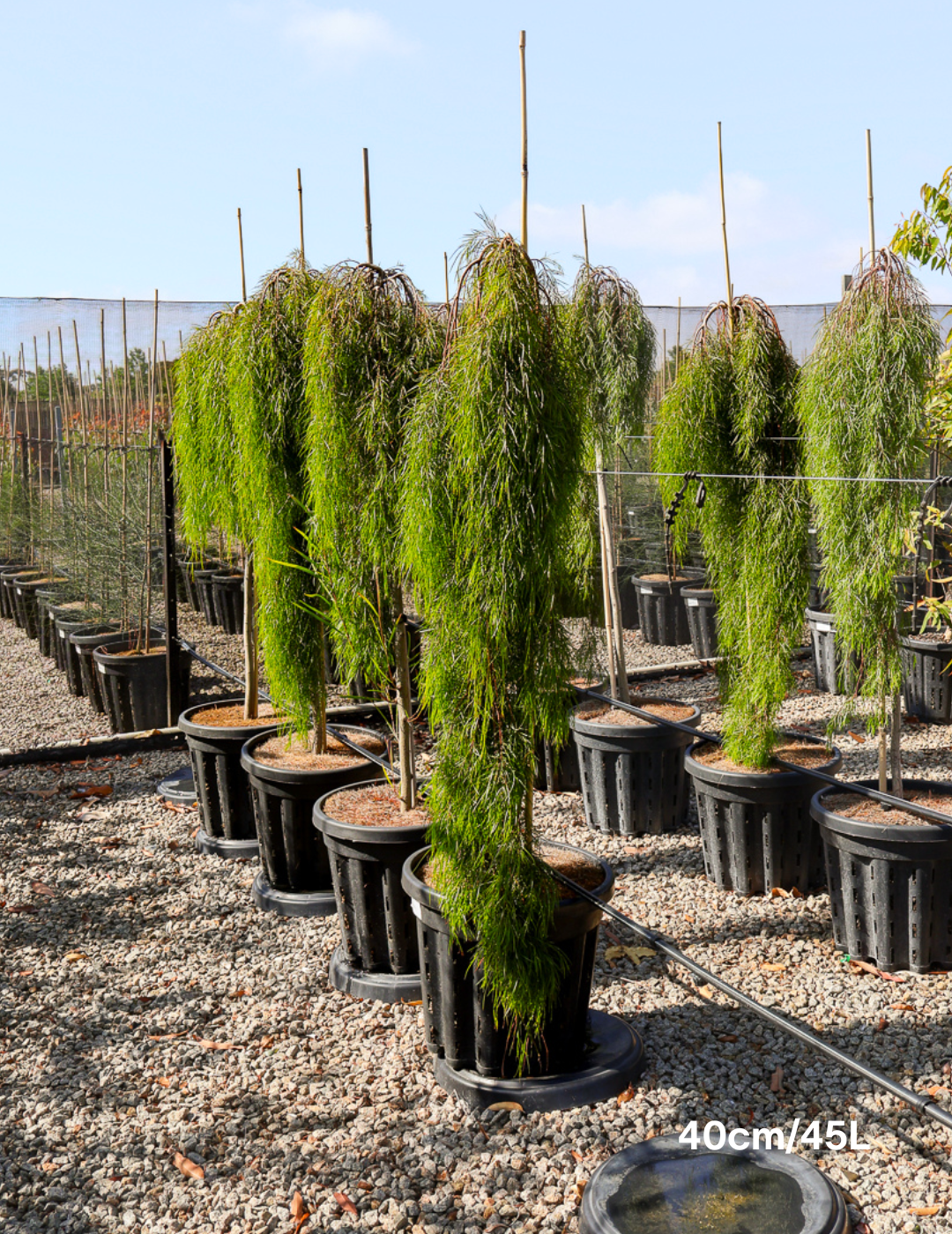
Acacia cognata 'Waterfall' Standard Wattle
Acacia cognata 'Waterfall' Standard is the cascading native wattle Acacia cognata 'Waterfall' grafted onto a clear straight trunk, producing a striking weeping mophead with fine soft foliage tumbling like a waterfall from a single feature stem. The result is one of the most distinctive native standards available in Australia.
Waterfall Standards arrive at the trunk height ordered, typically 80cm to 1.2 metres, with a weeping head that cascades 1-1.5 metres outward and downward from the graft point. The compact form, soft texture, and feature stem make it ideal for courtyards, formal entrances, balcony pots, and feature planting where movement and contrast are wanted.
Acacia 'Waterfall' is drought tolerant once established and tolerates light frost, performing well across most of southern and eastern Australia. Pale yellow ball-shaped flowers appear in clusters in late winter to early spring. Plan for a medium-term feature plant: standards typically live 8-15 years before needing replacement, which is shorter than many longer-lived trees but still excellent value for the visual impact.
Frequently Asked Questions
About Acacia cognata 'Waterfall' Standard Wattle
What is an Acacia 'Waterfall' Standard?
An Acacia 'Waterfall' Standard is the cascading native wattle Acacia cognata 'Waterfall' grafted onto a clear straight trunk. The result is a striking weeping mophead with fine soft foliage tumbling like a waterfall from a single feature stem.
How tall does Acacia 'Waterfall' Standard grow?
Our Waterfall Standards arrive at the trunk height you order, typically 80cm-1.2 metres. The weeping head cascades 1-1.5 metres outward and downward from the graft point.
How fast does Acacia 'Waterfall' grow?
Waterfall has a moderate growth rate of 20-40cm of new cascading foliage per year once established.
Is Acacia 'Waterfall' an Australian native?
Yes. Acacia cognata is native to eastern Australia, ranging from VIC through to southern NSW. 'Waterfall' is a selected weeping cultivar of the species.
When does Acacia 'Waterfall' flower?
Waterfall produces small clusters of pale yellow ball-shaped flowers in late winter to early spring (July to September across Australia). The display is subtle compared to other wattles.
Can Acacia 'Waterfall' Standard grow in pots?
Yes. Waterfall Standards are excellent in large pots (40L+) and widely used as a feature plant in courtyards, entrances, and balcony planting where the cascading head can be appreciated.
How long do Acacia 'Waterfall' Standards live?
Waterfall Standards typically live 8-15 years. They are a medium-term feature plant rather than a long-lived tree, so plan for eventual replacement.


Acacia cognata 'Limelight'
Acacia cognata 'Limelight' forms a soft cascading mound of fine lime-green foliage that holds its colour year round, giving movement and brightness in positions where a flowering plant would deliver for only a few weeks. It is one of the most widely used native accent plants in Australian design.
'Limelight' is a genuine dwarf, reaching just 60 centimetres to 1 metre tall and wide at 20 to 40 centimetres per year, and holding a neat rounded bun shape without pruning. That compact scale suits mass planting along borders, underplanting beneath feature trees, and single specimens in decorative pots.
This Australian native grows in full sun to part shade and needs free-draining soil, performing poorly where drainage is impeded or humidity is high. It is frost sensitive, so in cold districts choose a protected position or grow it in a pot that can be moved.
Frequently Asked Questions
About Acacia cognata 'Limelight'
How big does Acacia cognata 'Limelight' grow?
'Limelight' is a dwarf cultivar reaching only 60 centimetres to 1 metre tall and wide. It is far smaller than the parent species Acacia cognata, which grows to several metres.
Does 'Limelight' need pruning?
No. It holds a neat rounded bun shape naturally. A light tip prune after the main growth flush keeps it tight, but never cut back hard into old wood.
Is 'Limelight' frost tolerant?
No. It is frost sensitive and may be damaged by frost. Choose a protected position in cold districts, or grow it in a pot that can be moved under cover.
Can 'Limelight' be grown in a pot?
Yes. Its compact cascading habit makes it an excellent pot specimen for entries and courtyards. Use a free-draining mix and never let the pot sit wet.
What soil does 'Limelight' need?
Free drainage is essential. It performs poorly in heavy or waterlogged soils and in humid conditions. Raised beds improve airflow and drainage where humidity is a problem.
How far apart should I plant 'Limelight' for mass planting?
Plant 60 to 80 centimetres apart for a continuous flowing lime-green mass. Closer spacing fills in faster but the mounds will merge within a few seasons.
Is 'Limelight' an Australian native?
Yes. Acacia cognata is an Australian native and 'Limelight' is a dwarf cultivar selected for its bright lime foliage and compact mounding habit.


Acacia cognata ‘Copper Tips’
Acacia cognata 'Copper Tips' is a compact Australian native shrub with fine, weeping foliage and warm copper coloured new growth. The narrow phyllodes hang in soft curtains from a low mounded frame, and the bronze tips sit against the green for most of the year, giving a plant that changes colour without ever flowering hard.
It takes full sun to part shade and wants well drained soil above all else. Growth is moderate to fast at 20 to 40 centimetres a year, and established plants tolerate drought and light to moderate frost. It suits temperate and Mediterranean districts, coastal gardens and courtyards, and needs very little attention once settled.
Use it for low hedging, mass planting along a driveway, soft edging to paths and beds, or as a container plant beside a doorway. The flowing texture reads well beside bold, architectural foliage and against rendered walls or stone. For a low native planting that stays neat without regular clipping, it is a dependable choice.
Frequently Asked Questions
About Copper Tips Acacia
What is Acacia cognata 'Copper Tips'?
It is a dwarf cultivated form of the River Wattle, an Australian native from the pea family. Unlike its tall parent it stays low and mounded, with very fine weeping foliage and copper toned new shoots. It is grown for foliage texture and colour rather than flower, and is used for low hedging, borders, mass planting and pots.
How big does Copper Tips grow?
It reaches about 1 to 1.5 metres high and 1 to 2 metres wide, so it finishes wider than it is tall. That proportion makes it useful as a low mound or a flowing edge rather than a screen. Plants in pots stay at the smaller end of the range and hold a tighter shape.
Can it grow in pots?
Yes, it is one of the better wattles for containers. Use a large pot with free draining native potting mix and make sure the drainage holes stay clear, since it will not tolerate sitting water. Water regularly through summer, as pots dry far faster than garden beds, and repot or root prune every few years to keep it vigorous.
Does it need sun or shade?
Full sun gives the densest habit and the strongest copper colour on the new growth. It also grows happily in part shade, though the plant opens up and the tip colour is more muted. Deep shade is not suitable. Whatever the aspect, drainage matters more than light, so avoid low spots where water collects.
Is it frost tolerant?
It handles light to moderate frost once established, which suits most temperate and inland gardens. Young plants going into their first winter in a cold district are worth protecting with a cover on the worst nights. Frost may bronze the outer foliage, and that damage grows out through spring without any need for pruning.
Does it flower?
Flowering is sporadic and slight. Small pale yellow flowers may appear here and there, but this selection is grown for its foliage and many plants flower very little or not at all in a given year. If you want a wattle for a strong seasonal flower display, a taller species will serve you better.
How do I care for Copper Tips?
Water through the first summer, mulch lightly and keep phosphorus rich fertiliser away from it. A light trim over the whole surface after the main flush of new growth keeps the mound dense and encourages fresh copper tips. Never cut back into bare old wood, because it will not reshoot from there.


Acacia floribunda - Gossamer Wattle
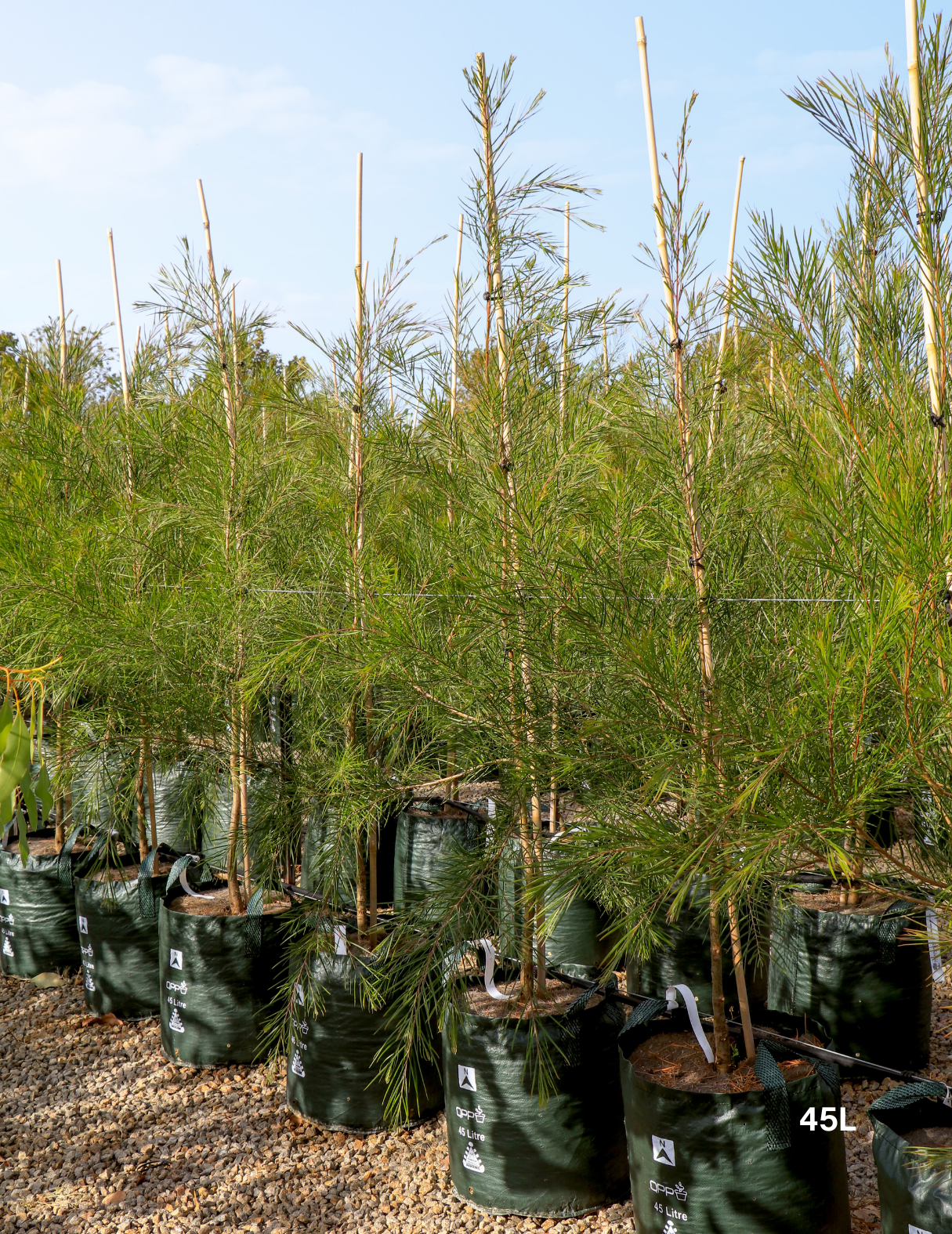
Acacia floribunda covers itself in masses of pale cream-yellow rod-shaped flowers through spring, held against fine weeping foliage that gives the whole plant a soft gossamer quality. It is one of the most graceful wattles and among the fastest ways to build a screen.
The Gossamer Wattle grows to 5 to 8 metres tall and 3 to 5 metres wide at 60 to 90 centimetres per year, branching densely to ground level with a weeping habit. It is used for fast privacy screening, rural windbreaks, and as a nurse crop sheltering slower long-term plantings while they establish.
This Australian native tolerates light to moderate frost once established, along with poor soils, coastal exposure and extended dry. Like most fast wattles it is relatively short-lived at 15 to 20 years, which suits its role as a quick screen rather than a permanent tree.
Frequently Asked Questions
About Acacia floribunda
How big does Acacia floribunda grow?
The Gossamer Wattle reaches 5 to 8 metres tall and 3 to 5 metres wide, branching densely to ground level with a soft weeping habit.
How fast does Acacia floribunda grow?
Fast, at 60 to 90 centimetres per year. It will form a usable privacy screen within two to three years of planting.
When does the Gossamer Wattle flower?
Masses of pale cream-yellow rod-shaped flowers appear through spring and into summer, attracting bees, native pollinators and small insect-feeding birds.
How long does Acacia floribunda live?
Like most fast-growing wattles it is relatively short-lived at 15 to 20 years. Use it as a quick screen or nurse crop while slower long-term species establish.
Is Acacia floribunda frost tolerant?
It handles light to moderate frost once established. Protect young plants through their first winter in colder inland districts.
Is it suitable for coastal gardens?
Yes. It tolerates coastal exposure and sandy soils well and is widely used in coastal revegetation and shelterbelt planting.
How far apart should I plant it for a screen?
Plant 2 to 3 metres apart for a dense fast screen or windbreak, or 4 to 5 metres apart where each plant should develop its full weeping form.


Acacia implexa Lightwood
Acacia implexa, the Lightwood or Hickory Wattle, is a fast-growing Australian native valued for its hardiness, ecological function, and graceful form. The slender upright habit and light green curved phyllodes give it a soft, airy presence, while pale yellow fragrant flowers appear in late summer to support native insects and birds.
Lightwood grows to 8-15 metres tall and 4-6 metres wide. The deep root system, nitrogen-fixing ability, and tolerance of poor soils make it an excellent choice for revegetation corridors, rural shelterbelts, erosion control, and habitat planting where long-term resilience matters more than ornamental polish.
Lightwood thrives in full sun and tolerates drought, seasonal dryness, and light frost once established. It performs reliably across most of eastern and southern Australia, and is widely specified for council planting, soil-improvement zones, and low-input rural landscapes.
Frequently Asked Questions
About Acacia implexa Lightwood
How tall does Lightwood grow?
Acacia implexa grows to 8-15 metres tall and 4-6 metres wide with a slender upright form.
How fast does Lightwood grow?
Lightwood is fast-growing, adding 60cm to 1 metre per year once established.
Is Lightwood an Australian native?
Yes. Acacia implexa is native to eastern Australia, ranging from QLD through NSW and VIC, where it grows naturally in open forest and woodland.
When does Lightwood flower?
Lightwood produces pale yellow lightly fragrant ball-shaped flowers in late summer, typically January to March across Australia, attracting native insects and birds.
Is Lightwood drought tolerant?
Yes. Lightwood is highly drought tolerant once established, handles poor soils and seasonal dryness, and is well suited to low-input revegetation sites.
Does Lightwood improve soil?
Yes. Like most wattles, Acacia implexa fixes nitrogen in the soil through its root system, making it a useful species for soil improvement and erosion control.
Where does Lightwood grow best in Australia?
Lightwood thrives across most of eastern and southern Australia in full sun, tolerating drought, poor soils, and light frost once established. It is widely used for shelterbelts and habitat planting.


Acacia iteaphylla
Acacia iteaphylla, the Flinders Range Wattle, is a hardy evergreen native shrub with soft grey green phyllodes on gently arching stems and a naturally rounded outline. New growth carries a purple flush, and from late winter it hangs pale lemon ball flowers in short sprays, followed by decorative blue grey seed pods.
It grows in full sun in any soil that drains, including limestone, sand and gravelly ground, and it is at home in Mediterranean, temperate and drier inland climates. Growth is 30 to 60 centimetres a year. Established shrubs are drought hardy and take light to moderate frost, and they hold coastal exposure well.
Use it as an informal screen along a fence line, a low windbreak, a bank stabiliser on dry slopes, or bulk planting in native garden beds. It has a habit of self seeding, so it is best kept away from bushland edges. Where a tough shrub is needed on a hard site, it delivers quickly.
Frequently Asked Questions
About Flinders Range Wattle
What is Acacia iteaphylla?
Acacia iteaphylla is an Australian native wattle from the Flinders Ranges in South Australia, which is where the common name comes from. It forms a rounded evergreen shrub with arching branches, soft grey green foliage and pale yellow ball flowers in winter and spring. It is widely planted for screening, revegetation and dry garden borders.
How big does Flinders Range Wattle grow?
It reaches roughly 2 to 4 metres tall and 2 to 3 metres wide, with the taller figures reached on better soils with some moisture. In hard, dry or exposed sites it stays lower and broader. Because the habit is arching rather than upright, allow the full width when planting near paths or driveways.
Where does it grow best in Australia?
It performs best in Mediterranean and temperate districts across South Australia, Victoria, southern New South Wales and the south of Western Australia, and it does well in drier inland areas too. It handles coastal exposure and alkaline or limestone soils. It is least suited to humid subtropical regions and to heavy soils that stay wet through winter.
How far apart should I plant it for a screen?
Set plants 1 to 1.5 metres apart for a dense informal screen, or about 80 centimetres apart for a tighter, more formal clipped hedge. For an avenue or a row along a fence line, 3 metres gives each shrub room to develop its full arching shape without crowding its neighbours.
Is it drought and frost tolerant?
Both, once established. It comes from a dry inland range and holds condition through long rainless periods with no supplementary water. Light to moderate frost causes no damage on settled plants, though a first winter in a cold district is easier on a young shrub with some shelter. Waterlogged soil is the real weakness.
Is it evergreen or deciduous?
It is evergreen and holds its grey green foliage all year, so screening and windbreak value continue right through winter. The plant also carries interest outside the flowering season through purple tinged new growth and long lasting blue grey seed pods. There is no period where it drops its cover.
How do I care for Flinders Range Wattle?
Water through the first summer only, then let it fend for itself. Avoid phosphorus rich fertiliser. Trim lightly straight after flowering to keep the shrub dense and to cut down on seed set, since it self seeds readily. Do not cut into bare old wood. Remove any seedlings that appear where they are not wanted.


Acacia longifolia (Sydney Golden Wattle)
Acacia longifolia, the Sydney Golden Wattle, is an evergreen shrub or small tree with a spreading, open habit and long, narrow phyllodes in fresh mid green. From late winter into spring it carries dense cylindrical spikes of bright golden flower along the stems, thick enough to colour the whole plant at a distance.
Give it full sun and almost any drained soil, including sand, gravel and poor coastal ground. Growth is fast, around 70 centimetres to a metre a year, and established plants handle drought, salt wind and light to moderate frost. The nitrogen fixing roots lift fertility in the soil around them, which helps neighbouring plants.
Most of its work is done on rural boundaries, road batters and revegetation sites, where quick cover matters more than fine detail. It suits windbreaks, habitat planting and mass native beds on sloping ground. On a large site that needs structure and bird habitat within a couple of seasons, little else establishes faster.
Frequently Asked Questions
About Sydney Golden Wattle
What is Acacia longifolia?
Acacia longifolia is an Australian native wattle from the pea family, known commonly as Sydney Golden Wattle. It grows as a fast, evergreen shrub or small tree with long linear phyllodes and golden flower spikes in late winter and spring. It occurs naturally along the east coast and is widely used for revegetation, windbreaks and habitat planting.
How big does Sydney Golden Wattle grow?
In the ground it reaches roughly 4 to 10 metres tall and 2 to 5 metres wide, with the taller end reached on deep, moist soils in sheltered positions. Exposed coastal plants stay shorter and broader. The habit is spreading rather than upright, so allow room for the canopy to widen well beyond the trunk.
How fast does it grow?
Growth is fast, about 70 centimetres to a metre a year while the plant is young and well watered. Most of the height is put on in the first three or four years, after which growth slows and the canopy broadens. Like most wattles it is not a long lived tree, so expect a working life of fifteen to twenty five years.
When does it flower?
Flowering runs from late winter into spring, generally July through to October depending on the season and how far south the plant is growing. The flowers are golden yellow and held in dense cylindrical spikes rather than the round balls of many other wattles. Bees and small nectar feeding birds work the flowers heavily.
Is it suitable for coastal positions?
Yes. It occurs naturally on coastal dunes and headlands and takes salt laden wind and sandy, low fertility soils without complaint. Plants in front line coastal positions stay lower and denser, which makes them useful for stabilising loose sand. Give it drainage and full sun and it needs very little else.
Is it drought and frost tolerant?
Once established it is genuinely drought hardy and will hold through a dry summer without irrigation. Light to moderate frost is handled well, though young plants in cold inland districts benefit from shelter for their first winter. It is less suited to heavy, waterlogged clay, which is the one situation that reliably shortens its life.
How do I care for Sydney Golden Wattle?
Water weekly through the first summer, then taper off. Avoid phosphorus rich fertiliser, which native wattles resent, and keep a light mulch clear of the trunk. Tip prune after flowering to keep the plant dense and reduce seed set. Do not hard prune into old wood, as wattles rarely reshoot from bare stems.


Type: Australian Native
Acacia acinacea - Golden Dust Wattle
Type: Australian Native
Acacia baileyana 'Purpurea' - Purple-Leaf Wattle

Type: Australian Native
Acacia cognata 'Lime Magik'
Type: Feature Tree
Acacia cognata 'Waterfall' Standard Wattle

Type: Australian Native
Acacia cognata 'Limelight'

Type: Australian Native
Acacia cognata ‘Copper Tips’
Type: Australian Native
Acacia floribunda - Gossamer Wattle

Type: Australian Native
Acacia implexa Lightwood

Type: Australian Native
Acacia iteaphylla

Type: Australian Native


Comments