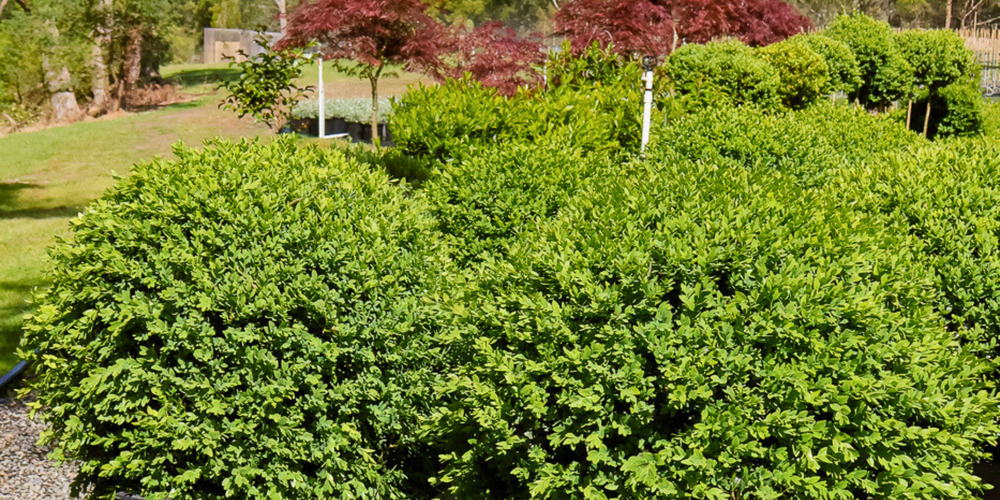
Gardenia augusta ‘Magnifica’ – Magnifica Gardenia
Gardenia augusta ‘Magnifica’ – Magnifica Gardenia
Evergreen · Full Sun / Part Shade
Mature size: 1.5m–2m high × 1m–1.5m wide
- Evergreen
- Full Sun / Part Shade
- Mature height1.5m–2m
- Mature width1m–1.5m
- Frost Tolerant
- Flowers

Most loved for its large, highly fragrant white flowers and glossy evergreen foliage.
Regular price
$140.00
Sale price
$140.00
Regular price
Tax included.
Shipping calculated at checkout.
Pot size
Available batches
- Current height guide
- Please enquire
- Pot size
- 30cm
Approximate only. Minimum height important? Confirm with us.
Height guide & disclaimer
Height guide disclaimer: Height ranges are approximate only. As living products, plant heights naturally vary between individual plants, batches, and seasons. No guarantee is given that supplied plants will fall within the stated range. If minimum heights are required, you must confirm current batch heights with Evergreen Trees Direct prior to purchase. Variation in height is normal and is not grounds for return, refund, replacement, or compensation.
Quantity
Couldn't load pickup availability
Mature height & width
Mature height & width
- Mature height
- 1.5m to 2m
- Mature width
- 1m to 1.5m
Pot sizes & dimensions
Pot sizes & dimensions
| Pot / bag size | Width | Depth |
|---|---|---|
| 30cm Pot | 33cm | 30cm |
| 40cm/45L Pot | 44cm | 41.5cm |
| 50cm Pot / 70L Pot | 55cm | 41.8cm |
| 100L Bag | 50.6cm | 52.8cm |
| 150L Bag | 66cm | 55cm |
| 200L Bag | 71.5cm | 60.5cm |
| 300L Bag | 88cm | 63.8cm |
| 400L Bag | 99cm | 66cm |
| 500L Bag | 122cm | 66cm |
| 750L Bag | 134cm | 69cm |
| 1000L Bag | 146.3cm | 71.5cm |
| 2000L Bag | 176cm | 82.5cm |
General planting reference from our existing size guide. Actual containers can vary by supplier and batch; confirm exact dimensions if required.
Delivery & pickup
Delivery & pickup
Trade enquiries
Trade enquiries
We supply advanced trees to landscapers, developers, architects, and councils Australia-wide. Trade clients receive fast quotes, expert advice, and access to premium stock with reliable freight.
Freight estimate
Based on the items currently in your cart.
Final delivery cost is confirmed at checkout using your full address.
Not sure how many trees you need?
Plan your hedge
Enter the length of your boundary, then choose how closely you want to plant.
Enter your boundary length to see how many trees you need.
Measure only the boundary you intend to plant—exclude gates and gaps. Spacing is centre to centre. Quantities are rounded up for one row, allowing roughly half the spacing at each end. Site conditions and pruning affect the final hedge.
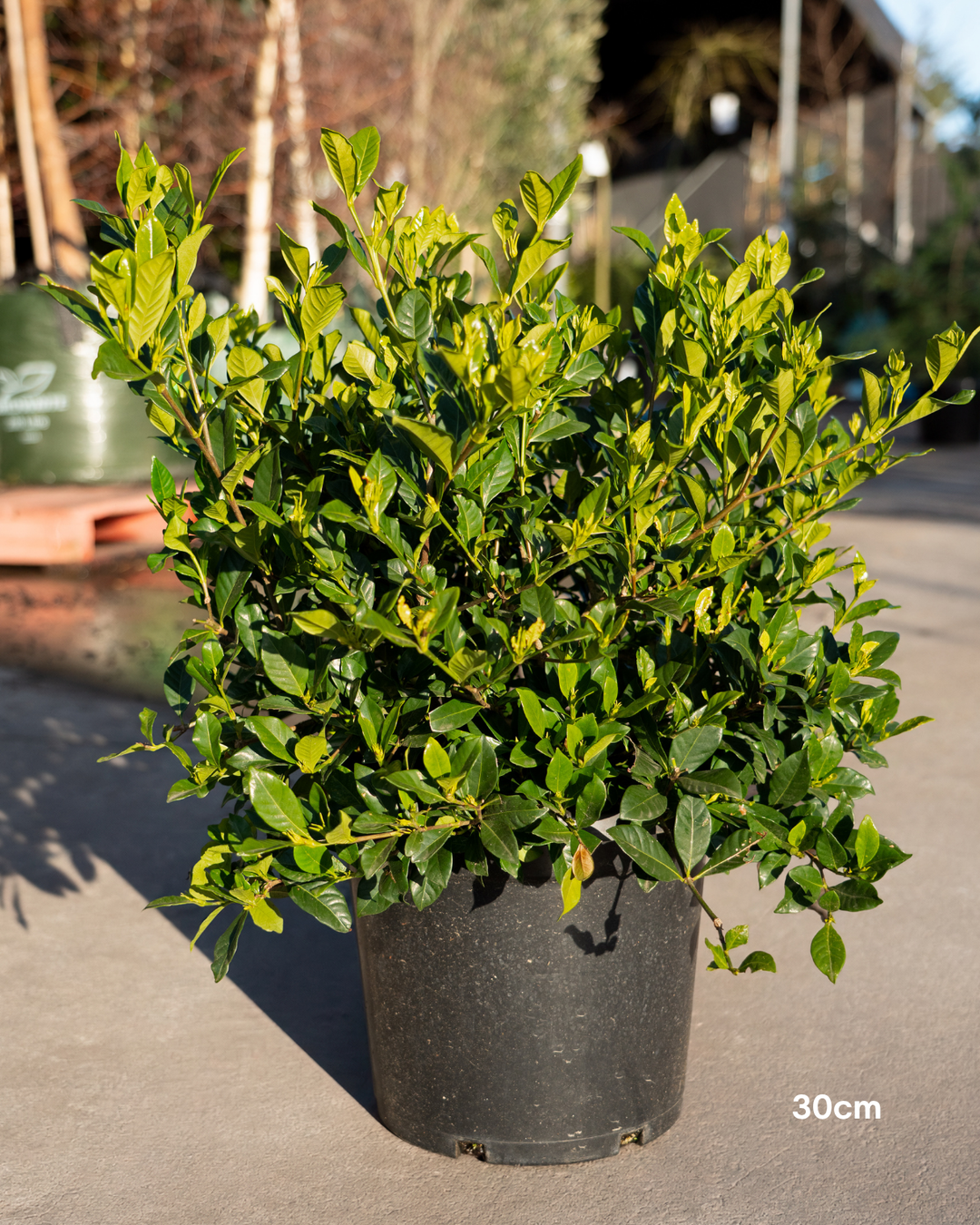
About Gardenia augusta ‘Magnifica’
Gardenia augusta 'Magnifica' is a compact evergreen flowering shrub valued for its large highly fragrant double white flowers and lush glossy dark green foliage. From late spring through summer it produces creamy-white blooms up to 10 cm across that perfume the surrounding garden, set against broad leathery leaves that hold their colour year-round.
It performs reliably in full sun to part shade with humus-rich, slightly acidic and free-draining soil. Mature plants reach 1.5 to 2 metres tall and 1 to 1.5 metres wide, forming a dense rounded habit that responds well to light pruning after flowering. Gardenia 'Magnifica' is frost tolerant once established and benefits from regular feeding and watering through the warmer months to support strong flowering.
As a fragrant evergreen flowering shrub for cottage, formal, Japanese-inspired and low-maintenance gardens, in courtyards, entrance plantings, informal hedges and decorative pots near pathways, Gardenia augusta 'Magnifica' brings outstanding perfume, glossy foliage and reliable summer flowering to gardens where its scent can be appreciated up close.
Frequently Asked Questions
About Gardenia augusta 'Magnifica' Magnifica Gardenia
When does Gardenia 'Magnifica' flower?
Gardenia 'Magnifica' flowers from late spring through summer, producing large creamy-white double blooms up to 10 cm across. The flowers are intensely fragrant and the display lasts for several months, with light repeat flowering possible into autumn in warm conditions.
How big does Gardenia 'Magnifica' grow?
Mature plants reach approximately 1.5 to 2 metres tall and 1 to 1.5 metres wide, forming a dense rounded habit. Growth is moderate at 20 to 40 cm per year, and the plant can be lightly pruned to maintain a more compact size or shaped into a formal flowering hedge.
Where does Gardenia 'Magnifica' grow best?
Gardenia 'Magnifica' performs best in warm temperate to subtropical climates with full sun to part shade. It thrives across coastal NSW, Queensland, frost-free parts of Victoria and South Australia, and warm coastal areas. It prefers humus-rich slightly acidic soil and protection from harsh afternoon sun in hot inland areas.
Is Gardenia 'Magnifica' frost tolerant?
Gardenia 'Magnifica' is frost tolerant once established and handles light to moderate frost without damage. Young plants benefit from protection in their first winter through frost-prone areas, and severe inland frost should be avoided. Mature plants in established positions hold their foliage and form through cooler months.
Can Gardenia 'Magnifica' be grown in pots?
Yes. Gardenia 'Magnifica' is excellent in large decorative pots near entrances and courtyards where its perfume can be appreciated up close. Use a quality potting mix designed for acid-loving plants, water regularly through the warmer months, and feed with an acid-loving plant food in spring and summer.
How do I care for Gardenia 'Magnifica'?
Water regularly during the growing season to keep the soil evenly moist but never waterlogged. Feed with an acid-loving plant food in spring and again in mid-summer to support strong flowering. Prune lightly after flowering to maintain shape and encourage dense bushy growth, and mulch annually with an acidic mulch like pine bark.
Why are the leaves turning yellow?
Yellowing leaves on Gardenia 'Magnifica' usually indicate either iron deficiency in alkaline soil, overwatering, or seasonal cool weather. The most common cause is alkaline soil pH. Apply an iron chelate or soil acidifier, ensure drainage is excellent, and mulch with pine bark to maintain the acidic conditions Gardenias need to thrive.
| Mature height | 1.5m to 2m |
|---|---|
| Mature width | 1m to 1.5m |
| Position | Full Sun / Part Shade |
| Growth per year | 20cm to 40cm per year (moderate) |
| Frost | Frost Tolerant |
| Foliage | Evergreen (foliage year round) |
| Form | Dense · Rounded · Upright |
| Uses | Council or Civic Landscapes · Screening or Privacy · Feature Tree |
- Foliage
Evergreen (foliage year round)
- Position
- Form
- Use
- Mature height
- 1.5m to 2m
- Mature width
- 1m to 1.5m
Planting Information
Recommended Planting Spacing For Your Gardenia augusta ‘Magnifica’ – Magnifica Gardenia
Gardenia augusta ‘Magnifica’ – Magnifica Gardenia is expected to grow 20cm to 40cm per year (moderate).
Long Term Care For Your Gardenia augusta ‘Magnifica’ – Magnifica Gardenia
Planting Your Gardenia augusta ‘Magnifica’ – Magnifica Gardenia in Different Soil
Uses in my Garden
Uses in my Garden
Gardenia augusta ‘Magnifica’ – Magnifica Gardenia works in an:
Is Gardenia augusta ‘Magnifica’ – Magnifica Gardenia Evergreen or Deciduous?
Gardenia augusta ‘Magnifica’ – Magnifica Gardenia is an Evergreen (foliage year round) Tree
Mature Height & Width
Mature Height: 1.5m to 2m
Mature Width: 1m to 1.5m
Gardenia augusta ‘Magnifica’ – Magnifica Gardenia is expected to grow 20cm to 40cm per year (moderate).
Growth Rate of Gardenia augusta ‘Magnifica’ – Magnifica Gardenia
Gardenia augusta ‘Magnifica’ – Magnifica Gardenia is expected to grow 20cm to 40cm per year (moderate).
They are considered to have a:
Frost Tolerance & Ideal Climate to plant Gardenia augusta ‘Magnifica’ – Magnifica Gardenia
Is Gardenia augusta ‘Magnifica’ – Magnifica Gardenia frost tolerant?
Gardenia augusta ‘Magnifica’ – Magnifica Gardenia is Frost Tolerant – Can handle light to moderate frost once established.
Does Gardenia augusta ‘Magnifica’ – Magnifica Gardenia Flower?
Gardenia augusta ‘Magnifica’ produces large, double, creamy-white flowers from late spring through summer, often continuing into early autumn. These highly fragrant blooms sit prominently above the glossy green foliage, creating a luxurious and standout seasonal display with exceptional perfume.
Does Gardenia augusta ‘Magnifica’ – Magnifica Gardenia flower?
Flowering Period:
Flower Type:
Flower Colour:
White
Is Gardenia augusta ‘Magnifica’ – Magnifica Gardenia an Australian Native Tree?
No
Gardenia augusta ‘Magnifica’ – Magnifica Gardenia is Native to Southern China, Taiwan, and Japan, where it grows in warm, humid forest margins.
What is the Wildlife Value of Gardenia augusta ‘Magnifica’ – Magnifica Gardenia ?
Its richly scented flowers attract bees, hoverflies and other pollinating insects, while the dense evergreen foliage provides shelter for small birds and beneficial garden fauna. The nectar-rich blooms also support night-time pollinators such as moths, enhancing biodiversity in subtropical and cottage-style gardens.
How much Sunlight does Gardenia augusta ‘Magnifica’ – Magnifica Gardenia need?
Gardenia augusta ‘Magnifica’ – Magnifica Gardenia will thrive best in:
Preferred Soil?
Gardenia augusta ‘Magnifica’ performs best in well-drained, slightly acidic loam or sandy loam soils. It may struggle in alkaline or heavy clay soils unless improved with organic matter and soil acidifiers to increase drainage and maintain the acidity gardenias require. Keep soil evenly moist during establishment, then continue deep, consistent watering as the plant matures to support glossy foliage, bud development and reliable flowering.
Is Gardenia augusta ‘Magnifica’ – Magnifica Gardenia Drought Tolerant?
Is Gardenia augusta ‘Magnifica’ – Magnifica Gardenia Drought tolerant?
As a young plant it requires regular watering, and even once established Gardenia ‘Magnifica’ has low to moderate drought tolerance. It performs best with consistent moisture and benefits from deep, reliable watering during hot or dry periods to maintain flower production and lush foliage.
Frequently Asked Questions
What is Gardenia 'Magnifica'?
Gardenia augusta 'Magnifica' is a compact evergreen flowering shrub valued for its large highly fragrant double white flowers and lush glossy dark green foliage. It is one of the most popular Gardenia varieties in Australia, prized for its larger flower size and reliable performance in warm temperate and subtropical gardens.
When does Gardenia 'Magnifica' flower?
Gardenia 'Magnifica' flowers from late spring through summer, producing large creamy-white double blooms up to 10 cm across. The flowers are intensely fragrant and the display lasts for several months, with light repeat flowering possible into autumn in warm conditions.
How big does Gardenia 'Magnifica' grow?
Mature plants reach approximately 1.5 to 2 metres tall and 1 to 1.5 metres wide, forming a dense rounded habit. Growth is moderate at 20 to 40 cm per year, and the plant can be lightly pruned to maintain a more compact size or shaped into a formal flowering hedge.
Where does Gardenia 'Magnifica' grow best?
Gardenia 'Magnifica' performs best in warm temperate to subtropical climates with full sun to part shade. It thrives across coastal NSW, Queensland, frost-free parts of Victoria and South Australia, and warm coastal areas. It prefers humus-rich slightly acidic soil and protection from harsh afternoon sun in hot inland areas.
Is Gardenia 'Magnifica' frost tolerant?
Gardenia 'Magnifica' is frost tolerant once established and handles light to moderate frost without damage. Young plants benefit from protection in their first winter through frost-prone areas, and severe inland frost should be avoided. Mature plants in established positions hold their foliage and form through cooler months.
Can Gardenia 'Magnifica' be grown in pots?
Yes. Gardenia 'Magnifica' is excellent in large decorative pots near entrances and courtyards where its perfume can be appreciated up close. Use a quality potting mix designed for acid-loving plants, water regularly through the warmer months, and feed with an acid-loving plant food in spring and summer.
How do I care for Gardenia 'Magnifica'?
Water regularly during the growing season to keep the soil evenly moist but never waterlogged. Feed with an acid-loving plant food in spring and again in mid-summer to support strong flowering. Prune lightly after flowering to maintain shape and encourage dense bushy growth, and mulch annually with an acidic mulch like pine bark.
Why are the leaves turning yellow?
Yellowing leaves on Gardenia 'Magnifica' usually indicate either iron deficiency in alkaline soil, overwatering, or seasonal cool weather. The most common cause is alkaline soil pH. Apply an iron chelate or soil acidifier, ensure drainage is excellent, and mulch with pine bark to maintain the acidic conditions Gardenias need to thrive.
Compare sizes side by side
30cm
Approx. 0.6m – 0.7m
40cm
Enquire for current heights
Heights are approximate and vary between individual trees.
Gardenia augusta ‘Magnifica’ is loved for its large, highly fragrant white flowers and glossy evergreen foliage.
We take pride in supplying A+ grade advanced trees. When stock at our farm is not yet ready, we work with our trusted trade suppliers to source the best available trees for your garden.
Plant Your Gardenia augusta ‘Magnifica’ – Magnifica Gardenia With:
Trachelospermum jasminoides – Star Jasmine
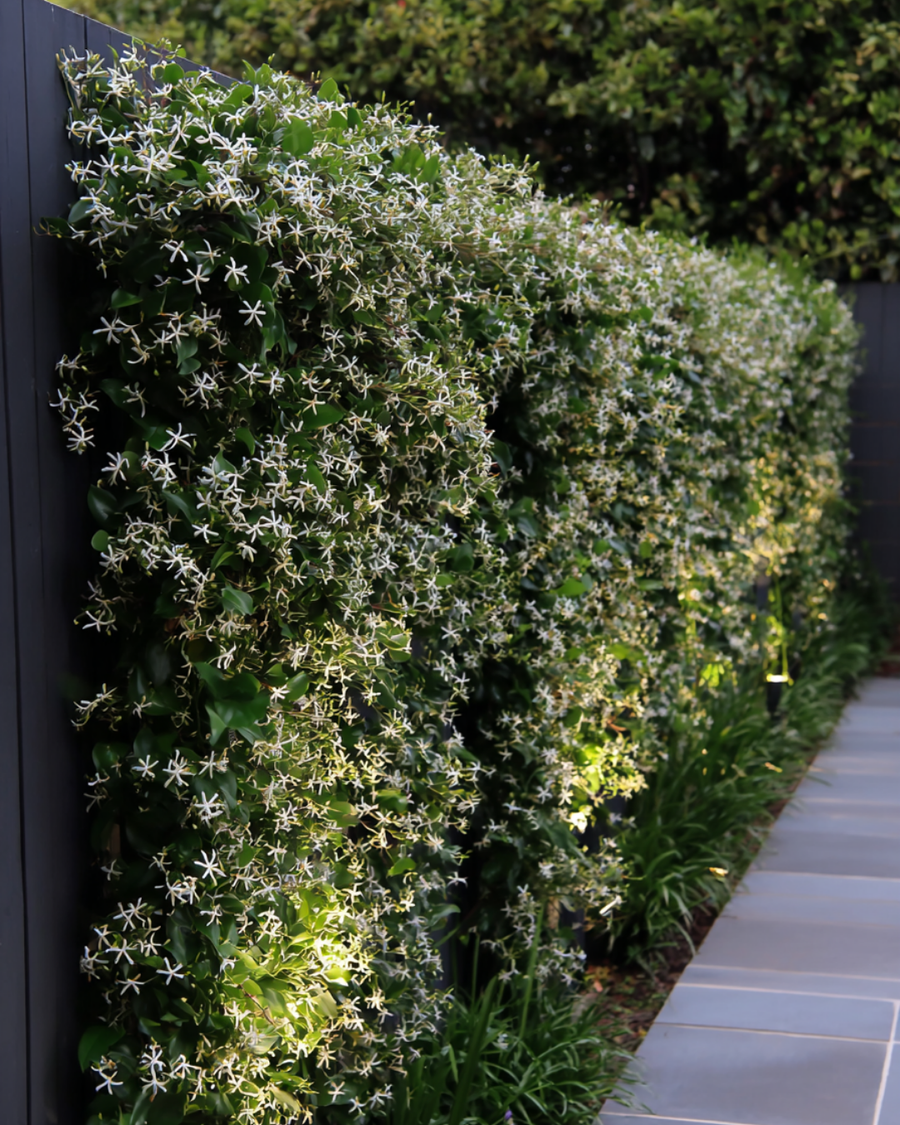
Trachelospermum jasminoides, commonly called Star Jasmine, is an evergreen twining climber, and despite the name it is not a true jasmine. Stems wind through wire and lattice and build a woody framework over time, carrying oval, glossy dark green leaves. Scented white flowers shaped like five pointed stars open through spring and summer.
Full sun gives the heaviest flowering, though it grows perfectly well in part shade. Any free draining soil will do. Growth is moderate at 30 to 50 centimetres a year. It is frost tolerant once established, handles salt wind and short dry periods, and performs from Perth and Adelaide through to Sydney and Brisbane.
On a fence or wall it covers 2 to 3 metres of support, more with age and training. Left unsupported it spreads as a groundcover 30 to 45 centimetres deep, useful on batters and under established trees. It is the standard answer when a boundary needs green cover without the bulk of a hedge.
Frequently Asked Questions
About Star Jasmine
What is Star Jasmine?
Trachelospermum jasminoides is an evergreen twining climber from east Asia, and despite the common name it is not a true jasmine. It builds a woody framework of stems carrying glossy dark green leaves, and produces scented white flowers shaped like five pointed stars. It is grown as a climber, a groundcover or a clipped cover.
How fast does Star Jasmine grow?
Growth is moderate at about 30 to 50 centimetres a year once established. The first year is slow while the roots develop, and the pace picks up noticeably in the second and third seasons. Regular water and a spring feed speed things along, and plants tied in early cover a fence faster than those left to find their own way.
Does Star Jasmine need sun or shade?
It grows in full sun through to part shade. Full sun produces the tightest growth and by far the most flowers, while shaded plants stay leafier with sparse flowering. In hot inland gardens some afternoon shade prevents leaf scorch. Against a west facing wall, make sure the roots stay mulched and watered.
Is Star Jasmine frost tolerant?
Yes, established plants handle light to moderate frost without damage, though the leaves often take on a bronze or purple tone through winter and green up again in spring. Young plants in their first winter are more vulnerable and benefit from a sheltered position or a temporary cover in cold inland districts.
Can Star Jasmine be used as a groundcover?
Yes. Left without support it spreads sideways into a dense mat roughly 30 to 45 centimetres deep, which is a common way to cover batters, median strips and the ground under established trees. Space plants about 1 metre apart for cover within two seasons, and trim the runners back off paths.
Is Star Jasmine suitable for coastal positions?
It handles coastal conditions well, including salt laden wind and sandy soil, provided it is not in the front line of direct salt spray. Improve sandy ground with compost before planting and mulch to hold moisture. It is used widely on coastal fences and retaining walls along the eastern and southern seaboard.
How do I care for Star Jasmine?
Water through the first two summers, after which it asks for very little. Prune after flowering, cutting back long runners and thinning the framework if it has built up thick and woody. It takes a hard cut back and reshoots. Feed in early spring. Wear gloves when pruning, as the milky sap can irritate skin.

Trachelospermum jasminoides – Star Jasmine
Trachelospermum jasminoides – Star Jasmine
Trachelospermum jasminoides, commonly called Star Jasmine, is an evergreen twining climber, and despite the name it is not a true jasmine. Stems wind through wire and lattice and build a woody framework over time, carrying oval, glossy dark green leaves. Scented white flowers shaped like five pointed stars open through spring and summer.
Full sun gives the heaviest flowering, though it grows perfectly well in part shade. Any free draining soil will do. Growth is moderate at 30 to 50 centimetres a year. It is frost tolerant once established, handles salt wind and short dry periods, and performs from Perth and Adelaide through to Sydney and Brisbane.
On a fence or wall it covers 2 to 3 metres of support, more with age and training. Left unsupported it spreads as a groundcover 30 to 45 centimetres deep, useful on batters and under established trees. It is the standard answer when a boundary needs green cover without the bulk of a hedge.
Frequently Asked Questions
About Star Jasmine
What is Star Jasmine?
Trachelospermum jasminoides is an evergreen twining climber from east Asia, and despite the common name it is not a true jasmine. It builds a woody framework of stems carrying glossy dark green leaves, and produces scented white flowers shaped like five pointed stars. It is grown as a climber, a groundcover or a clipped cover.
How fast does Star Jasmine grow?
Growth is moderate at about 30 to 50 centimetres a year once established. The first year is slow while the roots develop, and the pace picks up noticeably in the second and third seasons. Regular water and a spring feed speed things along, and plants tied in early cover a fence faster than those left to find their own way.
Does Star Jasmine need sun or shade?
It grows in full sun through to part shade. Full sun produces the tightest growth and by far the most flowers, while shaded plants stay leafier with sparse flowering. In hot inland gardens some afternoon shade prevents leaf scorch. Against a west facing wall, make sure the roots stay mulched and watered.
Is Star Jasmine frost tolerant?
Yes, established plants handle light to moderate frost without damage, though the leaves often take on a bronze or purple tone through winter and green up again in spring. Young plants in their first winter are more vulnerable and benefit from a sheltered position or a temporary cover in cold inland districts.
Can Star Jasmine be used as a groundcover?
Yes. Left without support it spreads sideways into a dense mat roughly 30 to 45 centimetres deep, which is a common way to cover batters, median strips and the ground under established trees. Space plants about 1 metre apart for cover within two seasons, and trim the runners back off paths.
Is Star Jasmine suitable for coastal positions?
It handles coastal conditions well, including salt laden wind and sandy soil, provided it is not in the front line of direct salt spray. Improve sandy ground with compost before planting and mulch to hold moisture. It is used widely on coastal fences and retaining walls along the eastern and southern seaboard.
How do I care for Star Jasmine?
Water through the first two summers, after which it asks for very little. Prune after flowering, cutting back long runners and thinning the framework if it has built up thick and woody. It takes a hard cut back and reshoots. Feed in early spring. Wear gloves when pruning, as the milky sap can irritate skin.
Trachelospermum jasminoides – Star Jasmine
Buxus sempervirens (Hedging Form) – English Box
Buxus sempervirens (Hedging Form) – English Box
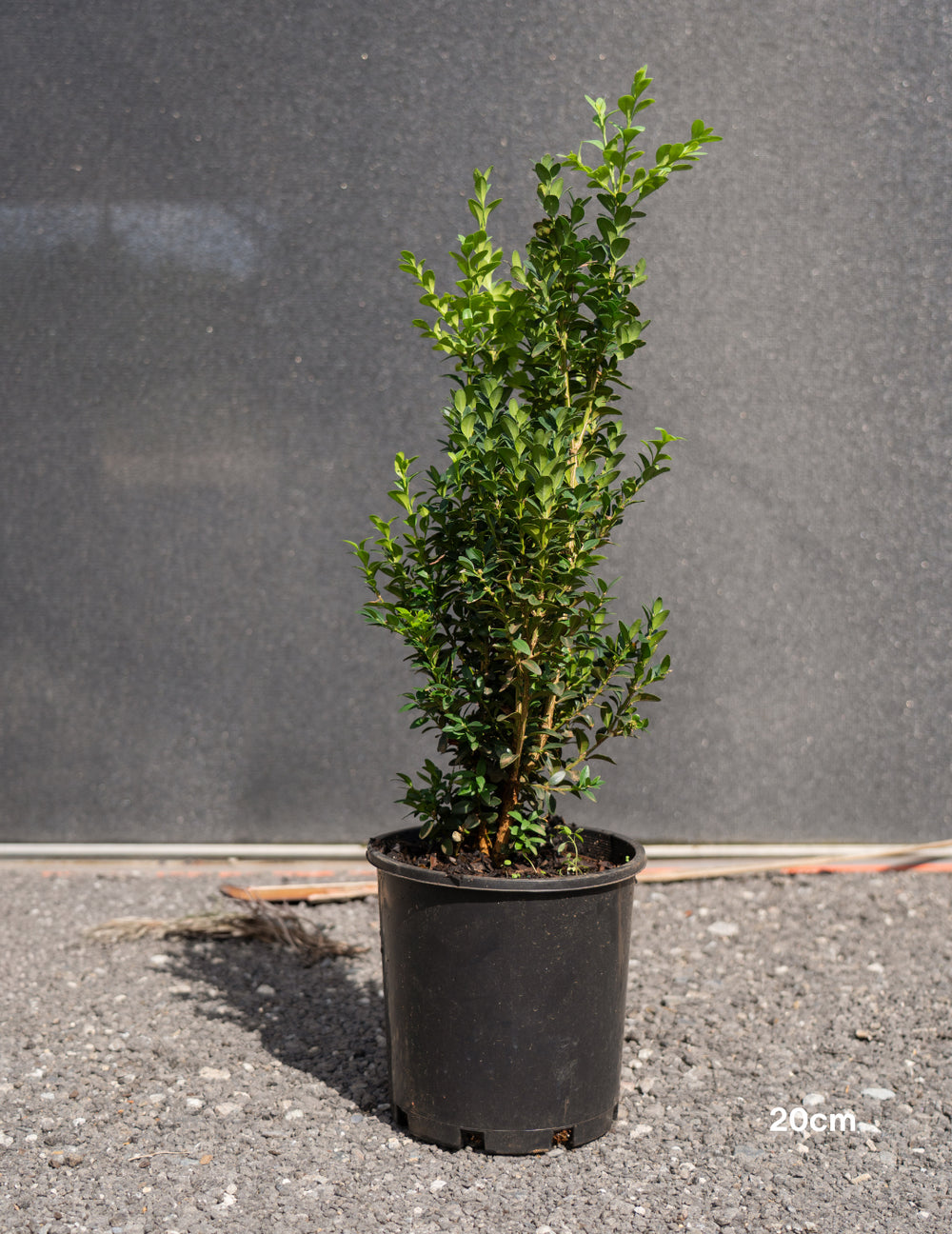
Buxus sempervirens, English Box, is the classic hedging box, a dense evergreen shrub with small glossy leaves set on short internodes. Hedging form stock is grown from material selected for tight branching, so plants knit into a solid face and take a clean line under shears. Pale yellow spring flowers are small and lightly scented.
Full sun through to part shade suits it, in a well drained soil kept evenly moist while the roots establish. Cool temperate and temperate districts are its strength, and mature plants shrug off repeated winter frost. Growth of 15 to 30 centimetres a year is steady rather than quick, which keeps a hedge line honest.
It is the standard choice for low borders, parterres, knot gardens and the clipped edges that hold a formal garden together. Councils and heritage properties specify it for the same reason home gardeners do. It stays where it is put and reads the same in July as it does in January.
Frequently Asked Questions
About English Box
What is English Box?
Buxus sempervirens is a slow growing evergreen shrub with small, glossy, dark green leaves, grown for centuries as a clipped hedge. The hedging form is selected for tight branching and short internodes, so plants knit together into a solid face and take a sharp edge under shears. It is not related to native Australian box species.
How big does English Box grow?
As a hedge it is normally held between 30 centimetres and 1 metre, which is where the plant looks its best. Taller hedges to about 1.5 metres are achievable with patience. Left entirely unclipped the species will slowly reach 3 to 5 metres tall and 2 to 3 metres wide over several decades.
How far apart should I plant English Box for a hedge?
For a low border hedge from 20 or 30 centimetre stock, plant 25 to 30 centimetres apart, which is three to four plants per metre. For a taller hedge from 50 centimetre stock, 35 to 40 centimetres apart is enough. Closer spacing closes the line sooner but does not change the finished result.
What is the difference between English Box and Japanese Box?
English Box has finer, darker foliage and a slower, tighter habit, which suits low formal hedges and parterres. Japanese Box is a little coarser and faster, holds its colour better in heat and humidity, and is the safer choice in warmer or more humid districts. In cool temperate gardens English Box remains the traditional pick.
Is English Box frost tolerant?
Yes, and comfortably so. It is one of the more cold hardy hedging plants available, and established hedges take repeated winter frost without damage, including in Canberra, Ballarat, Orange and across Tasmania. A late frost can bronze new spring growth, but the plant grows straight through it. Water well before winter in the first year.
Does English Box grow in shade?
It grows in full sun through to part shade. Part shade keeps the leaf a deeper green in hot districts, while full sun gives the densest growth in cool ones. Heavy shade produces thin, open growth that never closes properly into a hedge, so aim for at least three or four hours of direct light.
How do I care for and prune an English Box hedge?
Trim twice a year, in late spring and again in late summer, always cutting the sides slightly wider at the base so light reaches the lower foliage. Feed in early spring, mulch, and water deeply in dry spells rather than lightly and often. Renovation cuts back into old wood are tolerated but are best staged over two seasons.
Buxus sempervirens (Hedging Form) – English Box
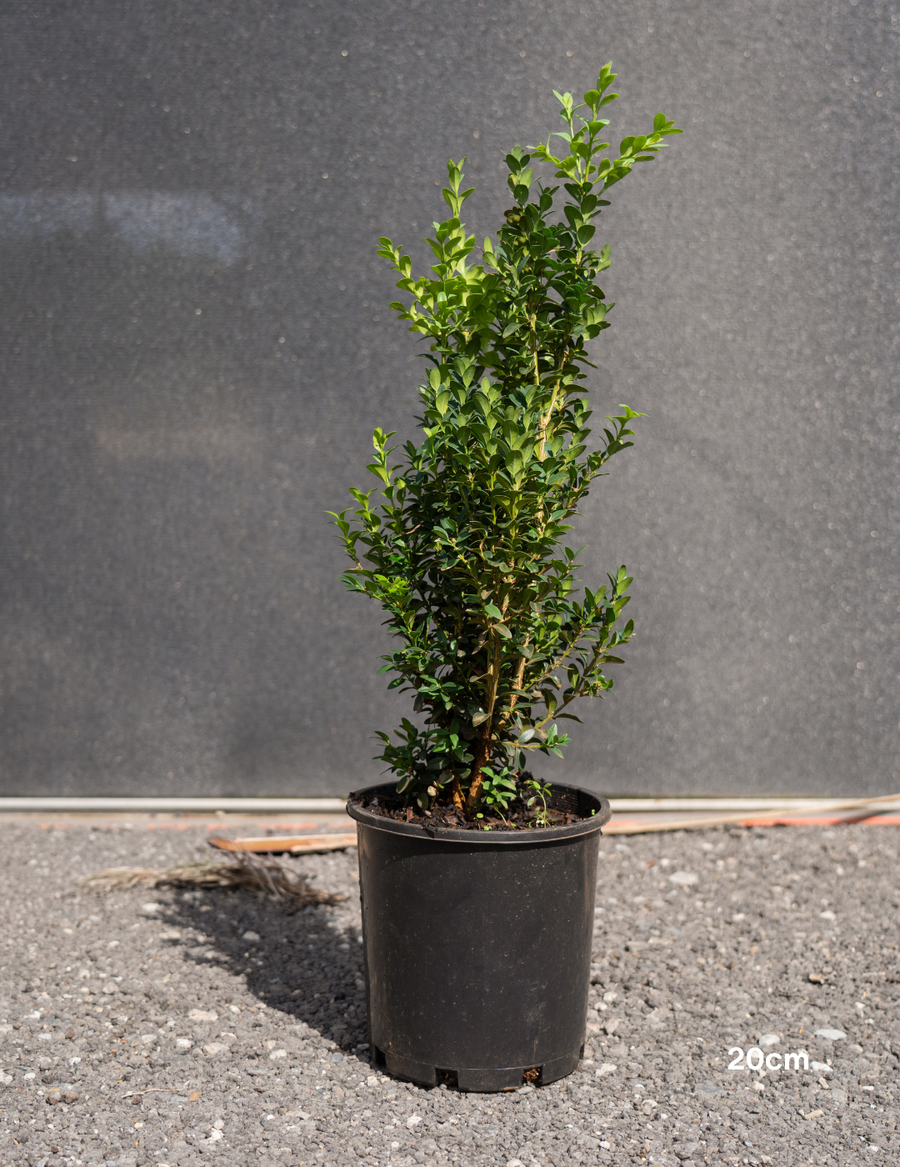

Buxus japonica (Hedging Form) – Japanese Box
Buxus japonica (Hedging Form) – Japanese Box
Buxus japonica, commonly known as Japanese Box, is a dense, evergreen shrub valued for its glossy foliage and excellent response to clipping. In hedging form it develops a compact, formal structure with rounded green leaves held tightly along short internodes, allowing for crisp lines and precise shaping.
It performs best in full sun to partial shade and prefers well-drained soils with consistent moisture during establishment. Buxus japonica tolerates heat and humidity better than English Box, making it well suited to warm temperate, subtropical and coastal climates as well as cooler districts. It also tolerates frost, light shade and regular pruning, with steady rather than fast growth that makes it ideal for controlled, long-term hedge planting.
For low to medium hedging, borders, parterres and formal garden structures in residential and civic landscapes, Buxus japonica is a dependable, hard-wearing choice. It is commonly specified where structure, symmetry and year-round greenery are required, particularly in warmer regions where English Box can struggle.
Frequently Asked Questions
About Buxus japonica Japanese Box
How tall does Buxus japonica grow?
Left unclipped, Buxus japonica typically reaches around 1 to 3 metres tall and 1 to 2 metres wide. Grown as a hedge it is easily kept far lower, and most formal Japanese Box hedges are maintained between knee and waist height.
How often should a Buxus japonica hedge be clipped?
A light clip two to three times through the growing season keeps Buxus japonica dense and sharp-edged. Frequent light trimming gives a better result than occasional hard pruning, and encourages tight, even growth.
How is Buxus japonica different from English Box?
Buxus japonica handles heat, humidity and coastal conditions better than English Box, and tends to hold a brighter green leaf in warm weather. It is often the preferred box for hedging in subtropical and coastal gardens where English Box can struggle.
Is Buxus japonica frost tolerant?
Yes. Buxus japonica is frost tolerant and handles light to moderate frost once established, so it performs well across both warm and cool districts of Australia.
Can Buxus japonica grow in partial shade?
Yes. Buxus japonica tolerates partial shade, though growth is densest and most even in a position with good light. A spot with full sun to part shade gives the best hedging result.
How far apart should I plant Buxus japonica for a hedge?
For a hedge, plant Buxus japonica roughly 0.4 to 0.6 metres apart so the plants knit together into a continuous line. Wider spacing of around 1 to 1.5 metres suits individual feature or accent planting.
What soil does Buxus japonica prefer?
Buxus japonica grows best in well-drained loam with a neutral to slightly alkaline pH. It will tolerate heavier soils where drainage is improved with organic matter, but persistently wet or compacted ground should be avoided.
Buxus japonica (Hedging Form) – Japanese Box
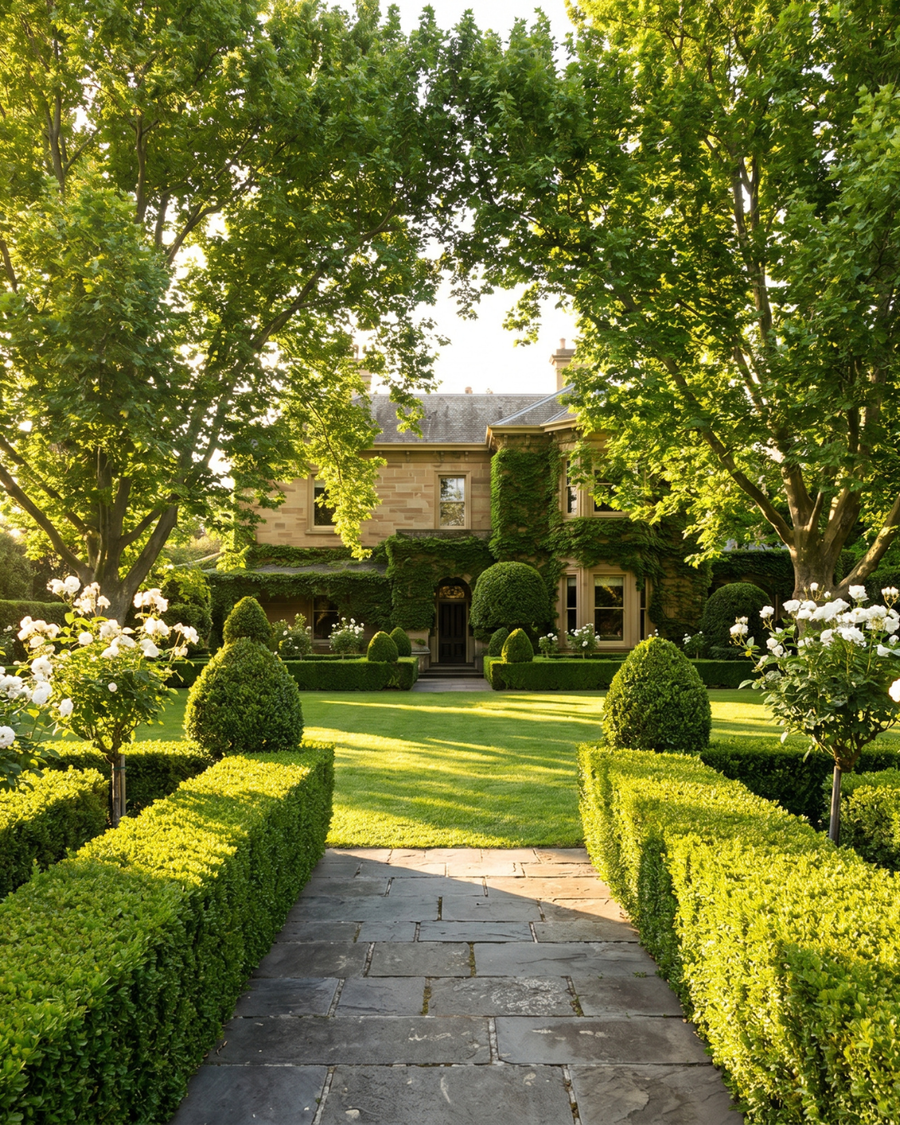
Lavandula angustifolia English Lavender
Lavandula angustifolia English Lavender
Lavandula angustifolia, commonly known as English Lavender or True Lavender, is the classic culinary and aromatic lavender, valued for its slim silver-grey foliage and slender unbranched flower spikes that produce the strongest, sweetest fragrance of any lavender species. The dried flowers and essential oil from this species are the foundation of lavender's culinary, medicinal and perfumery use worldwide.
It performs best in full sun with free-draining soil and prefers cool to warm temperate climates. Lavandula angustifolia is highly drought tolerant and frost hardy once established, suited to cottage gardens, herb gardens, low formal borders and pots. It is less tolerant of high humidity than other lavender species, performing best through inland and Mediterranean climates rather than humid subtropical coastal conditions.
As a feature in cottage, herb, kitchen and Mediterranean-style gardens, in low formal borders, pots and mass plantings, Lavandula angustifolia brings refined fragrance, reliable summer flowering and the culinary value that makes it the most useful lavender for cut flowers, drying, oil production and cooking.
Frequently Asked Questions
About Lavandula angustifolia English Lavender
How tall does Lavandula angustifolia grow?
Lavandula angustifolia generally reaches around 40 to 80 centimetres tall and 50 to 80 centimetres wide at maturity. It is the most compact of the common lavender species, suiting low borders, herb gardens and pots.
When does Lavandula angustifolia flower?
Lavandula angustifolia flowers from late spring through summer, producing slender unbracted purple spikes on long stems above silver-grey foliage. The flowers are the most fragrant of any lavender species and are the source of culinary lavender and lavender essential oil.
Can I cook with Lavandula angustifolia?
Yes. Lavandula angustifolia is the true culinary lavender, used in baking, herbal teas, syrups, infusions and as part of the classic Herbes de Provence blend. Other lavender species such as stoechas and dentata are higher in camphor and not recommended for culinary use.
Is Lavandula angustifolia frost tolerant?
Yes. Lavandula angustifolia is the most frost-hardy of the commonly grown lavenders, handling moderate to heavy frost once established. It is well suited to inland, tableland and cool temperate gardens where other lavender species can struggle.
Can Lavandula angustifolia be grown in a pot?
Yes. Lavandula angustifolia performs excellently in pots and raised planters thanks to its compact size. Use a quality free-draining mix, water moderately through warm weather and ensure drainage holes stay clear, since wet roots are the main cause of lavender decline in containers.
How is Lavandula angustifolia different from Italian Lavender?
Lavandula angustifolia (English Lavender) has slender unbracted flower spikes, flowers later in the season, prefers cooler climates and produces the sweet fragrance associated with culinary and oil use. Lavandula stoechas (Italian Lavender) carries distinctive winged bracts on top of each spike, flowers earlier, suits warm temperate and coastal climates and is grown primarily for ornamental display.
How should Lavandula angustifolia be pruned?
Lavandula angustifolia responds well to a hard prune straight after flowering, cutting back by roughly a third into green foliage. Avoid cutting into old woody stems, since lavender does not reliably reshoot from bare wood. Regular pruning keeps the plant compact and productive for many years.
Lavandula angustifolia English Lavender
Liquid error (sections/ee-products line 16): invalid url input

Stachys byzantina Lamb's Ears
Stachys byzantina Lamb's Ears
Stachys byzantina, commonly known as Lamb's Ears, is a low-growing spreading perennial valued for its remarkably soft, silvery-white woolly foliage that has the texture of lamb's ears. The thick, fuzzy oval leaves form low dense mats of silver, creating one of the most distinctive textural foliage effects in the garden.
It performs best in full sun to part shade with free-draining soil and is highly drought tolerant once established. Stachys byzantina spreads gently to form silver mats, suiting cottage gardens, sensory gardens, Mediterranean borders and as silver foliage contrast in mixed plantings. Tall pink-purple flower spikes appear through late spring and summer, though many gardeners remove them to keep the focus on the unique foliage.
As a foliage groundcover in cottage, Mediterranean, sensory and contemporary gardens, in low borders, mass plantings and along pathways where the soft texture invites touch, Stachys byzantina brings silvery contrast, drought tolerance and a tactile quality children and visitors gravitate toward.
Frequently Asked Questions
About Stachys byzantina Lamb's Ears
How tall does Stachys byzantina grow?
Stachys byzantina foliage forms low mats around 20 to 30 centimetres tall and 45 to 60 centimetres wide, spreading gently to form dense silver groundcover. Flower spikes can reach 50 to 75 centimetres when in bloom.
When does Stachys byzantina flower?
Stachys byzantina produces tall pink-purple flower spikes through late spring and summer, rising well above the silver foliage. Some gardeners remove the flower spikes as they emerge to maintain a tidy carpet of foliage and concentrate the plant's energy into leaf growth.
Where should I plant Stachys byzantina?
Stachys byzantina grows best in full sun to part shade with free-draining soil. It suits cottage borders, Mediterranean gardens, sensory plantings, pathway edges and silver foliage features. Avoid humid, poorly drained or deeply shaded positions where the woolly leaves can rot.
Is Stachys byzantina drought tolerant?
Yes. Once established, Stachys byzantina is highly drought tolerant thanks to its silvery hairs that reflect heat and reduce water loss. Through establishment it benefits from light, regular watering, then transitions to occasional watering through dry periods.
Is Stachys byzantina frost tolerant?
Yes. Stachys byzantina is highly frost hardy, handling moderate to heavy frost once established. The silver foliage often takes on a slightly bronzed tinge in colder periods and recovers fully through spring.
Can Stachys byzantina be grown in a pot?
Yes. Stachys byzantina performs well in pots, raised planters and trough plantings, particularly where the silver foliage can spill over edges. Use a free-draining mix, water moderately and ensure the woolly leaves do not sit on wet soil.
How do I maintain Stachys byzantina?
Maintain Stachys byzantina by removing flower spikes as they fade, clipping back any rotted or damaged foliage in autumn, and lifting and dividing clumps every two to three years to refresh the planting. Avoid overhead watering, which can mat down the soft foliage.
Stachys byzantina Lamb's Ears
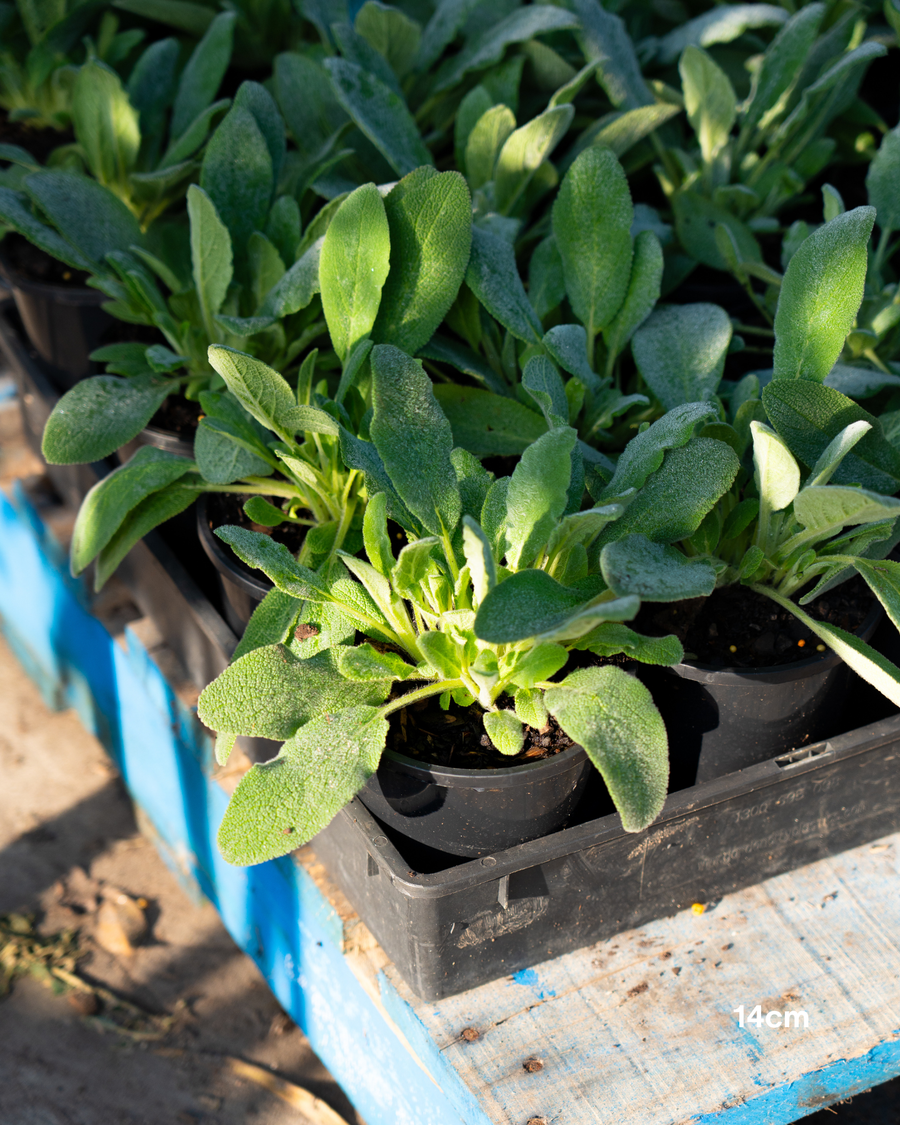

Rosmarinus officinalis – Rosemary
Rosmarinus officinalis – Rosemary
Rosmarinus officinalis, now reclassified as Salvia rosmarinus, is Rosemary, an upright evergreen shrub with narrow needle-like grey-green leaves and a dense woody frame. The foliage is strongly aromatic year round, and small pale blue flowers appear over winter and into spring. Prostrate forms trail rather than stand upright.
It wants full sun and sharp drainage, and it is happier dry than wet. Established plants handle drought, salt wind and exposed positions with ease, which suits warm temperate and Mediterranean climates across southern Australia. Growth is 30 to 50 centimetres a year and maintenance amounts to an annual trim.
Rosemary is used as low hedging, in borders, as groundcover in its prostrate forms, and in herb and kitchen gardens where it is cut for cooking. It grows happily in a 40 to 50 centimetre pot by a back door. Ornamental structure and a usable crop from the same plant.
Frequently Asked Questions
About Rosemary
What is Rosemary?
Rosmarinus officinalis, now classified botanically as Salvia rosmarinus, is an upright evergreen shrub with narrow needle-like grey-green leaves and a strong resinous scent. Small pale blue flowers appear over winter and spring. The habit is woody and dense, and the aromatic foliage is held all year round.
How big does Rosemary grow?
Upright forms generally reach 1 to 1.5 metres tall and a similar width, while prostrate selections stay under 40 centimetres and spread sideways instead. Growth is around 30 to 50 centimetres a year. Regular light harvesting or trimming holds a plant well below its potential size without any harm.
Does Rosemary need sun or shade?
Full sun, without qualification. Six or more hours of direct sun gives dense growth, strong aroma and good oil content in the leaves. In shade the plant stretches, thins out and becomes prone to fungal problems. Open air movement around the plant matters almost as much as the sun does.
Is Rosemary drought tolerant?
Very. Once established it survives long dry periods on rainfall alone in most temperate districts, and it is far more likely to be killed by wet soil than by dry. Free drainage is essential. Water new plants through their first summer, then only during extended dry spells.
Can Rosemary grow in pots?
Yes, and a pot suits it well because you control the drainage. Use a pot 40 to 50 centimetres wide with a gritty free-draining mix, put it in the sunniest spot you have, and let the mix dry between waterings. A single plant on a courtyard or balcony is easy to keep.
Can I cook with this Rosemary?
Yes. Rosmarinus officinalis is the culinary rosemary, and sprigs can be cut fresh year round for roasts, breads, oils and marinades. Harvest from the soft green growth rather than the old woody stems, and take a little from several places around the bush so it keeps its shape.
How do I care for Rosemary?
Plant in full sun in free-draining soil, on a raised mound if your ground is heavy. Water sparingly once established and avoid rich fertiliser, which produces soft growth and weak flavour. Trim lightly after flowering to keep the bush dense, cutting into green growth only, since bare old wood does not reshoot.
Rosmarinus officinalis – Rosemary
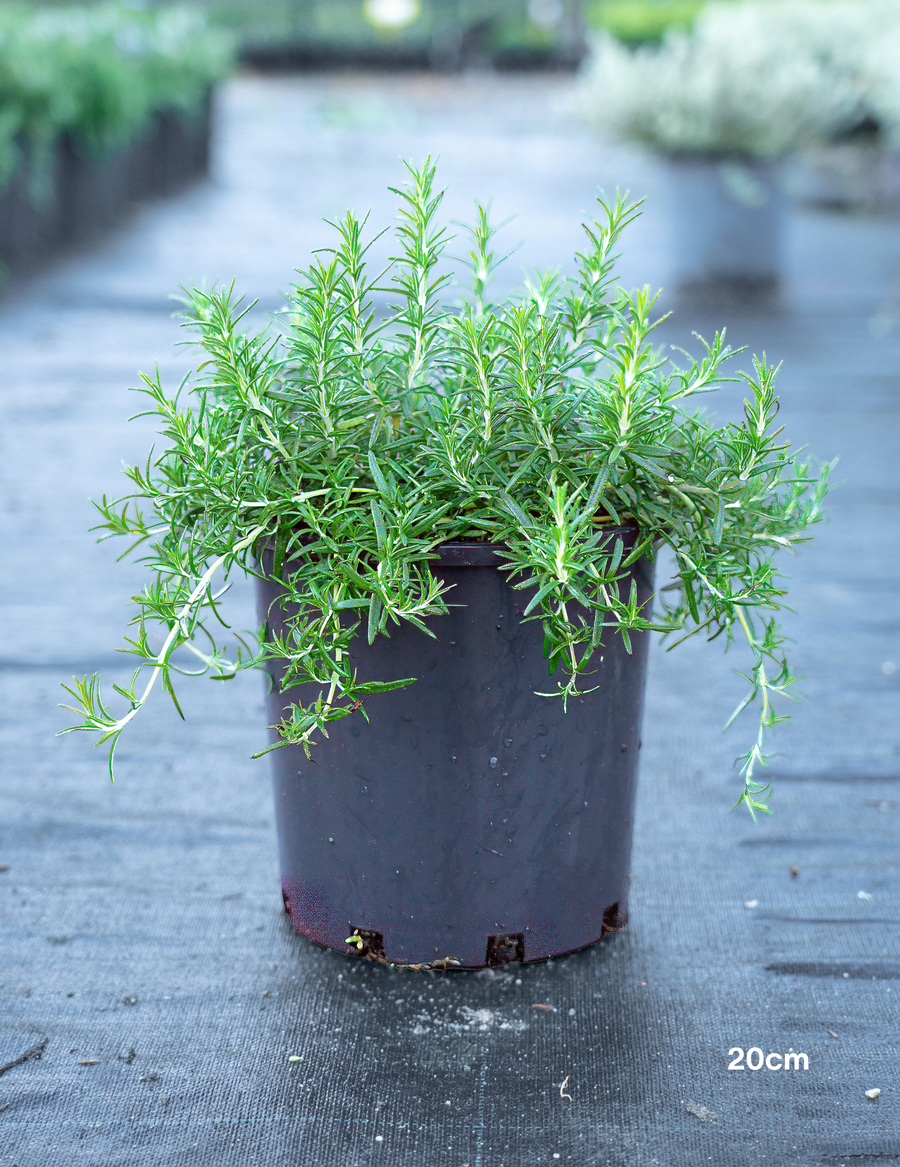
Hedera canariensis Canary Island Ivy
Hedera canariensis Canary Island Ivy
Hedera canariensis, commonly known as Canary Island Ivy or Algerian Ivy, is a vigorous evergreen climbing and trailing vine valued for its large glossy dark green leaves and its ability to soften walls, pergolas and shaded planting beds with refined coverage. The leaves are noticeably broader and richer than common English Ivy, giving a lush, polished appearance.
It performs reliably in full sun through to full shade with free-draining soil and is highly drought tolerant once established. Hedera canariensis is excellent as a wall climber, a quick groundcover beneath established trees, or a softening green presence over fences and retaining structures in shaded courtyards and heritage gardens.
As a fast-growing evergreen climber and groundcover for cottage, woodland, heritage and formal gardens, in mass plantings, walls, pergolas and shaded courtyards, Hedera canariensis brings dense, glossy foliage, low-maintenance coverage and a long-lived green presence that strengthens steadily with each season.
Frequently Asked Questions
About Hedera canariensis Canary Island Ivy
How fast does Hedera canariensis grow?
Hedera canariensis is a fast-growing evergreen climber, putting on 1 to 2 metres of new growth per year once established. It is one of the quickest ways to soften a new wall or fence, and it covers shaded ground rapidly when planted as a groundcover.
Where should I plant Canary Island Ivy?
Hedera canariensis grows well in full sun through to full shade, making it one of the most adaptable climbers and groundcovers available. It is excellent against walls, pergolas, retaining structures and fences, and as a groundcover beneath established trees where many other plants struggle to thrive.
Is Hedera canariensis the same as English Ivy?
No. Hedera canariensis (Canary Island Ivy) has noticeably larger, glossier and more refined leaves than Hedera helix (English Ivy). It also has a more polished overall appearance and a slightly less aggressive root habit, making it the more elegant choice for prominent garden positions and feature walls.
Is Hedera canariensis frost tolerant?
Yes. Hedera canariensis is frost hardy and handles winter frost without damage. It performs reliably across cool, temperate and warm climates and remains evergreen through winter, providing year-round foliage when many surrounding plants are bare.
Does it need a support to climb?
Hedera canariensis attaches itself directly to walls, fences and timber using small aerial rootlets, so it does not require a trellis or wires. For best results on smooth or painted surfaces, provide initial support or wires until the plant establishes contact and starts climbing on its own.
Can it become invasive?
Hedera canariensis is vigorous and will spread if left unchecked. In garden settings it is easily managed with annual pruning to define edges and keep growth within bounds. It is well suited to defined planting beds and walls rather than naturalised or bush-adjacent settings where it could escape into surrounding vegetation.
How do I care for Hedera canariensis?
Hedera canariensis is very low maintenance. Trim back twice a year to maintain shape and define edges, water moderately through establishment then sparingly, mulch annually, and apply a light slow-release fertiliser in early spring if foliage colour drops.
Hedera canariensis Canary Island Ivy
Liquid error (sections/ee-products line 16): invalid url input
Lomandra longifolia 'Tanika'®
Lomandra longifolia 'Tanika'®
Lomandra longifolia 'Tanika'® (LM300) is one of the most widely planted Australian native ornamental grasses, valued for its fine bright green strappy foliage, neat compact habit and exceptional resilience in tough landscaping conditions. A naturally compact and finer-foliaged form of the species, 'Tanika' holds a refined mounding shape without the coarser texture of standard Lomandra longifolia.
It performs reliably in full sun through to part shade, tolerates drought, frost, coastal salt and poor soils, and produces small yellow flower spikes through spring and summer that add a soft seasonal lift. At a mature size of around 60 cm tall by 60 cm wide, 'Tanika' is one of the most useful Australian natives for mass planting, modern garden borders, low-maintenance landscapes and feature pot planting.
As a compact evergreen Australian native grass for native, modern, coastal, contemporary and low-maintenance gardens, in mass plantings, borders and feature pot displays, Lomandra longifolia 'Tanika' brings fine textural foliage, year-round form and exceptional toughness to almost any garden brief.
Frequently Asked Questions
About Lomandra longifolia 'Tanika'
How big does Lomandra 'Tanika' grow?
Lomandra 'Tanika' grows to a compact mature size of around 60 cm tall by 60 cm wide, forming a neat rounded mound of fine green strappy foliage. It is significantly more compact and finer-textured than the standard Lomandra longifolia, making it the preferred form for refined garden settings.
Where should I plant Lomandra 'Tanika'?
Lomandra 'Tanika' grows well in full sun through to part shade and tolerates a wide range of soil types from sandy through to clay. It is excellent for mass planting, low borders, coastal exposed positions and contemporary garden borders, and performs reliably in both garden beds and pots.
Is Lomandra 'Tanika' drought tolerant?
Yes. Lomandra 'Tanika' is highly drought tolerant once established and is one of the most reliable Australian natives for low-water gardens. Through establishment it benefits from regular watering, then transitions to natural rainfall in most Australian climates.
Is it frost tolerant?
Yes. Lomandra 'Tanika' is frost tolerant and performs reliably across cool, temperate and warm Australian climates. The fine evergreen foliage holds its colour through winter with no protection required.
Does Lomandra 'Tanika' flower?
Yes. Lomandra 'Tanika' produces small yellow flower spikes through spring and into summer, sitting just above the foliage. The flowers are softly fragrant and provide a delicate seasonal lift, though the plant is grown primarily for its foliage form rather than its flowering.
How do I care for Lomandra 'Tanika'?
Lomandra 'Tanika' is exceptionally low maintenance. Water through establishment, then sparingly. Every 2 to 3 years, give plants a hard tidy in late winter by removing old foliage to encourage fresh growth. No regular pruning is otherwise required.
Can it be used for mass planting?
Yes – mass planting is one of the most successful uses for Lomandra 'Tanika'. Planted on a 50 to 60 cm spacing the plants knit together into a refined textural carpet within 12 to 18 months, providing a contemporary and resilient alternative to traditional groundcovers and grasses.
Lomandra longifolia 'Tanika'®
Liquid error (sections/ee-products line 16): invalid url input

Evergreen Trees Direct Has Been Featured In:


Perfect Substitutes for Gardenia augusta ‘Magnifica’ – Magnifica Gardenia
Gardenia jasminoides ‘Florida’ – Florida Gardenia
Gardenia jasminoides ‘Florida’ – Florida Gardenia
Gardenia jasminoides 'Florida' produces waxy creamy-white double flowers with a perfume strong enough to scent a whole courtyard, carried generously through spring and summer against glossy dark green foliage. Few shrubs deliver this much fragrance from a plant this small.
'Florida' grows to just 1 to 1.5 metres tall and wide at 20 to 40 centimetres per year, holding a naturally compact rounded habit. That scale makes it ideal for pots beside a door or seating area where the scent can be appreciated, for low hedging, and for the front of a mixed border.
'Florida' prefers full sun to part shade with protection from hot afternoon sun, and needs well-drained, slightly acidic soil kept consistently moist. It is frost sensitive, so in cold districts choose a sheltered position or grow it in a pot that can be moved.
Frequently Asked Questions
About Gardenia jasminoides 'Florida'
How big does Gardenia 'Florida' grow?
'Florida' grows to 1 to 1.5 metres tall and wide, forming a naturally compact rounded shrub. It is one of the smaller gardenias and holds its shape with minimal pruning.
When does Gardenia 'Florida' flower?
Flowering runs through spring and summer, with waxy creamy-white double flowers produced generously across the plant. The perfume is strongest in the evening.
Can Gardenia 'Florida' be grown in a pot?
Yes. Its compact size makes it one of the best gardenias for pots. Use a premium potting mix formulated for acid-loving plants and keep the pot consistently moist but never waterlogged.
Why are my gardenia leaves turning yellow?
Yellowing between the leaf veins usually indicates iron deficiency, which is common when soil pH is too high. Feed with an acidic fertiliser or iron chelate and mulch with composted pine bark.
Is Gardenia 'Florida' frost tolerant?
No. It is frost sensitive and may be damaged by frost. Choose a sheltered position in cold districts, or grow it in a pot that can be moved under cover through winter.
Can 'Florida' be used as a low hedge?
Yes. Plant 0.8 to 1 metre apart for a low fragrant evergreen hedge. Trim lightly after the main flowering flush to keep the line even.
What soil and feeding does Gardenia 'Florida' need?
It wants well-drained, slightly acidic soil with consistent moisture. Feed with a fertiliser formulated for acid-loving plants in early spring and again after flowering.
Gardenia jasminoides ‘Florida’ – Florida Gardenia
Liquid error (sections/ee-products line 16): invalid url input

Randia fitzalanii – Native Gardenia
Randia fitzalanii – Native Gardenia
Randia fitzalanii, also listed as Atractocarpus fitzalanii, is the Native Gardenia, an evergreen Australian rainforest tree with a dense rounded crown of broad glossy dark green leaves. Cream flowers carrying the same heavy perfume as a true gardenia appear in spring and summer, followed by round orange fruit.
Full sun to part shade suits it, in fertile, well drained soil kept reasonably moist. It is at home in tropical, subtropical and warm temperate coastal gardens, growing 20 to 40 centimetres a year. Young plants are frost sensitive, so give them shelter in cooler districts until they are well established.
It is used as a feature tree, a clipped screen, or a fragrant addition to a native planting. It takes to pots near entries and courtyards where the scent carries. Councils and developers specify it for civic planting because the crown holds its shape with almost no pruning.
Frequently Asked Questions
About Native Gardenia
What is a Native Gardenia?
Randia fitzalanii, also listed as Atractocarpus fitzalanii, is an Australian rainforest tree from northern Queensland. It carries broad glossy dark green leaves in a dense rounded crown and produces cream, heavily perfumed flowers much like a true gardenia, followed by round orange fruit that birds take readily.
How big does Native Gardenia grow?
In cultivation it typically reaches 3 to 6 metres tall with a spread of 2 to 3 metres, which makes it manageable in a suburban backyard as well as in a larger landscape. The crown is naturally rounded and upright, so it holds a tidy shape without much intervention from you.
When does Native Gardenia flower?
Flowering runs through spring and summer, roughly September to February, with the heaviest flush in the warmer months. The cream flowers are strongly perfumed, particularly in the evening, and are followed by orange fruit that ripens over the following months. Warmth and reliable moisture bring on the best flowering.
Does Native Gardenia need sun or shade?
It grows well in full sun to part shade. Full sun gives the densest crown and the heaviest flowering, while part shade suits hotter inland positions and produces a slightly more open habit with larger, darker leaves. Protection from strong drying wind helps the foliage stay glossy and unmarked.
Is Native Gardenia frost tolerant?
Only marginally. It comes from subtropical and tropical rainforest, so young plants are damaged by frost and mature trees tolerate no more than a light touch of it. In cool districts plant it in a sheltered, north facing spot, under an existing canopy, or grow it in a pot that can be moved.
How far apart should I plant Native Gardenia for a screen?
For a dense informal screen, space plants 1 to 1.5 metres apart. For a tighter formal hedge, plant at 80 centimetres. As a feature tree allow 3 to 4 metres so the canopy can develop fully, or 3 metres apart for an even avenue along a driveway or entry road.
How do I care for Native Gardenia?
Plant in fertile, well drained soil, water regularly through the first two summers and mulch to hold moisture. Feed in spring with a slow release fertiliser suited to natives. Prune lightly straight after flowering to keep the crown dense. Established trees need little beyond occasional watering in dry spells.
Randia fitzalanii – Native Gardenia
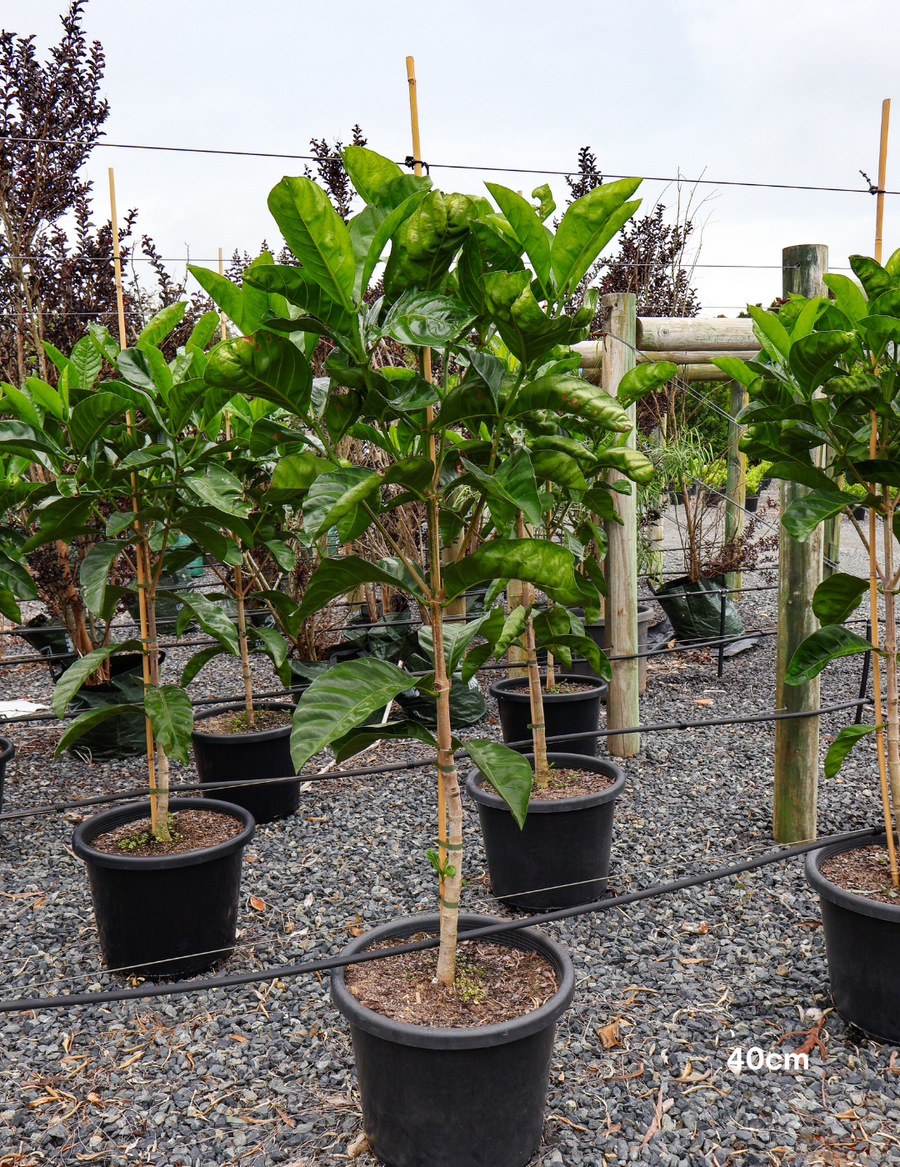

Choisya ternata
Choisya ternata
Choisya ternata, the Mexican Orange Blossom, is a dense evergreen shrub with glossy three part leaves that release a citrus scent when brushed. Clusters of white star shaped flowers cover the plant in late spring, carrying a sweet orange blossom fragrance, and a lighter second flush often follows through autumn.
It grows 30 to 60 centimetres a year to about 1.5 to 2.5 metres tall and 1.5 to 3 metres wide. Full sun to part shade suits it, with afternoon shade helpful in hot inland gardens. It takes light to moderate frost once established and does best in well drained soil with water through summer.
It works as an informal hedge along a path, as mass planting in front of taller screening, or in a pot near a doorway where the scent gets noticed. The dense habit holds shape without constant clipping, and the aromatic foliage is generally left alone by possums and rabbits.
Frequently Asked Questions
About Mexican Orange Blossom
What is Choisya ternata?
Choisya ternata is an evergreen shrub from Mexico in the citrus family, Rutaceae. The name refers to the leaves, which are divided into three glossy leaflets that smell strongly of citrus when crushed. White star shaped flowers scented like orange blossom appear in late spring. It forms a naturally rounded, dense mound of foliage.
How big does Mexican Orange Blossom grow?
It reaches roughly 1.5 to 2.5 metres tall and 1.5 to 3 metres wide, growing 30 to 60 centimetres a year. The spread is often greater than the height, so give it room in a bed rather than squeezing it against an edge. Regular light trimming keeps it more compact where space is limited.
When does Choisya ternata flower?
The main flush comes in late spring, October into November, and a lighter second flowering often follows in autumn around March and April. Warm coastal gardens can see scattered flowers outside those windows. The display is heaviest on plants grown in good light, as heavily shaded plants flower only sparsely.
How far apart should I plant Choisya for a hedge?
For a dense informal screen, plant 1 to 1.5 metres apart. For a tighter, more formal hedge, bring the spacing in to about 80 centimetres. Closer planting fills faster but needs more trimming to keep air moving through the plants. Stagger a double row if you want a thicker barrier along a boundary.
Does it need sun or shade?
Both work. Full sun gives the densest habit and the heaviest flowering in cooler and coastal gardens, while part shade is better in hot inland areas where afternoon sun bleaches the leaves. In deep shade the plant becomes open and leggy and flowers poorly. Morning sun with afternoon shade is a reliable compromise.
Can Choisya ternata grow in pots?
Yes. It suits a pot of 40 centimetres or more near an entry or on a terrace, where the scented foliage and flowers are close at hand. Container plants stay smaller than those in the ground. Use a free draining mix, water consistently through summer and repot or root prune every few years.
How do I prune and care for Mexican Orange Blossom?
Trim lightly straight after the spring flowering to hold the shape and encourage the autumn flush. It responds well to a harder cut back into older wood if it becomes leggy. Feed in spring with a general fertiliser, mulch to keep the roots cool, and water through dry spells. Avoid heavy wet soils, which cause root rot.
Choisya ternata
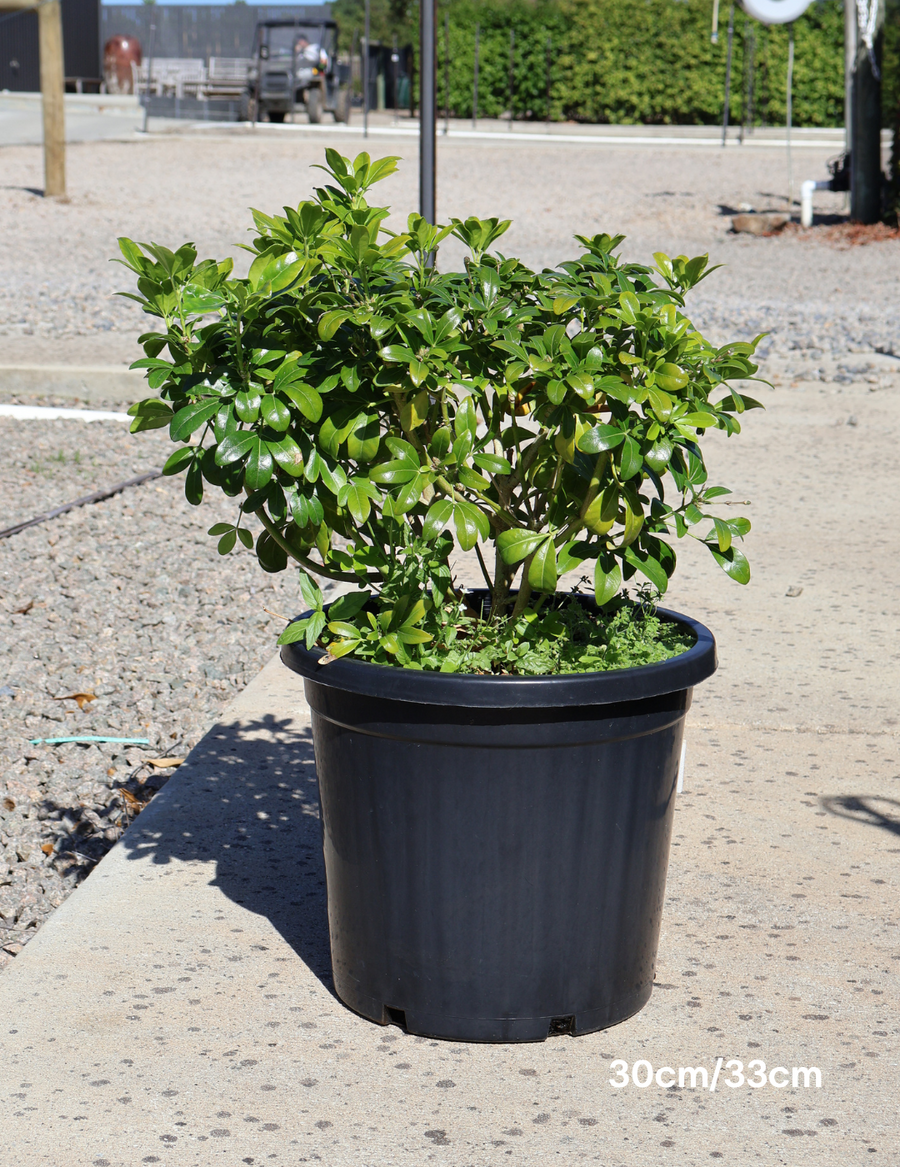
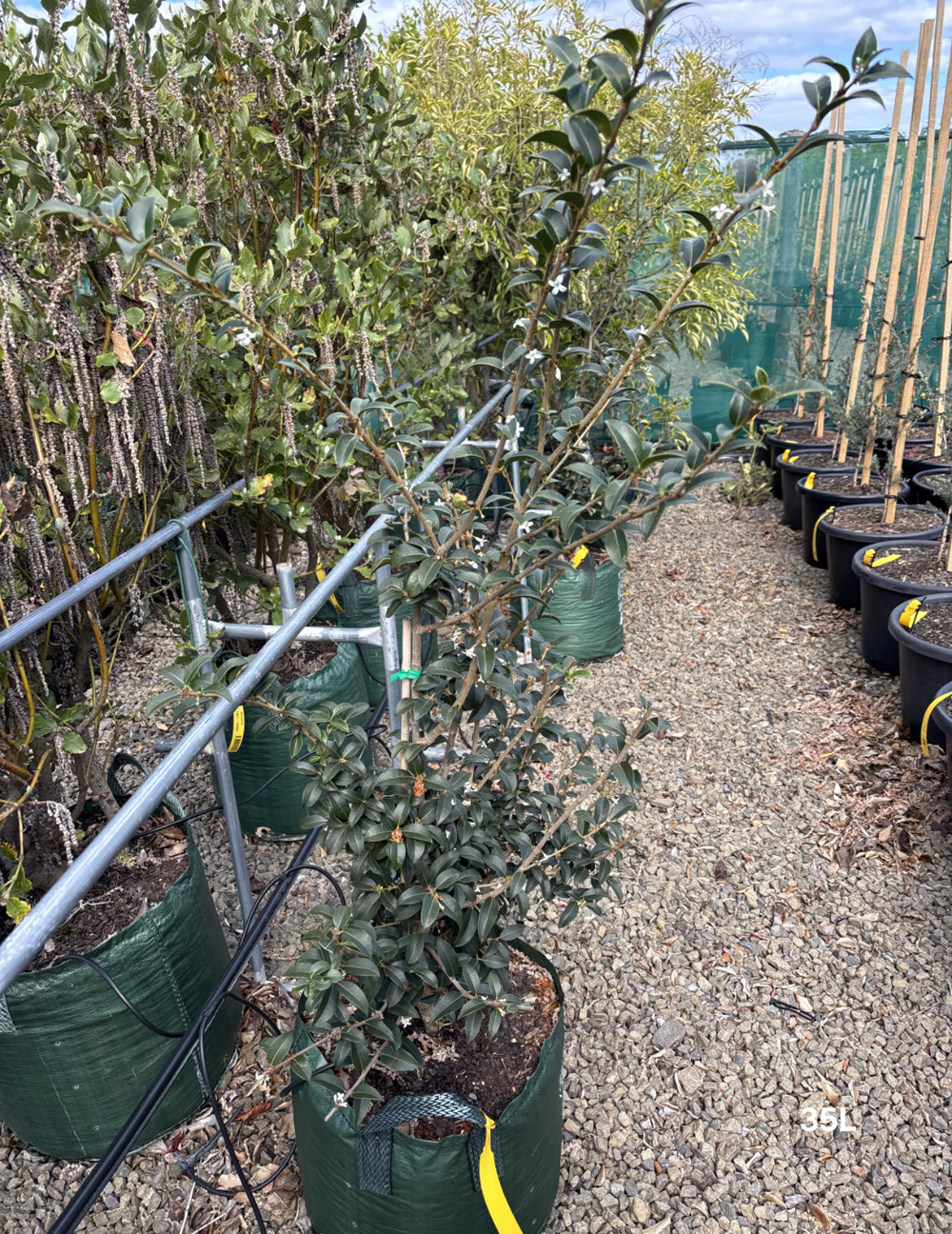
Osmanthus x burkwoodii
Osmanthus x burkwoodii
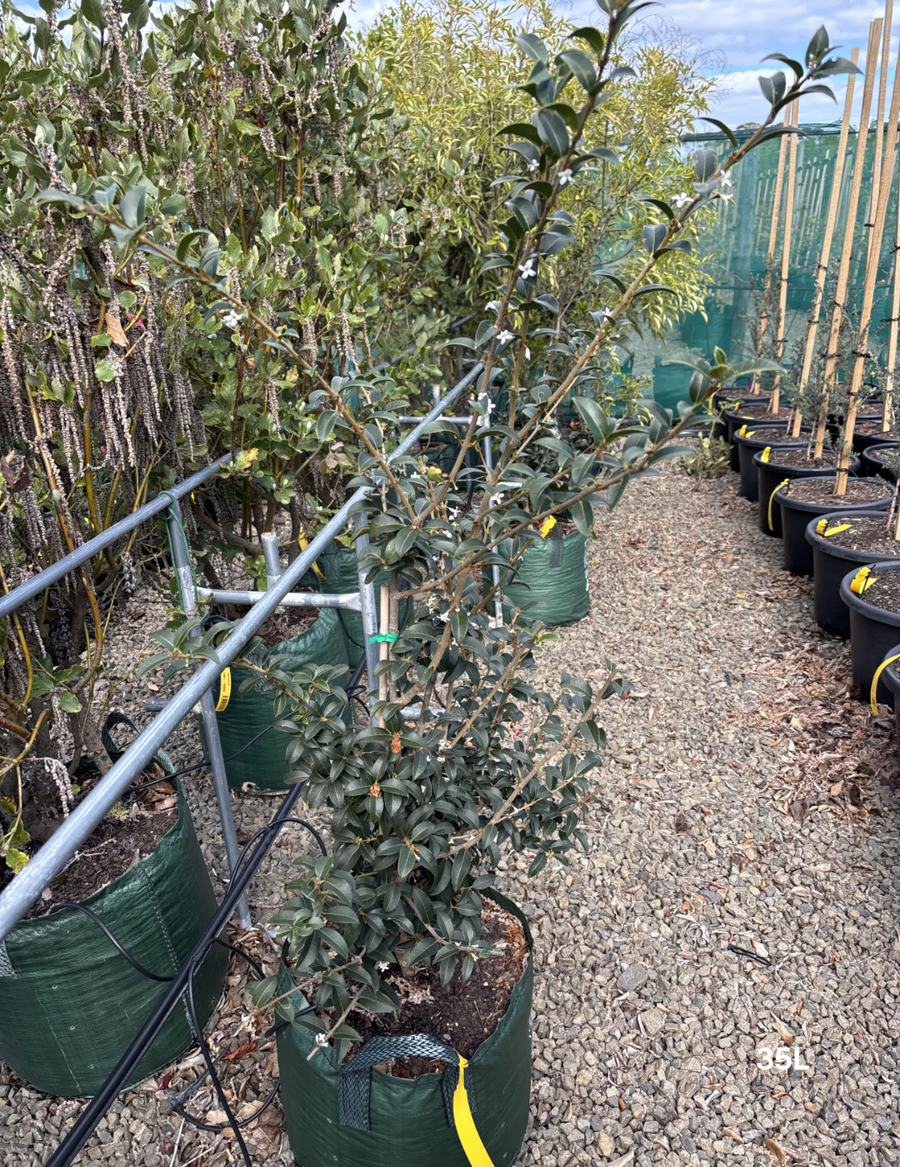
Osmanthus x burkwoodii, or Burkwood osmanthus, is a compact evergreen shrub with an upright bushy habit, a garden hybrid between Osmanthus delavayi and Osmanthus decorus. The small dark green leaves are leathery and glossy, and in spring the whole plant carries clusters of little white flowers with a heavy sweet scent.
It grows 2 to 3 metres tall and 1.5 to 2 metres wide at about 15 to 30 centimetres a year. Full sun to part shade suits it, in any well-drained soil. Cool temperate through to warm temperate gardens all work, frost is handled easily, and water matters mainly in the first summers.
Plant it 80 centimetres apart for a clipped formal hedge, 1 to 1.5 metres apart for a soft screen, or 3 metres apart down an avenue. Single plants hold their own near a seat or path where the spring fragrance is noticed. This is a hedge that asks for one trim a year.
Frequently Asked Questions
About Burkwood Osmanthus
What is Osmanthus x burkwoodii?
Burkwood osmanthus is a compact evergreen shrub, a garden hybrid between Osmanthus delavayi and Osmanthus decorus. It forms an upright bushy plant of small, leathery, dark green leaves, and in spring it carries dense clusters of little white tubular flowers with a strong sweet fragrance that carries across a courtyard.
How big does Burkwood Osmanthus grow?
It reaches 2 to 3 metres tall and 1.5 to 2 metres wide at maturity, growing about 15 to 30 centimetres a year. Clipped as a hedge it is easily held at 1.5 metres or lower. The habit is naturally neat, so it fills out from the base without the bare legs many shrubs develop.
How far apart should I plant it for a hedge?
For a tight formal hedge plant 80 centimetres apart. For a fuller informal screen allow 1 to 1.5 metres between plants and let them knit together over two to three seasons. If you are running it as an avenue of clipped shapes, 3 metres apart gives each plant room to develop evenly.
When does it flower?
Spring, roughly September to November, with the heaviest display in the middle of that window. The flowers are small and white in tight clusters along the stems, and the fragrance is strong enough to fill an enclosed garden. Prune after flowering rather than before if you want the full display each year.
Does it need sun or shade?
Full sun to part shade both work. Full sun gives the densest growth and the heaviest flowering, while part shade suits it in hot inland gardens where afternoon protection helps. It will grow in more shade than that, but the plant opens up and flowers less. Avoid deep shade under dense evergreens.
Is it frost hardy?
Yes. It handles frost comfortably once established and is a dependable choice for cool temperate districts, including the tablelands and Victorian and Tasmanian gardens. It also grows well in milder coastal and warm temperate areas. Young plants benefit from steady water through their first two summers, which matters more than winter protection.
How do I prune and care for it?
Trim once a year straight after flowering, taking the new growth back to shape. A second light tidy in late summer keeps a formal hedge crisp. Water regularly for the first two summers, then only through long dry spells. Mulch the root zone and feed with a general fertiliser in early spring.
Osmanthus x burkwoodii
Follow Us On Instagram
@evergreentreesdirect ↗
Tips & Tricks
Best Trees for Creating a Privacy Screen: 10 Picks Across Fast Formal, Native and Narrow Column Options
Read the story
How to Incorporate Trees into Your Modern Landscape Design
Read the story
The Importance of Root Health: How to Choose Quality Trees
Read the story