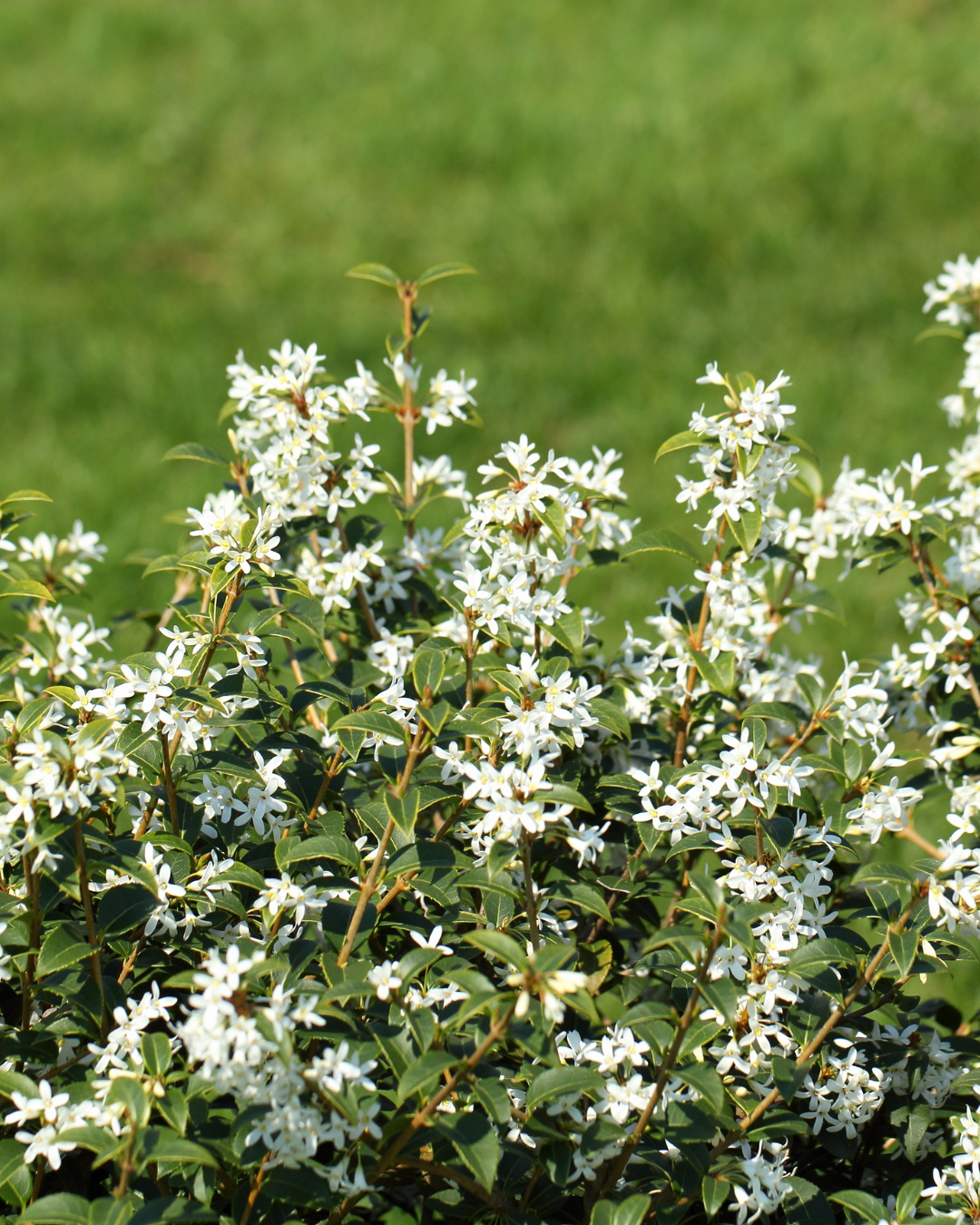
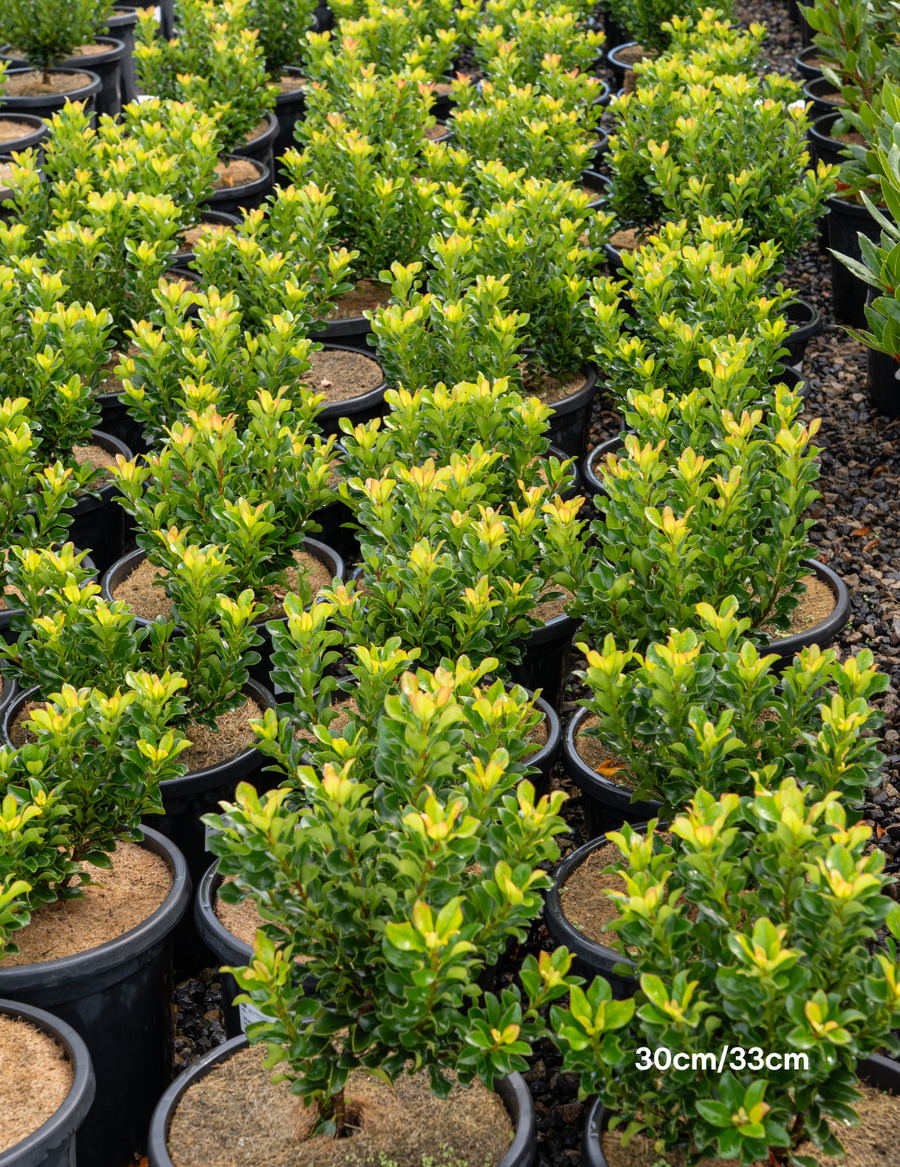
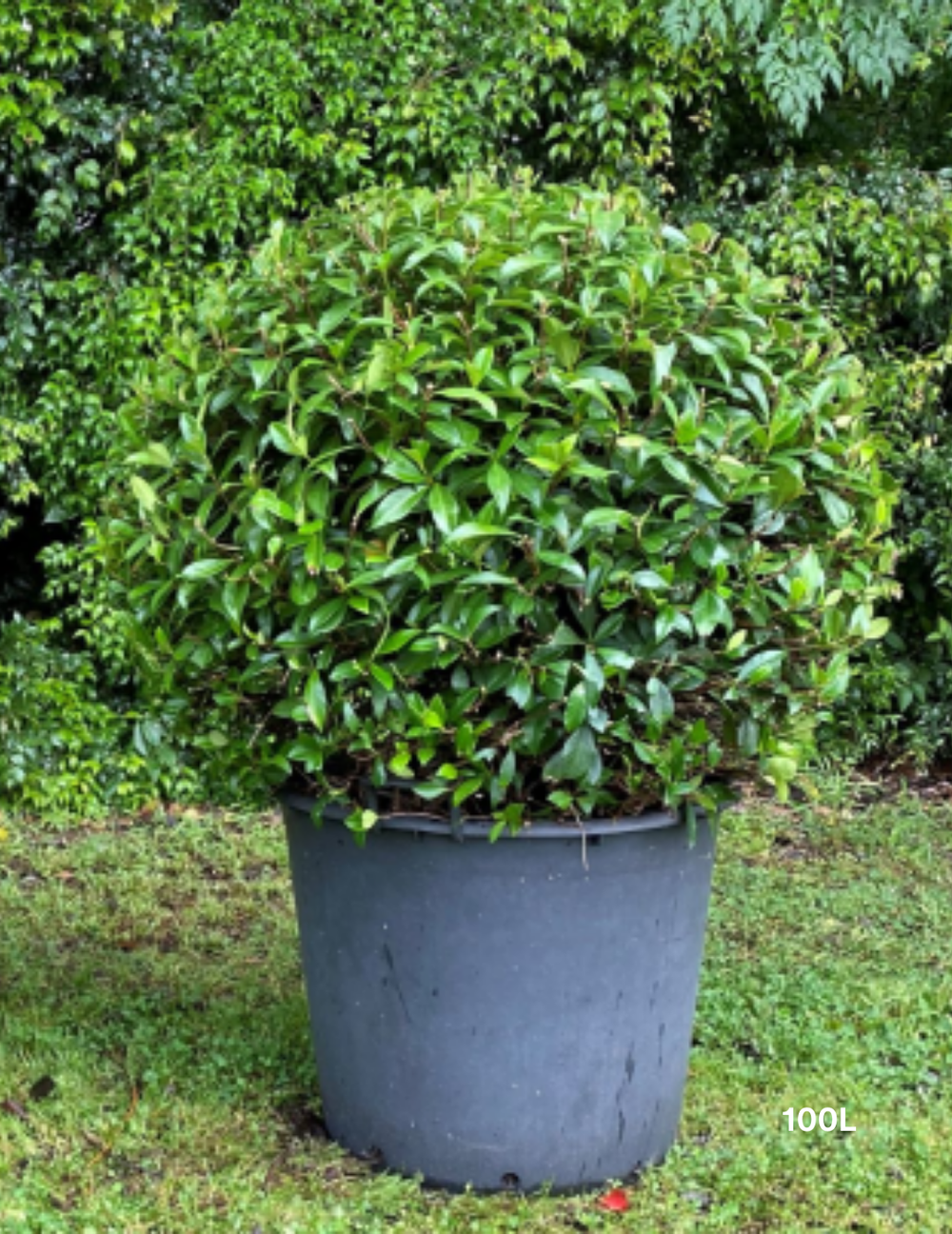
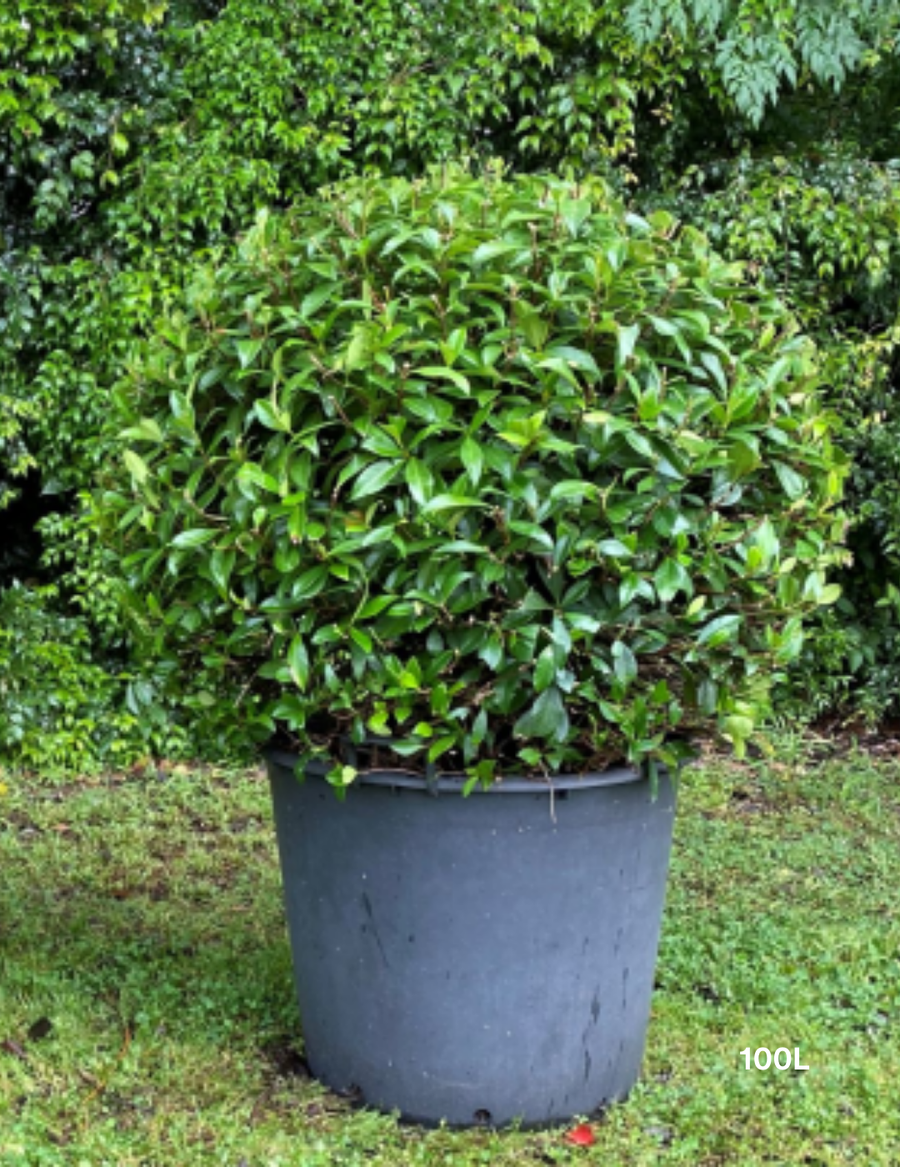
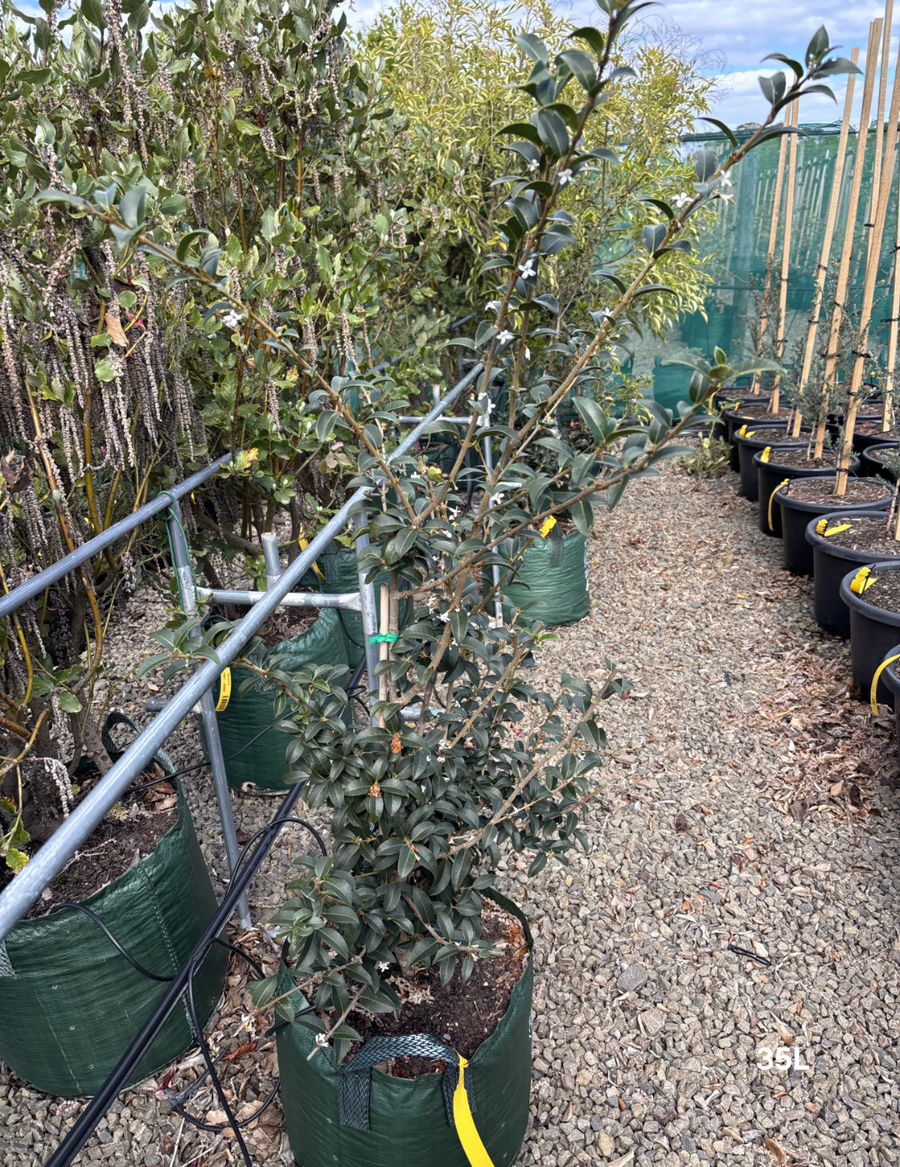
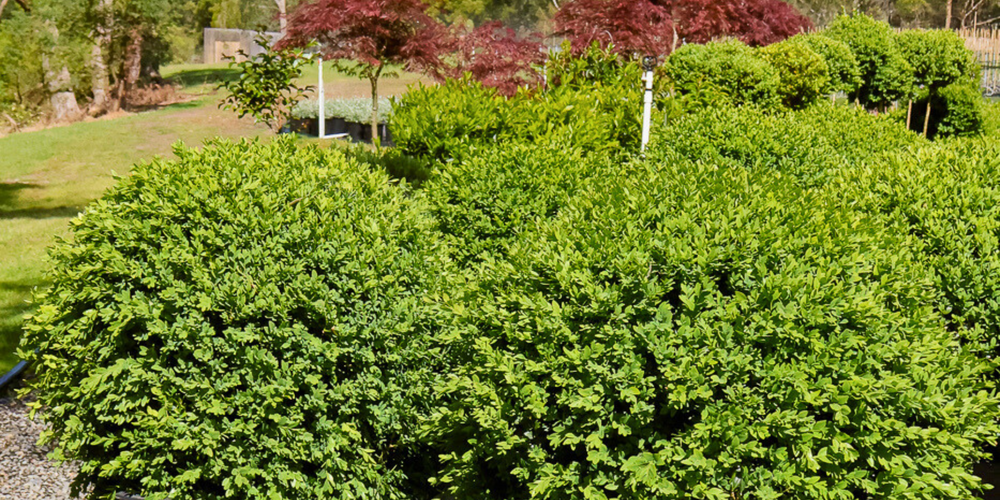
Osmanthus x burkwoodii, or Burkwood osmanthus, is a compact evergreen shrub with an upright bushy habit, a garden hybrid between Osmanthus delavayi and Osmanthus decorus. The small dark green leaves are leathery and glossy, and in spring the whole plant carries clusters of little white flowers with a heavy sweet scent.
It grows 2 to 3 metres tall and 1.5 to 2 metres wide at about 15 to 30 centimetres a year. Full sun to part shade suits it, in any well-drained soil. Cool temperate through to warm temperate gardens all work, frost is handled easily, and water matters mainly in the first summers.
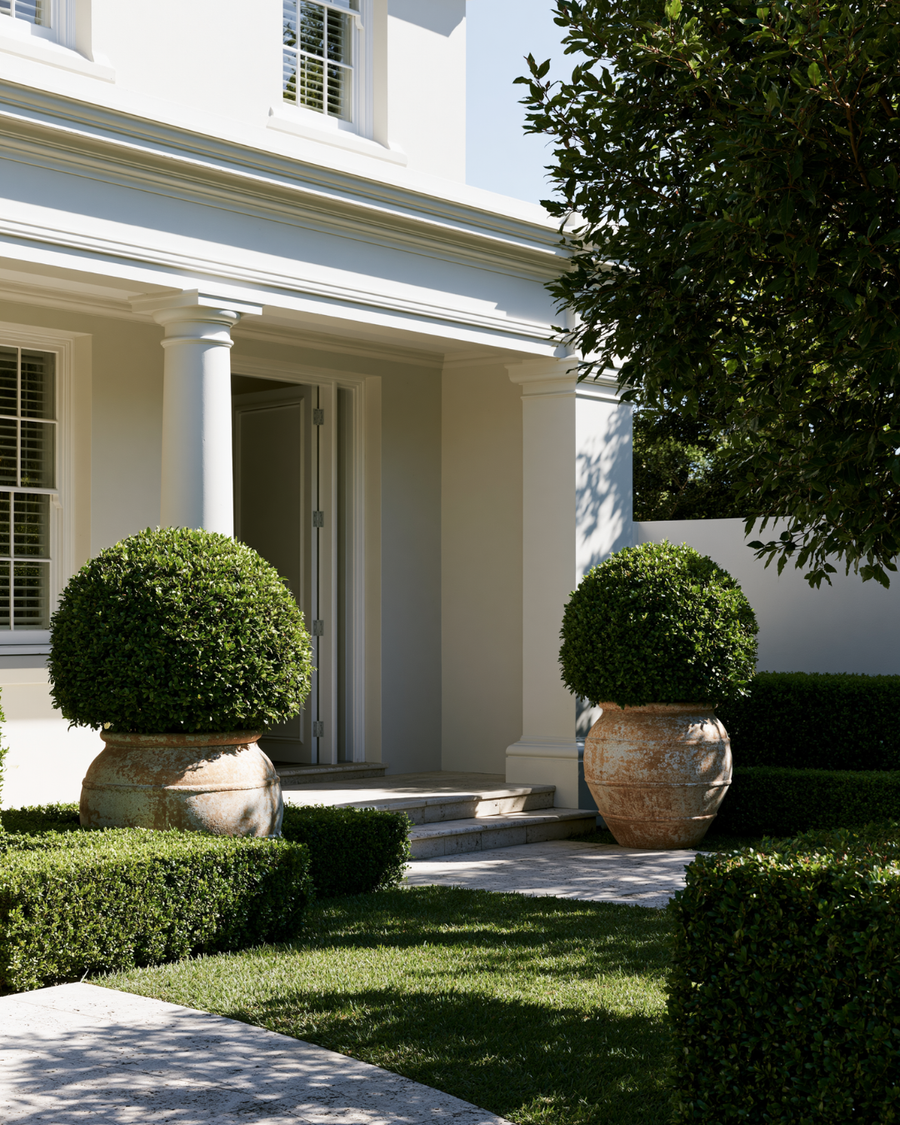
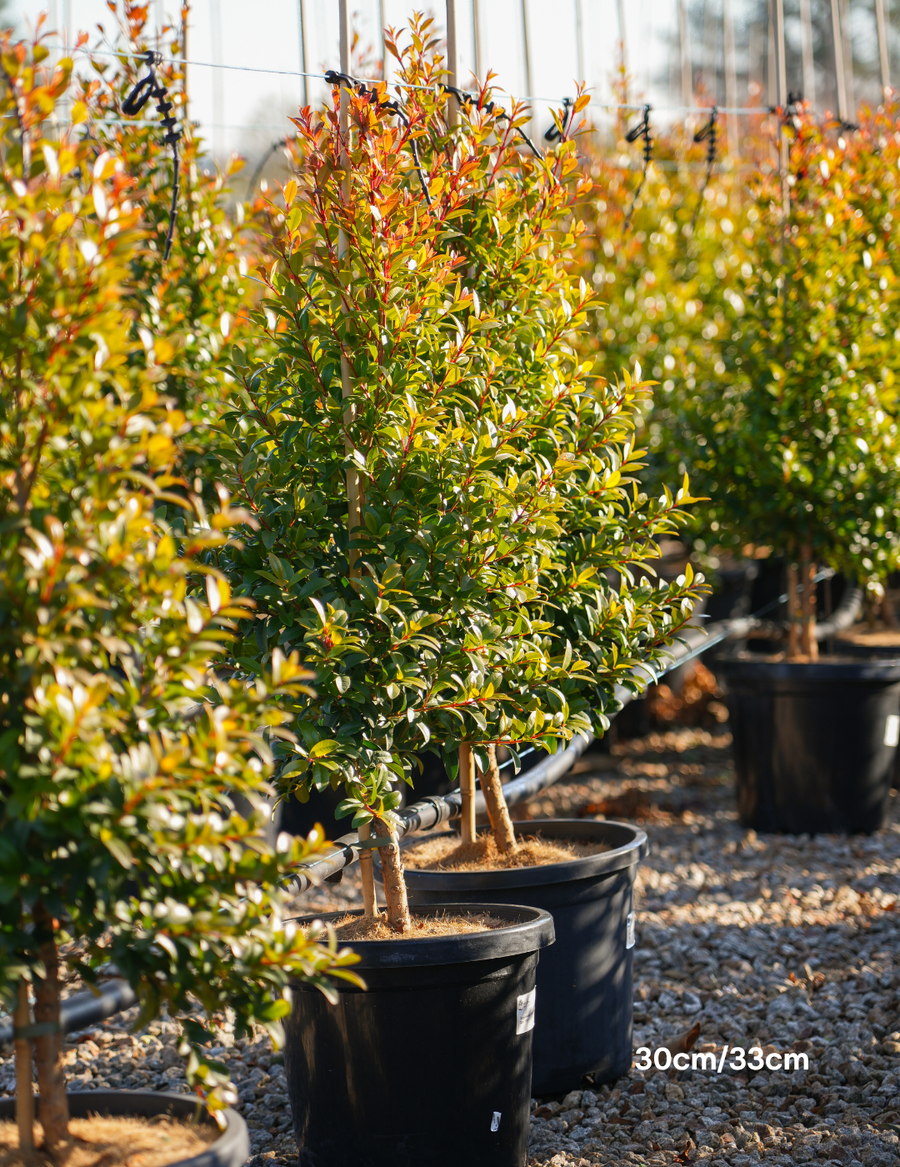
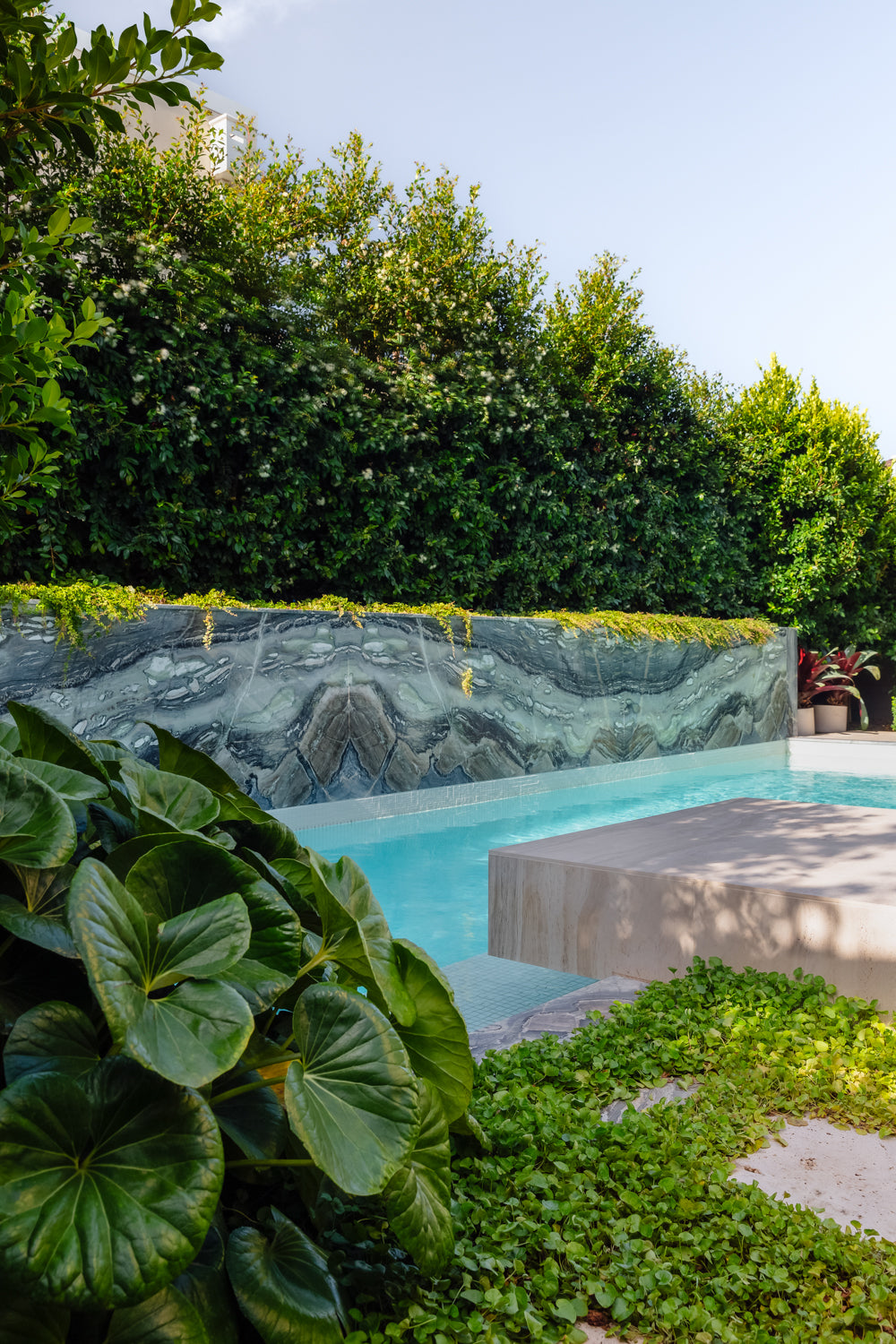
Plant it 80 centimetres apart for a clipped formal hedge, 1 to 1.5 metres apart for a soft screen, or 3 metres apart down an avenue. Single plants hold their own near a seat or path where the spring fragrance is noticed. This is a hedge that asks for one trim a year.
Frequently Asked Questions
About Burkwood Osmanthus
What is Osmanthus x burkwoodii?
Burkwood osmanthus is a compact evergreen shrub, a garden hybrid between Osmanthus delavayi and Osmanthus decorus. It forms an upright bushy plant of small, leathery, dark green leaves, and in spring it carries dense clusters of little white tubular flowers with a strong sweet fragrance that carries across a courtyard.
How big does Burkwood Osmanthus grow?
It reaches 2 to 3 metres tall and 1.5 to 2 metres wide at maturity, growing about 15 to 30 centimetres a year. Clipped as a hedge it is easily held at 1.5 metres or lower. The habit is naturally neat, so it fills out from the base without the bare legs many shrubs develop.
How far apart should I plant it for a hedge?
For a tight formal hedge plant 80 centimetres apart. For a fuller informal screen allow 1 to 1.5 metres between plants and let them knit together over two to three seasons. If you are running it as an avenue of clipped shapes, 3 metres apart gives each plant room to develop evenly.
When does it flower?
Spring, roughly September to November, with the heaviest display in the middle of that window. The flowers are small and white in tight clusters along the stems, and the fragrance is strong enough to fill an enclosed garden. Prune after flowering rather than before if you want the full display each year.
Does it need sun or shade?
Full sun to part shade both work. Full sun gives the densest growth and the heaviest flowering, while part shade suits it in hot inland gardens where afternoon protection helps. It will grow in more shade than that, but the plant opens up and flowers less. Avoid deep shade under dense evergreens.
Is it frost hardy?
Yes. It handles frost comfortably once established and is a dependable choice for cool temperate districts, including the tablelands and Victorian and Tasmanian gardens. It also grows well in milder coastal and warm temperate areas. Young plants benefit from steady water through their first two summers, which matters more than winter protection.
How do I prune and care for it?
Trim once a year straight after flowering, taking the new growth back to shape. A second light tidy in late summer keeps a formal hedge crisp. Water regularly for the first two summers, then only through long dry spells. Mulch the root zone and feed with a general fertiliser in early spring.