Skip to content

Volume Discounts Apply At Checkout

Buxus microphylla Saucer – Small-Leaved Box

Buxus microphylla Saucer – Small-Leaved Box

Evergreen · Full Sun

Mature size: Maintained as saucer topiary high × Maintained as saucer topiary wide

  • Evergreen
  • Full Sun
  • Mature heightMaintained as saucer topiary
  • Mature widthMaintained as saucer topiary
  • Frost Hardy
  • Good in pots

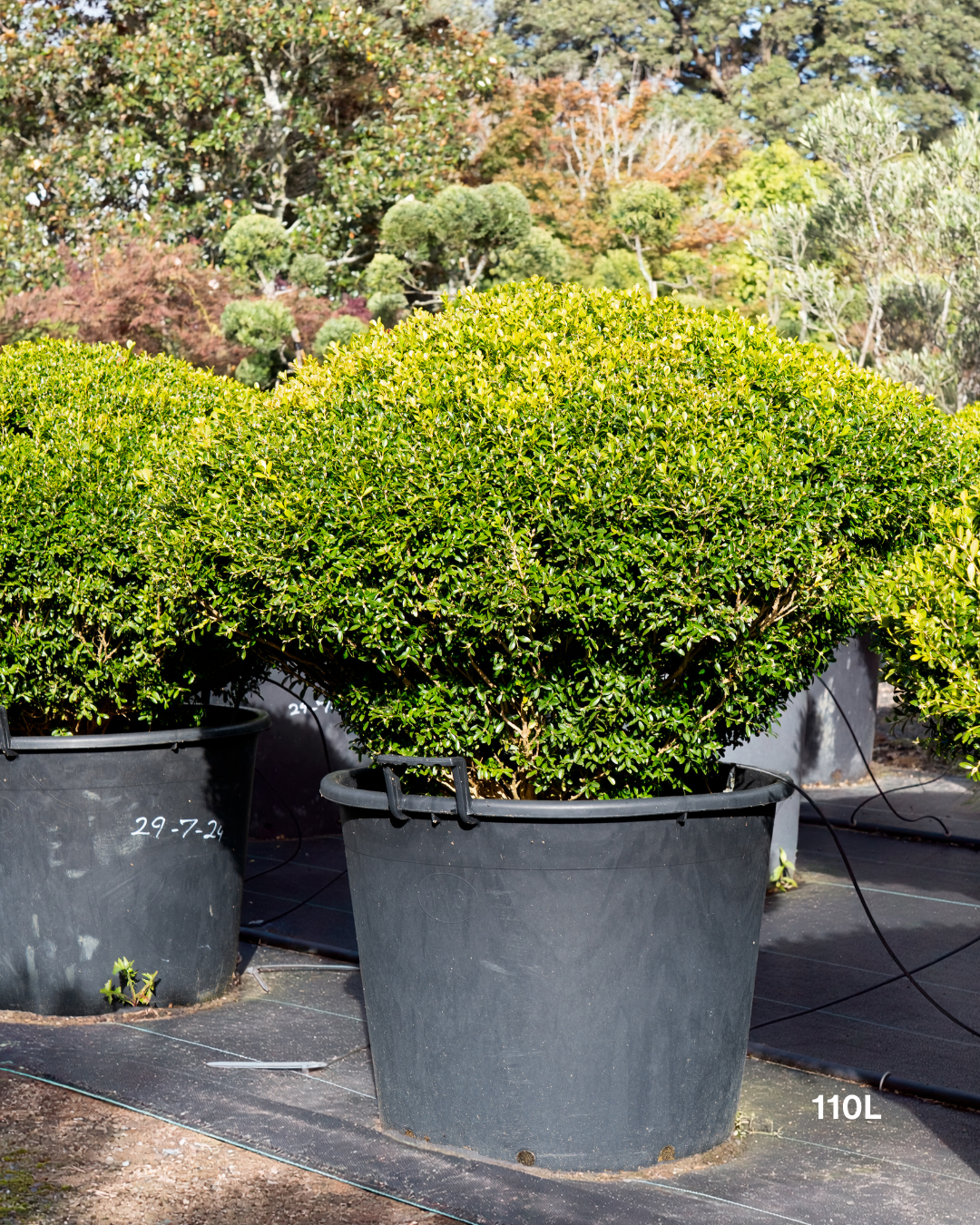
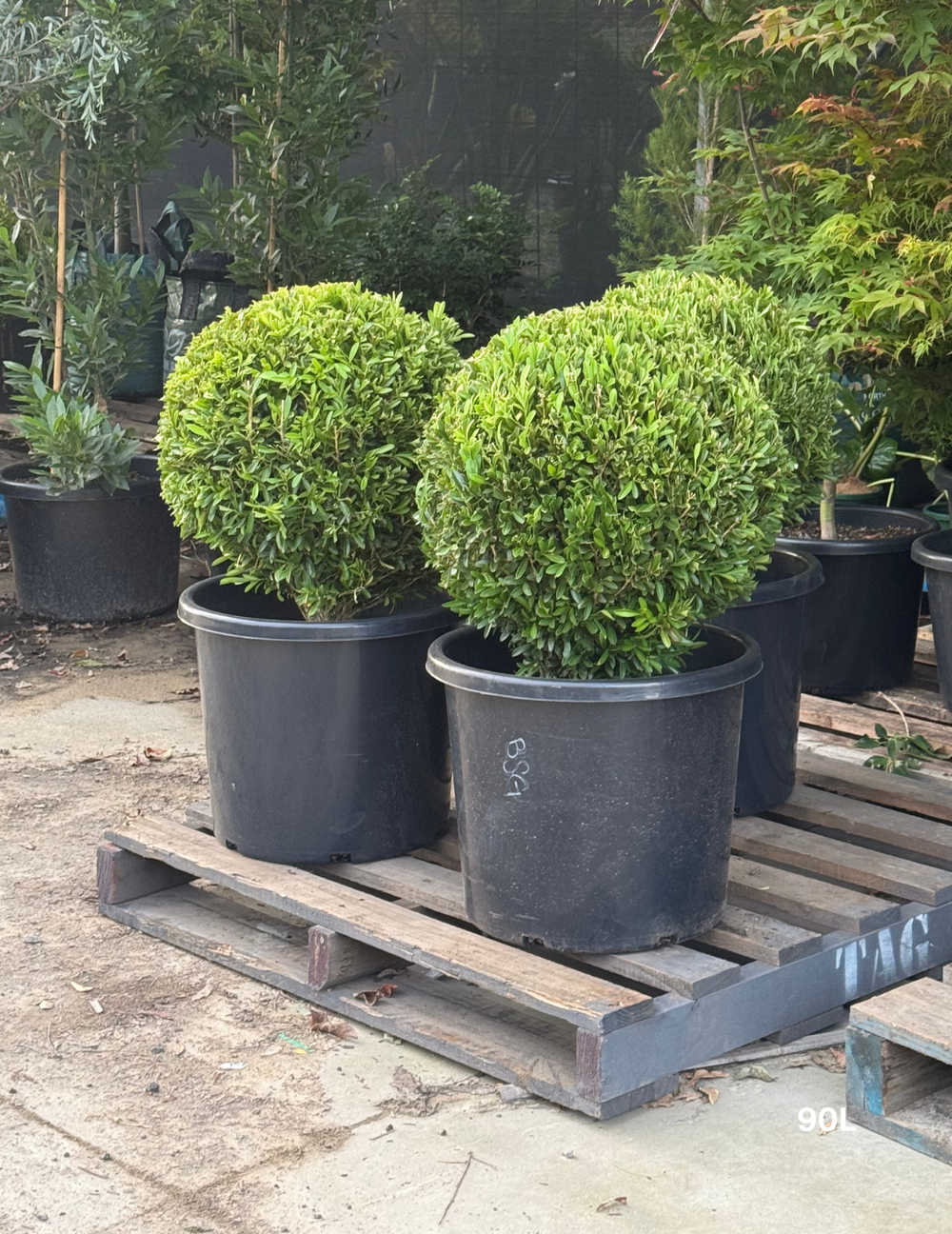
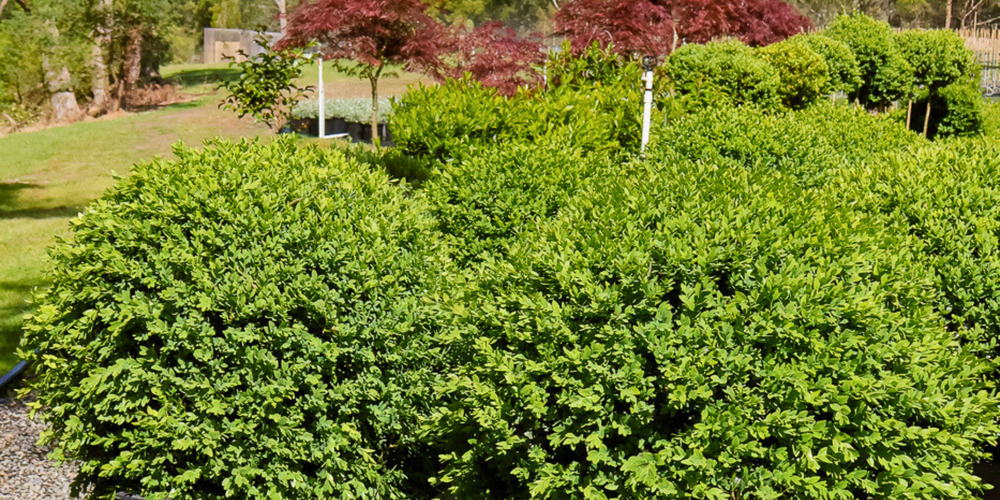
Specimen-grade saucer-form topiary of Buxus microphylla, valued for the finest small leaves of any commonly grown box, tight formal texture and stronger heat and humidity tolerance than sempervirens. A leading contemporary topiary shape in modern landscape design.

Regular price $1,890.00
Sale price $1,890.00 Regular price
Tax included. Shipping calculated at checkout.
Pot size
Available batches
Size: 50cm
Current height guide
Please enquire
Pot size
50cm

Approximate only. Minimum height important? Confirm with us.

Height guide & disclaimer

Height guide disclaimer: Height ranges are approximate only. As living products, plant heights naturally vary between individual plants, batches, and seasons. No guarantee is given that supplied plants will fall within the stated range. If minimum heights are required, you must confirm current batch heights with Evergreen Trees Direct prior to purchase. Variation in height is normal and is not grounds for return, refund, replacement, or compensation.

Quantity

Order multiple sizes

Mix pot sizes and batches in one order.

Size / batchEachQuantity
50cmApprox. height: Enquire for current heights$1,890.00

Height guide & disclaimer

Height guide disclaimer: Height ranges are approximate only. As living products, plant heights naturally vary between individual plants, batches, and seasons. No guarantee is given that supplied plants will fall within the stated range. If minimum heights are required, you must confirm current batch heights with Evergreen Trees Direct prior to purchase. Variation in height is normal and is not grounds for return, refund, replacement, or compensation.

Subtotal before discounts & delivery$0.00

Delivery is calculated at checkout.

Ask a question

The fields marked * are required.

Not sure how many trees you need?

Plan your hedge

Enter the length of your boundary, then choose how closely you want to plant.

Choose your planting spacing

Enter your boundary length to see how many trees you need.

Measure only the boundary you intend to plant—exclude gates and gaps. Spacing is centre to centre. Quantities are rounded up for one row, allowing roughly half the spacing at each end. Site conditions and pruning affect the final hedge.

Compare trees

Choose two trees and compare the same pot size.

    About Buxus microphylla var. microphylla

    Buxus microphylla Saucer is a pre-clipped formal evergreen specimen trained into a flat disc-shaped crown, valued for its tight fine dark-green foliage and precise horizontal form. Buxus microphylla is a distinct variety within the Buxus family with the smallest leaves of any commonly grown box, which gives the saucer form its exceptionally clean edge and dense finish.

    It performs reliably in cool to temperate climates in full sun to part shade with well-drained slightly acidic to neutral loamy soil. Buxus microphylla is more heat and humidity tolerant than Buxus sempervirens, which makes it a stronger choice for warm coastal Sydney, Brisbane and inland positions where English Box can struggle. Once established it is frost hardy, drought tolerant and holds its shape with two light clips per year.

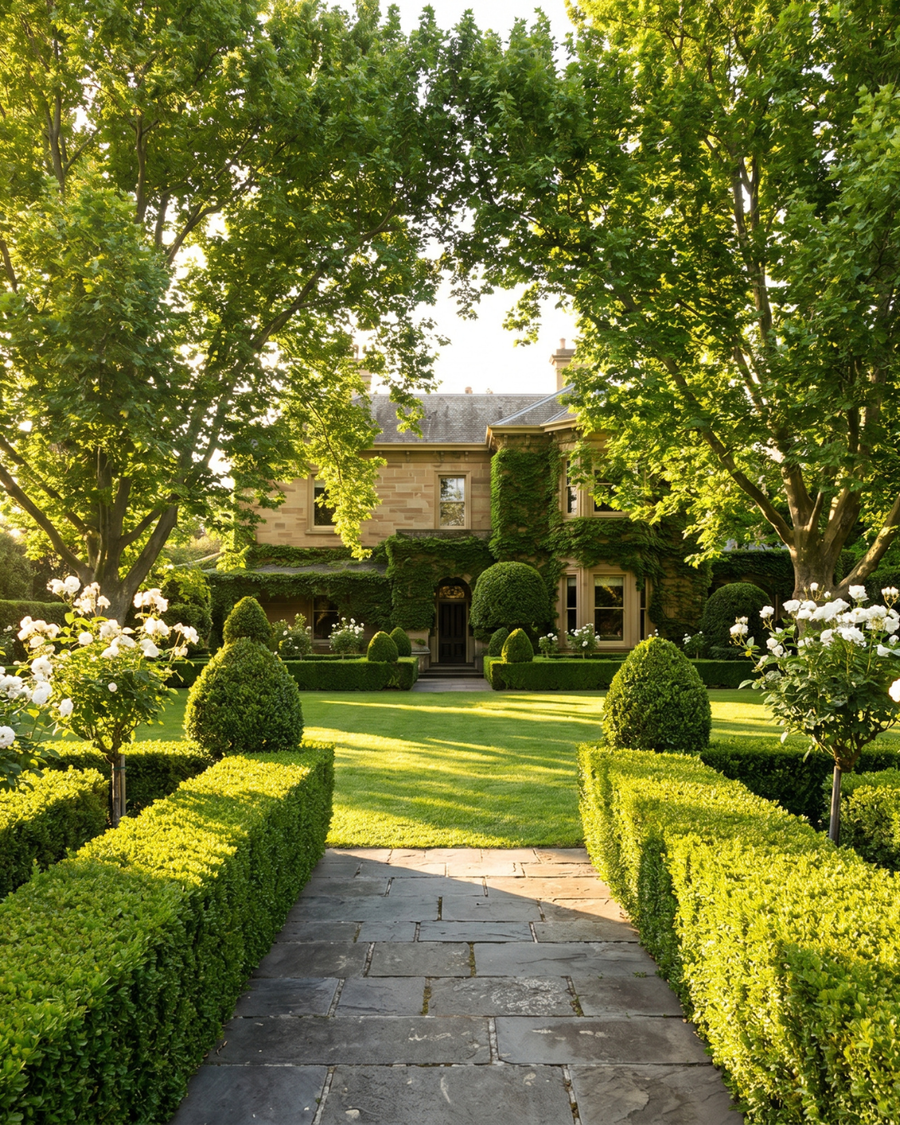
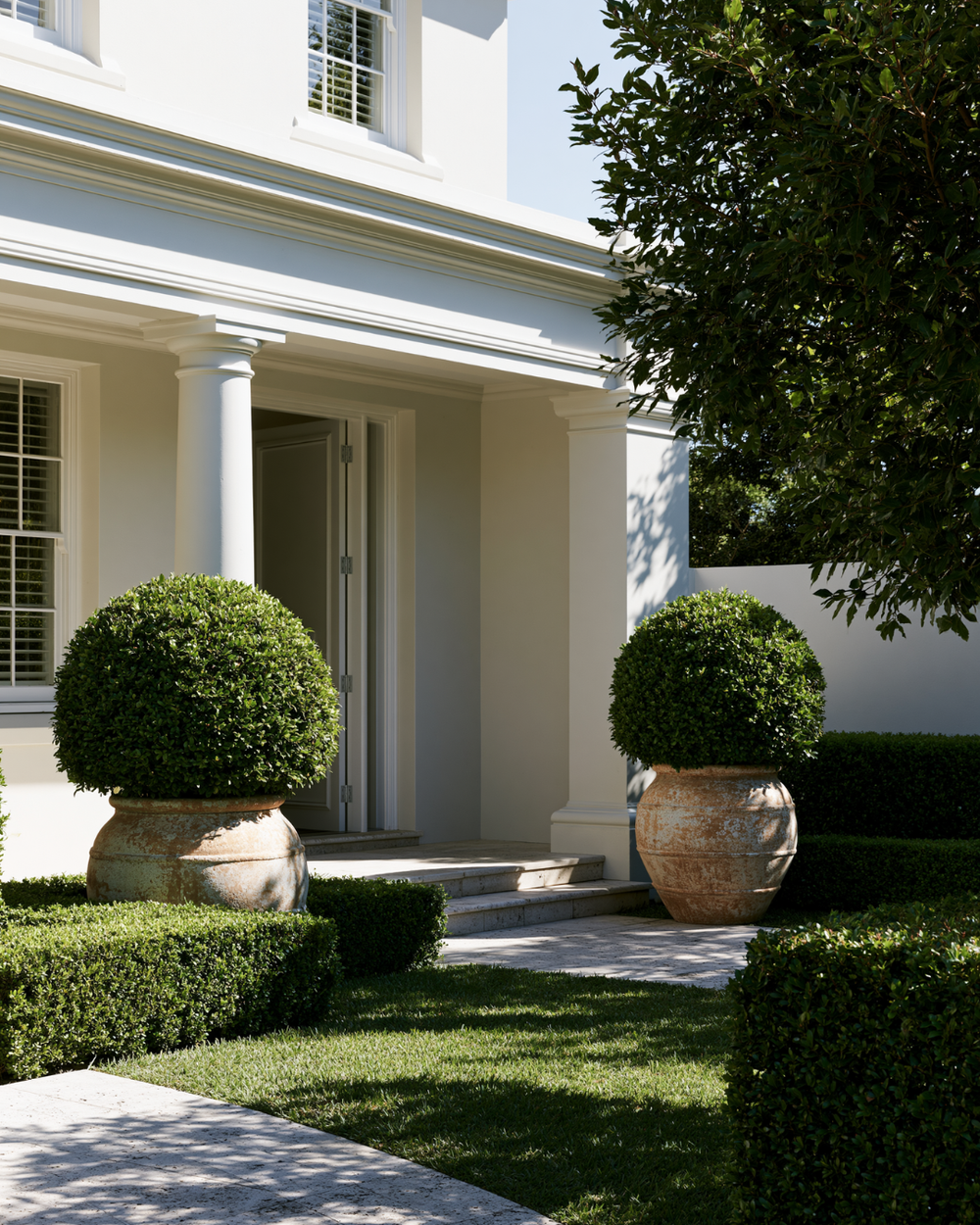
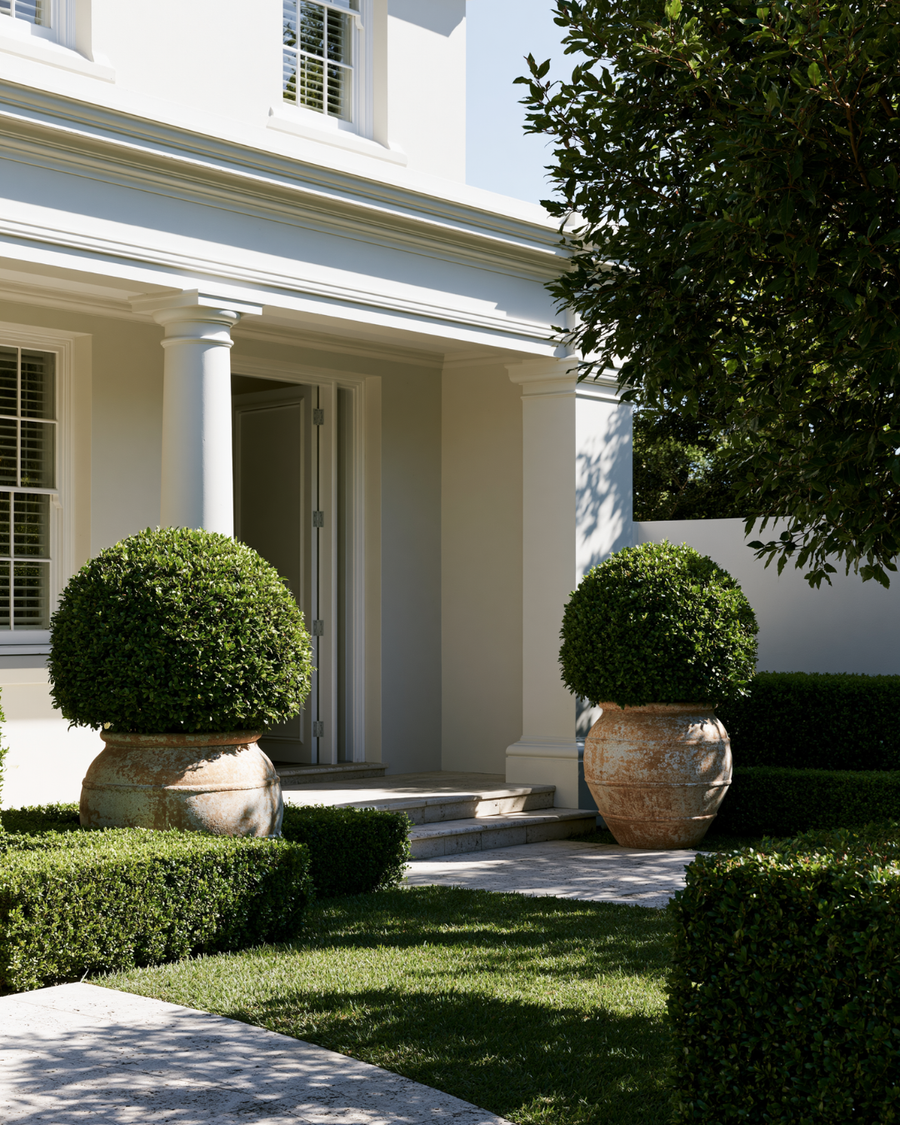
    Saucer forms are one of the most popular topiary shapes in contemporary landscape design. They work particularly well as horizontal punctuation in modern gardens, layered with taller topiary or grasses, in low mass plantings and as flat feature pieces in large courtyards. Buxus microphylla saucers give the timeless quality of clipped box in a strong horizontal form.

    Frequently Asked Questions

    About Buxus microphylla Saucer

    What is Buxus microphylla?

    Buxus microphylla is a distinct variety within the Buxus family, valued for having the smallest and finest leaves of any commonly grown box. It gives an exceptionally tight formal finish, is slower growing than japonica and more heat and humidity tolerant than sempervirens. It is one of the best choices for precise topiary work in warm coastal and inland Australian positions.

    What form is the plant trained into?

    Saucer form. Each plant is trained into a flat disc-shaped crown, wider than it is tall, sitting on a low base of foliage. The horizontal shape gives a strong contemporary line and is one of the most popular topiary forms in modern landscape design.

    How big is the saucer?

    The 50cm pot saucers are specimen-grade, with a saucer diameter of approximately 0.7 to 0.9 metres and a saucer thickness of approximately 0.25 to 0.35 metres. Each plant is well-rooted and in proportion to the pot, ready to place.

    How is it different from Buxus sempervirens (English Box)?

    Buxus microphylla has smaller and finer leaves than sempervirens, a tighter growth pattern, and better tolerance of heat and humidity. Sempervirens is the traditional choice for cool-temperate gardens and holds a slightly denser texture in Melbourne, Tasmania and the tablelands. Microphylla performs better in warm coastal Sydney and Brisbane where sempervirens can suffer from humidity and box blight.

    Where does Buxus microphylla grow best?

    Buxus microphylla performs reliably across most Australian climates from subtropical Queensland through to temperate Victoria and Tasmania. It thrives in Sydney, Melbourne, Adelaide, coastal NSW and the tablelands. It prefers full sun to part shade with well-drained slightly acidic to neutral soil, and tolerates warmer humid positions where English Box would struggle.

    Is it prone to box blight?

    Buxus microphylla is less susceptible to box blight than Buxus sempervirens, particularly in humid conditions. To reduce risk further, ensure good air circulation, avoid overhead watering, and prune to maintain airflow through the canopy. In high humidity areas, Buxus bodinieri Shaggy Box remains the most blight-resistant alternative.
    How do I prune a Buxus saucer?

    Lightly clip twice per year, in spring and again in late summer or early autumn. Use sharp shears for the cleanest formal finish, and step back regularly to check the flat plane and the symmetry of the disc edge. Focus each cut on maintaining the horizontal top and clean vertical sides. Avoid pruning in the heat of summer or during frost periods.

    How do I care for Buxus microphylla Saucer?

    Water deeply through the first growing season. Once established, reduce watering and supplement only during extended dry periods. Apply a slow-release fertiliser in early spring and again in late summer. Mulch annually with an acidic mulch like pine bark, keeping the mulch clear of the trunk. In pots, use a quality potting mix and step the pot up in size every two to three years to support continued root health.

    Key growing information
    Mature heightMaintained as saucer topiary
    Mature widthMaintained as saucer topiary
    PositionFull Sun
    Growth per year5 - 10 cm per year
    FrostFrost Hardy
    FoliageEvergreen (foliage year round)
    FormUpright
    UsesFeature Tree · Screening or Privacy · Shrubs · Plant in Pots (or) Suitable for Pots
    Foliage

    Evergreen (foliage year round)

    Position
    • Full Sun
    Form
    • Upright
    Use
    • Feature Tree
    • Screening or Privacy
    • Shrubs
    • Plant in Pots (or) Suitable for Pots
    Mature height
    Maintained as saucer topiary
    Mature width
    Maintained as saucer topiary
    Buxus microphylla Saucer – Small-Leaved Box

    Planting Information

    How To Plant Your Buxus microphylla Saucer – Small-Leaved Box

    Select a position with full sun to part shade and well-drained slightly acidic to neutral soil. Avoid heavy waterlogged clay.

    Dig a hole twice the width and the same depth as the root ball. Mix compost through the backfill. Position the root ball with the top sitting level with the surrounding soil and backfill, firming gently.

    Water in thoroughly and apply a 50 to 75 mm layer of acidic mulch like pine bark over the root zone, keeping the mulch clear of the trunk. Water deeply once or twice weekly through the first growing season.

    For pot placement, choose a decorative pot at least 60 cm in diameter, use a quality potting mix and ensure good drainage.

    Recommended Planting Spacing For Your Buxus microphylla Saucer – Small-Leaved Box

    Feature Placement: Standalone in decorative pots, low urns or as anchor points in modern beds.
    Mass Placement: 1.5 – 2 m apart to allow each saucer to sit clearly as a horizontal element.
    Layered Planting: Underplant taller topiary or grasses to build vertical contrast against the horizontal disc.

    Buxus microphylla Saucer – Small-Leaved Box is expected to grow 5 - 10 cm per year.

    • Slow Growth Rate

    Long Term Care For Your Buxus microphylla Saucer – Small-Leaved Box

    Water deeply through the first growing season. Once established, reduce watering and supplement only during extended dry periods. Apply a slow-release fertiliser in early spring and again in late summer. Clip lightly in spring and again in late summer to maintain the horizontal saucer form. Mulch annually with an acidic mulch like pine bark, keeping the mulch clear of the trunk. In pots, use a quality potting mix and step the pot up in size every two to three years to support continued root health.

    Planting Your Buxus microphylla Saucer – Small-Leaved Box in Different Soil

    Loam soils: Ideal, particularly when slightly acidic to neutral.

    Sandy soils: Performs well provided organic matter is added regularly and watering is consistent.

    Clay soils: Heavy clay must be improved with coarse sand, gypsum and compost. Raised mounds or large pots are the best options in heavy clay.

    pH preference: Slightly acidic to neutral, between 6.0 and 7.0.

    Buxus microphylla Saucer – Small-Leaved Box

    Uses in my Garden

    Uses in my Garden

    • Feature Tree
    • Screening or Privacy
    • Shrubs
    • Plant in Pots (or) Suitable for Pots

    Buxus microphylla Saucer – Small-Leaved Box works in an:

    • Formal Garden – structured, symmetrical design with clipped shapes.
    • Modern Garden – sleek, minimal, and design-led planting.
    • Japanese Inspired – serene balance of form, foliage, and flow.
    • Contemporary / Architectural Garden – striking forms for bold design statements.
    • Mediterranean Style Garden – timeless courtyard look with stone, pots, and bold greenery.
    • Low-maintenance Garden – resilient choices for easy care and year-round appeal.

    Is Buxus microphylla Saucer – Small-Leaved Box Evergreen or Deciduous?

    Buxus microphylla Saucer – Small-Leaved Box is an Evergreen (foliage year round) Tree

    Mature Height & Width

    Mature Height: Maintained as saucer topiary

    Mature Width: Maintained as saucer topiary

    Buxus microphylla Saucer – Small-Leaved Box is expected to grow 5 - 10 cm per year.

    Growth Rate of Buxus microphylla Saucer – Small-Leaved Box

    Buxus microphylla Saucer – Small-Leaved Box is expected to grow 5 - 10 cm per year.

    They are considered to have a:

    • Slow Growth Rate

    Frost Tolerance & Ideal Climate to plant Buxus microphylla Saucer – Small-Leaved Box

    Is Buxus microphylla Saucer – Small-Leaved Box frost tolerant?

    Buxus microphylla Saucer – Small-Leaved Box is Frost Hardy – Survives heavy and frequent frost without damage.

    Does Buxus microphylla Saucer – Small-Leaved Box Flower?

    Buxus microphylla produces tiny pale flowers in spring, but these are subtle and not the reason the plant is grown. The plant is valued year-round for its fine dense evergreen foliage and its response to precise topiary training.

    Does Buxus microphylla Saucer – Small-Leaved Box flower?

    • No - Doesn't Flower

    Flowering Period:

    Flower Type:

    • Not Applicable

    Flower Colour:

    Not Applicable

    Is Buxus microphylla Saucer – Small-Leaved Box an Australian Native Tree?

    No

    Buxus microphylla Saucer – Small-Leaved Box is Native to Japan and Taiwan. Buxus microphylla is native to the temperate forests and rocky slopes of East Asia, where its small-leaved growth habit developed as an adaptation to variable conditions. Grown in Australia as one of the finest-textured box species for topiary and formal work.

    What is the Wildlife Value of Buxus microphylla Saucer – Small-Leaved Box ?

    Buxus microphylla is grown primarily for its formal foliage and does not offer significant flowering or wildlife value. The dense fine canopy does provide small shelter opportunities for garden insects and birds throughout the year in a formal setting.

    How much Sunlight does Buxus microphylla Saucer – Small-Leaved Box need?

    Buxus microphylla Saucer – Small-Leaved Box will thrive best in:

    • Full Sun

    Preferred Soil?

    Buxus microphylla performs best in well-drained, slightly acidic to neutral loamy soils with a pH between 6.0 and 7.0. It will tolerate a wide range of soil types provided drainage is excellent. Avoid heavy waterlogged clay, which can lead to root rot in Buxus.

    Is Buxus microphylla Saucer – Small-Leaved Box Drought Tolerant?

    Is Buxus microphylla Saucer – Small-Leaved Box Drought tolerant?

    Through establishment Buxus microphylla benefits from regular watering to build a strong root system. Once established it is drought tolerant and copes well with dry periods on minimal supplementary watering, though consistent moisture supports the tightest formal finish and prevents any leaf browning in extreme heat.

    Buxus microphylla Saucer – Small-Leaved Box

    Frequently Asked Questions

    What is Buxus microphylla?

    Buxus microphylla is a distinct variety within the Buxus family, valued for having the smallest and finest leaves of any commonly grown box. It gives an exceptionally tight formal finish, is slower growing than japonica and more heat and humidity tolerant than sempervirens. It is one of the best choices for precise topiary work in warm coastal and inland Australian positions.

    What form is the plant trained into?

    Saucer form. Each plant is trained into a flat disc-shaped crown, wider than it is tall, sitting on a low base of foliage. The horizontal shape gives a strong contemporary line and is one of the most popular topiary forms in modern landscape design.

    How big is the saucer?

    The 50cm pot saucers are specimen-grade, with a saucer diameter of approximately 0.7 to 0.9 metres and a saucer thickness of approximately 0.25 to 0.35 metres. Each plant is well-rooted and in proportion to the pot, ready to place.

    How is it different from Buxus sempervirens (English Box)?

    Buxus microphylla has smaller and finer leaves than sempervirens, a tighter growth pattern, and better tolerance of heat and humidity. Sempervirens is the traditional choice for cool-temperate gardens and holds a slightly denser texture in Melbourne, Tasmania and the tablelands. Microphylla performs better in warm coastal Sydney and Brisbane where sempervirens can suffer from humidity and box blight.

    Where does Buxus microphylla grow best?

    Buxus microphylla performs reliably across most Australian climates from subtropical Queensland through to temperate Victoria and Tasmania. It thrives in Sydney, Melbourne, Adelaide, coastal NSW and the tablelands. It prefers full sun to part shade with well-drained slightly acidic to neutral soil, and tolerates warmer humid positions where English Box would struggle.

    Is it prone to box blight?

    Buxus microphylla is less susceptible to box blight than Buxus sempervirens, particularly in humid conditions. To reduce risk further, ensure good air circulation, avoid overhead watering, and prune to maintain airflow through the canopy. In high humidity areas, Buxus bodinieri Shaggy Box remains the most blight-resistant alternative.

    How do I prune a Buxus saucer?

    Lightly clip twice per year, in spring and again in late summer or early autumn. Use sharp shears for the cleanest formal finish, and step back regularly to check the flat plane and the symmetry of the disc edge. Focus each cut on maintaining the horizontal top and clean vertical sides. Avoid pruning in the heat of summer or during frost periods.
    How do I care for Buxus microphylla Saucer?

    Water deeply through the first growing season. Once established, reduce watering and supplement only during extended dry periods. Apply a slow-release fertiliser in early spring and again in late summer. Mulch annually with an acidic mulch like pine bark, keeping the mulch clear of the trunk. In pots, use a quality potting mix and step the pot up in size every two to three years to support continued root health.

    Buxus microphylla Saucer – Small-Leaved Box

    Compare sizes side by side

    50cm

    Enquire for current heights

    Heights are approximate and vary between individual trees.

    Buxus microphylla var. microphylla is loved for its Specimen-grade saucer-form topiary of Buxus microphylla, valued for the finest small leaves of any commonly grown box, tight formal texture and stronger heat and humidity tolerance than sempervirens. A leading contemporary topiary shape in modern landscape design.

    We take pride in supplying A+ grade advanced trees. When stock at our farm is not yet ready, we work with our trusted trade suppliers to source the best available trees for your garden.

    Plant Your Buxus microphylla Saucer – Small-Leaved Box With:

    Trachelospermum jasminoides – Star Jasmine

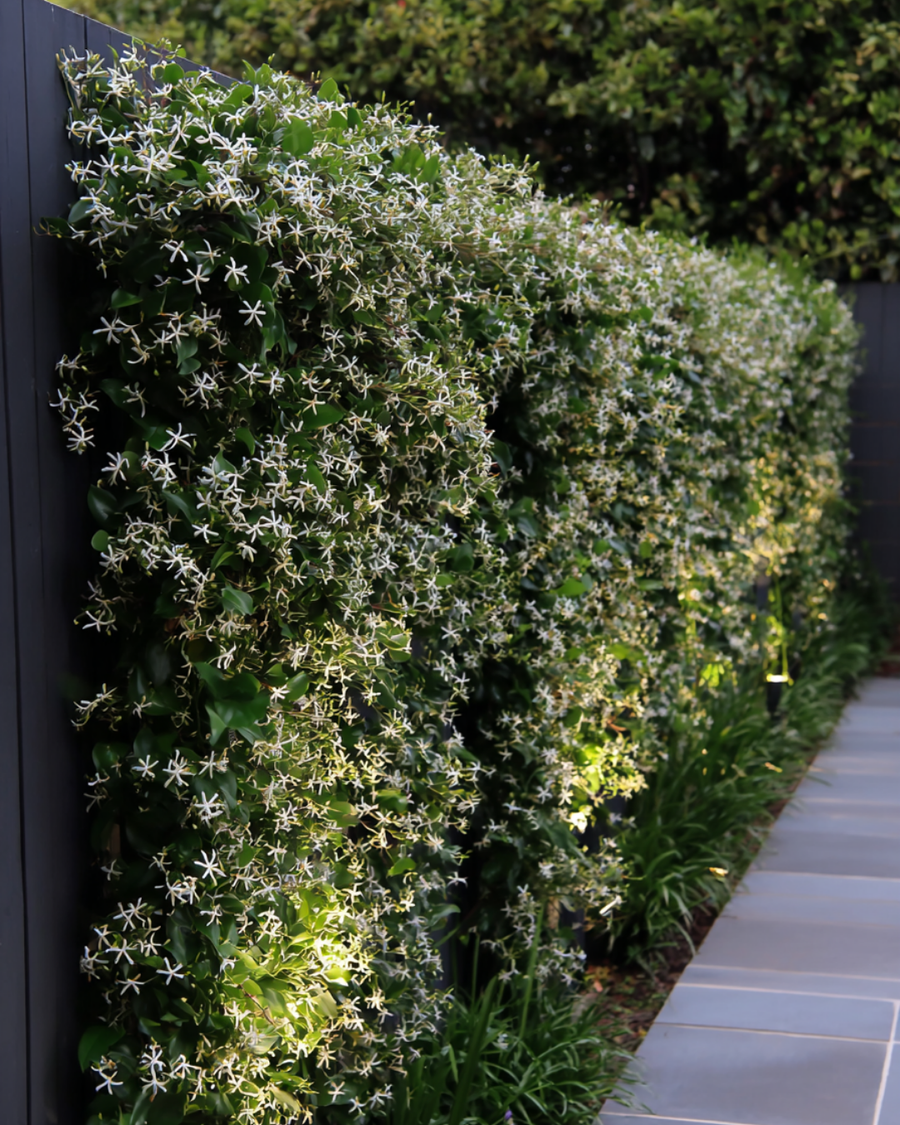
    Trachelospermum jasminoides, commonly called Star Jasmine, is an evergreen twining climber, and despite the name it is not a true jasmine. Stems wind through wire and lattice and build a woody framework over time, carrying oval, glossy dark green leaves. Scented white flowers shaped like five pointed stars open through spring and summer.

    Full sun gives the heaviest flowering, though it grows perfectly well in part shade. Any free draining soil will do. Growth is moderate at 30 to 50 centimetres a year. It is frost tolerant once established, handles salt wind and short dry periods, and performs from Perth and Adelaide through to Sydney and Brisbane.

    On a fence or wall it covers 2 to 3 metres of support, more with age and training. Left unsupported it spreads as a groundcover 30 to 45 centimetres deep, useful on batters and under established trees. It is the standard answer when a boundary needs green cover without the bulk of a hedge.

    Frequently Asked Questions

    About Star Jasmine

    What is Star Jasmine?

    Trachelospermum jasminoides is an evergreen twining climber from east Asia, and despite the common name it is not a true jasmine. It builds a woody framework of stems carrying glossy dark green leaves, and produces scented white flowers shaped like five pointed stars. It is grown as a climber, a groundcover or a clipped cover.

    How fast does Star Jasmine grow?

    Growth is moderate at about 30 to 50 centimetres a year once established. The first year is slow while the roots develop, and the pace picks up noticeably in the second and third seasons. Regular water and a spring feed speed things along, and plants tied in early cover a fence faster than those left to find their own way.

    Does Star Jasmine need sun or shade?

    It grows in full sun through to part shade. Full sun produces the tightest growth and by far the most flowers, while shaded plants stay leafier with sparse flowering. In hot inland gardens some afternoon shade prevents leaf scorch. Against a west facing wall, make sure the roots stay mulched and watered.

    Is Star Jasmine frost tolerant?

    Yes, established plants handle light to moderate frost without damage, though the leaves often take on a bronze or purple tone through winter and green up again in spring. Young plants in their first winter are more vulnerable and benefit from a sheltered position or a temporary cover in cold inland districts.

    Can Star Jasmine be used as a groundcover?

    Yes. Left without support it spreads sideways into a dense mat roughly 30 to 45 centimetres deep, which is a common way to cover batters, median strips and the ground under established trees. Space plants about 1 metre apart for cover within two seasons, and trim the runners back off paths.

    Is Star Jasmine suitable for coastal positions?

    It handles coastal conditions well, including salt laden wind and sandy soil, provided it is not in the front line of direct salt spray. Improve sandy ground with compost before planting and mulch to hold moisture. It is used widely on coastal fences and retaining walls along the eastern and southern seaboard.

    How do I care for Star Jasmine?

    Water through the first two summers, after which it asks for very little. Prune after flowering, cutting back long runners and thinning the framework if it has built up thick and woody. It takes a hard cut back and reshoots. Feed in early spring. Wear gloves when pruning, as the milky sap can irritate skin.

    youtube Load video:

    Evergreen Trees Direct Has Been Featured In:

    Perfect Substitutes for Buxus microphylla Saucer – Small-Leaved Box

    Follow Us On Instagram

    @evergreentreesdirect ↗
    Evergreen Trees DirectEvergreen Trees DirectEvergreen Trees DirectEvergreen Trees DirectEvergreen Trees Direct
    youtube Load video: