

Metrosideros excelsa Topiary Balls
Metrosideros excelsa Topiary Balls
Couldn't load pickup availability
Current Stock Height Guides
Current Stock Height Guides
Height guide disclaimer: Height ranges are approximate only. As living products, plant heights naturally vary between individual plants, batches, and seasons. No guarantee is given that supplied plants will fall within the stated range. If minimum heights are required, you mustconfirm current batch heights with Evergreen Trees Direct prior to purchase. Variation in height is normal and is not grounds for return, refund, replacement, or compensation.
Mature Height & Width
Mature Height & Width
Mature Height: 0.6m to 0.8m maintained as a clipped ball
Mature Width: 0.6m to 0.8m maintained as a clipped ball
Metrosideros excelsa Topiary Balls is expected to grow 10cm to 20cm per year in topiary form.
Root Ball Dimensions
Root Ball Dimensions
Use this as a reference when digging your planting hole. We recommend digging at least 10% wider than the dimensions below to encourage strong root development.
- 30cm Pot: 33cm (W) × 30cm (D)
- 40cm/45L Pot: 44cm (W) × 41.5cm (D)
- 50cm Pot / 70L Pot: 55cm (W) × 41.8cm (D)
- 100L Bag: 50.6cm (W) × 52.8cm (D)
- 150L Bag: 66cm (W) × 55cm (D)
- 200L Bag: 71.5cm (W) × 60.5cm (D)
- 300L Bag: 88cm (W) × 63.8cm (D)
- 400L Bag: 99cm (W) × 66cm (D)
- 500L Bag: 122cm (W) × 66cm (D)
- 750L Bag: 134cm (W) × 69cm (D)
- 1000L Bag: 146.3cm (W) × 71.5cm (D)
- 2000L Bag: 176cm (W) × 82.5cm (D)
Trade
Trade
We supply advanced trees to landscapers, developers, architects, and councils Australia-wide. Trade clients receive fast quotes, expert advice, and access to premium stock with reliable freight.
Shipping
Shipping
Shipping is calculated at checkout based on the pallet space your order occupies in the truck and your delivery location.
There is no charge to calculate your freight.
Contact
Contact
Have a question or a list to send through to us?
Email: sales@evergreentrees.com.au
Phone: (03) 7042 3318
Share this product
About Your New Metrosideros excelsa Topiary Balls
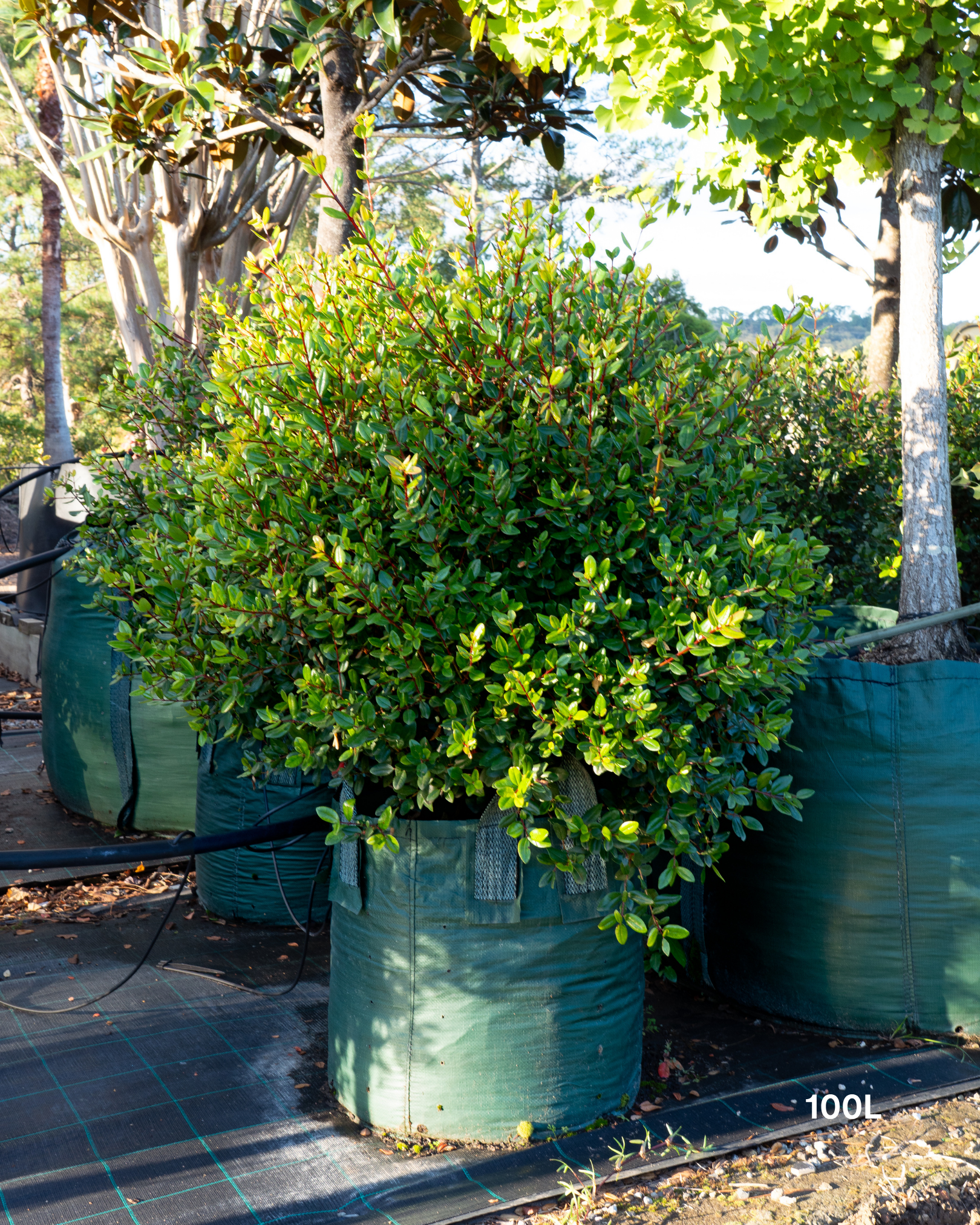
Metrosideros excelsa Topiary Balls are pre-clipped formal specimens of the New Zealand Pohutukawa, supplied as dense evergreen spheres of roughly 0.6 to 0.8 metres. The leathery dark green leaves carry silvery undersides, and crimson bottlebrush-like flowers open through summer. Left unclipped the species makes a tree of 8 to 15 metres.
Coastal performance is the strong point. It handles salt-laden wind, sandy soils and direct seaside exposure, and suits warm temperate to subtropical districts from Brisbane through Sydney to Melbourne and Adelaide. Full sun and sharp drainage give the densest foliage. Growth is slow, and two light clips a year hold the shape.
Use them flanking entrances, anchoring formal beachside beds, lining seaside paths or paired in urns and large pots. In warm humid coastal gardens where English Box struggles with blight, this is the more dependable clipped ball. It brings formal structure, dense evergreen cover and summer flower in one plant.
Frequently Asked Questions
About Metrosideros excelsa Topiary Balls
What is Metrosideros excelsa?
Metrosideros excelsa is the New Zealand Pohutukawa, an evergreen from the coastal cliffs and headlands of the North Island. It carries leathery dark green leaves with silvery undersides and crimson bottlebrush-like flowers in summer. As a tree it reaches 8 to 15 metres, but it clips readily and is widely grown as formal topiary in Australia.
How big are the topiary balls?
The 100L topiary balls arrive pre-clipped and ready to place, with ball diameters of roughly 0.6 to 0.8 metres. They are well rooted and in proportion to the pot. Held at that size with two light clips a year, they suit entrances, courtyards and feature positions without outgrowing the space.
When does Metrosideros excelsa flower?
Flowering runs through summer in Australia, generally December to January, which is where the name New Zealand Christmas Tree comes from. The flowers are dense clusters of bristly crimson stamens rather than petals, and they draw honeyeaters and bees. On clipped topiary the display is lighter than on a full-sized tree.
Is Metrosideros excelsa salt and wind tolerant?
Yes, and this is its strongest quality. It grows naturally on exposed New Zealand sea cliffs, so salt-laden wind, sandy soils and full frontal coastal exposure cause no leaf burn. It is one of the more reliable choices for direct seaside planting where most formal topiary species struggle.
Is Metrosideros excelsa frost tolerant?
Not really. It is frost sensitive and belongs in frost-free or lightly frost-prone positions. It performs well through warm coastal Australia, but avoid the cold inland tablelands, the Southern Highlands, Canberra and alpine districts where heavy frost is regular. Young plants are the most vulnerable.
How often do I need to prune the topiary balls?
Two light clips a year hold the ball form: one in spring and one in late summer or early autumn. Use sharp shears for the cleanest finish and step back regularly to check symmetry. Avoid cutting hard into old bare wood, which reshoots slowly and can leave a gap in the face.
How do I care for Metrosideros excelsa Topiary Balls?
Water deeply through the first growing season, then reduce and top up only in extended dry spells. Apply a slow release fertiliser in early spring. Clip in spring and again in late summer to hold the shape. In pots, use a free-draining mix and step up a pot size every two to three years.
Evergreen Trees Direct Has Been Featured In:


Plant Your Metrosideros excelsa Topiary Balls With:


Type: Feature Plant
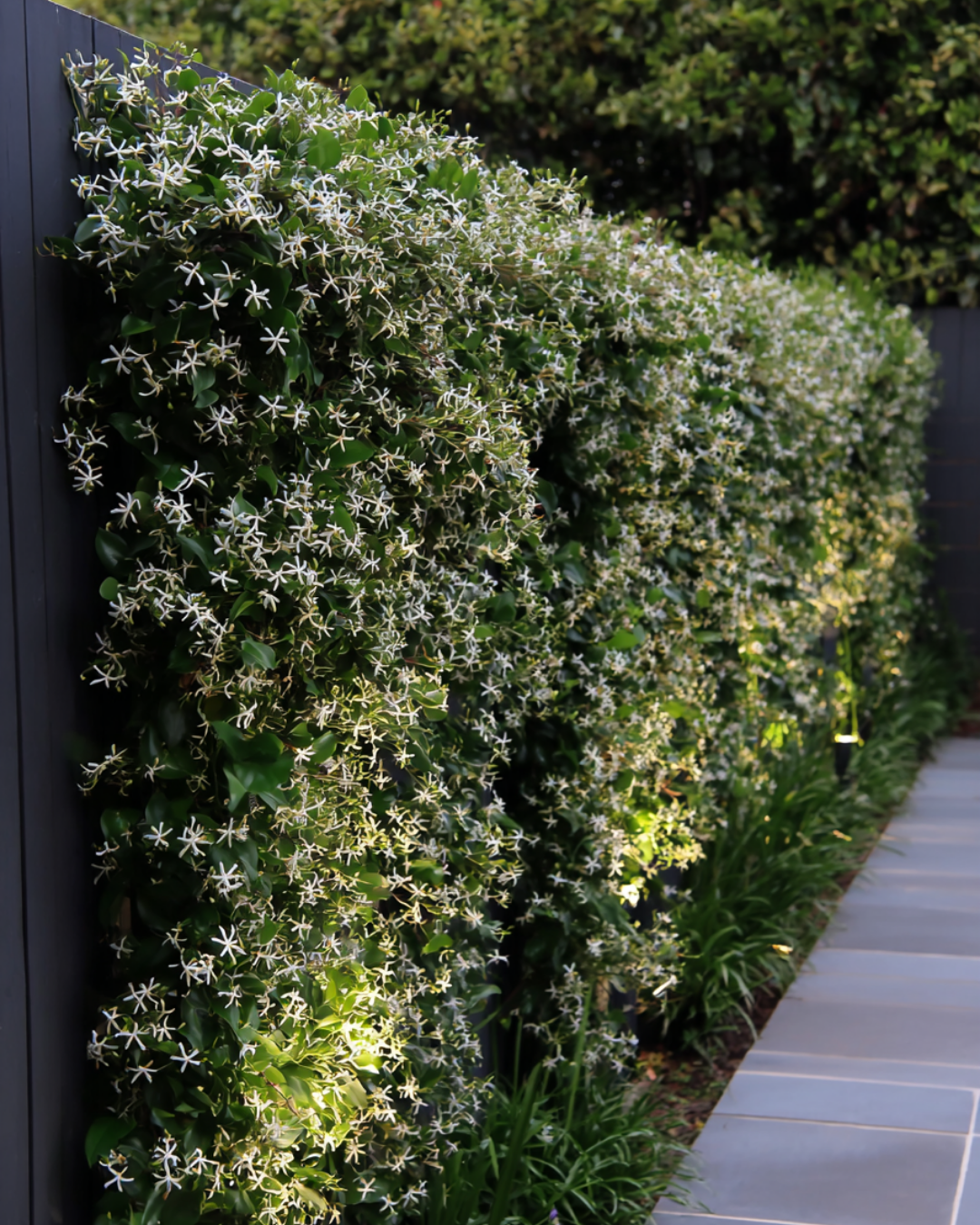
Trachelospermum jasminoides – Star Jasmine
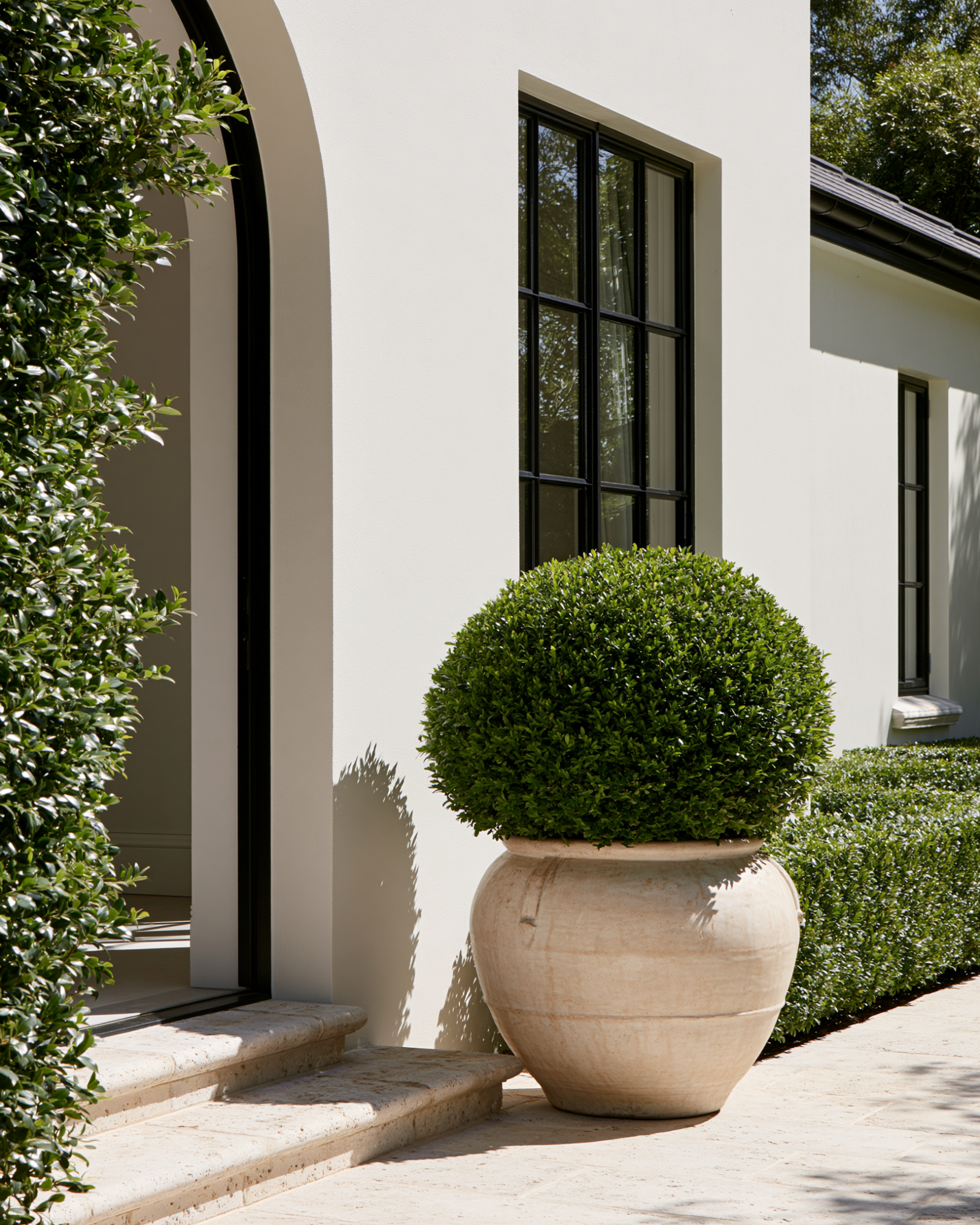
Type: Structural Foliage
Buxus sempervirens English Box Topiary Balls
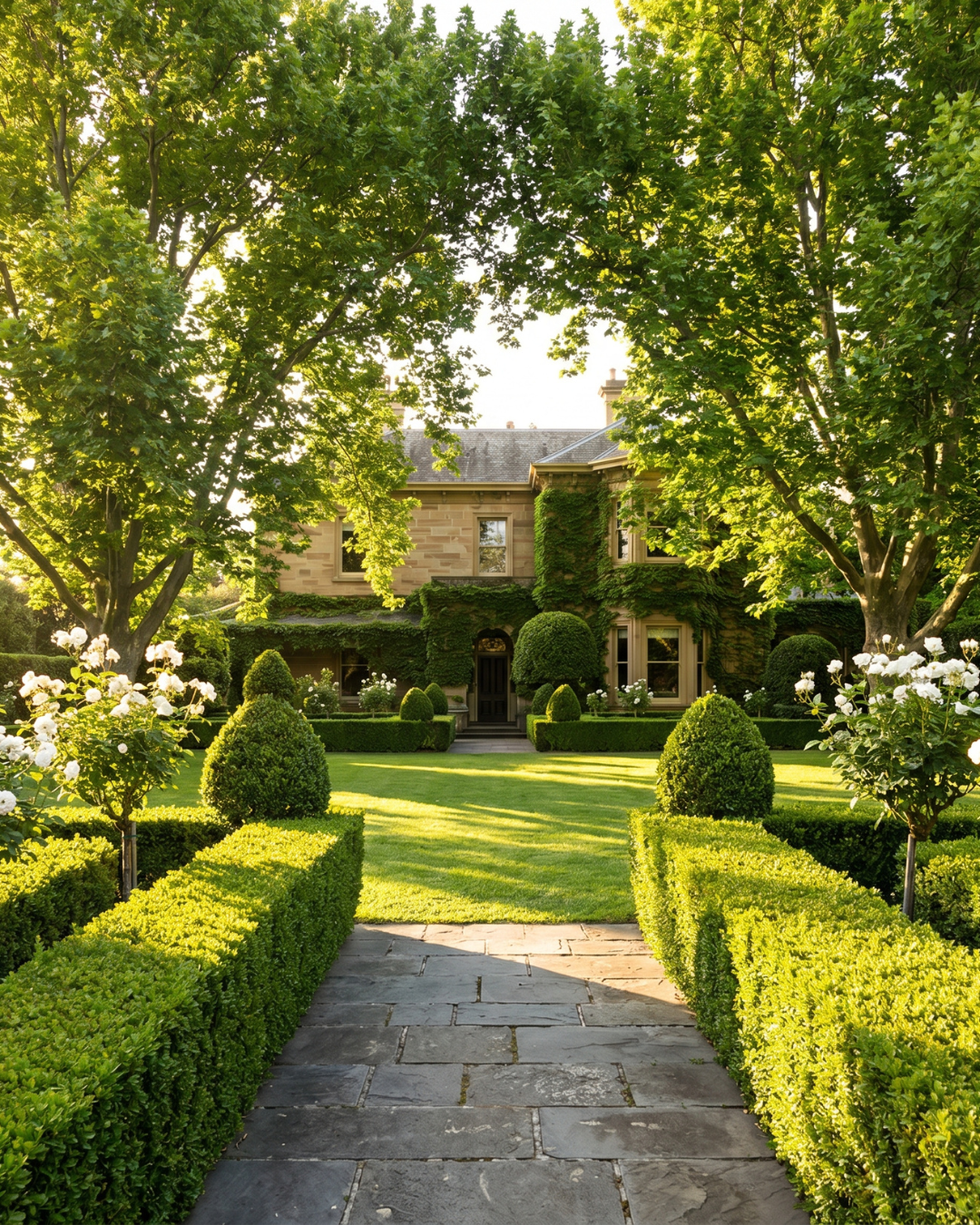
Type: Hedging and Screening Trees
Buxus japonica (Hedging Form) – Japanese Box
Type: Shrub
Lavandula angustifolia English Lavender

Type: Groundcover
Stachys byzantina Lamb's Ears
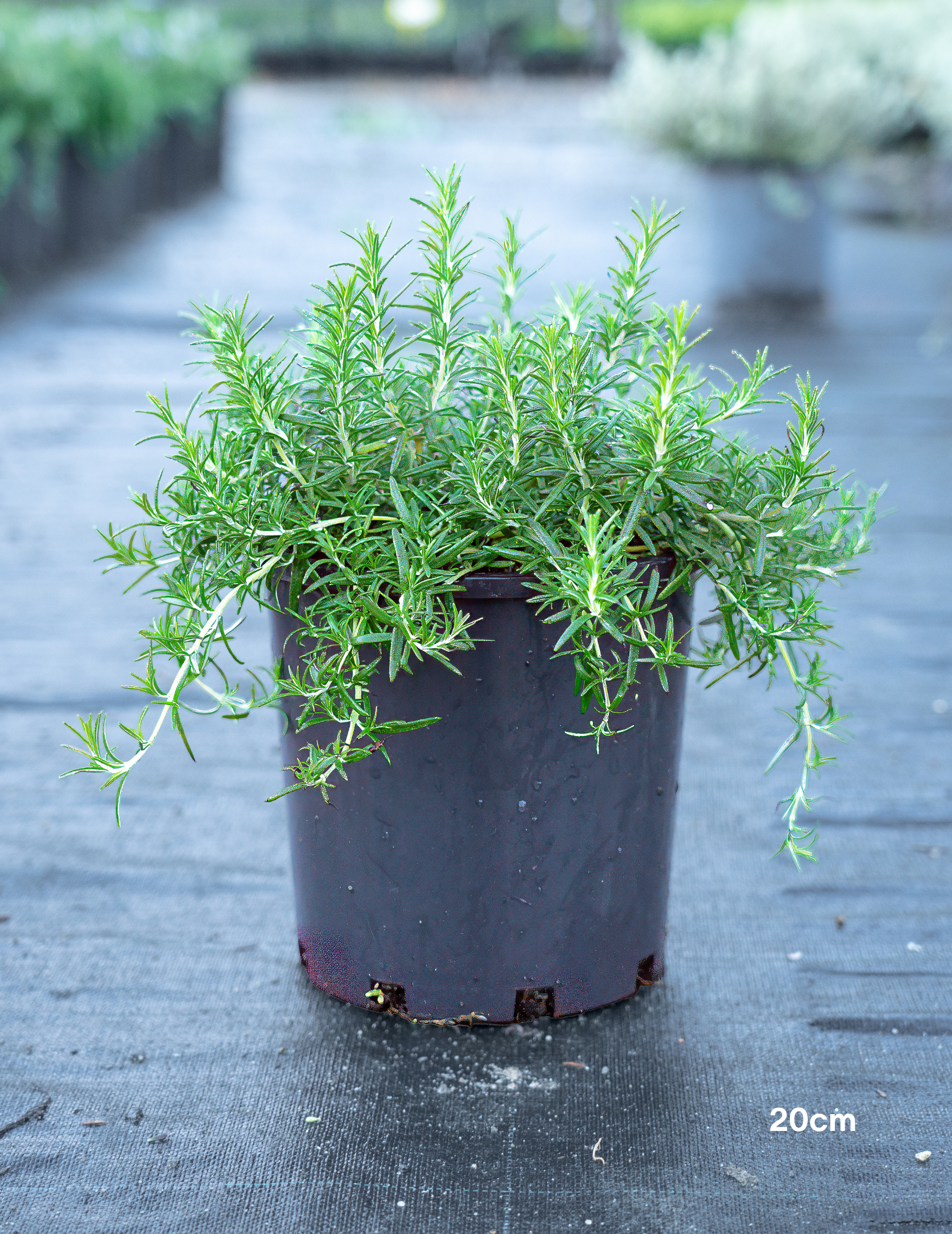
Type: Shrub
Rosmarinus officinalis – Rosemary
Type: Native Grass
Lomandra longifolia 'Tanika'®
Type: Ornamental Grass
Pennisetum setaceum Fountain Grass
Uses in my Garden
Uses in my Garden
Metrosideros excelsa Topiary Balls works in an:
Is Metrosideros excelsa Topiary Balls Evergreen or Deciduous?
Is Metrosideros excelsa Topiary Balls Evergreen or Deciduous?
Metrosideros excelsa Topiary Balls is an Evergreen (foliage year round) Tree
Mature Height & Width
Mature Height & Width
Mature Height: 0.6m to 0.8m maintained as a clipped ball
Mature Width: 0.6m to 0.8m maintained as a clipped ball
Metrosideros excelsa Topiary Balls is expected to grow 10cm to 20cm per year in topiary form.
Growth Rate of Metrosideros excelsa Topiary Balls
Growth Rate of Metrosideros excelsa Topiary Balls
Metrosideros excelsa Topiary Balls is expected to grow 10cm to 20cm per year in topiary form.
They are considered to have a:
Frost Tolerance & Ideal Climate to plant Metrosideros excelsa Topiary Balls
Frost Tolerance & Ideal Climate to plant Metrosideros excelsa Topiary Balls
Is Metrosideros excelsa Topiary Balls frost tolerant?
Metrosideros excelsa Topiary Balls is Frost Sensitive – May suffer damage from frost, best in frost-free or protected spots.
Does Metrosideros excelsa Topiary Balls Flower?
Does Metrosideros excelsa Topiary Balls Flower?
Metrosideros excelsa produces dense clusters of bristly red flowers through summer, typically December through January in Australia. In topiary form, flowering is lighter than full-form trees but still produces seasonal red colour and attracts native birds and pollinators.
Does Metrosideros excelsa Topiary Balls flower?
Flowering Period:
Flower Type:
Flower Colour:
Red
Is Metrosideros excelsa Topiary Balls an Australian Native Tree?
Is Metrosideros excelsa Topiary Balls an Australian Native Tree?
No
Metrosideros excelsa Topiary Balls is Native to New Zealand. Metrosideros excelsa, the Pohutukawa, is native to the coastal cliffs, headlands and forests of New Zealand's North Island, where it grows directly on exposed coastal sites overlooking the sea.
What is the Wildlife Value of Metrosideros excelsa Topiary Balls ?
What is the Wildlife Value of Metrosideros excelsa Topiary Balls ?
The nectar-rich red flowers of Metrosideros excelsa attract honeyeaters, lorikeets, native bees and beneficial pollinators through summer. The dense evergreen canopy also provides shelter for small coastal birds throughout the year, supporting biodiversity in seaside and formal coastal plantings.
How much Sunlight does Metrosideros excelsa Topiary Balls need?
How much Sunlight does Metrosideros excelsa Topiary Balls need?
Metrosideros excelsa Topiary Balls will thrive best in:
Preferred Soil?
Preferred Soil?
Metrosideros excelsa performs best in well-drained sandy or sandy-loam soils with a neutral to slightly acidic pH. It is well suited to coastal sand profiles and tolerates poorer soils provided drainage remains excellent. Avoid heavy clay or persistently wet conditions, which can lead to root rot.
Is Metrosideros excelsa Topiary Balls Drought Tolerant?
Is Metrosideros excelsa Topiary Balls Drought Tolerant?
Is Metrosideros excelsa Topiary Balls Drought tolerant?
Through establishment Metrosideros excelsa benefits from regular watering to build a strong root system. Once established it is highly drought tolerant, reflecting its origins on exposed New Zealand coastal cliffs, and performs reliably through extended dry periods on minimal supplementary watering.

Planting Information
How To Plant Your Metrosideros excelsa Topiary Balls
How To Plant Your Metrosideros excelsa Topiary Balls
Recommended Planting Spacing For Your Metrosideros excelsa Topiary Balls
Recommended Planting Spacing For Your Metrosideros excelsa Topiary Balls
Metrosideros excelsa Topiary Balls is expected to grow 10cm to 20cm per year in topiary form.
Long Term Care For Your Metrosideros excelsa Topiary Balls
Long Term Care For Your Metrosideros excelsa Topiary Balls
Planting Your Metrosideros excelsa Topiary Balls in Different Soil
Planting Your Metrosideros excelsa Topiary Balls in Different Soil
Frequently Asked Questions
Frequently Asked Questions