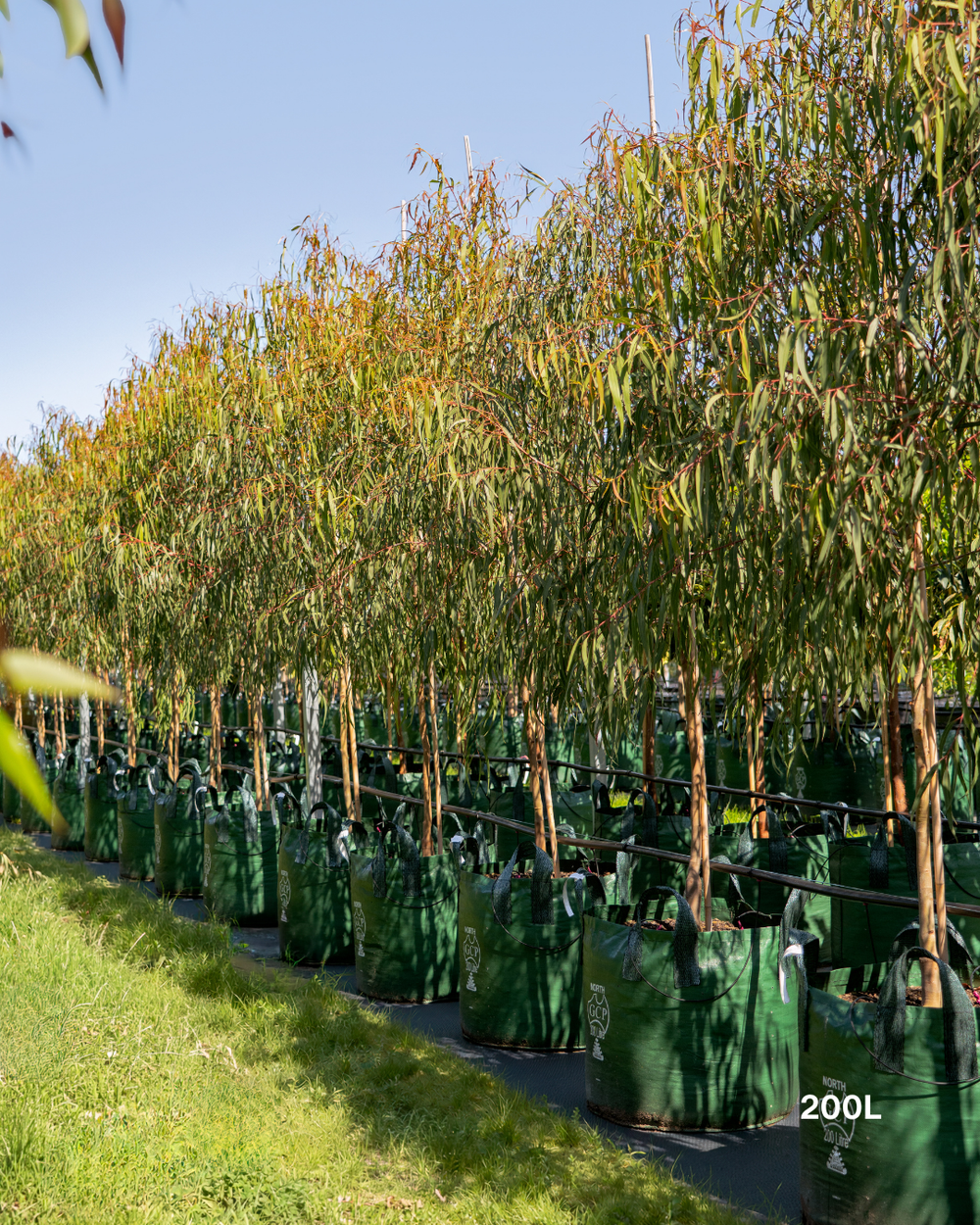
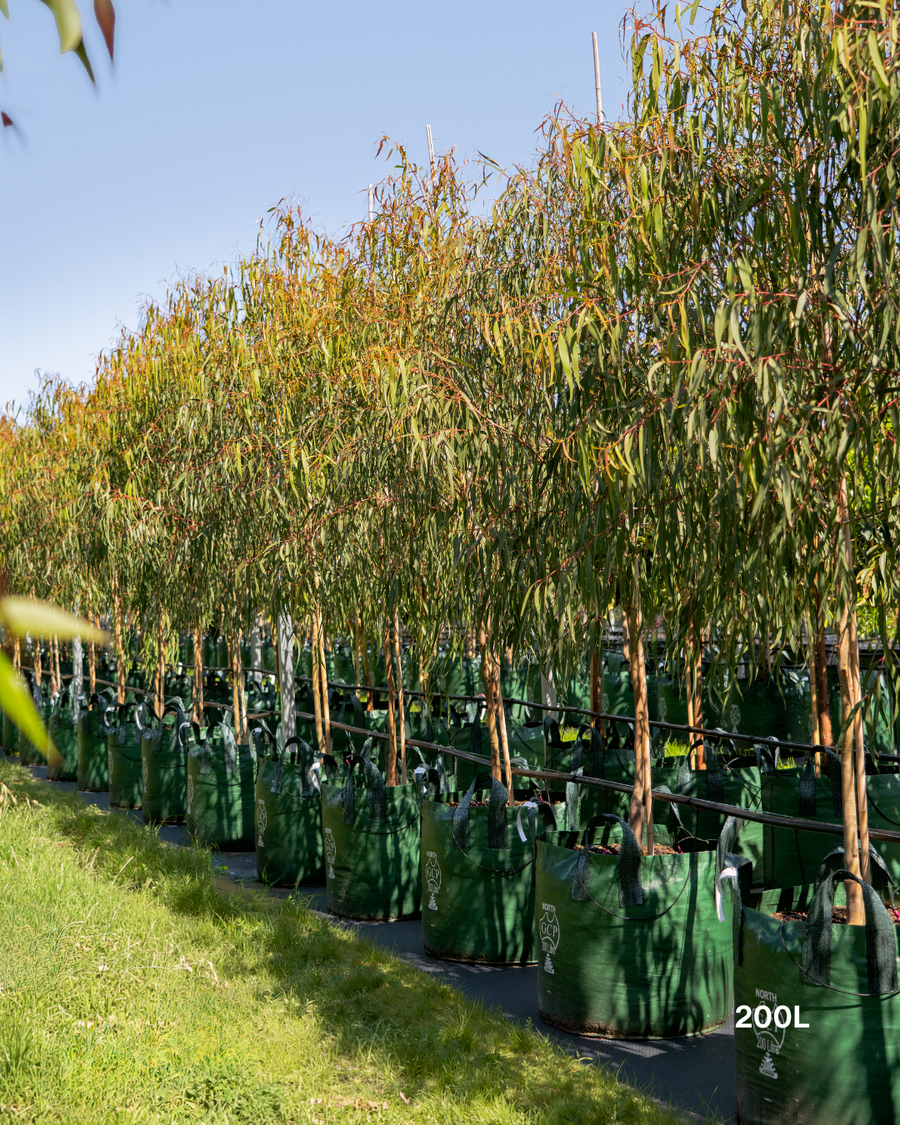
- Mature height
- 8m to 15m (approx.)
- Mature width
- 10m to 15m
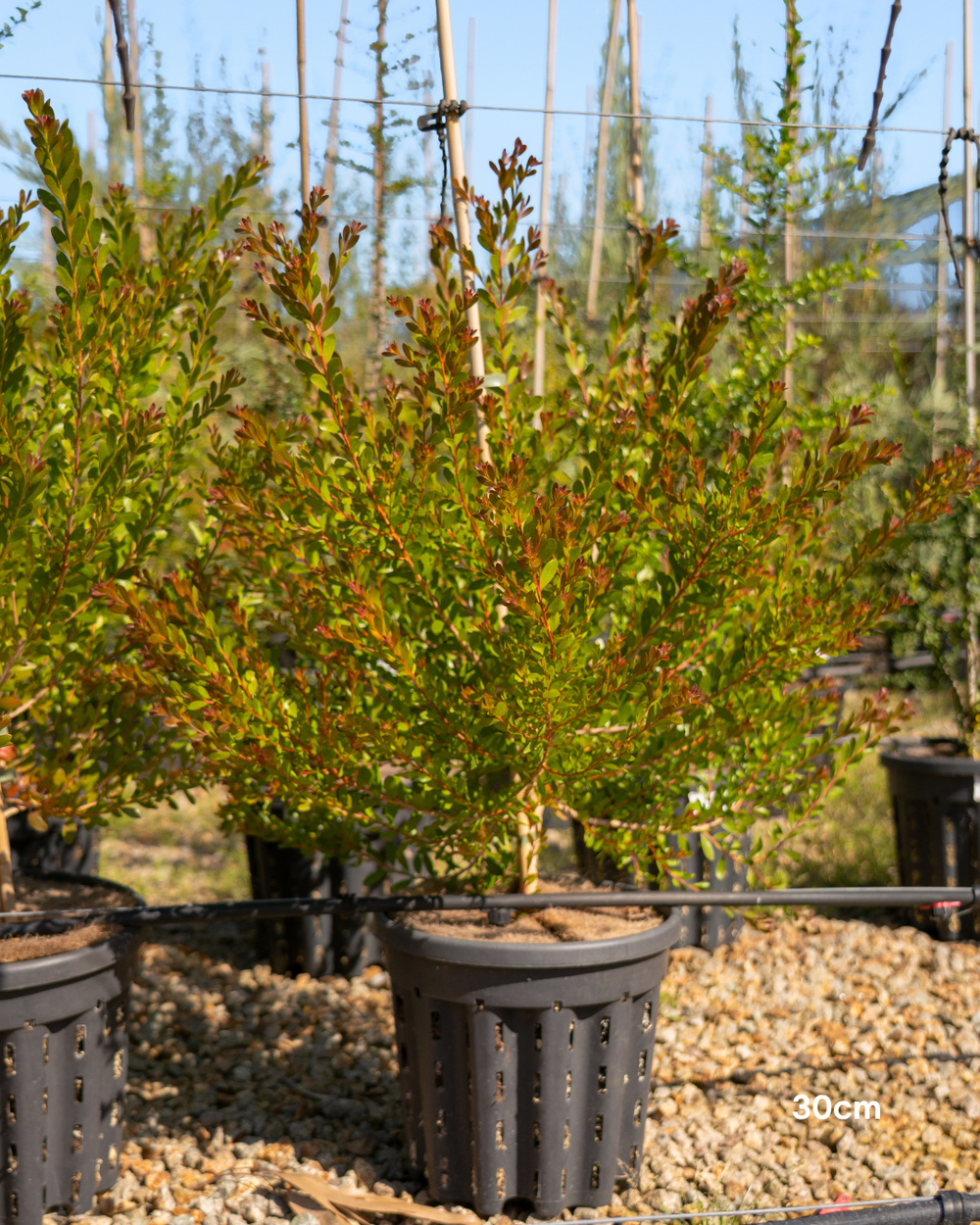
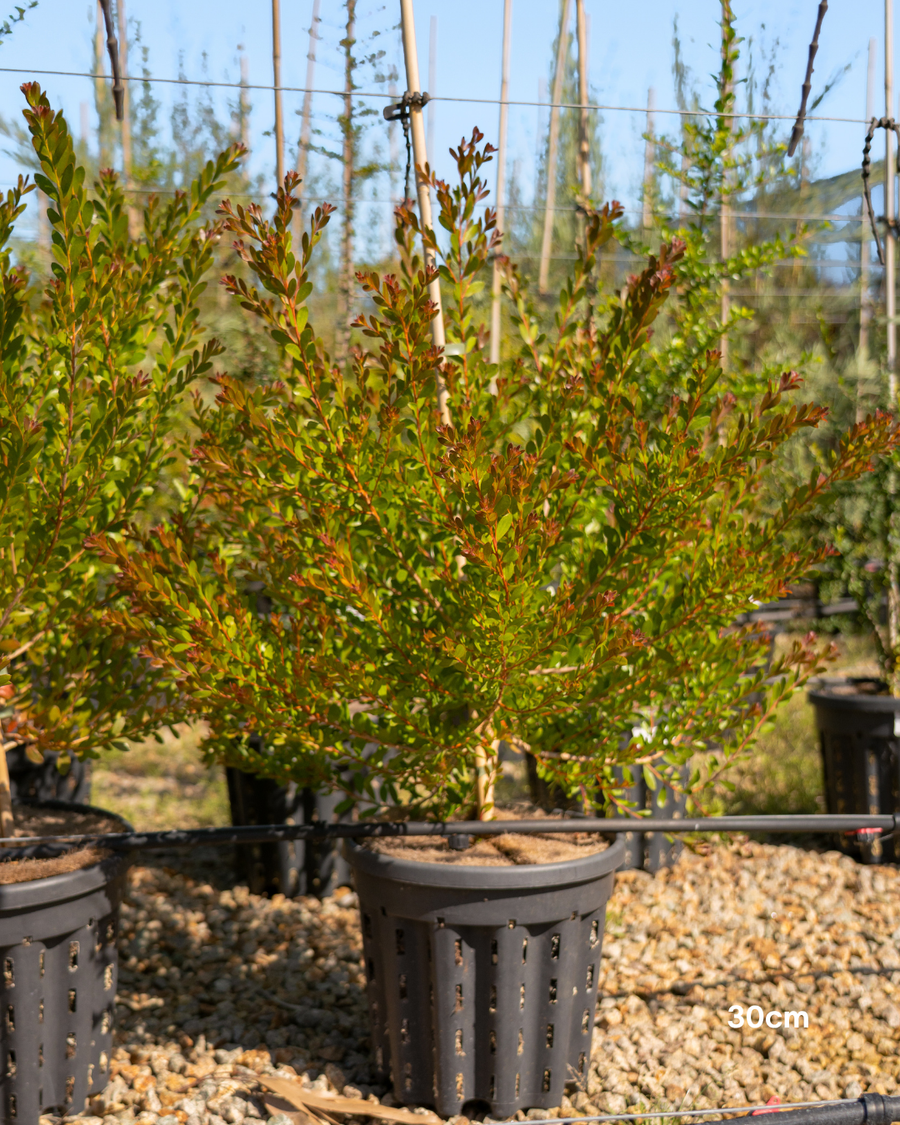
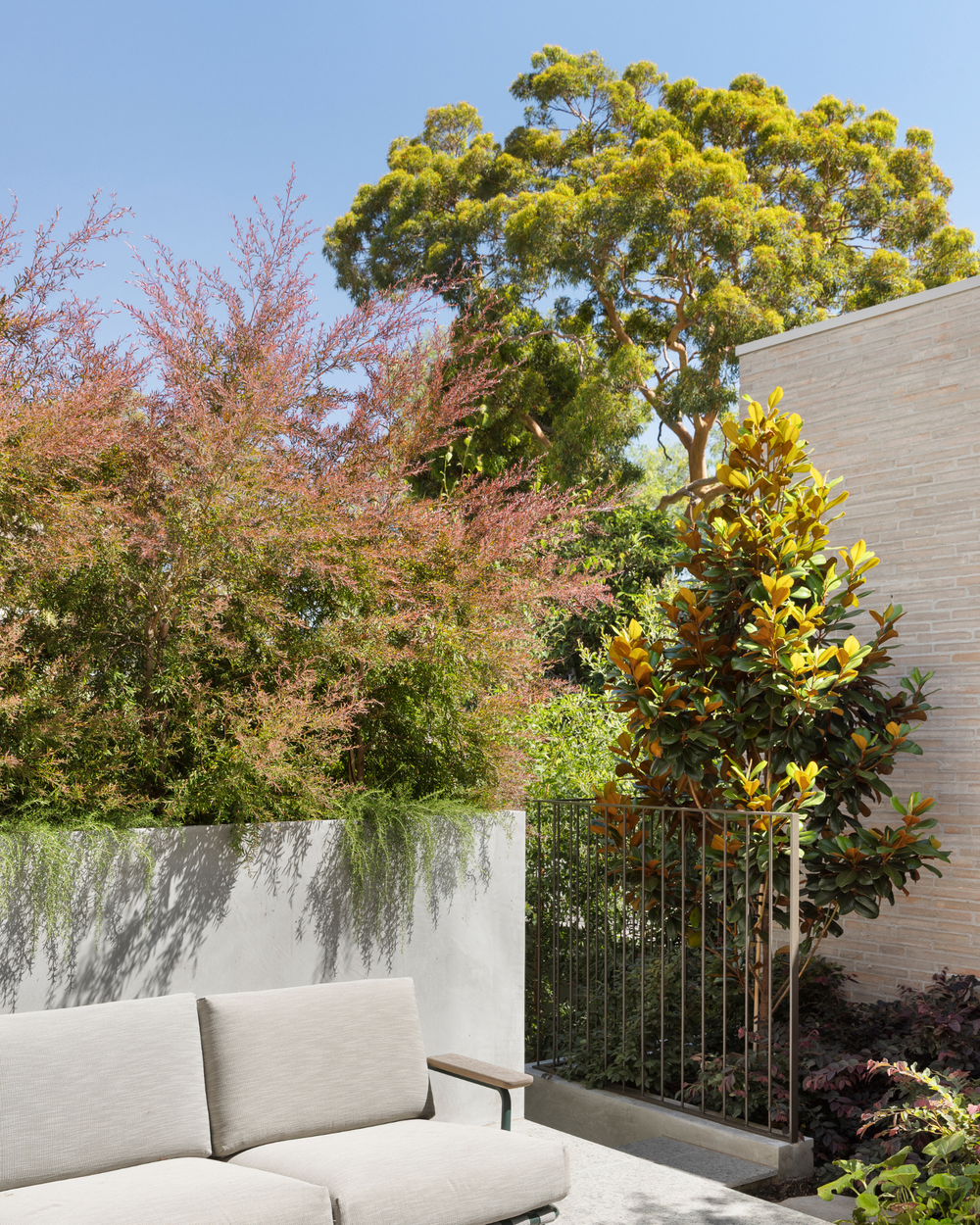
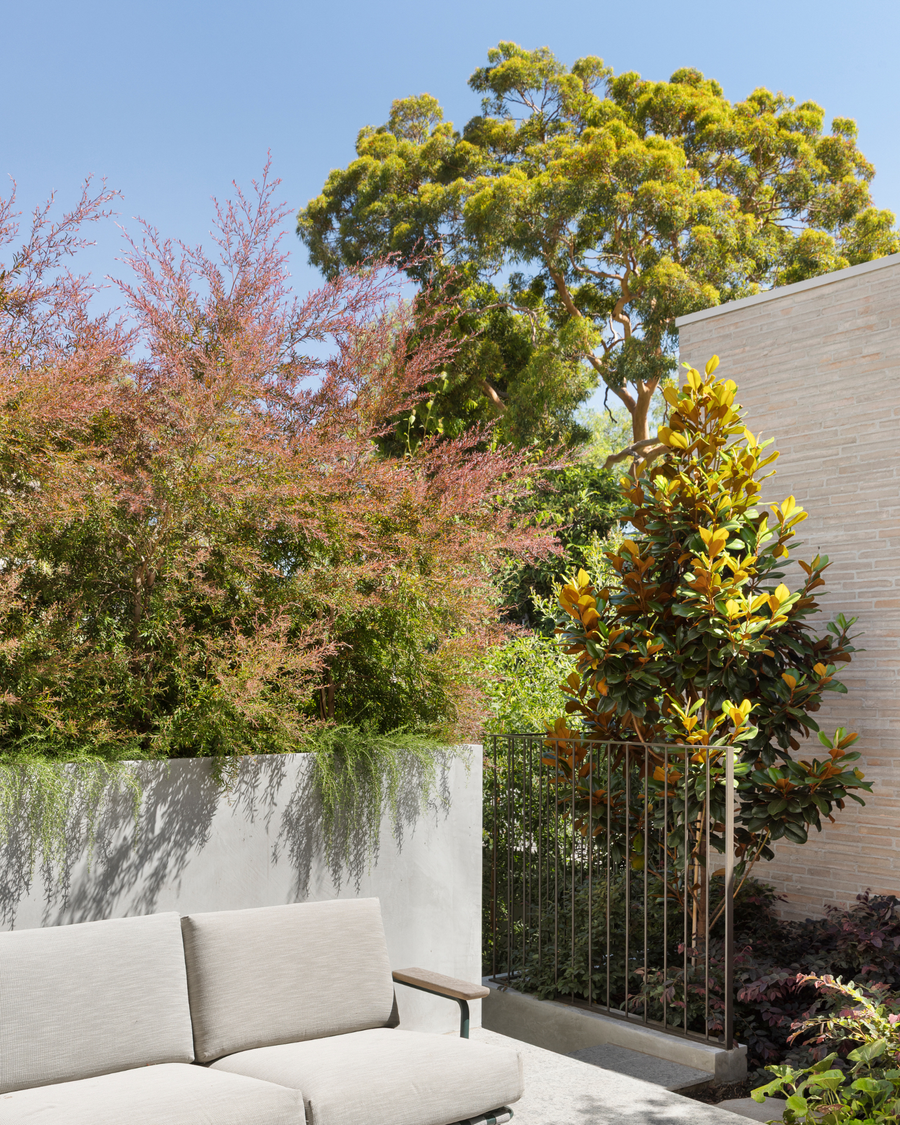
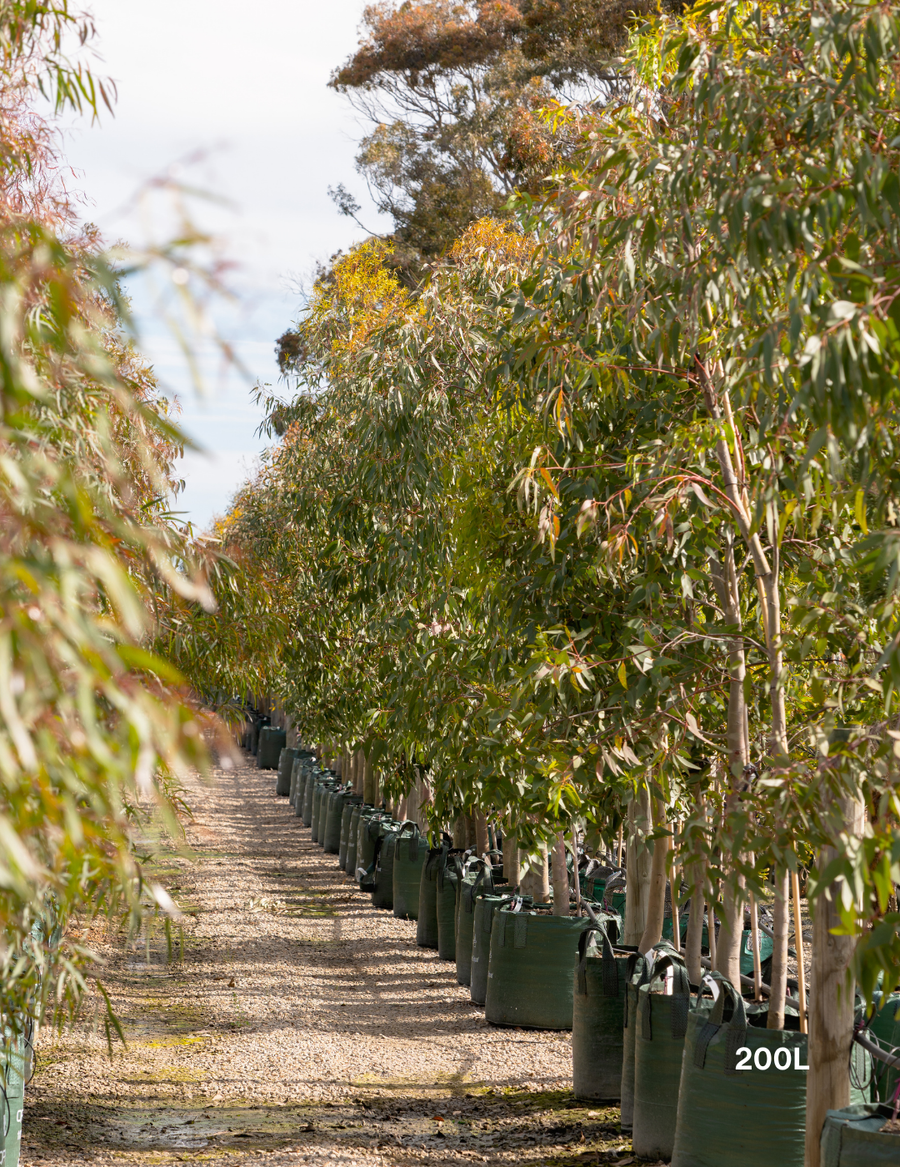
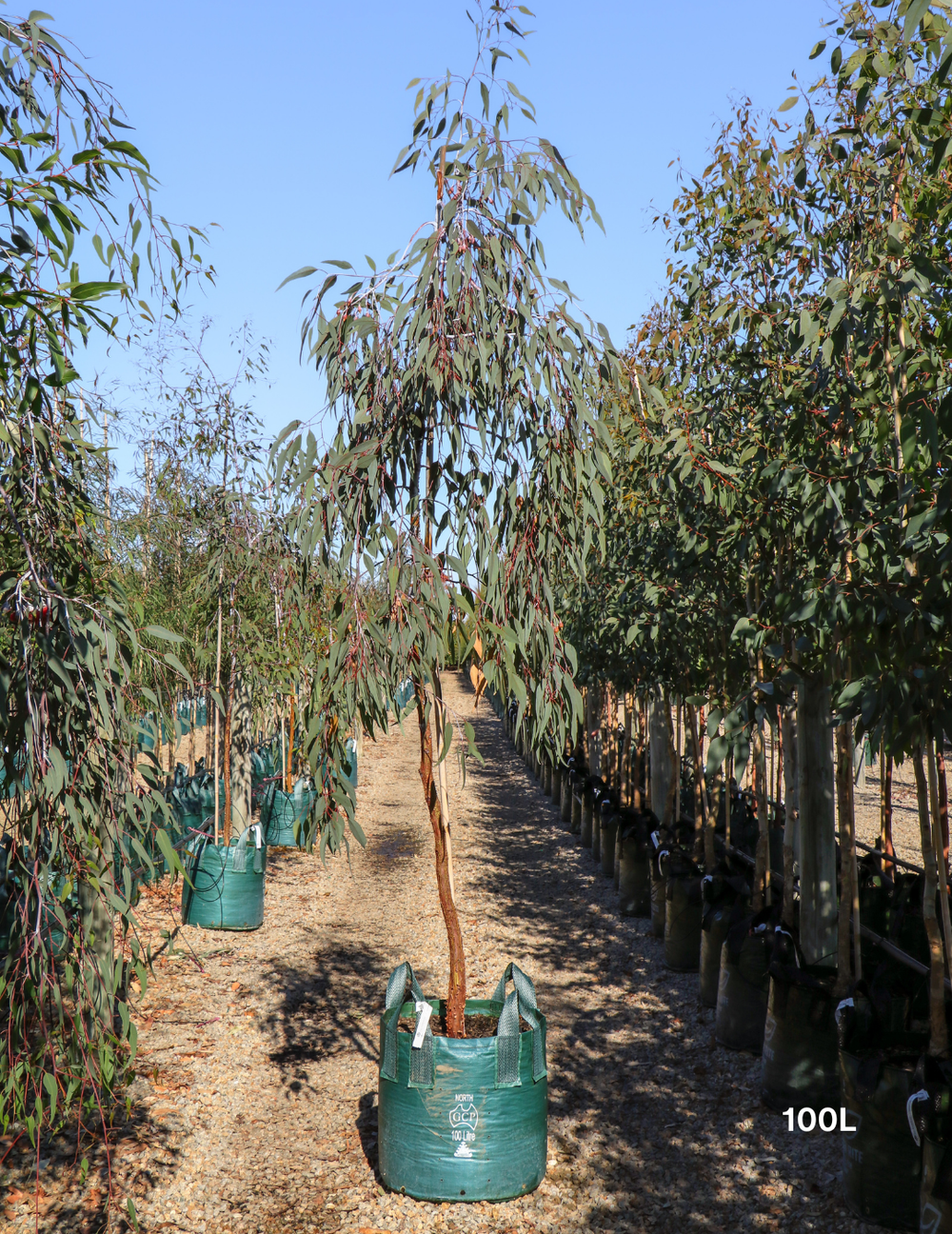
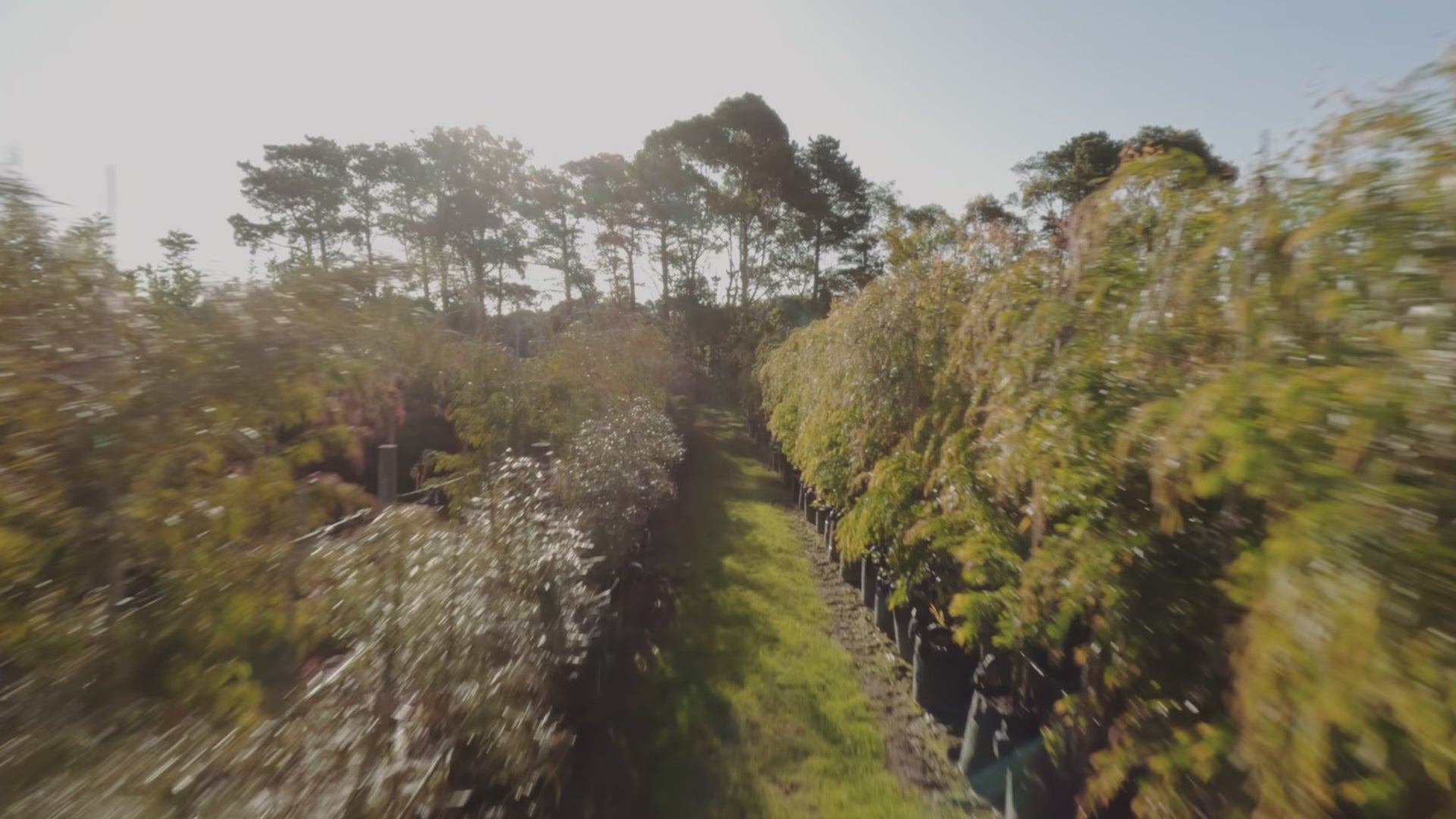
Eucalyptus robusta 'Matong' is a selected form of swamp mahogany, a large Australian native with broad, glossy dark green leaves and thick, fibrous red brown bark. Clusters of creamy white flowers open from late winter into spring and draw honeyeaters, lorikeets and flying foxes. The habit is upright with a dense canopy.
It is one of the few gums that thrives in wet, heavy or periodically waterlogged ground, and it also handles salt laden coastal wind. Give it full sun. Growth is roughly 1 to 1.5 metres a year, with light to moderate frost tolerance once established. Warm temperate and subtropical coastal districts suit it best.
Reaching 20 to 30 metres with a canopy of 10 to 15 metres, it belongs on rural properties, in parks, along wide road reserves and in habitat and revegetation projects, particularly on damp sites. Space avenue plantings 3 metres apart and specimens 3 to 4 metres. Where poor drainage defeats other trees, this one keeps going.
Frequently Asked Questions
About Matong Swamp Mahogany
What is Eucalyptus robusta 'Matong'?
It is a form of swamp mahogany, a large Australian native evergreen with broad glossy leaves and thick, fibrous red brown bark. Creamy white flower clusters open from late winter into spring and are heavily used by honeyeaters, lorikeets and flying foxes. The habit is upright with a dense, spreading canopy.
How big does Swamp Mahogany grow?
It is a large tree, reaching 20 to 30 metres tall with a canopy 10 to 15 metres across on a good site. On drier or shallower ground it will finish lower. Give it space away from buildings, boundaries and services, and think of it as a paddock, park or wide verge tree.
Does it tolerate wet or waterlogged soil?
Yes, better than almost any other eucalypt. It grows naturally on swampy coastal flats and copes with heavy soil, seasonal inundation and a high water table. That makes it a first choice for damp corners, dam surrounds, drainage swales and wet revegetation sites where other trees sit still or die out.
Is it suitable for coastal planting?
It is. Swamp mahogany handles salt laden wind and sandy coastal soils, and it is widely used in shelter planting behind the front dune. It will not take direct salt spray on an exposed headland, but a row or two back from the front line it establishes quickly and shelters everything behind it.
When does it flower?
From late winter into spring, roughly July to October, with clusters of creamy white nectar rich flowers. The timing matters ecologically because it fills a winter gap when little else is in flower, which is why the species is treated as important habitat for gliders, flying foxes and nectar feeding birds.
How fast does it grow?
Roughly 1 to 1.5 metres a year while young, and faster again on moist, fertile ground. That speed is the main reason it is used for shelterbelts and rehabilitation work. Set avenue plantings 3 metres apart and specimen trees 3 to 4 metres apart, and expect useful canopy within four or five years.
How do I care for Matong Swamp Mahogany?
Water through the first two summers unless the site is naturally damp, and mulch out to the drip line. Stake only if the position is windy, and remove the ties within a year. Prune in late winter to take out double leaders and lift the crown. A native fertiliser in spring suits young trees.