

Citrus sinensis 'Valencia' – Valencia Orange
Citrus sinensis 'Valencia' – Valencia Orange
Couldn't load pickup availability
Current Stock Height Guides
Current Stock Height Guides
Height guide disclaimer: Height ranges are approximate only. As living products, plant heights naturally vary between individual plants, batches, and seasons. No guarantee is given that supplied plants will fall within the stated range. If minimum heights are required, you mustconfirm current batch heights with Evergreen Trees Direct prior to purchase. Variation in height is normal and is not grounds for return, refund, replacement, or compensation.
Mature Height & Width
Mature Height & Width
Mature Height: 4m to 6m
Mature Width: 3m to 4m
Citrus sinensis 'Valencia' – Valencia Orange is expected to grow 30cm to 60cm per year under suitable conditions.
Root Ball Dimensions
Root Ball Dimensions
Use this as a reference when digging your planting hole. We recommend digging at least 10% wider than the dimensions below to encourage strong root development.
- 30cm Pot: 33cm (W) × 30cm (D)
- 40cm/45L Pot: 44cm (W) × 41.5cm (D)
- 50cm Pot / 70L Pot: 55cm (W) × 41.8cm (D)
- 100L Bag: 50.6cm (W) × 52.8cm (D)
- 150L Bag: 66cm (W) × 55cm (D)
- 200L Bag: 71.5cm (W) × 60.5cm (D)
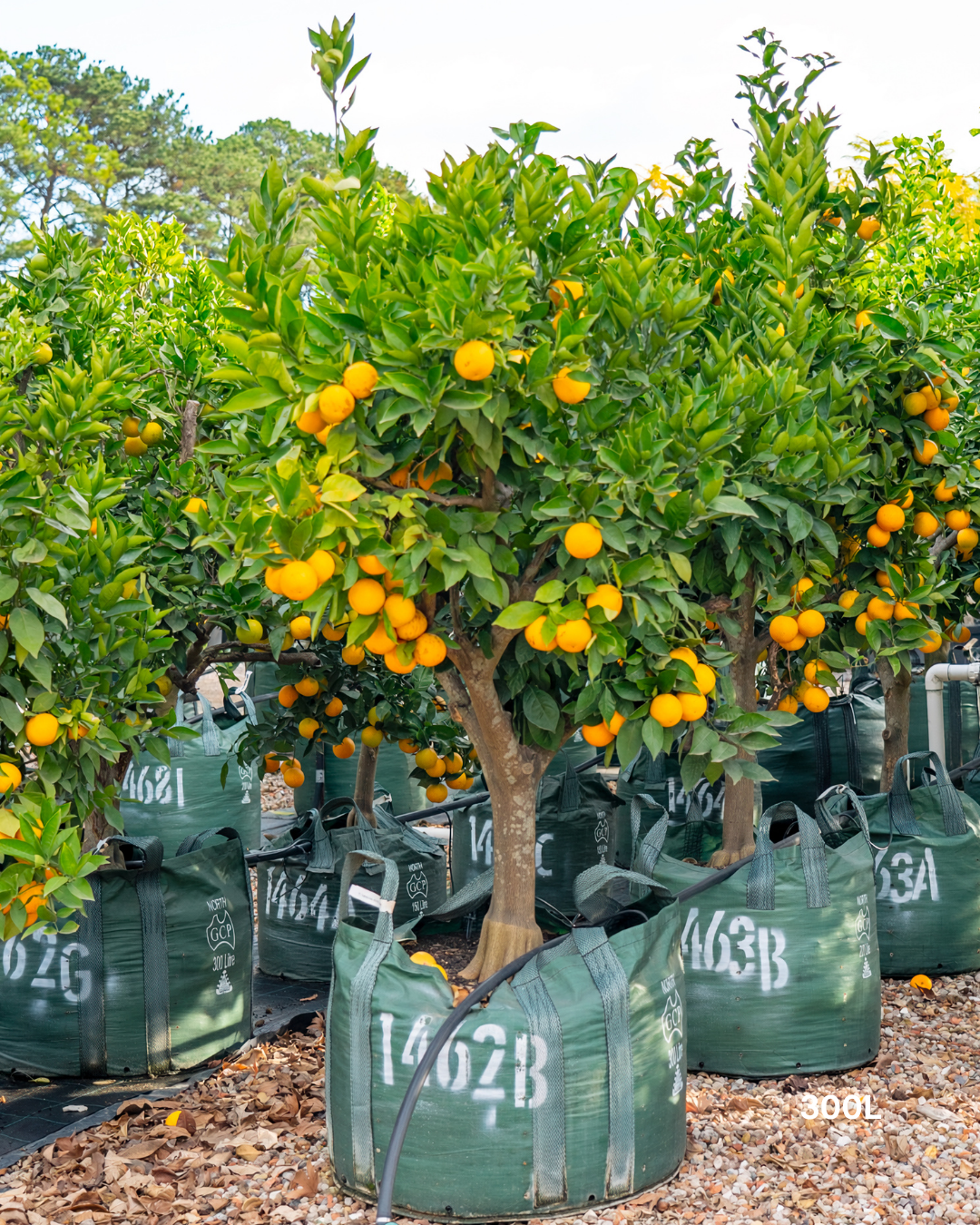
- 300L Bag: 88cm (W) × 63.8cm (D)
- 400L Bag: 99cm (W) × 66cm (D)
- 500L Bag: 122cm (W) × 66cm (D)
- 750L Bag: 134cm (W) × 69cm (D)
- 1000L Bag: 146.3cm (W) × 71.5cm (D)
- 2000L Bag: 176cm (W) × 82.5cm (D)
Trade
Trade
We supply advanced trees to landscapers, developers, architects, and councils Australia-wide. Trade clients receive fast quotes, expert advice, and access to premium stock with reliable freight.
Shipping
Shipping
Shipping is calculated at checkout based on the pallet space your order occupies in the truck and your delivery location.
There is no charge to calculate your freight.
Contact
Contact
Have a question or a list to send through to us?
Email: sales@evergreentrees.com.au
Phone: (03) 7042 3318
Share this product
About Your New Citrus sinensis 'Valencia' – Valencia Orange
Citrus sinensis 'Valencia' is the classic late season juicing orange, an evergreen tree with a dense rounded head of glossy leaves. The fruit is thin skinned and full of juice, with a deep colour and a flavour that carries acid as well as sugar. Blossom is white and fragrant.
It grows to 4 to 6 metres tall and 3 to 4 metres wide at 30 to 60 centimetres a year, wanting full sun and a fertile free draining soil. Young trees need frost protection through their first two winters. Established trees take light to moderate frost without lasting damage.
This is the tree to plant if you juice. Fruit ripens late spring into summer and hangs on the tree for months afterwards, so you pick as you need rather than dealing with a glut. It suits home orchards, rural blocks, avenue rows and large containers on a sunny terrace.
Which orange should you plant? The choice comes down to when you want fruit and what you do with it.
Valencia is the juicing orange. It ripens late, from late spring into summer, and holds on the tree for months, so it fills the gap after the winter oranges are finished. Thin skinned, very high in juice, a few seeds.
Washington Navel and Cara Cara are the winter eating oranges. Seedless, easy to peel, ripening through winter into early spring. Cara Cara is the one with sweet rose-pink flesh and low acid. Navel juice turns bitter within a few hours of squeezing, which is exactly why Valencia exists.
Blood Orange is grown for the deep red flesh and berry note, best in districts with cold nights, which bring the colour on.
Seville is the bitter orange. Not for eating fresh, but the only real choice for marmalade, and the hardiest of the group.
Frequently Asked Questions
About Valencia Orange
What makes Valencia different from a navel orange?
Valencia ripens late, from late spring into summer, where navels are a winter orange. The fruit is thinner skinned, juicier and slightly more acidic, which is why it dominates the juicing trade. It carries a few seeds, and the juice keeps its flavour longer after squeezing than navel juice does.
Why does navel orange juice go bitter but Valencia does not?
Navel oranges contain a compound called limonin that develops a bitter taste in the juice within hours of squeezing. Valencia has very little of it, so the juice holds its flavour and can be squeezed ahead. This single difference is why Valencia became the commercial juicing orange worldwide.
Is Valencia self-fertile?
Yes. A single tree crops well on its own without another orange planted nearby, so there is no need to buy a pollinator.
How big does a Valencia orange tree grow?
It reaches 4 to 6 metres tall and 3 to 4 metres wide left unpruned, larger than most navel oranges. Annual growth is around 30 to 60 centimetres. Pruning after harvest holds it to a comfortable picking height, and trees in large containers stay well under those figures.
When does Valencia fruit ripen?
From late spring into summer, several months later than winter oranges, which is what gives it its place in the garden. Flowers open in spring and the fruit takes close to a full year to mature, so a tree often carries two crops at different stages at the same time.
How long will the fruit hold on the tree?
Valencia holds exceptionally well, often for several months after it first reaches eating quality, so you can pick over a long window instead of harvesting everything at once. Fruit left through warm weather can regreen slightly in the rind while staying sweet inside, which is harmless.
Can I grow Valencia in a pot?
Yes, in a large free draining container of at least 60 centimetres, using a quality citrus mix. Potted trees stay well below their in ground size, need watering more often and a liquid feed through the growing season, and should never be left standing in a saucer of water.
What position and soil does it need?
Full sun, all day if possible, in a spot sheltered from strong wind. Soil should be a free draining loam or sandy loam with a slightly acidic to neutral pH, improved with compost before planting. Avoid heavy clay and anywhere water sits on the surface after rain.
How far apart should Valencia orange trees be planted?
Allow 4 metres between trees for a feature planting so each canopy develops fully, or 3 to 4 metres for a uniform avenue or orchard row. Closer spacing works if you commit to annual pruning, but crowded citrus fruit less well and hold more humidity inside the canopy.
How do I care for a Valencia orange tree?
Water deeply through flowering and fruit development, then reduce in winter. Mulch the root zone and keep mulch clear of the trunk. Feed with citrus fertiliser in early spring and again in late summer. Prune lightly after harvest and remove any growth from below the graft union.
Evergreen Trees Direct Has Been Featured In:


Uses in my Garden
Uses in my Garden
Citrus sinensis 'Valencia' – Valencia Orange works in an:
Is Citrus sinensis 'Valencia' – Valencia Orange Evergreen or Deciduous?
Is Citrus sinensis 'Valencia' – Valencia Orange Evergreen or Deciduous?
Citrus sinensis 'Valencia' – Valencia Orange is an Evergreen (foliage year round) Tree
Mature Height & Width
Mature Height & Width
Mature Height: 4m to 6m
Mature Width: 3m to 4m
Citrus sinensis 'Valencia' – Valencia Orange is expected to grow 30cm to 60cm per year under suitable conditions.
Growth Rate of Citrus sinensis 'Valencia' – Valencia Orange
Growth Rate of Citrus sinensis 'Valencia' – Valencia Orange
Citrus sinensis 'Valencia' – Valencia Orange is expected to grow 30cm to 60cm per year under suitable conditions.
They are considered to have a:
Frost Tolerance & Ideal Climate to plant Citrus sinensis 'Valencia' – Valencia Orange
Frost Tolerance & Ideal Climate to plant Citrus sinensis 'Valencia' – Valencia Orange
Is Citrus sinensis 'Valencia' – Valencia Orange frost tolerant?
Citrus sinensis 'Valencia' – Valencia Orange is Frost Tolerant – Can handle light to moderate frost once established.
Does Citrus sinensis 'Valencia' – Valencia Orange Flower?
Does Citrus sinensis 'Valencia' – Valencia Orange Flower?
Citrus sinensis 'Valencia' flowers heavily in spring with fragrant white blossom, and the fruit then takes close to a full year to mature, ripening late spring into summer. Mature trees often carry blossom and developing fruit at the same time.
Does Citrus sinensis 'Valencia' – Valencia Orange flower?
Flowering Period:
Flower Type:
Flower Colour:
White
Is Citrus sinensis 'Valencia' – Valencia Orange an Australian Native Tree?
Is Citrus sinensis 'Valencia' – Valencia Orange an Australian Native Tree?
No
Citrus sinensis 'Valencia' – Valencia Orange is Native to A cultivated sweet orange selection of uncertain origin, named for Valencia in Spain and now the most widely planted juicing orange worldwide.
What is the Wildlife Value of Citrus sinensis 'Valencia' – Valencia Orange ?
What is the Wildlife Value of Citrus sinensis 'Valencia' – Valencia Orange ?
Fragrant white spring blossom attracts bees and other pollinators in numbers, supporting fruit set across the wider garden. The dense evergreen canopy offers shelter and nesting cover for small birds, and unharvested fruit feeds wildlife over summer.
How much Sunlight does Citrus sinensis 'Valencia' – Valencia Orange need?
How much Sunlight does Citrus sinensis 'Valencia' – Valencia Orange need?
Citrus sinensis 'Valencia' – Valencia Orange will thrive best in:
Preferred Soil?
Preferred Soil?
Citrus sinensis 'Valencia' performs best in deep free-draining loam or sandy loam with a neutral to slightly acidic pH. It tolerates lighter sandy soils when organic matter is added to hold moisture and nutrients. Avoid heavy clay and any position where water sits after rain, as citrus roots will not tolerate waterlogging. Maintain even soil moisture across the long fruit development period.
Is Citrus sinensis 'Valencia' – Valencia Orange Drought Tolerant?
Is Citrus sinensis 'Valencia' – Valencia Orange Drought Tolerant?
Is Citrus sinensis 'Valencia' – Valencia Orange Drought tolerant?
Young trees need consistent watering to establish a deep productive root system. Once established, Valencia Orange copes with heat and dry spells better than most citrus, though juice volume and fruit size both depend on steady moisture through the long fruit development period.

Planting Information
How To Plant Your Citrus sinensis 'Valencia' – Valencia Orange
How To Plant Your Citrus sinensis 'Valencia' – Valencia Orange
Recommended Planting Spacing For Your Citrus sinensis 'Valencia' – Valencia Orange
Recommended Planting Spacing For Your Citrus sinensis 'Valencia' – Valencia Orange
Citrus sinensis 'Valencia' – Valencia Orange is expected to grow 30cm to 60cm per year under suitable conditions.
Long Term Care For Your Citrus sinensis 'Valencia' – Valencia Orange
Long Term Care For Your Citrus sinensis 'Valencia' – Valencia Orange
Planting Your Citrus sinensis 'Valencia' – Valencia Orange in Different Soil
Planting Your Citrus sinensis 'Valencia' – Valencia Orange in Different Soil
Frequently Asked Questions
Frequently Asked Questions