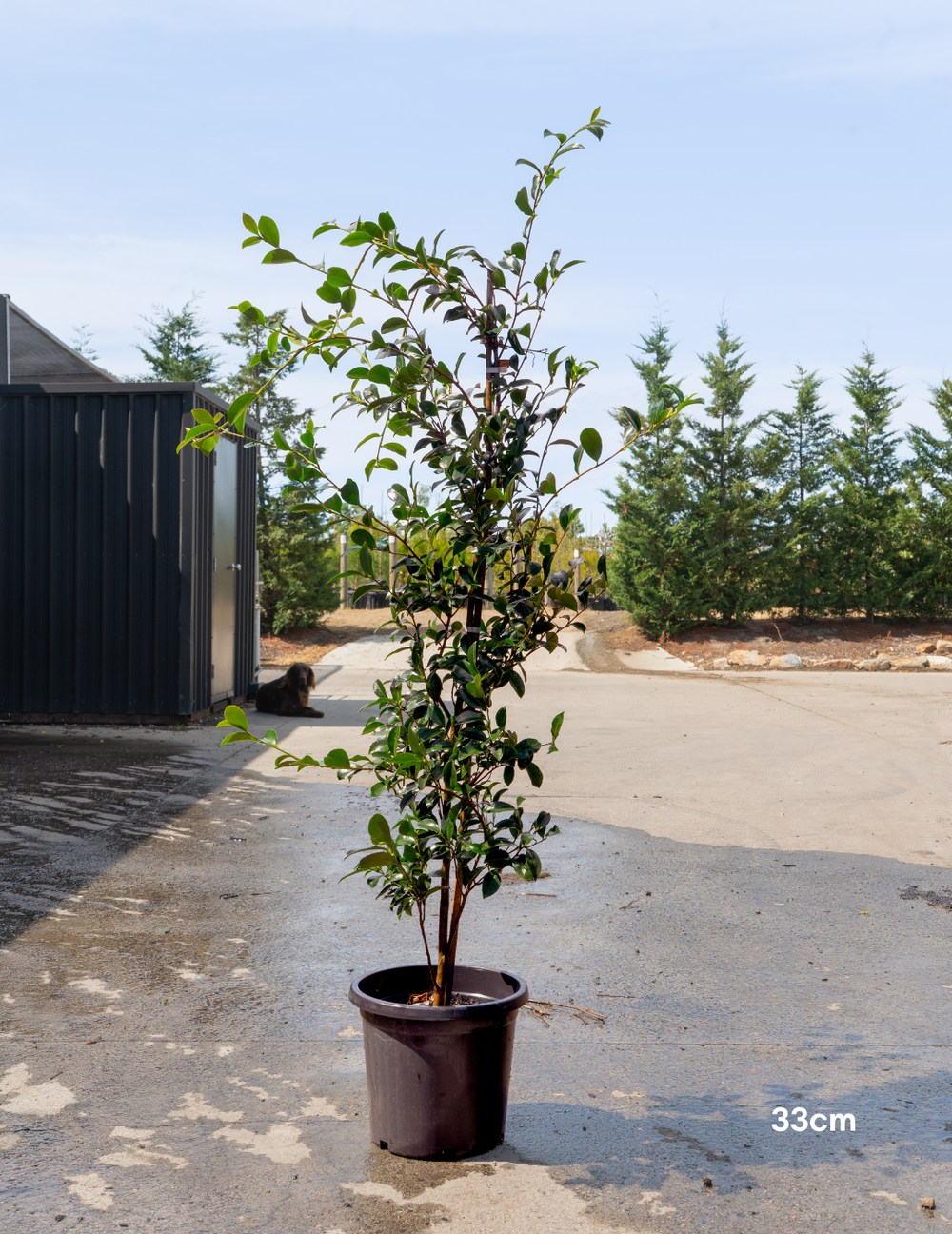
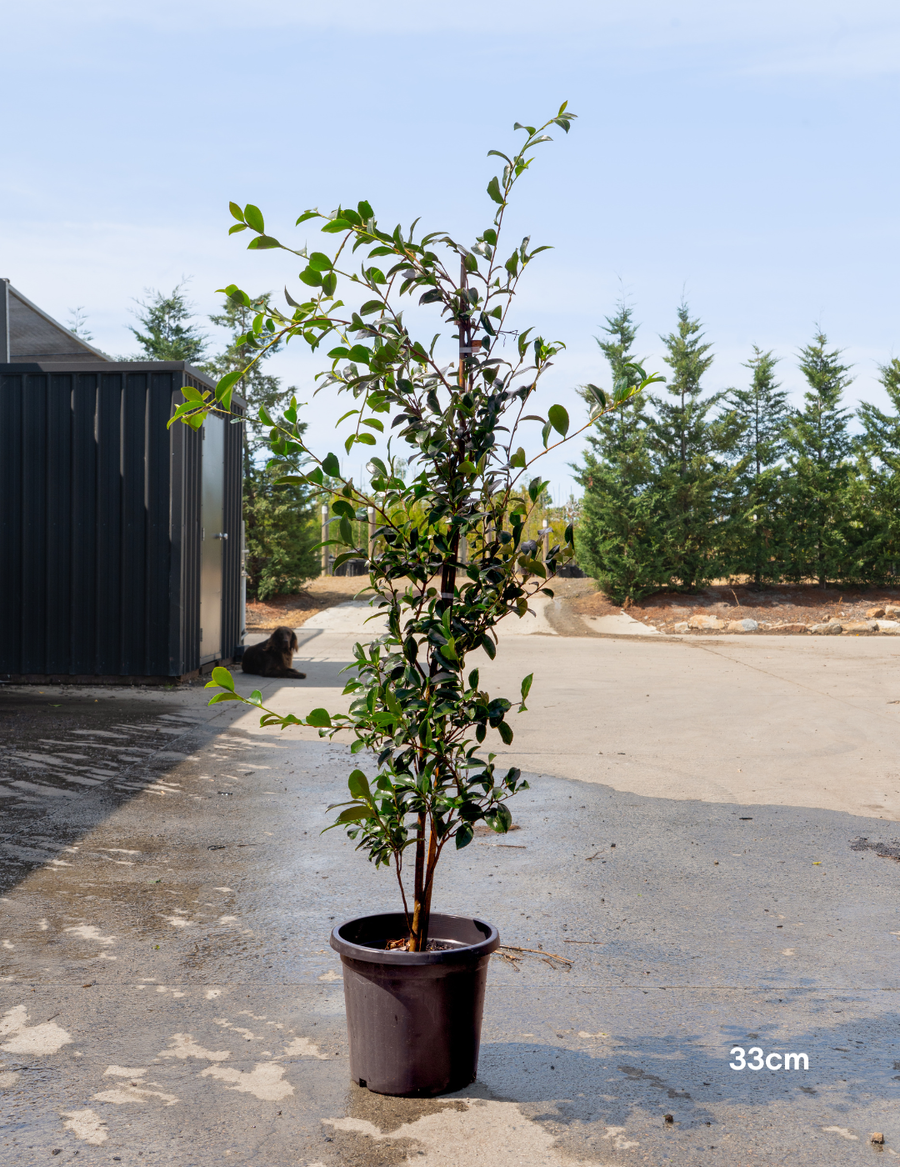
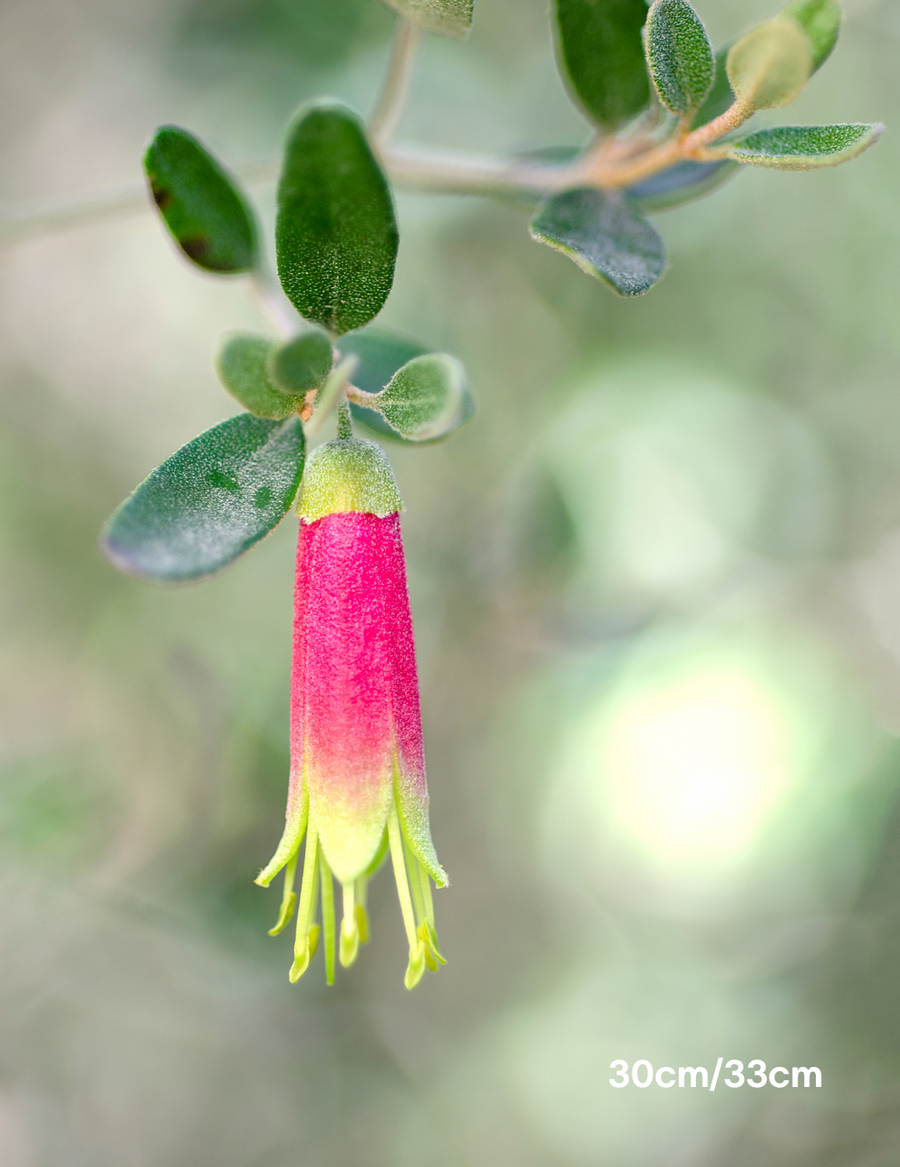
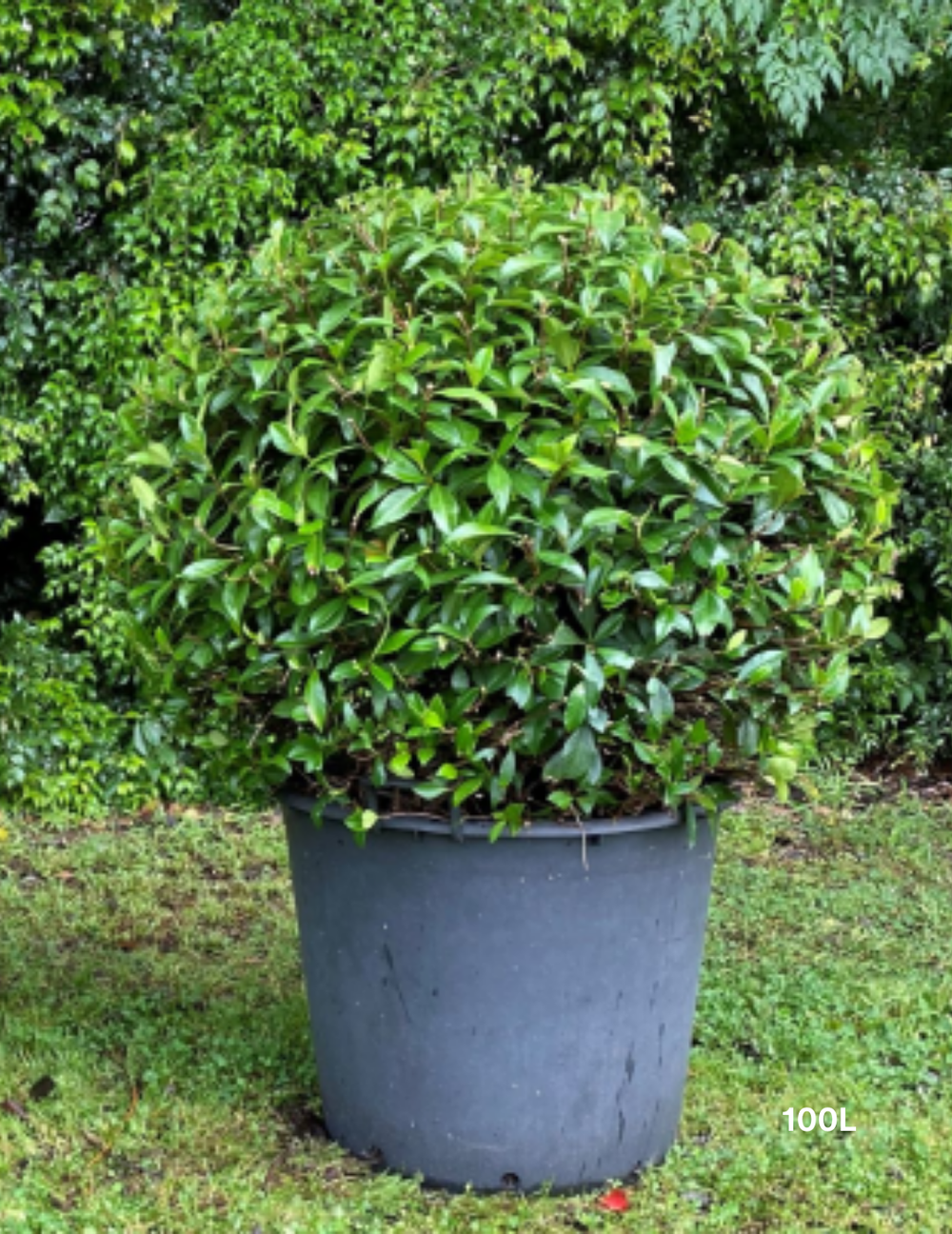
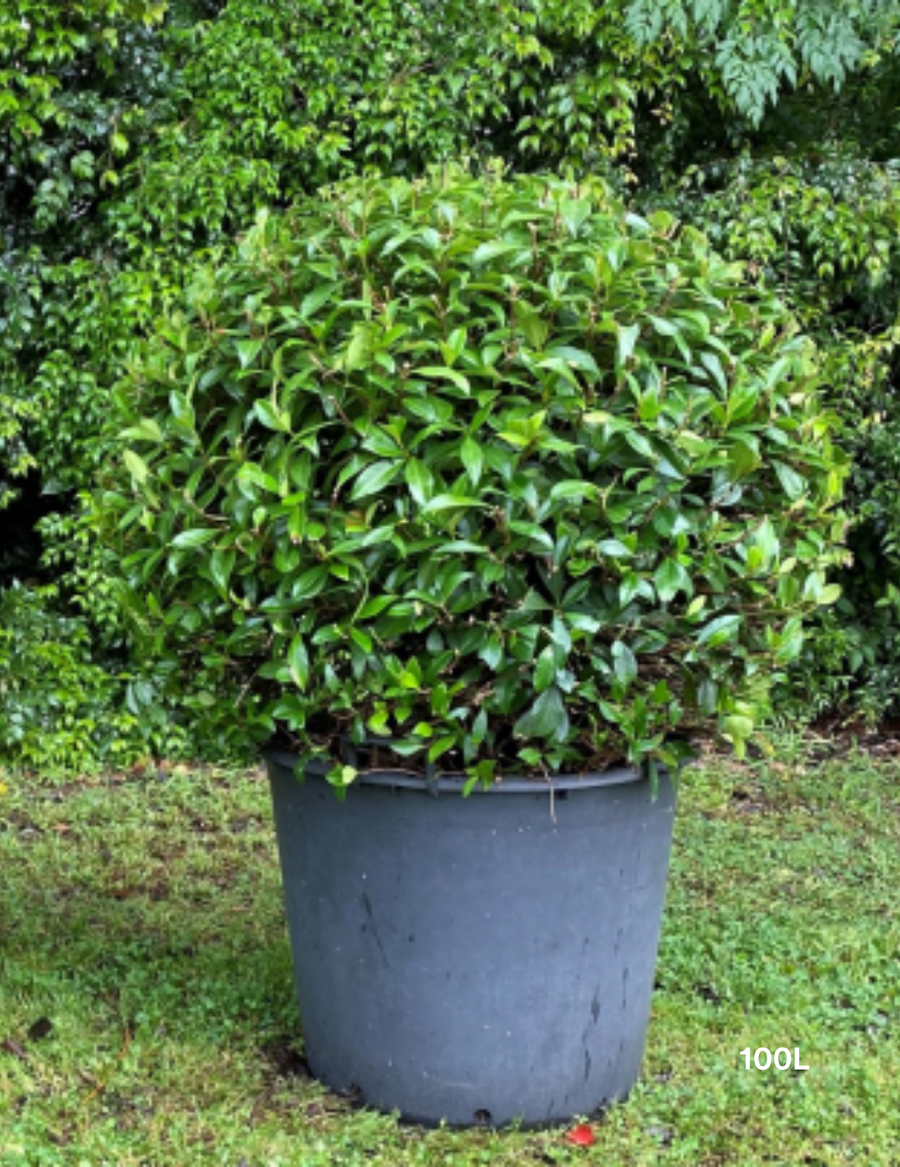
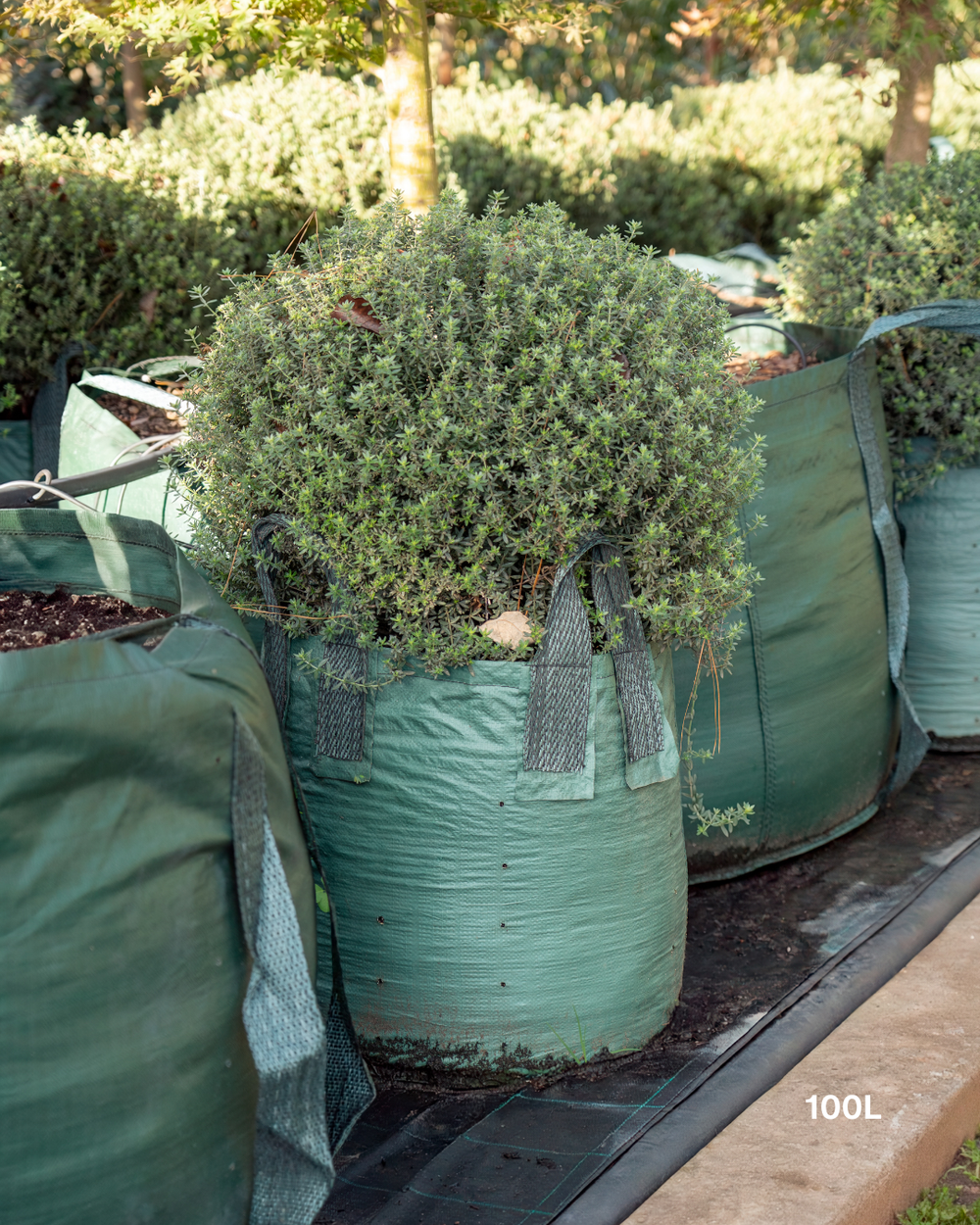
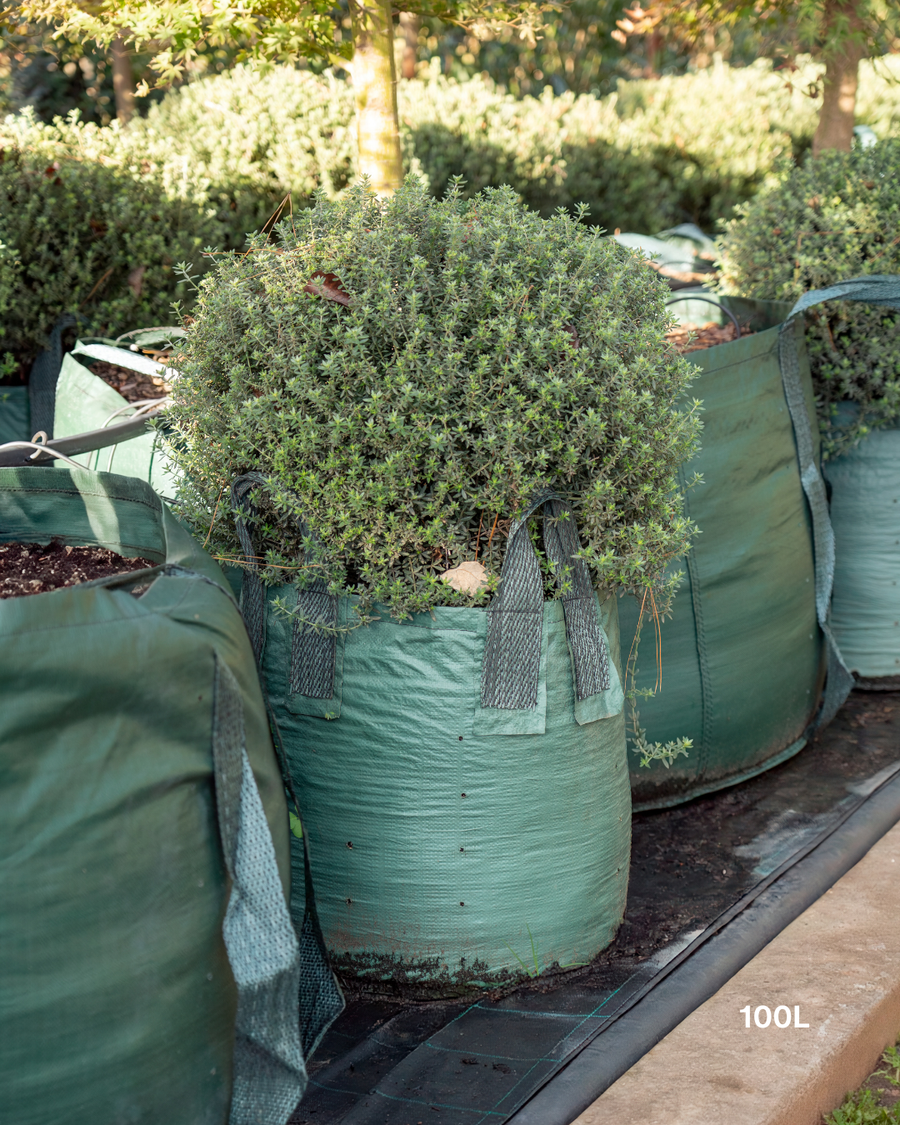
Leptospermum obovatum 'Starry Night', commonly known as the Starry Night Tea Tree, is a compact evergreen Australian native shrub valued for its distinctive deep burgundy-purple foliage and masses of small white star-shaped flowers through spring. The fine dark foliage holds its colour year-round and provides outstanding contrast against the bright white spring flowering, making it one of the most striking small Australian native shrubs available.
It performs reliably in full sun with well-drained soil and adapts to a wide range of Australian climates from subtropical Queensland through to cooler temperate regions. Mature plants reach approximately 1.5 to 2.5 metres tall and 1 to 2 metres wide, forming a dense compact shrub that responds well to light pruning. Once established it is highly drought tolerant, frost hardy and copes with coastal exposure, making it an exceptionally low-maintenance native feature.
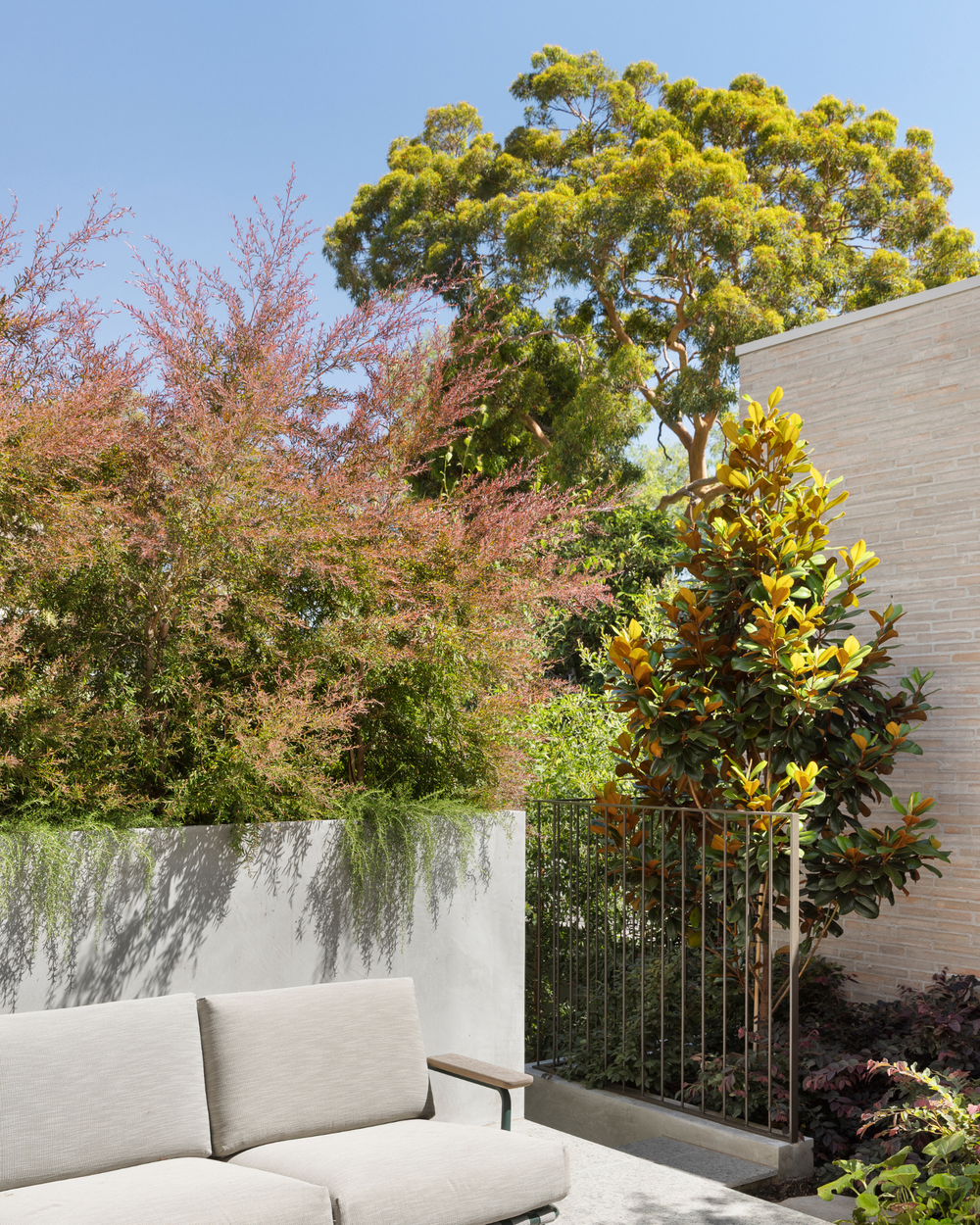
As a striking dark-foliage Australian native for modern, native, coastal, wildlife and low-maintenance gardens, in informal hedges, feature plantings, mixed shrub borders and as a colour contrast against green or silver foliage, Leptospermum 'Starry Night' brings year-round burgundy foliage, brilliant white spring flowering, native bird and pollinator attraction and reliable hardiness in a compact, design-friendly form.
Frequently Asked Questions
About Leptospermum 'Starry Night' Tea Tree
How big does Starry Night Tea Tree grow?
Mature plants reach approximately 1.5 to 2.5 metres tall and 1 to 2 metres wide, forming a dense compact rounded shrub. Growth is moderate to fast at 30 to 50 cm per year in suitable conditions, and the plant can be pruned to maintain a smaller size or shaped into an informal hedge at 1 to 1.5 metres.
When does Starry Night Tea Tree flower?
'Starry Night' produces masses of small white star-shaped flowers from late spring through early summer, typically October to December. The flowers are intensely produced across the whole plant and create a brilliant contrast against the burgundy foliage. Flowering attracts bees, hoverflies and other native pollinators.
Where does Starry Night grow best?
'Starry Night' performs reliably across most Australian climates from subtropical Queensland through to cooler temperate Victoria and Tasmania. It grows particularly well in Sydney, Melbourne, Adelaide, the NSW tablelands and coastal positions, and prefers full sun with well-drained sandy or loam soil. It tolerates a wide range of soils provided drainage is adequate.
Is it drought and frost tolerant?
Yes. Once established, 'Starry Night' is highly drought tolerant and copes with extended dry periods on minimal supplementary watering. It is also frost hardy and handles heavy and frequent frost without damage, making it suitable for inland tablelands as well as coastal positions. The dark foliage colour actually deepens in cooler weather.
Can Starry Night be used as a hedge?
Yes. 'Starry Night' responds well to pruning and is widely used as an informal hedge or screen at 1 to 1.5 metres spacing. Trim lightly after flowering to maintain density and shape. For a more compact formal look, prune two to three times through the warmer months. Avoid heavy pruning into old wood as Leptospermums generally do not regenerate well from bare stems.
Does Starry Night attract birds and wildlife?
Yes. The masses of small white flowers are nectar-rich and attract bees, hoverflies, butterflies and a wide range of native pollinating insects through spring and early summer. The dense evergreen canopy also provides shelter and foraging habitat for small native birds, making 'Starry Night' a valuable addition to wildlife-friendly gardens.
How do I care for Leptospermum 'Starry Night'?
Water deeply through the first growing season, then reduce watering and supplement only during extended dry periods. Apply a slow-release native fertiliser low in phosphorus in early spring. Light tip pruning after flowering maintains a dense compact shape and encourages dense branching. Avoid heavy pruning into old wood, as Leptospermums generally do not respond well to it.