- Mature height
- 5m to 10m
- Mature width
- 3m to 6m
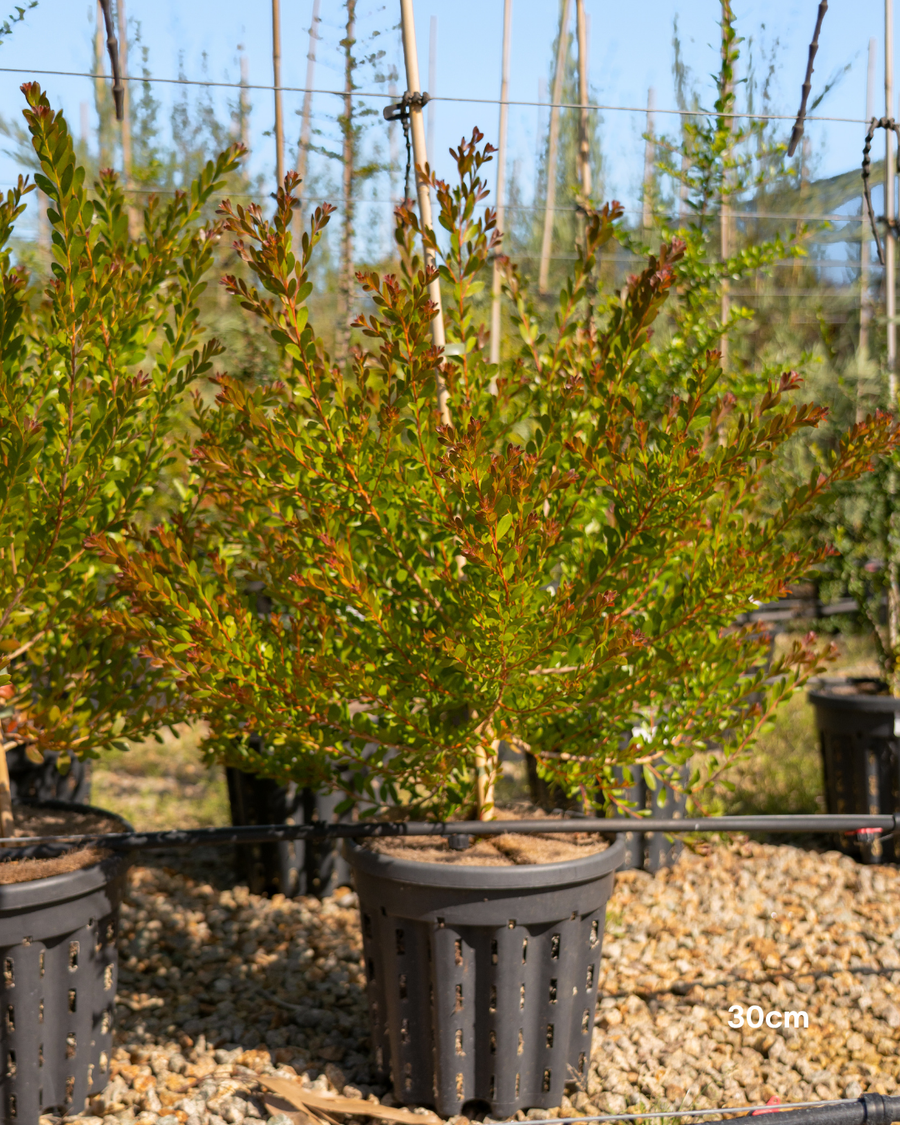
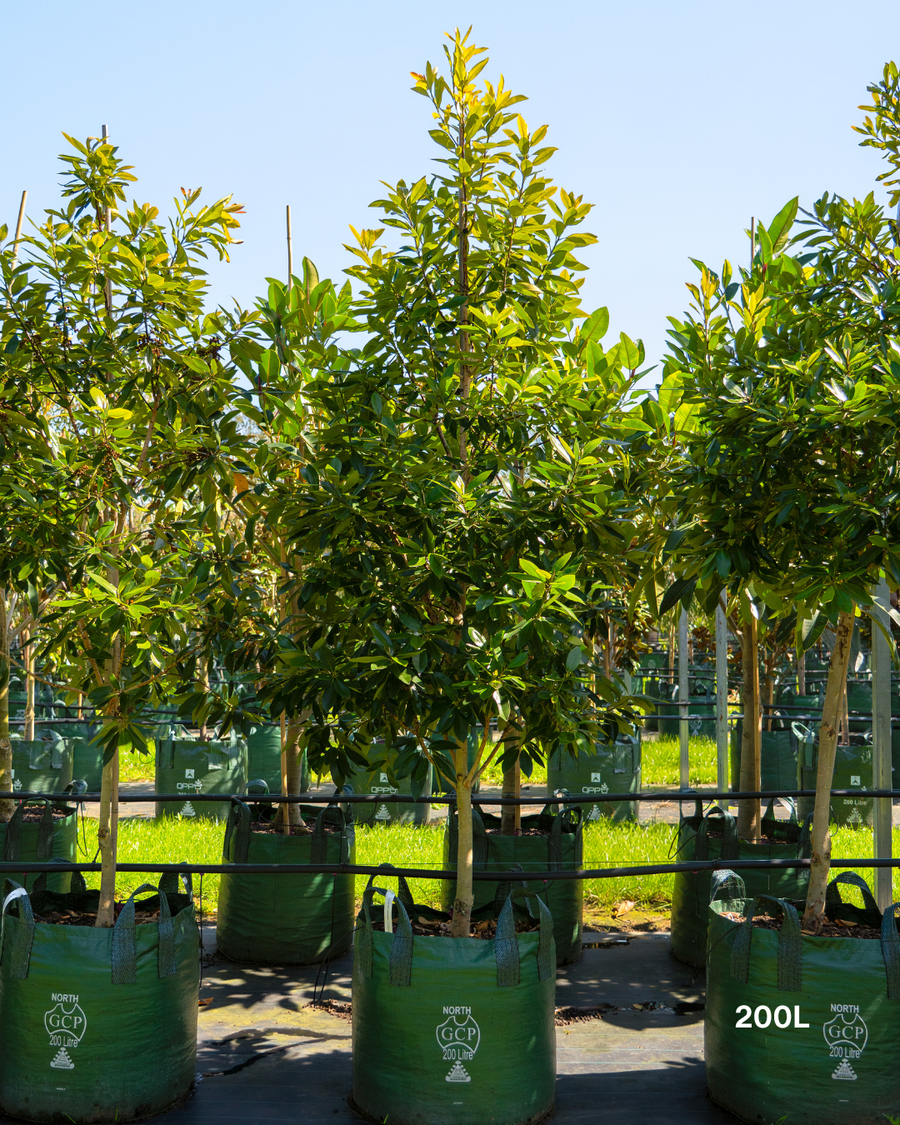
Arbutus canariensis, the Canary Madrone or Canary Islands Strawberry Tree, is an evergreen tree with peeling cinnamon to red bark over smooth new wood. Serrated dark green leaves are long and leathery, and clusters of white flowers flushed with pink open in autumn and winter. Round red fruit follows and hangs into the next season.
It reaches 5 to 10 metres tall and 3 to 6 metres wide, growing about 30 to 60 centimetres a year. Give it full sun to part shade and soil that drains freely, since it will not tolerate heavy wet ground. It handles salt-laden wind, light frost and dry summers, which suits Mediterranean and warm temperate districts.
The bark makes it worth using where it can be seen up close, so courtyards, entries and raised beds all work well. It also holds up as a street or civic tree in dry exposed sites. Young plants can be grown in large pots for several years. Space feature specimens 3 to 4 metres apart.
Frequently Asked Questions
About Canary Madrone
What is Arbutus canariensis?
Arbutus canariensis is an evergreen tree from the Canary Islands, in the family Ericaceae, known as the Canary Madrone or Canary Islands Strawberry Tree. It is grown for its peeling cinnamon-red bark, long serrated dark green leaves, pink-tinged white flowers and red strawberry-like fruit. It is a close relative of the more common Arbutus unedo.
How big does Canary Madrone grow?
It reaches 5 to 10 metres tall and 3 to 6 metres wide at maturity, forming a rounded to upright crown. Growth is around 30 to 60 centimetres a year, so it takes time to reach the upper end of that range. In pots or restricted root space it stays considerably smaller.
When does Canary Madrone flower?
Flowering runs through autumn and into winter, roughly March to July, with hanging clusters of white flowers tinged pink. Fruit forms after flowering and ripens slowly to red over the following months, so flowers and fruit often appear on the tree together. Flowering is heaviest on plants in full sun.
Is the fruit edible?
The red, rough-skinned fruit is edible but bland, more of an ornamental feature than a crop. Birds take it readily, which is a fair reason to plant the tree in habitat gardens. Fallen fruit can stain paving and is slippery underfoot, so allow for that when siting the tree near a path or driveway.
Does it need sun or shade?
Full sun gives the densest crown, the best bark colour and the heaviest flowering. It will also grow in part shade, particularly in hot inland gardens where afternoon protection reduces stress. What it will not accept is deep shade combined with wet soil, which leads to thin growth and root problems.
Is Canary Madrone suitable for coastal gardens?
Yes. It tolerates salt spray and coastal wind well and is often used in Mediterranean-style seaside planting. Sandy coastal soils suit its need for sharp drainage. In front line positions the crown may stay lower and denser than it would inland, which is usually an advantage rather than a problem.
How do I care for Canary Madrone?
Water regularly through the first two summers, then it manages on rainfall in most seasons. Feed lightly in spring with a complete fertiliser and mulch to keep the root zone cool. Prune only to lift the crown or remove dead wood, since the natural shape and the exposed bark are the point of the tree.