Acer palmatum dissectum ‘Green’
Acer palmatum dissectum ‘Green’ – Green Japanese Maple
Deciduous · Part Shade
Mature size: 1.5m–2m high × 2m–3m wide
- Deciduous
- Part Shade
- Mature height1.5m–2m
- Mature width2m–3m
- Frost Tolerant

Most loved for its finely divided, lace-like green foliage and soft weeping habit that turns vibrant shades of gold, orange, and red in autumn.
Regular price
$15,010.00
Sale price
$15,010.00
Regular price
Tax included.
Shipping calculated at checkout.
Pot size
Available batches
- Current height guide
- Please enquire
- Pot size
- 500L
Approximate only. Minimum height important? Confirm with us.
Height guide & disclaimer
Height guide disclaimer: Height ranges are approximate only. As living products, plant heights naturally vary between individual plants, batches, and seasons. No guarantee is given that supplied plants will fall within the stated range. If minimum heights are required, you must confirm current batch heights with Evergreen Trees Direct prior to purchase. Variation in height is normal and is not grounds for return, refund, replacement, or compensation.
Quantity
About this treeCouldn't load pickup availability
Mature height & width
Mature height & width
- Mature height
- 1.5m to 2m
- Mature width
- 2m to 3m
Pot sizes & dimensions
Pot sizes & dimensions
| Pot / bag size | Width | Depth |
|---|---|---|
| 30cm Pot | 33cm | 30cm |
| 40cm/45L Pot | 44cm | 41.5cm |
| 50cm Pot / 70L Pot | 55cm | 41.8cm |
| 100L Bag | 50.6cm | 52.8cm |
| 150L Bag | 66cm | 55cm |
| 200L Bag | 71.5cm | 60.5cm |
| 300L Bag | 88cm | 63.8cm |
| 400L Bag | 99cm | 66cm |
| 500L Bag | 122cm | 66cm |
| 750L Bag | 134cm | 69cm |
| 1000L Bag | 146.3cm | 71.5cm |
| 2000L Bag | 176cm | 82.5cm |
General planting reference from our existing size guide. Actual containers can vary by supplier and batch; confirm exact dimensions if required.
Delivery & pickup
Delivery & pickup
See also
See also
Perfect pairs
Perfect pairs
Most customers usually also buy
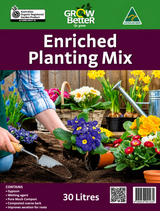
- Enriched Planting Mix (AO Certified)
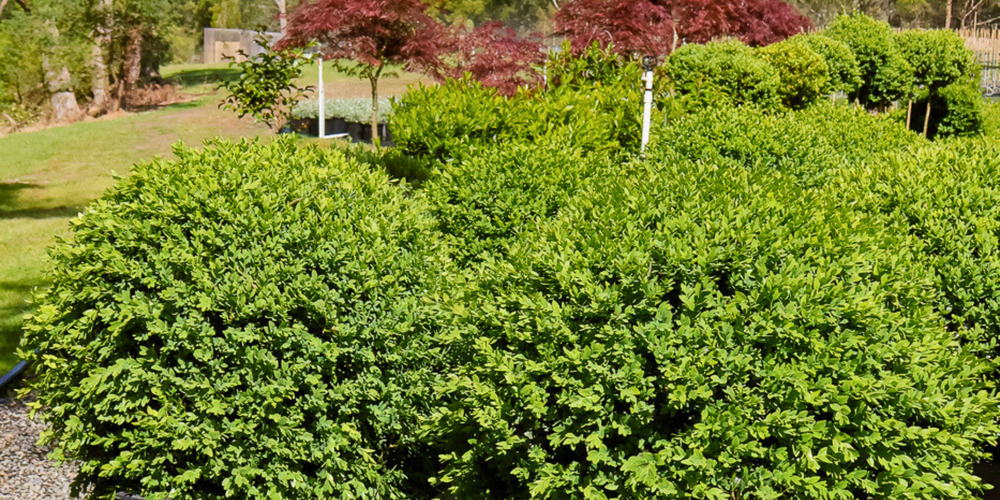
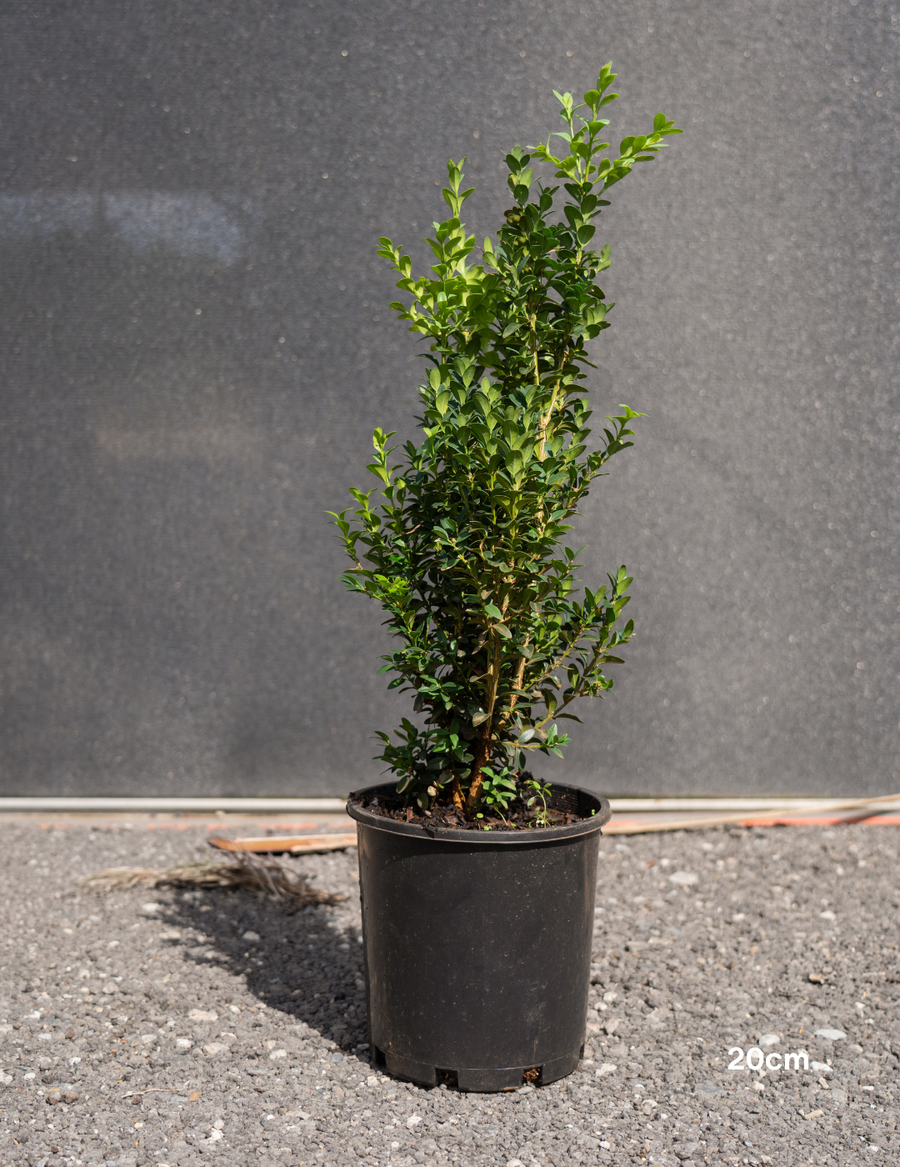
- Buxus sempervirens English Box Topiary BallsFor underplanting and adding shape
- Buxus sempervirens (Hedging Form) – English Box
- Gardenia augusta ‘Magnifica’ – Magnifica Gardenia
- Camellia sasanqua 'Setsugekka'

Total A$0.00
Trade enquiries
Trade enquiries
We supply advanced trees to landscapers, developers, architects, and councils Australia-wide. Trade clients receive fast quotes, expert advice, and access to premium stock with reliable freight.
Freight estimate
Based on the items currently in your cart.
Final delivery cost is confirmed at checkout using your full address.
Not sure how many trees you need?
Plan your hedge
Enter the length of your boundary, then choose how closely you want to plant.
Enter your boundary length to see how many trees you need.
Measure only the boundary you intend to plant—exclude gates and gaps. Spacing is centre to centre. Quantities are rounded up for one row, allowing roughly half the spacing at each end. Site conditions and pruning affect the final hedge.
About Acer palmatum dissectum ‘Green’
Acer palmatum dissectum 'Green' is a refined low-growing Japanese maple admired for its finely cut lacy green foliage and elegant cascading form. The deeply dissected leaves create a soft feathery texture, glowing bright green in spring and summer before turning vivid gold, orange, and red in autumn.
This weeping maple grows to 1.5-2 metres tall and 2-3 metres wide, forming a naturally domed cascading shape that provides year-round structure and seasonal colour. The slow growth and refined appearance make it ideal for courtyards, Japanese-inspired gardens, raised beds, and large containers.
Acer dissectum 'Green' performs best in part shade, with protection from harsh afternoon sun and drying wind, and prefers moist, well-drained, slightly acidic soil. It is frost hardy once established and suits cool to warm temperate climates. Mulching keeps the roots cool and moist.
Frequently Asked Questions
About Acer palmatum dissectum 'Green'
How tall does Acer dissectum 'Green' grow?
Acer palmatum dissectum 'Green' grows to 1.5-2 metres tall and 2-3 metres wide, forming a naturally domed weeping shape.
How fast does it grow?
Acer dissectum 'Green' is slow-growing, adding 15-25cm per year, with cascading branches that build a layered form over time.
What colour is the foliage?
The finely dissected foliage is bright green through spring and summer, then turns vivid gold, orange and red in autumn before dropping.
Can Acer dissectum 'Green' grow in pots?
Yes. The compact cascading form makes it well suited to large decorative containers, courtyards, and raised beds.
Is it deciduous?
Yes. Acer dissectum 'Green' is fully deciduous, dropping its autumn foliage in winter and producing fresh green laceleaf growth in spring.
Is it frost tolerant?
Yes. Acer dissectum 'Green' is frost hardy once established. Shelter it from harsh afternoon sun and drying wind.
Where in Australia does it grow best?
Acer dissectum 'Green' performs best in cool to warm temperate climates including VIC, NSW, ACT, Tasmania, and elevated parts of SA and WA.
| Mature height | 1.5m to 2m |
|---|---|
| Mature width | 2m to 3m |
| Position | Part Shade |
| Growth per year | 10cm to 20cm per year (slow) |
| Frost | Frost Tolerant |
| Foliage | Deciduous (Defoliates throughout colder months) |
| Form | Rounded |
| Uses | Feature Tree · Council or Civic Landscapes |
| Rootball width & depth | View dimensions → |
- Foliage
Deciduous (Defoliates throughout colder months)
- Position
- Form
- Use
- Mature height
- 1.5m to 2m
- Mature width
- 2m to 3m
Planting Information
Recommended Planting Spacing For Your Acer palmatum dissectum ‘Green’ – Green Japanese Maple
Acer palmatum dissectum ‘Green’ – Green Japanese Maple is expected to grow 10cm to 20cm per year (slow).
Long Term Care For Your Acer palmatum dissectum ‘Green’ – Green Japanese Maple
Planting Your Acer palmatum dissectum ‘Green’ – Green Japanese Maple in Different Soil
Uses in my Garden
Uses in my Garden
Acer palmatum dissectum ‘Green’ – Green Japanese Maple works in an:
Is Acer palmatum dissectum ‘Green’ – Green Japanese Maple Evergreen or Deciduous?
Acer palmatum dissectum ‘Green’ – Green Japanese Maple is an Deciduous (Defoliates throughout colder months) Tree
Mature Height & Width
Mature Height: 1.5m to 2m
Mature Width: 2m to 3m
Acer palmatum dissectum ‘Green’ – Green Japanese Maple is expected to grow 10cm to 20cm per year (slow).
Growth Rate of Acer palmatum dissectum ‘Green’ – Green Japanese Maple
Acer palmatum dissectum ‘Green’ – Green Japanese Maple is expected to grow 10cm to 20cm per year (slow).
They are considered to have a:
Frost Tolerance & Ideal Climate to plant Acer palmatum dissectum ‘Green’ – Green Japanese Maple
Is Acer palmatum dissectum ‘Green’ – Green Japanese Maple frost tolerant?
Acer palmatum dissectum ‘Green’ – Green Japanese Maple is Frost Tolerant – Can handle light to moderate frost once established.
Does Acer palmatum dissectum ‘Green’ – Green Japanese Maple Flower?
Acer palmatum dissectum ‘Green’ produces delicate clusters of red spring flowers that appear just before the finely dissected foliage emerges. Though subtle, these early blooms provide pollen for beneficial insects and mark the start of its fresh seasonal growth.
Does Acer palmatum dissectum ‘Green’ – Green Japanese Maple flower?
Flowering Period:
Flower Type:
Flower Colour:
Not Applicable
Is Acer palmatum dissectum ‘Green’ – Green Japanese Maple an Australian Native Tree?
No
Acer palmatum dissectum ‘Green’ – Green Japanese Maple is Native to Japan, Korea, and China, where Acer palmatum grows naturally in forest understories and on mountain slopes.
What is the Wildlife Value of Acer palmatum dissectum ‘Green’ – Green Japanese Maple ?
Its intricate weeping branches offer sheltered resting spots for small birds, while its spring flowers support native bees, hoverflies and other beneficial insects. The dense canopy also creates a cool, shaded understorey that enriches garden biodiversity.
How much Sunlight does Acer palmatum dissectum ‘Green’ – Green Japanese Maple need?
Acer palmatum dissectum ‘Green’ – Green Japanese Maple will thrive best in:
Preferred Soil?
Acer palmatum dissectum ‘Green’ performs best in well-drained loam or sandy loam soils and prefers slightly acidic to neutral conditions. It can struggle in heavy clay or poorly drained areas unless improved with organic matter to enhance aeration and drainage. Keep soil evenly moist during establishment, then move to deep, occasional watering as the tree matures, especially during hot or windy periods to protect its delicate foliage.
Is Acer palmatum dissectum ‘Green’ – Green Japanese Maple Drought Tolerant?
Is Acer palmatum dissectum ‘Green’ – Green Japanese Maple Drought tolerant?
As a young tree it needs consistent watering, but once established Acer palmatum dissectum ‘Green’ develops low to moderate drought tolerance. It performs best in a sheltered, partially shaded position and benefits from deep, occasional watering during extended heat to maintain leaf health and its soft, cascading form.
Frequently Asked Questions
How tall does Acer dissectum 'Green' grow?
Acer palmatum dissectum 'Green' grows to 1.5-2 metres tall and 2-3 metres wide, forming a naturally domed weeping shape.
How fast does it grow?
Acer dissectum 'Green' is slow-growing, adding 15-25cm per year, with cascading branches that build a layered form over time.
What colour is the foliage?
The finely dissected foliage is bright green through spring and summer, then turns vivid gold, orange and red in autumn before dropping.
Can Acer dissectum 'Green' grow in pots?
Yes. The compact cascading form makes it well suited to large decorative containers, courtyards, and raised beds.
Is it deciduous?
Yes. Acer dissectum 'Green' is fully deciduous, dropping its autumn foliage in winter and producing fresh green laceleaf growth in spring.
Is it frost tolerant?
Yes. Acer dissectum 'Green' is frost hardy once established. Shelter it from harsh afternoon sun and drying wind.
Where in Australia does it grow best?
Acer dissectum 'Green' performs best in cool to warm temperate climates including VIC, NSW, ACT, Tasmania, and elevated parts of SA and WA.
Delivery & help
Pot sizes & dimensions
| Pot / bag size | Width | Depth |
|---|---|---|
| 30cm Pot | 33cm | 30cm |
| 40cm/45L Pot | 44cm | 41.5cm |
| 50cm Pot / 70L Pot | 55cm | 41.8cm |
| 100L Bag | 50.6cm | 52.8cm |
| 150L Bag | 66cm | 55cm |
| 200L Bag | 71.5cm | 60.5cm |
| 300L Bag | 88cm | 63.8cm |
| 400L Bag | 99cm | 66cm |
| 500L Bag | 122cm | 66cm |
| 750L Bag | 134cm | 69cm |
| 1000L Bag | 146.3cm | 71.5cm |
| 2000L Bag | 176cm | 82.5cm |
General planting reference. Container dimensions can vary by supplier and batch.
Compare sizes side by side
* Heights are approximate and vary between individual trees.
500L
Enquire for current heights
$15,010.00
750L
Enquire for current heights
$22,400.00
Unavailable
They’re loved for their finely divided, lace-like green foliage and soft weeping habit that turns vibrant shades of gold, orange, and red in autumn.
Perfect pairs
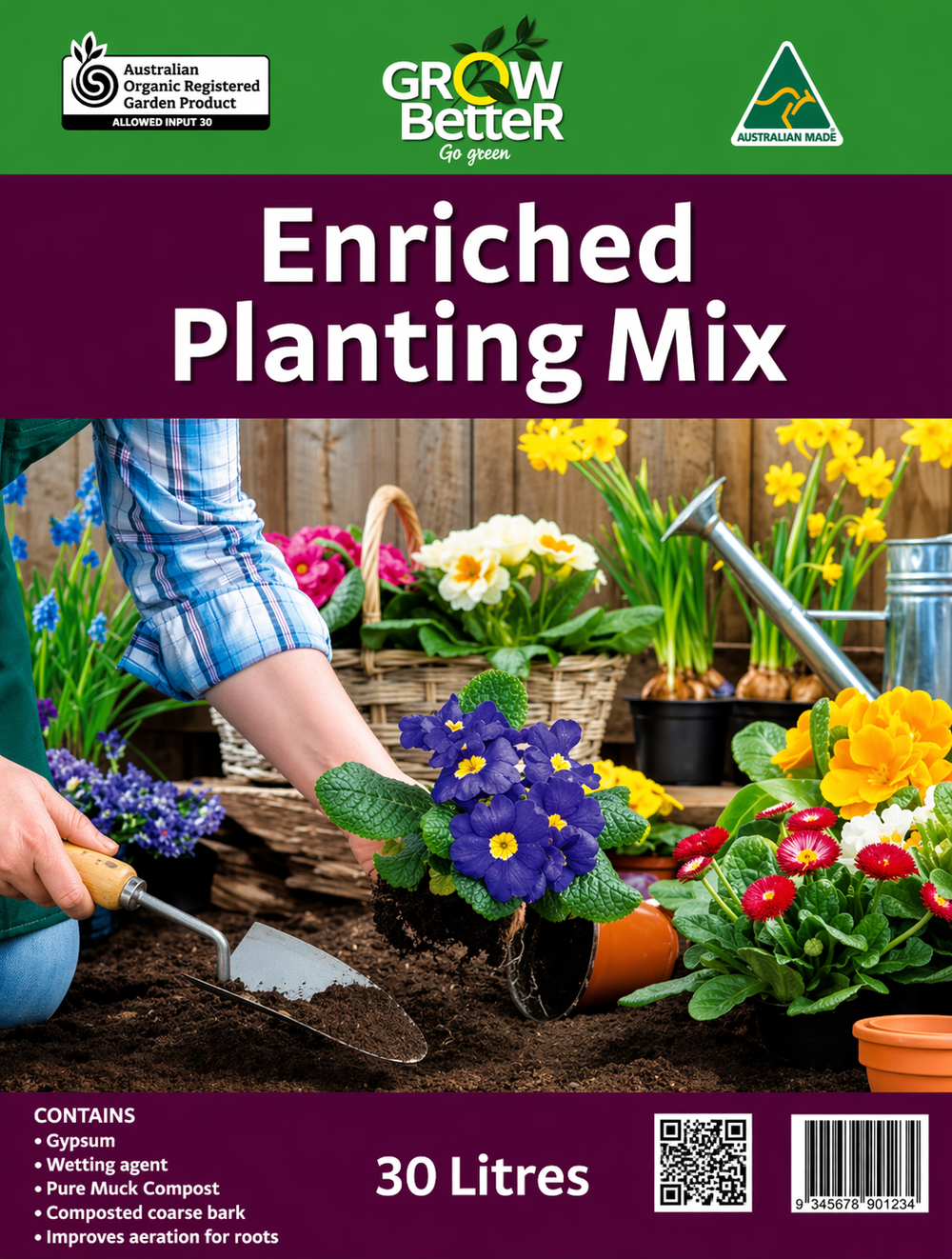
Enriched Planting Mix (AO Certified)
Enriched Planting Mix is a certified organic blend of Pure Magic Compost, composted animal manure, gypsum, composted coarse bark and a wetting agent, bagged in 30L. It is built to be dug through existing garden soil at planting time rather than used on its own, and the gypsum...
Read product details
Enriched Planting Mix is a certified organic blend of Pure Magic Compost, composted animal manure, gypsum, composted coarse bark and a wetting agent, bagged in 30L. It is built to be dug through existing garden soil at planting time rather than used on its own, and the gypsum is what sets it apart from a plain compost.
Gypsum helps break up heavy clay so water and roots can move through it, while the compost and manure return organic matter and nutrient to tired ground. The coarse bark holds structure and keeps air around the root zone, and the wetting agent keeps moisture in the soil longer after rain or watering.
Use it when planting trees, shrubs, roses, fruit trees and exotic garden plants, particularly into clay. Dig a hole twice the width of the pot and 7 centimetres deeper, then mix roughly one third planting mix through the excavated soil. Spread 7 centimetres of that improved soil in the base before setting the plant in.
Frequently Asked Questions
About Enriched Planting Mix
What is Enriched Planting Mix made from?
It is a blend of Pure Magic Compost, composted animal manure, gypsum, composted coarse bark and a wetting agent. Each part has a job. The compost and manure supply organic matter and nutrient, the gypsum works on clay structure, the bark keeps air around the roots and the wetting agent holds moisture in the soil.
What plants is it suitable for?
It suits exotic garden plants, including roses, ornamental and deciduous trees, fruit trees, shrubs and perennials, and it earns its keep most on heavy clay sites. It is a planting mix rather than a potting mix, so its job is improving soil at planting time. Phosphorus sensitive natives are the one clear exception.
Is it safe for natives?
No, not for the phosphorus sensitive ones. The composted animal manure in this blend lifts phosphorus well above what Proteaceae such as Banksia, Grevillea, Hakea and Protea will tolerate, and the result can be leaf burn, dieback and plant death. Use the Native Potting Mix for those species, or plant them into unimproved local soil.
Is it certified organic?
Yes. It is a certified organic product with no chemical additives, which is why the manure and compost in it are fully composted rather than raw. That makes it sound around fruit trees and vegetable beds, and it means you are adding genuine organic matter to your soil rather than a synthetic conditioner.
How much do I need?
Work on roughly one third planting mix to two thirds of the soil you dug out of the hole. For a shrub out of a 200 millimetre pot that is only a few litres. An advanced tree going into a large hole will take considerably more. Judge the quantity by the volume of the hole rather than the size of the plant.
Can I use it in pots?
It is not a potting mix and should not be used on its own in a container. The blend is designed to be diluted through garden soil, and used straight in a pot it holds too much water and settles badly. For containers, reach for a premium potting mix, or the native mix if you are potting natives.
Does it need to be watered in?
Yes. Water the plant well several hours before you plant it, then water thoroughly again once the hole is backfilled and the soil firmed down. That first deep watering settles the improved soil around the root ball and drives out air pockets. Keep the water up over the first few months while the roots establish.
Enriched Planting Mix (AO Certified)
$21.95
Enriched Planting Mix (AO Certified)
Enriched Planting Mix is a certified organic blend of Pure Magic Compost, composted animal manure, gypsum, composted coarse bark and a wetting agent, bagged in 30L. It is built to be dug through existing garden soil at planting time rather than used on its own, and the gypsum...
Read product details
Enriched Planting Mix is a certified organic blend of Pure Magic Compost, composted animal manure, gypsum, composted coarse bark and a wetting agent, bagged in 30L. It is built to be dug through existing garden soil at planting time rather than used on its own, and the gypsum is what sets it apart from a plain compost.
Gypsum helps break up heavy clay so water and roots can move through it, while the compost and manure return organic matter and nutrient to tired ground. The coarse bark holds structure and keeps air around the root zone, and the wetting agent keeps moisture in the soil longer after rain or watering.
Use it when planting trees, shrubs, roses, fruit trees and exotic garden plants, particularly into clay. Dig a hole twice the width of the pot and 7 centimetres deeper, then mix roughly one third planting mix through the excavated soil. Spread 7 centimetres of that improved soil in the base before setting the plant in.
Frequently Asked Questions
About Enriched Planting Mix
What is Enriched Planting Mix made from?
It is a blend of Pure Magic Compost, composted animal manure, gypsum, composted coarse bark and a wetting agent. Each part has a job. The compost and manure supply organic matter and nutrient, the gypsum works on clay structure, the bark keeps air around the roots and the wetting agent holds moisture in the soil.
What plants is it suitable for?
It suits exotic garden plants, including roses, ornamental and deciduous trees, fruit trees, shrubs and perennials, and it earns its keep most on heavy clay sites. It is a planting mix rather than a potting mix, so its job is improving soil at planting time. Phosphorus sensitive natives are the one clear exception.
Is it safe for natives?
No, not for the phosphorus sensitive ones. The composted animal manure in this blend lifts phosphorus well above what Proteaceae such as Banksia, Grevillea, Hakea and Protea will tolerate, and the result can be leaf burn, dieback and plant death. Use the Native Potting Mix for those species, or plant them into unimproved local soil.
Is it certified organic?
Yes. It is a certified organic product with no chemical additives, which is why the manure and compost in it are fully composted rather than raw. That makes it sound around fruit trees and vegetable beds, and it means you are adding genuine organic matter to your soil rather than a synthetic conditioner.
How much do I need?
Work on roughly one third planting mix to two thirds of the soil you dug out of the hole. For a shrub out of a 200 millimetre pot that is only a few litres. An advanced tree going into a large hole will take considerably more. Judge the quantity by the volume of the hole rather than the size of the plant.
Can I use it in pots?
It is not a potting mix and should not be used on its own in a container. The blend is designed to be diluted through garden soil, and used straight in a pot it holds too much water and settles badly. For containers, reach for a premium potting mix, or the native mix if you are potting natives.
Does it need to be watered in?
Yes. Water the plant well several hours before you plant it, then water thoroughly again once the hole is backfilled and the soil firmed down. That first deep watering settles the improved soil around the root ball and drives out air pockets. Keep the water up over the first few months while the roots establish.
Enriched Planting Mix (AO Certified)

Buxus sempervirens English Box Topiary Balls
From $230.00
Buxus sempervirens English Box Topiary Balls
Buxus sempervirens English Box Topiary Balls are pre-clipped formal evergreen specimens, available in three mature sizes and ready to place. The tight, fine, dark green foliage holds a precise rounded form year-round and gives the classic formal topiary look that no other Buxus replicates. As one of our...
Read product details
Buxus sempervirens English Box Topiary Balls are pre-clipped formal evergreen specimens, available in three mature sizes and ready to place. The tight, fine, dark green foliage holds a precise rounded form year-round and gives the classic formal topiary look that no other Buxus replicates. As one of our most consistently strong-selling products, our English Box topiary balls are well-shaped, well-rooted, and arrive in proportion to the pot size.
English Box performs best in cool to temperate climates and is slow growing at around 15 to 25 cm per year in good conditions, which is exactly why it holds sharp formal shapes so well. It thrives in full sun to part shade with well-drained, slightly acidic to neutral loamy soil, and is frost hardy, drought tolerant once established, and excellent in containers. Two light clips per year, in spring and again in late summer, keep the ball form crisp.
Use them flanking entrances, lining formal pathways, anchoring symmetrical garden beds, defining parterre and knot gardens, and in pairs in classic urns and decorative pots at front doors. Buxus sempervirens is the original topiary plant and remains the benchmark for traditional and contemporary formal design, with a level of finesse and density that fast-growing alternatives cannot replicate.
Frequently Asked Questions
About Buxus sempervirens English Box Topiary Balls
What size are the English Box topiary balls when they arrive?
Our English Box topiary balls arrive pre-clipped and ready to place at the size you order. The 30cm/33cm pots have ball diameters of approximately 30 to 45 cm, the 40cm/45L pots have ball diameters of 40 to 55 cm, and the 50cm/75L pots have ball diameters of 50 to 70 cm. They are well-rooted and in proportion to the pot.
How fast does Buxus sempervirens grow?
English Box is slow-growing, adding approximately 15 to 25 cm per year once established in good conditions. This slow growth rate is one of the reasons it holds sharp formal shapes so well, and why mature pre-clipped specimens command a premium over seedling-grown stock.
What is the difference between English Box, Japanese Box, and Shaggy Box?
English Box (Buxus sempervirens) has the smallest, finest leaves and the tightest formal texture, ideal for traditional parterres and clipped balls. Japanese Box (Buxus microphylla japonica) has slightly larger leaves, grows faster, and handles heat better. Shaggy Box (Buxus bodinieri) has soft, rounded leaves, much better blight resistance, and is the best choice for humid subtropical climates where English Box can struggle.
Where does English Box grow best in Australia?
English Box performs best in cool to temperate regions including Victoria, the ACT, the NSW Southern Highlands and Central Tablelands, Tasmania, and the elevated parts of South Australia and Western Australia. In humid coastal or hot subtropical regions, consider Buxus bodinieri Shaggy Box or Japanese Box instead for better long-term performance.
How do I prune English Box topiary balls?
Lightly clip in spring and again in late summer or early autumn to maintain the ball shape. Avoid pruning in the heat of summer or during frost periods. Use sharp shears for the cleanest formal finish, and step back regularly to check the symmetry of the form.
Can English Box grow in pots?
Yes. English Box is the classic potted topiary plant and pre-clipped balls look particularly striking in pairs at entrances and on terraces. Use a minimum 30L pot for the 30cm/33cm size and scale up from there, with a quality potting mix and a slow-release fertiliser applied twice yearly.
Is English Box susceptible to disease?
English Box can be affected by box blight, particularly in humid conditions where foliage stays wet. To reduce risk, ensure good air circulation around each plant, avoid overhead watering, and prune to maintain airflow through the canopy. In high-humidity regions, Buxus bodinieri Shaggy Box is a more disease-resistant alternative.
Buxus sempervirens English Box Topiary Balls

Buxus sempervirens (Hedging Form) – English Box
From $55.00
Buxus sempervirens (Hedging Form) – English Box
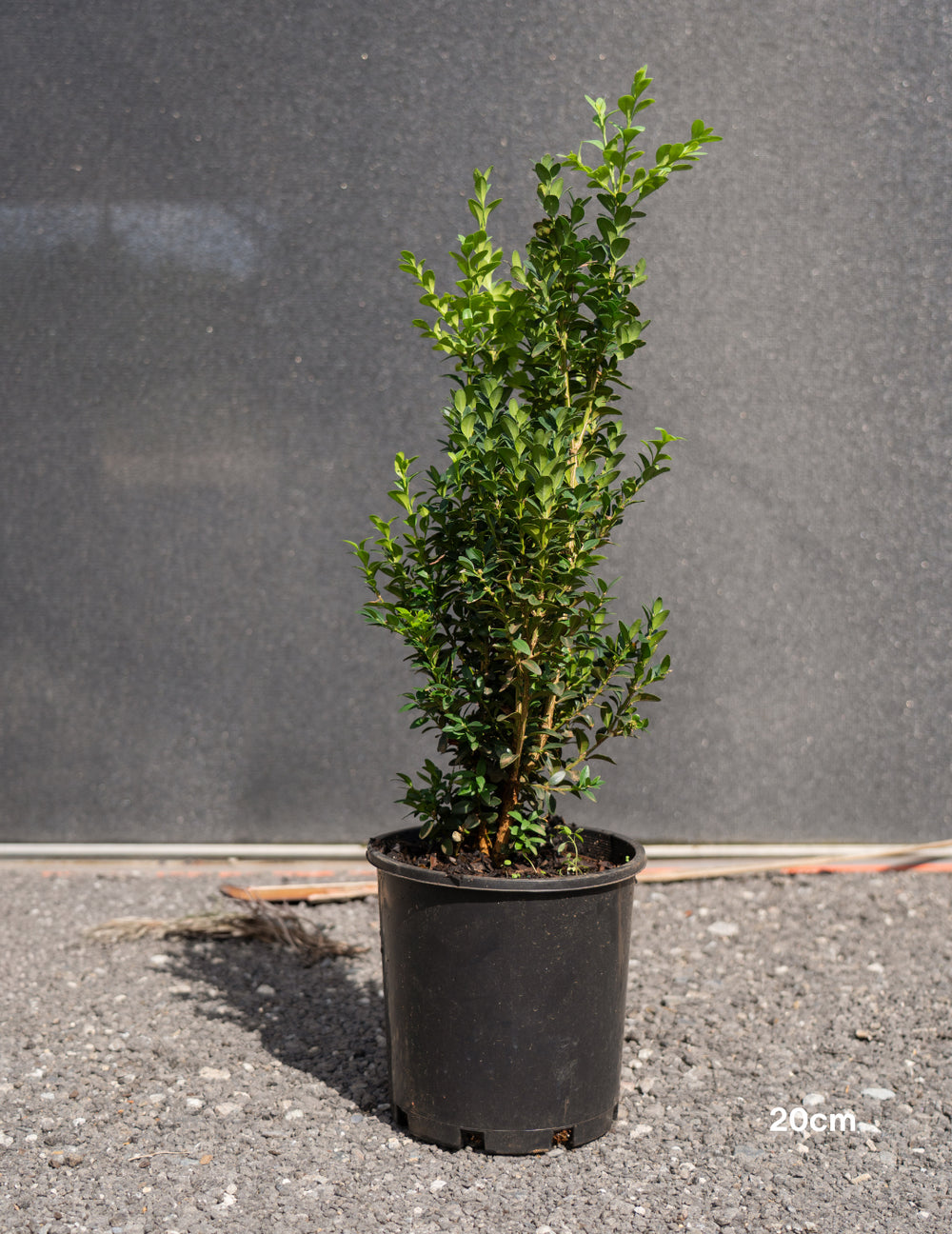
Buxus sempervirens, English Box, is the classic hedging box, a dense evergreen shrub with small glossy leaves set on short internodes. Hedging form stock is grown from material selected for tight branching, so plants knit into a solid face and take a clean line under shears. Pale yellow...
Read product details
Buxus sempervirens, English Box, is the classic hedging box, a dense evergreen shrub with small glossy leaves set on short internodes. Hedging form stock is grown from material selected for tight branching, so plants knit into a solid face and take a clean line under shears. Pale yellow spring flowers are small and lightly scented.
Full sun through to part shade suits it, in a well drained soil kept evenly moist while the roots establish. Cool temperate and temperate districts are its strength, and mature plants shrug off repeated winter frost. Growth of 15 to 30 centimetres a year is steady rather than quick, which keeps a hedge line honest.
It is the standard choice for low borders, parterres, knot gardens and the clipped edges that hold a formal garden together. Councils and heritage properties specify it for the same reason home gardeners do. It stays where it is put and reads the same in July as it does in January.
Frequently Asked Questions
About English Box
What is English Box?
Buxus sempervirens is a slow growing evergreen shrub with small, glossy, dark green leaves, grown for centuries as a clipped hedge. The hedging form is selected for tight branching and short internodes, so plants knit together into a solid face and take a sharp edge under shears. It is not related to native Australian box species.
How big does English Box grow?
As a hedge it is normally held between 30 centimetres and 1 metre, which is where the plant looks its best. Taller hedges to about 1.5 metres are achievable with patience. Left entirely unclipped the species will slowly reach 3 to 5 metres tall and 2 to 3 metres wide over several decades.
How far apart should I plant English Box for a hedge?
For a low border hedge from 20 or 30 centimetre stock, plant 25 to 30 centimetres apart, which is three to four plants per metre. For a taller hedge from 50 centimetre stock, 35 to 40 centimetres apart is enough. Closer spacing closes the line sooner but does not change the finished result.
What is the difference between English Box and Japanese Box?
English Box has finer, darker foliage and a slower, tighter habit, which suits low formal hedges and parterres. Japanese Box is a little coarser and faster, holds its colour better in heat and humidity, and is the safer choice in warmer or more humid districts. In cool temperate gardens English Box remains the traditional pick.
Is English Box frost tolerant?
Yes, and comfortably so. It is one of the more cold hardy hedging plants available, and established hedges take repeated winter frost without damage, including in Canberra, Ballarat, Orange and across Tasmania. A late frost can bronze new spring growth, but the plant grows straight through it. Water well before winter in the first year.
Does English Box grow in shade?
It grows in full sun through to part shade. Part shade keeps the leaf a deeper green in hot districts, while full sun gives the densest growth in cool ones. Heavy shade produces thin, open growth that never closes properly into a hedge, so aim for at least three or four hours of direct light.
How do I care for and prune an English Box hedge?
Trim twice a year, in late spring and again in late summer, always cutting the sides slightly wider at the base so light reaches the lower foliage. Feed in early spring, mulch, and water deeply in dry spells rather than lightly and often. Renovation cuts back into old wood are tolerated but are best staged over two seasons.
Buxus sempervirens (Hedging Form) – English Box

Evergreen Trees Direct Has Been Featured In:


Perfect Substitutes for Acer palmatum dissectum ‘Green’ – Green Japanese Maple
Follow Us On Instagram
@evergreentreesdirect ↗
Tips & Tricks
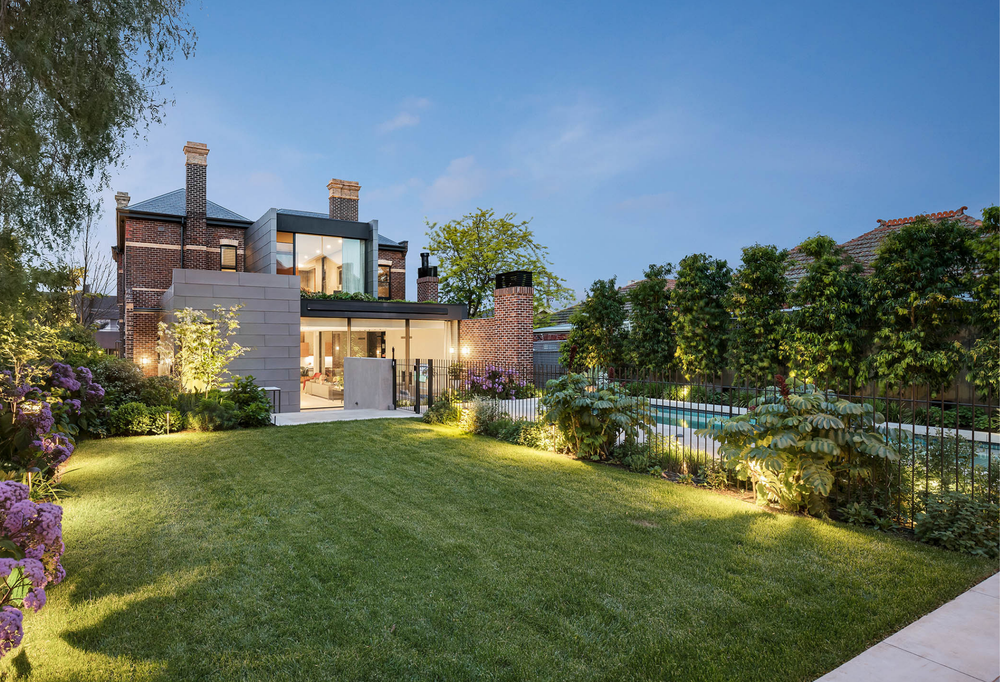
Best Trees for Creating a Privacy Screen: 10 Picks Across Fast Formal, Native and Narrow Column Options
Read the story
How to Incorporate Trees into Your Modern Landscape Design
Read the story
The Importance of Root Health: How to Choose Quality Trees
Read the story