Skip to content
Lemon Trees and Citrus: 8 Types Compared by Size and Fruit

Lemon Trees and Citrus: 8 Types Compared by Size and Fruit

Two lemon trees and six other citrus trees compared by mature size, growth rate, fruit and best use, from Lisbon and Eureka lemons to limes, cumquats and oranges.

A lemon tree is the first citrus most gardens plant, and two types cover most needs: Lisbon for the heaviest crop and Eureka for fruit over most of the year. This guide compares both lemon trees with six other citrus trees: a lime, two cumquats and three oranges. For each one you get mature size, growth rate, fruit and best use.

All eight are evergreen, carry fragrant white flowers and want full sun and free-draining soil. They differ in size, in when the fruit is ready and in how much frost they take. Every size on this page comes from the product data, so check the plant card and the product page before you plant.

Ready to shop? Browse the fruit tree collection, read our beginner's guide to citrus and fig and the best trees to plant in pots, or take the tree quiz if you are not sure which suits your garden.

Last reviewed
24 November 2026
Reading time
7 minutes
Supplier
Evergreen Trees Direct

Lemon tree types: Lisbon or Eureka

  • CropCitrus limon 'Lisbon', the Lisbon Lemon, carries heavy crops with a main flush in winter and scattered fruit for much of the rest of the year. Citrus limon 'Eureka', the Eureka Lemon, flowers and fruits over most of the year, so there is usually fruit on the tree.
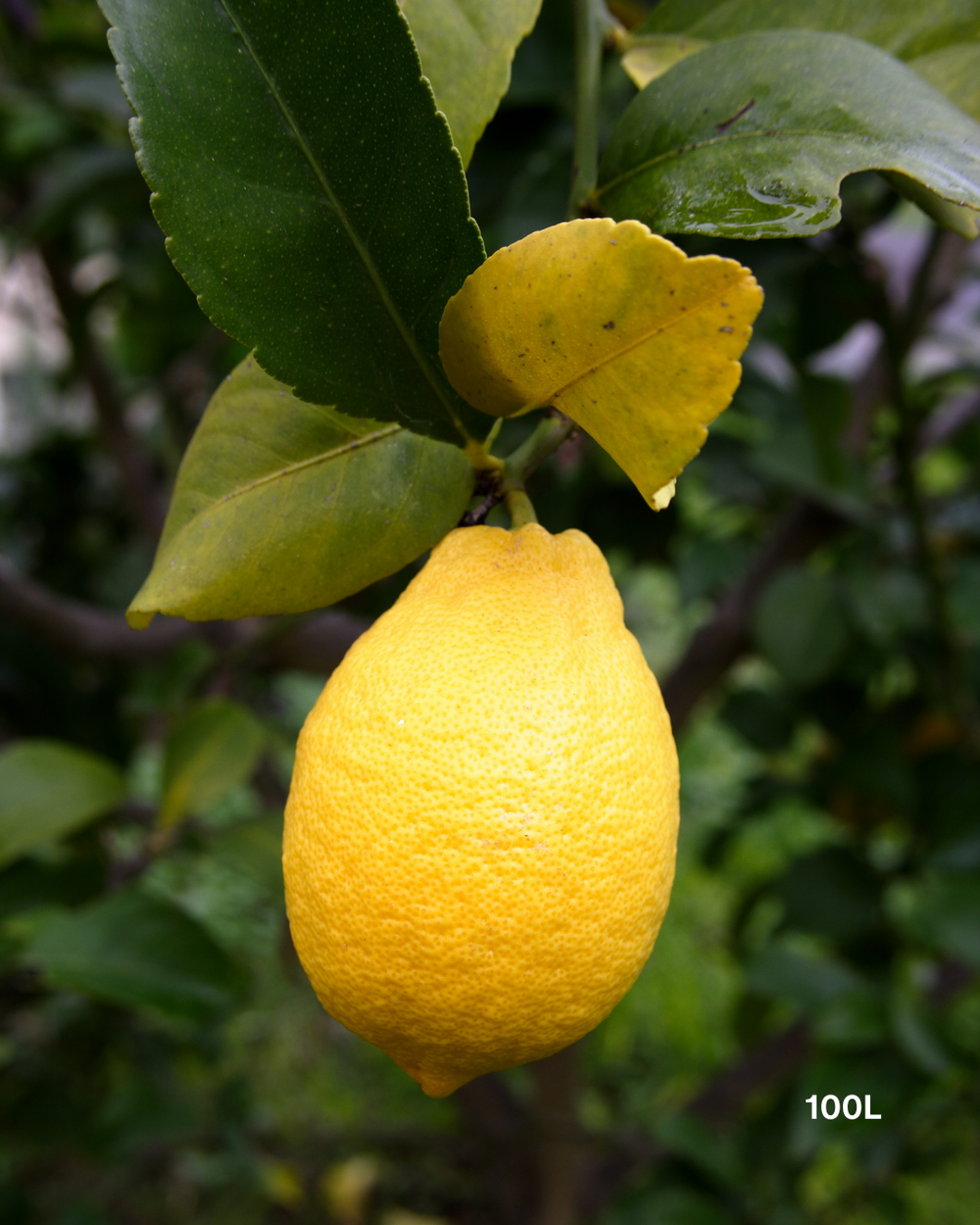
  • FruitLisbon lemons are thick-skinned and juicy. Eureka lemons are large and thin-skinned with high juice content.
  • SizeLisbon grows 3 to 6 metres tall and 3 to 4.5 metres wide, and is easily held at 2 metres with annual pruning. Eureka grows 3 to 5 metres tall and 2 to 3 metres wide.
  • ColdBoth are frost sensitive. Lisbon is the more cold and heat tolerant of the two. Eureka is more frost sensitive than most lemons.
  • ThornsEureka has few thorns, which makes picking easier.
Lemon tree types: Lisbon or Eureka

The eight citrus trees, with photos and sizes

Compare sizes
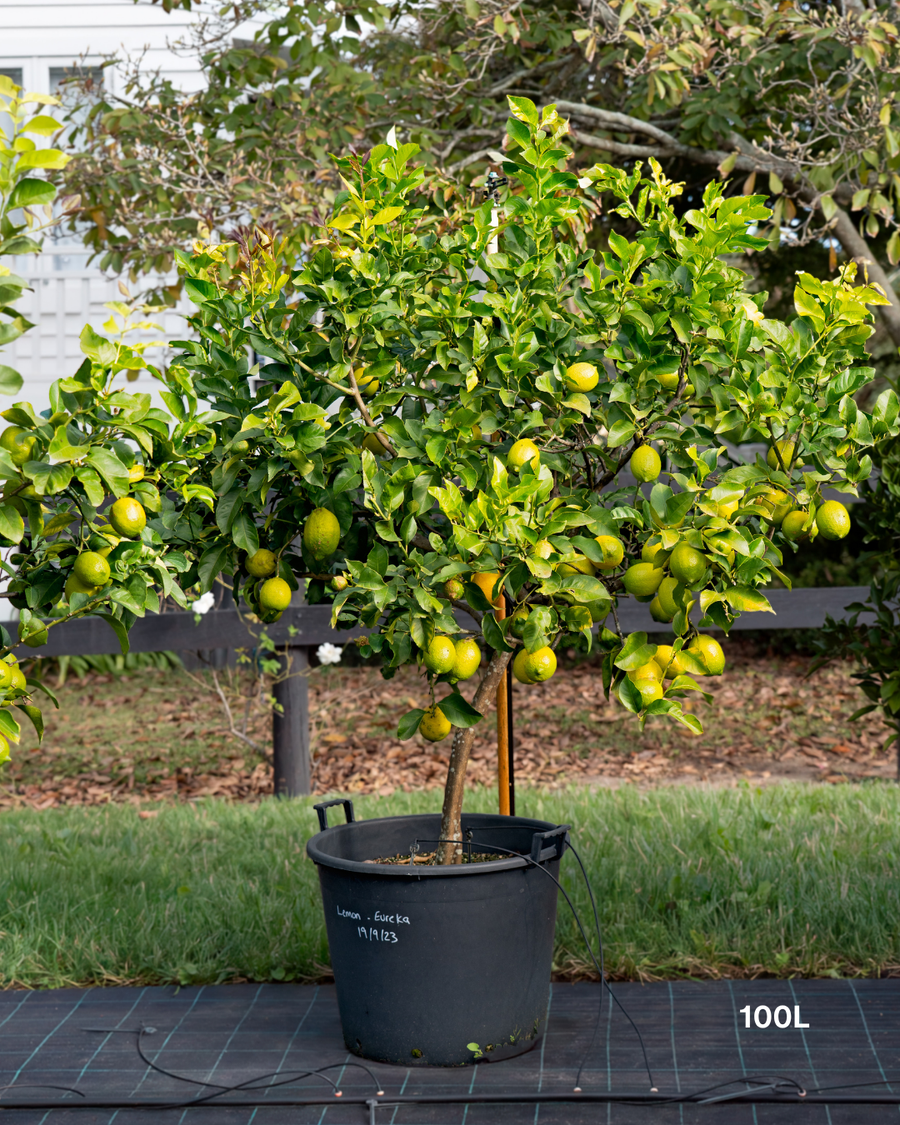
Citrus limon 'Lisbon'

The heavy cropping lemon

Citrus limon 'Lisbon'

Lisbon Lemon

Heavy crops of thick-skinned, juicy lemons with a main flush in winter and scattered fruit for much of the rest of the year. It grows 40 to 60 cm a year and is easily held at 2 m with annual pruning.

Mature size
3 to 6 m x 3 to 4.5 m
Fruit
Thick-skinned juicy lemons, main crop in winter
Best for
Edible gardens, pots, feature tree
View product →
Compare sizes
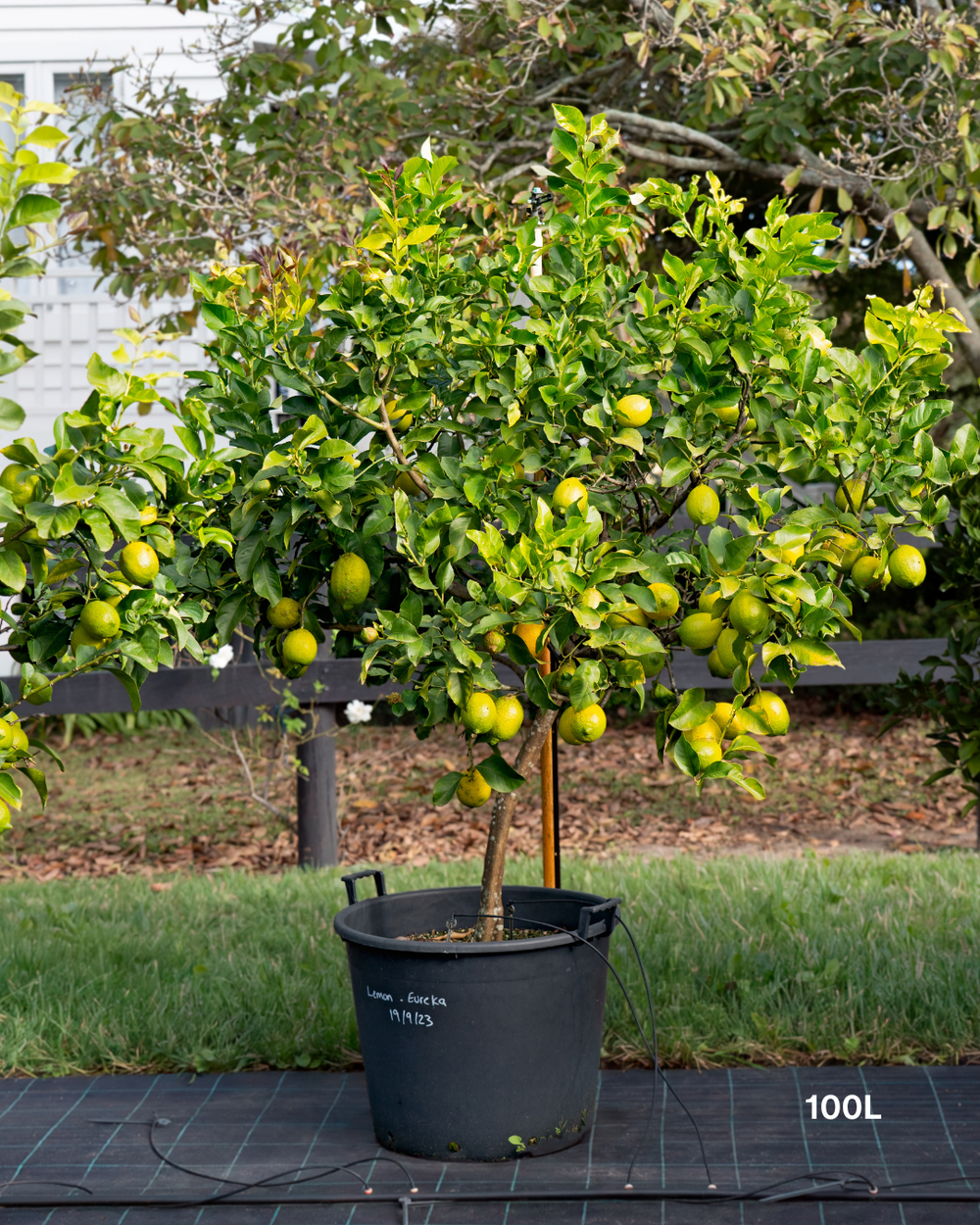
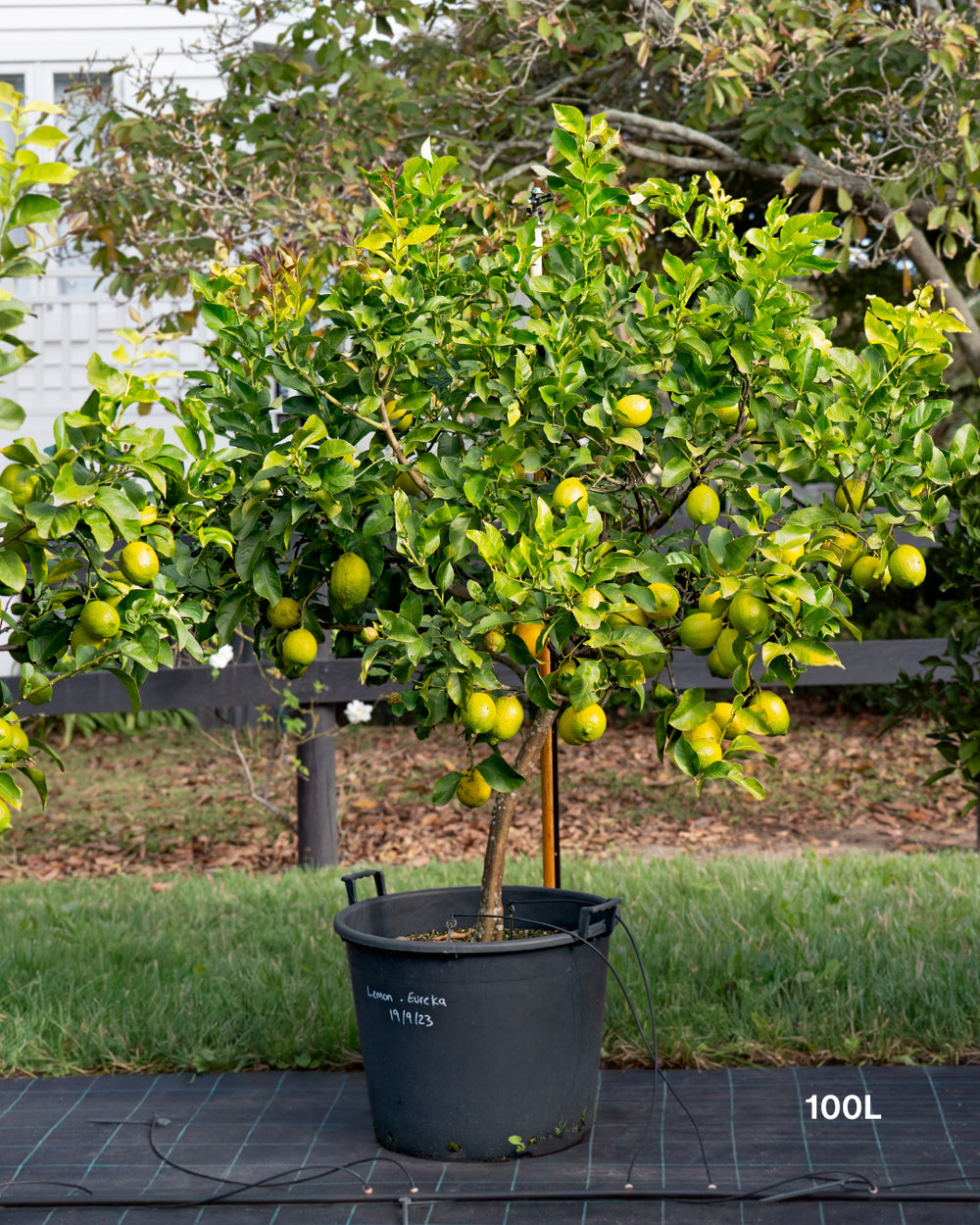
Citrus limon 'Eureka'Citrus limon 'Eureka'

The lemon for fruit most of the year

Citrus limon 'Eureka'

Eureka Lemon

Flowers and fruits over most of the year on a rounded tree with few thorns, so there is usually fruit to pick. It grows 30 to 50 cm a year and is more frost sensitive than most lemons.

Mature size
3 to 5 m x 2 to 3 m
Fruit
Large, thin-skinned, juicy lemons over most of the year
Best for
Kitchen gardens, courtyards, pots
View product →
Compare sizes
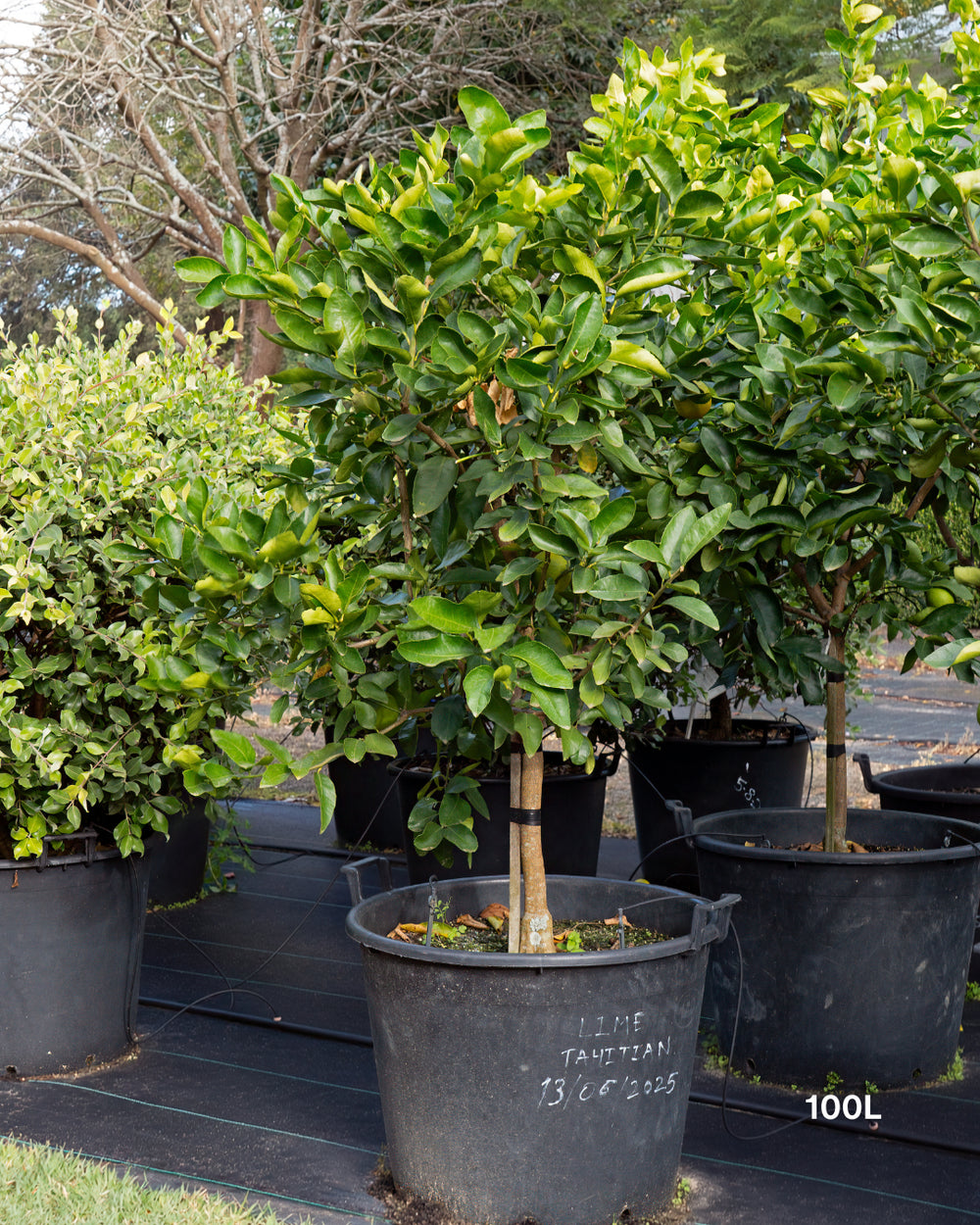
Citrus latifolia 'Tahitian'

The seedless lime

Citrus latifolia 'Tahitian'

Tahitian Lime

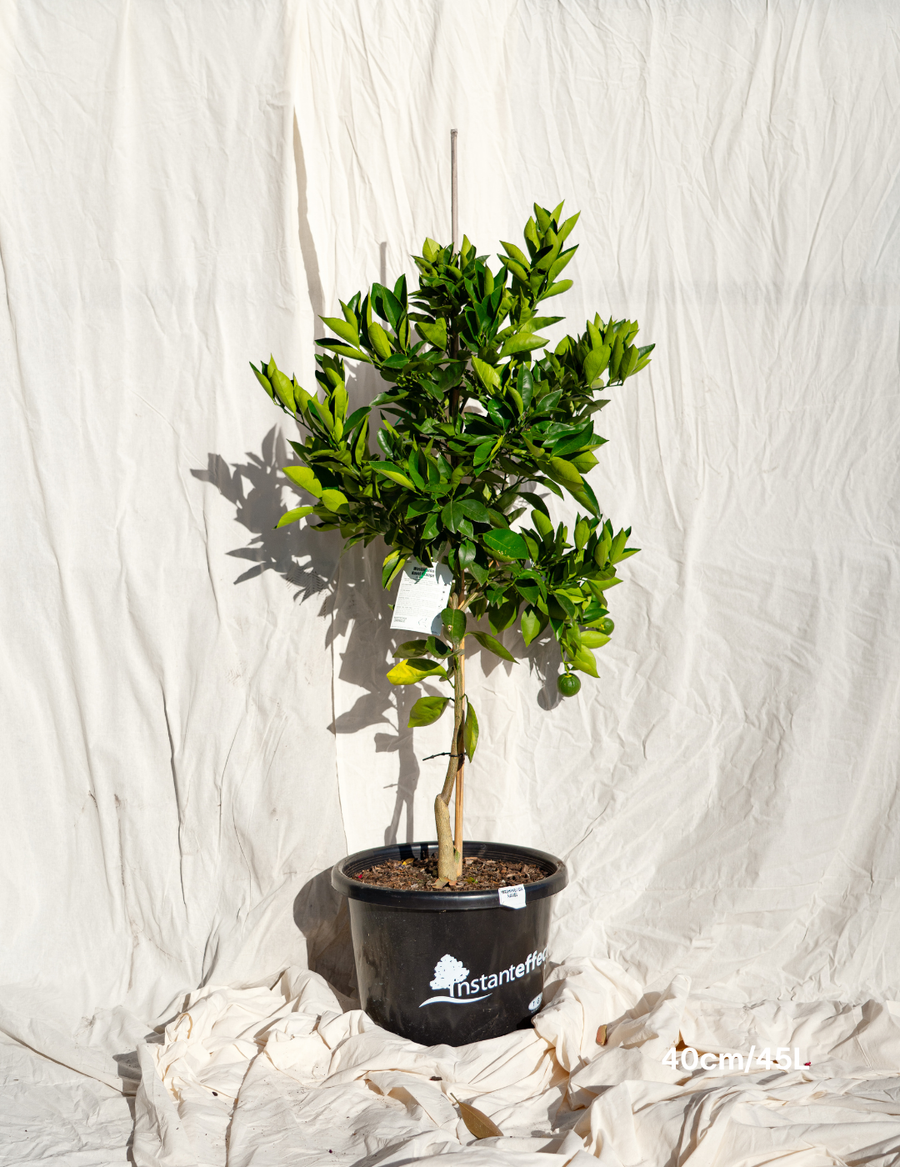
Thornless or near-thornless, with fruit across much of the year instead of one short season. It grows 30 to 70 cm a year and is easily held at 2 m with annual pruning.

Mature size
3 to 5 m x 2 to 4 m
Fruit
Large, juicy, seedless limes across much of the year
Best for
Edible gardens, warm walls, pots in cooler districts

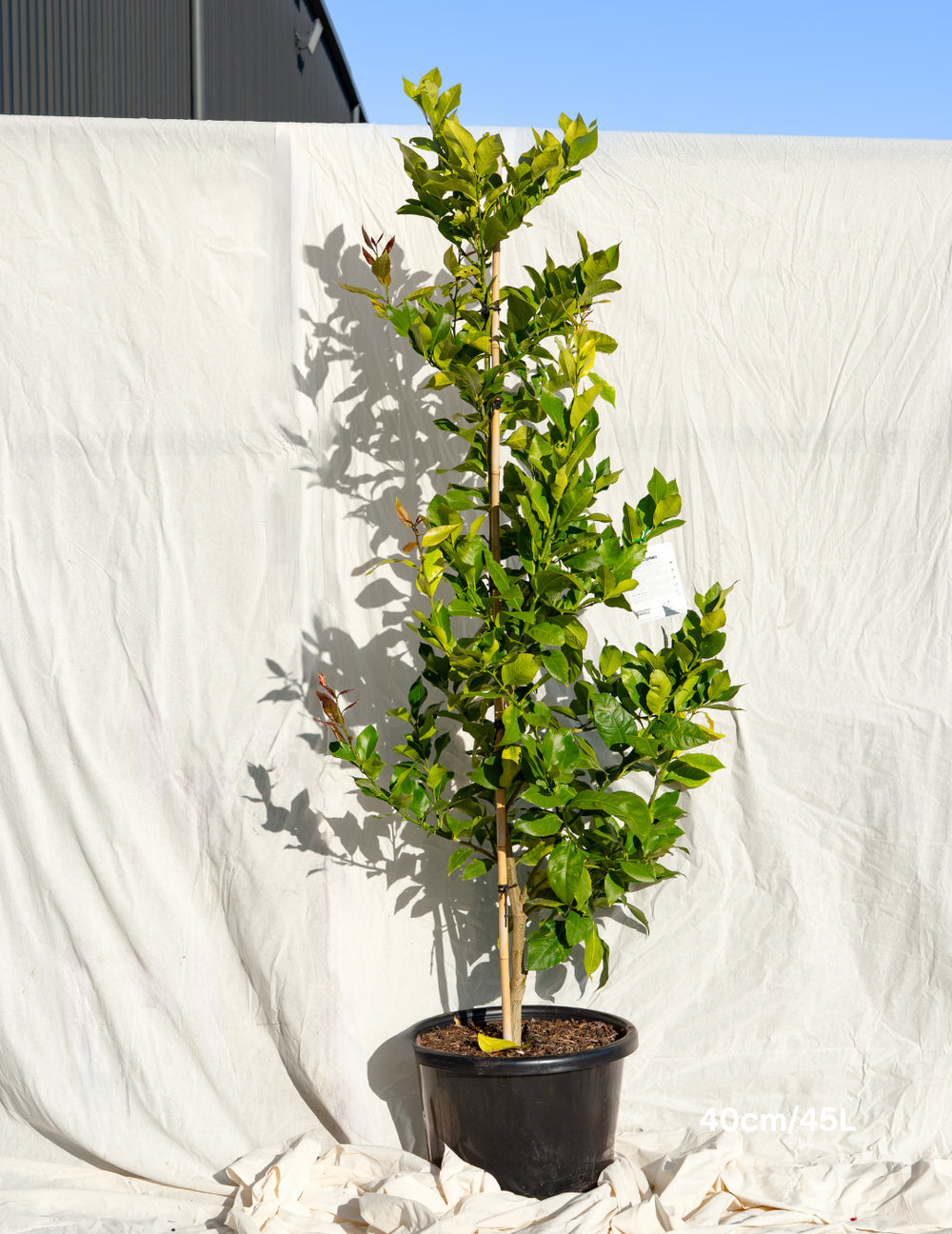
Current height guide

40cm/45L1.2m - 1.5m Approx.
View product →
Compare sizes
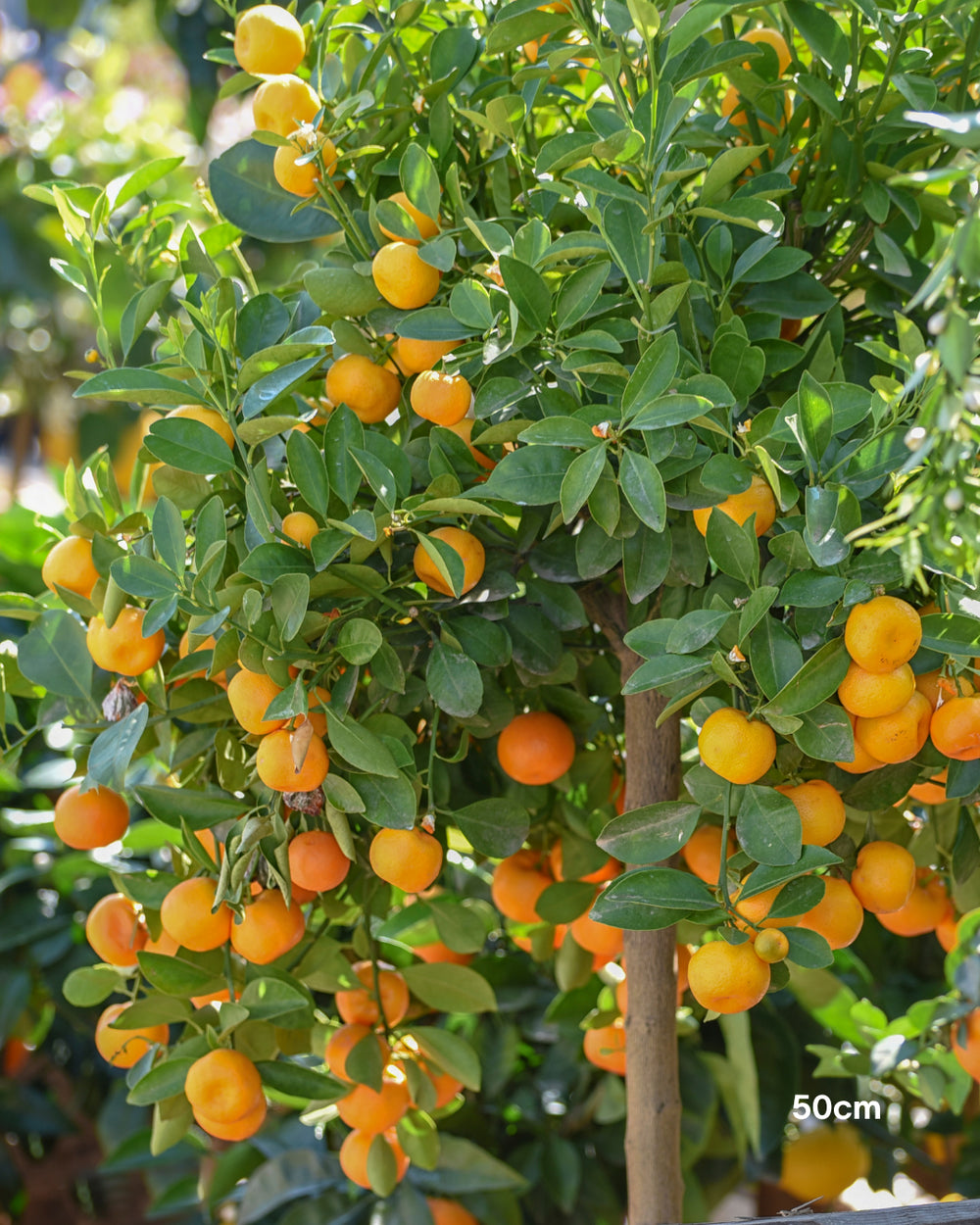
Citrus × microcarpa

The ornamental cumquat

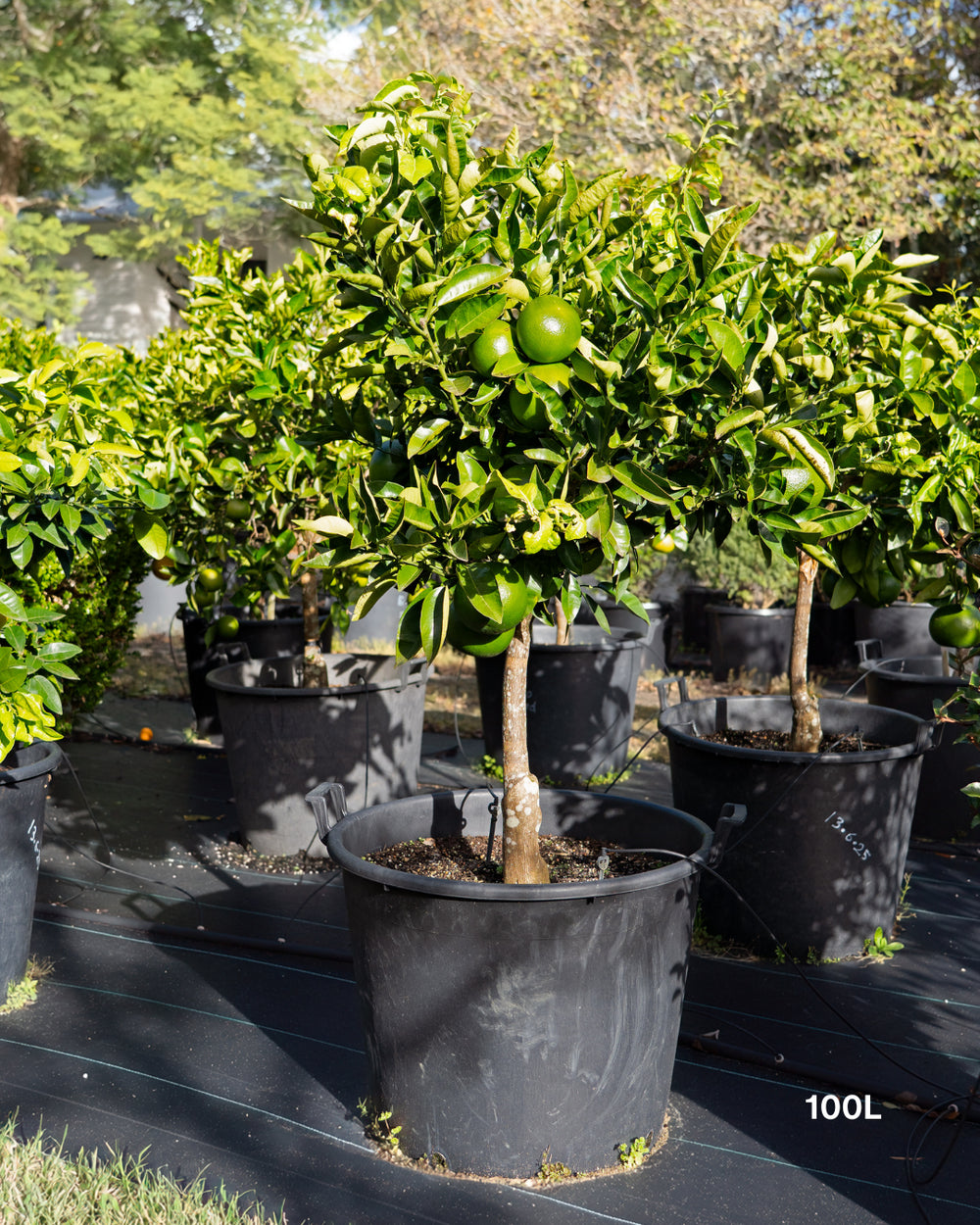
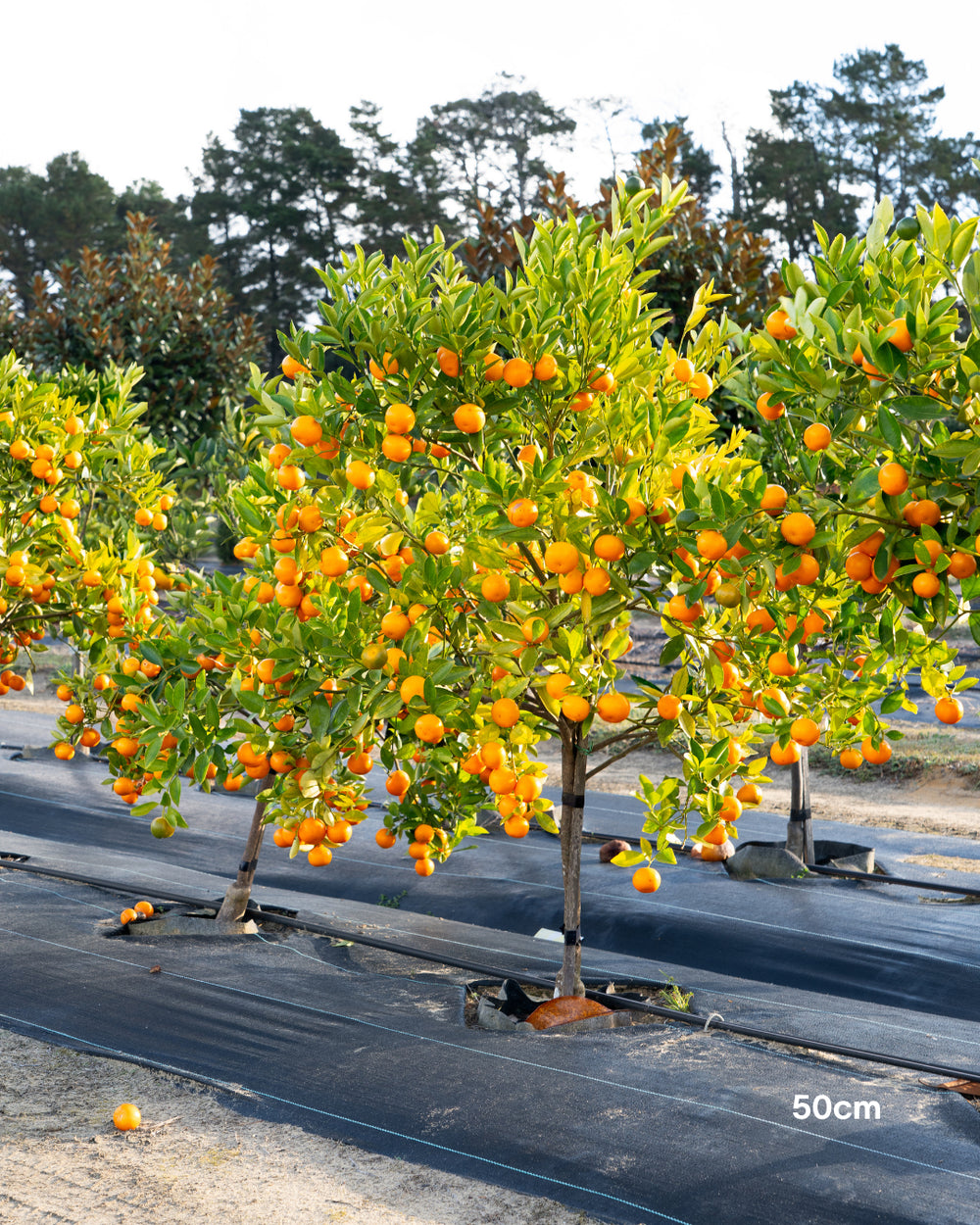
Citrus × microcarpa

Calamondin Cumquat

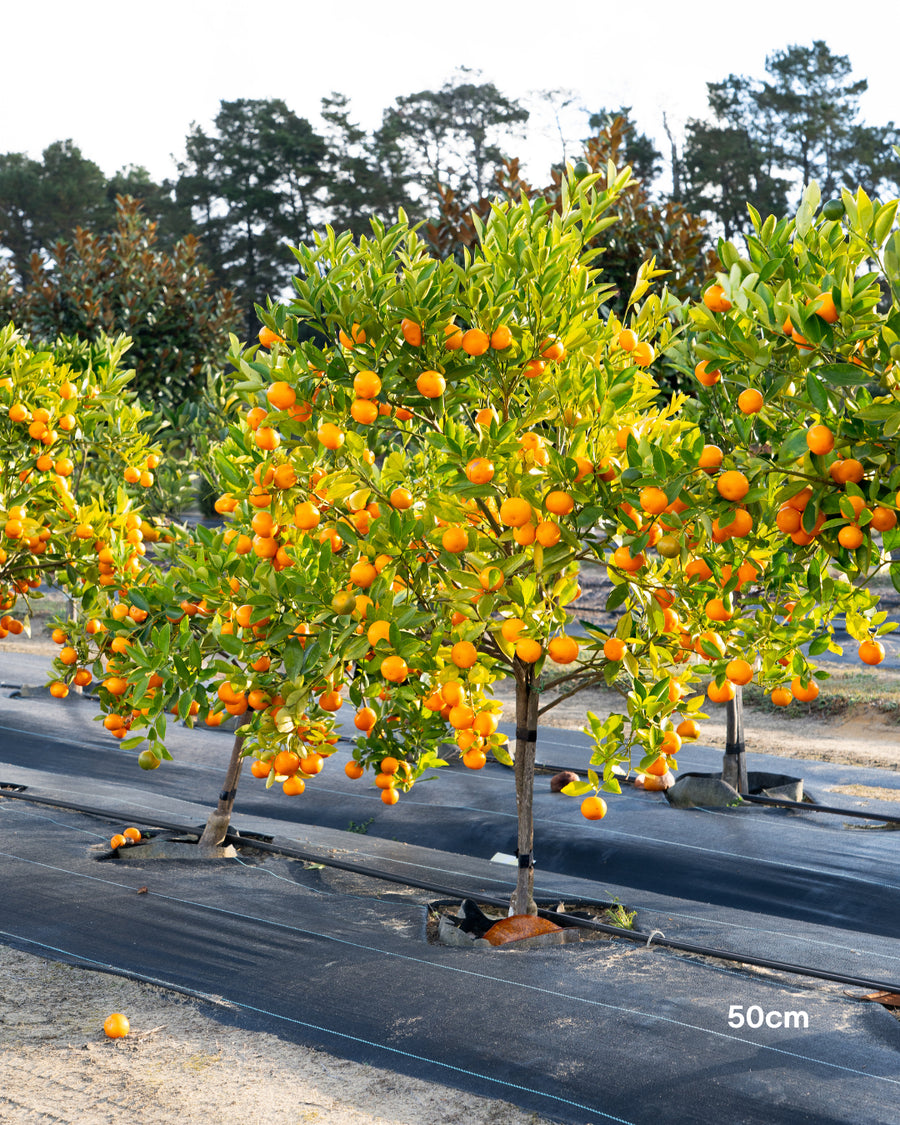
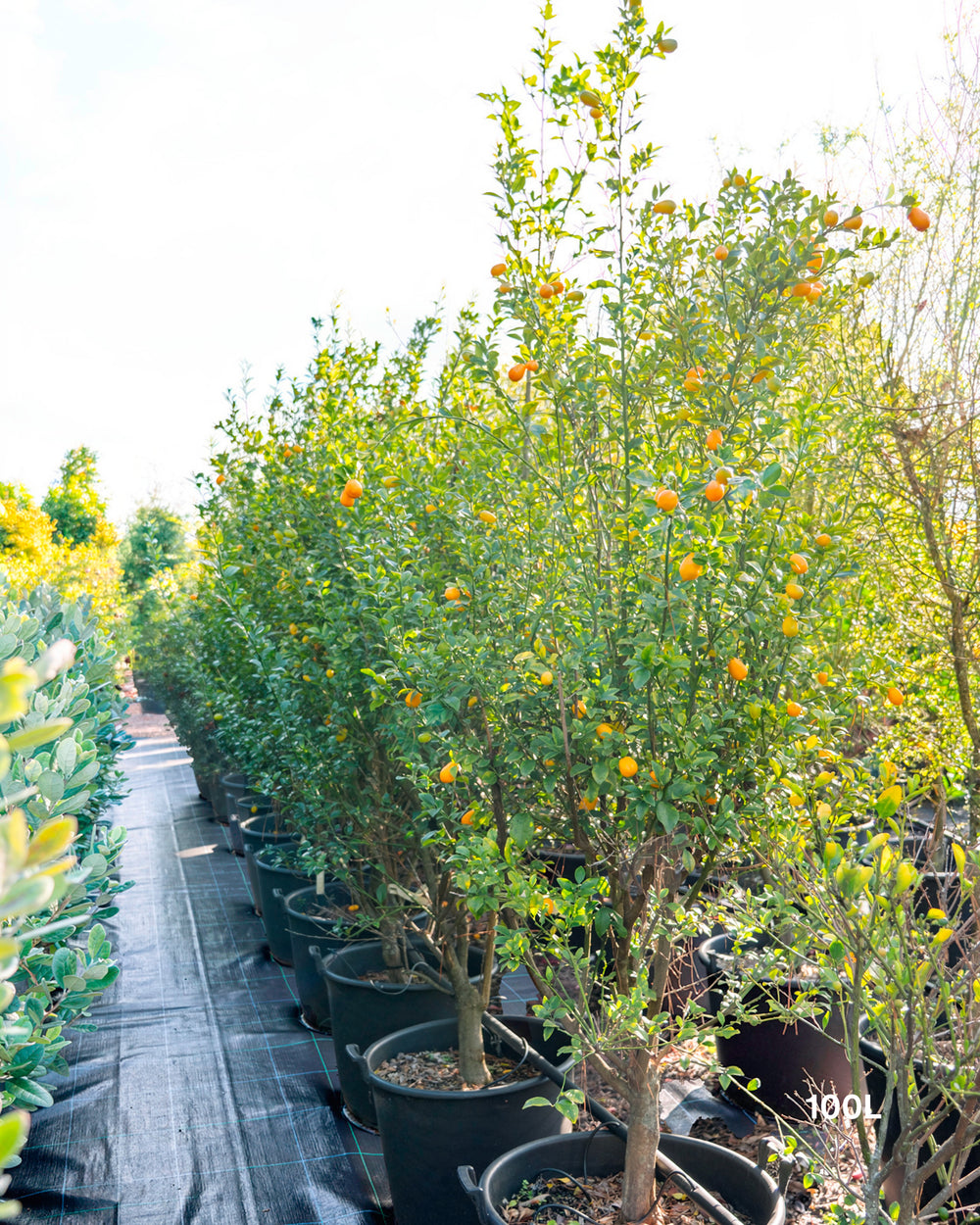
A compact, upright citrus with small glossy leaves, fragrant white flowers and small round orange fruit. It grows 20 to 60 cm a year. The fruit is sour raw and is used for marmalade, cordial and cooking.

Mature size
2 to 4 m x 2 to 3 m
Fruit
Small round orange fruit, sour raw, used for marmalade
Best for
Courtyards, pots along a warm wall, edible gardens

Current height guide

90L/100L2.0m - 2.5m Approx.
View product →
Compare sizes
Citrus japonica 'Nagami'

The cold hardy one

Citrus japonica 'Nagami'

Nagami Kumquat

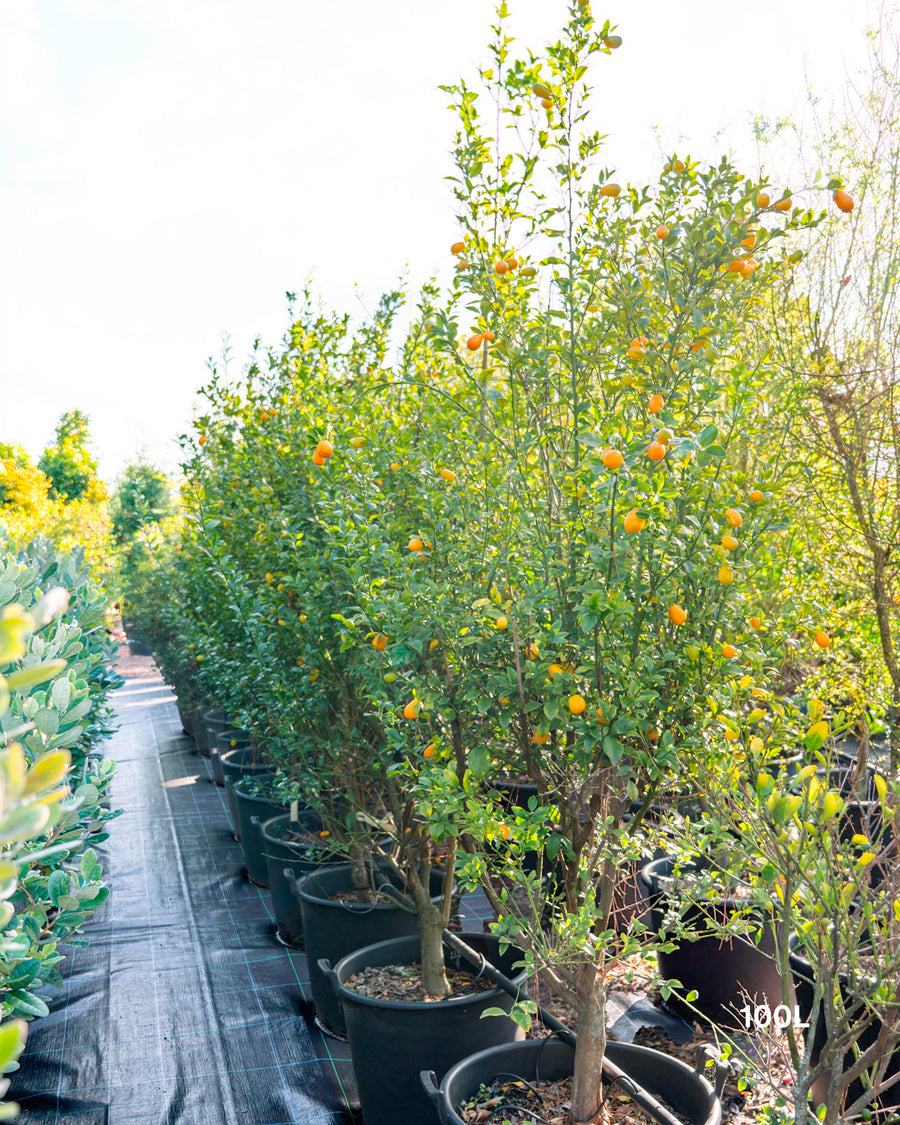
The oval kumquat, on a dense, neatly rounded plant. It is the most cold hardy plant in the citrus group, grows 15 to 30 cm a year and clips into a low edible hedge.

Mature size
2 to 3 m x 1.5 to 2 m
Fruit
Small oval fruit with a sweet rind and tart flesh, eaten whole
Best for
Courtyards, balconies, pots, low edible hedge
View product →
Compare sizes
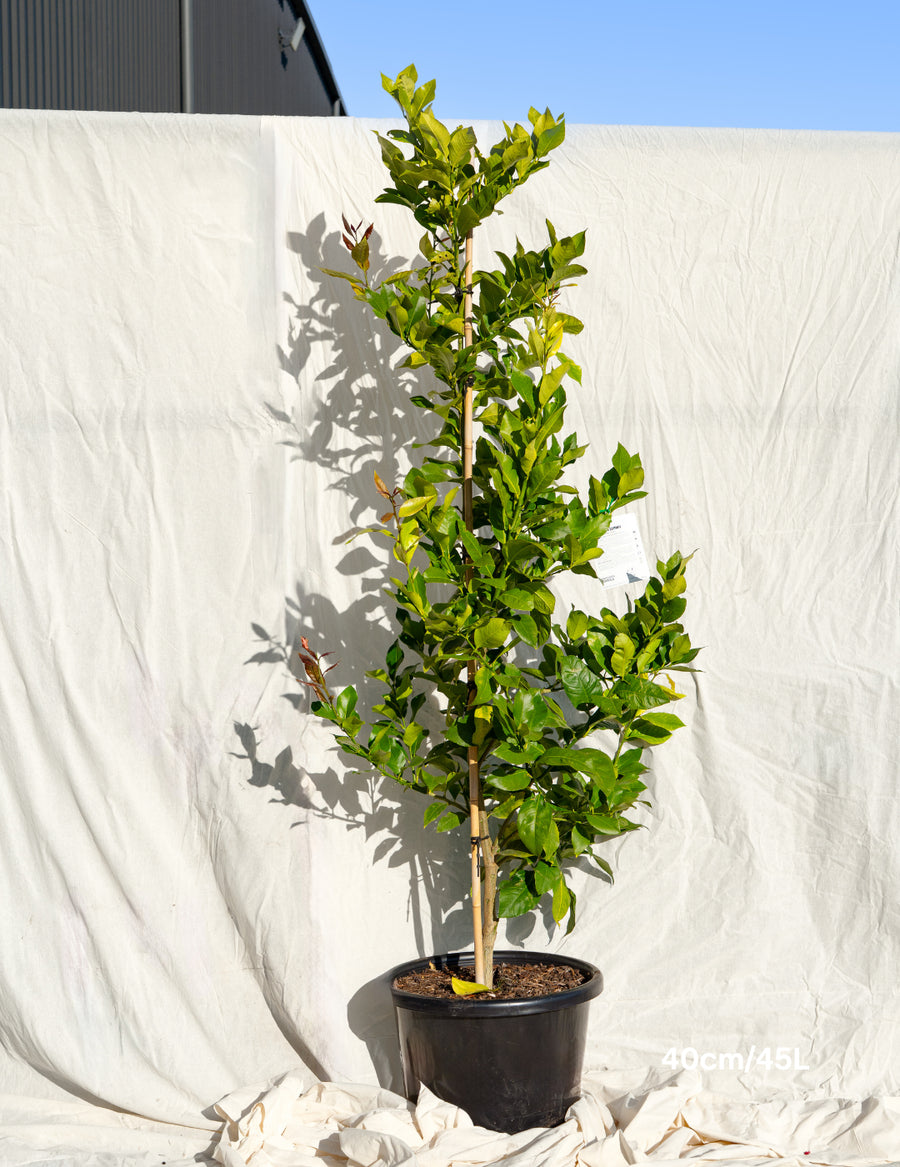
Citrus sinensis 'Washington Navel'

The eating orange

Citrus sinensis 'Washington Navel'

Washington Navel Orange

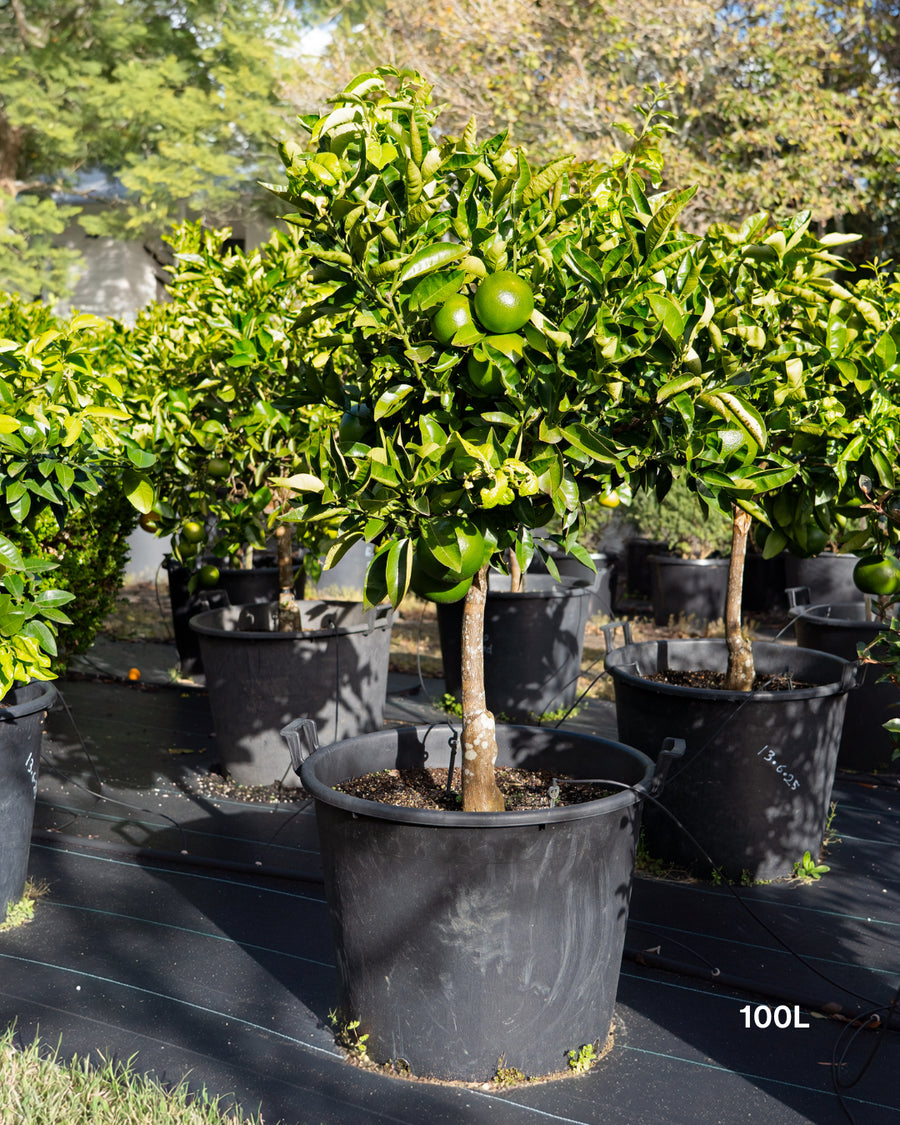
The standard seedless eating orange, with a dense, rounded to slightly upright canopy and fragrant white flowers in spring. It grows 30 to 60 cm a year.

Mature size
3 to 5 m x 3 to 4 m
Fruit
Large, seedless, easy to peel sweet oranges into winter
Best for
Backyard orchards, edible gardens, courtyards, pots

Current height guide

40cm/45L1m - 1.5m Approx.
View product →
Compare sizes
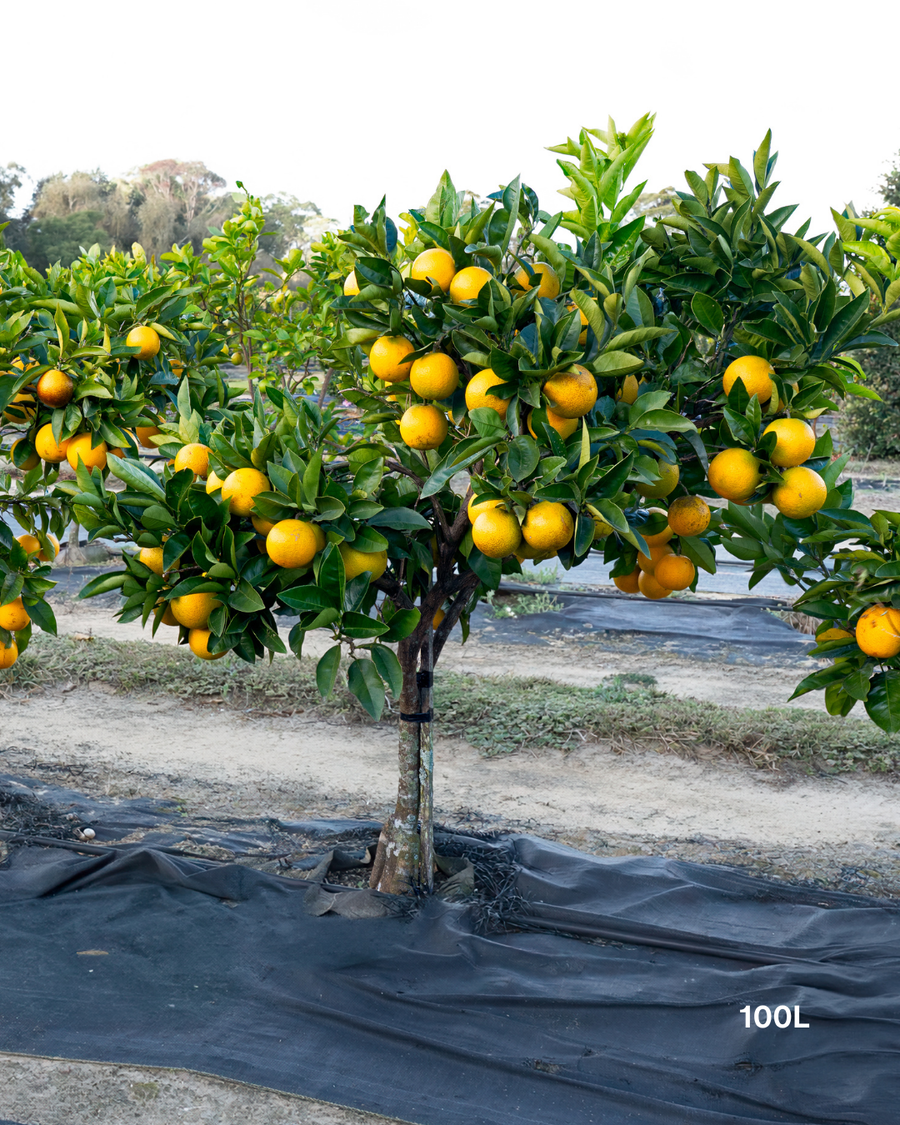
Citrus sinensis 'Valencia'Citrus sinensis 'Valencia'

The juicing orange

Citrus sinensis 'Valencia'

Valencia Orange

The late season juicing orange. Fruit ripens from late spring into summer and holds on the tree for months, so you pick as you need. It grows 30 to 60 cm a year.

Mature size
4 to 6 m x 3 to 4 m
Fruit
Thin-skinned juicy oranges, late spring into summer
Best for
Home orchards, avenue rows, large containers
View product →
Compare sizes
Citrus sinensis 'Blood Orange'Citrus sinensis 'Blood Orange'

The red-fleshed orange

Citrus sinensis 'Blood Orange'

Blood Orange

An orange with red to deep burgundy flesh and berry notes in the flavour. Cool nights during ripening bring out the red pigment. It grows 30 to 60 cm a year.

Mature size
3 to 5 m x 3 to 4 m
Fruit
Oranges with red to deep burgundy flesh
Best for
Home orchards, courtyards, large containers
View product →

Compare the eight citrus trees at a glance

Swipe sideways to see every column

VarietyTypeMature size (H x W)FruitBest for
Lisbon Lemon The heavy cropping lemon3 to 6 m x 3 to 4.5 mThick-skinned juicy lemons, main crop in winterEdible gardens, pots, feature tree
Eureka Lemon The lemon for fruit most of the year3 to 5 m x 2 to 3 mLarge, thin-skinned, juicy lemons over most of the yearKitchen gardens, courtyards, pots
Tahitian Lime The seedless lime3 to 5 m x 2 to 4 mLarge, juicy, seedless limes across much of the yearEdible gardens, warm walls, pots in cooler districts
Calamondin Cumquat The ornamental cumquat2 to 4 m x 2 to 3 mSmall round orange fruit, sour raw, used for marmaladeCourtyards, pots along a warm wall, edible gardens
Nagami Kumquat The cold hardy one2 to 3 m x 1.5 to 2 mSmall oval fruit with a sweet rind and tart flesh, eaten wholeCourtyards, balconies, pots, low edible hedge
Washington Navel Orange The eating orange3 to 5 m x 3 to 4 mLarge, seedless, easy to peel sweet oranges into winterBackyard orchards, edible gardens, courtyards, pots
Valencia Orange The juicing orange4 to 6 m x 3 to 4 mThin-skinned juicy oranges, late spring into summerHome orchards, avenue rows, large containers
Blood Orange The red-fleshed orange3 to 5 m x 3 to 4 mOranges with red to deep burgundy fleshHome orchards, courtyards, large containers

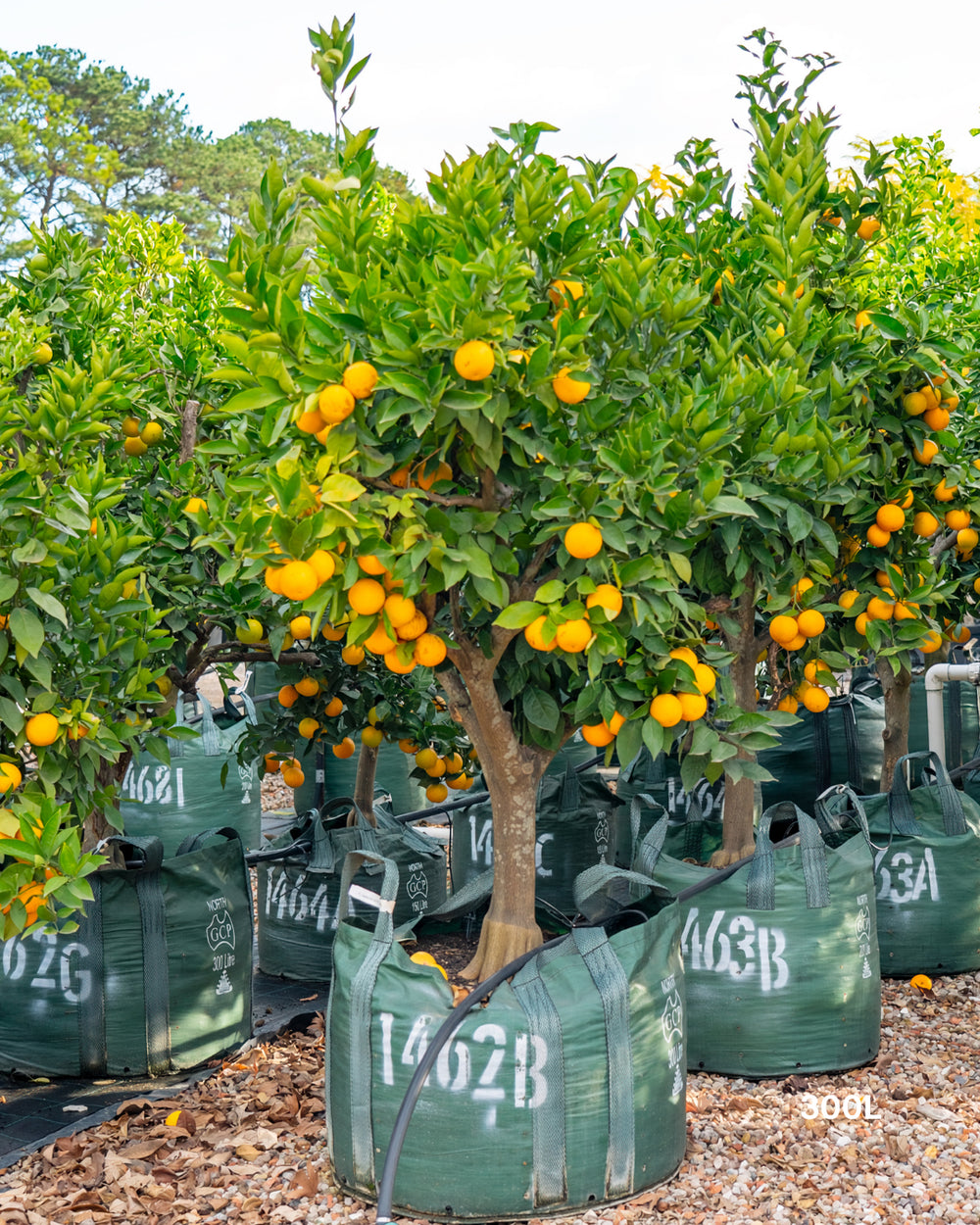
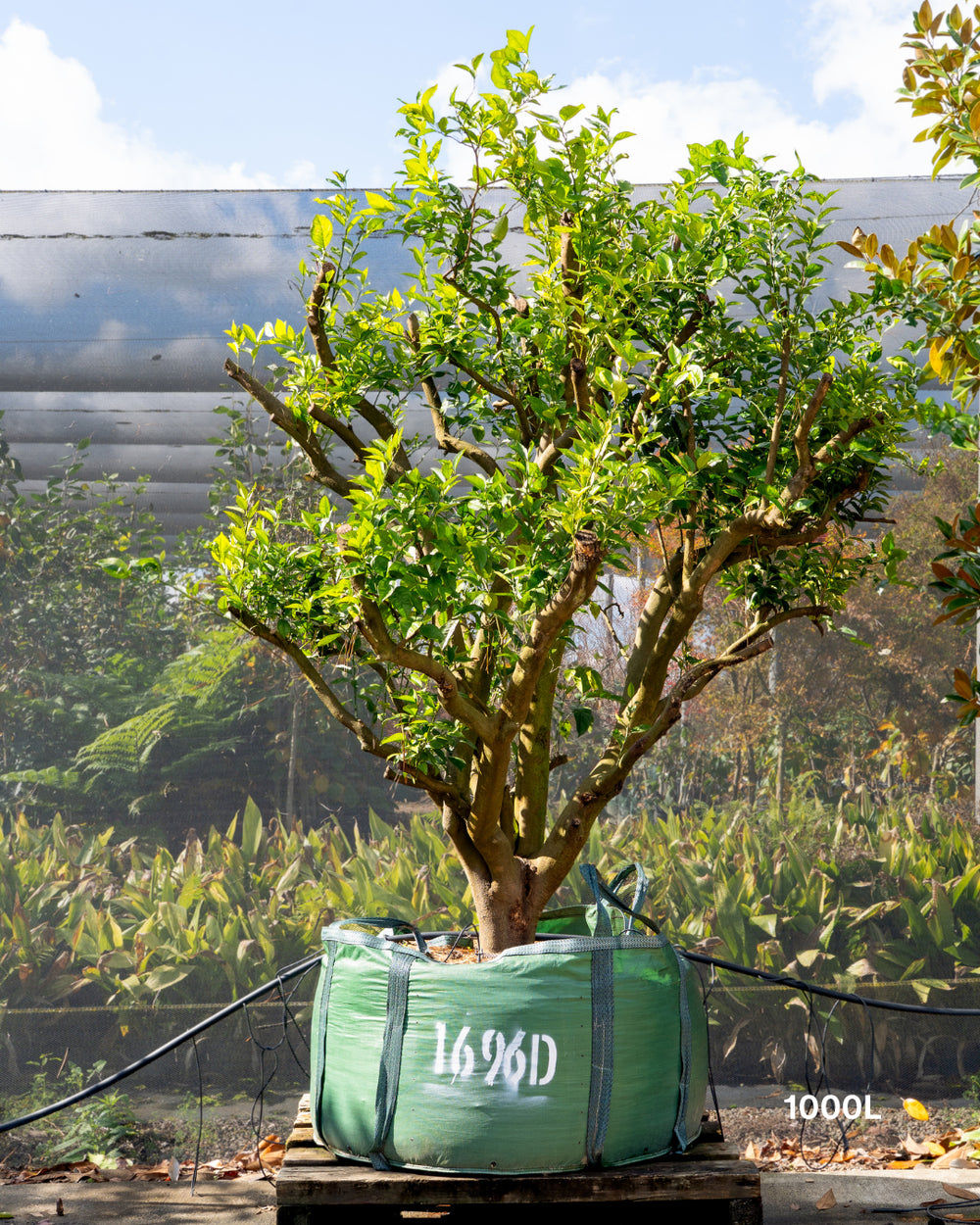
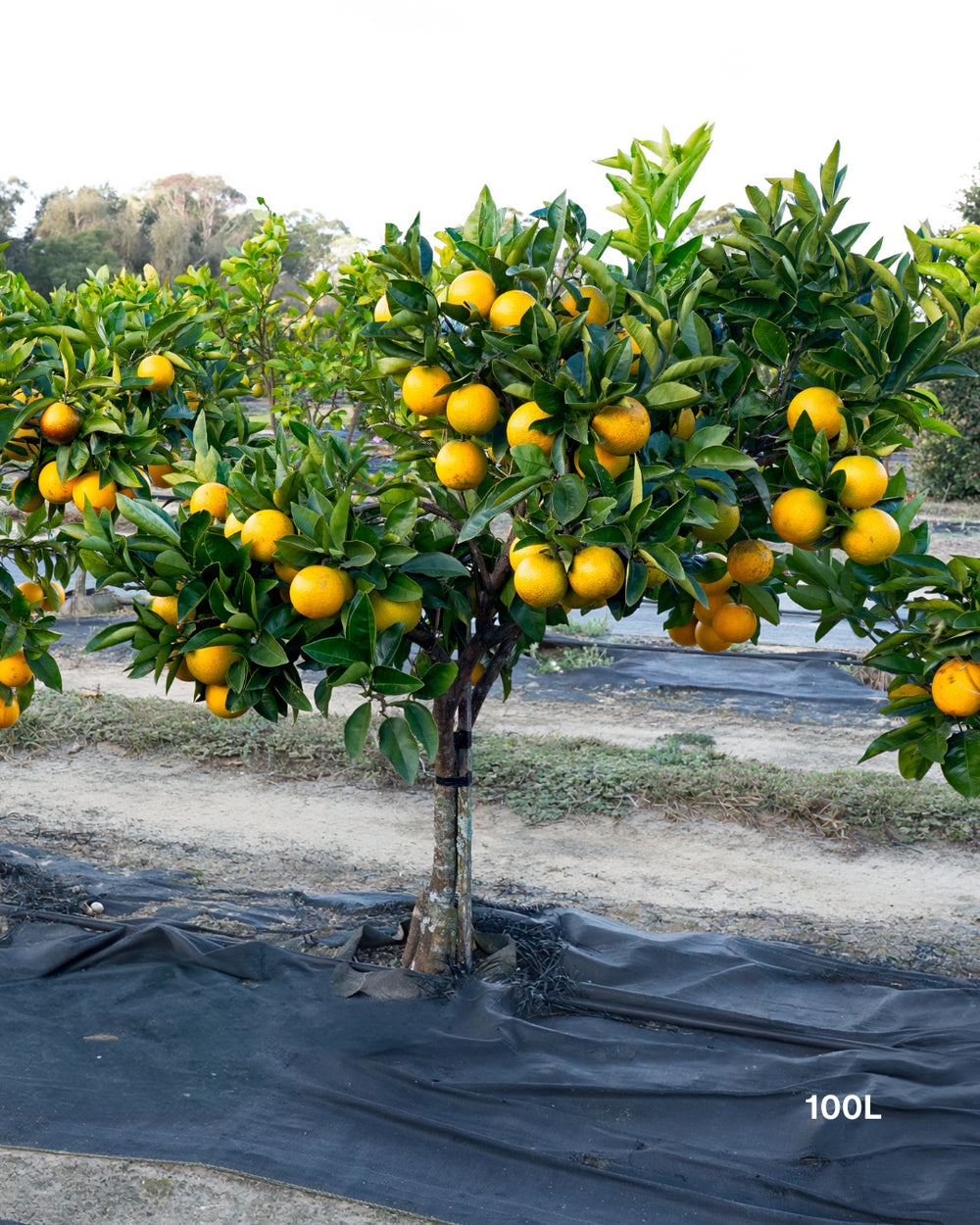
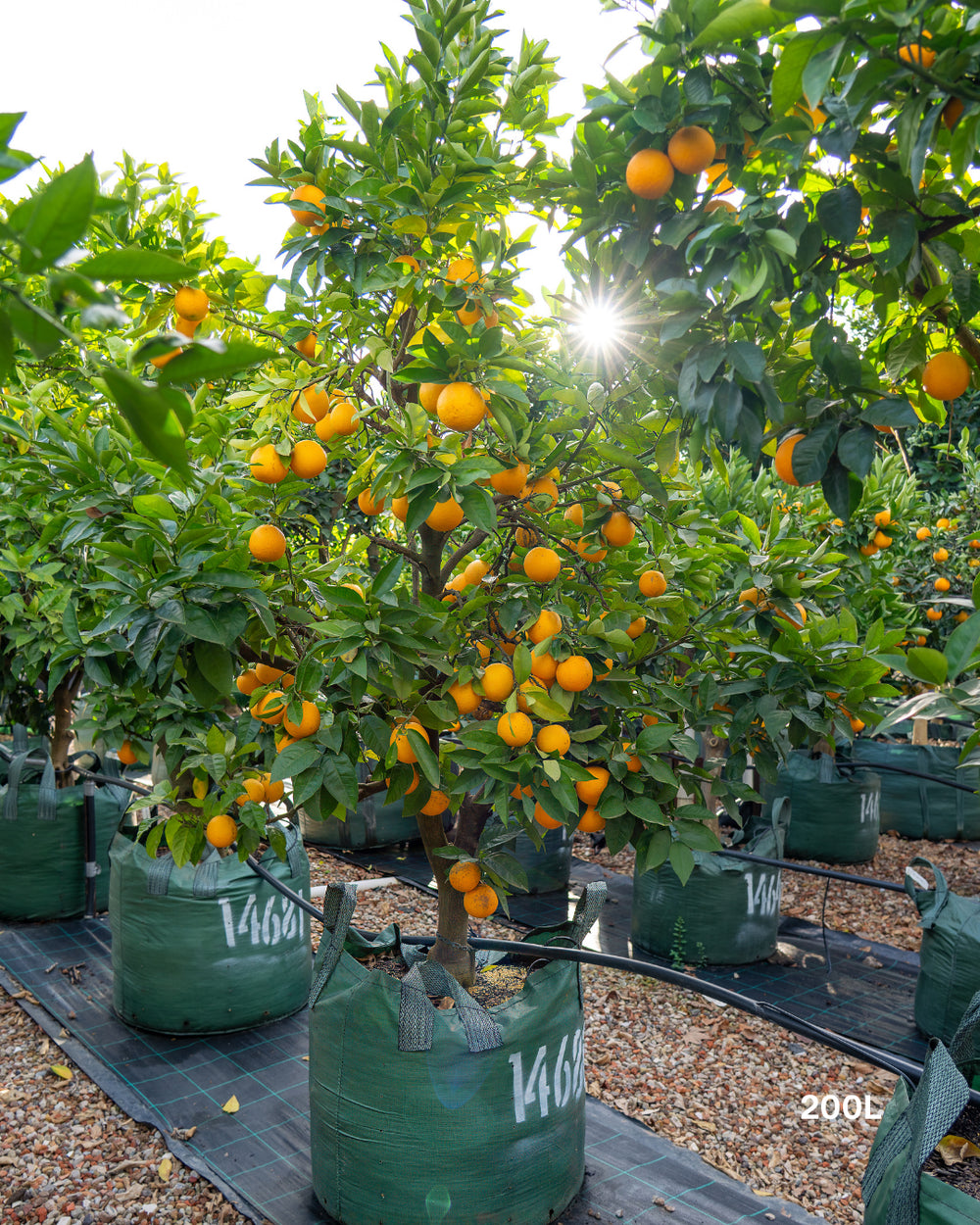
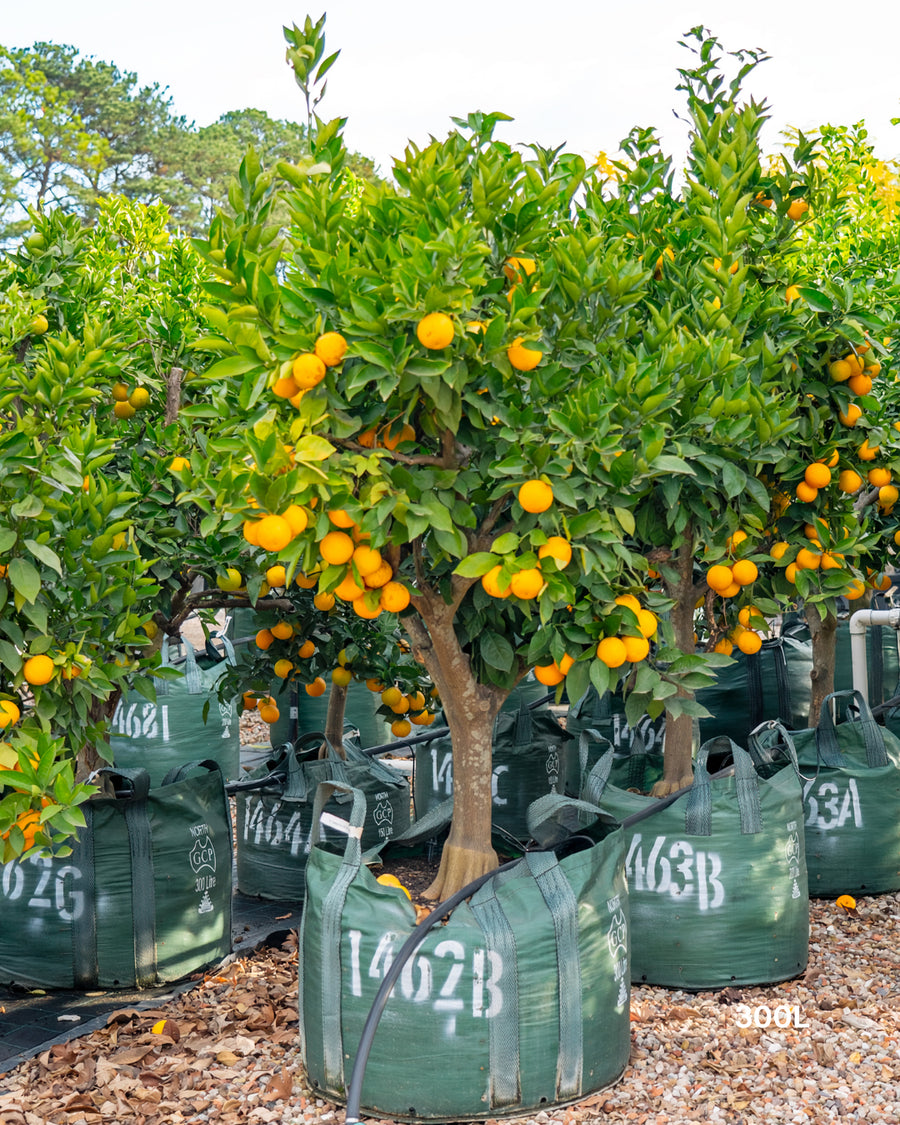
Lime, cumquat and orange trees compared

Lime, cumquat and orange trees compared

How big do citrus trees grow, and how fast?

  • LargestLisbon Lemon grows 3 to 6 metres tall and 3 to 4.5 metres wide. Valencia Orange grows 4 to 6 metres tall and 3 to 4 metres wide.
  • Mid-sizedWashington Navel and Blood Orange each grow 3 to 5 metres tall and 3 to 4 metres wide. Tahitian Lime grows 3 to 5 metres tall and 2 to 4 metres wide. Eureka Lemon grows 3 to 5 metres tall and 2 to 3 metres wide.
  • SmallestNagami Kumquat grows 2 to 3 metres tall and 1.5 to 2 metres wide. Calamondin Cumquat grows 2 to 4 metres tall and 2 to 3 metres wide.
  • Growth rateTahitian Lime grows 30 to 70 centimetres a year, Lisbon Lemon 40 to 60 centimetres, the three oranges 30 to 60 centimetres, Calamondin Cumquat 20 to 60 centimetres, Eureka Lemon 30 to 50 centimetres and Nagami Kumquat 15 to 30 centimetres.
  • Held smallerLisbon Lemon and Tahitian Lime are each easily held at 2 metres with annual pruning, which keeps fruit within reach.
How big do citrus trees grow, and how fast?

When do citrus trees fruit?

  • Most of the yearEureka Lemon fruits over most of the year. Tahitian Lime crops across much of the year. Lisbon Lemon has its main crop in winter with scattered fruit at other times.
  • Late autumn into winterNagami Kumquat colours from late autumn into winter and holds on the plant for weeks. Washington Navel oranges develop through the warmer months into winter.
  • Late spring into summerValencia Orange ripens late and holds on the tree for months, so it follows the winter oranges.
  • ColourBlood Orange needs cool nights during ripening to bring out the red pigment.
When do citrus trees fruit?

Which citrus trees grow in pots?

  • All eightEach of the eight can be grown in a pot or large container. Potted trees stay well below their in-ground size.
  • Small spacesNagami Kumquat stays in scale with a courtyard, a balcony or a pair of pots either side of a door. Calamondin Cumquat suits a run of pots along a warm wall.
  • Cold districtsGrow Lisbon Lemon or Tahitian Lime in a pot that can be moved to shelter over winter.
  • Pot and mixFor Valencia Orange, use a free-draining container at least 60 centimetres wide. Use a quality citrus or potting mix, not garden soil.
  • WaterPots dry far quicker than open ground, so water more often through the warmer months. Never leave a pot standing in a saucer of water.
Which citrus trees grow in pots?

Frost, sun and soil for citrus trees

  • SunFull sun suits all eight.
  • SoilAll eight do best in well-drained loam or sandy loam with a slightly acidic to neutral pH. Avoid heavy clay and waterlogged ground.
  • Frost sensitiveLisbon Lemon, Eureka Lemon and Tahitian Lime are frost sensitive. In cold districts, plant Lisbon or Tahitian against a north-facing wall.
  • Light to moderate frostThe two cumquats and the three oranges tolerate light to moderate frost once established. Young trees need protection: a young Valencia needs frost protection through its first two winters.
  • Most cold hardyNagami Kumquat is the most cold hardy plant in the citrus group.
  • Dry periodsMost of the eight have moderate drought tolerance once established. Nagami Kumquat takes short dry spells but is not drought hardy. For all eight, fruit size and quality depend on steady moisture.

How to plant and care for a lemon tree and other citrus

  1. Pick the positionChoose a well-drained spot in full sun, sheltered from strong wind, with room for the canopy to develop.
  2. Dig and plantDig the hole twice as wide as the root ball and the same depth. Set the tree level with the surrounding soil, backfill, firm in and water deeply.
  3. WaterWater deeply twice a week through the first 12 months. After that, water once a week in dry periods.
  4. MulchApply 5 to 7 centimetres of organic mulch over the root zone and keep it 5 centimetres clear of the trunk.
  5. FeedCitrus want regular feeding through the growing season. For orange trees, use a citrus fertiliser in early spring and again in late summer.
  6. PrunePrune lightly after harvest to hold the size you want, and remove any growth from below the graft union.

Planting an edible garden? Browse all fruit trees or read the benefits of planting a fruit tree.

Frequently asked questions

Which lemon tree is best for a home garden?
Lisbon is the most productive lemon for a home garden, with a main crop in winter. Eureka flowers and fruits over most of the year, so there is usually fruit on the tree.
How big does a lemon tree grow?
Lisbon Lemon grows 3 to 6 metres tall and 3 to 4.5 metres wide, and is easily held at 2 metres with annual pruning. Eureka Lemon grows 3 to 5 metres tall and 2 to 3 metres wide.
How fast do citrus trees grow?
Between 15 and 70 centimetres a year. Tahitian Lime grows 30 to 70 centimetres, Lisbon Lemon 40 to 60 centimetres, orange trees 30 to 60 centimetres, Eureka Lemon 30 to 50 centimetres and Nagami Kumquat 15 to 30 centimetres.
Can lemon, lime and orange trees grow in pots?
Yes. All eight citrus trees here can be grown in a pot or large container. Use a free-draining pot and a quality citrus or potting mix, water more often than in the ground, and never leave the pot standing in a saucer of water.
Which citrus trees tolerate frost?
Nagami Kumquat is the most cold hardy. Calamondin Cumquat, Washington Navel, Valencia and Blood Orange tolerate light to moderate frost once established. Lisbon Lemon, Eureka Lemon and Tahitian Lime are frost sensitive.
What is the difference between a navel orange and a Valencia orange?
Washington Navel is a seedless eating orange that is large, sweet and easy to peel. Valencia is the juicing orange. It ripens later, from late spring into summer, is thinner skinned and juicier, and holds on the tree for months.
What is the difference between a Calamondin cumquat and a Nagami kumquat?
Calamondin has small round orange fruit that is sour raw and used for marmalade, cordial and cooking. Nagami has small oval fruit with a sweet rind and tart flesh, eaten whole, and is the more cold hardy of the two.
When do lemon trees fruit?
Lisbon Lemon has its main crop in winter, with scattered fruit for much of the rest of the year. Eureka Lemon flowers and fruits over most of the year.

The wrap up

Start with the fruit you will use most. Lisbon and Eureka are the two lemon trees, Tahitian is the lime, Washington Navel is the eating orange, Valencia is the juicing orange and Blood Orange is the red-fleshed one. For cold gardens and small pots, look at Nagami Kumquat first.

Not sure which suits your site? Take our tree quiz, or send us a photo of the space and we will point you to the right tree.

Shopping cart (0)

Complete your order

Freight added at checkout, based on your delivery address and order quantities.

Checkout