Skip to content
Melaleuca Trees: 7 Types Compared by Size, Flower and Use

Melaleuca Trees: 7 Types Compared by Size, Flower and Use

Seven melaleuca trees compared by mature size, growth rate, flowers and best use, from the Broad-leaved Paperbark to honey myrtles for hedges and screens.

A melaleuca tree is an evergreen Australian native with bottlebrush or pom pom flowers and, on many types, soft papery bark. The right one depends on the job: a Broad-leaved Paperbark for a large feature or shade tree, Snow in Summer for a flowering feature, Moonah for the coast, and the honey myrtles or 'Revolution Green' for a screen or hedge. This guide compares seven melaleuca trees by mature size, growth rate, flowers and best use.

All seven grow in full sun and tolerate drought once established. They differ most in size, from a 2 metre column to a 25 metre tree, and in how much frost and wet ground they take. Every size on this page comes from the product data, so check the plant card and the product page before you plant.

Ready to shop? Browse the Australian native collection, compare eight types of wattle, read our best Australian native privacy trees, or take the tree quiz if you are not sure which suits your garden.

Last reviewed
24 November 2026
Reading time
6 minutes
Supplier
Evergreen Trees Direct

Types of melaleuca tree: paperbark, honey myrtle, Moonah and tea tree

Types of melaleuca tree: paperbark, honey myrtle, Moonah and tea tree

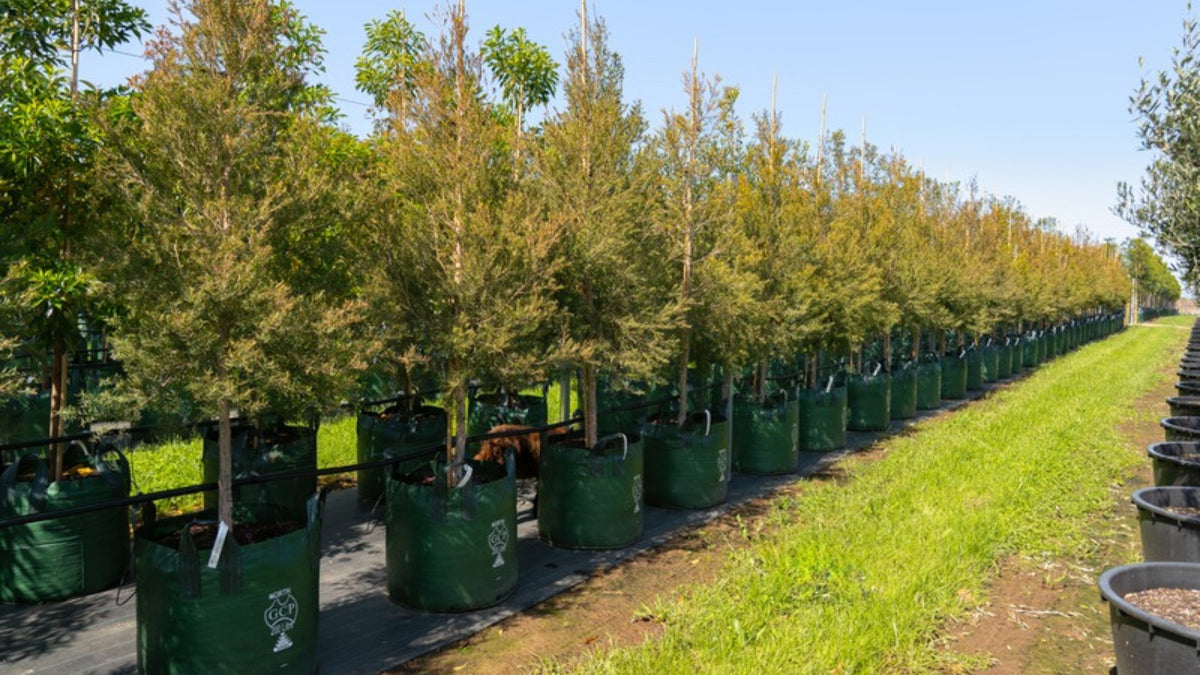
The seven melaleuca trees, with photos and sizes

Compare sizes
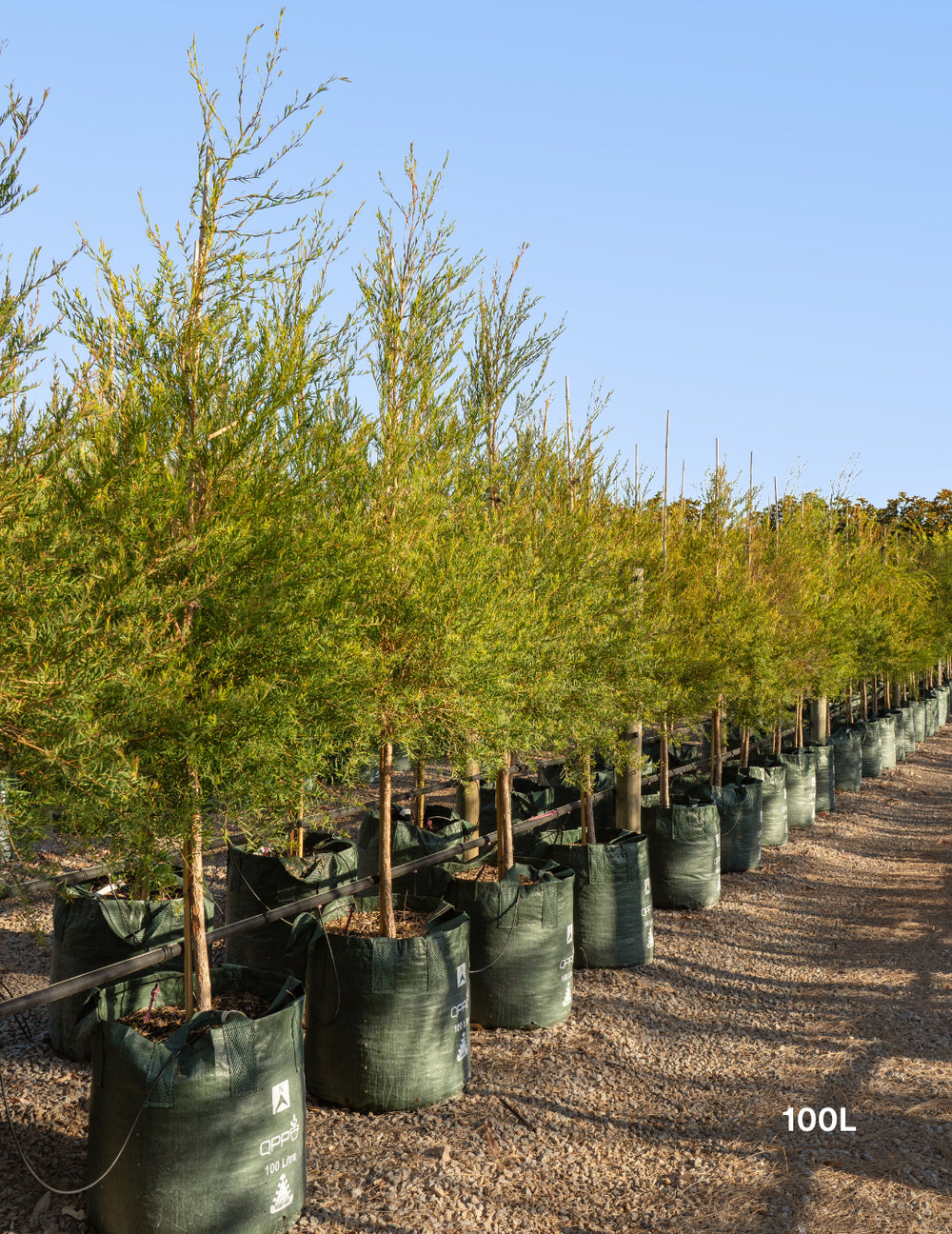
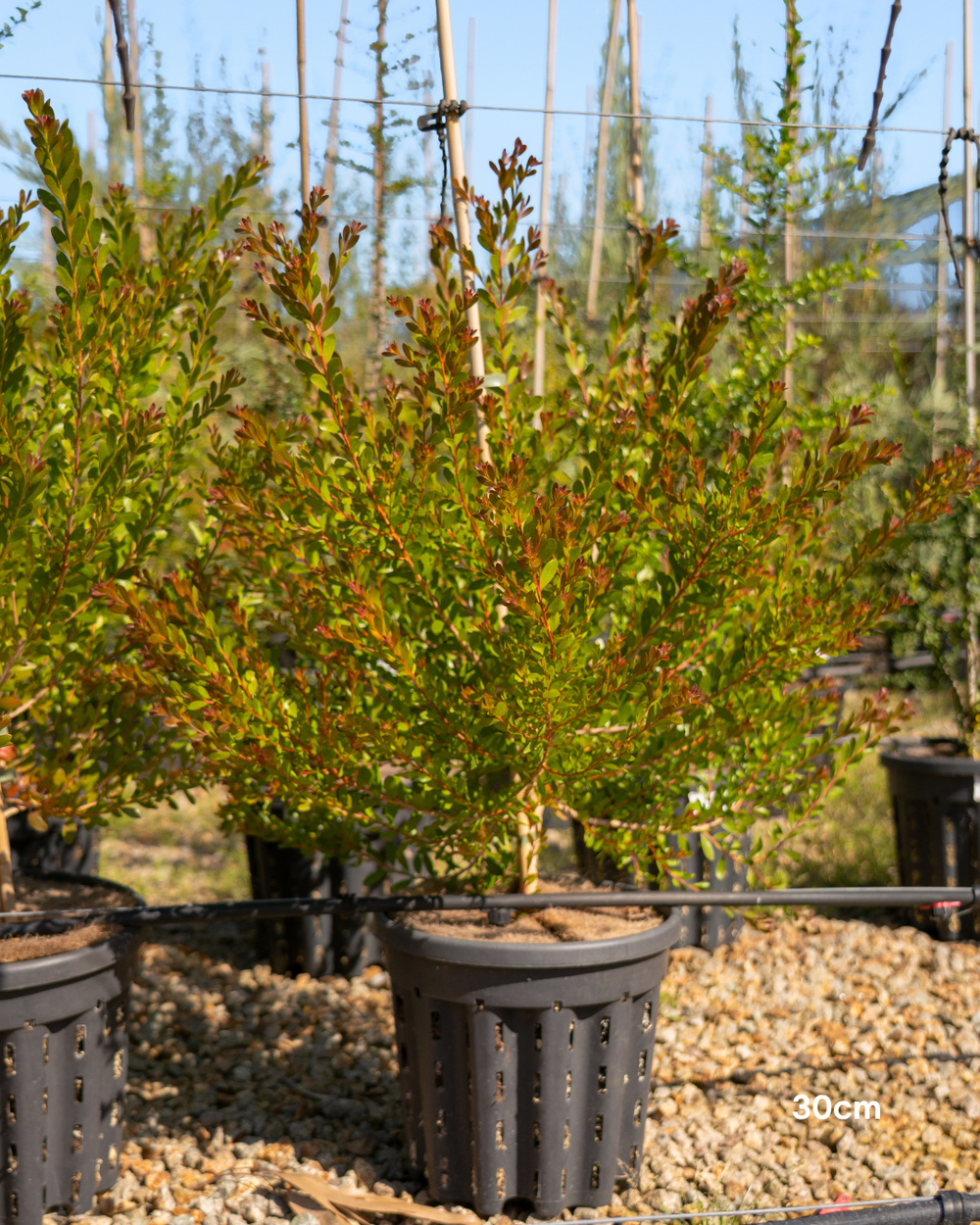
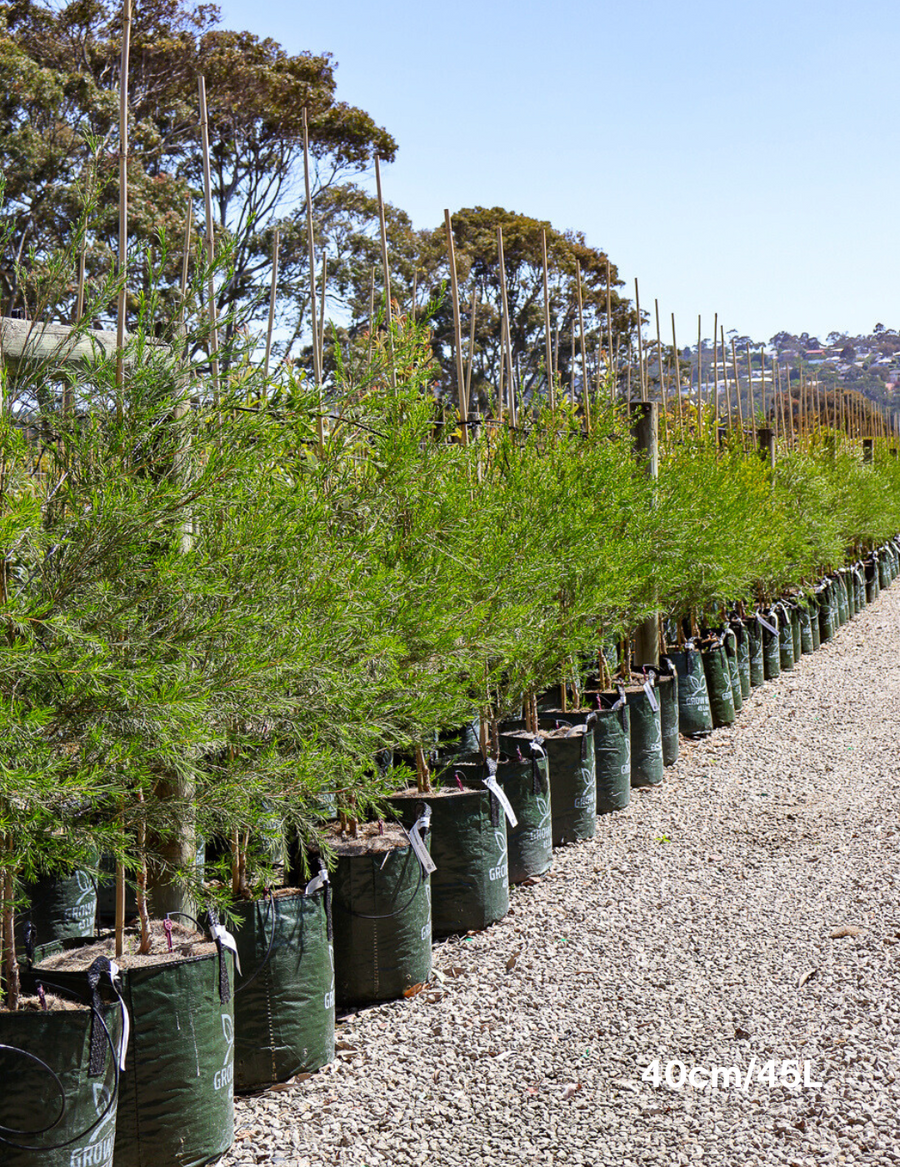
Melaleuca quinquenerviaMelaleuca quinquenerviaMelaleuca quinquenervia

The large paperbark for feature and shade

Melaleuca quinquenervia

Broad-leaved Paperbark

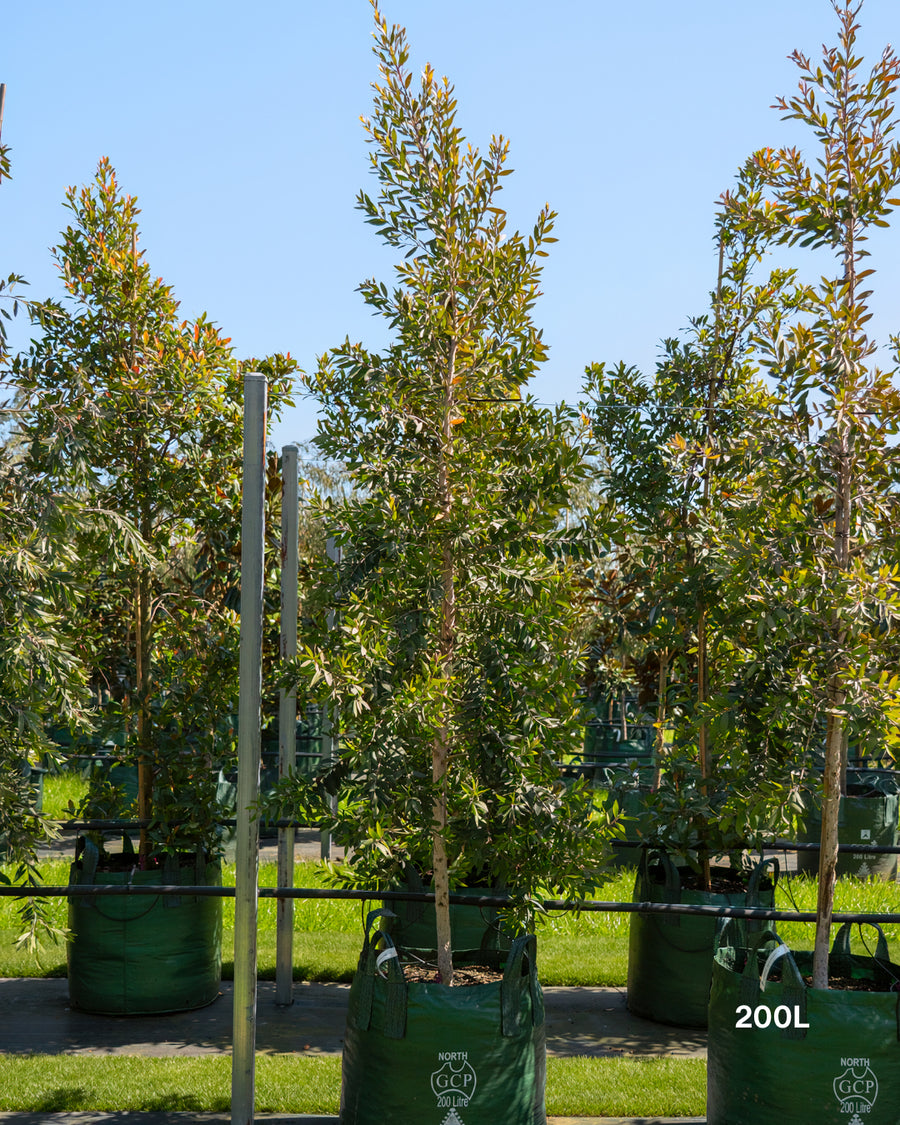
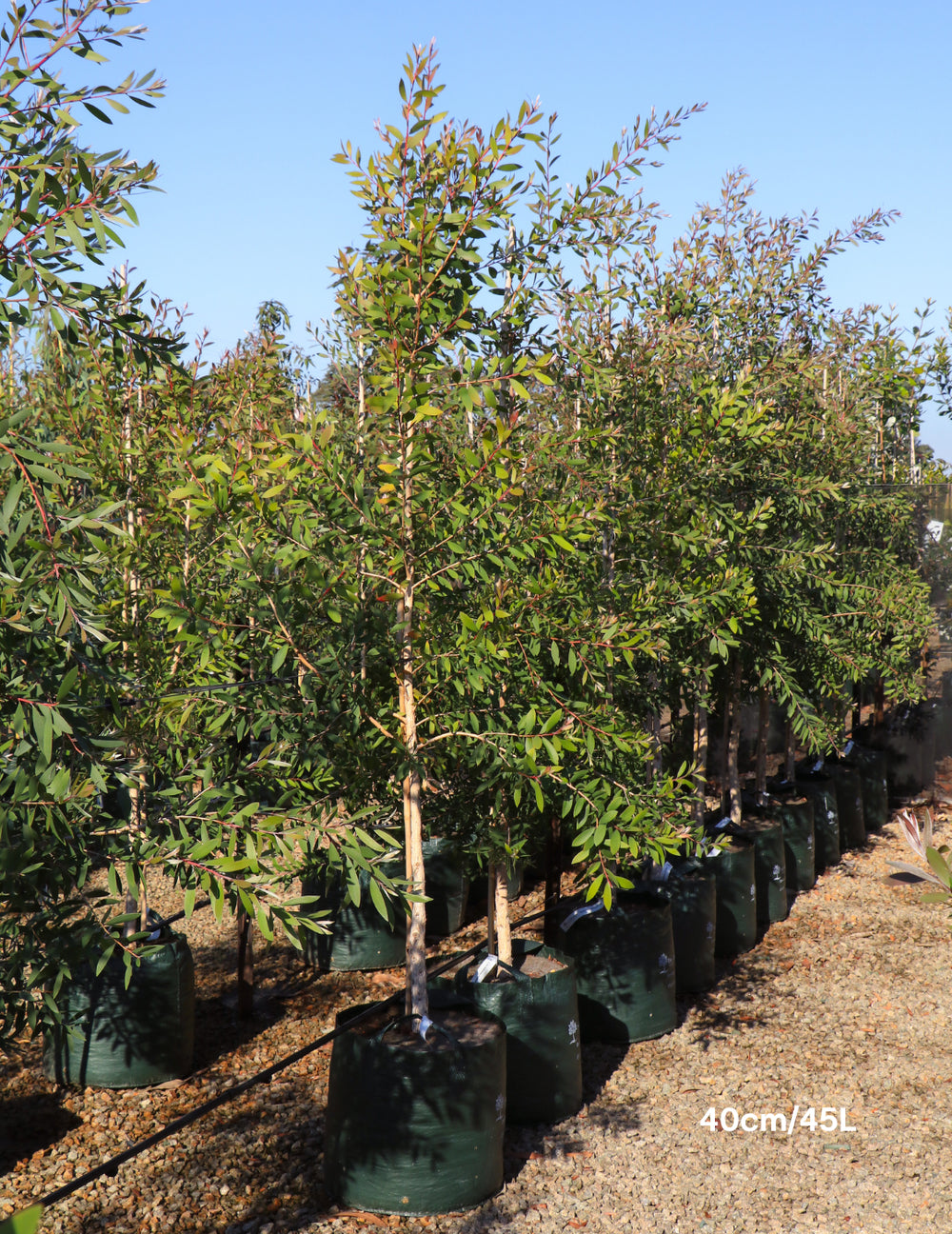
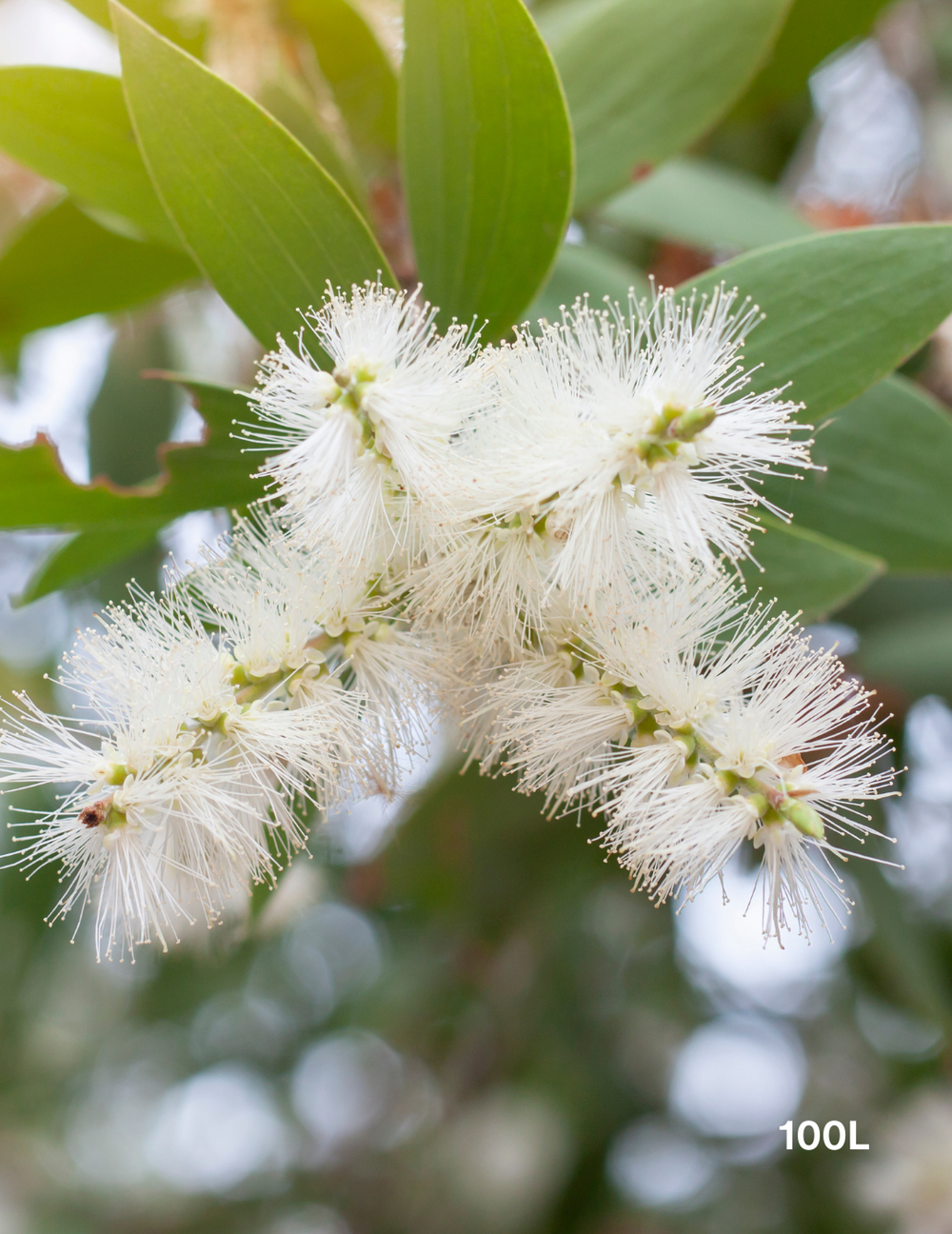
Thick papery cream bark and creamy-white bottlebrush flowers from late spring through autumn. It grows 50 to 100 cm a year, takes both drought and seasonally wet ground once established, and is frost sensitive.

Mature size
8 to 25 m x 5 to 10 m
Best for
Feature tree, shade tree, wet ground

Current height guide

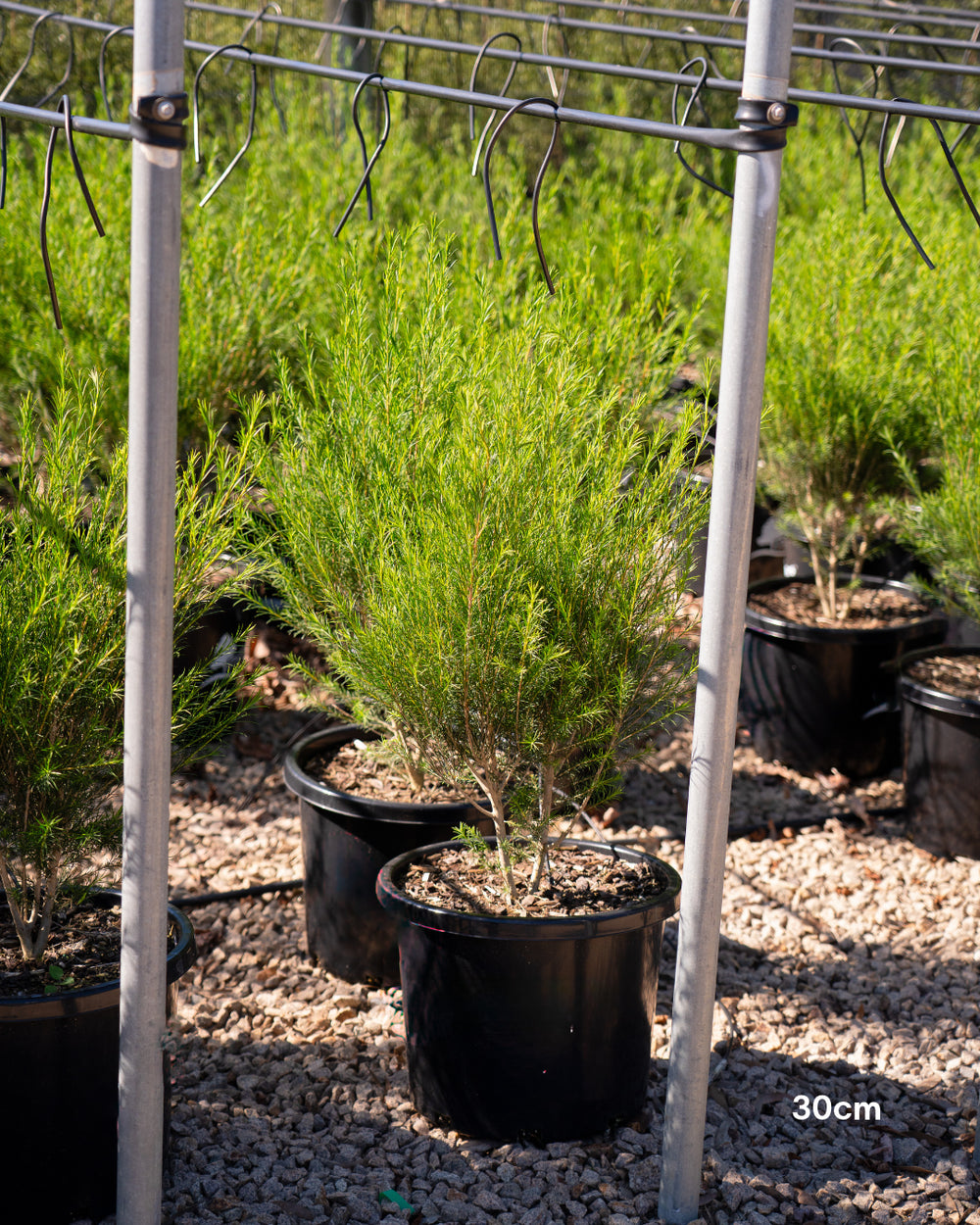
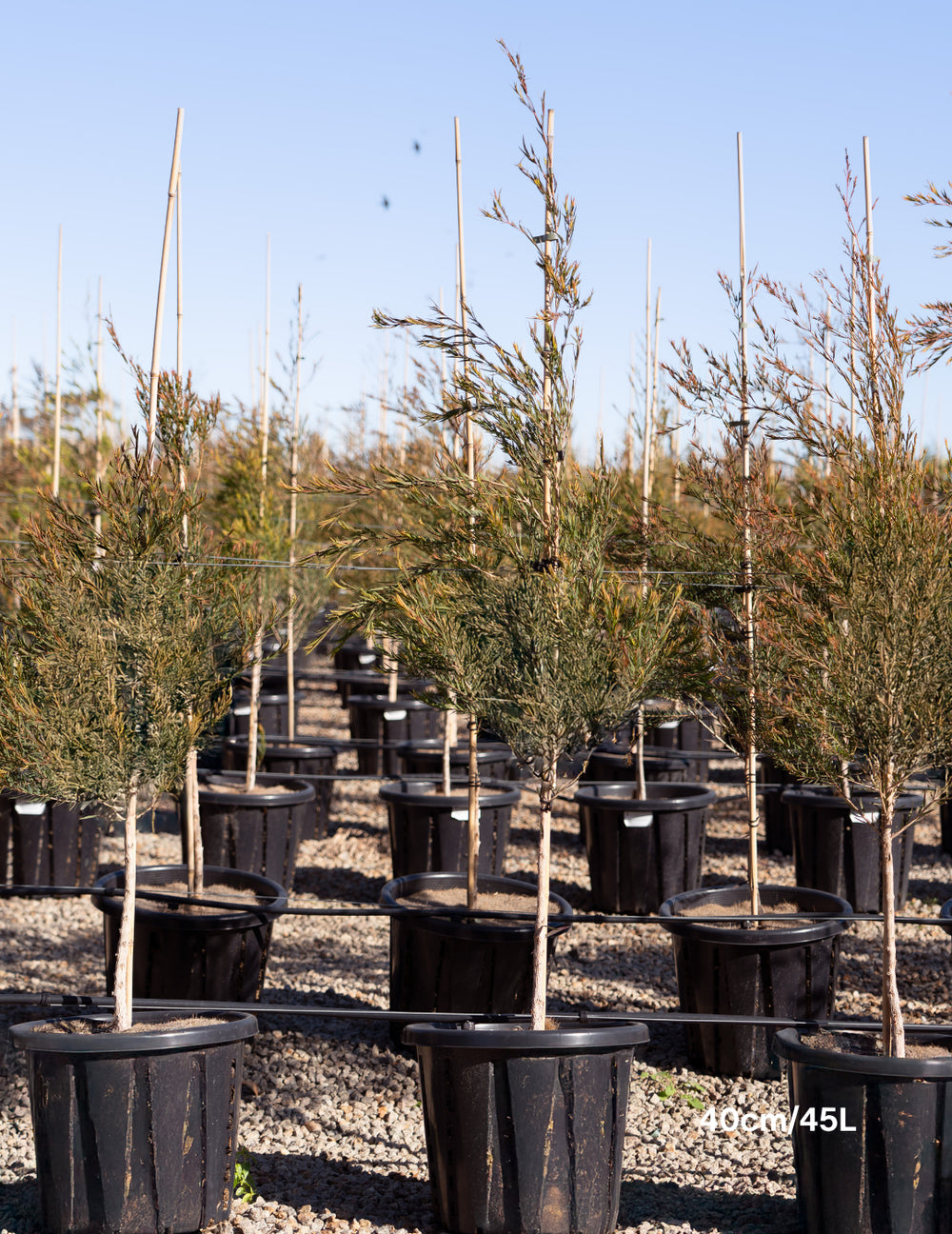
40cm/45L1.6 m - 1.8 m Approx.
View product →
Compare sizes
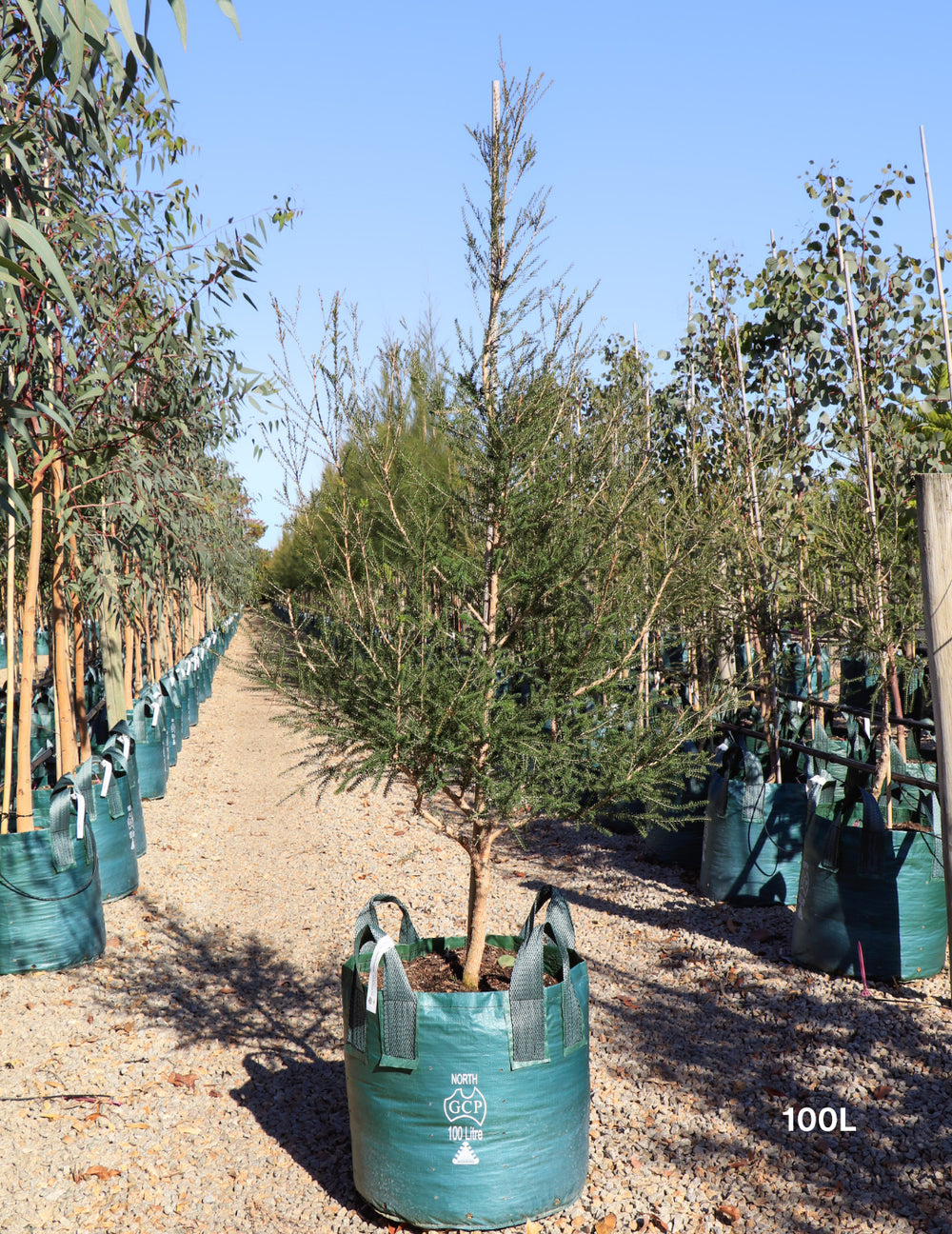
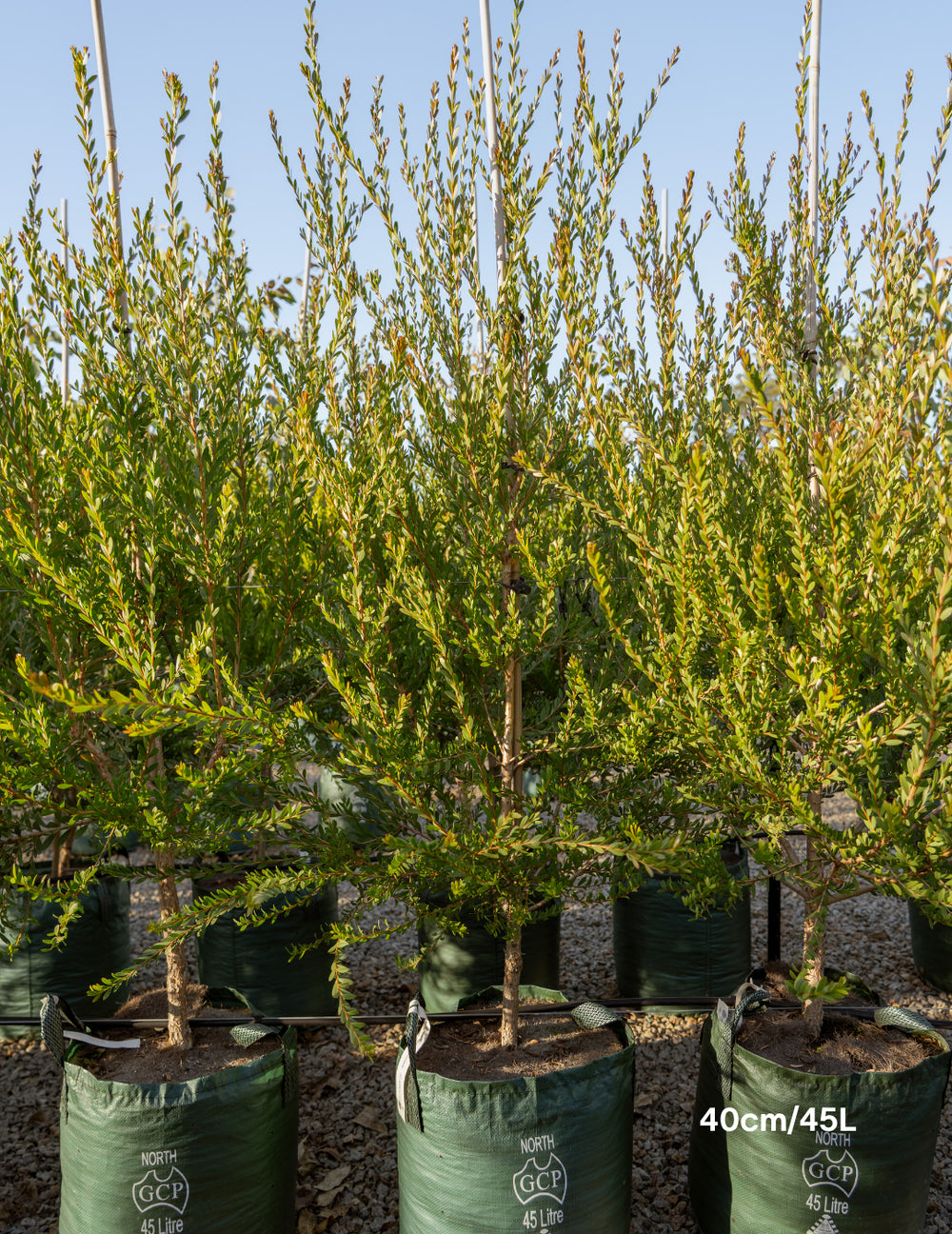
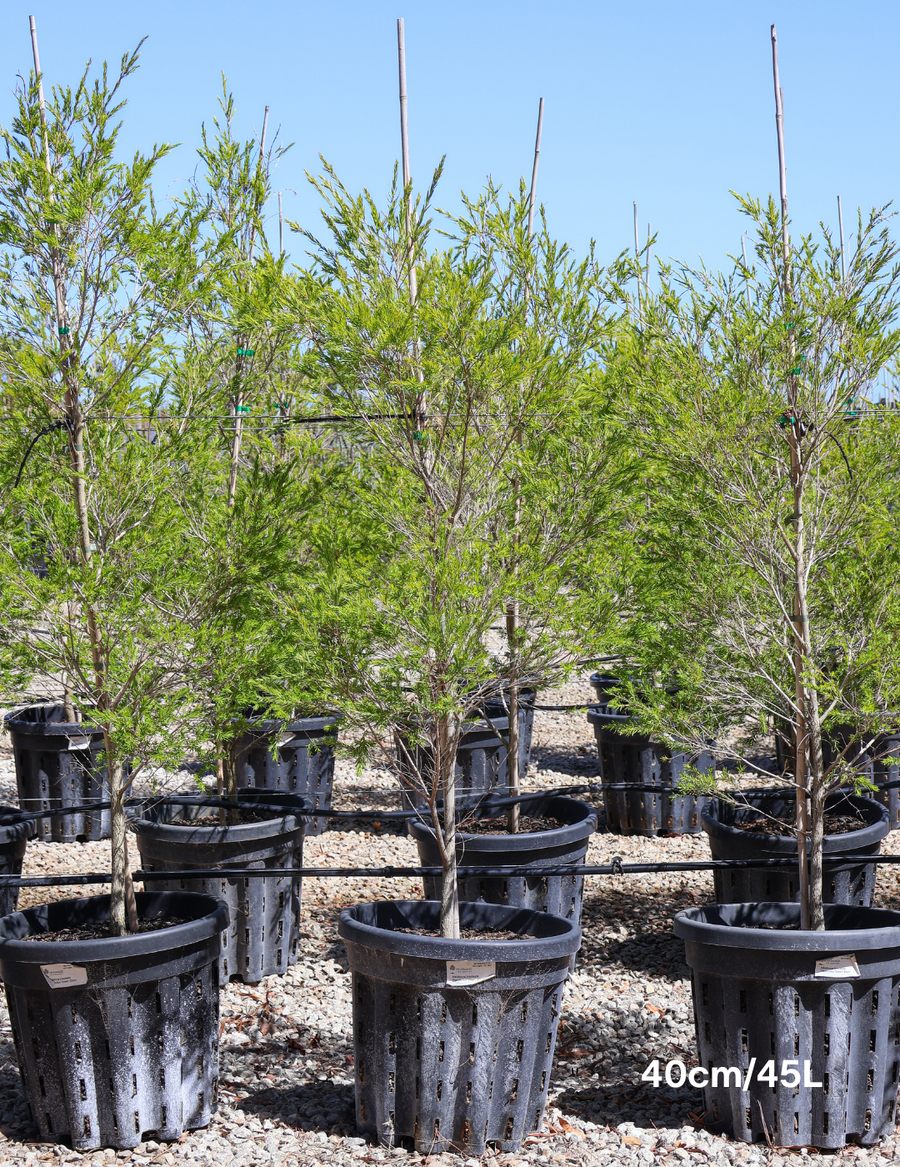
Melaleuca linariifoliaMelaleuca linariifoliaMelaleuca linariifolia

The white flowering feature tree

Melaleuca linariifolia

Snow in Summer

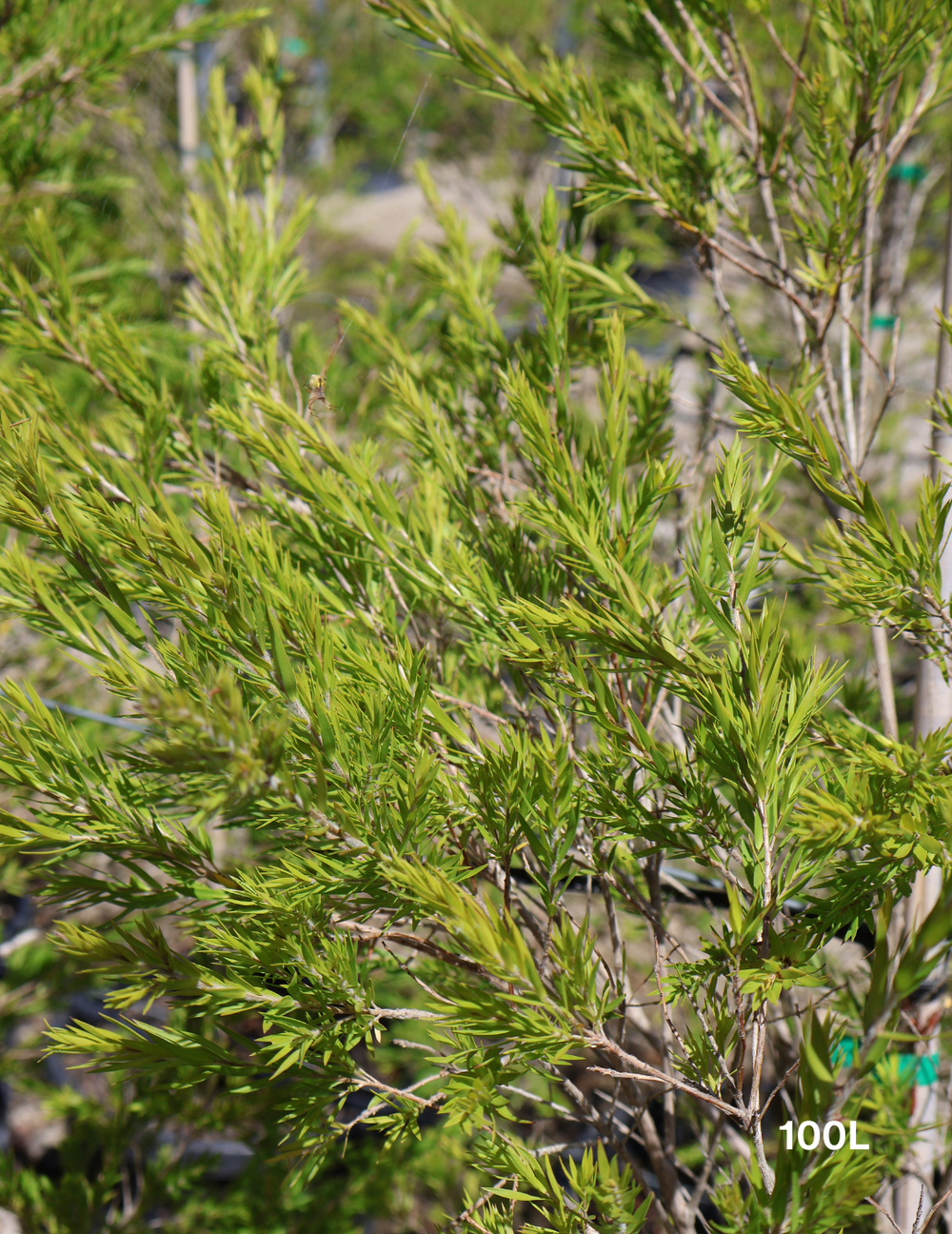
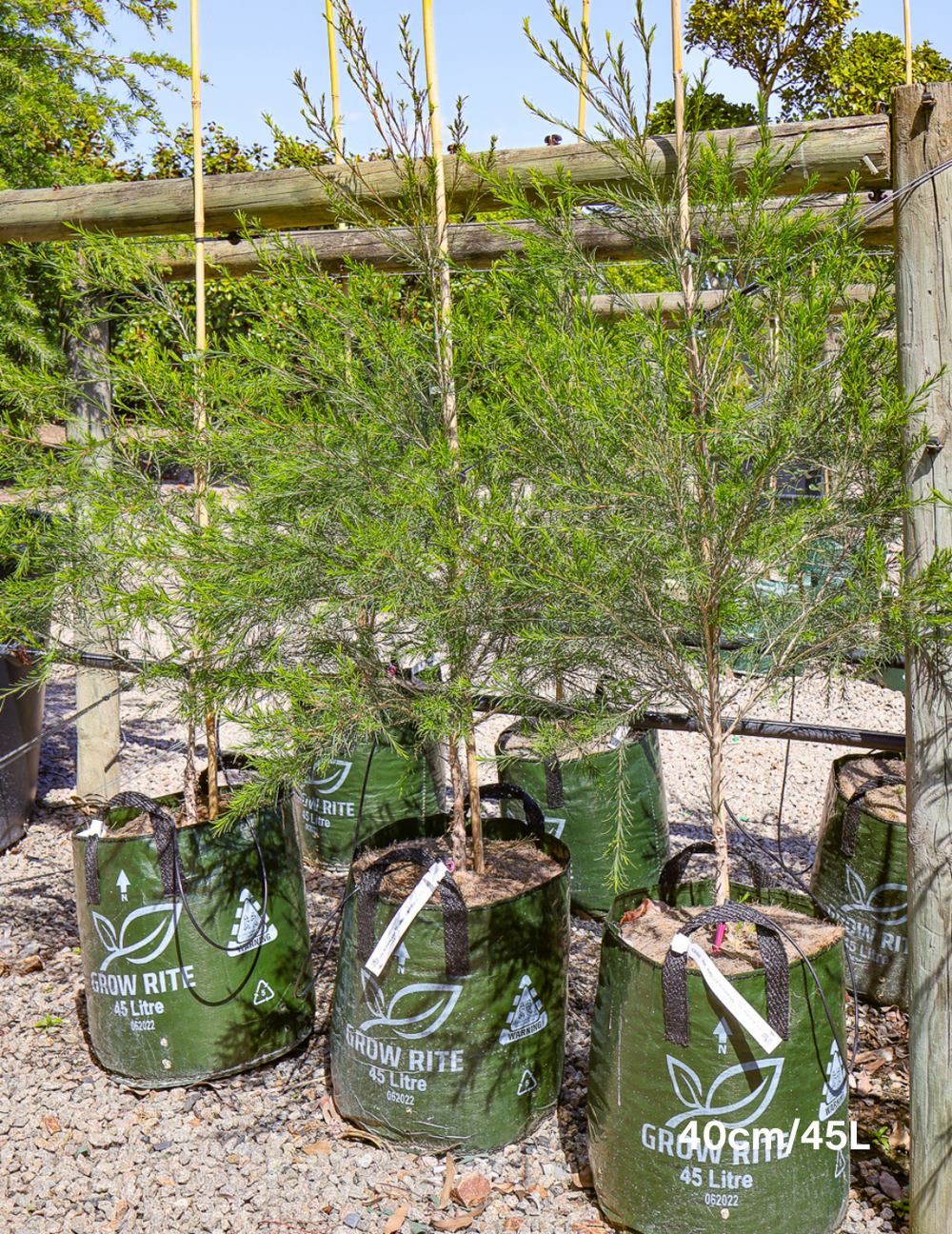
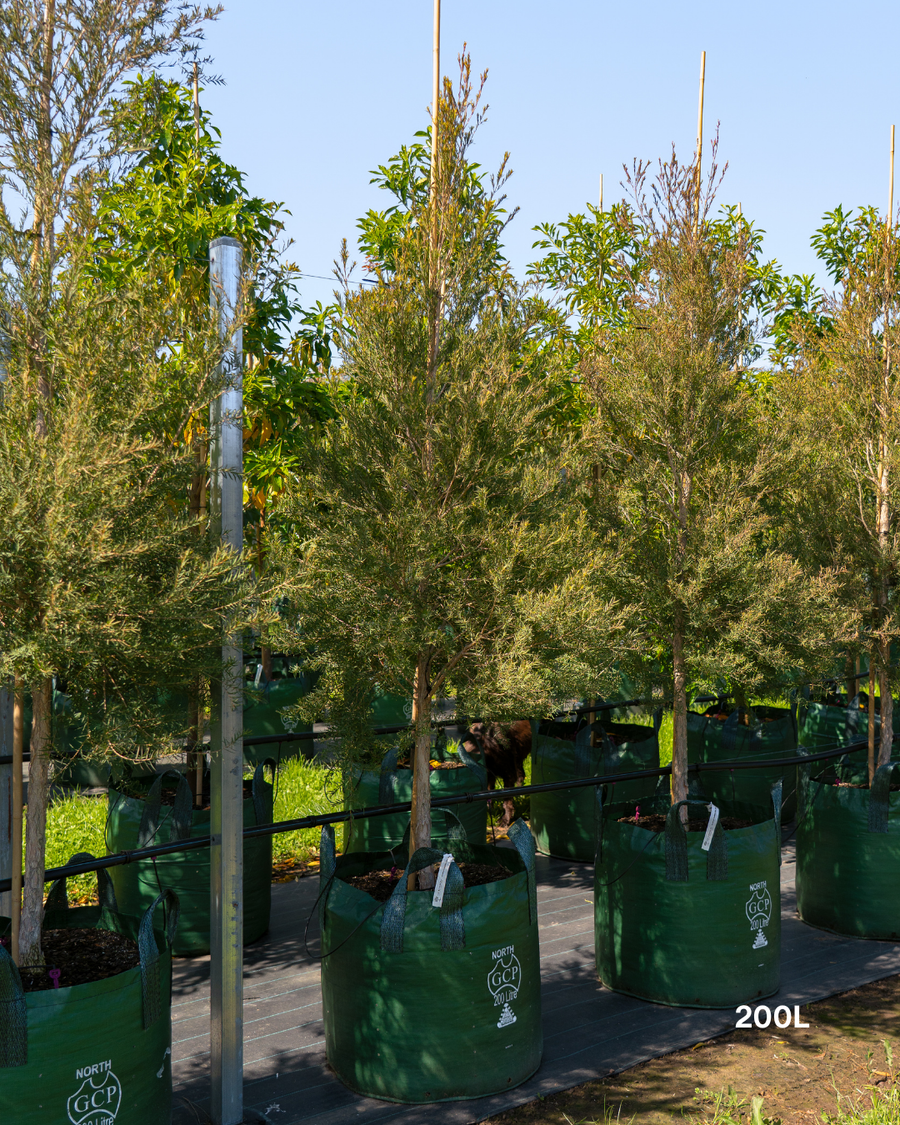
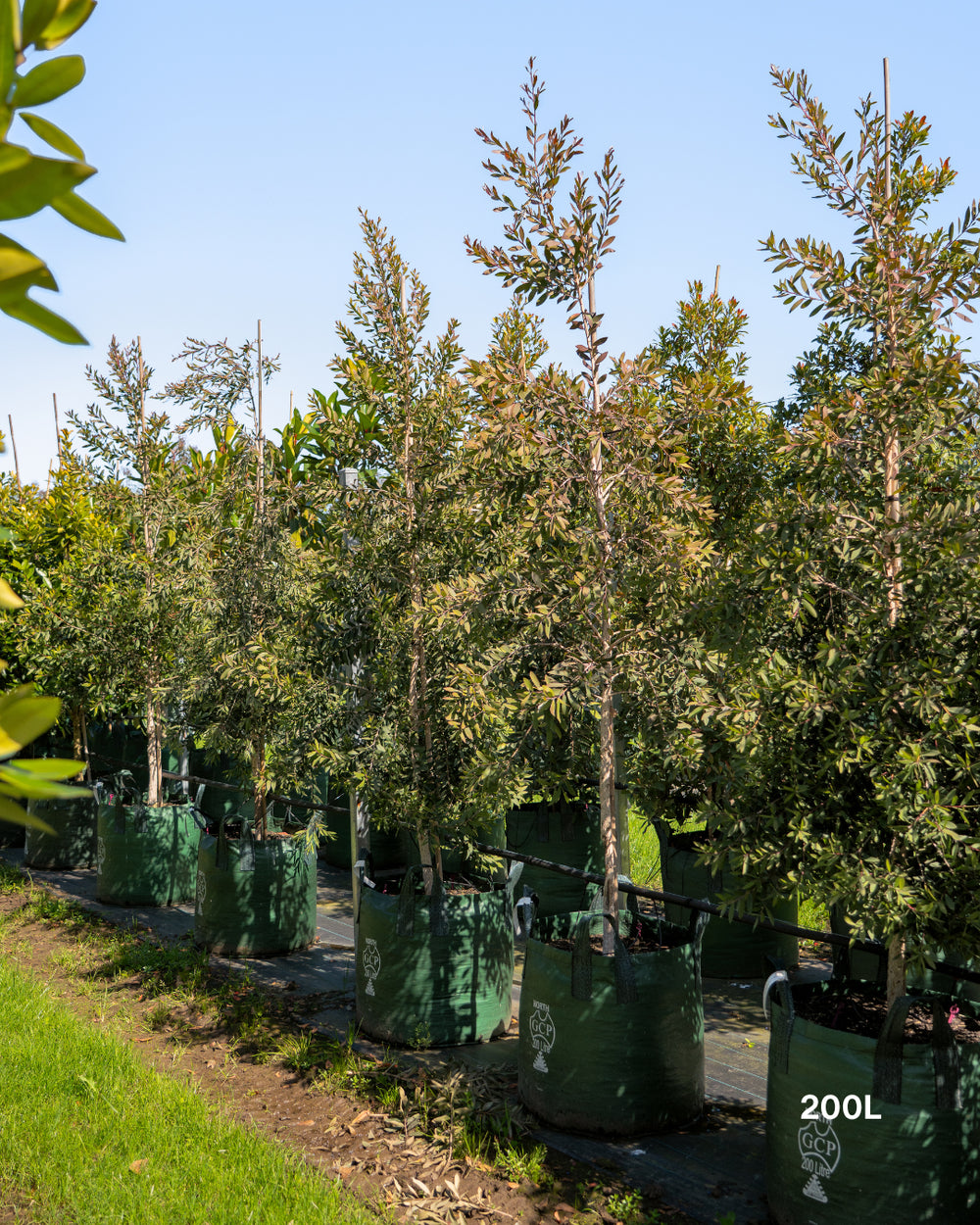
Fine linear foliage on a neat rounded crown that is covered in fluffy white flowers in late spring and summer. Older stems develop soft white papery bark. It grows 30 to 60 cm a year.

Mature size
6 to 10 m x 4 to 6 m
Best for
Feature tree, informal screen, street tree

Current height guide

40cm/45L1.6m - 2.5m Approx.
View product →
Compare sizes
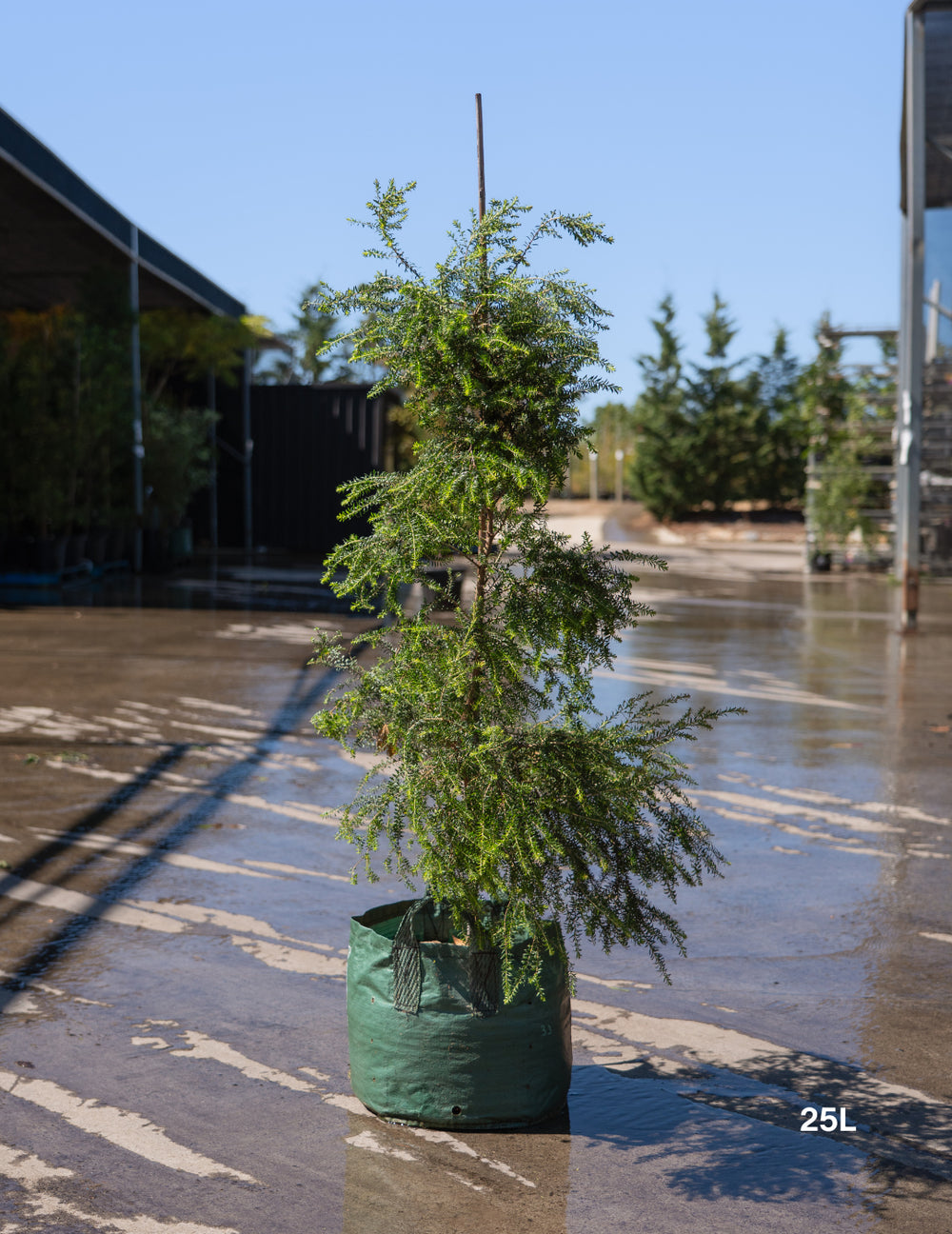
Melaleuca lanceolataMelaleuca lanceolata

The coastal survivor

Melaleuca lanceolata

Moonah Tree

A gnarled, wind-sculpted trunk and dense dark canopy with creamy-white flowers from spring into summer. It handles salt-laden wind, sand and drought, and grows 30 to 60 cm a year.

Mature size
4 to 10 m x 3 to 6 m
Best for
Coastal gardens, shelterbelts, feature tree
View product →
Compare sizes
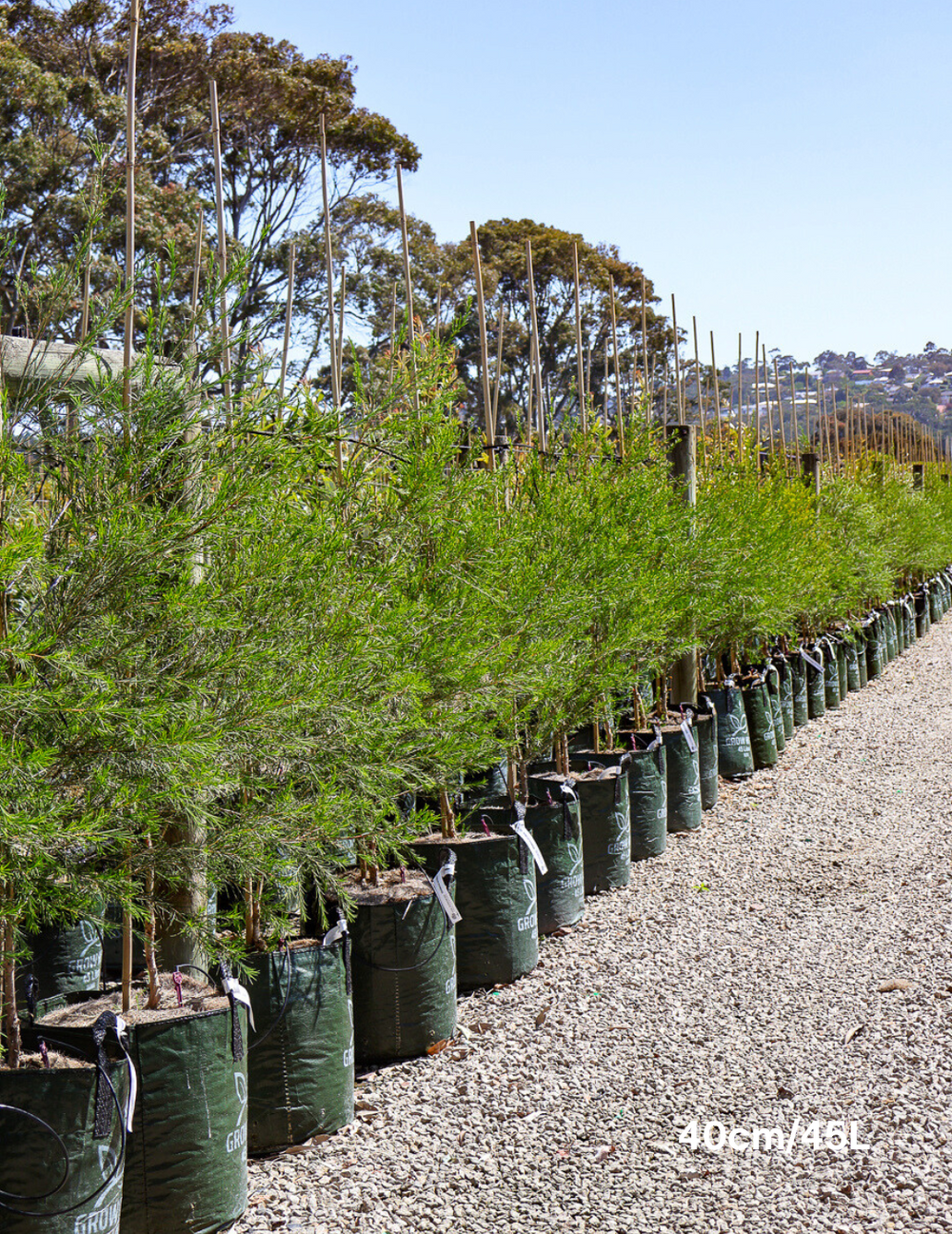
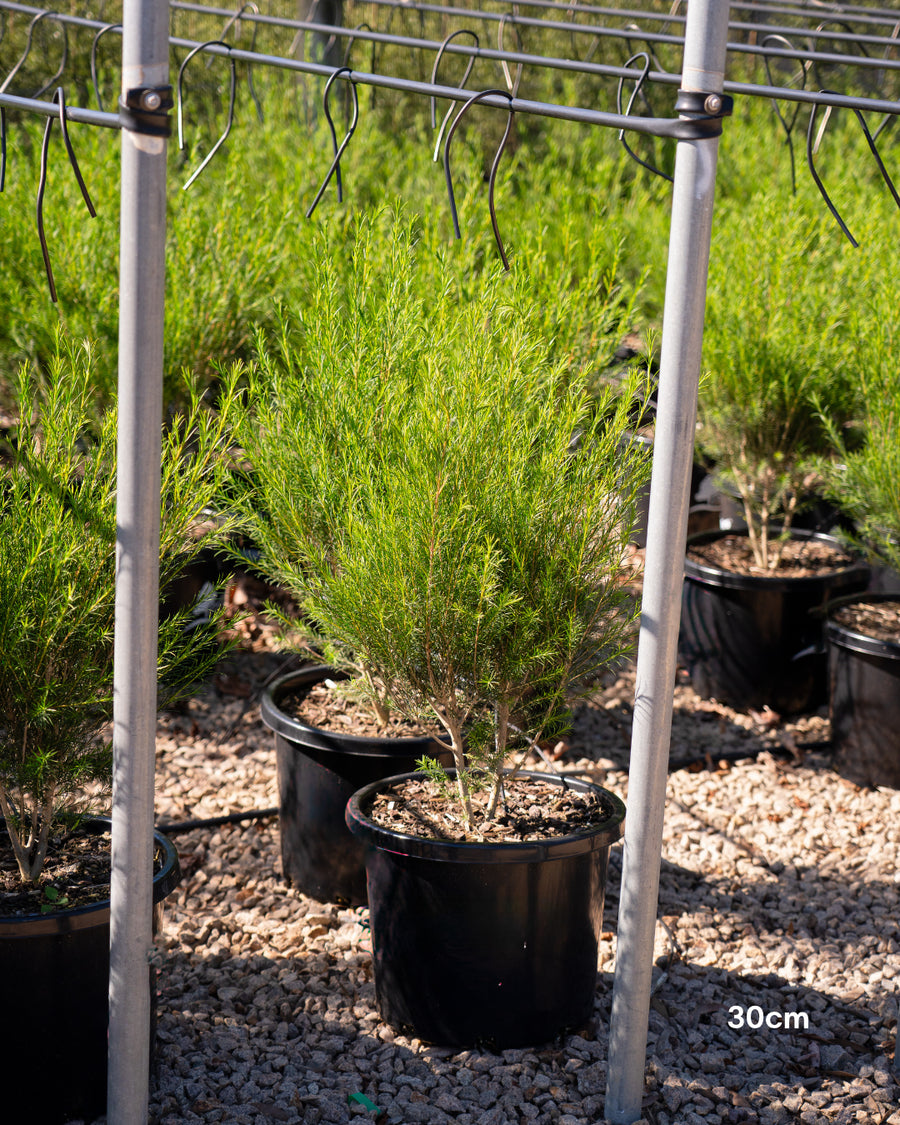
Melaleuca armillaris

The fast tall screen

Melaleuca armillaris

Bracelet Honey Myrtle

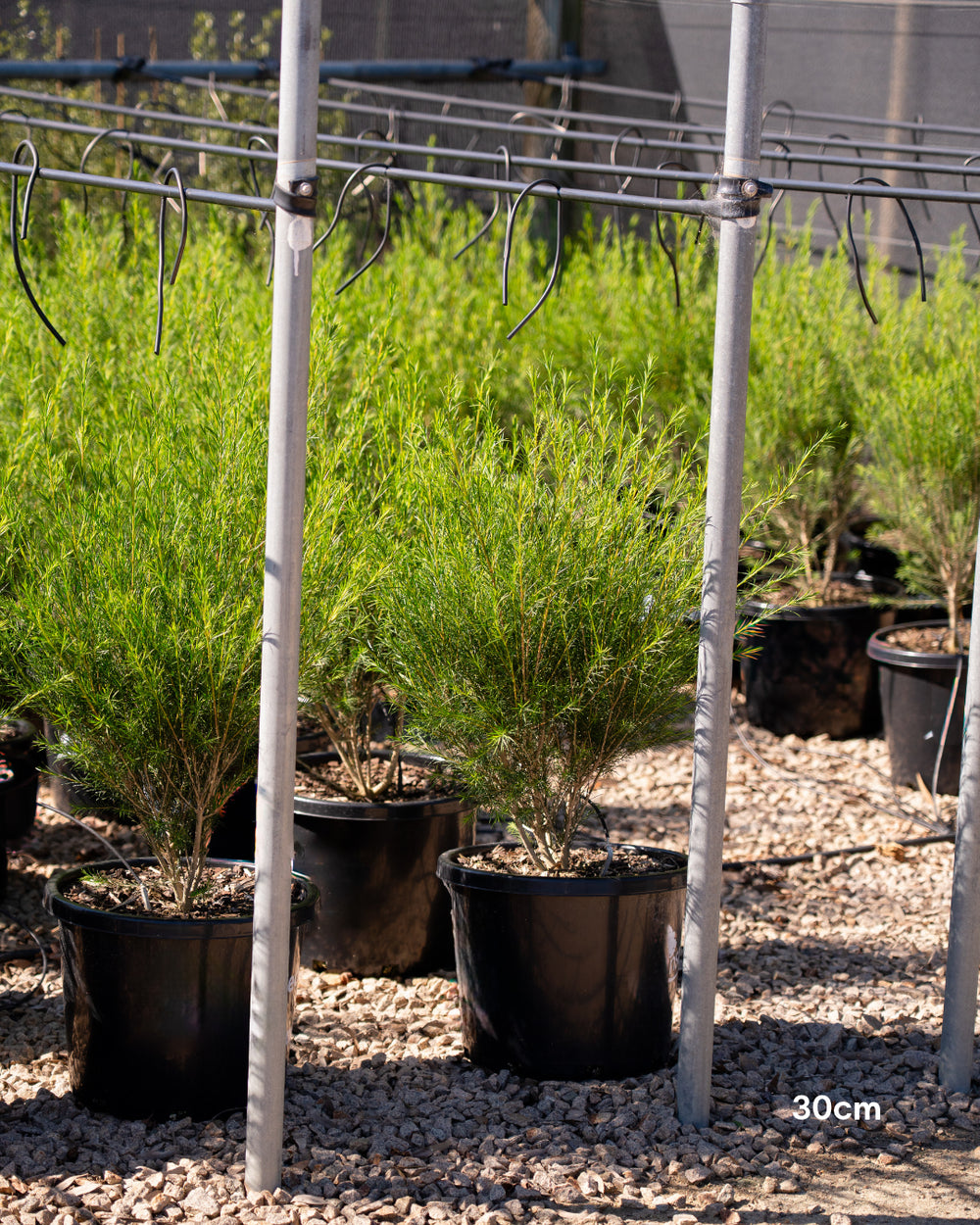
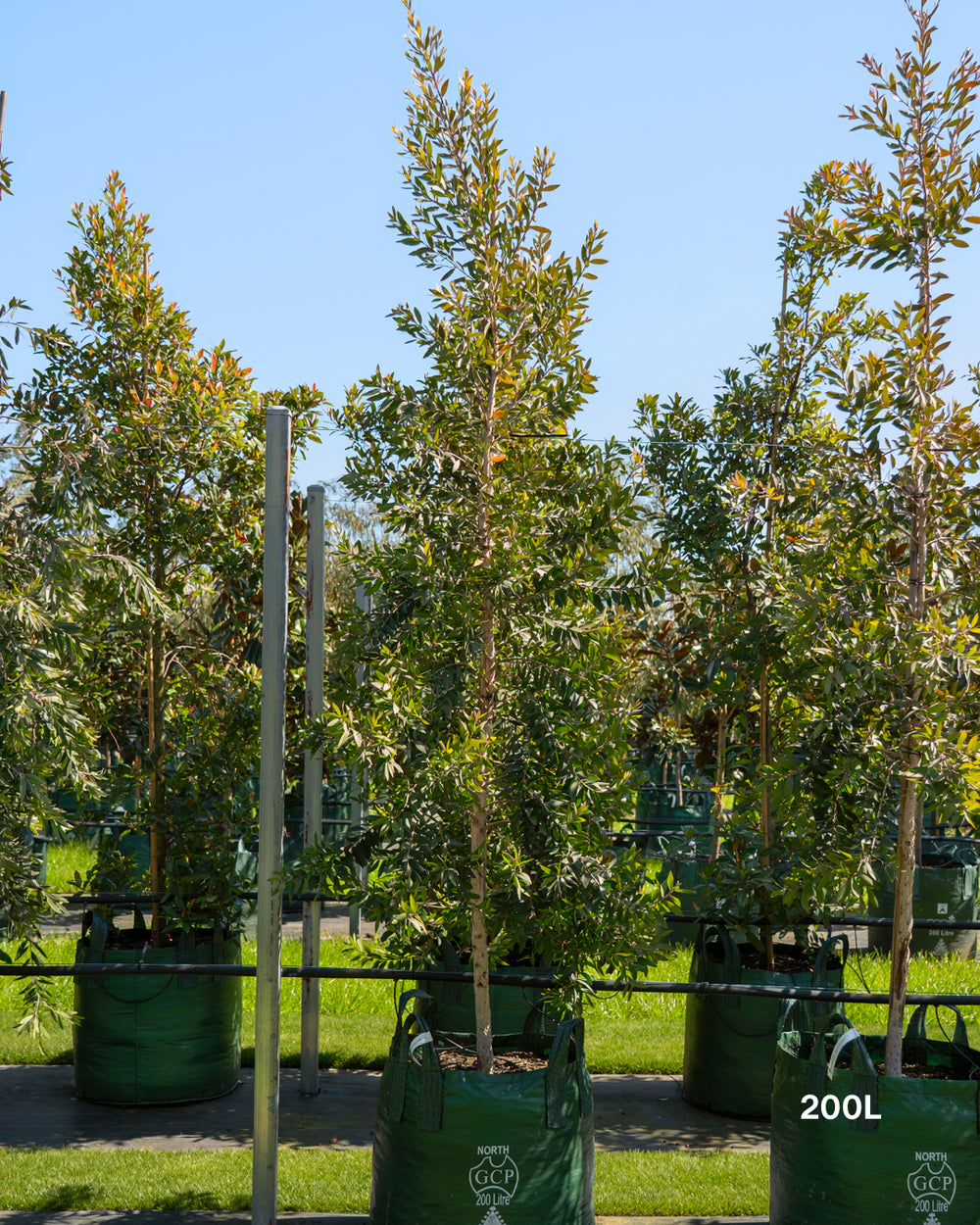
Fine needle like foliage on arching branches, with cream bottlebrush flowers ringing the stems in spring and summer. It grows 40 to 70 cm a year and holds as a tall dense hedge when trimmed.

Mature size
6 to 8 m x 3 to 4 m
Best for
Windbreaks, boundary screens, rural blocks

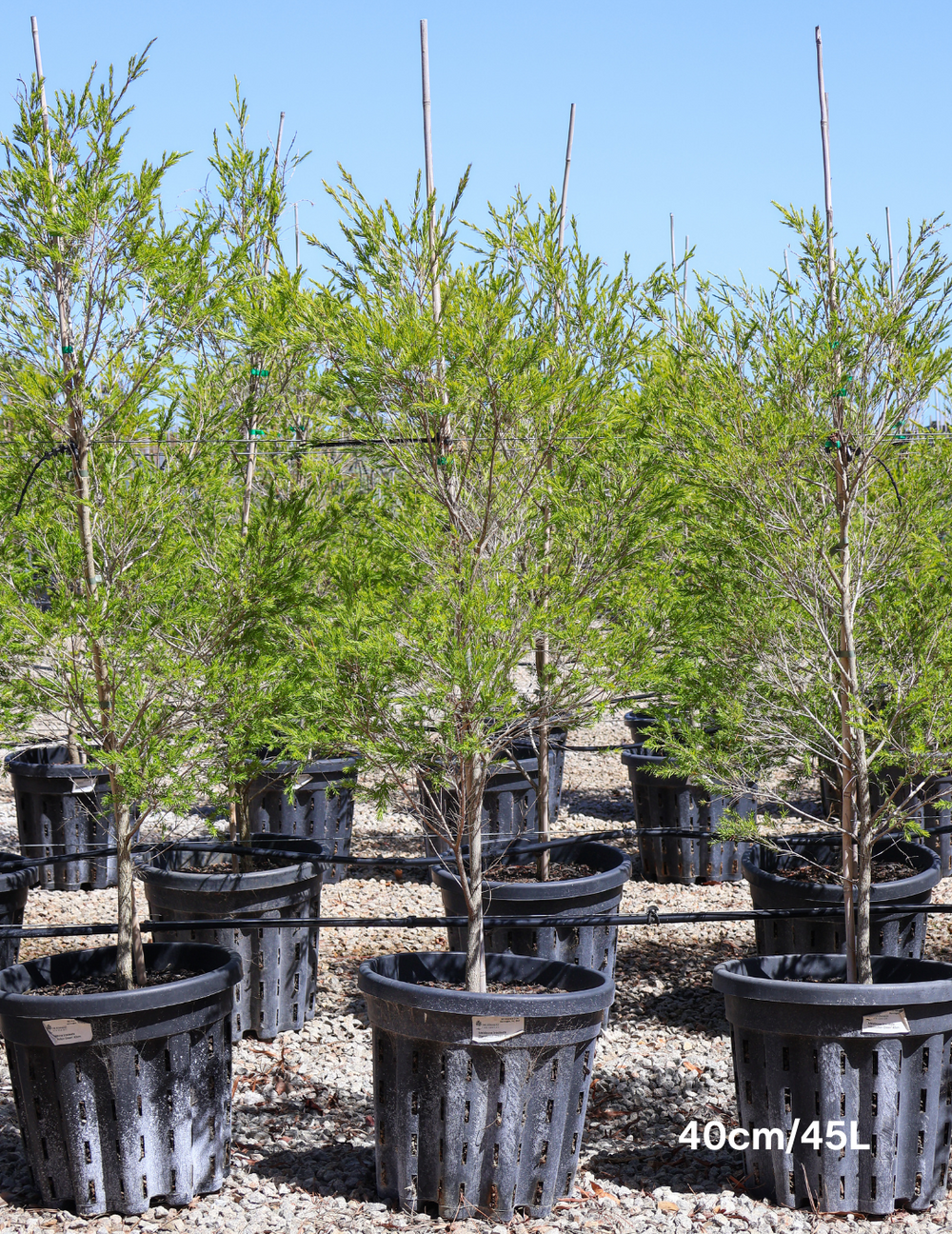
Current height guide

40cm/45L0.9m - 1.5m Approx.
View product →
Compare sizes
Melaleuca nesophilaMelaleuca nesophila

The mauve flowering screen

Melaleuca nesophila

Showy Honey Myrtle

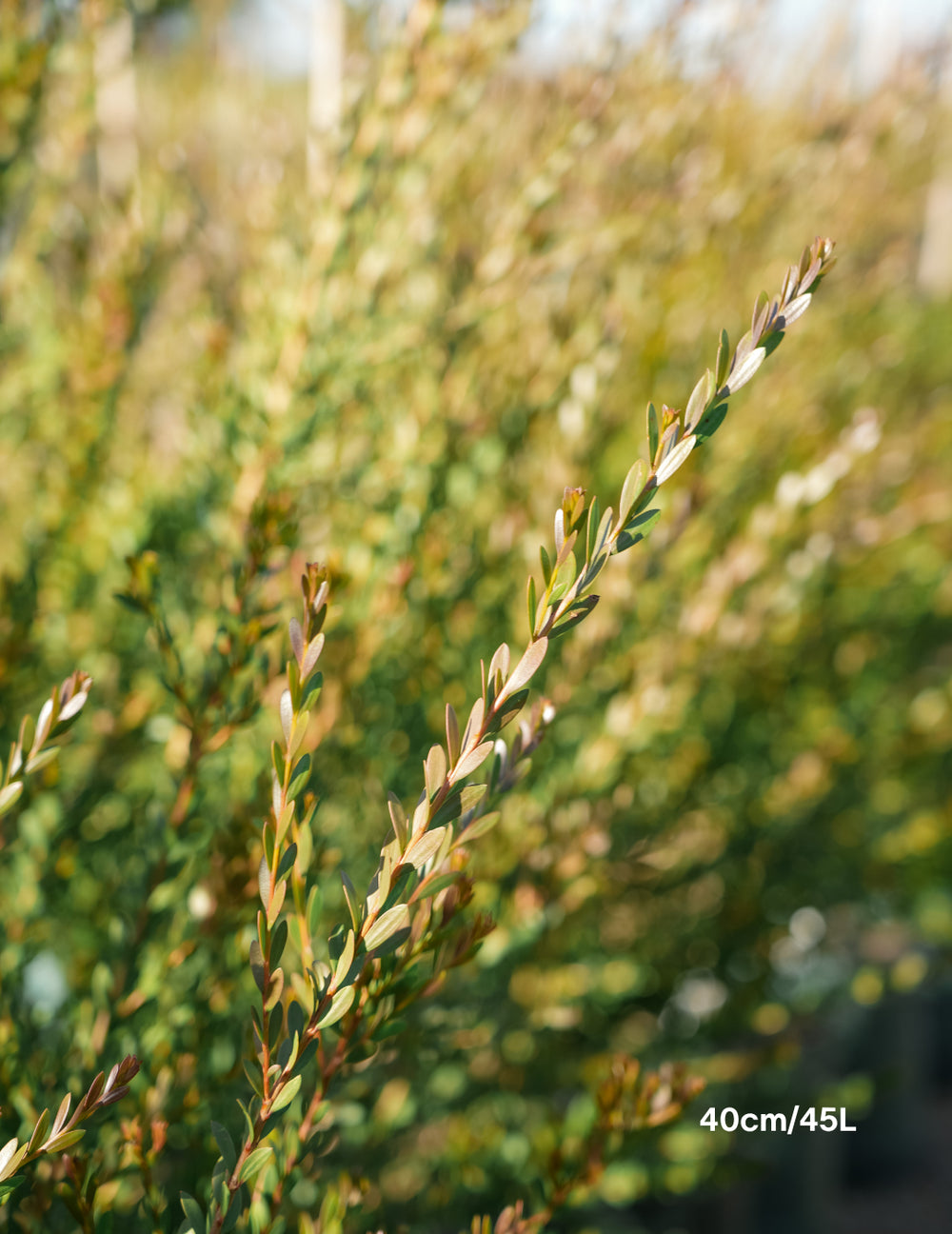
Fine grey green foliage on a dense rounded frame, covered in mauve to pink pom pom flowers through spring and summer. It grows 30 to 60 cm a year. Space 1 to 1.5 m apart for an informal screen.

Mature size
3 to 5 m x 2 to 4 m
Best for
Flowering screens, hedges, coastal blocks
View product →
Compare sizes
Melaleuca bracteata 'Revolution Green'Melaleuca bracteata 'Revolution Green'

The bright green formal hedge

Melaleuca bracteata 'Revolution Green'

Revolution Green Black Tea Tree

Bright green needle like foliage that is aromatic when crushed and holds its colour through winter, with small cream flowers in spring. It grows 30 to 60 cm a year. Two trims a year keep a sharp hedge.

Mature size
3 to 4 m x 2 to 3 m
Best for
Formal hedges, clipped columns, driveways
View product →
Compare sizes
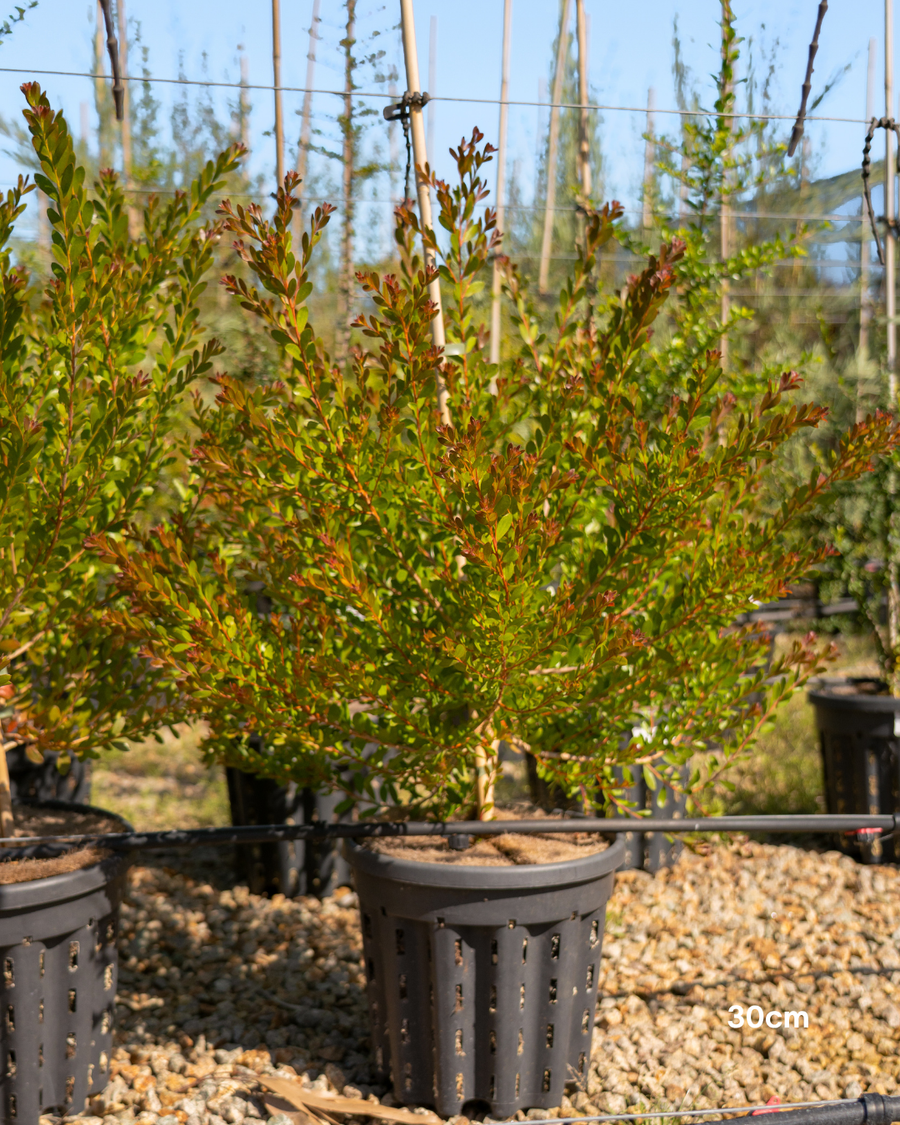
Melaleuca armillaris 'Space Saver'

The narrow native screen

Melaleuca armillaris 'Space Saver'

Space Saver Bracelet Honey Myrtle

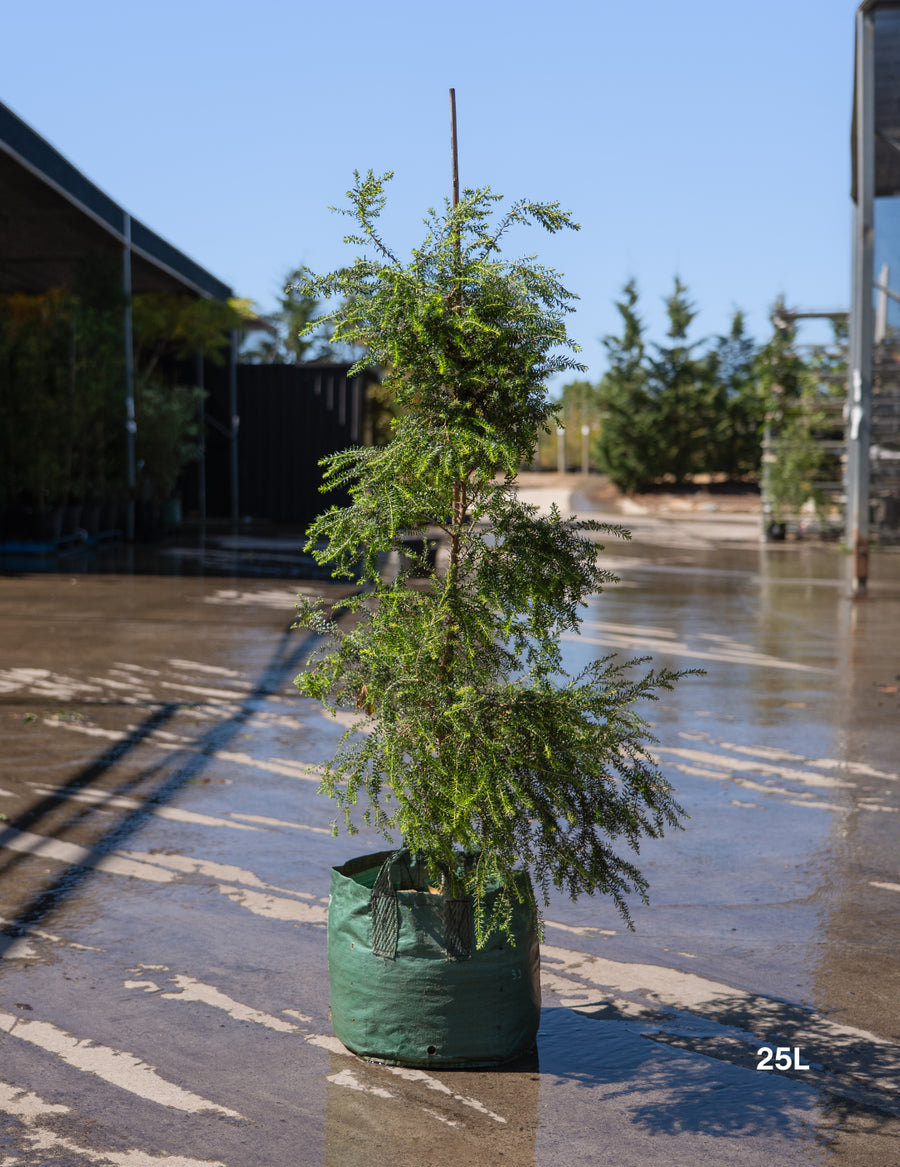
A dense column of fine dark green foliage from ground level, with lime new growth and cream bottlebrush flowers through spring and summer. Plant 2 to 3 per linear metre for a continuous screen.

Mature size
2 to 4 m x 1 to 1.5 m
Best for
Side passages, tight beds, boundary screens

Current height guide

30cm/33cm0.4m - 0.5m Approx.
View product →

Compare the seven melaleuca trees at a glance

Swipe sideways to see every column

VarietyTypeMature size (H x W)FruitBest for
Broad-leaved Paperbark The large paperbark for feature and shade8 to 25 m x 5 to 10 mFeature tree, shade tree, wet ground
Snow in Summer The white flowering feature tree6 to 10 m x 4 to 6 mFeature tree, informal screen, street tree
Moonah Tree The coastal survivor4 to 10 m x 3 to 6 mCoastal gardens, shelterbelts, feature tree
Bracelet Honey Myrtle The fast tall screen6 to 8 m x 3 to 4 mWindbreaks, boundary screens, rural blocks
Showy Honey Myrtle The mauve flowering screen3 to 5 m x 2 to 4 mFlowering screens, hedges, coastal blocks
Revolution Green Black Tea Tree The bright green formal hedge3 to 4 m x 2 to 3 mFormal hedges, clipped columns, driveways
Space Saver Bracelet Honey Myrtle The narrow native screen2 to 4 m x 1 to 1.5 mSide passages, tight beds, boundary screens

How big do melaleuca trees grow, and how fast?

  • LargestBroad-leaved Paperbark grows 8 to 25 metres tall and 5 to 10 metres wide.
  • Mid-sizedSnow in Summer grows 6 to 10 metres tall and 4 to 6 metres wide. Moonah grows 4 to 10 metres tall and 3 to 6 metres wide. Bracelet Honey Myrtle grows 6 to 8 metres tall and 3 to 4 metres wide.
  • SmallestShowy Honey Myrtle grows 3 to 5 metres tall and 2 to 4 metres wide. 'Revolution Green' grows 3 to 4 metres tall and 2 to 3 metres wide. 'Space Saver' grows 2 to 4 metres tall and only 1 to 1.5 metres wide.
  • Growth rateBroad-leaved Paperbark grows 50 to 100 centimetres a year and Bracelet Honey Myrtle 40 to 70 centimetres. Snow in Summer, Moonah, Showy Honey Myrtle and 'Revolution Green' each grow 30 to 60 centimetres a year.
  • ExposureMoonah's final size depends on the site. In a sheltered inland position it grows taller and straighter. On the front line of a coastal site it stays low and broad.
How big do melaleuca trees grow, and how fast?

Melaleuca flowers: colour and season

  • WhiteSnow in Summer covers its canopy in fluffy white flowers in late spring and summer, which is where the name comes from.
  • CreamBroad-leaved Paperbark carries creamy-white bottlebrush flowers in repeated flushes from late spring through autumn. Bracelet Honey Myrtle and 'Space Saver' have cream bottlebrush flowers through spring and summer. Moonah has masses of creamy-white flowers from spring into summer. 'Revolution Green' has small cream brush flowers in spring.
  • MauveShowy Honey Myrtle is the one with colour: mauve to pink pom pom flowers cover the outer growth through spring and summer.
  • Birds and beesBees and honeyeaters use Snow in Summer's flowers heavily. Broad-leaved Paperbark attracts honeyeaters, lorikeets and native bees.
Melaleuca flowers: colour and season

Which melaleuca is best for a hedge or screen?

  • Formal hedge'Revolution Green' is most often planted as a screening hedge along fences and driveways, or clipped into columns where a formal line is wanted. Plant 80 centimetres apart for a tight formal hedge, or 1 to 1.5 metres apart for a dense informal screen. Two trims a year keep a sharp edge.
  • Narrow spaces'Space Saver' suits boundary screens, side passages and tight beds. Plant 2 to 3 per linear metre for a continuous screen. Top prune at the height you want and trim the sides every two years for thicker growth.
  • Tall screen or windbreakBracelet Honey Myrtle suits windbreak rows and boundaries where height is wanted quickly. Trimmed, it holds as a tall dense hedge. Left alone, it becomes a small weeping tree.
  • Flowering screenShowy Honey Myrtle is a screening and hedging plant first. Space it 1 to 1.5 metres apart for an informal screen.
  • Informal screenSnow in Summer works as an informal screen at 1 to 1.5 metres apart, as well as a feature tree.
Which melaleuca is best for a hedge or screen?

Melaleuca trees for the coast, wet ground and frost

  • CoastMoonah handles salt-laden wind, sand and drought, and is a standard choice for coastal shelterbelt planting. Bracelet Honey Myrtle, Showy Honey Myrtle and 'Space Saver' also handle salt wind once established.
  • Wet groundBroad-leaved Paperbark tolerates both drought and waterlogged or seasonally wet ground once established. Snow in Summer grows naturally in swampy areas and along creek lines.
  • FrostBroad-leaved Paperbark is frost sensitive and is best in a frost-free or protected spot. The other six tolerate frost once established.
  • SunAll seven grow in full sun. Broad-leaved Paperbark, Bracelet Honey Myrtle and 'Space Saver' also take part shade.
  • SoilWell-drained sandy or loam soil gives the best growth.
Melaleuca trees for the coast, wet ground and frost

How to plant and care for a melaleuca tree

  1. Pick the positionChoose a spot in full sun with room for the canopy to develop. For a screen, set out the full run first so the spacing stays even.
  2. Dig and plantDig the hole twice as wide as the root ball and the same depth. Set the plant level with the surrounding soil, backfill gently, firm in and water deeply.
  3. WaterWater deeply twice a week through the first 12 months. Once established, a melaleuca only needs a deep soak in extended dry periods.
  4. MulchApply 5 to 7 centimetres of organic mulch over the root zone and keep it 5 centimetres clear of the trunk.
  5. FeedApply a slow-release native fertiliser in early spring and again in autumn. Avoid high-phosphorus fertilisers.
  6. PruneTrees need little pruning: a light tip prune in late winter holds the shape. Hedges and screens are trimmed to the height and width you want.

Planting a native garden? Browse all Australian native trees, or read our guide to windbreak trees for coastal areas.

Frequently asked questions

What is the difference between a melaleuca and a paperbark?
Paperbark is the common name for melaleuca trees with soft, layered papery bark, such as Melaleuca quinquenervia, the Broad-leaved Paperbark. Other melaleucas are sold as honey myrtles, tea trees or Moonah.
How big do melaleuca trees grow?
From 2 to 25 metres tall, depending on the type. Broad-leaved Paperbark grows 8 to 25 metres tall, Snow in Summer 6 to 10 metres, Moonah 4 to 10 metres, Bracelet Honey Myrtle 6 to 8 metres, Showy Honey Myrtle 3 to 5 metres, 'Revolution Green' 3 to 4 metres and 'Space Saver' 2 to 4 metres.
How fast do melaleuca trees grow?
Between 30 and 100 centimetres a year. Broad-leaved Paperbark grows 50 to 100 centimetres a year, Bracelet Honey Myrtle 40 to 70 centimetres, and Snow in Summer, Moonah, Showy Honey Myrtle and 'Revolution Green' 30 to 60 centimetres.
Which melaleuca is best for a hedge?
'Revolution Green' for a clipped formal hedge, planted 80 centimetres apart. 'Space Saver' for a narrow screen only 1 to 1.5 metres wide. Bracelet Honey Myrtle for a tall screen or windbreak.
Which melaleuca trees grow in wet ground?
Broad-leaved Paperbark tolerates waterlogged or seasonally wet ground once established. Snow in Summer grows naturally in swampy areas and along creek lines.
Which melaleuca is best for a coastal garden?
Moonah. It handles salt-laden wind, sand and drought. Bracelet Honey Myrtle, Showy Honey Myrtle and 'Space Saver' also handle salt wind once established.
Are melaleuca trees frost hardy?
Six of the seven here tolerate frost once established. Broad-leaved Paperbark is frost sensitive and is best in a frost-free or protected spot.
When do melaleuca trees flower?
Mostly from spring into summer. 'Revolution Green' flowers in spring, Snow in Summer in late spring and summer, the honey myrtles through spring and summer, and Broad-leaved Paperbark from late spring through autumn.

The wrap up

Start with the space. Broad-leaved Paperbark is the large feature and shade tree, Snow in Summer and Moonah are mid-sized, and the honey myrtles and 'Revolution Green' make the screens and hedges. For a narrow bed, look at 'Space Saver' first.

Not sure which suits your site? Take our tree quiz, or send us a photo of the space and we will point you to the right tree.

Shopping cart (0)

Complete your order

Freight added at checkout, based on your delivery address and order quantities.

Checkout