Skip to content
Ficus Trees: 6 Types Compared for Australian Gardens

Ficus Trees: 6 Types Compared for Australian Gardens

Six ficus trees compared by mature size, growth rate and frost tolerance, from fast hedging figs to native shade figs and the edible fig.

Ficus is the fig genus, and the ficus trees grown in Australian gardens sort into three types by the job they do: evergreen hedging figs, large native shade figs and the edible fig. We grow six, and the right one depends on how much room you have.

All six belong to the family Moraceae, and all carry their flowers hidden inside the fig. They differ most in size, from compact hedging figs to the Moreton Bay fig, which reaches 30 to 60 metres.

Planning a hedge? Our Flash vs Hillii comparison covers the two main hedging figs in detail, and the pleached trees guide covers trained forms. Or browse the full ficus collection.

Last reviewed
21 November 2026
Reading time
6 minutes
Supplier
Evergreen Trees Direct

The three types of ficus trees

One more ficus is not a tree at all. Creeping fig (Ficus pumila) is a self-clinging evergreen climber used to cover walls and fences.

The three types of ficus trees

The six ficus trees, with photos and sizes

Compare sizes
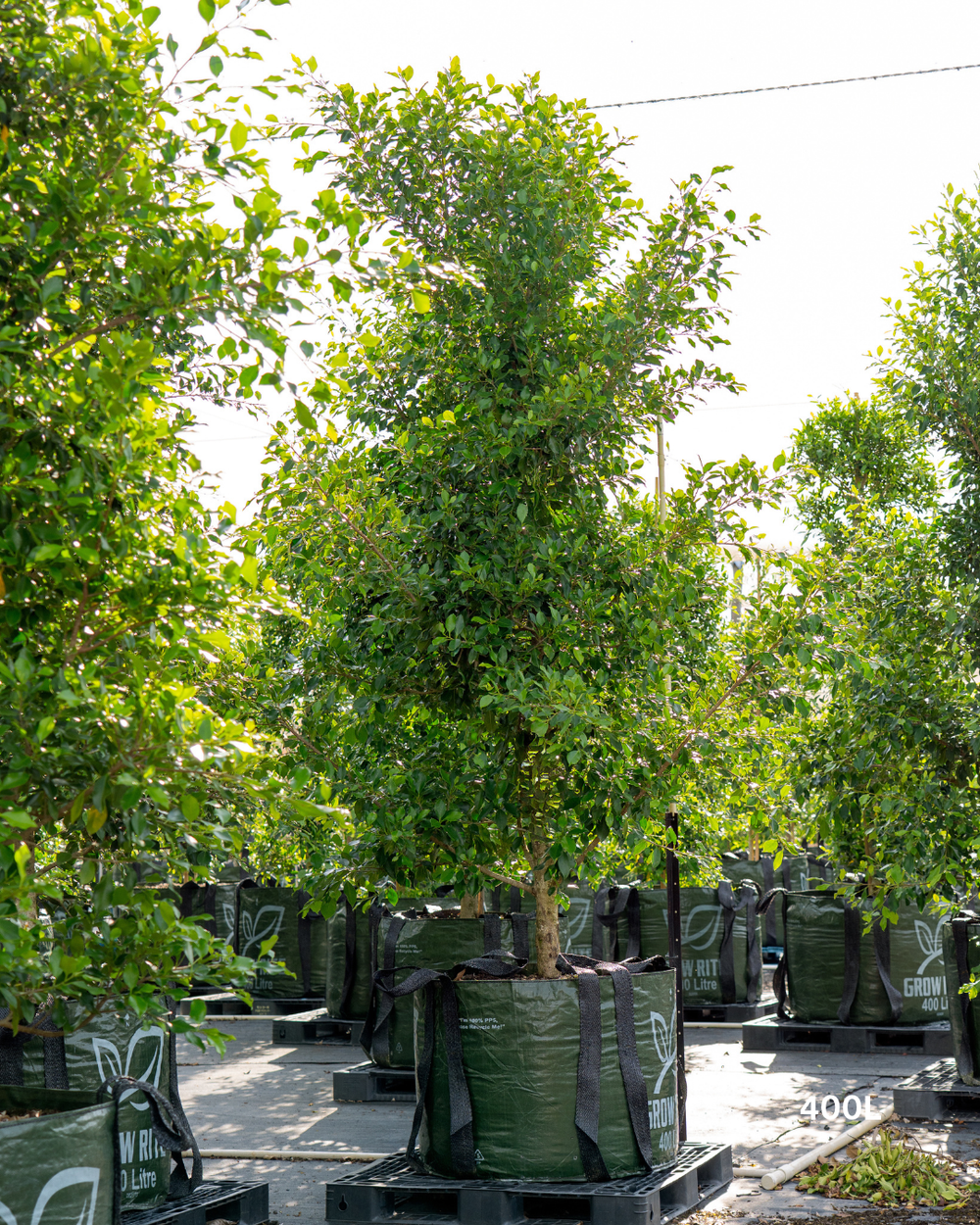
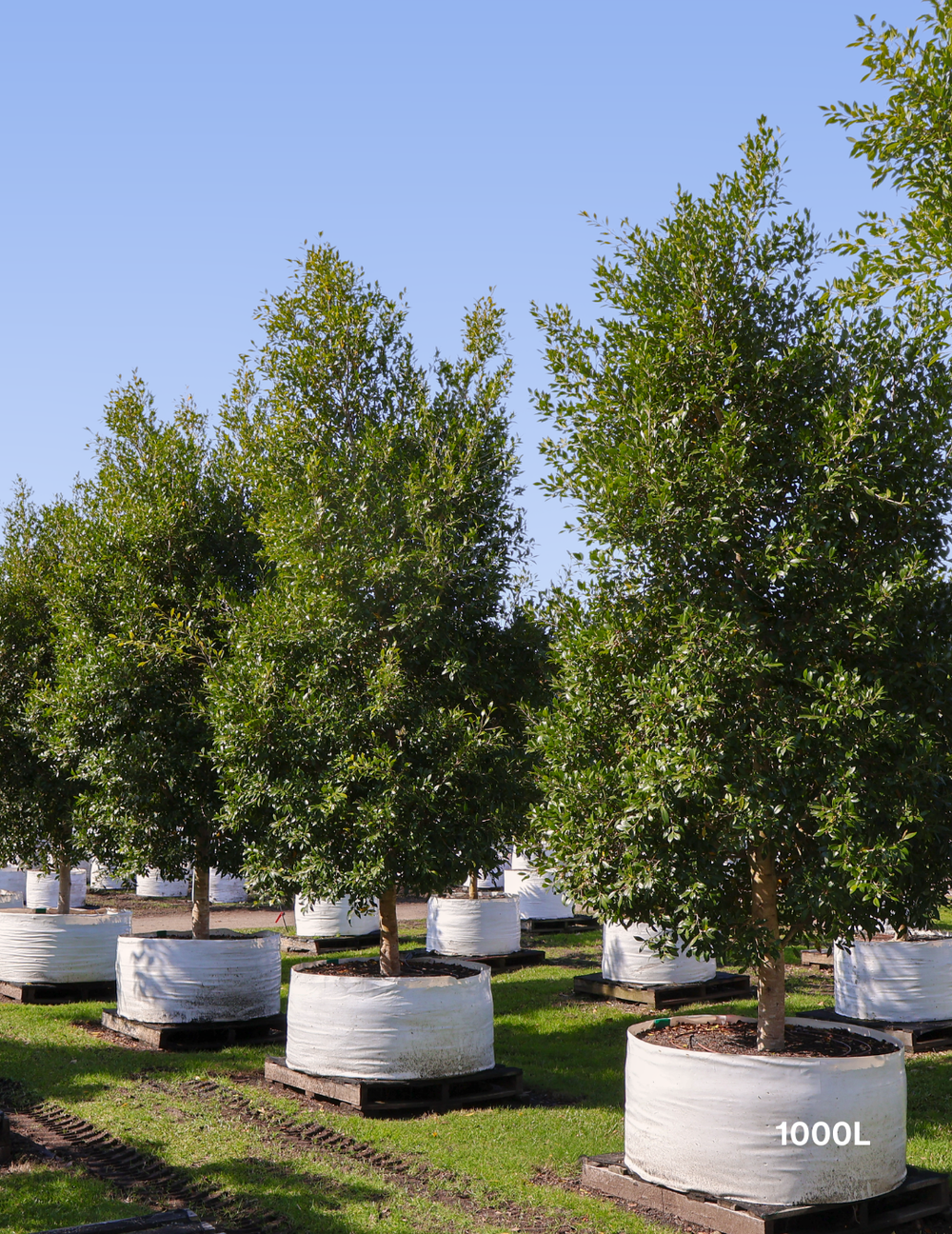
Ficus microcarpa var. hilliiFicus microcarpa var. hilliiFicus microcarpa var. hilliiFicus microcarpa var. hilliiFicus microcarpa var. hilliiFicus microcarpa var. hilliiFicus microcarpa var. hillii

Tall hedge and screen

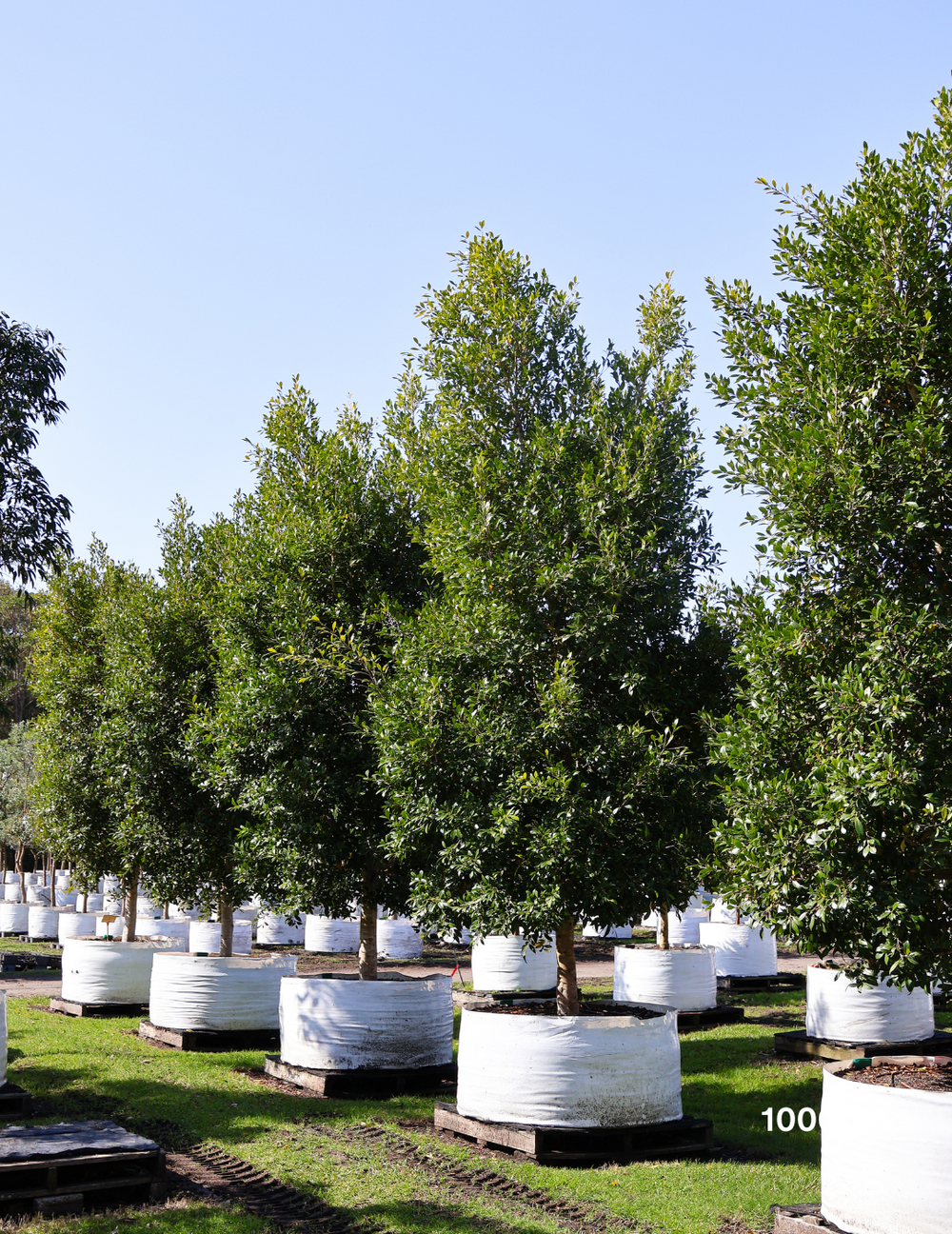
Ficus microcarpa var. hillii

Hill's fig

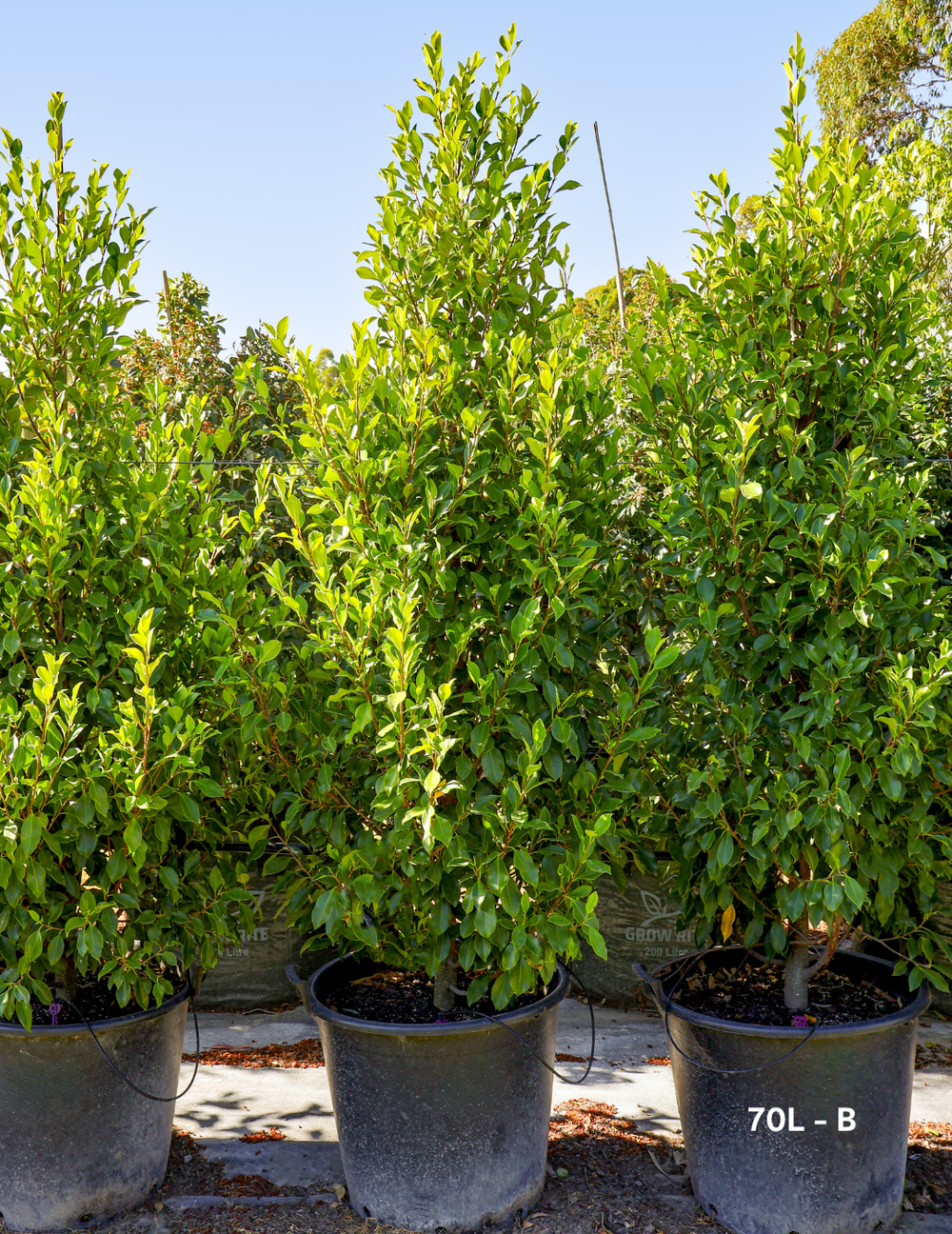
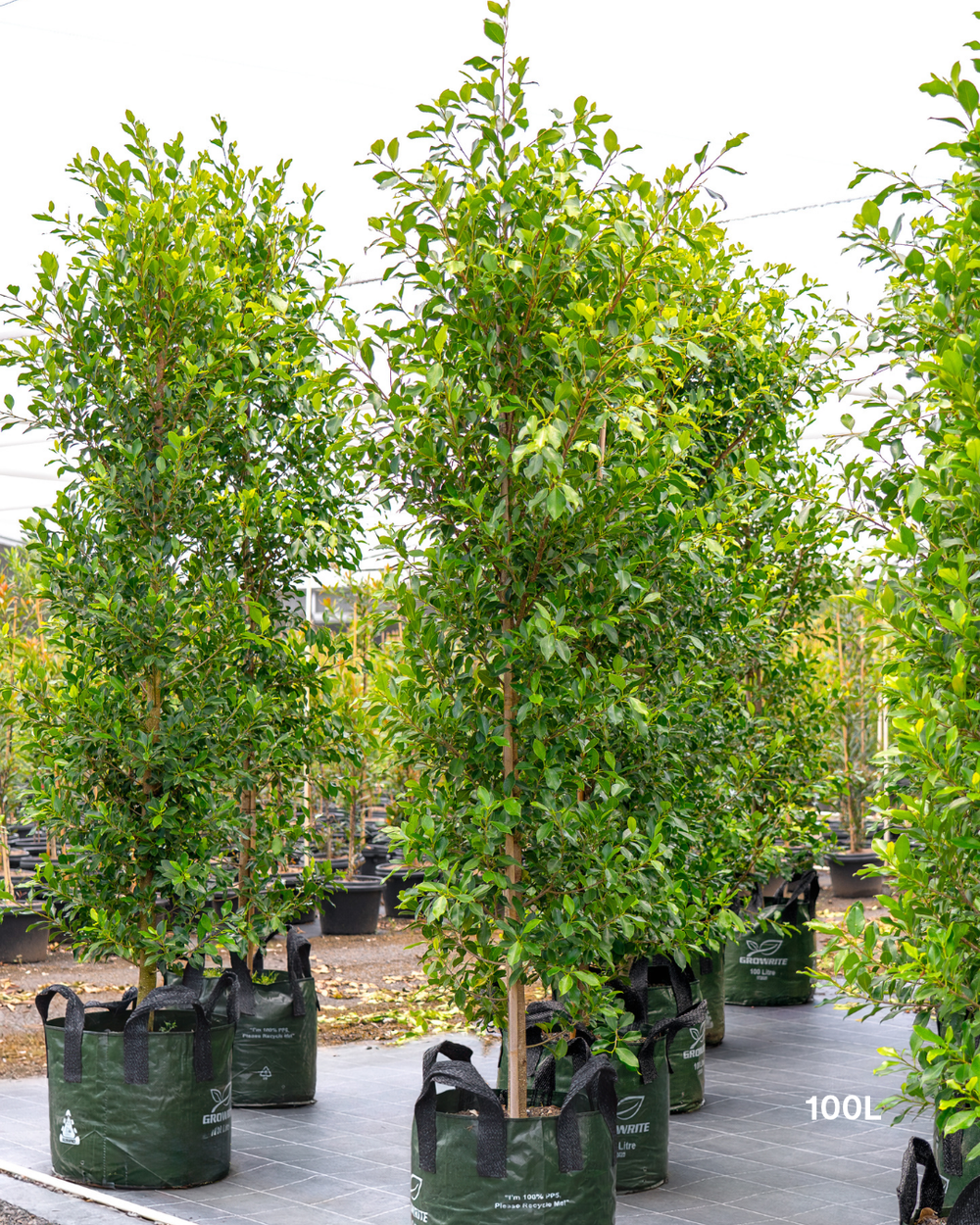
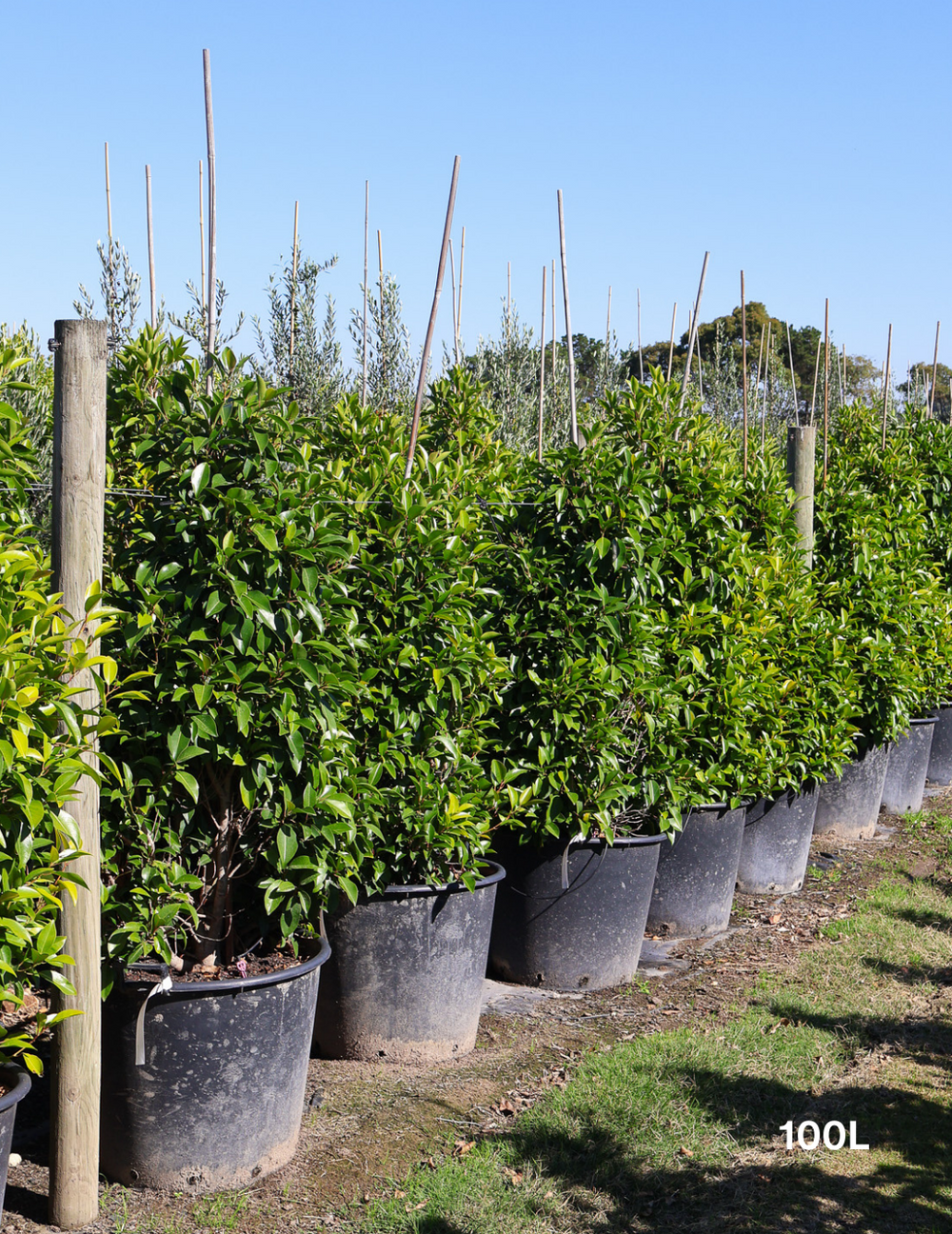
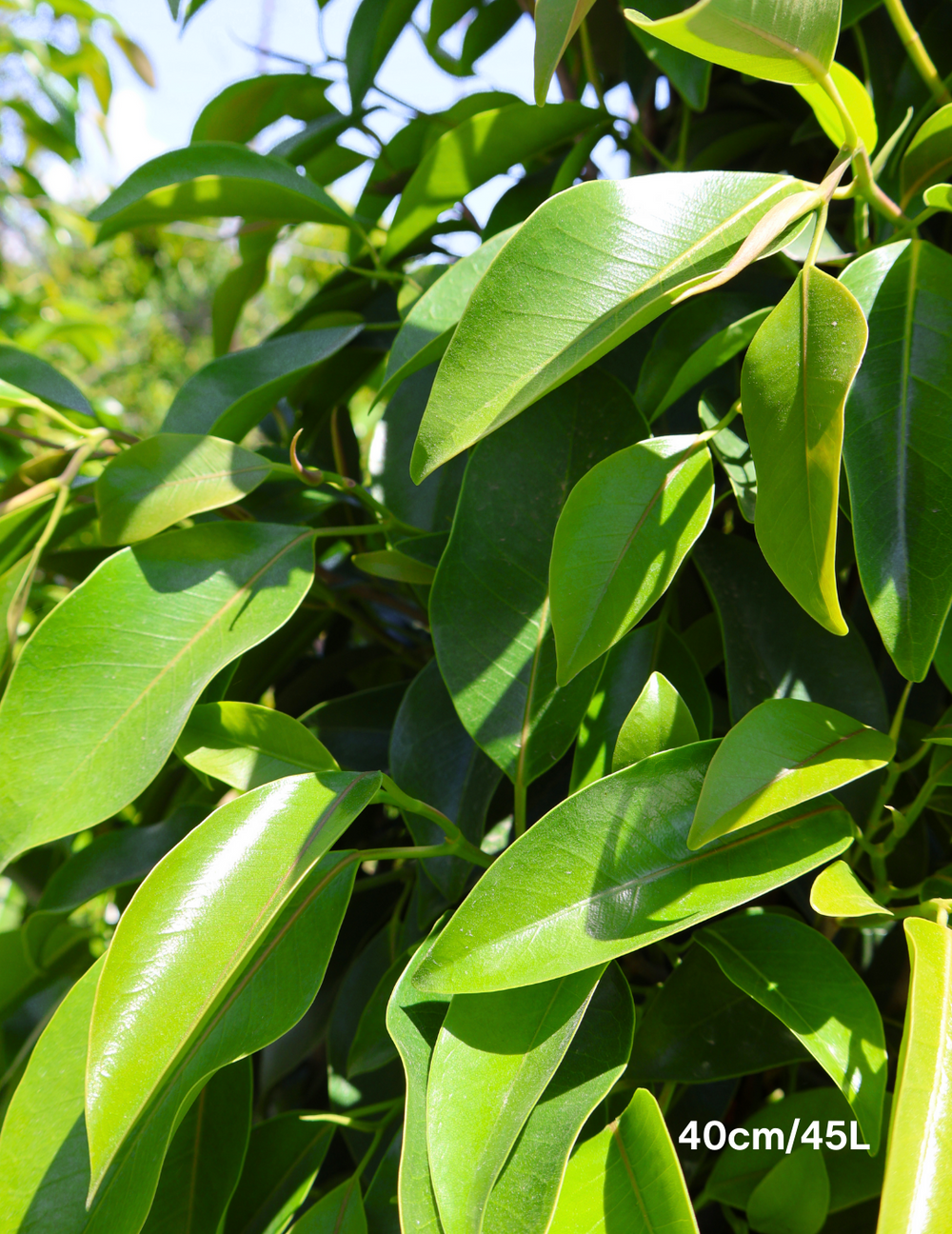
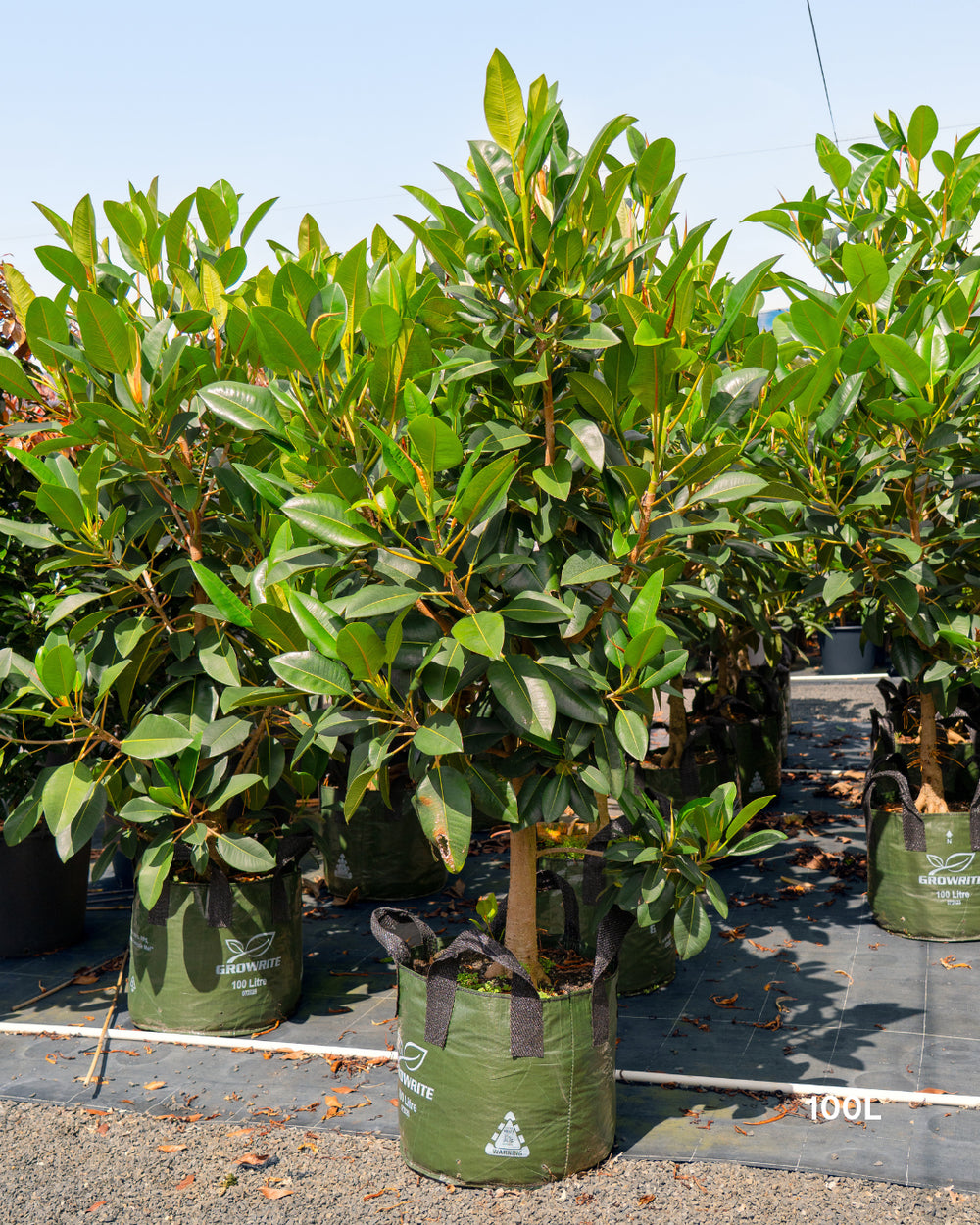
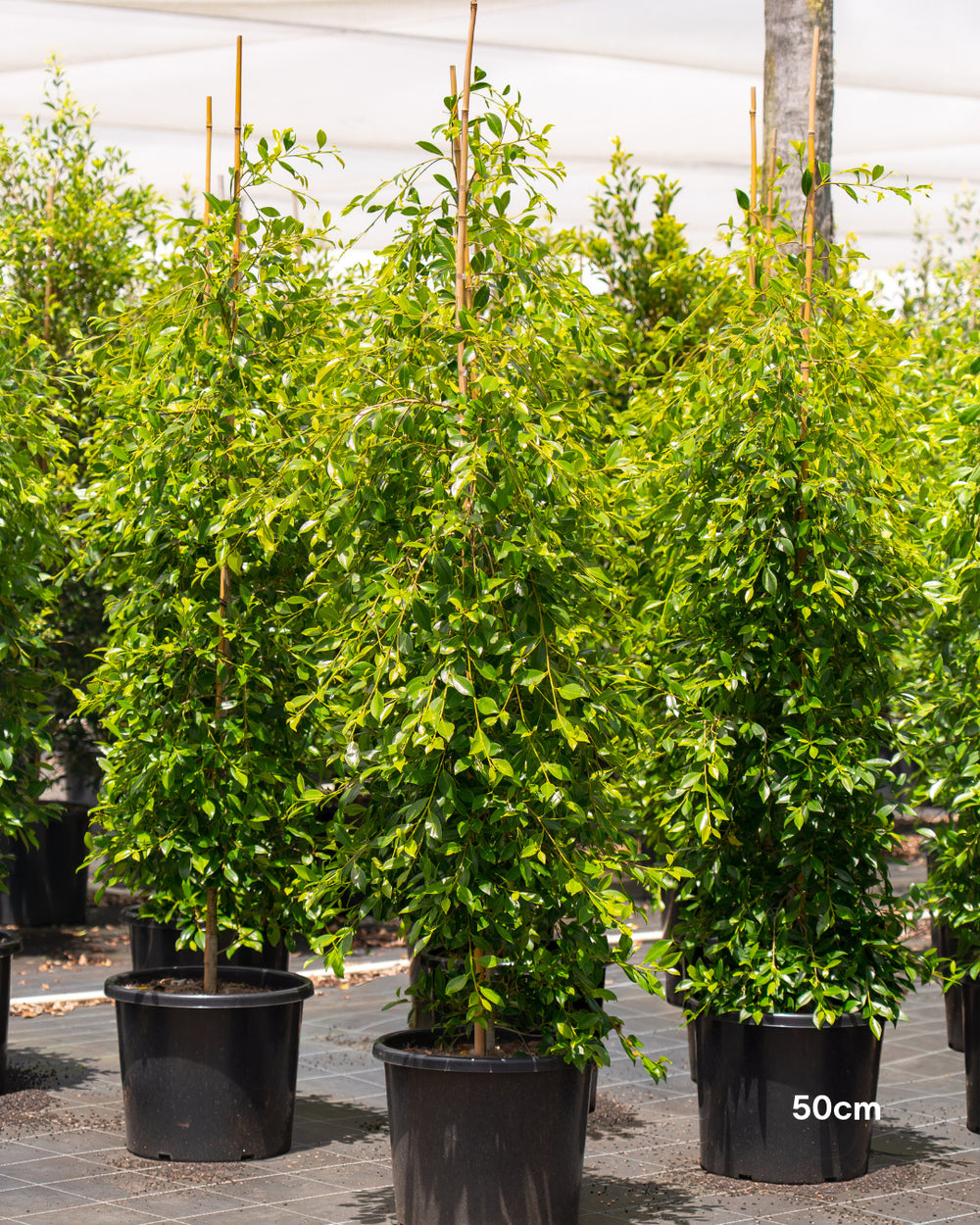
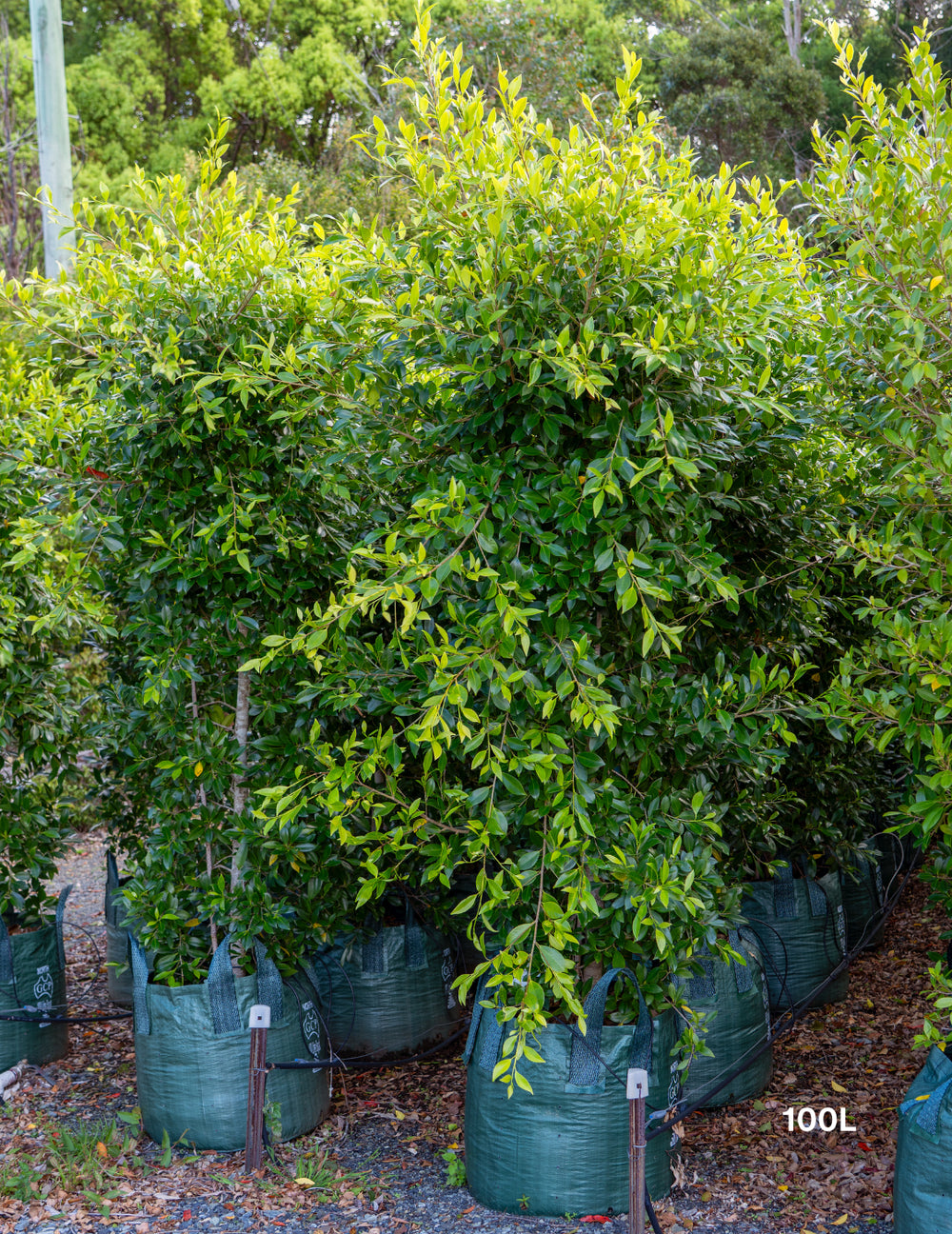
The original Hill's fig, with a dense, pendulous habit and lime-green, glossy foliage. It grows 0.5 to 1 m a year, clips to a uniform height or grows out to a broad canopy, and is frost sensitive.

Mature size
10 to 15 m x 8 to 10 m
Fruit
Small figs
Best for
Tall hedges, pleached rows, screening
View product →
Compare sizes
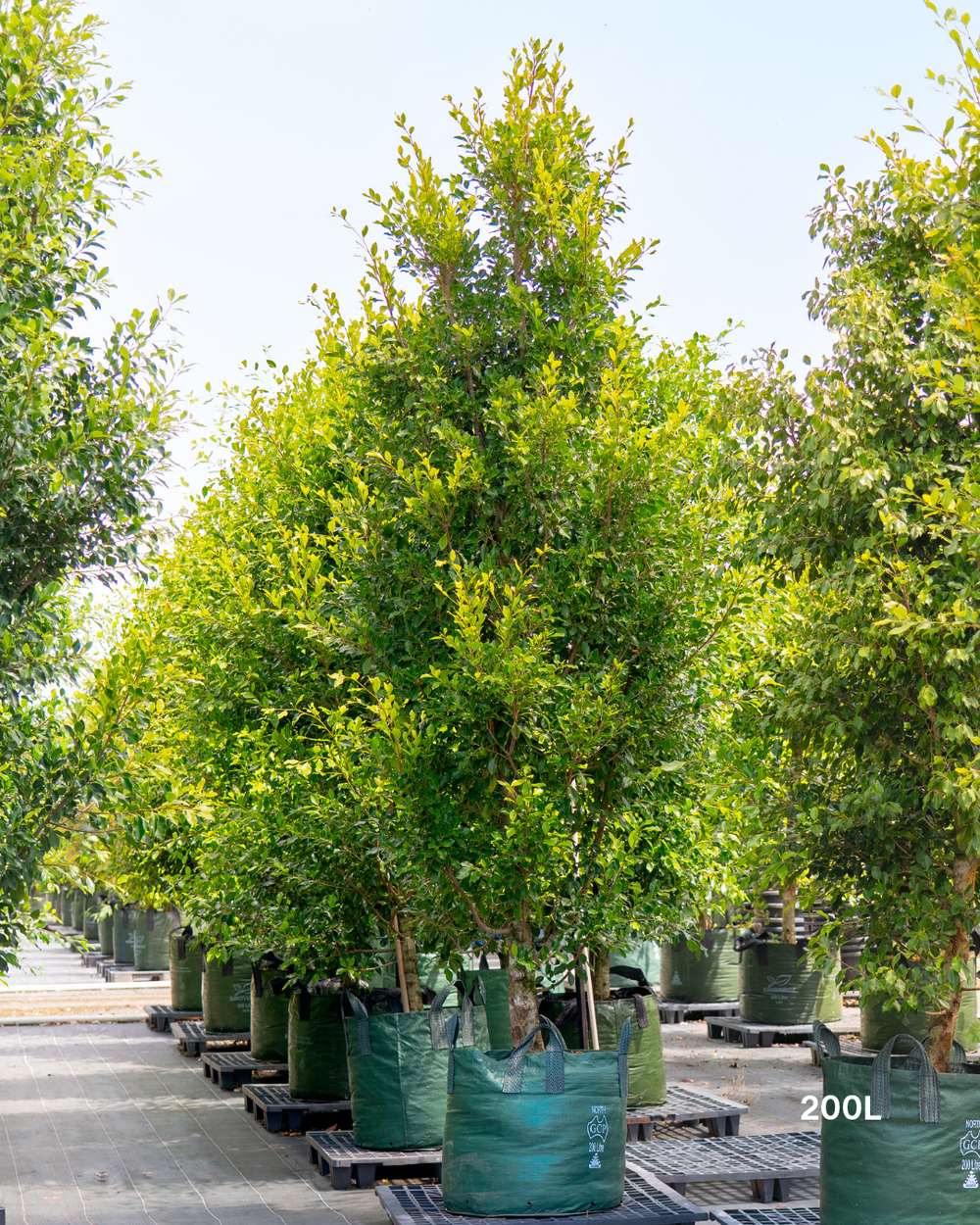
Ficus hillii 'Flash'Ficus hillii 'Flash'Ficus hillii 'Flash'Ficus hillii 'Flash'Ficus hillii 'Flash'Ficus hillii 'Flash'Ficus hillii 'Flash'Ficus hillii 'Flash'Ficus hillii 'Flash'Ficus hillii 'Flash'Ficus hillii 'Flash'Ficus hillii 'Flash'

Upright formal hedge

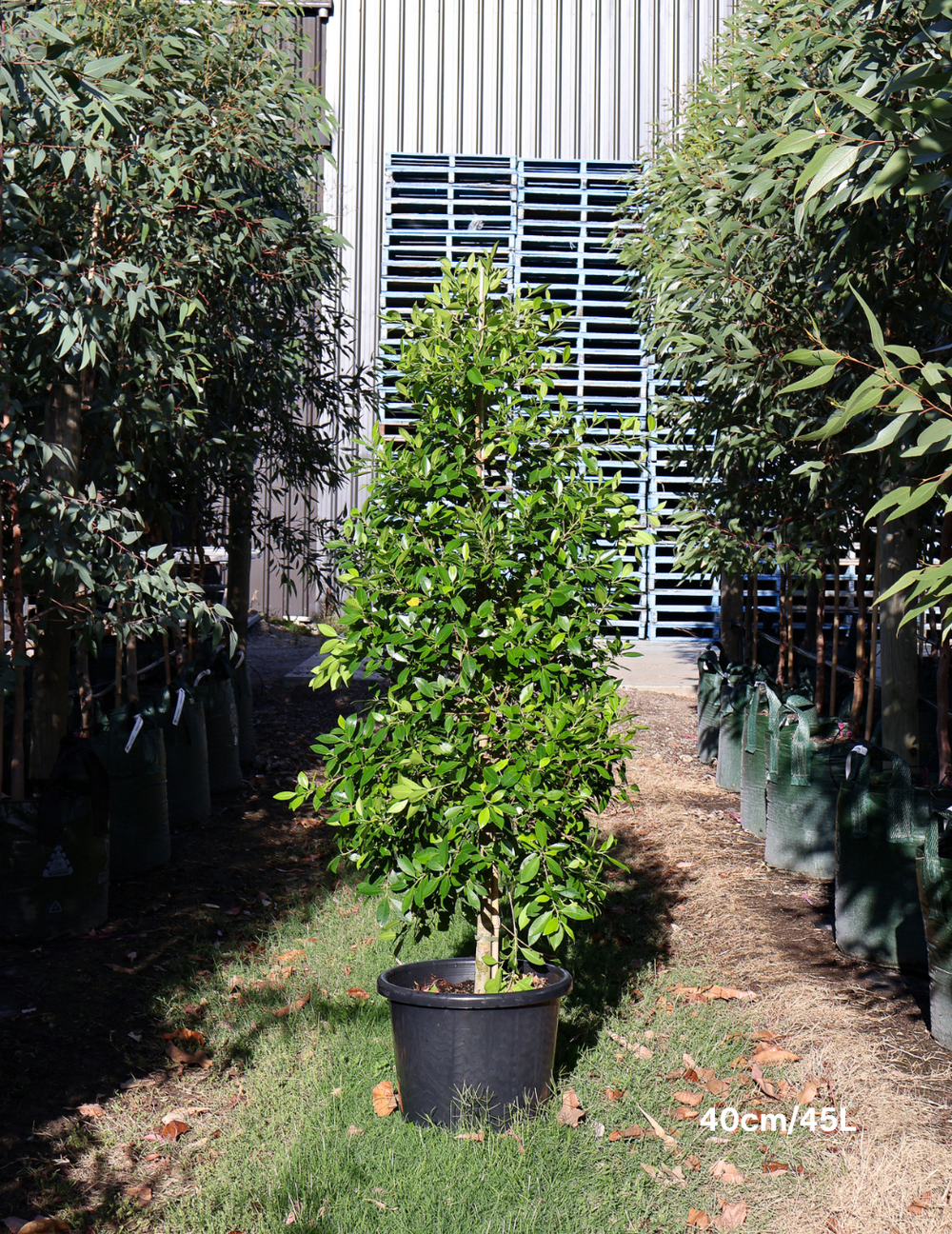
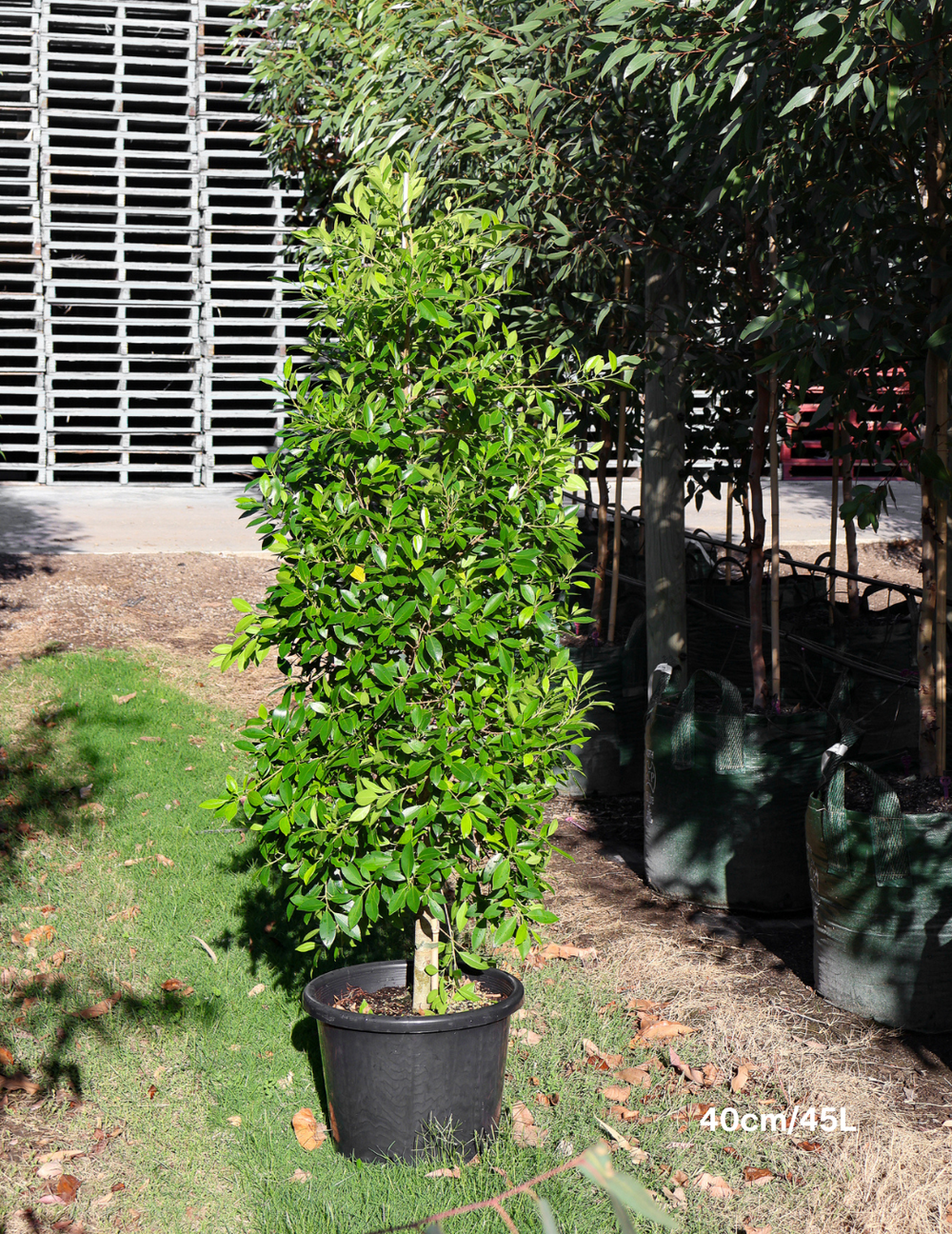
Ficus hillii 'Flash'

Hill's fig 'Flash'

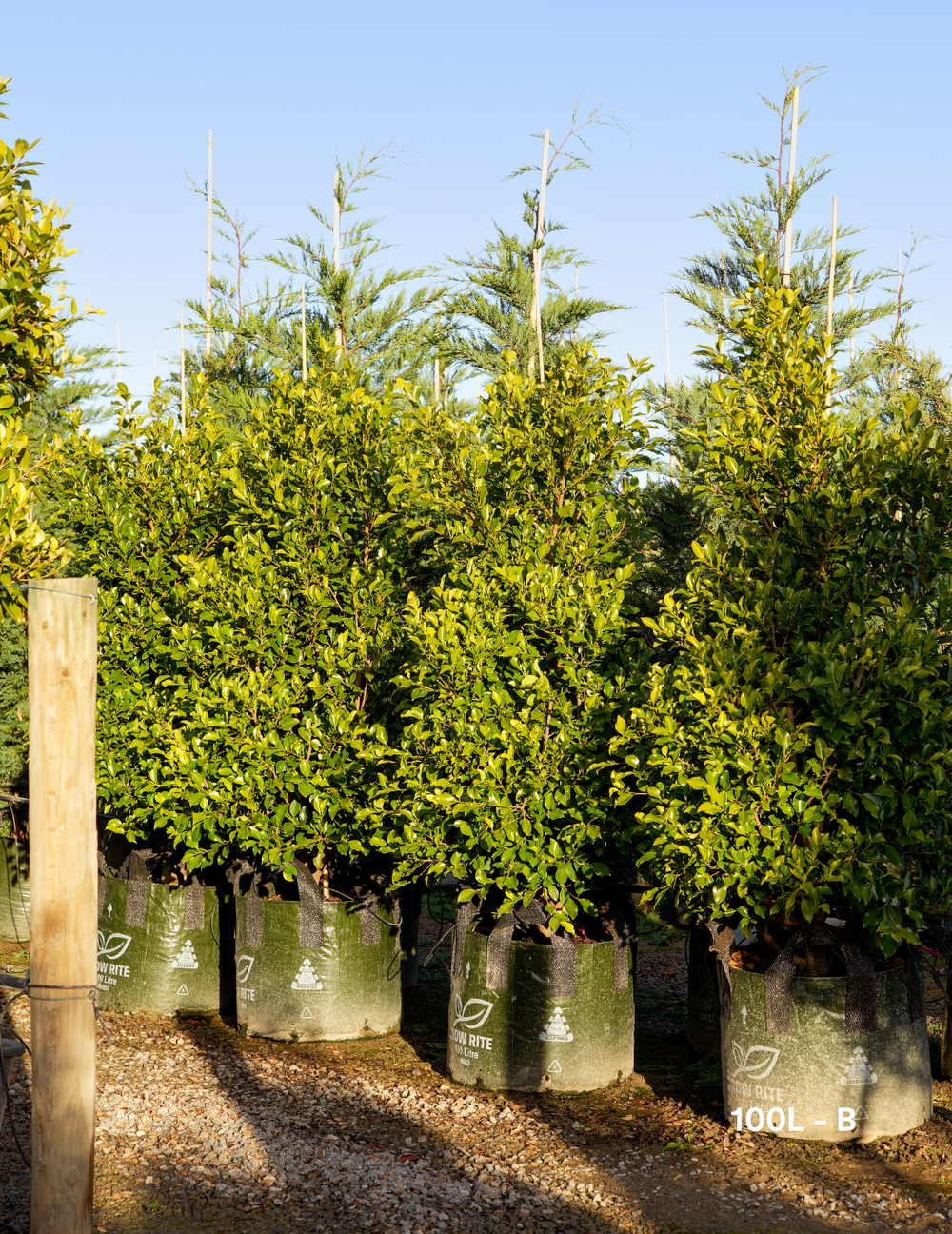
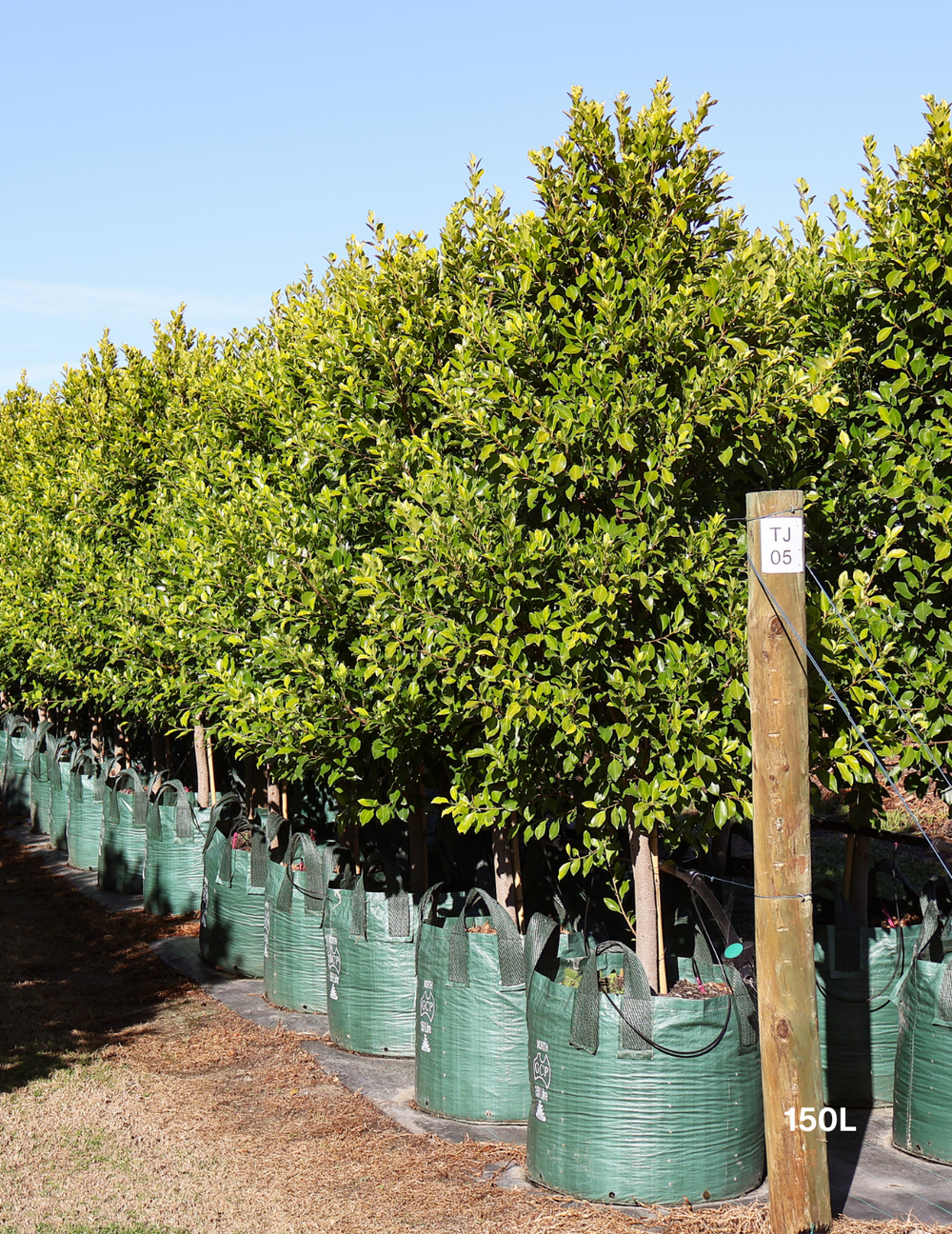
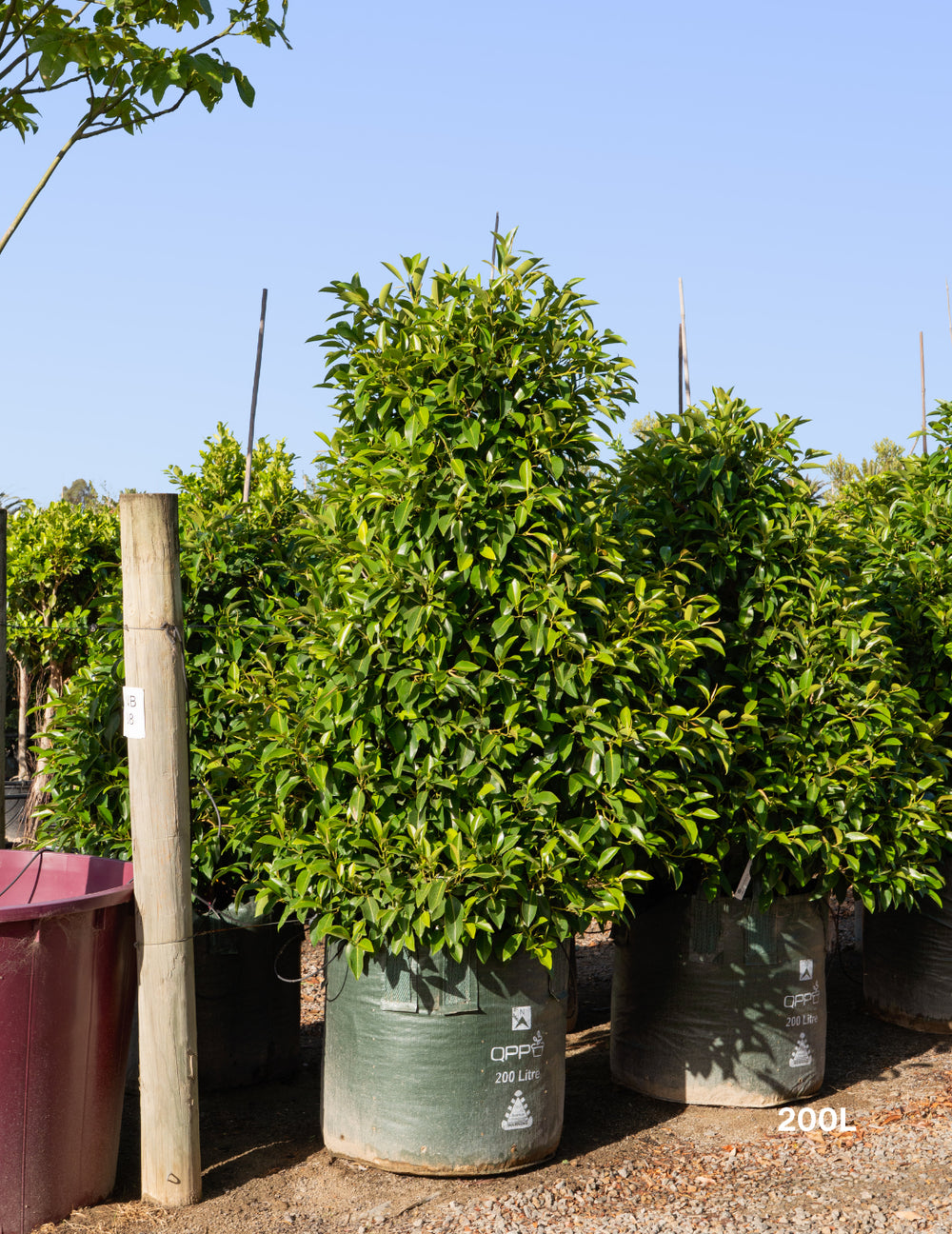
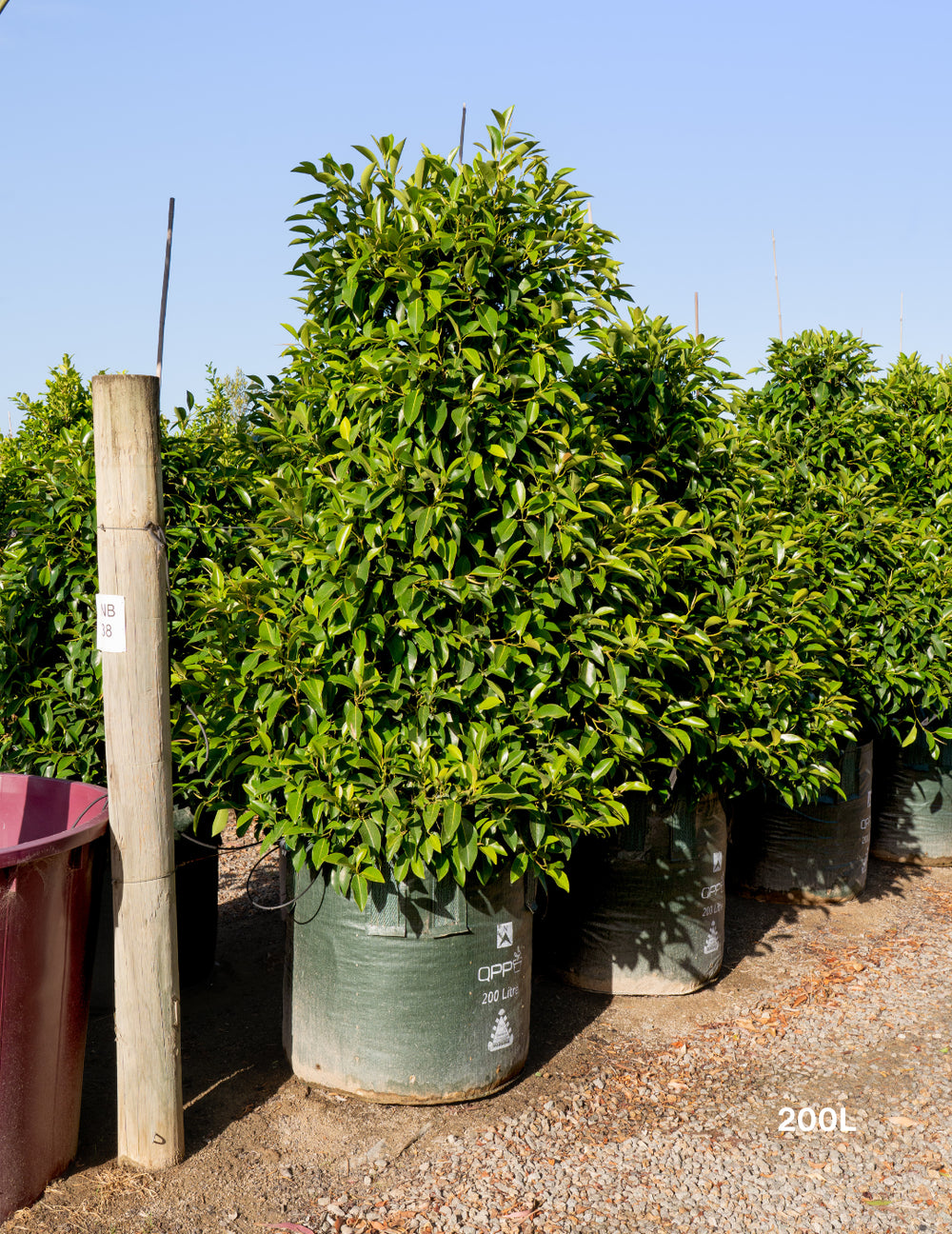
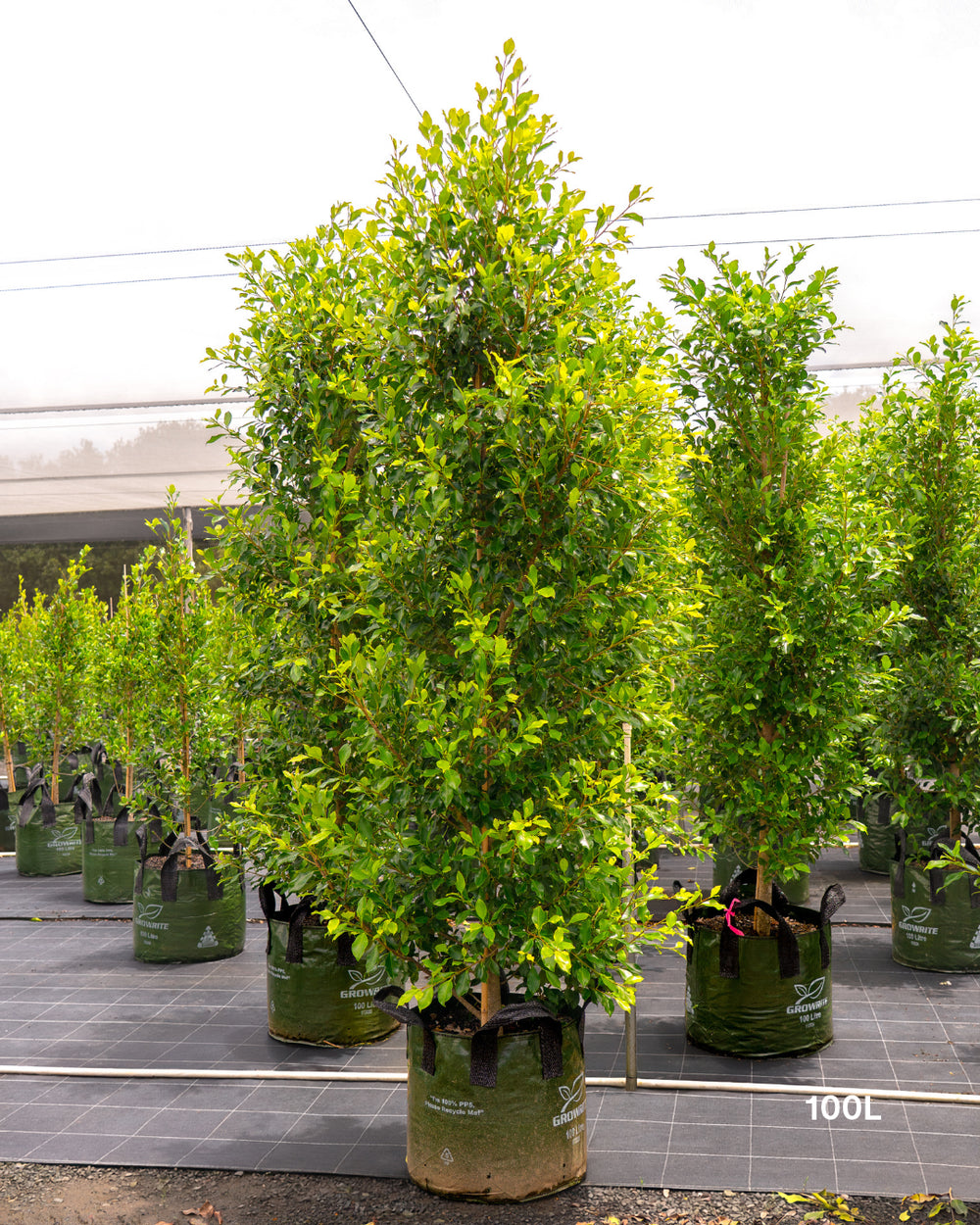
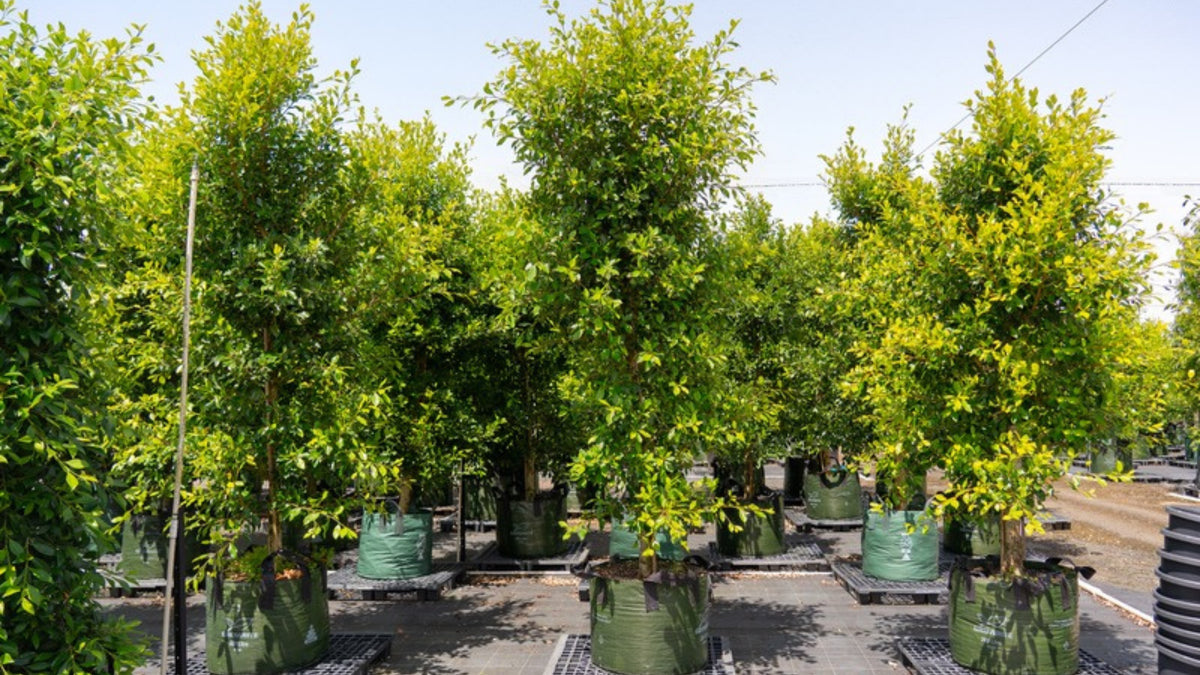
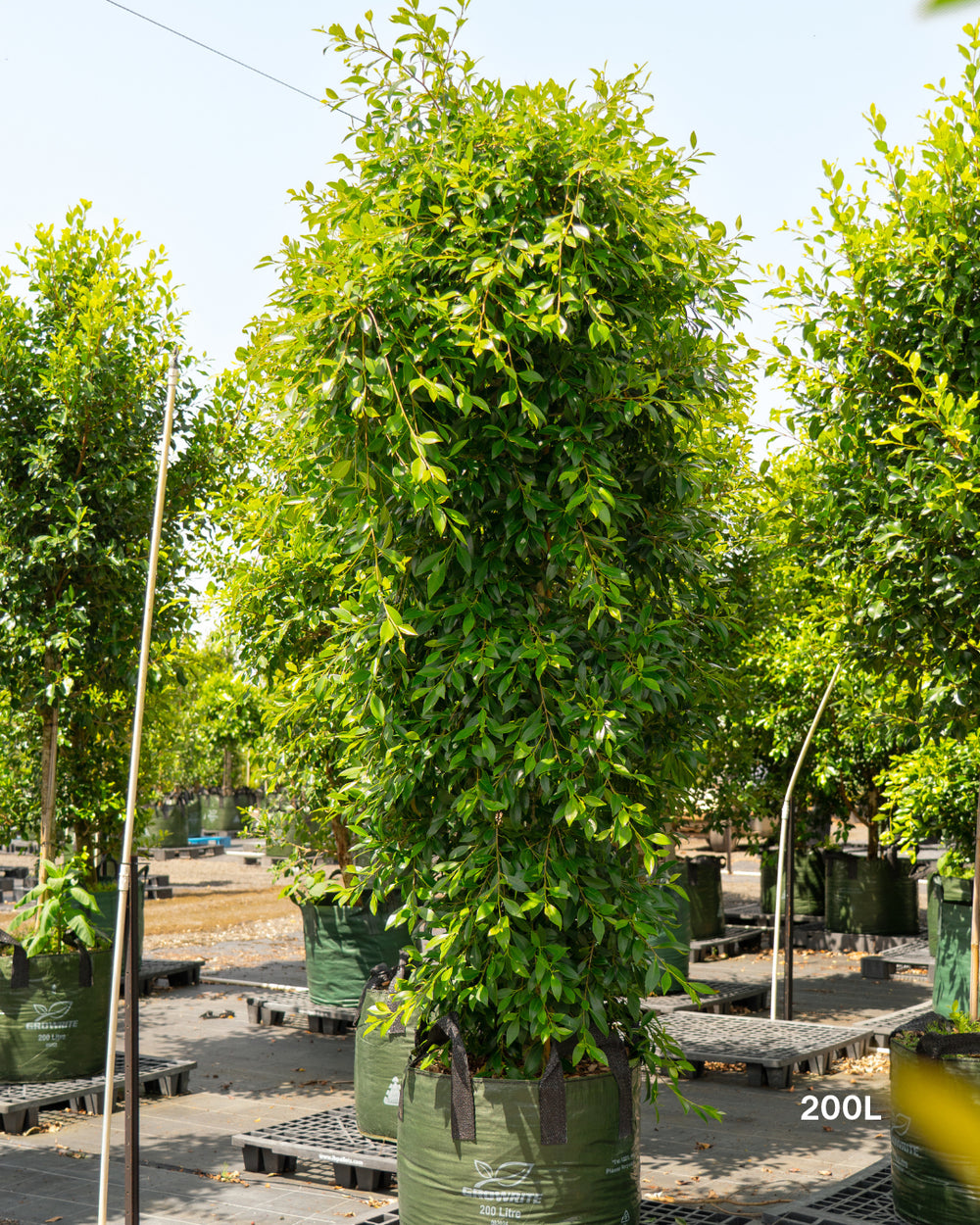
More upright and compact than Hill's fig, with lime-green new growth against glossy dark green leaves. It grows 50 to 100 cm a year, responds well to pruning, and is frost sensitive.

Mature size
6 to 10 m x 3 to 4 m
Fruit
Small, inconspicuous figs
Best for
Formal hedges, boundary lines, pleaching
View product →
Compare sizes
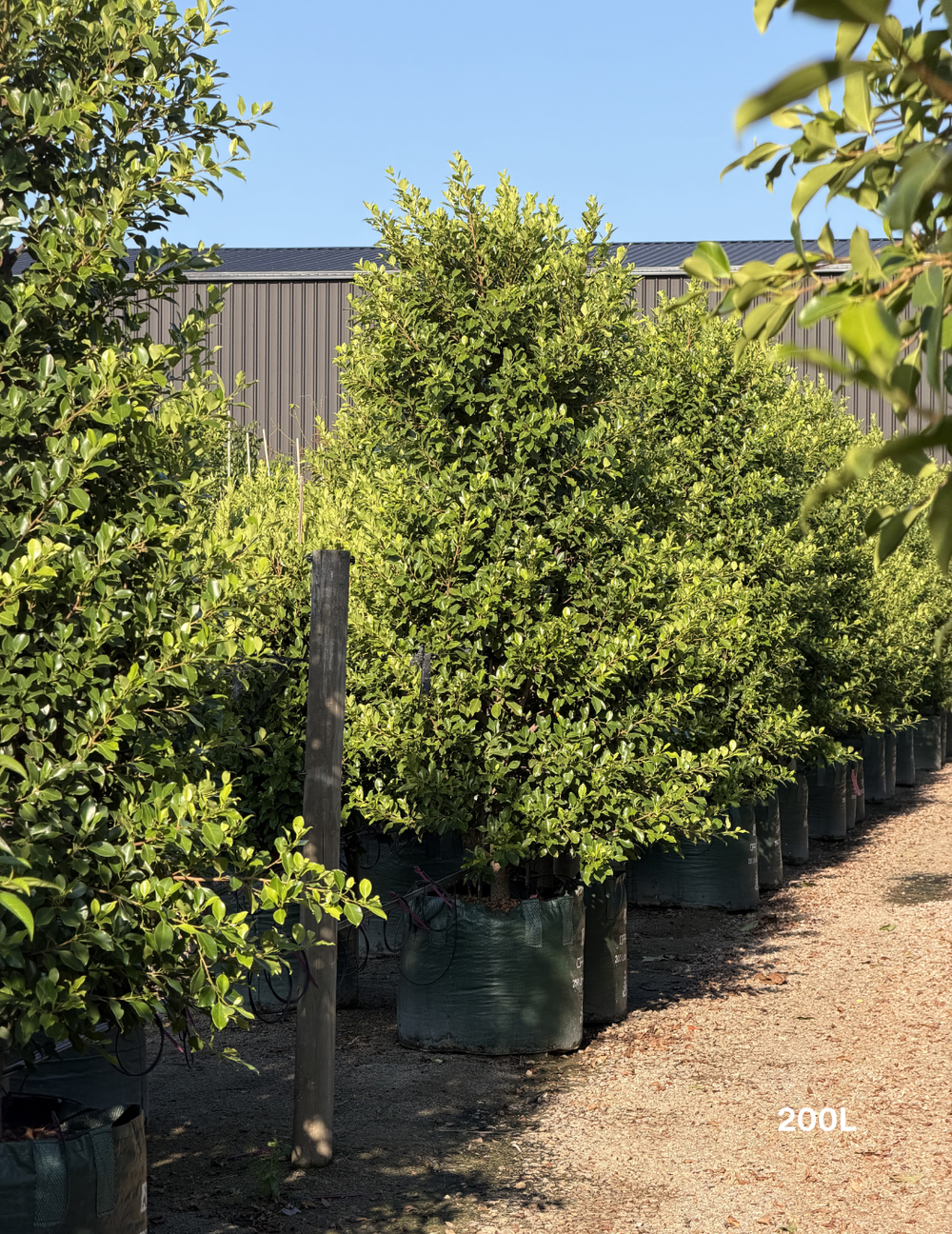
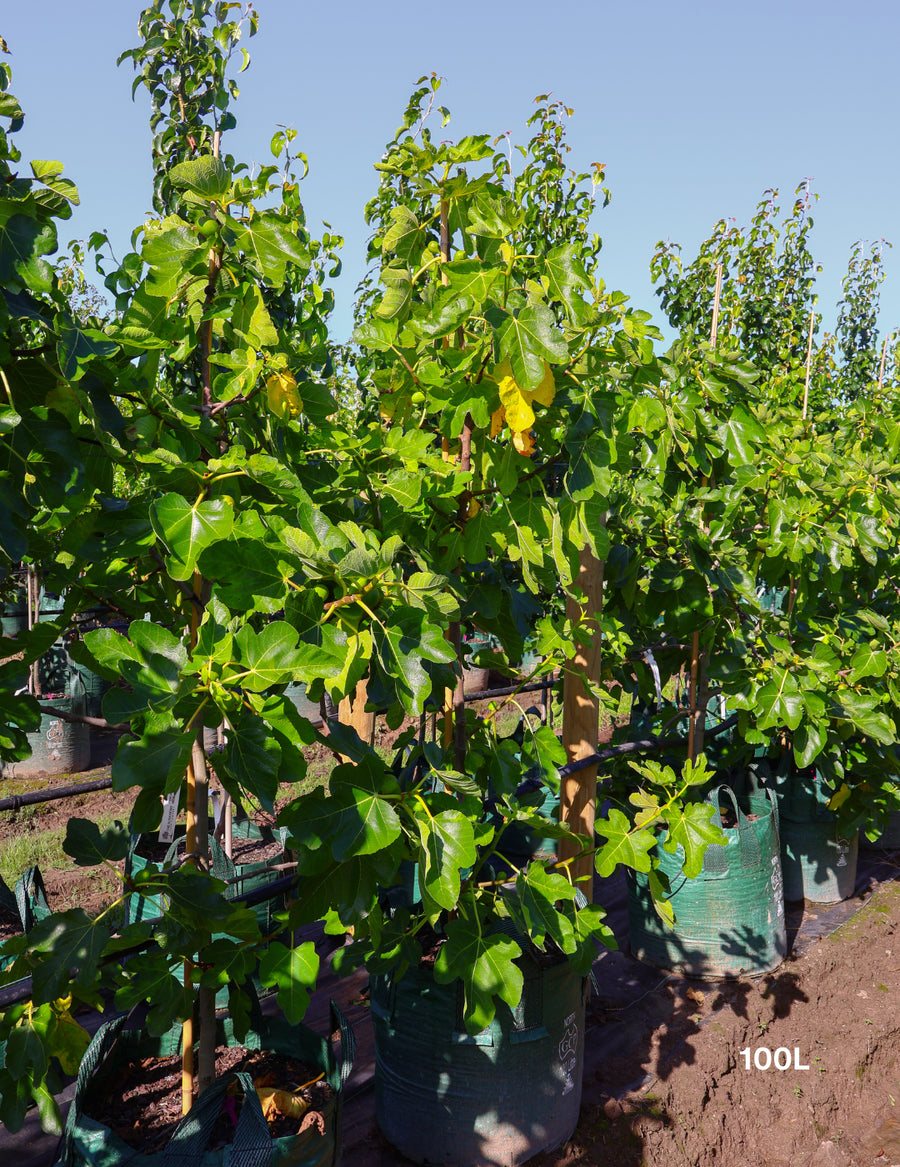
Ficus obliqua 'Figaro'Ficus obliqua 'Figaro'Ficus obliqua 'Figaro'Ficus obliqua 'Figaro'

Compact native hedge

Ficus obliqua 'Figaro'

Small-leaved fig 'Figaro'

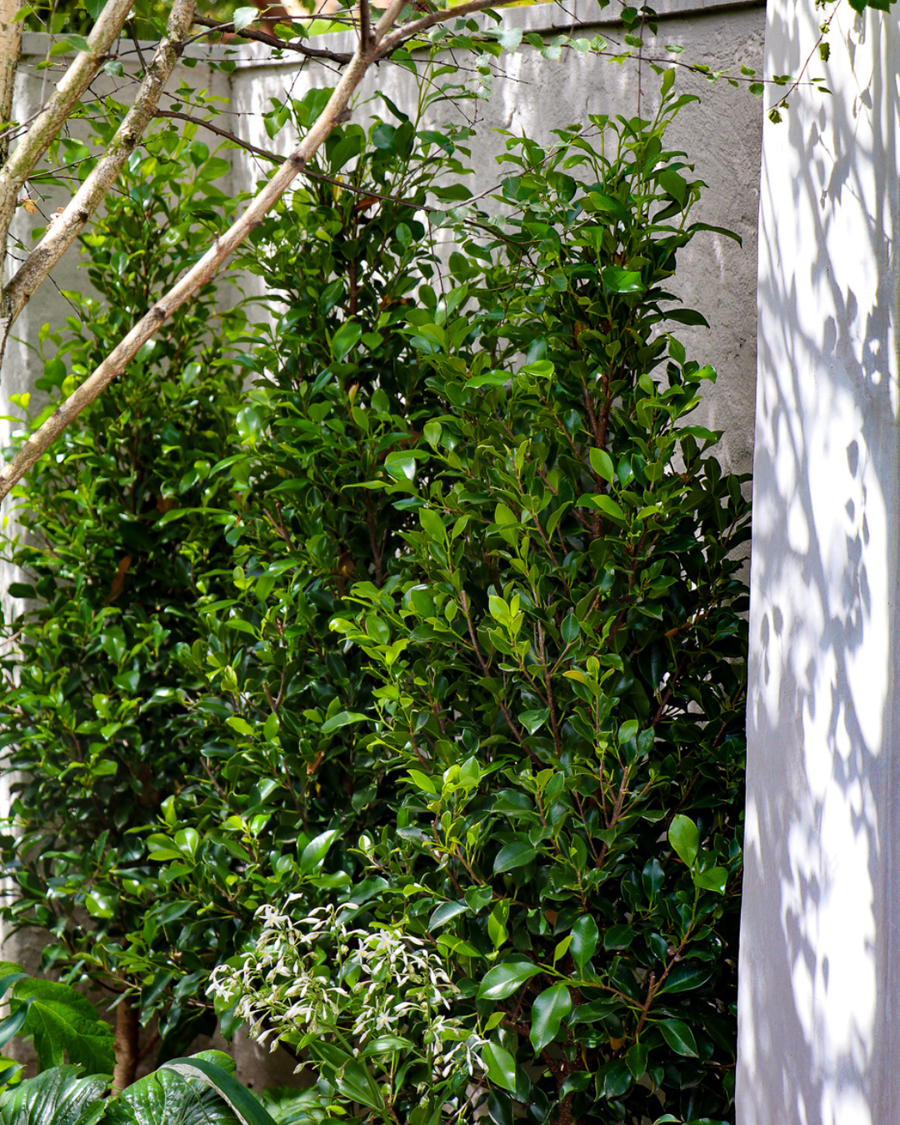
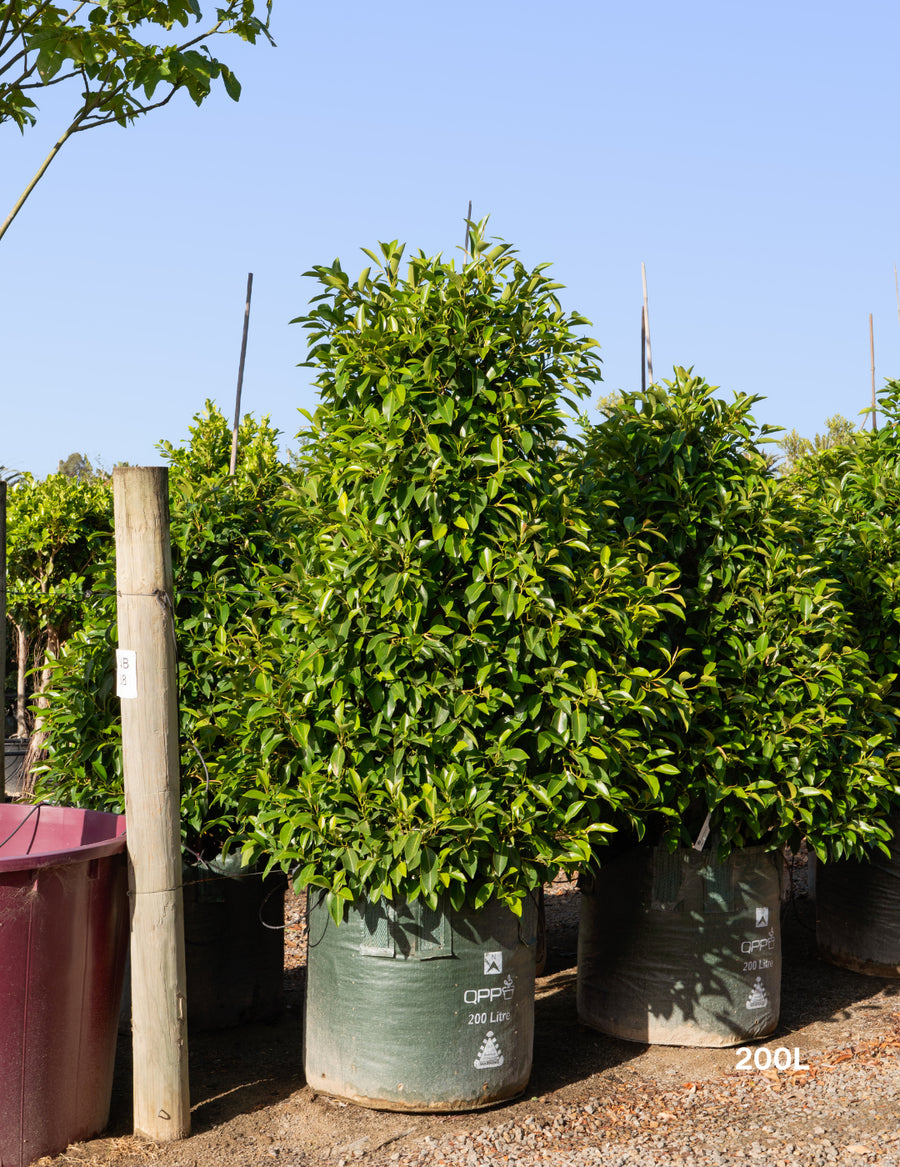
A compact cultivar of the native small-leaved fig, with glossy dark green leaves and a dense, rounded form. It grows 10 to 30 cm a year, is usually kept clipped as a hedge or screen, and is frost sensitive.

Mature size
1 to 2 m x 1 to 1.5 m
Fruit
Small figs
Best for
Formal hedges, screens, borders, large pots

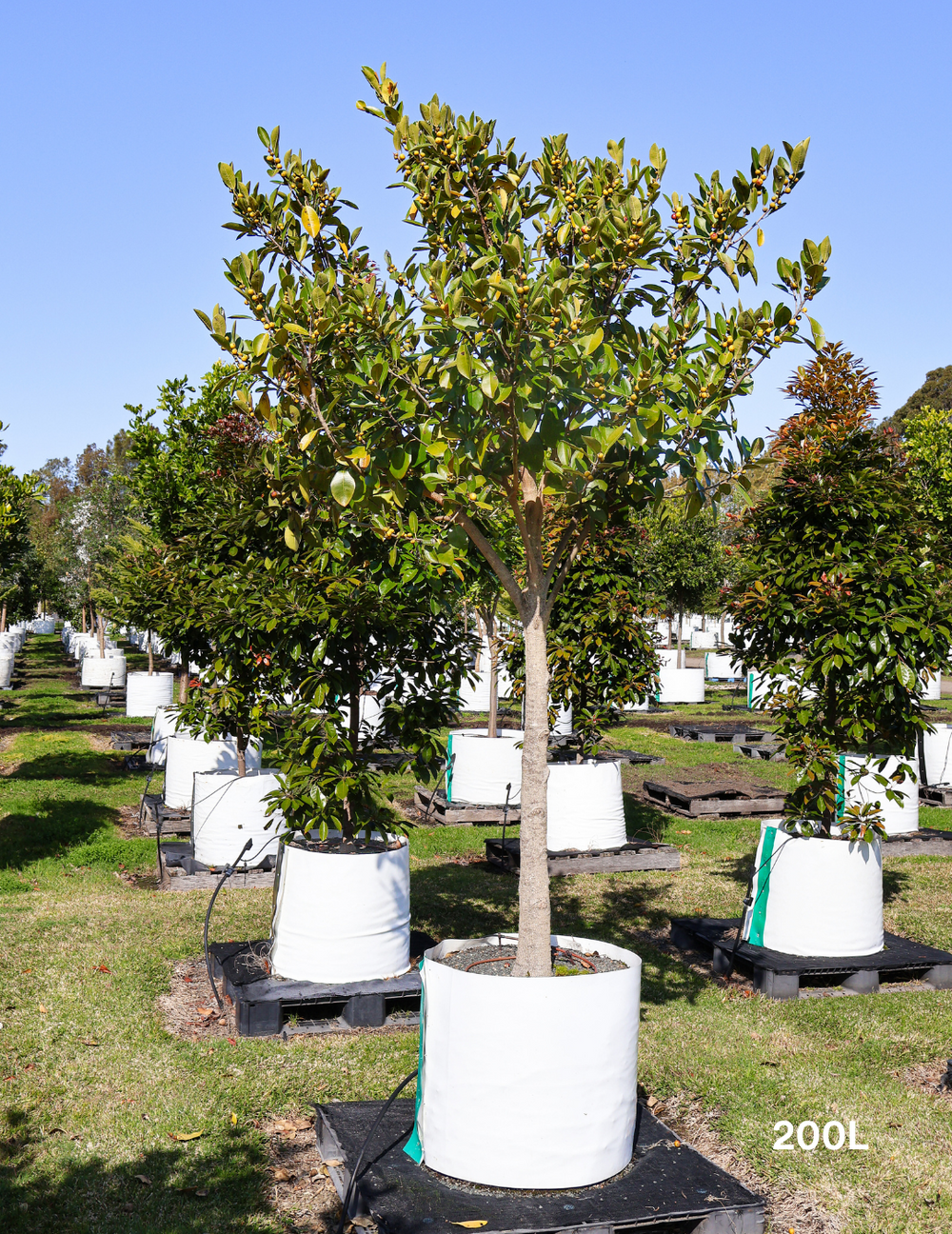
Current height guide

200L1.2m - 1.8m Approx.
View product →
Compare sizes
Ficus rubiginosaFicus rubiginosa

Native shade tree

Ficus rubiginosa

Port Jackson fig

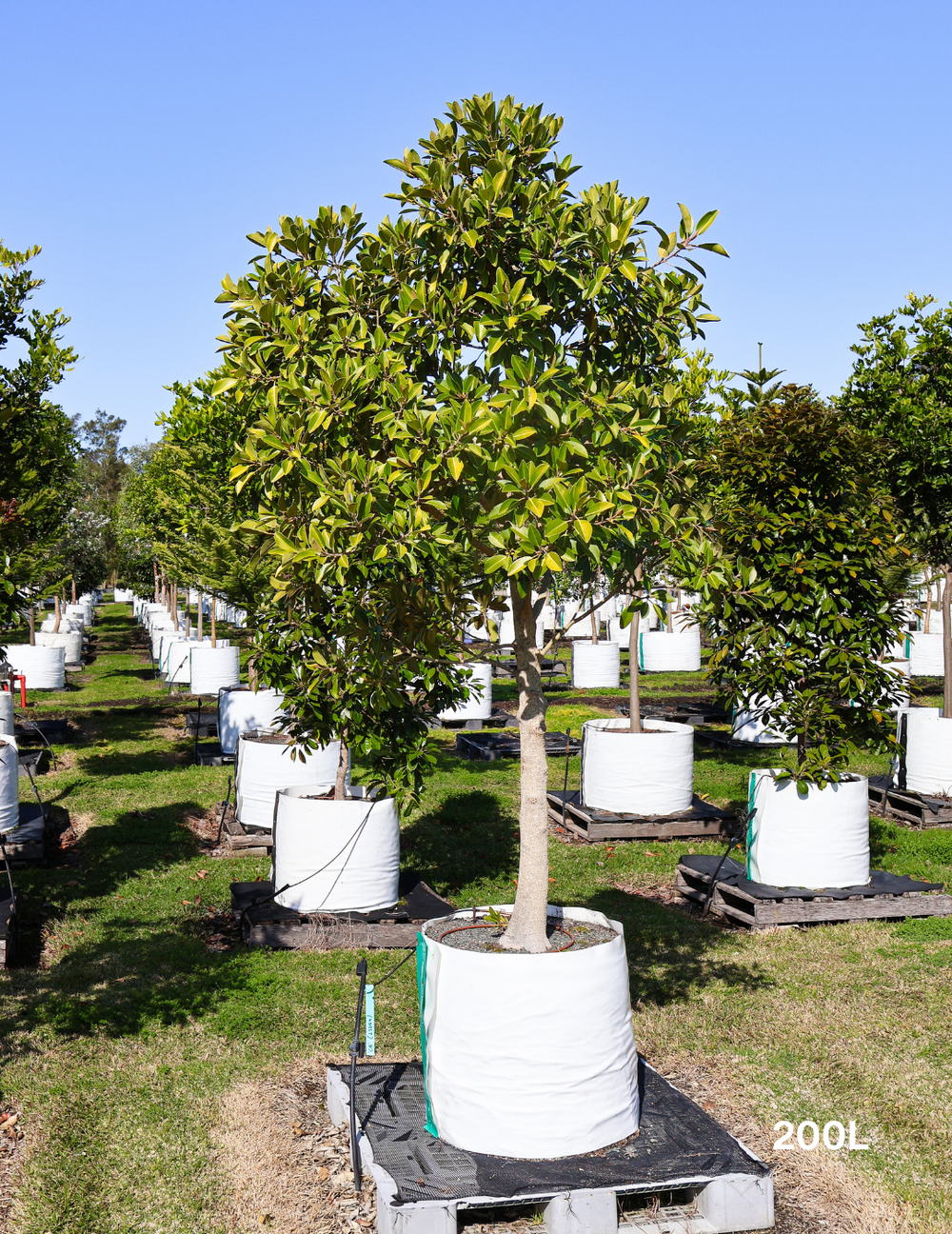
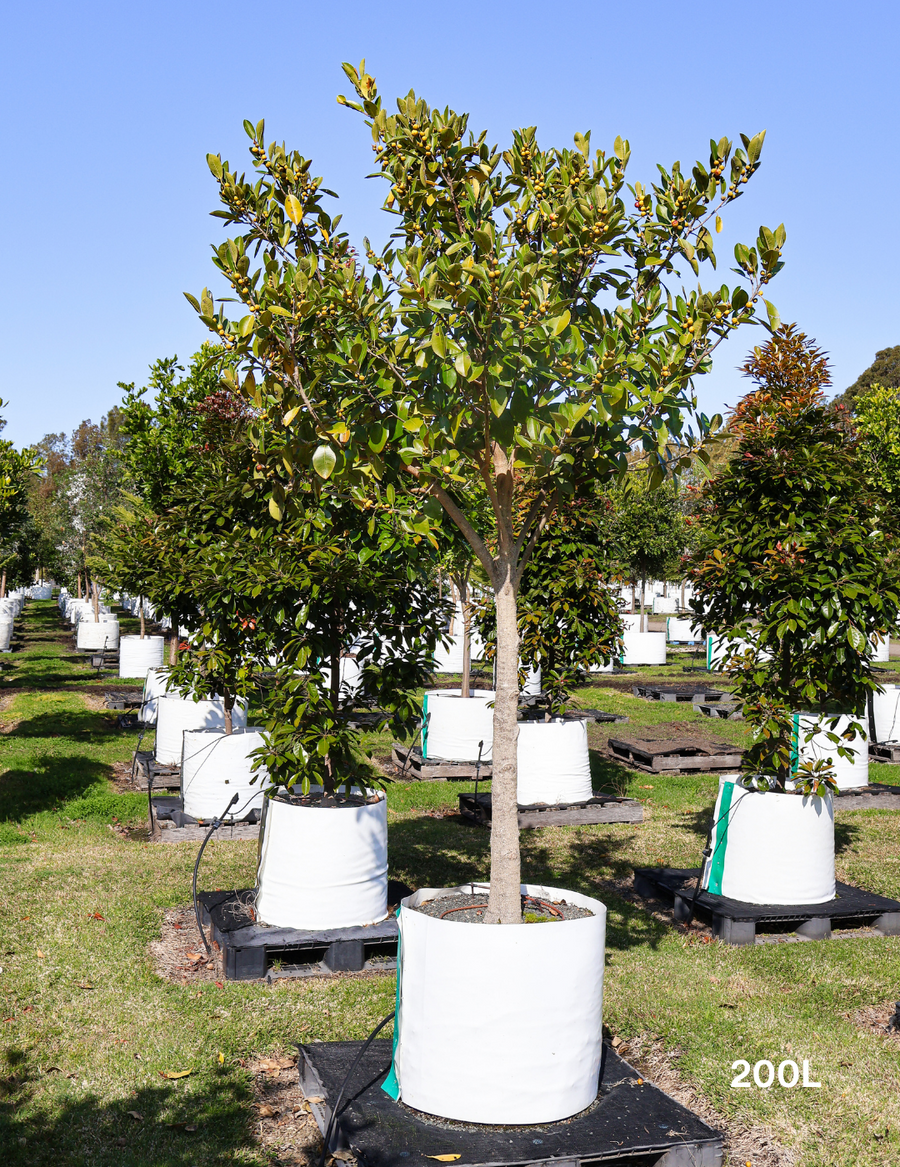
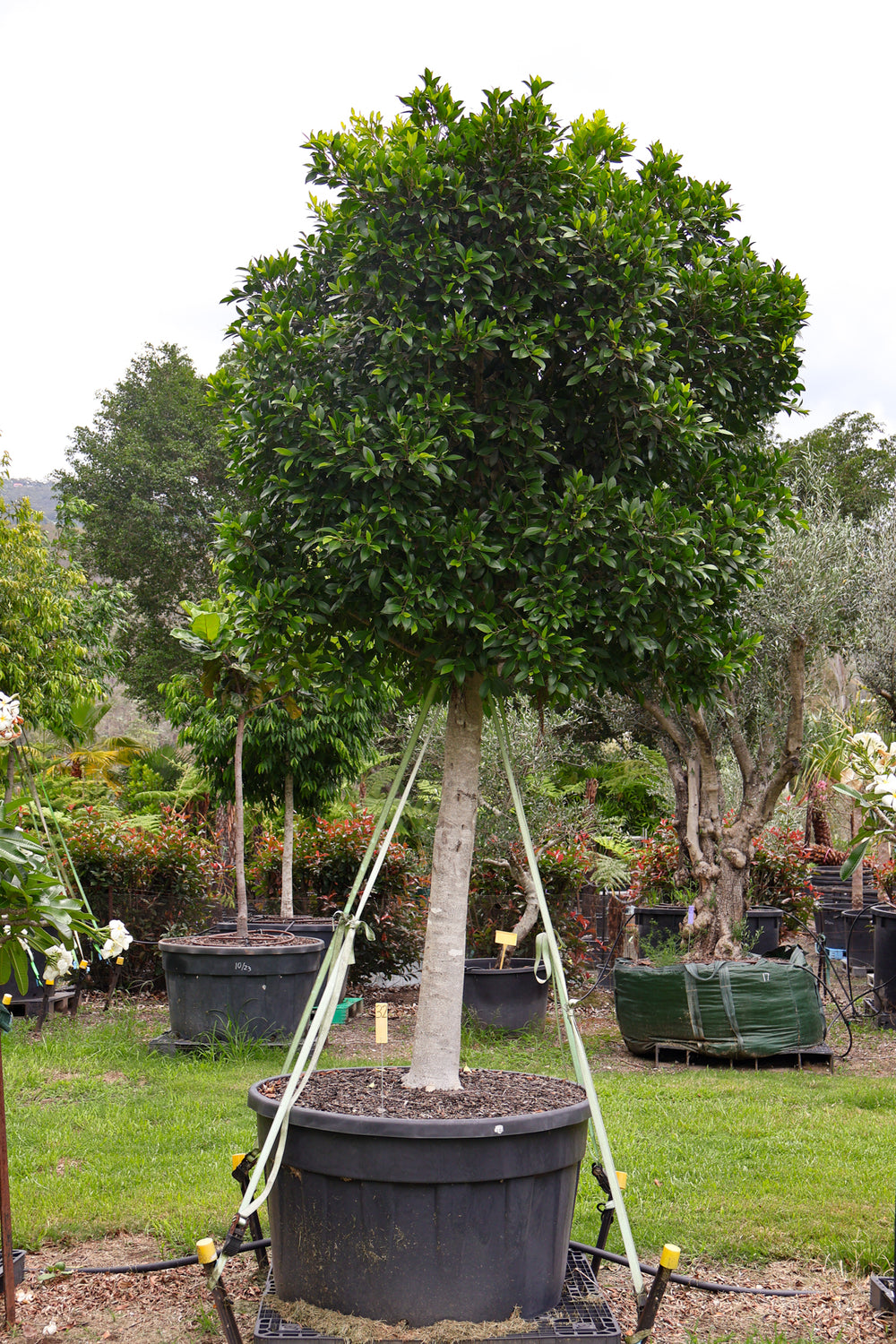
A native fig from eastern Australia with a broad, rounded canopy. The dark green oval leaves have a rusty felt on the underside. It grows 30 to 60 cm a year and is frost sensitive.

Mature size
15 to 20 m x 10 to 15 m
Fruit
Small orange to reddish figs
Best for
Large gardens, parks, avenue planting
View product →
Compare sizes
Ficus macrophyllaFicus macrophylla

Very large native shade tree

Ficus macrophylla

Moreton Bay fig

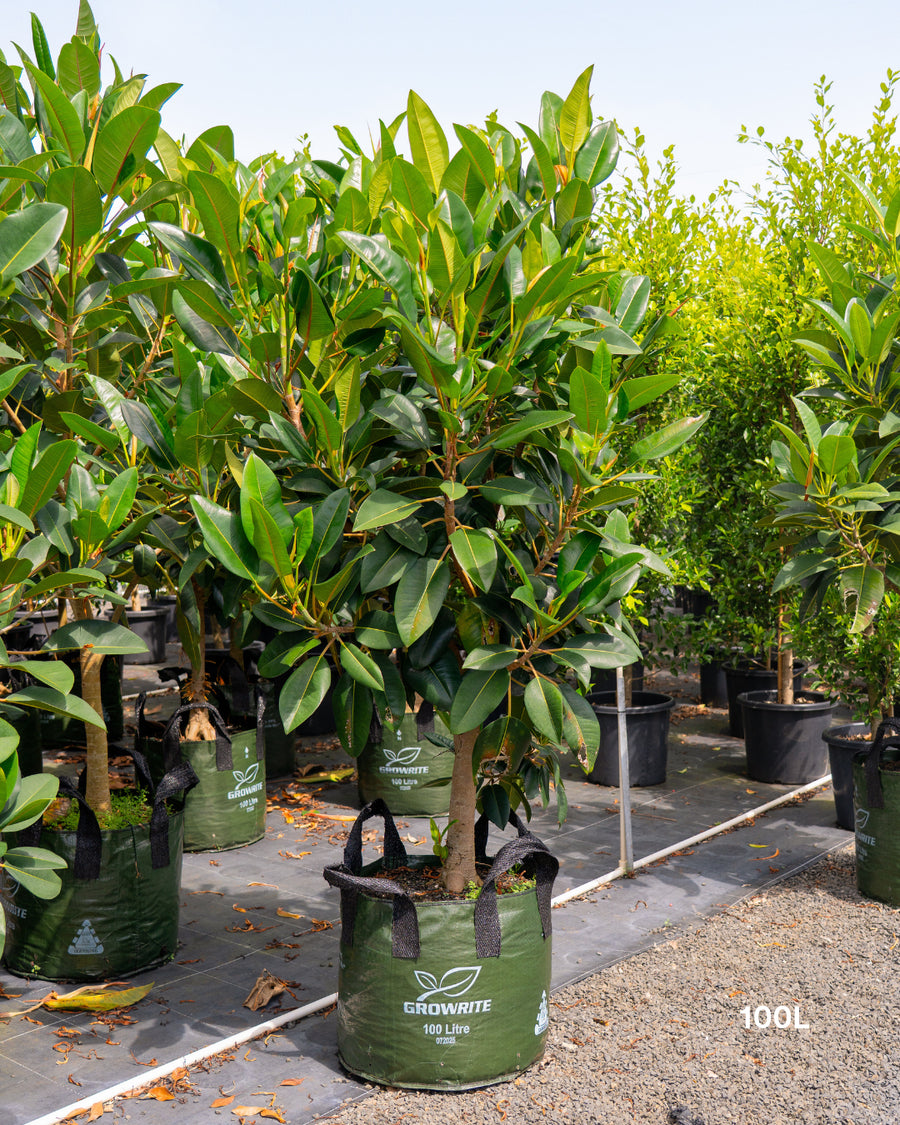
The largest fig here, with massive buttress roots and an immense spreading canopy. It reaches 30 to 60 m, typically 15 to 25 m in cultivation, grows 60 cm to 1 m a year in ideal conditions, and is frost sensitive.

Mature size
30 to 60 m x 20 to 30 m or more
Fruit
Small, round figs
Best for
Parkland, large rural properties, civic landscapes
View product →
Compare sizes
Ficus carica 'Black Genoa'Ficus carica 'Black Genoa'

Edible fig, deciduous

Ficus carica 'Black Genoa'

Black Genoa fig

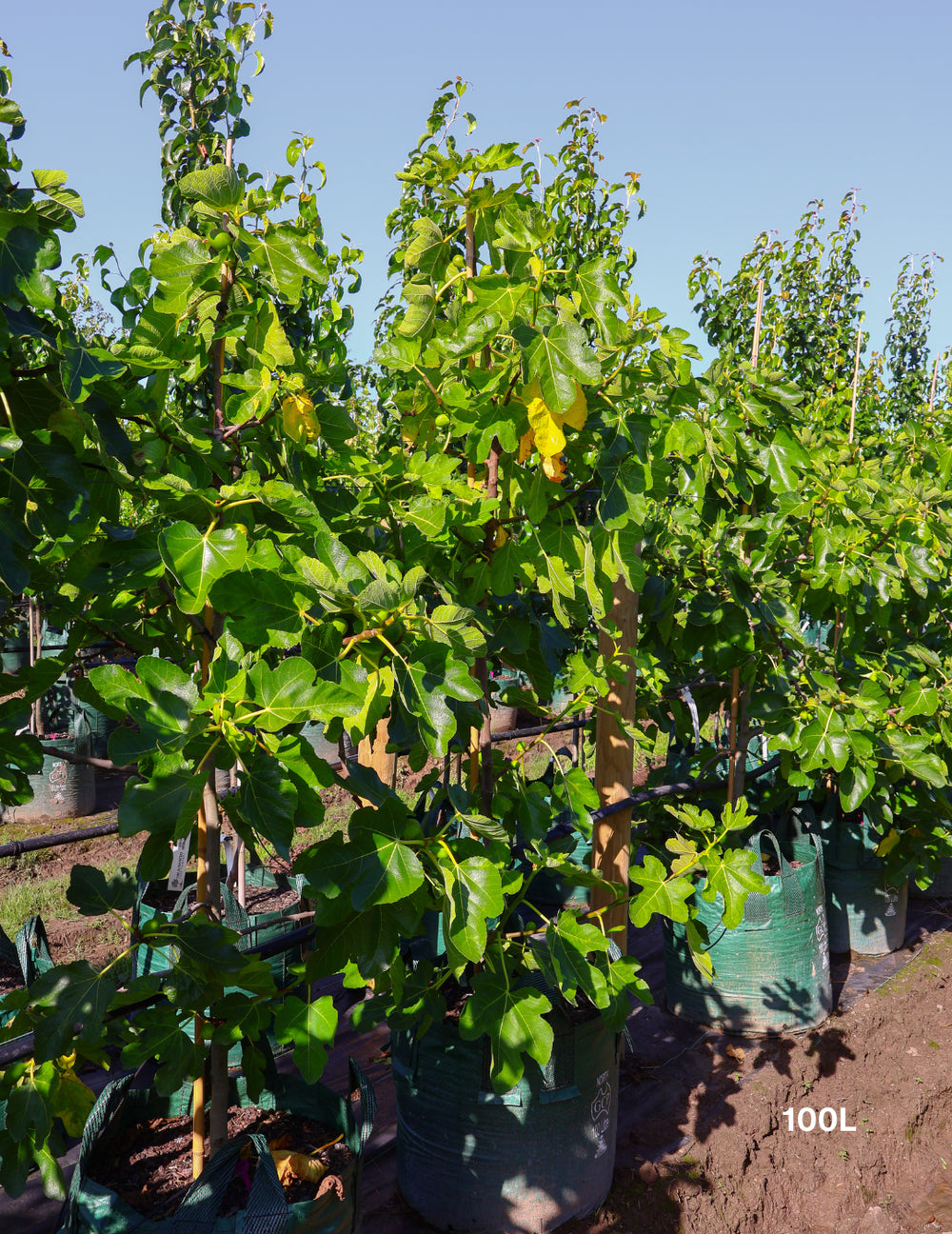
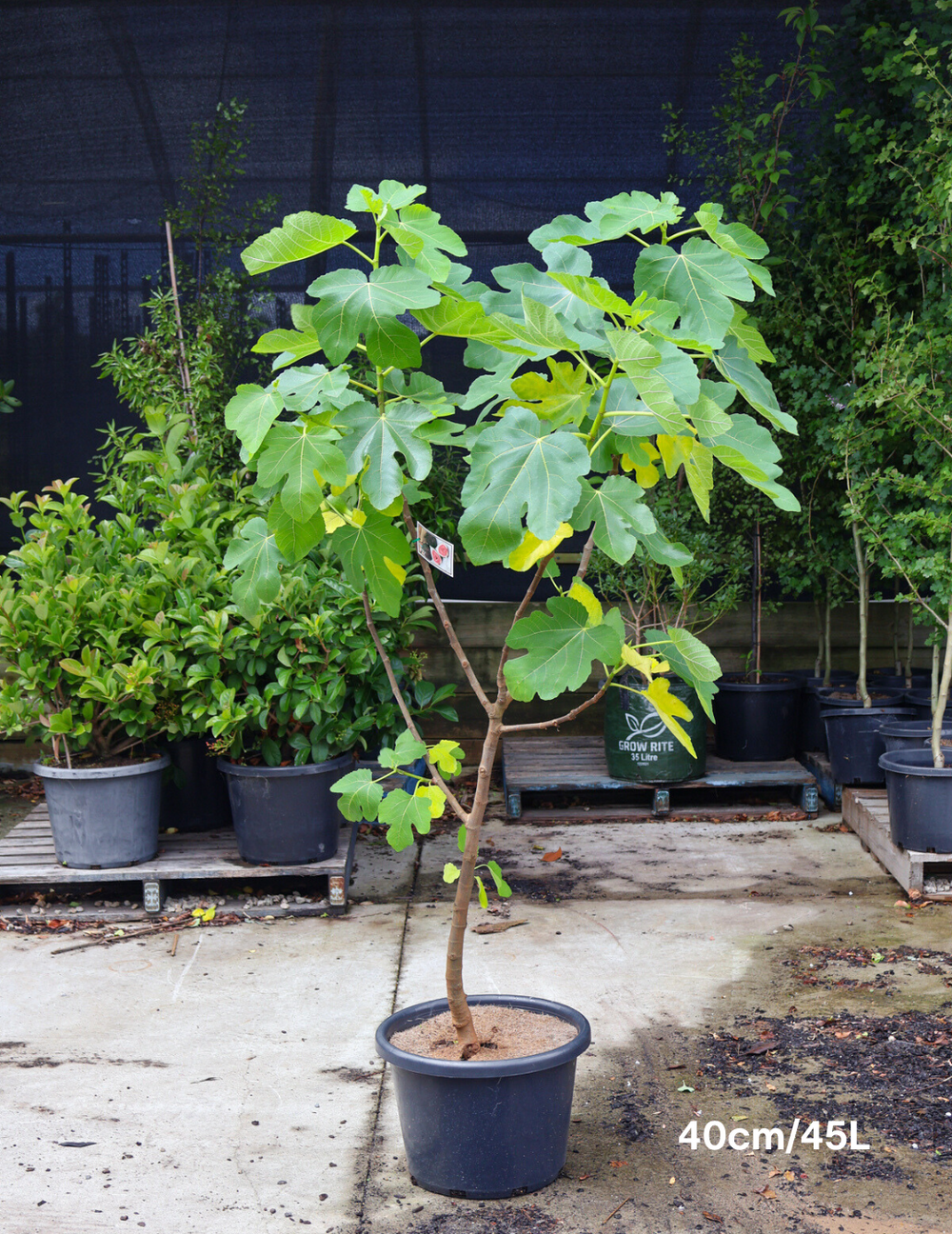
The edible fig. It is deciduous, self-fertile and often crops twice in a season. It grows 20 to 40 cm a year, is frost hardy, and takes hard pruning if a smaller tree is wanted.

Mature size
3 to 5 m x 3 to 4 m
Fruit
Large purple-black figs with sweet red flesh
Best for
Edible gardens, feature planting, pots
View product →

Compare the six ficus trees at a glance

Swipe sideways to see every column

VarietyTypeMature size (H x W)FruitBest for
Hill's fig Tall hedge and screen10 to 15 m x 8 to 10 mSmall figsTall hedges, pleached rows, screening
Hill's fig 'Flash' Upright formal hedge6 to 10 m x 3 to 4 mSmall, inconspicuous figsFormal hedges, boundary lines, pleaching
Small-leaved fig 'Figaro' Compact native hedge1 to 2 m x 1 to 1.5 mSmall figsFormal hedges, screens, borders, large pots
Port Jackson fig Native shade tree15 to 20 m x 10 to 15 mSmall orange to reddish figsLarge gardens, parks, avenue planting
Moreton Bay fig Very large native shade tree30 to 60 m x 20 to 30 m or moreSmall, round figsParkland, large rural properties, civic landscapes
Black Genoa fig Edible fig, deciduous3 to 5 m x 3 to 4 mLarge purple-black figs with sweet red fleshEdible gardens, feature planting, pots

Which ficus is best for a hedge

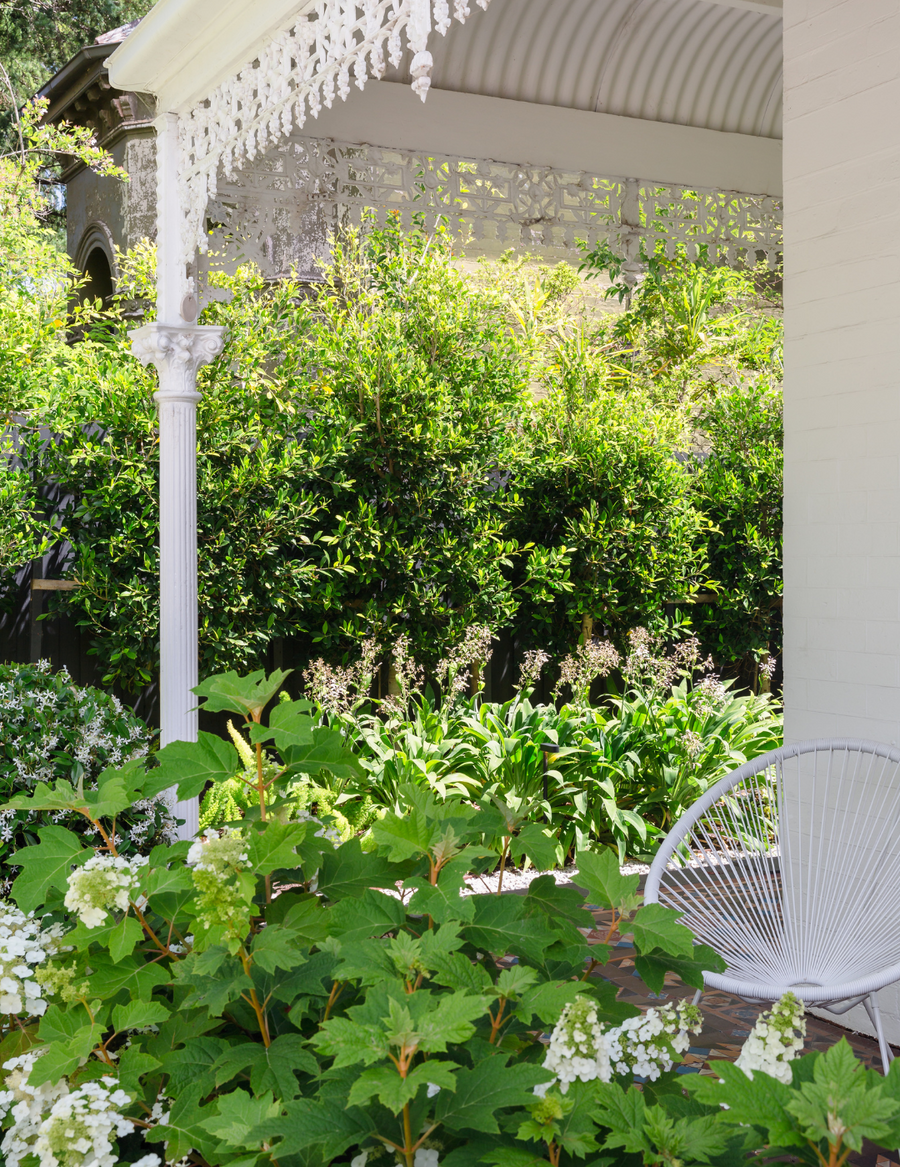
  • Tall and broadHill's fig (Ficus microcarpa var. hillii) is listed at 10 to 15 metres tall and 8 to 10 metres wide, with a dense, pendulous habit.
  • Upright and compactFlash (Ficus hillii 'Flash') is listed at 6 to 10 metres tall and 3 to 4 metres wide. It holds a more upright form, with lime-green new growth.
  • Small leafFigaro (Ficus obliqua 'Figaro') is a compact, rounded cultivar of a native fig. It is the slowest of the three, at 10 to 30 centimetres a year.
  • Growth rateHill's fig and Flash both grow 50 centimetres to 1 metre a year. Our guide to how fast Flash grows has the detail.
  • SpacingPlant all three 1 to 1.5 metres apart for a dense informal screen, or 80 centimetres apart for a tighter formal hedge.
Which ficus is best for a hedge

Ficus trees for shade and large spaces

  • Port Jackson figFicus rubiginosa grows 15 to 20 metres tall and 10 to 15 metres wide, with a broad, rounded canopy. It suits large gardens, parks and avenue planting.
  • Moreton Bay figFicus macrophylla reaches 30 to 60 metres tall and spreads 20 to 30 metres or more. It is a tree for parkland, large rural properties and civic landscapes, not suburban blocks.
  • Native figsBoth are native to eastern Australia. Figaro is a cultivar of another native, the small-leaved fig, Ficus obliqua.
Ficus trees for shade and large spaces

Ficus in pots and as standards

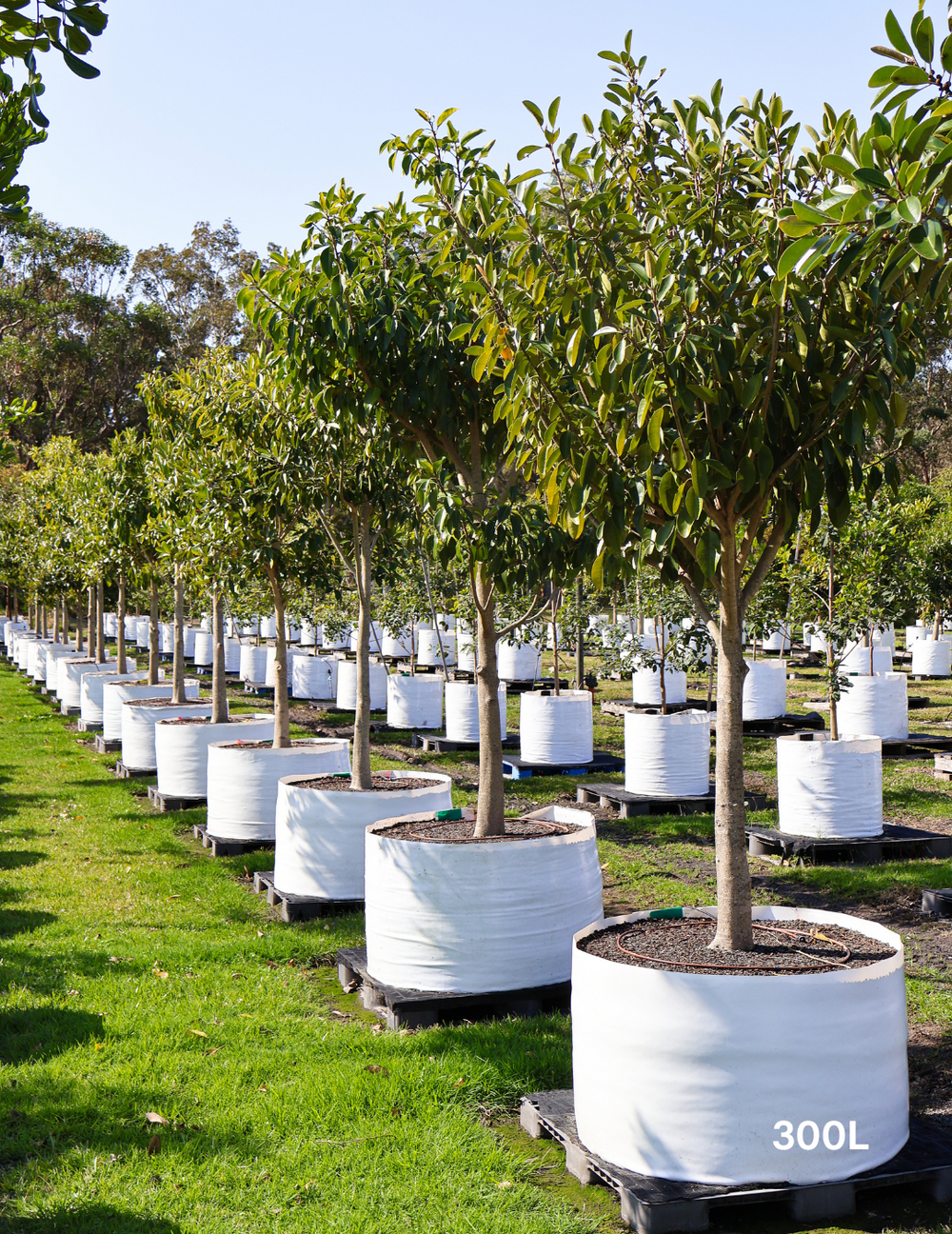
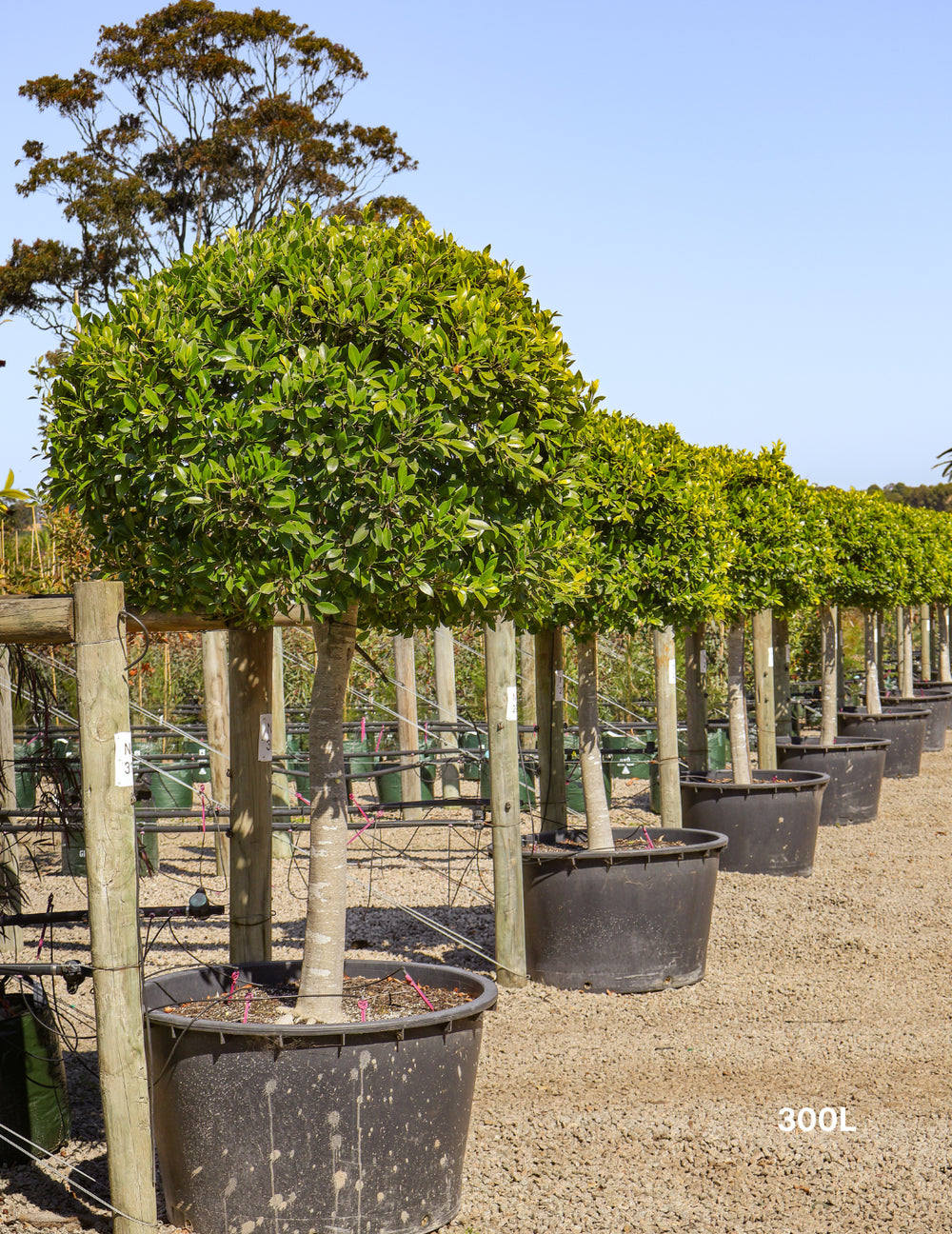
  • StandardsA Ficus hillii Standard is a Hill's fig trained to a clear trunk with a clipped head. It is most commonly grown in a large pot, where the roots are contained.
  • Pot sizeA 40 to 50 centimetre wide pot suits a single Hill's fig or Flash for courtyards and entries.
  • Edible figThe Black Genoa fig suits pots and takes hard pruning.
  • Compact hedgeFigaro suits large pots as well as borders and screens.
Ficus in pots and as standards

Roots, frost and planting basics

  • RootsAll figs have vigorous roots. Plant them well clear of buildings, pipes, drains and paving, or use large above-ground planters.
  • FrostThe five evergreen figs are listed as frost sensitive, so choose a frost-free or protected spot. The Black Genoa fig is deciduous and frost hardy.
  • SunThe evergreen figs grow in full sun to part shade. The Black Genoa fig wants full sun.
  • SoilWell-drained loam or sandy loam suits all six. Improve heavy clay with organic matter and coarse material before planting.
  • WaterWater regularly while the tree is young. All six are drought tolerant once established.

Ready to choose? Browse the ficus collection, take the tree quiz, or read our Flash vs Hillii comparison and the pleached trees guide.

Roots, frost and planting basics

Frequently asked questions

What are the main types of ficus trees?
Three types by use: evergreen hedging figs such as Hill's fig, Flash and Figaro; large native shade figs such as the Port Jackson fig and the Moreton Bay fig; and the edible fig, Ficus carica. Creeping fig, Ficus pumila, is a climber, not a tree.
Which ficus is best for a hedge?
Ficus hillii 'Flash' for an upright formal hedge: it is listed at 6 to 10 metres tall and 3 to 4 metres wide. Hill's fig, Ficus microcarpa var. hillii, is broader and more pendulous at 10 to 15 metres tall and 8 to 10 metres wide. Figaro is the compact, slower option.
What is the difference between Ficus hillii and Ficus Flash?
Hill's fig has a denser, more pendulous habit and a softer canopy. Flash holds a more upright, compact form with lime-green new growth against dark glossy leaves. Both grow 50 centimetres to 1 metre a year.
Are ficus trees native to Australia?
Some are. The Port Jackson fig and the Moreton Bay fig are native to eastern Australia, and Figaro is a cultivar of the native small-leaved fig. Hill's fig comes from northern Australia and Southeast Asia. The edible fig is native to the Mediterranean and western Asia.
Do ficus trees have invasive roots?
All figs have vigorous roots. Plant them well clear of buildings, pipes, drains and paving, or grow them in large above-ground planters, where the roots are contained.
Can ficus trees grow in pots?
Yes. Ficus hillii Standards are most commonly grown in large pots. A 40 to 50 centimetre wide pot suits a single Hill's fig or Flash, and the Black Genoa fig and Figaro also suit pots.
Are ficus trees frost tolerant?
Most are not. Hill's fig, Flash, Figaro, the Port Jackson fig and the Moreton Bay fig are all listed as frost sensitive and do best in frost-free or protected spots. The Black Genoa fig is deciduous and frost hardy.
How fast do ficus trees grow?
Hill's fig and Flash grow 50 centimetres to 1 metre a year, and the Moreton Bay fig 60 centimetres to 1 metre a year in ideal conditions. The Port Jackson fig grows 30 to 60 centimetres a year, the Black Genoa fig 20 to 40, and Figaro 10 to 30.

The wrap up

Pick the ficus by the room you have. Use Flash or Hill's fig for a tall hedge, Figaro for a compact one, the Port Jackson fig for shade in a large garden, the Black Genoa fig for fruit, and the Moreton Bay fig only where there is room for a very large tree.

Not sure which suits your site? Take our tree quiz, or send us a photo of the space and we will point you to the right tree.

Shopping cart (0)

Complete your order

Freight added at checkout, based on your delivery address and order quantities.

Checkout