Skip to content
Pine Trees: 6 Types for Australian Gardens Compared

Pine Trees: 6 Types for Australian Gardens Compared

Six trees sold as pines compared by mature size, growth rate and frost tolerance. Two are true pines, and four are conifers that carry the pine name.

Pine trees in Australian gardens fall into two groups: true pines, which belong to the genus Pinus, and other conifers that carry the pine name, such as the pencil pine and the Norfolk Island pine. This guide compares six pine trees by mature size, growth rate and frost tolerance.

The six range from a column under a metre wide to a coastal tree that passes 50 metres tall. All six are evergreen conifers. Every size on this page comes from the product data, so check the plant card and the product page before you plant.

Ready to shop? Browse the pine trees collection or the wider conifers collection, read our guide to conifers for low-maintenance screening, or take the tree quiz if you are not sure which suits your site.

Last reviewed
20 November 2026
Reading time
6 minutes
Supplier
Evergreen Trees Direct

Types of pine trees: true pines and the trees we call pines

  • True pinesPinus thunbergii, the Japanese black pine, and Pinus halepensis, the Aleppo pine, are true pines. Both sit in the pine family, Pinaceae, with needle-like foliage and woody cones.
  • Pencil pinesCupressus sempervirens 'Glauca' and Cupressus sempervirens 'Stricta' are cypresses, in the family Cupressaceae. They are the narrow columns of Mediterranean gardens.
  • Norfolk Island pineAraucaria heterophylla is in the family Araucariaceae. It holds symmetrical tiers of horizontal branches around a straight central trunk.
  • Plum pinePodocarpus elatus, also called brown pine, is an Australian native conifer in the family Podocarpaceae. It has narrow glossy leaves instead of needles.
  • Pine or coniferEvery pine is a conifer, but not every conifer is a pine. All six trees here are conifers. Only the first two are pines in the botanical sense.
Types of pine trees: true pines and the trees we call pines

The six pine trees, with photos and sizes

Compare sizes
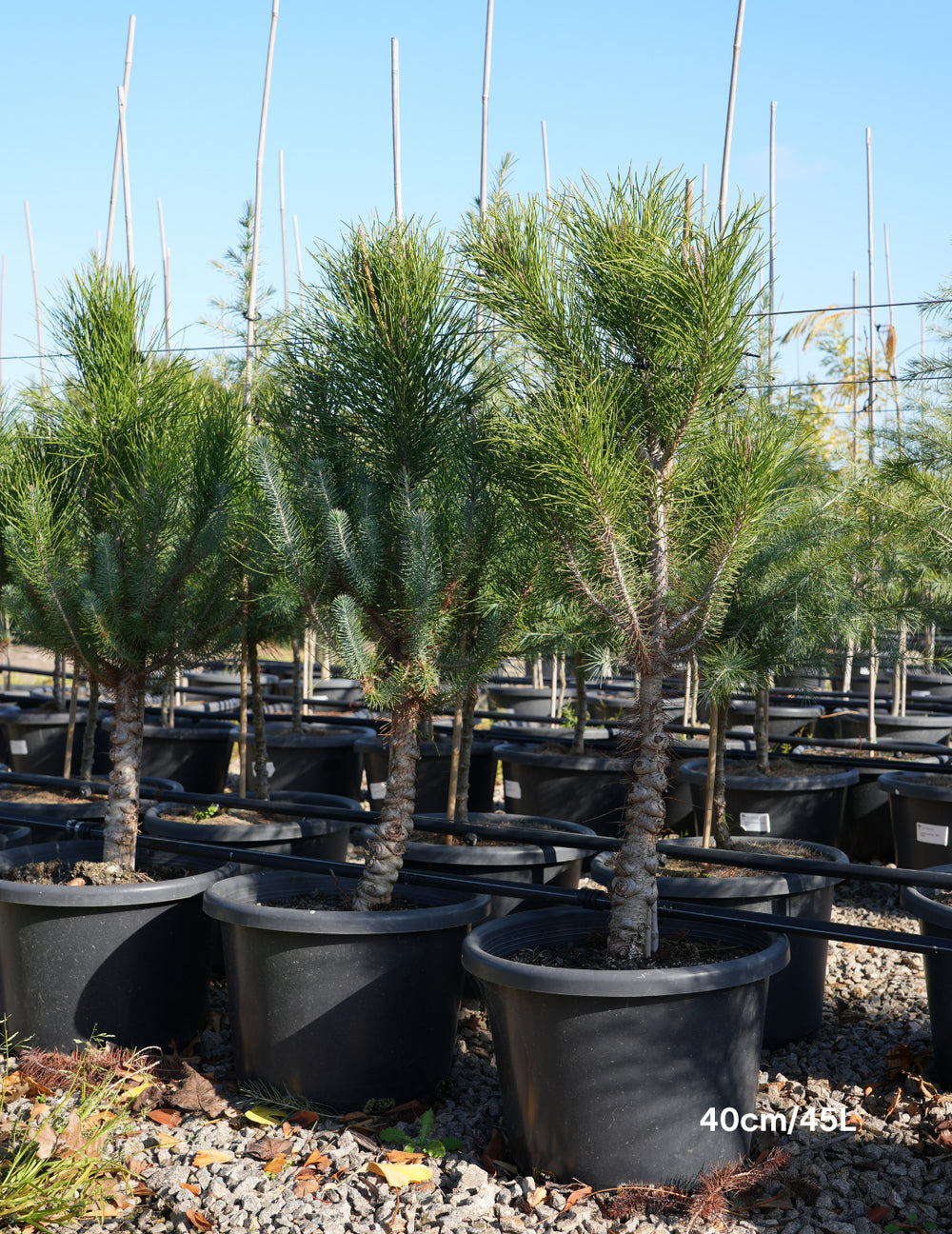
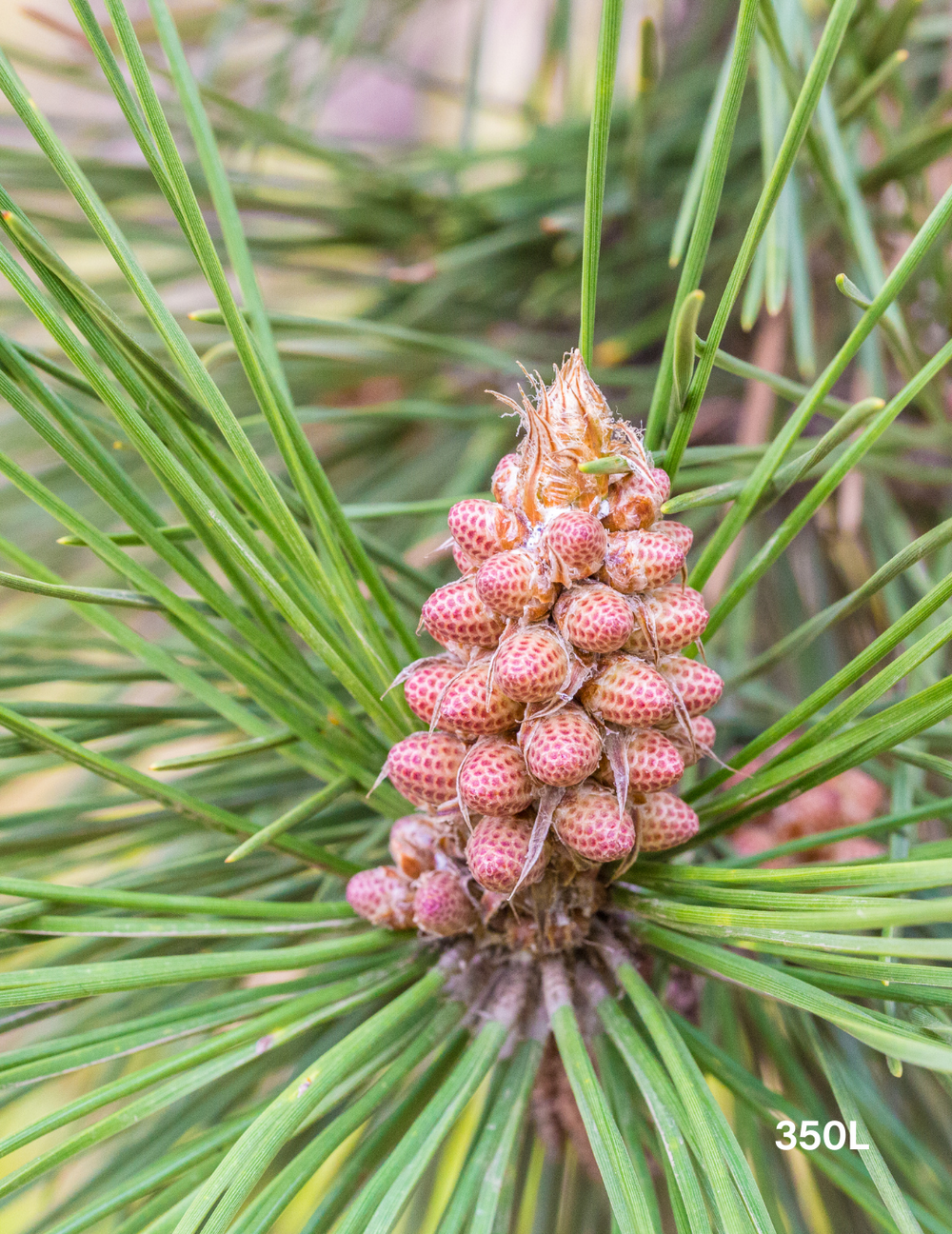
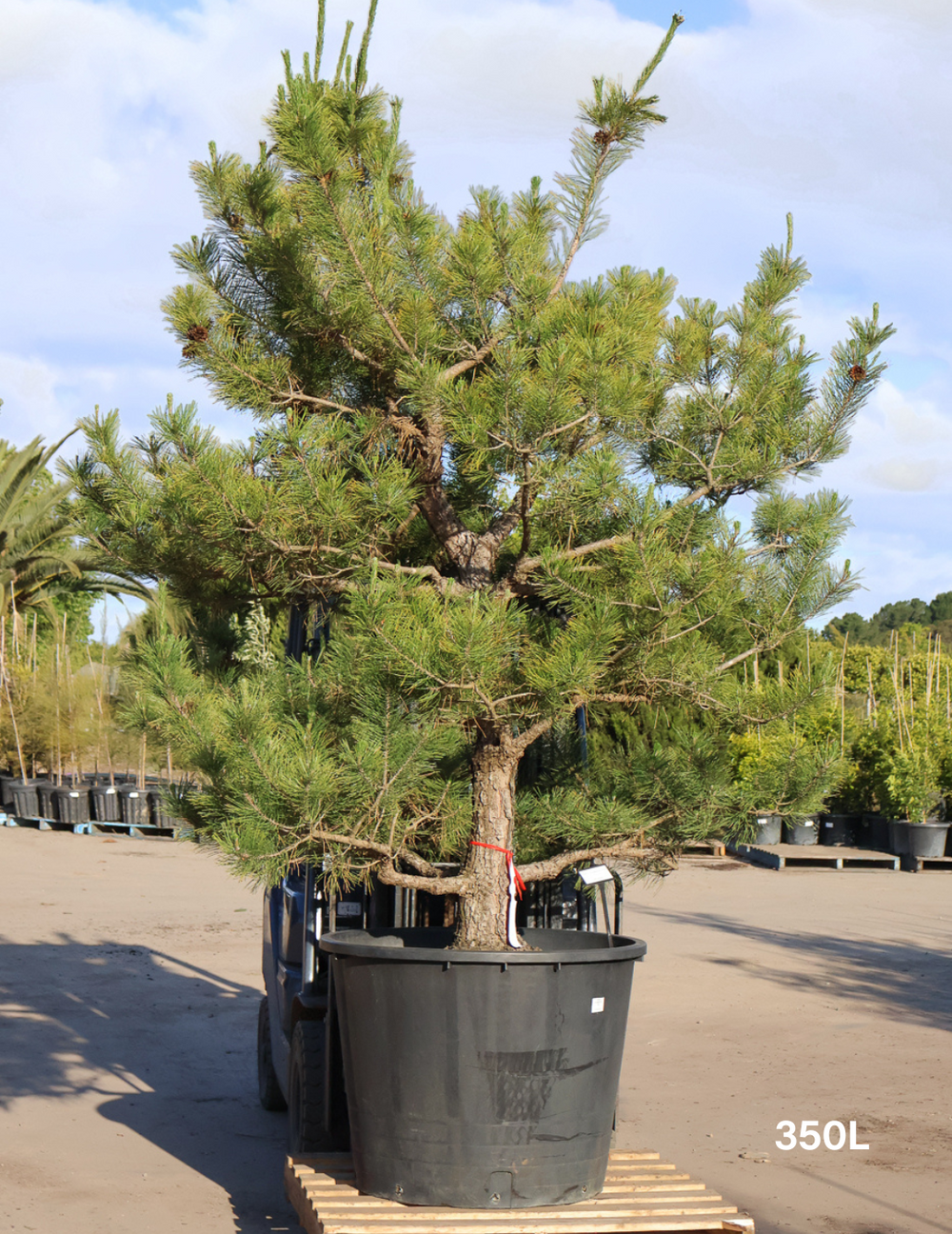
Pinus thunbergii

True pine, sculptural feature

Pinus thunbergii

Japanese black pine

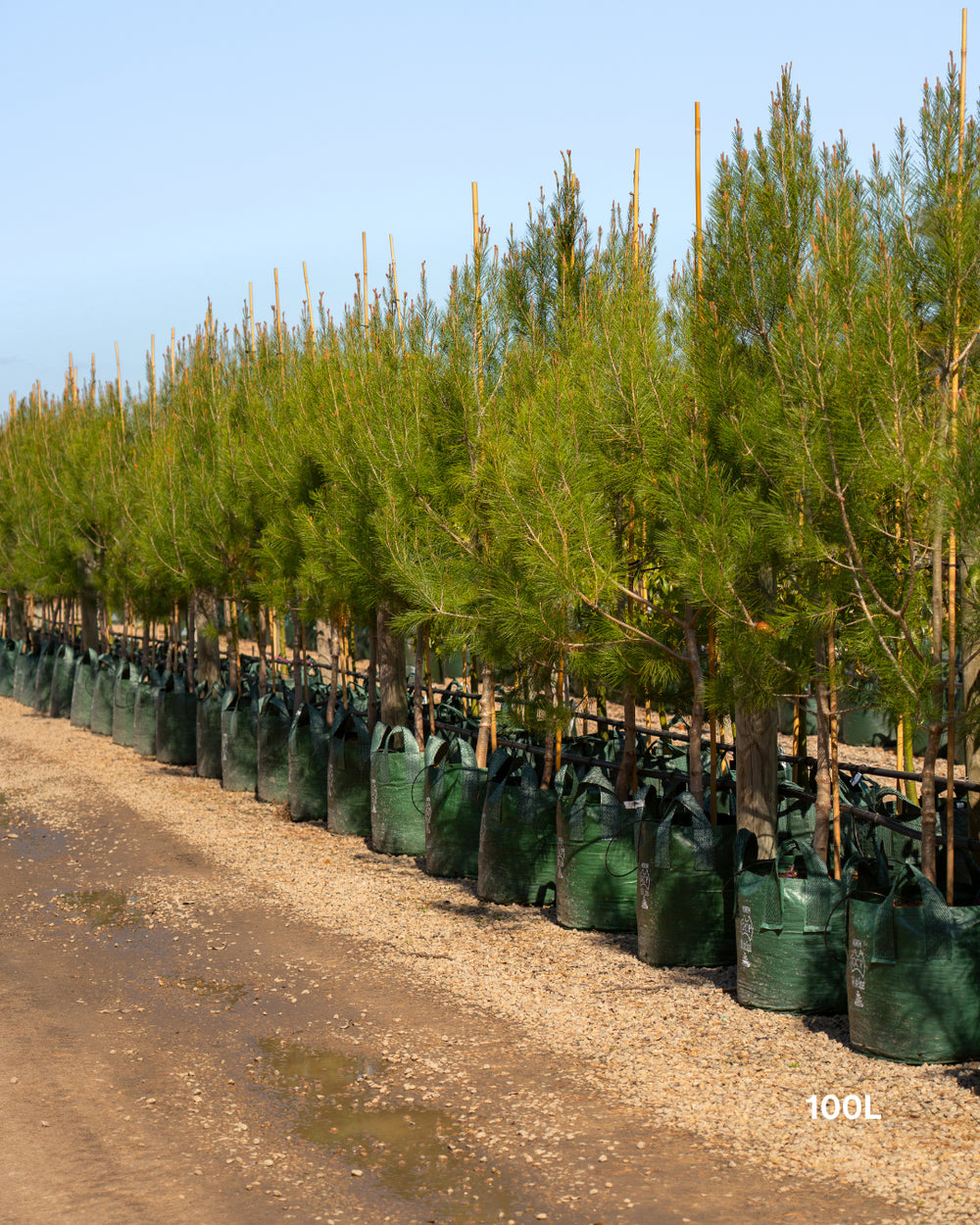
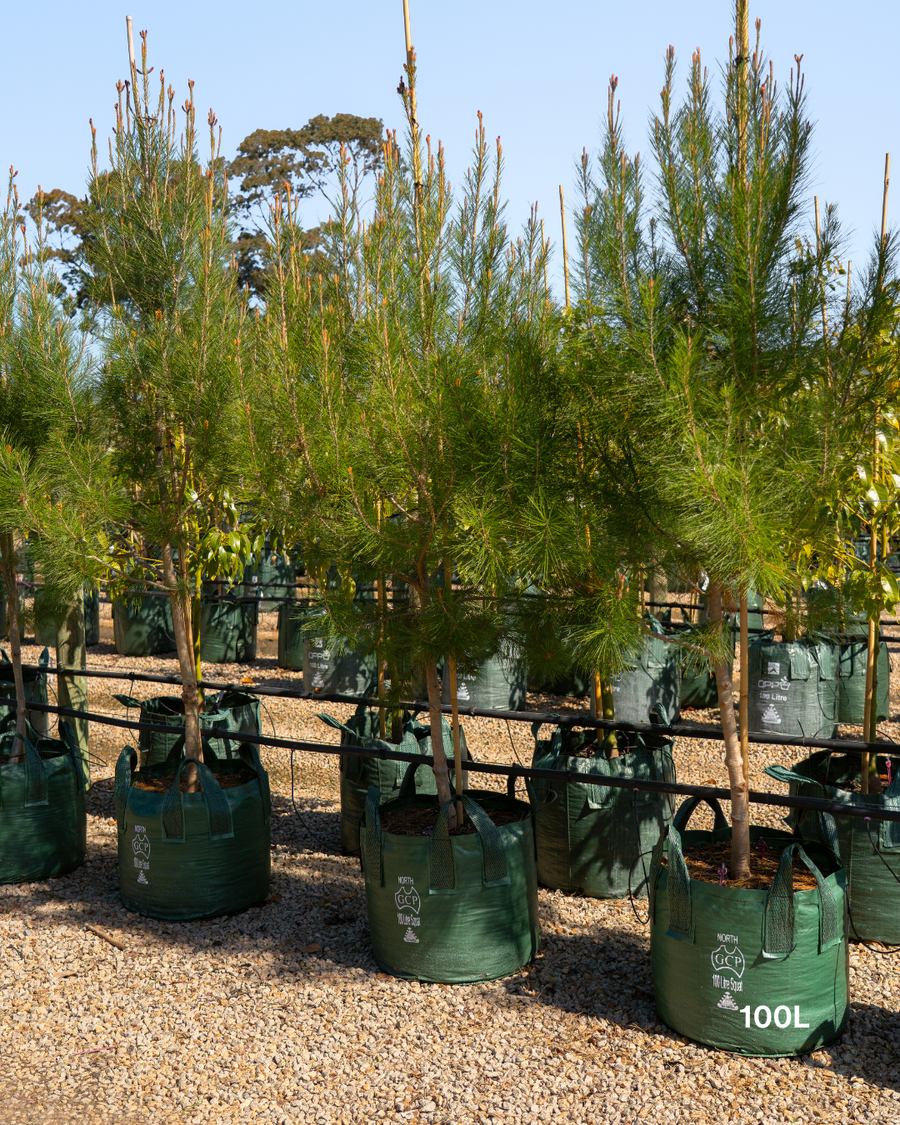
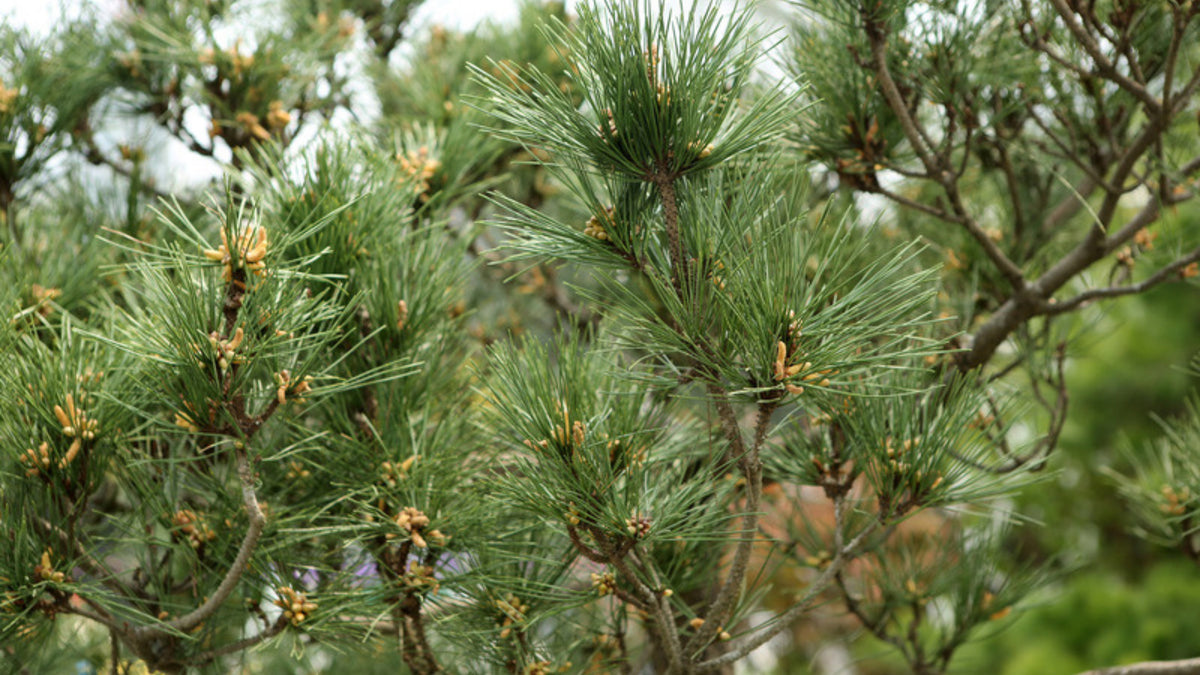
A true pine with stiff, dark green needles in pairs and thick, scaly bark. It grows 20 to 35 cm a year, is salt, wind and drought tolerant once established, and is frost hardy. Pruning keeps it far smaller than its full size.

Mature size
8 to 20 m x 4 to 8 m
Best for
Coastal gardens, Japanese-style gardens, feature positions
View product →
Compare sizes
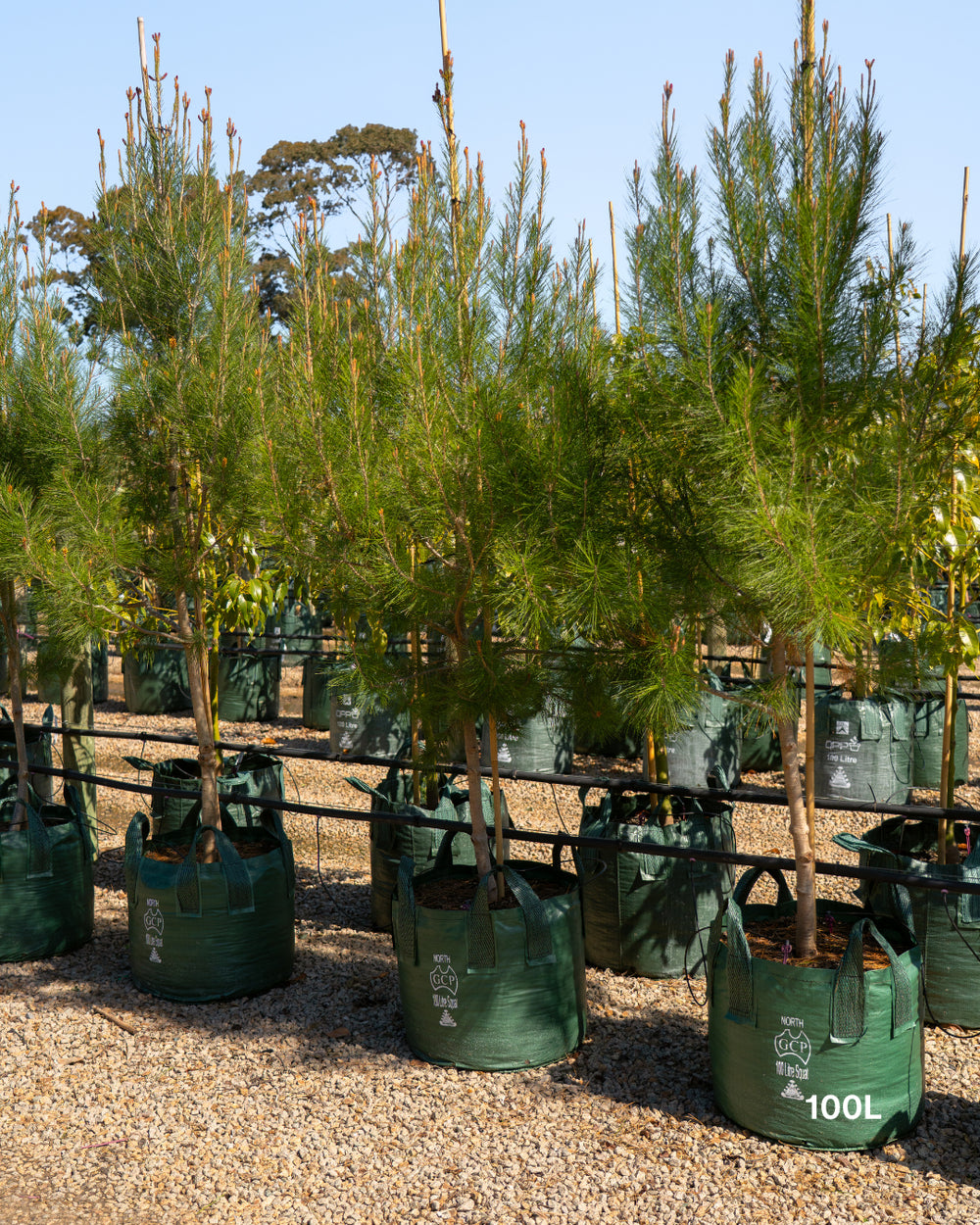
Pinus halepensisPinus halepensis

True pine, fast and tough

Pinus halepensis

Aleppo pine

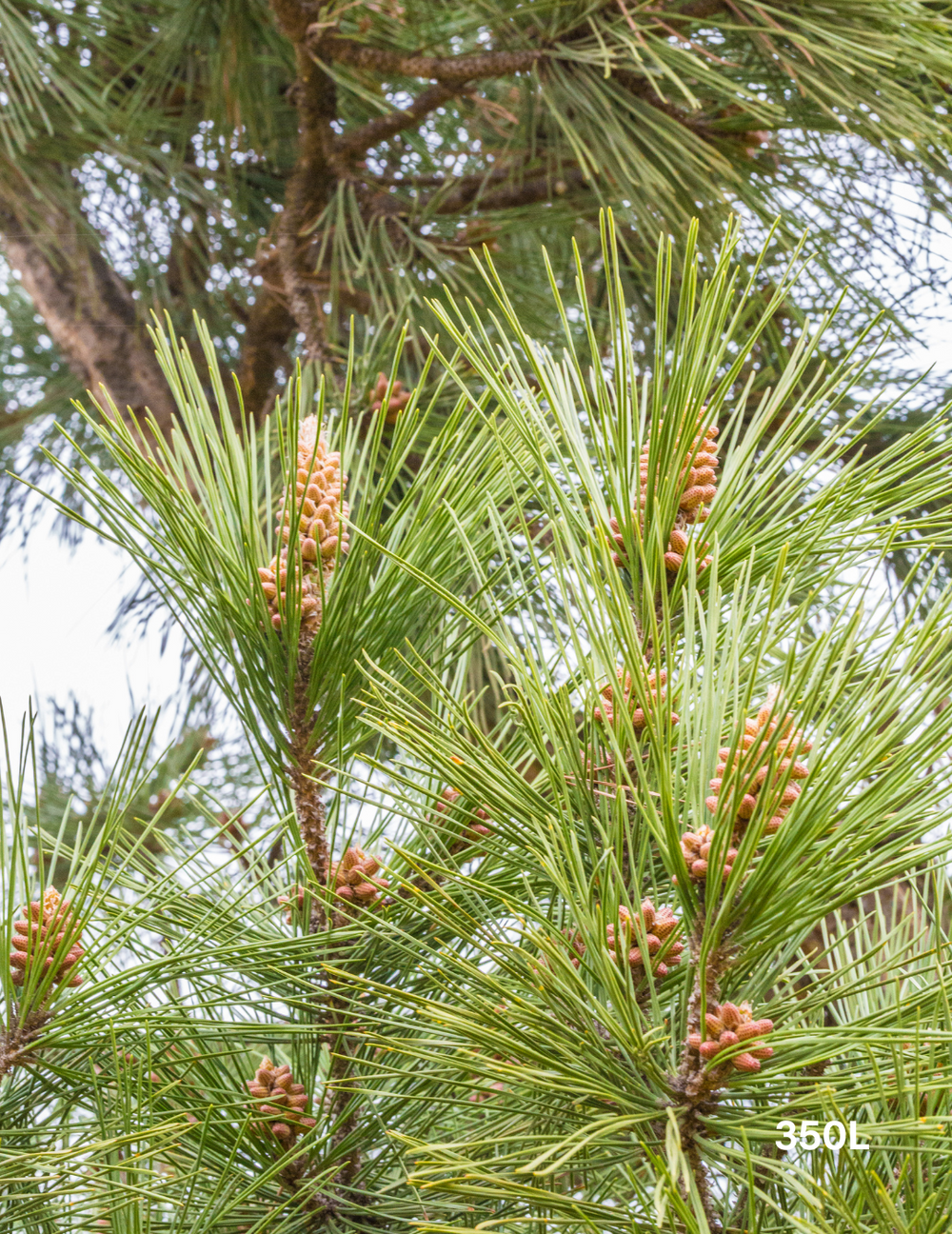
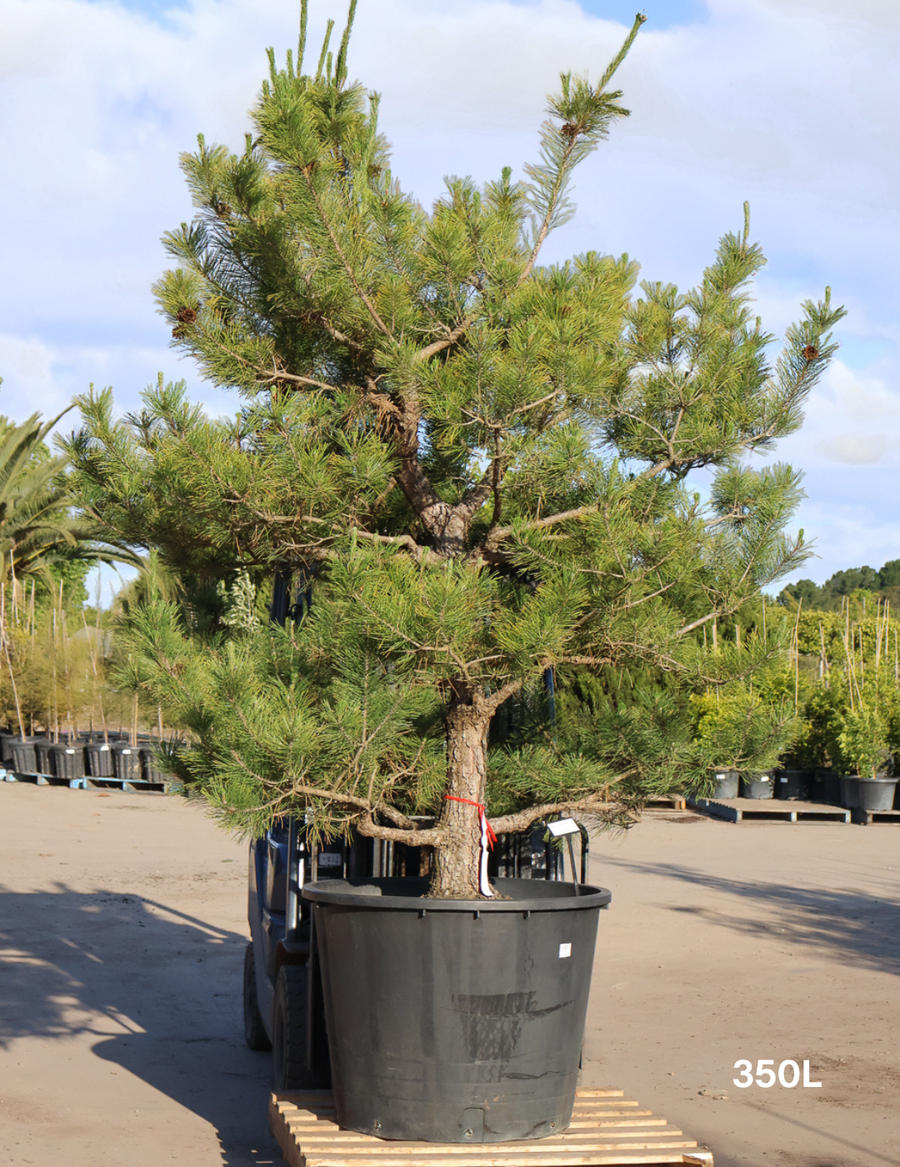
A true pine from the Mediterranean, pyramidal when young and wide and open in the crown with age. It grows 30 to 70 cm a year, is highly drought tolerant once established and is frost hardy. It needs full sun and free-draining soil.

Mature size
10 to 20 m x 6 to 10 m
Best for
Windbreaks, rural properties, high shade
View product →
Compare sizes
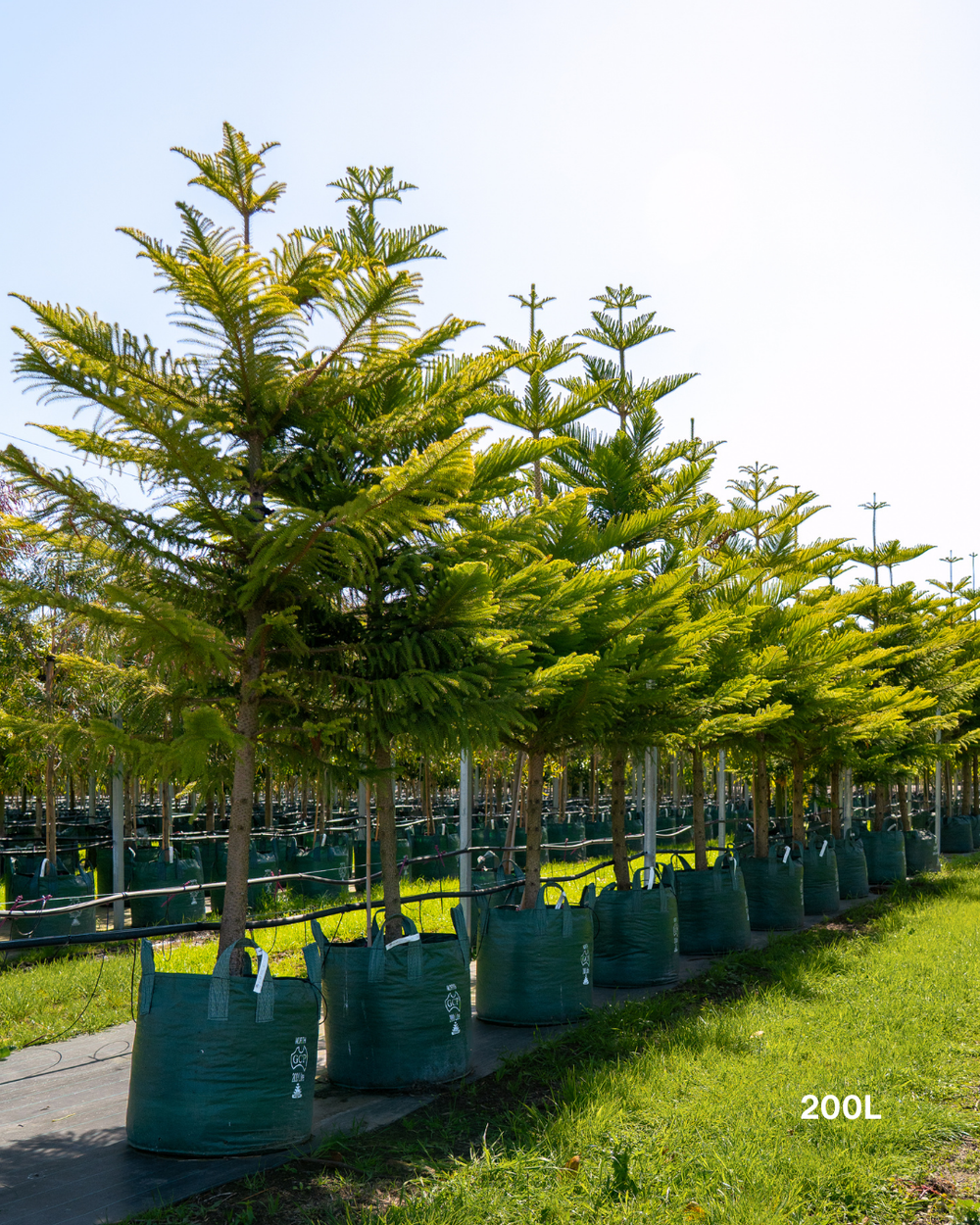
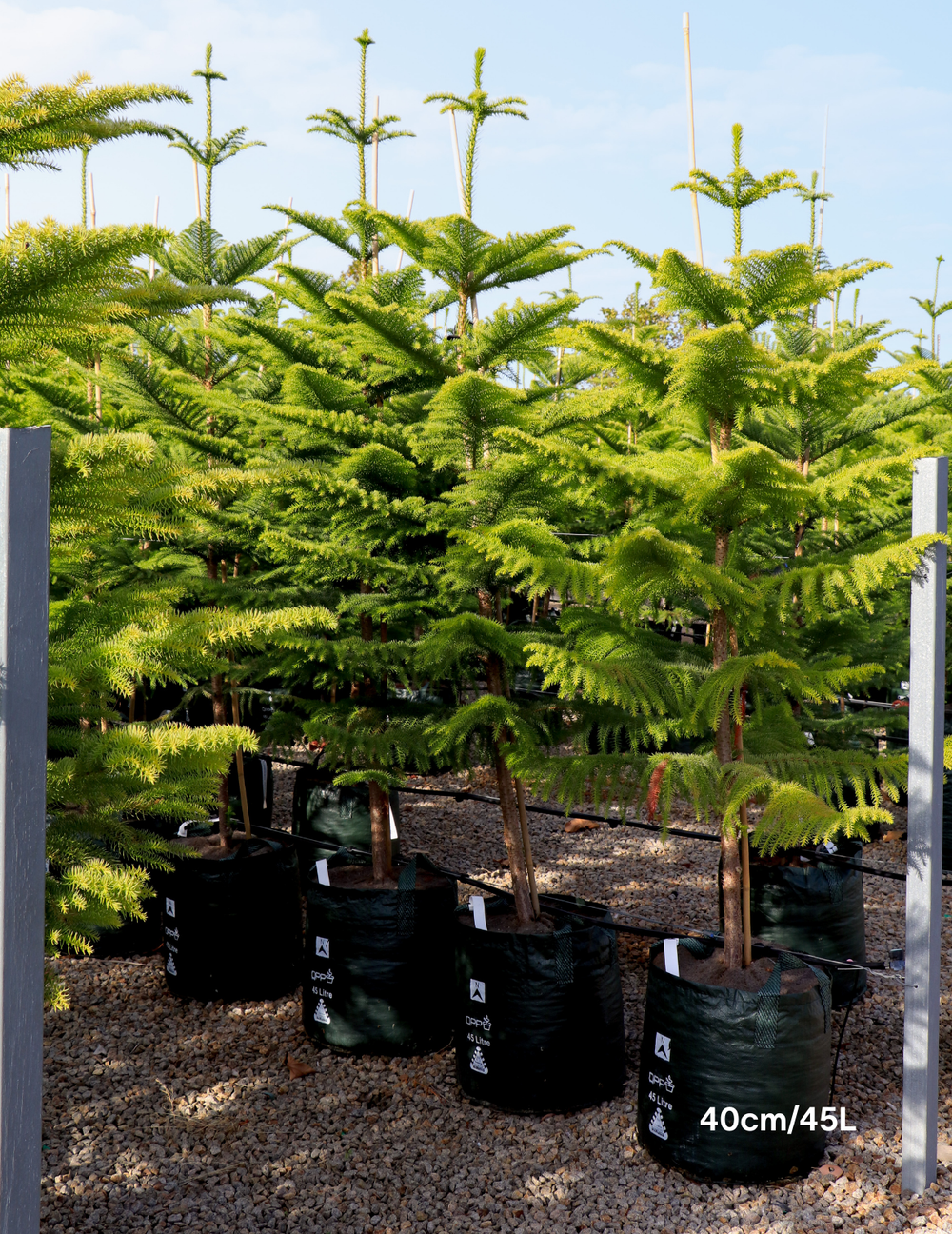
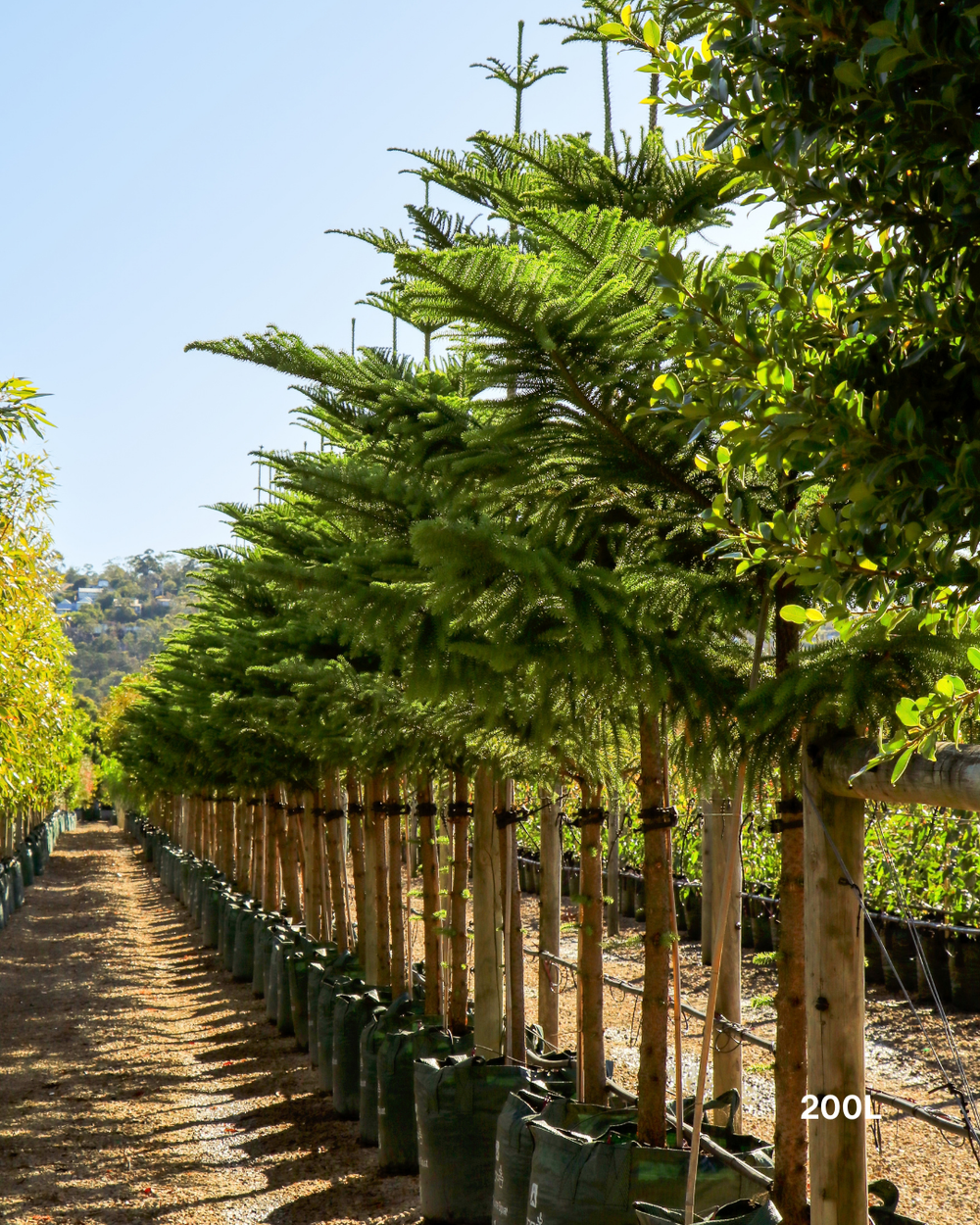
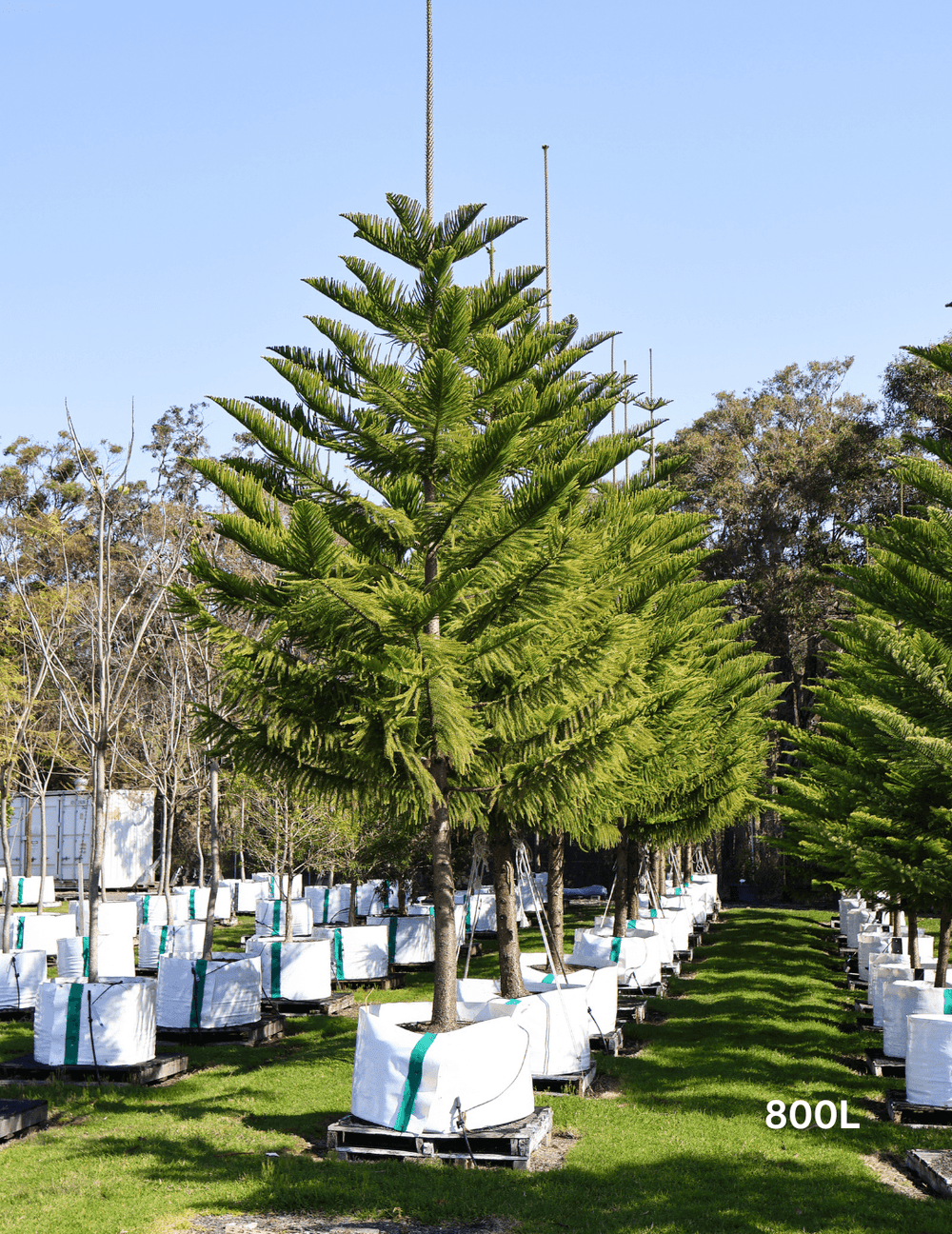
Araucaria heterophyllaAraucaria heterophyllaAraucaria heterophyllaAraucaria heterophyllaAraucaria heterophyllaAraucaria heterophyllaAraucaria heterophylla

Coastal landmark tree

Araucaria heterophylla

Norfolk Island pine

Symmetrical tiers of horizontal branches around a straight central trunk. It grows 40 to 70 cm a year and is exceptionally tolerant of salt spray, sand and onshore wind. It takes light to moderate frost once established and needs a very large site.

Mature size
50 to 65 m x 15 to 20 m
Best for
Foreshores, parkland, large properties
View product →
Compare sizes
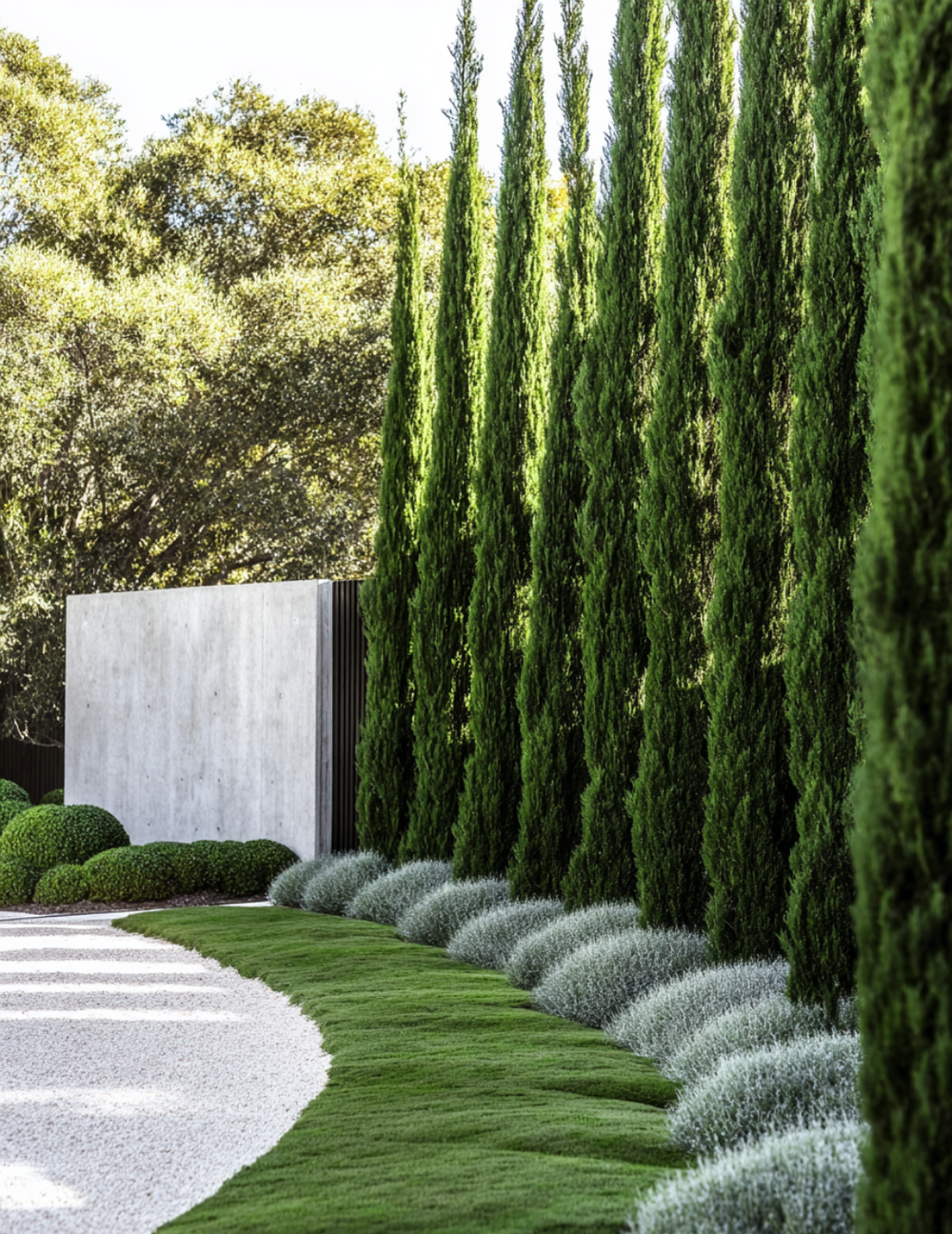
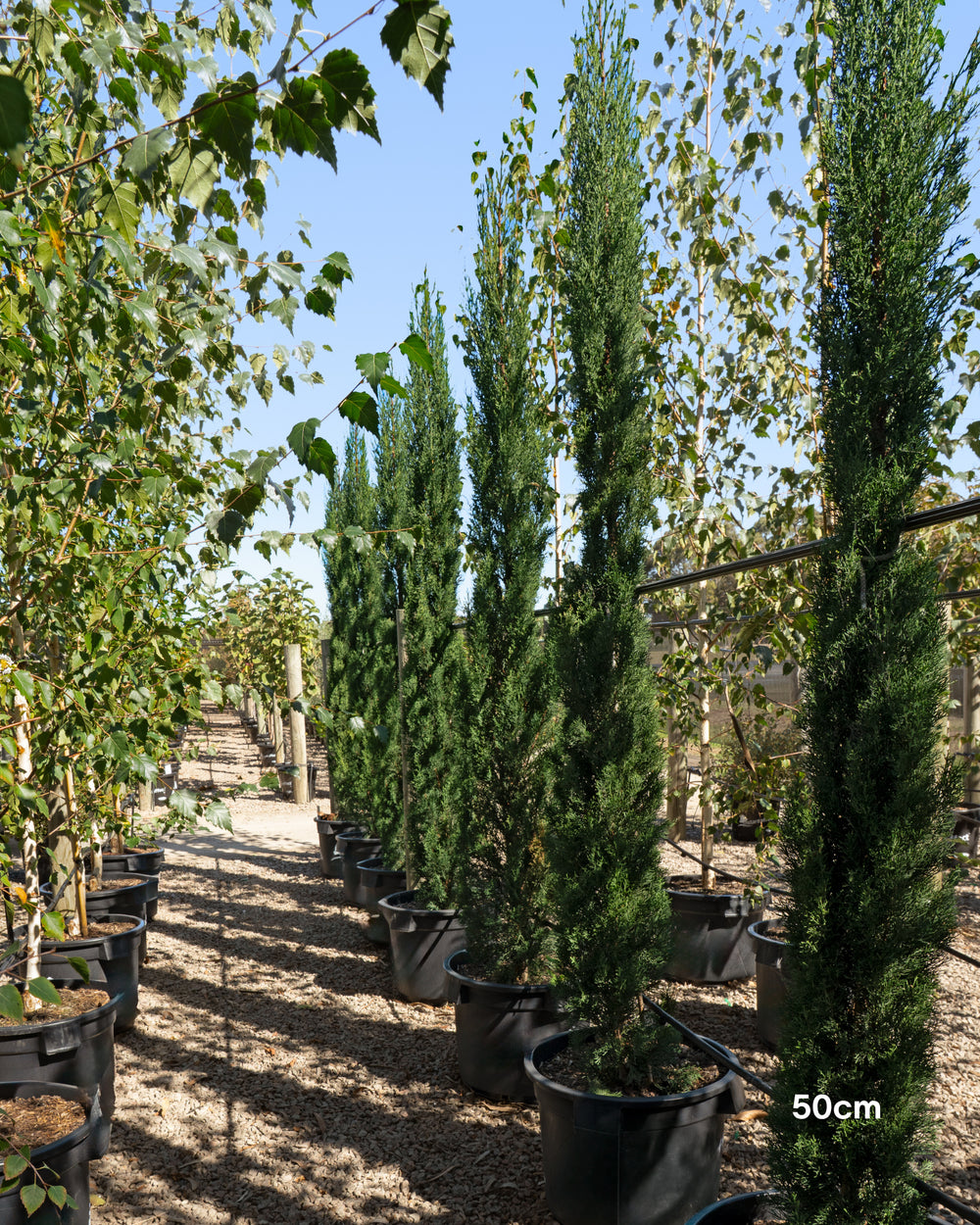
Cupressus sempervirens 'Glauca'Cupressus sempervirens 'Glauca'Cupressus sempervirens 'Glauca'Cupressus sempervirens 'Glauca'Cupressus sempervirens 'Glauca'Cupressus sempervirens 'Glauca'

Narrowest column

Cupressus sempervirens 'Glauca'

Pencil pine

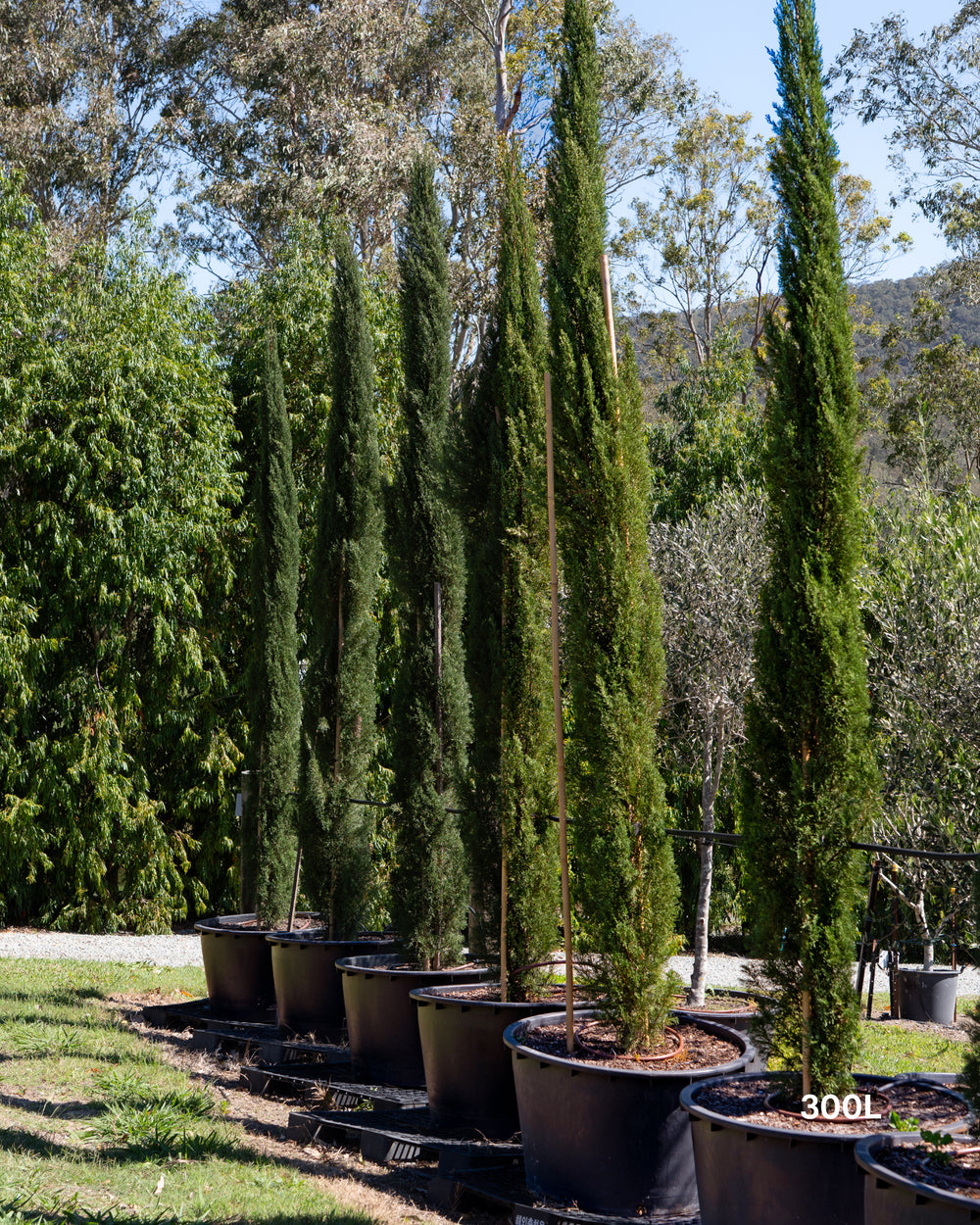
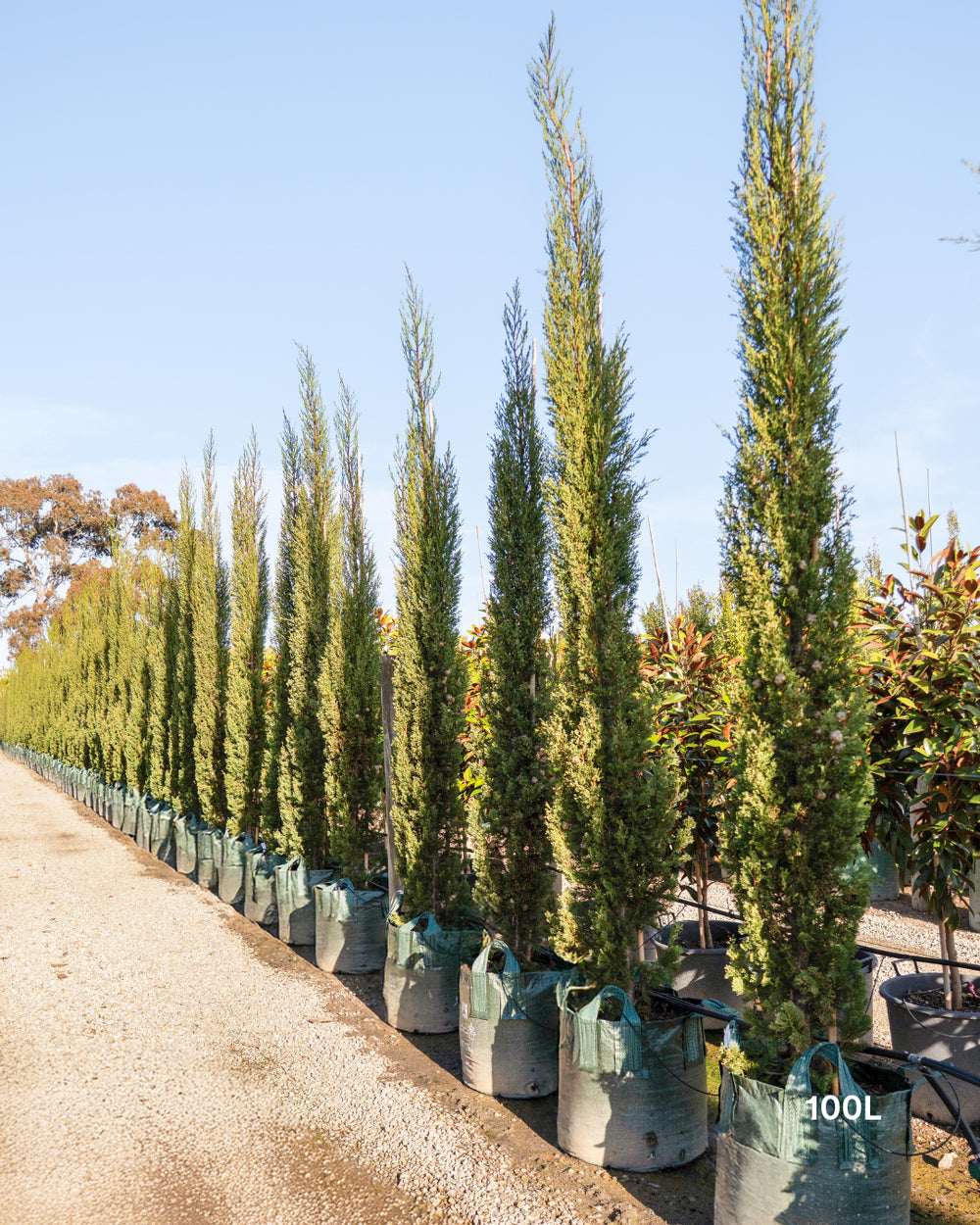
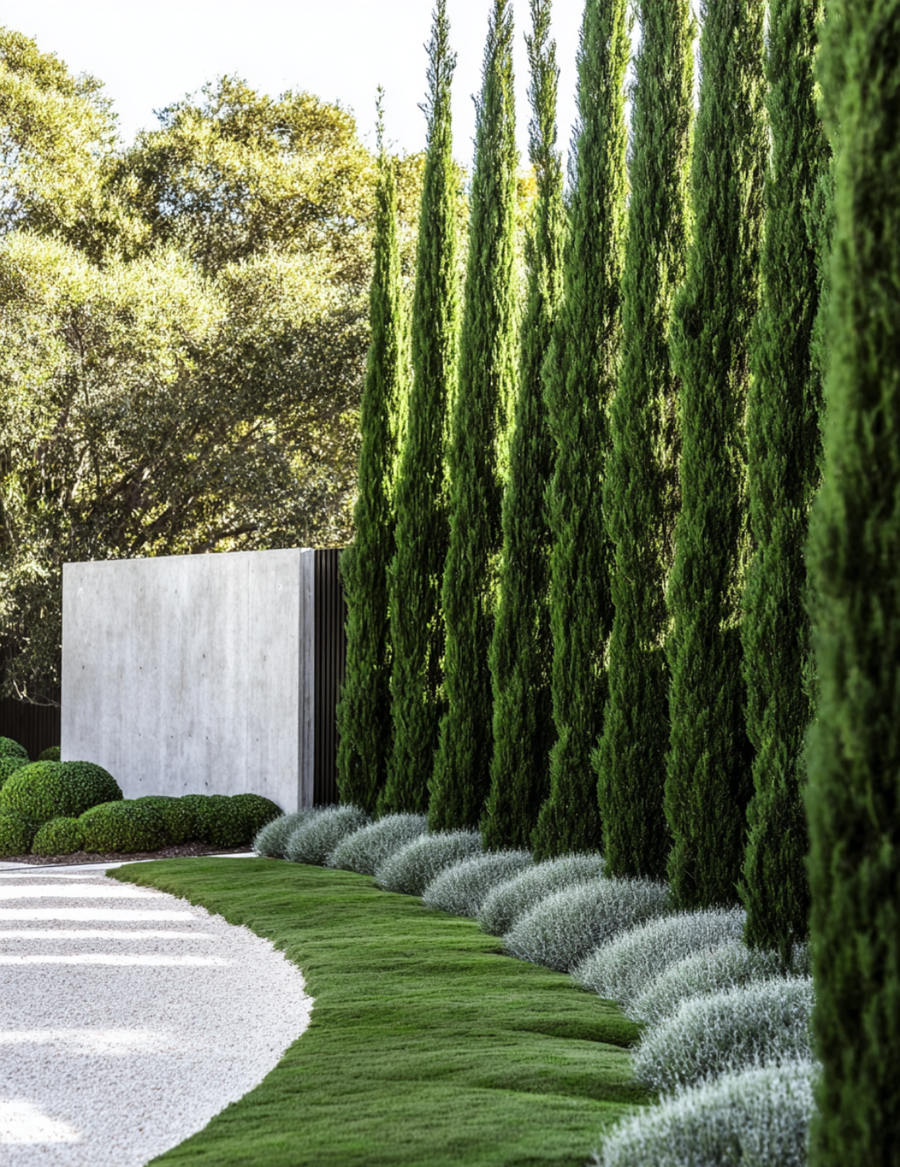
A cypress with dense, fine blue-green foliage in a tight column. It grows 30 to 60 cm a year, tolerates drought once established and is frost hardy. Plant 1 to 1.5 m apart for a screen or 3 m apart for an avenue.

Mature size
8 to 12 m x 0.5 to 1 m
Best for
Driveways, entrances, formal and Mediterranean gardens
View product →
Compare sizes
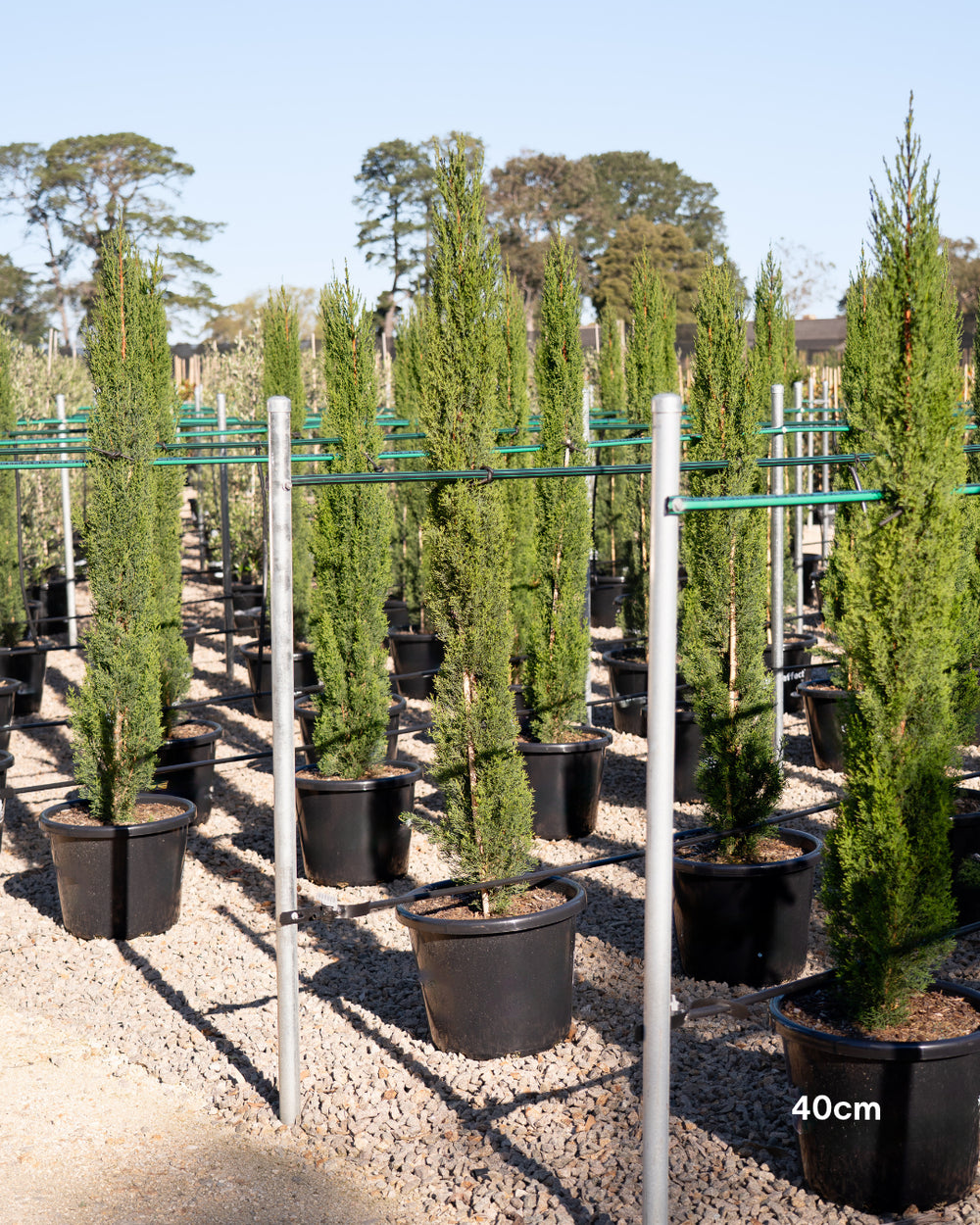
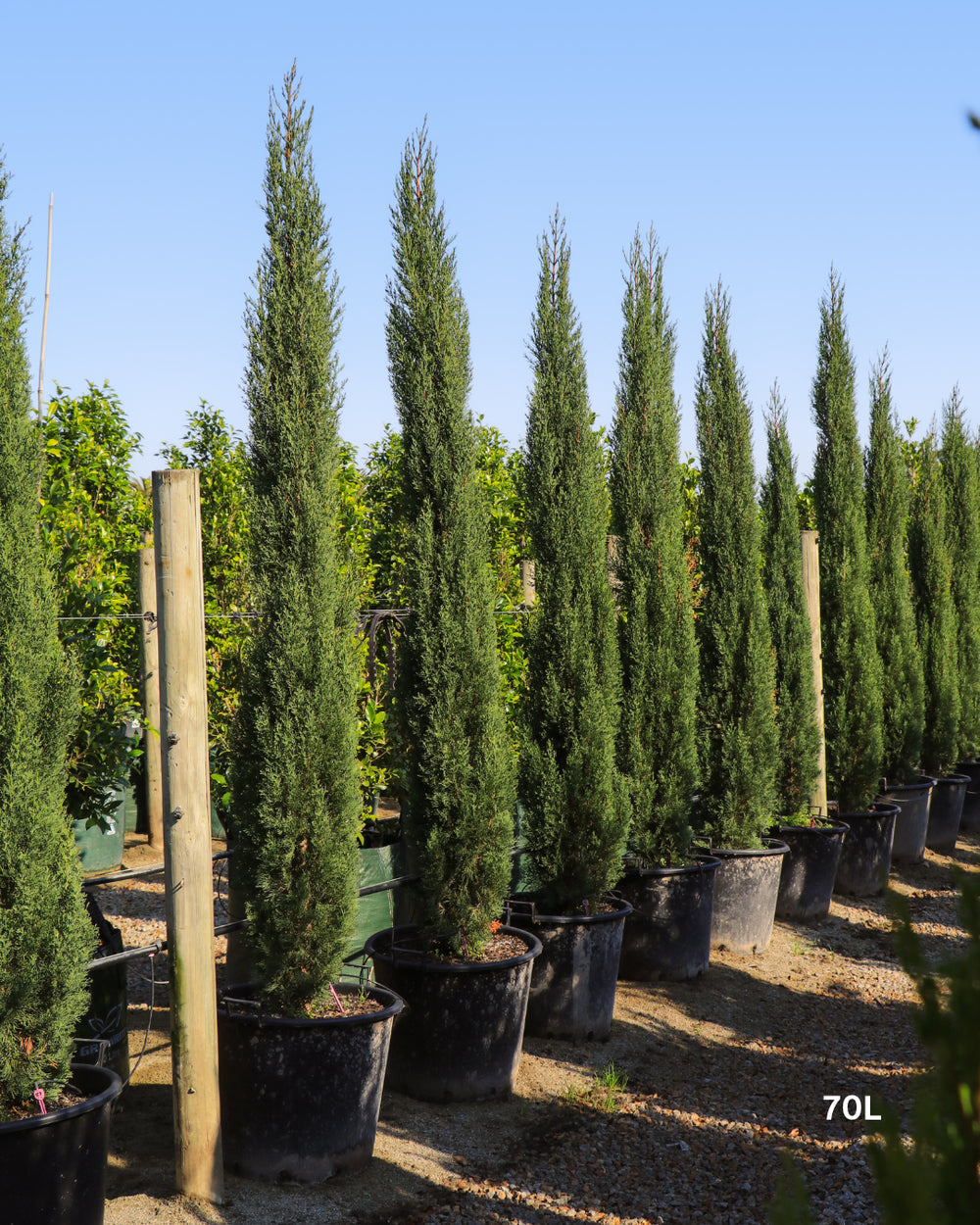
Cupressus sempervirens 'Stricta'

Classic Italian column

Cupressus sempervirens 'Stricta'

Italian pencil pine

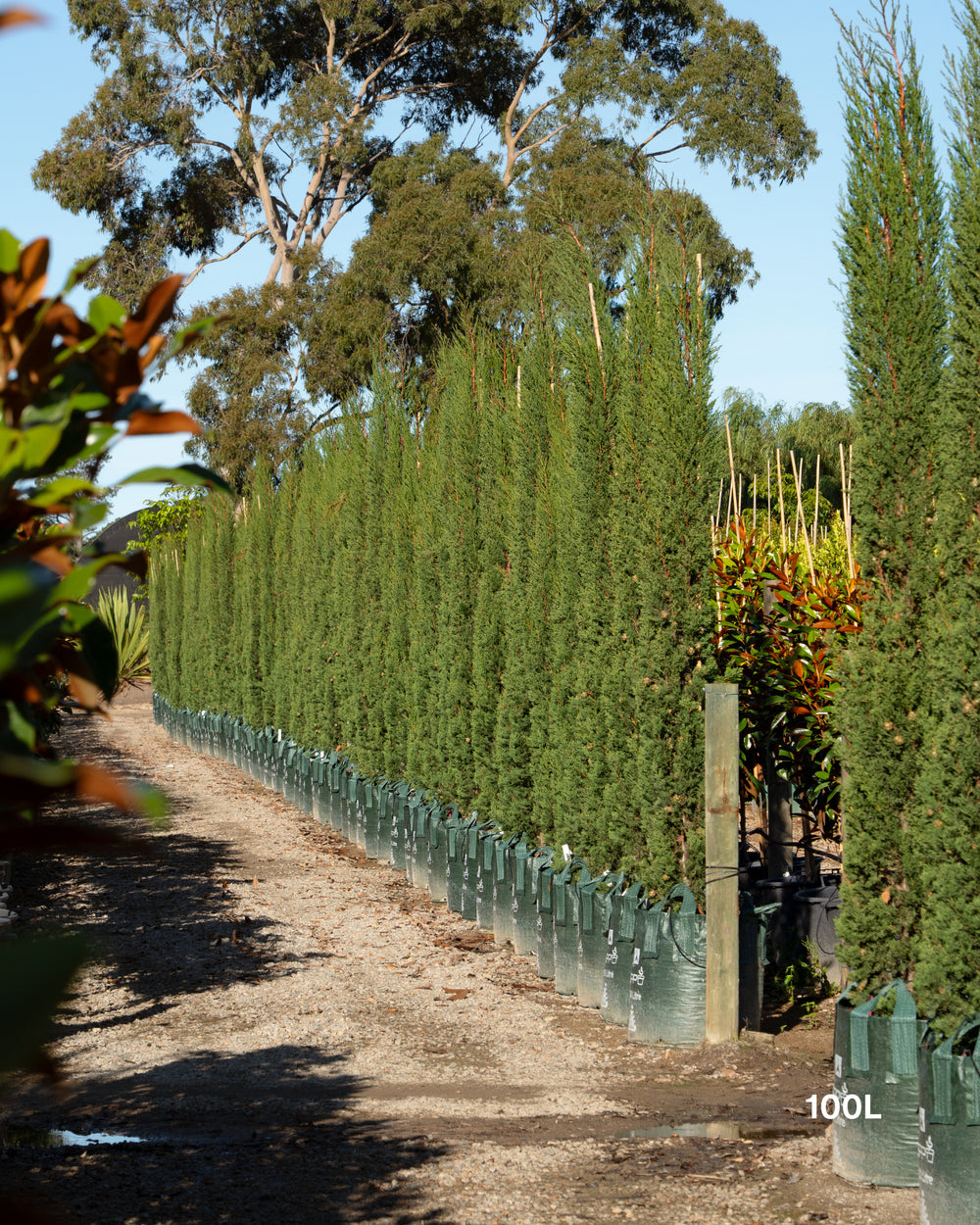
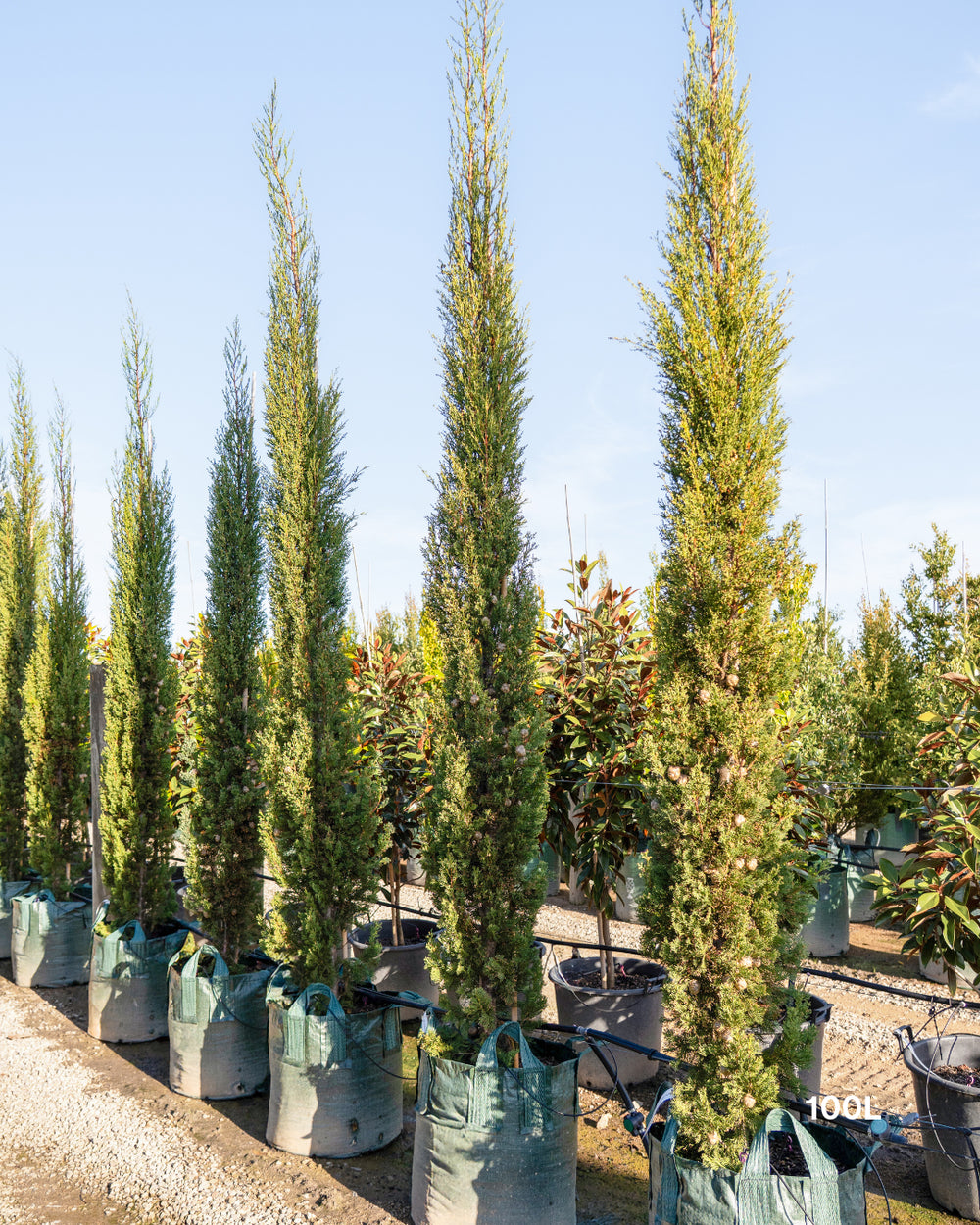
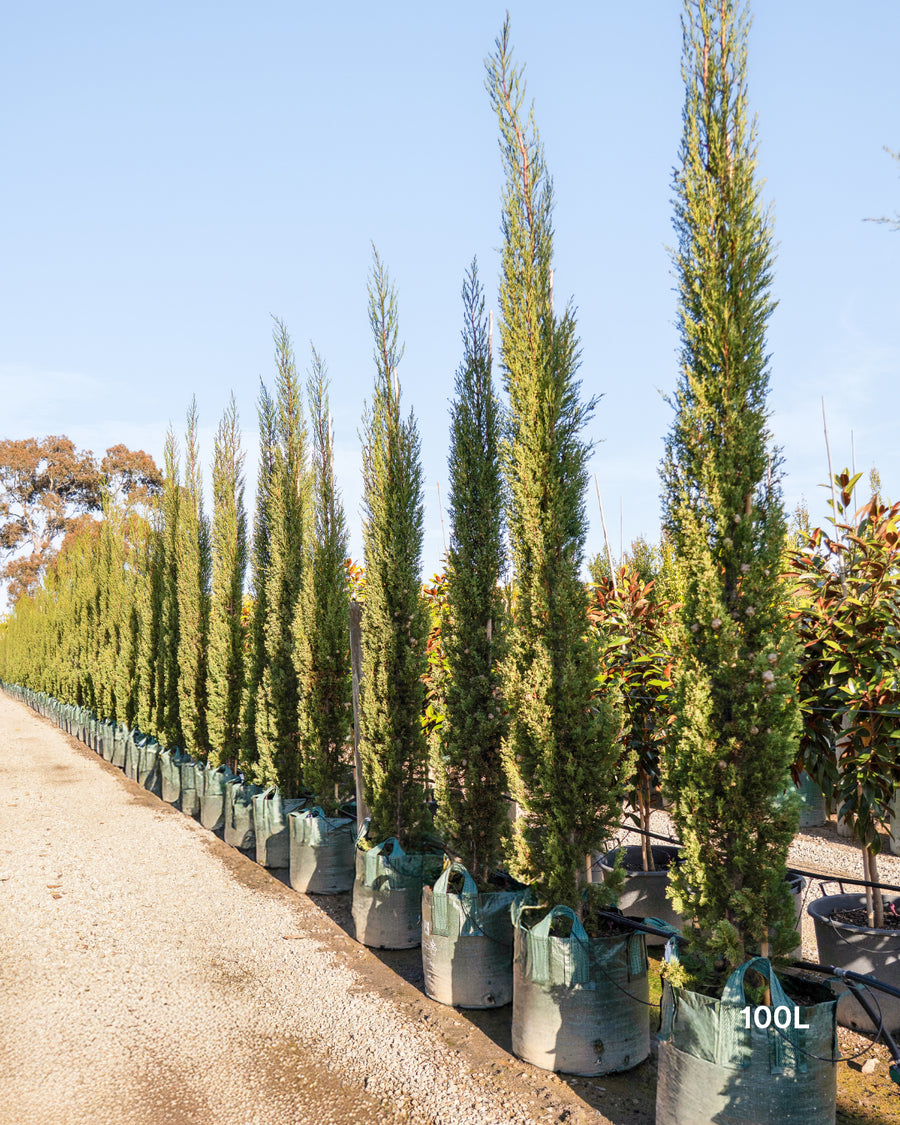
The classic Italian pencil pine, with dense dark green foliage that is aromatic when crushed. It grows 40 to 60 cm a year and holds its slim shape without pruning. Once established it handles drought, heat, wind and poor or sandy soil.

Mature size
10 to 15 m x 1 to 2 m
Best for
Avenues, narrow beds, tall narrow screens
View product →
Compare sizes
Podocarpus elatus

Australian native conifer

Podocarpus elatus

Plum pine (brown pine)

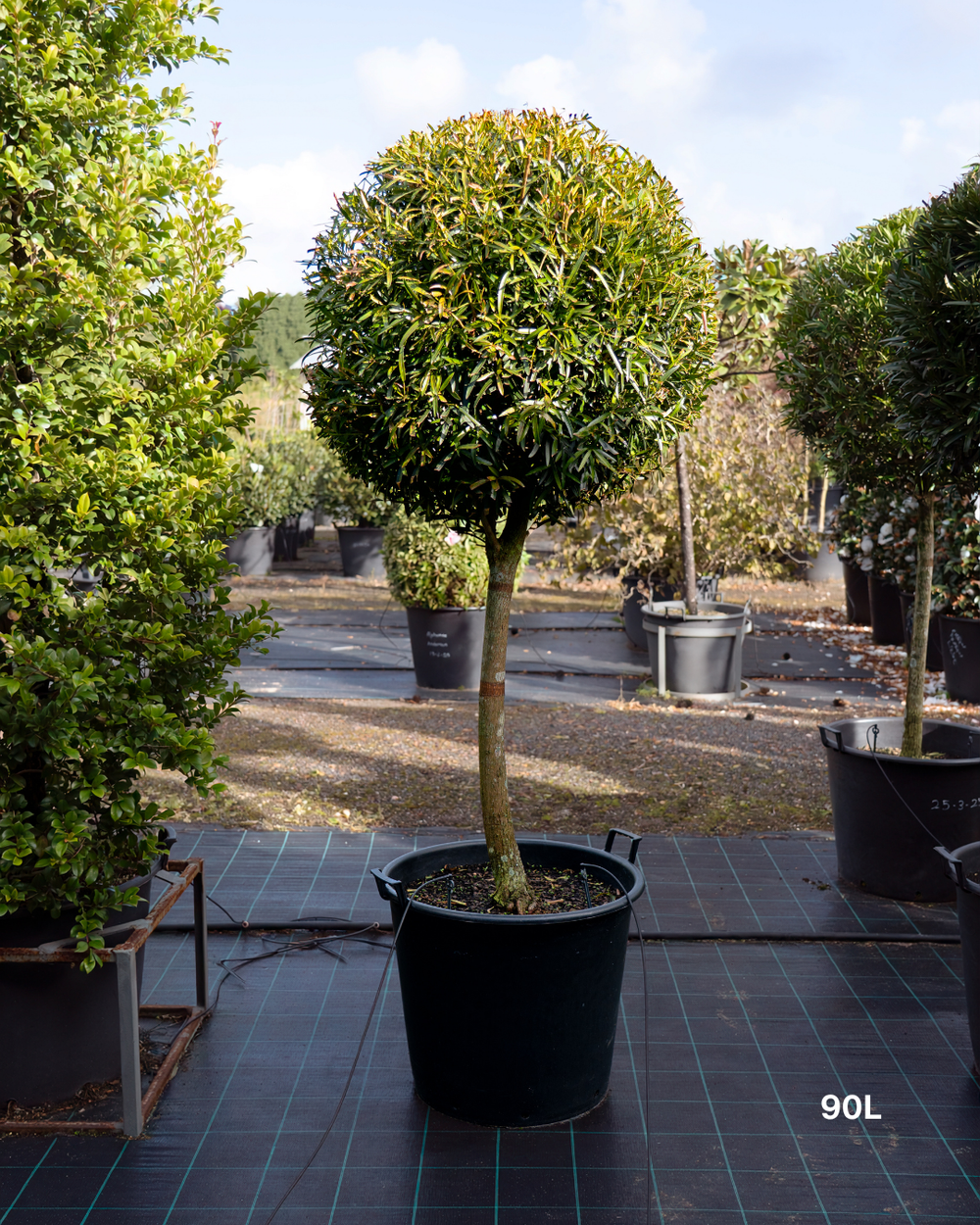
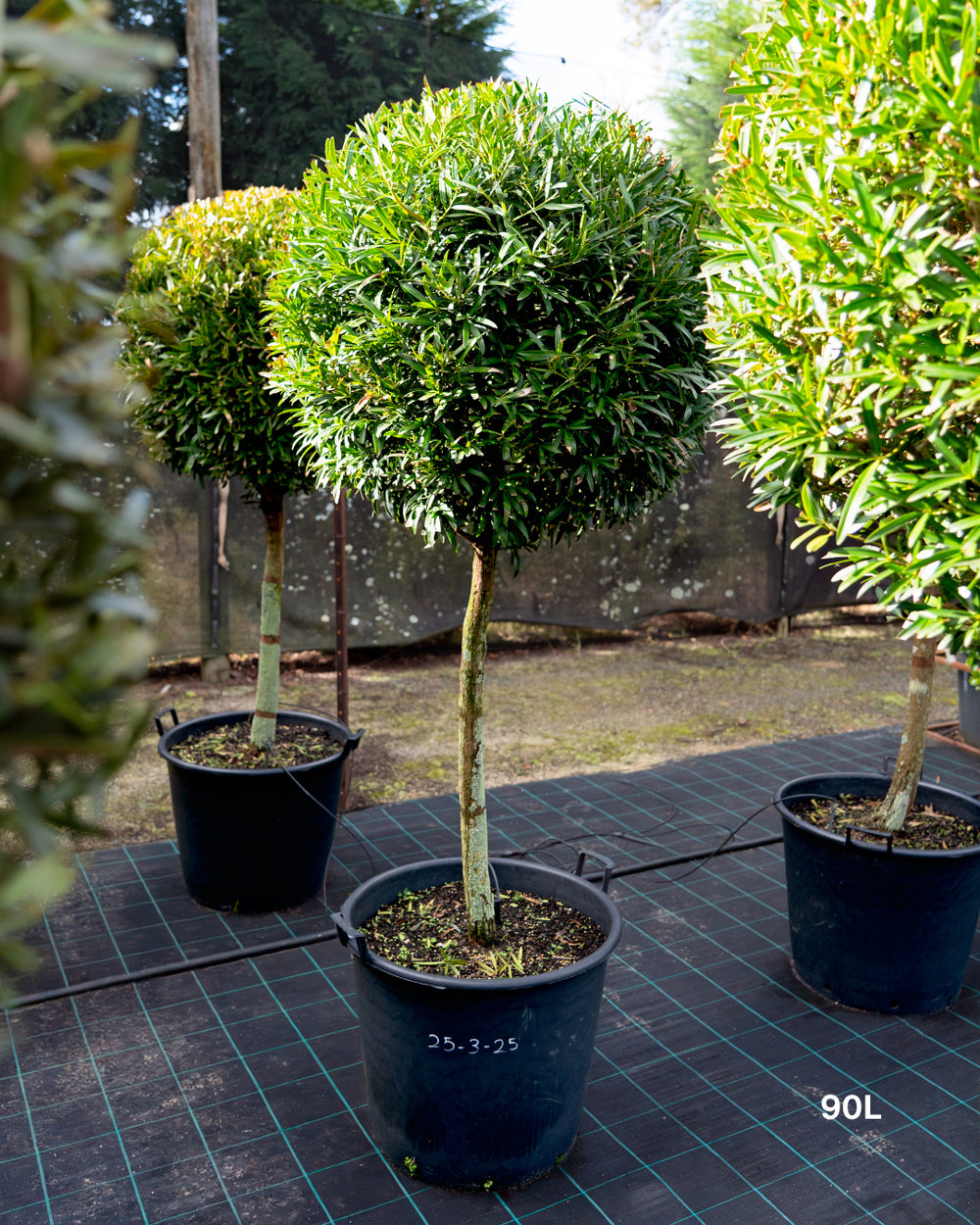
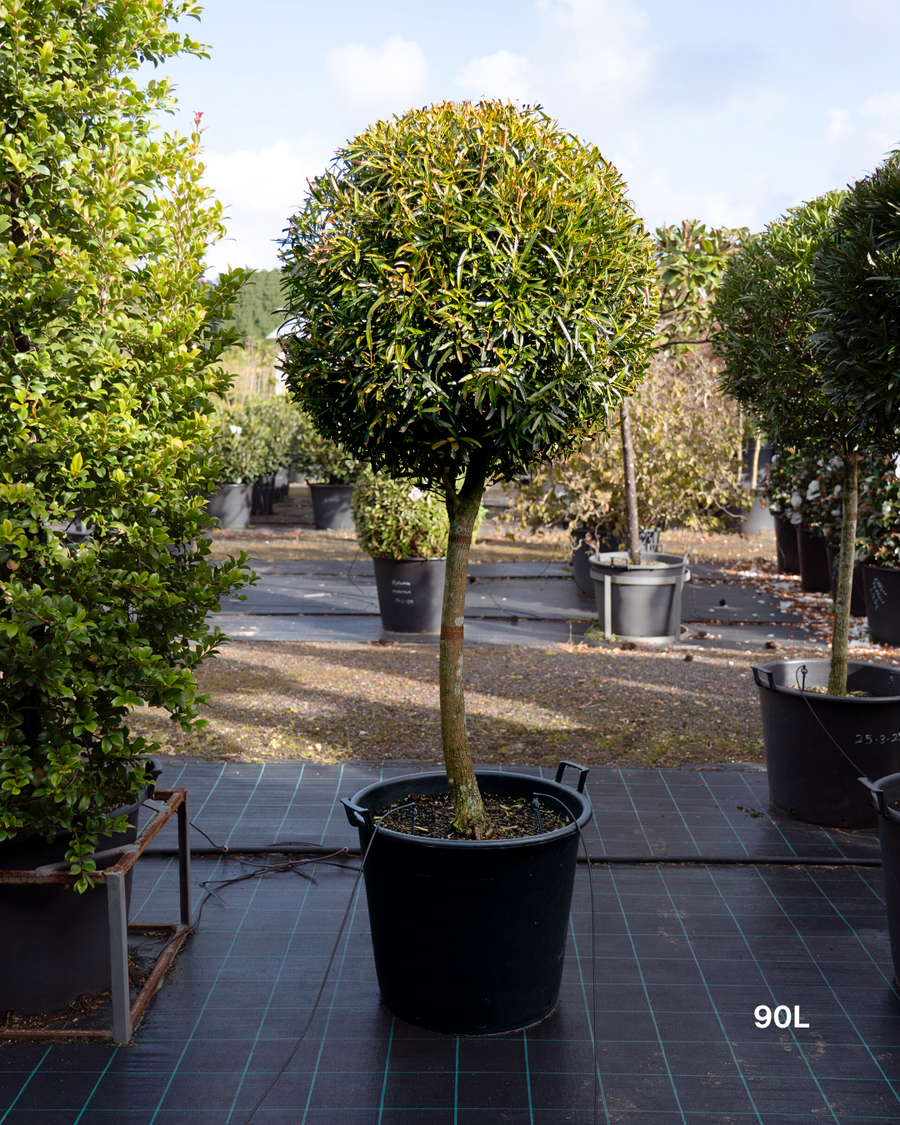
An Australian native conifer with narrow, glossy dark green leaves and bronze-green new growth in spring. It grows 20 to 40 cm a year in full sun to part shade and takes light to moderate frost once established. It can be clipped as a tall hedge or grown as a standard.

Mature size
8 to 12 m x 4 to 6 m (to 30 m in ideal conditions)
Fruit
Dark purple, plum-like fruit that attracts birds
Best for
Native gardens, shade and avenue planting, clipped standards

Current height guide

40cm/45L1.5m - 1.8m Approx.
View product →

Compare the six pine trees at a glance

Swipe sideways to see every column

VarietyTypeMature size (H x W)FruitBest for
Japanese black pine True pine, sculptural feature8 to 20 m x 4 to 8 mCoastal gardens, Japanese-style gardens, feature positions
Aleppo pine True pine, fast and tough10 to 20 m x 6 to 10 mWindbreaks, rural properties, high shade
Norfolk Island pine Coastal landmark tree50 to 65 m x 15 to 20 mForeshores, parkland, large properties
Pencil pine Narrowest column8 to 12 m x 0.5 to 1 mDriveways, entrances, formal and Mediterranean gardens
Italian pencil pine Classic Italian column10 to 15 m x 1 to 2 mAvenues, narrow beds, tall narrow screens
Plum pine (brown pine) Australian native conifer8 to 12 m x 4 to 6 m (to 30 m in ideal conditions)Dark purple, plum-like fruit that attracts birdsNative gardens, shade and avenue planting, clipped standards

Best pine trees for coastal gardens

  • On the foreshoreNorfolk Island pine is exceptionally tolerant of salt spray, sand and constant onshore wind. It reaches 50 to 65 metres tall, so it belongs on foreshores, parkland and large properties.
  • Sculptural featureJapanese black pine is salt, wind and drought tolerant once established. Pruning keeps it far smaller than its full size.
  • Windbreak and high shadeAleppo pine is salt and wind tolerant and grows 30 to 70 centimetres a year, so it suits windbreaks and shelterbelts.
  • Native choicePlum pine handles coastal exposure and humidity.

Planting near the sea? Read our guide to the best trees for coastal gardens.

Best pine trees for coastal gardens

Pine trees for narrow spaces and driveways

  • NarrowestPencil pine grows 8 to 12 metres tall and 0.5 to 1 metre wide, with dense, fine blue-green foliage.
  • Classic ItalianItalian pencil pine grows 10 to 15 metres tall and 1 to 2 metres wide, with dark green foliage. It holds its slim shape without pruning.
  • Spacing for a screenPlant either pencil pine 1 to 1.5 metres apart for a continuous narrow screen.
  • Spacing for an avenuePlant Italian pencil pine 2 to 3 metres apart and pencil pine 3 metres apart, so each column reads on its own.

Lining a drive? See our best trees for driveways and property borders, or the best trees for a Mediterranean garden.

Pine trees for narrow spaces and driveways

Pine trees for cold climates

Pine trees for cold climates

Which pine trees grow fastest

Which pine trees grow fastest

How to plant and care for pine trees

  1. Pick the positionChoose full sun and a well-drained spot with room for the mature size. Norfolk Island pine and plum pine also grow in part shade.
  2. Check the drainageThe two true pines grow best in free-draining sandy or loam soil. They may struggle in heavy clay or waterlogged ground unless the drainage is improved.
  3. Dig and plantDig the hole twice as wide as the root ball and the same depth. Set the tree level with the surrounding soil, backfill gently, firm in and water deeply.
  4. Water through the first yearWater deeply twice weekly through the first 12 months. Italian pencil pine needs this through its first summer, then weekly in dry spells for the second. Once established, the true pines need a deep soak only in extended dry periods.
  5. MulchApply a 5 centimetre layer of organic mulch over the root zone and keep it 5 centimetres clear of the trunk.
  6. Prune lightlyThe true pines need minimal pruning: a light tip prune in late winter holds the shape. Do not cut pencil pines back into bare wood, because it does not reshoot.
How to plant and care for pine trees

Frequently asked questions

What types of pine trees grow in Australia?
Two groups. True pines belong to the genus Pinus, such as Pinus thunbergii, the Japanese black pine, and Pinus halepensis, the Aleppo pine. Other conifers carry the pine name: the Norfolk Island pine (Araucaria heterophylla), the pencil pines (Cupressus sempervirens) and the native plum pine (Podocarpus elatus).
Is a pencil pine a real pine tree?
No. Pencil pines are forms of Cupressus sempervirens, the Mediterranean cypress, in the family Cupressaceae. True pines belong to the genus Pinus in the family Pinaceae. Both are evergreen conifers.
Which pine tree is best for a narrow space?
A pencil pine. Cupressus sempervirens 'Glauca' grows 8 to 12 metres tall and 0.5 to 1 metre wide. Cupressus sempervirens 'Stricta', the Italian pencil pine, grows 10 to 15 metres tall and 1 to 2 metres wide.
Which pine trees suit coastal gardens?
Norfolk Island pine is exceptionally tolerant of salt spray, sand and onshore wind, but it needs a very large site. Japanese black pine and Aleppo pine are both salt and wind tolerant. The native plum pine also handles coastal exposure.
Which pine trees grow fastest?
Aleppo pine grows 30 to 70 centimetres a year and Norfolk Island pine 40 to 70 centimetres a year. The pencil pines grow 30 to 60 centimetres a year. Plum pine and Japanese black pine are the slowest, at 20 to 40 and 20 to 35 centimetres a year.
Are any pine trees native to Australia?
Podocarpus elatus, the plum pine or brown pine, is native to eastern Australia. It is a conifer that carries the pine name, not a true pine of the genus Pinus.
How far apart should pine trees be planted?
It depends on the job. As a feature tree, give Japanese black pine 3 to 4 metres so the full form can develop. For a narrow screen, plant pencil pines 1 to 1.5 metres apart. For an avenue, plant Italian pencil pines 2 to 3 metres apart and pencil pine 'Glauca' 3 metres apart.
What is the difference between a pine and a conifer?
Conifers are trees that carry cones. Pines are one group of conifers, the genus Pinus. Cypresses, araucarias and podocarps are also conifers, and several of them are sold with pine in their common name.

The wrap up

Pick the pine by the job. Use a pencil pine for a narrow column, Japanese black pine for a sculptural feature, Aleppo pine for a windbreak, plum pine for a native garden, and Norfolk Island pine only where there is room for a very large tree.

Not sure which suits your site? Take our tree quiz, or send us a photo of the space and we will point you to the right tree.

Shopping cart (0)

Complete your order

Freight added at checkout, based on your delivery address and order quantities.

Checkout