Skip to content
Pleached Trees: 6 Best Trees for Pleaching in Australia

Pleached Trees: 6 Best Trees for Pleaching in Australia

Six trees for pleaching compared by mature size, growth rate and frost tolerance, with spacing, planting and clipping tips for a screen above the fence.
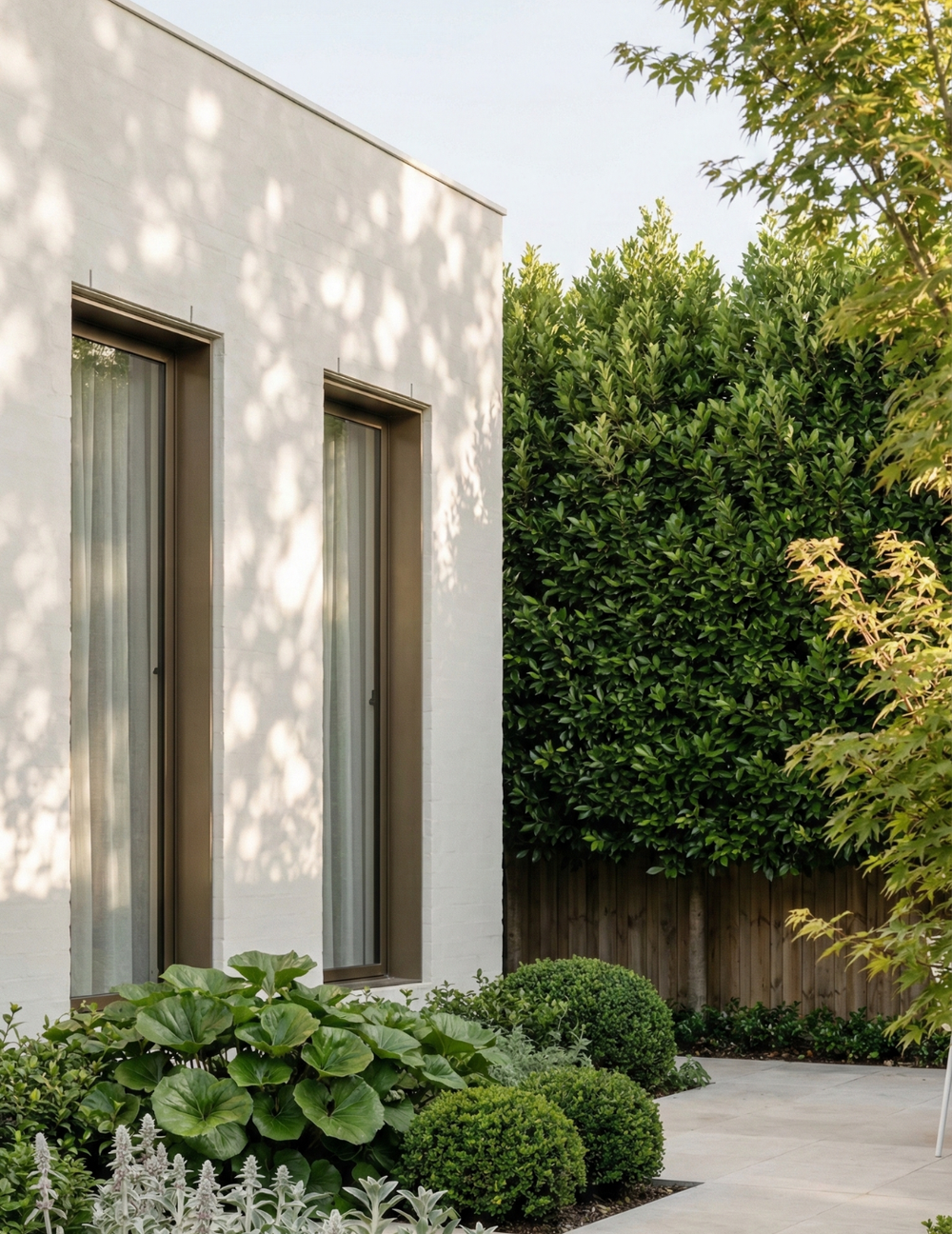
Pleached trees are trees trained to a clear, straight trunk with a flat panel of foliage above it. Planted in a row, the panels join into a hedge on stilts that screens above a fence and leaves the ground below open. This guide compares six trees for pleaching by mature size, growth rate and frost tolerance.

The right tree depends on your climate, how fast you want cover, and whether you want leaves all year. Five of the six are evergreen and one is deciduous. Every size on this page comes from the product data, so check the plant card and the product page before you plant.

Ready to shop? Browse the pleached and pleachable trees collection, read our guide to tall hedging trees for privacy, or take the tree quiz if you are not sure which suits your boundary.

Last reviewed
20 November 2026
Reading time
6 minutes
Supplier
Evergreen Trees Direct

What is a pleached tree?

  • Clear trunkThe lower branches are removed so the trunk is bare, usually to about fence height.
  • Flat panelThe branches above are tied to a frame and clipped into a flat, rectangular panel of foliage.
  • Pleached hedgeA row of pleached trees planted so the panels meet. It gives privacy at the height of a neighbouring window without filling the garden bed below.
  • Pleaching or espalierAn espalier is trained flat against a wall or wires from near the ground up. A pleached tree carries its panel on top of a clear trunk.
  • Pleached or standardA standard has a clear trunk with a rounded head. A pleached tree has a flat head, so a row joins into one screen.
What is a pleached tree?

The six trees for pleaching, with photos and sizes

Compare sizes
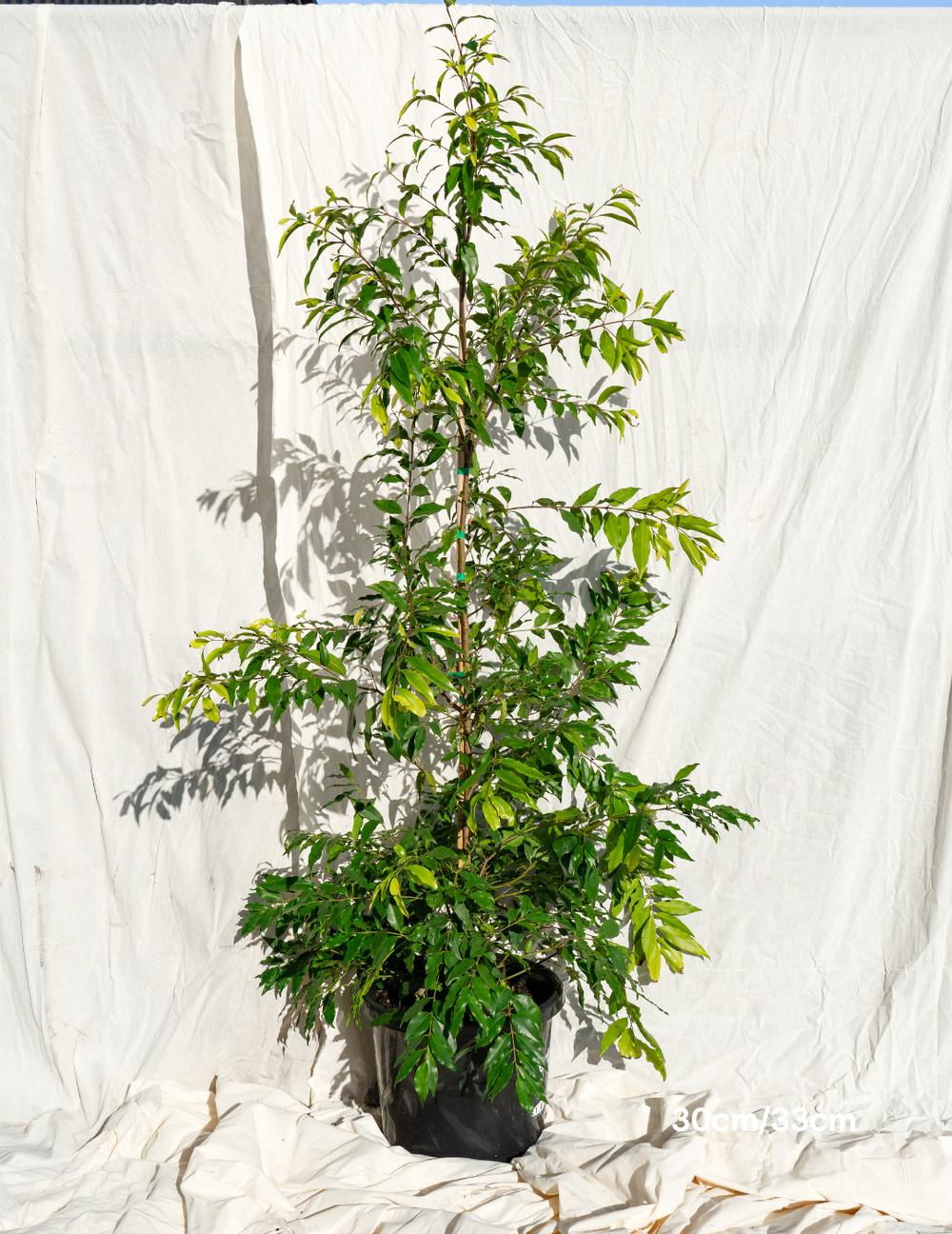
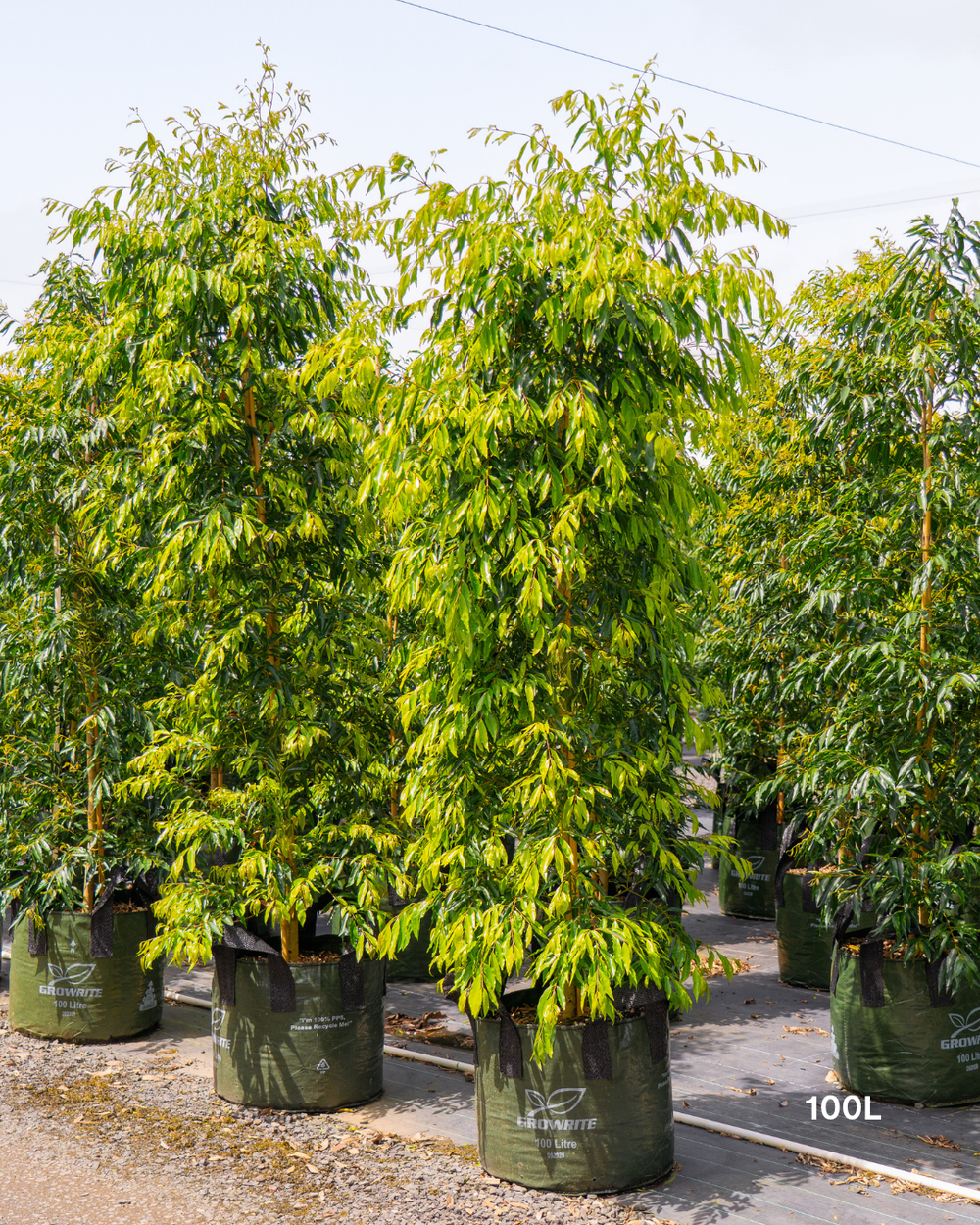
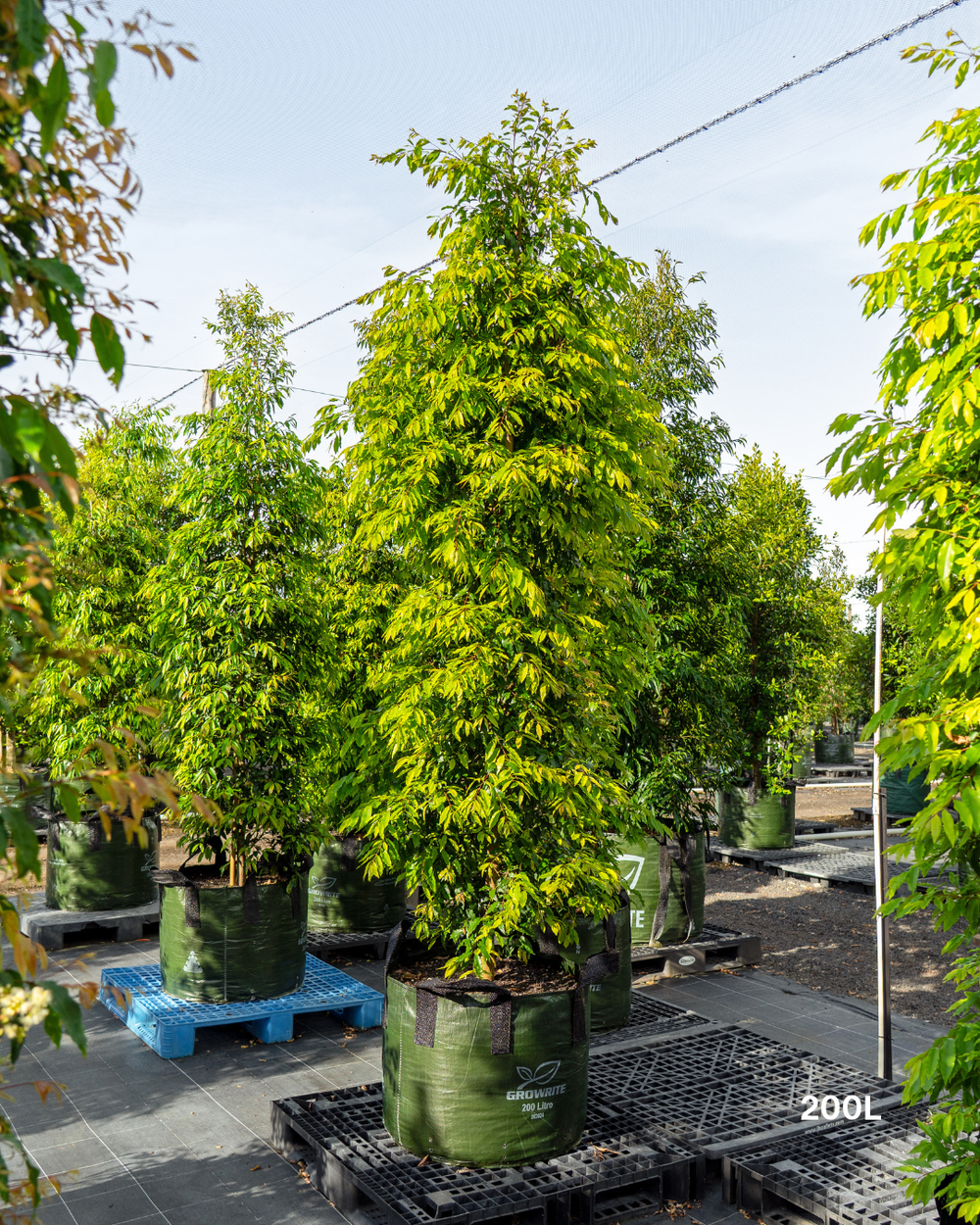
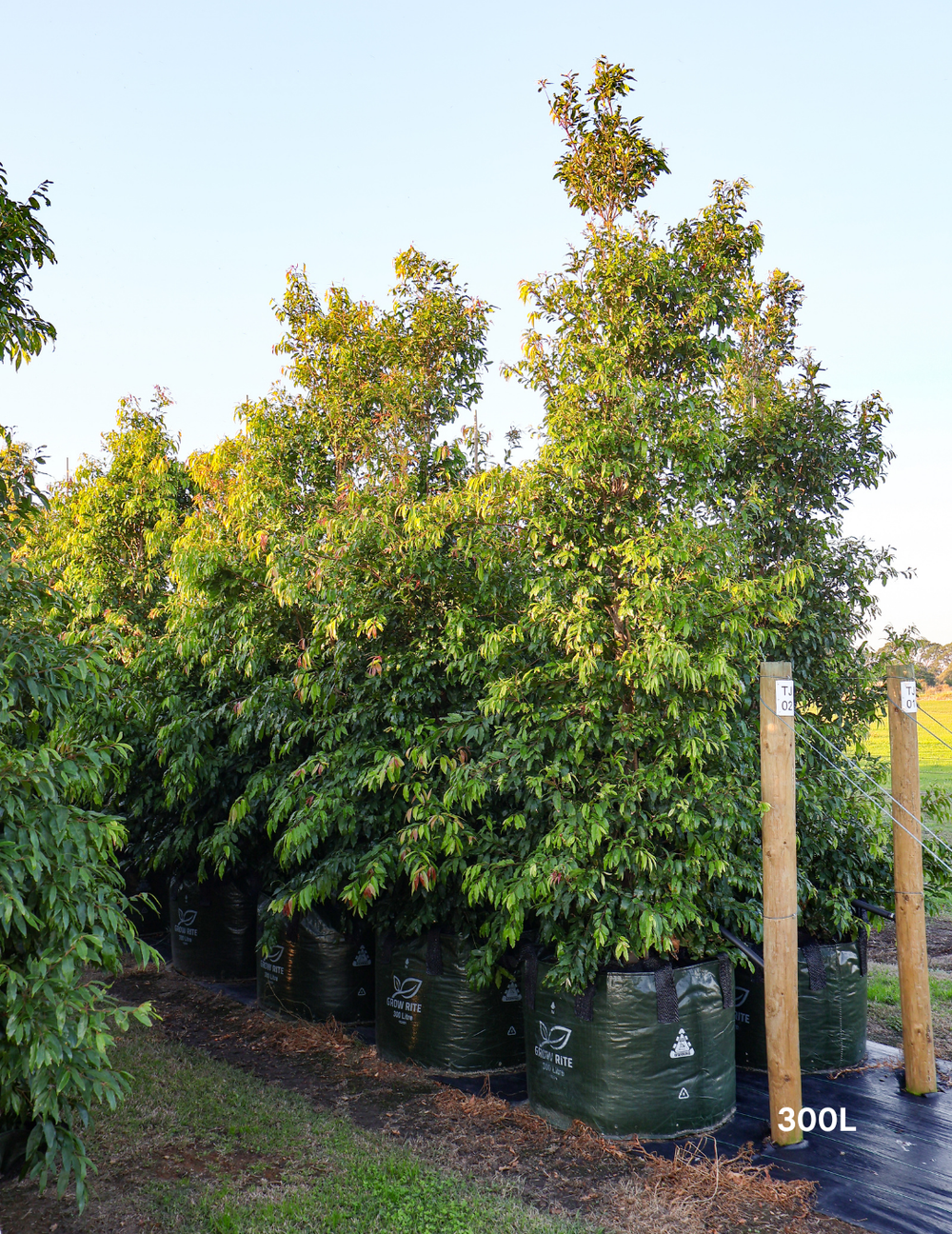
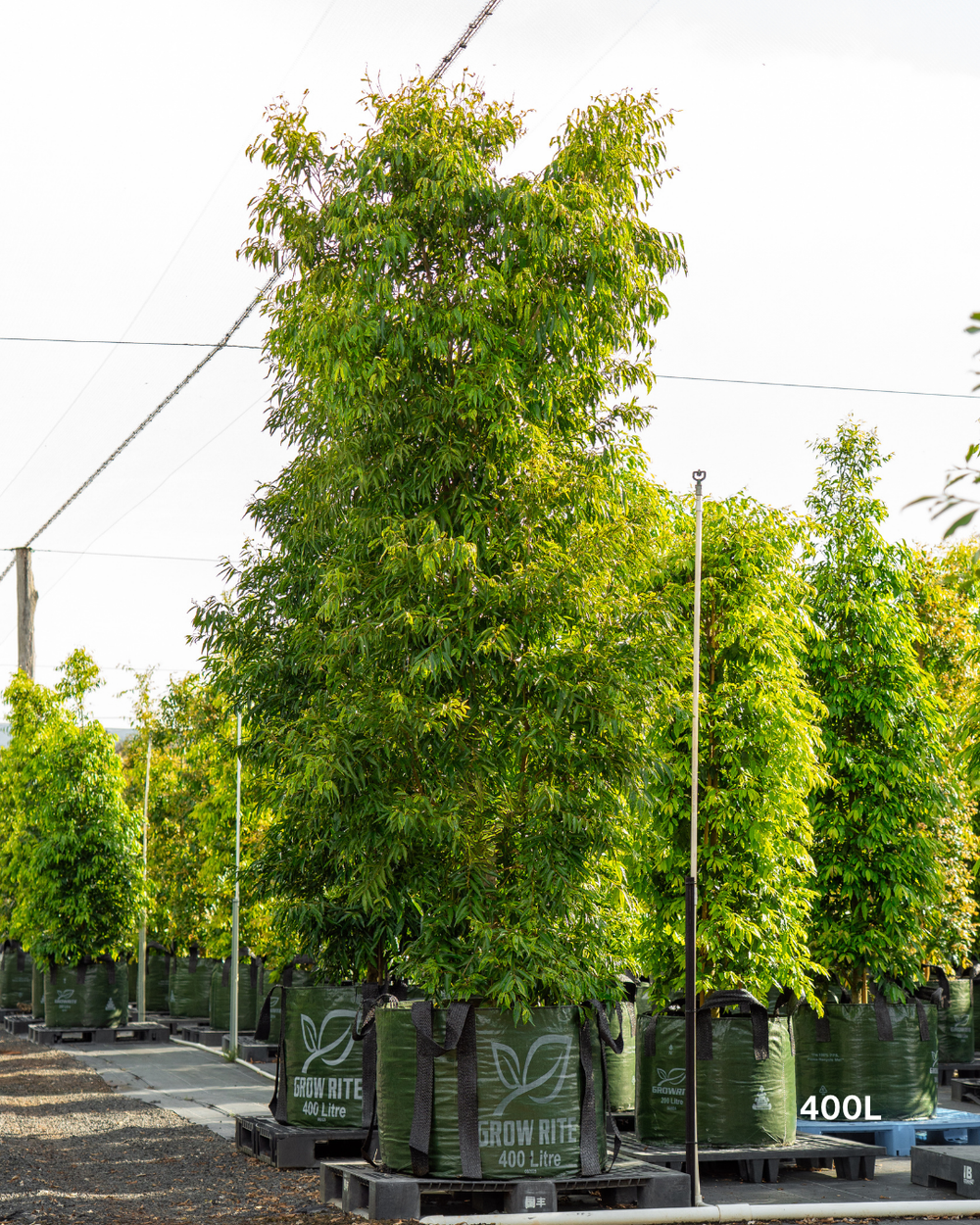
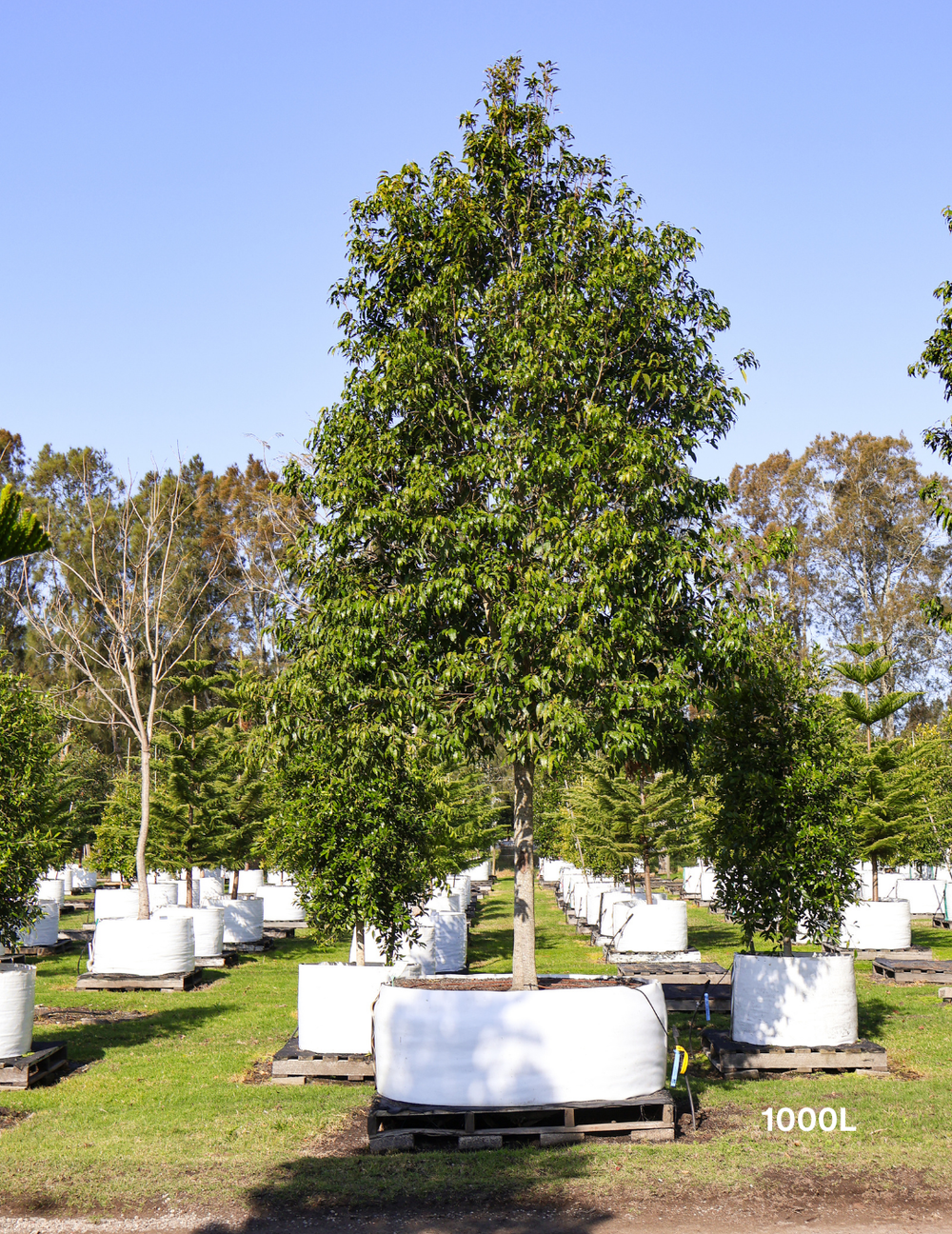
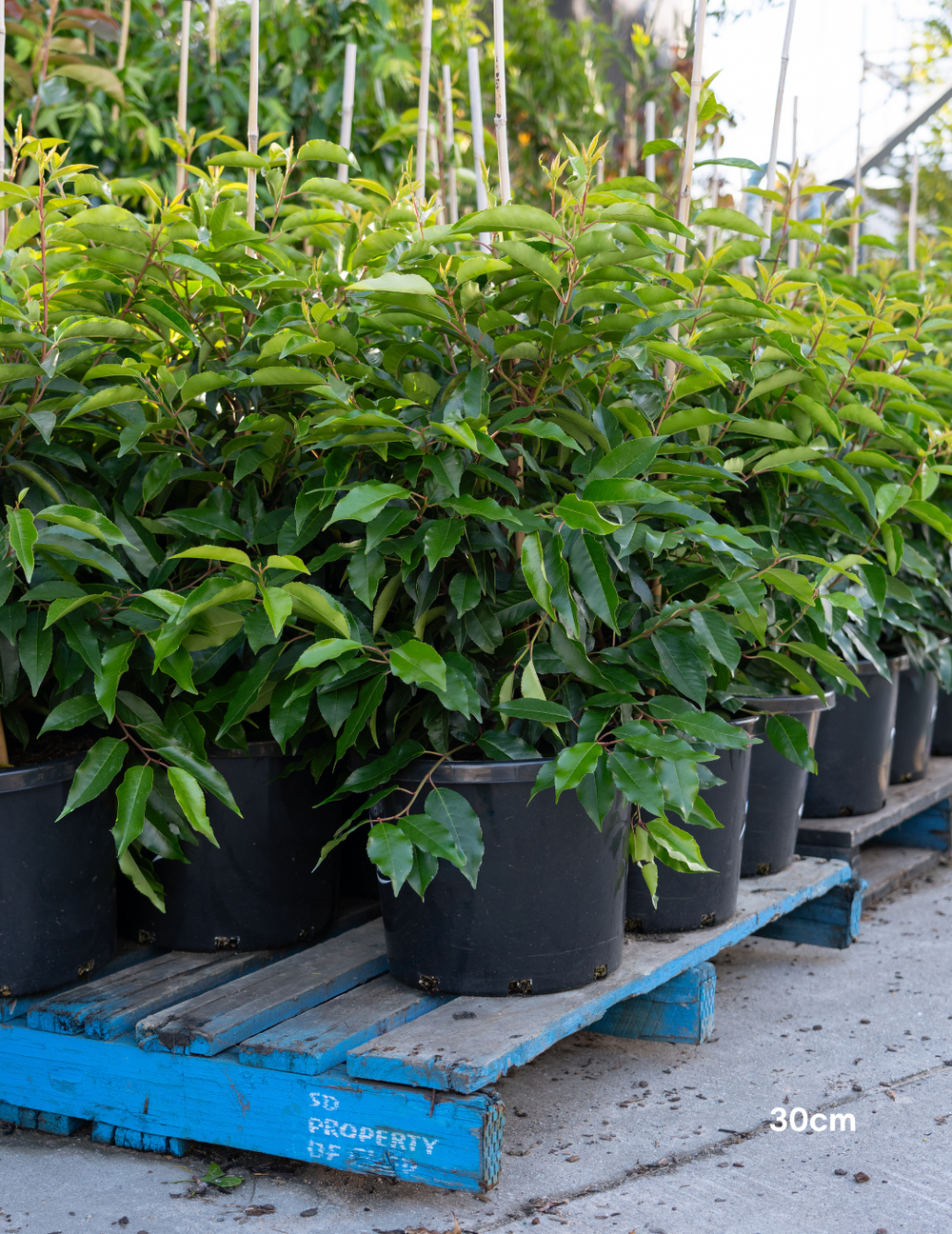
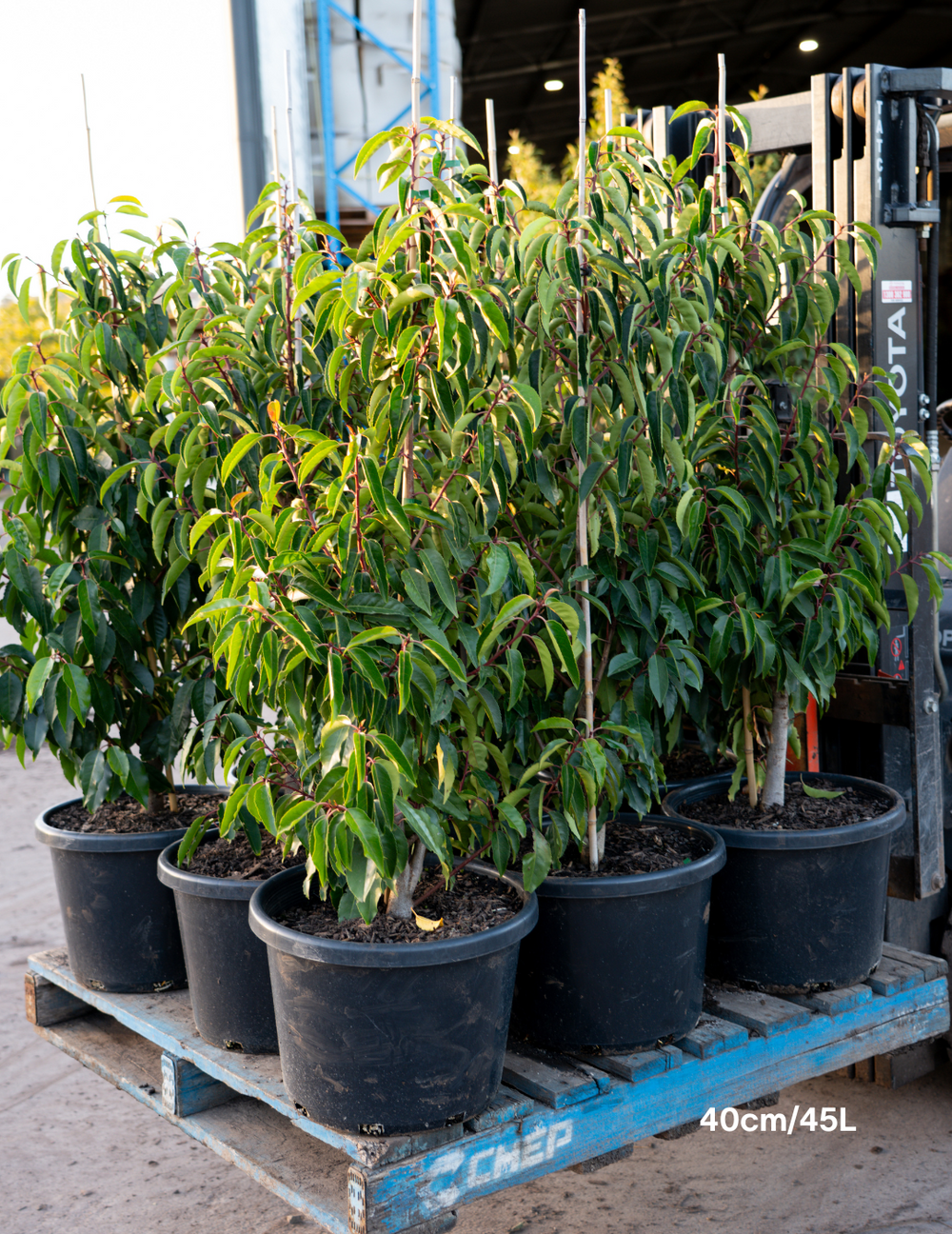
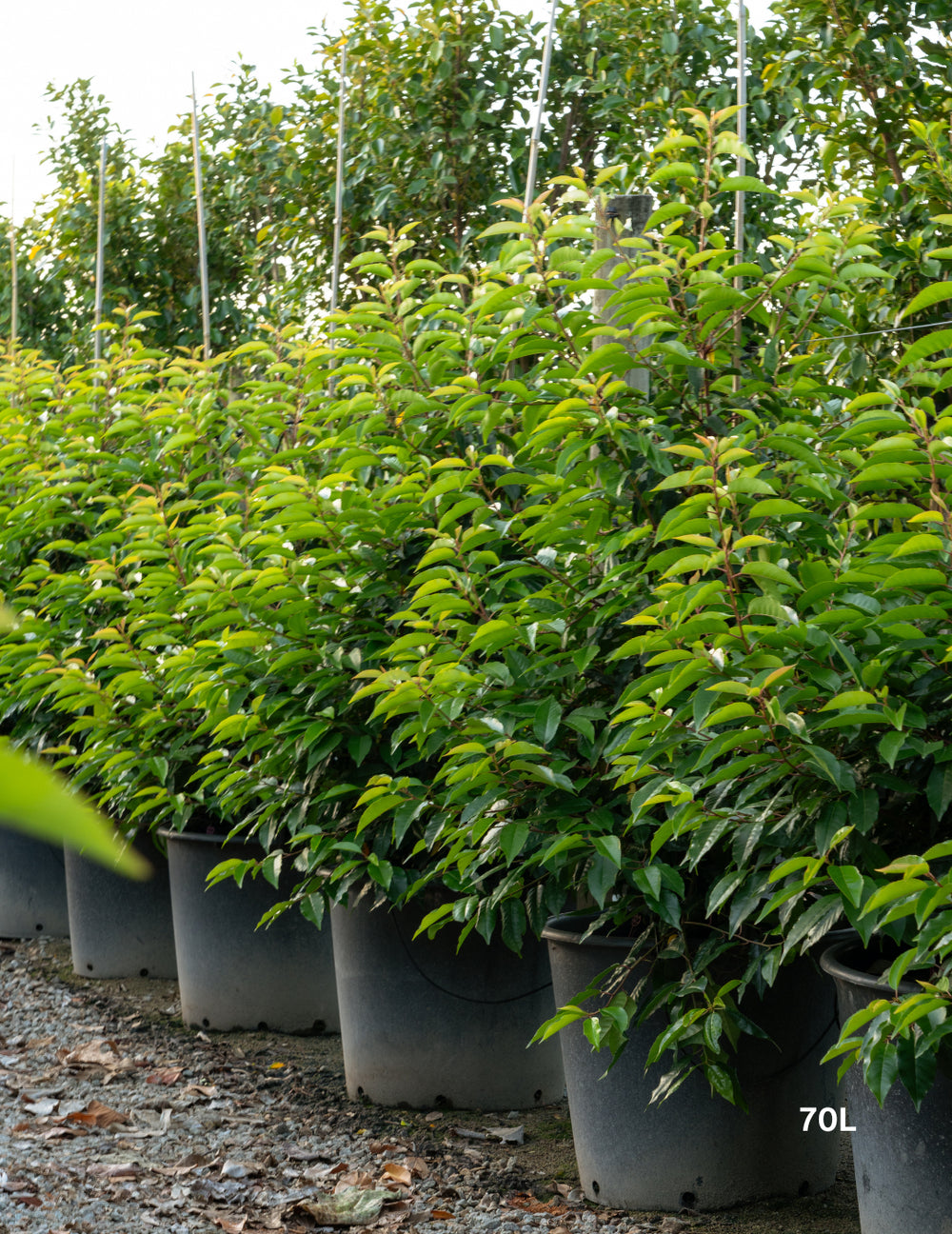
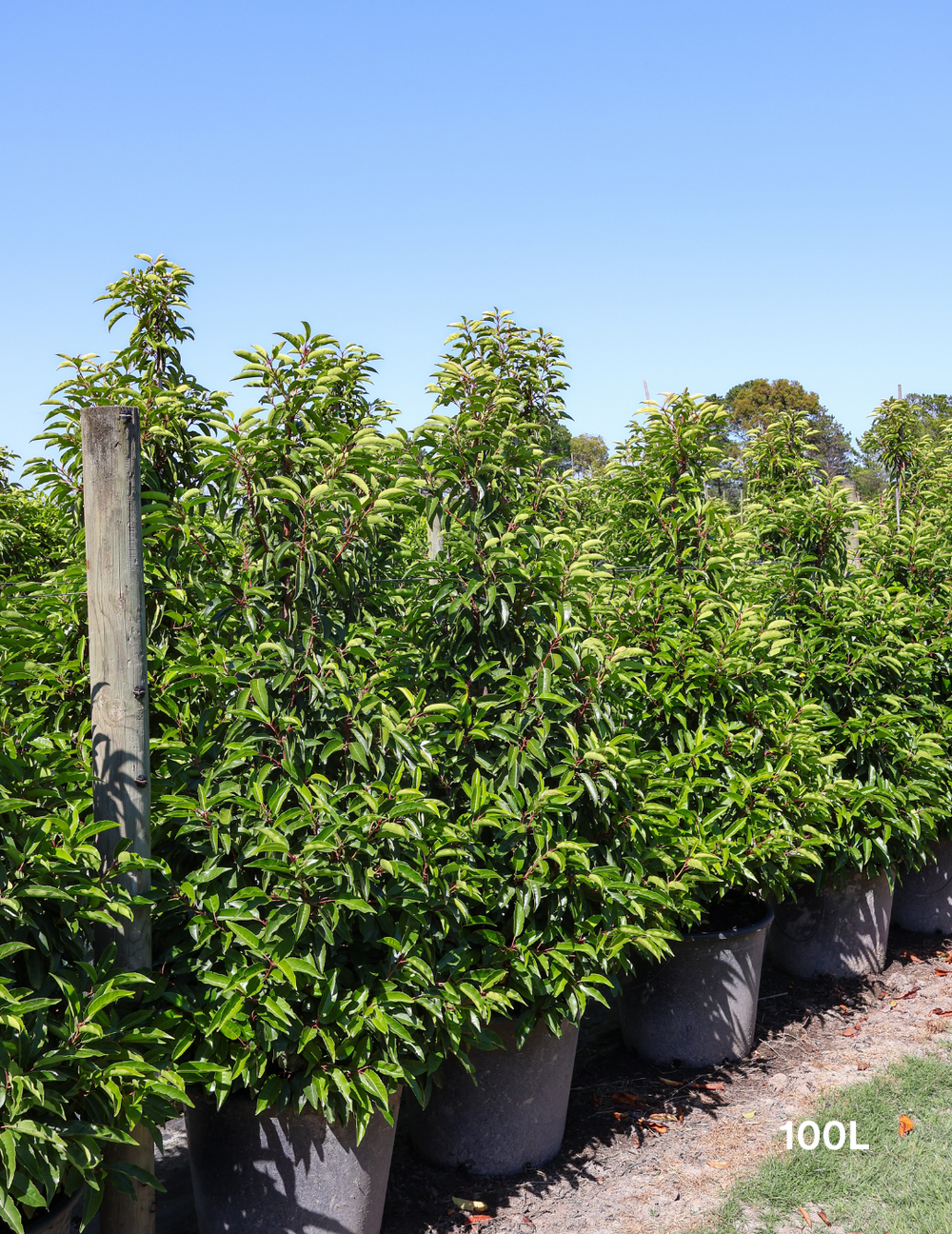
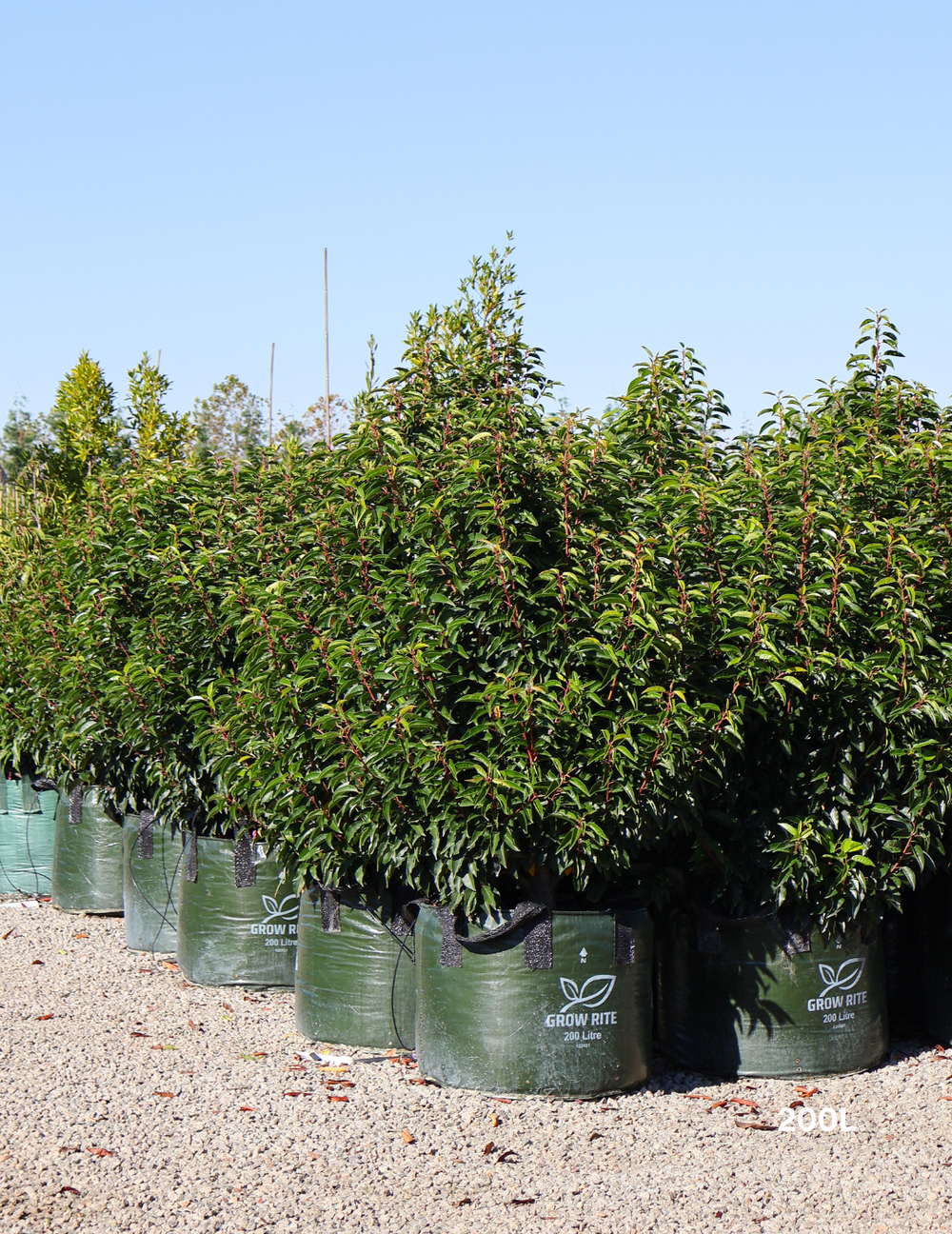
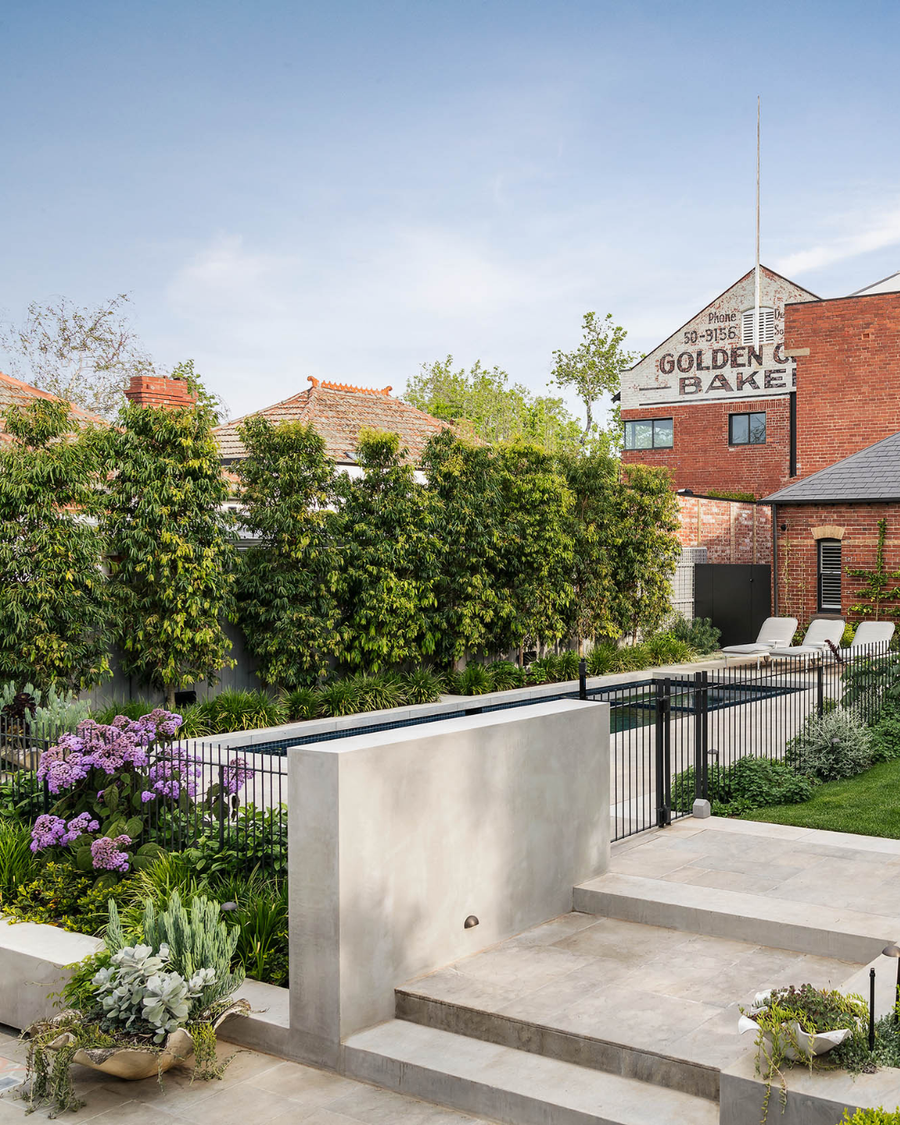
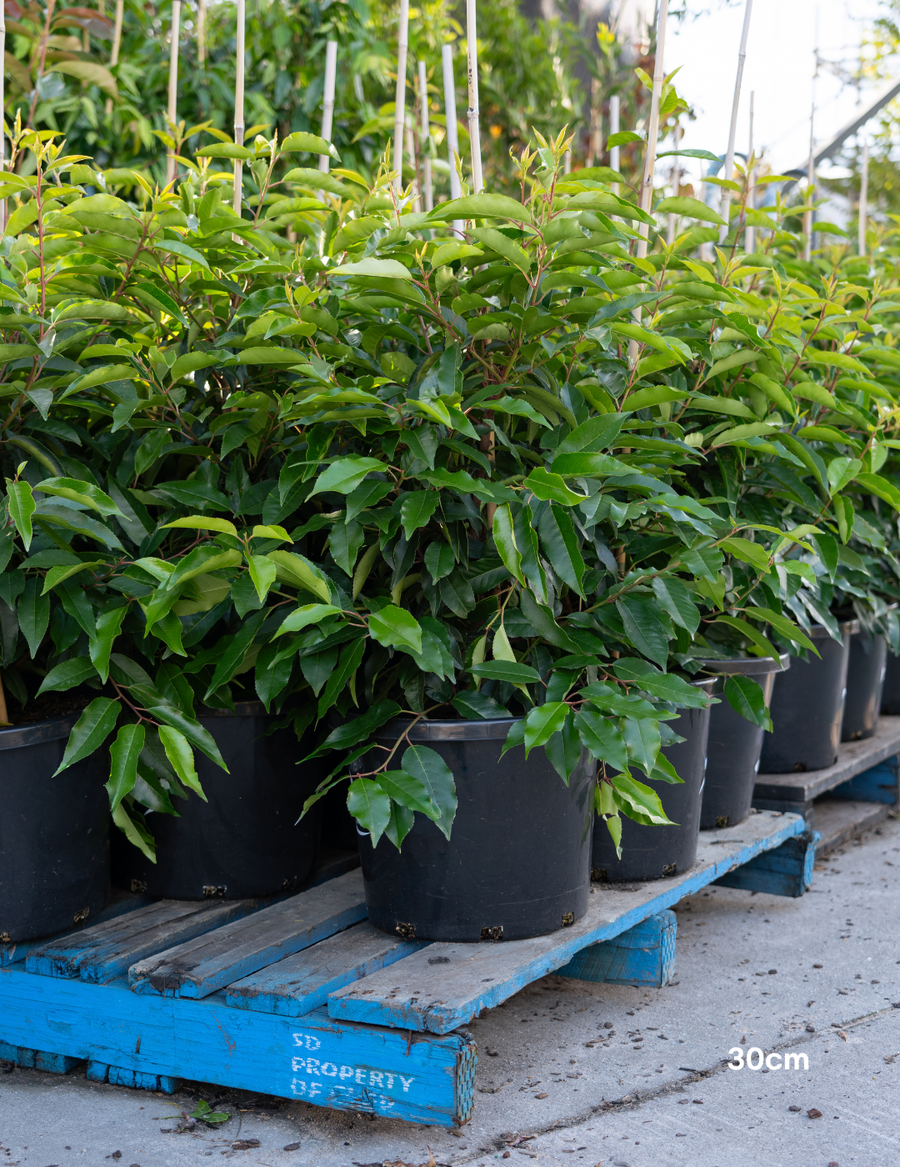
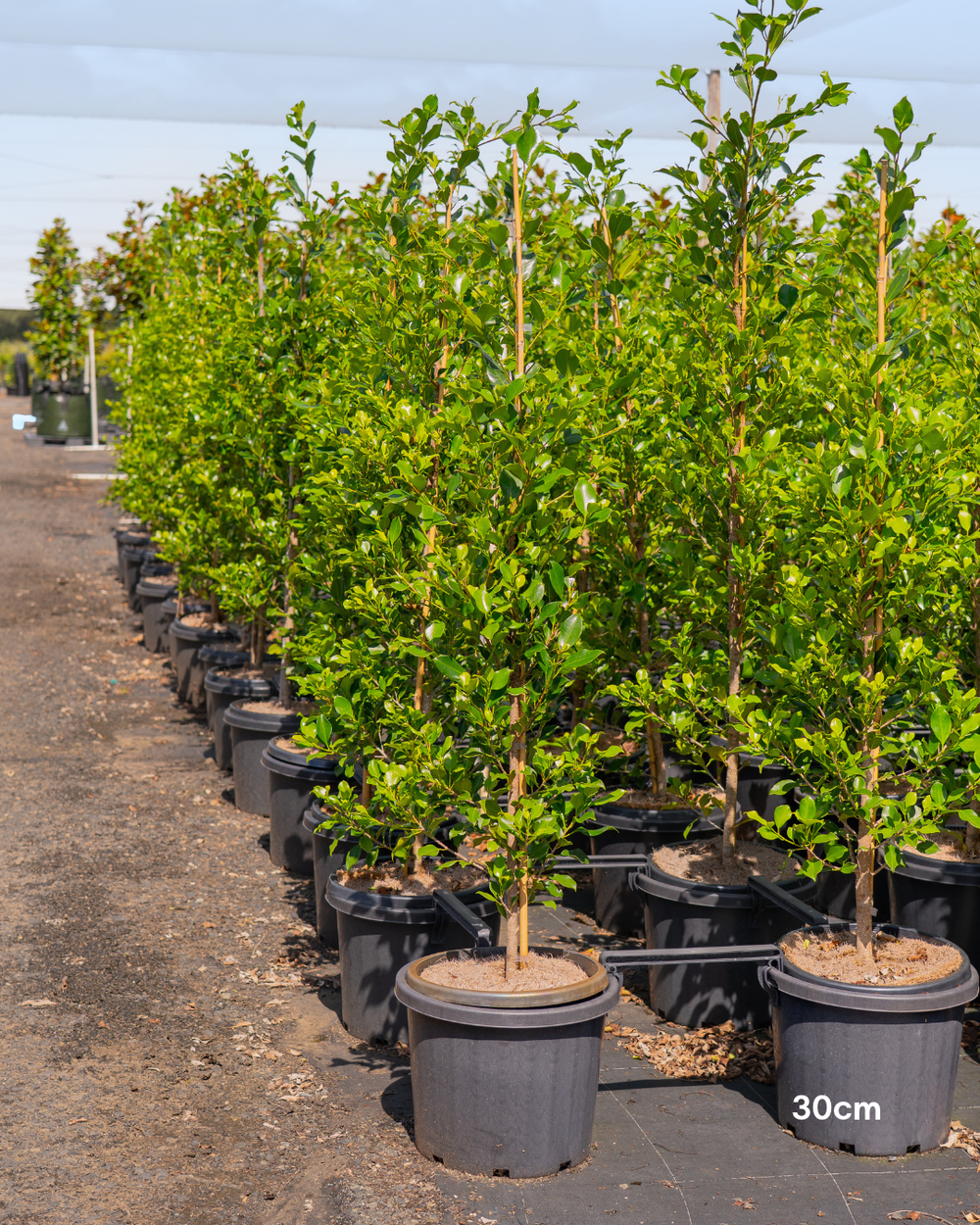
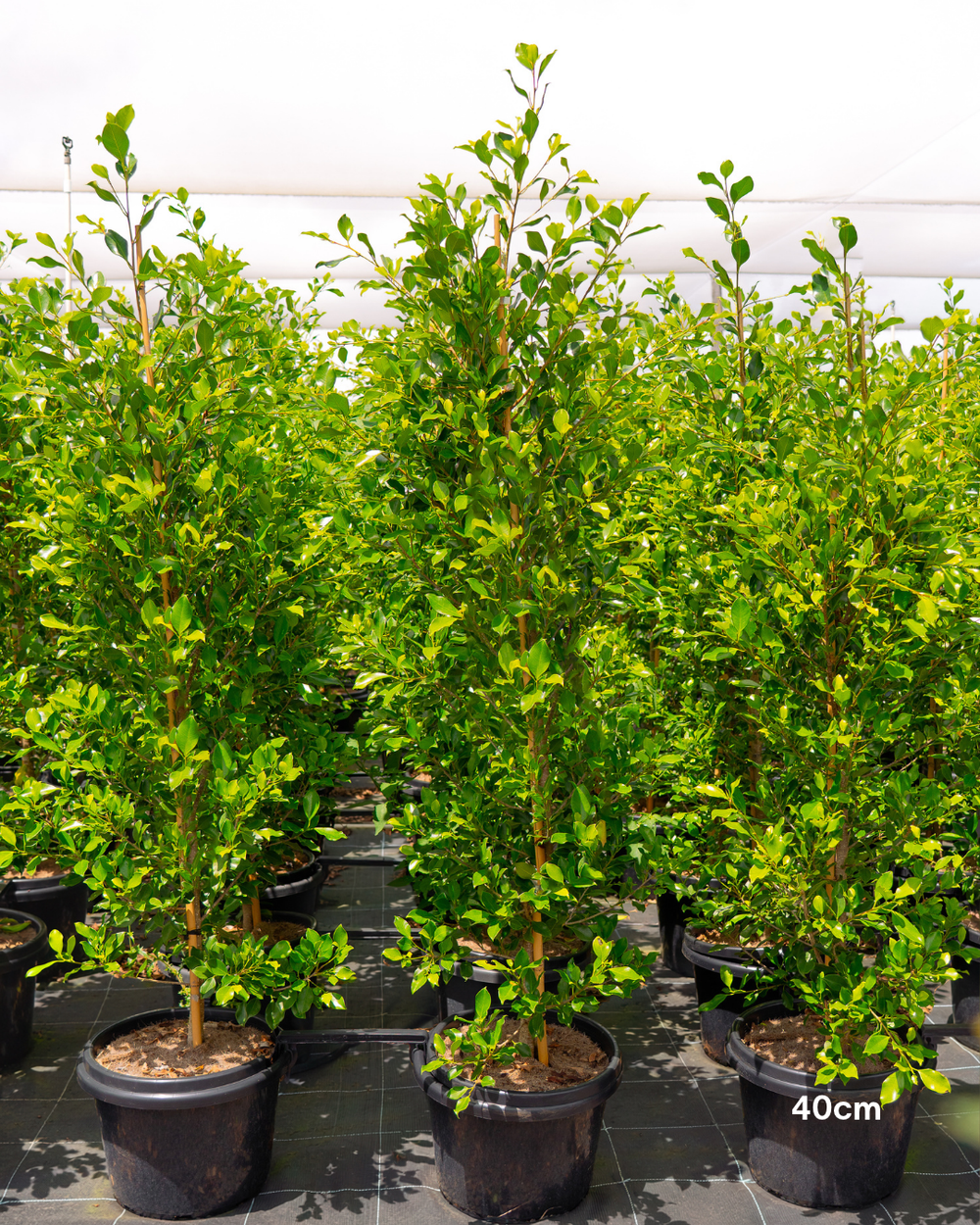
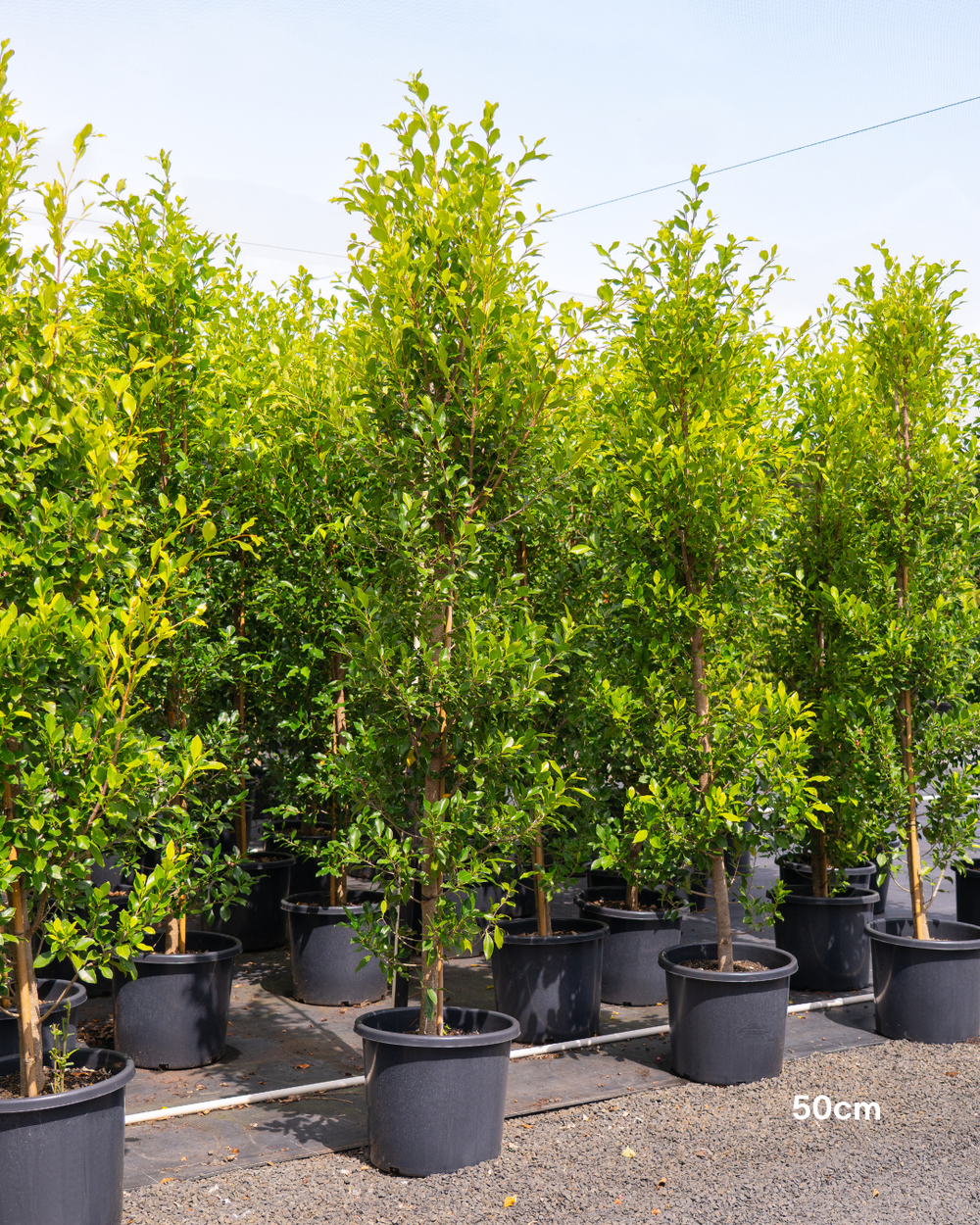
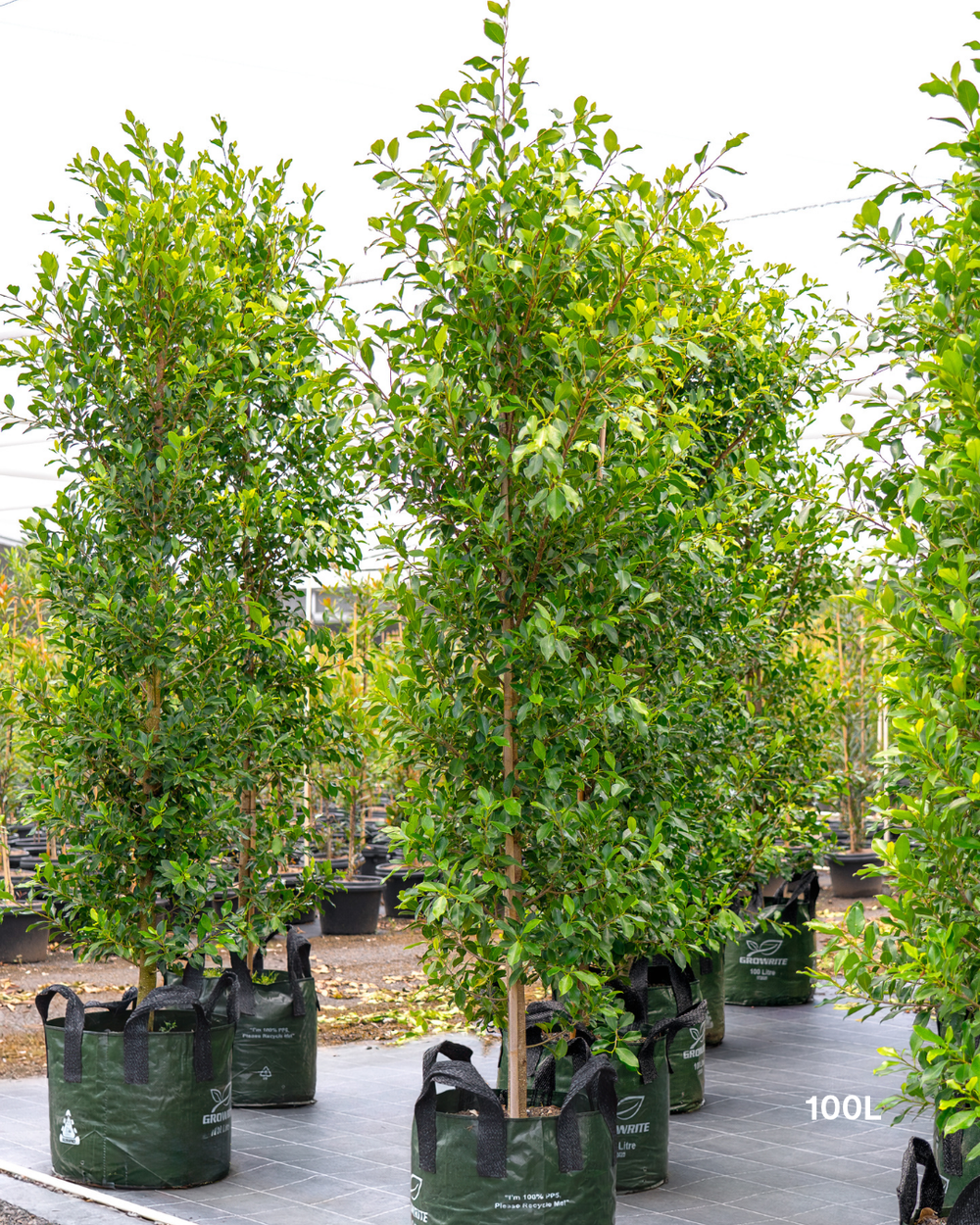
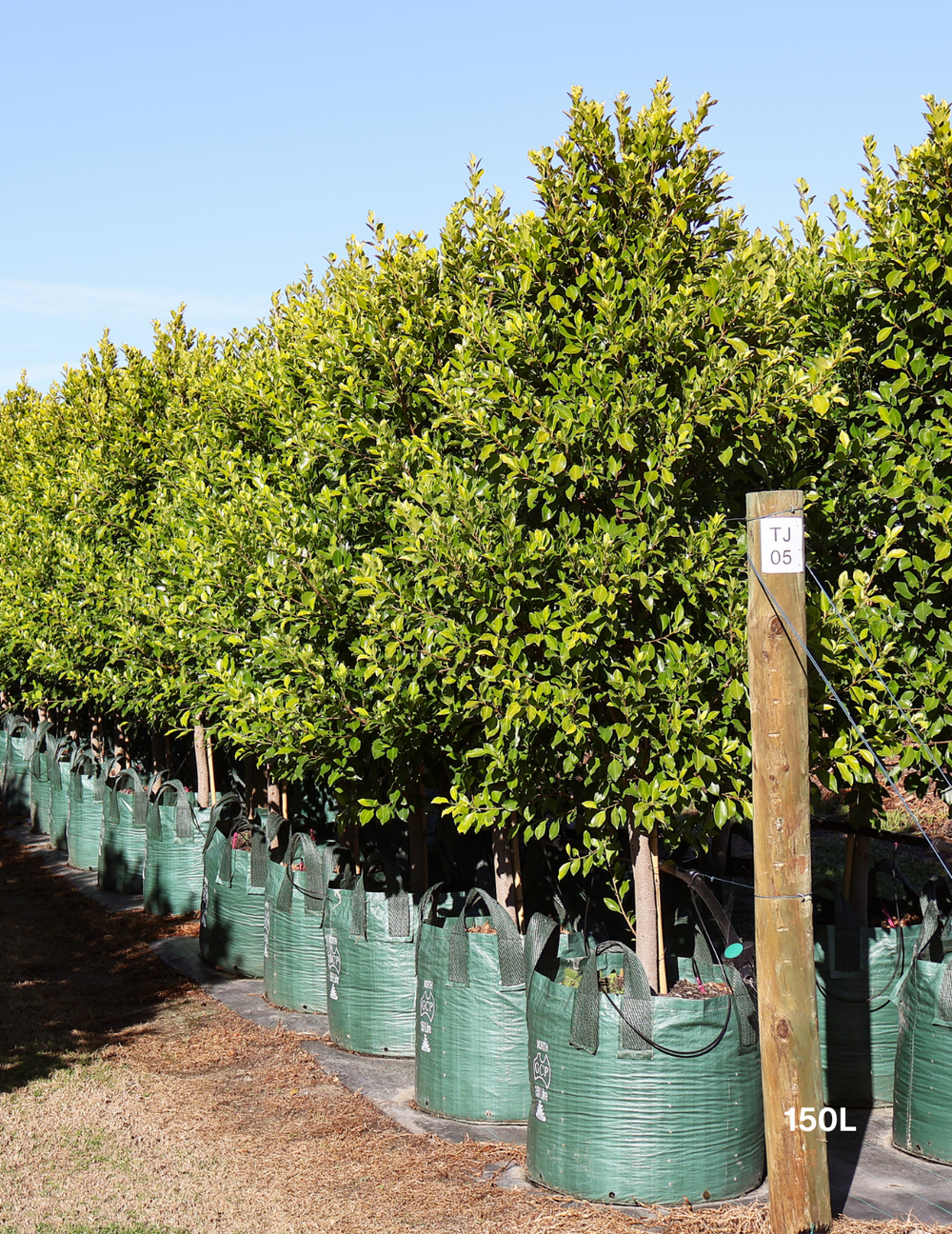
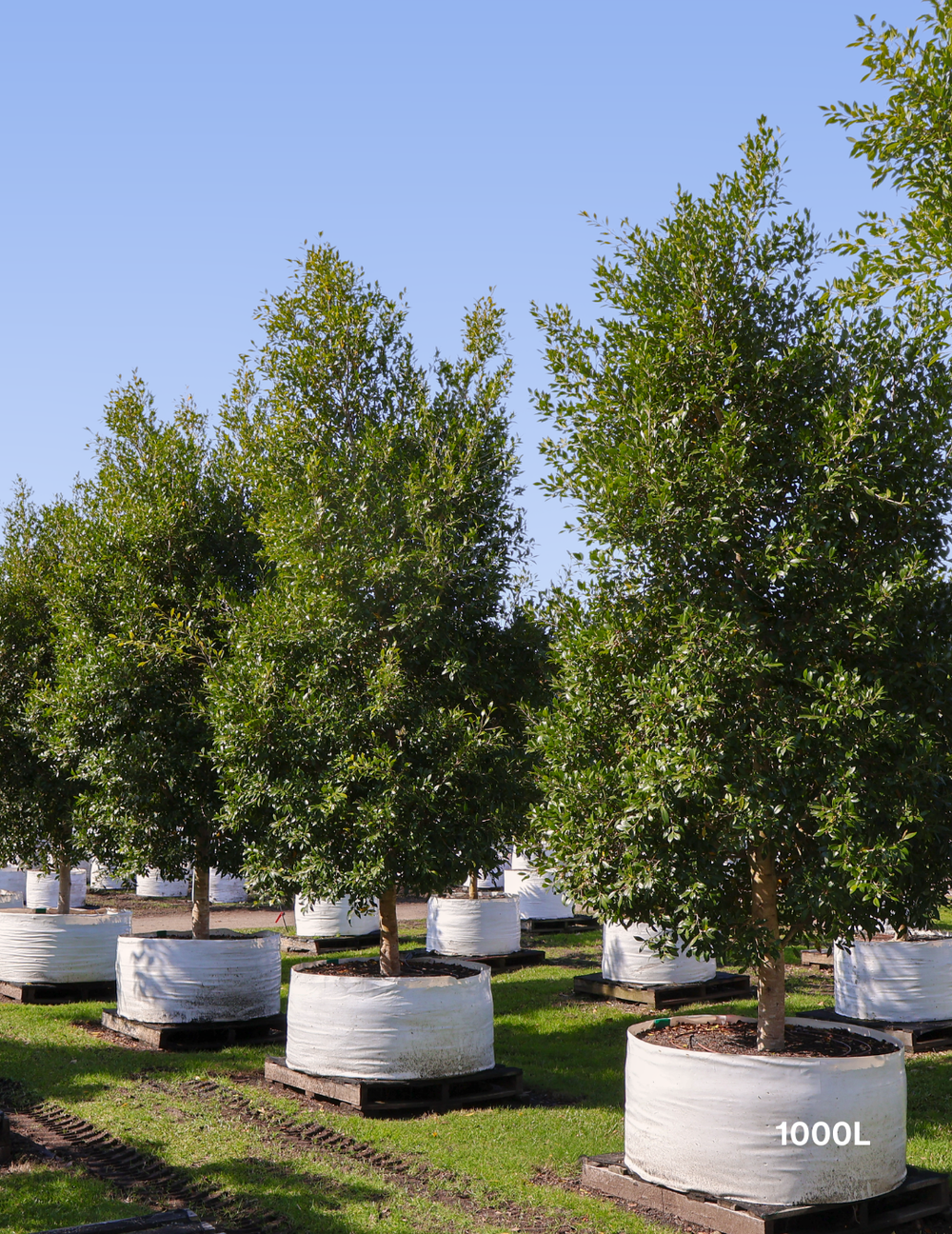
Ficus hillii 'Flash'Ficus hillii 'Flash'Ficus hillii 'Flash'Ficus hillii 'Flash'Ficus hillii 'Flash'Ficus hillii 'Flash'Ficus hillii 'Flash'Ficus hillii 'Flash'Ficus hillii 'Flash'Ficus hillii 'Flash'Ficus hillii 'Flash'Ficus hillii 'Flash'

Fast evergreen panel

Ficus hillii 'Flash'

Hill's fig 'Flash'

Glossy dark green leaves with lime-green new growth. It grows 50 to 100 cm a year and responds well to pruning, so a trained panel fills quickly. It is frost sensitive, so keep it to frost-free or protected positions.

Mature size
6 to 10 m x 3 to 4 m
Best for
Screening above a fence, pool boundaries, fast cover
View product →
Compare sizes
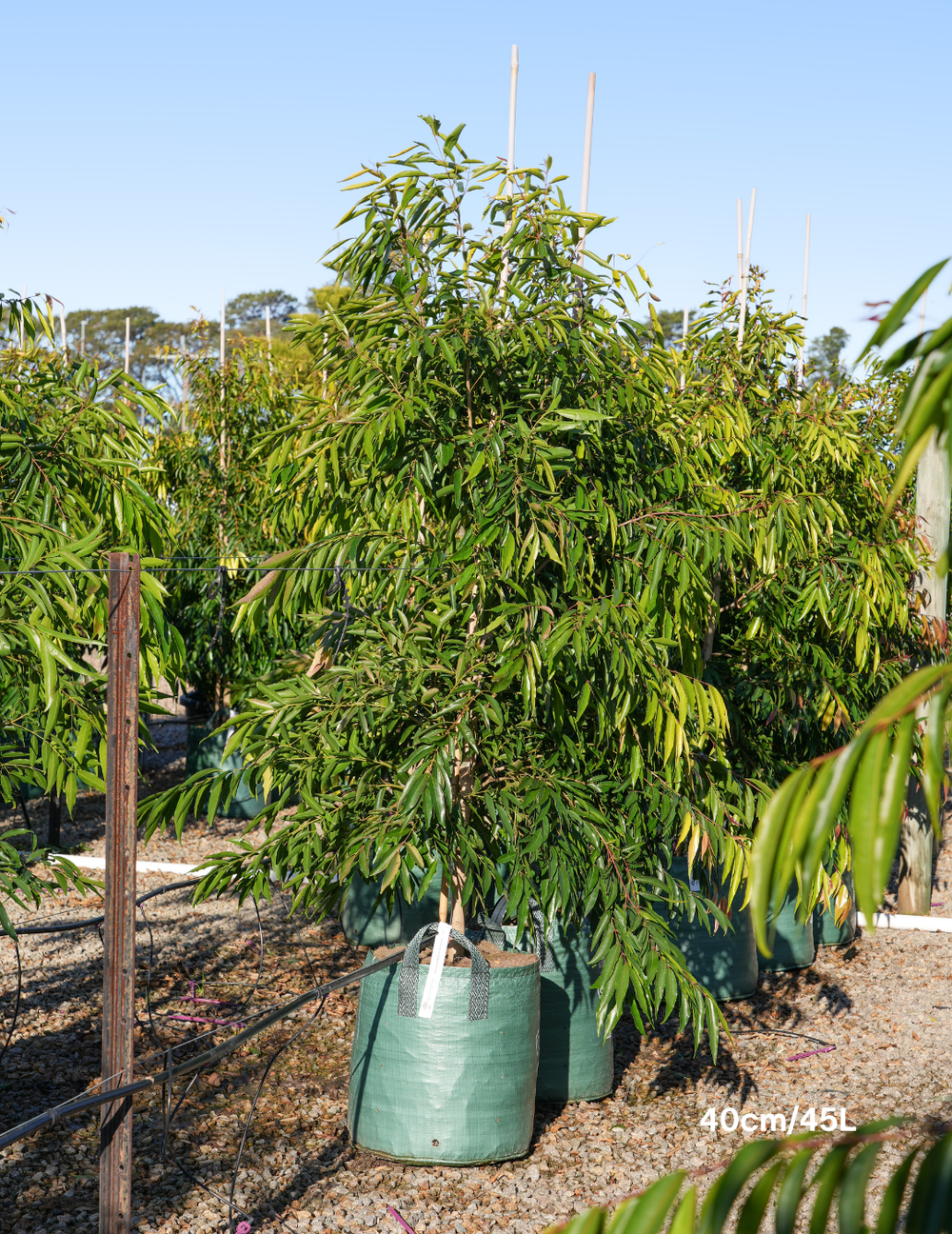
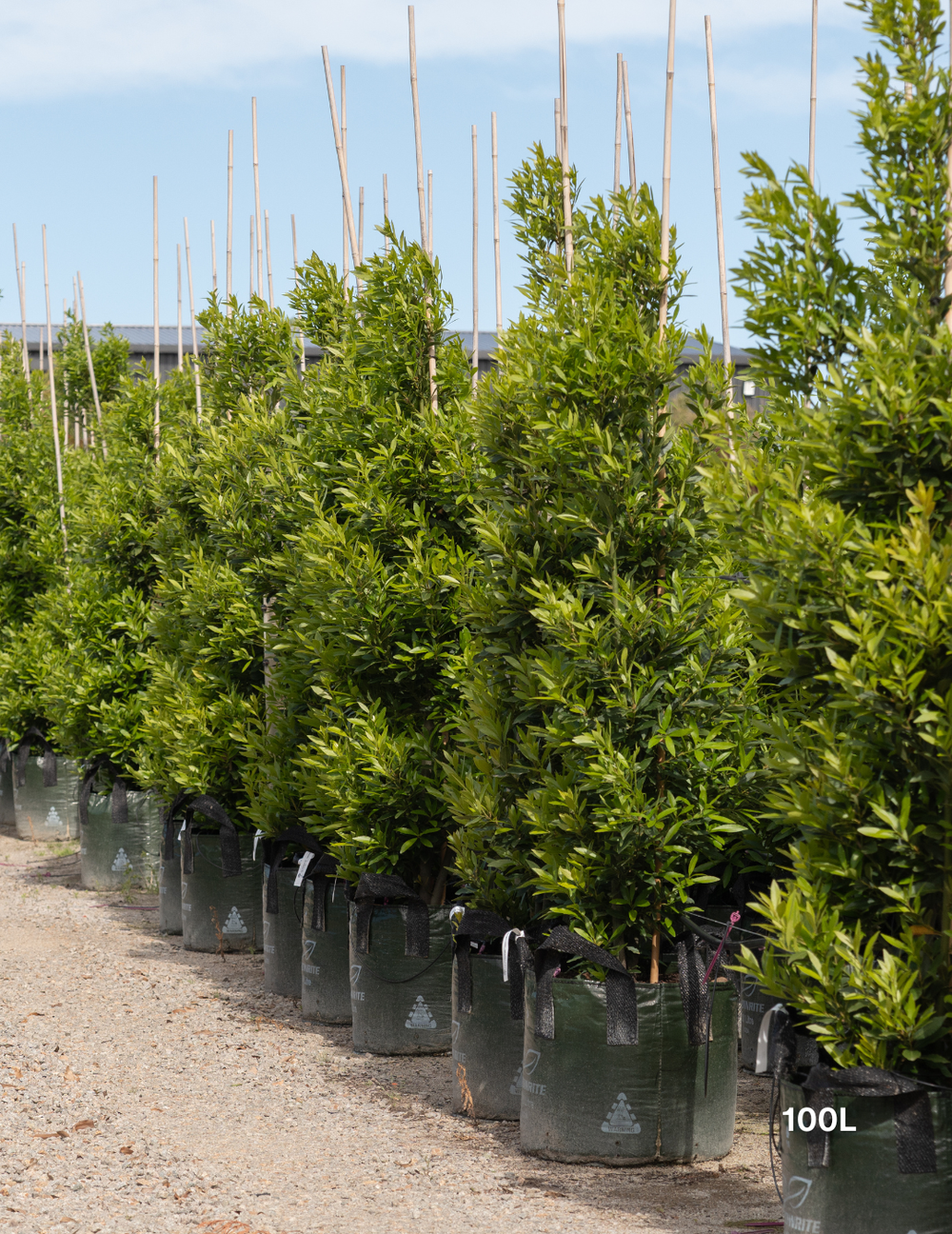
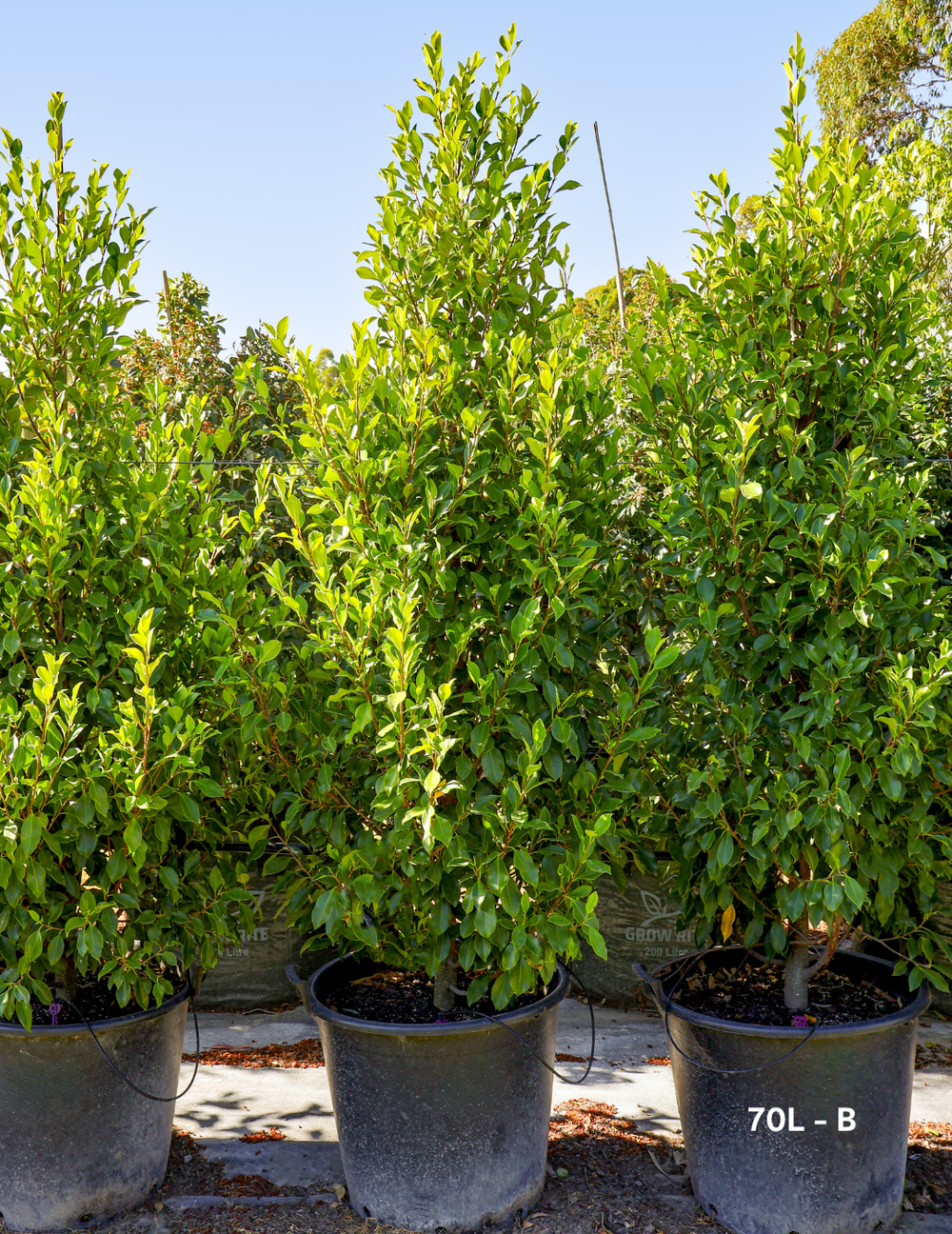
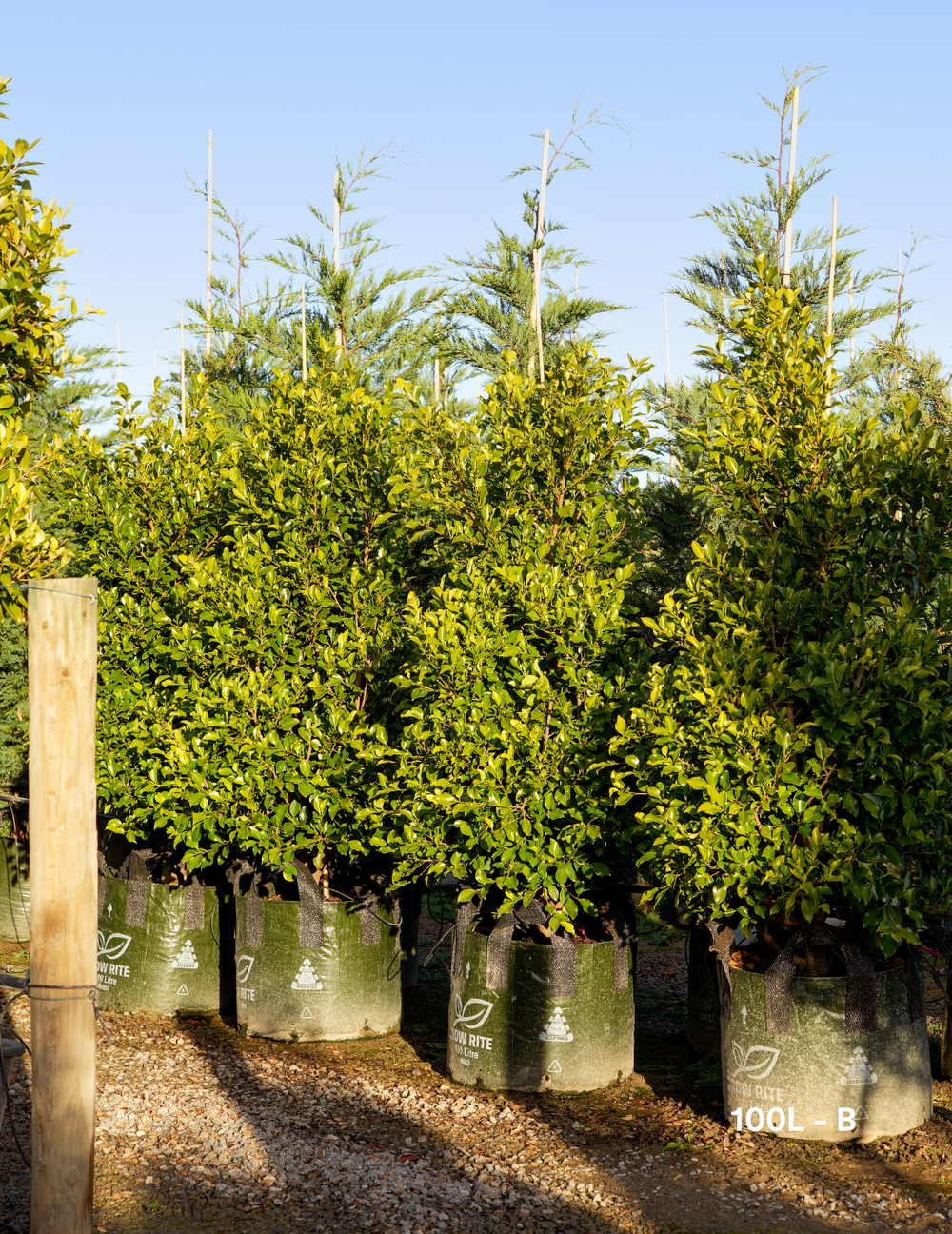
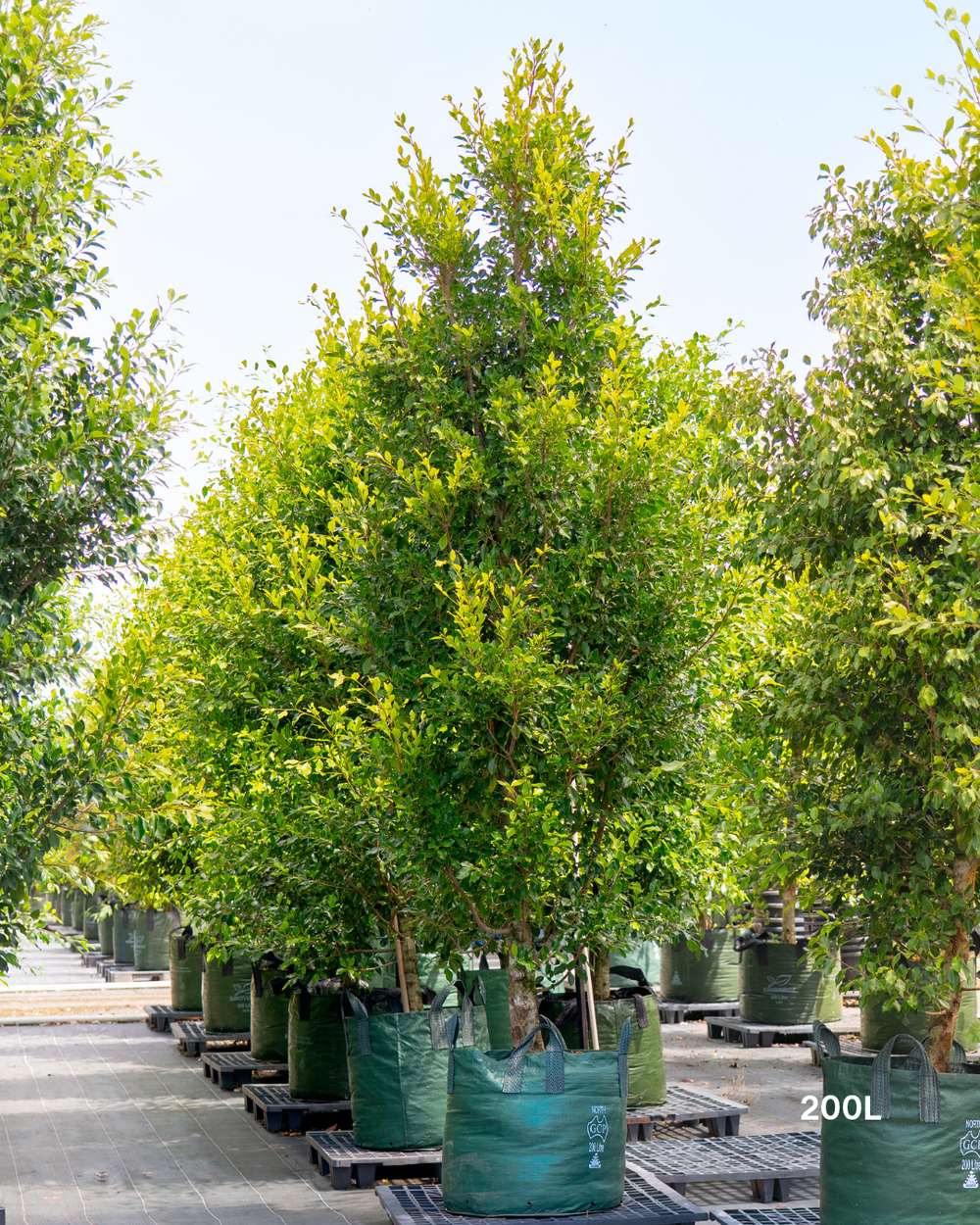
Waterhousea floribunda 'Warners Select'Waterhousea floribunda 'Warners Select'Waterhousea floribunda 'Warners Select'Waterhousea floribunda 'Warners Select'Waterhousea floribunda 'Warners Select'Waterhousea floribunda 'Warners Select'Waterhousea floribunda 'Warners Select'Waterhousea floribunda 'Warners Select'Waterhousea floribunda 'Warners Select'Waterhousea floribunda 'Warners Select'

Native evergreen screen

Waterhousea floribunda 'Warners Select'

Weeping lilly pilly

An Australian native with dense, glossy, weeping foliage and pink to wine-coloured new growth. It grows 60 to 90 cm a year, and regular pruning keeps it much smaller than its full size. It is frost sensitive.

Mature size
Up to 12 m x up to 7 m
Best for
Native gardens, tall boundary screens, wind protection
View product →
Compare sizes
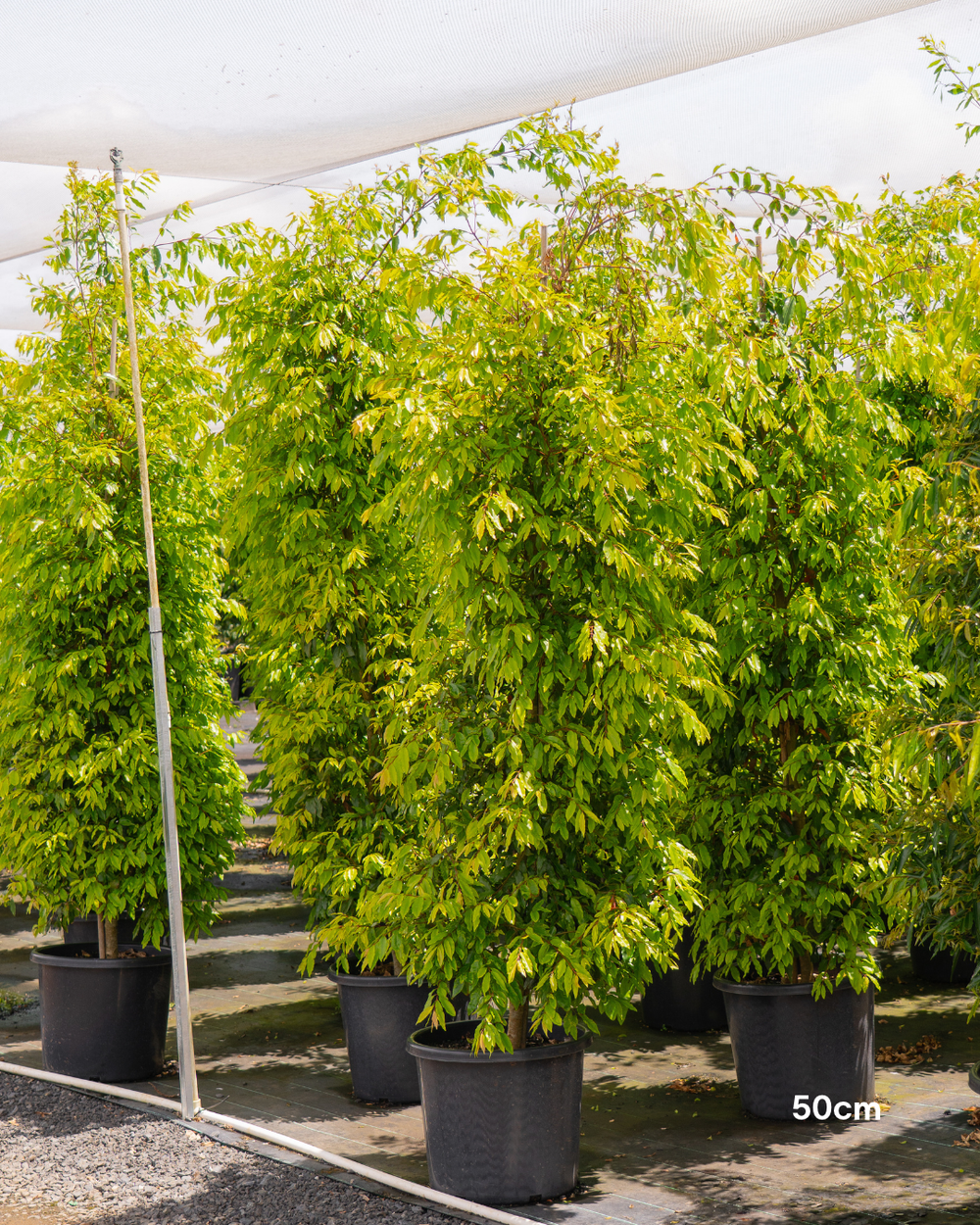
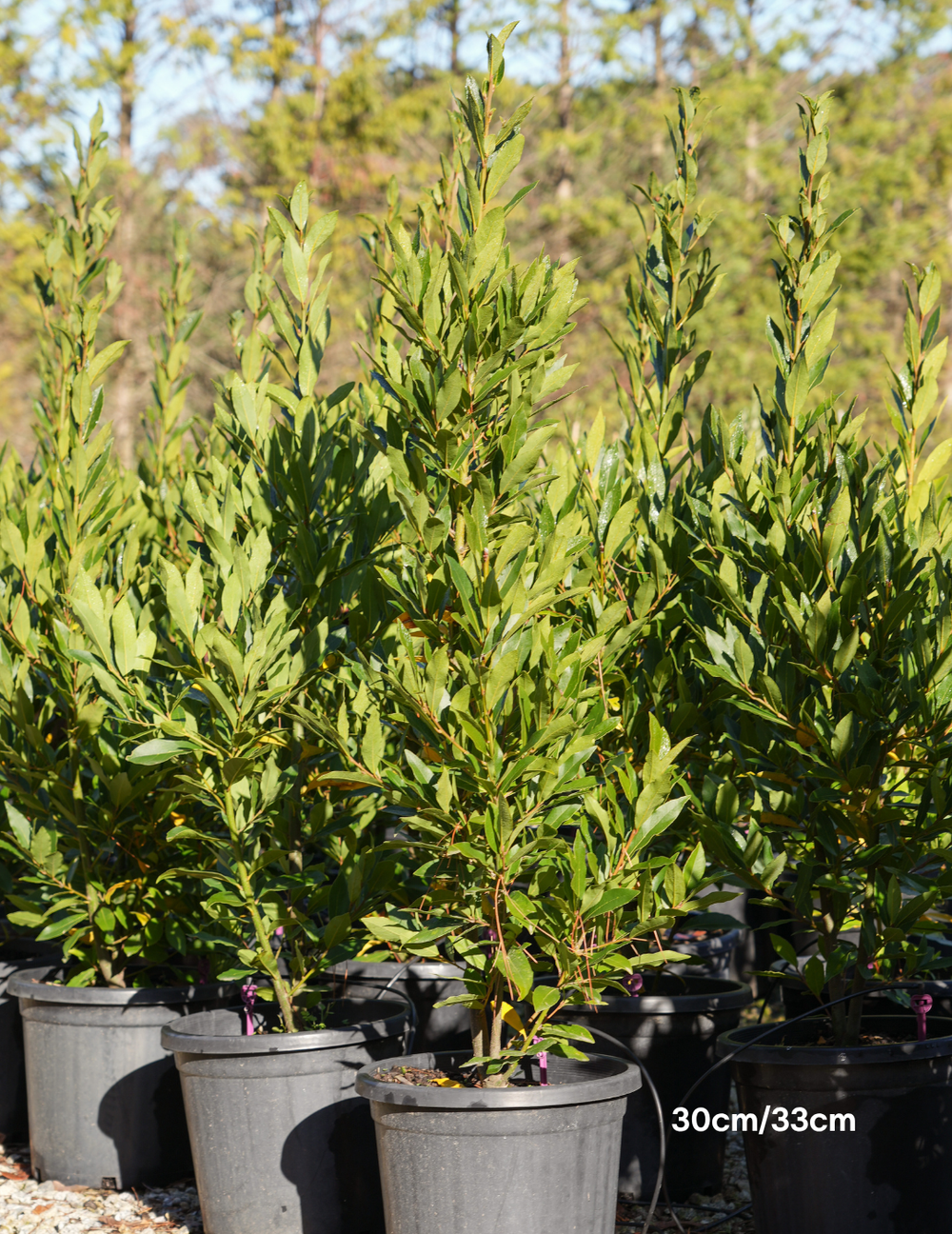
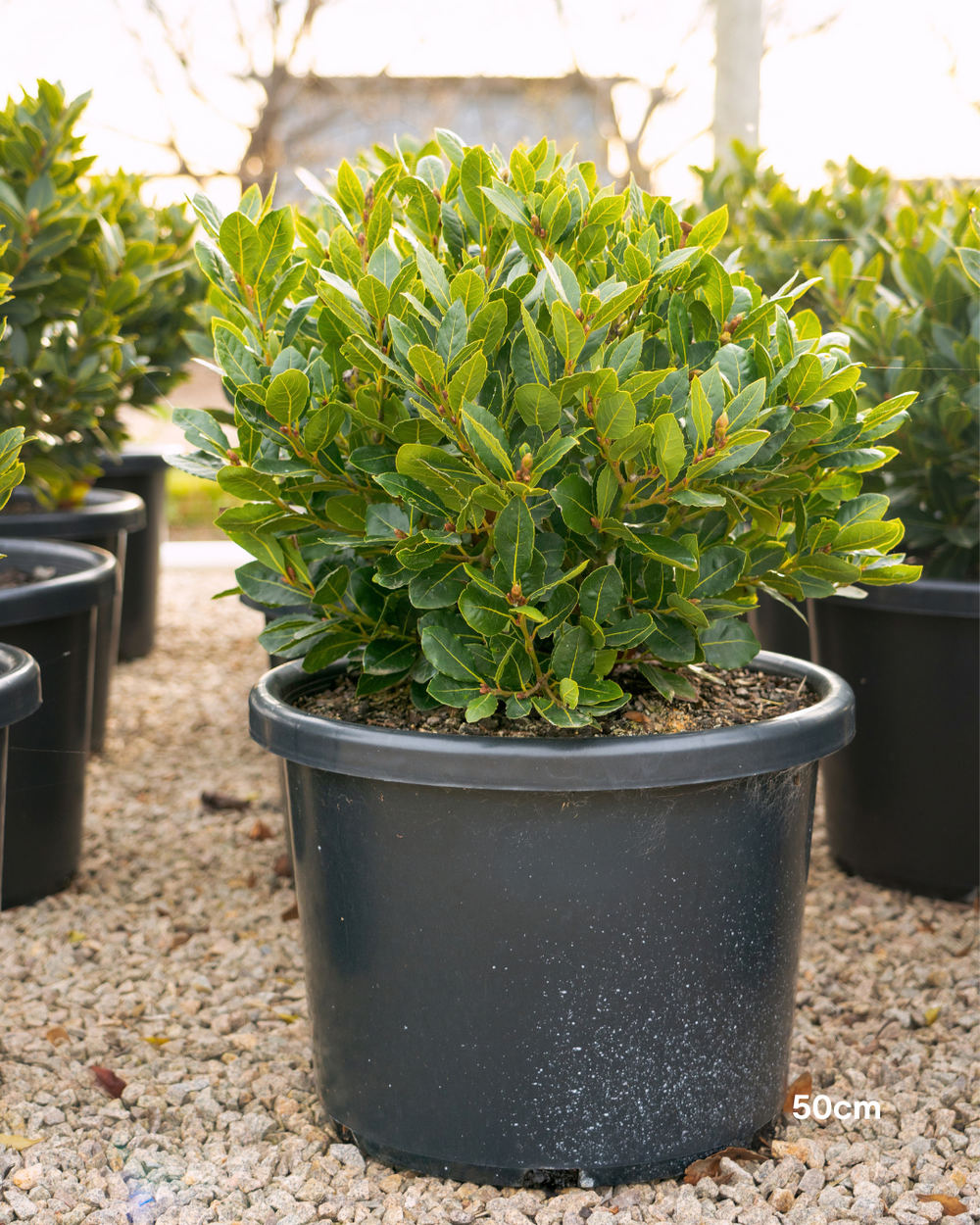
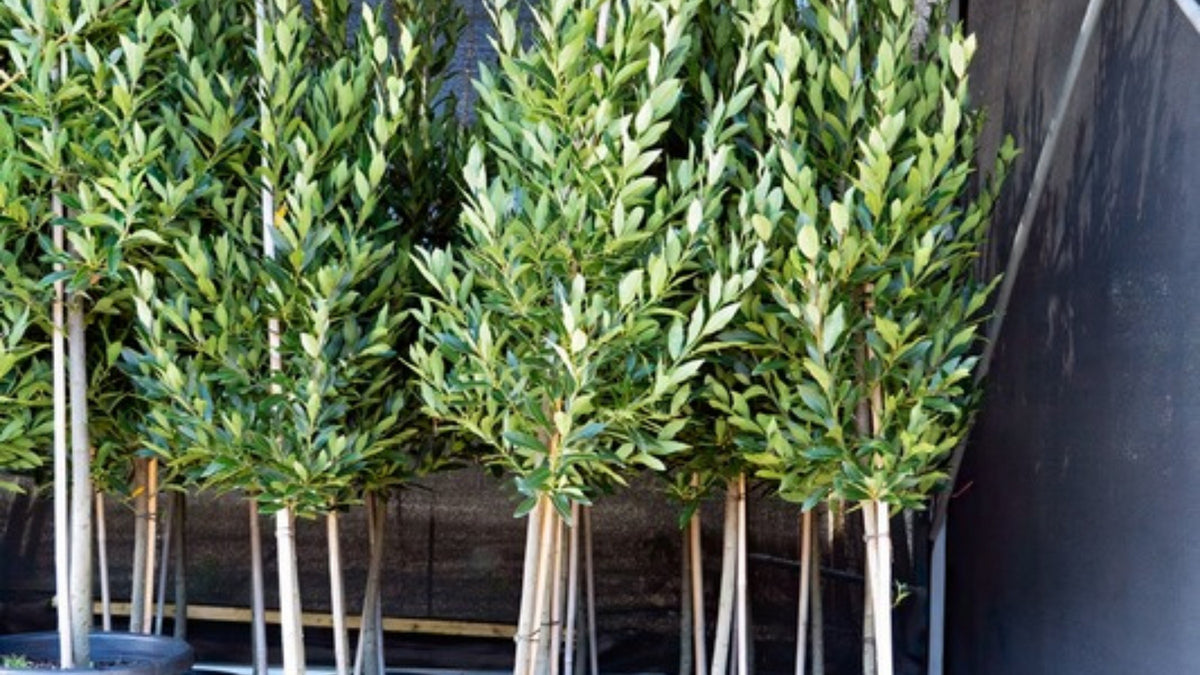
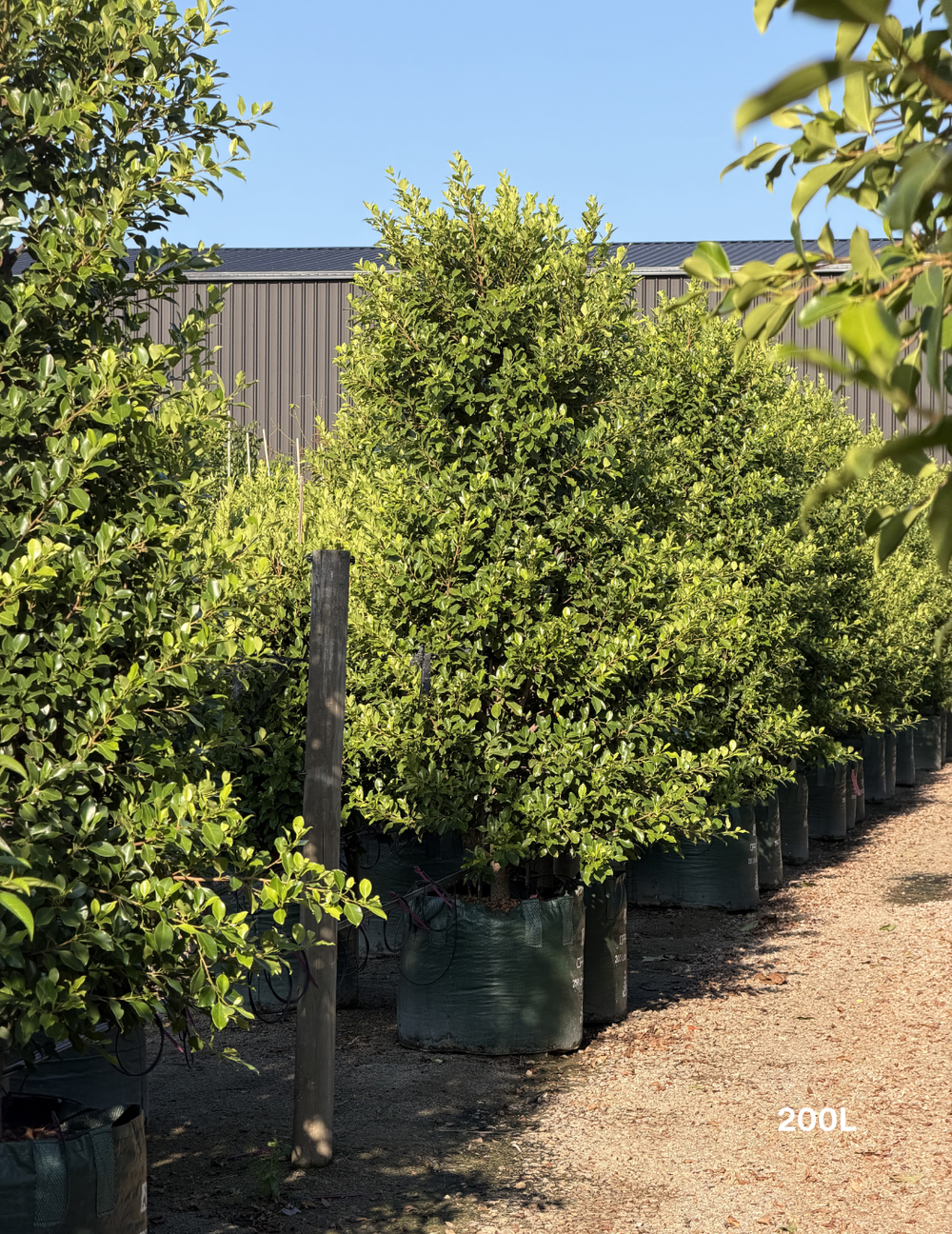
Laurus nobilis 'Miles Choice'Laurus nobilis 'Miles Choice'Laurus nobilis 'Miles Choice'Laurus nobilis 'Miles Choice'Laurus nobilis 'Miles Choice'Laurus nobilis 'Miles Choice'Laurus nobilis 'Miles Choice'

Formal, slow and tidy

Laurus nobilis 'Miles Choice'

Miles Choice bay tree

A compact, upright bay with dark green, glossy, aromatic leaves. It grows 15 to 30 cm a year, so a clipped panel holds its line with little work. It takes light to moderate frost once established.

Mature size
6 to 8 m x 2 to 3 m (can be pruned smaller)
Best for
Formal gardens, courtyards, Mediterranean style
View product →
Compare sizes
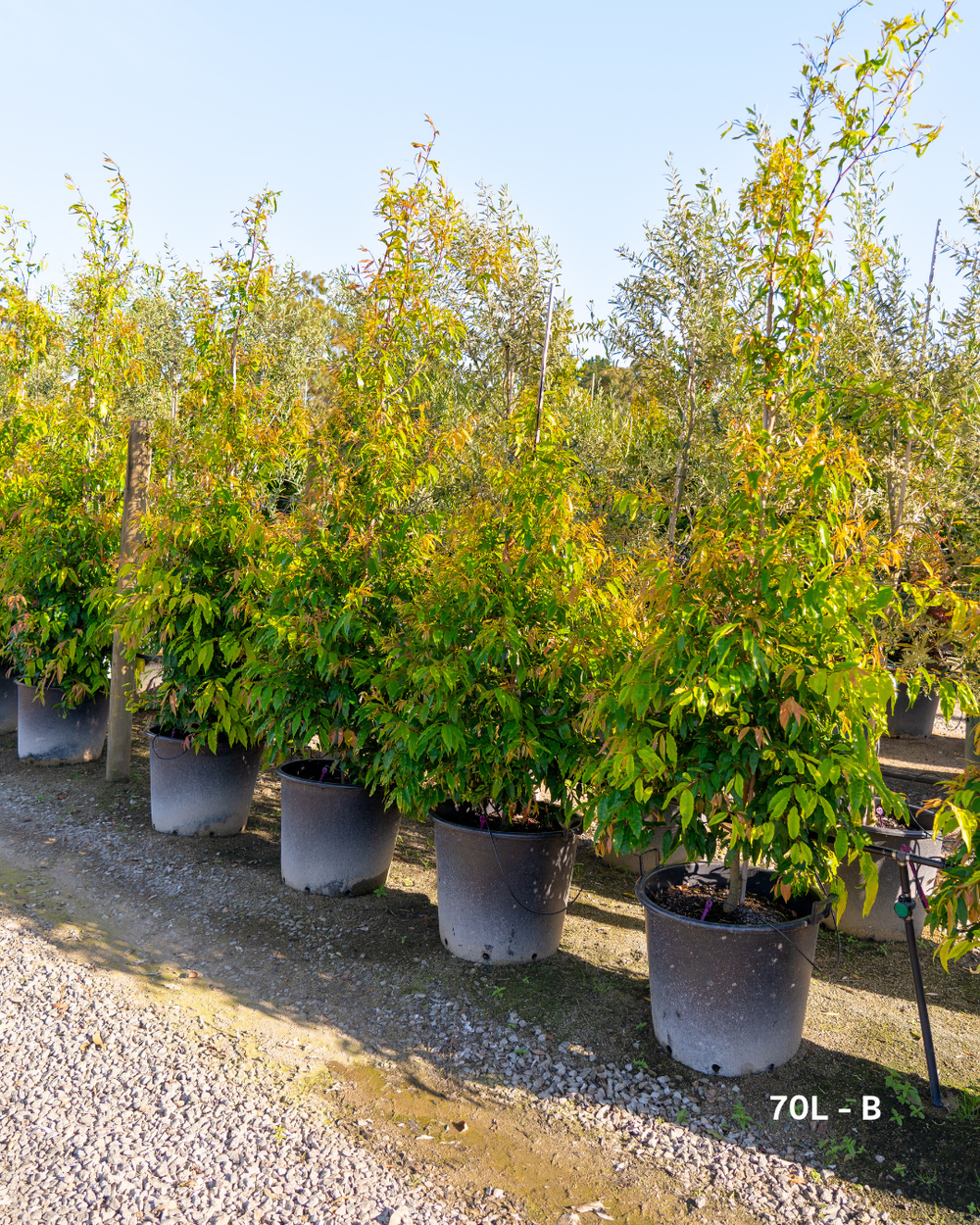
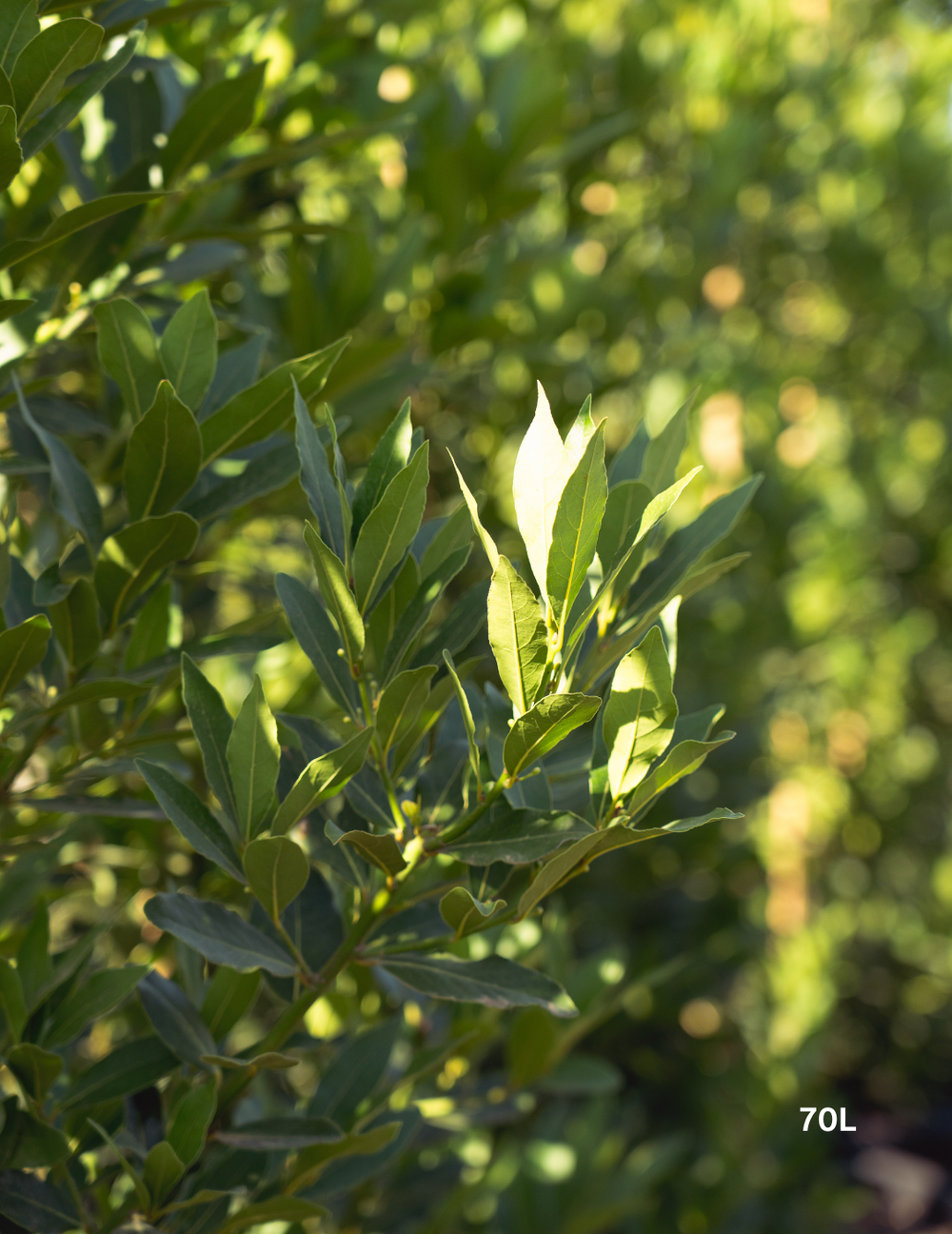
Prunus lusitanicaPrunus lusitanicaPrunus lusitanicaPrunus lusitanicaPrunus lusitanicaPrunus lusitanicaPrunus lusitanica

Frost hardy evergreen

Prunus lusitanica

Portuguese laurel

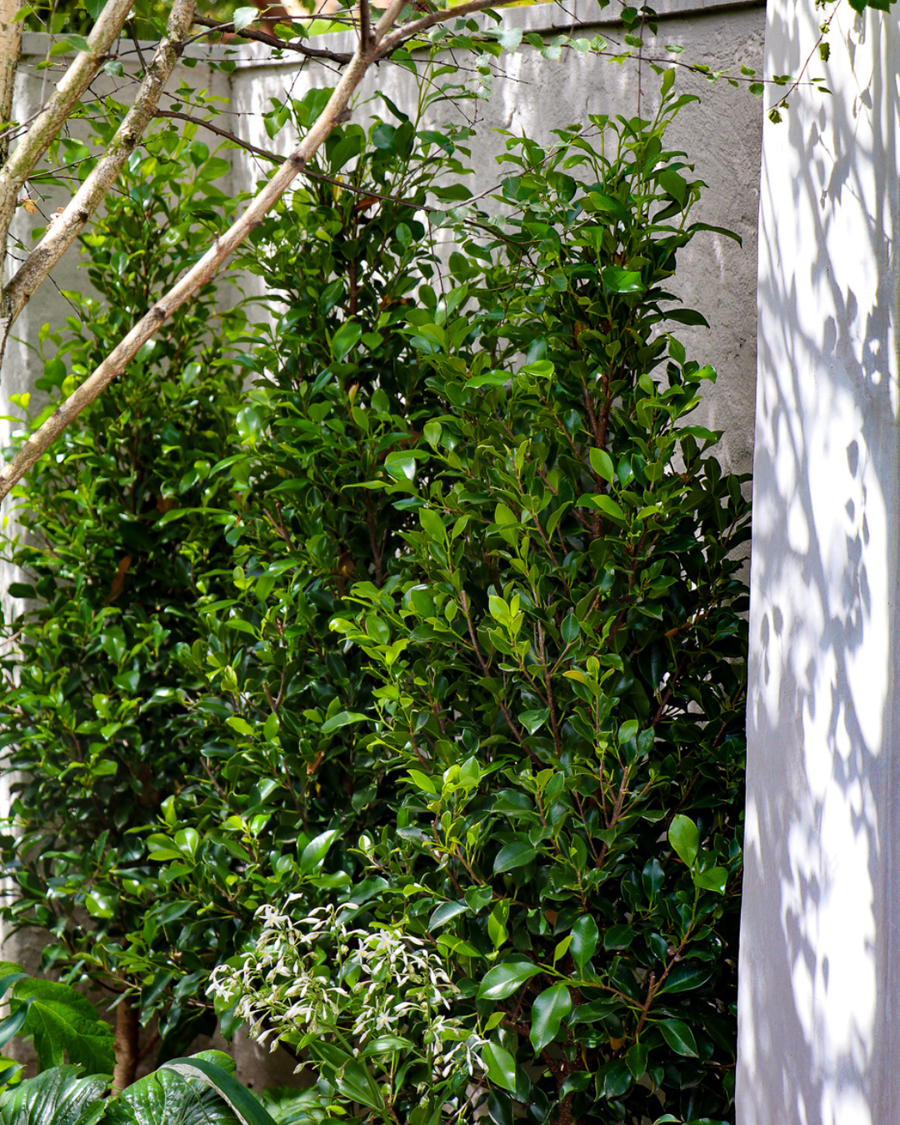
Glossy dark green leaves on deep red stalks, with small white flower spikes in spring. It grows 30 to 50 cm a year, clips cleanly and is frost hardy. It copes with clay as long as water moves through.

Mature size
4 to 6 m x 2 to 3 m (commonly kept at 2 to 3 m)
Best for
Cold climates, formal screens, clay soils that drain
View product →
Compare sizes
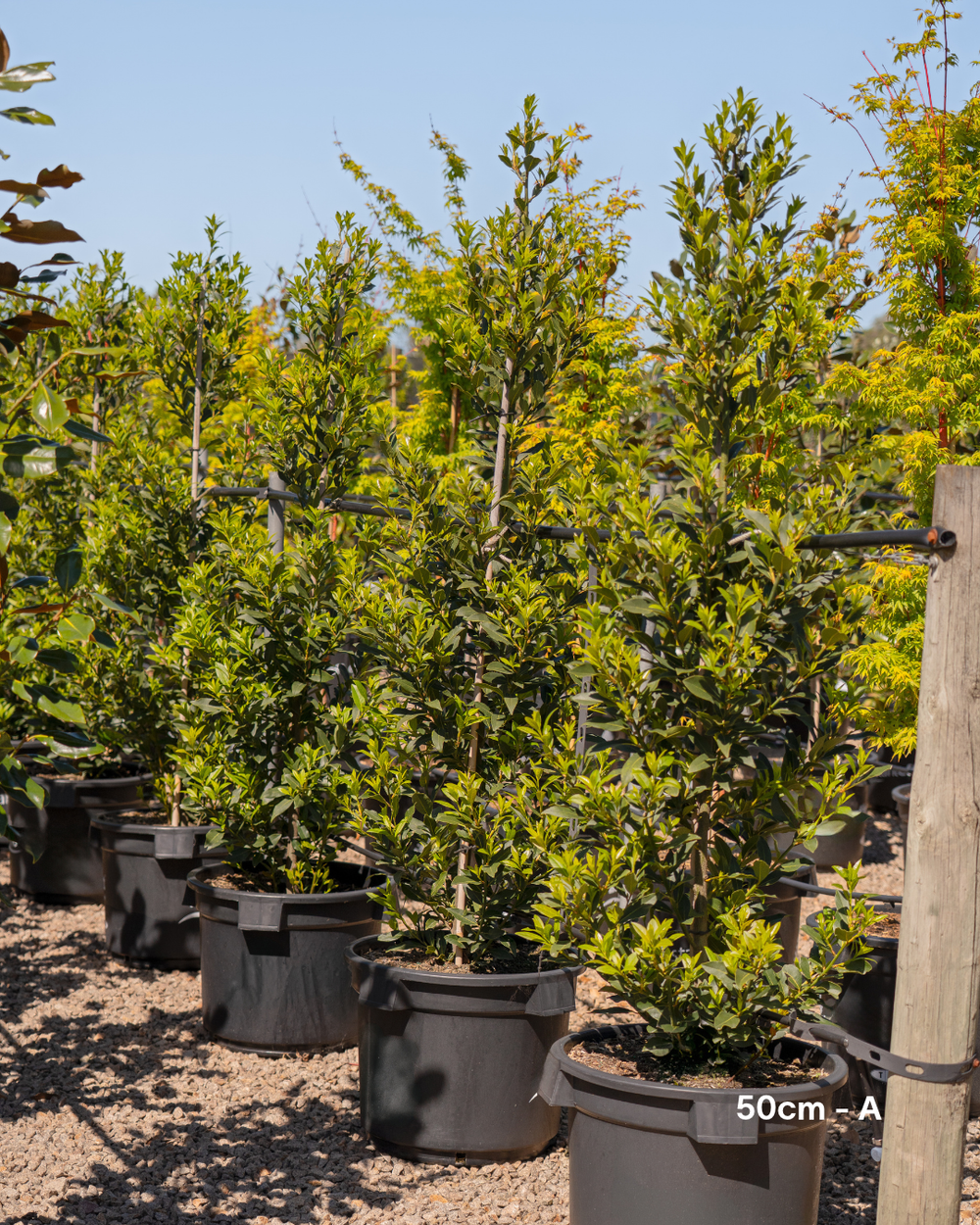
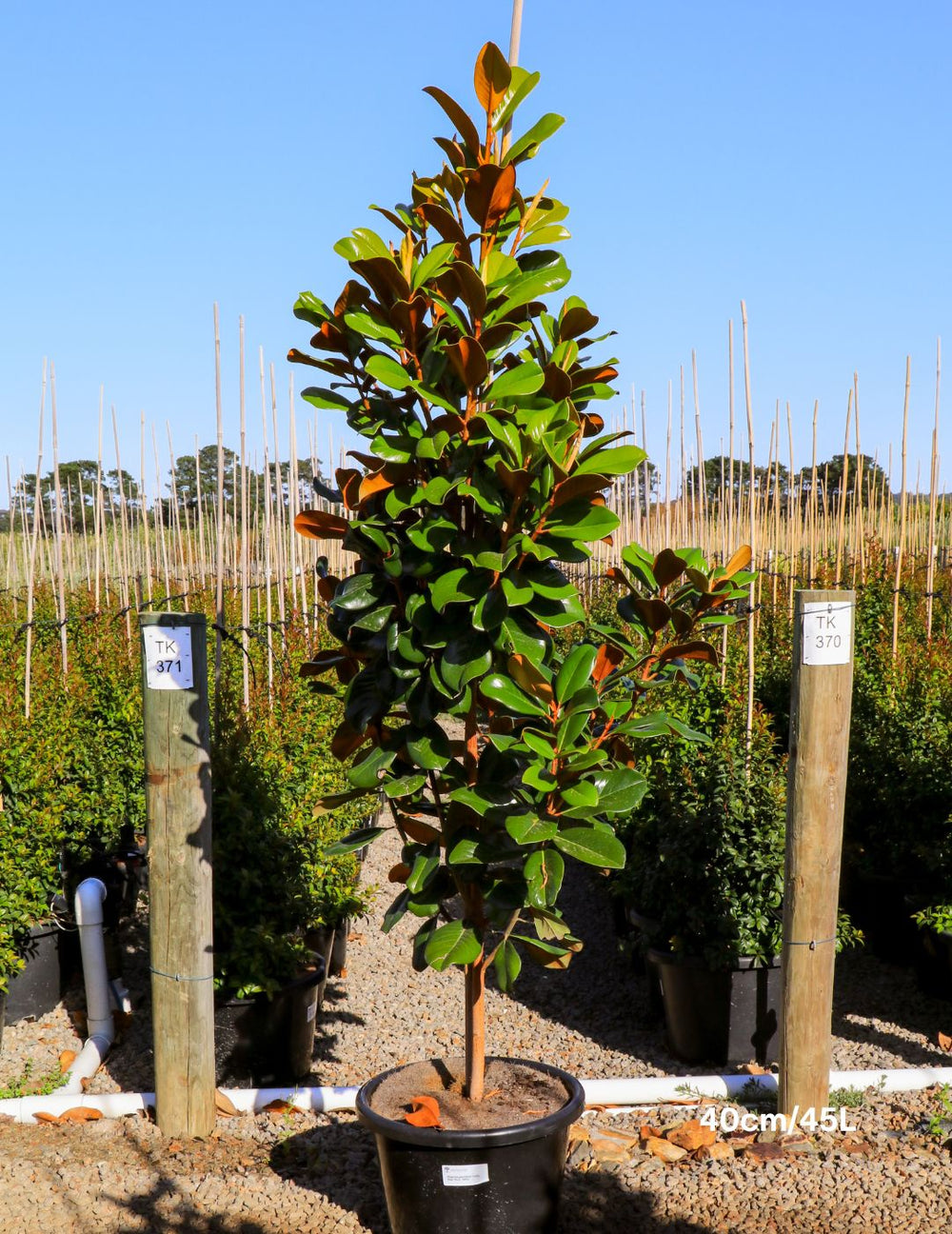
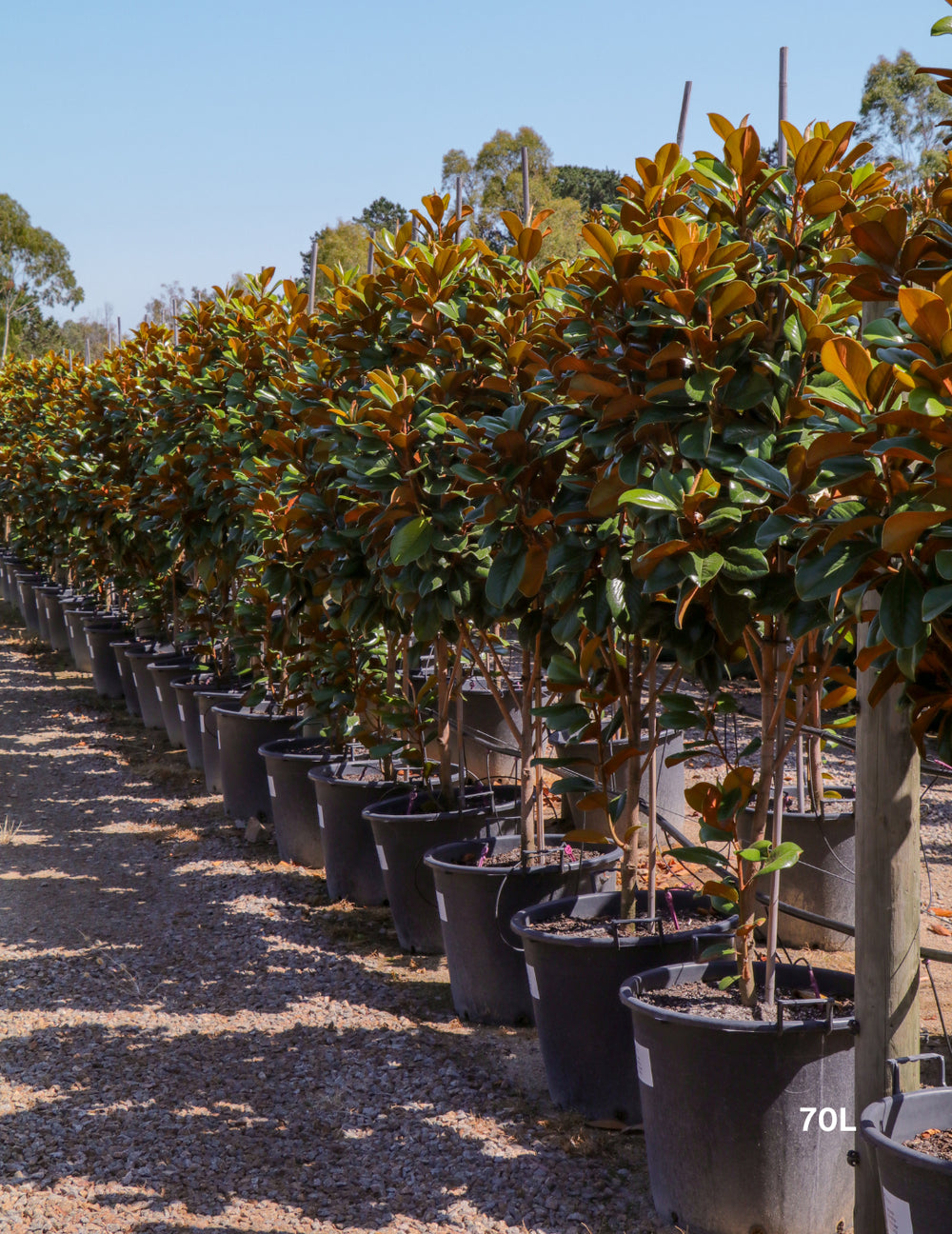
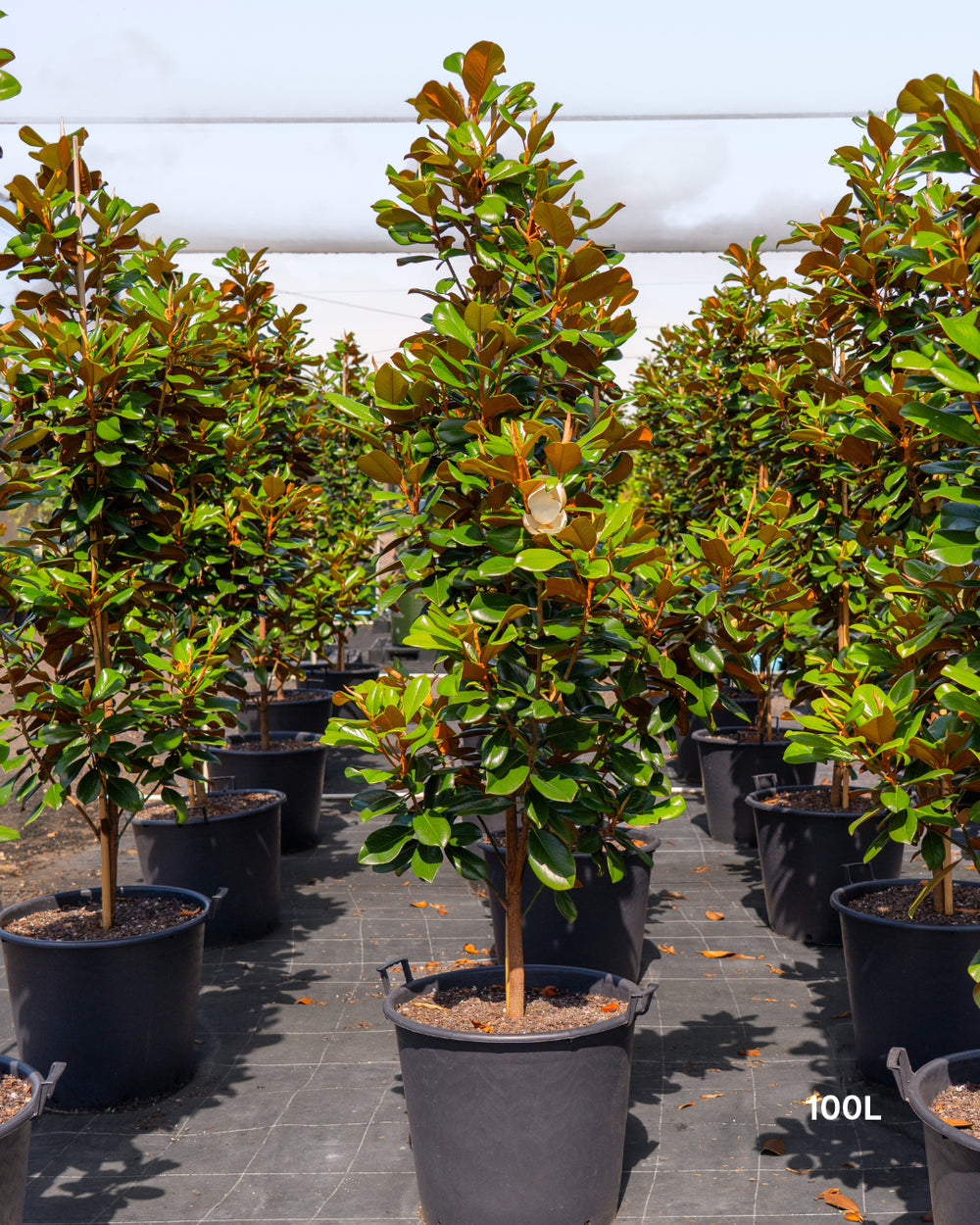
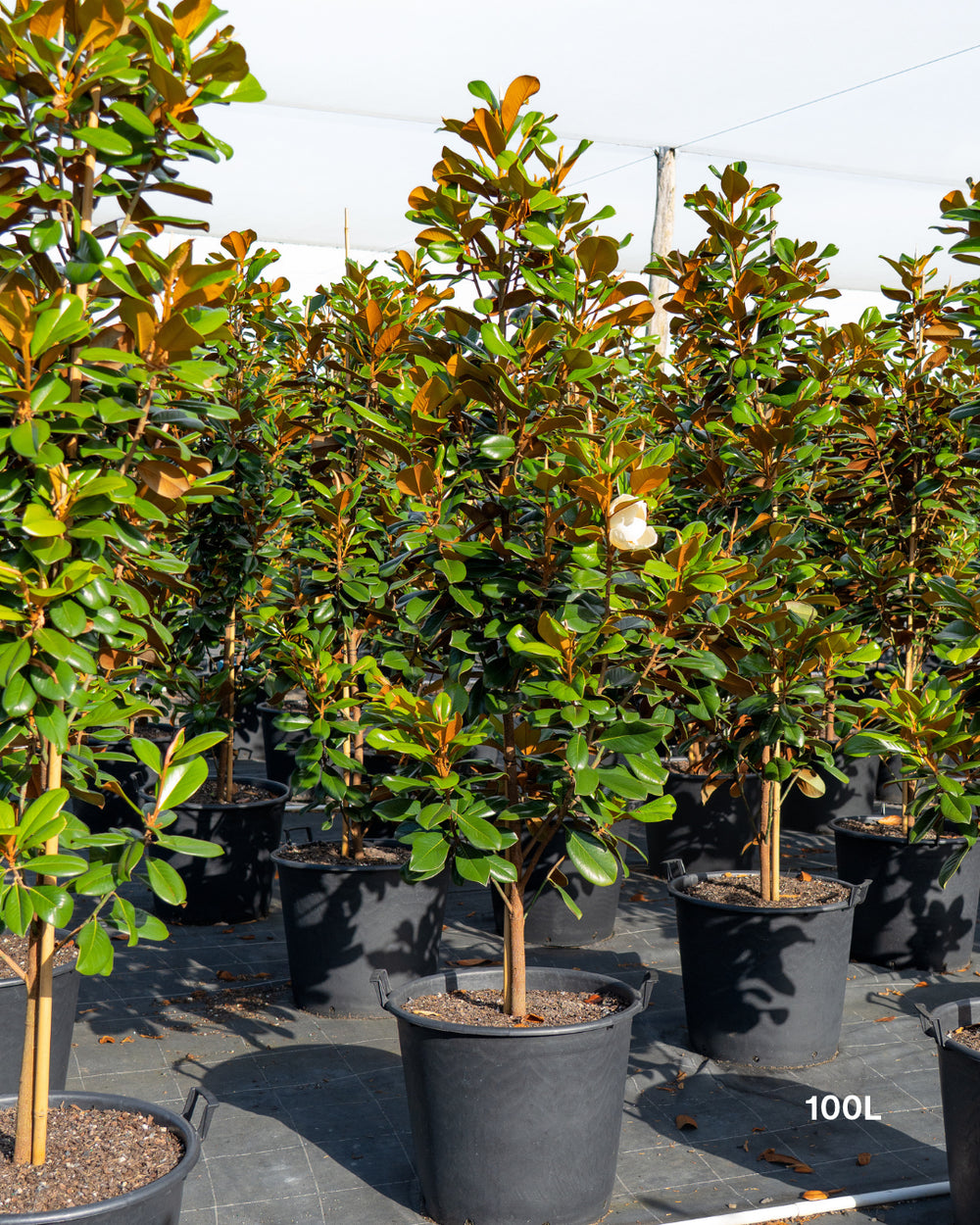
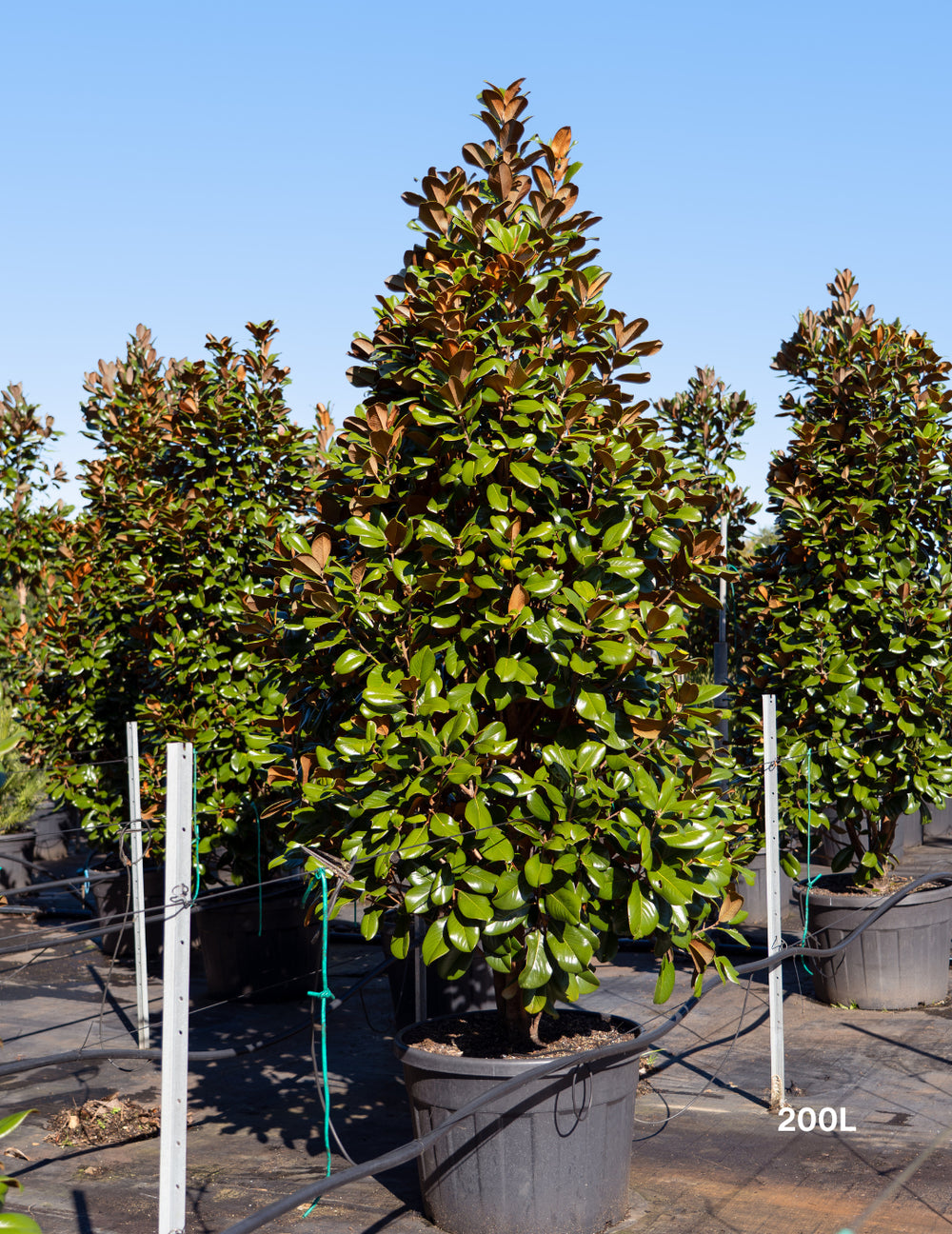
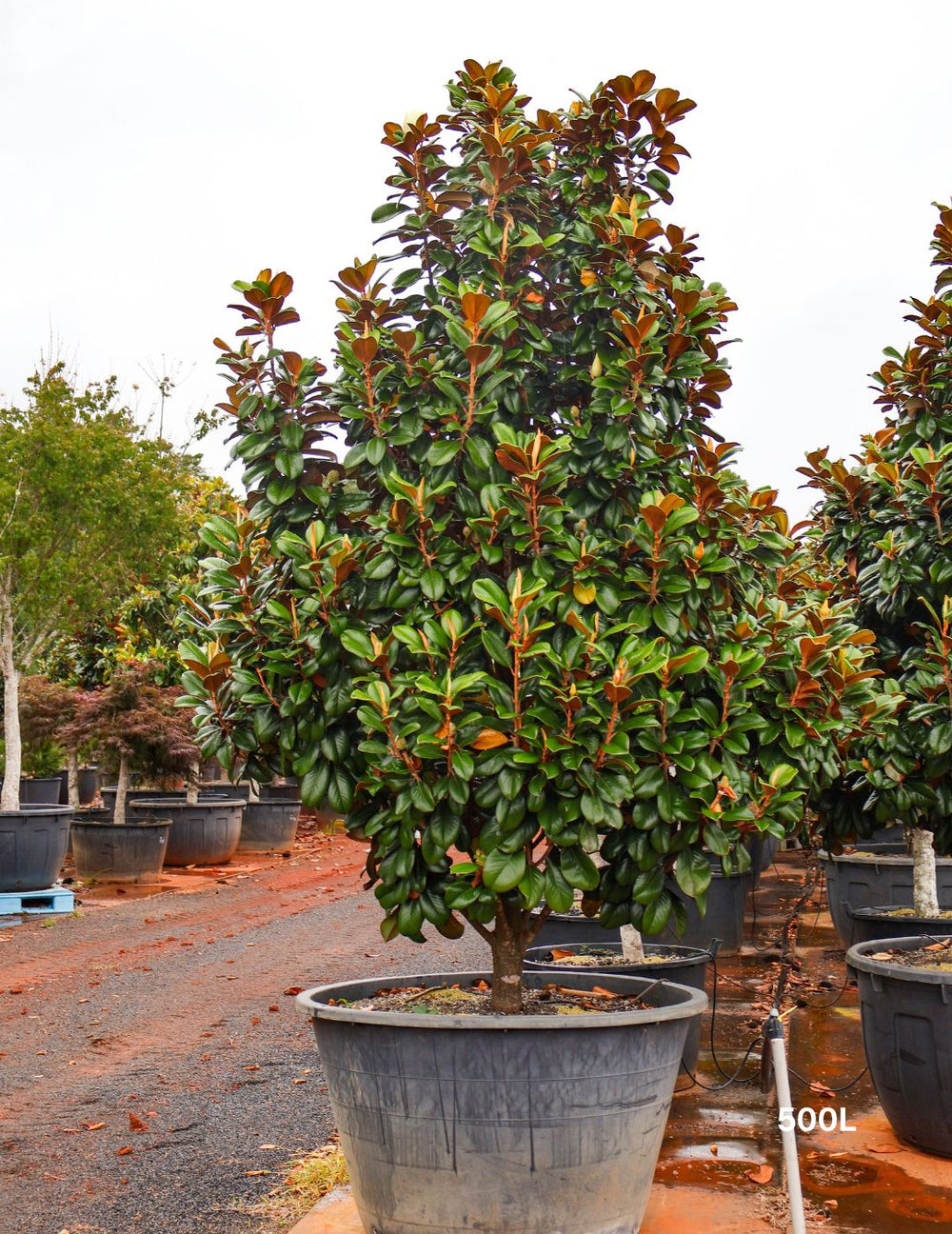
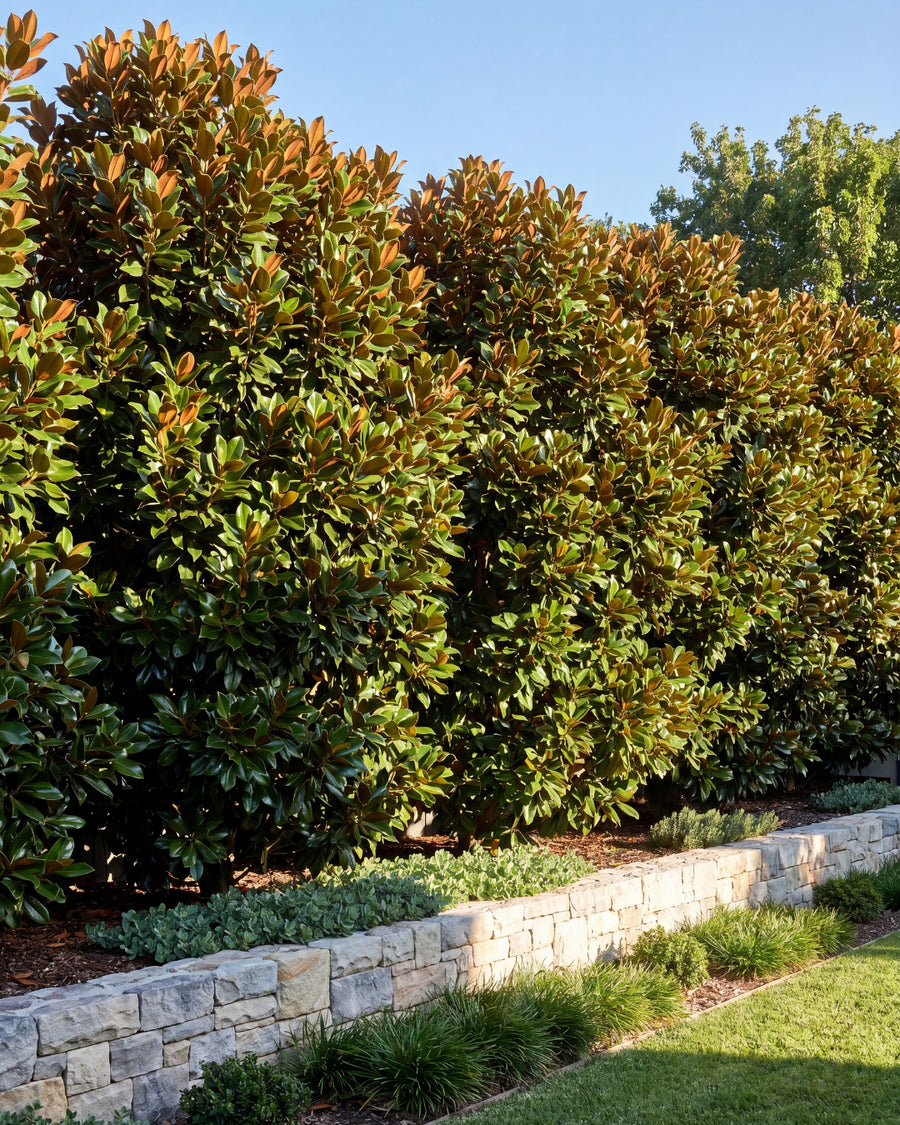
Magnolia grandiflora 'Teddy Bear'Magnolia grandiflora 'Teddy Bear'Magnolia grandiflora 'Teddy Bear'Magnolia grandiflora 'Teddy Bear'Magnolia grandiflora 'Teddy Bear'Magnolia grandiflora 'Teddy Bear'Magnolia grandiflora 'Teddy Bear'Magnolia grandiflora 'Teddy Bear'

Compact, with flowers

Magnolia grandiflora 'Teddy Bear'

Teddy Bear magnolia

A compact, upright evergreen with dense dark green leaves and bronze undersides. Large, fragrant white flowers open from late spring through summer. It grows 20 to 40 cm a year and takes light to moderate frost once established.

Mature size
3 to 4 m x 2 to 3 m
Best for
Small gardens, formal spaces, feature screens
View product →
Compare sizes
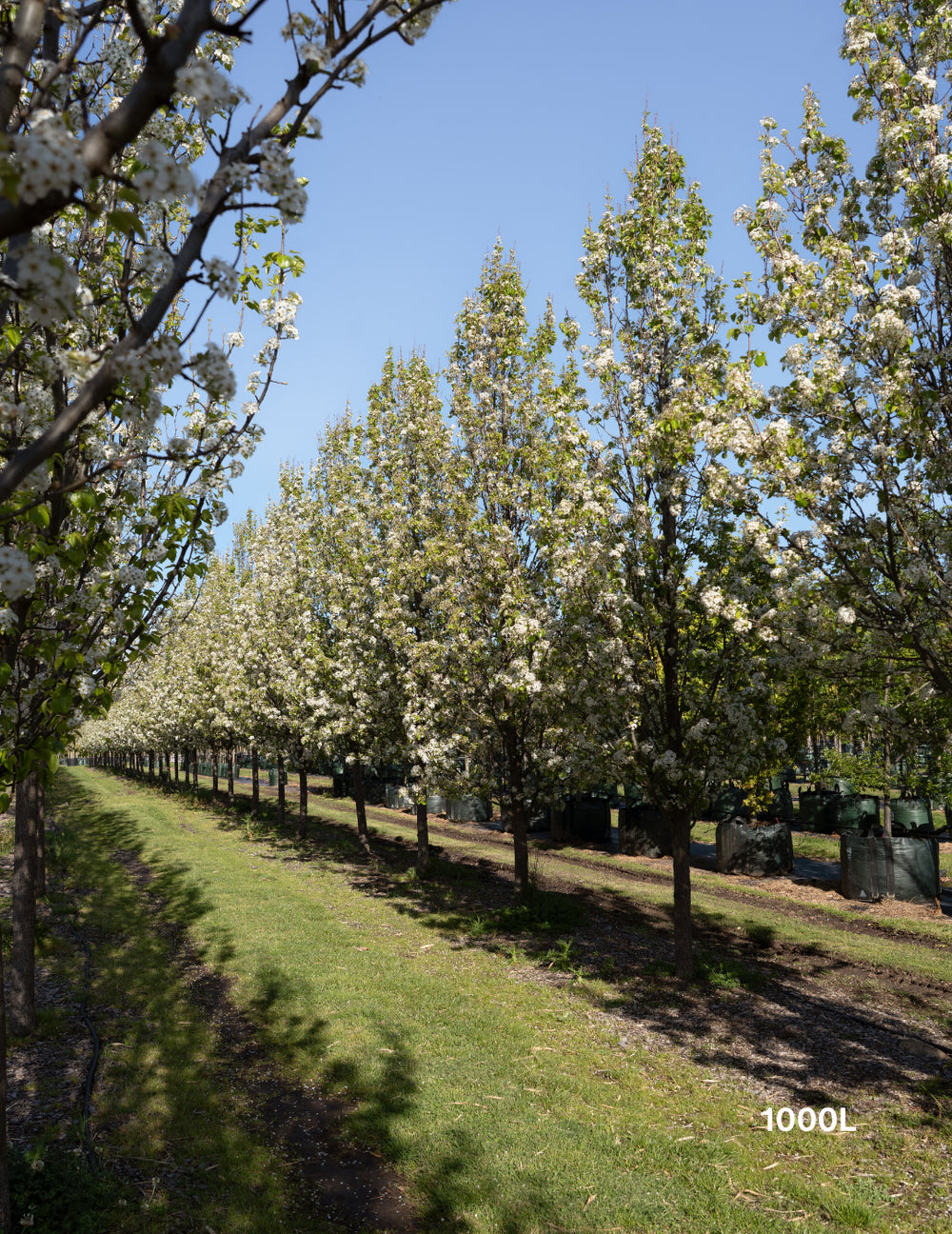
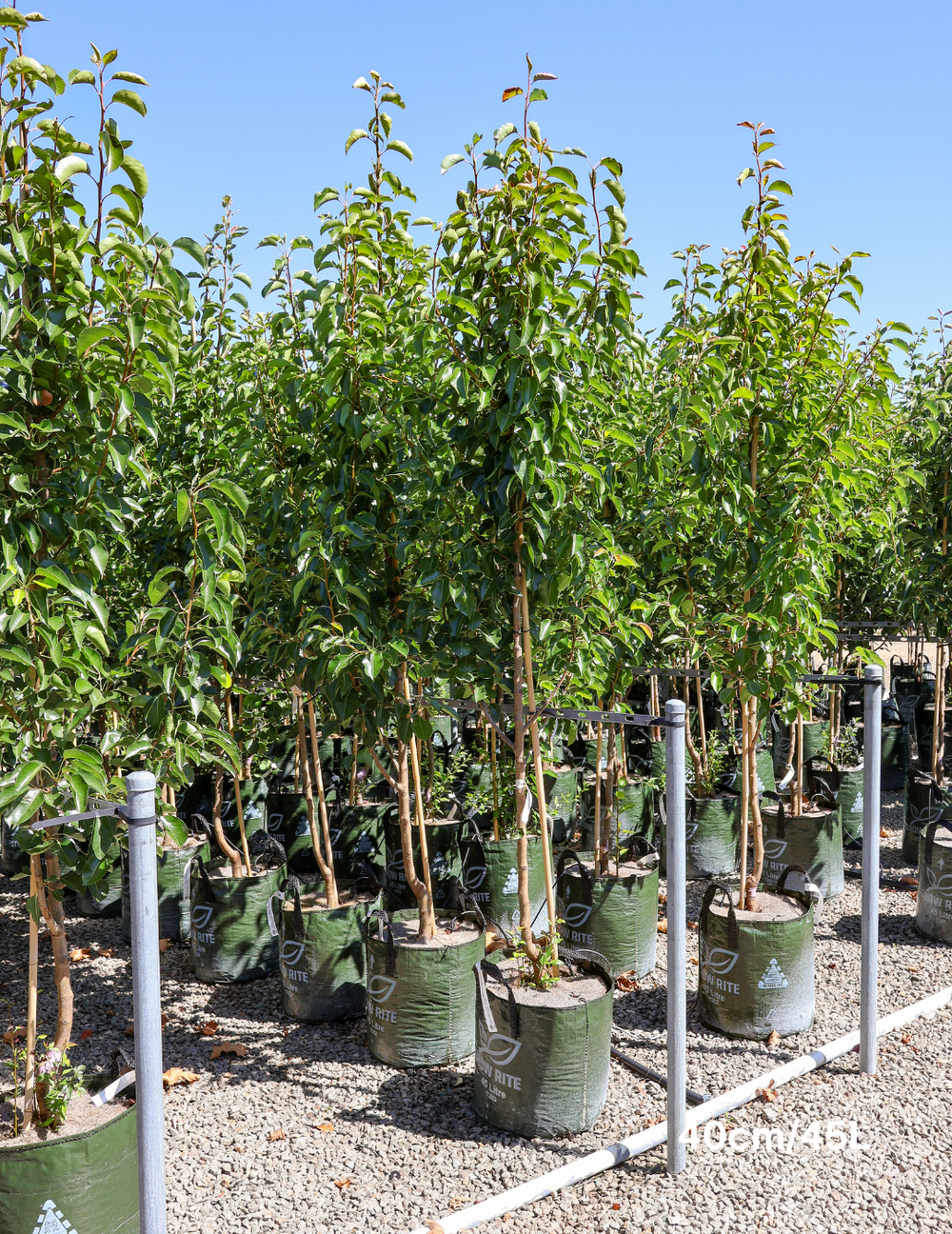
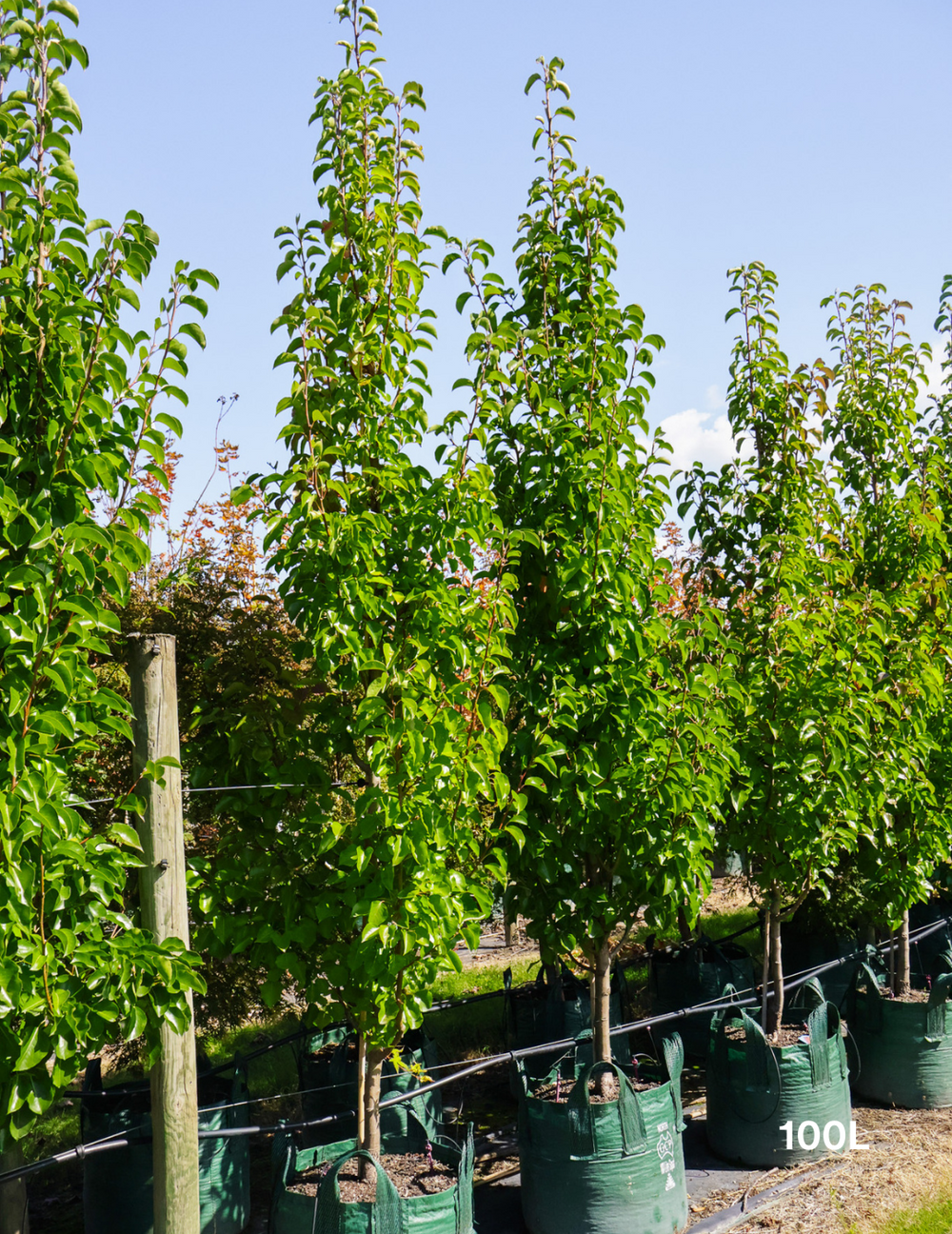
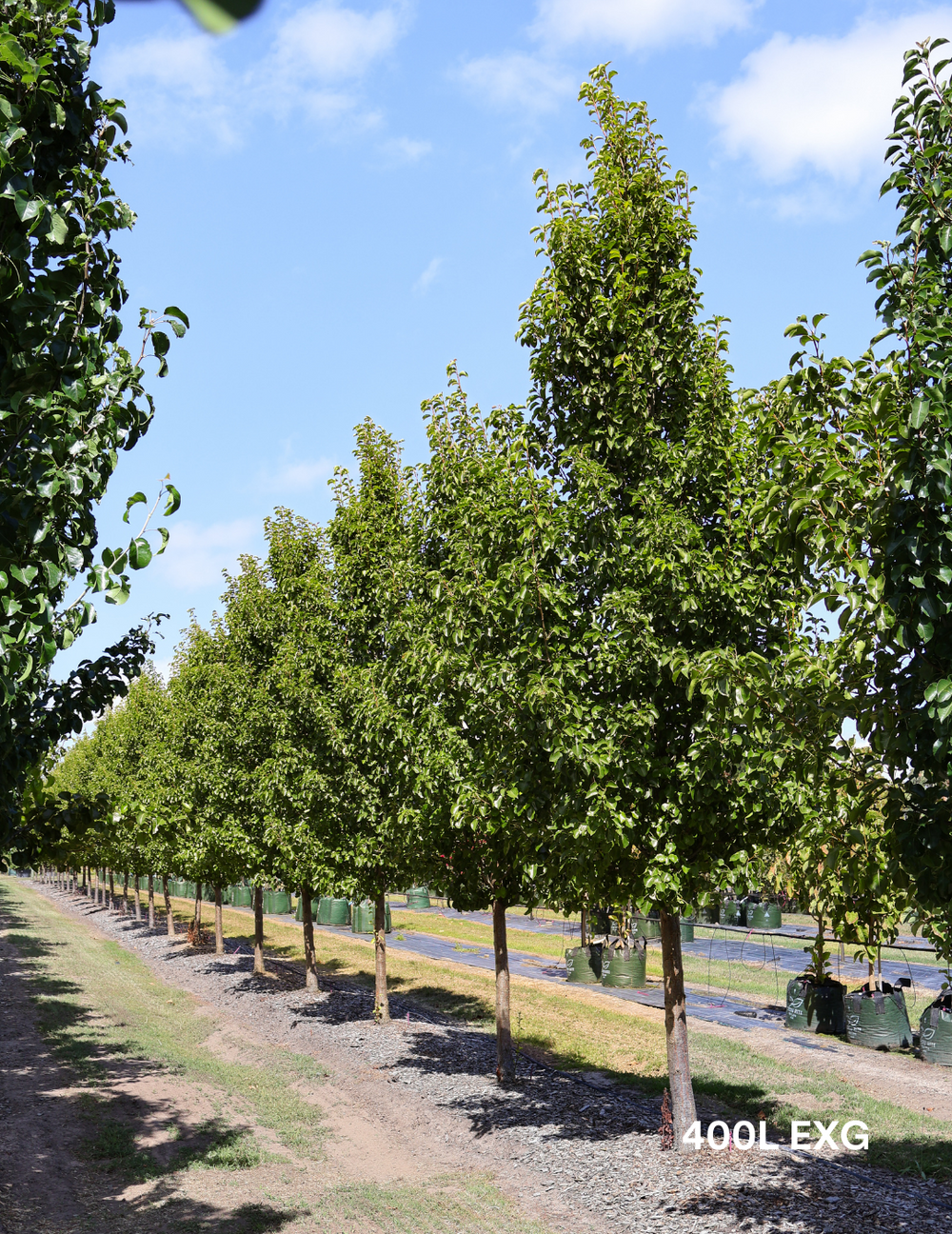
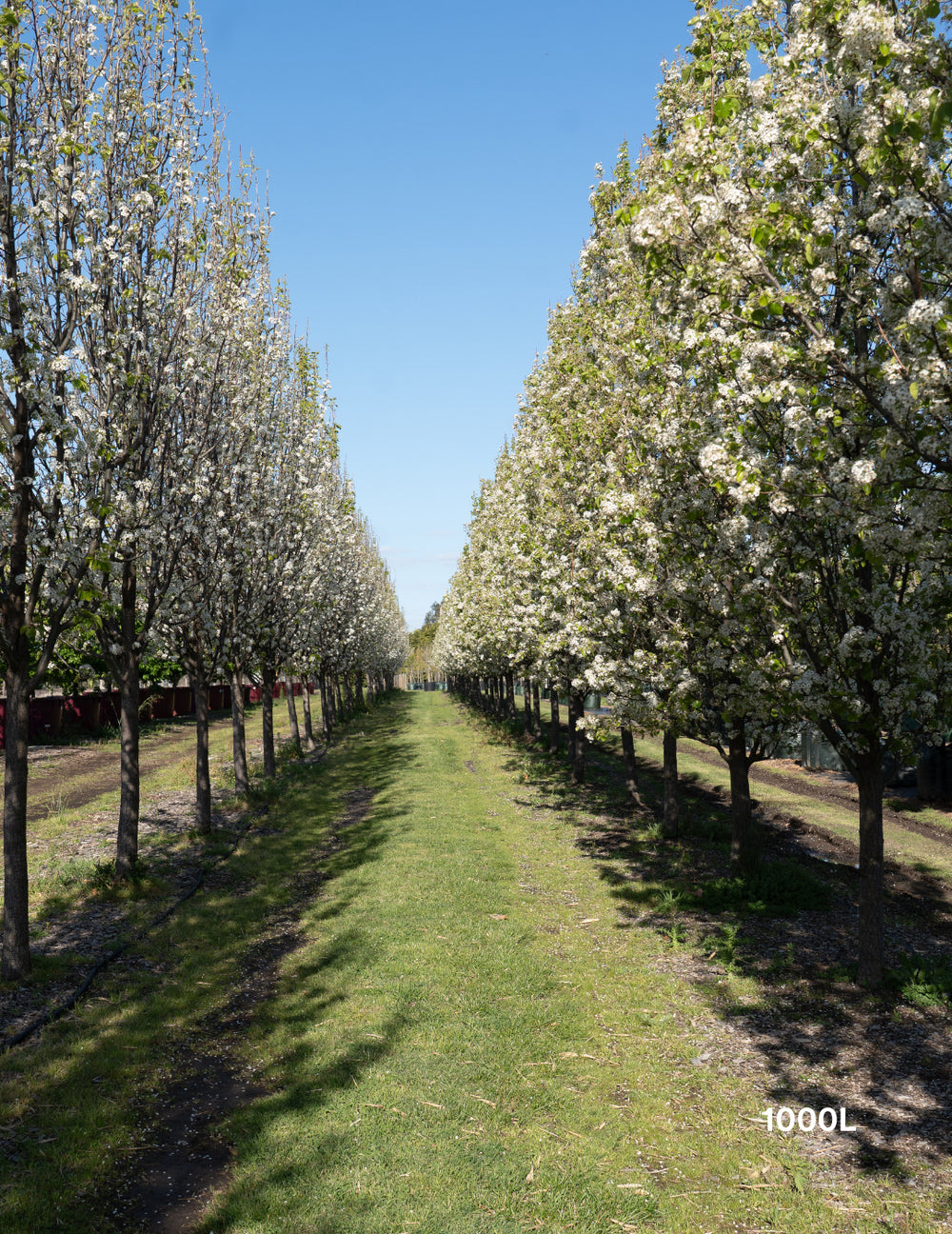
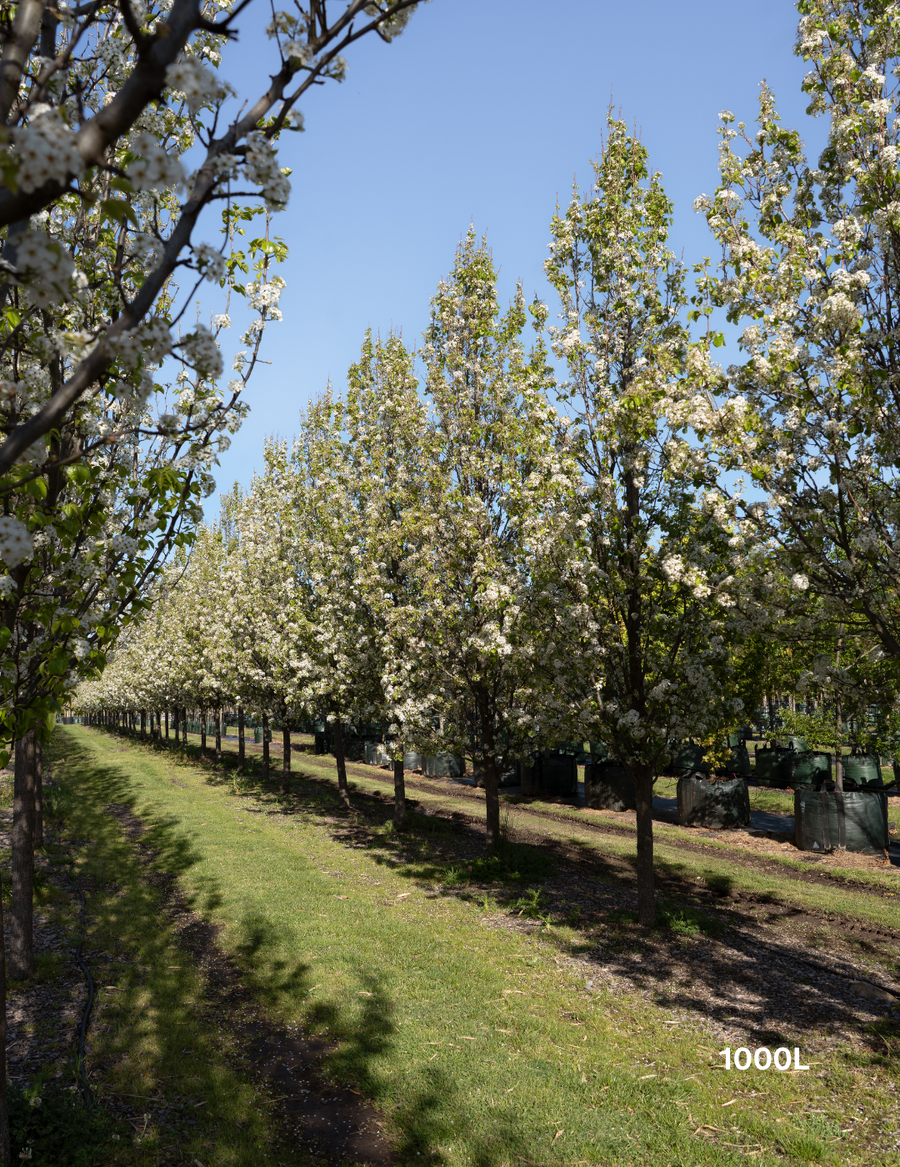
Pyrus calleryana 'Chanticleer'Pyrus calleryana 'Chanticleer'Pyrus calleryana 'Chanticleer'Pyrus calleryana 'Chanticleer'Pyrus calleryana 'Chanticleer'

Deciduous, lets in winter sun

Pyrus calleryana 'Chanticleer'

Chanticleer ornamental pear

A deciduous pear with a narrow, upright form. White blossom covers the bare branches in early spring, and the glossy leaves turn red, purple and orange in autumn. It grows 40 to 70 cm a year, needs full sun and is frost hardy.

Mature size
8 to 10 m x 4 to 5 m
Best for
Driveways and avenues, summer screening, cold climates
View product →

Compare the six pleaching trees at a glance

Swipe sideways to see every column

VarietyTypeMature size (H x W)FruitBest for
Hill's fig 'Flash' Fast evergreen panel6 to 10 m x 3 to 4 mScreening above a fence, pool boundaries, fast cover
Weeping lilly pilly Native evergreen screenUp to 12 m x up to 7 mNative gardens, tall boundary screens, wind protection
Miles Choice bay tree Formal, slow and tidy6 to 8 m x 2 to 3 m (can be pruned smaller)Formal gardens, courtyards, Mediterranean style
Portuguese laurel Frost hardy evergreen4 to 6 m x 2 to 3 m (commonly kept at 2 to 3 m)Cold climates, formal screens, clay soils that drain
Teddy Bear magnolia Compact, with flowers3 to 4 m x 2 to 3 mSmall gardens, formal spaces, feature screens
Chanticleer ornamental pear Deciduous, lets in winter sun8 to 10 m x 4 to 5 mDriveways and avenues, summer screening, cold climates

Best trees for a pleached hedge

Comparing pleached trees with a hedge from the ground up? See the eight lilly pilly hedge varieties or our guide to hedging plants for privacy.

Best trees for a pleached hedge

Pleached trees for cold climates

  • Frost hardyPrunus lusitanica, the Portuguese laurel, and Pyrus calleryana 'Chanticleer' are both listed as frost hardy.
  • Light to moderate frostMiles Choice and Teddy Bear take light to moderate frost once established.
  • Frost sensitiveFlash and Warners Select are frost sensitive. Keep them to frost-free or protected positions.
  • Winter sunChanticleer is deciduous. It screens in summer and lets light through in winter, with white blossom in early spring and red, purple and orange leaves in autumn.
Pleached trees for cold climates

Ready pleached trees, or train your own

  • Ready pleached ficusOur pleached Ficus 'Flash' generally stands 2.5 to 3.5 metres overall, with a clear trunk to about 1.5 to 1.8 metres and a panel roughly 1.2 to 1.8 metres wide.
  • Ready pleached bayOur pleached Miles Choice bay sits around 3 to 4 metres overall, with a panel roughly 1.2 metres wide.
  • Train your ownStart with a young tree that has a straight single trunk. Fix a flat frame of canes or wires to a stake, remove the shoots below the frame, and tie the young side branches along it. Cut off shoots that grow forward or back.
  • Keep the frameLeave the frame in place while the branches thicken and knit into a solid panel.

See every option in the pleached and pleachable trees collection, or read how to choose trees for a formal garden.

Ready pleached trees, or train your own

How far apart to plant pleached trees

  1. Set the spacingSpace the trees so the panels meet. As a guide, plant pleached bay 1.5 to 2 metres apart and pleached ficus at 2 to 2.5 metre centres.
  2. Prepare the soilChoose a well-drained position and enrich the planting area with compost and aged manure.
  3. Dig and plantDig each hole twice as wide as the root ball and the same depth. Set each tree level with the surrounding soil, backfill gently, firm in and water deeply.
  4. Line up the panelsTurn each tree so its panel runs along the boundary before you backfill. Use a string line to keep the trunks straight.
  5. Water through the first yearWater deeply twice weekly for the first 12 months, then reduce once the trees are established.
  6. MulchApply 3 to 5 centimetres of organic mulch over the root zone and keep it clear of the trunk.
How far apart to plant pleached trees

How to keep a pleached panel flat

  • Clip twice a seasonTwo clips in the growing season hold a slow tree such as Miles Choice. Fast growers such as Flash need more.
  • Clear the trunkRub off any shoots that appear on the trunk below the panel.
  • Tie in new growthTie long new shoots along the frame to fill gaps. Clip the rest back to the face of the panel.
  • Hold the heightTrim the top level each time. A panel can be grown taller and wider over time if you extend the frame.
How to keep a pleached panel flat

Frequently asked questions

What is a pleached tree?
A pleached tree has a clear, straight trunk with its branches trained and clipped into a flat panel above. A row of them forms a hedge on stilts that screens above a fence and leaves the ground below open.
What are the best trees for pleaching?
Choose a tree that takes regular clipping. Ficus hillii 'Flash' and Waterhousea floribunda 'Warners Select' are the fastest. Laurus nobilis 'Miles Choice' is slower and very tidy. Prunus lusitanica is frost hardy. Magnolia grandiflora 'Teddy Bear' adds flowers, and Pyrus calleryana 'Chanticleer' is a deciduous option.
How far apart should pleached trees be planted?
Space them so the panels meet. As a guide, plant pleached bay 1.5 to 2 metres apart and pleached ficus at 2 to 2.5 metre centres.
How tall is a pleached tree?
It depends on the frame. Our pleached Ficus 'Flash' generally stands 2.5 to 3.5 metres overall with a clear trunk to about 1.5 to 1.8 metres. Our pleached Miles Choice bay sits around 3 to 4 metres overall.
What is the difference between pleaching and espalier?
An espalier is trained flat against a wall or wires from near the ground up. A pleached tree carries its flat panel on top of a clear trunk, so the screen starts higher.
Can you pleach a lilly pilly?
Yes. Waterhousea floribunda 'Warners Select', the weeping lilly pilly, is in our pleached and pleachable range. It grows 60 to 90 centimetres a year, and regular pruning keeps it much smaller than its full size. It is frost sensitive.
How often do pleached trees need clipping?
Two clips in the growing season hold a slow tree such as Laurus nobilis 'Miles Choice'. Fast growers such as Ficus hillii 'Flash' need more. Rub off any shoots on the trunk below the panel.

The wrap up

Pick the tree by climate and speed first. Use Flash or Warners Select for fast cover in frost-free gardens, Miles Choice for a formal line, Portuguese laurel for cold districts, Teddy Bear for flowers, and Chanticleer where you want winter sun.

Not sure which suits your boundary? Take our tree quiz, or send us a photo of the space and we will point you to the right tree.

Shopping cart (0)

Complete your order

Freight added at checkout, based on your delivery address and order quantities.

Checkout