Zelkova serrata ‘Wireless’
Zelkova serrata ‘Wireless’ – Wireless Japanese Zelkova
Deciduous · Full Sun
Mature size: 5m–6m high × 7m–8m wide
- Deciduous
- Full Sun
- Mature height5m–6m
- Mature width7m–8m
- Frost Tolerant

Most loved for its broad, spreading canopy with a low, compact form that provides excellent shade while staying clear of powerlines and structures.
Regular price
$280.00
Sale price
$280.00
Regular price
Tax included.
Shipping calculated at checkout.
Pot size
Available batches
- Current height guide
- Please enquire
- Pot size
- 40cm/45L
Approximate only. Minimum height important? Confirm with us.
Height guide & disclaimer
Height guide disclaimer: Height ranges are approximate only. As living products, plant heights naturally vary between individual plants, batches, and seasons. No guarantee is given that supplied plants will fall within the stated range. If minimum heights are required, you must confirm current batch heights with Evergreen Trees Direct prior to purchase. Variation in height is normal and is not grounds for return, refund, replacement, or compensation.
Quantity
About this treeCouldn't load pickup availability
Mature height & width
Mature height & width
- Mature height
- 5m to 6m
- Mature width
- 7m to 8m
Pot sizes & dimensions
Pot sizes & dimensions
| Pot / bag size | Width | Depth |
|---|---|---|
| 30cm Pot | 33cm | 30cm |
| 40cm/45L Pot | 44cm | 41.5cm |
| 50cm Pot / 70L Pot | 55cm | 41.8cm |
| 100L Bag | 50.6cm | 52.8cm |
| 150L Bag | 66cm | 55cm |
| 200L Bag | 71.5cm | 60.5cm |
| 300L Bag | 88cm | 63.8cm |
| 400L Bag | 99cm | 66cm |
| 500L Bag | 122cm | 66cm |
| 750L Bag | 134cm | 69cm |
| 1000L Bag | 146.3cm | 71.5cm |
| 2000L Bag | 176cm | 82.5cm |
General planting reference from our existing size guide. Actual containers can vary by supplier and batch; confirm exact dimensions if required.
Delivery & pickup
Delivery & pickup
See also
See also
Perfect pairs
Perfect pairs
Most customers usually also buy
- Enriched Planting Mix (AO Certified)
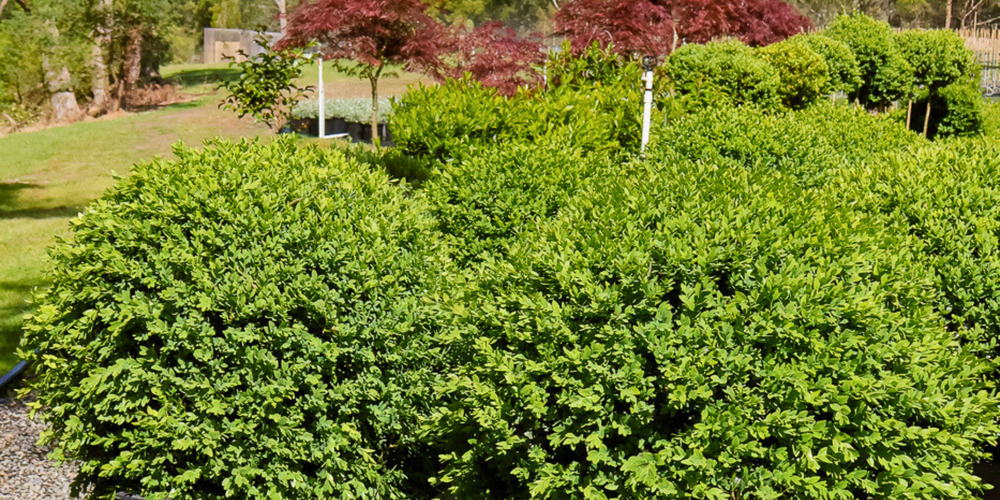
- Buxus sempervirens English Box Topiary BallsFor underplanting and adding shape
- Ficus microcarpa ‘Flash’ – Pleached Ficus
- Murraya paniculata Orange Jasmine
- Gardenia augusta ‘Magnifica’ – Magnifica Gardenia


Total A$0.00
Trade enquiries
Trade enquiries
We supply advanced trees to landscapers, developers, architects, and councils Australia-wide. Trade clients receive fast quotes, expert advice, and access to premium stock with reliable freight.
Freight estimate
Based on the items currently in your cart.
Final delivery cost is confirmed at checkout using your full address.
About Zelkova serrata ‘Wireless’
Zelkova serrata 'Wireless' is a low, wide growing form of Japanese Zelkova, selected for a broad spreading vase habit that stays well under normal tree height. The foliage is fine and serrated, mid green through the warm months, turning orange, red and bronze in autumn across a densely held canopy.
It reaches about 5 to 6 metres tall and spreads to around 8 metres, adding 40 to 80 centimetres a year. Full sun and free draining soil suit it. It is frost tolerant, handling light to moderate frost once established, copes with wind, heat and pollution, and is drought tolerant after the first few summers.
The name points to its main use, planting beneath powerlines and in other places with a height limit, such as under building envelopes, near solar arrays or in low set streetscapes. It also works as a wide shade tree over seating and car parks. Councils specify it where clearance rules rule out taller elms.
Frequently Asked Questions
About Wireless Zelkova
What is Zelkova 'Wireless'?
'Wireless' is a cultivar of Zelkova serrata selected for a low, wide, vase shaped crown rather than the tall form of the species. It is deciduous, with fine serrated leaves that colour orange, red and bronze in autumn. The branching is dense and evenly spaced, giving a balanced canopy without much intervention.
How tall does 'Wireless' Zelkova grow?
About 5 to 6 metres tall with a spread of up to 8 metres, so it finishes wider than it is high. That proportion is the point of the selection. Allow the full 8 metres when siting it, particularly beside driveways, fences and boundaries, because the canopy reaches further than the trunk position suggests.
Can it be planted under powerlines?
That is the situation it was selected for. At 5 to 6 metres mature height it usually sits below low voltage clearance zones, which avoids the repeated topping that ruins the shape of larger street trees. Confirm the clearance requirement with the relevant network authority, since the rules differ between states.
How fast does it grow?
Moderate to fast, at 40 to 80 centimetres a year in good conditions. It reaches useful canopy width relatively quickly for a tree of this quality, which matters on projects that need shade within a few seasons. Growth slows as it approaches mature width and the canopy fills out and thickens.
Is 'Wireless' Zelkova drought tolerant?
Yes, once established. After two or three summers of regular watering it holds up well through dry spells, and it handles the heat, wind and reflected glare of urban sites. In the driest inland districts, supplementary water through summer keeps the canopy full and improves the autumn colour considerably.
Does it get Dutch elm disease?
Zelkova sits in the elm family but is highly resistant to Dutch elm disease, which is a large part of why it replaced elms in street planting overseas. Dutch elm disease is not present in Australia and strict quarantine keeps it out, so treat the resistance as insurance rather than a current need.
How do I prune and care for 'Wireless' Zelkova?
Water deeply through the first two or three summers and mulch the root zone, keeping mulch off the trunk. Prune in the first few years to clear crossing branches and set the framework, then leave it alone. It does not need reduction pruning to stay within height, which is the whole reason to plant it.
| Mature height | 5m to 6m |
|---|---|
| Mature width | 7m to 8m |
| Position | Full Sun |
| Growth per year | 40cm to 80cm per year (moderate–fast) |
| Frost | Frost Tolerant |
| Foliage | Deciduous (Defoliates throughout colder months) |
| Form | Broad · Spreading · Vase - Shaped |
| Uses | Feature Tree · Shade Tree · Avenue Planting · Council or Civic Landscapes |
| Rootball width & depth | View dimensions → |
- Foliage
Deciduous (Defoliates throughout colder months)
- Position
- Form
- Use
- Mature height
- 5m to 6m
- Mature width
- 7m to 8m
Planting Information
Recommended Planting Spacing For Your Zelkova serrata ‘Wireless’ – Wireless Japanese Zelkova
Zelkova serrata ‘Wireless’ – Wireless Japanese Zelkova is expected to grow 40cm to 80cm per year (moderate–fast).
Long Term Care For Your Zelkova serrata ‘Wireless’ – Wireless Japanese Zelkova
Planting Your Zelkova serrata ‘Wireless’ – Wireless Japanese Zelkova in Different Soil
Uses in my Garden
Uses in my Garden
Zelkova serrata ‘Wireless’ – Wireless Japanese Zelkova works in an:
Is Zelkova serrata ‘Wireless’ – Wireless Japanese Zelkova Evergreen or Deciduous?
Zelkova serrata ‘Wireless’ – Wireless Japanese Zelkova is an Deciduous (Defoliates throughout colder months) Tree
Mature Height & Width
Mature Height: 5m to 6m
Mature Width: 7m to 8m
Zelkova serrata ‘Wireless’ – Wireless Japanese Zelkova is expected to grow 40cm to 80cm per year (moderate–fast).
Growth Rate of Zelkova serrata ‘Wireless’ – Wireless Japanese Zelkova
Zelkova serrata ‘Wireless’ – Wireless Japanese Zelkova is expected to grow 40cm to 80cm per year (moderate–fast).
They are considered to have a:
Frost Tolerance & Ideal Climate to plant Zelkova serrata ‘Wireless’ – Wireless Japanese Zelkova
Is Zelkova serrata ‘Wireless’ – Wireless Japanese Zelkova frost tolerant?
Zelkova serrata ‘Wireless’ – Wireless Japanese Zelkova is Frost Tolerant – Can handle light to moderate frost once established.
Does Zelkova serrata ‘Wireless’ – Wireless Japanese Zelkova Flower?
Zelkova serrata ‘Wireless’ does not produce ornamental flowers. Its blooms are insignificant, and the tree is instead valued for its compact, spreading form and exceptional autumn colour in shades of gold, orange and crimson.
Does Zelkova serrata ‘Wireless’ – Wireless Japanese Zelkova flower?
Flowering Period:
Flower Type:
Flower Colour:
Not Applicable
Is Zelkova serrata ‘Wireless’ – Wireless Japanese Zelkova an Australian Native Tree?
No
Zelkova serrata ‘Wireless’ – Wireless Japanese Zelkova is Native to Japan, Taiwan, and eastern China, where Zelkova serrata grows naturally in temperate forests and hillsides.
What is the Wildlife Value of Zelkova serrata ‘Wireless’ – Wireless Japanese Zelkova ?
Its broad, low canopy offers sheltered habitat for small birds, while its foliage supports beneficial insects that help strengthen local biodiversity and contribute to a healthier garden ecosystem.
How much Sunlight does Zelkova serrata ‘Wireless’ – Wireless Japanese Zelkova need?
Zelkova serrata ‘Wireless’ – Wireless Japanese Zelkova will thrive best in:
Preferred Soil?
Zelkova serrata ‘Wireless’ performs best in well-drained loam or sandy loam soils with an acidic to neutral pH. It will also tolerate sandy soils if enriched with organic matter to maintain moisture and nutrient availability. Avoid alkaline or compacted clay soils unless significantly improved, as these conditions can limit growth and diminish its strong autumn colour. Keep the soil evenly moist during establishment, then gradually reduce watering as the tree matures.
Is Zelkova serrata ‘Wireless’ – Wireless Japanese Zelkova Drought Tolerant?
Is Zelkova serrata ‘Wireless’ – Wireless Japanese Zelkova Drought tolerant?
As a young tree it benefits from regular deep watering, but once established Zelkova serrata ‘Wireless’ develops moderate drought tolerance. It performs reliably in warm, dry conditions provided the soil is well-drained, retaining its structure and vibrant seasonal colour with minimal supplementary watering.
Frequently Asked Questions
Frequently Asked Questions
Delivery & help
Pot sizes & dimensions
| Pot / bag size | Width | Depth |
|---|---|---|
| 30cm Pot | 33cm | 30cm |
| 40cm/45L Pot | 44cm | 41.5cm |
| 50cm Pot / 70L Pot | 55cm | 41.8cm |
| 100L Bag | 50.6cm | 52.8cm |
| 150L Bag | 66cm | 55cm |
| 200L Bag | 71.5cm | 60.5cm |
| 300L Bag | 88cm | 63.8cm |
| 400L Bag | 99cm | 66cm |
| 500L Bag | 122cm | 66cm |
| 750L Bag | 134cm | 69cm |
| 1000L Bag | 146.3cm | 71.5cm |
| 2000L Bag | 176cm | 82.5cm |
General planting reference. Container dimensions can vary by supplier and batch.
Compare sizes side by side
* Heights are approximate and vary between individual trees.
40cm/45L
Enquire
$280.00
100L
Enquire
$700.00
200L
Enquire
$1,460.00
They’re loved for their broad, spreading canopy with a low, compact form that provides excellent shade while staying clear of powerlines and structures.
Perfect pairs
Enriched Planting Mix (AO Certified)
Enriched Planting Mix is a certified organic blend of Pure Magic Compost, composted animal manure, gypsum, composted coarse bark and a wetting agent, bagged in 30L. It is built to be dug through existing garden soil at planting time rather than used on its own, and the gypsum...
Read product details
Enriched Planting Mix is a certified organic blend of Pure Magic Compost, composted animal manure, gypsum, composted coarse bark and a wetting agent, bagged in 30L. It is built to be dug through existing garden soil at planting time rather than used on its own, and the gypsum is what sets it apart from a plain compost.
Gypsum helps break up heavy clay so water and roots can move through it, while the compost and manure return organic matter and nutrient to tired ground. The coarse bark holds structure and keeps air around the root zone, and the wetting agent keeps moisture in the soil longer after rain or watering.
Use it when planting trees, shrubs, roses, fruit trees and exotic garden plants, particularly into clay. Dig a hole twice the width of the pot and 7 centimetres deeper, then mix roughly one third planting mix through the excavated soil. Spread 7 centimetres of that improved soil in the base before setting the plant in.
Frequently Asked Questions
About Enriched Planting Mix
What is Enriched Planting Mix made from?
It is a blend of Pure Magic Compost, composted animal manure, gypsum, composted coarse bark and a wetting agent. Each part has a job. The compost and manure supply organic matter and nutrient, the gypsum works on clay structure, the bark keeps air around the roots and the wetting agent holds moisture in the soil.
What plants is it suitable for?
It suits exotic garden plants, including roses, ornamental and deciduous trees, fruit trees, shrubs and perennials, and it earns its keep most on heavy clay sites. It is a planting mix rather than a potting mix, so its job is improving soil at planting time. Phosphorus sensitive natives are the one clear exception.
Is it safe for natives?
No, not for the phosphorus sensitive ones. The composted animal manure in this blend lifts phosphorus well above what Proteaceae such as Banksia, Grevillea, Hakea and Protea will tolerate, and the result can be leaf burn, dieback and plant death. Use the Native Potting Mix for those species, or plant them into unimproved local soil.
Is it certified organic?
Yes. It is a certified organic product with no chemical additives, which is why the manure and compost in it are fully composted rather than raw. That makes it sound around fruit trees and vegetable beds, and it means you are adding genuine organic matter to your soil rather than a synthetic conditioner.
How much do I need?
Work on roughly one third planting mix to two thirds of the soil you dug out of the hole. For a shrub out of a 200 millimetre pot that is only a few litres. An advanced tree going into a large hole will take considerably more. Judge the quantity by the volume of the hole rather than the size of the plant.
Can I use it in pots?
It is not a potting mix and should not be used on its own in a container. The blend is designed to be diluted through garden soil, and used straight in a pot it holds too much water and settles badly. For containers, reach for a premium potting mix, or the native mix if you are potting natives.
Does it need to be watered in?
Yes. Water the plant well several hours before you plant it, then water thoroughly again once the hole is backfilled and the soil firmed down. That first deep watering settles the improved soil around the root ball and drives out air pockets. Keep the water up over the first few months while the roots establish.

Enriched Planting Mix (AO Certified)
$21.95
Enriched Planting Mix (AO Certified)
Enriched Planting Mix is a certified organic blend of Pure Magic Compost, composted animal manure, gypsum, composted coarse bark and a wetting agent, bagged in 30L. It is built to be dug through existing garden soil at planting time rather than used on its own, and the gypsum...
Read product details
Enriched Planting Mix is a certified organic blend of Pure Magic Compost, composted animal manure, gypsum, composted coarse bark and a wetting agent, bagged in 30L. It is built to be dug through existing garden soil at planting time rather than used on its own, and the gypsum is what sets it apart from a plain compost.
Gypsum helps break up heavy clay so water and roots can move through it, while the compost and manure return organic matter and nutrient to tired ground. The coarse bark holds structure and keeps air around the root zone, and the wetting agent keeps moisture in the soil longer after rain or watering.
Use it when planting trees, shrubs, roses, fruit trees and exotic garden plants, particularly into clay. Dig a hole twice the width of the pot and 7 centimetres deeper, then mix roughly one third planting mix through the excavated soil. Spread 7 centimetres of that improved soil in the base before setting the plant in.
Frequently Asked Questions
About Enriched Planting Mix
What is Enriched Planting Mix made from?
It is a blend of Pure Magic Compost, composted animal manure, gypsum, composted coarse bark and a wetting agent. Each part has a job. The compost and manure supply organic matter and nutrient, the gypsum works on clay structure, the bark keeps air around the roots and the wetting agent holds moisture in the soil.
What plants is it suitable for?
It suits exotic garden plants, including roses, ornamental and deciduous trees, fruit trees, shrubs and perennials, and it earns its keep most on heavy clay sites. It is a planting mix rather than a potting mix, so its job is improving soil at planting time. Phosphorus sensitive natives are the one clear exception.
Is it safe for natives?
No, not for the phosphorus sensitive ones. The composted animal manure in this blend lifts phosphorus well above what Proteaceae such as Banksia, Grevillea, Hakea and Protea will tolerate, and the result can be leaf burn, dieback and plant death. Use the Native Potting Mix for those species, or plant them into unimproved local soil.
Is it certified organic?
Yes. It is a certified organic product with no chemical additives, which is why the manure and compost in it are fully composted rather than raw. That makes it sound around fruit trees and vegetable beds, and it means you are adding genuine organic matter to your soil rather than a synthetic conditioner.
How much do I need?
Work on roughly one third planting mix to two thirds of the soil you dug out of the hole. For a shrub out of a 200 millimetre pot that is only a few litres. An advanced tree going into a large hole will take considerably more. Judge the quantity by the volume of the hole rather than the size of the plant.
Can I use it in pots?
It is not a potting mix and should not be used on its own in a container. The blend is designed to be diluted through garden soil, and used straight in a pot it holds too much water and settles badly. For containers, reach for a premium potting mix, or the native mix if you are potting natives.
Does it need to be watered in?
Yes. Water the plant well several hours before you plant it, then water thoroughly again once the hole is backfilled and the soil firmed down. That first deep watering settles the improved soil around the root ball and drives out air pockets. Keep the water up over the first few months while the roots establish.
Enriched Planting Mix (AO Certified)


Buxus sempervirens English Box Topiary Balls
From $230.00
Buxus sempervirens English Box Topiary Balls
Buxus sempervirens English Box Topiary Balls are pre-clipped formal evergreen specimens, available in three mature sizes and ready to place. The tight, fine, dark green foliage holds a precise rounded form year-round and gives the classic formal topiary look that no other Buxus replicates. As one of our...
Read product details
Buxus sempervirens English Box Topiary Balls are pre-clipped formal evergreen specimens, available in three mature sizes and ready to place. The tight, fine, dark green foliage holds a precise rounded form year-round and gives the classic formal topiary look that no other Buxus replicates. As one of our most consistently strong-selling products, our English Box topiary balls are well-shaped, well-rooted, and arrive in proportion to the pot size.
English Box performs best in cool to temperate climates and is slow growing at around 15 to 25 cm per year in good conditions, which is exactly why it holds sharp formal shapes so well. It thrives in full sun to part shade with well-drained, slightly acidic to neutral loamy soil, and is frost hardy, drought tolerant once established, and excellent in containers. Two light clips per year, in spring and again in late summer, keep the ball form crisp.
Use them flanking entrances, lining formal pathways, anchoring symmetrical garden beds, defining parterre and knot gardens, and in pairs in classic urns and decorative pots at front doors. Buxus sempervirens is the original topiary plant and remains the benchmark for traditional and contemporary formal design, with a level of finesse and density that fast-growing alternatives cannot replicate.
Frequently Asked Questions
About Buxus sempervirens English Box Topiary Balls
What size are the English Box topiary balls when they arrive?
Our English Box topiary balls arrive pre-clipped and ready to place at the size you order. The 30cm/33cm pots have ball diameters of approximately 30 to 45 cm, the 40cm/45L pots have ball diameters of 40 to 55 cm, and the 50cm/75L pots have ball diameters of 50 to 70 cm. They are well-rooted and in proportion to the pot.
How fast does Buxus sempervirens grow?
English Box is slow-growing, adding approximately 15 to 25 cm per year once established in good conditions. This slow growth rate is one of the reasons it holds sharp formal shapes so well, and why mature pre-clipped specimens command a premium over seedling-grown stock.
What is the difference between English Box, Japanese Box, and Shaggy Box?
English Box (Buxus sempervirens) has the smallest, finest leaves and the tightest formal texture, ideal for traditional parterres and clipped balls. Japanese Box (Buxus microphylla japonica) has slightly larger leaves, grows faster, and handles heat better. Shaggy Box (Buxus bodinieri) has soft, rounded leaves, much better blight resistance, and is the best choice for humid subtropical climates where English Box can struggle.
Where does English Box grow best in Australia?
English Box performs best in cool to temperate regions including Victoria, the ACT, the NSW Southern Highlands and Central Tablelands, Tasmania, and the elevated parts of South Australia and Western Australia. In humid coastal or hot subtropical regions, consider Buxus bodinieri Shaggy Box or Japanese Box instead for better long-term performance.
How do I prune English Box topiary balls?
Lightly clip in spring and again in late summer or early autumn to maintain the ball shape. Avoid pruning in the heat of summer or during frost periods. Use sharp shears for the cleanest formal finish, and step back regularly to check the symmetry of the form.
Can English Box grow in pots?
Yes. English Box is the classic potted topiary plant and pre-clipped balls look particularly striking in pairs at entrances and on terraces. Use a minimum 30L pot for the 30cm/33cm size and scale up from there, with a quality potting mix and a slow-release fertiliser applied twice yearly.
Is English Box susceptible to disease?
English Box can be affected by box blight, particularly in humid conditions where foliage stays wet. To reduce risk, ensure good air circulation around each plant, avoid overhead watering, and prune to maintain airflow through the canopy. In high-humidity regions, Buxus bodinieri Shaggy Box is a more disease-resistant alternative.
Buxus sempervirens English Box Topiary Balls

Ficus microcarpa ‘Flash’ – Pleached Ficus
$810.00
Ficus microcarpa ‘Flash’ – Pleached Ficus
Ficus microcarpa 'Flash' in pleached form is an evergreen fig trained to a clear straight stem with a flat rectangular canopy held above it. The leaves are small, glossy and deep green, knitting together into a solid panel that works like a hedge lifted into the air. It...
Read product details
Ficus microcarpa 'Flash' in pleached form is an evergreen fig trained to a clear straight stem with a flat rectangular canopy held above it. The leaves are small, glossy and deep green, knitting together into a solid panel that works like a hedge lifted into the air.
It grows best in full sun to part shade in well drained soil kept moist while it settles. Heat, wind and urban conditions do not trouble it, but frost does, so keep it to frost free or protected positions in warm temperate and subtropical zones. Growth runs 60 to 90 centimetres a year.
Pleached panels go along boundaries, driveways and pool fences to block an upper storey window or a neighbouring outlook while leaving the ground below open for garden beds or parking. Set at 2 to 2.5 metre centres they knit into a continuous screen. Few plants solve overlooking as neatly.
Frequently Asked Questions
About Pleached Ficus Flash
What is a pleached ficus?
Pleaching is a training method where a tree is grown on a single clear stem with its branches tied and trimmed to a flat frame overhead. Applied to Ficus microcarpa 'Flash', it produces an evergreen panel of small glossy leaves raised above head height, with open ground left underneath it.
How tall is it and how wide is the canopy?
As supplied and maintained, these trees generally stand around 2.5 to 3.5 metres overall, with a clear trunk to about 1.5 to 1.8 metres and a trained canopy panel roughly 1.2 to 1.8 metres wide. The panel can be grown taller and wider over time, or held at the delivered dimensions by trimming.
How fast does it grow?
It puts on 60 to 90 centimetres a year in warm conditions, which is moderate to fast for an evergreen screening tree. That vigour is what fills the pleached frame quickly after planting, and it is also the reason the form needs trimming two or three times through the growing season.
Is it frost tolerant?
No. Ficus microcarpa 'Flash' is frost sensitive and cold snaps burn the foliage, particularly on young or freshly planted trees. Keep it to frost free or protected positions in warm temperate, coastal and subtropical areas. In marginal districts a courtyard or a wall backed position gives enough shelter to work.
How far apart should pleached trees be planted for a screen?
Set them at roughly 2 to 2.5 metre centres so the canopy panels meet and knit into a continuous band within a season or two. Tighter spacing closes the gap faster but crowds the root zone. Line the trunks up carefully at planting, because any misalignment shows badly in a formal screen.
Does it have invasive roots?
Figs generally have vigorous roots, so keep pleached ficus at least 2 to 3 metres away from sewer lines, pool shells and slab edges, or run a root barrier along the boundary. In planter boxes the root run stays contained, though the trees then depend entirely on irrigation and regular feeding.
How do I maintain a pleached ficus?
Trim the face and top of the panel two or three times over the warmer months to keep the edges crisp, and rub off any shoots appearing on the clear trunk. Water deeply while it establishes, mulch the root zone and feed in spring. Check the ties on the frame so they do not cut in.
Ficus microcarpa ‘Flash’ – Pleached Ficus

Evergreen Trees Direct Has Been Featured In:


Perfect Substitutes for Zelkova serrata ‘Wireless’ – Wireless Japanese Zelkova
Follow Us On Instagram
@evergreentreesdirect ↗
Tips & Tricks
Best Trees for Creating a Privacy Screen: 10 Picks Across Fast Formal, Native and Narrow Column Options
Read the story
How to Incorporate Trees into Your Modern Landscape Design
Read the story
The Importance of Root Health: How to Choose Quality Trees
Read the story