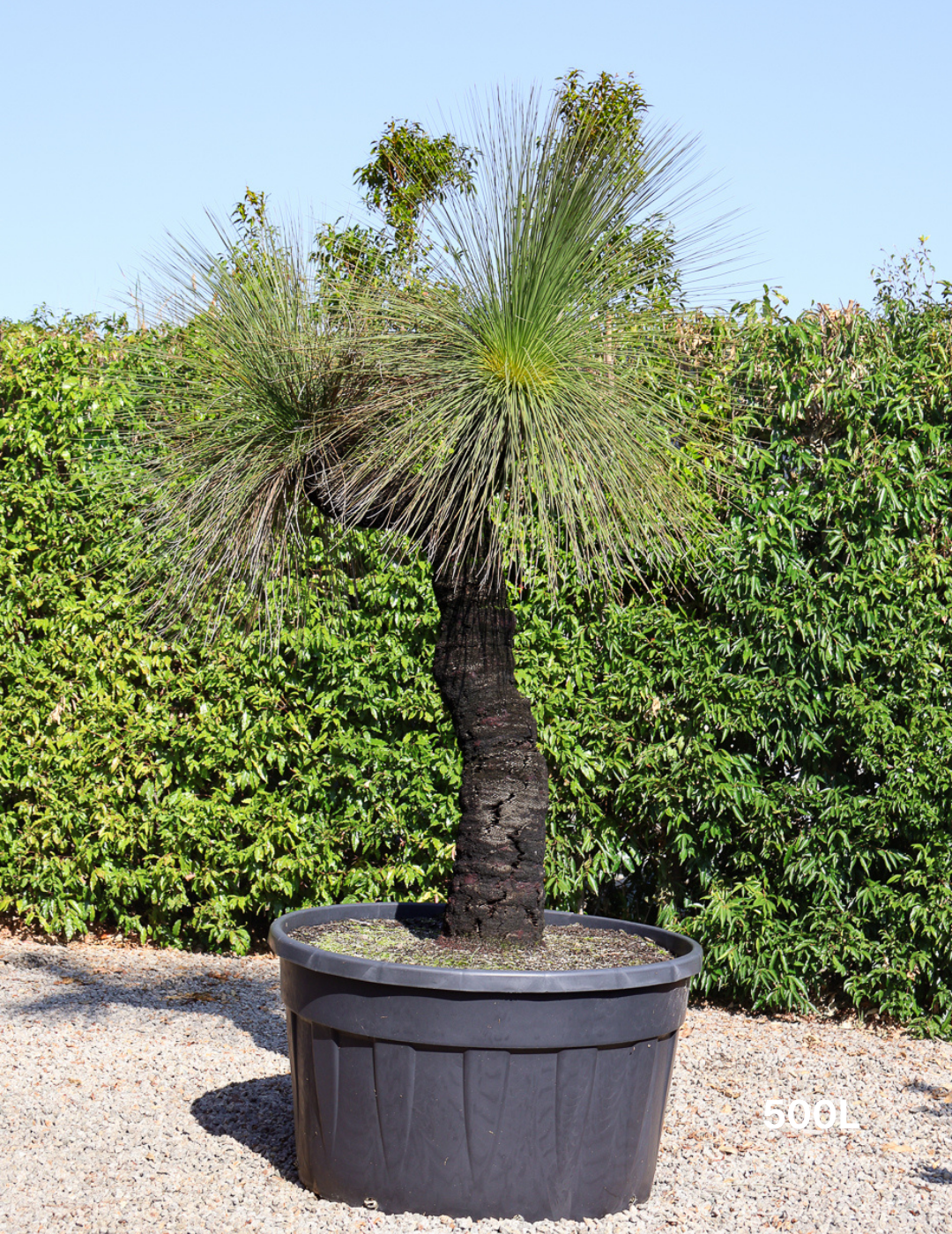
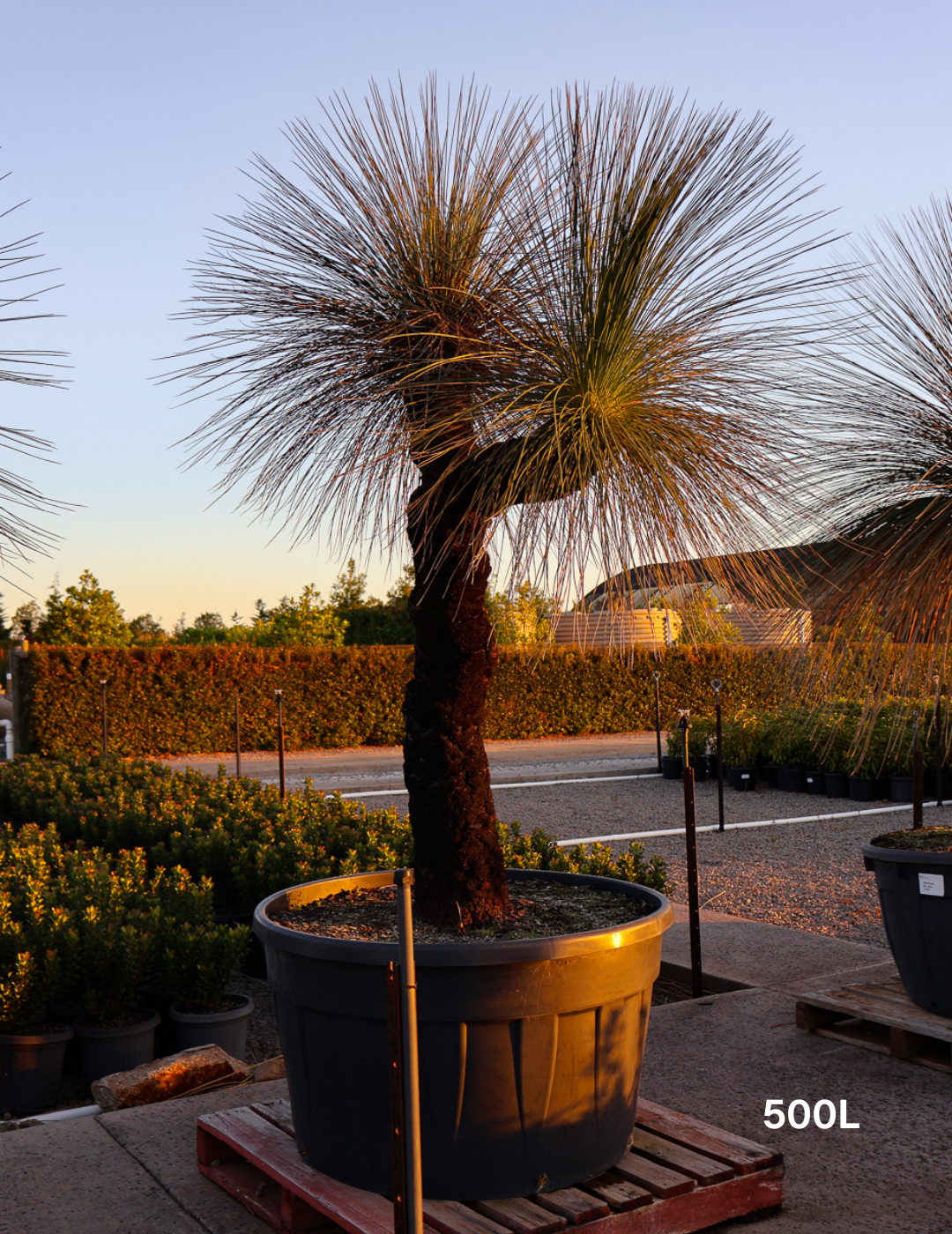
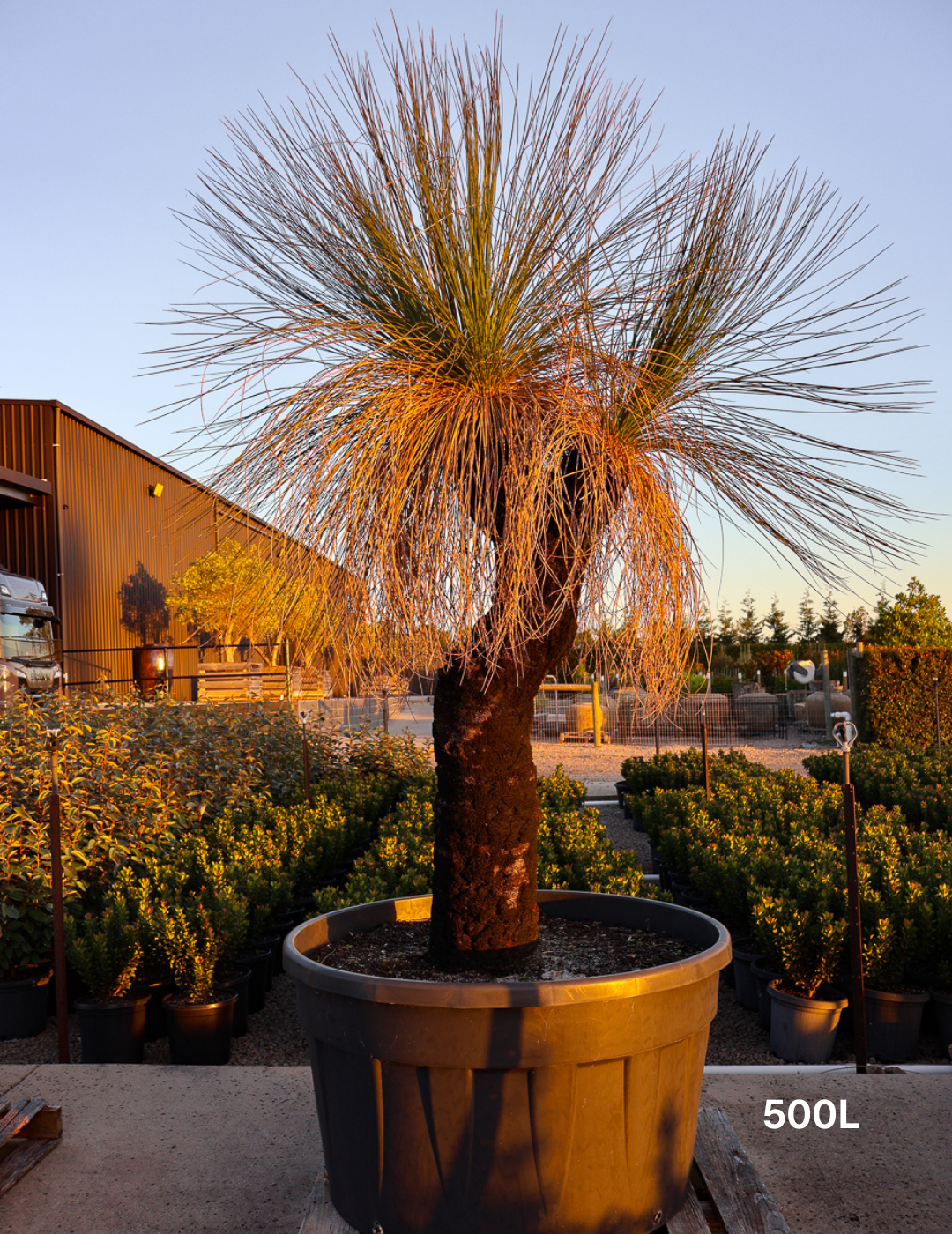
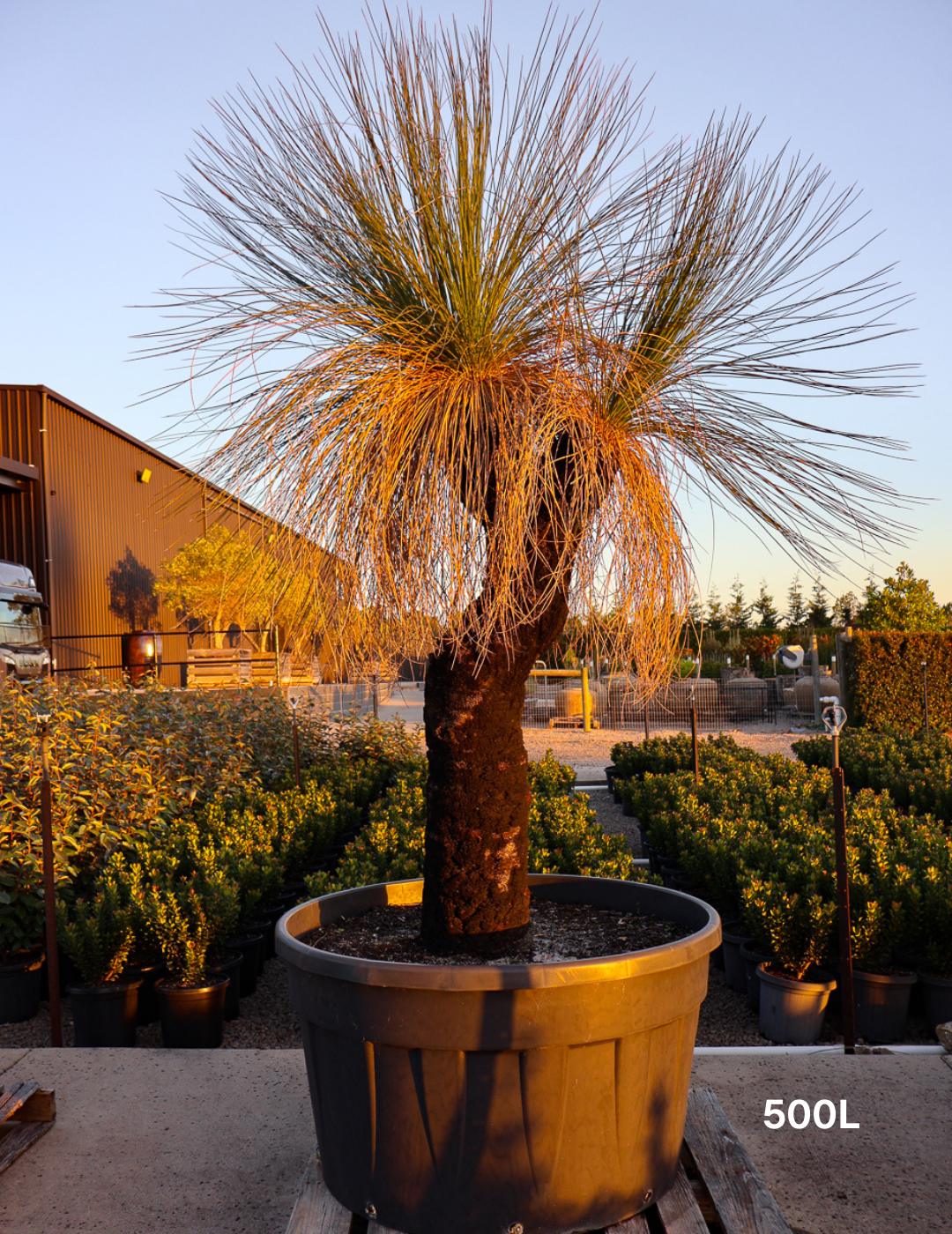
Xanthorrhoea - Black Boy Tree
Xanthorrhoea - Black Boy Tree
Couldn't load pickup availability
Current Stock Height Guides
Current Stock Height Guides
Height guide disclaimer: Height ranges are approximate only. As living products, plant heights naturally vary between individual plants, batches, and seasons. No guarantee is given that supplied plants will fall within the stated range. If minimum heights are required, you mustconfirm current batch heights with Evergreen Trees Direct prior to purchase. Variation in height is normal and is not grounds for return, refund, replacement, or compensation.
Mature Height & Width
Mature Height & Width
Mature Height: 1m to 6m (approx.) (variable depending on species, very slow-growing; this refers to trunk height)
Mature Width: 1m to 3m (leaf crown spread)
Xanthorrhoea - Black Boy Tree is expected to grow 1cm to 3cm per year (very slow) (approx.).
Root Ball Dimensions
Root Ball Dimensions
Use this as a reference when digging your planting hole. We recommend digging at least 10% wider than the dimensions below to encourage strong root development.
- 30cm Pot: 33cm (W) × 30cm (D)
- 40cm/45L Pot: 44cm (W) × 41.5cm (D)
- 50cm Pot / 70L Pot: 55cm (W) × 41.8cm (D)
- 100L Bag: 50.6cm (W) × 52.8cm (D)
- 150L Bag: 66cm (W) × 55cm (D)
- 200L Bag: 71.5cm (W) × 60.5cm (D)
- 300L Bag: 88cm (W) × 63.8cm (D)
- 400L Bag: 99cm (W) × 66cm (D)
- 500L Bag: 122cm (W) × 66cm (D)
- 750L Bag: 134cm (W) × 69cm (D)
- 1000L Bag: 146.3cm (W) × 71.5cm (D)
- 2000L Bag: 176cm (W) × 82.5cm (D)
Trade
Trade
We supply advanced trees to landscapers, developers, architects, and councils Australia-wide. Trade clients receive fast quotes, expert advice, and access to premium stock with reliable freight.
Shipping
Shipping
Shipping is calculated at checkout based on the pallet space your order occupies in the truck and your delivery location.
There is no charge to calculate your freight.
Contact
Contact
Have a question or a list to send through to us?
Email: sales@evergreentrees.com.au
Phone: (03) 7042 3318
Share this product
About Your New Xanthorrhoea - Black Boy Tree
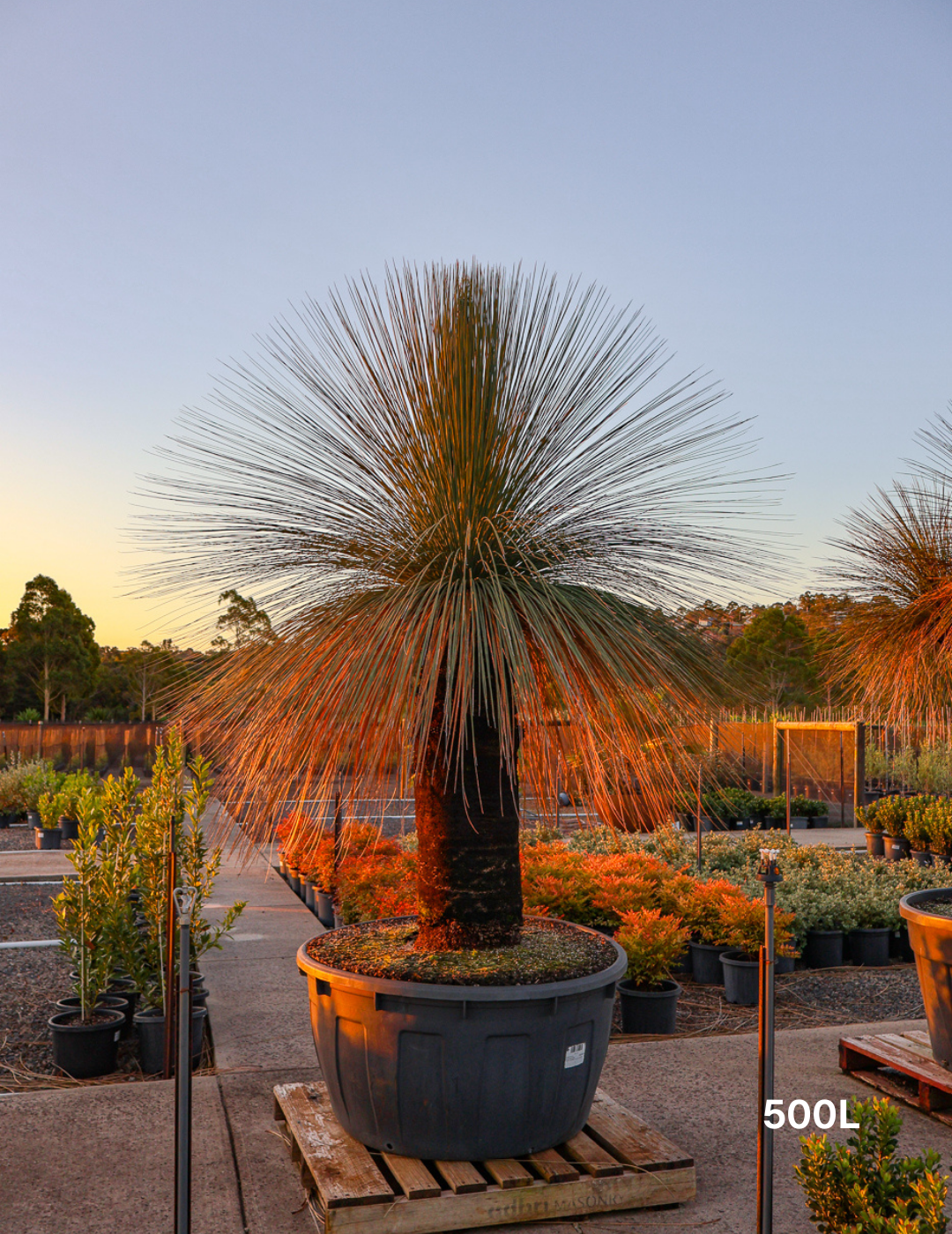
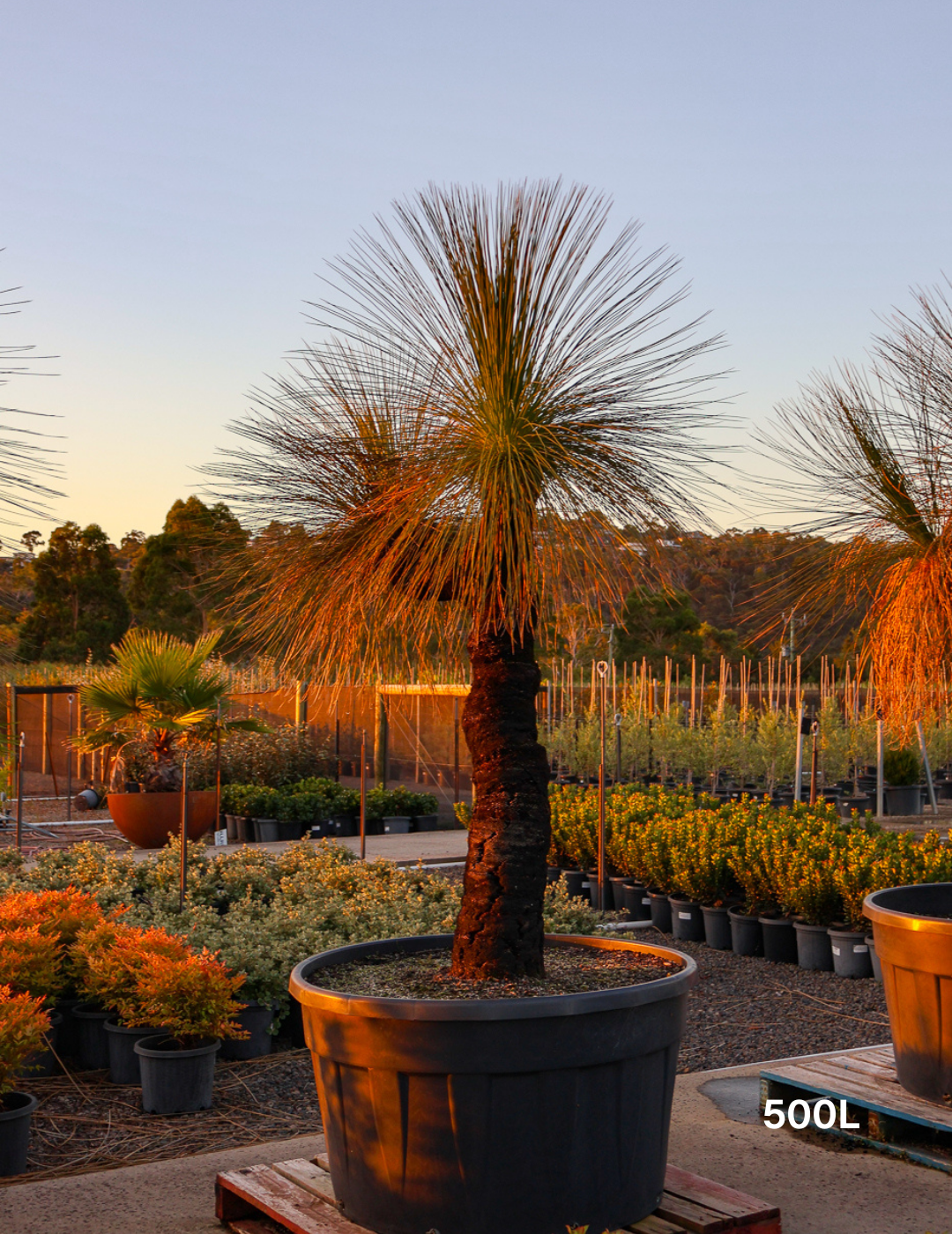
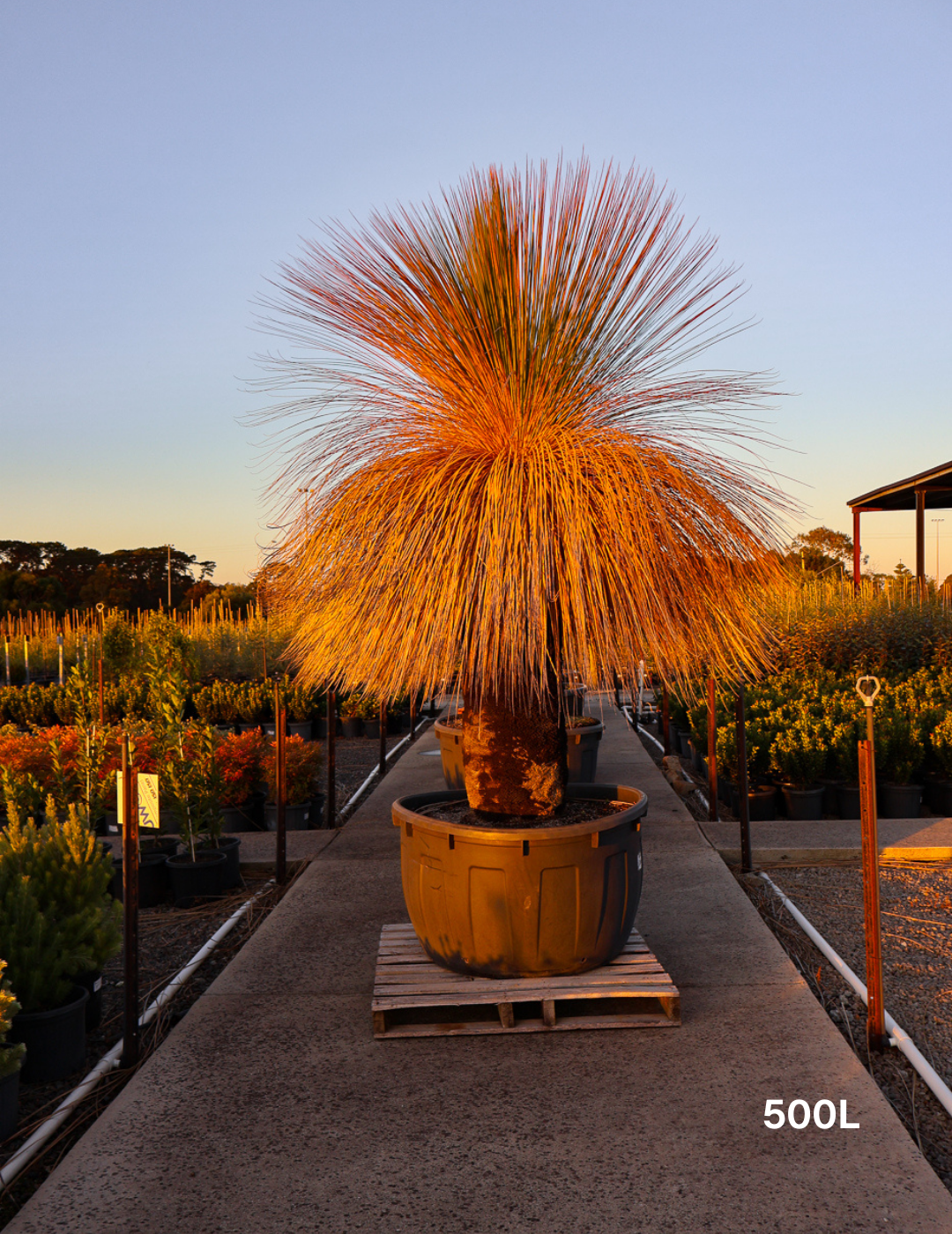
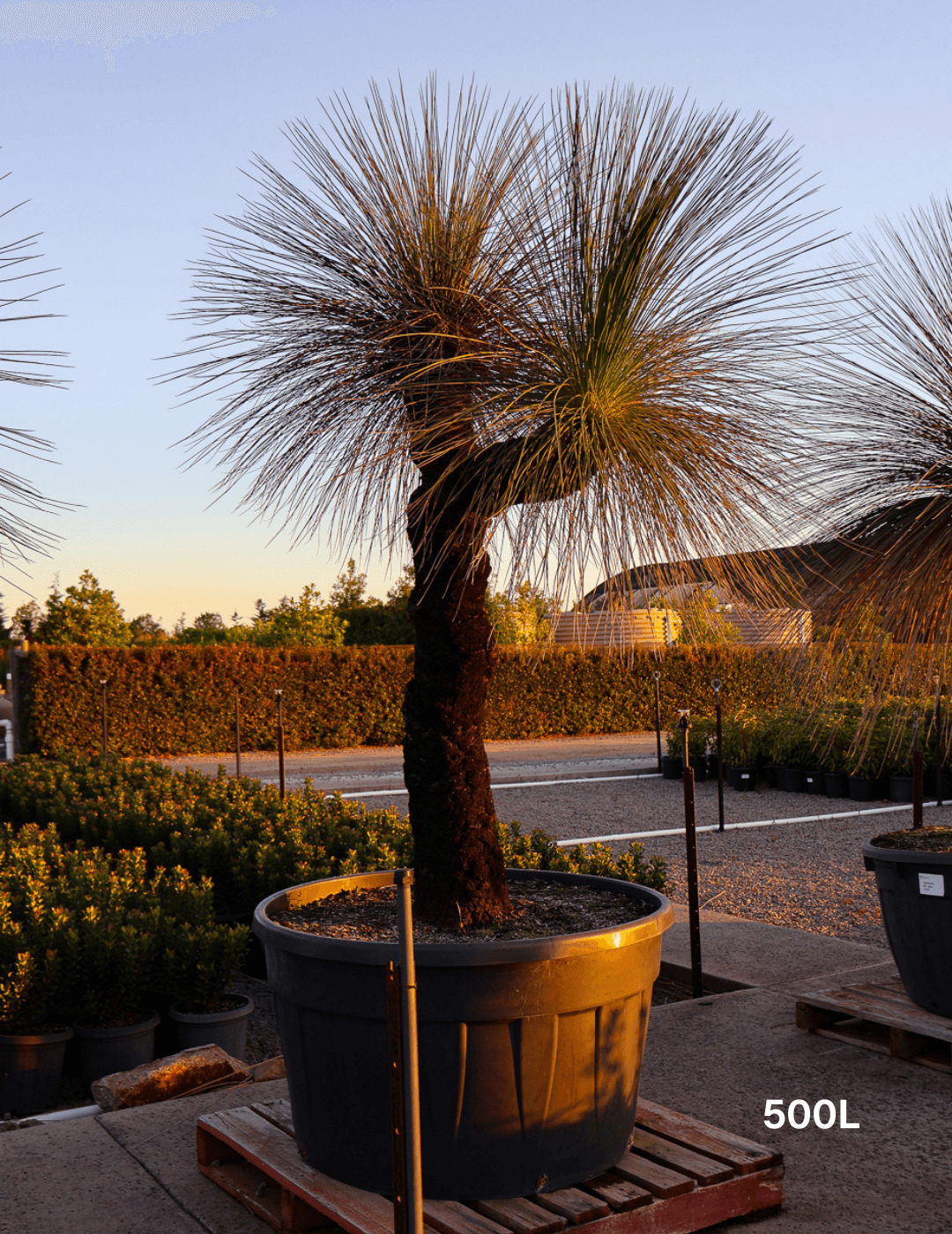
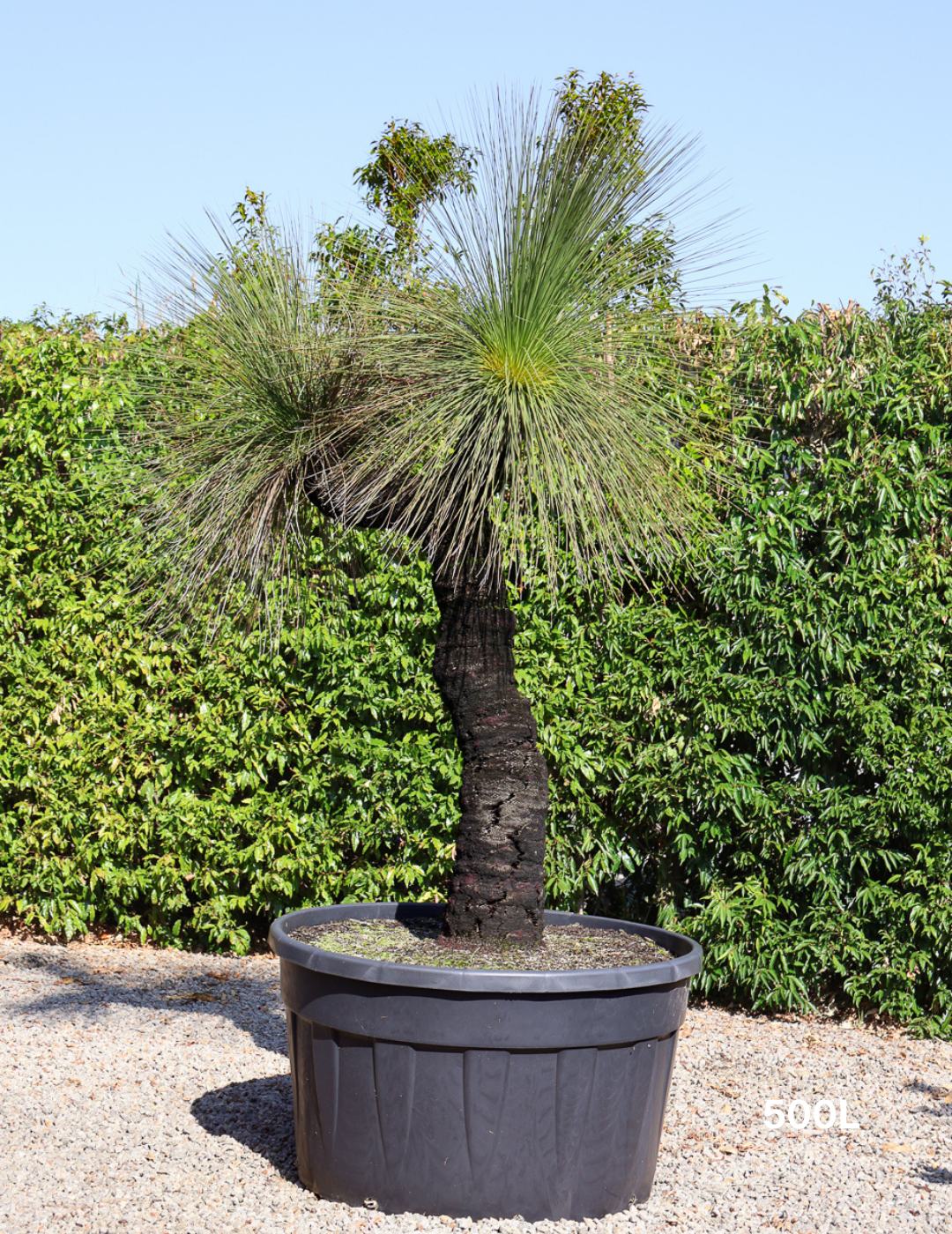
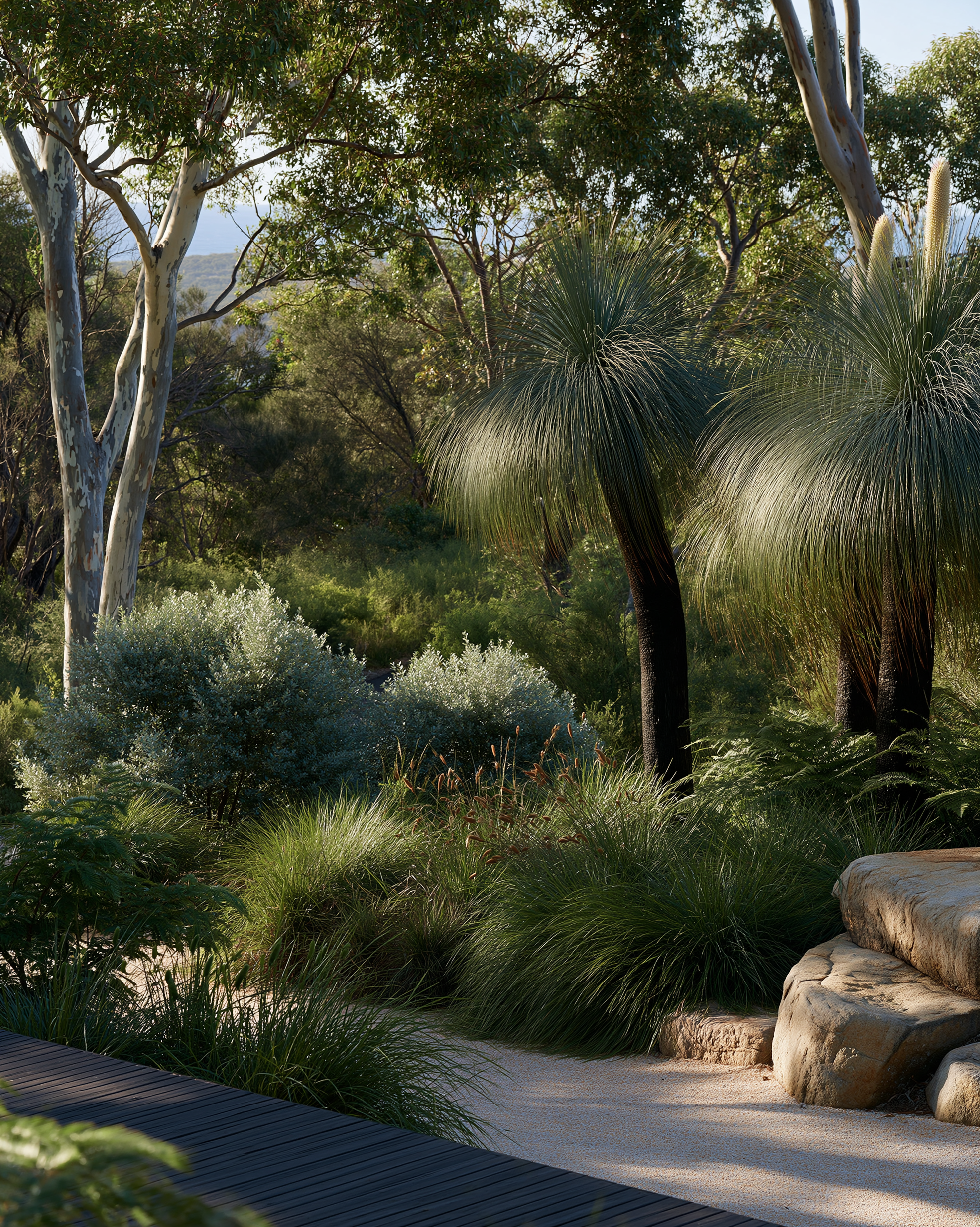
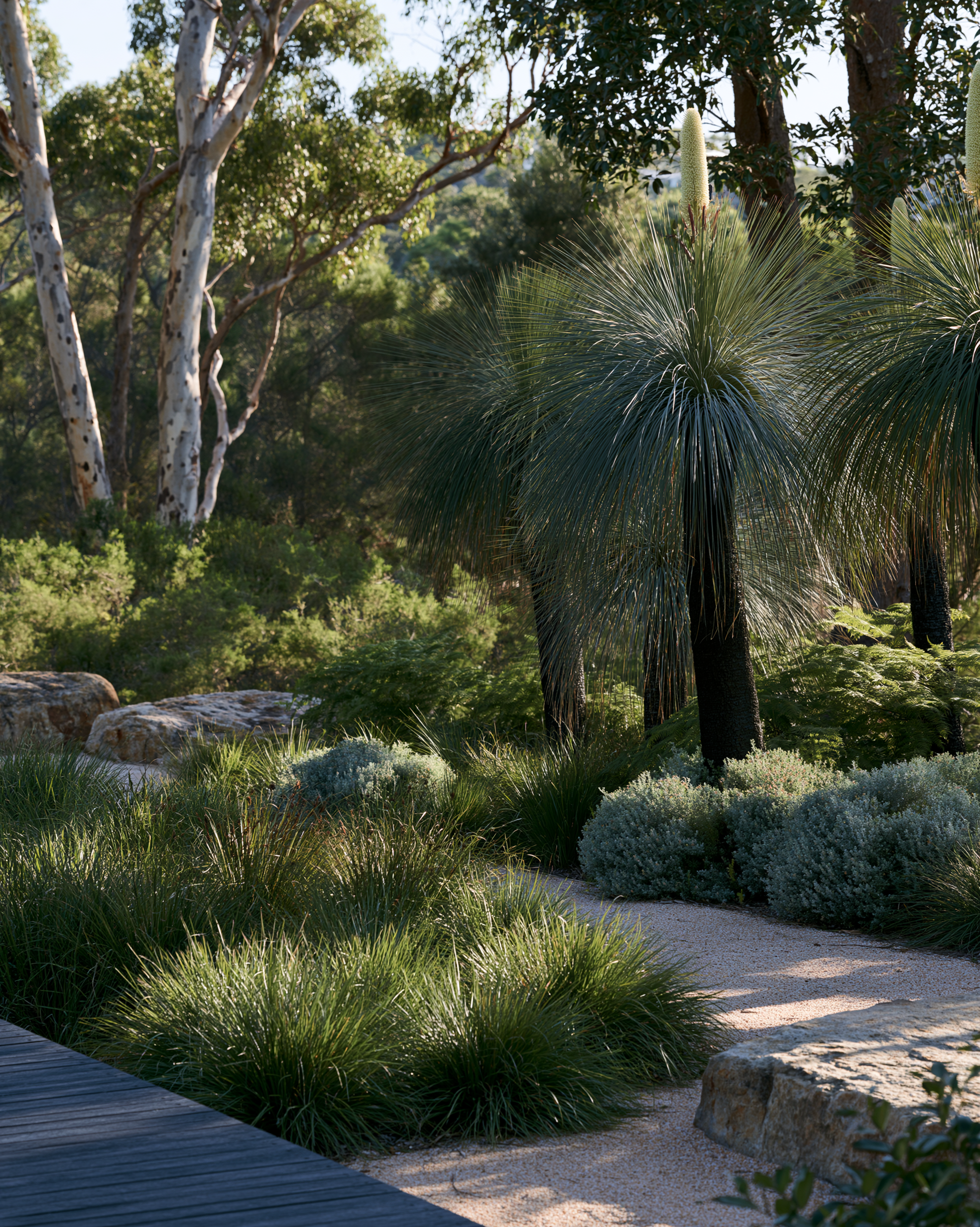
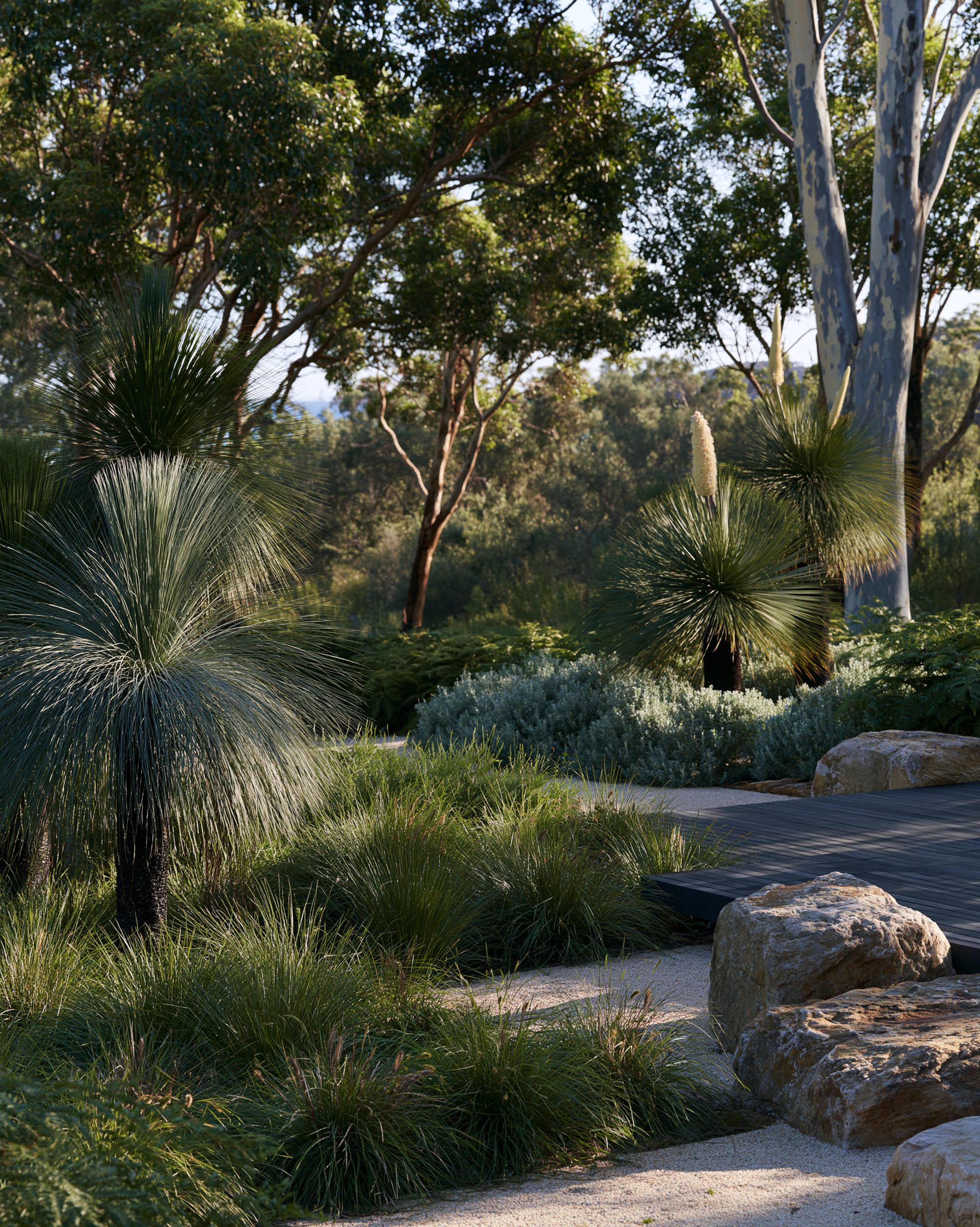
Xanthorrhoea species, sold here as Grass Tree or Black Boy Tree, are slow growing Australian natives that form a blackened woody trunk topped with a dense skirt of fine, linear foliage. Mature plants send up a tall cream flower spike that stands well above the crown, packed with nectar.
They reach 1 to 6 metres tall depending on species and age, with a leaf crown 1 to 3 metres across, and grow only about 1 to 3 centimetres a year. Full sun, sharp drainage and lean soil suit them. They handle drought, poor ground, frost and fire, and are at home from Perth to Sydney and well inland.
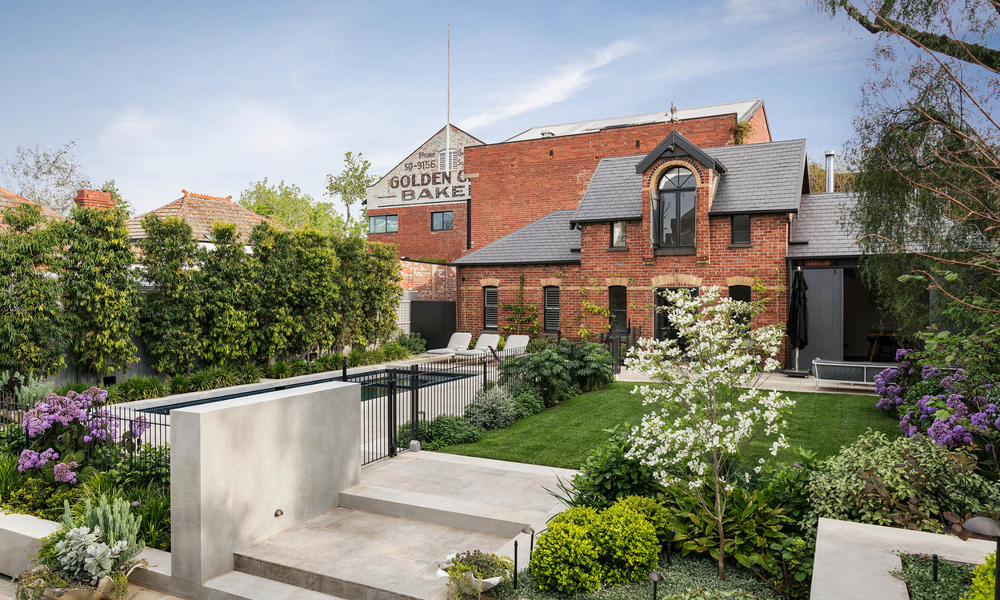
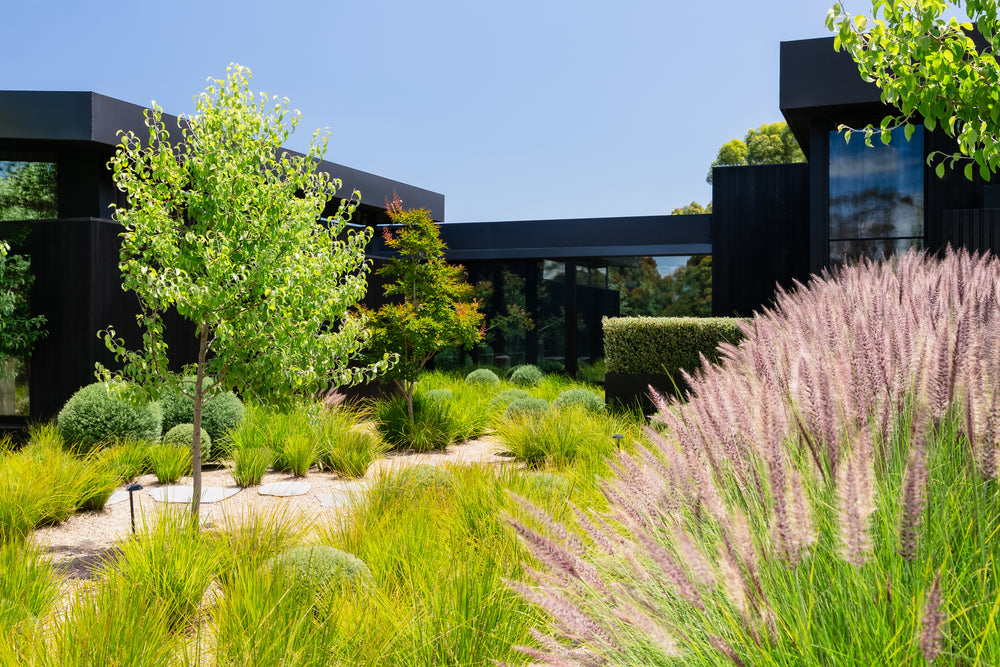
Grass trees are used as sculptural focal points in native, coastal and dry gardens, in rockeries, courtyards and civic entry statements. They pair well with low native shrubs, succulents and gravel mulch. Because they grow so slowly, an established specimen carries an age and character that cannot be produced any other way.
Frequently Asked Questions
About Grass Tree
What is a Grass Tree?
Xanthorrhoea is a genus of slow growing Australian natives with a thick, fire blackened trunk and a crown of stiff, grass like leaves. They are also known as Black Boy Trees, an older name still in circulation. The trunk is not true timber but a compacted mass of old leaf bases bound together with resin.
How fast do Grass Trees grow?
Very slowly, about 1 to 3 centimetres of trunk a year. A plant with a metre of visible trunk has usually been growing for several decades, which is why advanced specimens are sold on trunk height rather than pot age. Nothing in cultivation speeds this up meaningfully, so buy the size you want to live with.
How big do Grass Trees get?
Between 1 and 6 metres tall depending on the species and how old the plant is, with a leaf crown spreading 1 to 3 metres. Most landscape specimens sit well under the upper figure. The flower spike adds further height in season, standing up to around 2 metres above the crown.
Is the Grass Tree drought tolerant?
Strongly drought tolerant once established. These plants evolved on nutrient poor, freely draining soils and are adapted to long dry periods, so summer watering is rarely needed after the first year. The common cause of death in gardens is the opposite problem, roots left sitting wet in heavy clay or in an over irrigated bed.
Does it need sun or shade?
Full sun. Grass trees need open, unshaded positions to keep the crown dense and the plant healthy, and they thin out and decline under trees or against shaded walls. Reflected heat and exposed sites are no trouble at all. Give them the hottest, driest, best drained corner available.
When does a Grass Tree flower?
Flowering is sporadic rather than annual, most often through late winter into spring and frequently triggered by fire, heat or a good season. The spike carries thousands of small cream flowers and draws honeyeaters, native bees and other insects. A plant may flower several years running, then skip several years entirely.
How do I care for a Grass Tree?
Plant it high in free draining soil or on a raised mound and do not disturb the roots. Water sparingly through the first summer, then leave it alone. Avoid fertiliser, particularly anything high in phosphorus. Old leaves can be trimmed back to tidy the skirt. Keep irrigation and lawn sprinklers away from the trunk.
Evergreen Trees Direct Has Been Featured In:



Plant Your Xanthorrhoea - Black Boy Tree With:


Type: Garden Supplies
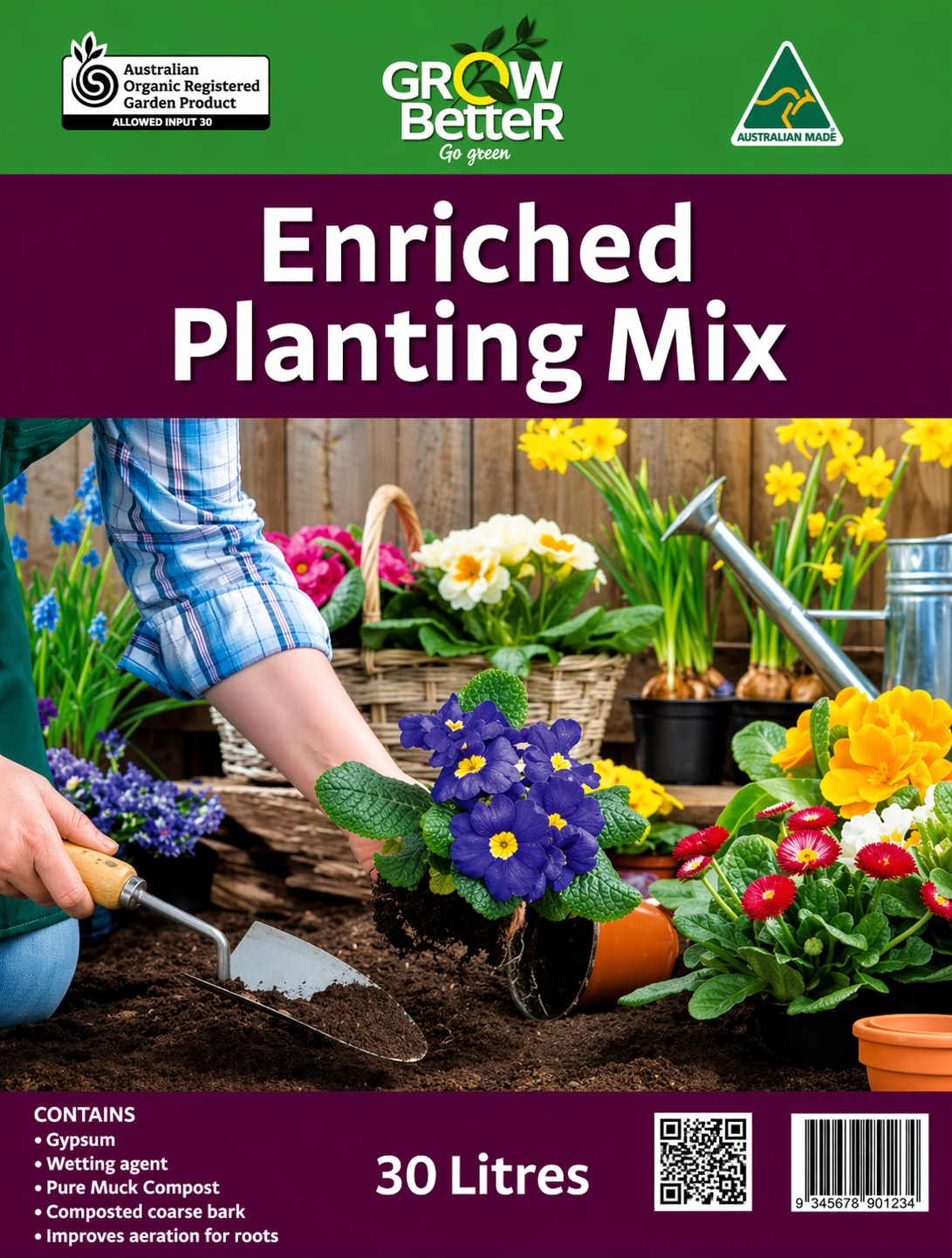
Enriched Planting Mix (AO Certified)

Type: Structural Foliage
Buxus japonica Japanese Box Topiary Balls

Type: Hedging and Screening Trees
Rhaphiolepis indica 'Oriental Pearl'

Type: Hedging and Screening Trees
Rhaphiolepis indica 'Snow Maiden'

Type: Hedging and Screening Trees
Pittosporum tenuifolium 'Silver Sheen'

Type: Australian Native
Melaleuca nesophila

Uses in my Garden
Uses in my Garden
Xanthorrhoea - Black Boy Tree works in an:
Is Xanthorrhoea - Black Boy Tree Evergreen or Deciduous?
Is Xanthorrhoea - Black Boy Tree Evergreen or Deciduous?
Xanthorrhoea - Black Boy Tree is an Evergreen (foliage year round) Tree
Mature Height & Width
Mature Height & Width
Mature Height: 1m to 6m (approx.) (variable depending on species, very slow-growing; this refers to trunk height)
Mature Width: 1m to 3m (leaf crown spread)
Xanthorrhoea - Black Boy Tree is expected to grow 1cm to 3cm per year (very slow) (approx.).
Growth Rate of Xanthorrhoea - Black Boy Tree
Growth Rate of Xanthorrhoea - Black Boy Tree
Xanthorrhoea - Black Boy Tree is expected to grow 1cm to 3cm per year (very slow) (approx.).
They are considered to have a:
Frost Tolerance & Ideal Climate to plant Xanthorrhoea - Black Boy Tree
Frost Tolerance & Ideal Climate to plant Xanthorrhoea - Black Boy Tree
Is Xanthorrhoea - Black Boy Tree frost tolerant?
Xanthorrhoea - Black Boy Tree is Frost Hardy – Survives heavy and frequent frost without damage.
Does Xanthorrhoea - Black Boy Tree Flower?
Does Xanthorrhoea - Black Boy Tree Flower?
Xanthorrhoea produces dramatic, upright flowering spikes covered in thousands of small cream-white flowers rich in nectar. These blooms often follow fire, seasonal changes or periods of stress, creating a striking architectural feature that rises well above the foliage.
Does Xanthorrhoea - Black Boy Tree flower?
Flowering Period:
Flower Type:
Flower Colour:
White
Is Xanthorrhoea - Black Boy Tree an Australian Native Tree?
Is Xanthorrhoea - Black Boy Tree an Australian Native Tree?
Yes
Xanthorrhoea - Black Boy Tree is Native to Australia – different species occur across much of the continent. They are commonly found in heathlands, open forests, and rocky slopes.
What is the Wildlife Value of Xanthorrhoea - Black Boy Tree ?
What is the Wildlife Value of Xanthorrhoea - Black Boy Tree ?
Its tall flowering spikes produce abundant nectar that attracts native bees, beetles and beneficial insects, while also drawing in nectar-feeding birds such as honeyeaters. The dense skirt of older foliage at the base provides sheltered habitat for small reptiles and ground-dwelling wildlife, supporting a diverse and resilient ecosystem.
How much Sunlight does Xanthorrhoea - Black Boy Tree need?
How much Sunlight does Xanthorrhoea - Black Boy Tree need?
Xanthorrhoea - Black Boy Tree will thrive best in:
Preferred Soil?
Preferred Soil?
Xanthorrhoea performs best in very well-drained sandy or loamy soils with an acidic to neutral pH. It will not tolerate heavy, compacted or waterlogged soils, and these must be avoided or significantly improved with coarse materials to enhance drainage. Keep the soil lightly moist during establishment, then gradually reduce watering as it develops its natural drought resilience. Avoid disturbing the root system at all stages.
Is Xanthorrhoea - Black Boy Tree Drought Tolerant?
Is Xanthorrhoea - Black Boy Tree Drought Tolerant?
Is Xanthorrhoea - Black Boy Tree Drought tolerant?
As a young plant it benefits from careful, regular watering while ensuring the crown stays dry. Once established, Xanthorrhoea shows excellent drought tolerance, thriving in hot, dry environments and maintaining its form with little to no supplementary watering.

Planting Information
How To Plant Your Xanthorrhoea - Black Boy Tree
How To Plant Your Xanthorrhoea - Black Boy Tree
Recommended Planting Spacing For Your Xanthorrhoea - Black Boy Tree
Recommended Planting Spacing For Your Xanthorrhoea - Black Boy Tree
Xanthorrhoea - Black Boy Tree is expected to grow 1cm to 3cm per year (very slow) (approx.).
Long Term Care For Your Xanthorrhoea - Black Boy Tree
Long Term Care For Your Xanthorrhoea - Black Boy Tree
Planting Your Xanthorrhoea - Black Boy Tree in Different Soil
Planting Your Xanthorrhoea - Black Boy Tree in Different Soil
Frequently Asked Questions
Frequently Asked Questions