Skip to content

Nerium oleander 'Ruby Embers'

Nerium oleander 'Ruby Embers' – Ruby Embers Oleander

Evergreen · Full Sun

Mature size: 3m–4m high × 2m–3m wide

  • Evergreen
  • Full Sun
  • Mature height3m–4m
  • Mature width2m–3m
  • Frost Tolerant
  • Flowers
Nerium oleander 'Ruby Embers' is a tough evergreen shrub with deep red flowers spring to autumn. Drought and salt tolerant. Note: toxic if eaten.About ↘

Deep ruby-red flowers from late spring through to autumn on one of the toughest flowering shrubs available, handling drought, heat, salt wind and poor soil with almost no attention. Note: all parts are highly toxic if eaten.

Regular price $1,230.00
Sale price $1,230.00 Regular price
Tax included. Shipping calculated at checkout.
Pot size
Available batches
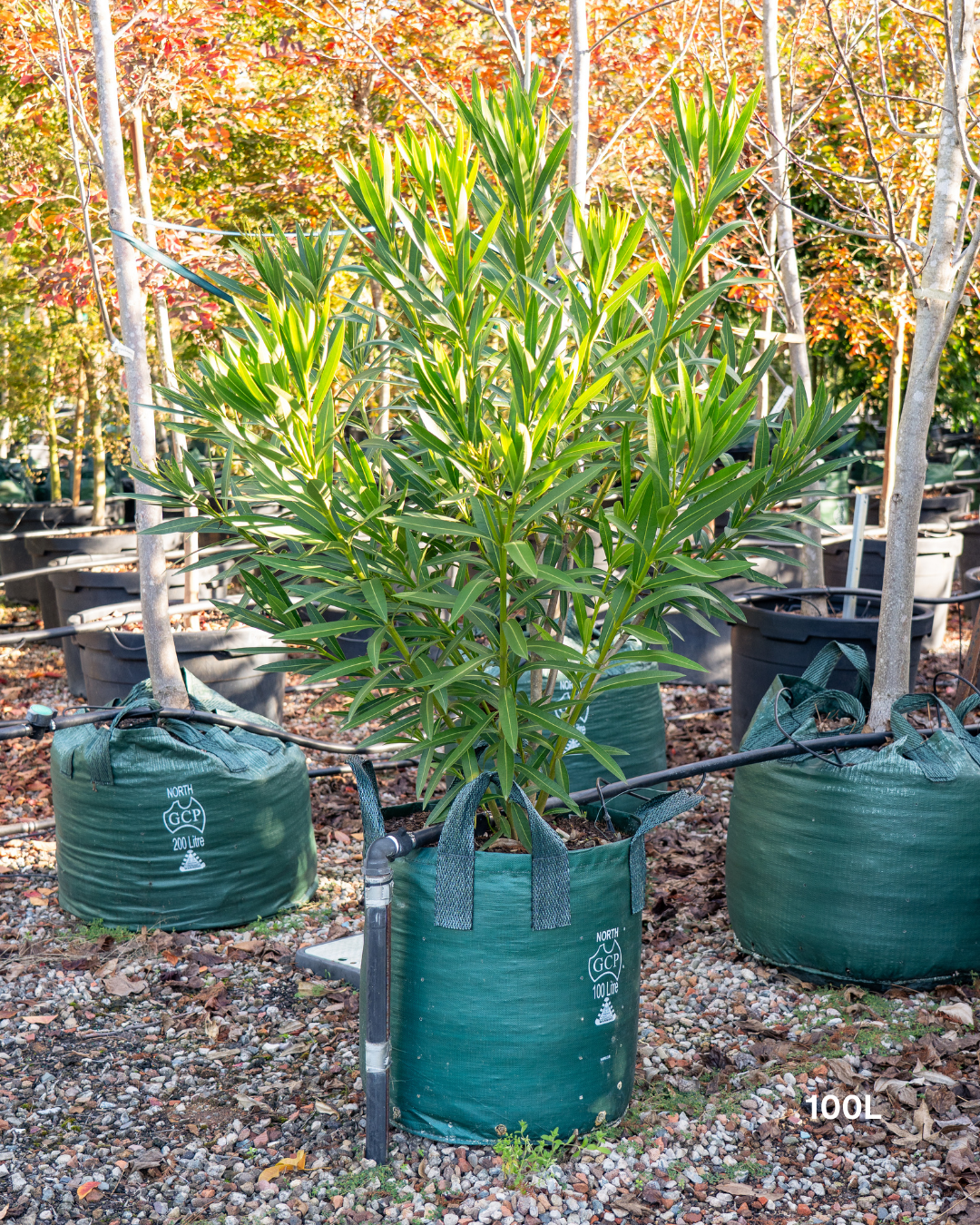
Size: 100L
Current height guide
Please enquire
Pot size
100L

Approximate only. Minimum height important? Confirm with us.

Height guide & disclaimer

Height guide disclaimer: Height ranges are approximate only. As living products, plant heights naturally vary between individual plants, batches, and seasons. No guarantee is given that supplied plants will fall within the stated range. If minimum heights are required, you must confirm current batch heights with Evergreen Trees Direct prior to purchase. Variation in height is normal and is not grounds for return, refund, replacement, or compensation.

Quantity
About this tree

Build your tree order

Mix sizes. Grow your savings.

Size / batchEachQuantity
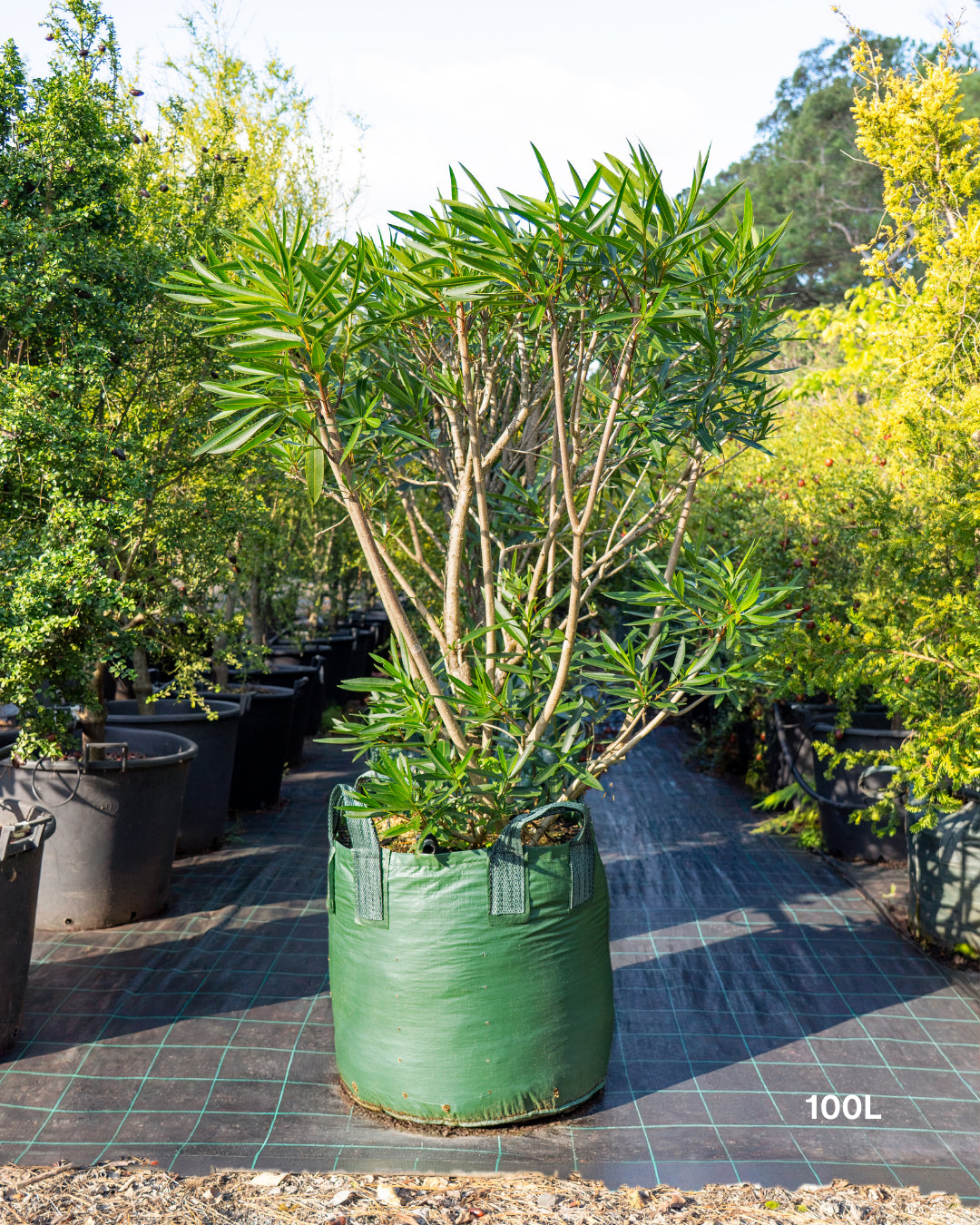
100LApprox. height: Enquire for current heights$1,230.00

Height guide & disclaimer

Height guide disclaimer: Height ranges are approximate only. As living products, plant heights naturally vary between individual plants, batches, and seasons. No guarantee is given that supplied plants will fall within the stated range. If minimum heights are required, you must confirm current batch heights with Evergreen Trees Direct prior to purchase. Variation in height is normal and is not grounds for return, refund, replacement, or compensation.

Subtotal before savings$0.00

See also

Not sure about Ruby Embers Oleander? See also Cottonwood ↗ or Ebbinge’s Silverberry ↗

Perfect pairs

Most customers usually also buy

Total A$0.00

Ask a question

The fields marked * are required.

Not sure how many trees you need?

Plan your hedge

Enter the length of your boundary, then choose how closely you want to plant.

Choose your planting spacing

Enter your boundary length to see how many trees you need.

Measure only the boundary you intend to plant—exclude gates and gaps. Spacing is centre to centre. Quantities are rounded up for one row, allowing roughly half the spacing at each end. Site conditions and pruning affect the final hedge.

Compare trees

Choose two trees and compare the same pot size.

    About Nerium oleander 'Ruby Embers'

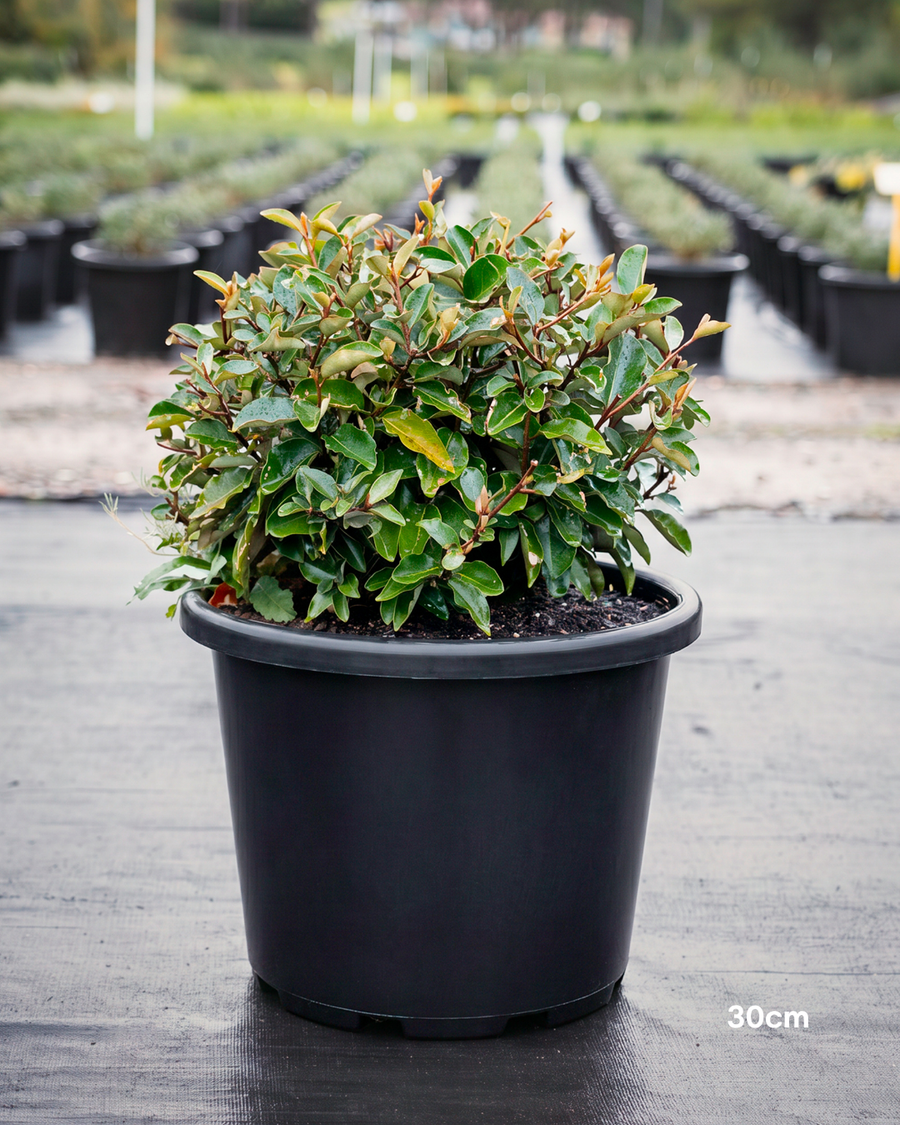
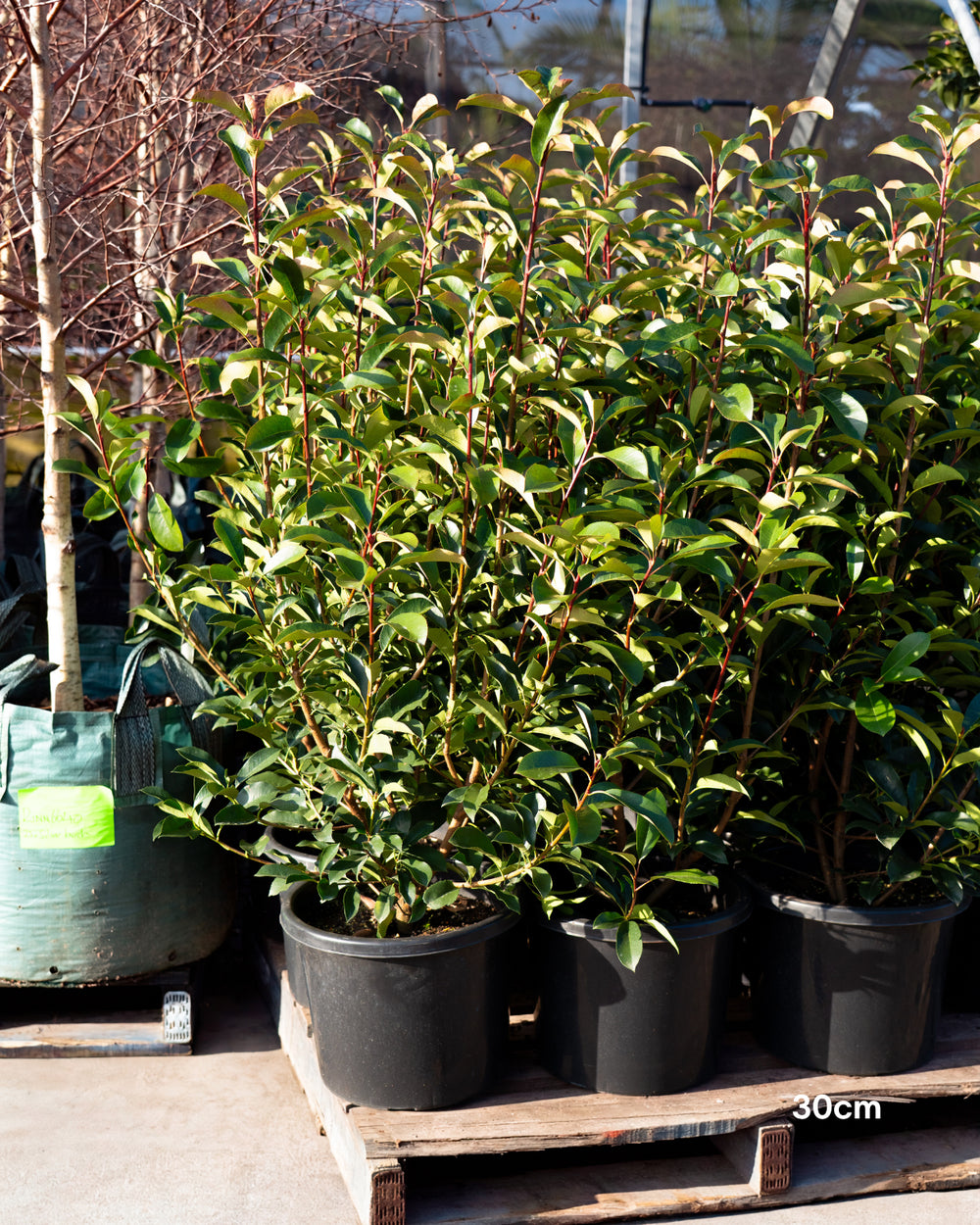
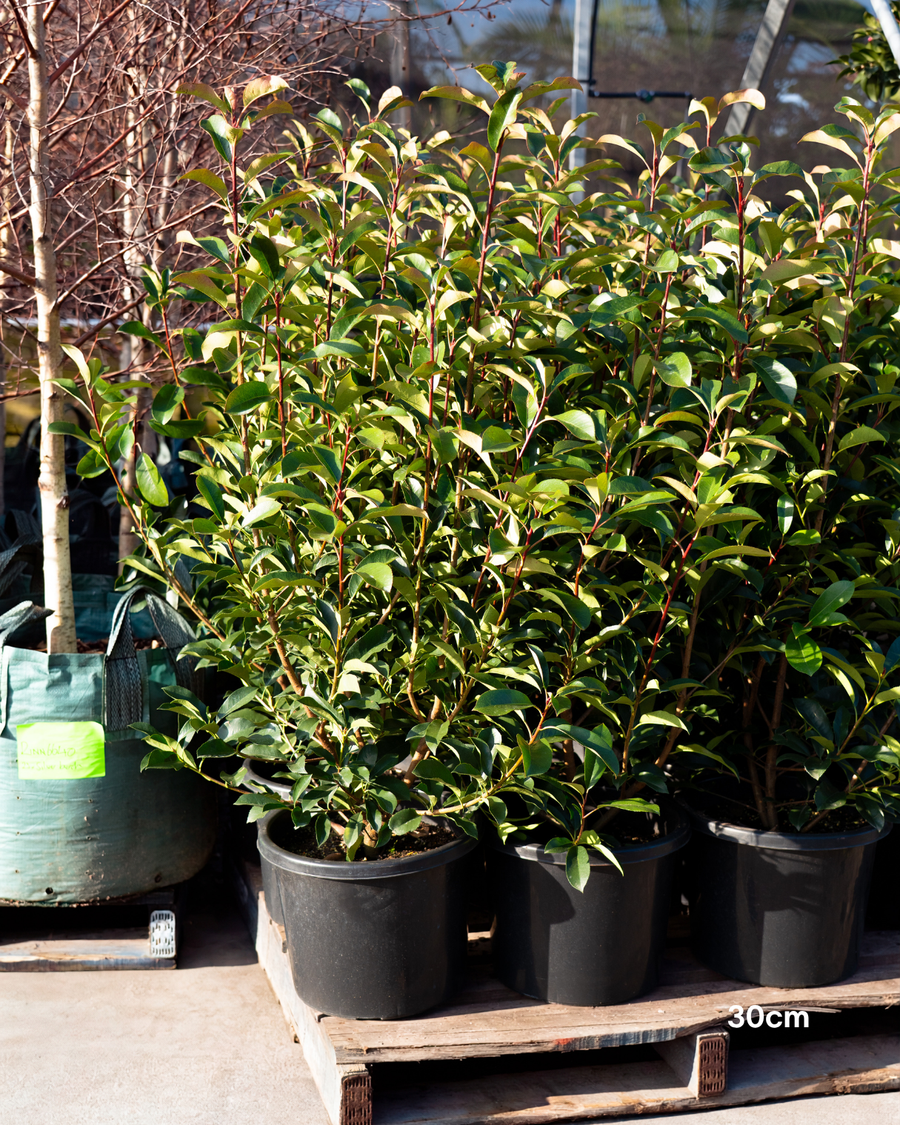
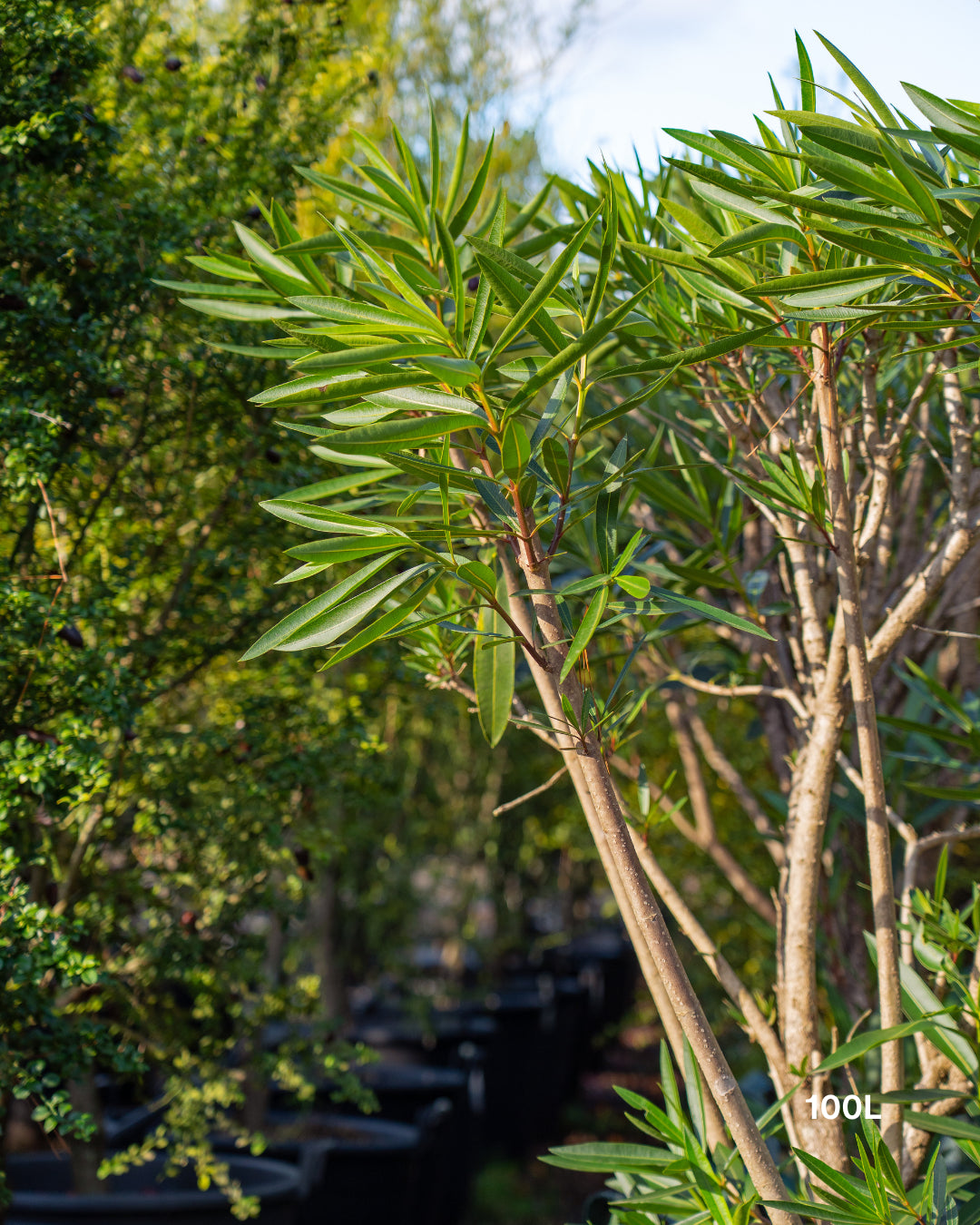
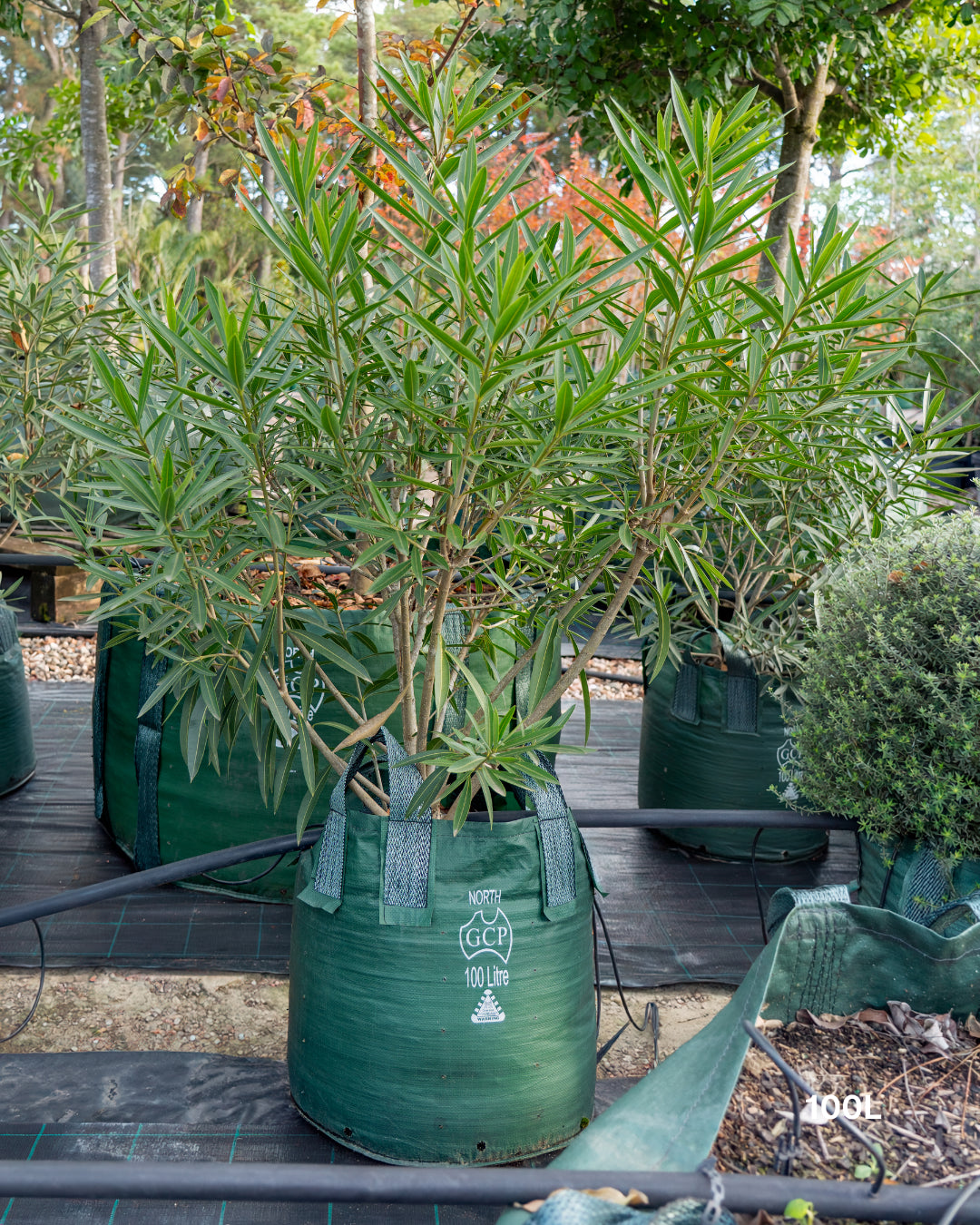
    Nerium oleander 'Ruby Embers' is an evergreen shrub grown for its deep ruby-red flowers, produced heavily from late spring through to autumn. The narrow leathery grey-green foliage is dense to the ground, which is why oleander is used as much for screening as for flower.

    It is one of the toughest flowering shrubs available. Once established it handles drought, heat, salt wind, poor soil and roadside conditions with almost no attention, which is why it appears so often in unirrigated median strips and coastal plantings. Full sun gives the heaviest flowering. Mature plants reach 3 to 4 metres tall and 2 to 3 metres wide, and clip readily to a lower hedge.

    Important: all parts of Nerium oleander are highly toxic if eaten, to people, dogs, cats and livestock. Smoke from burning prunings is also toxic. It is not a suitable choice for properties with grazing animals, or gardens where young children or pets are unsupervised. Wear gloves when pruning and dispose of clippings in green waste rather than burning them. Where those conditions rule it out, ask us and we will suggest a safe alternative that does the same job.

    Frequently Asked Questions

    About Nerium oleander 'Ruby Embers'

    Is oleander poisonous?

    Yes. All parts of Nerium oleander are highly toxic if eaten, including leaves, stems, flowers and sap, and the toxicity is not reduced by drying. Smoke from burning prunings is also dangerous. Avoid it entirely on properties with grazing animals, and think carefully before planting where young children or pets are unsupervised. Wear gloves when pruning and put clippings in green waste, never on a fire. If ingestion is suspected, contact a doctor, vet or the Poisons Information Centre immediately.

    How big does 'Ruby Embers' grow?

    Mature plants reach approximately 3 to 4 metres tall and 2 to 3 metres wide, forming a dense upright shrub. Growth is moderate to fast at 30 to 60 centimetres per year, and it can be pruned to hold a lower hedge at 1.5 to 2 metres.

    When does it flower?

    'Ruby Embers' flowers heavily from late spring through summer and into autumn, typically November to April. Deep ruby-red flowers are carried in clusters at the branch tips. Flowering is longest and heaviest in full sun.

    How drought tolerant is oleander?

    Exceptionally. Once established it survives on rainfall alone across most of Australia, which is why it is so widely used in unirrigated roadside and median plantings. Water regularly through the first summer to establish, then only in extended dry spells.

    Is it suitable for coastal gardens?

    Yes. Oleander is one of the most salt-tolerant flowering shrubs available and handles direct coastal exposure and salt wind without burning. It also copes with sandy soils and reflected heat from paving and walls.

    Can oleander be used as a hedge?

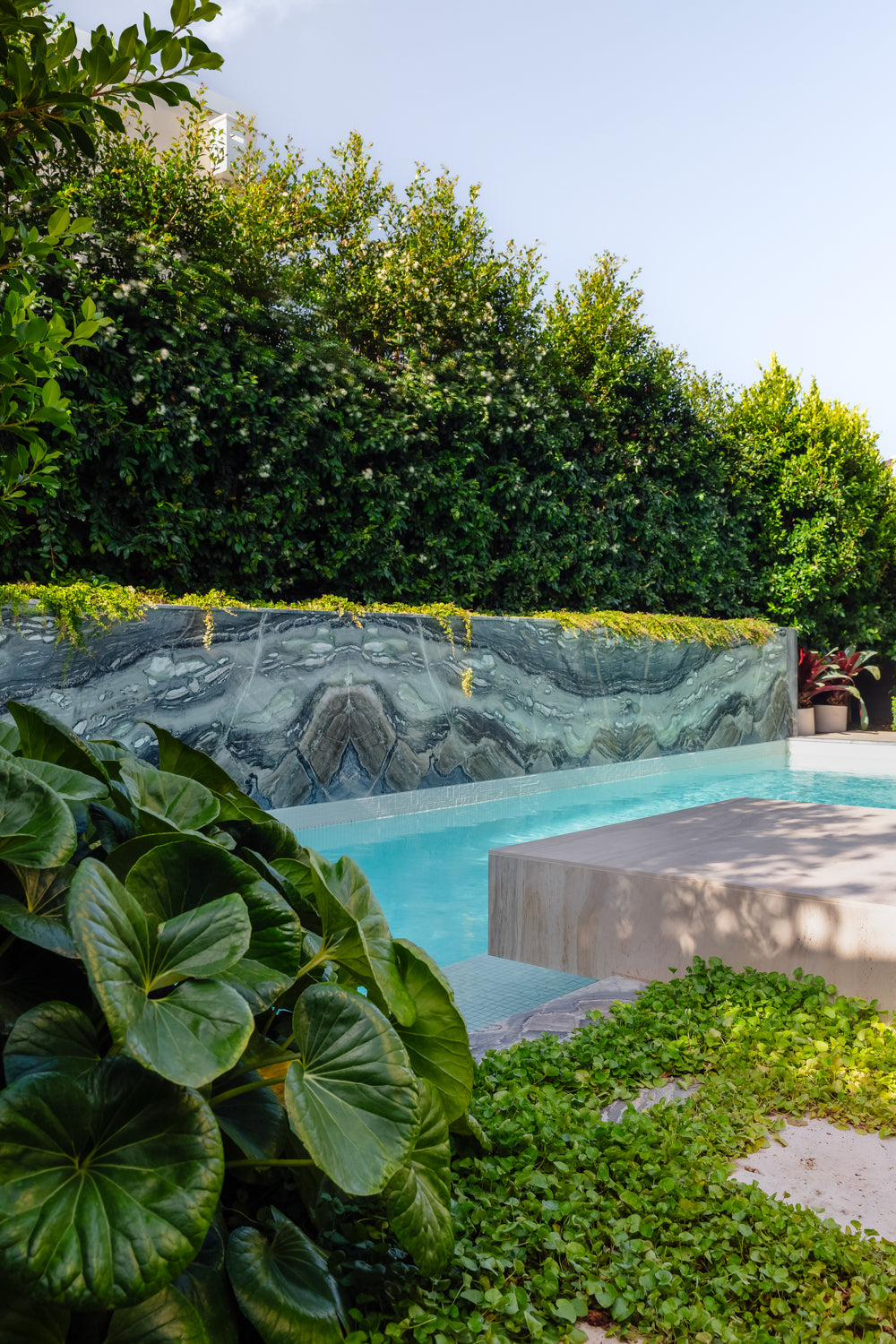
    Yes. It holds foliage low to the ground and responds well to pruning, making it a reliable informal screen or clipped hedge. Plant 1.5 metres apart for a dense screen. Prune after the main flowering flush, wearing gloves.

    Is it frost tolerant?

    It handles light to moderate frost once established, but is best avoided in heavy inland frost districts. It performs strongly across warm temperate, subtropical and coastal Australia, and in hot dry inland areas where few other flowering shrubs cope.

    How do I care for it?

    Very little is needed. Water through the first summer, then only in extended dry periods. Prune after the main flowering flush to keep it dense, always wearing gloves and long sleeves. Feed lightly in early spring if growth is slow. Dispose of all prunings in green waste and never burn them.

    Key growing information
    Mature height3m to 4m
    Mature width2m to 3m
    PositionFull Sun
    Growth per year30cm to 60cm per year
    FrostFrost Tolerant
    FoliageEvergreen (foliage year round)
    FormUpright · Dense
    UsesScreening or Privacy · Shrubs · Council or Civic Landscapes · Feature Tree
    Rootball width & depthView dimensions →
    Foliage

    Evergreen (foliage year round)

    Position
    • Full Sun
    Form
    • Upright
    • Dense
    Use
    • Screening or Privacy
    • Shrubs
    • Council or Civic Landscapes
    • Feature Tree
    Mature height
    3m to 4m
    Mature width
    2m to 3m
    Nerium oleander 'Ruby Embers' – Ruby Embers Oleander

    Planting Information

    How To Plant Your Nerium oleander 'Ruby Embers' – Ruby Embers Oleander

    Site: Full sun for heaviest flowering, in any free-draining soil. Avoid positions accessible to grazing animals or unsupervised young children.

    Hole: Dig twice as wide as the root ball and the same depth.

    Planting: Position level with the surrounding soil, backfill gently, firm in and water deeply. Wear gloves when handling, as the sap is an irritant.

    Mulch: Apply a 50 to 75 mm layer of organic mulch over the root zone, keeping it clear of the stems.
    Recommended Planting Spacing For Your Nerium oleander 'Ruby Embers' – Ruby Embers Oleander

    Informal screen: 1.5 metres apart for a dense flowering screen.

    Clipped hedge: 1 to 1.2 metres apart, held at 1.5 to 2 metres.

    Feature planting: 2 to 3 metres apart as standalone specimens.

    Nerium oleander 'Ruby Embers' – Ruby Embers Oleander is expected to grow 30cm to 60cm per year.

    • Medium Growth Rate

    Long Term Care For Your Nerium oleander 'Ruby Embers' – Ruby Embers Oleander

    Watering: Water regularly through the first summer to establish. After that, only during extended dry periods.

    Pruning: Prune after the main flowering flush to maintain density and shape. Always wear gloves and long sleeves, as the sap is toxic and irritant.

    Disposal: Put all prunings in green waste. Never burn oleander — the smoke is toxic.

    Fertilising: Apply a slow-release general fertiliser in early spring if growth is slow. Established plants rarely need feeding.

    Pest and disease: Very hardy. Occasional scale or aphid in humid conditions is the main issue.

    Planting Your Nerium oleander 'Ruby Embers' – Ruby Embers Oleander in Different Soil

    Sandy soils: Ideal, including coastal sand profiles.

    Loam soils: Excellent, producing the strongest growth and flowering.

    Clay soils: Tolerated provided drainage is adequate. Improve heavy clay with gypsum and coarse compost, or plant on a raised mound.

    pH preference: Neutral to alkaline. Oleander is one of the better choices for limestone and alkaline coastal soils.

    Nerium oleander 'Ruby Embers' – Ruby Embers Oleander

    Uses in my Garden

    Uses in my Garden

    • Screening or Privacy
    • Shrubs
    • Council or Civic Landscapes
    • Feature Tree

    Nerium oleander 'Ruby Embers' – Ruby Embers Oleander works in an:

    • Coastal Garden – relaxed, seaside feel with hardy, textural plants.
    • Mediterranean Style Garden – timeless courtyard look with stone, pots, and bold greenery.
    • Low-maintenance Garden – resilient choices for easy care and year-round appeal.
    • Modern Garden – sleek, minimal, and design-led planting.

    Is Nerium oleander 'Ruby Embers' – Ruby Embers Oleander Evergreen or Deciduous?

    Nerium oleander 'Ruby Embers' – Ruby Embers Oleander is an Evergreen (foliage year round) Tree

    Mature Height & Width

    Mature Height: 3m to 4m

    Mature Width: 2m to 3m

    Nerium oleander 'Ruby Embers' – Ruby Embers Oleander is expected to grow 30cm to 60cm per year.

    Growth Rate of Nerium oleander 'Ruby Embers' – Ruby Embers Oleander

    Nerium oleander 'Ruby Embers' – Ruby Embers Oleander is expected to grow 30cm to 60cm per year.

    They are considered to have a:

    • Medium Growth Rate

    Frost Tolerance & Ideal Climate to plant Nerium oleander 'Ruby Embers' – Ruby Embers Oleander

    Is Nerium oleander 'Ruby Embers' – Ruby Embers Oleander frost tolerant?

    Nerium oleander 'Ruby Embers' – Ruby Embers Oleander is Frost Tolerant – Can handle light to moderate frost once established.

    Does Nerium oleander 'Ruby Embers' – Ruby Embers Oleander Flower?

    Nerium oleander 'Ruby Embers' produces clusters of deep ruby-red flowers at the branch tips from late spring through summer and into autumn, typically November to April. Flowering is heaviest and longest in full sun, and the display continues through heat and dry conditions that stop most other flowering shrubs.

    Does Nerium oleander 'Ruby Embers' – Ruby Embers Oleander flower?

    • Yes - Flowers

    Flowering Period:

    • Spring
    • Summer
    • Autumn

    Flower Type:

    • Clustered

    Flower Colour:

    Red

    Is Nerium oleander 'Ruby Embers' – Ruby Embers Oleander an Australian Native Tree?

    No

    Nerium oleander 'Ruby Embers' – Ruby Embers Oleander is Native to Mediterranean basin through to southern Asia, where Nerium oleander grows naturally along seasonal watercourses and dry stony ground. 'Ruby Embers' is a cultivar selected for its deep ruby-red flowers and long flowering season.

    What is the Wildlife Value of Nerium oleander 'Ruby Embers' – Ruby Embers Oleander ?

    Nerium oleander is not grown for wildlife value. All parts of the plant are highly toxic to animals if eaten, and it should not be planted where livestock or grazing animals have access. The dense evergreen canopy does provide shelter for small birds, but it is not a food source.

    How much Sunlight does Nerium oleander 'Ruby Embers' – Ruby Embers Oleander need?

    Nerium oleander 'Ruby Embers' – Ruby Embers Oleander will thrive best in:

    • Full Sun

    Preferred Soil?

    Nerium oleander performs in almost any free-draining soil, from sand through to loam, and tolerates neutral to alkaline conditions well. It copes with poor and rocky ground where more demanding shrubs fail. The only real requirement is drainage, as persistently waterlogged soil will cause root rot.

    Is Nerium oleander 'Ruby Embers' – Ruby Embers Oleander Drought Tolerant?

    Is Nerium oleander 'Ruby Embers' – Ruby Embers Oleander Drought tolerant?

    Exceptional. Through establishment 'Ruby Embers' benefits from regular watering to build a strong root system, but once established it survives on rainfall alone across most of Australia. This is why oleander is used so widely in unirrigated median strips, roadside plantings and hot coastal positions where little else flowers reliably.

    Nerium oleander 'Ruby Embers' – Ruby Embers Oleander

    Frequently Asked Questions

    Is oleander poisonous?

    Yes. All parts of Nerium oleander are highly toxic if eaten, including leaves, stems, flowers and sap, and the toxicity is not reduced by drying. Smoke from burning prunings is also dangerous. Avoid it entirely on properties with grazing animals, and think carefully before planting where young children or pets are unsupervised. Wear gloves when pruning and put clippings in green waste, never on a fire. If ingestion is suspected, contact a doctor, vet or the Poisons Information Centre immediately.

    How big does 'Ruby Embers' grow?

    Mature plants reach approximately 3 to 4 metres tall and 2 to 3 metres wide, forming a dense upright shrub. Growth is moderate to fast at 30 to 60 centimetres per year, and it can be pruned to hold a lower hedge at 1.5 to 2 metres.

    When does it flower?

    'Ruby Embers' flowers heavily from late spring through summer and into autumn, typically November to April. Deep ruby-red flowers are carried in clusters at the branch tips. Flowering is longest and heaviest in full sun.

    How drought tolerant is oleander?

    Exceptionally. Once established it survives on rainfall alone across most of Australia, which is why it is so widely used in unirrigated roadside and median plantings. Water regularly through the first summer to establish, then only in extended dry spells.

    Is it suitable for coastal gardens?

    Yes. Oleander is one of the most salt-tolerant flowering shrubs available and handles direct coastal exposure and salt wind without burning. It also copes with sandy soils and reflected heat from paving and walls.

    Can oleander be used as a hedge?

    Yes. It holds foliage low to the ground and responds well to pruning, making it a reliable informal screen or clipped hedge. Plant 1.5 metres apart for a dense screen. Prune after the main flowering flush, wearing gloves.

    Is it frost tolerant?

    It handles light to moderate frost once established, but is best avoided in heavy inland frost districts. It performs strongly across warm temperate, subtropical and coastal Australia, and in hot dry inland areas where few other flowering shrubs cope.

    How do I care for it?

    Very little is needed. Water through the first summer, then only in extended dry periods. Prune after the main flowering flush to keep it dense, always wearing gloves and long sleeves. Feed lightly in early spring if growth is slow. Dispose of all prunings in green waste and never burn them.

    Nerium oleander 'Ruby Embers' – Ruby Embers Oleander

    Delivery & help

    Nerium oleander 'Ruby Embers' – Ruby Embers Oleander

    Pot sizes & dimensions

    Pot / bag size Width Depth
    30cm Pot33cm30cm
    40cm/45L Pot44cm41.5cm
    50cm Pot / 70L Pot55cm41.8cm
    100L Bag50.6cm52.8cm
    150L Bag66cm55cm
    200L Bag71.5cm60.5cm
    300L Bag88cm63.8cm
    400L Bag99cm66cm
    500L Bag122cm66cm
    750L Bag134cm69cm
    1000L Bag146.3cm71.5cm
    2000L Bag176cm82.5cm

    General planting reference. Container dimensions can vary by supplier and batch.

    Compare sizes side by side

    * Heights are approximate and vary between individual trees.

    100L

    Enquire for current heights

    $1,230.00

    They’re loved for their Deep ruby-red flowers from late spring through to autumn on one of the toughest flowering shrubs available, handling drought, heat, salt wind and poor soil with almost no attention. Note: all parts are highly toxic if eaten.

    Nerium oleander 'Ruby Embers' – Ruby Embers Oleander

    Grown across more than 100 acres, and held to one standard: premium A+ grade stock.

    Perfect pairs

    Lomandra longifolia 'Tanika'®

    Lomandra longifolia 'Tanika'® (LM300) is one of the most widely planted Australian native ornamental grasses, valued for its fine bright green strappy foliage, neat compact habit and exceptional resilience in tough landscaping conditions. A naturally compact and finer-foliaged form of the species, 'Tanika' holds a refined mounding shape...

    Read product details

    Lomandra longifolia 'Tanika'® (LM300) is one of the most widely planted Australian native ornamental grasses, valued for its fine bright green strappy foliage, neat compact habit and exceptional resilience in tough landscaping conditions. A naturally compact and finer-foliaged form of the species, 'Tanika' holds a refined mounding shape without the coarser texture of standard Lomandra longifolia.

    It performs reliably in full sun through to part shade, tolerates drought, frost, coastal salt and poor soils, and produces small yellow flower spikes through spring and summer that add a soft seasonal lift. At a mature size of around 60 cm tall by 60 cm wide, 'Tanika' is one of the most useful Australian natives for mass planting, modern garden borders, low-maintenance landscapes and feature pot planting.

    As a compact evergreen Australian native grass for native, modern, coastal, contemporary and low-maintenance gardens, in mass plantings, borders and feature pot displays, Lomandra longifolia 'Tanika' brings fine textural foliage, year-round form and exceptional toughness to almost any garden brief.

    Frequently Asked Questions

    About Lomandra longifolia 'Tanika'

    How big does Lomandra 'Tanika' grow?

    Lomandra 'Tanika' grows to a compact mature size of around 60 cm tall by 60 cm wide, forming a neat rounded mound of fine green strappy foliage. It is significantly more compact and finer-textured than the standard Lomandra longifolia, making it the preferred form for refined garden settings.

    Where should I plant Lomandra 'Tanika'?

    Lomandra 'Tanika' grows well in full sun through to part shade and tolerates a wide range of soil types from sandy through to clay. It is excellent for mass planting, low borders, coastal exposed positions and contemporary garden borders, and performs reliably in both garden beds and pots.

    Is Lomandra 'Tanika' drought tolerant?

    Yes. Lomandra 'Tanika' is highly drought tolerant once established and is one of the most reliable Australian natives for low-water gardens. Through establishment it benefits from regular watering, then transitions to natural rainfall in most Australian climates.

    Is it frost tolerant?

    Yes. Lomandra 'Tanika' is frost tolerant and performs reliably across cool, temperate and warm Australian climates. The fine evergreen foliage holds its colour through winter with no protection required.

    Does Lomandra 'Tanika' flower?

    Yes. Lomandra 'Tanika' produces small yellow flower spikes through spring and into summer, sitting just above the foliage. The flowers are softly fragrant and provide a delicate seasonal lift, though the plant is grown primarily for its foliage form rather than its flowering.

    How do I care for Lomandra 'Tanika'?

    Lomandra 'Tanika' is exceptionally low maintenance. Water through establishment, then sparingly. Every 2 to 3 years, give plants a hard tidy in late winter by removing old foliage to encourage fresh growth. No regular pruning is otherwise required.

    Can it be used for mass planting?

    Yes – mass planting is one of the most successful uses for Lomandra 'Tanika'. Planted on a 50 to 60 cm spacing the plants knit together into a refined textural carpet within 12 to 18 months, providing a contemporary and resilient alternative to traditional groundcovers and grasses.

    youtube Load video:

    Evergreen Trees Direct Has Been Featured In:

    Perfect Substitutes for Nerium oleander 'Ruby Embers' – Ruby Embers Oleander

    Follow Us On Instagram

    @evergreentreesdirect ↗
    Evergreen Trees DirectEvergreen Trees DirectEvergreen Trees DirectEvergreen Trees DirectEvergreen Trees Direct
    youtube Load video:

    Shopping cart (0)

    Complete your order

    Freight added at checkout, based on your delivery address and order quantities.

    Checkout