- Mature height
- 5m to 8m
- Mature width
- 4m to 6m
Magnolia denudata, the Yulan Magnolia, is a deciduous tree from central China carrying goblet-shaped, creamy white flowers on bare branches in late winter and early spring. The flowers are lightly fragrant. It is also sold as the White Lily Magnolia or Lily Tree, and has been grown in Chinese gardens for well over a thousand years.
It prefers full sun to part shade and rich, moist, well drained soil with plenty of organic matter. Cool temperate and warm temperate districts suit it best. It handles light to moderate frost once established, though a sheltered spot protects the early flowers from wind and harsh afternoon sun. Growth is slow to moderate at 30 to 60 centimetres a year.
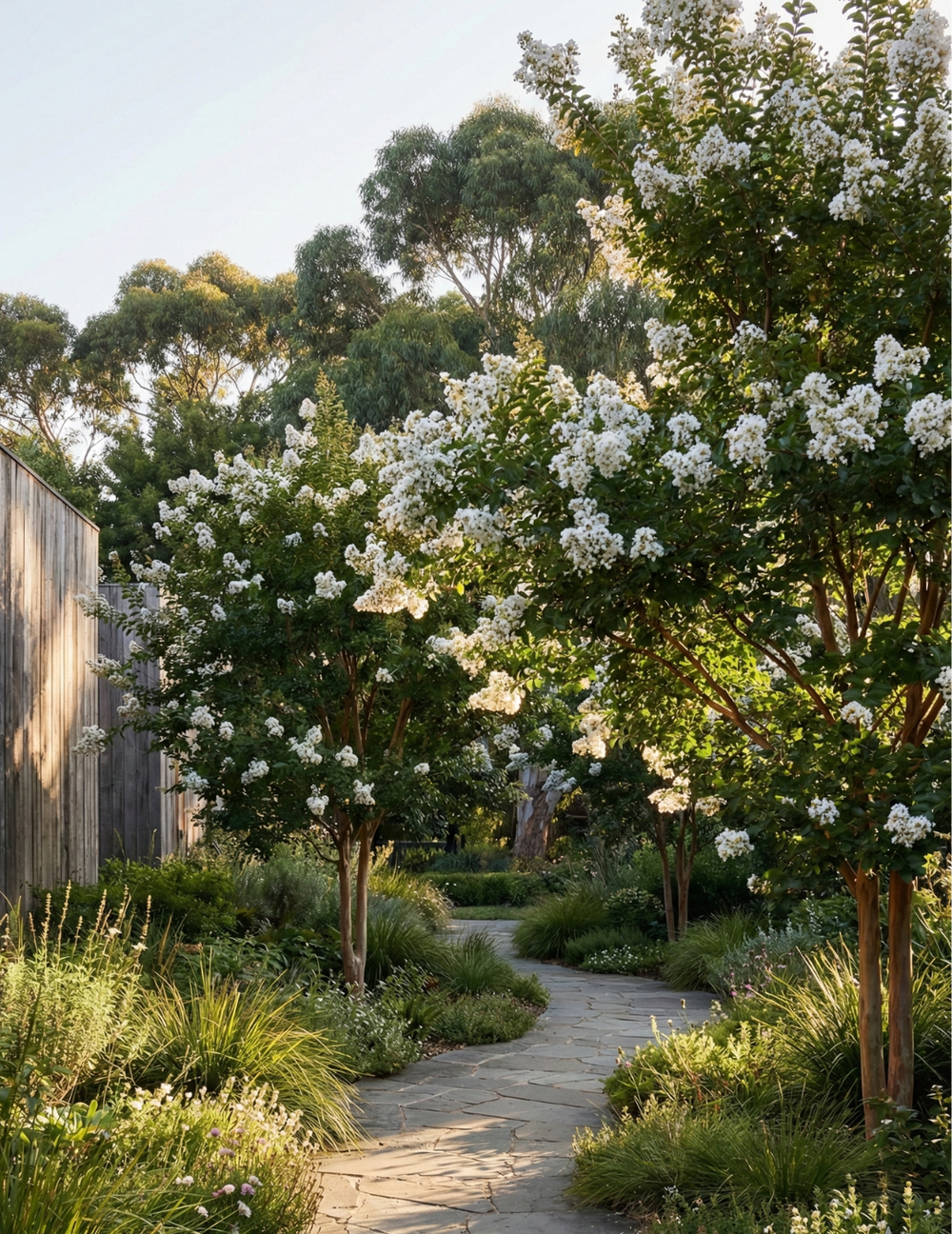
Mature trees reach 5 to 8 metres tall and 4 to 6 metres wide, so allow room in a front garden, a lawn or a large border. It reads well in formal, classic and cottage schemes, in courtyards and heritage gardens, and in civic planting where a winter-flowering tree lifts an otherwise bare season. The display arrives every year without fuss, and the bare branch framework carries the garden through the colder months.
Frequently Asked Questions
About Yulan Magnolia
What is the Yulan Magnolia?
It is Magnolia denudata, a deciduous Chinese tree carrying goblet shaped creamy white flowers on bare branches in late winter and early spring. It is also sold as the White Lily Magnolia or Lily Tree. The flowers are lightly fragrant and appear before any foliage. It is one of the oldest magnolias in cultivation and is valued for the reliability of its display.
How big does Magnolia denudata grow?
Mature trees typically reach 5 to 8 metres tall and 4 to 6 metres wide, forming a broad, rounded canopy. Growth is slow to moderate, so it takes many years to fill that space. Allow 3 to 4 metres between it and any structure, and more if you want the full spreading shape.
How fast does it grow?
Around 30 to 60 centimetres a year in good conditions, which is steady rather than rapid. Water and soil quality drive it more than anything else. A well mulched tree with reliable moisture through summer sits at the upper end of that range, while one in compacted or dry ground will be slower.
When does it flower?
Late winter into early spring, generally August to September in temperate districts, with flowering earlier in warm gardens and later in cold ones. Blooms open on leafless branches over two to three weeks. Because it flowers so early, wind and heavy rain during that window will shorten the display.
Is it frost tolerant?
Yes, it handles light to moderate frost once established and is well suited to cool temperate gardens. The flowers are more vulnerable than the wood, so an early frost can mark open blooms. A position sheltered from cold wind and harsh afternoon sun gives the best result year after year.
Is it evergreen or deciduous?
Deciduous. It loses its leaves through autumn and stands bare over winter, which is exactly what makes the flowering effective, since nothing competes with the blooms. The bare branch framework is attractive in its own right. Soft green leaves emerge after the flowers finish and hold until the following autumn.
Does it have invasive roots?
No. Magnolia roots are fleshy and relatively shallow but they are not aggressive and rarely cause damage to paving, pipes or footings. The practical issue is the opposite, since the shallow root system dries out quickly and dislikes disturbance. Keep digging and cultivation under the canopy to a minimum.
Where does it grow best in Australia?
It performs best in cool temperate and warm temperate districts, so Victoria, Tasmania, the ACT, the New South Wales tablelands, Adelaide and cooler parts of southern Queensland all suit it. Sheltered subtropical gardens can grow it with adequate moisture. It is not suited to hot arid inland areas or heavy tropical humidity.
How do I prune it?
Very little pruning is needed. Remove dead, damaged or crossing branches in late spring after flowering, cutting back to a branch junction rather than leaving stubs. Magnolias heal slowly, so avoid large cuts and never top the tree. Shape the framework in the first few years and then leave it be.
How do I care for it?
Plant in rich, moist, well drained soil with plenty of organic matter and top up the mulch each year. Water deeply through summer, especially in the first three years, since the roots are shallow and dry out quickly. Feed in early spring with an organic fertiliser and keep the tree out of strong wind.