- Mature height
- 10m to 20m
- Mature width
- 8m to 12m
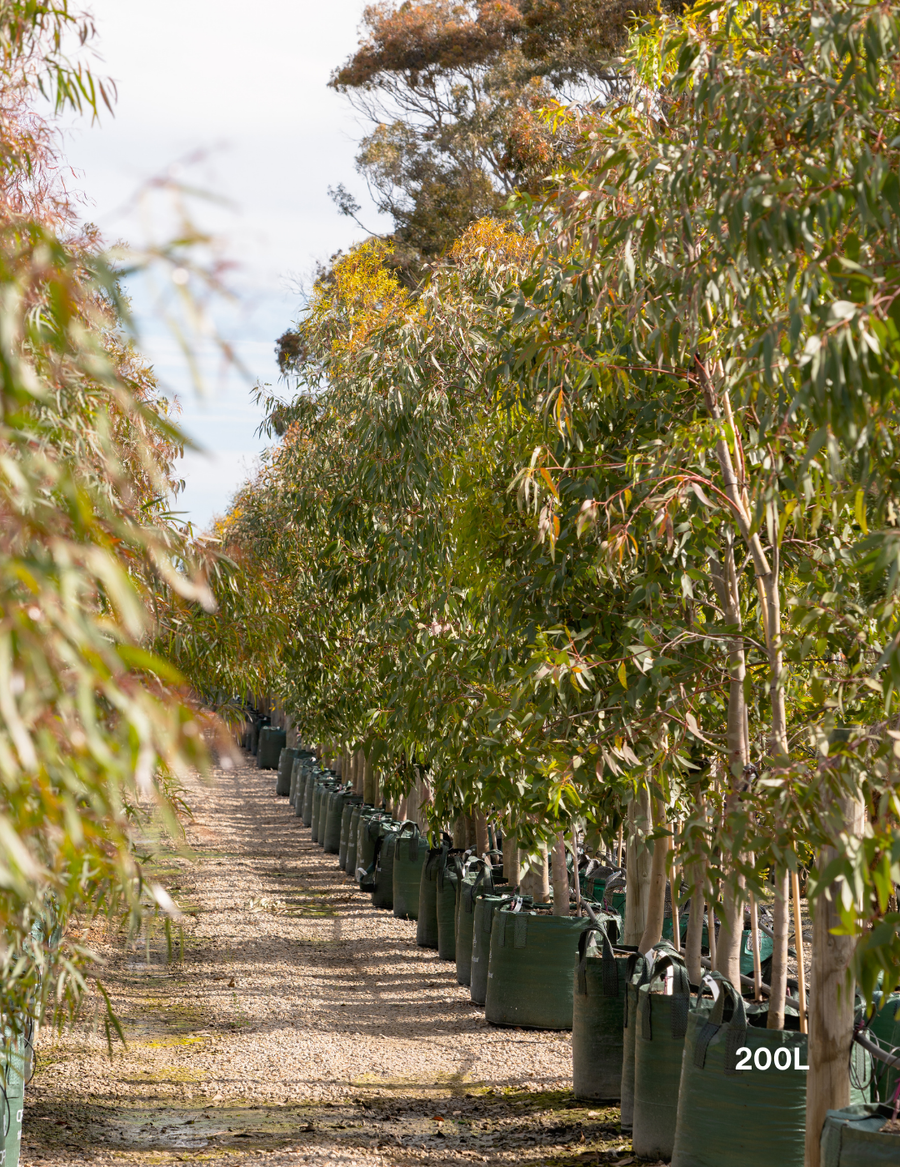
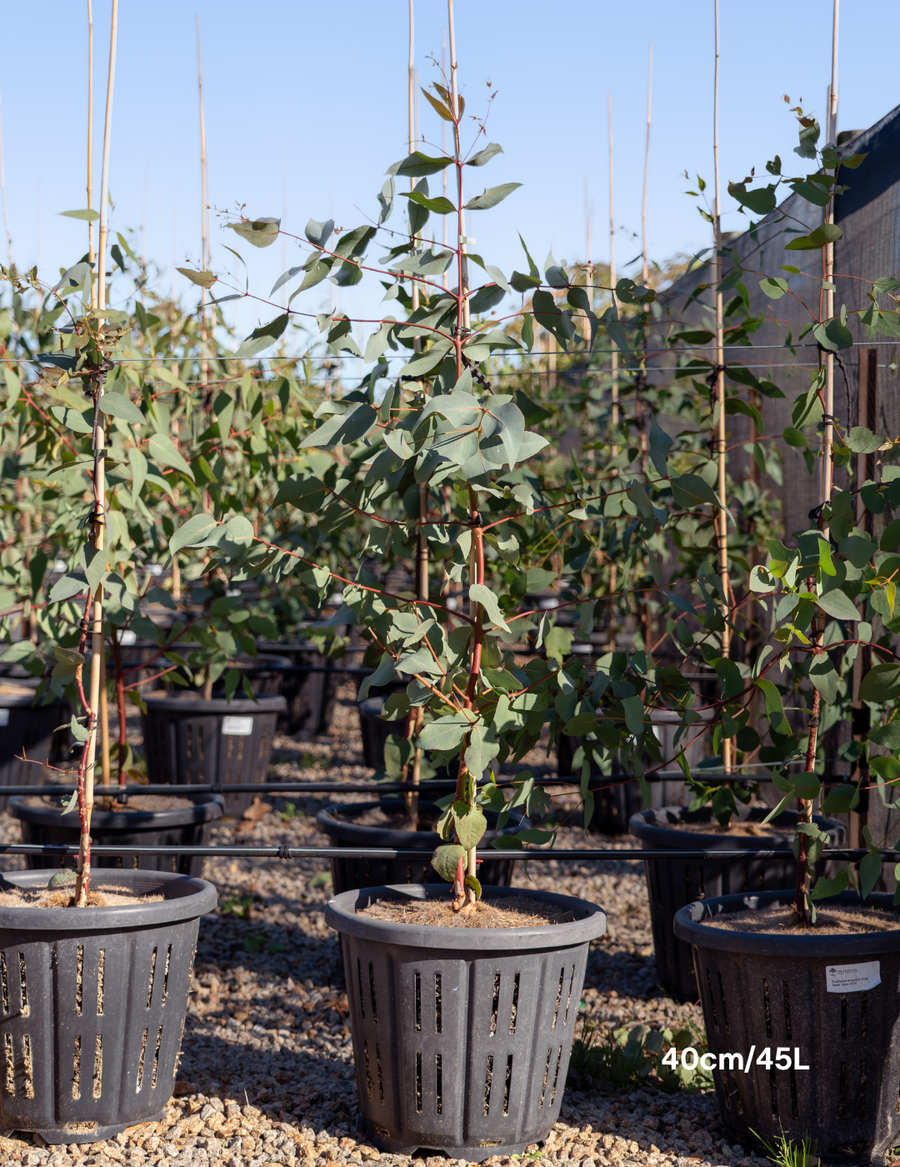
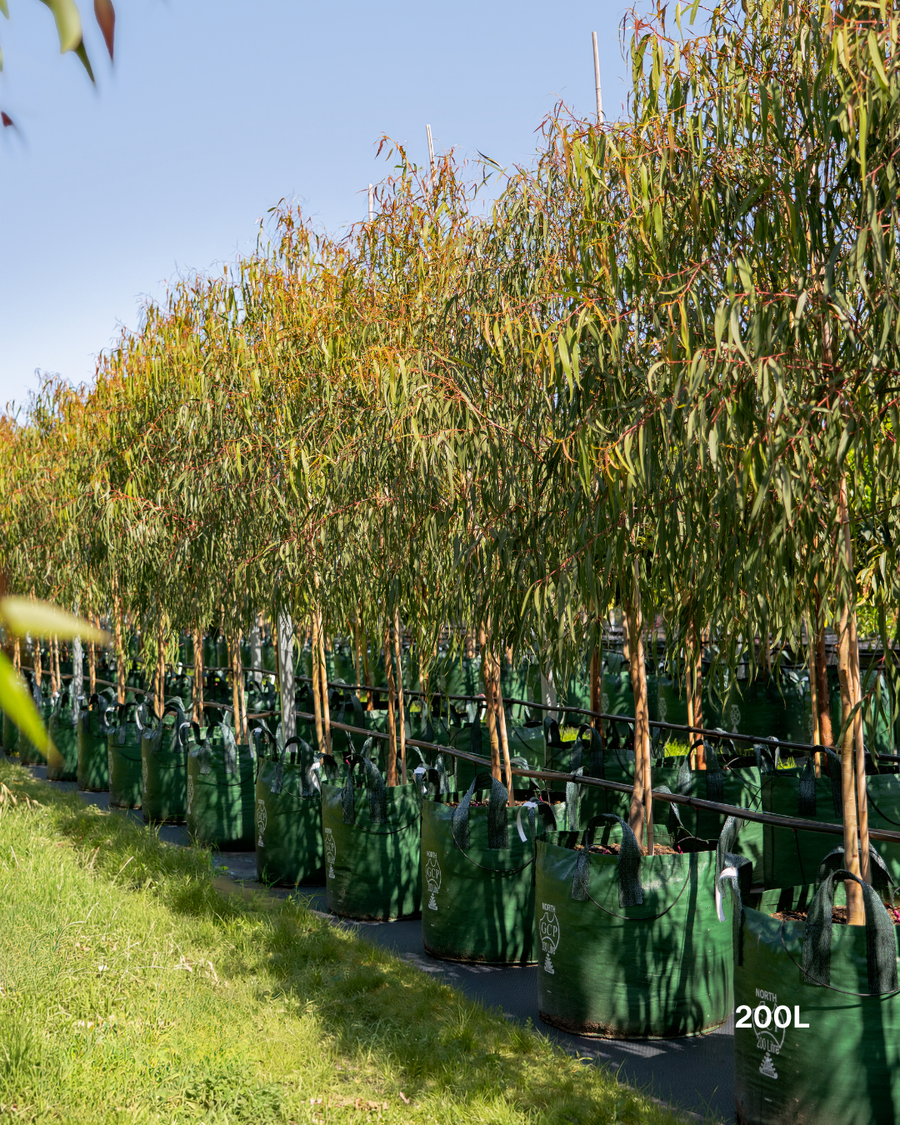
Eucalyptus occidentalis, the Flat Topped Yate or Swamp Yate, is a fast, upright tree from southern Western Australia. It carries a dense rounded to flat-topped crown of broad green leaves above mostly smooth pale bark, with rougher bark low on the trunk. Cream flowers open from long horn-shaped buds.
It handles what most trees will not: waterlogged ground, saline soil, sand and prolonged drought. Full sun is essential. It is frost tolerant through light to moderate frost once established. Growth is fast at 50 to 100 centimetres a year. It performs across southern Western Australia, South Australia, Victoria and the drier inland.
Farmers plant it for salinity control and shelterbelts on discharge sites where salt and waterlogging have killed everything else. It also works as a shade tree, an informal avenue and a screen on rural blocks. At 15 to 20 metres tall and 8 to 10 metres wide, it covers ground quickly.
Frequently Asked Questions
About Flat Topped Yate
What is Flat Topped Yate?
Eucalyptus occidentalis, known as Flat Topped Yate or Swamp Yate, is an evergreen tree from the south coast and wheatbelt of Western Australia. It has a dense crown, broad leaves and mostly smooth pale bark. It is best known for tolerating salinity and waterlogging, which makes it a workhorse of farm revegetation.
How big does Eucalyptus occidentalis grow?
It reaches 15 to 20 metres tall and 8 to 10 metres wide, forming a broad crown that casts genuine shade. It gets there quickly, so allow for the full spread from the start. It is a rural and large-property tree rather than a suburban one, and it wants clearance from buildings and fence lines.
Will it grow in salty or waterlogged soil?
Yes, and that is its main advantage. It tolerates moderately saline soils and ground that waterlogs seasonally, and it is a standard species for treating dryland salinity and recharge areas in Western Australia and South Australia. It also handles sand and poor infertile ground. Extreme salt levels will still limit it, so match it to the site.
How fast does Flat Topped Yate grow?
It is fast, putting on 50 to 100 centimetres a year in reasonable conditions, and it holds that pace better than most species on difficult sites. Trees planted for shelter give useful protection within about four to five years. Water through the first two summers to get the root system established and the growth follows.
When does it flower?
Creamy yellow flowers appear through autumn and winter, roughly April to August, from distinctive long horn-shaped buds. Flowering at that time of year matters, because nectar is scarce over the cold months and the tree draws honeyeaters, wattlebirds and bees when little else is out. Established trees flower heavily most years.
Is Flat Topped Yate frost tolerant?
It is frost tolerant and handles light to moderate frost once established, which covers most of southern Australia. It is not a high-country tree, so in districts with severe repeated frost protect young plants through their first winters or choose a frost-hardy species. Established trees in typical southern winters are untroubled.
How do I care for Flat Topped Yate?
Water regularly through the first two summers even though it tolerates dry conditions later, since establishment is when the tree is most at risk. Mulch the root zone. No fertiliser is needed on most sites. Prune early for a single leader, and after that only to remove dead or crossing limbs.