Doryanthes excelsa – Gymea Lily
Couldn't load pickup availability
Current Stock Height Guides
Height guide disclaimer: Height ranges are approximate only. As living products, plant heights naturally vary between individual plants, batches, and seasons. No guarantee is given that supplied plants will fall within the stated range. If minimum heights are required, you mustconfirm current batch heights with Evergreen Trees Direct prior to purchase. Variation in height is normal and is not grounds for return, refund, replacement, or compensation.
Mature Height & Width
Mature Height: 1.5m to 3m foliage, 5m to 6m in flower
Mature Width: 2m to 3m
Doryanthes excelsa – Gymea Lily is expected to grow 30cm to 60cm per year (moderate).
Root Ball Dimensions
Use this as a reference when digging your planting hole. We recommend digging at least 10% wider than the dimensions below to encourage strong root development.
- 30cm Pot: 33cm (W) × 30cm (D)
- 40cm/45L Pot: 44cm (W) × 41.5cm (D)
- 50cm Pot / 70L Pot: 55cm (W) × 41.8cm (D)
- 100L Bag: 50.6cm (W) × 52.8cm (D)
- 150L Bag: 66cm (W) × 55cm (D)
- 200L Bag: 71.5cm (W) × 60.5cm (D)
- 300L Bag: 88cm (W) × 63.8cm (D)
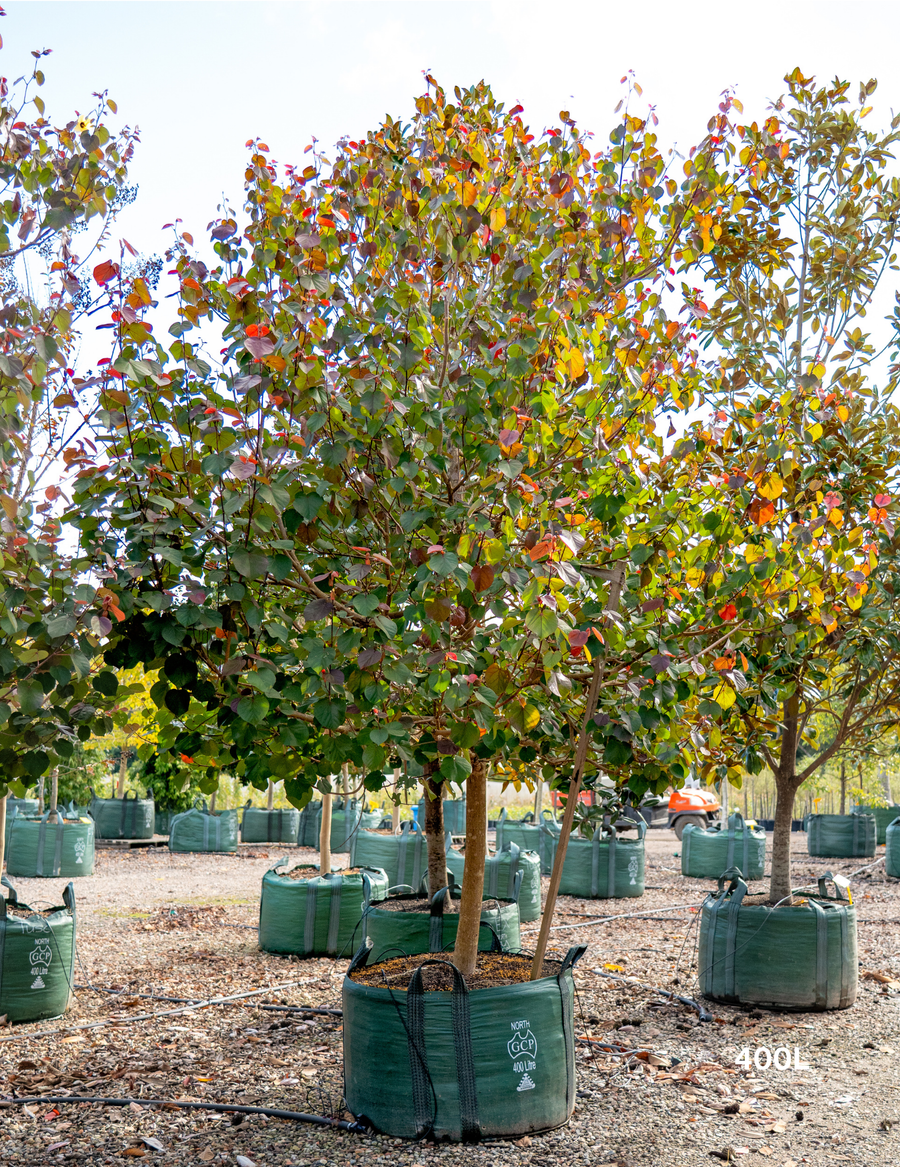
- 400L Bag: 99cm (W) × 66cm (D)
- 500L Bag: 122cm (W) × 66cm (D)
- 750L Bag: 134cm (W) × 69cm (D)
- 1000L Bag: 146.3cm (W) × 71.5cm (D)
- 2000L Bag: 176cm (W) × 82.5cm (D)
Trade
Trade
We supply advanced trees to landscapers, developers, architects, and councils Australia-wide. Trade clients receive fast quotes, expert advice, and access to premium stock with reliable freight.
Shipping
Shipping
Shipping is calculated at checkout based on the pallet space your order occupies in the truck and your delivery location.
There is no charge to calculate your freight.
Contact
Contact
Have a question or a list to send through to us?
Email: sales@evergreentrees.com.au
Phone: (03) 7042 3318
Share this product

About Your New Doryanthes excelsa – Gymea Lily
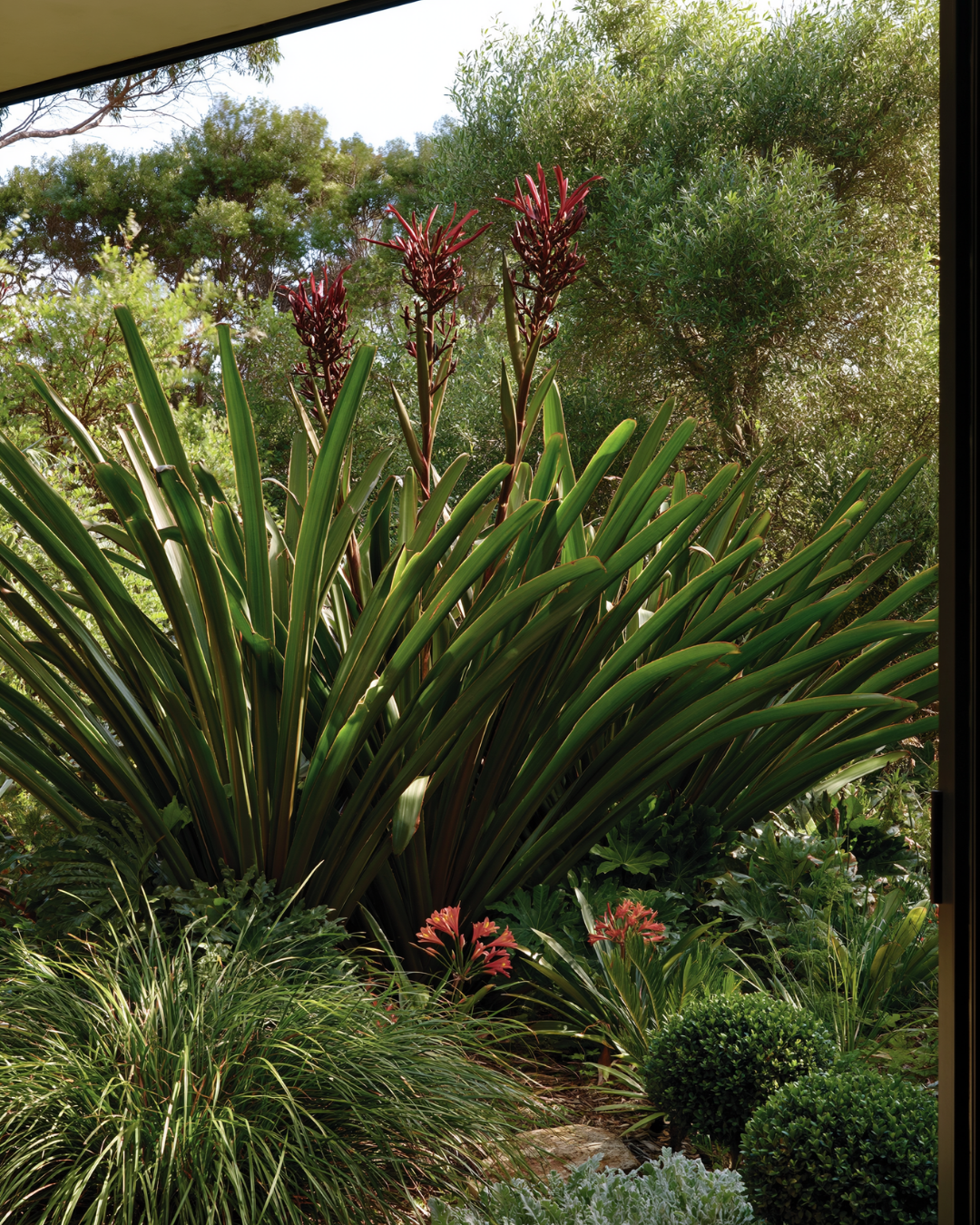
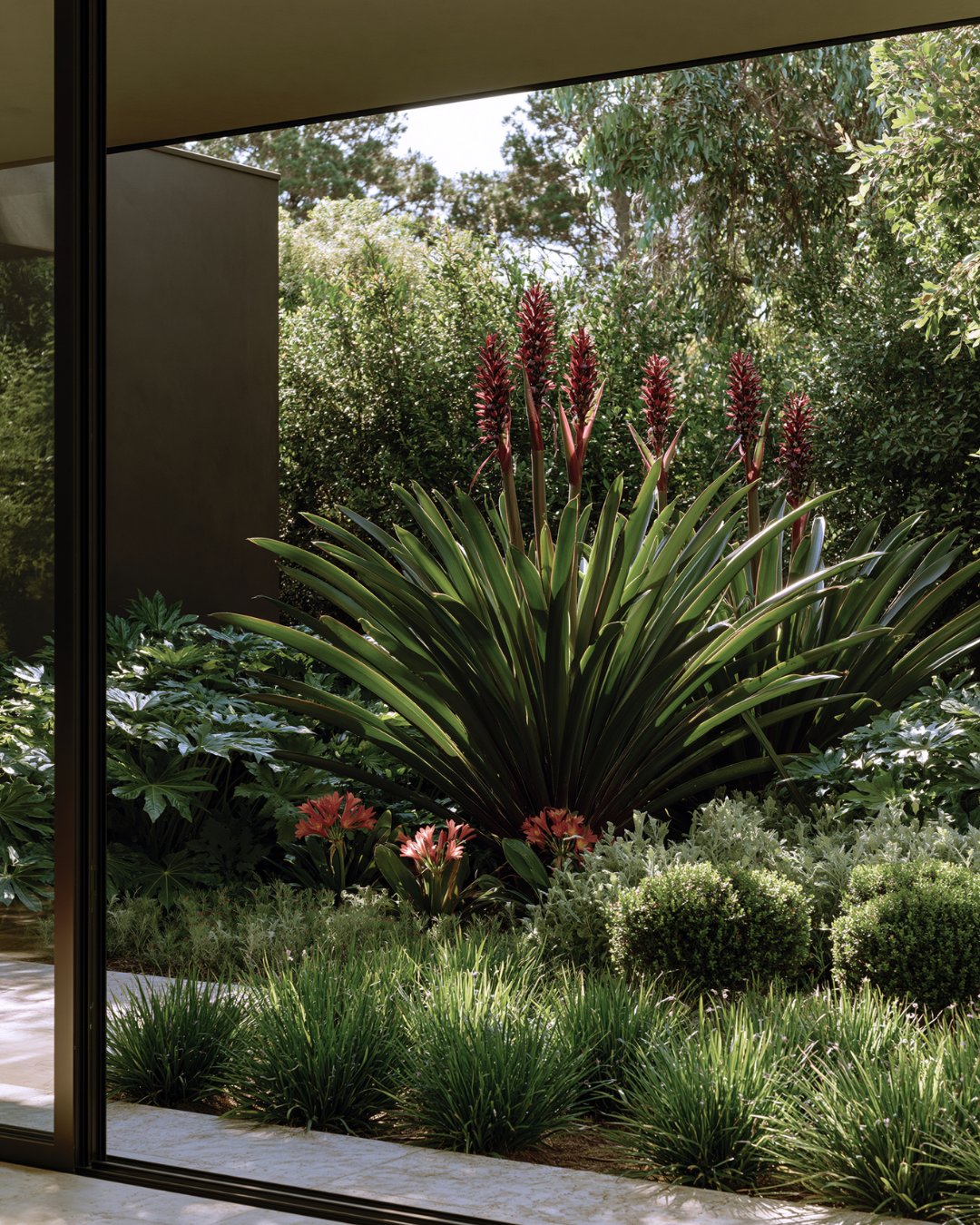
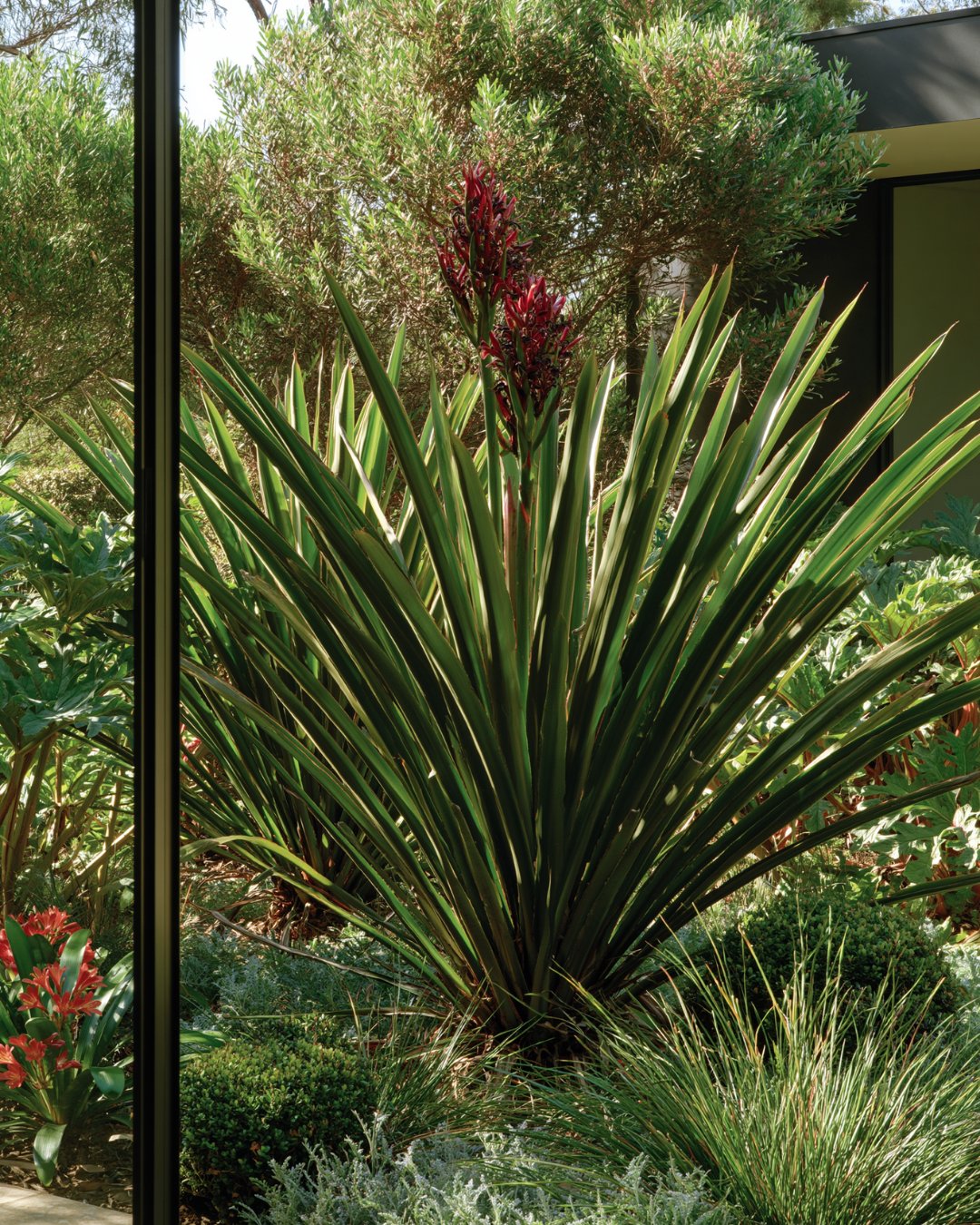
Doryanthes excelsa, the Gymea Lily, is an evergreen Australian native that builds a huge rosette of sword-shaped leaves up to 2 metres long. From a mature clump a single stem rises 3 to 4 metres, occasionally taller, carrying a dense head of deep red blooms. The form alone carries a planting, whether the plant is in flower or not.
It grows in full sun to part shade on well-drained sandy or gravelly ground, and is at home in the sandstone country around Sydney. Light to moderate frost is tolerated once established, and mature clumps are strongly drought tolerant. Growth is slow to moderate at 30 to 60 centimetres a year.
Use it as a feature in native and dry gardens, in groups on embankments and batters where the root system helps hold soil, and in civic plantings that need scale without irrigation. It also copes with roadside conditions. Allow 2 to 3 metres each way, since a mature clump takes up more ground than people expect.
Frequently Asked Questions
About Gymea Lily
What is a Gymea Lily?
Doryanthes excelsa is a large evergreen perennial from the coastal ranges of New South Wales, between Sydney and the Hunter. It forms a ground-level rosette of stiff strap-like leaves and, once mature, sends up a towering flower spike topped with a globe of red flowers. The name Gymea comes from the Dharawal language of the Sydney region.
How big does the Gymea Lily grow?
The leaf clump reaches about 2 to 3 metres across and around 2 metres high. When it flowers, the spike lifts well above that, commonly 3 to 4 metres and occasionally close to 6 metres on old plants. Allow a 2 to 3 metre footprint per plant so the outer leaves are not crushed against paths.
When does it flower?
Flowering runs through spring and into early summer, mostly September to December, with the spike taking several months to build and open. Plants need to reach a good size first, so expect to wait a number of years from a young plant. Each rosette flowers once, then offsets from the base carry the clump on.
Where does it grow best in Australia?
It grows best along the eastern seaboard, from Melbourne through coastal New South Wales to south-east Queensland, and does particularly well on the sandstone soils of the Sydney basin. It also performs in Adelaide and Perth on sandy free-draining ground. Cold inland districts with heavy frost, and wet clay sites, are the two situations to avoid.
Is it drought tolerant?
Very. Once the clump is established the thick fleshy roots carry it through long dry periods without supplementary water, which is why it turns up so often in unirrigated council plantings. Water regularly for the first two summers to get it away, then only in extreme heat. Drainage matters far more to this plant than rainfall.
Can it grow in pots?
It can, for a while. A young plant will sit happily in a container of at least 60 centimetres for several years and makes a strong entry statement. Eventually the root mass and leaf spread outgrow any pot, and it will need to go in the ground before it flowers. Use a free-draining native mix.
How do I care for a Gymea Lily?
Little is needed. Pull or cut away spent and browning outer leaves once or twice a year to keep the rosette clean, and take the flower stem down at the base once it finishes. Feed in early spring with a low-phosphorus native fertiliser. Keep mulch clear of the crown, since the growing point rots if it stays wet.

Evergreen Trees Direct Has Been Featured In:


Plant Your Doryanthes excelsa – Gymea Lily With:
Type: Native Grass
Lomandra longifolia 'Tanika'®
Type: Shrub
Banksia spinulosa 'Birthday Candles'
Type: Ornamental Grass
Pennisetum setaceum Fountain Grass
Type: Feature Plant
Agave attenuata Foxtail Agave
Type: Feature Plant
Kalanchoe beharensis – Felt Bush
Type: Feature Plant
Echium candicans Pride of Madeira
Type: Groundcover
Stachys byzantina Lamb's Ears
Type: Hedging and Screening Trees
Hibiscus tiliaceus 'Rubra' Cottonwood
Type: Australian Native
Banksia integrifolia 'Sentinel'
Uses in my Garden
Uses in my Garden
Doryanthes excelsa – Gymea Lily works in an:
Is Doryanthes excelsa – Gymea Lily Evergreen or Deciduous?
Doryanthes excelsa – Gymea Lily is an Evergreen (foliage year round) Tree
Mature Height & Width
Mature Height: 1.5m to 3m foliage, 5m to 6m in flower
Mature Width: 2m to 3m
Doryanthes excelsa – Gymea Lily is expected to grow 30cm to 60cm per year (moderate).
Growth Rate of Doryanthes excelsa – Gymea Lily
Doryanthes excelsa – Gymea Lily is expected to grow 30cm to 60cm per year (moderate).
They are considered to have a:
Frost Tolerance & Ideal Climate to plant Doryanthes excelsa – Gymea Lily
Is Doryanthes excelsa – Gymea Lily frost tolerant?
Doryanthes excelsa – Gymea Lily is Frost Tolerant – Can handle light to moderate frost once established.
Does Doryanthes excelsa – Gymea Lily Flower?
Doryanthes excelsa produces spectacular towering flower spikes bearing masses of deep red blooms, typically during spring and summer on mature plants. The dramatic flowers rise well above the foliage, creating a bold architectural display that is highly distinctive in the landscape.
Does Doryanthes excelsa – Gymea Lily flower?
Flowering Period:
Flower Type:
Flower Colour:
Red
Is Doryanthes excelsa – Gymea Lily an Australian Native Tree?
Yes
Doryanthes excelsa – Gymea Lily is Native to Eastern New South Wales, where Doryanthes excelsa grows naturally in coastal sandstone forests and open woodland environments.
What is the Wildlife Value of Doryanthes excelsa – Gymea Lily ?
Its towering flower spikes provide a rich nectar source for honeyeaters, native bees and other beneficial pollinators during flowering. The large strappy foliage also creates shelter and protected habitat for small wildlife, supporting biodiversity in native and architectural landscapes.
How much Sunlight does Doryanthes excelsa – Gymea Lily need?
Doryanthes excelsa – Gymea Lily will thrive best in:
Preferred Soil?
Preferred Soil?
Doryanthes excelsa performs best in well-drained sandy or loam soils with an acidic to neutral pH. It will also tolerate poorer soils provided drainage remains reliable and organic matter is incorporated to support moisture retention. Avoid heavy clay or persistently waterlogged conditions unless significantly improved, as poor drainage can reduce vigour and root health. Keep soil evenly moist during establishment, then gradually reduce watering as the plant matures.
Is Doryanthes excelsa – Gymea Lily Drought Tolerant?
Is Doryanthes excelsa – Gymea Lily Drought tolerant?
As a young plant it benefits from regular watering to establish a strong root system, particularly during warmer weather. Once established, Doryanthes excelsa shows good drought tolerance and performs reliably through dry periods, although occasional supplementary watering supports stronger growth and flowering.
Planting Information
How To Plant Your Doryanthes excelsa – Gymea Lily
Recommended Planting Spacing For Your Doryanthes excelsa – Gymea Lily
Doryanthes excelsa – Gymea Lily is expected to grow 30cm to 60cm per year (moderate).