- Mature height
- 2m to 4m
- Mature width
- 1.5m to 2.5m
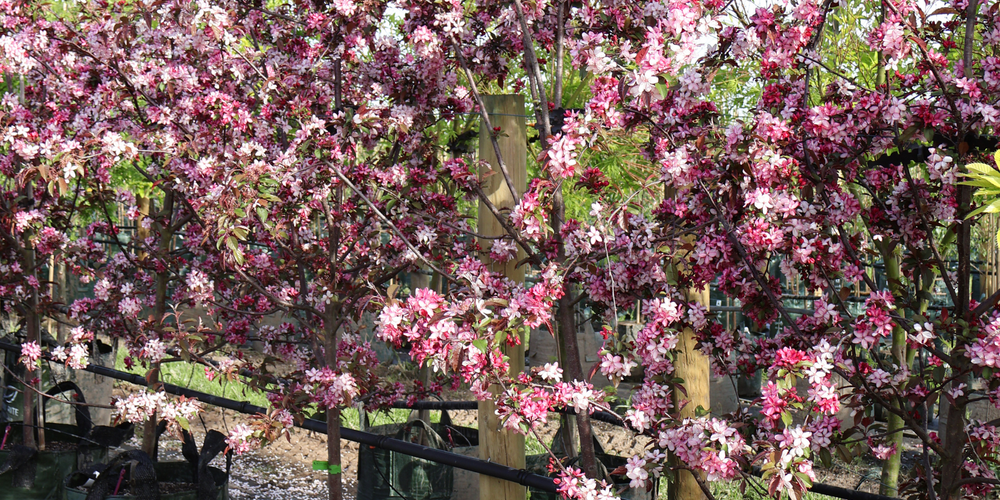
Camellia sasanqua ‘Edna Butler’ is an evergreen flowering shrub with an upright, densely branched frame and small glossy dark green leaves. The defining feature is the flower, a soft shell pink semi double bloom with a boss of gold stamens, carried in quantity from mid autumn into winter.
It takes full sun through to part shade and wants a rich, well drained, slightly acidic soil with steady moisture while it settles in. Growth runs 30 to 60 centimetres a year to a mature 3 to 4 metres tall and about 2 metres across. Light to moderate frost is no trouble once established.
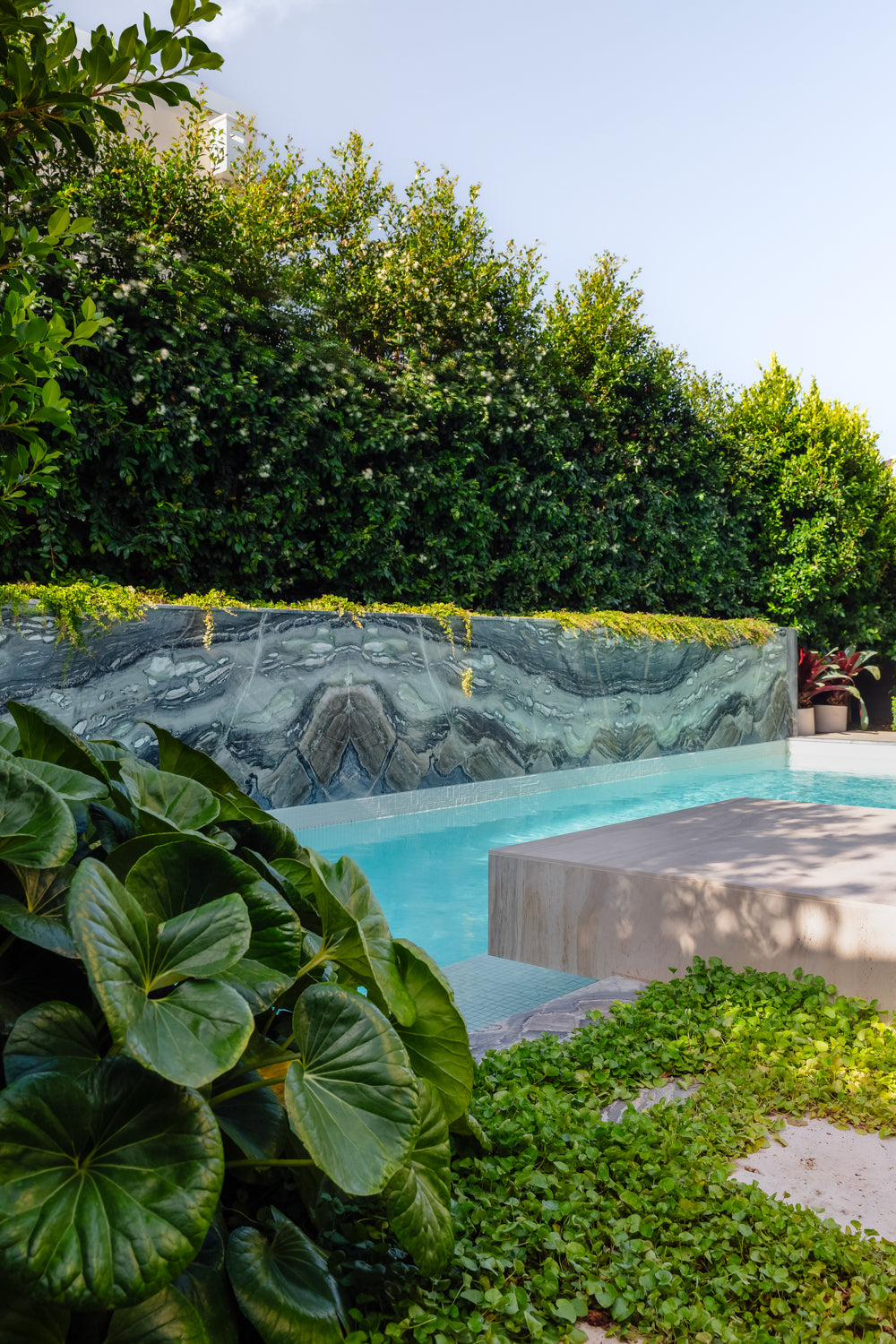
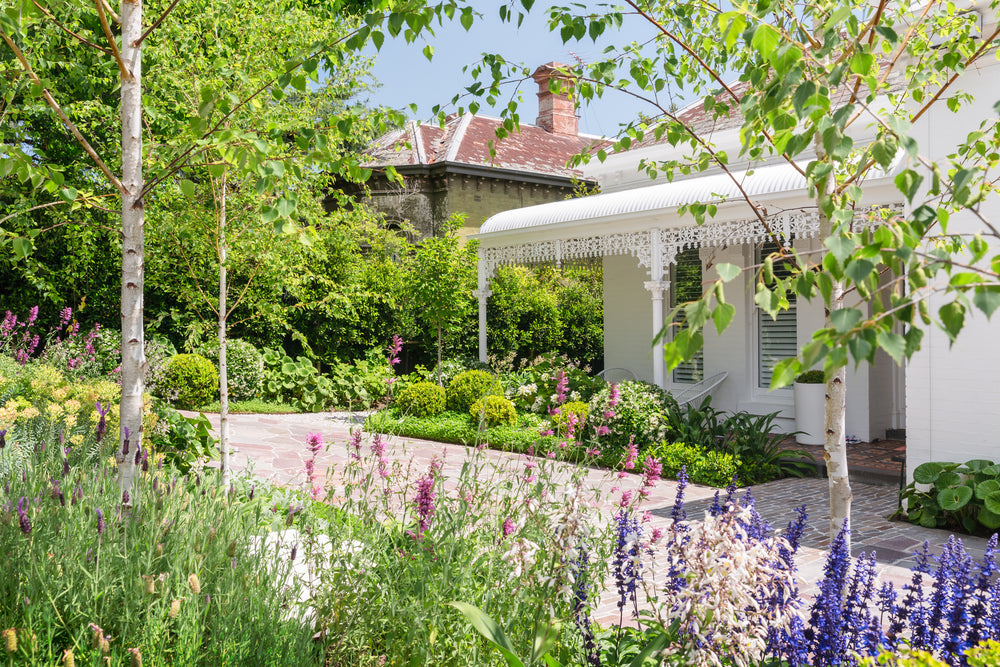
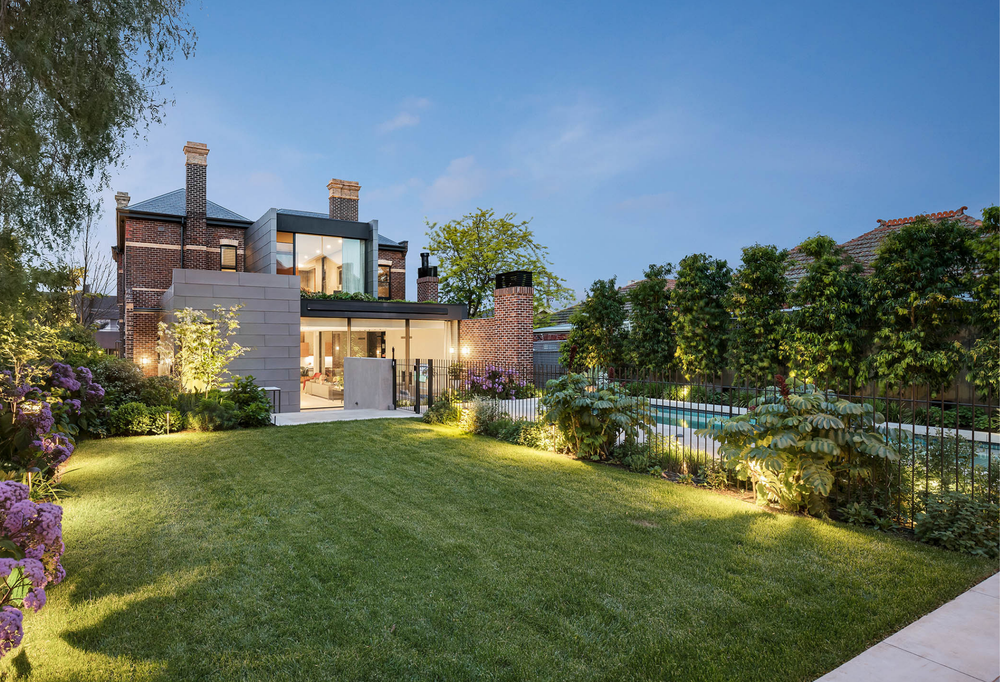
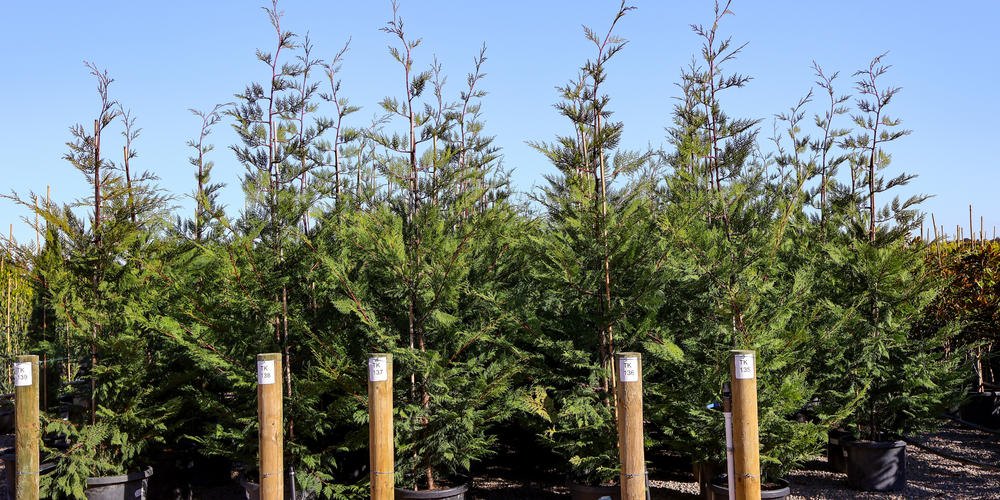
Its usual job is a flowering hedge or a boundary screen, set 80 centimetres to 1 metre apart, though it also holds its own as a single courtyard specimen or a large pot plant. For a formal garden that needs colour in the cold months, it earns the space it takes up.
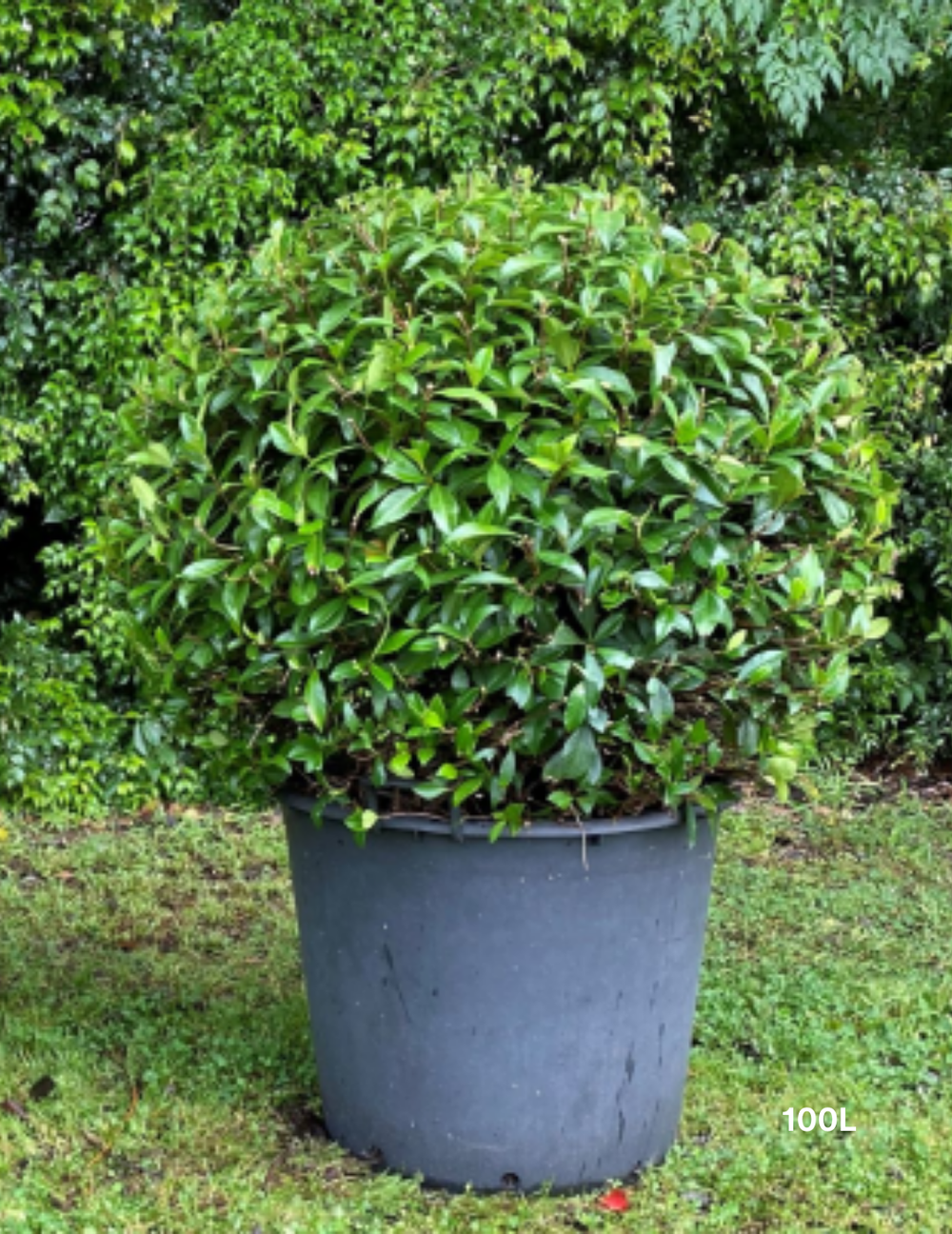
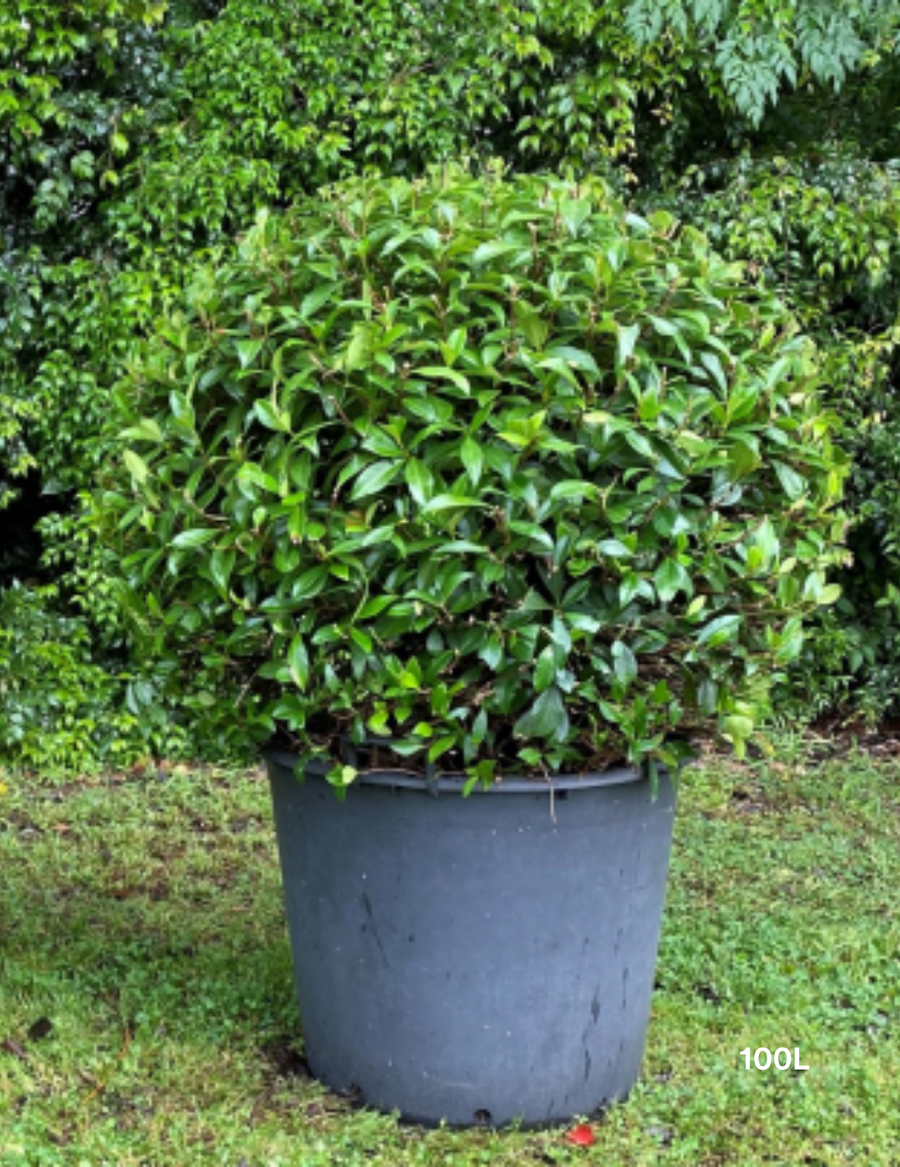
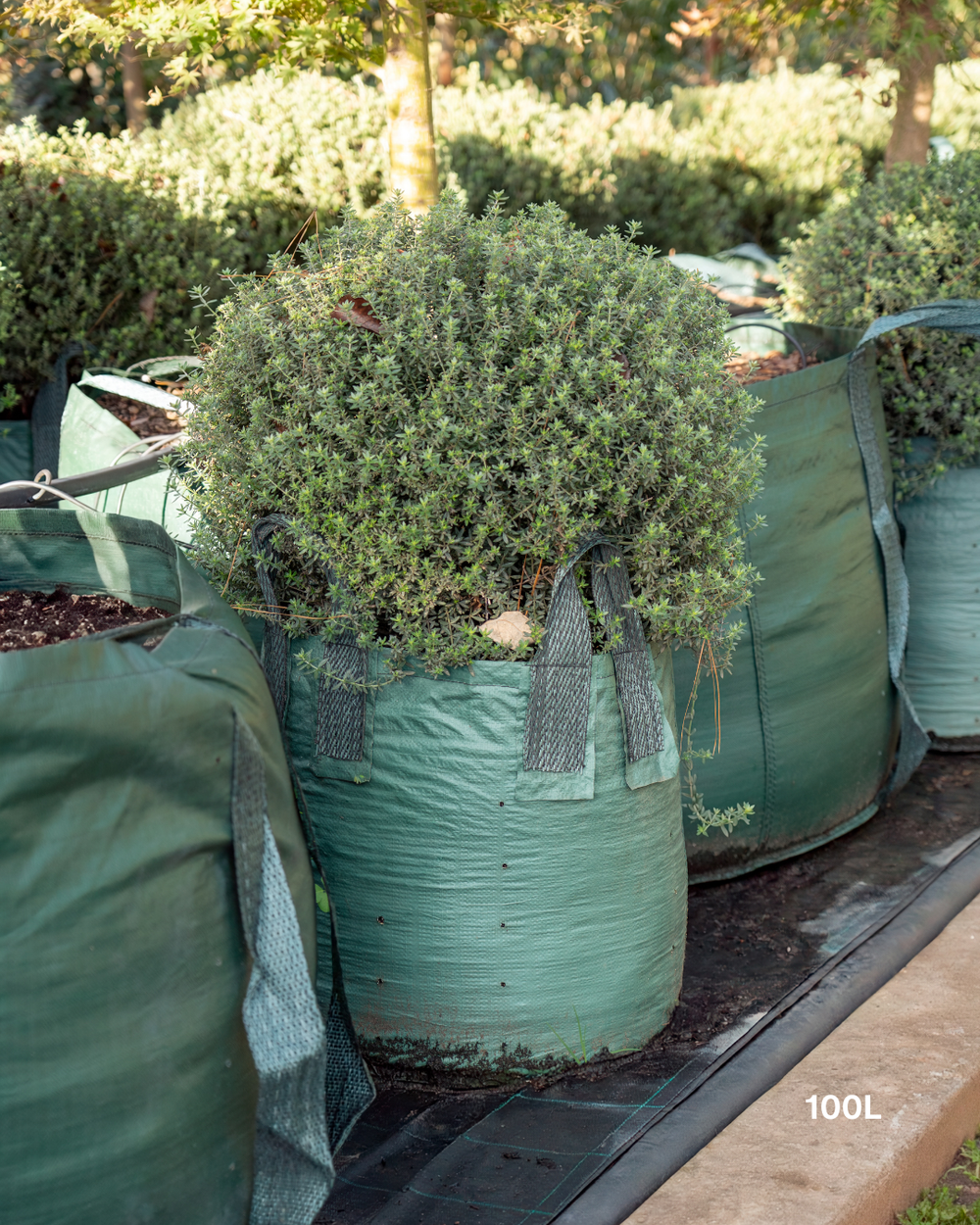
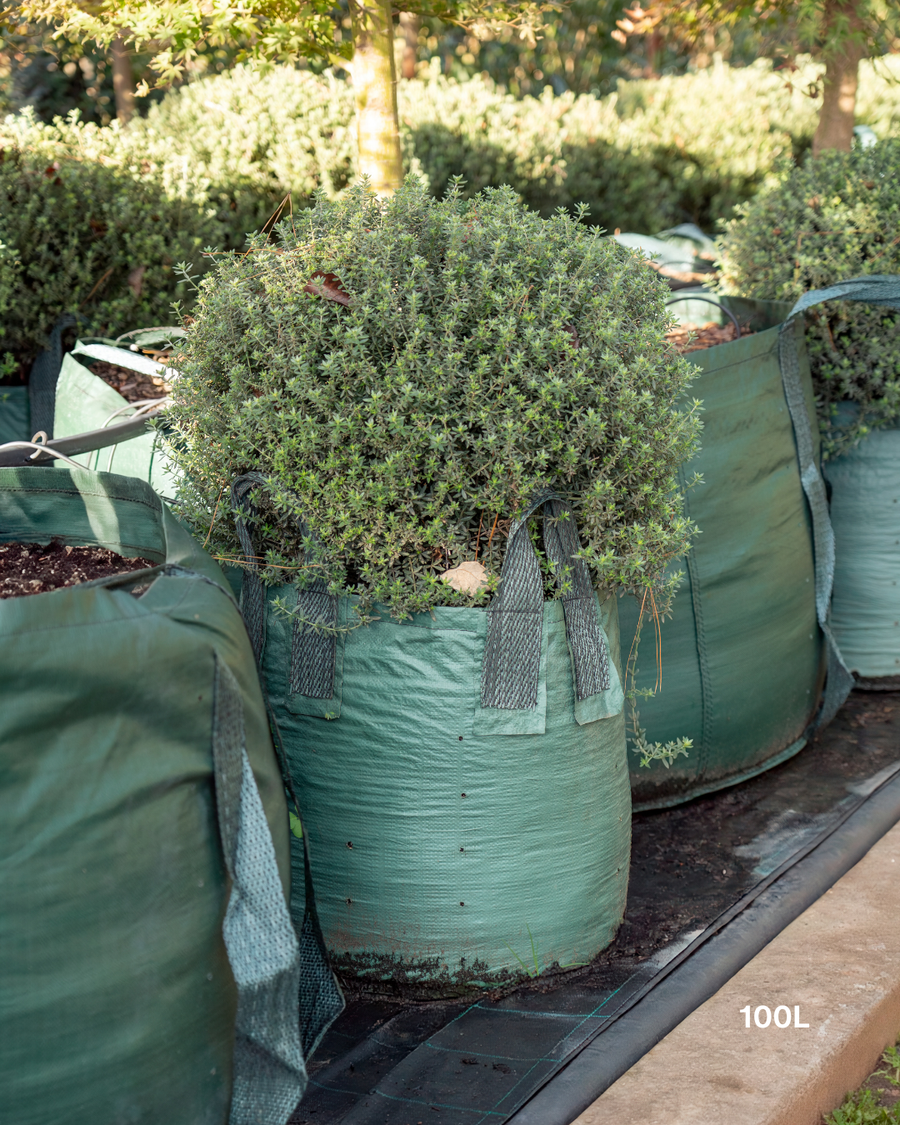
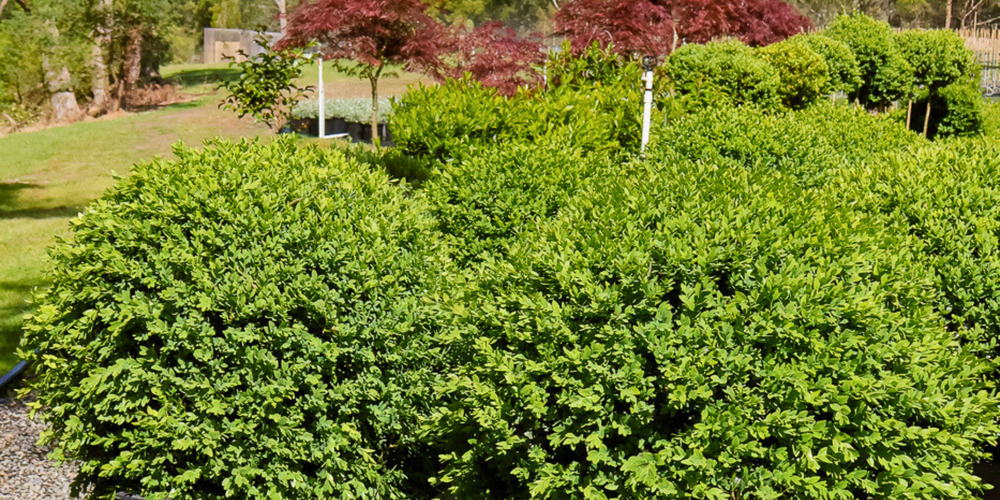
Alongside the natural bush form we carry ‘Edna Butler’ in three shaped forms: a clipped topiary cone, a topiary ball, and a hedge form grown wide and dense for instant hedging. All are trained over several seasons and arrive as finished pieces rather than something you shape yourself. The appeal over Buxus or Podocarpus is straightforward, you get the same formal structure with the addition of autumn and winter flowering.
Frequently Asked Questions
About Edna Butler Camellia
What is Camellia sasanqua ‘Edna Butler’?
It is an evergreen shrub in the tea family, Theaceae, grown for shell pink semi double flowers and dense glossy foliage. Unlike the japonica camellias it will take full sun, and its tight upright branching makes it one of the more reliable sasanquas for clipped hedging and topiary in Australian gardens.
How big does Edna Butler Camellia grow?
Left unpruned it reaches about 3 to 4 metres tall and 2 metres wide in most gardens. It responds well to trimming, so a hedge is easily held at 1.5 to 2 metres. Height builds slowly over the first few years, then fills out once the root system is away.
How fast does it grow?
Expect 30 to 60 centimetres of new growth a year once established, which is a moderate rate for a shrub of this size. Growth is faster in warm temperate gardens with reliable water and slower in cold or dry positions. Planting an advanced specimen shortens the wait to a finished hedge considerably.
When does it flower?
Flowering starts in autumn, usually from April, and carries through into winter, often to July depending on the season and your district. Individual blooms are short lived but they open in succession over several months, so the display holds well. Cool nights bring out the strongest pink tones.
What shaped forms do you sell?
Three, alongside the natural bush form. The ball form is a clipped sphere on a short frame, suited to pairs at an entry or repeated down a path. The cone form is an even tapered pyramid, the formal choice for flanking a doorway or gate. The hedge form is grown wide and dense rather than shaped, so a run of them gives you a finished hedge on the day it goes in. All three flower through autumn and winter the same as the bush form.
How do I keep a ball or cone in shape?
Trim lightly twice a year, in late winter once flowering has finished and again in mid summer. Work to the existing outline rather than cutting deep, and take a little off often instead of a lot at once. Sasanquas set next season’s buds on the growth made after the late winter trim, so pruning at that point costs you nothing in flower.
How far apart should I plant it for a hedge?
Set plants 80 centimetres to 1 metre apart for a dense hedge that closes over in two to three seasons. Tighter spacing at 60 centimetres will knit faster, but the plants then compete for water. For a looser screen where each shrub keeps its own outline, allow 1.5 metres.
Is it frost tolerant?
Yes. Once established it handles light to moderate frost without damage, which covers most of the temperate mainland and the tablelands. Young plants in their first winter are more vulnerable, so a mulch over the root zone and a position out of the worst wind helps them through.
How do I care for Edna Butler Camellia?
Water deeply through the first two summers, mulch to keep the roots cool, and feed with an azalea and camellia fertiliser after flowering finishes in late winter. Prune straight after the last blooms drop so the new wood has time to set buds. Keep the mulch clear of the trunk.