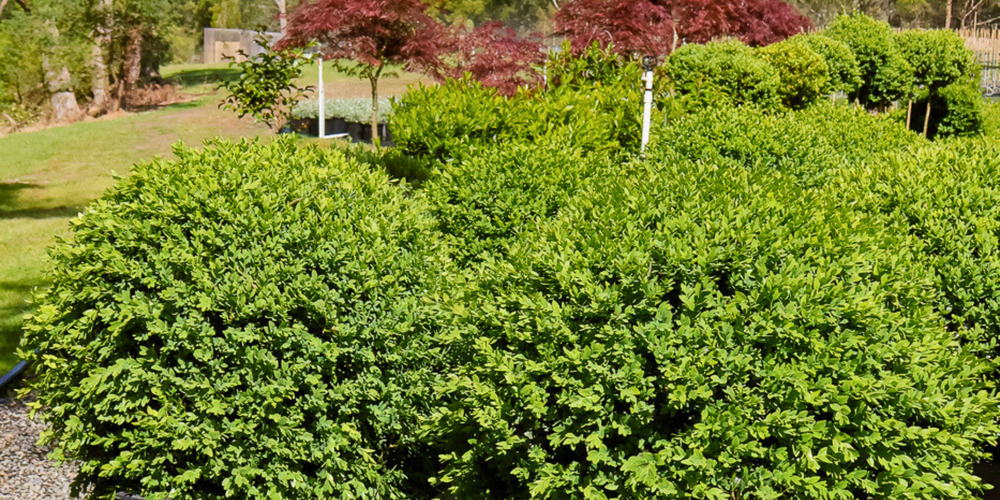
Banksia 'Roller Coaster' – Prostrate Coast Banksia
Banksia 'Roller Coaster' – Prostrate Coast Banksia
Evergreen · Full Sun
Mature size: 0.3m–0.5m high × 1.5m–3m spread wide
- Evergreen
- Full Sun
- Mature height0.3m–0.5m
- Mature width1.5m–3m spread
- Frost Tolerant
- Flowers

Prostrate spreading Coast Banksia cultivar with soft yellow Banksia cones in autumn and winter, exceptional drought and salt tolerance, and reliable bird attraction.
Regular price
$170.00
Sale price
$170.00
Regular price
Tax included.
Shipping calculated at checkout.
Pot size
Available batches
- Current height guide
- Please enquire
- Pot size
- 30cm/33cm
Approximate only. Minimum height important? Confirm with us.
Height guide & disclaimer
Height guide disclaimer: Height ranges are approximate only. As living products, plant heights naturally vary between individual plants, batches, and seasons. No guarantee is given that supplied plants will fall within the stated range. If minimum heights are required, you must confirm current batch heights with Evergreen Trees Direct prior to purchase. Variation in height is normal and is not grounds for return, refund, replacement, or compensation.
Quantity
Couldn't load pickup availability
Mature height & width
Mature height & width
- Mature height
- 0.3m to 0.5m
- Mature width
- 1.5m to 3m spread
Pot sizes & dimensions
Pot sizes & dimensions
| Pot / bag size | Width | Depth |
|---|---|---|
| 30cm Pot | 33cm | 30cm |
| 40cm/45L Pot | 44cm | 41.5cm |
| 50cm Pot / 70L Pot | 55cm | 41.8cm |
| 100L Bag | 50.6cm | 52.8cm |
| 150L Bag | 66cm | 55cm |
| 200L Bag | 71.5cm | 60.5cm |
| 300L Bag | 88cm | 63.8cm |
| 400L Bag | 99cm | 66cm |
| 500L Bag | 122cm | 66cm |
| 750L Bag | 134cm | 69cm |
| 1000L Bag | 146.3cm | 71.5cm |
| 2000L Bag | 176cm | 82.5cm |
General planting reference from our existing size guide. Actual containers can vary by supplier and batch; confirm exact dimensions if required.
Delivery & pickup
Delivery & pickup
Trade enquiries
Trade enquiries
We supply advanced trees to landscapers, developers, architects, and councils Australia-wide. Trade clients receive fast quotes, expert advice, and access to premium stock with reliable freight.
Freight estimate
Based on the items currently in your cart.
Final delivery cost is confirmed at checkout using your full address.
Not sure how many trees you need?
Plan your hedge
Enter the length of your boundary, then choose how closely you want to plant.
Enter your boundary length to see how many trees you need.
Measure only the boundary you intend to plant—exclude gates and gaps. Spacing is centre to centre. Quantities are rounded up for one row, allowing roughly half the spacing at each end. Site conditions and pruning affect the final hedge.

About Banksia 'Roller Coaster'
Banksia 'Roller Coaster' is a prostrate spreading Australian native groundcover form of Coast Banksia, valued for its low trailing habit, soft pale yellow Banksia flower cones and excellent coastal toughness. Selected from Banksia integrifolia for its naturally low-growing form, it spreads 1.5 to 3 metres wide while staying under 50 cm tall, creating a dense evergreen carpet of dark serrated foliage.
It performs reliably in full sun with well-drained soil and adapts to a wide range of Australian climates including coastal, subtropical and temperate regions. Once established it is highly drought tolerant, salt tolerant and tolerates light frost, requiring very little ongoing care. Soft pale yellow Banksia flower cones appear through autumn and winter, attracting honeyeaters, lorikeets and native bees.
As a prostrate Australian native groundcover for coastal, native, wildlife and low-maintenance gardens, on embankments, in mass plantings, cascading over retaining walls and beneath taller native shrubs, Banksia 'Roller Coaster' brings dense evergreen ground coverage, soft yellow seasonal flowers and reliable bird attraction with almost no ongoing maintenance.
Frequently Asked Questions
About Banksia 'Roller Coaster' Prostrate Coast Banksia
How big does Banksia 'Roller Coaster' grow?
Banksia 'Roller Coaster' grows to a mature size of approximately 0.3 to 0.5 metres tall and 1.5 to 3 metres wide. Growth is moderate, with new plants spreading 30 to 60 cm per year in suitable conditions to fill in as a dense evergreen groundcover.
When does it flower?
Banksia 'Roller Coaster' produces soft pale yellow Banksia flower cones through autumn and winter, with the heaviest flush typically from April to August. The cones are smaller than those of the parent Coast Banksia but are produced reliably across the plant and provide an important nectar source for native birds during cooler months.
Where does Banksia 'Roller Coaster' grow best?
Banksia 'Roller Coaster' performs reliably across most Australian climates, with the strongest performance in coastal NSW, Queensland, Victoria, South Australia and Western Australia. It prefers full sun and well-drained soil, particularly sandy or sandy-loam soils, and tolerates a wide range of conditions including dry slopes, embankments and coastal exposure.
Is it drought and frost tolerant?
Yes. Banksia 'Roller Coaster' is highly drought tolerant once established and copes well with extended dry periods on minimal supplementary watering. It is also tolerant of light frost and salt-laden coastal winds, making it suitable for exposed coastal positions as well as inland gardens.
Can it be planted on slopes or retaining walls?
Yes. Banksia 'Roller Coaster' is one of the best Australian native plants for embankments, slopes and the tops of retaining walls. Its prostrate habit allows the foliage to cascade gracefully, the root system helps stabilise loose soils, and the plant suppresses weeds once established. Space at 1.5 to 2 metres apart for solid coverage.
Does it attract birds and wildlife?
Yes. The yellow Banksia cones are nectar-rich and attract honeyeaters, lorikeets, wattlebirds and other nectar-feeding native birds, particularly through autumn and winter when other native flowers are scarce. The dense low foliage also provides ground-level shelter for small native fauna and beneficial insects.
How do I care for Banksia 'Roller Coaster'?
Banksia 'Roller Coaster' is very low maintenance once established. Water deeply through the first growing season, then reduce watering and supplement only during extended dry periods. Use a slow-release native fertiliser low in phosphorus in early spring. Light tip pruning after flowering keeps the plant compact and encourages denser branching. Avoid heavy pruning into old wood.
| Mature height | 0.3m to 0.5m |
|---|---|
| Mature width | 1.5m to 3m spread |
| Position | Full Sun |
| Growth per year | 30cm to 60cm spread per year |
| Frost | Frost Tolerant |
| Foliage | Evergreen (foliage year round) |
| Form | Spreading · Ground-Cover |
| Uses | Groundcovers · Council or Civic Landscapes · Rural Property Planting |
- Foliage
Evergreen (foliage year round)
- Position
- Form
- Use
- Mature height
- 0.3m to 0.5m
- Mature width
- 1.5m to 3m spread
Planting Information
Recommended Planting Spacing For Your Banksia 'Roller Coaster' – Prostrate Coast Banksia
Banksia 'Roller Coaster' – Prostrate Coast Banksia is expected to grow 30cm to 60cm spread per year.
Long Term Care For Your Banksia 'Roller Coaster' – Prostrate Coast Banksia
Planting Your Banksia 'Roller Coaster' – Prostrate Coast Banksia in Different Soil
Uses in my Garden
Uses in my Garden
Banksia 'Roller Coaster' – Prostrate Coast Banksia works in an:
Is Banksia 'Roller Coaster' – Prostrate Coast Banksia Evergreen or Deciduous?
Banksia 'Roller Coaster' – Prostrate Coast Banksia is an Evergreen (foliage year round) Tree
Mature Height & Width
Mature Height: 0.3m to 0.5m
Mature Width: 1.5m to 3m spread
Banksia 'Roller Coaster' – Prostrate Coast Banksia is expected to grow 30cm to 60cm spread per year.
Growth Rate of Banksia 'Roller Coaster' – Prostrate Coast Banksia
Banksia 'Roller Coaster' – Prostrate Coast Banksia is expected to grow 30cm to 60cm spread per year.
They are considered to have a:
Frost Tolerance & Ideal Climate to plant Banksia 'Roller Coaster' – Prostrate Coast Banksia
Is Banksia 'Roller Coaster' – Prostrate Coast Banksia frost tolerant?
Banksia 'Roller Coaster' – Prostrate Coast Banksia is Frost Tolerant – Can handle light to moderate frost once established.
Does Banksia 'Roller Coaster' – Prostrate Coast Banksia Flower?
Banksia 'Roller Coaster' produces soft pale yellow Banksia flower cones through autumn and winter, with the heaviest flush from April to August. The cones are smaller than those of the parent Coast Banksia but are produced reliably across the plant, providing important seasonal nectar and visual interest at ground level.
Does Banksia 'Roller Coaster' – Prostrate Coast Banksia flower?
Flowering Period:
Flower Type:
Flower Colour:
Yellow
Is Banksia 'Roller Coaster' – Prostrate Coast Banksia an Australian Native Tree?
Yes
Banksia 'Roller Coaster' – Prostrate Coast Banksia is Native to Australia. Banksia 'Roller Coaster' is a registered prostrate cultivar selected from Banksia integrifolia, which is native to the coastal sand dunes and headlands of eastern Australia from Queensland through New South Wales to Victoria.
What is the Wildlife Value of Banksia 'Roller Coaster' – Prostrate Coast Banksia ?
The yellow Banksia cones provide a rich nectar source for honeyeaters, lorikeets, wattlebirds and native bees through autumn and winter when many other native flowers are scarce. The dense prostrate foliage also creates valuable ground-level shelter for small native fauna and beneficial insects, supporting biodiversity in coastal and native gardens.
How much Sunlight does Banksia 'Roller Coaster' – Prostrate Coast Banksia need?
Banksia 'Roller Coaster' – Prostrate Coast Banksia will thrive best in:
Preferred Soil?
Banksia 'Roller Coaster' performs best in well-drained sandy or sandy-loam soils with a slightly acidic to neutral pH. It will also tolerate poorer soils provided drainage remains excellent, and is well-suited to coastal sand profiles. Avoid heavy clay or persistently wet conditions, and never apply phosphorus-rich fertilisers as Banksias are highly sensitive to phosphorus.
Is Banksia 'Roller Coaster' – Prostrate Coast Banksia Drought Tolerant?
Is Banksia 'Roller Coaster' – Prostrate Coast Banksia Drought tolerant?
Through establishment Banksia 'Roller Coaster' benefits from regular watering to build a strong root system. Once established it is highly drought tolerant, reflecting its origins on the dry coastal sand dunes of eastern Australia, and performs reliably on natural rainfall and minimal supplementary watering through extended dry periods.
Frequently Asked Questions
What is Banksia 'Roller Coaster'?
Banksia 'Roller Coaster' is a registered prostrate cultivar of Banksia integrifolia, the Coast Banksia. It was selected for its naturally low-growing spreading habit, which keeps the plant under 50 cm tall while spreading 1.5 to 3 metres wide. It is one of the most reliable Australian native groundcovers available for coastal and dry gardens.
How big does Banksia 'Roller Coaster' grow?
Banksia 'Roller Coaster' grows to a mature size of approximately 0.3 to 0.5 metres tall and 1.5 to 3 metres wide. Growth is moderate, with new plants spreading 30 to 60 cm per year in suitable conditions to fill in as a dense evergreen groundcover.
When does it flower?
Banksia 'Roller Coaster' produces soft pale yellow Banksia flower cones through autumn and winter, with the heaviest flush typically from April to August. The cones are smaller than those of the parent Coast Banksia but are produced reliably across the plant and provide an important nectar source for native birds during cooler months.
Where does Banksia 'Roller Coaster' grow best?
Banksia 'Roller Coaster' performs reliably across most Australian climates, with the strongest performance in coastal NSW, Queensland, Victoria, South Australia and Western Australia. It prefers full sun and well-drained soil, particularly sandy or sandy-loam soils, and tolerates a wide range of conditions including dry slopes, embankments and coastal exposure.
Is it drought and frost tolerant?
Yes. Banksia 'Roller Coaster' is highly drought tolerant once established and copes well with extended dry periods on minimal supplementary watering. It is also tolerant of light frost and salt-laden coastal winds, making it suitable for exposed coastal positions as well as inland gardens.
Can it be planted on slopes or retaining walls?
Yes. Banksia 'Roller Coaster' is one of the best Australian native plants for embankments, slopes and the tops of retaining walls. Its prostrate habit allows the foliage to cascade gracefully, the root system helps stabilise loose soils, and the plant suppresses weeds once established. Space at 1.5 to 2 metres apart for solid coverage.
Does it attract birds and wildlife?
Yes. The yellow Banksia cones are nectar-rich and attract honeyeaters, lorikeets, wattlebirds and other nectar-feeding native birds, particularly through autumn and winter when other native flowers are scarce. The dense low foliage also provides ground-level shelter for small native fauna and beneficial insects.
How do I care for Banksia 'Roller Coaster'?
Banksia 'Roller Coaster' is very low maintenance once established. Water deeply through the first growing season, then reduce watering and supplement only during extended dry periods. Use a slow-release native fertiliser low in phosphorus in early spring. Light tip pruning after flowering keeps the plant compact and encourages denser branching. Avoid heavy pruning into old wood.
Compare sizes side by side
30cm/33cm
Enquire for current heights
Heights are approximate and vary between individual trees.
Banksia 'Roller Coaster' is loved for its Prostrate spreading Coast Banksia cultivar with soft yellow Banksia cones in autumn and winter, exceptional drought and salt tolerance, and reliable bird attraction.
We take pride in supplying A+ grade advanced trees. When stock at our farm is not yet ready, we work with our trusted trade suppliers to source the best available trees for your garden.
Plant Your Banksia 'Roller Coaster' – Prostrate Coast Banksia With:
Banksia spinulosa 'Birthday Candles'
Banksia spinulosa 'Birthday Candles' is a compact Australian native dwarf shrub valued for its showy golden-yellow flower spikes that emerge through autumn and winter, resembling lit candles standing upright above the foliage. It is one of the most reliable flowering dwarf banksias in cultivation, bred for its tight compact form and prolific seasonal display.
It performs best in full sun to part shade with free-draining acidic to neutral soil and is highly drought tolerant, coastal tolerant and low maintenance once established. The fine dark green foliage forms a dense rounded mound year-round, providing structure and texture even when not in flower, while the bold golden flower spikes draw honeyeaters and other nectar-feeding birds into the garden during the cooler months.
As a feature shrub in native, coastal, modern and low-maintenance gardens, in mass plantings, borders, rockeries and large containers, Banksia 'Birthday Candles' brings reliable seasonal colour, native wildlife value and a compact manageable form that works at the front of the border or as a low feature mass.
Frequently Asked Questions
About Banksia 'Birthday Candles'
How tall does Banksia 'Birthday Candles' grow?
Banksia 'Birthday Candles' is a dwarf cultivar reaching around 45 to 50 centimetres tall and 90 to 100 centimetres wide at maturity. The compact spreading form makes it ideal for the front of borders, mass plantings, rockeries and large pots.
When does Banksia 'Birthday Candles' flower?
Banksia 'Birthday Candles' produces its golden-yellow flower spikes through autumn and winter, with the main display from late autumn into mid winter. The long flowering period provides reliable cool-season colour when many other plants are dormant.
Does Banksia 'Birthday Candles' attract wildlife?
Yes. Banksia 'Birthday Candles' is a major nectar source for honeyeaters, lorikeets, native bees and butterflies through autumn and winter, when fewer nectar sources are available. It is one of the highest-value plants for cool-season bird activity in Australian gardens.
Where should I plant Banksia 'Birthday Candles'?
Banksia 'Birthday Candles' grows best in full sun to part shade with free-draining acidic to neutral soil. It suits native gardens, coastal plantings, modern borders, rockeries and large pots, tolerating coastal exposure, dry conditions and reflective heat once established.
Is Banksia 'Birthday Candles' drought tolerant?
Yes. Once established, Banksia 'Birthday Candles' is highly drought tolerant and performs reliably through warm dry periods with minimal watering. Through establishment it benefits from light, regular watering to develop the deep root system that supports long-term drought hardiness.
What fertiliser should I use?
Banksia 'Birthday Candles' is highly sensitive to phosphorus, like most Proteaceae. Use only low-phosphorus native fertilisers, and avoid general-purpose or rose fertilisers, manures and bonemeal, all of which can kill the plant. A light application in early spring is sufficient.
Can Banksia 'Birthday Candles' be grown in a pot?
Yes. Banksia 'Birthday Candles' performs excellently in pots and raised planters thanks to its compact dwarf form. Use a native plant or free-draining acidic potting mix, water moderately through warm weather and feed only with low-phosphorus native fertiliser.

Banksia spinulosa 'Birthday Candles'
Banksia spinulosa 'Birthday Candles'
Banksia spinulosa 'Birthday Candles' is a compact Australian native dwarf shrub valued for its showy golden-yellow flower spikes that emerge through autumn and winter, resembling lit candles standing upright above the foliage. It is one of the most reliable flowering dwarf banksias in cultivation, bred for its tight compact form and prolific seasonal display.
It performs best in full sun to part shade with free-draining acidic to neutral soil and is highly drought tolerant, coastal tolerant and low maintenance once established. The fine dark green foliage forms a dense rounded mound year-round, providing structure and texture even when not in flower, while the bold golden flower spikes draw honeyeaters and other nectar-feeding birds into the garden during the cooler months.
As a feature shrub in native, coastal, modern and low-maintenance gardens, in mass plantings, borders, rockeries and large containers, Banksia 'Birthday Candles' brings reliable seasonal colour, native wildlife value and a compact manageable form that works at the front of the border or as a low feature mass.
Frequently Asked Questions
About Banksia 'Birthday Candles'
How tall does Banksia 'Birthday Candles' grow?
Banksia 'Birthday Candles' is a dwarf cultivar reaching around 45 to 50 centimetres tall and 90 to 100 centimetres wide at maturity. The compact spreading form makes it ideal for the front of borders, mass plantings, rockeries and large pots.
When does Banksia 'Birthday Candles' flower?
Banksia 'Birthday Candles' produces its golden-yellow flower spikes through autumn and winter, with the main display from late autumn into mid winter. The long flowering period provides reliable cool-season colour when many other plants are dormant.
Does Banksia 'Birthday Candles' attract wildlife?
Yes. Banksia 'Birthday Candles' is a major nectar source for honeyeaters, lorikeets, native bees and butterflies through autumn and winter, when fewer nectar sources are available. It is one of the highest-value plants for cool-season bird activity in Australian gardens.
Where should I plant Banksia 'Birthday Candles'?
Banksia 'Birthday Candles' grows best in full sun to part shade with free-draining acidic to neutral soil. It suits native gardens, coastal plantings, modern borders, rockeries and large pots, tolerating coastal exposure, dry conditions and reflective heat once established.
Is Banksia 'Birthday Candles' drought tolerant?
Yes. Once established, Banksia 'Birthday Candles' is highly drought tolerant and performs reliably through warm dry periods with minimal watering. Through establishment it benefits from light, regular watering to develop the deep root system that supports long-term drought hardiness.
What fertiliser should I use?
Banksia 'Birthday Candles' is highly sensitive to phosphorus, like most Proteaceae. Use only low-phosphorus native fertilisers, and avoid general-purpose or rose fertilisers, manures and bonemeal, all of which can kill the plant. A light application in early spring is sufficient.
Can Banksia 'Birthday Candles' be grown in a pot?
Yes. Banksia 'Birthday Candles' performs excellently in pots and raised planters thanks to its compact dwarf form. Use a native plant or free-draining acidic potting mix, water moderately through warm weather and feed only with low-phosphorus native fertiliser.
Banksia spinulosa 'Birthday Candles'
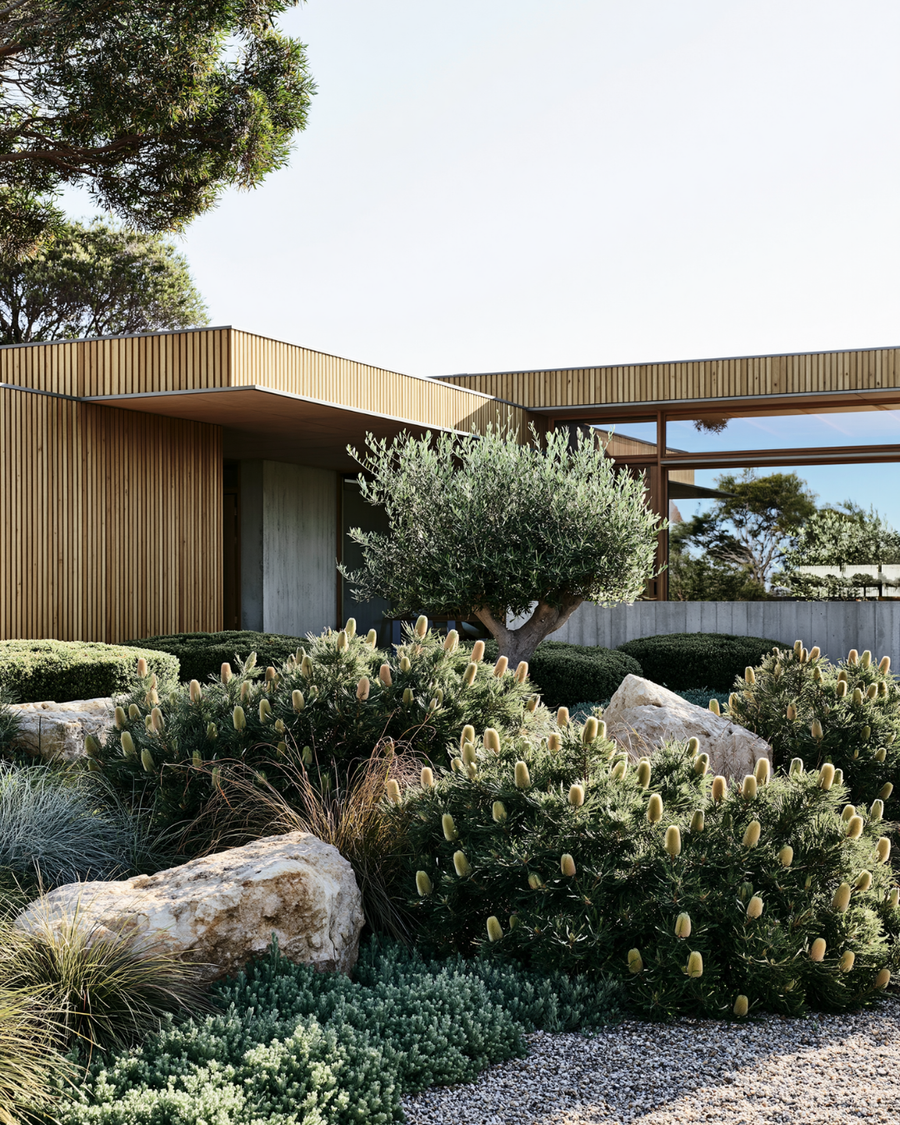
Lomandra longifolia 'Tanika'®
Lomandra longifolia 'Tanika'®
Lomandra longifolia 'Tanika'® (LM300) is one of the most widely planted Australian native ornamental grasses, valued for its fine bright green strappy foliage, neat compact habit and exceptional resilience in tough landscaping conditions. A naturally compact and finer-foliaged form of the species, 'Tanika' holds a refined mounding shape without the coarser texture of standard Lomandra longifolia.
It performs reliably in full sun through to part shade, tolerates drought, frost, coastal salt and poor soils, and produces small yellow flower spikes through spring and summer that add a soft seasonal lift. At a mature size of around 60 cm tall by 60 cm wide, 'Tanika' is one of the most useful Australian natives for mass planting, modern garden borders, low-maintenance landscapes and feature pot planting.
As a compact evergreen Australian native grass for native, modern, coastal, contemporary and low-maintenance gardens, in mass plantings, borders and feature pot displays, Lomandra longifolia 'Tanika' brings fine textural foliage, year-round form and exceptional toughness to almost any garden brief.
Frequently Asked Questions
About Lomandra longifolia 'Tanika'
How big does Lomandra 'Tanika' grow?
Lomandra 'Tanika' grows to a compact mature size of around 60 cm tall by 60 cm wide, forming a neat rounded mound of fine green strappy foliage. It is significantly more compact and finer-textured than the standard Lomandra longifolia, making it the preferred form for refined garden settings.
Where should I plant Lomandra 'Tanika'?
Lomandra 'Tanika' grows well in full sun through to part shade and tolerates a wide range of soil types from sandy through to clay. It is excellent for mass planting, low borders, coastal exposed positions and contemporary garden borders, and performs reliably in both garden beds and pots.
Is Lomandra 'Tanika' drought tolerant?
Yes. Lomandra 'Tanika' is highly drought tolerant once established and is one of the most reliable Australian natives for low-water gardens. Through establishment it benefits from regular watering, then transitions to natural rainfall in most Australian climates.
Is it frost tolerant?
Yes. Lomandra 'Tanika' is frost tolerant and performs reliably across cool, temperate and warm Australian climates. The fine evergreen foliage holds its colour through winter with no protection required.
Does Lomandra 'Tanika' flower?
Yes. Lomandra 'Tanika' produces small yellow flower spikes through spring and into summer, sitting just above the foliage. The flowers are softly fragrant and provide a delicate seasonal lift, though the plant is grown primarily for its foliage form rather than its flowering.
How do I care for Lomandra 'Tanika'?
Lomandra 'Tanika' is exceptionally low maintenance. Water through establishment, then sparingly. Every 2 to 3 years, give plants a hard tidy in late winter by removing old foliage to encourage fresh growth. No regular pruning is otherwise required.
Can it be used for mass planting?
Yes – mass planting is one of the most successful uses for Lomandra 'Tanika'. Planted on a 50 to 60 cm spacing the plants knit together into a refined textural carpet within 12 to 18 months, providing a contemporary and resilient alternative to traditional groundcovers and grasses.
Lomandra longifolia 'Tanika'®
Liquid error (sections/ee-products line 16): invalid url input
Pennisetum setaceum Fountain Grass
Pennisetum setaceum Fountain Grass
Pennisetum setaceum, commonly known as Fountain Grass, is a clumping ornamental grass valued for its graceful arching fountain-like form and feathery pinkish flower spikes that sway in the lightest breeze. The fine narrow foliage forms dense rounded tussocks that bring movement, texture and a sense of softness to architectural and contemporary plantings.
It performs best in full sun with free-draining soil and is highly drought tolerant, heat tolerant and low maintenance once established. Pennisetum setaceum thrives across a wide range of conditions including coastal exposure, poor soils and reflective heat, and is well suited to mass plantings, accent groupings, modern borders and large containers.
As a textural feature in contemporary, coastal and Mediterranean-style gardens, in mass plantings, mixed borders, raised beds and large pots, Pennisetum setaceum brings architectural softness, seasonal flower interest and a low-maintenance reliability that pairs beautifully with structured planting and hard landscaping.
Frequently Asked Questions
About Pennisetum setaceum Fountain Grass
How tall does Pennisetum setaceum grow?
Pennisetum setaceum generally reaches around 60 to 90 centimetres tall and 60 to 90 centimetres wide, with flower spikes lifting to around 1 to 1.2 metres at peak. The arching fountain form gives the plant a soft graceful silhouette.
When does Pennisetum setaceum flower?
Pennisetum setaceum produces feathery pinkish flower spikes from summer through autumn, rising above the foliage and catching the light beautifully. The flower spikes hold well and can be left on the plant through winter for ongoing texture and movement.
Where should I plant Pennisetum setaceum?
Pennisetum setaceum grows best in full sun with free-draining soil. It suits contemporary borders, coastal gardens, mass plantings, accent groupings, raised beds, gravel gardens and large containers, tolerating coastal exposure, poor soils and reflective heat from paving exceptionally well.
Is Pennisetum setaceum drought tolerant?
Yes. Once established, Pennisetum setaceum is highly drought tolerant and performs reliably through warm, dry periods with minimal watering. Through establishment it benefits from light, regular watering, then transitions to deep, occasional watering through extended dry periods.
Is Pennisetum setaceum frost tolerant?
Pennisetum setaceum handles light frost once established. In colder districts the foliage may die back through winter but typically reshoots from the base in spring. A hard prune at the end of winter helps refresh the clump for the new season.
How do I maintain Pennisetum setaceum?
Maintain Pennisetum setaceum with an annual hard prune at the end of winter, cutting the clump back to around 10 to 15 centimetres above ground level. Fresh foliage will emerge through spring. Lift and divide clumps every three to four years if they become congested.
How should Pennisetum setaceum be spaced in mass planting?
For a continuous flowing mass, space Pennisetum setaceum around 50 to 70 centimetres apart. For accent groupings or feature plantings, allow 70 to 90 centimetres between clumps so each plant can develop its full arching fountain form.
Pennisetum setaceum Fountain Grass
Liquid error (sections/ee-products line 16): invalid url input
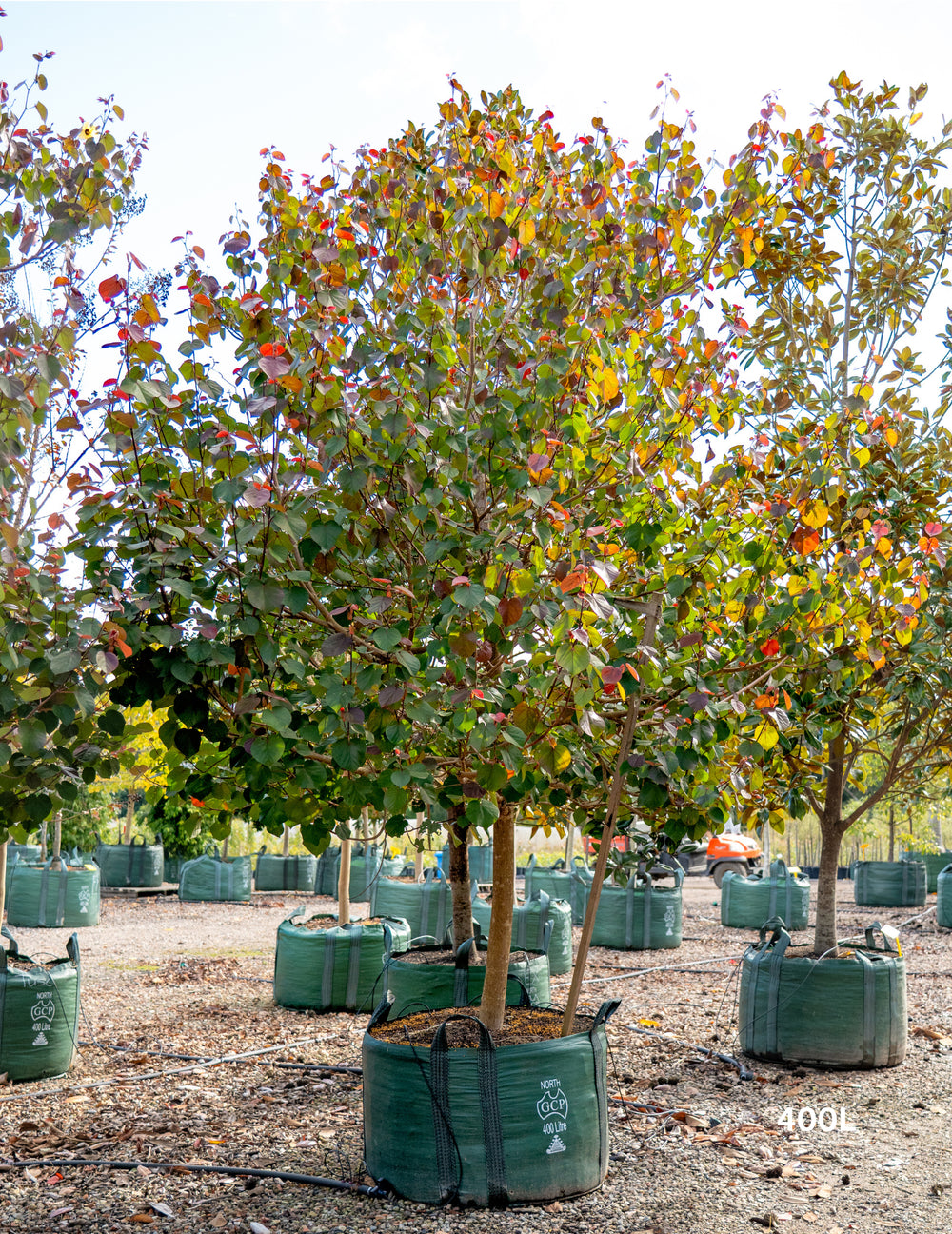
Hibiscus tiliaceus 'Rubra' Cottonwood
Hibiscus tiliaceus 'Rubra' Cottonwood
Hibiscus tiliaceus 'Rubra', commonly known as Cottonwood, is a fast-growing evergreen Australian native shrub or small tree valued for its broad heart-shaped burgundy foliage, large tropical-style flowers and exceptional performance in warm coastal positions. The yellow hibiscus flowers age through orange to deep red over the course of the day, giving striking colour contrast against the rich burgundy foliage from spring through autumn.
With a mature height of 4 to 8 metres and a spread of 4 to 6 metres, this variety forms a naturally rounded canopy that can be pruned to shape or left to grow freely as an informal screen. It performs exceptionally well in coastal, subtropical and warm temperate climates, with strong tolerance of salt, wind, clay soils and occasional waterlogging.
As a fast-growing evergreen Australian native for tropical, coastal, native and wildlife gardens, in mixed native plantings, informal hedges, shade canopies and feature positions, Hibiscus tiliaceus 'Rubra' brings burgundy foliage, colour-changing tropical flowers, dense canopy shade and reliable coastal toughness through every season.
Frequently Asked Questions
About Hibiscus tiliaceus 'Rubra' Cottonwood
What is Hibiscus tiliaceus 'Rubra' Cottonwood?
Hibiscus tiliaceus 'Rubra', commonly known as Cottonwood, is a fast-growing evergreen Australian native shrub or small tree valued for its broad heart-shaped burgundy foliage and large yellow hibiscus flowers that age through orange to red. It is native to coastal northern Australia and is one of the most striking native trees for warm coastal and tropical gardens.
How big does Cottonwood grow?
Cottonwood reaches a mature size of approximately 4 to 8 metres tall and 4 to 6 metres wide, forming a naturally rounded canopy. Growth is fast at 0.5 to 1 metre per year, and the plant can be pruned to maintain a smaller size or shaped into a single-trunk small tree.
When does Cottonwood flower?
Cottonwood produces large tropical hibiscus-style flowers from spring through to autumn. Each bloom opens buttery yellow in the morning and ages through orange to deep red over the course of the day, with multiple flowers at different stages giving a constant colour-changing display against the burgundy foliage.
Is Cottonwood suitable for coastal areas?
Yes. Cottonwood is one of the best Australian native trees for direct coastal planting. It handles salt-laden winds, sandy soils and exposed seaside positions with ease, and reflects its natural habitat along the tropical and subtropical coastlines of northern Australia.
Can Cottonwood be pruned into a hedge or small tree?
Yes. Cottonwood responds well to pruning and can be maintained as an informal hedge, dense screen or shaped into a single-trunk small feature tree. For hedging, trim two to three times per year through the growing season. For tree form, remove lower branches progressively through establishment.
Is Cottonwood frost tolerant?
No. Hibiscus tiliaceus 'Rubra' is frost sensitive and best grown in frost-free or protected positions. It performs reliably across tropical Queensland, coastal NSW and warm coastal Victoria, but should be avoided in heavily frost-prone inland areas.
Does Cottonwood attract wildlife?
Yes. The nectar-rich hibiscus flowers attract bees, butterflies, native birds including honeyeaters, and beneficial pollinators throughout the long flowering season. The dense broad canopy also offers shelter and nesting habitat for small birds, making Cottonwood one of the most valuable Australian natives for wildlife-friendly gardens.
Hibiscus tiliaceus 'Rubra' Cottonwood
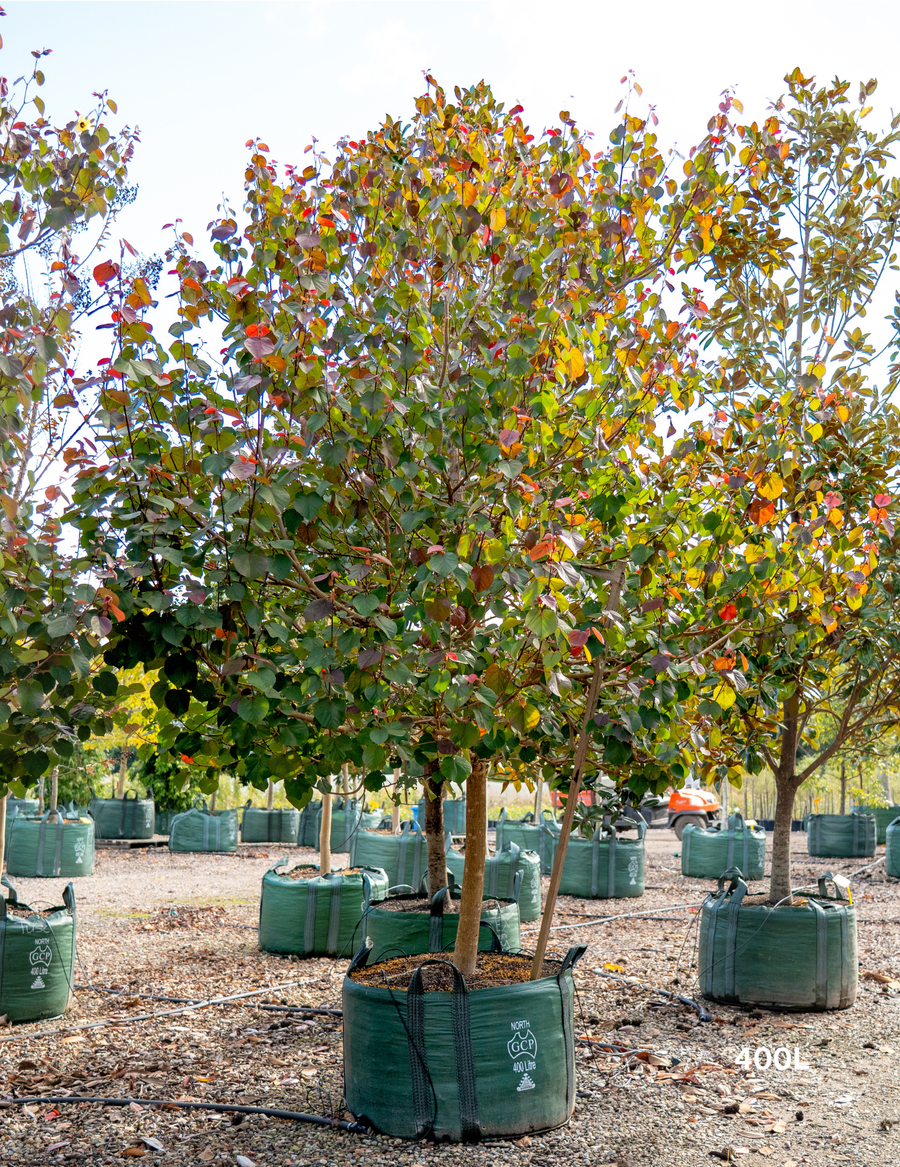

Banksia integrifolia 'Sentinel'
Banksia integrifolia 'Sentinel'
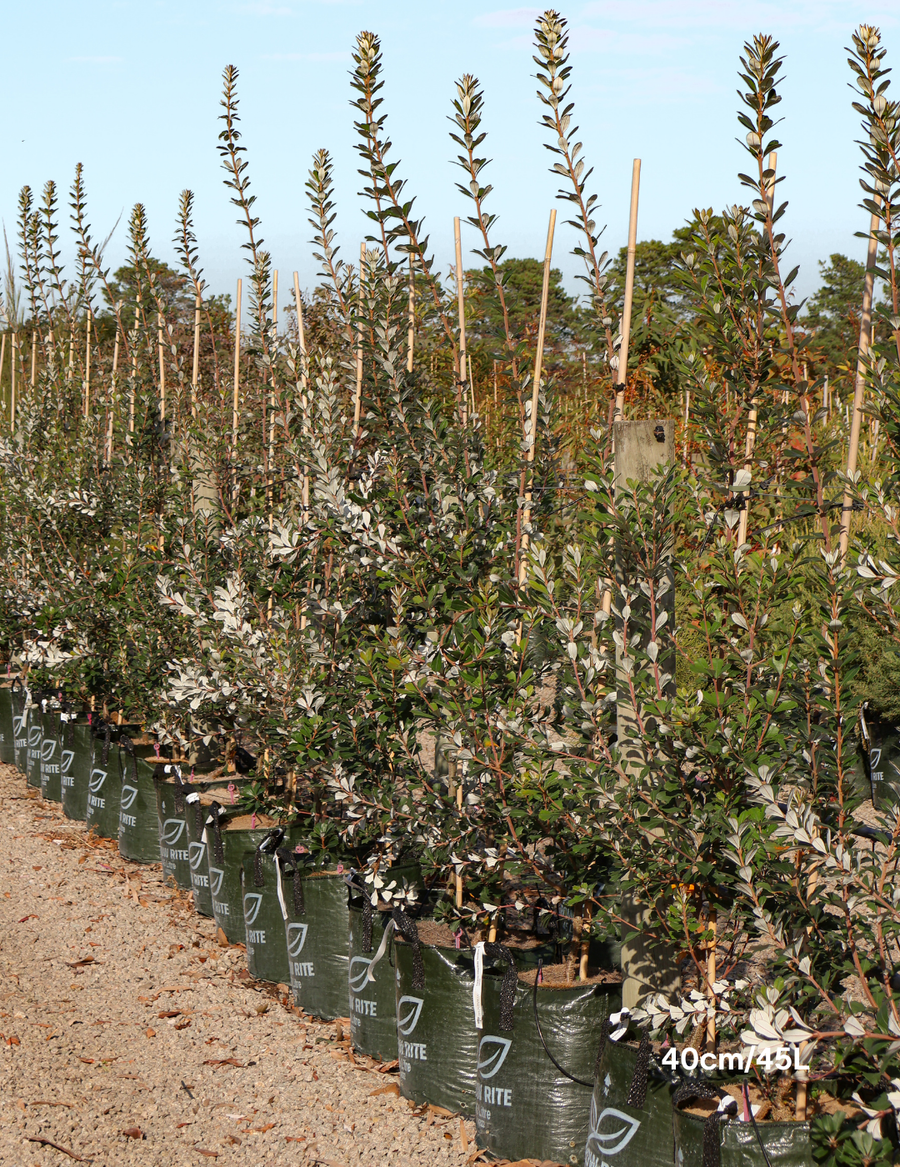
Banksia integrifolia 'Sentinel' is a compact upright cultivar of Coast Banksia, selected for narrow gardens and modern landscapes. The dense silvery-green foliage and bold golden cylindrical flower spikes give it the same striking look as standard Coast Banksia in a much smaller footprint, ideal for small gardens and tight planting strips.
Sentinel grows to 4-6 metres tall and just 2-3 metres wide with a naturally narrow upright form. The compact habit, salt and wind tolerance, and reliable winter-flowering display make it an excellent feature tree, informal screen, or coastal garden specimen for both residential and commercial projects.
Sentinel is highly coastal tolerant and handles salt spray, sandy soils, and exposed positions with ease. It is also drought tolerant and low maintenance once established, performing well across coastal NSW, VIC and QLD, in full sun with well-drained soil. The flower spikes provide a major nectar source for native honeyeaters, lorikeets, and pollinators through autumn and winter.
Sentinel or standard Coast Banksia? Sentinel is a compact upright cultivar reaching just 4-6m, ideal for small gardens, narrow planting strips, balcony pots, and modern landscapes. The standard Coast Banksia grows 8-15m with a broad spreading canopy, suited to larger gardens, screening, and feature use in spacious settings. Both share the same silver foliage and golden flower spikes.
Frequently Asked Questions
About Banksia integrifolia 'Sentinel'
How tall does Sentinel Banksia grow?
Sentinel grows to 4-6 metres tall with a narrow upright form just 2-3 metres wide, making it ideal for small gardens and narrow planting strips.
How fast does Sentinel grow?
Sentinel has a moderate growth rate of 40-60cm per year once established.
What is the difference between Sentinel and standard Coast Banksia?
Sentinel is a compact upright cultivar of Banksia integrifolia, reaching just 4-6m compared to 8-15m for the standard species. Its narrow form suits small gardens, while standard Coast Banksia is better for larger landscapes and screens.
Does Sentinel attract birds?
Yes. The golden cylindrical flower spikes are a major nectar source for native honeyeaters, lorikeets, and pollinators through autumn and winter.
Is Sentinel suitable for coastal gardens?
Yes. Sentinel inherits the strong coastal tolerance of Banksia integrifolia and handles salt spray, sandy soils, and exposed coastal positions with ease.
Can Sentinel grow in pots?
Yes. Sentinel performs well in large pots (60L+) thanks to its compact narrow form, making it a popular choice for balcony and courtyard planting.
Is Sentinel an Australian native?
Yes. Sentinel is a cultivar of Banksia integrifolia, native to the east coast of Australia from QLD through to VIC.
Banksia integrifolia 'Sentinel'

Stachys byzantina Lamb's Ears
Stachys byzantina Lamb's Ears
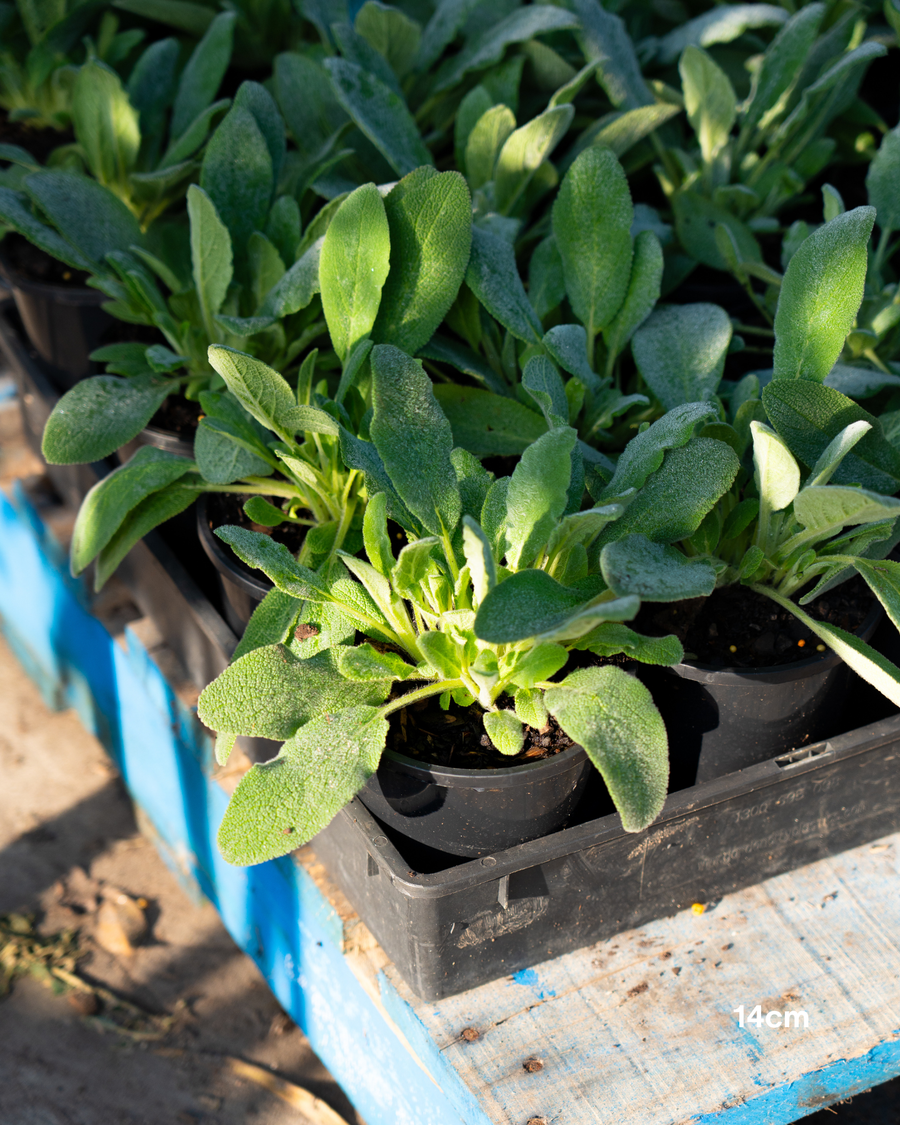
Stachys byzantina, commonly known as Lamb's Ears, is a low-growing spreading perennial valued for its remarkably soft, silvery-white woolly foliage that has the texture of lamb's ears. The thick, fuzzy oval leaves form low dense mats of silver, creating one of the most distinctive textural foliage effects in the garden.
It performs best in full sun to part shade with free-draining soil and is highly drought tolerant once established. Stachys byzantina spreads gently to form silver mats, suiting cottage gardens, sensory gardens, Mediterranean borders and as silver foliage contrast in mixed plantings. Tall pink-purple flower spikes appear through late spring and summer, though many gardeners remove them to keep the focus on the unique foliage.
As a foliage groundcover in cottage, Mediterranean, sensory and contemporary gardens, in low borders, mass plantings and along pathways where the soft texture invites touch, Stachys byzantina brings silvery contrast, drought tolerance and a tactile quality children and visitors gravitate toward.
Frequently Asked Questions
About Stachys byzantina Lamb's Ears
How tall does Stachys byzantina grow?
Stachys byzantina foliage forms low mats around 20 to 30 centimetres tall and 45 to 60 centimetres wide, spreading gently to form dense silver groundcover. Flower spikes can reach 50 to 75 centimetres when in bloom.
When does Stachys byzantina flower?
Stachys byzantina produces tall pink-purple flower spikes through late spring and summer, rising well above the silver foliage. Some gardeners remove the flower spikes as they emerge to maintain a tidy carpet of foliage and concentrate the plant's energy into leaf growth.
Where should I plant Stachys byzantina?
Stachys byzantina grows best in full sun to part shade with free-draining soil. It suits cottage borders, Mediterranean gardens, sensory plantings, pathway edges and silver foliage features. Avoid humid, poorly drained or deeply shaded positions where the woolly leaves can rot.
Is Stachys byzantina drought tolerant?
Yes. Once established, Stachys byzantina is highly drought tolerant thanks to its silvery hairs that reflect heat and reduce water loss. Through establishment it benefits from light, regular watering, then transitions to occasional watering through dry periods.
Is Stachys byzantina frost tolerant?
Yes. Stachys byzantina is highly frost hardy, handling moderate to heavy frost once established. The silver foliage often takes on a slightly bronzed tinge in colder periods and recovers fully through spring.
Can Stachys byzantina be grown in a pot?
Yes. Stachys byzantina performs well in pots, raised planters and trough plantings, particularly where the silver foliage can spill over edges. Use a free-draining mix, water moderately and ensure the woolly leaves do not sit on wet soil.
How do I maintain Stachys byzantina?
Maintain Stachys byzantina by removing flower spikes as they fade, clipping back any rotted or damaged foliage in autumn, and lifting and dividing clumps every two to three years to refresh the planting. Avoid overhead watering, which can mat down the soft foliage.
Stachys byzantina Lamb's Ears
Hedera canariensis Canary Island Ivy
Hedera canariensis Canary Island Ivy
Hedera canariensis, commonly known as Canary Island Ivy or Algerian Ivy, is a vigorous evergreen climbing and trailing vine valued for its large glossy dark green leaves and its ability to soften walls, pergolas and shaded planting beds with refined coverage. The leaves are noticeably broader and richer than common English Ivy, giving a lush, polished appearance.
It performs reliably in full sun through to full shade with free-draining soil and is highly drought tolerant once established. Hedera canariensis is excellent as a wall climber, a quick groundcover beneath established trees, or a softening green presence over fences and retaining structures in shaded courtyards and heritage gardens.
As a fast-growing evergreen climber and groundcover for cottage, woodland, heritage and formal gardens, in mass plantings, walls, pergolas and shaded courtyards, Hedera canariensis brings dense, glossy foliage, low-maintenance coverage and a long-lived green presence that strengthens steadily with each season.
Frequently Asked Questions
About Hedera canariensis Canary Island Ivy
How fast does Hedera canariensis grow?
Hedera canariensis is a fast-growing evergreen climber, putting on 1 to 2 metres of new growth per year once established. It is one of the quickest ways to soften a new wall or fence, and it covers shaded ground rapidly when planted as a groundcover.
Where should I plant Canary Island Ivy?
Hedera canariensis grows well in full sun through to full shade, making it one of the most adaptable climbers and groundcovers available. It is excellent against walls, pergolas, retaining structures and fences, and as a groundcover beneath established trees where many other plants struggle to thrive.
Is Hedera canariensis the same as English Ivy?
No. Hedera canariensis (Canary Island Ivy) has noticeably larger, glossier and more refined leaves than Hedera helix (English Ivy). It also has a more polished overall appearance and a slightly less aggressive root habit, making it the more elegant choice for prominent garden positions and feature walls.
Is Hedera canariensis frost tolerant?
Yes. Hedera canariensis is frost hardy and handles winter frost without damage. It performs reliably across cool, temperate and warm climates and remains evergreen through winter, providing year-round foliage when many surrounding plants are bare.
Does it need a support to climb?
Hedera canariensis attaches itself directly to walls, fences and timber using small aerial rootlets, so it does not require a trellis or wires. For best results on smooth or painted surfaces, provide initial support or wires until the plant establishes contact and starts climbing on its own.
Can it become invasive?
Hedera canariensis is vigorous and will spread if left unchecked. In garden settings it is easily managed with annual pruning to define edges and keep growth within bounds. It is well suited to defined planting beds and walls rather than naturalised or bush-adjacent settings where it could escape into surrounding vegetation.
How do I care for Hedera canariensis?
Hedera canariensis is very low maintenance. Trim back twice a year to maintain shape and define edges, water moderately through establishment then sparingly, mulch annually, and apply a light slow-release fertiliser in early spring if foliage colour drops.
Hedera canariensis Canary Island Ivy
Liquid error (sections/ee-products line 16): invalid url input
Echium candicans Pride of Madeira
Echium candicans Pride of Madeira
Echium candicans, commonly known as Pride of Madeira, is a striking evergreen flowering shrub valued for its dramatic spires of deep blue-violet flowers, soft silver-grey foliage and exceptional performance in tough coastal and Mediterranean-style gardens. Each spring the plant produces dense conical flower spikes that can reach 30 to 60 cm in length, smothered in tiny purple flowers that draw bees and beneficial insects in remarkable numbers.
Native to the laurel forests and rocky coastal cliffs of Madeira, Echium candicans thrives in full sun, free-draining soil and exposed positions. It is highly drought tolerant once established, handles salt-laden winds without flinching, and is frost tolerant down to around -5°C in established plants. The combination of soft silver foliage, architectural form and exuberant blue flowering makes it one of the most distinctive feature shrubs for coastal, Mediterranean and modern gardens.
As an evergreen flowering shrub for coastal, Mediterranean, modern and wildlife-friendly gardens, Echium candicans brings dramatic seasonal colour, year-round soft silver foliage, exceptional drought and salt tolerance, and outstanding value to bees, butterflies and beneficial insects through its long spring flowering display.
Frequently Asked Questions
About Echium candicans Pride of Madeira
How big does Echium candicans grow?
Echium candicans grows to a mature size of 1.5 to 2.5 metres tall and 2 to 3 metres wide, forming a substantial rounded shrub. Growth is fast once established, with plants reaching mature size within 3 to 4 seasons in suitable conditions.
When does Pride of Madeira flower?
Pride of Madeira flowers through spring into early summer, producing dramatic upright conical spikes of small purple-blue flowers that can reach 30 to 60 cm in length. The display lasts six to eight weeks and is one of the most magnetic plants for bees, butterflies and beneficial insects in the garden calendar.
Where does Echium candicans grow best?
Echium candicans thrives in full sun and free-draining soil. It performs exceptionally well in coastal gardens, exposed positions and Mediterranean-style landscapes, and handles dry rocky soils with ease. It is sensitive to wet feet, so avoid heavy clay or persistently moist positions.
Is Echium candicans drought tolerant?
Yes. Echium candicans is exceptionally drought tolerant once established, reflecting its origins on the dry rocky cliffs of Madeira. Through the first season it benefits from regular watering to settle in, after which it performs reliably on natural rainfall in most Australian climates.
Is Echium candicans coastal tolerant?
Yes. Echium candicans is exceptionally coastal tolerant and handles salt-laden winds, sandy soils and exposed seaside positions with ease. It is one of the best feature shrubs for direct coastal frontage where many other flowering plants struggle.
How do I prune Pride of Madeira?
Prune lightly after flowering by removing spent flower spikes and any leggy growth to maintain a compact rounded form. Avoid hard pruning into old wood as Echium candicans can struggle to regenerate from bare stems. Light annual shaping is the best long-term approach.
How long does Echium candicans live?
Echium candicans typically lives for 5 to 8 years as a feature shrub, with peak flowering displays from years 2 to 6. In favourable coastal conditions plants can live longer. It is best treated as a medium-lived feature rather than a long-term structural shrub, and can be easily replaced or rejuvenated through fresh planting every several years.
Echium candicans Pride of Madeira
Liquid error (sections/ee-products line 16): invalid url input

Evergreen Trees Direct Has Been Featured In:


Perfect Substitutes for Banksia 'Roller Coaster' – Prostrate Coast Banksia
Banksia spinulosa 'Birthday Candles'
Banksia spinulosa 'Birthday Candles'
Banksia spinulosa 'Birthday Candles' is a compact Australian native dwarf shrub valued for its showy golden-yellow flower spikes that emerge through autumn and winter, resembling lit candles standing upright above the foliage. It is one of the most reliable flowering dwarf banksias in cultivation, bred for its tight compact form and prolific seasonal display.
It performs best in full sun to part shade with free-draining acidic to neutral soil and is highly drought tolerant, coastal tolerant and low maintenance once established. The fine dark green foliage forms a dense rounded mound year-round, providing structure and texture even when not in flower, while the bold golden flower spikes draw honeyeaters and other nectar-feeding birds into the garden during the cooler months.
As a feature shrub in native, coastal, modern and low-maintenance gardens, in mass plantings, borders, rockeries and large containers, Banksia 'Birthday Candles' brings reliable seasonal colour, native wildlife value and a compact manageable form that works at the front of the border or as a low feature mass.
Frequently Asked Questions
About Banksia 'Birthday Candles'
How tall does Banksia 'Birthday Candles' grow?
Banksia 'Birthday Candles' is a dwarf cultivar reaching around 45 to 50 centimetres tall and 90 to 100 centimetres wide at maturity. The compact spreading form makes it ideal for the front of borders, mass plantings, rockeries and large pots.
When does Banksia 'Birthday Candles' flower?
Banksia 'Birthday Candles' produces its golden-yellow flower spikes through autumn and winter, with the main display from late autumn into mid winter. The long flowering period provides reliable cool-season colour when many other plants are dormant.
Does Banksia 'Birthday Candles' attract wildlife?
Yes. Banksia 'Birthday Candles' is a major nectar source for honeyeaters, lorikeets, native bees and butterflies through autumn and winter, when fewer nectar sources are available. It is one of the highest-value plants for cool-season bird activity in Australian gardens.
Where should I plant Banksia 'Birthday Candles'?
Banksia 'Birthday Candles' grows best in full sun to part shade with free-draining acidic to neutral soil. It suits native gardens, coastal plantings, modern borders, rockeries and large pots, tolerating coastal exposure, dry conditions and reflective heat once established.
Is Banksia 'Birthday Candles' drought tolerant?
Yes. Once established, Banksia 'Birthday Candles' is highly drought tolerant and performs reliably through warm dry periods with minimal watering. Through establishment it benefits from light, regular watering to develop the deep root system that supports long-term drought hardiness.
What fertiliser should I use?
Banksia 'Birthday Candles' is highly sensitive to phosphorus, like most Proteaceae. Use only low-phosphorus native fertilisers, and avoid general-purpose or rose fertilisers, manures and bonemeal, all of which can kill the plant. A light application in early spring is sufficient.
Can Banksia 'Birthday Candles' be grown in a pot?
Yes. Banksia 'Birthday Candles' performs excellently in pots and raised planters thanks to its compact dwarf form. Use a native plant or free-draining acidic potting mix, water moderately through warm weather and feed only with low-phosphorus native fertiliser.
Banksia spinulosa 'Birthday Candles'

Banksia integrifolia Coast Banksia
Banksia integrifolia Coast Banksia
Banksia integrifolia, the Coast Banksia, is one of Australia's toughest and most versatile native trees. Silvery-green foliage and bold golden cylindrical flower spikes from late summer through winter make it a striking feature, while its exceptional tolerance of salt, wind, and poor soils makes it a reliable performer where many trees fail.
Coast Banksia grows to 8-15 metres tall and 4-6 metres wide with an upright spreading canopy. The fast growth and hardy nature suit coastal screens, windbreaks, habitat plantings, and feature use across both coastal and inland gardens. The golden flower spikes are a major nectar source for honeyeaters, lorikeets, and native bees through the cooler months.
Coast Banksia is highly drought tolerant once established and thrives along the east coast from QLD to VIC, performing best in coastal sites, sandy soils, and full sun. It also grows well inland in well-drained conditions, and is low maintenance once established.
Coast Banksia or Sentinel? The standard Coast Banksia grows 8-15m with a broad spreading canopy, suited to larger gardens, coastal screens, and feature use in spacious settings. Its compact cultivar Sentinel reaches just 4-6m with a narrow upright form, ideal for small gardens, narrow planting strips, and modern landscapes. Both share the same silver foliage and golden flower spikes.
Frequently Asked Questions
About Banksia integrifolia Coast Banksia
How tall does Coast Banksia grow?
Coast Banksia grows to 8-15 metres tall with a spreading canopy 4-6 metres wide.
How fast does Coast Banksia grow?
Coast Banksia is fast-growing, adding 60cm to 1 metre per year once established in well-drained soil.
Is Coast Banksia suitable for coastal gardens?
Yes. Banksia integrifolia is one of Australia's most coastal-tolerant native trees, handling salt spray, sandy soils, and strong winds with ease.
Does Coast Banksia attract birds?
Yes. The golden cylindrical flower spikes are a major nectar source for native honeyeaters, lorikeets, rainbow bees and pollinators through autumn and winter.
Is Coast Banksia drought tolerant?
Yes. Coast Banksia is highly drought tolerant once established and prefers well-drained soils with minimal supplementary water.
Where does Coast Banksia grow best in Australia?
Coast Banksia thrives along the east coast from QLD to VIC, performing best in coastal sites, sandy soils, and full sun positions. It also grows well inland in well-drained conditions.
What is the difference between Coast Banksia and 'Sentinel'?
Standard Coast Banksia grows 8-15m with a broad spreading canopy. 'Sentinel' is a compact upright cultivar reaching just 4-6m, better suited to small gardens, narrow planting strips, and feature use.
Banksia integrifolia Coast Banksia
Banksia integrifolia 'Sentinel'
Banksia integrifolia 'Sentinel'
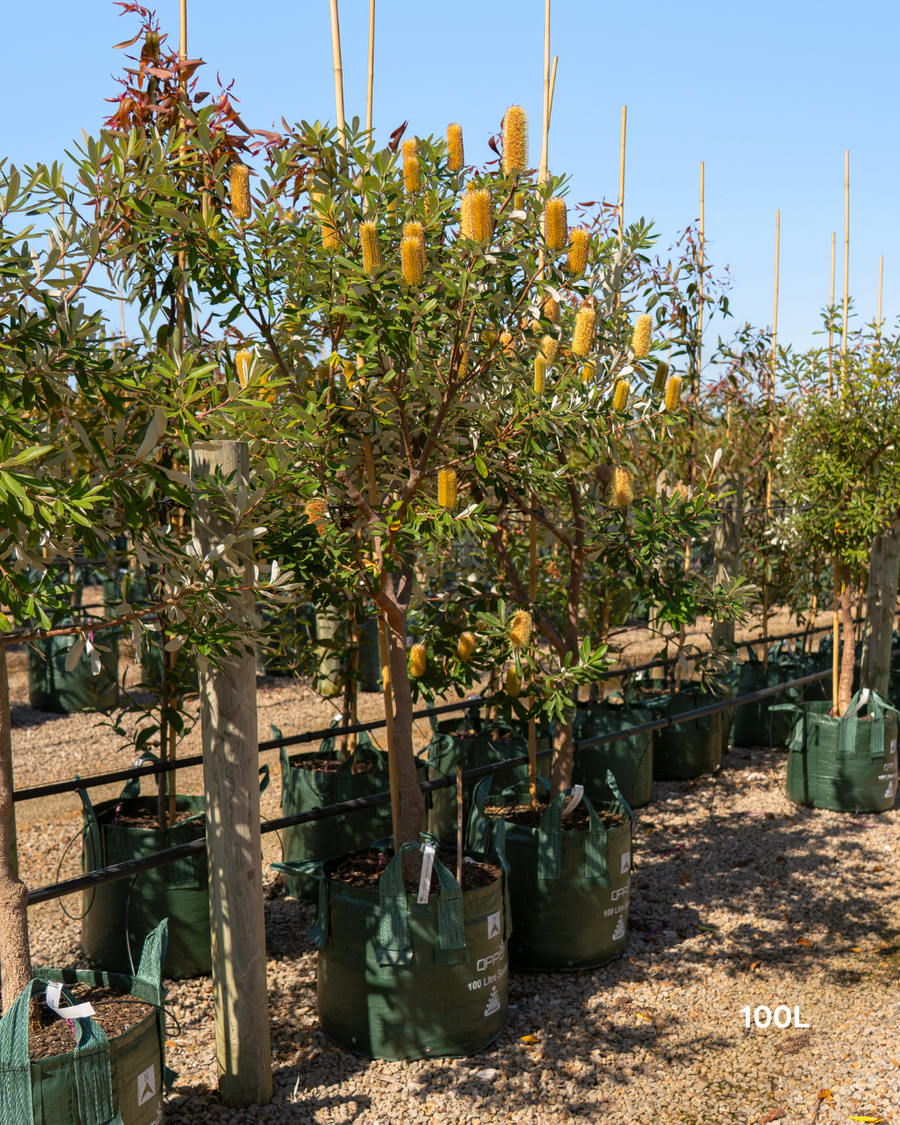
Banksia integrifolia 'Sentinel' is a compact upright cultivar of Coast Banksia, selected for narrow gardens and modern landscapes. The dense silvery-green foliage and bold golden cylindrical flower spikes give it the same striking look as standard Coast Banksia in a much smaller footprint, ideal for small gardens and tight planting strips.
Sentinel grows to 4-6 metres tall and just 2-3 metres wide with a naturally narrow upright form. The compact habit, salt and wind tolerance, and reliable winter-flowering display make it an excellent feature tree, informal screen, or coastal garden specimen for both residential and commercial projects.
Sentinel is highly coastal tolerant and handles salt spray, sandy soils, and exposed positions with ease. It is also drought tolerant and low maintenance once established, performing well across coastal NSW, VIC and QLD, in full sun with well-drained soil. The flower spikes provide a major nectar source for native honeyeaters, lorikeets, and pollinators through autumn and winter.
Sentinel or standard Coast Banksia? Sentinel is a compact upright cultivar reaching just 4-6m, ideal for small gardens, narrow planting strips, balcony pots, and modern landscapes. The standard Coast Banksia grows 8-15m with a broad spreading canopy, suited to larger gardens, screening, and feature use in spacious settings. Both share the same silver foliage and golden flower spikes.
Frequently Asked Questions
About Banksia integrifolia 'Sentinel'
How tall does Sentinel Banksia grow?
Sentinel grows to 4-6 metres tall with a narrow upright form just 2-3 metres wide, making it ideal for small gardens and narrow planting strips.
How fast does Sentinel grow?
Sentinel has a moderate growth rate of 40-60cm per year once established.
What is the difference between Sentinel and standard Coast Banksia?
Sentinel is a compact upright cultivar of Banksia integrifolia, reaching just 4-6m compared to 8-15m for the standard species. Its narrow form suits small gardens, while standard Coast Banksia is better for larger landscapes and screens.
Does Sentinel attract birds?
Yes. The golden cylindrical flower spikes are a major nectar source for native honeyeaters, lorikeets, and pollinators through autumn and winter.
Is Sentinel suitable for coastal gardens?
Yes. Sentinel inherits the strong coastal tolerance of Banksia integrifolia and handles salt spray, sandy soils, and exposed coastal positions with ease.
Can Sentinel grow in pots?
Yes. Sentinel performs well in large pots (60L+) thanks to its compact narrow form, making it a popular choice for balcony and courtyard planting.
Is Sentinel an Australian native?
Yes. Sentinel is a cultivar of Banksia integrifolia, native to the east coast of Australia from QLD through to VIC.
Banksia integrifolia 'Sentinel'
Lomandra longifolia 'Tanika'®
Lomandra longifolia 'Tanika'®
Lomandra longifolia 'Tanika'® (LM300) is one of the most widely planted Australian native ornamental grasses, valued for its fine bright green strappy foliage, neat compact habit and exceptional resilience in tough landscaping conditions. A naturally compact and finer-foliaged form of the species, 'Tanika' holds a refined mounding shape without the coarser texture of standard Lomandra longifolia.
It performs reliably in full sun through to part shade, tolerates drought, frost, coastal salt and poor soils, and produces small yellow flower spikes through spring and summer that add a soft seasonal lift. At a mature size of around 60 cm tall by 60 cm wide, 'Tanika' is one of the most useful Australian natives for mass planting, modern garden borders, low-maintenance landscapes and feature pot planting.
As a compact evergreen Australian native grass for native, modern, coastal, contemporary and low-maintenance gardens, in mass plantings, borders and feature pot displays, Lomandra longifolia 'Tanika' brings fine textural foliage, year-round form and exceptional toughness to almost any garden brief.
Frequently Asked Questions
About Lomandra longifolia 'Tanika'
How big does Lomandra 'Tanika' grow?
Lomandra 'Tanika' grows to a compact mature size of around 60 cm tall by 60 cm wide, forming a neat rounded mound of fine green strappy foliage. It is significantly more compact and finer-textured than the standard Lomandra longifolia, making it the preferred form for refined garden settings.
Where should I plant Lomandra 'Tanika'?
Lomandra 'Tanika' grows well in full sun through to part shade and tolerates a wide range of soil types from sandy through to clay. It is excellent for mass planting, low borders, coastal exposed positions and contemporary garden borders, and performs reliably in both garden beds and pots.
Is Lomandra 'Tanika' drought tolerant?
Yes. Lomandra 'Tanika' is highly drought tolerant once established and is one of the most reliable Australian natives for low-water gardens. Through establishment it benefits from regular watering, then transitions to natural rainfall in most Australian climates.
Is it frost tolerant?
Yes. Lomandra 'Tanika' is frost tolerant and performs reliably across cool, temperate and warm Australian climates. The fine evergreen foliage holds its colour through winter with no protection required.
Does Lomandra 'Tanika' flower?
Yes. Lomandra 'Tanika' produces small yellow flower spikes through spring and into summer, sitting just above the foliage. The flowers are softly fragrant and provide a delicate seasonal lift, though the plant is grown primarily for its foliage form rather than its flowering.
How do I care for Lomandra 'Tanika'?
Lomandra 'Tanika' is exceptionally low maintenance. Water through establishment, then sparingly. Every 2 to 3 years, give plants a hard tidy in late winter by removing old foliage to encourage fresh growth. No regular pruning is otherwise required.
Can it be used for mass planting?
Yes – mass planting is one of the most successful uses for Lomandra 'Tanika'. Planted on a 50 to 60 cm spacing the plants knit together into a refined textural carpet within 12 to 18 months, providing a contemporary and resilient alternative to traditional groundcovers and grasses.
Lomandra longifolia 'Tanika'®
Liquid error (sections/ee-products line 16): invalid url input
Follow Us On Instagram
@evergreentreesdirect ↗
Tips & Tricks
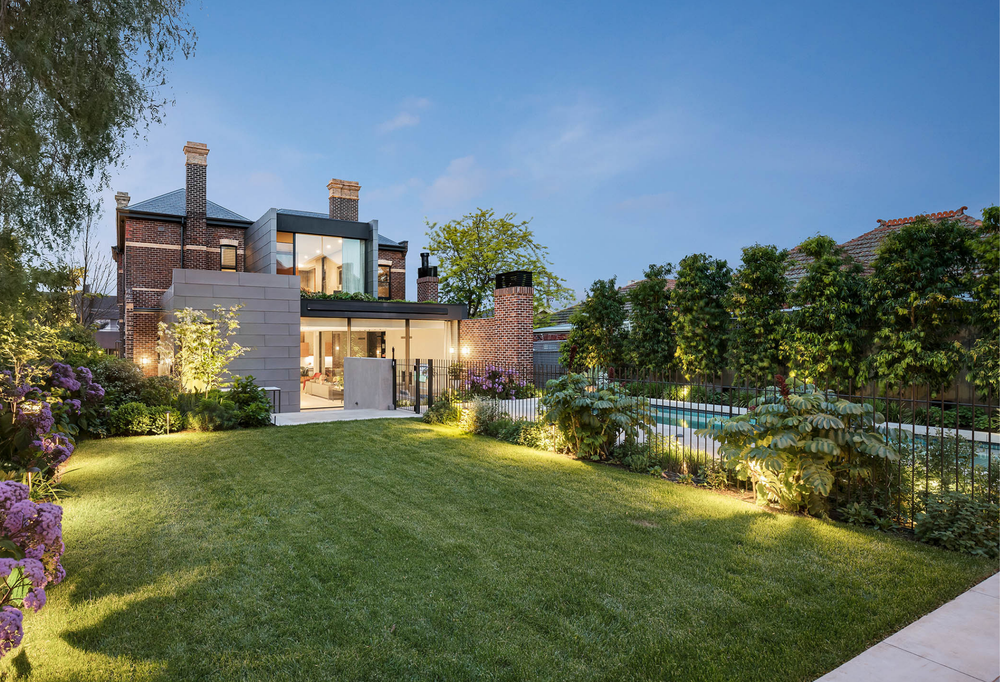
Best Trees for Creating a Privacy Screen: 10 Picks Across Fast Formal, Native and Narrow Column Options
Read the story
How to Incorporate Trees into Your Modern Landscape Design
Read the story
The Importance of Root Health: How to Choose Quality Trees
Read the story