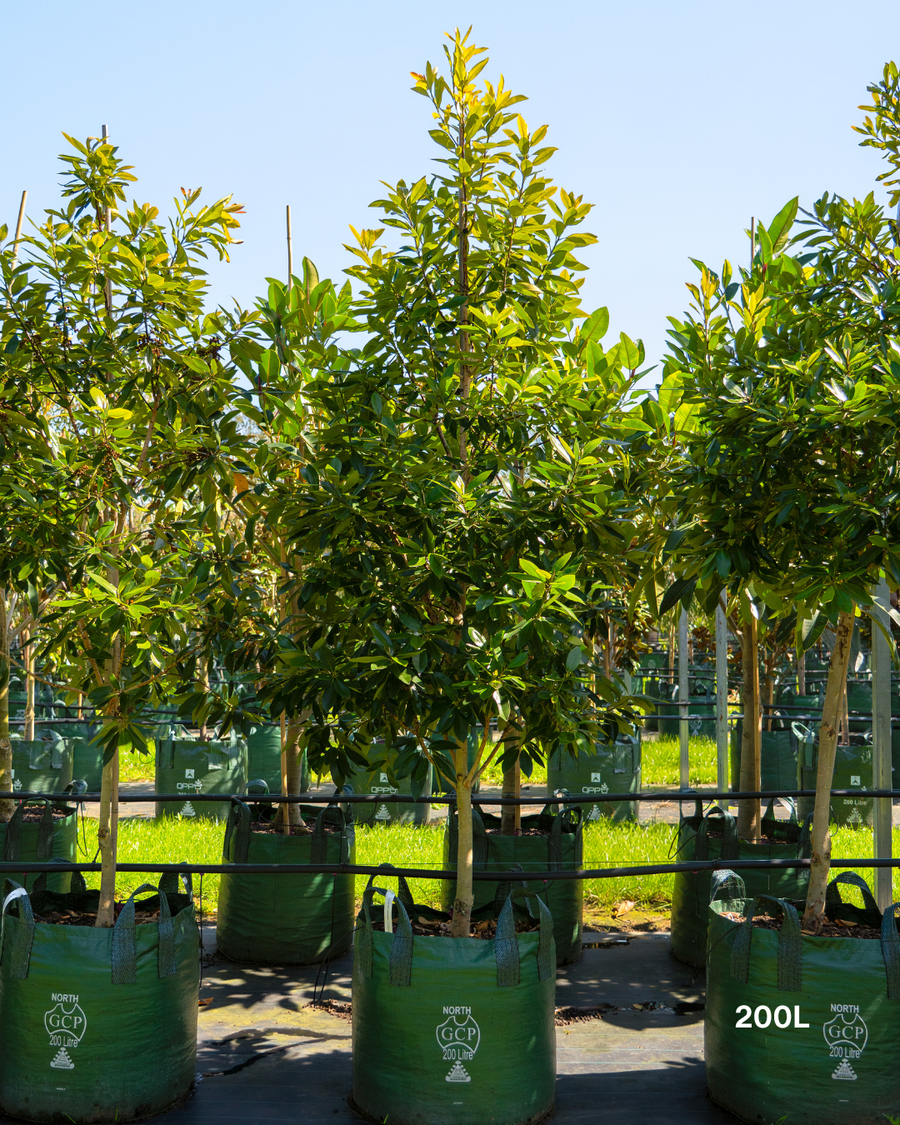
- Mature height
- 6m to 12m
- Mature width
- 6m to 8m
Albizia julibrissin, the Persian Silk Tree, is a deciduous tree with a broad flat topped crown and doubly divided leaves that fold up at night. Through the warm months it carries powder puff flowers in clear pink, each one a tuft of fine silky stamens, held right across the top of the canopy.
Growth is fast, 60 centimetres to 1 metre a year, reaching 6 to 12 metres high and 6 to 8 metres across. It wants full sun and free-draining soil, copes with poor ground and reflected heat, and once dormant it is properly frost hardy. A late frost can burn new spring growth without lasting harm.
The flat canopy throws light dappled shade, which makes it useful over a terrace, a courtyard or a carpark bed where a dense canopy would feel too heavy. Bare winter branches let sun back through to the house. Seed pods hang on after leaf fall and any seedlings pull out easily.
Frequently Asked Questions
About Persian Silk Tree
What is the Persian Silk Tree?
Albizia julibrissin is a deciduous tree with a broad flat topped crown and finely divided fern-like leaves that fold up at night and in rain. Through the warm months it carries pink powder puff flowers made of fine silky stamens, held across the top of the canopy. It belongs to the pea family.
How big does the Persian Silk Tree grow?
It reaches 6 to 12 metres high and 6 to 8 metres wide, with the canopy usually broader in proportion than the height suggests. The spread is the figure to plan around when choosing a position. In smaller gardens it can be held toward the lower end of that range with formative pruning.
How fast does it grow?
Fast, 60 centimetres to 1 metre a year while young, slowing as it approaches full height. Trees planted at a larger container size usually flower within two or three seasons. That speed is useful where shade is needed quickly, though the timber is not especially strong, so shelter it from severe wind.
When does the Persian Silk Tree flower?
From late spring into summer, mostly December through February, with the heaviest display in midsummer. The flowers are lightly fragrant and last several weeks, and bees and honeyeaters work them constantly. Flat brown seed pods follow in autumn and hang on the bare branches through winter.
Is it evergreen or deciduous?
Deciduous. It drops its leaves through the colder months and leafs out again in mid to late spring, noticeably later than most deciduous trees. That habit is useful on a north facing terrace, where the canopy shades in summer and the bare branches let winter sun through to the house.
Is it frost tolerant?
Yes, and more so than is often assumed. Once dormant it handles hard frost, which is why it performs in Canberra, Orange and inland Victoria as well as in warm coastal gardens. The risk is a late frost catching new spring growth, which burns the tips but does not harm an established tree.
How do I care for the Persian Silk Tree?
Water through the first two summers, after which it copes with dry spells on its own. Prune in late winter while dormant to lift the canopy and remove crossing branches, which helps the flat crown develop evenly. Rake up seed pods if you would rather not have seedlings; they pull out easily when small.