Skip to content
What to Plant Under Trees: 8 Plants and How to Use Each

What to Plant Under Trees: 8 Plants and How to Use Each

Eight plants that work under trees, from shade lovers to sun lovers for the edge of the canopy, and how to use each one.

What to plant under trees comes down to light, moisture and roots. This guide covers eight plants that work beneath trees, from shade lovers such as Ligularia reniformis and Helleborus x glandorfensis 'Ice Breaker Max' to sun-loving plants for the bright edge of the canopy, with how to use each one.

Start by reading the light. Dry shade under an evergreen canopy suits different plants from the dappled light under a deciduous tree. Each plant below is matched to its light, its moisture needs and a job in the planting, whether that is a clipped accent, a low border, a groundcover or a spiller over a wall. Five of the eight have plant cards below. The other three link straight to their product pages.

Ready to shop? Browse the underplanting collection, see the topiary range, or take the tree quiz. For the canopy itself, our guide to the best shade trees covers the trees to plant above them.

What to Plant Under Trees: 8 Plants and How to Use Each
Last reviewed
18 November 2026
Reading time
5 minutes
Supplier
Evergreen Trees Direct

How to choose plants for under trees

  • LightMatch the plant to the light. Full shade plants such as Ligularia reniformis scorch in hot afternoon sun, while Rosmarinus officinalis 'Prostratus' needs full sun.
  • MoistureDry shade is the hardest site. Arthropodium cirratum is drought tolerant once established, while Ligularia reniformis and Gardenia jasminoides 'Florida' need consistent moisture.
  • Tree typeDeciduous trees let winter light through, which suits winter flowers such as the hellebore. Evergreen trees cast shade all year.
  • FrostHelleborus x glandorfensis 'Ice Breaker Max' and Hedera canariensis are frost hardy. Arthropodium cirratum, Ligularia reniformis and Gardenia jasminoides 'Florida' are frost sensitive and need a sheltered spot.
  • Mature widthAllow for the mature width shown on each plant card and product page, so the planting fills in without crowding.
  • RepetitionRepeat a few varieties in groups. It gives a cohesive finish and is easier to maintain.
How to choose plants for under trees

Five of the eight plants, with photos and sizes

Compare sizes
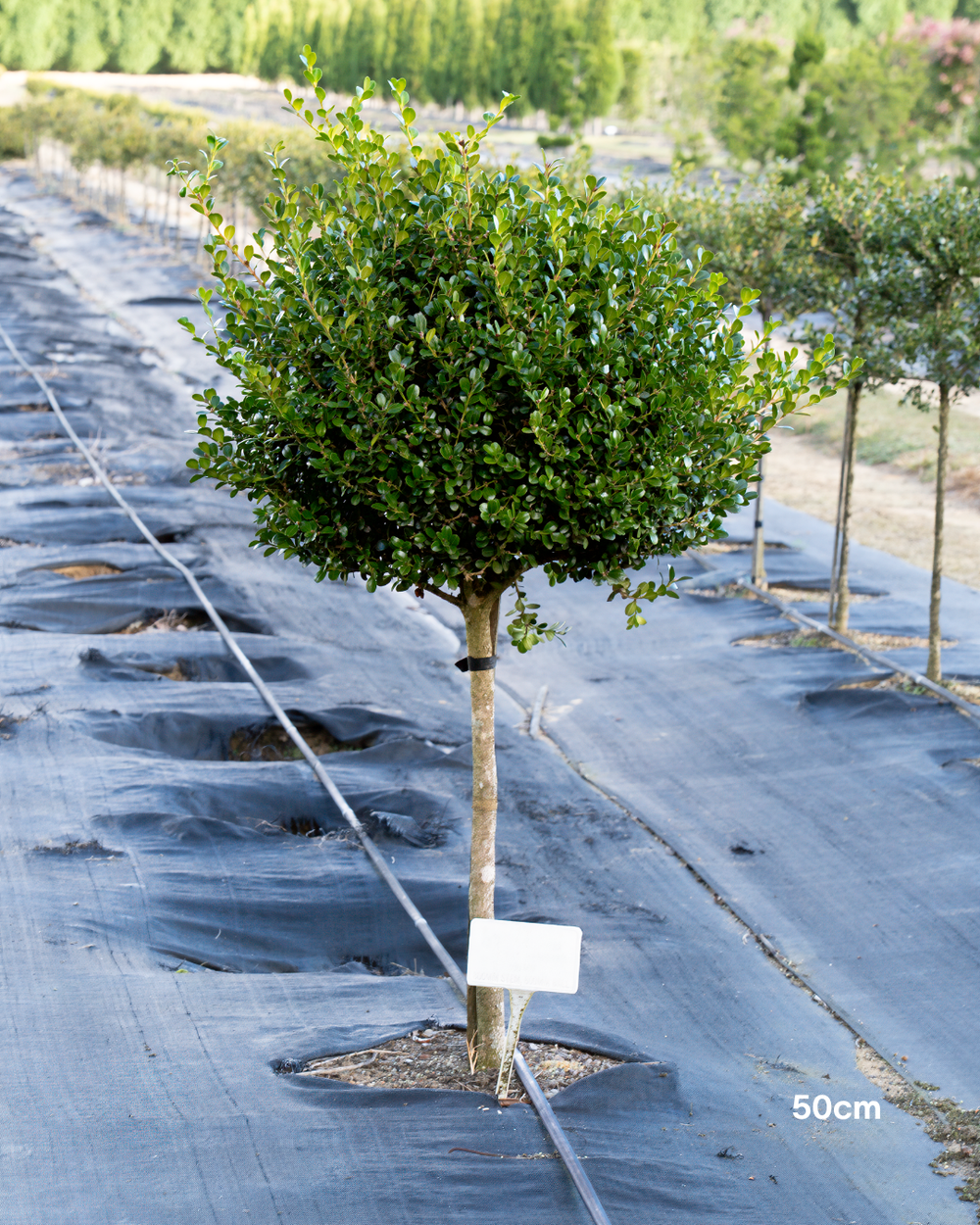
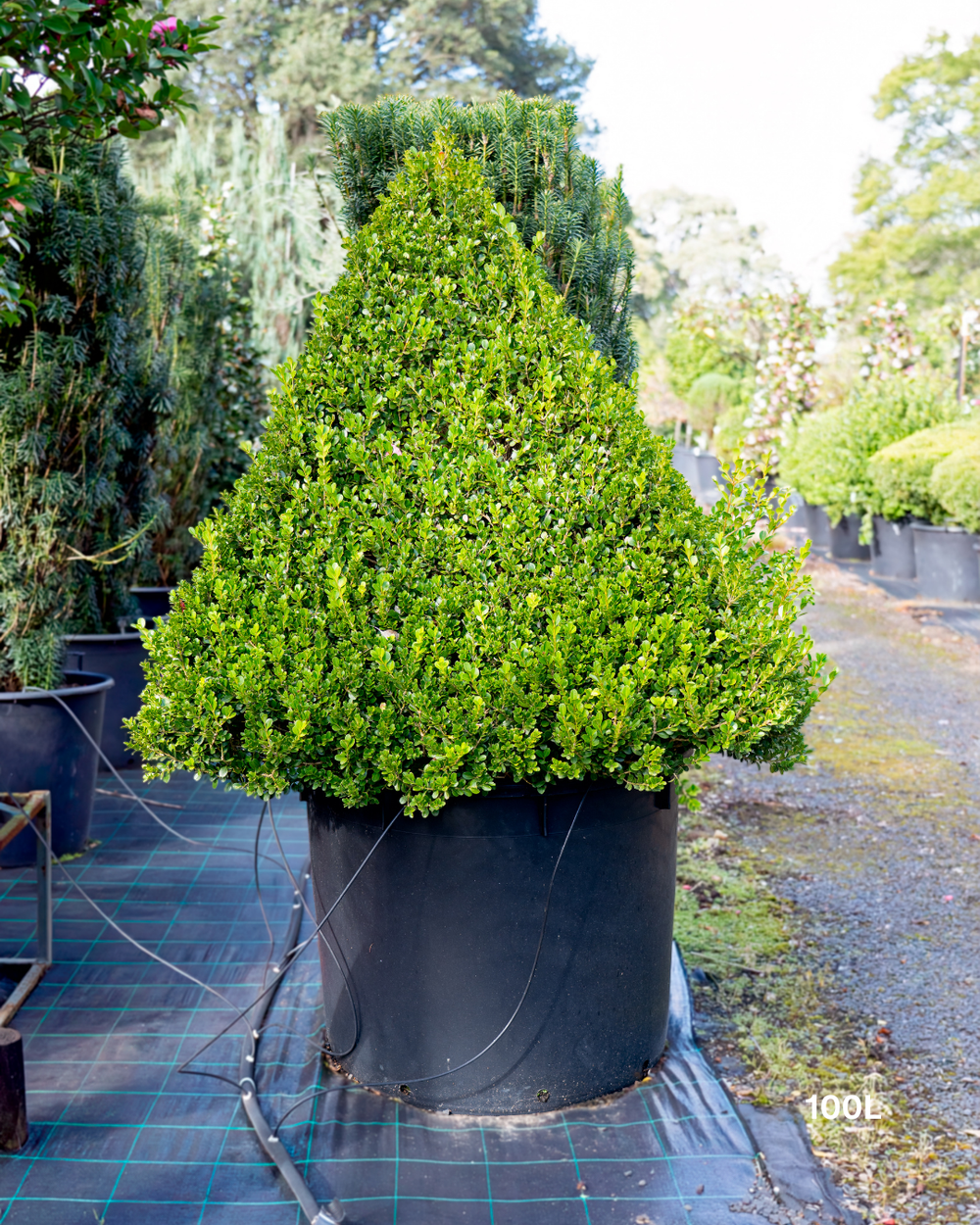
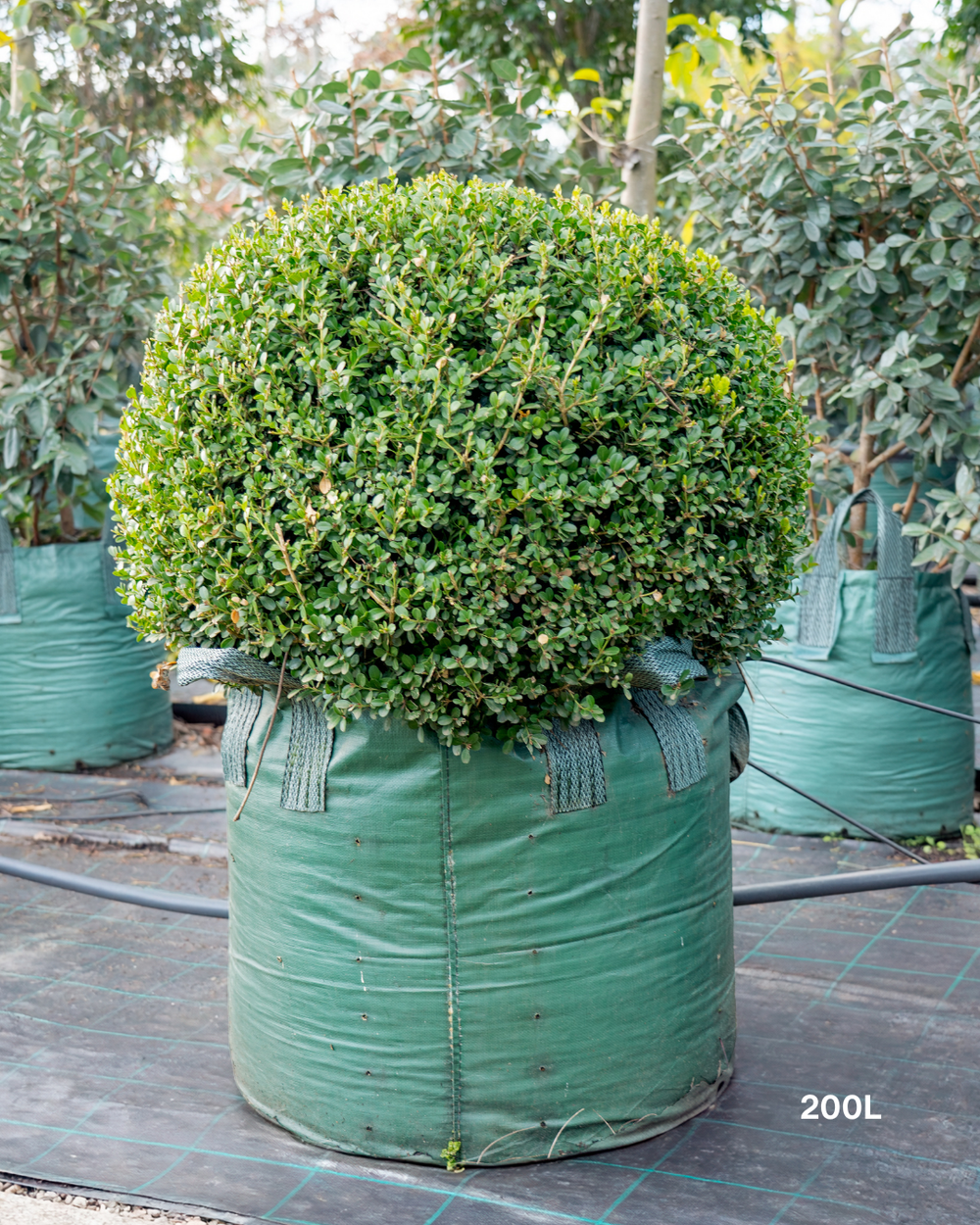
Buxus microphylla var. japonicaBuxus microphylla var. japonicaBuxus microphylla var. japonicaBuxus microphylla var. japonicaBuxus microphylla var. japonicaBuxus microphylla var. japonicaBuxus microphylla var. japonica

Topiary anchor

Buxus microphylla var. japonica

Japanese box topiary balls

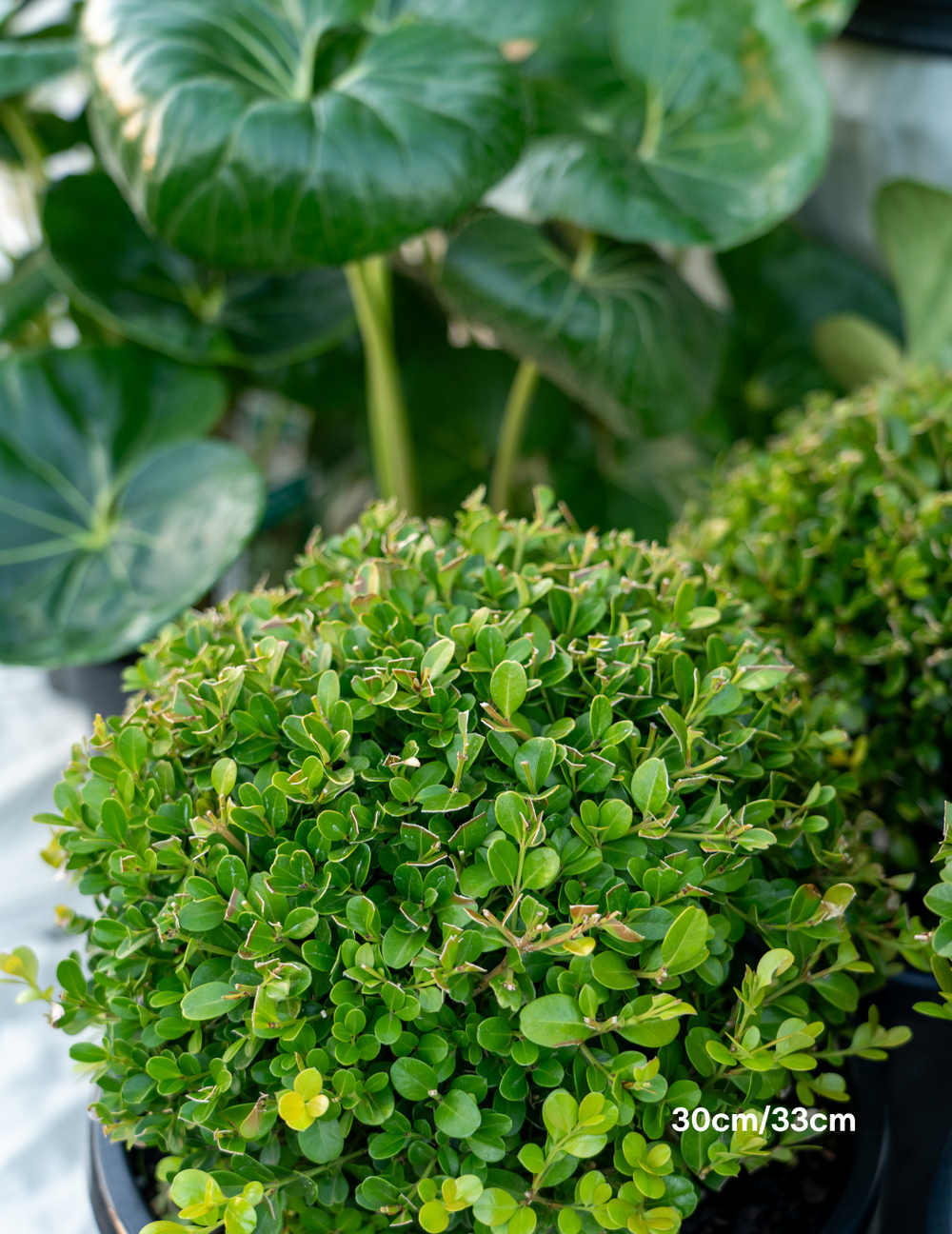
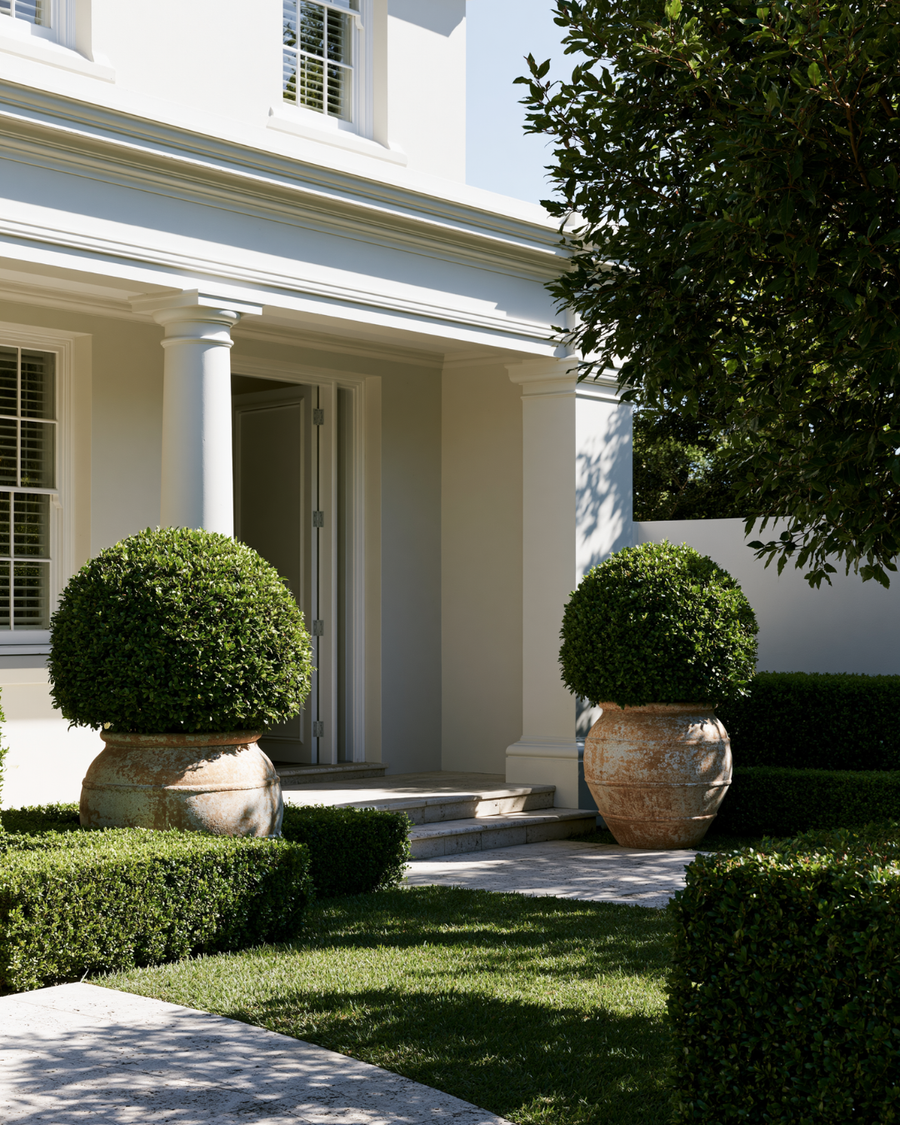
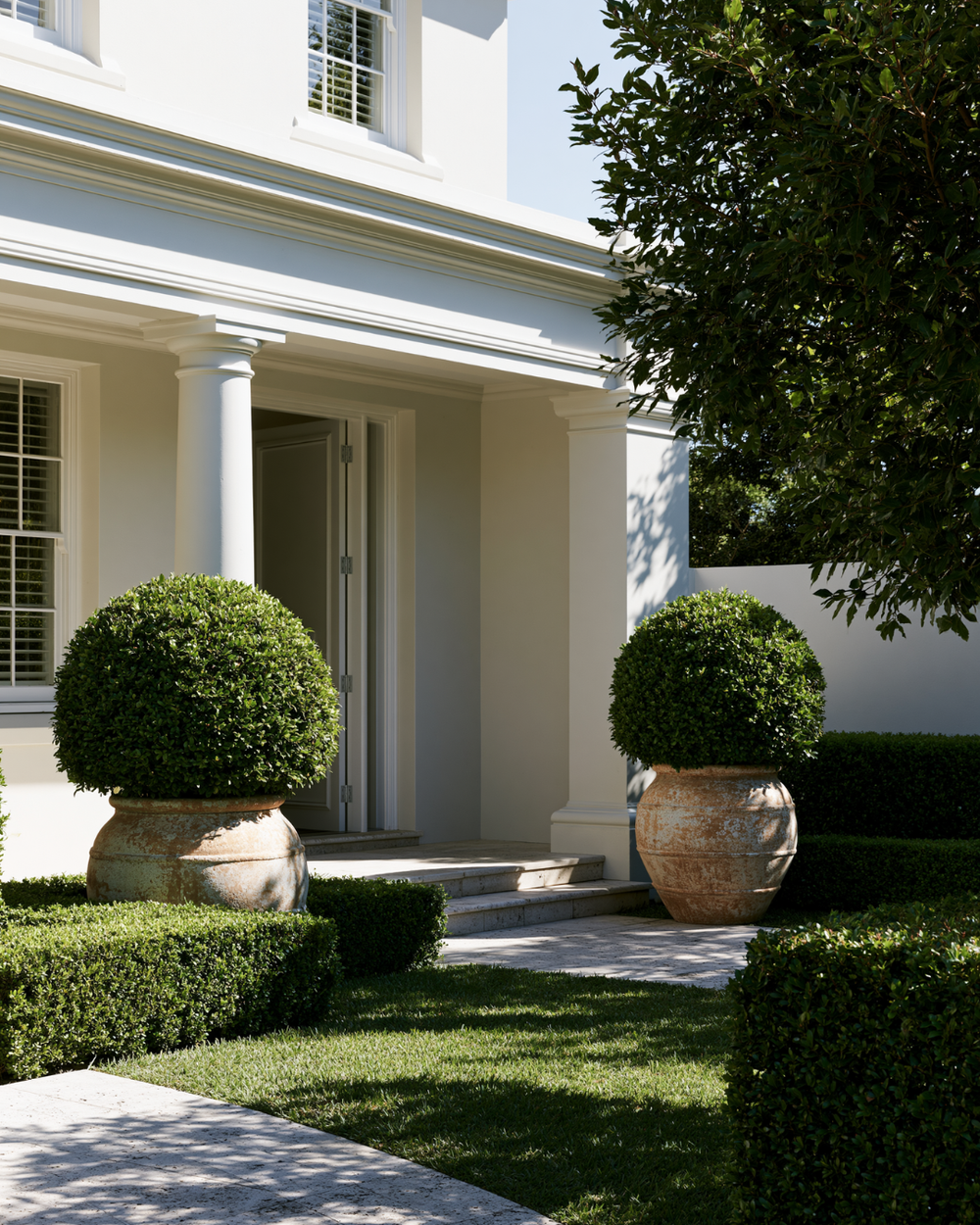
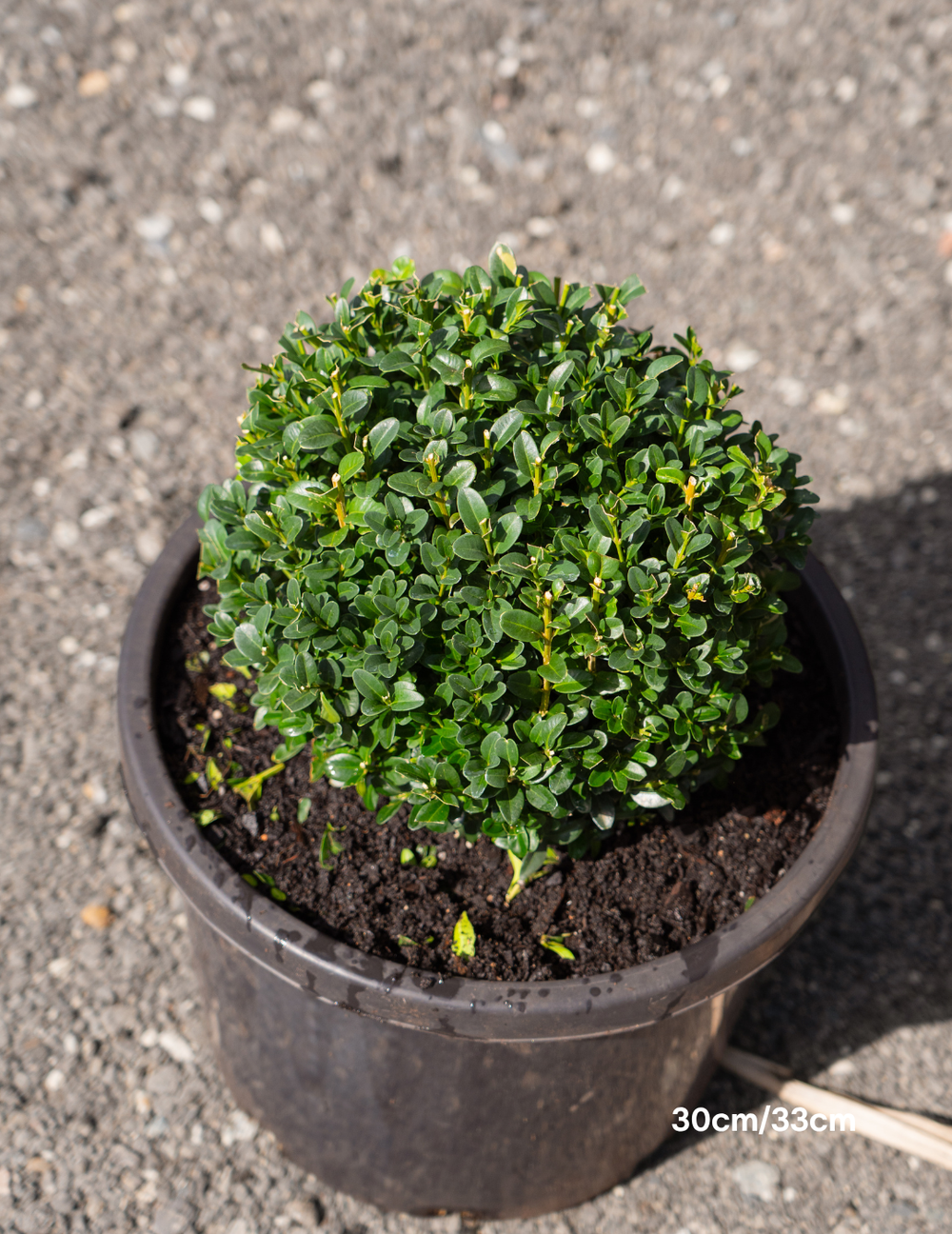
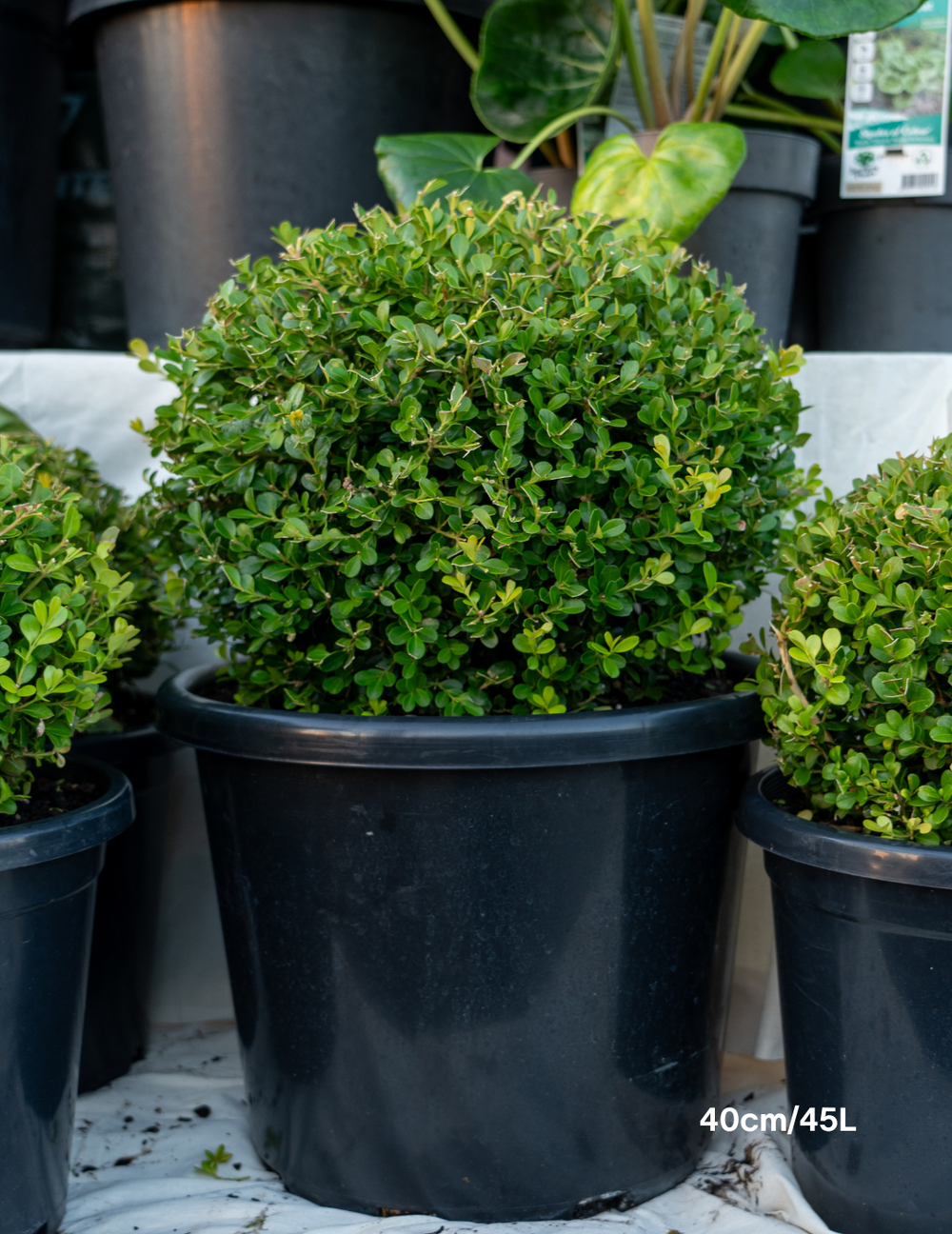
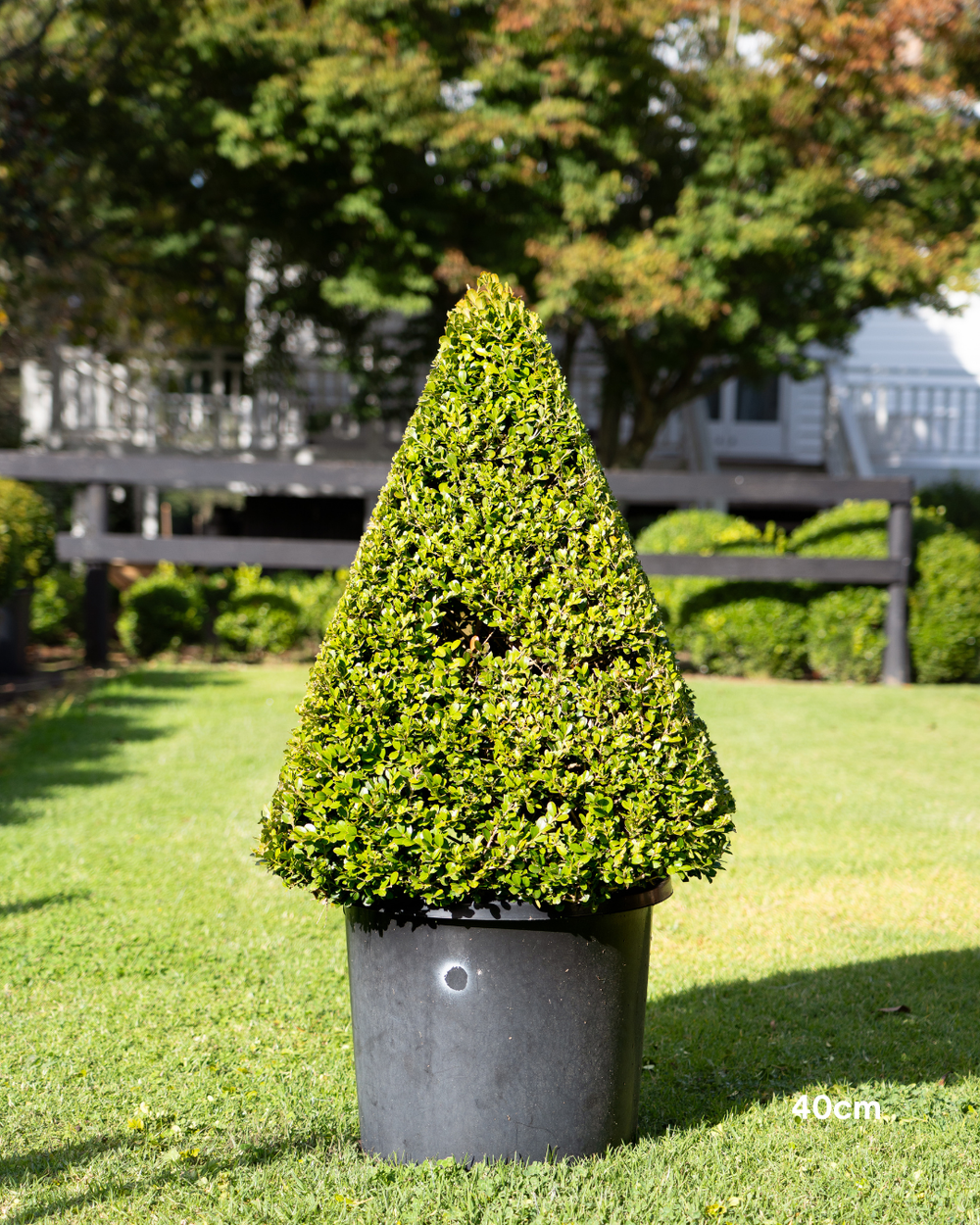
Dense evergreen balls with small, rounded leaves that hold a crisp clipped edge. Use them to edge beds and paths or to underplant feature trees. Group three sizes in a loose triangle and repeat the groups.

Mature size
1 to 2 m x 1.2 to 1.5 m (unclipped)
Best for
Entries, edging, formal underplanting
View product →
Compare sizes
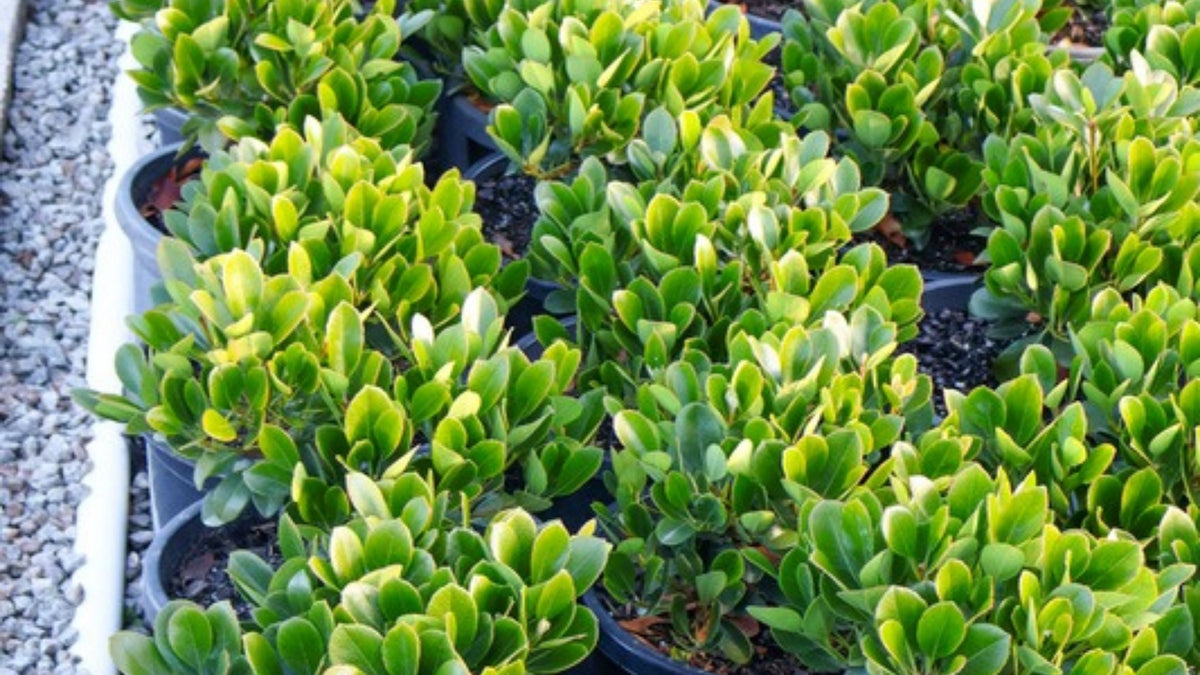
Rhaphiolepis indica 'Oriental Pearl'Rhaphiolepis indica 'Oriental Pearl'

Low border

Rhaphiolepis indica 'Oriental Pearl'

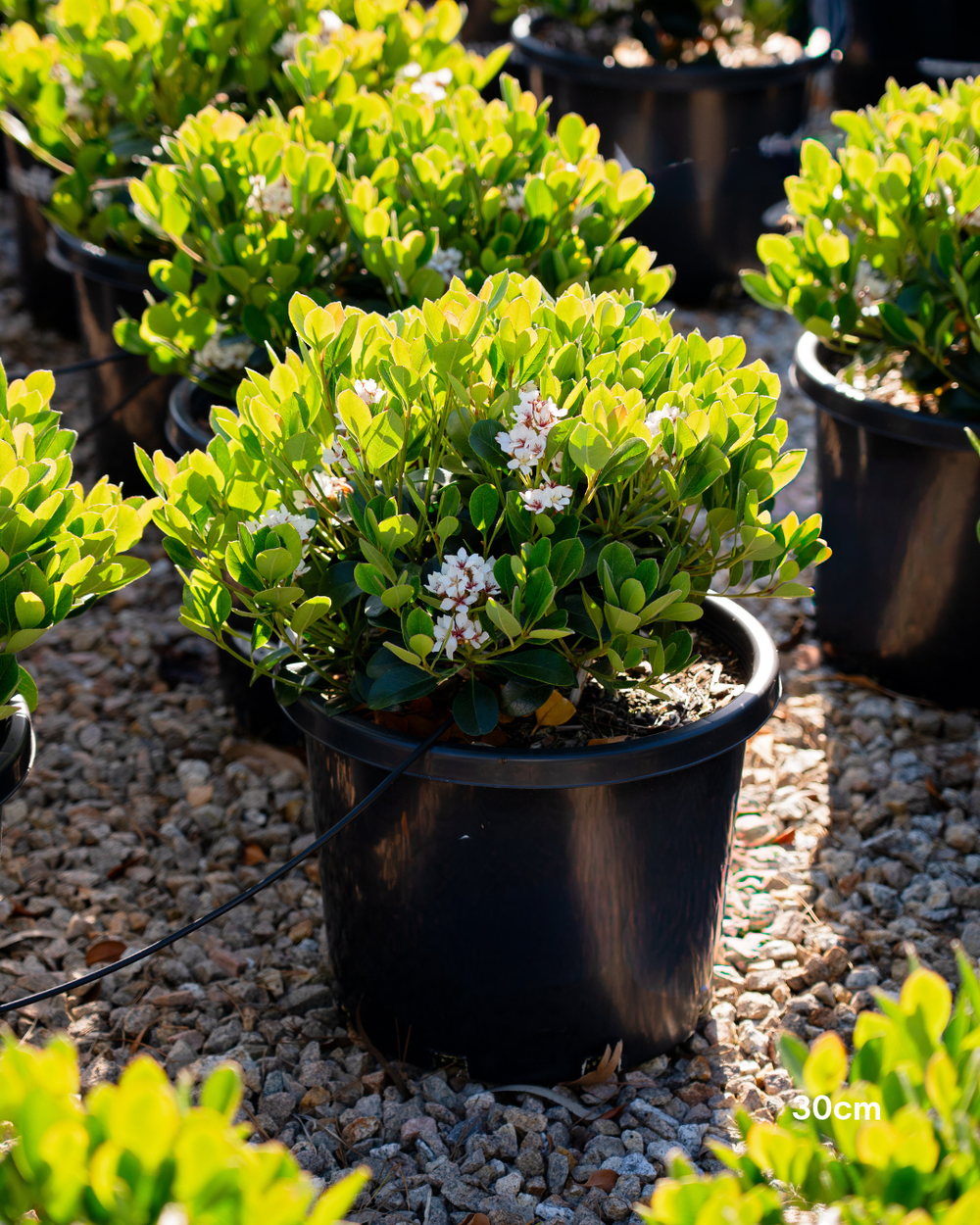
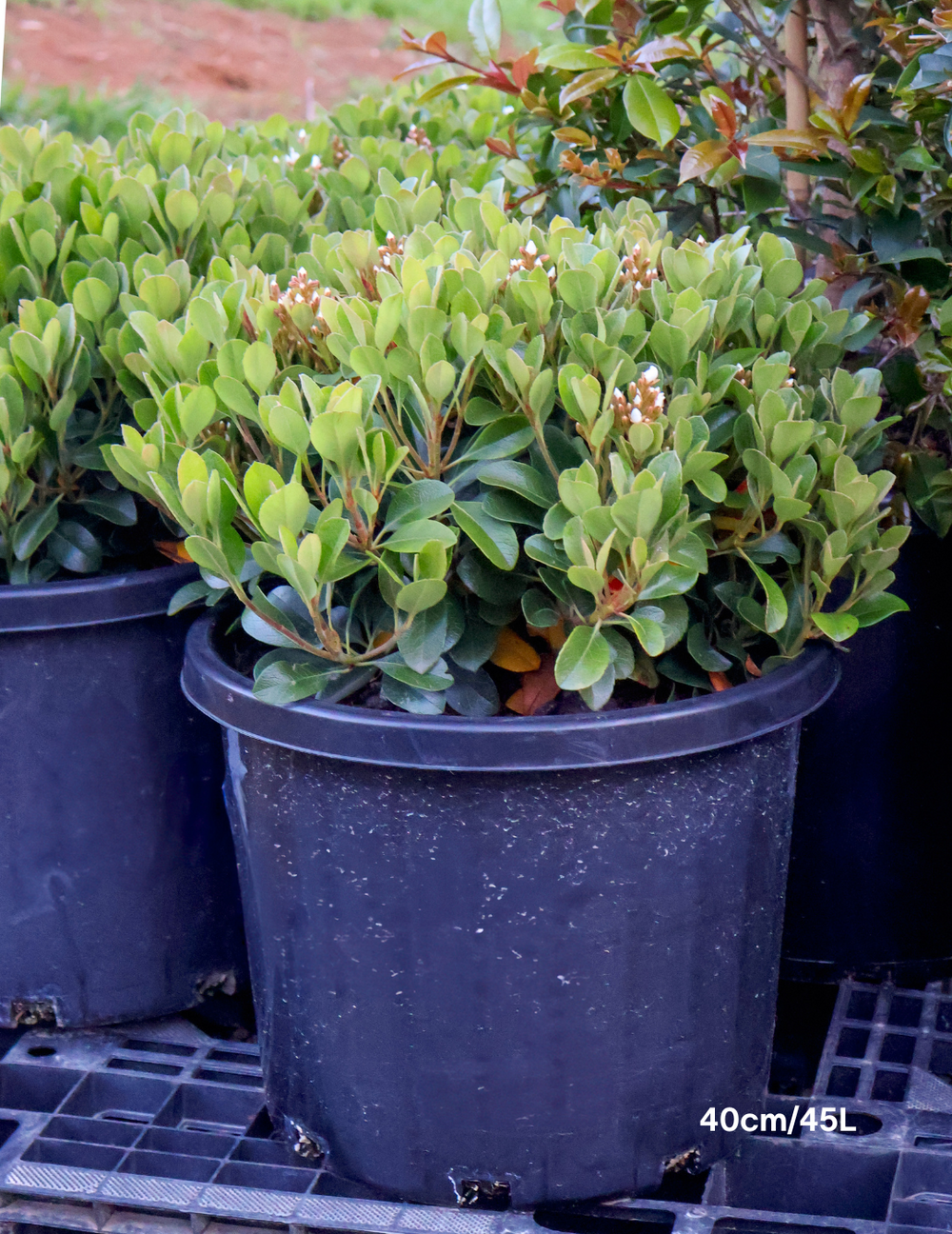
Oriental Pearl Indian hawthorn

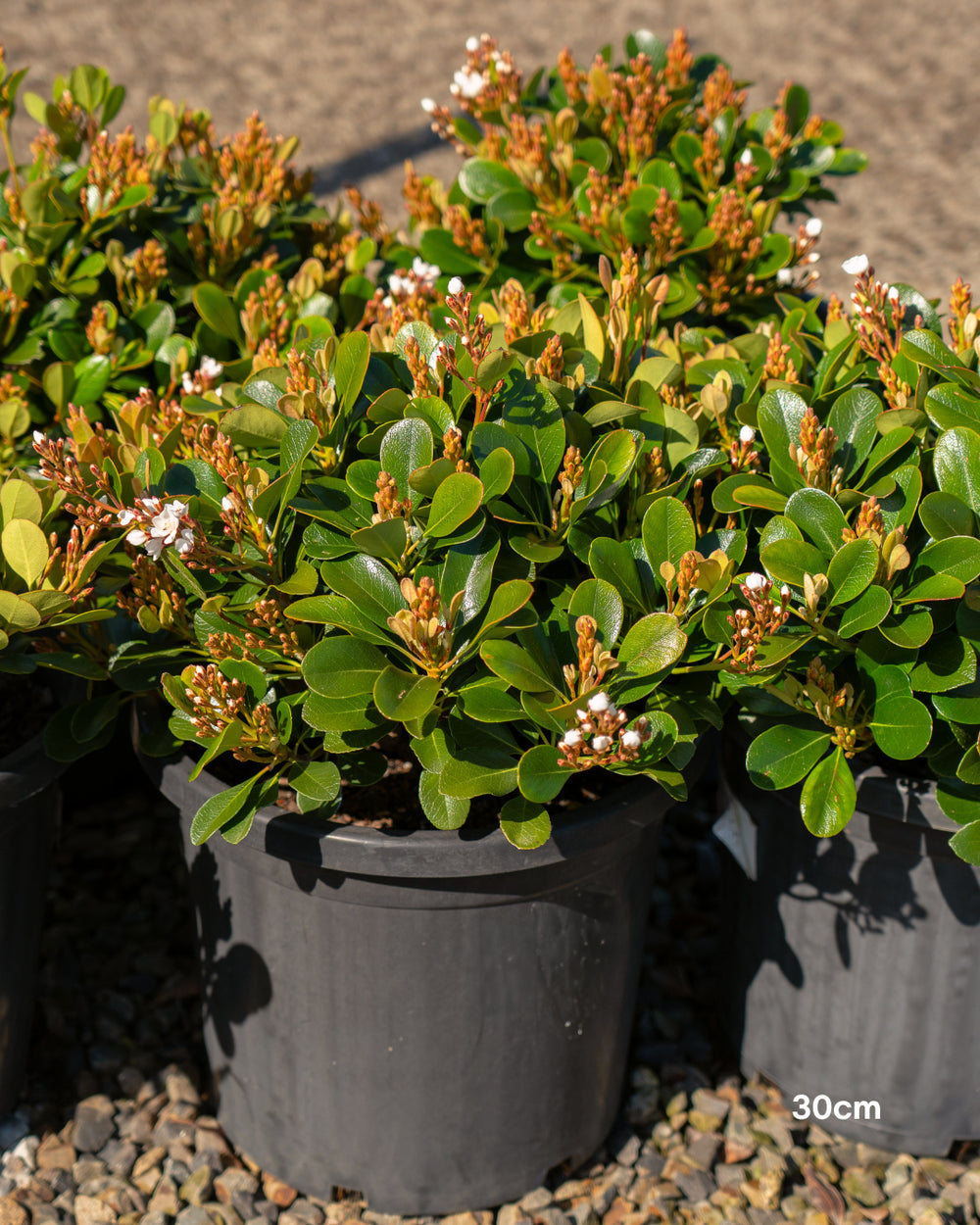
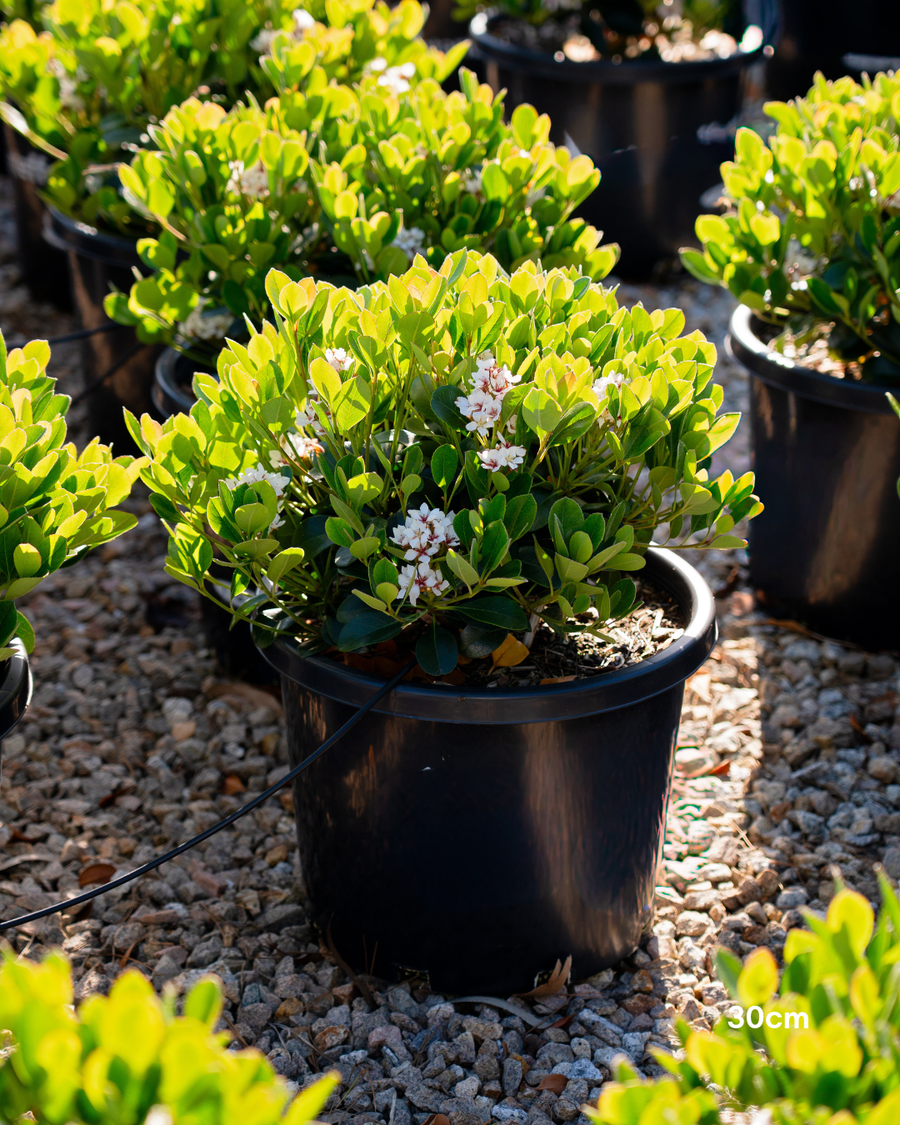
A compact evergreen mound with glossy dark green leaves and clusters of white flowers in spring. Repeat it along garden edges for a low border, and allow for its mature width. It wants sun, so keep it to the bright side of the canopy.

Mature size
1 to 1.5 m x 1 to 1.5 m
Fruit
Small dark berries
Best for
Low borders, sunny canopy edges, pots

Current height guide

30cm/33cm0.2m - 0.3m Approx.
View product →
Compare sizes
Arthropodium cirratum

Height and soft foliage

Arthropodium cirratum

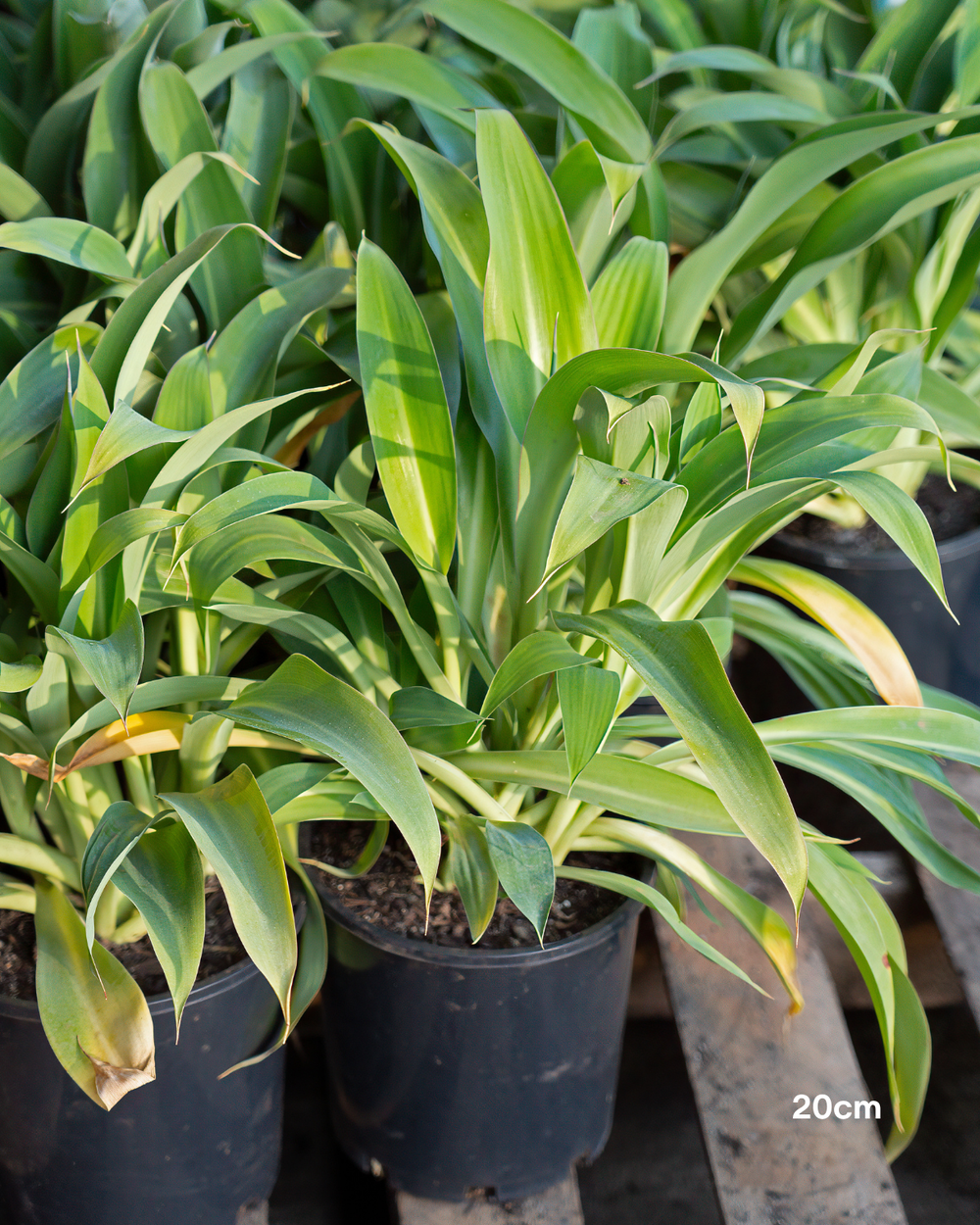
New Zealand rock lily

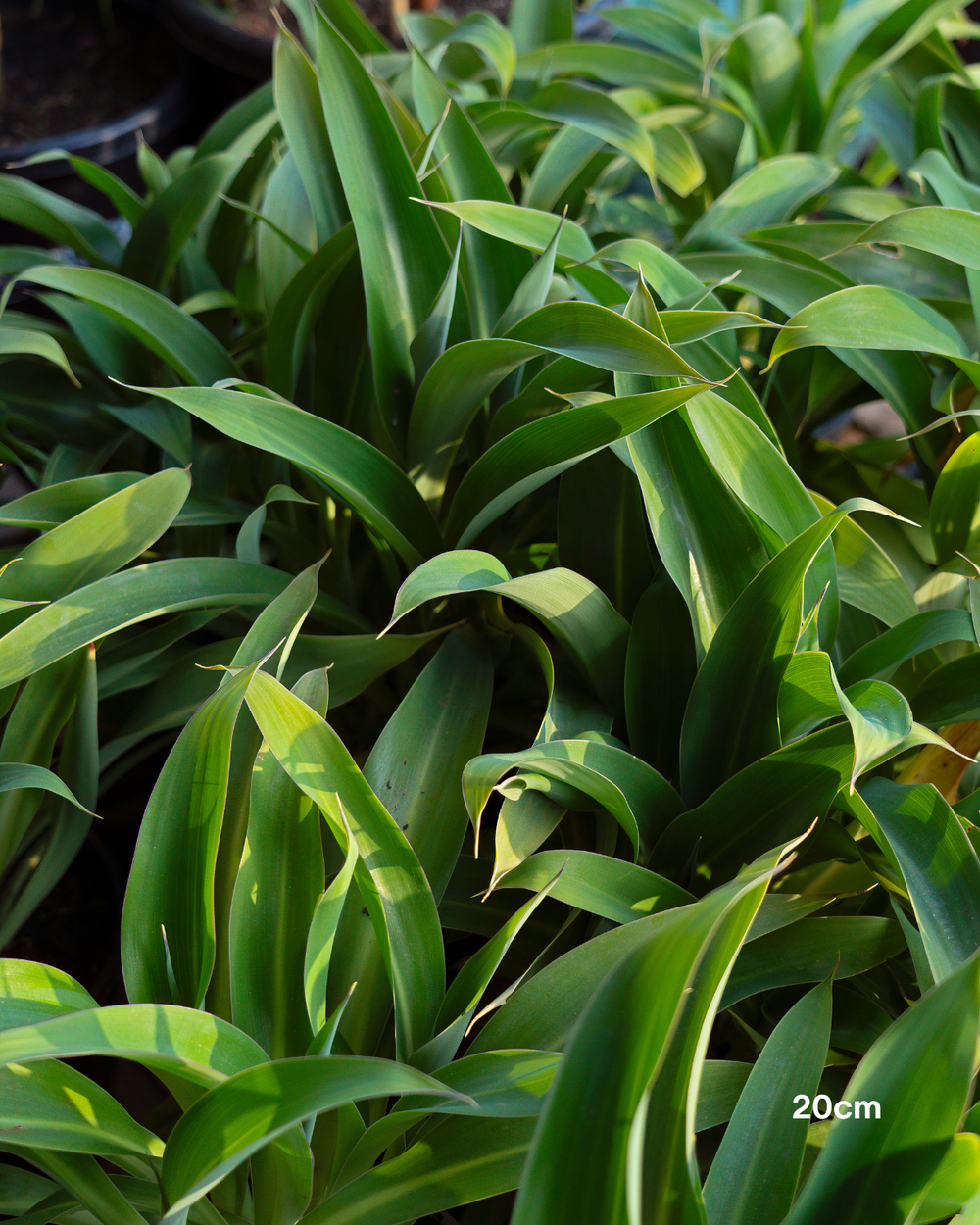
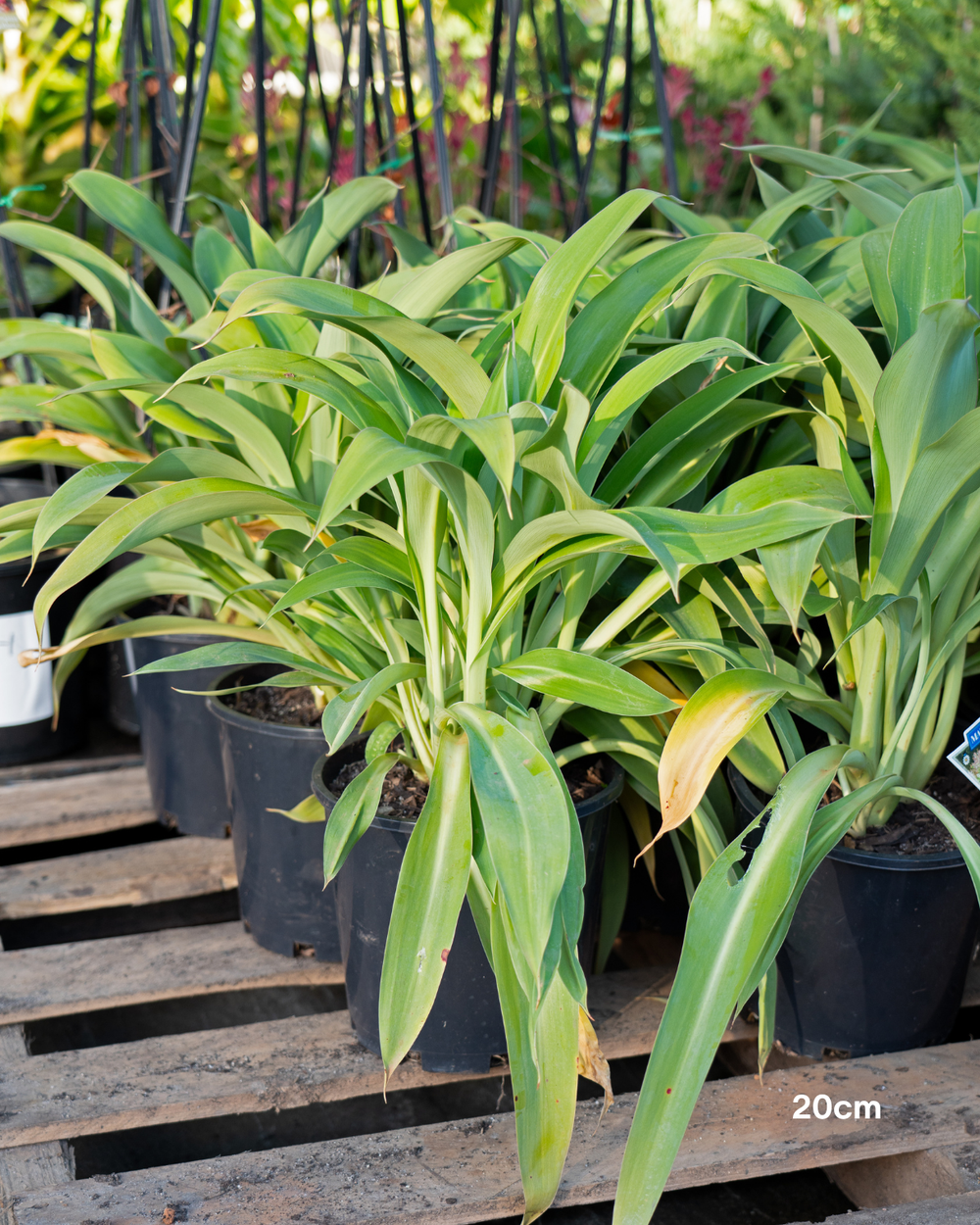
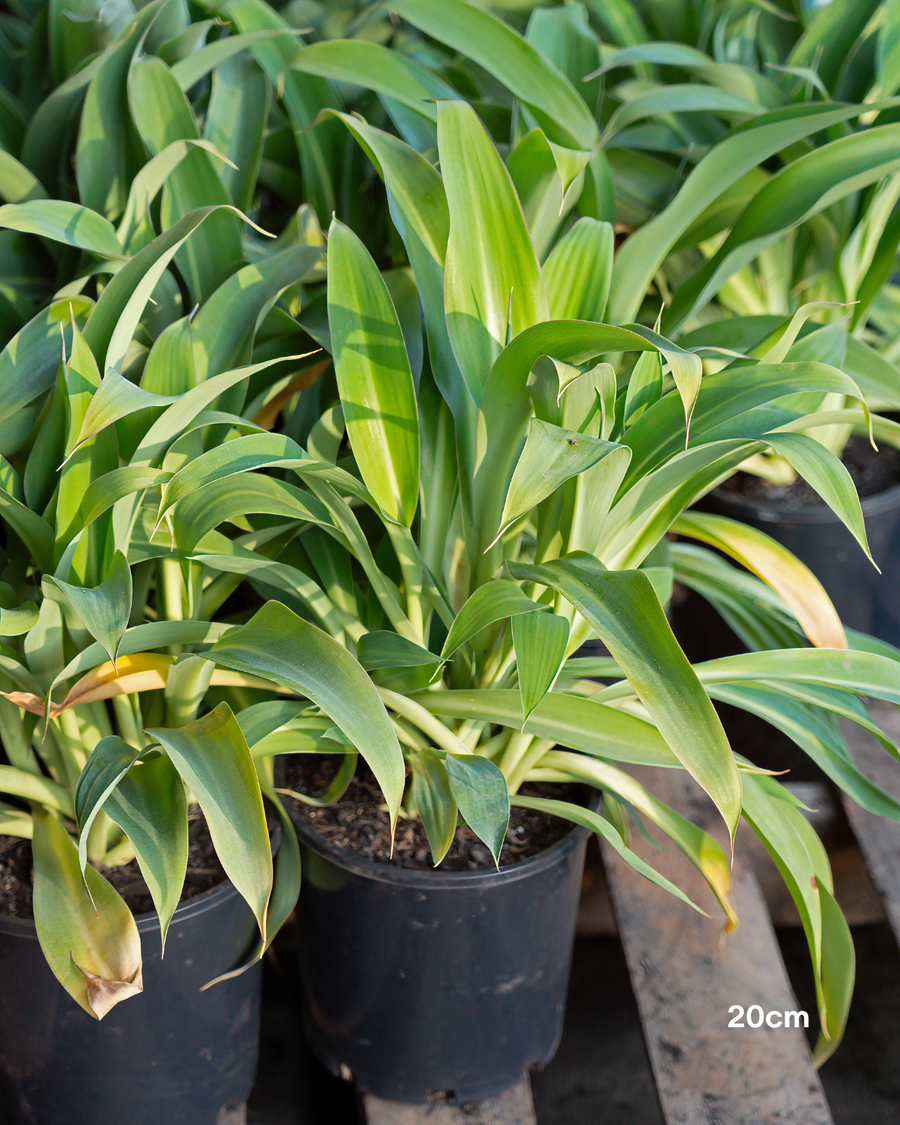
Arching grey-green leaves with sprays of small white flowers held above them in spring and early summer. Plant it behind smaller topiary balls to add height. It performs in dry shade under established trees, but it needs shelter from heavy frost.

Mature size
0.4 to 0.7 m x 0.6 to 1 m
Best for
Dry shade, massed planting under trees
View product →
Compare sizes
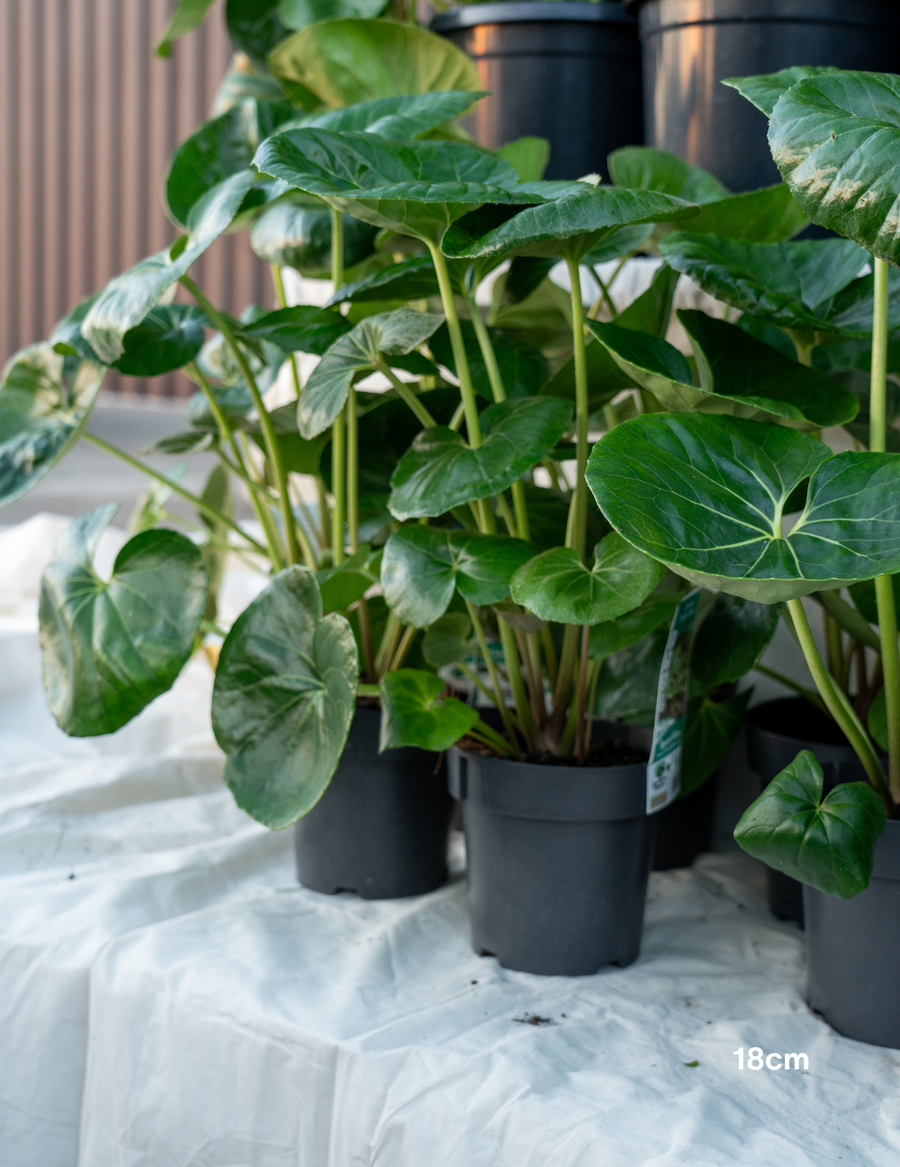
Ligularia reniformis

Bold foliage

Ligularia reniformis

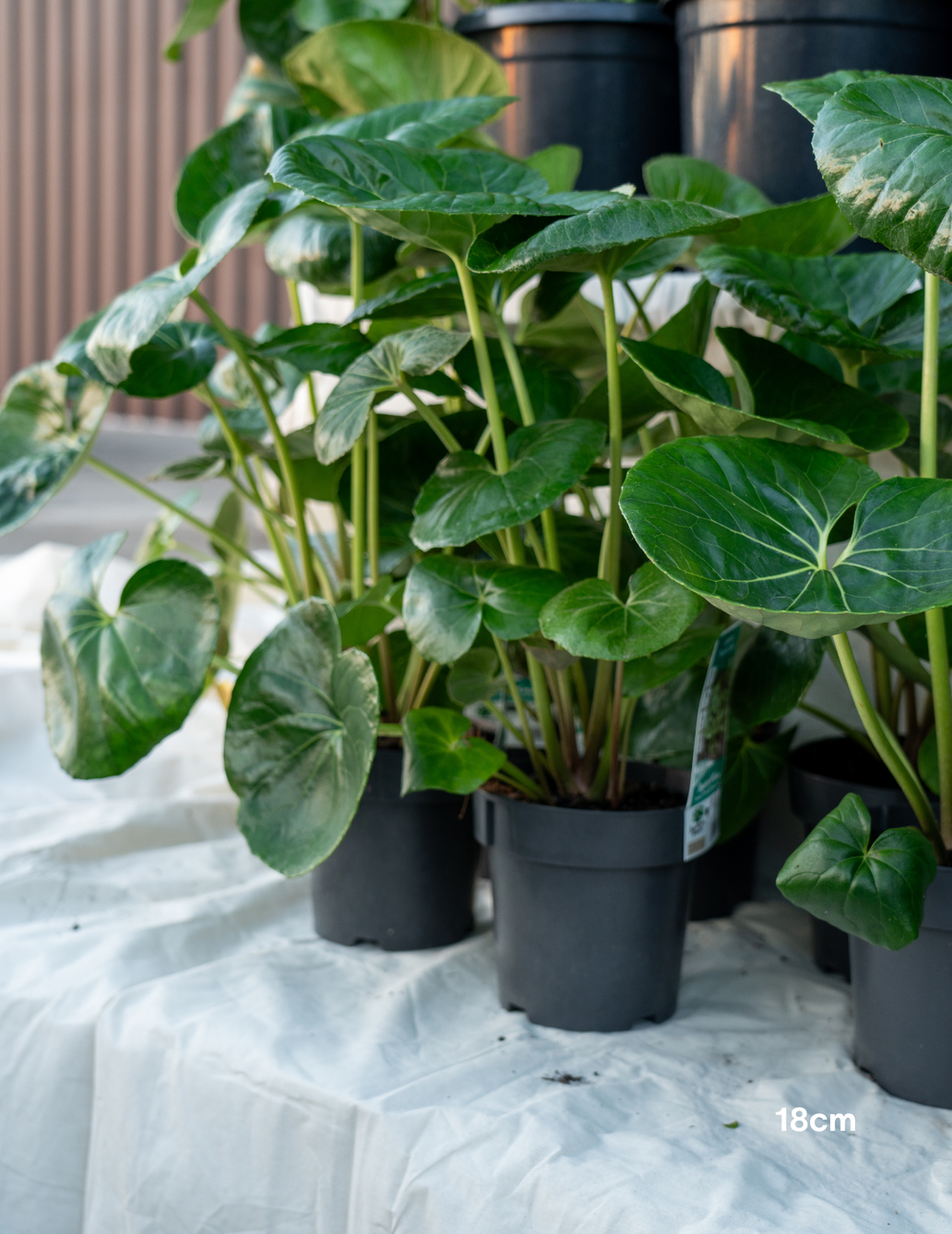
Tractor seat plant

Large, glossy, kidney-shaped leaves with tall stems of yellow daisy flowers in summer. Plant it in groups of three and leave room for the leaves to spread. It needs full shade and steady moisture, because hot afternoon sun scorches the leaves.

Mature size
0.5 to 1 m x 1 to 1.5 m
Best for
Full shade, moist spots, shaded paths
View product →

Compare the five plants at a glance

Swipe sideways to see every column

VarietyTypeMature size (H x W)FruitBest for
Japanese box topiary balls Topiary anchor1 to 2 m x 1.2 to 1.5 m (unclipped)Entries, edging, formal underplanting
Oriental Pearl Indian hawthorn Low border1 to 1.5 m x 1 to 1.5 mSmall dark berriesLow borders, sunny canopy edges, pots
New Zealand rock lily Height and soft foliage0.4 to 0.7 m x 0.6 to 1 mDry shade, massed planting under trees
Tractor seat plant Bold foliage0.5 to 1 m x 1 to 1.5 mFull shade, moist spots, shaded paths
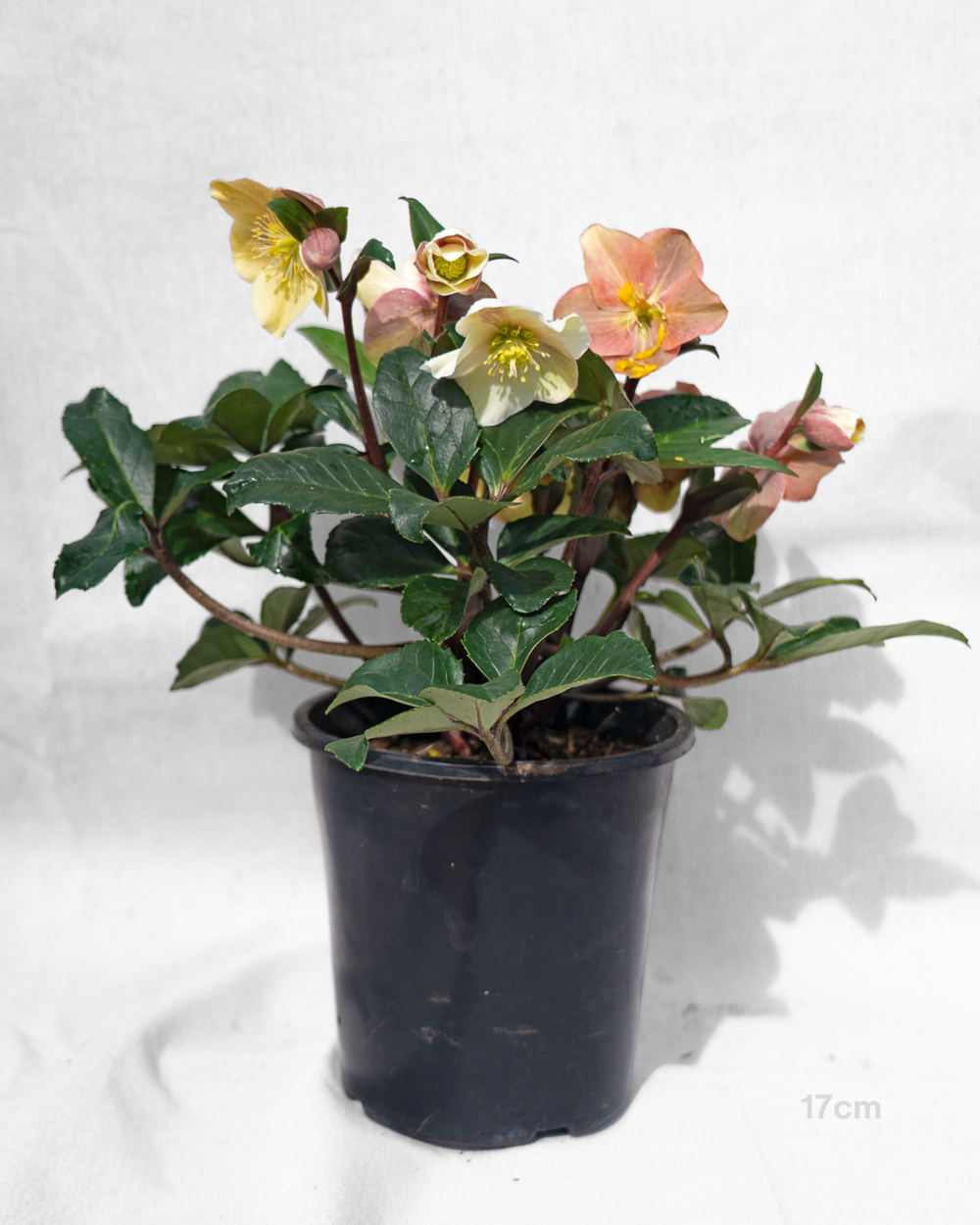
Winter rose Winter flowers0.3 to 0.4 m x 0.4 to 0.6 mShaded borders, paths, pots on cool patios

Plants for dry shade under trees

  • Dry shade carpetArthropodium cirratum performs in part to full shade, including dry shade under established trees. Plant it 50 to 70 centimetres apart for continuous cover, or 1 metre apart for separate clumps.
  • Bold leaves for full shadeLigularia reniformis forms a clump 0.5 to 1 metre tall and 1 to 1.5 metres wide. Plant it in groups of three, keep it moist and shield it from hot afternoon sun.
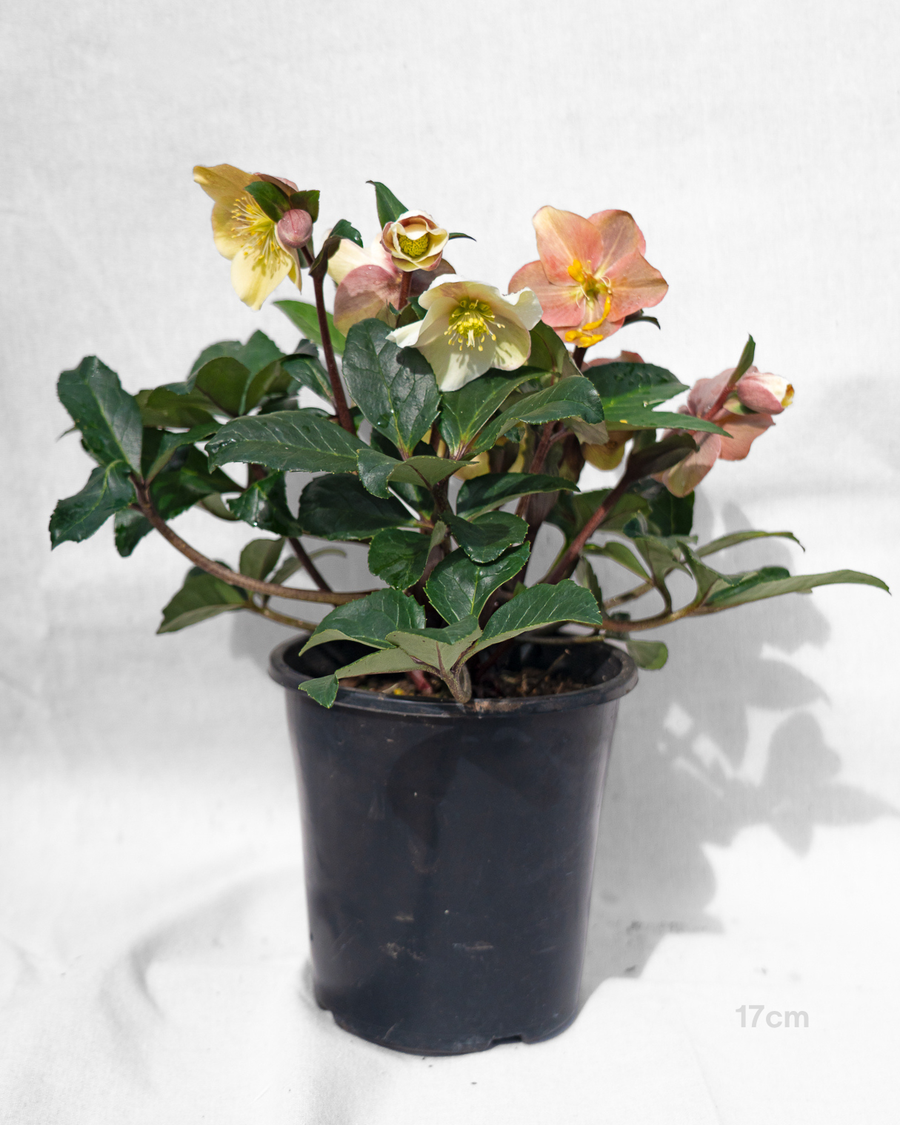
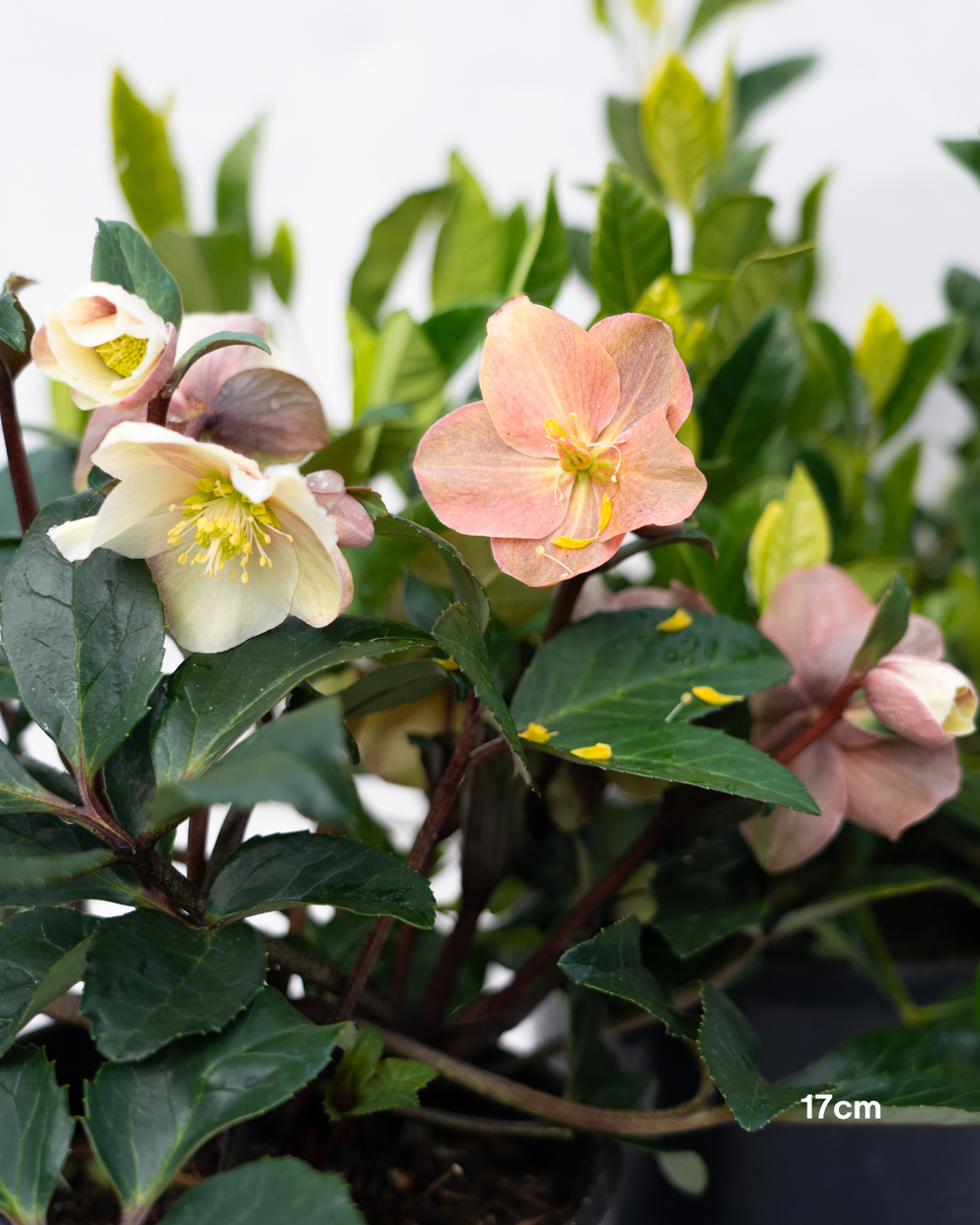
  • Winter flowers under deciduous treesHelleborus x glandorfensis 'Ice Breaker Max' flowers from late autumn to early spring, when a deciduous tree has dropped its leaves. Plant it 40 to 50 centimetres apart along shaded paths.
  • Fast cover for bare groundHedera canariensis grows in full sun to full shade and covers bare ground quickly. It is vigorous, so trim it away from tree trunks and neighbouring plants, and let it trail over retaining walls to soften hard edges.
Plants for dry shade under trees

Plants for the sunny edge of the canopy

  • Low borderRhaphiolepis indica 'Oriental Pearl' holds a tidy mound 1 to 1.5 metres tall and wide, with white spring flowers. Repeat it along garden edges and allow for its mature width.
  • Cascading edgeRosmarinus officinalis 'Prostratus' needs full sun and free-draining soil. Plant it 80 centimetres apart along the top of a retaining wall so the plants meet and spill over the edge.
  • Scented spotGardenia jasminoides 'Florida' prefers full sun to part shade, with protection from hot afternoon sun. Plant it near seating or paths, in acidic soil kept consistently moist but never waterlogged.
  • Clipped structureBuxus microphylla var. japonica topiary balls grow in full sun to part shade and hold their shape with regular clipping. They also underplant feature trees neatly.
Plants for the sunny edge of the canopy

How to group Buxus topiary balls and layered plantings

  • Triangles of threeGroup three balls of different sizes and heights in a loose triangle, then repeat the groups through the garden. The English box topiary balls (Buxus sempervirens) are the alternative to the Japanese box.
  • Regular trimmingJapanese box grows about 15 to 25 centimetres a year. Trim regularly to keep the ball shape.
  • Height at the backPlant Arthropodium cirratum behind smaller balls to add height and soft, arching leaves.
  • Leaf contrastPair the large glossy leaves of Ligularia reniformis with small-leafed Buxus. Plant the Ligularia in groups of three and leave room for the leaves to spread.

Want more shapes for the same job? See the full topiary trees collection or take the tree quiz.

How to group Buxus topiary balls and layered plantings

How to plant under an established tree

  1. Check the siteNote how much light reaches the ground and whether the soil stays dry or moist. Our soil preparation steps cover the basics.
  2. Dig by handDig each hole by hand between the larger tree roots, and avoid cutting thick roots.
  3. Plant and waterSet each plant level with the soil, firm it in and water deeply.
  4. Water through the first seasonWater regularly while the plants establish. Moisture lovers such as Ligularia reniformis need steady watering well beyond that.
  5. MulchSpread organic mulch over the soil and keep it clear of the tree trunk. Our mulching guide explains how.
How to plant under an established tree

Frequently asked questions

What can I plant under trees?
Choose plants to suit the light. For shade, try Ligularia reniformis, Arthropodium cirratum, Helleborus x glandorfensis 'Ice Breaker Max' or Hedera canariensis. For the sunny edge of the canopy, try Rhaphiolepis indica 'Oriental Pearl', Rosmarinus officinalis 'Prostratus' or Buxus topiary balls.
What grows in dry shade under trees?
Arthropodium cirratum is drought tolerant once established and performs in dry shade under established trees. Hedera canariensis also grows in full shade and is highly drought tolerant once established.
What can I plant under a deciduous tree?
Helleborus x glandorfensis 'Ice Breaker Max' suits planting beneath deciduous trees. It flowers from late autumn to early spring, when the tree has dropped its leaves and more light reaches the ground.
Can I plant ivy under trees?
Hedera canariensis grows in full sun to full shade and covers bare ground under established trees. It grows 1 to 2 metres a year, so trim it away from tree trunks and neighbouring plants.
How far apart should I plant under trees?
Spacing depends on the plant. Arthropodium cirratum goes 50 to 70 centimetres apart for continuous cover, Helleborus x glandorfensis 'Ice Breaker Max' 40 to 50 centimetres apart, and Rosmarinus officinalis 'Prostratus' 80 centimetres to 1 metre apart.
Which plants for under trees need the most water?
Ligularia reniformis needs consistent moisture and protection from hot afternoon sun. Gardenia jasminoides 'Florida' needs soil kept consistently moist. Rosmarinus officinalis 'Prostratus' needs free-draining soil and does not tolerate wet feet.
How do I use Buxus topiary balls under trees?
Group three balls of different sizes and heights in a loose triangle, then repeat the groups through the garden. Trim regularly to keep the shape.

The wrap up

Match each plant to the light it gets. Use shade lovers under the canopy, sun lovers at its bright edge, and repeat a few varieties in groups for a cohesive finish.

Not sure which suits your trees? Take our tree quiz, or send us a photo of the space and we will point you to the right plants.

Shopping cart (1)

Complete your order

Freight added at checkout, based on your delivery address and order quantities.

Checkout