Skip to content
Hedge and Tree Combinations: 4 Planting Pairs That Work

Hedge and Tree Combinations: 4 Planting Pairs That Work

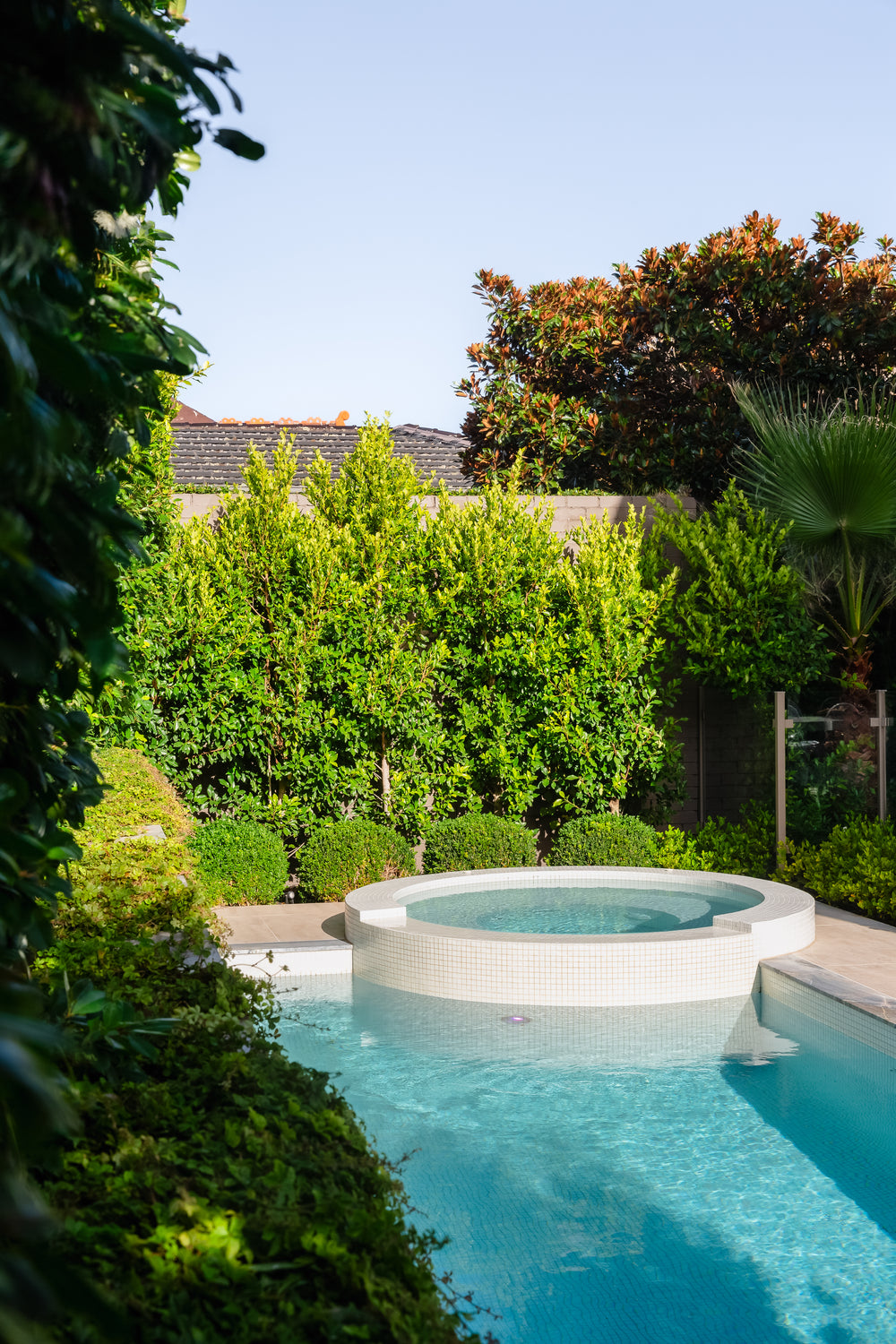
Four planting pairs built from five plants: one evergreen hedge, two deciduous feature trees and two underplanting plants, with the size and job of each.

The hedge and tree combinations that work best put one evergreen hedge behind a tree that changes through the year, then finish the base with a low layer of underplanting. This guide covers four planting pairs built from five plants we grow: a Ficus hillii 'Flash' hedge, Lagerstroemia indica 'Natchez', Betula pendula 'Moss White', Buxus microphylla var. japonica topiary balls and Ligularia reniformis.

Each plant has one job. The hedge gives structure and privacy. The feature trees bring flowers, autumn colour and bark. The underplanting softens the base and adds contrast in leaf shape.

For the method behind it, read how to use trees for a layered landscape design and what to plant under trees. Or browse the hedging and screening collection.

Hedge and Tree Combinations: 4 Planting Pairs That Work
Last reviewed
19 November 2026
Reading time
5 minutes
Supplier
Evergreen Trees Direct

Four planting pairs for a hedge and tree combination

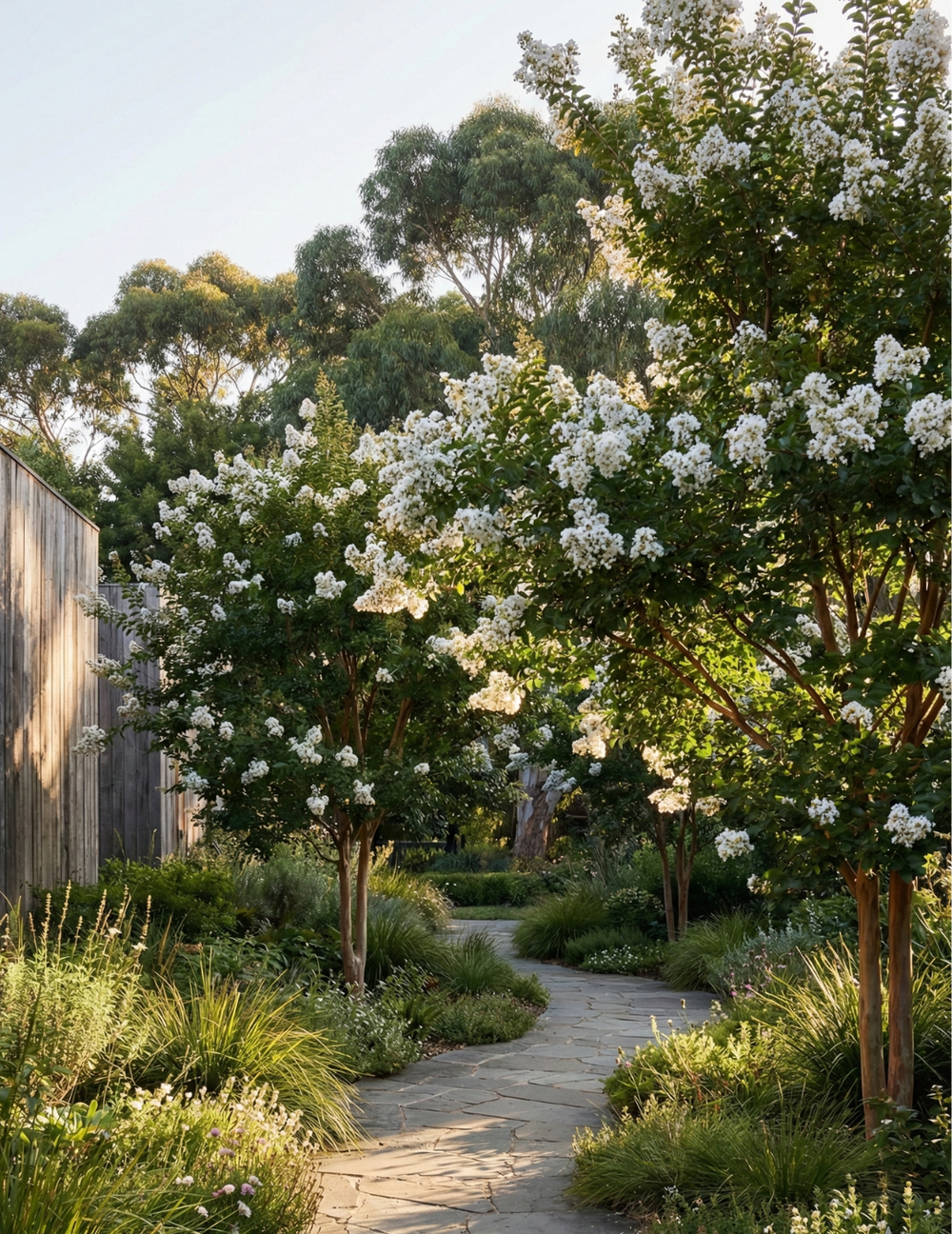
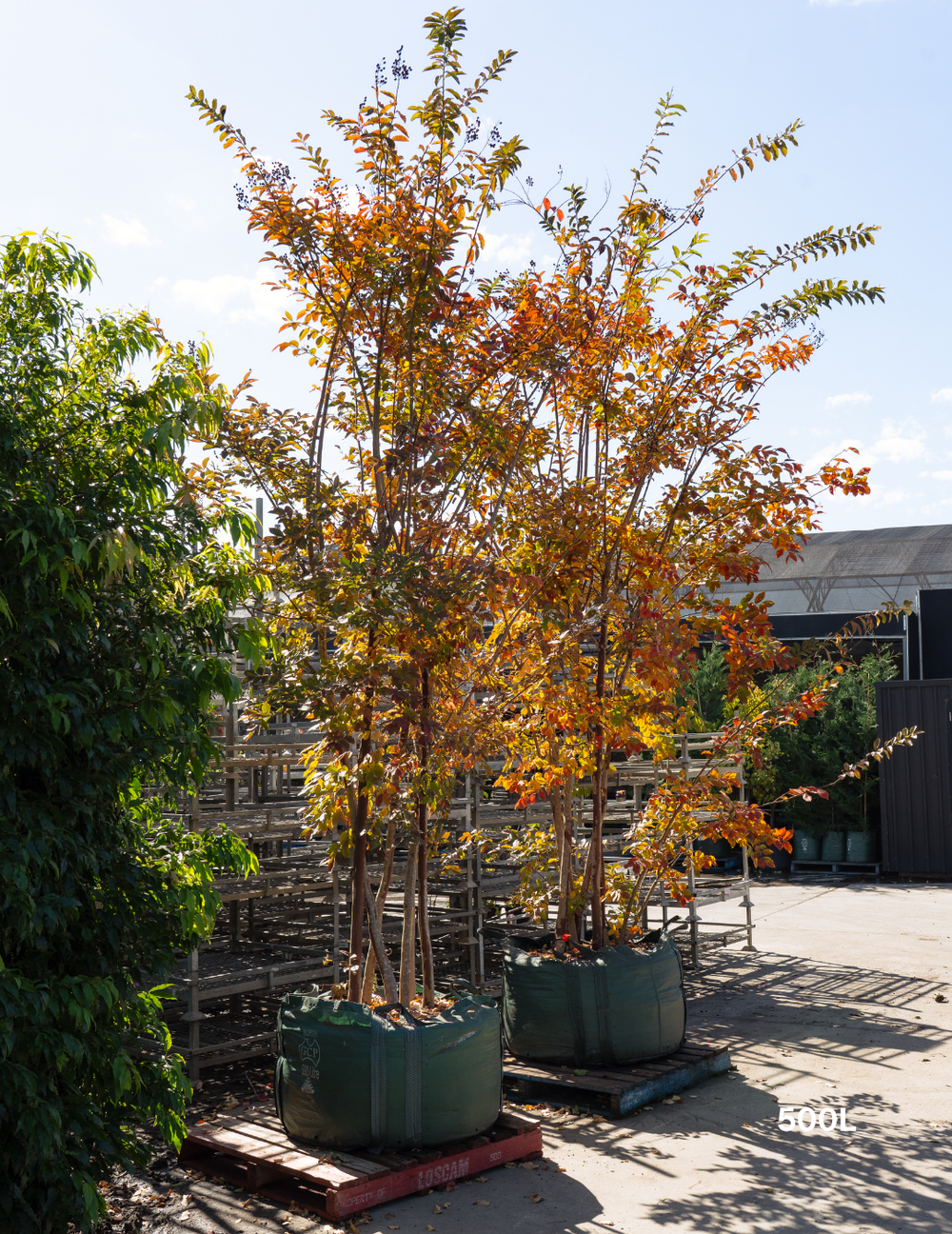
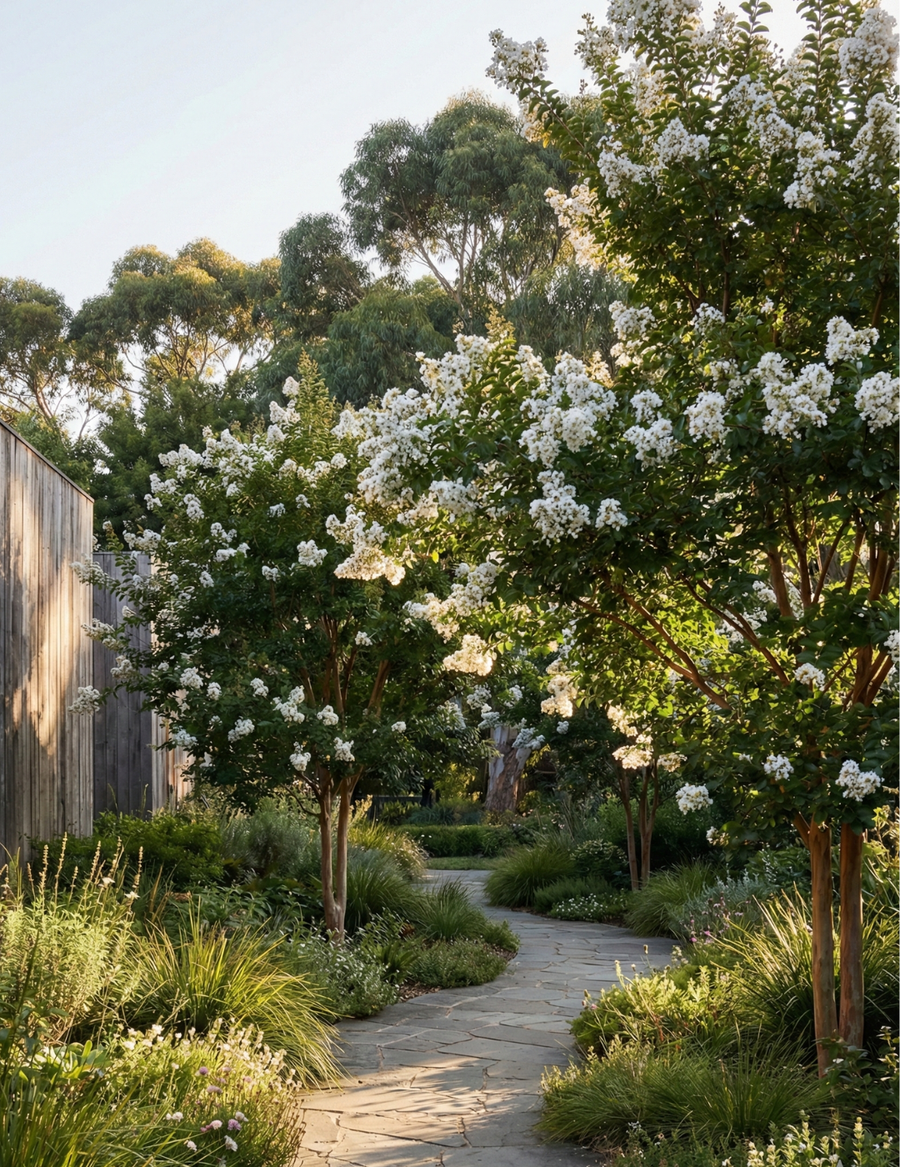
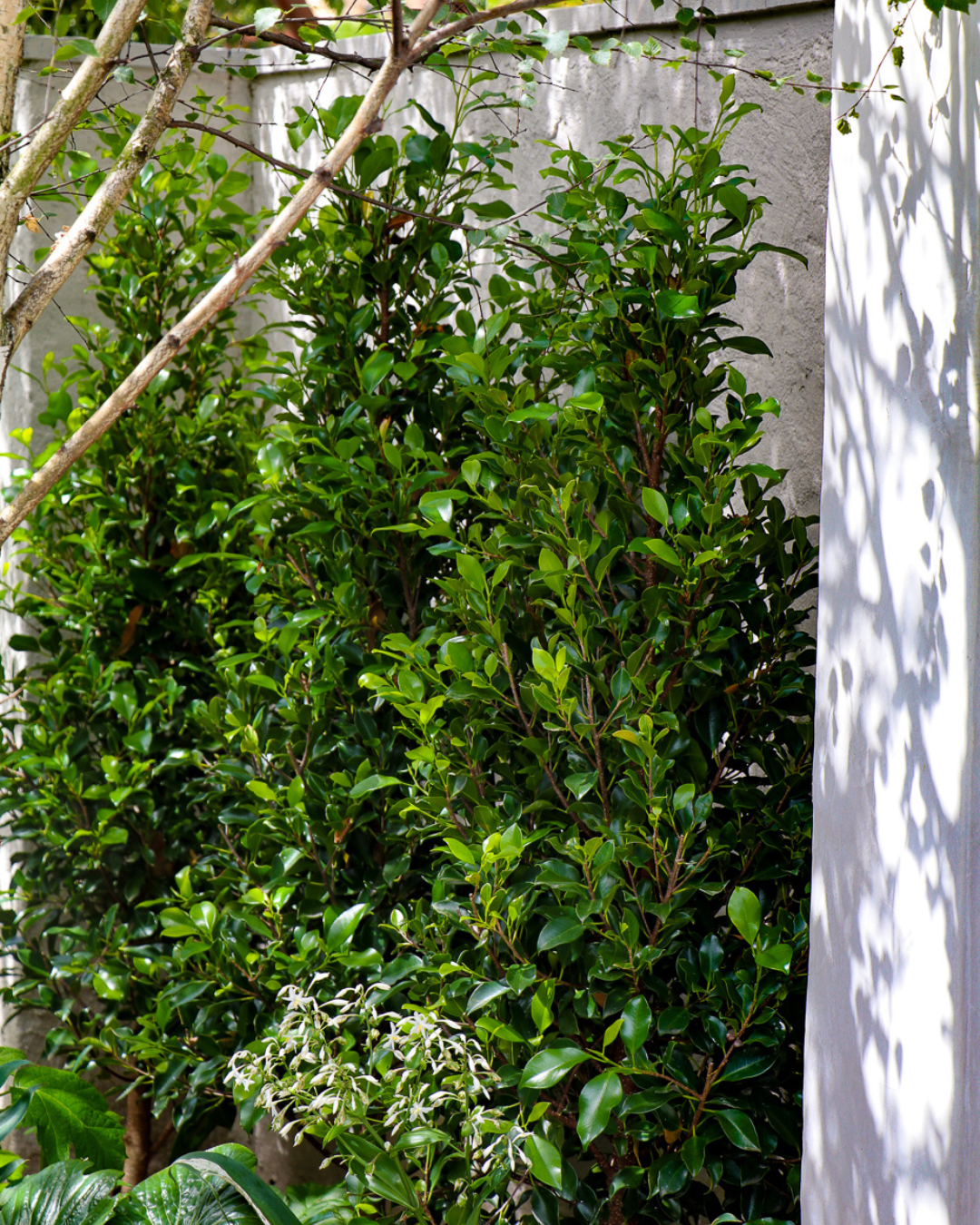
  • Evergreen hedge and flowering treeFlash behind Natchez. The hedge holds its leaves all year, so the white flowers, orange-red autumn leaves and mottled bark of the crepe myrtle always sit against dark green.
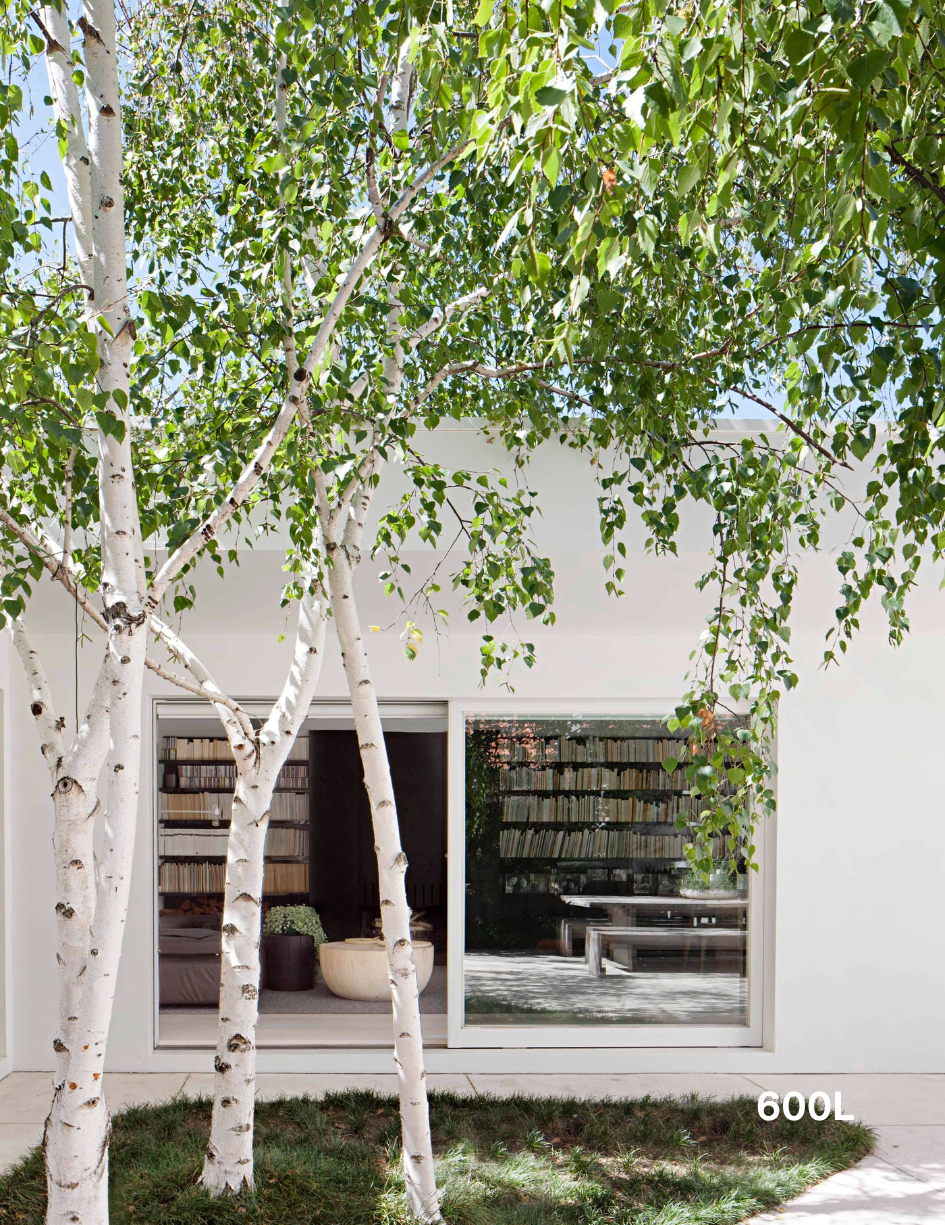
  • Dark hedge and white trunksFlash behind Moss White. Birch bark shows best against a darker backdrop, and the fine canopy adds height without bulk.
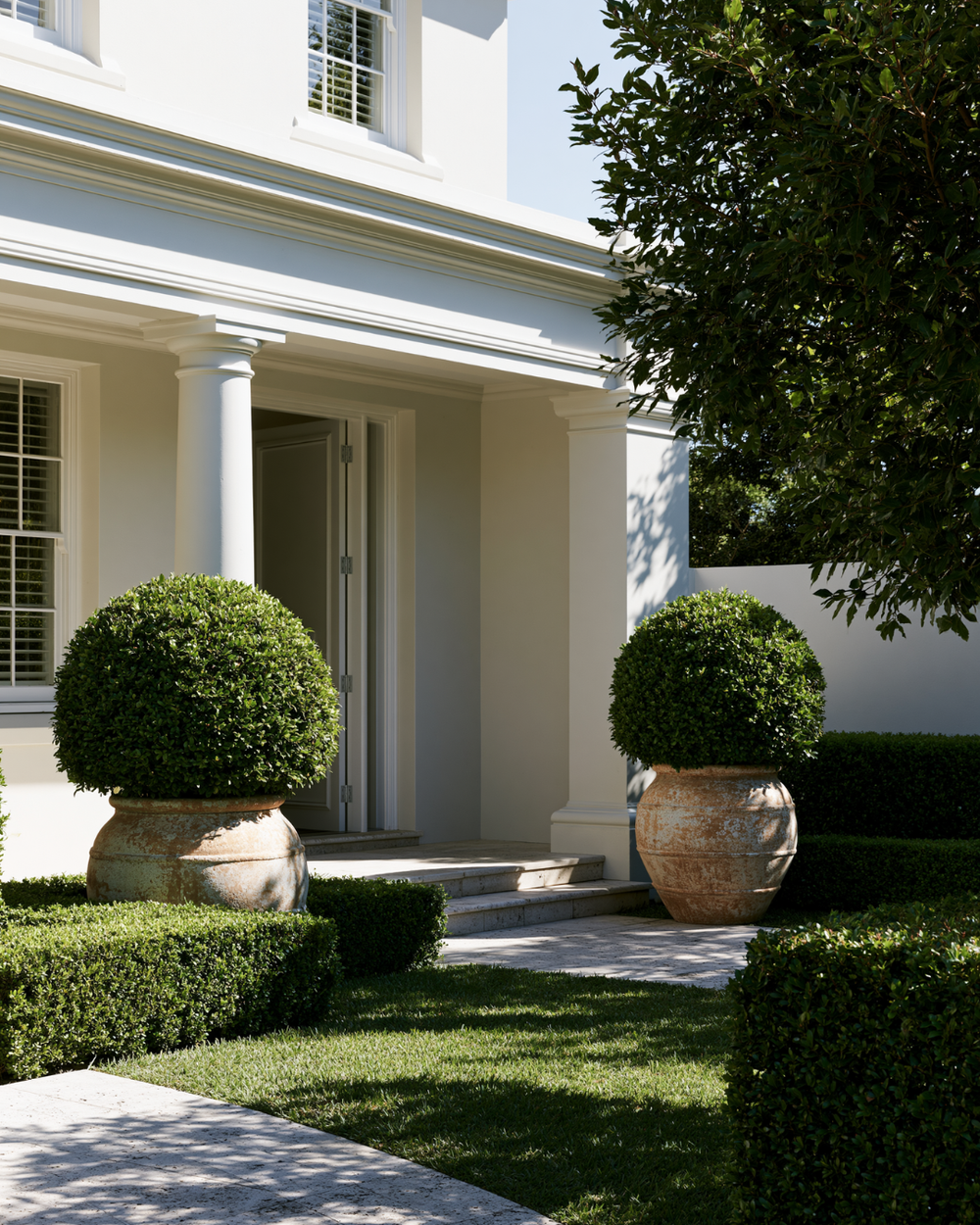
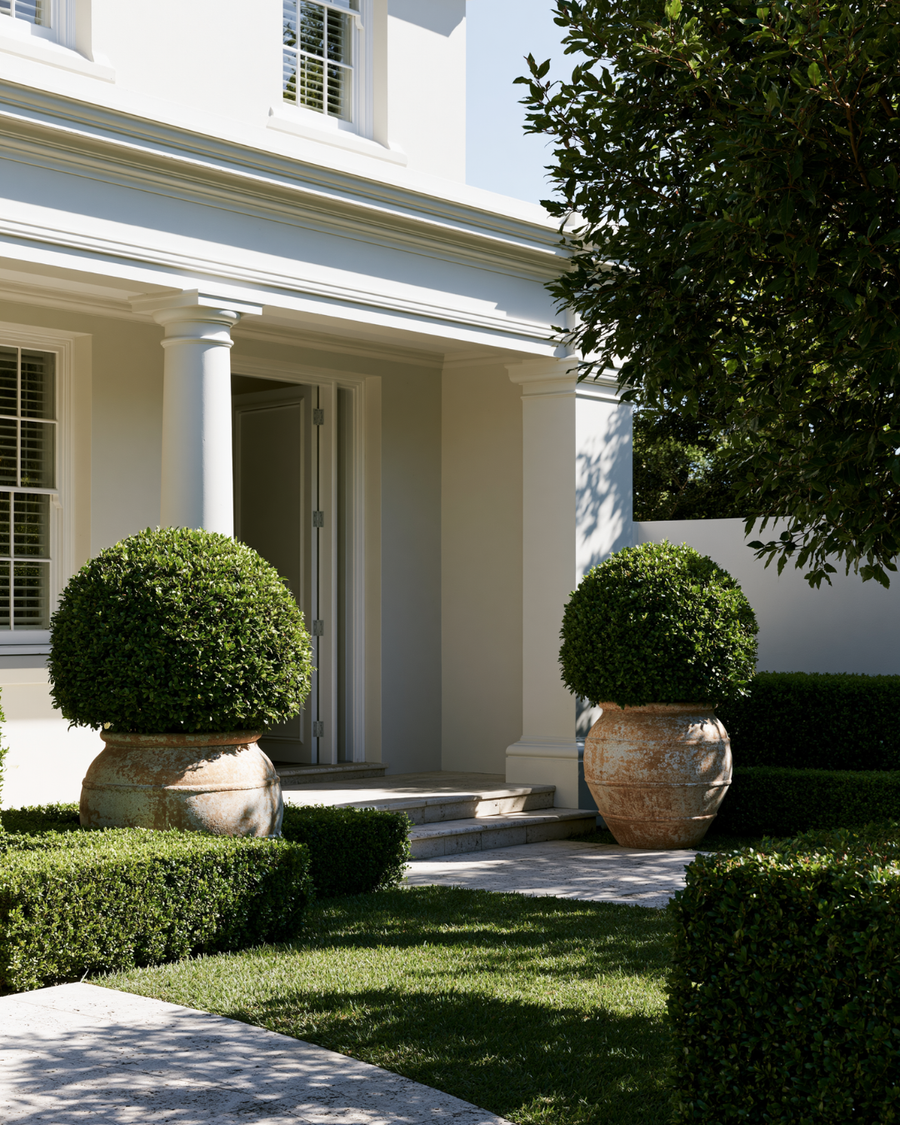
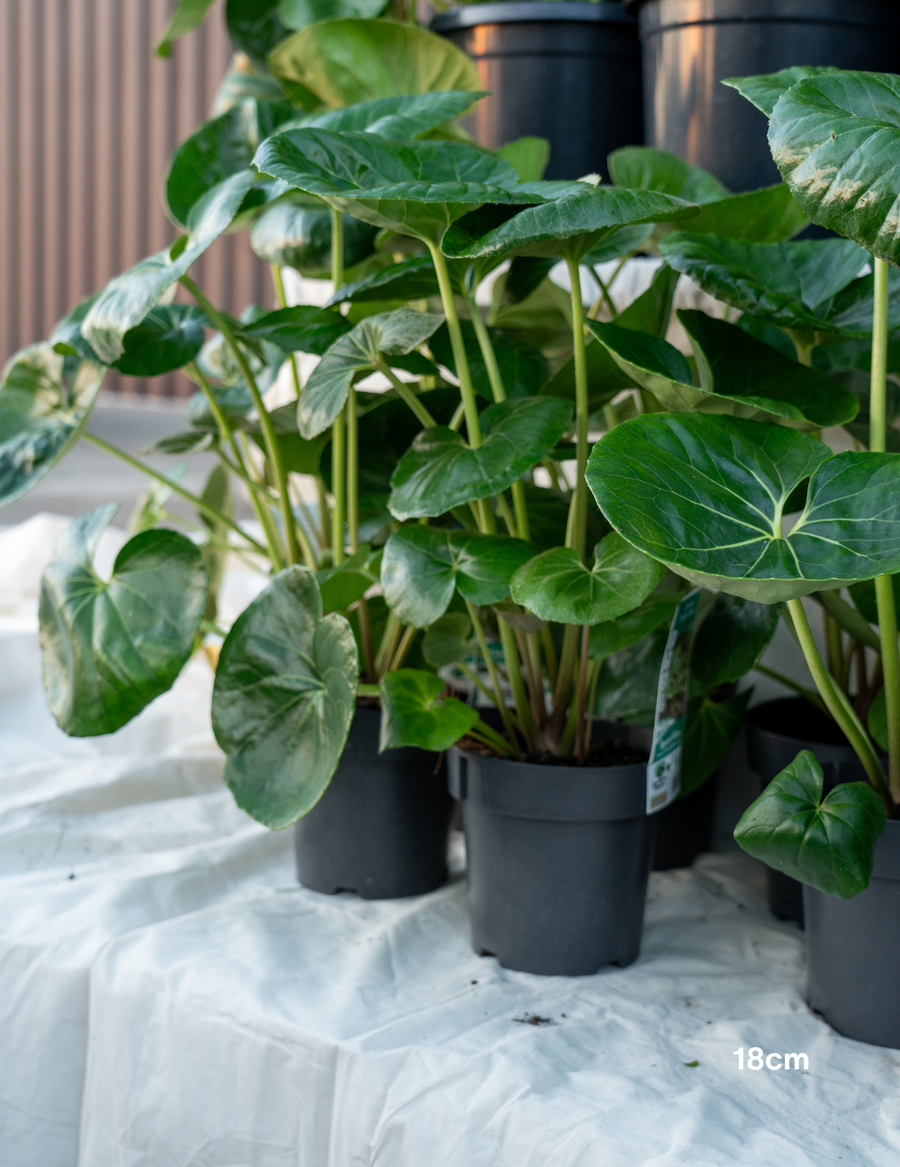
  • Clipped ball and bold leafJapanese box balls beside tractor seat plant. Small, tight leaves sit next to glossy kidney-shaped leaves that can reach 40 centimetres across.
  • Deciduous tree and evergreen baseNatchez or Moss White above the box and tractor seat layer. Both trees drop their leaves in winter, and the evergreen layer below keeps the bed full.
Four planting pairs for a hedge and tree combination

The five plants, with photos and sizes

Compare sizes
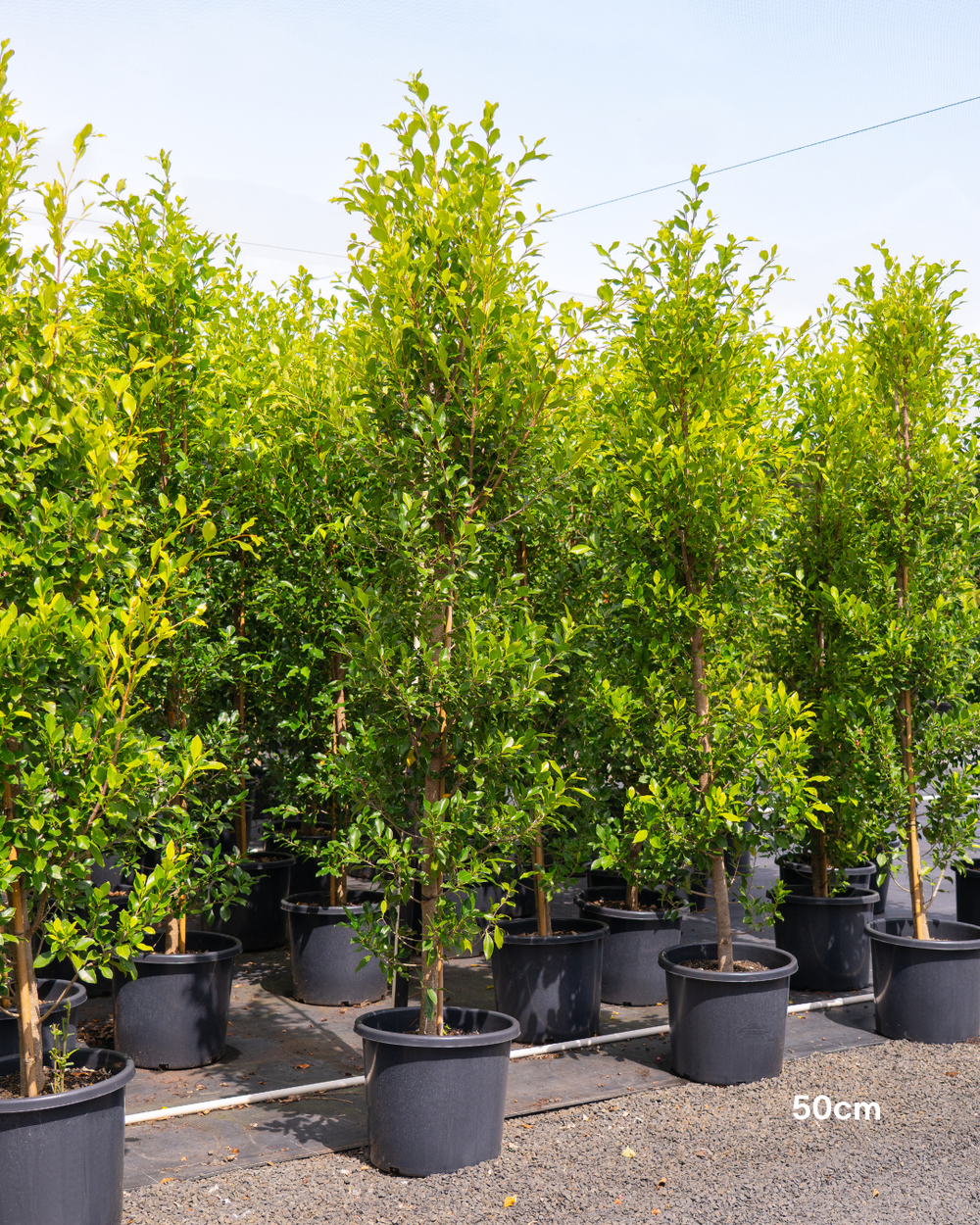
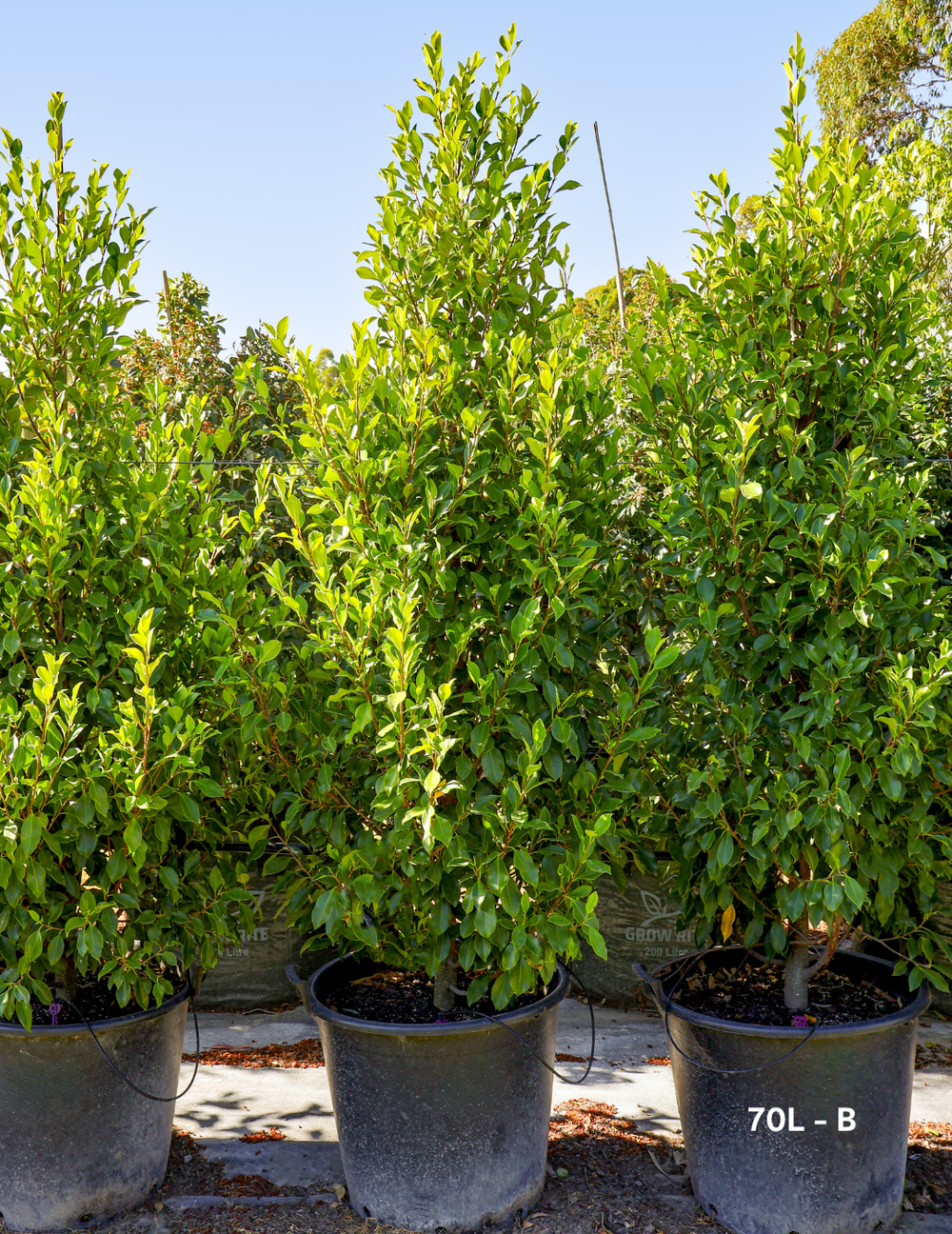
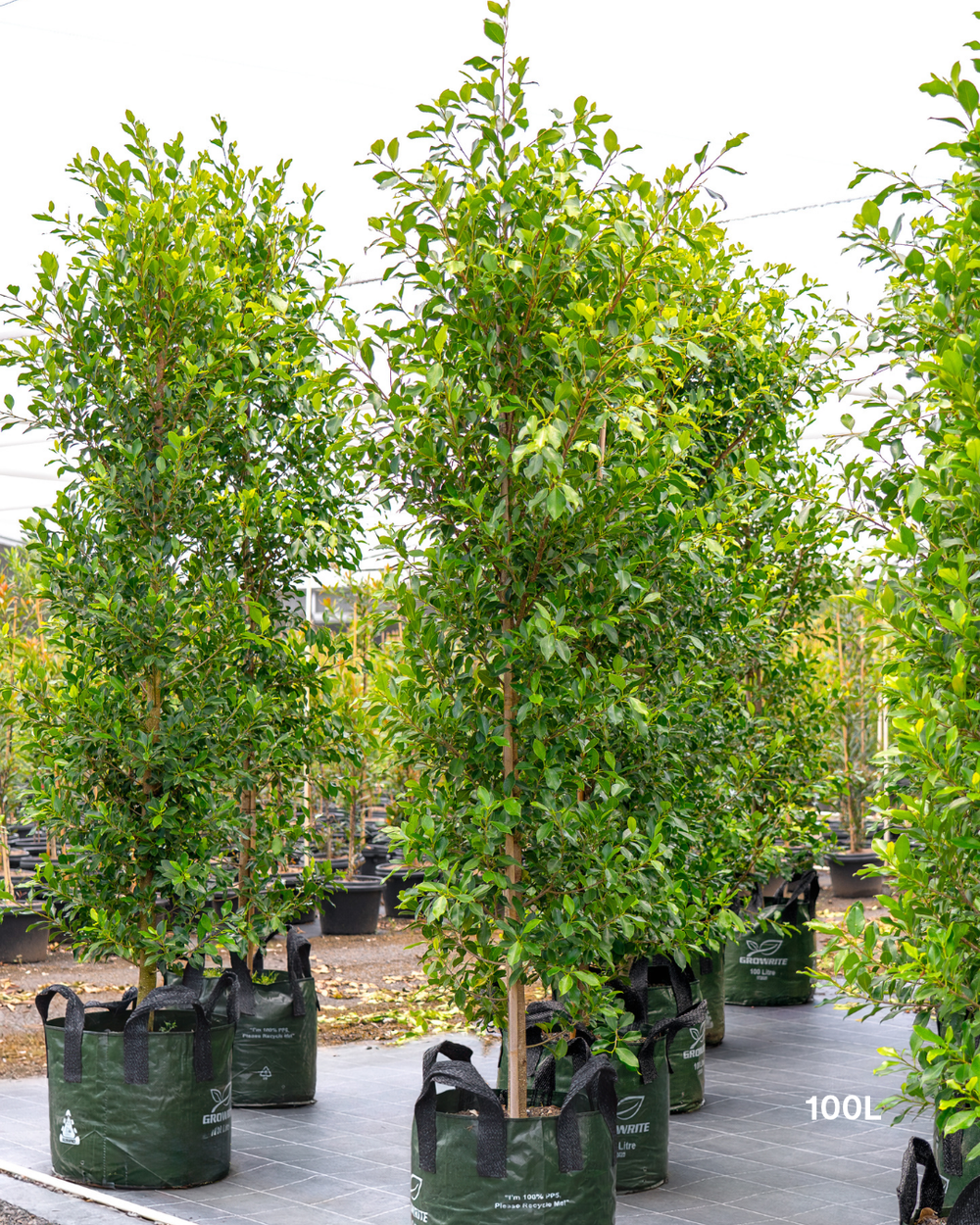
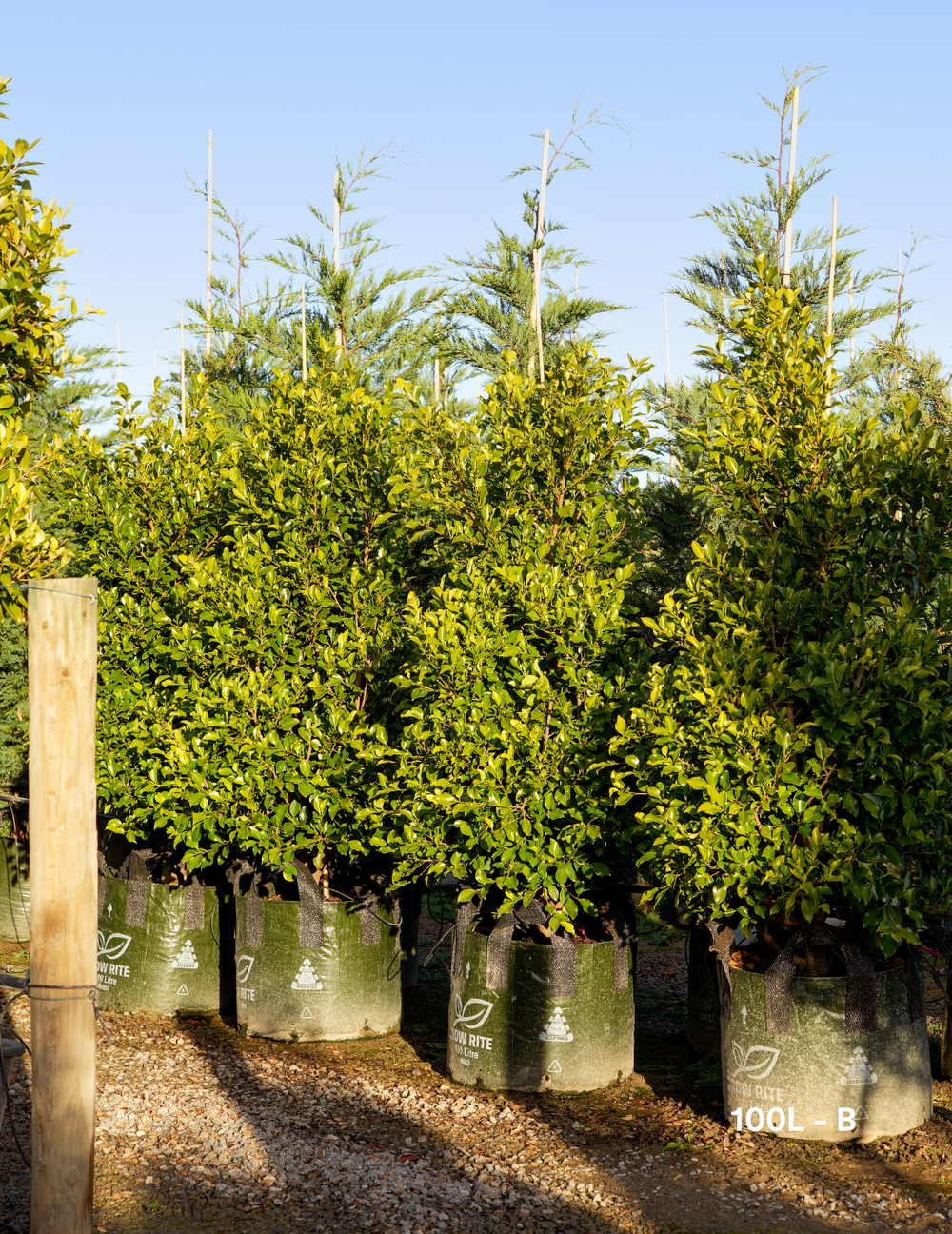
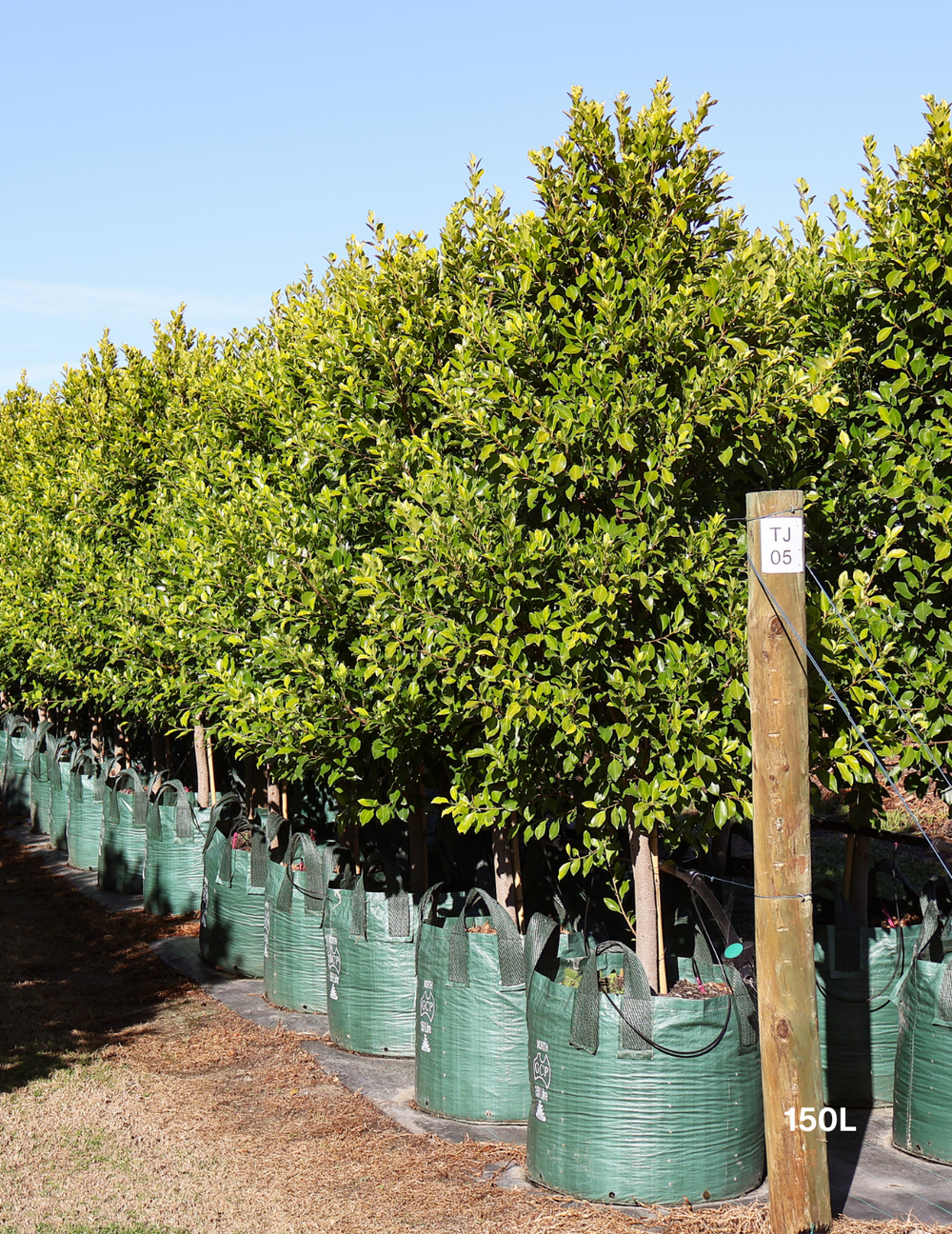
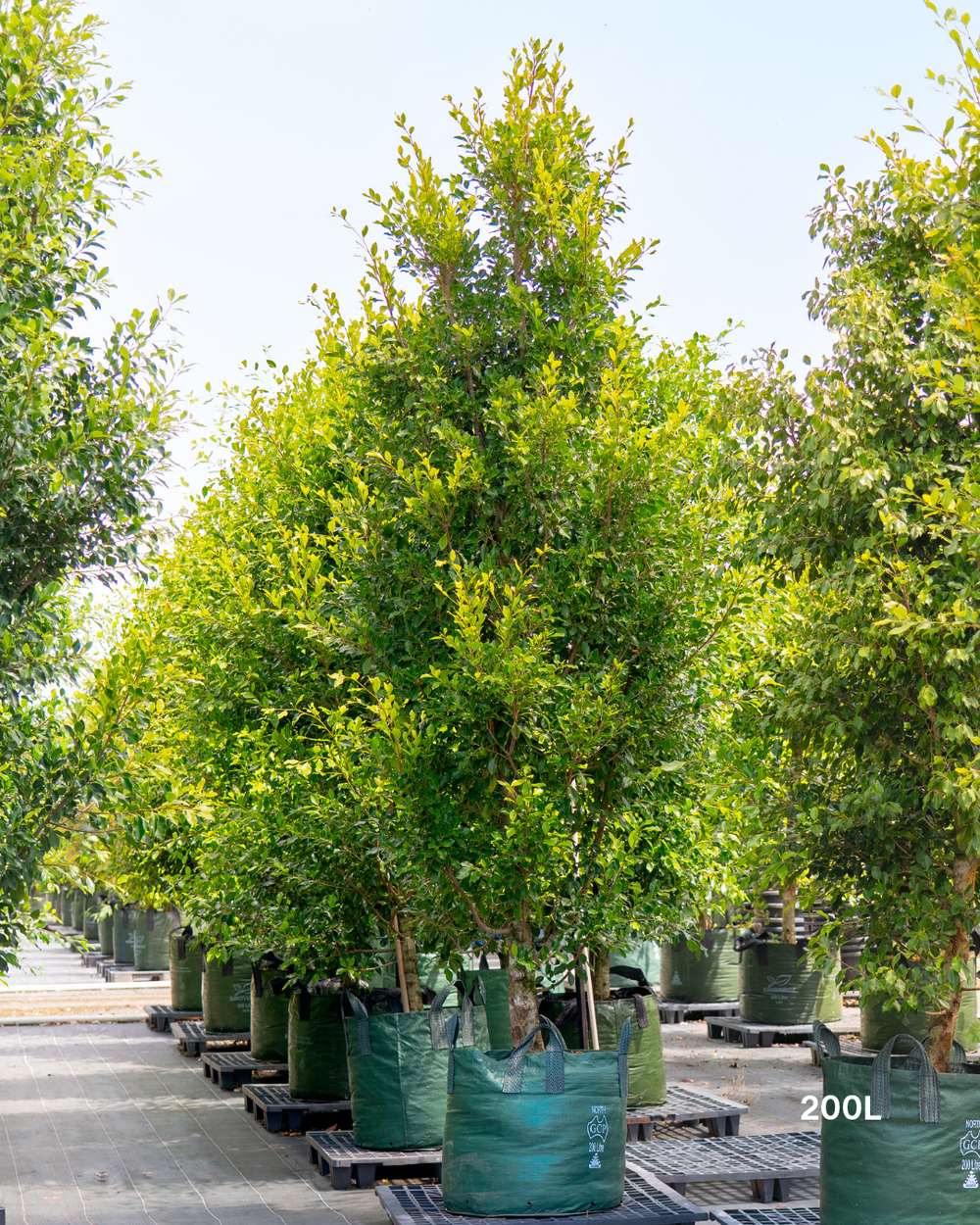
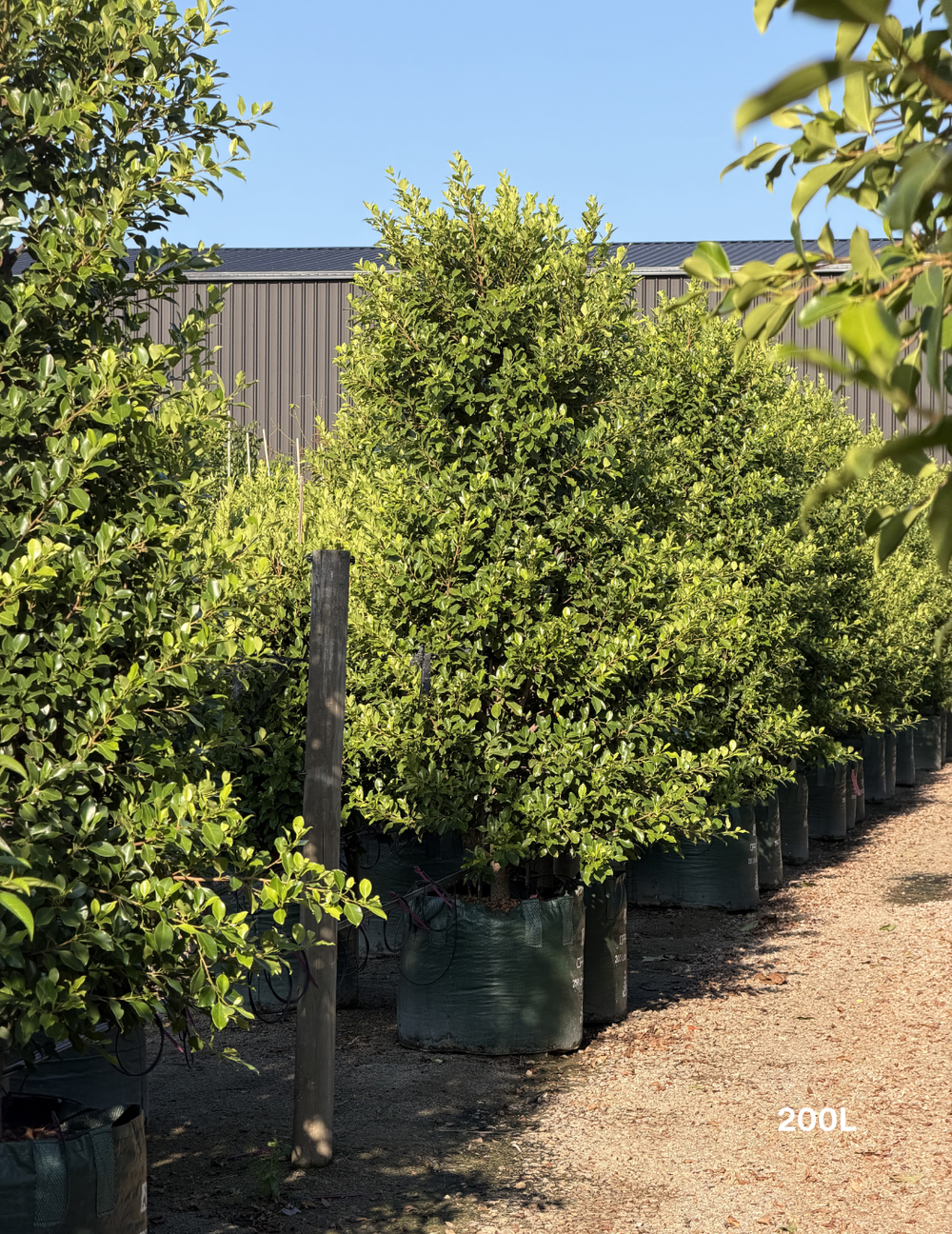
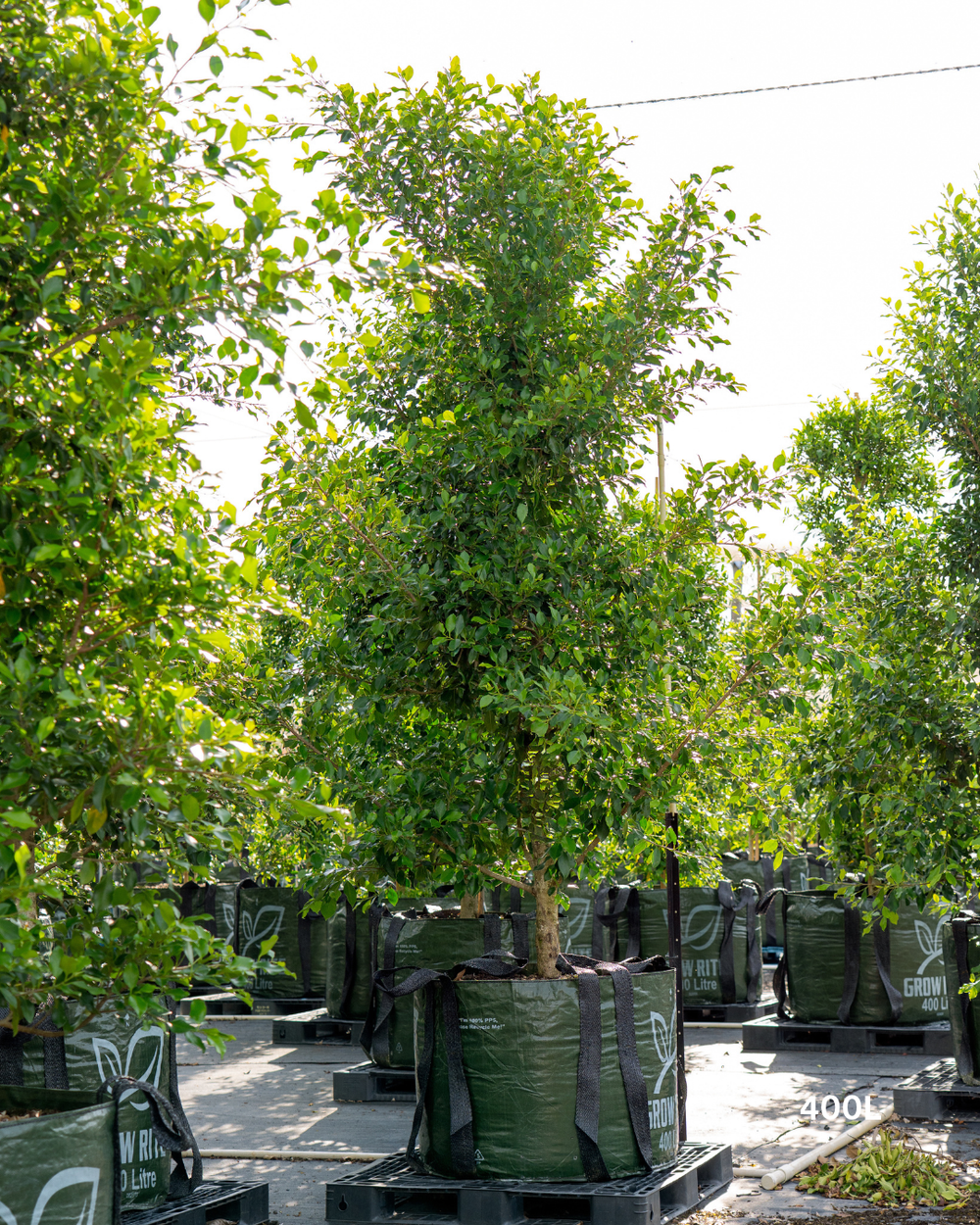
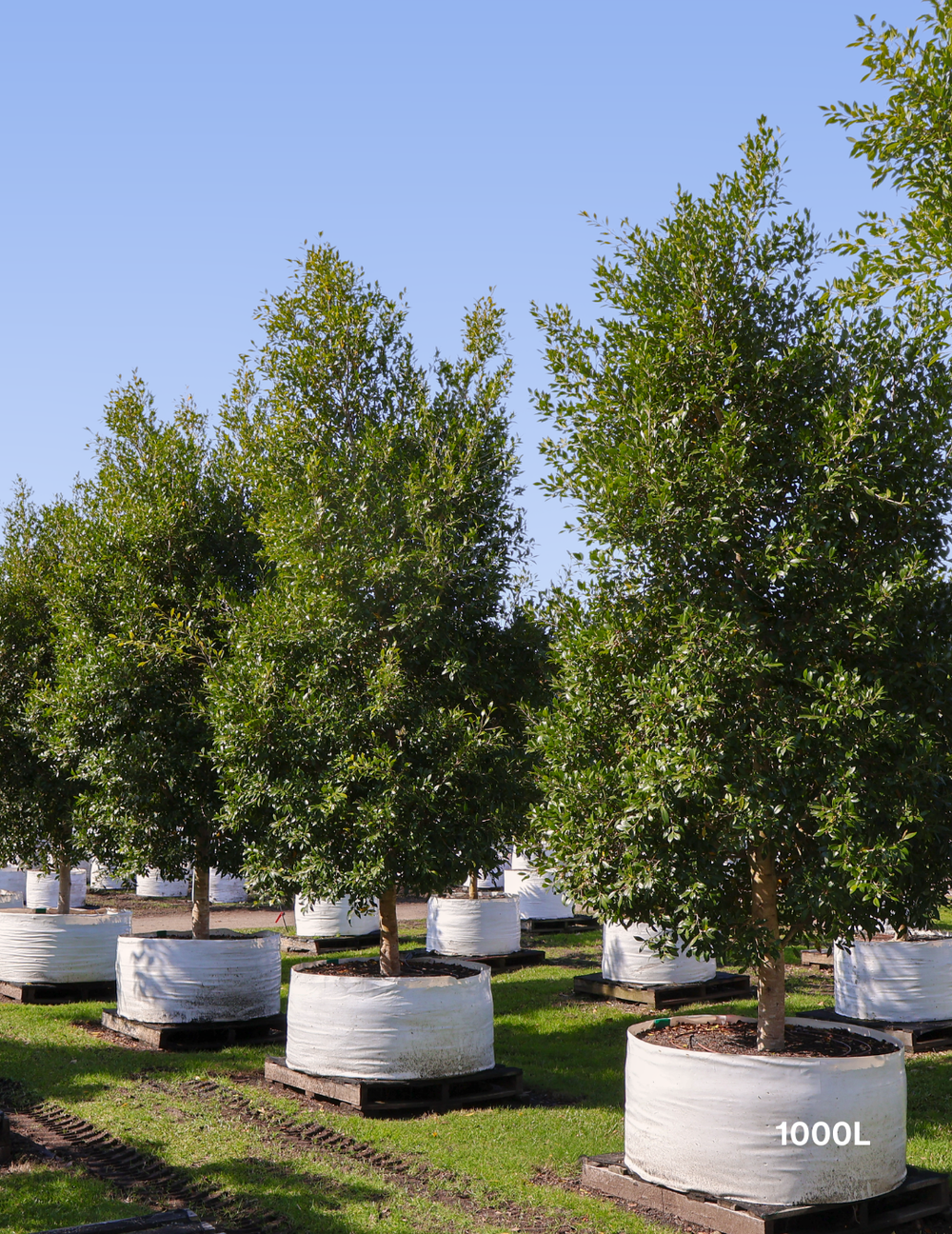
Ficus hillii 'Flash'Ficus hillii 'Flash'Ficus hillii 'Flash'Ficus hillii 'Flash'Ficus hillii 'Flash'Ficus hillii 'Flash'Ficus hillii 'Flash'Ficus hillii 'Flash'Ficus hillii 'Flash'Ficus hillii 'Flash'Ficus hillii 'Flash'Ficus hillii 'Flash'

Evergreen hedge

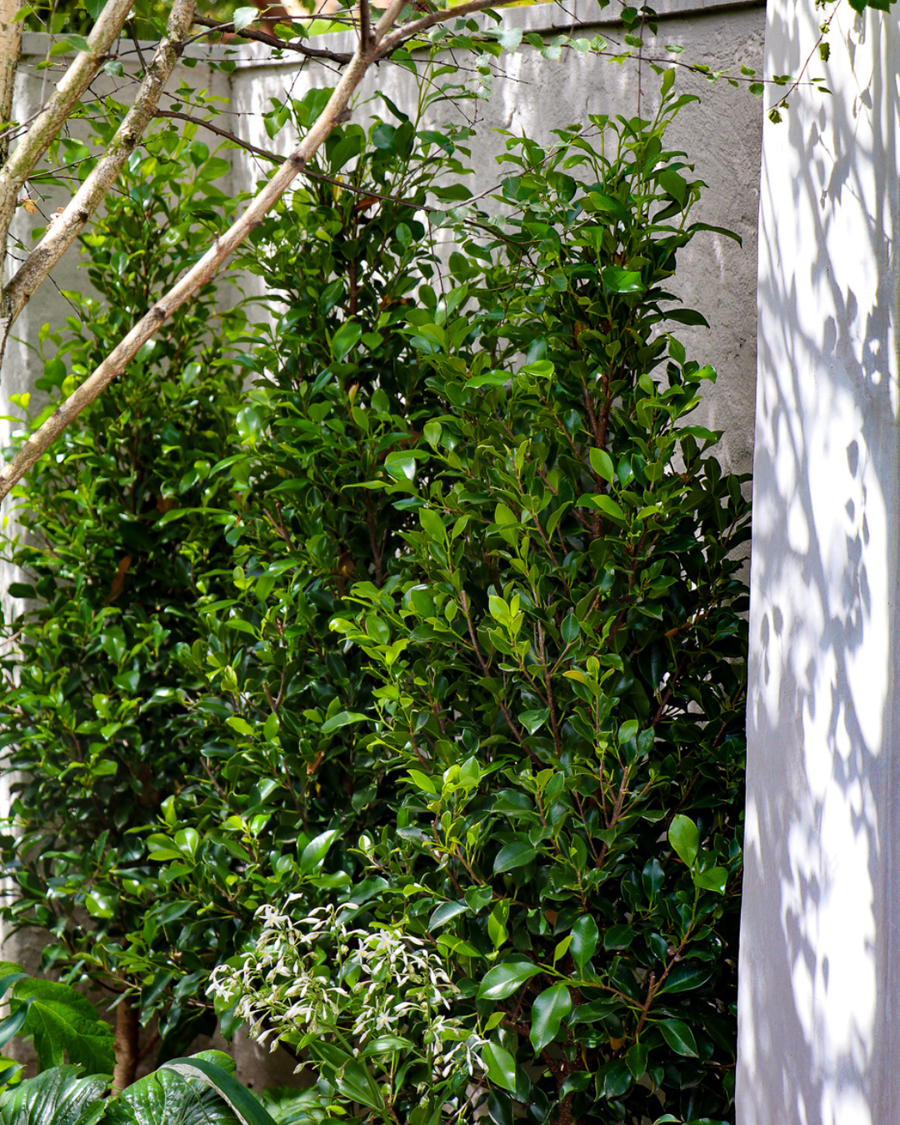
Ficus hillii 'Flash'

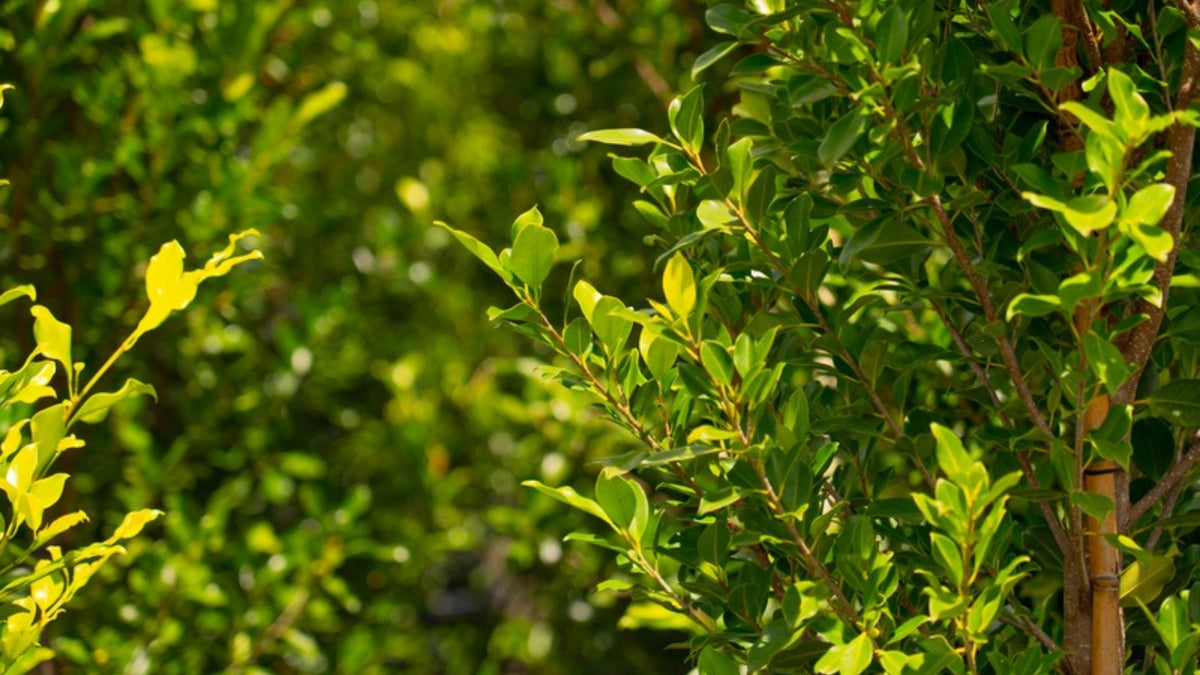
Ficus Flash

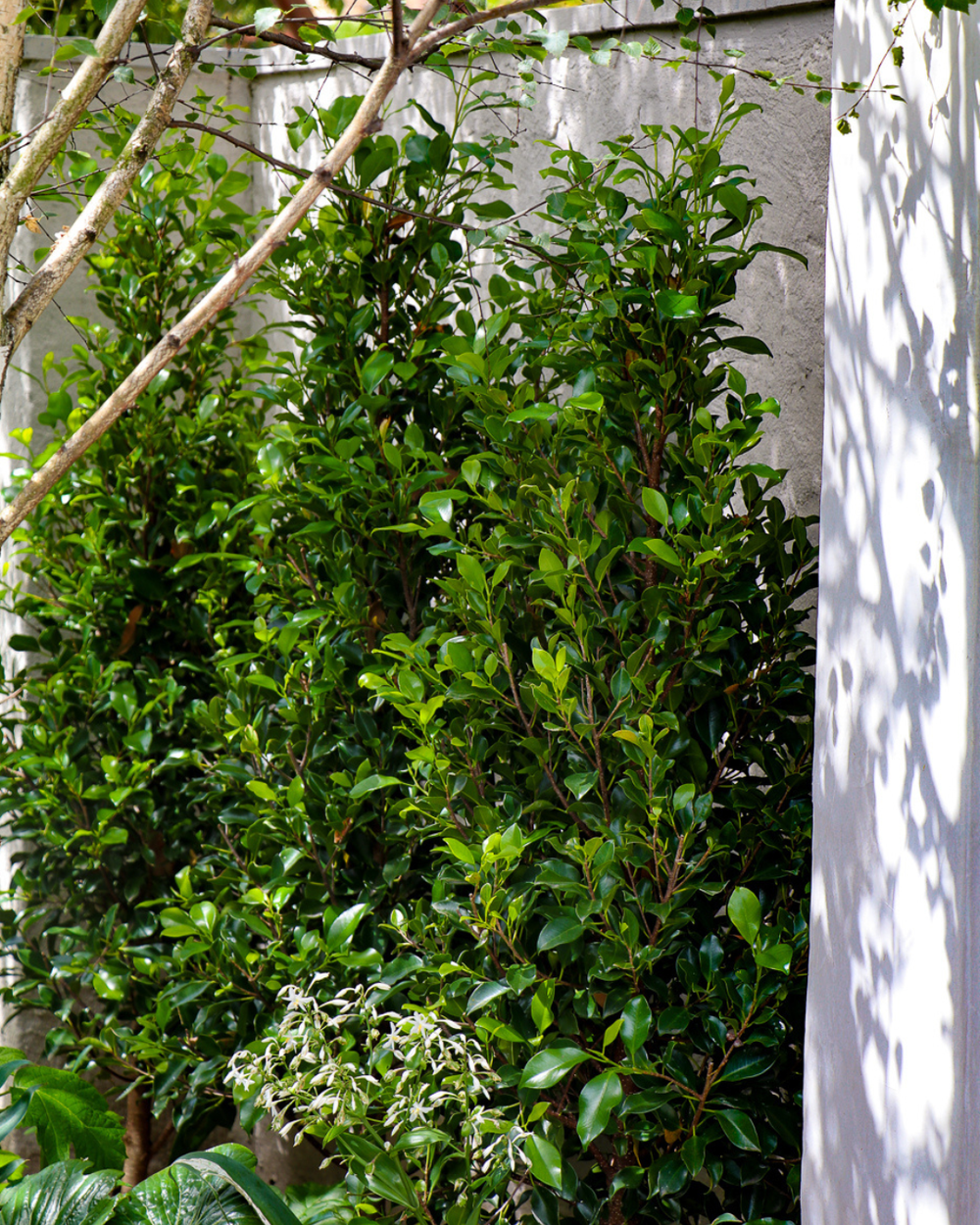
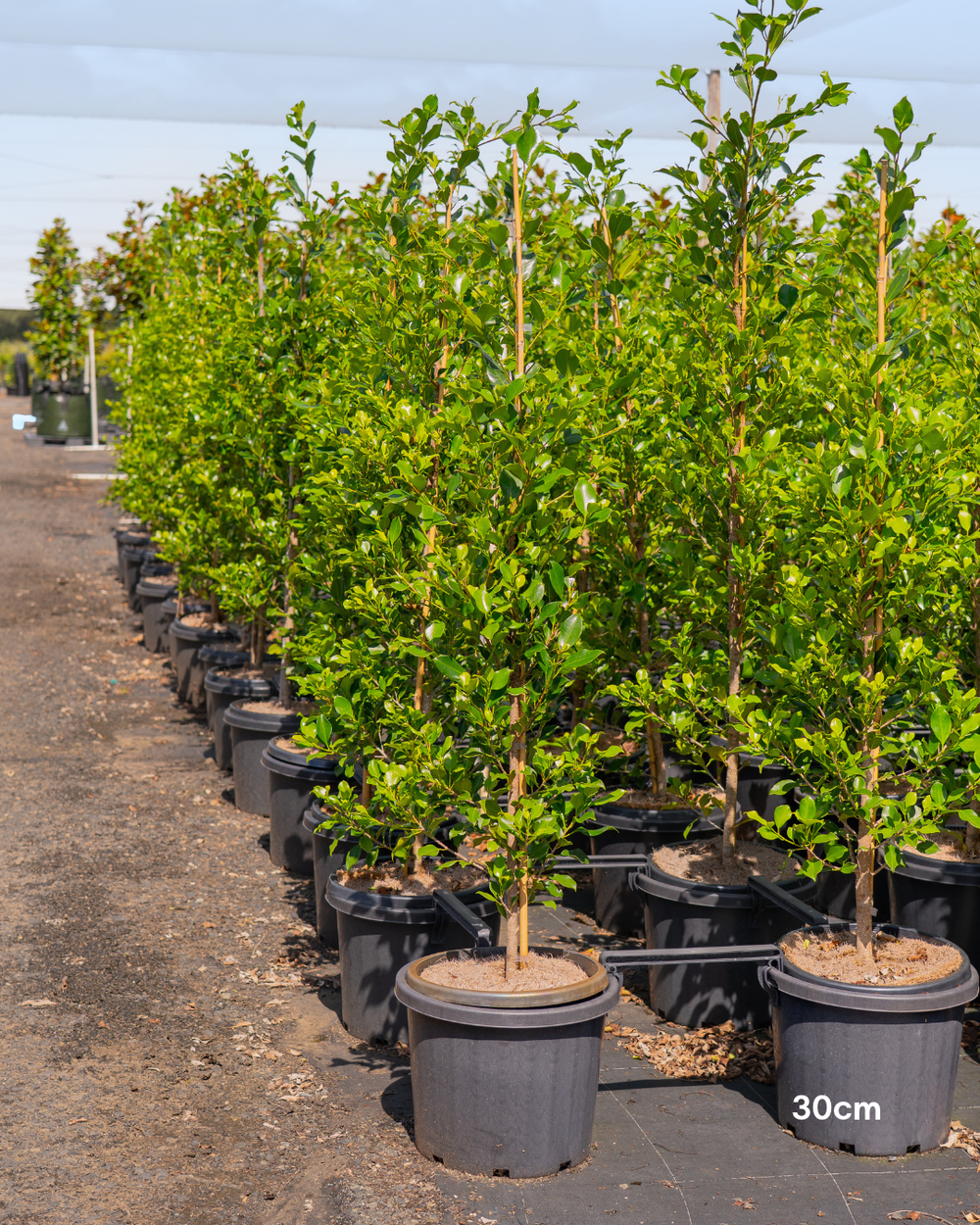
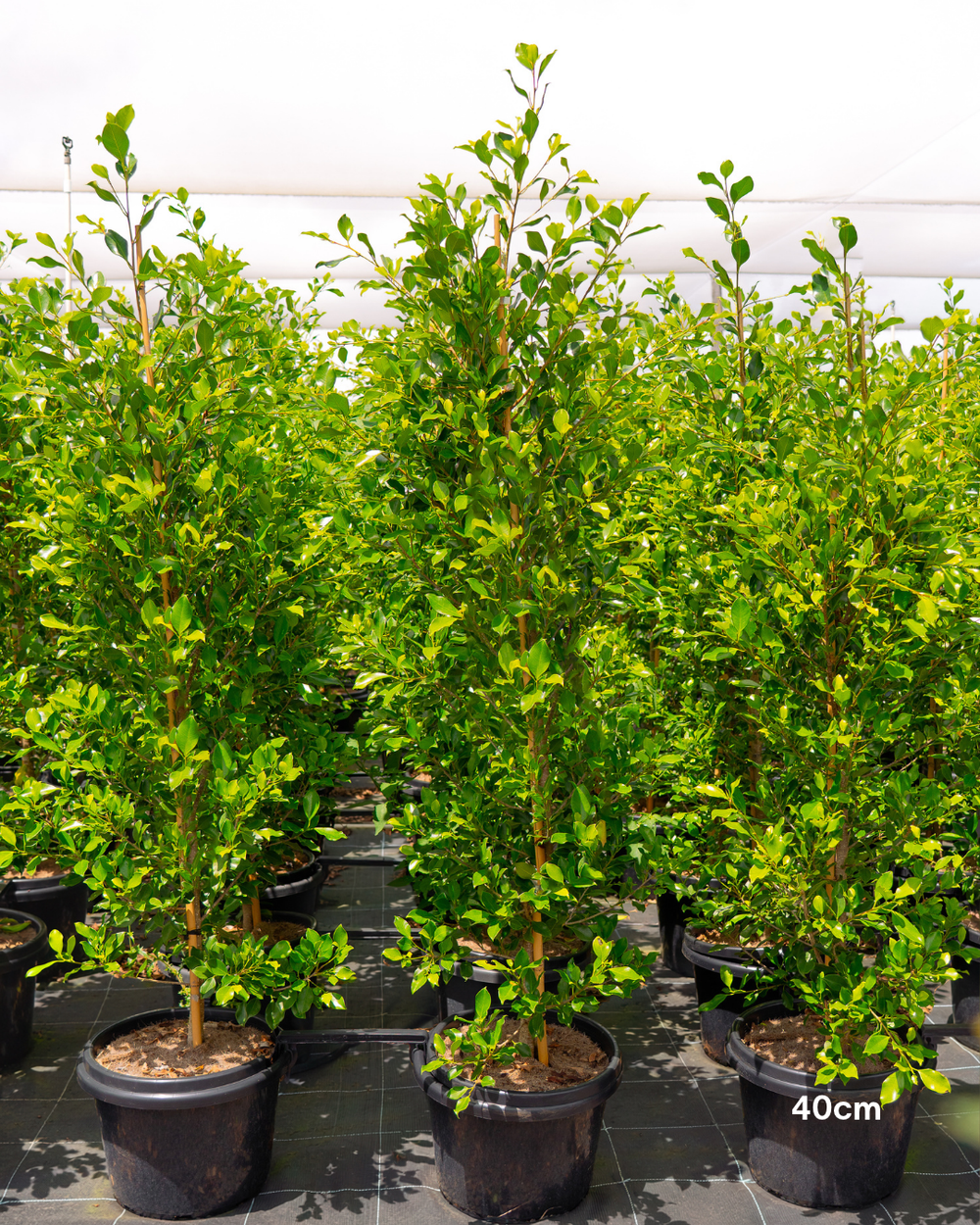
A fast-growing evergreen with glossy dark green leaves and lime-green new growth. It responds well to pruning and is most commonly kept clipped between 2 and 5 metres as a hedge. Full sun to part shade. Frost sensitive.

Mature size
6 to 10 m x 3 to 4 m
Best for
Hedge, privacy screen, garden backdrop
View product →
Compare sizes
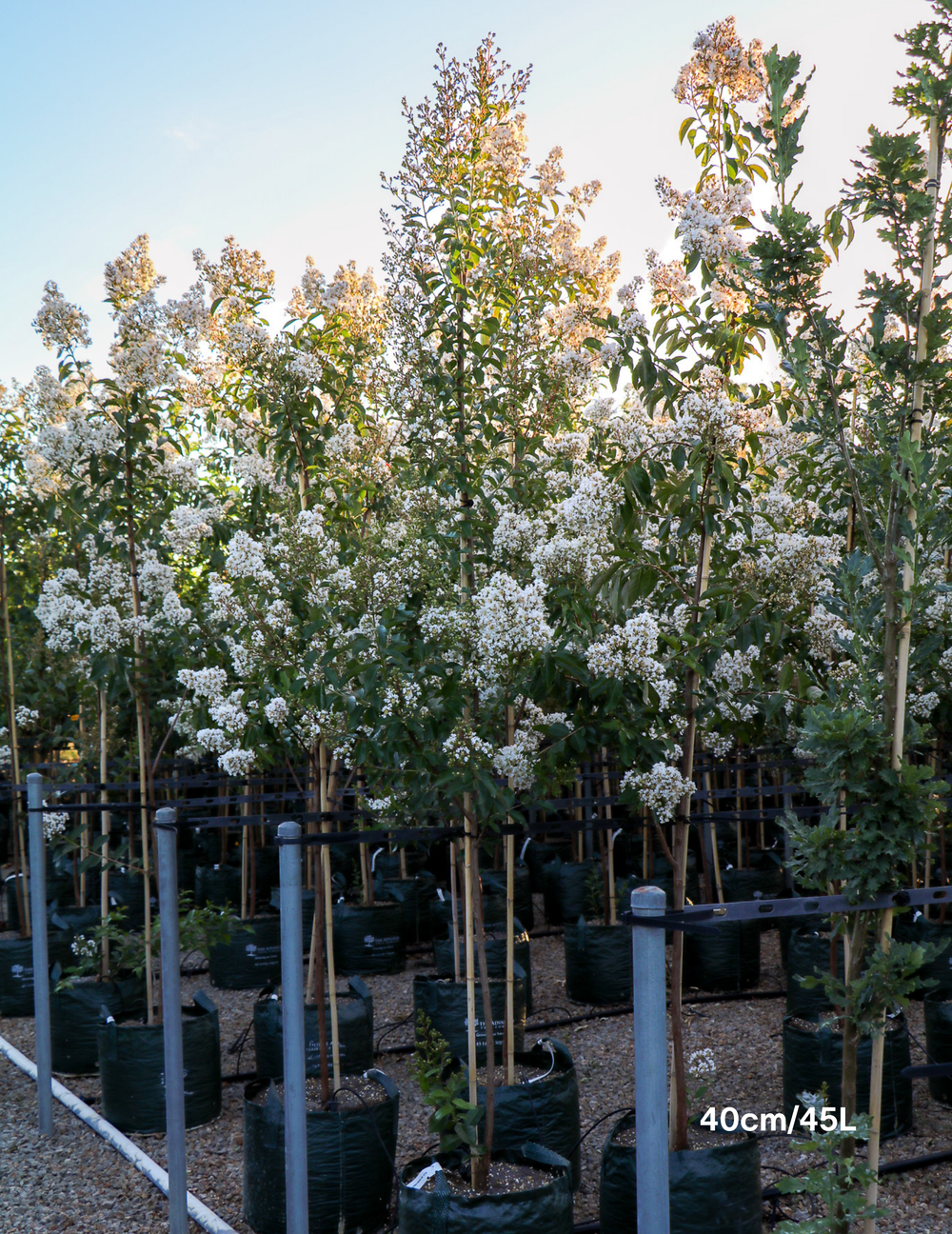
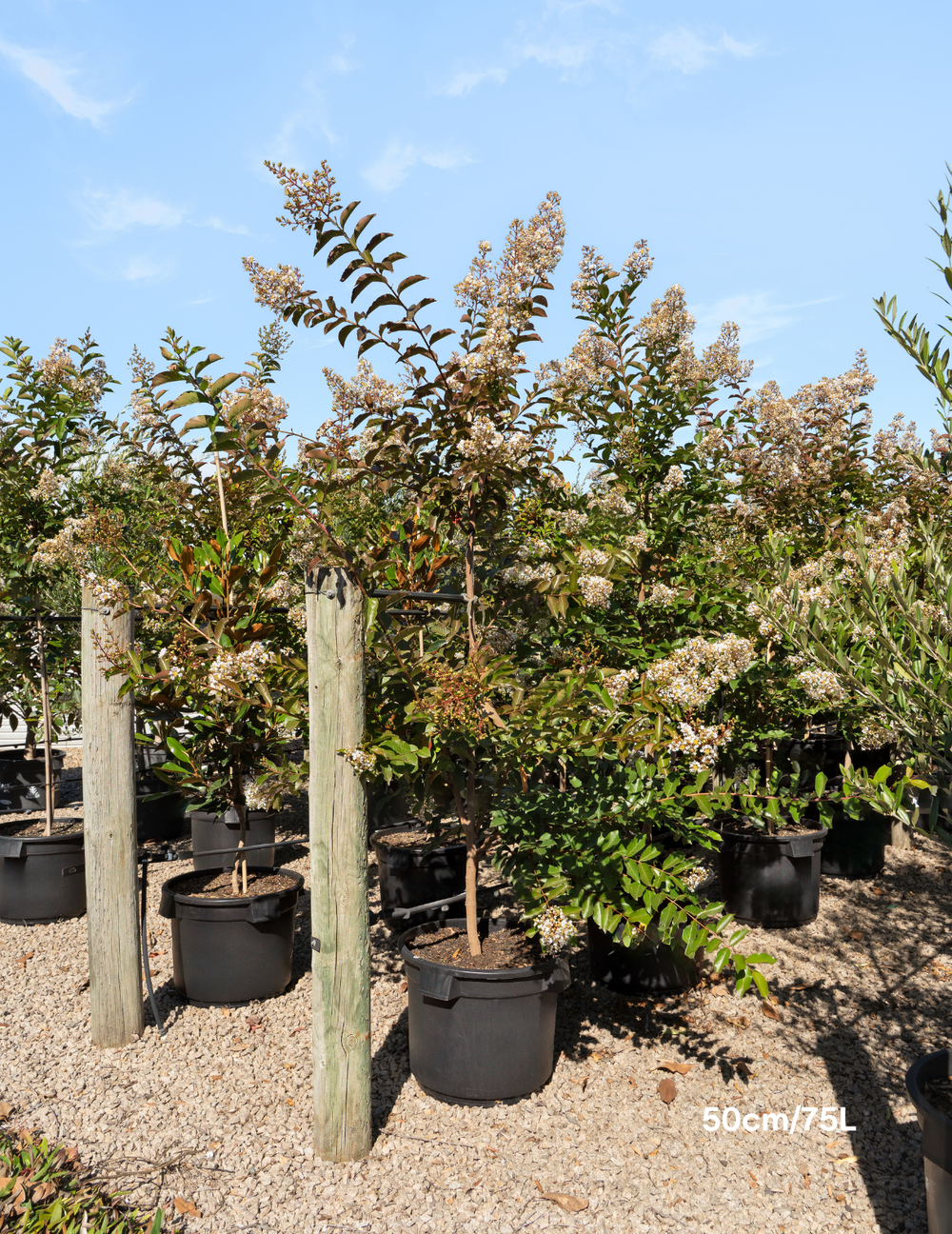
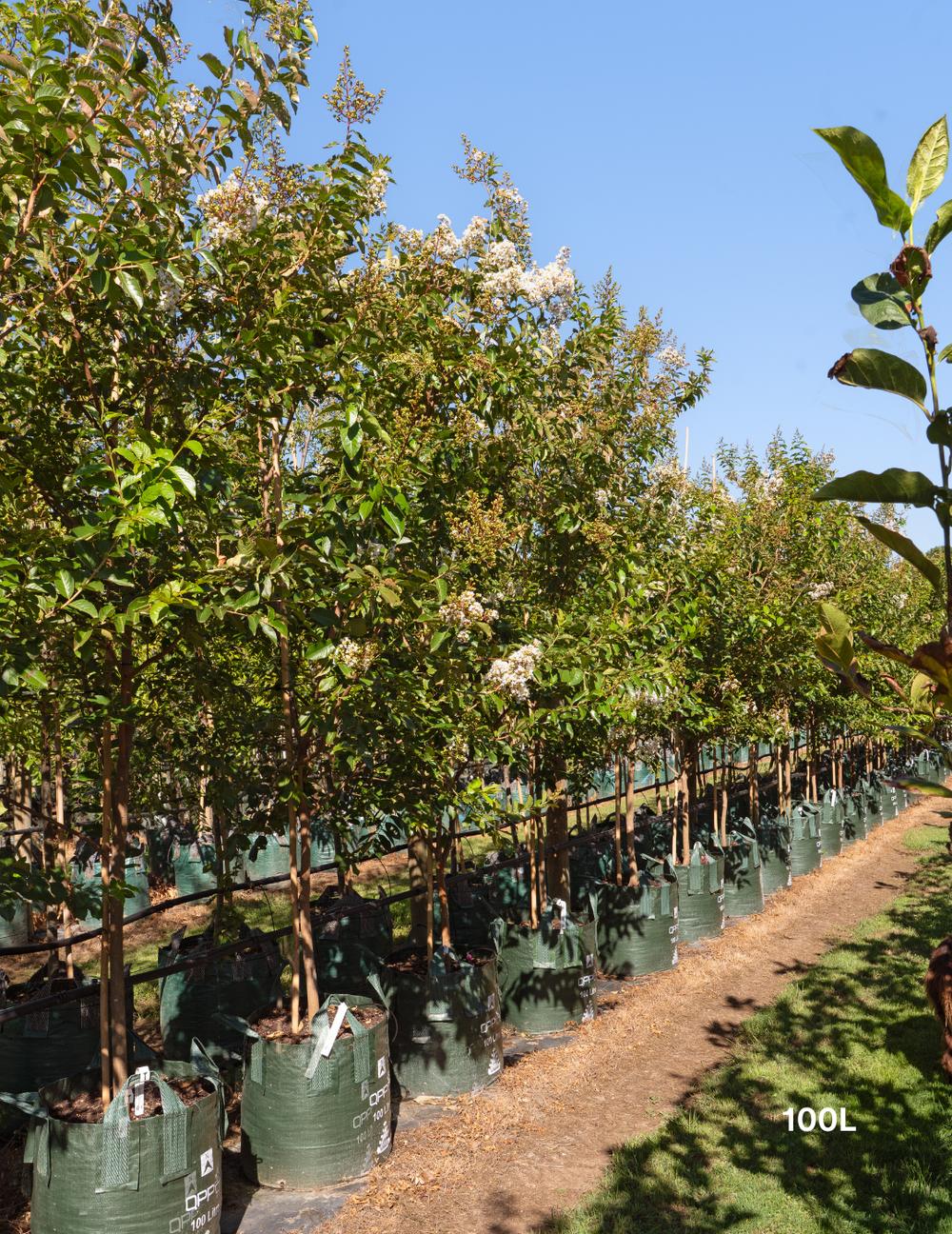
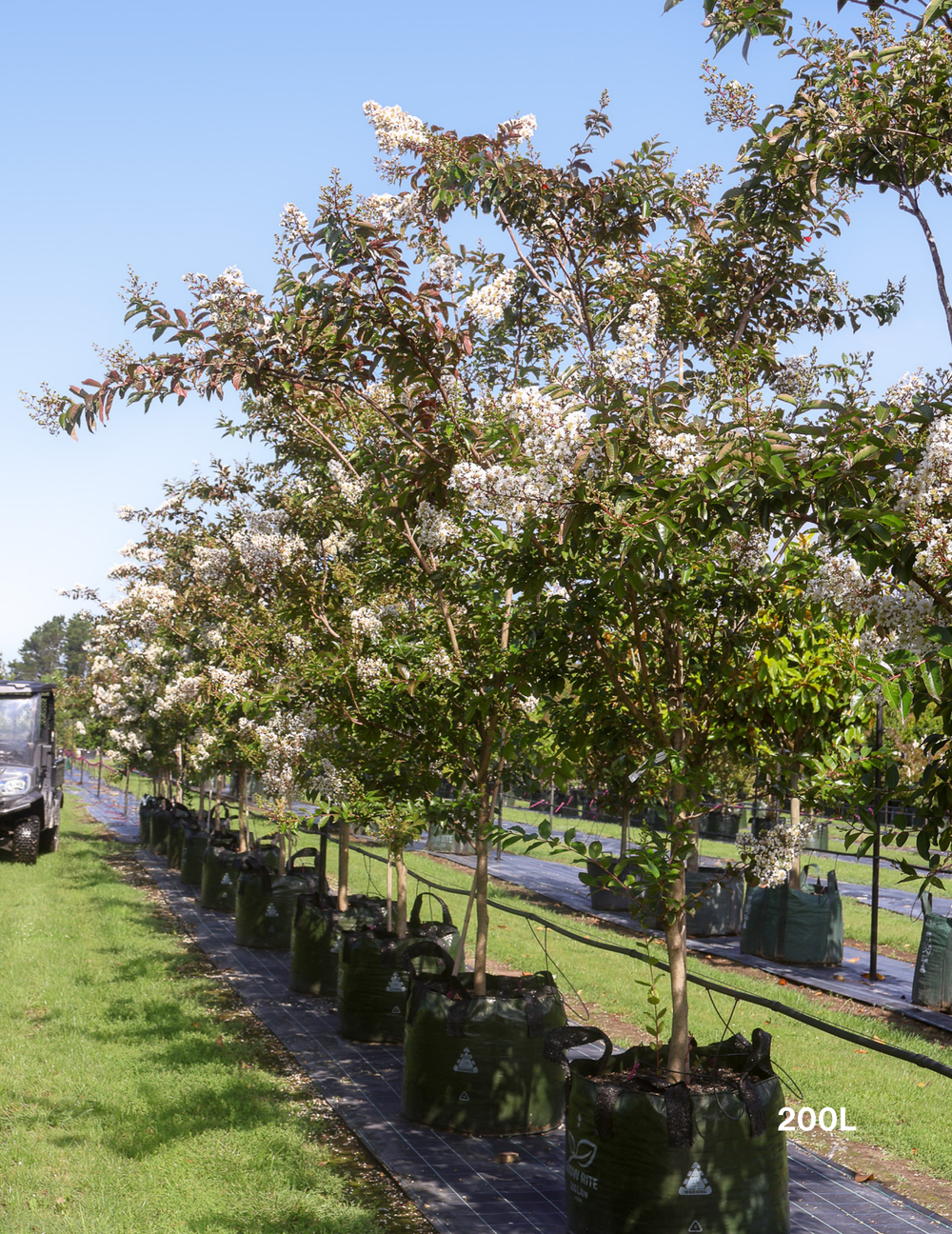
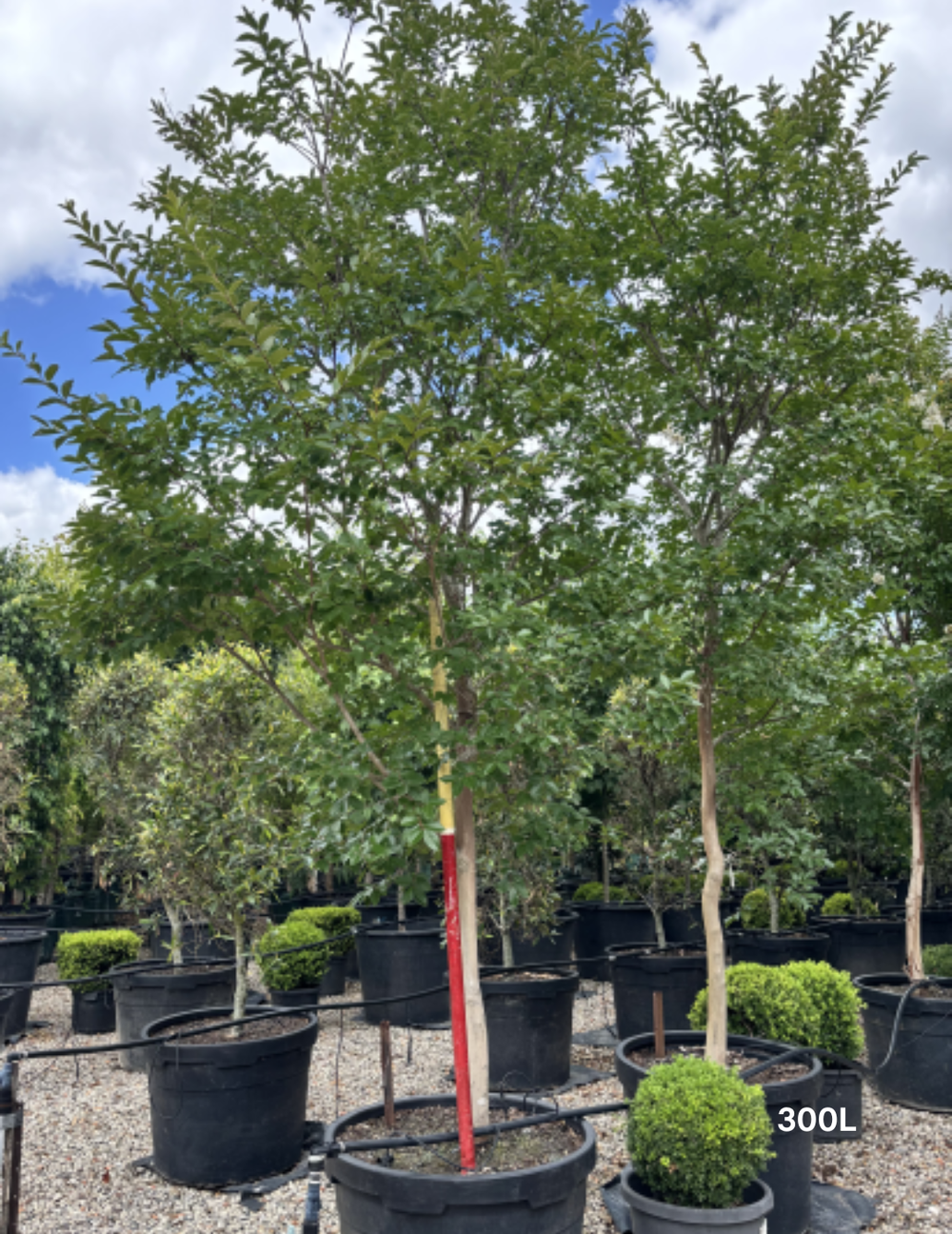
Lagerstroemia indica 'Natchez'Lagerstroemia indica 'Natchez'Lagerstroemia indica 'Natchez'Lagerstroemia indica 'Natchez'Lagerstroemia indica 'Natchez'Lagerstroemia indica 'Natchez'Lagerstroemia indica 'Natchez'

Flowering feature tree

Lagerstroemia indica 'Natchez'

Natchez white crepe myrtle

A deciduous, vase-shaped tree with white flowers in summer and autumn, orange-red autumn leaves and mottled bark. It needs full sun. Frost hardy.

Mature size
6 to 8 m x 3 to 4 m
Best for
Feature tree in front of an evergreen hedge
View product →
Compare sizes
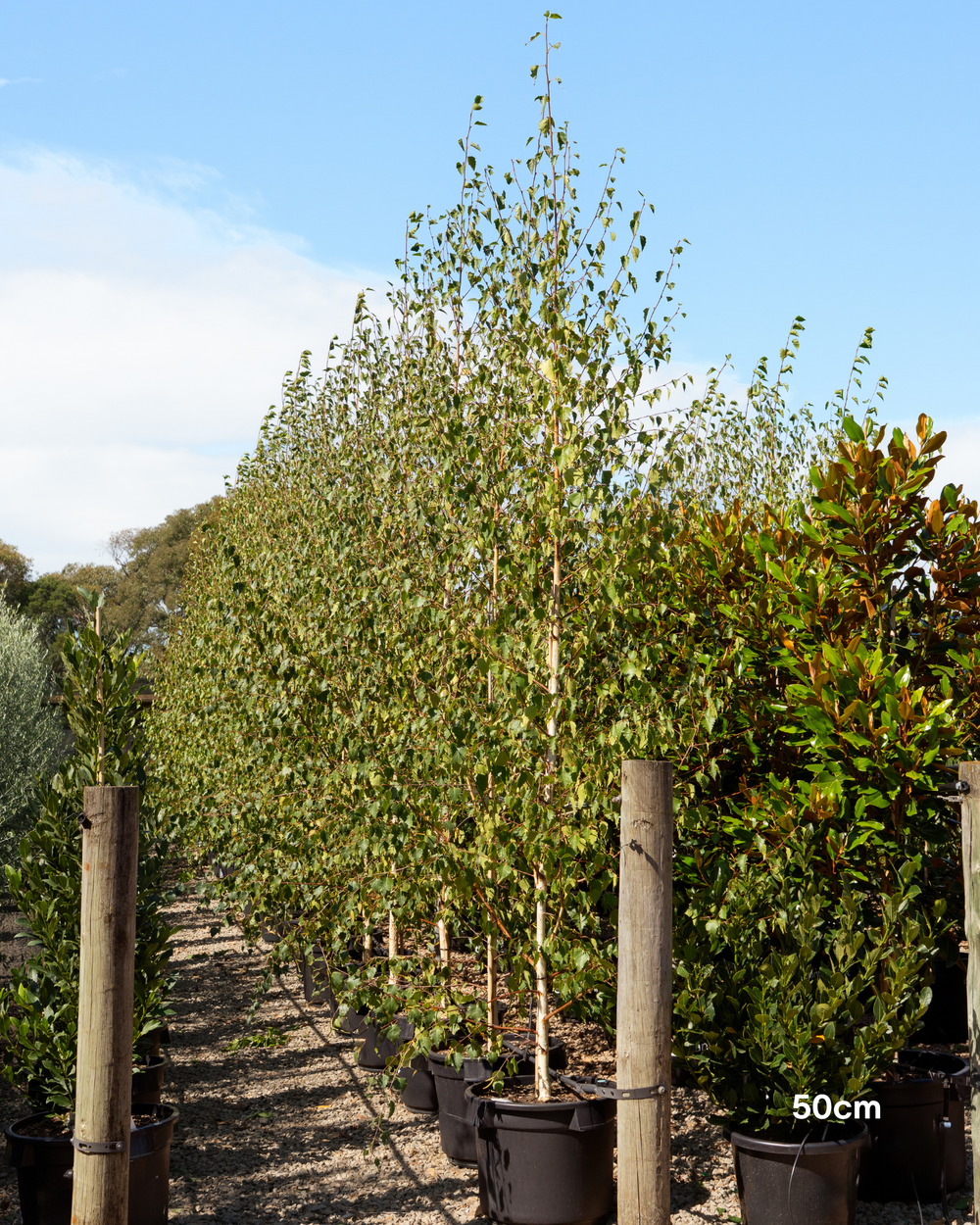
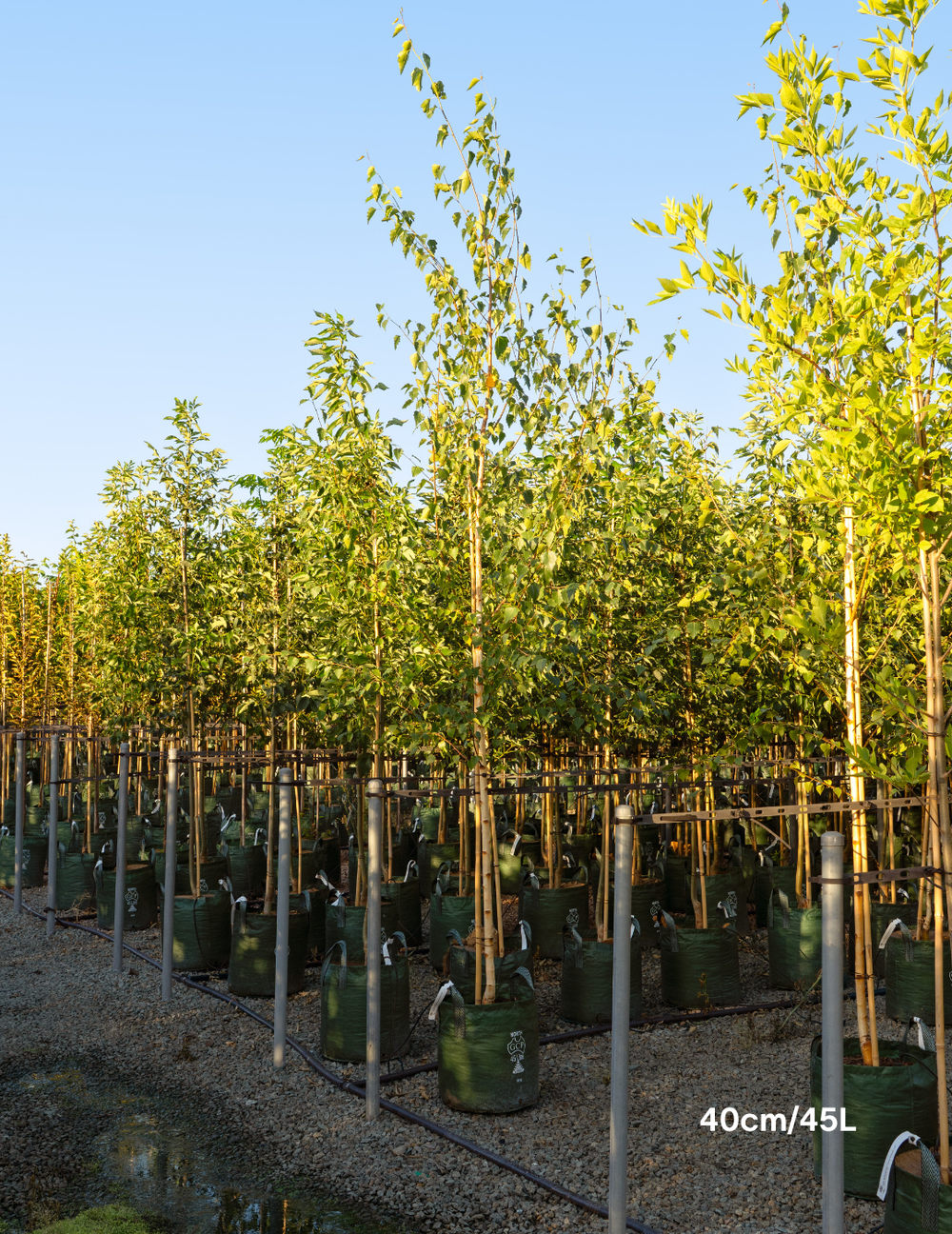
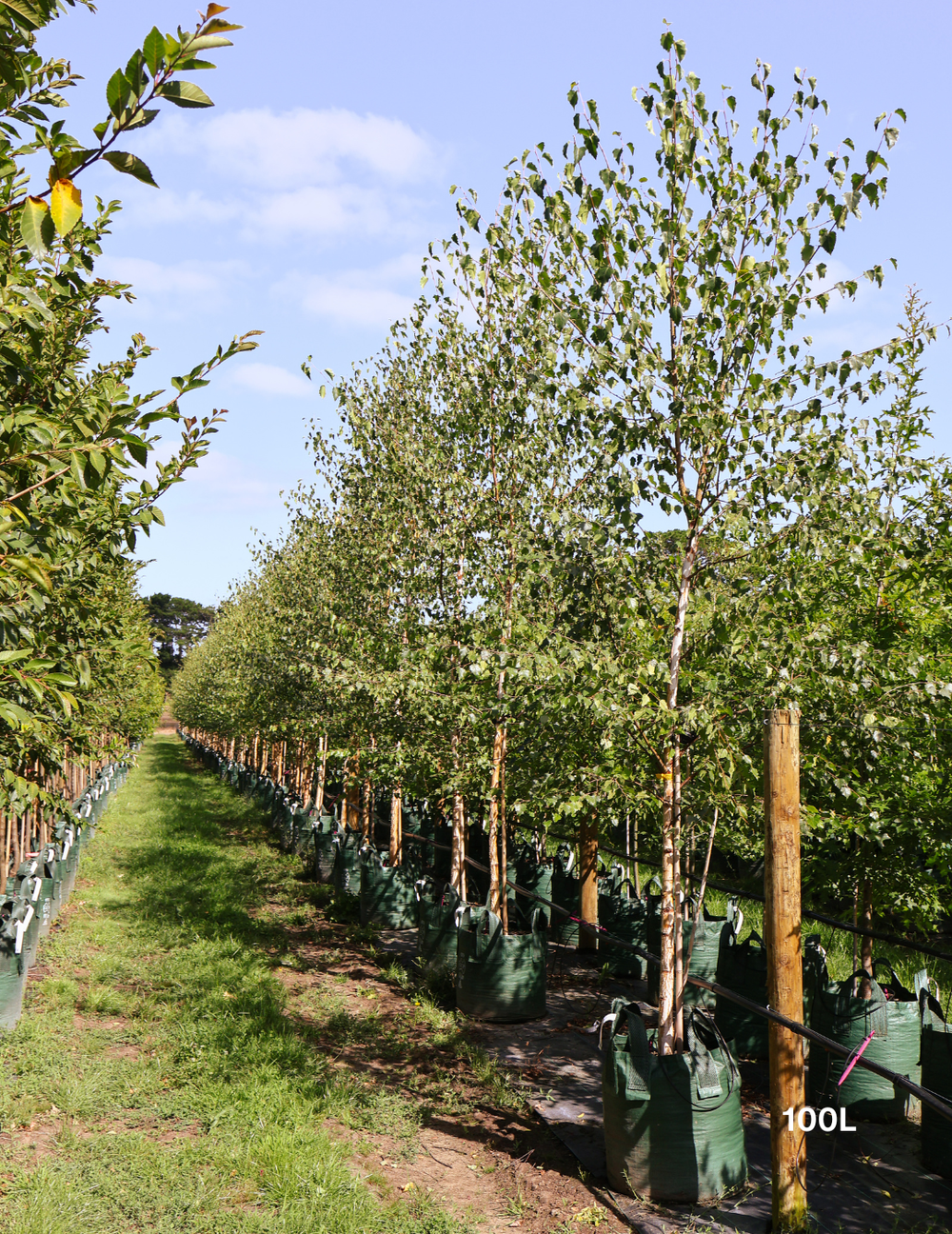
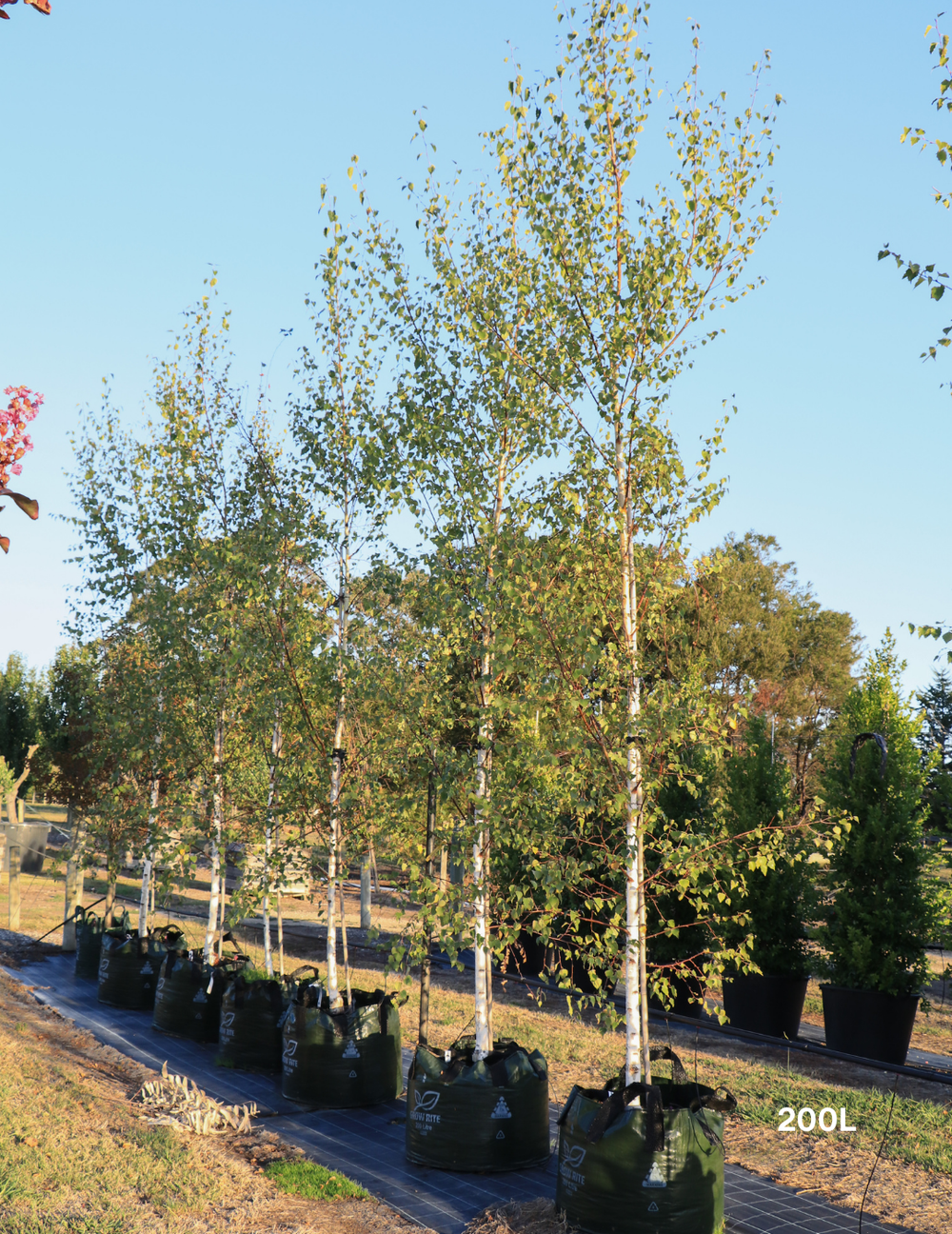
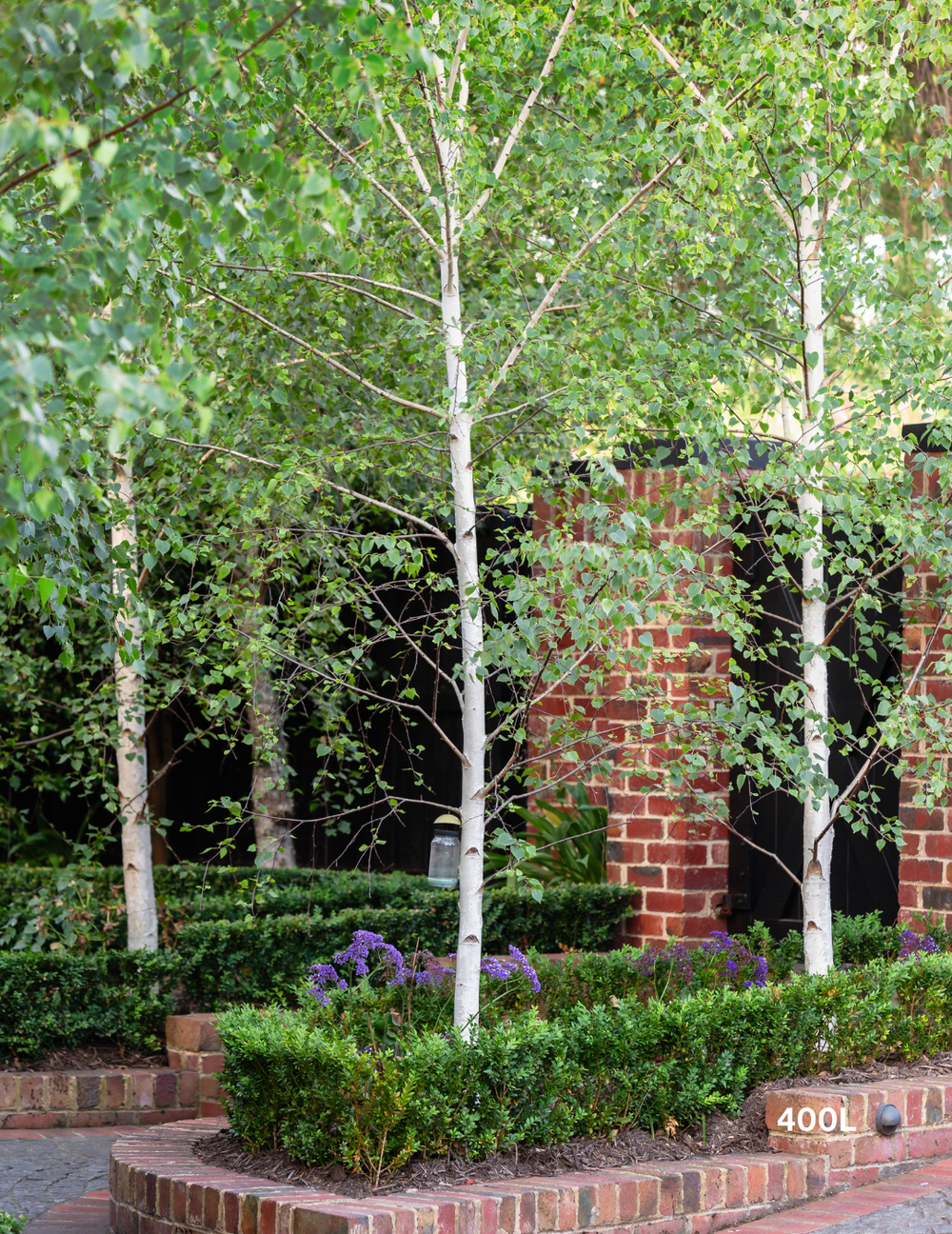
Betula pendula 'Moss White'Betula pendula 'Moss White'Betula pendula 'Moss White'Betula pendula 'Moss White'Betula pendula 'Moss White'Betula pendula 'Moss White'

White-trunked feature tree

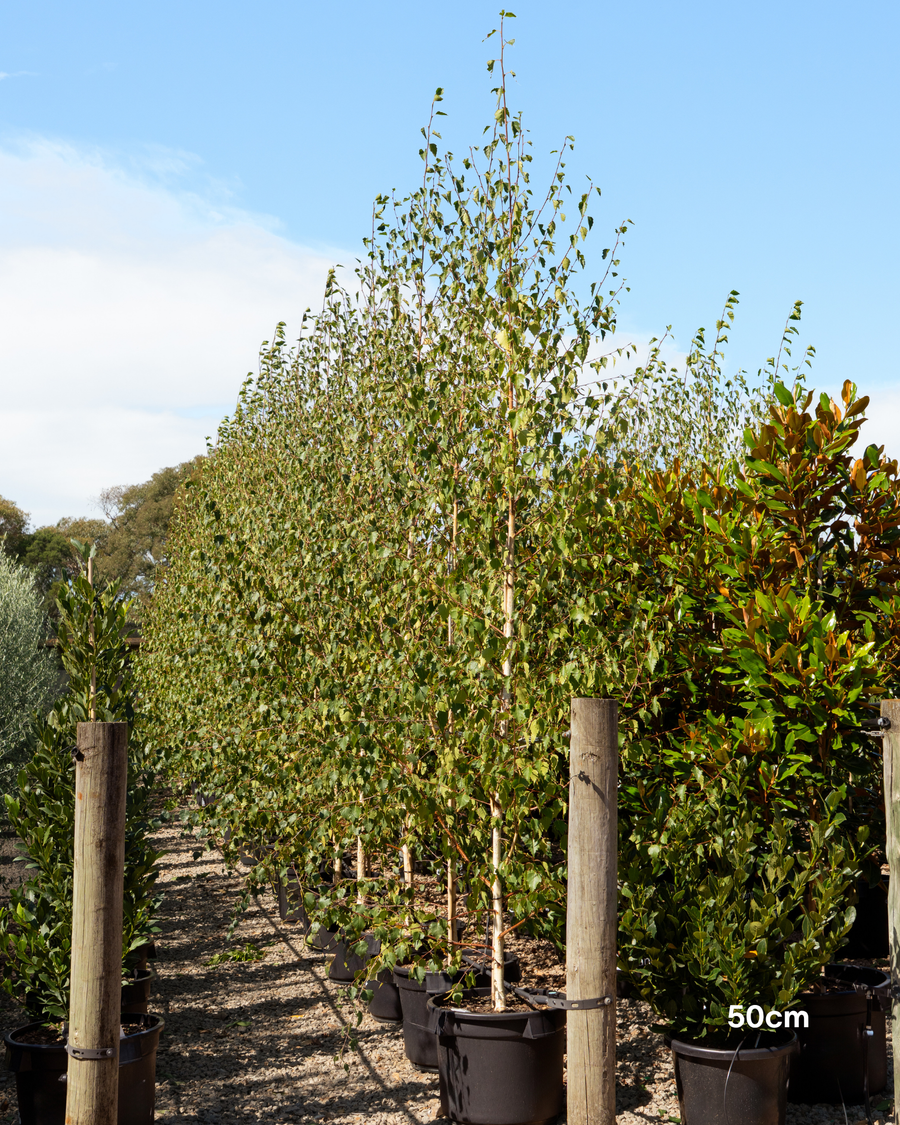
Betula pendula 'Moss White'

Moss White silver birch

A deciduous birch with bright white bark, weeping branches and light green leaves that turn gold in autumn. It needs full sun and performs best in cool to temperate regions. Frost hardy.

Mature size
Up to 14 m x 3 to 5 m
Best for
Groups of trees, height against a dark hedge
View product →
Compare sizes
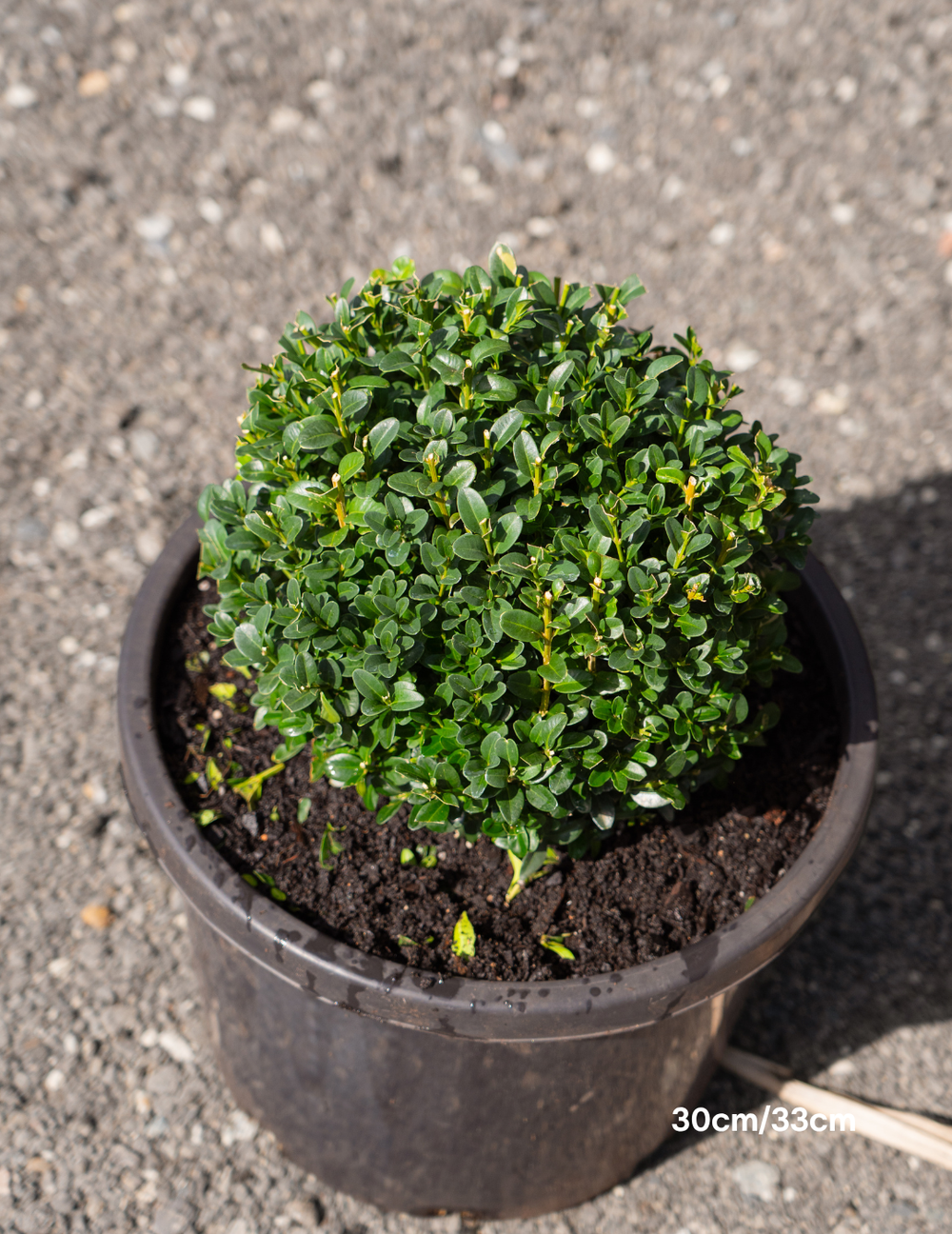
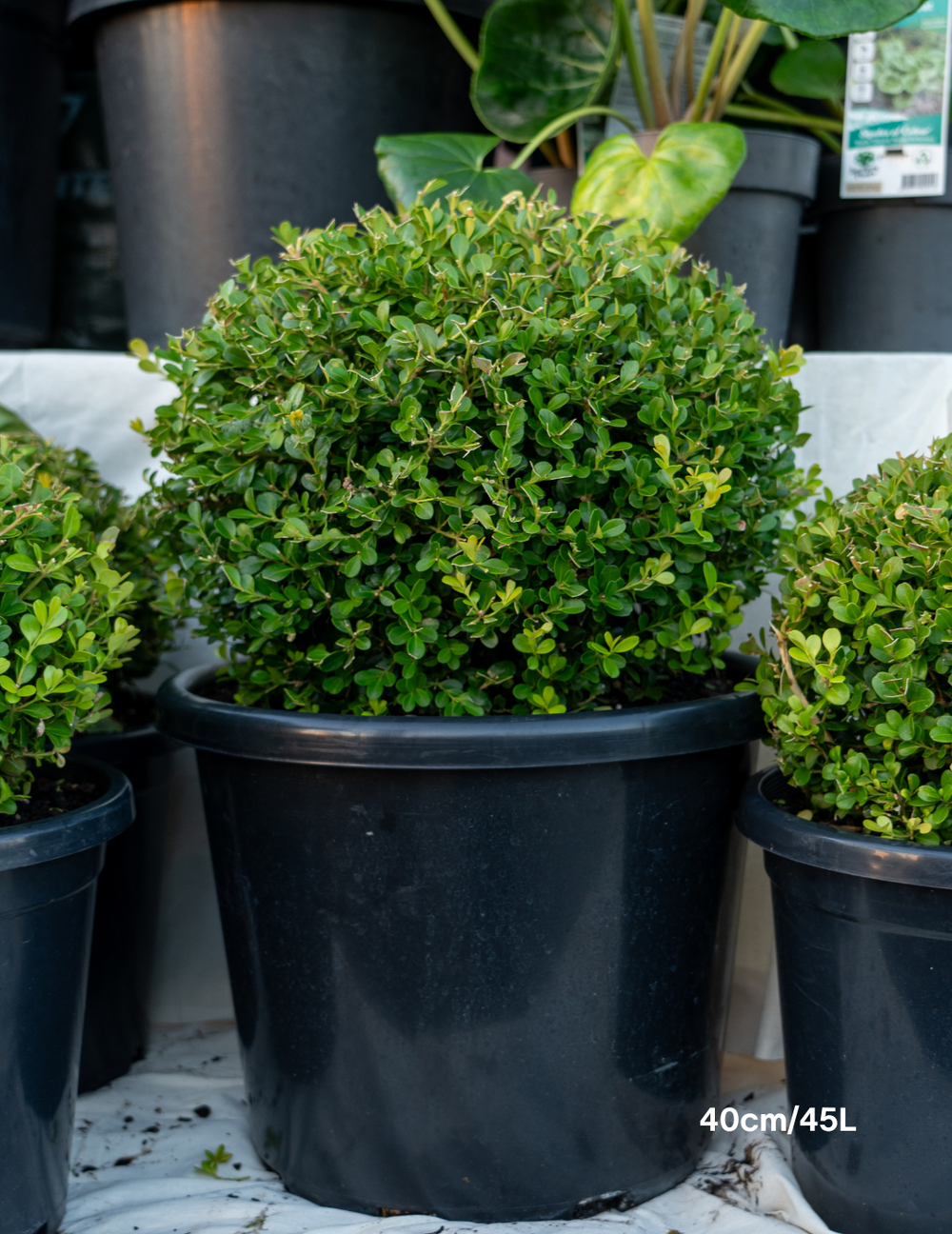
Buxus microphylla var. japonicaBuxus microphylla var. japonicaBuxus microphylla var. japonicaBuxus microphylla var. japonicaBuxus microphylla var. japonicaBuxus microphylla var. japonicaBuxus microphylla var. japonica

Clipped underplanting

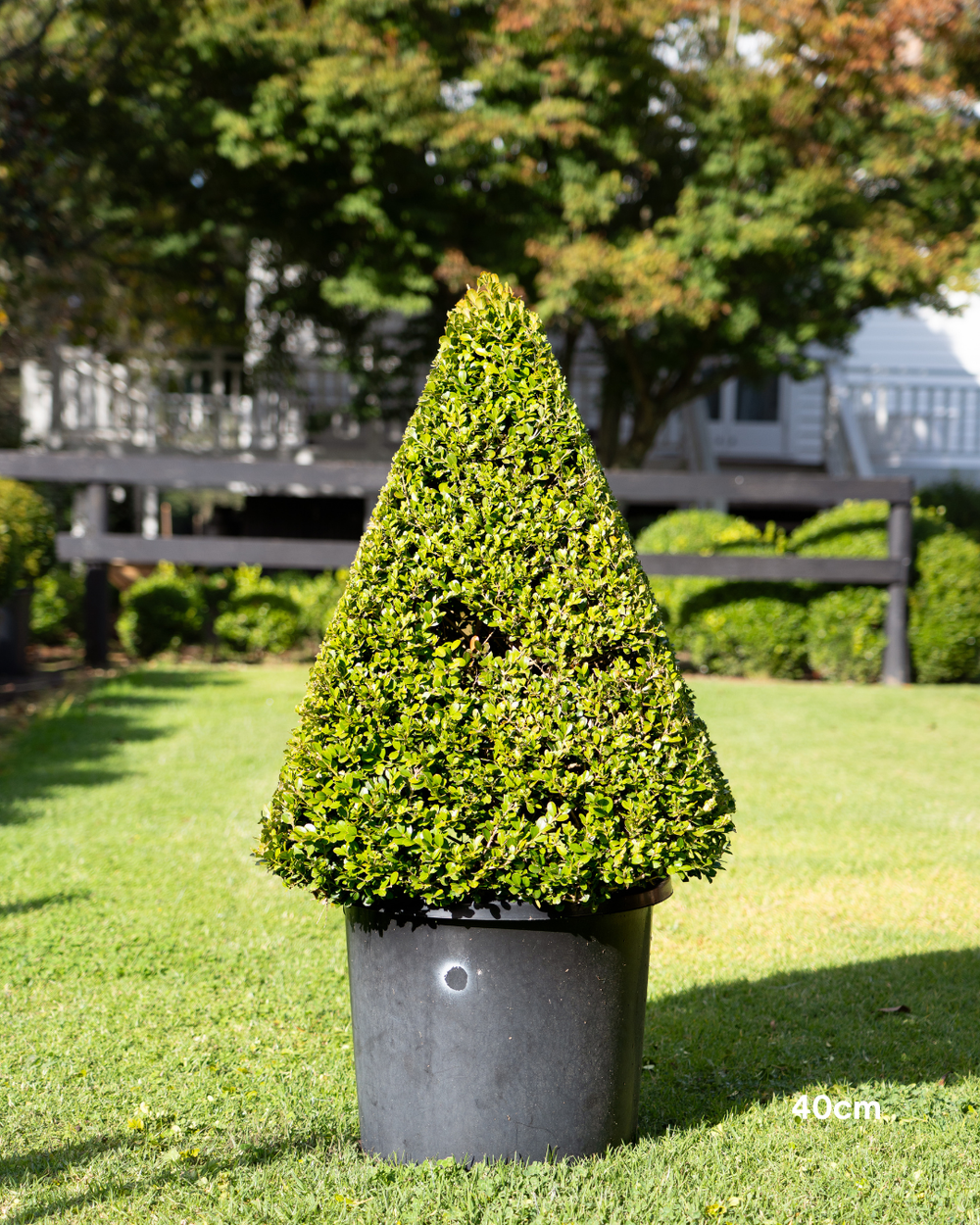
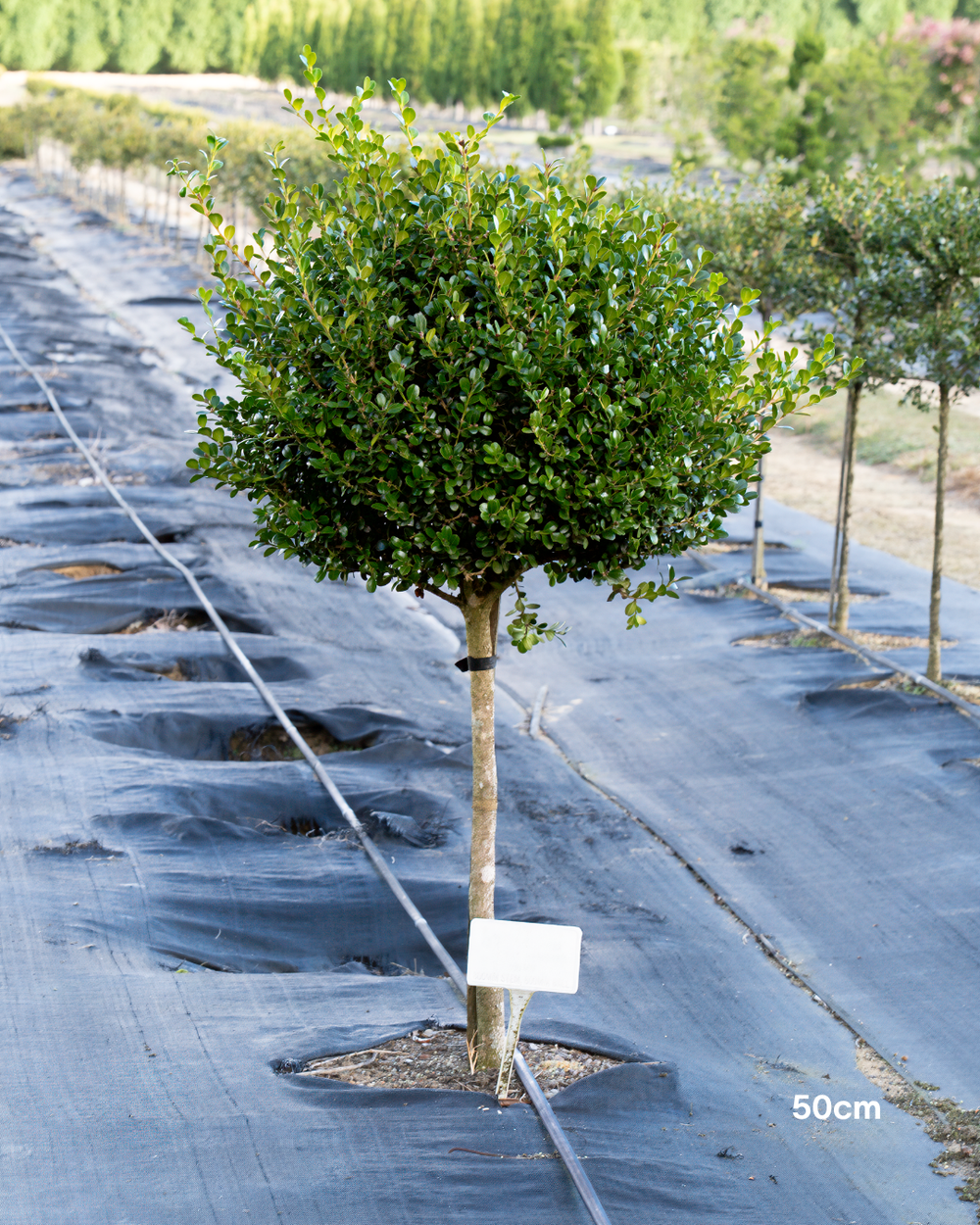
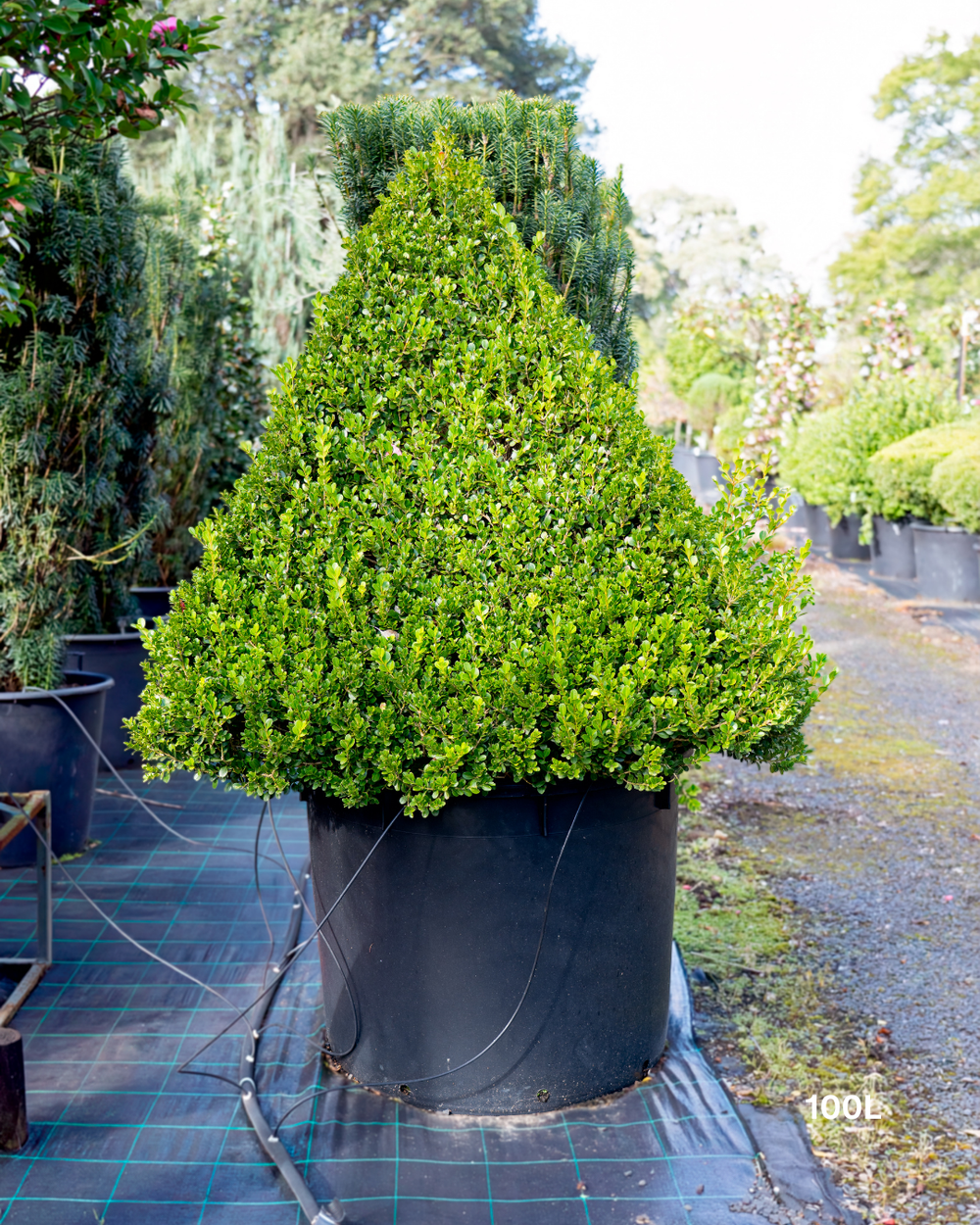
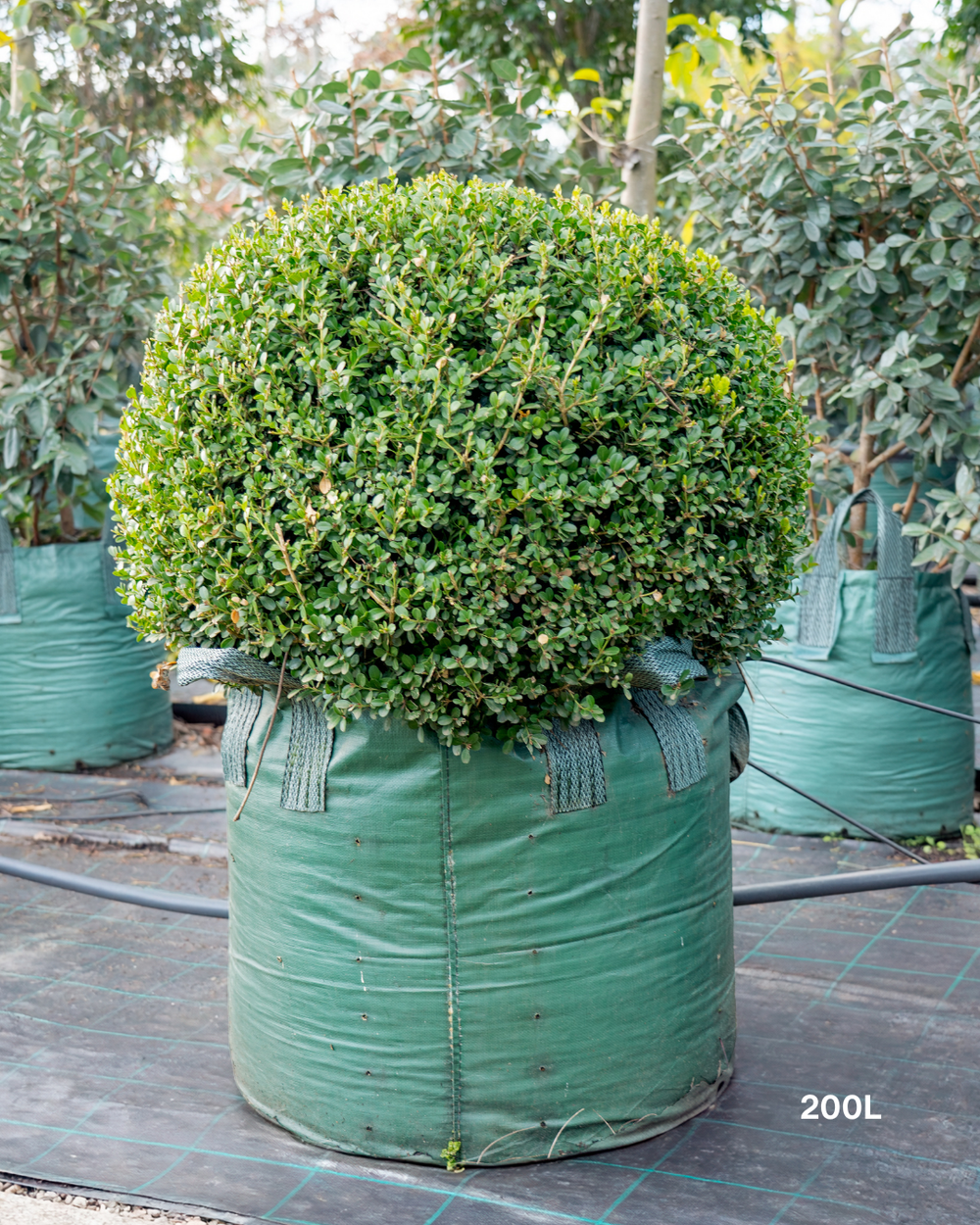
Buxus microphylla var. japonica

Japanese box topiary balls

A dense evergreen shrub with small, rounded, mid green leaves, clipped into a ball. It grows about 15 to 25 centimetres a year, so the shape holds between trims. Full sun to part shade. Handles light to moderate frost.

Mature size
1.2 to 1.5 m wide
Best for
Edging beds, underplanting feature trees
View product →
Compare sizes
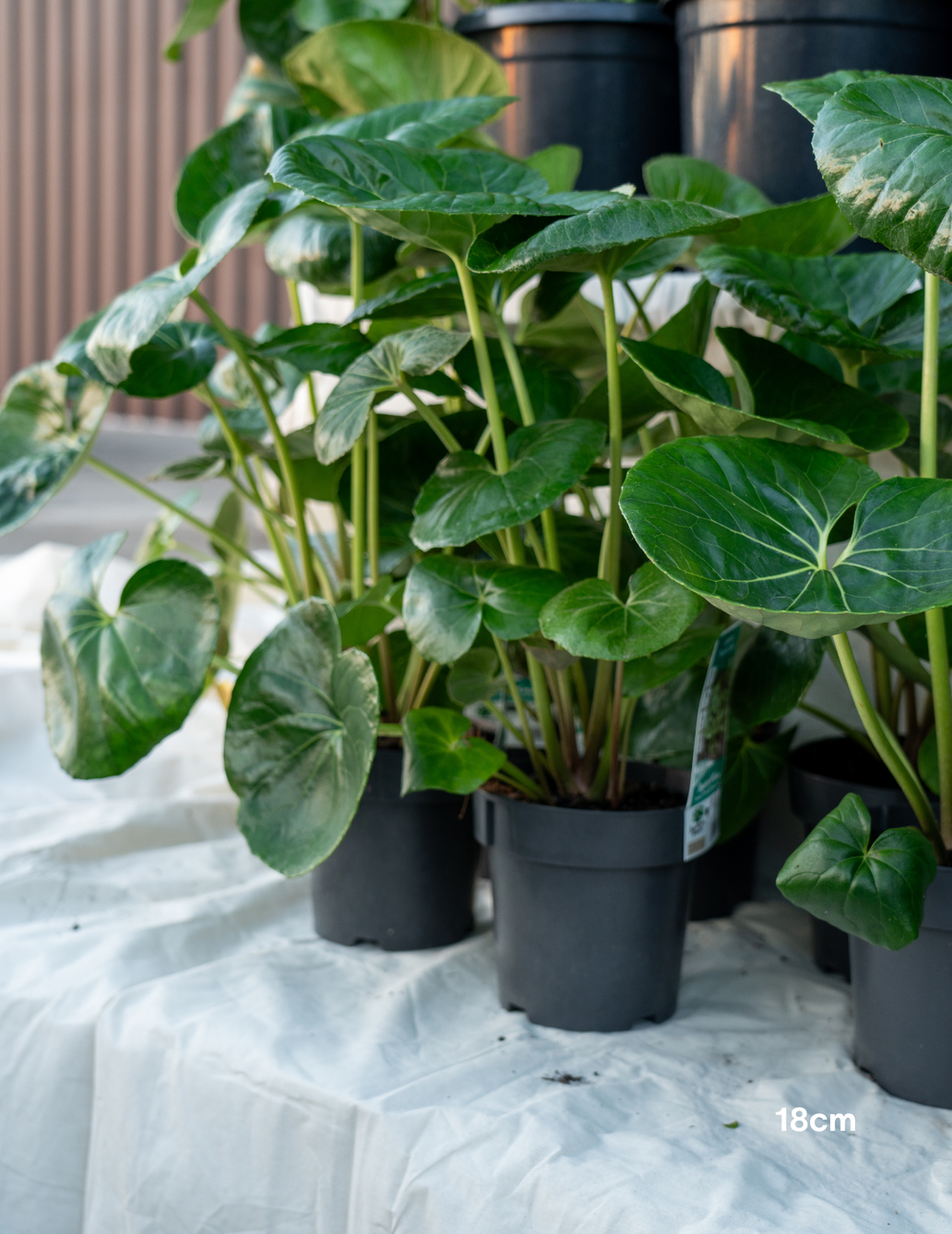
Ligularia reniformis

Bold-leaf underplanting

Ligularia reniformis

Tractor seat plant

An evergreen clump of glossy, kidney-shaped leaves, with yellow daisy flowers on tall stems in summer. It is a full shade plant that wants consistent moisture. Frost sensitive.

Mature size
0.5 to 1 m x 1 to 1.5 m
Best for
Shaded beds under trees and beside hedges
View product →

Compare the five plants at a glance

Swipe sideways to see every column

VarietyTypeMature size (H x W)FruitBest for
Ficus Flash Evergreen hedge6 to 10 m x 3 to 4 mHedge, privacy screen, garden backdrop
Natchez white crepe myrtle Flowering feature tree6 to 8 m x 3 to 4 mFeature tree in front of an evergreen hedge
Moss White silver birch White-trunked feature treeUp to 14 m x 3 to 5 mGroups of trees, height against a dark hedge
Japanese box topiary balls Clipped underplanting1.2 to 1.5 m wideEdging beds, underplanting feature trees
Tractor seat plant Bold-leaf underplanting0.5 to 1 m x 1 to 1.5 mShaded beds under trees and beside hedges

How to layer a garden from back to front

  1. Plant the hedge firstSpace Flash 80 centimetres apart for a tight formal hedge, or 1 to 1.5 metres apart for a dense informal screen. It is most commonly kept clipped between 2 and 5 metres.
  2. Place the feature treesNatchez grows 3 to 4 metres wide and Moss White 3 to 5 metres wide, so allow for that spread in front of the hedge. Space feature trees 3 to 4 metres apart.
  3. Add the underplanting lastPut box balls on the sunnier front edge. Put tractor seat plant in the shade of the hedge and canopy, because hot afternoon sun scorches its leaves.
  4. Repeat each plantUse the same ball or the same tree several times along the bed. Repeated balls give a planting its rhythm.
How to layer a garden from back to front

Check sun, frost and water before you plant

  • SunNatchez and Moss White need full sun. Flash and Japanese box grow in full sun to part shade. Tractor seat plant is a full shade plant.
  • FrostNatchez and Moss White are frost hardy, and Japanese box handles light to moderate frost. Flash and tractor seat plant are frost sensitive and need a frost-free or protected position.
  • ClimateMoss White performs best in cool to temperate regions and struggles in hot tropical climates.
  • WaterWater all five deeply twice a week for the first 12 months. After that, Flash and Natchez need a deep soak only in long dry spells, and tractor seat plant still wants consistent moisture.
Check sun, frost and water before you plant

Swap one plant to suit your site

Ready to choose? Browse the hedging and screening collection, or take the tree quiz and we will match plants to your site.

Swap one plant to suit your site

Frequently asked questions

What trees go well in front of a hedge?
Choose a tree that changes through the year, so it stands out against the evergreen hedge. Lagerstroemia indica 'Natchez' has white flowers, orange-red autumn leaves and mottled bark. Betula pendula 'Moss White' has bright white trunks that show best against a darker backdrop.
What can I plant in front of a hedge at ground level?
Use a low evergreen layer with a contrast in leaf shape. Japanese box topiary balls suit the sunnier front edge. Ligularia reniformis, the tractor seat plant, suits the shade of the hedge and tree canopy.
What is underplanting?
Underplanting is the low layer of plants grown beneath trees and in front of hedges. It softens the base of the planting and keeps the bed full when deciduous trees are bare in winter.
How do I layer a garden?
Work from back to front. Plant the hedge first, place the feature trees in front of it with room for their mature width, then add the underplanting last. Repeat each plant several times along the bed.
Can I plant deciduous trees in front of an evergreen hedge?
Yes. The evergreen hedge keeps the privacy and the green background all year, and the deciduous trees add flowers, autumn colour and bare winter bark in front of it.
Do all the plants in a combination need the same conditions?
No, but each plant must suit its own spot. In this combination the trees need full sun, the hedge and box grow in full sun to part shade, and the tractor seat plant needs shade. Ficus hillii 'Flash' and Ligularia reniformis are frost sensitive, so check frost before you plant.

The wrap up

Give each plant one job. The hedge gives structure and privacy, the feature trees bring seasonal change, and the underplanting softens the base. Check sun and frost for each plant before you copy the combination.

Not sure which suits your garden? Take our tree quiz, or send us a photo of the space and we will point you to the right plants.

Shopping cart (0)

Complete your order

Freight added at checkout, based on your delivery address and order quantities.

Checkout