Skip to content
Birch Trees: 8 Types Compared for Australian Gardens

Birch Trees: 8 Types Compared for Australian Gardens

Eight birch trees compared by bark, shape, mature size and growth rate, from tall silver birch to small weeping forms and a river birch for wet ground.

A birch tree is a deciduous tree grown mainly for its bark, and the right one depends on three things: the bark colour you want, the shape of the tree and how much room you have. This guide compares eight birch trees by bark, shape, mature size and growth rate.

Six of the eight are forms of Betula pendula, the silver birch. One is Betula utilis 'Jacquemontii', the Himalayan birch. One is Betula nigra 'Summer Cascade', a weeping river birch. Every size on this page comes from the product data, so check the plant card and the product page before you plant.

Ready to shop? Browse the silver birch collection, compare birches with our guides to maple trees and oak trees, or take the tree quiz if you are not sure which suits your garden.

Last reviewed
23 November 2026
Reading time
7 minutes
Supplier
Evergreen Trees Direct

Types of birch trees: silver, white, black, Himalayan and river birch

Types of birch trees: silver, white, black, Himalayan and river birch

The eight birch trees, with photos and sizes

Compare sizes
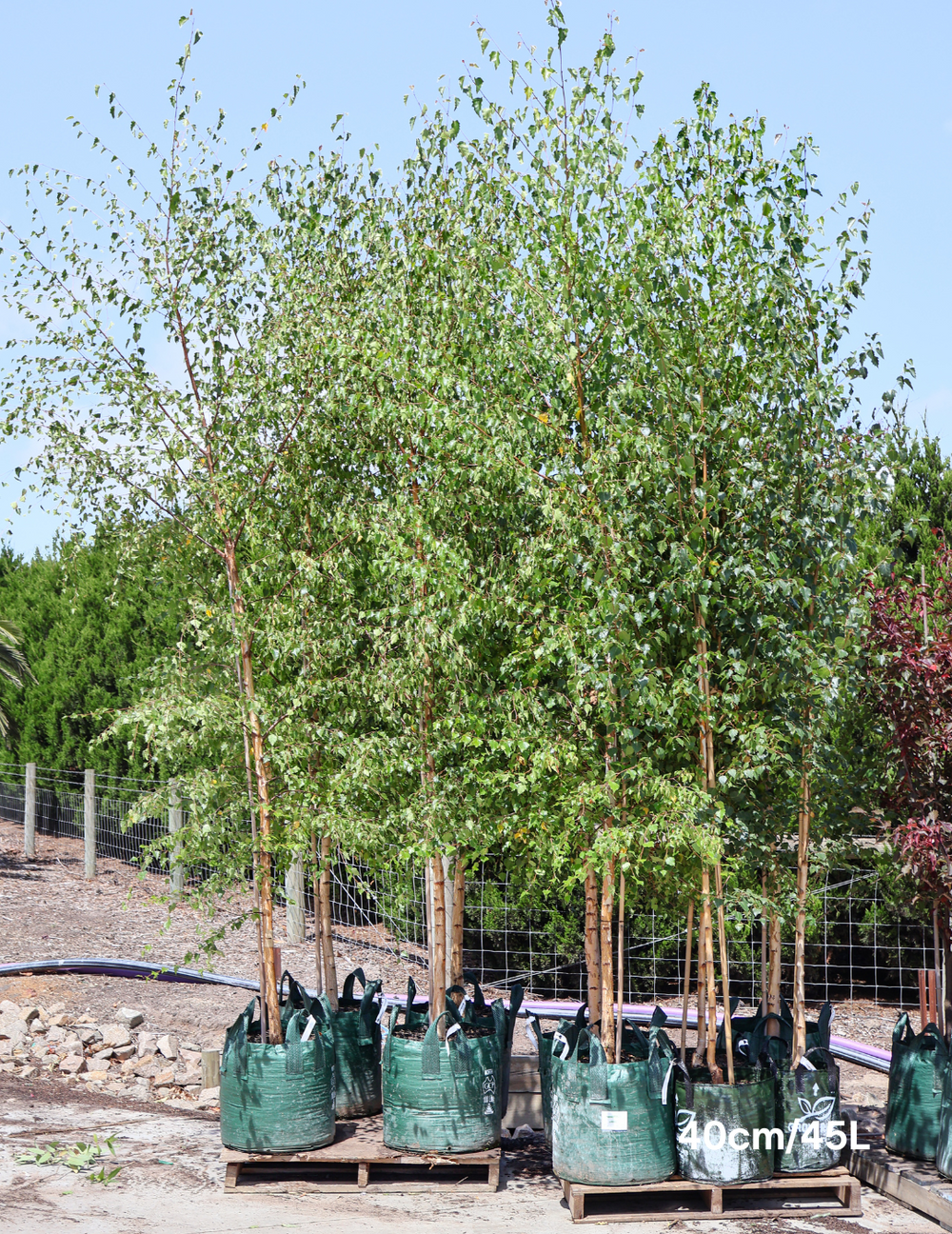
Betula pendulaBetula pendulaBetula pendulaBetula pendula

The classic white birch

Betula pendula

Silver Birch

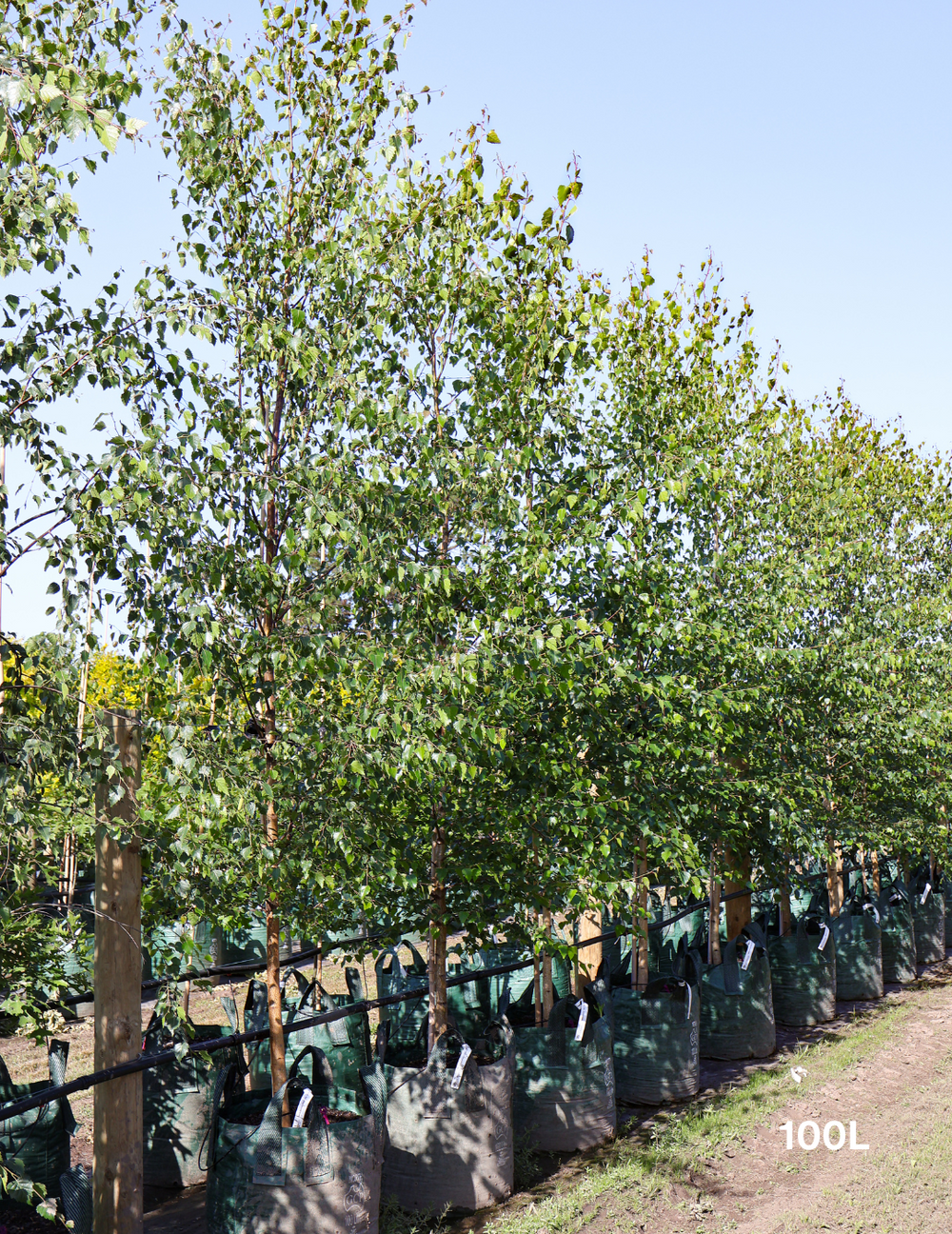
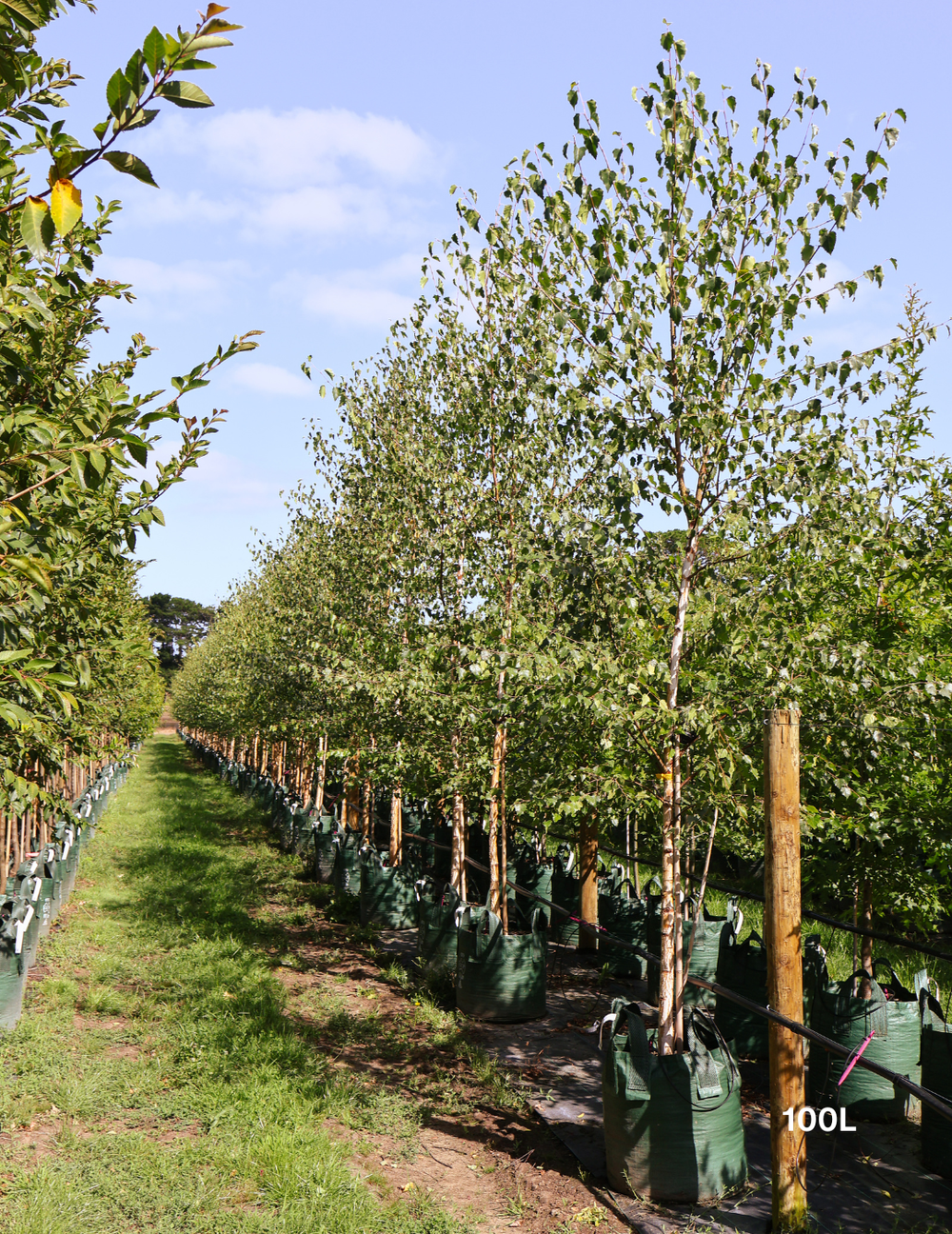
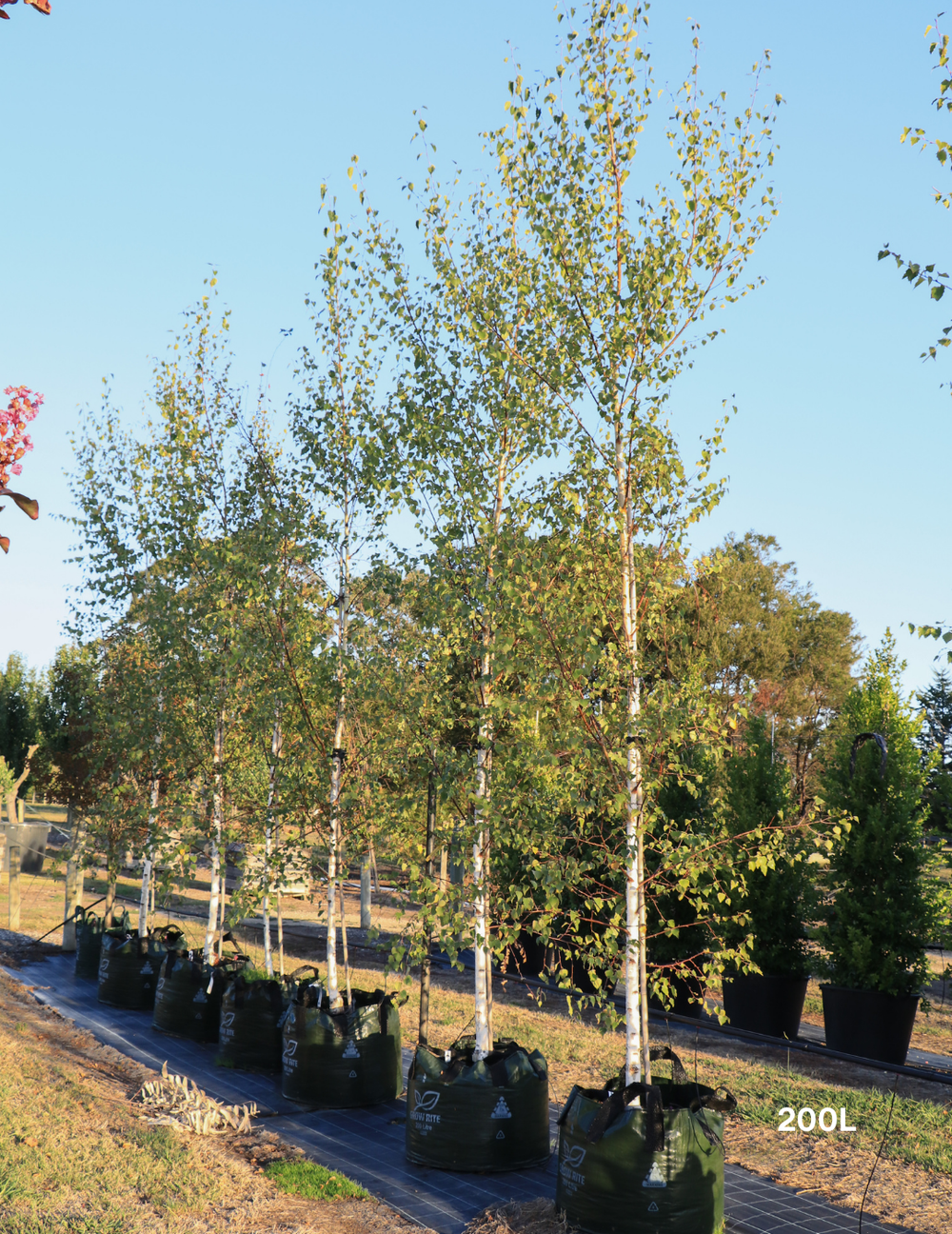
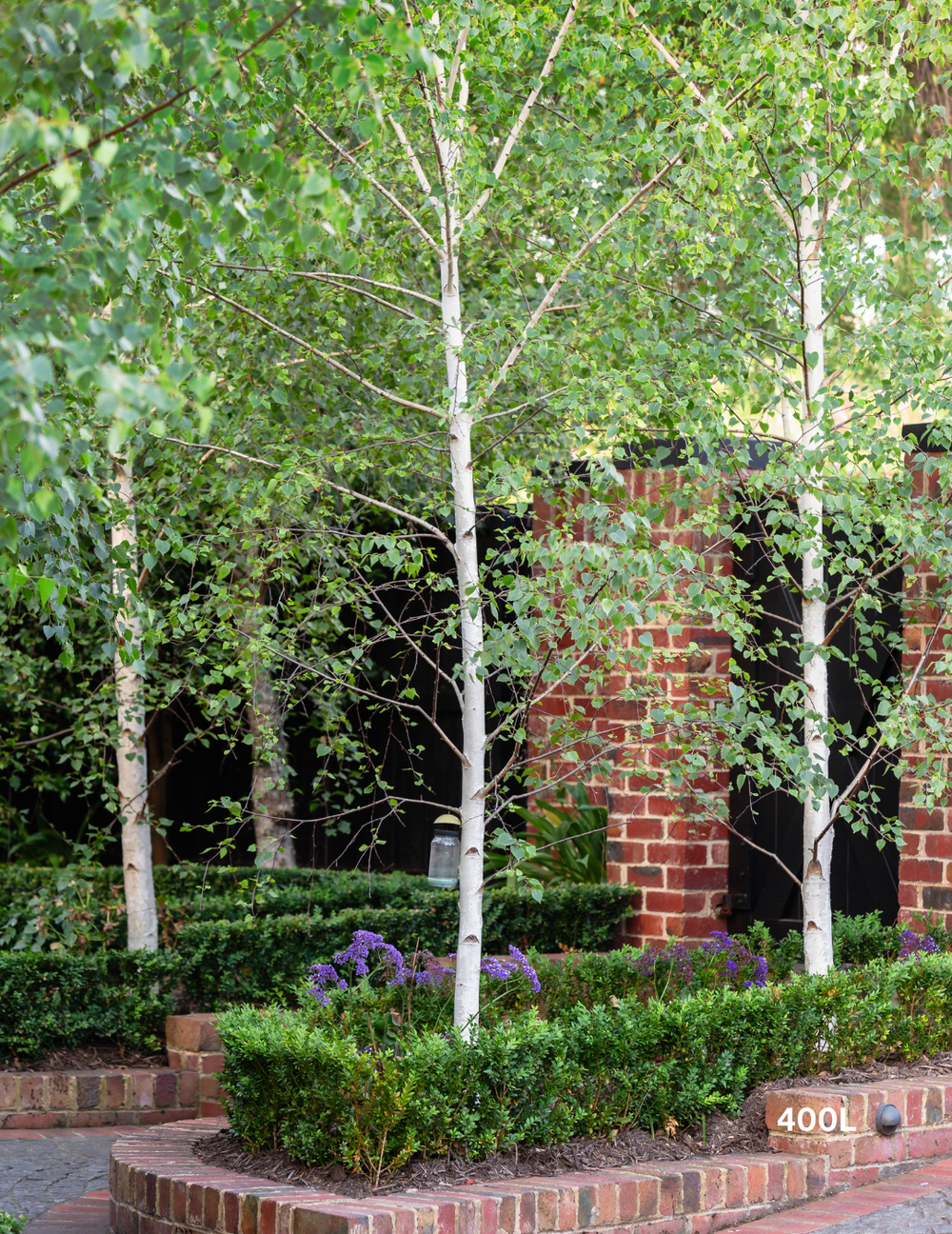
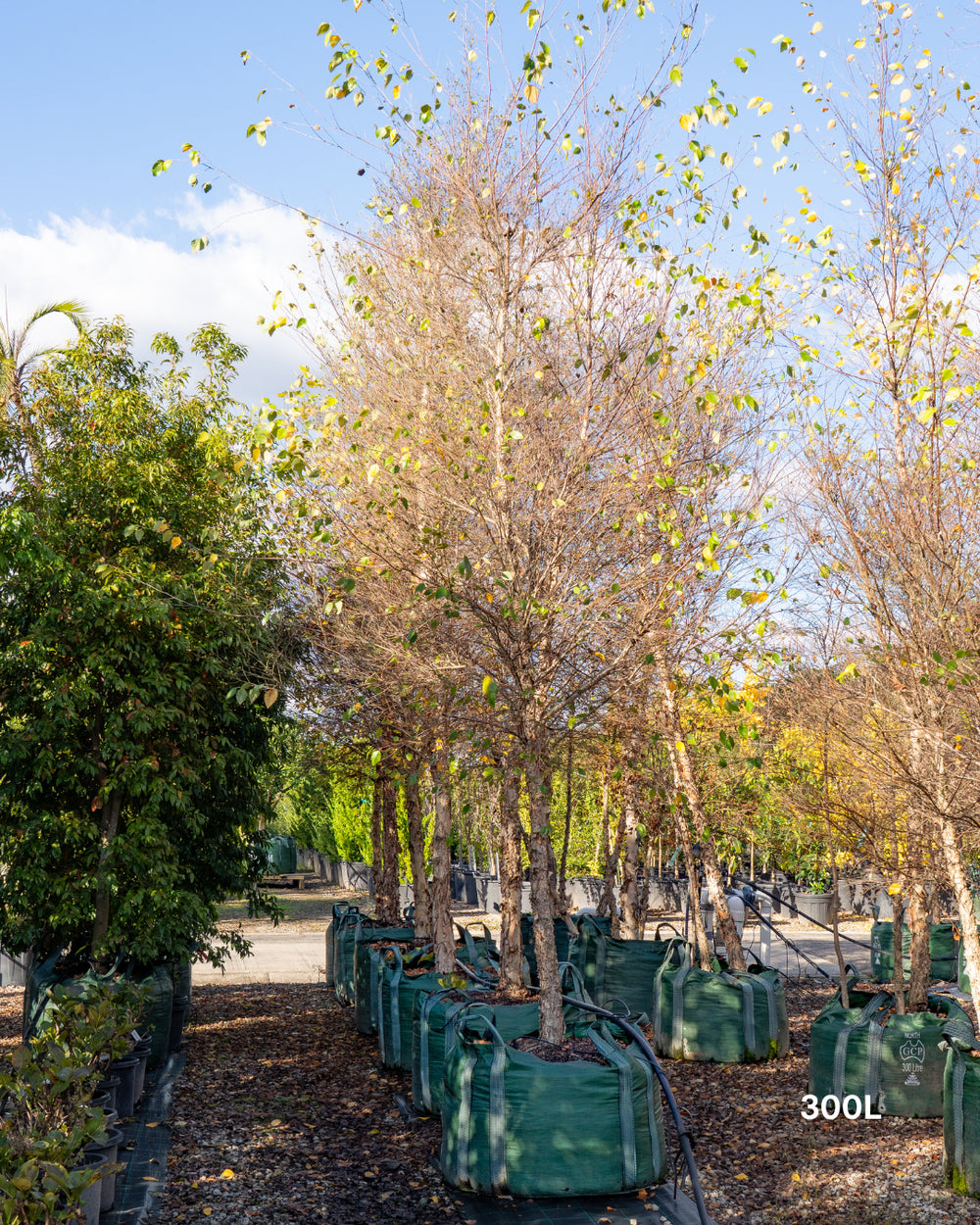
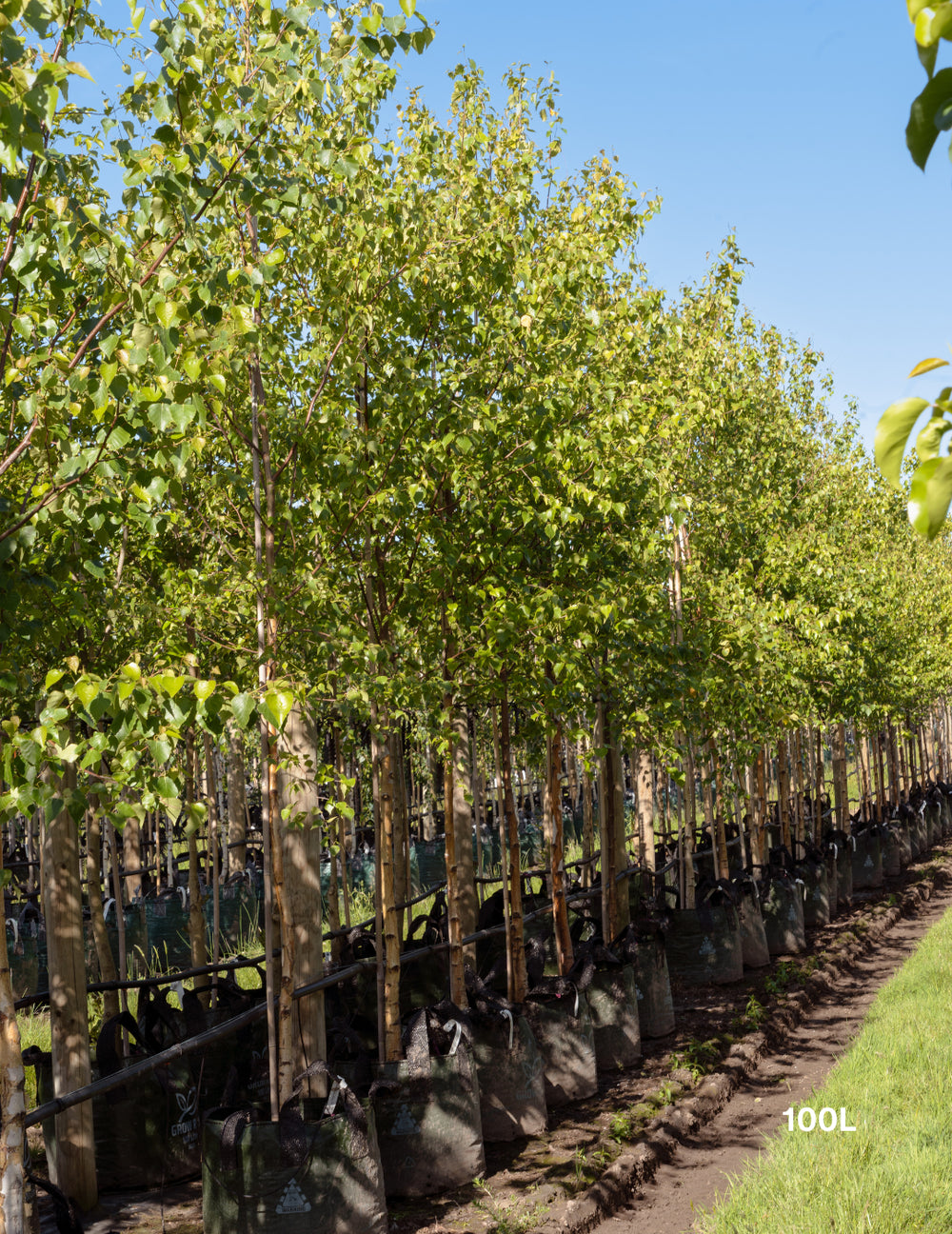
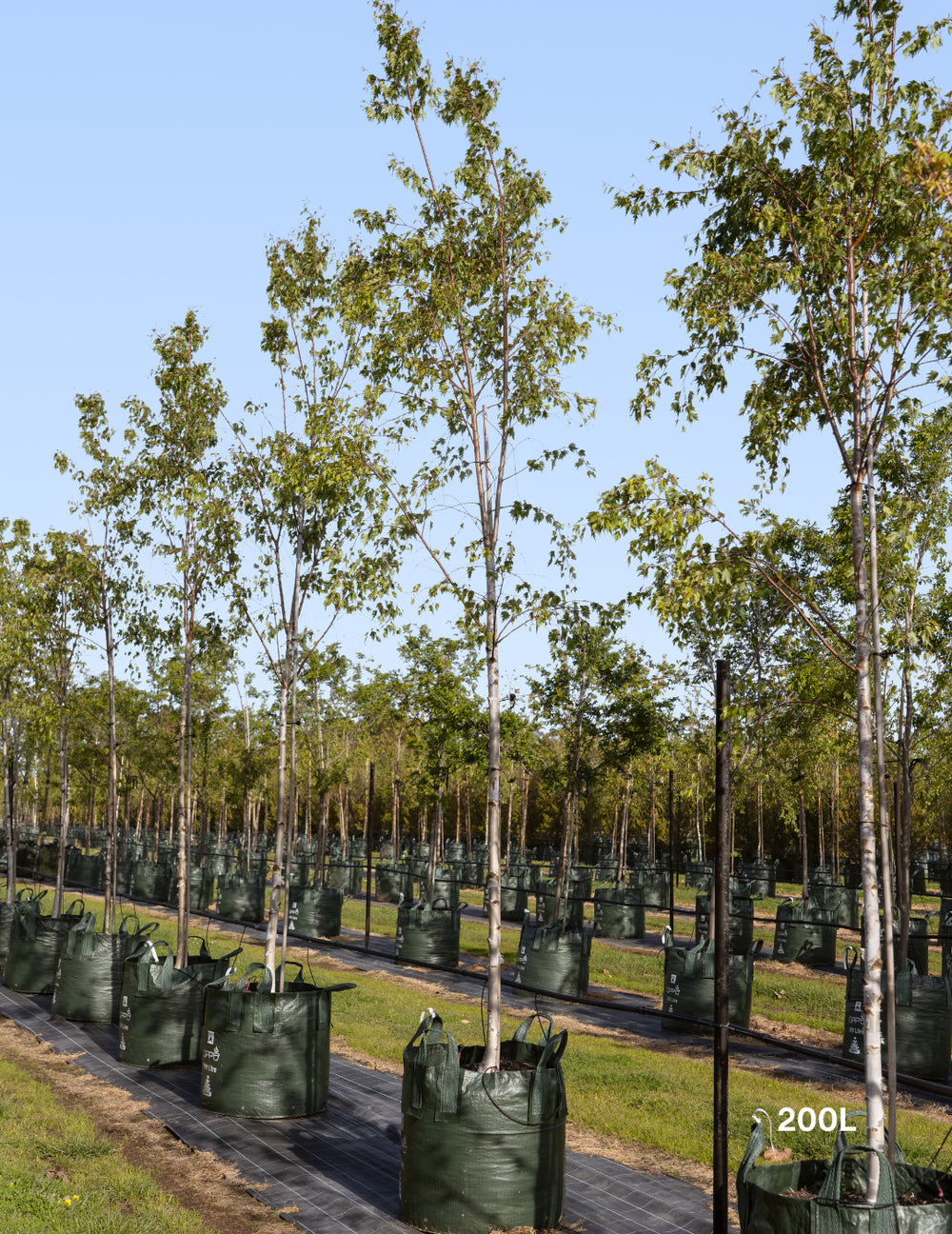
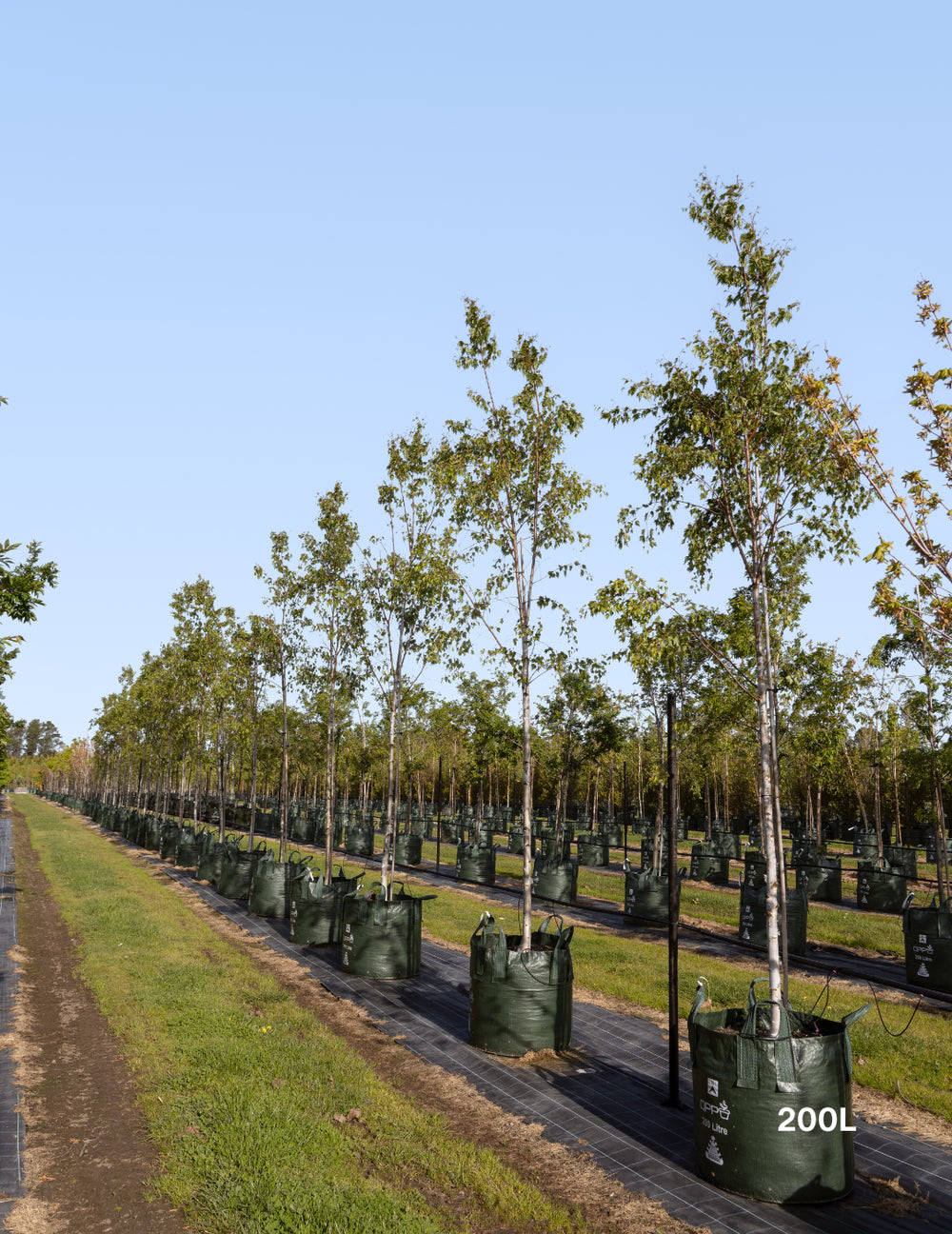
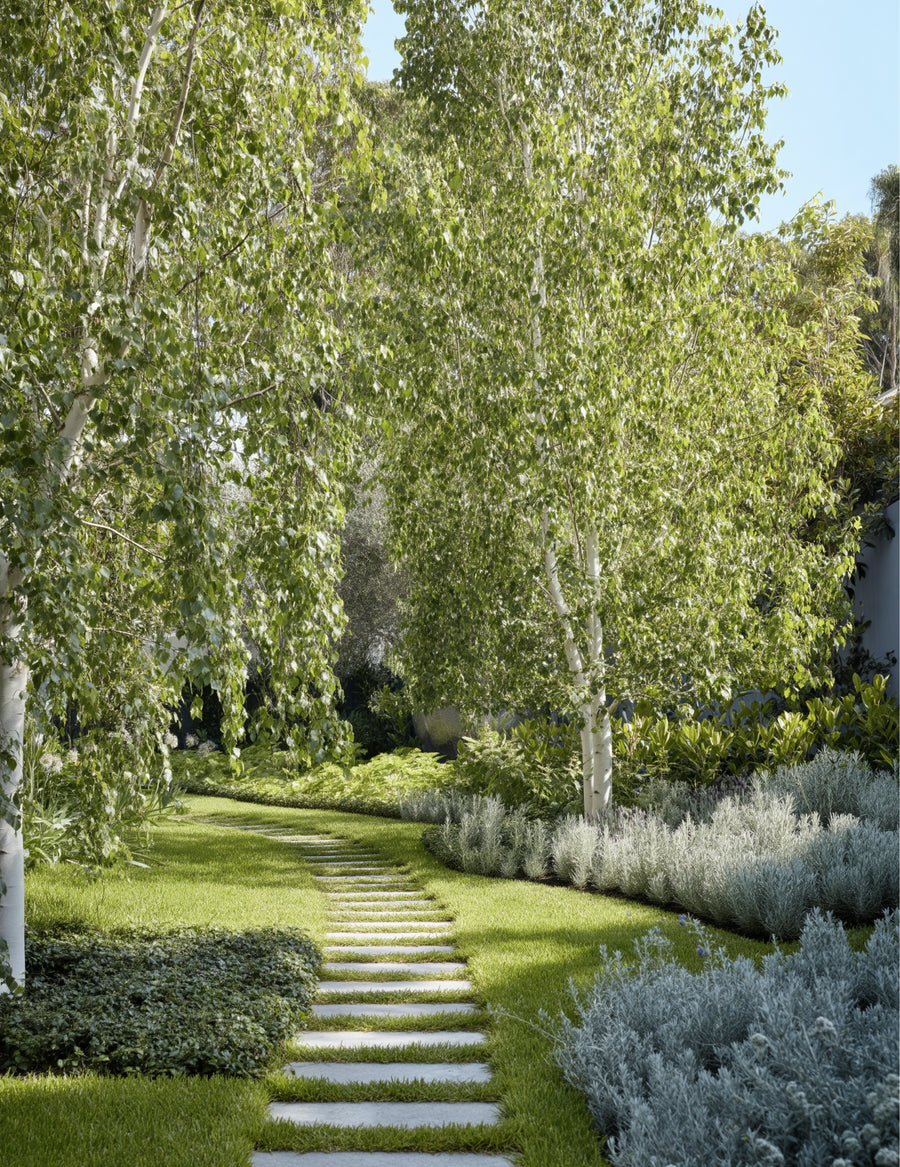
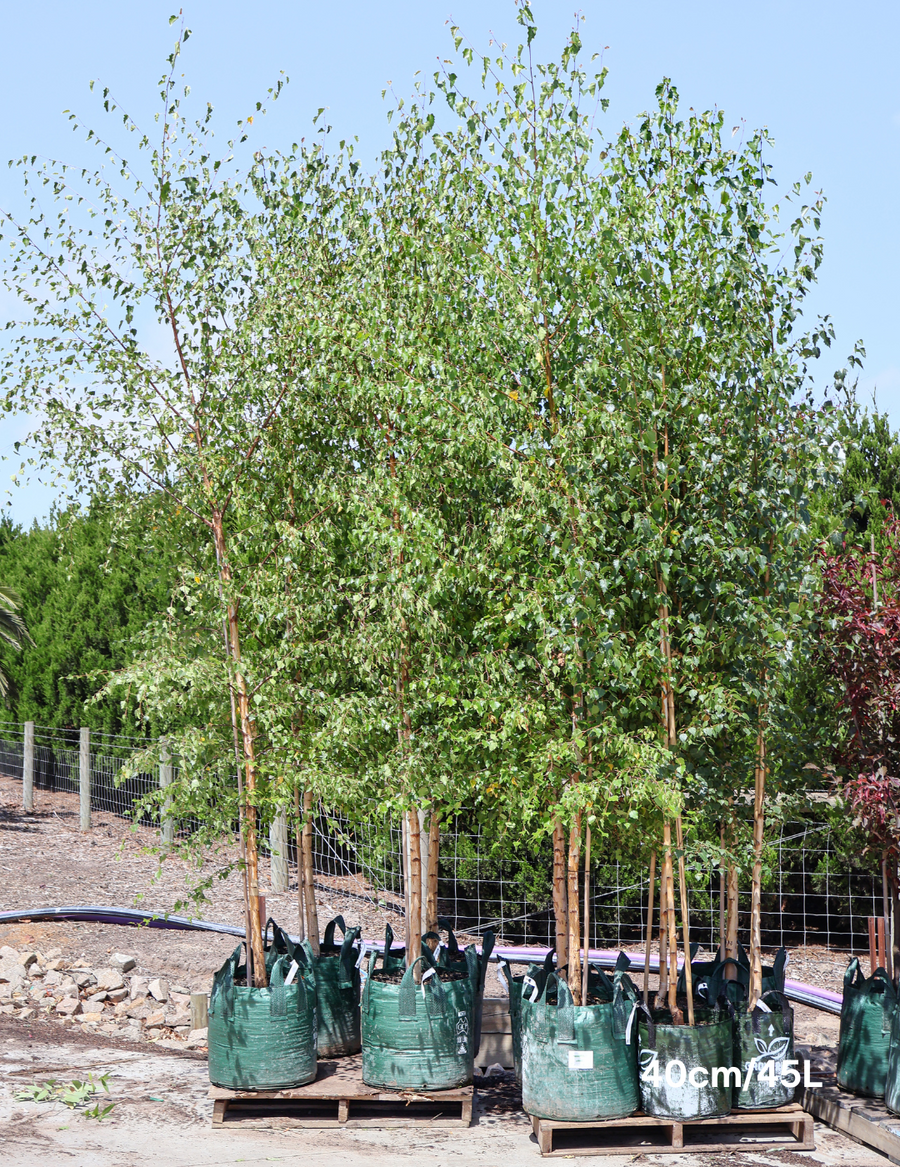
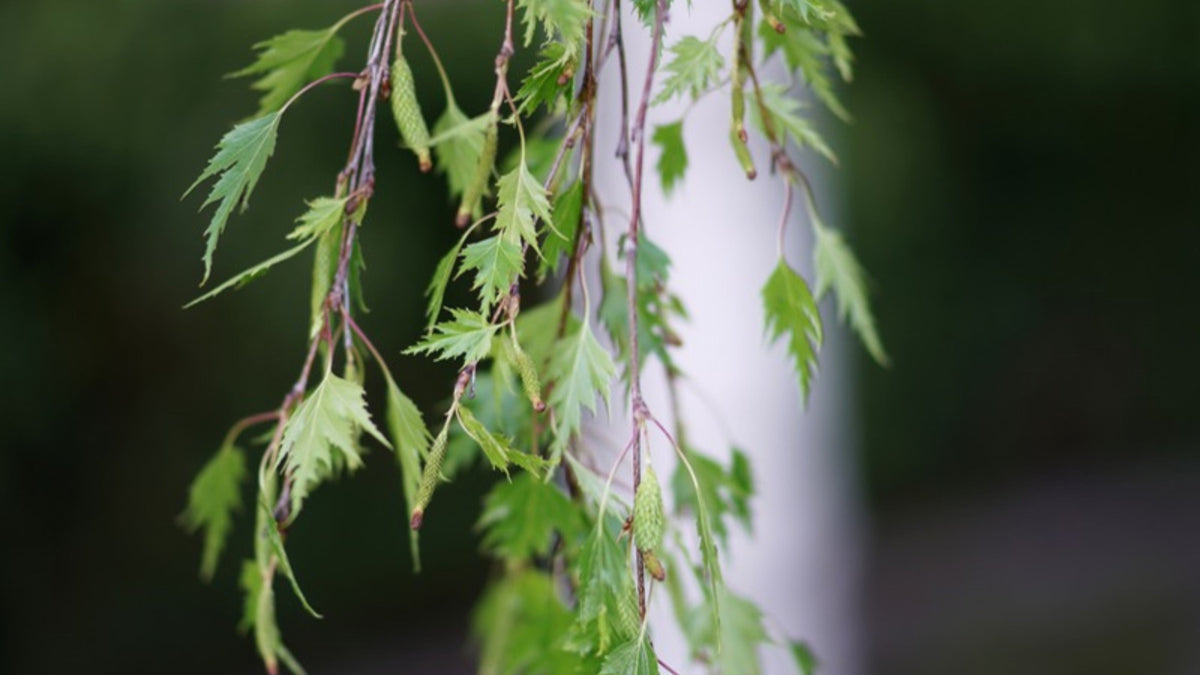
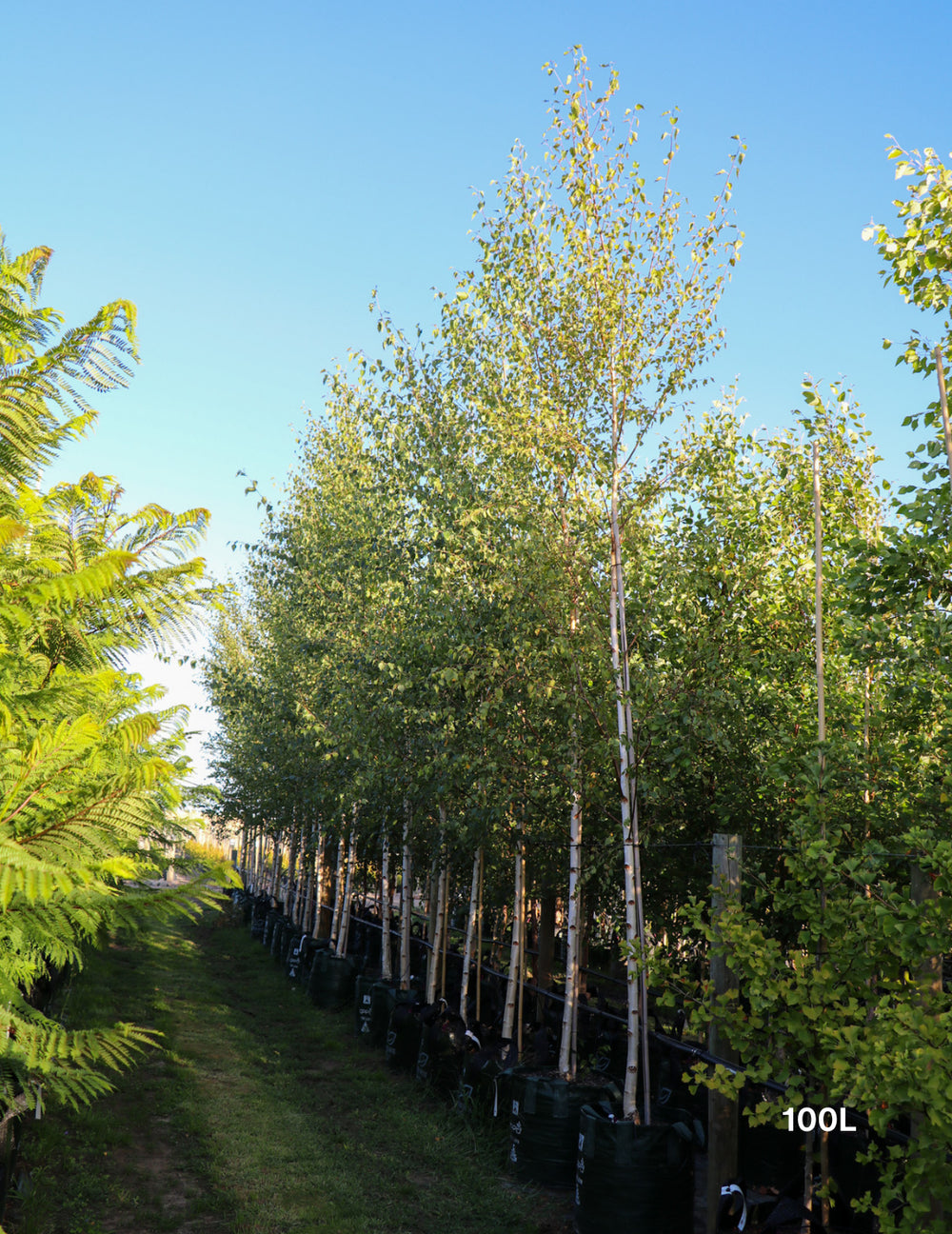
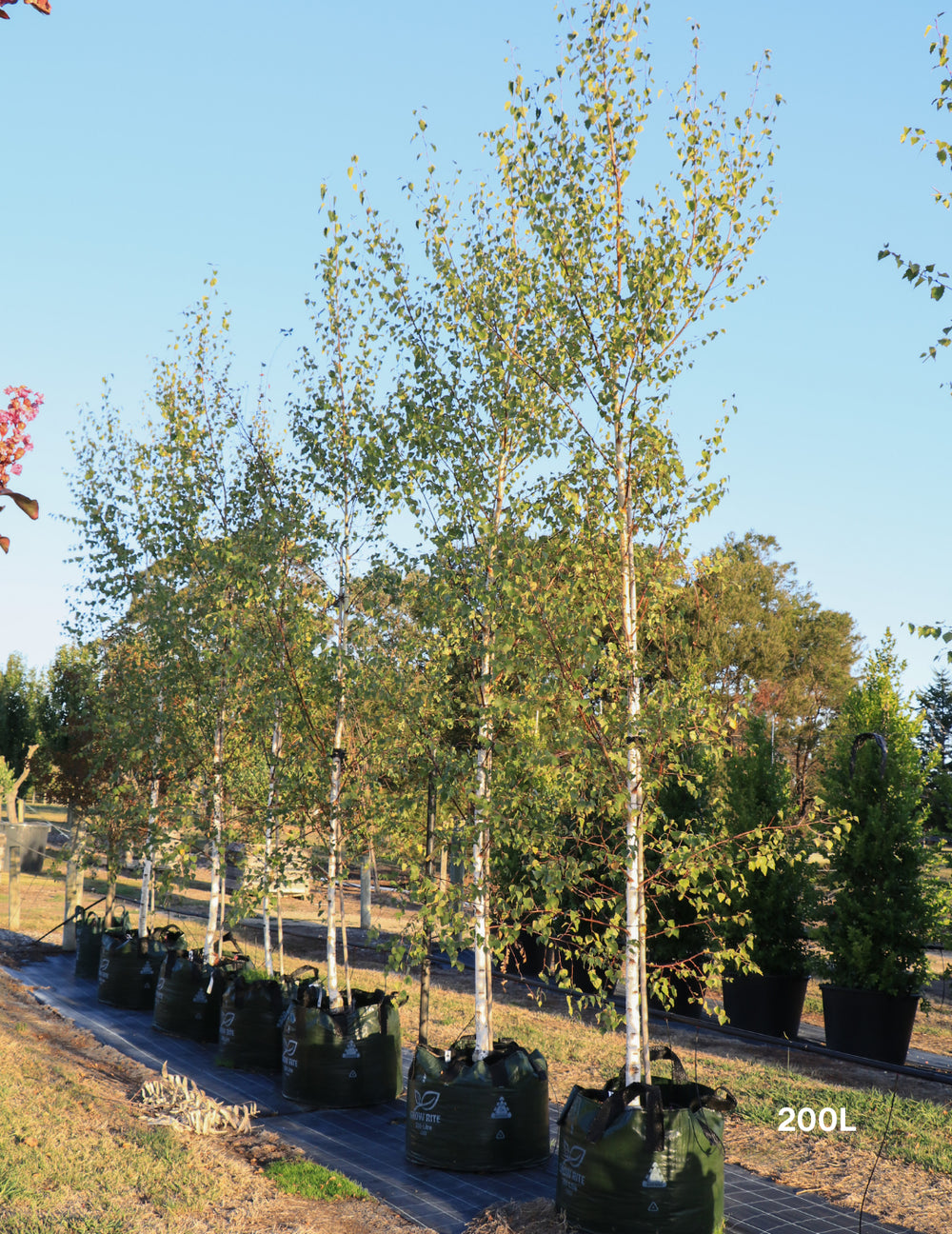
White peeling bark, fine green leaves and softly drooping branches on a slender upright tree. It grows 40 to 75 cm a year, is frost hardy and casts only light shade, so it suits underplanting.

Mature size
12 to 20 m x 5 to 10 m
Best for
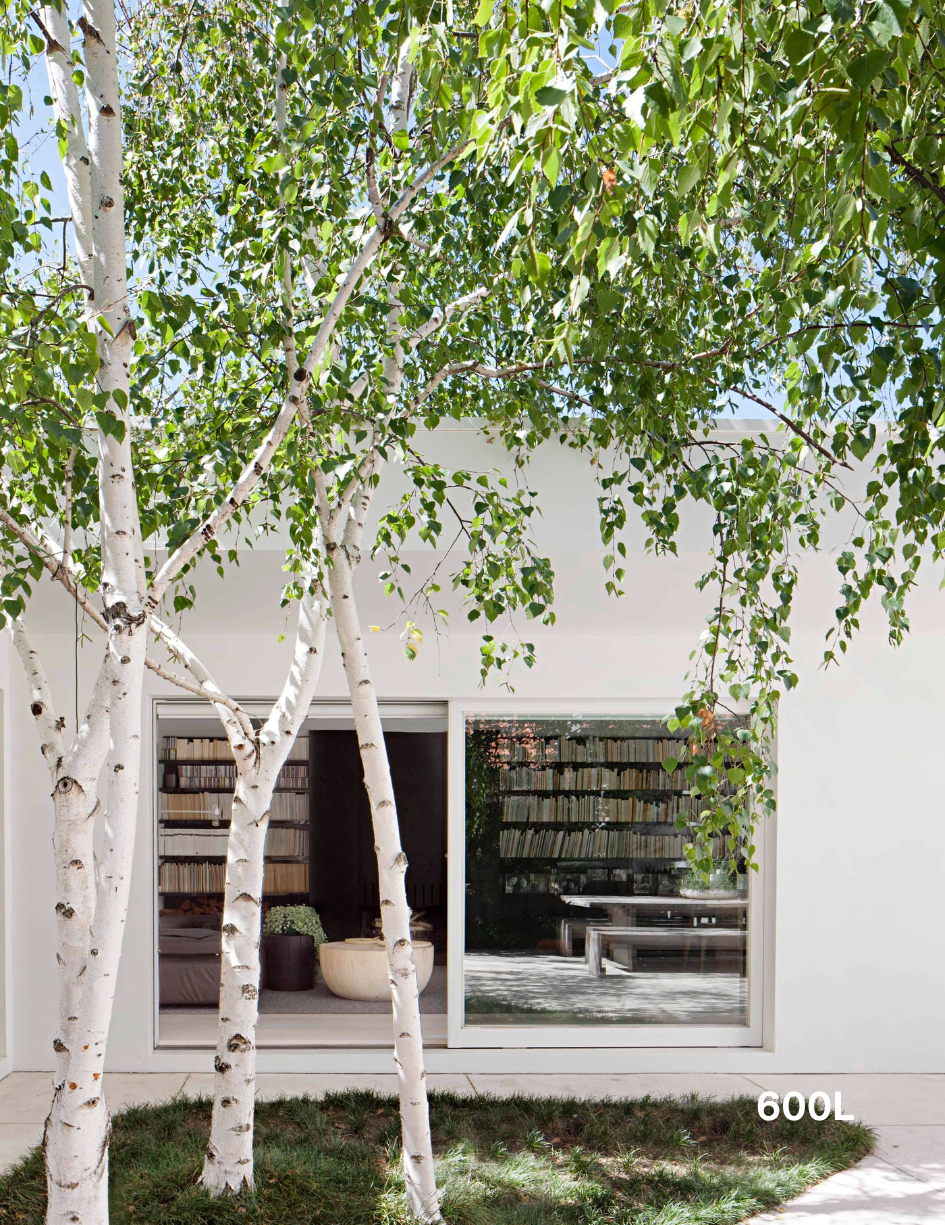
Loose clusters and groves, avenues, feature tree
View product →
Compare sizes
Betula pendula 'Alba'Betula pendula 'Alba'

Tall and slender

Betula pendula 'Alba'

Silver Birch 'Alba'

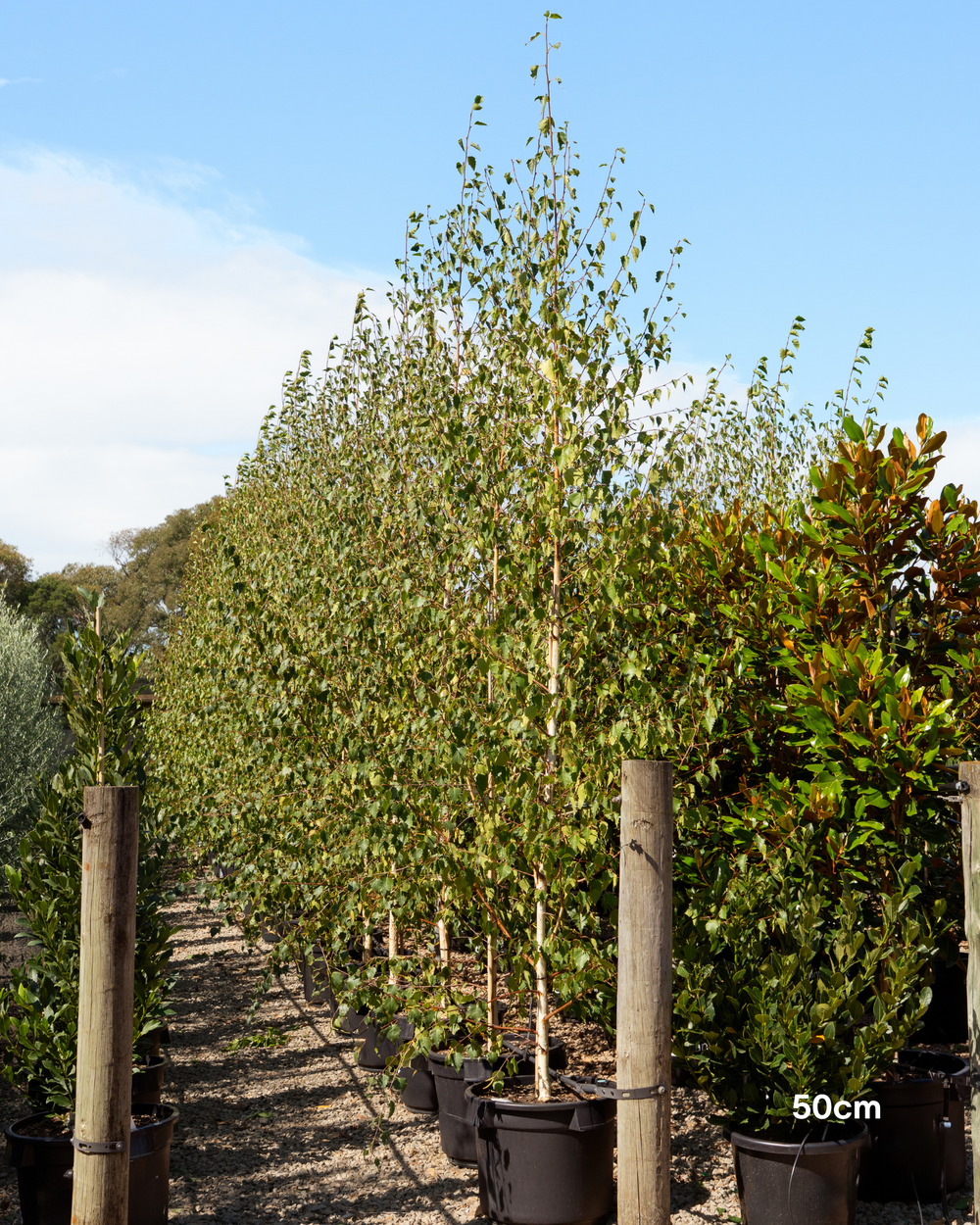
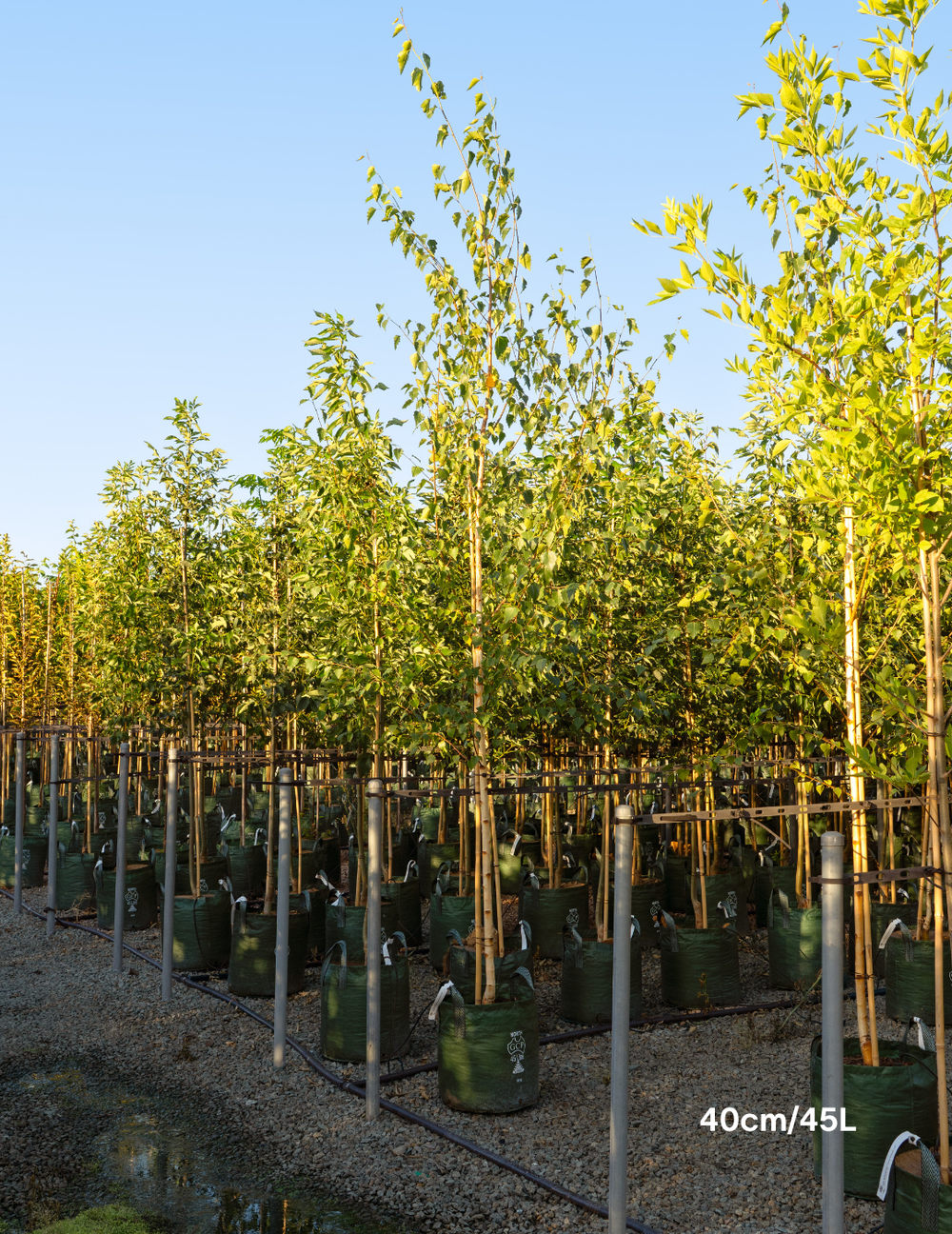
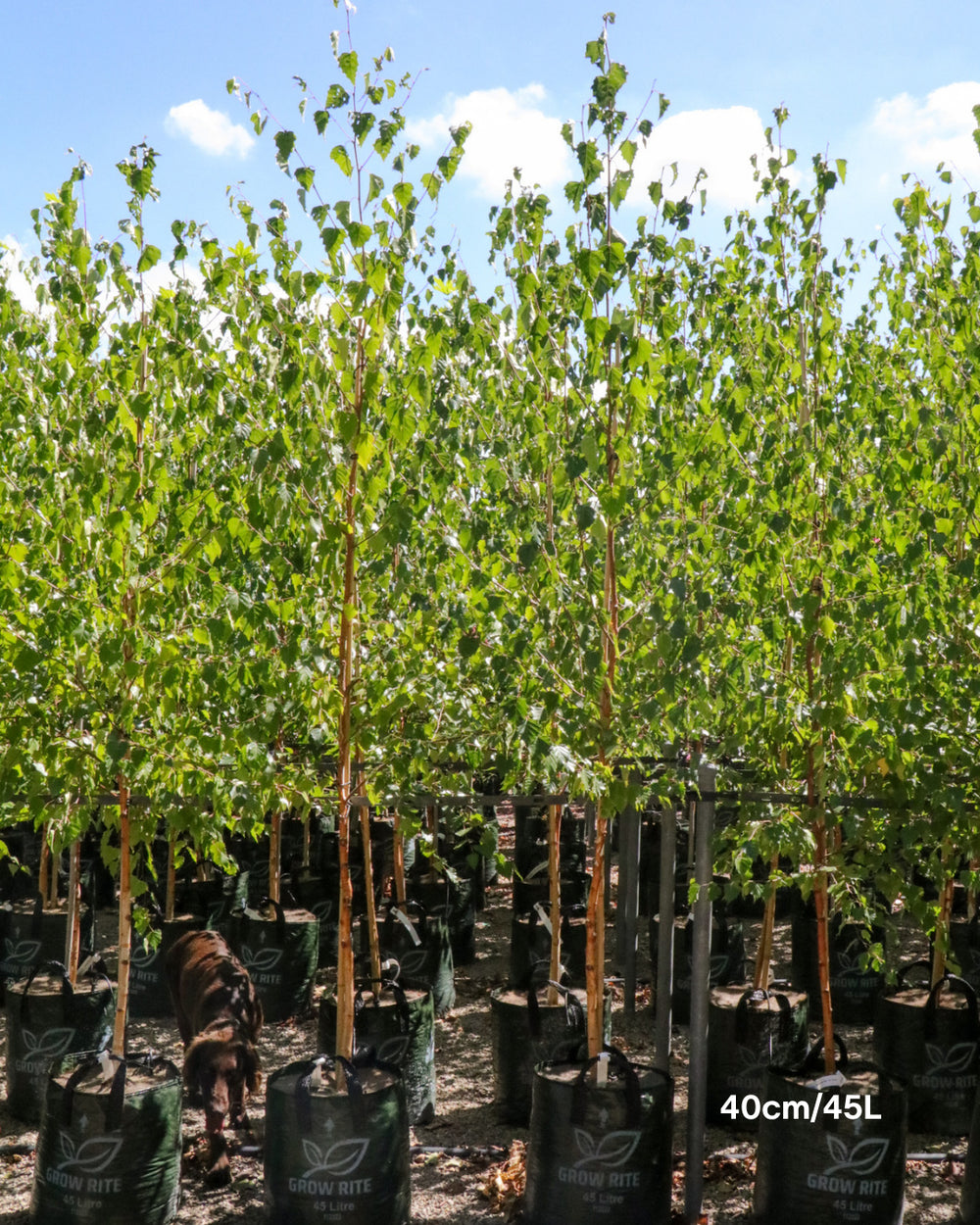
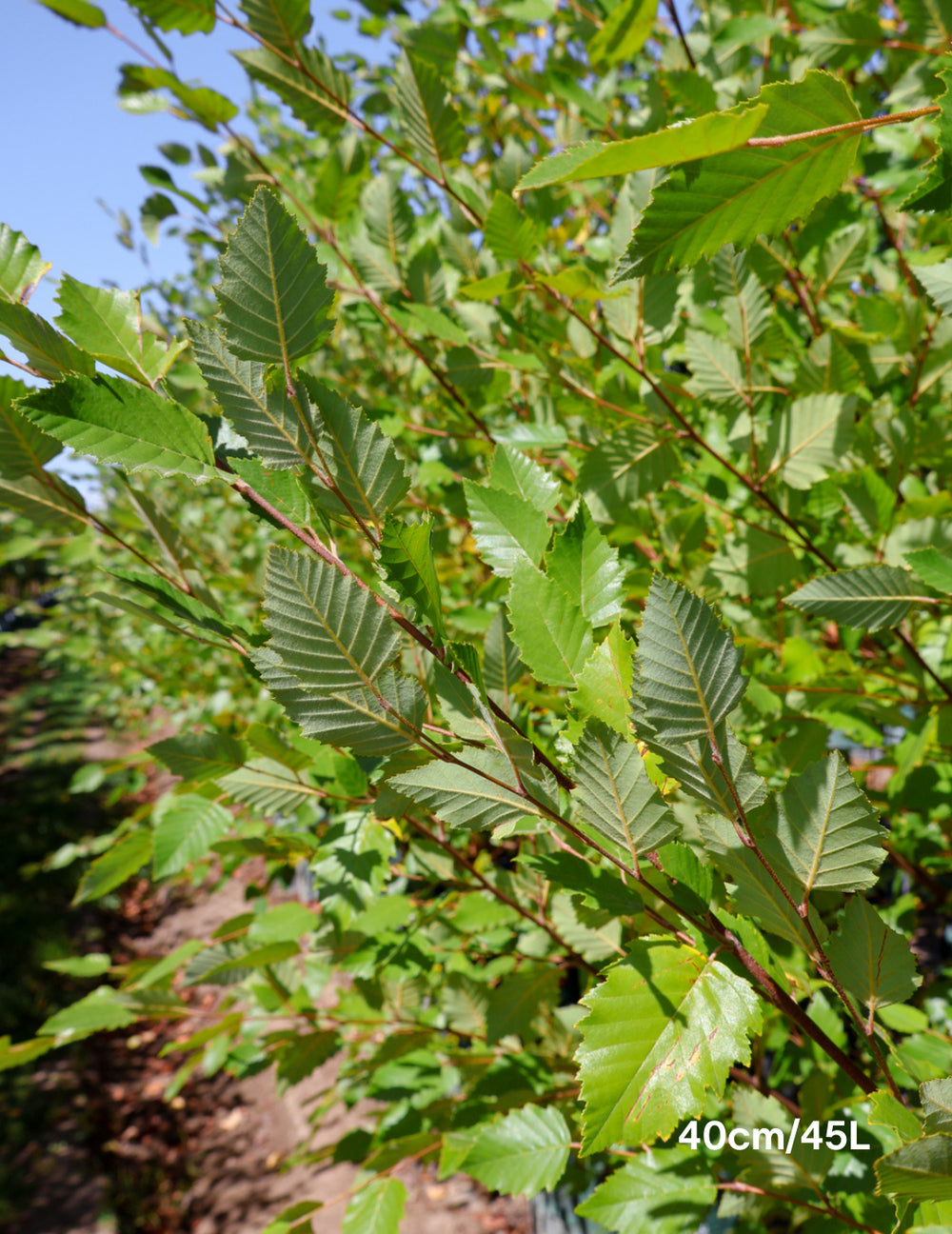
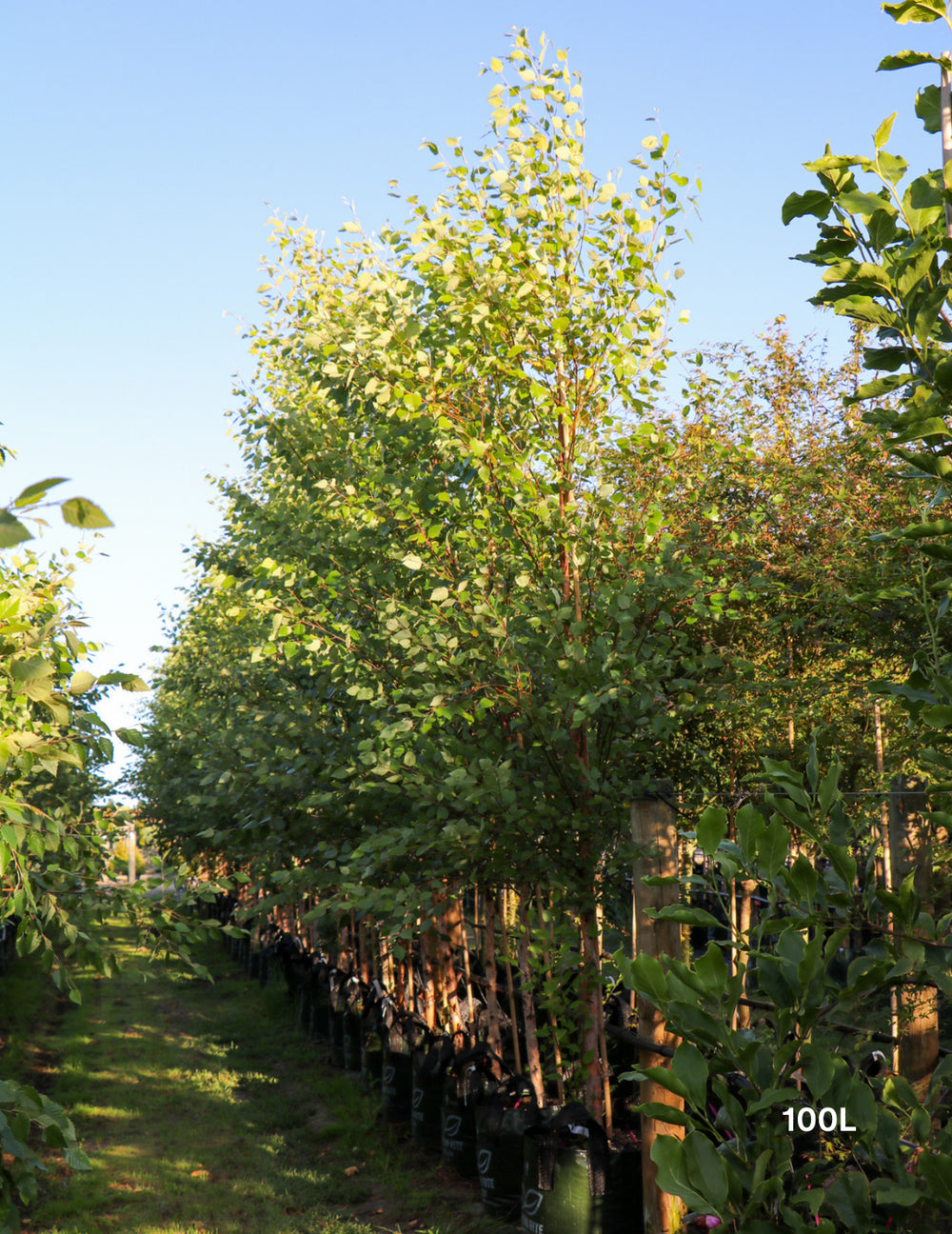
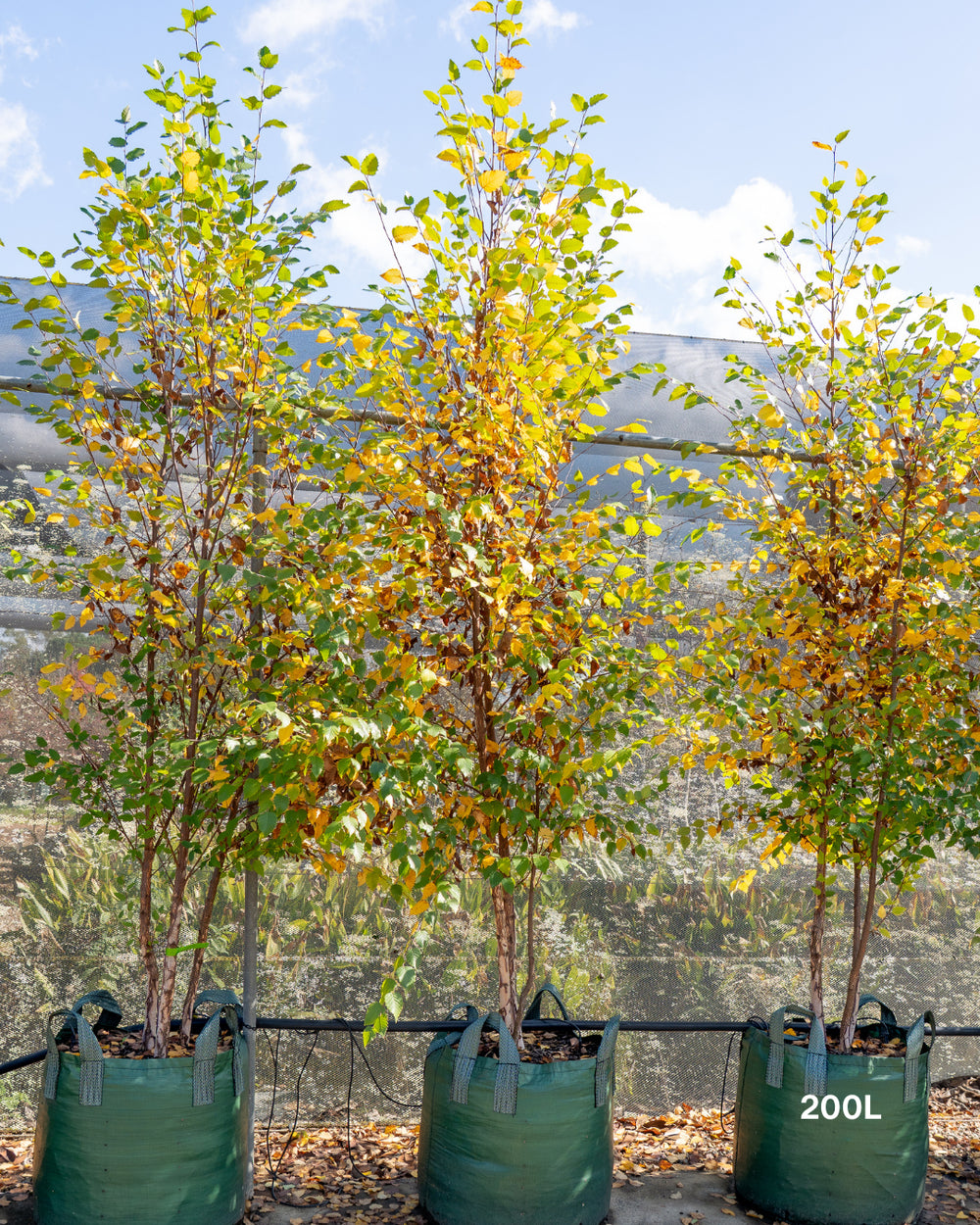
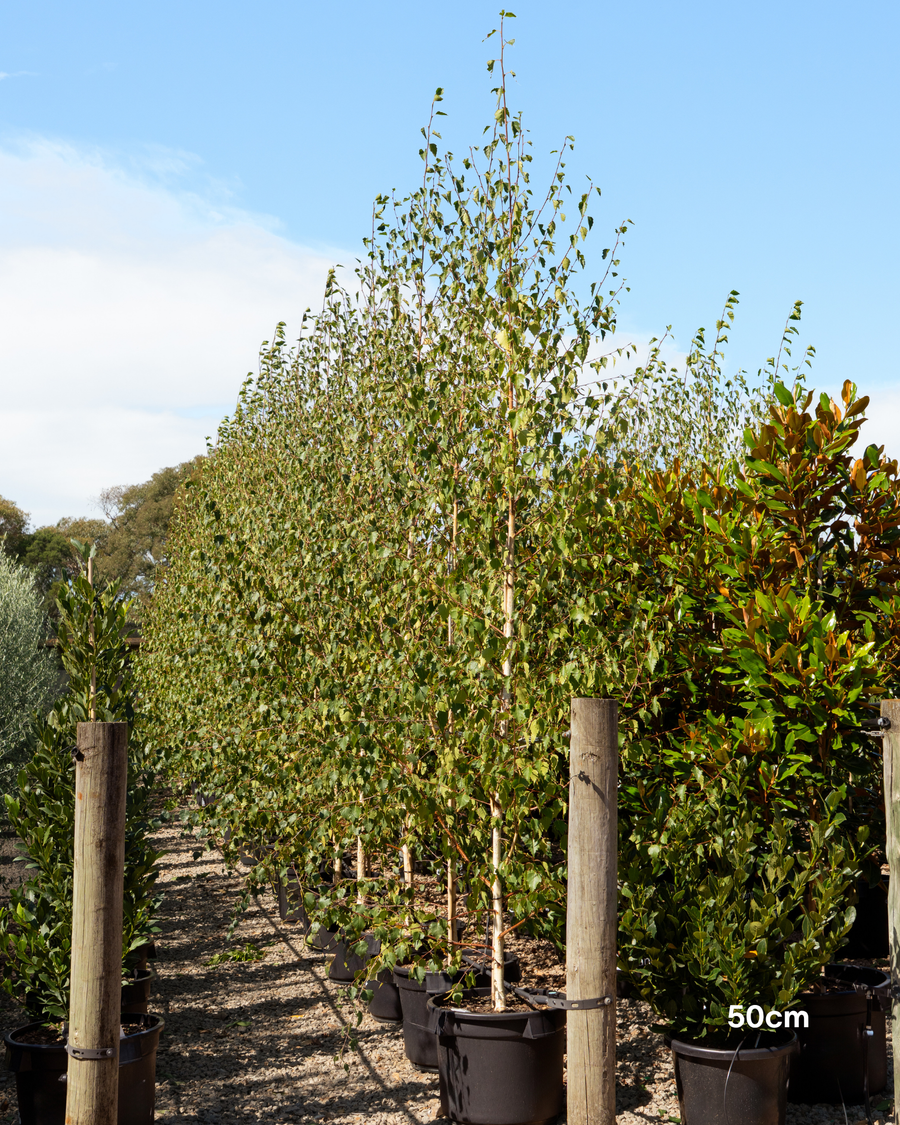
A selected silver birch with brilliant white peeling bark and a slender upright form. Leaves turn golden yellow in autumn. It grows 40 to 75 cm a year, is frost hardy and tolerates urban conditions.

Mature size
15 to 20 m x 5 to 6 m
Best for
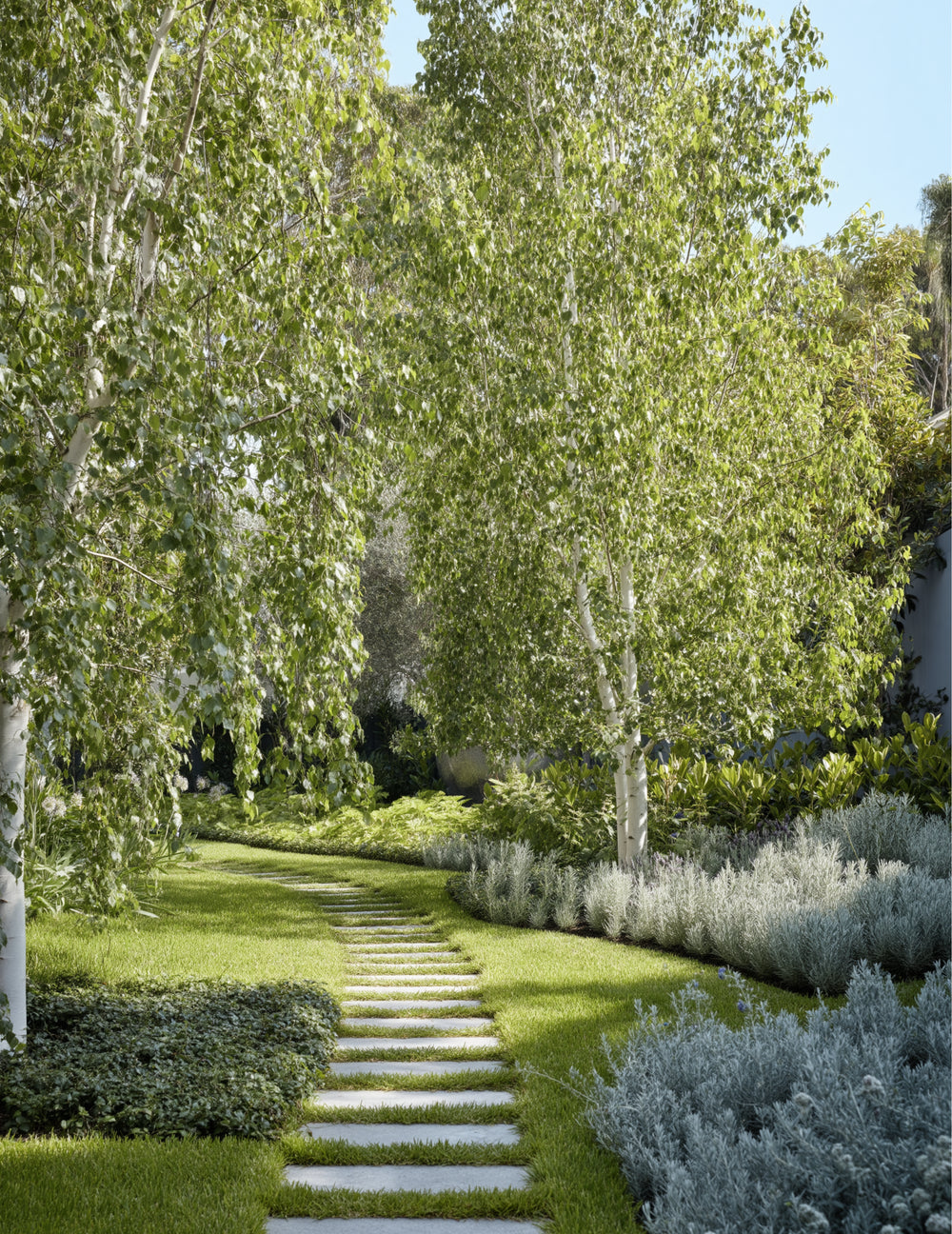
Avenues, loose clusters, contrast against dark evergreens

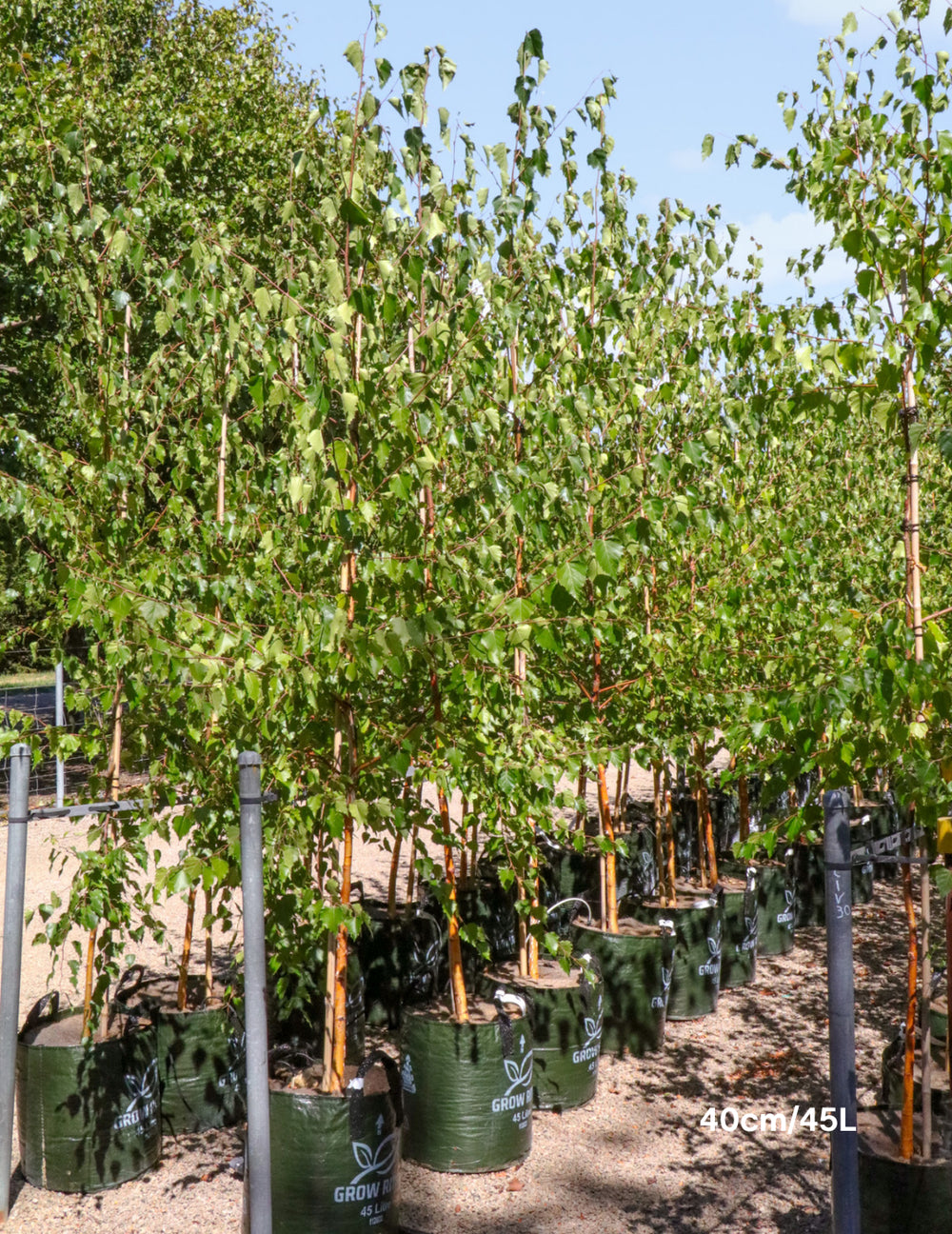
Current height guide

40cm/45L1.5m - 2.2m Approx.
View product →
Compare sizes
Betula pendula 'Moss White'Betula pendula 'Moss White'Betula pendula 'Moss White'Betula pendula 'Moss White'Betula pendula 'Moss White'Betula pendula 'Moss White'

Bright white bark

Betula pendula 'Moss White'

Silver Birch 'Moss White'

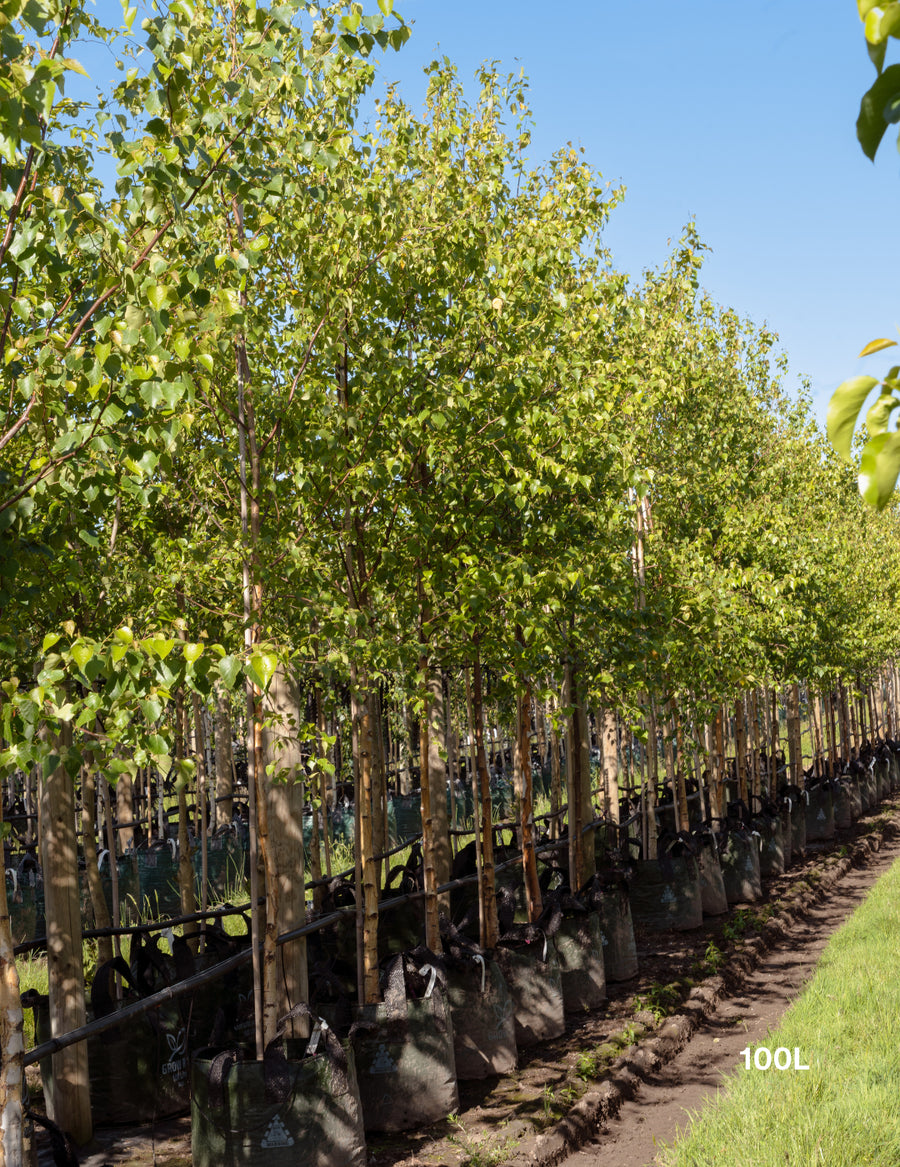
Bright white bark and drooping branches, with light green leaves that turn gold in autumn. It grows 40 to 75 cm a year, is frost hardy, adapts to a range of soils and needs little maintenance.

Mature size
Up to 14 m x 3 to 5 m
Best for
Formal avenues, group plantings, statement tree
View product →
Compare sizes
Betula pendula 'Nigra'Betula pendula 'Nigra'Betula pendula 'Nigra'Betula pendula 'Nigra'Betula pendula 'Nigra'Betula pendula 'Nigra'

Dark bark

Betula pendula 'Nigra'

Black Birch

Grown for dark, textured bark in place of white, with fine weeping branches and clear yellow autumn leaves. It grows 30 to 60 cm a year, is frost hardy and holds up well to inland wind.

Mature size
10 to 15 m x 4 to 6 m
Best for
Groves of dark trunks, avenues, contrast with white birches
View product →
Compare sizes
Betula utilis 'Jacquemontii'

Very white bark, even crown

Betula utilis 'Jacquemontii'

Himalayan Birch

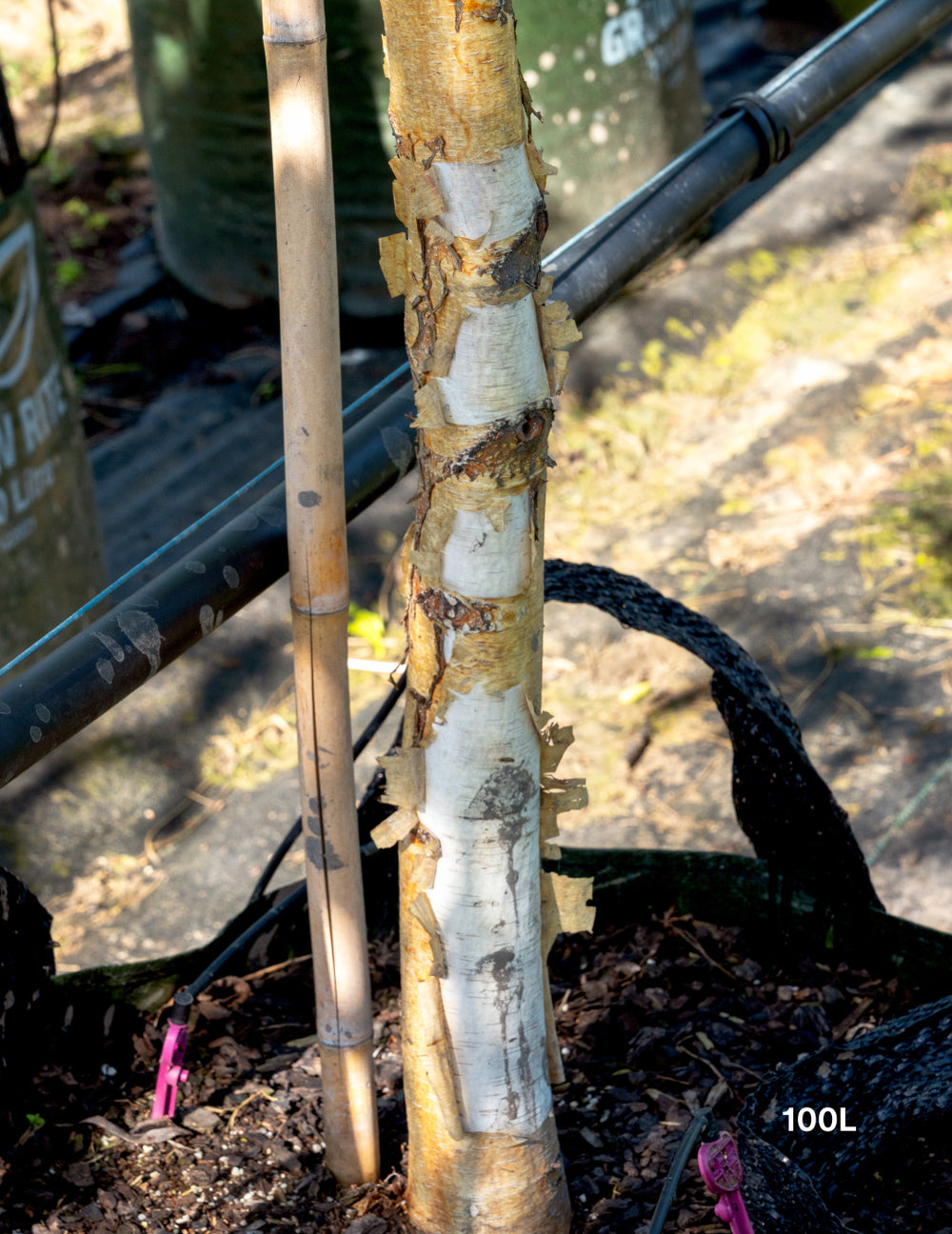
Bark turns brilliant white early and peels in fine papery sheets. The crown is upright and evenly branched, with yellowish catkins in spring and golden yellow autumn leaves. It grows 30 to 50 cm a year in full sun to part shade.

Mature size
8 to 12 m x 4 to 6 m
Best for
Groups of three or more, avenues, lawn or courtyard specimen
View product →
Compare sizes
Betula pendula 'Youngii'

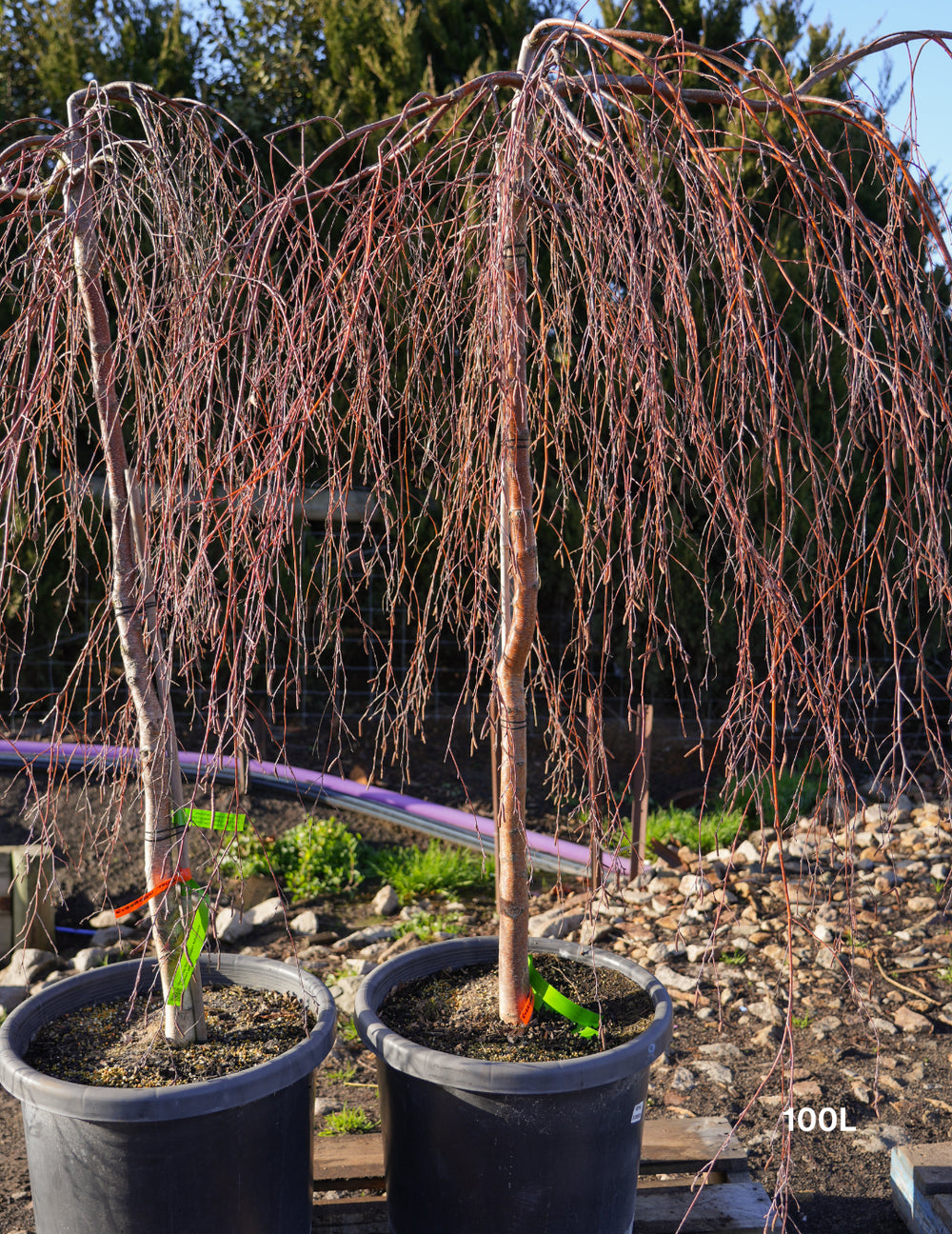
Small weeping birch

Betula pendula 'Youngii'

Weeping Silver Birch

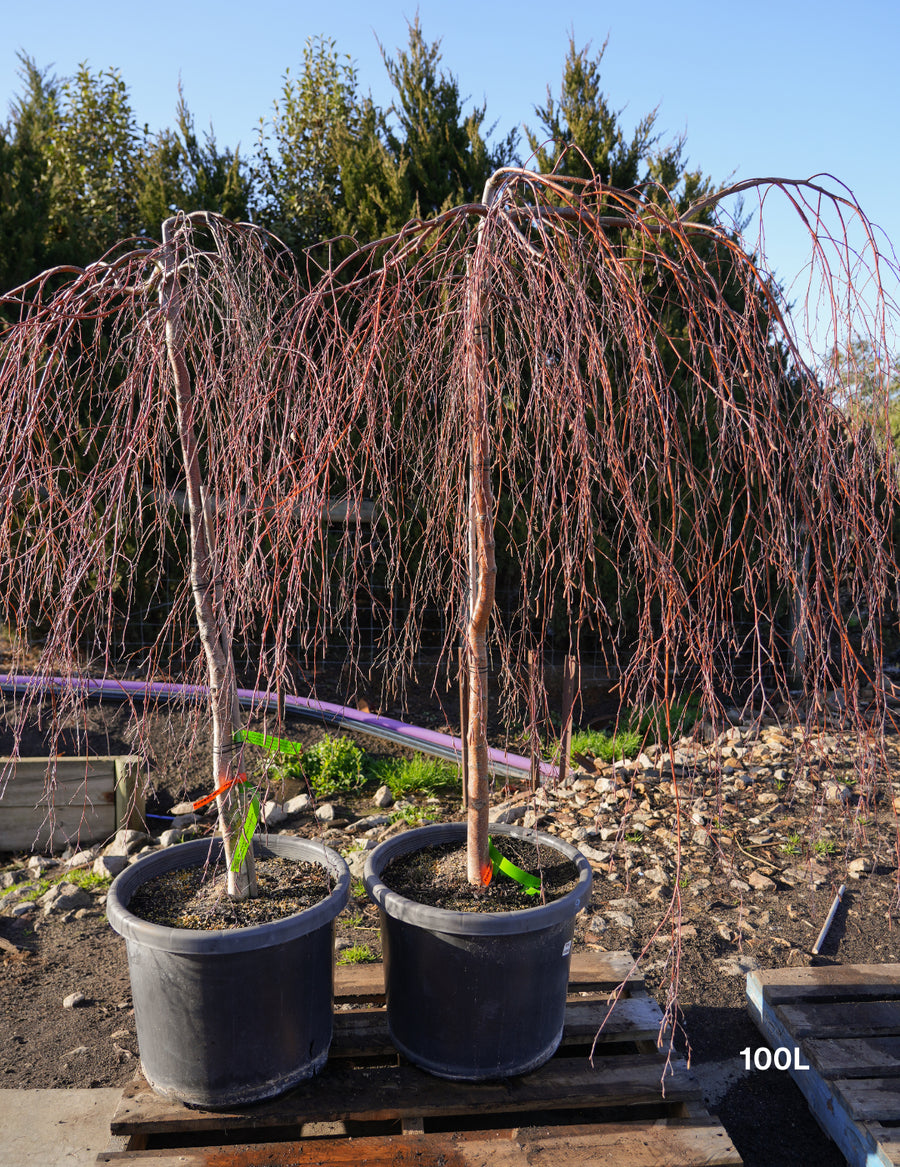
Arching weeping branches form a dome-shaped canopy on a clear stem, with white papery bark and golden yellow autumn leaves. It grows 30 to 60 cm a year and is frost hardy.

Mature size
3 to 5 m x 3 to 4 m
Best for
Small to medium gardens, lawn feature, courtyards
View product →
Compare sizes
Betula nigra 'Summer Cascade'

Weeping birch for heat and wet ground

Betula nigra 'Summer Cascade'

Summer Cascade River Birch

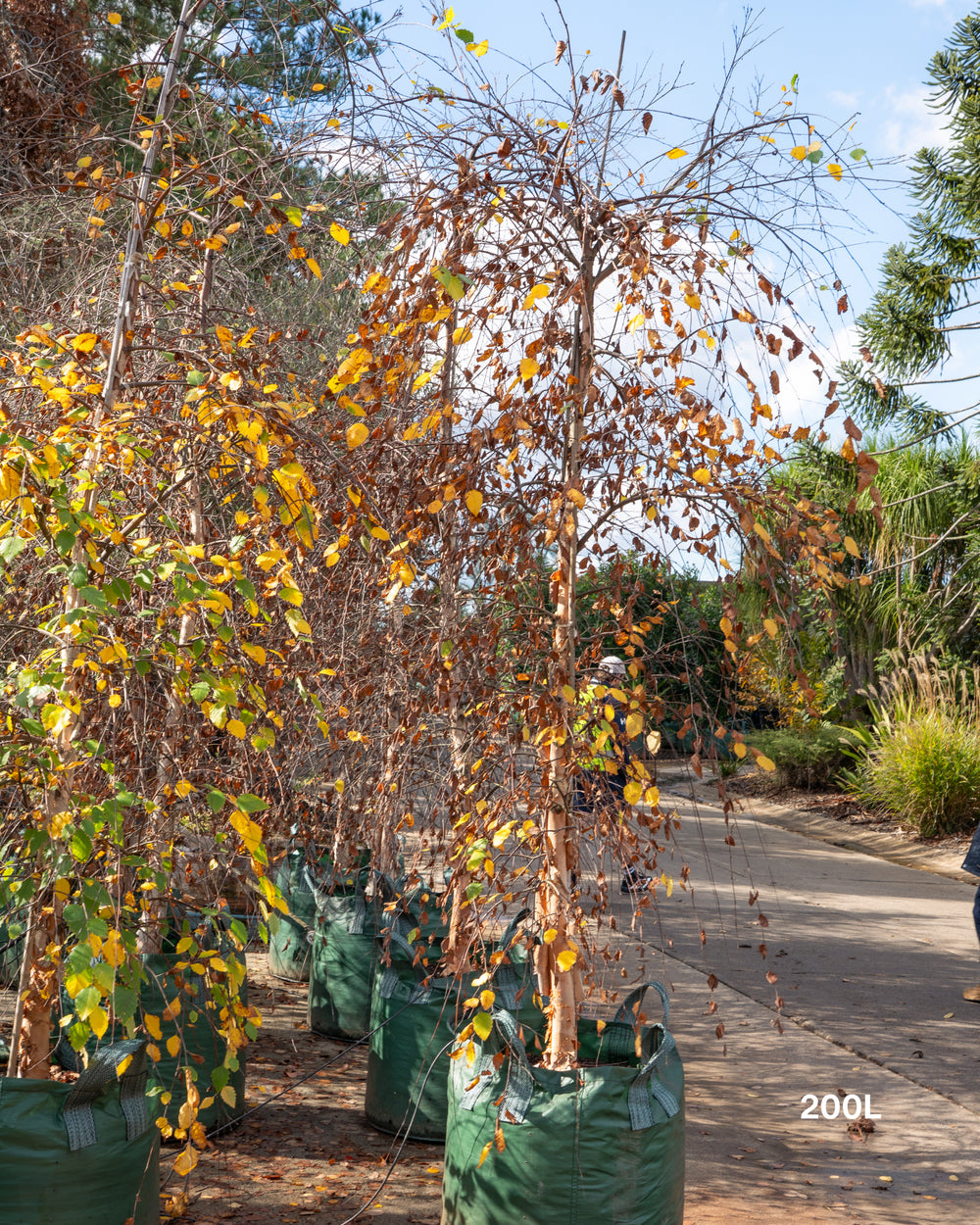
A weeping river birch with branches that fall almost to the ground and bark that peels in cinnamon, cream and salmon layers. It tolerates wet ground, heat and humidity, is frost hardy and grows 40 to 80 cm a year.

Mature size
3 to 4 m x 3 to 4 m
Best for
Waterside planting, low-lying corners, feature positions
View product →

Compare the eight birch trees at a glance

Swipe sideways to see every column

VarietyTypeMature size (H x W)FruitBest for
Silver Birch The classic white birch12 to 20 m x 5 to 10 mLoose clusters and groves, avenues, feature tree
Silver Birch 'Alba' Tall and slender15 to 20 m x 5 to 6 mAvenues, loose clusters, contrast against dark evergreens
Silver Birch 'Moss White' Bright white barkUp to 14 m x 3 to 5 mFormal avenues, group plantings, statement tree
Black Birch Dark bark10 to 15 m x 4 to 6 mGroves of dark trunks, avenues, contrast with white birches
Himalayan Birch Very white bark, even crown8 to 12 m x 4 to 6 mGroups of three or more, avenues, lawn or courtyard specimen
Upright Silver Birch Narrow column8 to 12 m x 3 to 4 mSmaller gardens, narrow planting strips, formal avenues
Weeping Silver Birch Small weeping birch3 to 5 m x 3 to 4 mSmall to medium gardens, lawn feature, courtyards
Summer Cascade River Birch Weeping birch for heat and wet ground3 to 4 m x 3 to 4 mWaterside planting, low-lying corners, feature positions

Weeping, upright and dwarf birch trees for small gardens

  • Weeping silver birchBetula pendula 'Youngii' grows 3 to 5 metres tall and 3 to 4 metres wide. Its arching branches form a dome-shaped canopy on a clear stem, which suits a lawn, a courtyard or a small to medium garden.
  • Weeping river birchSummer Cascade grows 3 to 4 metres tall and 3 to 4 metres wide, with branches that fall almost to the ground.
  • Upright silver birchBetula pendula 'Fastigiata' grows 8 to 12 metres tall but only 3 to 4 metres wide. Use it in a narrow planting strip or a formal avenue.
  • Dwarf silver birchThere is no true dwarf among these eight. The two smallest are Youngii and Summer Cascade.

Looking for more shapes like these? Browse weeping and sculptural trees.

Weeping, upright and dwarf birch trees for small gardens

How tall do birch trees grow, and how fast?

How tall do birch trees grow, and how fast?

Where birch trees grow best in Australia

  • ClimateSilver birch performs best in cool to temperate regions and struggles in hot tropical climates.
  • Heat, humidity and wet groundSummer Cascade is the one to use where other birches fail. It suits waterside planting and low-lying corners.
  • FrostAll eight handle frost. Himalayan Birch and Fastigiata tolerate light to moderate frost once established. The other six are frost hardy.
  • WindNigra holds up well to inland wind.
  • SunFull sun suits all eight. Himalayan Birch and Summer Cascade also grow in part shade.
  • RootsSilver birch roots are shallow and spreading. Plant at least 3 metres from buildings, paving, pipes and pools.

All eight are deciduous and colour yellow in autumn. For more autumn colour, see trees for adding autumn colour to your garden or browse trees with autumn colour.

Where birch trees grow best in Australia

How to plant and care for birch trees

  1. Pick the positionChoose a well-drained spot in full sun with room for the canopy to develop, at least 3 metres from buildings, paving and pools.
  2. Prepare the soilWork quality compost and aged manure into the planting area.
  3. Space the treesPlant 3 to 4 metres apart as feature trees, or 3 metres apart for an avenue. Space Nigra 5 to 8 metres apart in an avenue.
  4. Dig and plantDig each hole twice as wide as the root ball and the same depth. Set the tree level with the surrounding soil, backfill, firm in and water deeply.
  5. WaterWater deeply twice a week through the first 12 months. After that, water once a week in dry periods. Birch roots are shallow, so add water through hot dry spells.
  6. MulchApply 5 to 7 centimetres of organic mulch over the root zone and keep it 5 centimetres clear of the trunk.
  7. Prune and feedBirches need little pruning. Tip prune lightly in late winter and remove lower branches as the tree grows to show a clean trunk. Feed with a slow-release fertiliser in early spring and again in autumn.
How to plant and care for birch trees

Frequently asked questions

What are the main types of birch trees?
Three species cover most garden birches: silver birch (Betula pendula) and its selected forms, Himalayan birch (Betula utilis 'Jacquemontii') and river birch (Betula nigra). The silver birch forms here include white, dark-barked, upright and weeping trees.
How tall do birch trees grow?
It depends on the type. Silver Birch grows 12 to 20 metres tall and Alba 15 to 20 metres. Himalayan Birch and the upright Fastigiata grow 8 to 12 metres. The weeping Youngii grows 3 to 5 metres and Summer Cascade 3 to 4 metres.
How fast do birch trees grow?
Between 30 and 80 centimetres a year, depending on the type. Summer Cascade grows 40 to 80 centimetres a year, Silver Birch 40 to 75 centimetres and Himalayan Birch 30 to 50 centimetres.
Which birch tree is best for a small garden?
Weeping Silver Birch 'Youngii' at 3 to 5 metres tall, or Summer Cascade River Birch at 3 to 4 metres. Where width is the limit, the upright 'Fastigiata' is only 3 to 4 metres wide.
Do birch trees grow well in Australia?
Yes, in cool to temperate regions. Silver birch struggles in hot tropical climates. Summer Cascade River Birch tolerates heat, humidity and wet ground better than silver birch.
Are birch tree roots invasive?
Silver birch roots are moderate, shallow and spreading. Plant at least 3 metres from buildings, paving, pipes and pools.
Do birch trees lose their leaves in winter?
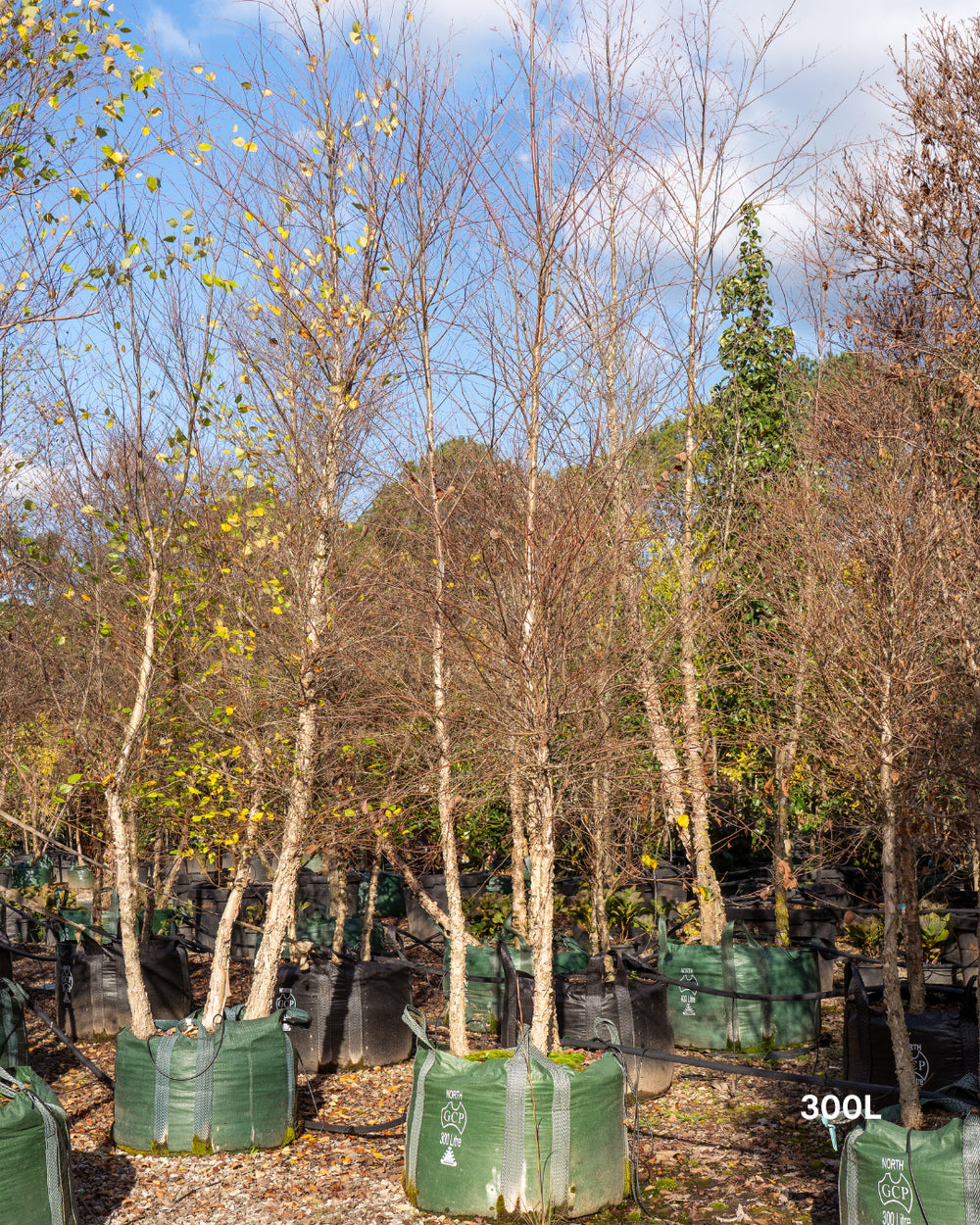
Yes. All eight birches here are deciduous. The leaves turn yellow in autumn and drop in winter, which is when the bark is most visible.

The wrap up

Pick the birch by bark and by space. Use Silver Birch, Alba or Moss White for tall white trunks in a grove or avenue, Nigra for dark bark, Himalayan Birch for very white bark on a mid-sized tree, Fastigiata where width is tight, and Youngii or Summer Cascade for a small weeping tree.

Not sure which suits your site? Take our tree quiz, or send us a photo of the space and we will point you to the right tree.

Shopping cart (0)

Complete your order

Freight added at checkout, based on your delivery address and order quantities.

Checkout