Betula utilis ‘Jacquemontii’ – Himalayan Birch
Betula utilis ‘Jacquemontii’ – Himalayan Birch
Couldn't load pickup availability
Current Stock Height Guides
Current Stock Height Guides
Height guide disclaimer: Height ranges are approximate only. As living products, plant heights naturally vary between individual plants, batches, and seasons. No guarantee is given that supplied plants will fall within the stated range. If minimum heights are required, you mustconfirm current batch heights with Evergreen Trees Direct prior to purchase. Variation in height is normal and is not grounds for return, refund, replacement, or compensation.
Mature Height & Width
Mature Height & Width
Mature Height: 8m to 12m
Mature Width: 4m to 6m (approx.)
Betula utilis ‘Jacquemontii’ – Himalayan Birch is expected to grow 0.5m to 1m per year.
Root Ball Dimensions
Root Ball Dimensions
Use this as a reference when digging your planting hole. We recommend digging at least 10% wider than the dimensions below to encourage strong root development.
- 30cm Pot: 33cm (W) × 30cm (D)
- 40cm/45L Pot: 44cm (W) × 41.5cm (D)
- 50cm Pot / 70L Pot: 55cm (W) × 41.8cm (D)
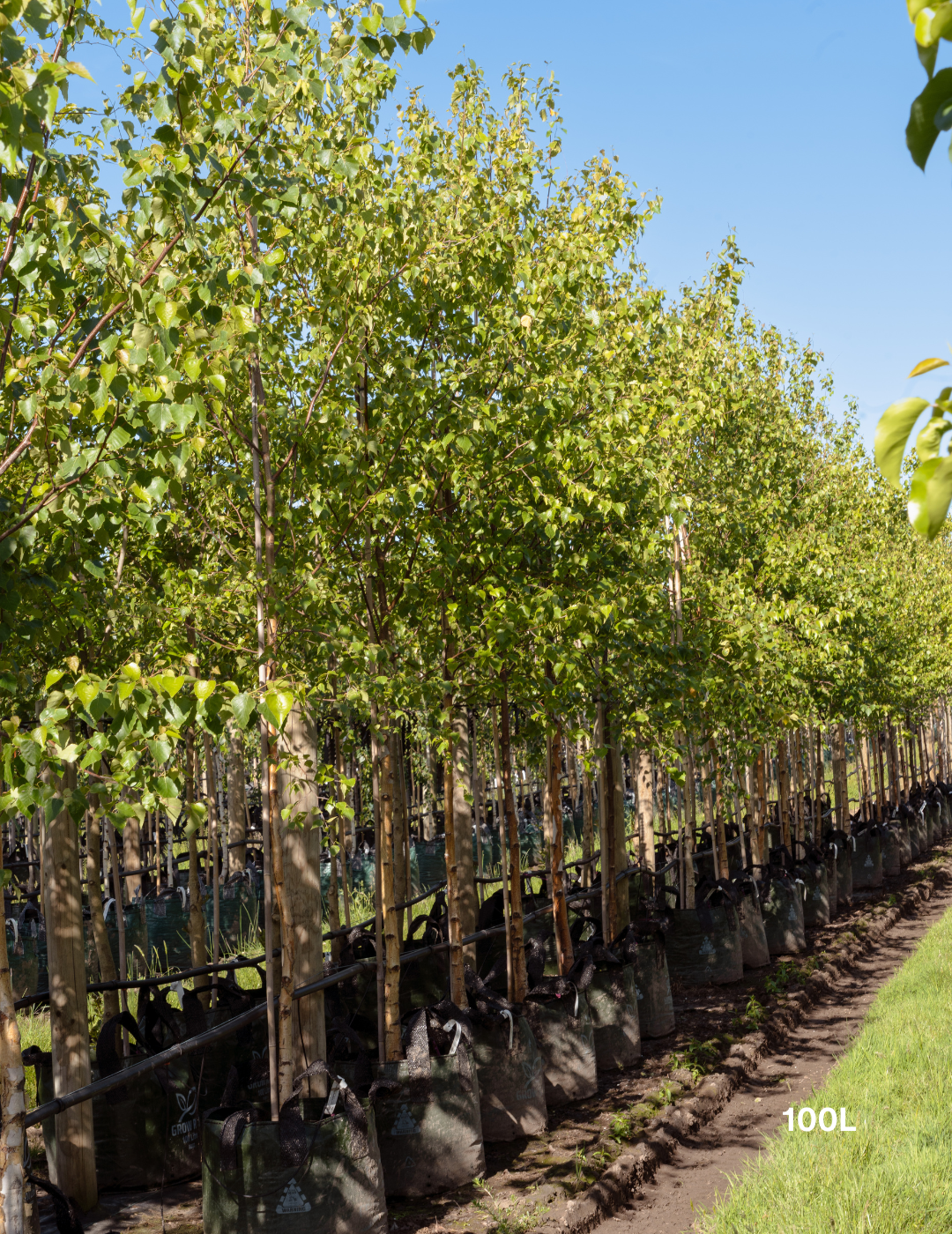
- 100L Bag: 50.6cm (W) × 52.8cm (D)
- 150L Bag: 66cm (W) × 55cm (D)
- 200L Bag: 71.5cm (W) × 60.5cm (D)
- 300L Bag: 88cm (W) × 63.8cm (D)
- 400L Bag: 99cm (W) × 66cm (D)
- 500L Bag: 122cm (W) × 66cm (D)
- 750L Bag: 134cm (W) × 69cm (D)
- 1000L Bag: 146.3cm (W) × 71.5cm (D)
- 2000L Bag: 176cm (W) × 82.5cm (D)
Trade
Trade
We supply advanced trees to landscapers, developers, architects, and councils Australia-wide. Trade clients receive fast quotes, expert advice, and access to premium stock with reliable freight.
Shipping
Shipping
Shipping is calculated at checkout based on the pallet space your order occupies in the truck and your delivery location.
There is no charge to calculate your freight.
Contact
Contact
Have a question or a list to send through to us?
Email: sales@evergreentrees.com.au
Phone: (03) 7042 3318
Share this product
About Your New Betula utilis ‘Jacquemontii’ – Himalayan Birch
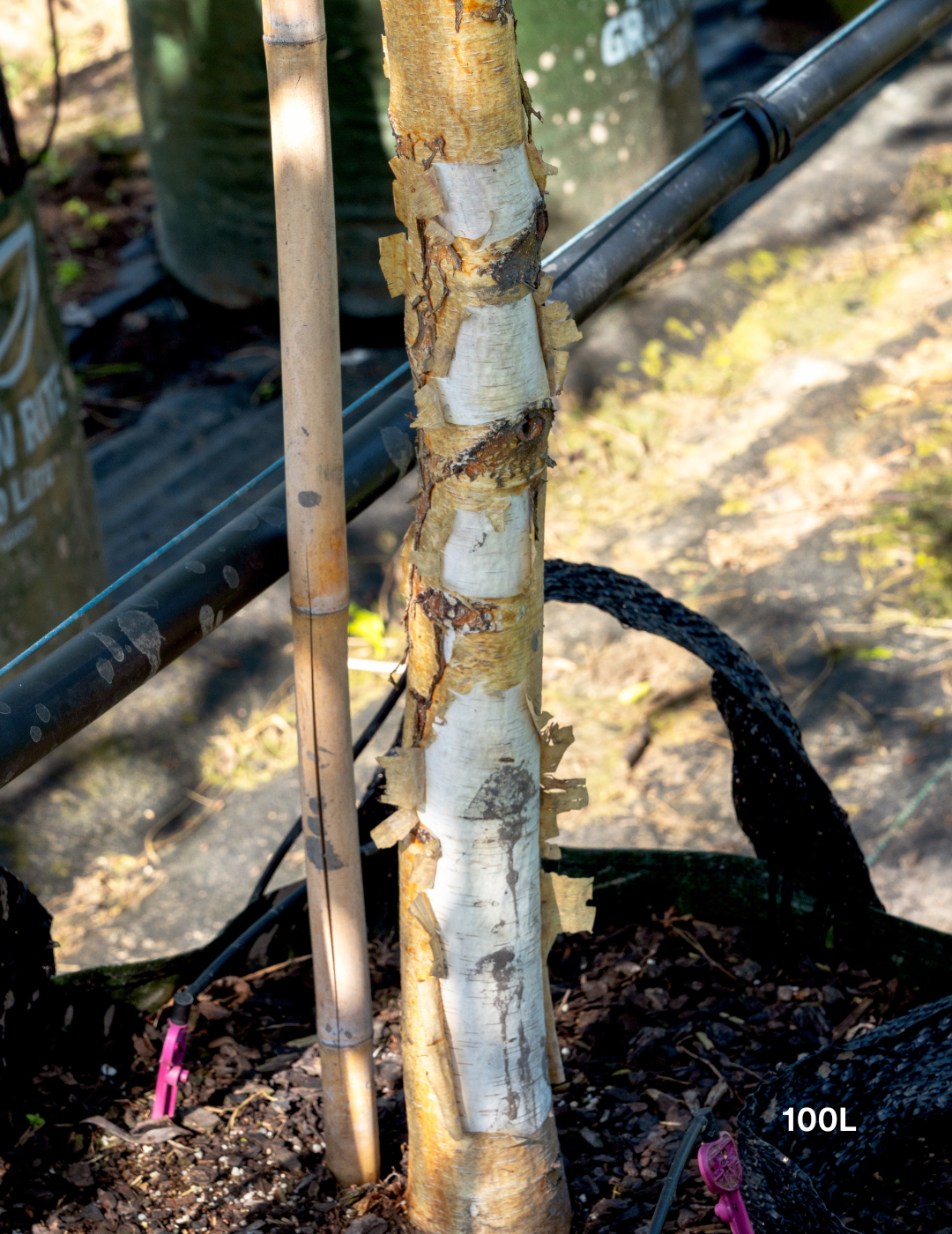
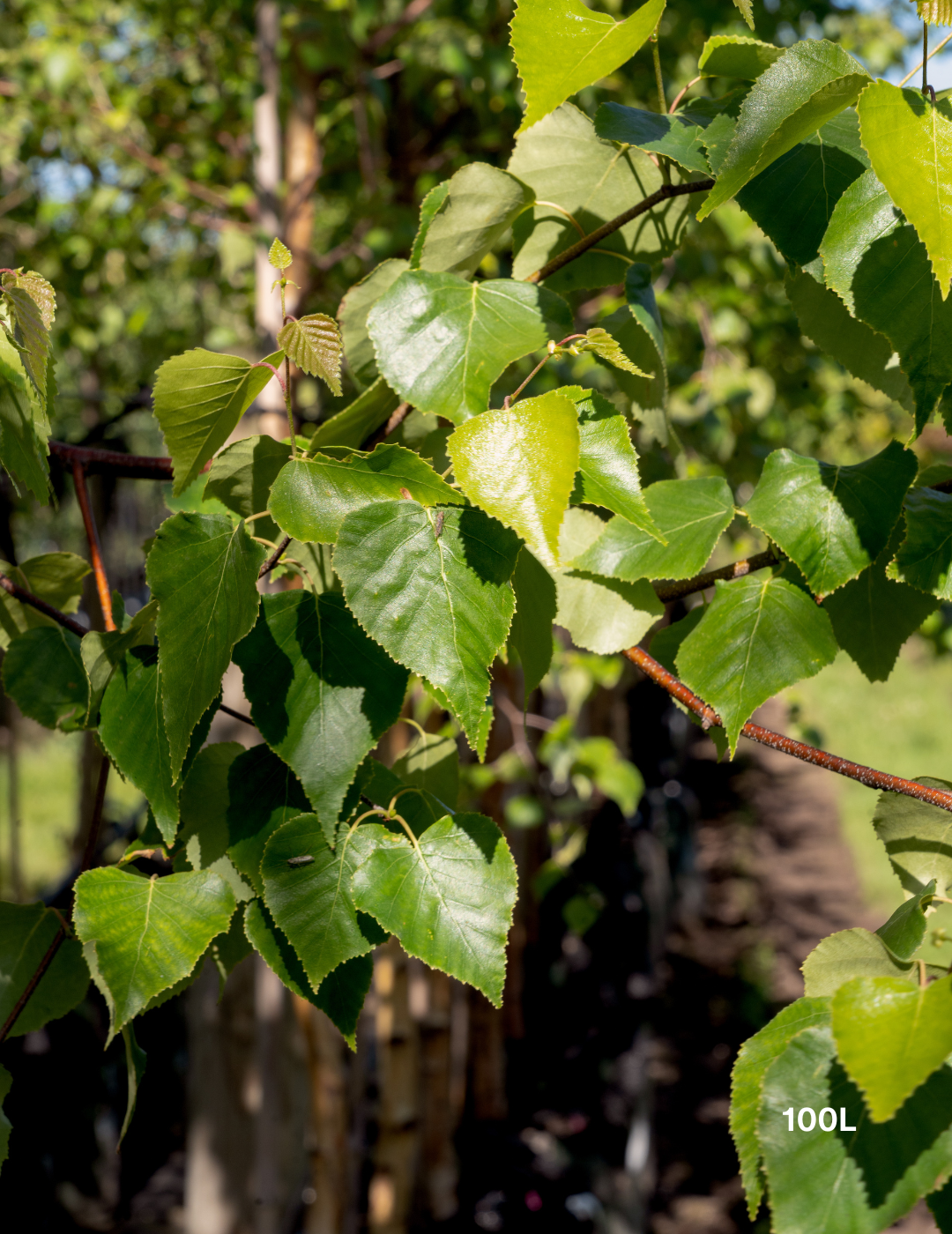
Betula utilis 'Jacquemontii', the Himalayan Birch, is a deciduous tree grown for bark that turns brilliant white early and peels away in fine papery sheets. The crown is upright and evenly branched, with light green summer leaves that colour golden yellow before falling. Yellowish catkins appear in spring as the buds break.
It prefers full sun to part shade and moist, well-drained soil with reliable summer water. Cool and temperate districts give the best bark colour, from Tasmania and the Victorian ranges through to the southern tablelands. Frost is no trouble. Growth is moderate at 30 to 50 centimetres a year, and pruning needs are light.
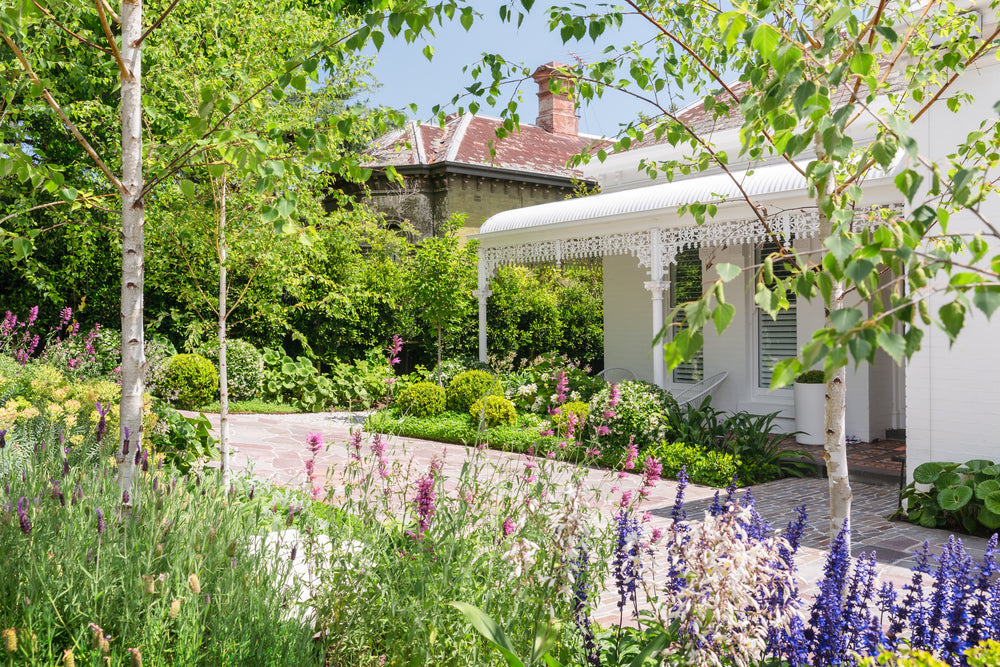
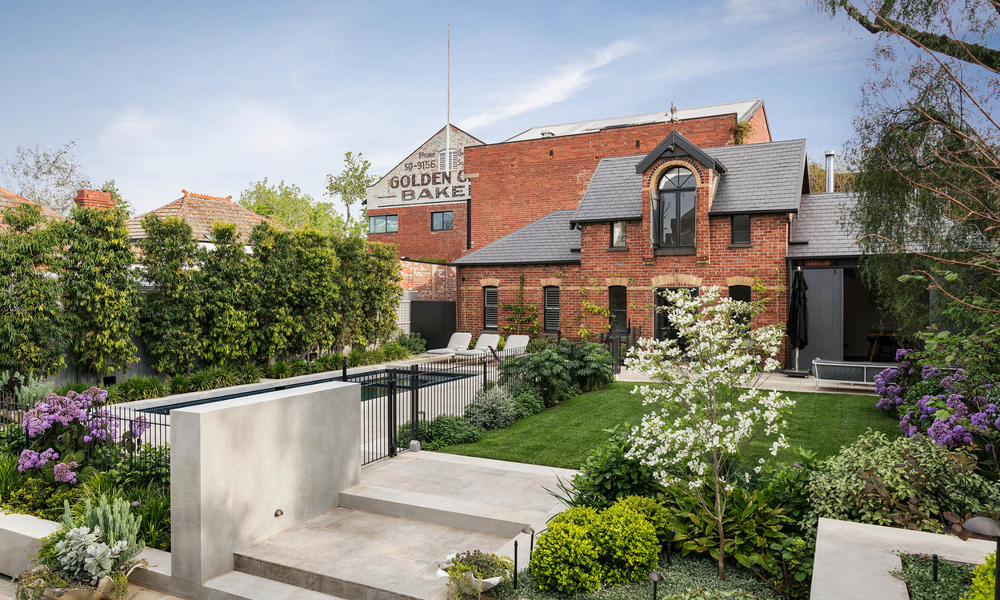
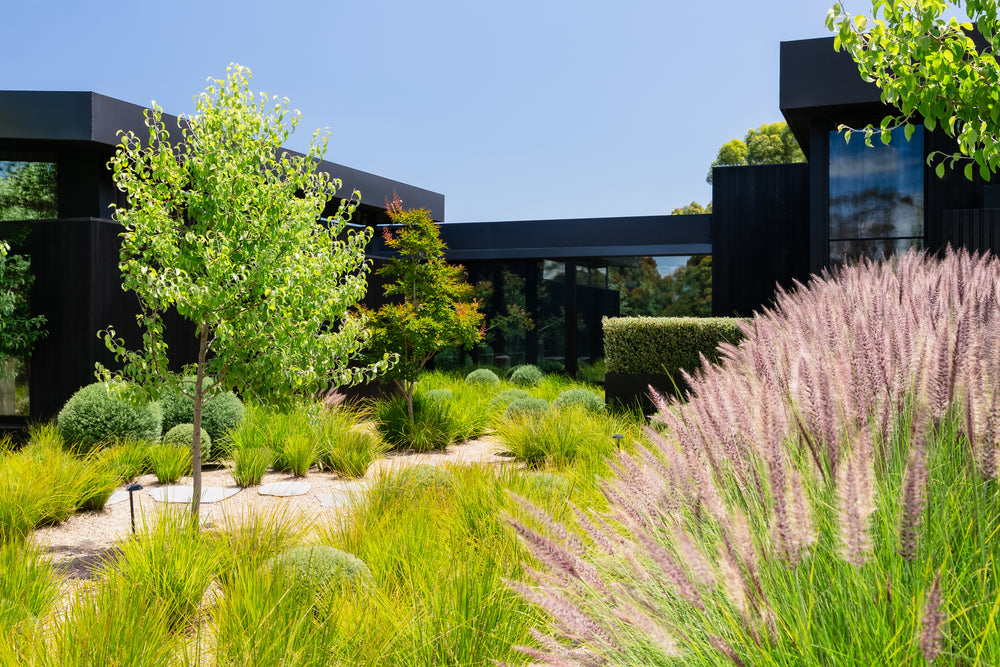
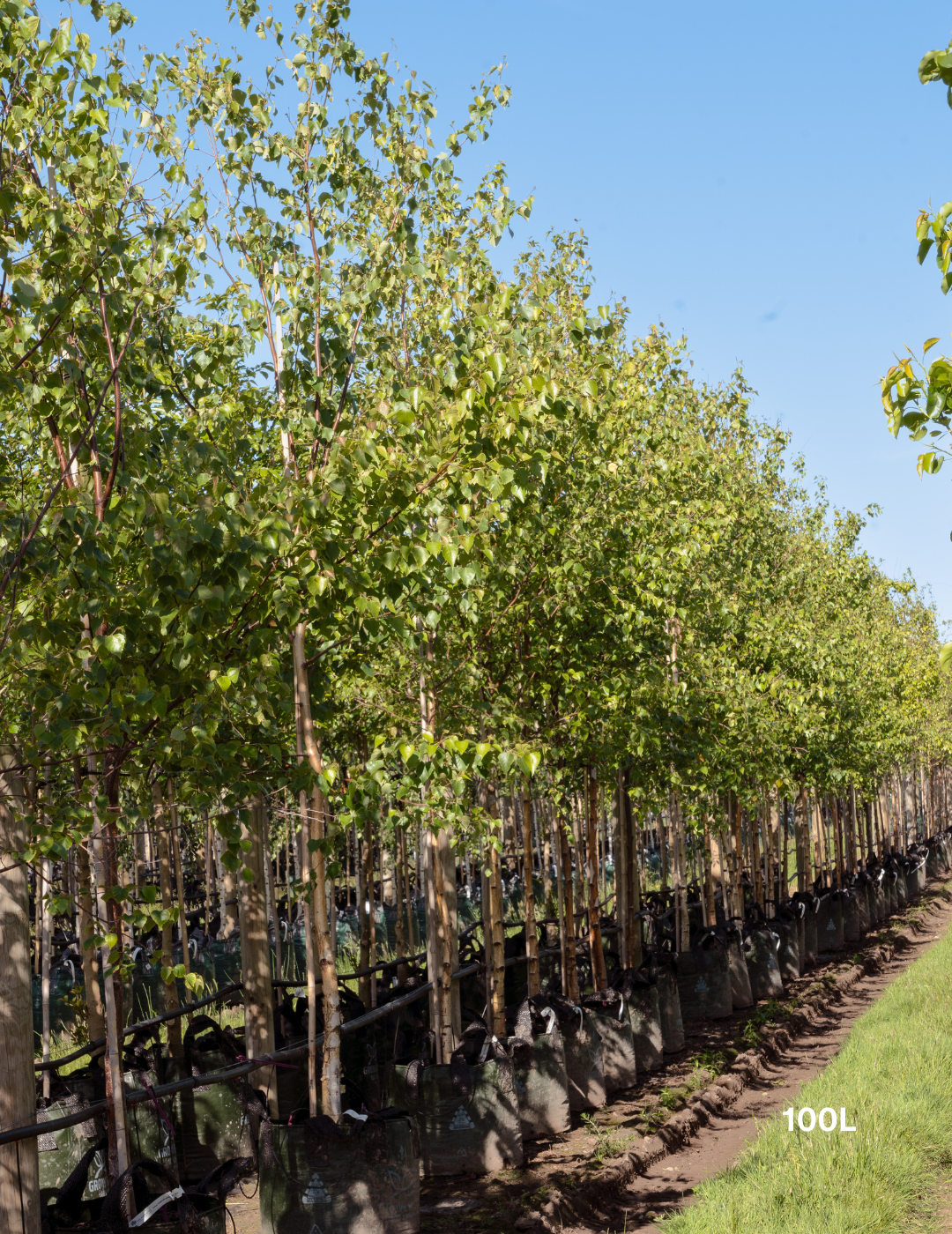
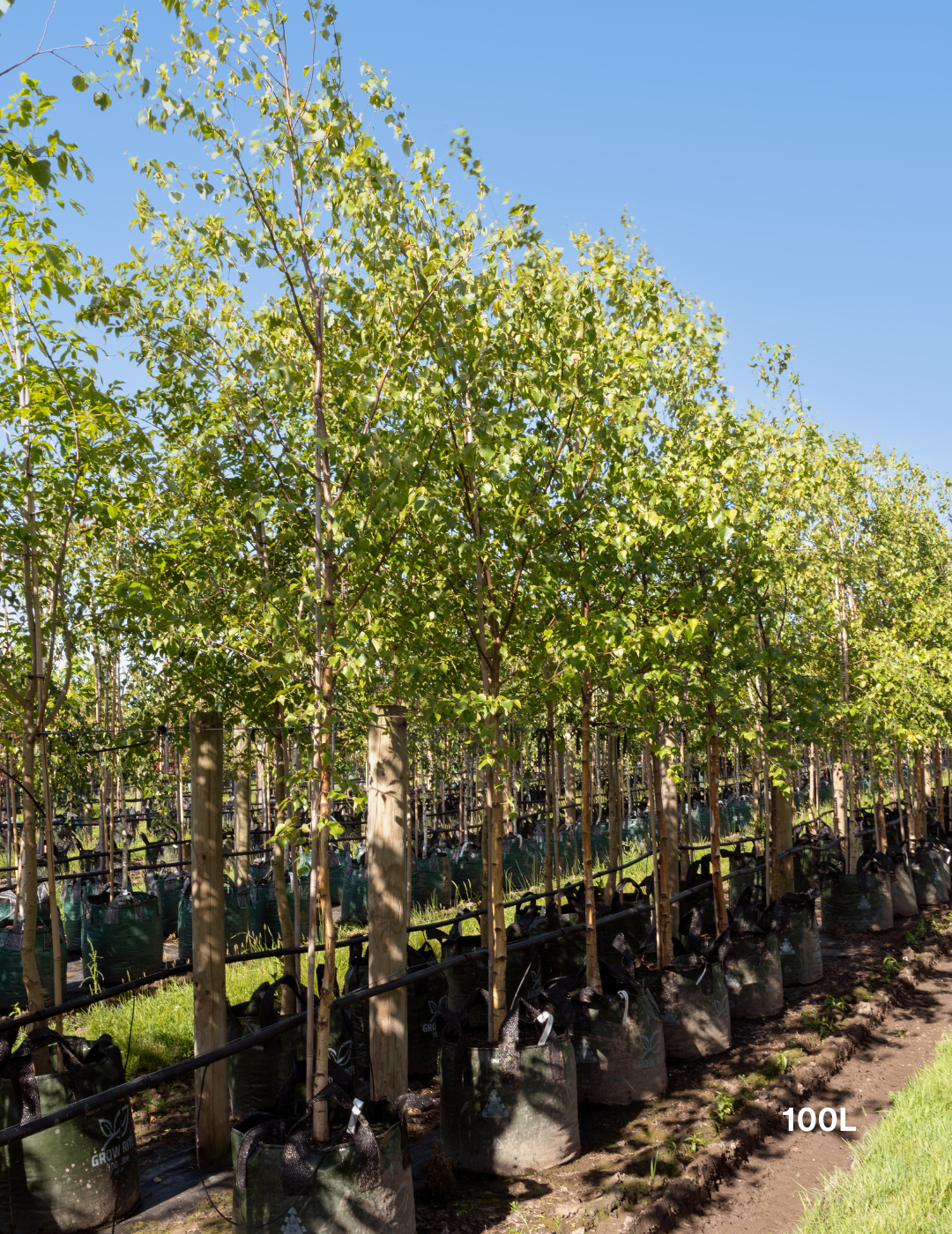
Group plantings of three or more make the most of the white trunks, and the tree also holds its own as a single specimen in a lawn or courtyard. Even branching makes it dependable for avenues and civic planting, where a matched row is expected. Mature size stays manageable close to buildings and paving.
Frequently Asked Questions
About Himalayan Birch
What is Himalayan Birch?
Betula utilis 'Jacquemontii' is a deciduous tree selected for exceptionally white bark that peels in thin papery sheets. It forms an upright, evenly branched crown with light green leaves that turn golden yellow in autumn, and yellowish catkins appear in spring. It is one of the whitest-barked trees available for Australian gardens.
How big does Betula utilis 'Jacquemontii' grow?
Expect 8 to 12 metres in height with a spread of 4 to 6 metres at maturity, held in a graceful upright crown. That footprint suits residential gardens, courtyards and street plantings. For groves and feature groups, space plants 3 to 4 metres apart; for a uniform avenue, 3 metres apart works well.
How fast does it grow?
Moderately, at roughly 30 to 50 centimetres a year. It is steadier than the faster birches, which tends to give a denser, better-furnished crown. In cool districts with good summer moisture it holds that rate consistently, slowing as the tree approaches its mature height.
Does it need sun or shade?
Full sun to part shade. Full sun gives the strongest bark colour and the most even crown, while a little afternoon shade helps in hotter, drier inland gardens. What it will not accept is deep shade under larger trees, where growth becomes thin and drawn and the bark stays dull.
Is it frost tolerant?
Yes, it is frost hardy and handles cold winters comfortably, which is what you would expect of a tree from the Himalaya. Frost is not a limiting factor anywhere in southern Australia. Heat and dryness matter far more; the tree wants a cool root run and steady summer moisture rather than protection from cold.
When does the bark turn white?
Earlier than most birches. This selection develops clear white bark while still young, often within the first few years in the ground, rather than waiting until the trunk thickens. The papery outer layer lifts and peels naturally, and the effect is strongest in winter once the canopy has dropped.
How do I care for a Himalayan Birch?
Water deeply through summer and mulch generously to keep the shallow roots cool. Prune only in late summer or early autumn, as cuts made in late winter or spring bleed sap heavily. Light pruning is all it needs, mostly to lift the canopy or remove crossing wood. Avoid compacting the soil over the root zone.
Evergreen Trees Direct Has Been Featured In:


Plant Your Betula utilis ‘Jacquemontii’ – Himalayan Birch With:


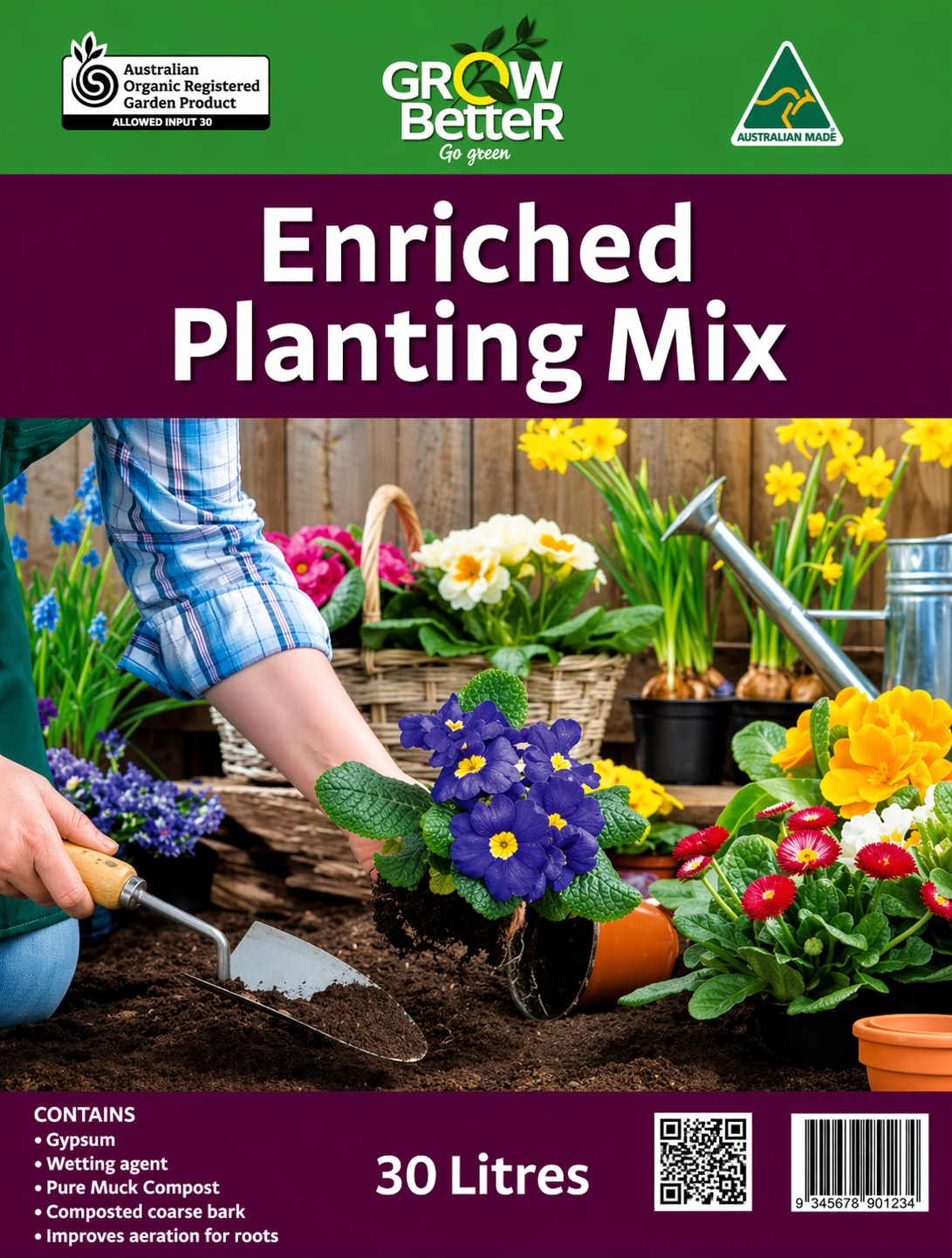
Type: Garden Supplies
Enriched Planting Mix (AO Certified)
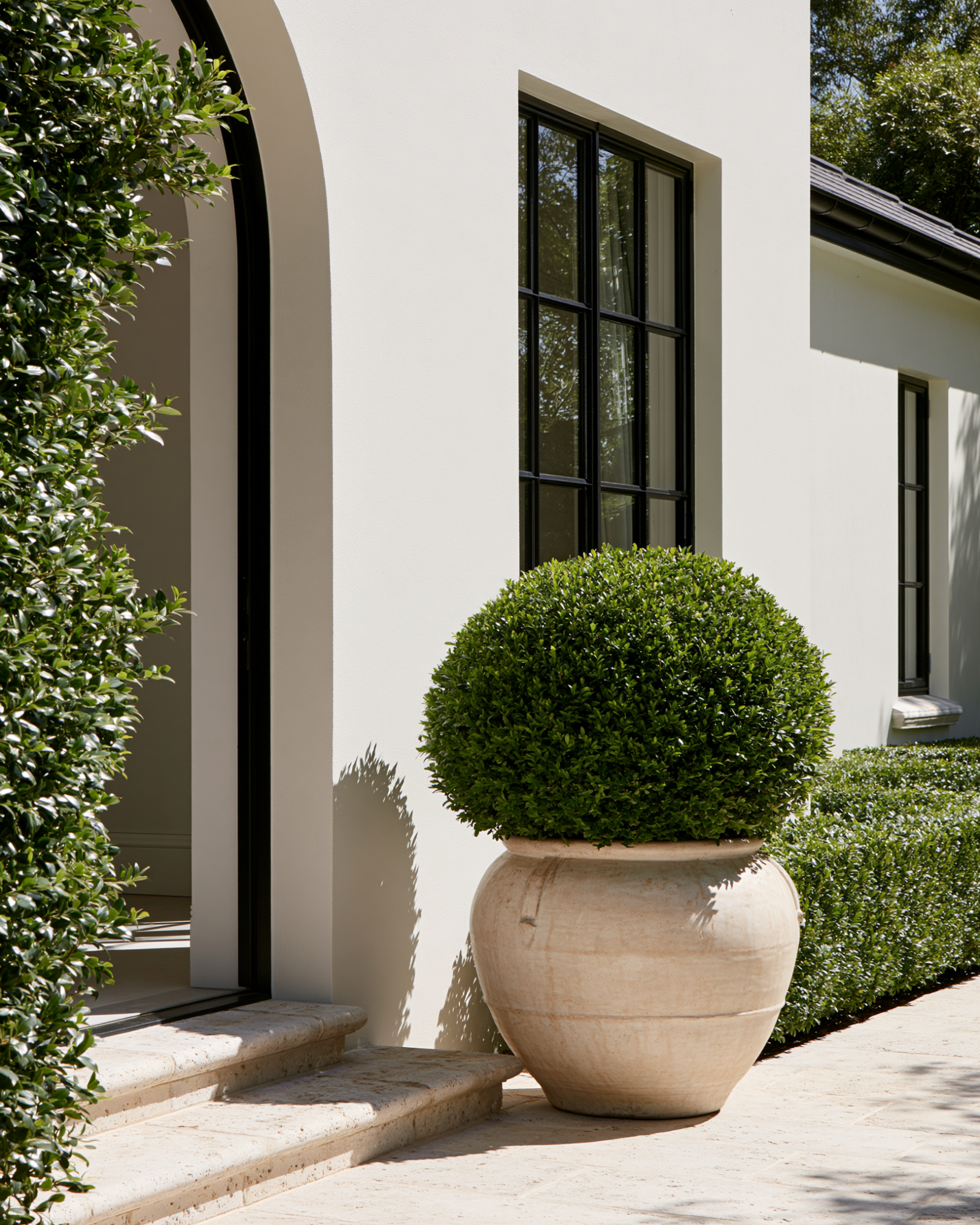
Type: Structural Foliage
Buxus sempervirens English Box Topiary Balls

Type: Hedging and Screening Trees
Rhaphiolepis indica 'Oriental Pearl'

Type: Hedging and Screening Trees
Pittosporum tobira 'Miss Muffet'

Type: Hedging and Screening Trees
Acmena smithii 'Sublime' Lilly Pilly
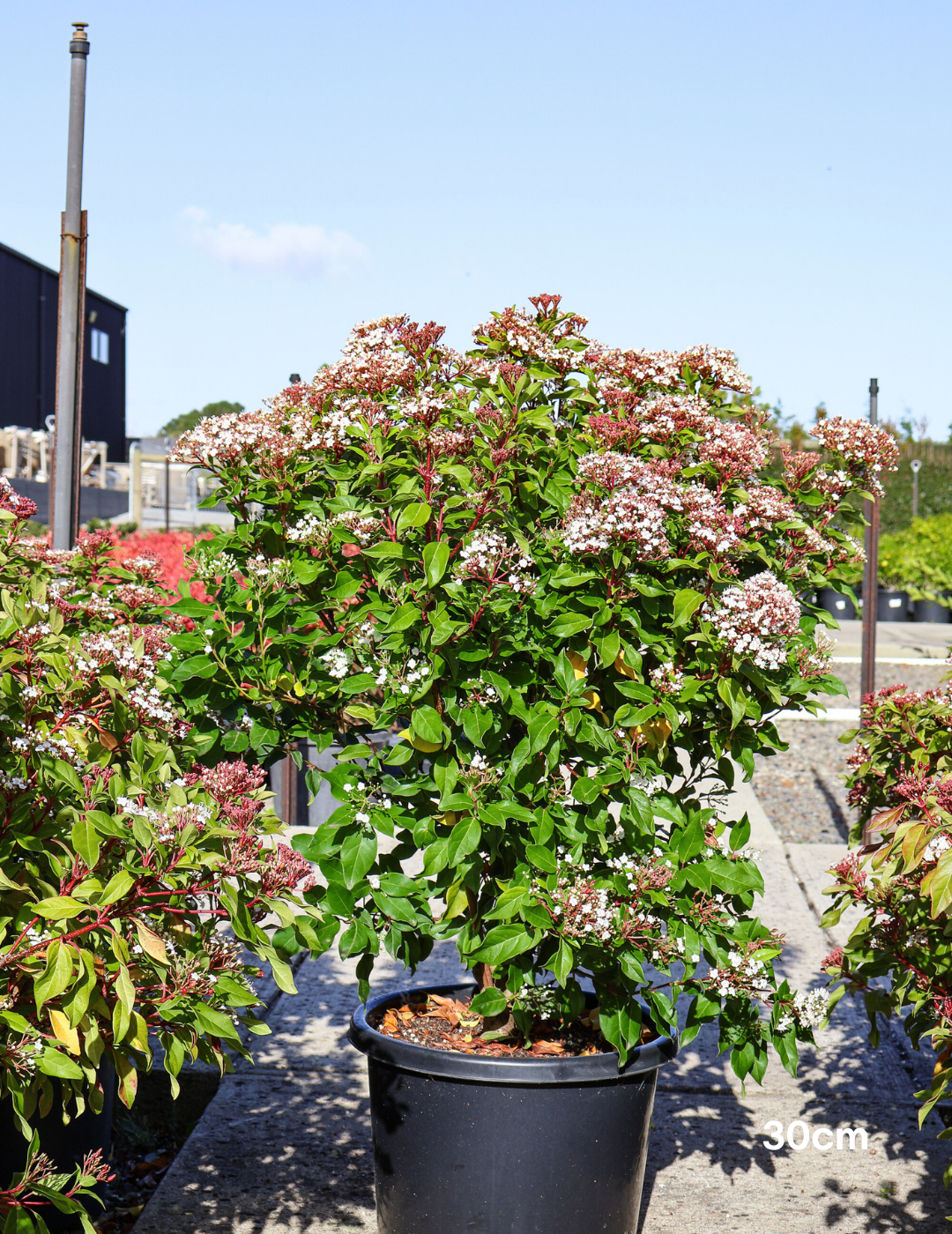
Type: Hedging and Screening Trees
Viburnum tinus

Type: Hedging and Screening Trees
Pittosporum tenuifolium 'Silver Sheen'
Uses in my Garden
Uses in my Garden
Betula utilis ‘Jacquemontii’ – Himalayan Birch works in an:
Is Betula utilis ‘Jacquemontii’ – Himalayan Birch Evergreen or Deciduous?
Is Betula utilis ‘Jacquemontii’ – Himalayan Birch Evergreen or Deciduous?
Betula utilis ‘Jacquemontii’ – Himalayan Birch is an Deciduous (Defoliates throughout colder months) Tree
Mature Height & Width
Mature Height & Width
Mature Height: 8m to 12m
Mature Width: 4m to 6m (approx.)
Betula utilis ‘Jacquemontii’ – Himalayan Birch is expected to grow 0.5m to 1m per year.
Growth Rate of Betula utilis ‘Jacquemontii’ – Himalayan Birch
Growth Rate of Betula utilis ‘Jacquemontii’ – Himalayan Birch
Betula utilis ‘Jacquemontii’ – Himalayan Birch is expected to grow 0.5m to 1m per year.
They are considered to have a:
Frost Tolerance & Ideal Climate to plant Betula utilis ‘Jacquemontii’ – Himalayan Birch
Frost Tolerance & Ideal Climate to plant Betula utilis ‘Jacquemontii’ – Himalayan Birch
Is Betula utilis ‘Jacquemontii’ – Himalayan Birch frost tolerant?
Betula utilis ‘Jacquemontii’ – Himalayan Birch is Frost Tolerant – Can handle light to moderate frost once established.
Does Betula utilis ‘Jacquemontii’ – Himalayan Birch Flower?
Does Betula utilis ‘Jacquemontii’ – Himalayan Birch Flower?
Betula utilis ‘Jacquemontii’ produces slender yellow-brown catkins in early spring before the new foliage emerges. While modest, these early-season flowers provide pollen for native bees and beneficial insects and signal the beginning of its fresh annual growth.
Does Betula utilis ‘Jacquemontii’ – Himalayan Birch flower?
Flowering Period:
Flower Type:
Flower Colour:
Yellow
Is Betula utilis ‘Jacquemontii’ – Himalayan Birch an Australian Native Tree?
Is Betula utilis ‘Jacquemontii’ – Himalayan Birch an Australian Native Tree?
No
Betula utilis ‘Jacquemontii’ – Himalayan Birch is Native to Native to the Himalayan region, including Nepal, northern India, Bhutan, and Tibet.
What is the Wildlife Value of Betula utilis ‘Jacquemontii’ – Himalayan Birch ?
What is the Wildlife Value of Betula utilis ‘Jacquemontii’ – Himalayan Birch ?
Its airy canopy offers shelter and foraging space for small birds, while its spring catkins support native bees, hoverflies and other early pollinators. The textured bark and fine branching also foster insect diversity, contributing to a healthy, biodiverse garden ecosystem.
How much Sunlight does Betula utilis ‘Jacquemontii’ – Himalayan Birch need?
How much Sunlight does Betula utilis ‘Jacquemontii’ – Himalayan Birch need?
Betula utilis ‘Jacquemontii’ – Himalayan Birch will thrive best in:
Preferred Soil?
Preferred Soil?
Betula utilis ‘Jacquemontii’ performs best in well-drained loam or sandy loam soils and prefers slightly acidic to neutral conditions. It can struggle in heavy clay or poorly drained sites unless improved with organic matter to enhance aeration and drainage. Keep soil evenly moist during establishment, then move to deep, occasional watering as the tree matures, particularly during warm or dry weather, to maintain canopy health and bark brightness.
Is Betula utilis ‘Jacquemontii’ – Himalayan Birch Drought Tolerant?
Is Betula utilis ‘Jacquemontii’ – Himalayan Birch Drought Tolerant?
Is Betula utilis ‘Jacquemontii’ – Himalayan Birch Drought tolerant?
As a young tree it requires regular watering, but once established Betula utilis ‘Jacquemontii’ develops moderate drought tolerance. It performs best with deep, occasional watering during extended dry periods to maintain leaf quality and enhance the brightness of its striking white bark.

Planting Information
How To Plant Your Betula utilis ‘Jacquemontii’ – Himalayan Birch
How To Plant Your Betula utilis ‘Jacquemontii’ – Himalayan Birch
Recommended Planting Spacing For Your Betula utilis ‘Jacquemontii’ – Himalayan Birch
Recommended Planting Spacing For Your Betula utilis ‘Jacquemontii’ – Himalayan Birch
Betula utilis ‘Jacquemontii’ – Himalayan Birch is expected to grow 0.5m to 1m per year.
Long Term Care For Your Betula utilis ‘Jacquemontii’ – Himalayan Birch
Long Term Care For Your Betula utilis ‘Jacquemontii’ – Himalayan Birch
Planting Your Betula utilis ‘Jacquemontii’ – Himalayan Birch in Different Soil
Planting Your Betula utilis ‘Jacquemontii’ – Himalayan Birch in Different Soil
Frequently Asked Questions
Frequently Asked Questions