- Mature height
- 8m to 12m
- Mature width
- 4m to 6m (approx.)
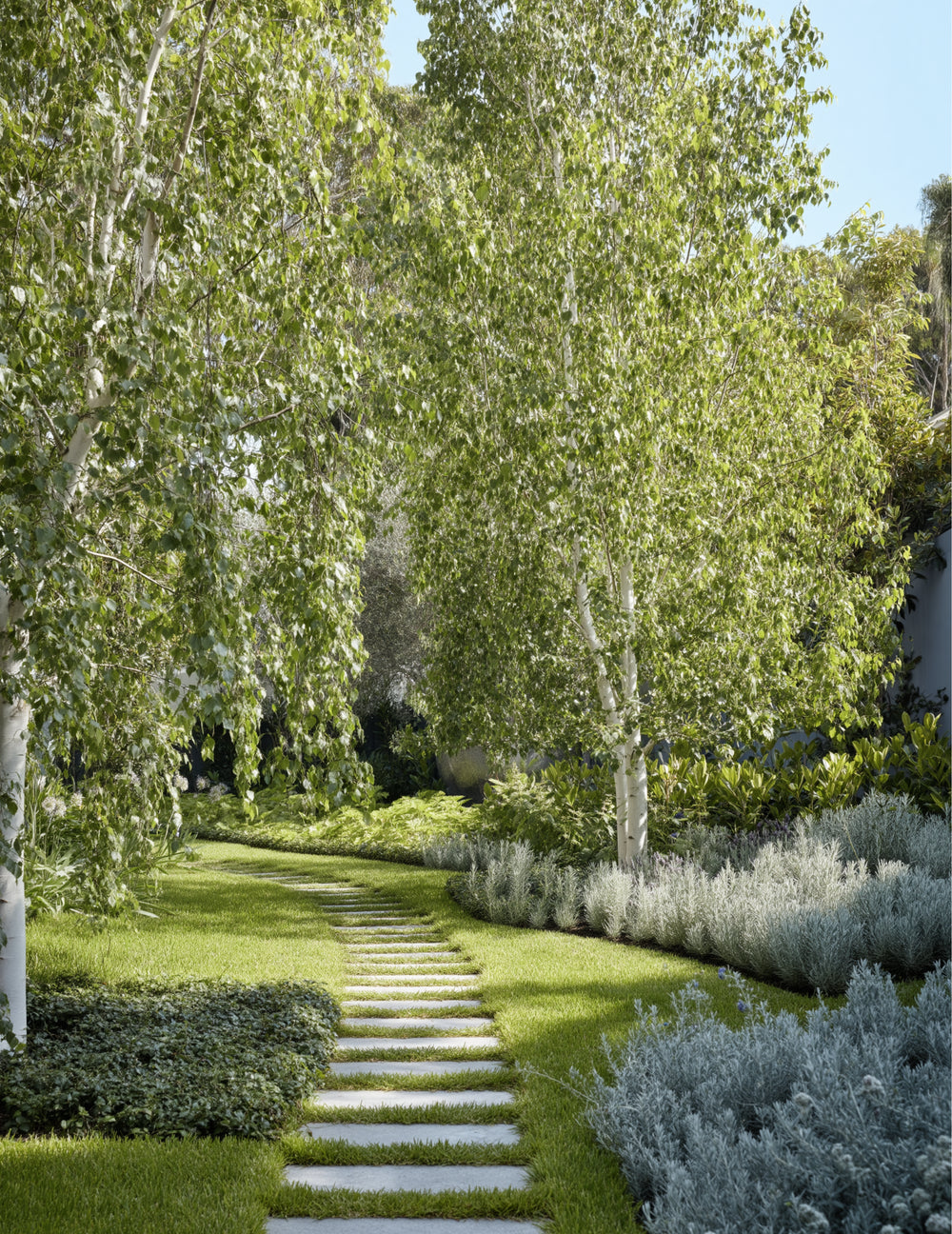
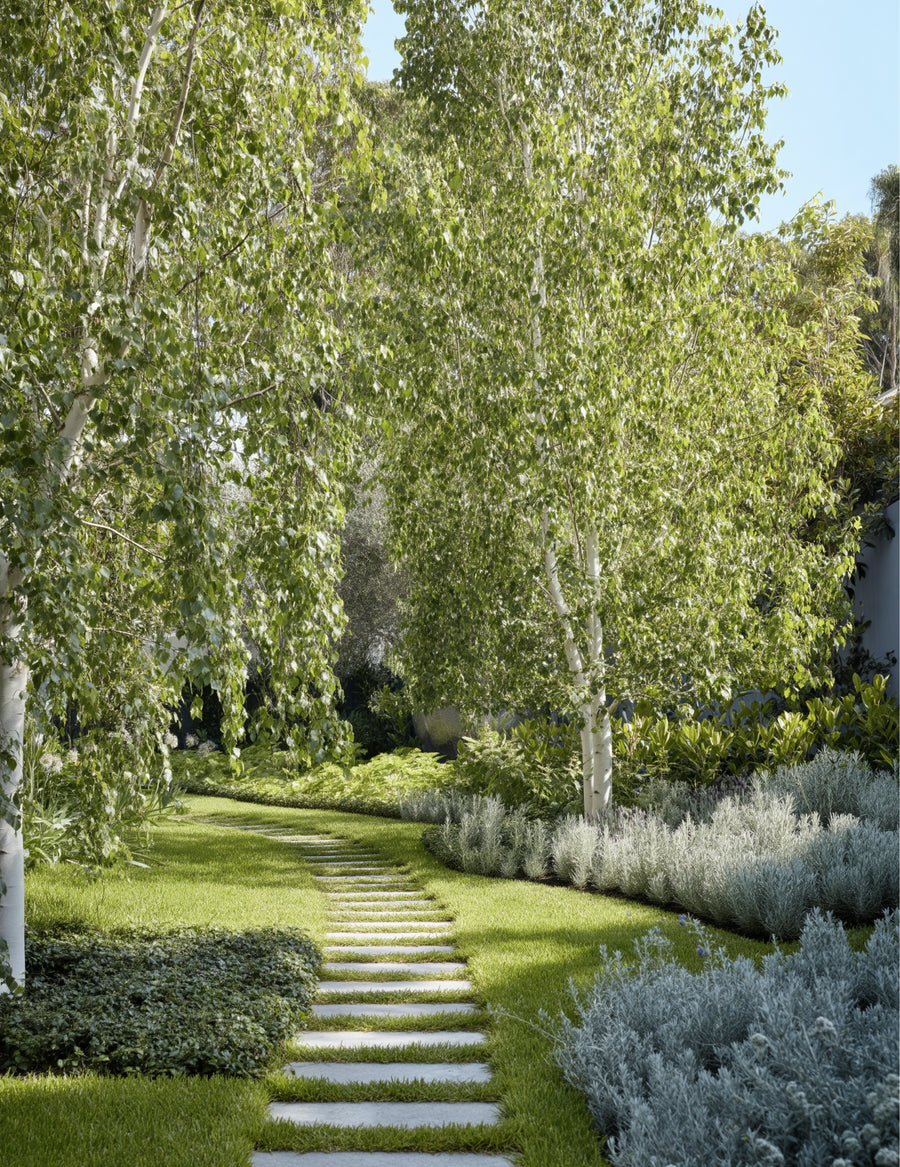
Betula utilis 'Jacquemontii', the Himalayan Birch, is a deciduous tree grown for bark that turns brilliant white early and peels away in fine papery sheets. The crown is upright and evenly branched, with light green summer leaves that colour golden yellow before falling. Yellowish catkins appear in spring as the buds break.
It prefers full sun to part shade and moist, well-drained soil with reliable summer water. Cool and temperate districts give the best bark colour, from Tasmania and the Victorian ranges through to the southern tablelands. Frost is no trouble. Growth is moderate at 30 to 50 centimetres a year, and pruning needs are light.
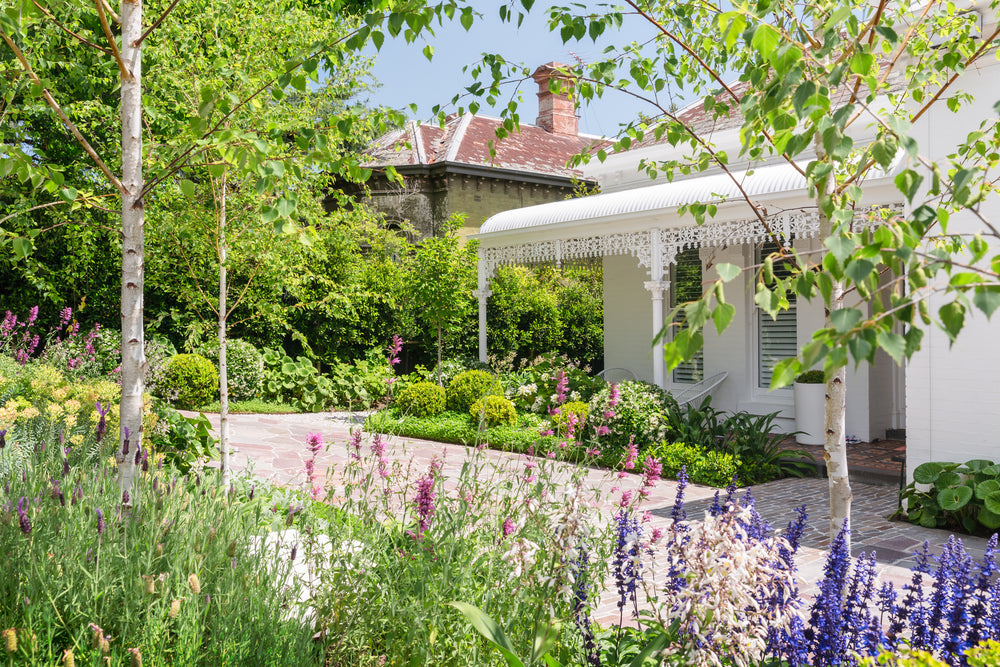
Group plantings of three or more make the most of the white trunks, and the tree also holds its own as a single specimen in a lawn or courtyard. Even branching makes it dependable for avenues and civic planting, where a matched row is expected. Mature size stays manageable close to buildings and paving.
Frequently Asked Questions
About Himalayan Birch
What is Himalayan Birch?
Betula utilis 'Jacquemontii' is a deciduous tree selected for exceptionally white bark that peels in thin papery sheets. It forms an upright, evenly branched crown with light green leaves that turn golden yellow in autumn, and yellowish catkins appear in spring. It is one of the whitest-barked trees available for Australian gardens.
How big does Betula utilis 'Jacquemontii' grow?
Expect 8 to 12 metres in height with a spread of 4 to 6 metres at maturity, held in a graceful upright crown. That footprint suits residential gardens, courtyards and street plantings. For groves and feature groups, space plants 3 to 4 metres apart; for a uniform avenue, 3 metres apart works well.
How fast does it grow?
Moderately, at roughly 30 to 50 centimetres a year. It is steadier than the faster birches, which tends to give a denser, better-furnished crown. In cool districts with good summer moisture it holds that rate consistently, slowing as the tree approaches its mature height.
Does it need sun or shade?
Full sun to part shade. Full sun gives the strongest bark colour and the most even crown, while a little afternoon shade helps in hotter, drier inland gardens. What it will not accept is deep shade under larger trees, where growth becomes thin and drawn and the bark stays dull.
Is it frost tolerant?
Yes, it is frost hardy and handles cold winters comfortably, which is what you would expect of a tree from the Himalaya. Frost is not a limiting factor anywhere in southern Australia. Heat and dryness matter far more; the tree wants a cool root run and steady summer moisture rather than protection from cold.
When does the bark turn white?
Earlier than most birches. This selection develops clear white bark while still young, often within the first few years in the ground, rather than waiting until the trunk thickens. The papery outer layer lifts and peels naturally, and the effect is strongest in winter once the canopy has dropped.
How do I care for a Himalayan Birch?
Water deeply through summer and mulch generously to keep the shallow roots cool. Prune only in late summer or early autumn, as cuts made in late winter or spring bleed sap heavily. Light pruning is all it needs, mostly to lift the canopy or remove crossing wood. Avoid compacting the soil over the root zone.