- Mature height
- 15m to 25m (approx.)
- Mature width
- 10m to 15m
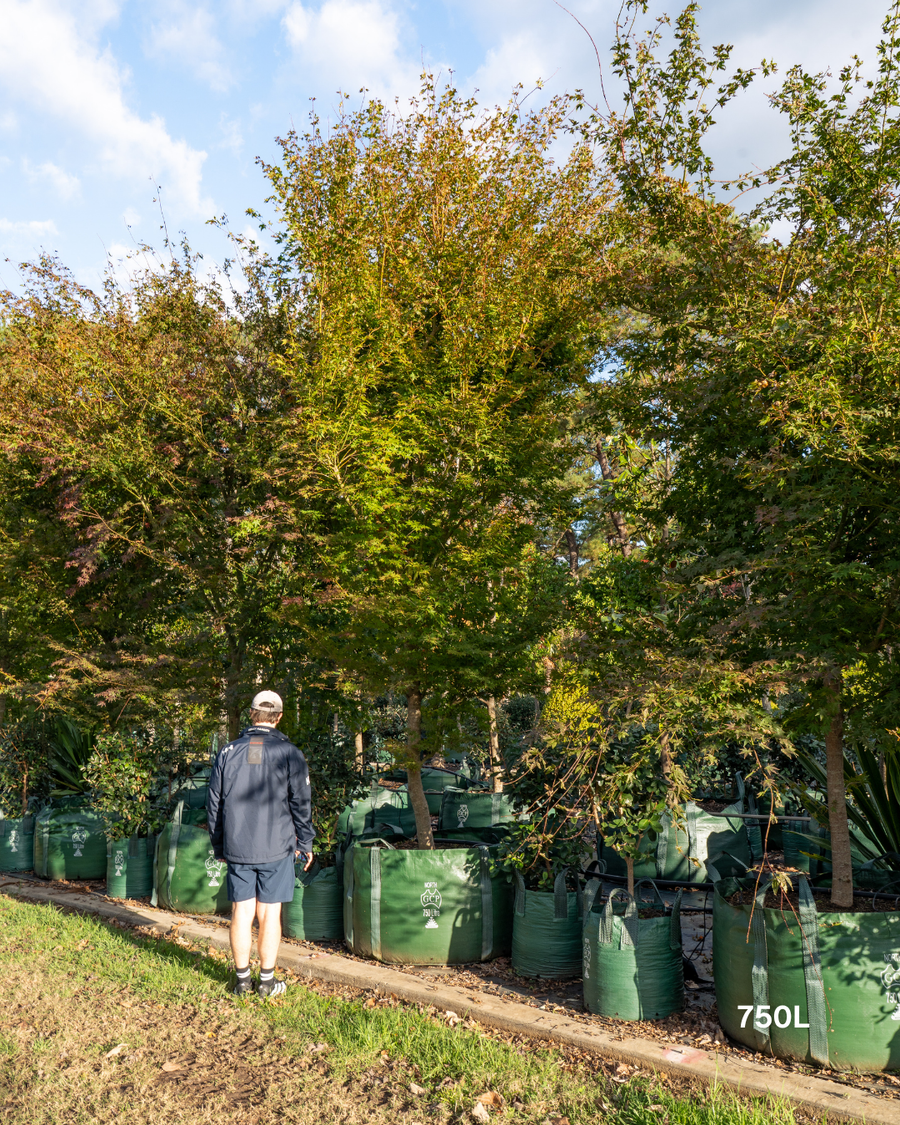
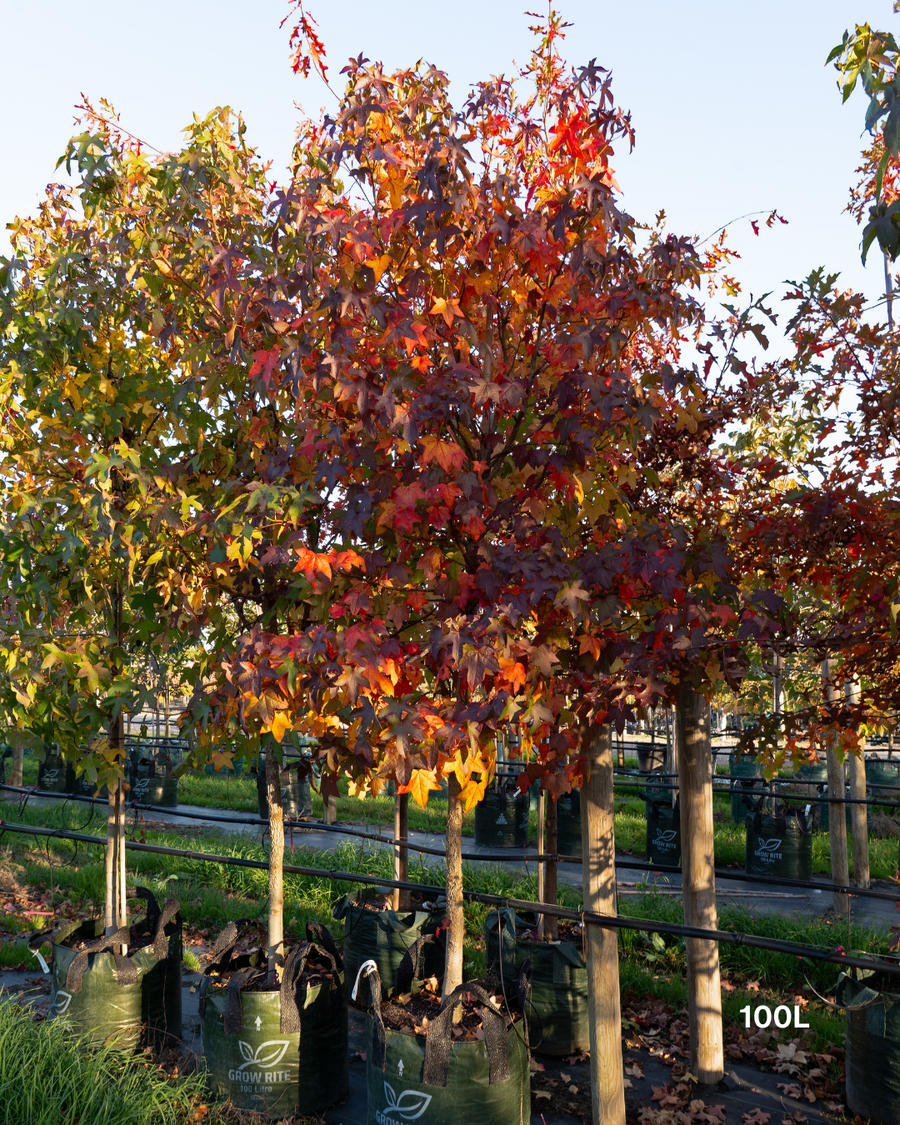
Zelkova serrata, the Japanese Zelkova, is a large deciduous shade tree with an upright trunk that divides into a broad, spreading vase of branches. The serrated green leaves turn yellow, orange and bronze in autumn, and the smooth grey bark flakes in patches to show orange underneath.
It grows 12 to 18 metres tall and 10 to 15 metres wide, and can reach 30 metres in ideal conditions, adding roughly 40 to 60 centimetres a year. Full sun and a deep soil suit it best. It is frost hardy, handles heat, wind and urban air, and is drought tolerant once established.
This is a street, park and large garden tree, planted for shade, avenue work and civic projects where an elm form is wanted without the disease risk. It needs genuine room, so set it out on its mature spread rather than its nursery size. On the right site it is a fifty year asset.
Frequently Asked Questions
About Japanese Zelkova
What is Zelkova serrata?
Zelkova serrata is a deciduous tree from Japan, Korea and eastern China, in the elm family. It carries a short trunk and a broad vase shaped crown of fine, serrated leaves, and is widely planted as a shade and street tree. Unlike the true elms it is highly resistant to Dutch elm disease.
How big does a Japanese Zelkova grow?
It reaches 12 to 18 metres tall and 10 to 15 metres wide in cultivation, and can get to 30 metres in ideal conditions with deep soil and no competition. Plan the planting position on the upper figures rather than the lower ones, because a mature specimen carries a very substantial canopy.
Is it evergreen or deciduous?
Deciduous. The tree carries fresh green foliage through spring and summer, colours to yellow, orange and bronze in autumn, then stands bare through winter. That bare period lets winter sun through to buildings and paths below, which is one reason it is favoured for streets, car parks and the northern side of houses.
How fast does Zelkova serrata grow?
Moderate, at around 40 to 60 centimetres a year once established. Young trees in good soil with regular water push along faster, then the rate settles as the canopy broadens. It is quicker than an oak and slower than a poplar, which is a sensible pace for a tree meant to last.
Does Japanese Zelkova have invasive roots?
The roots are relatively well behaved for a tree of this size, but the trunk flare and surface roots will lift paving if planted too close. Allow at least 4 to 5 metres from slabs, kerbs and footings, and more where the soil is shallow. Avoid planting directly over sewer and stormwater lines.
Where does it grow best in Australia?
It does well through cool and temperate Australia, including Melbourne, Adelaide, Canberra, Sydney, the tablelands and Tasmania, and it is reliable in inland towns with hot dry summers provided it is watered while young. Autumn colour is strongest where the nights turn cold. It is not suited to the wet tropics.
How do I care for a Japanese Zelkova?
Water deeply and regularly for the first two or three summers, then it manages on rainfall in most districts. Mulch out to the drip line and keep the mulch off the trunk. Formative pruning in the first few years sets a single leader and good branch spacing. Established trees need very little attention.