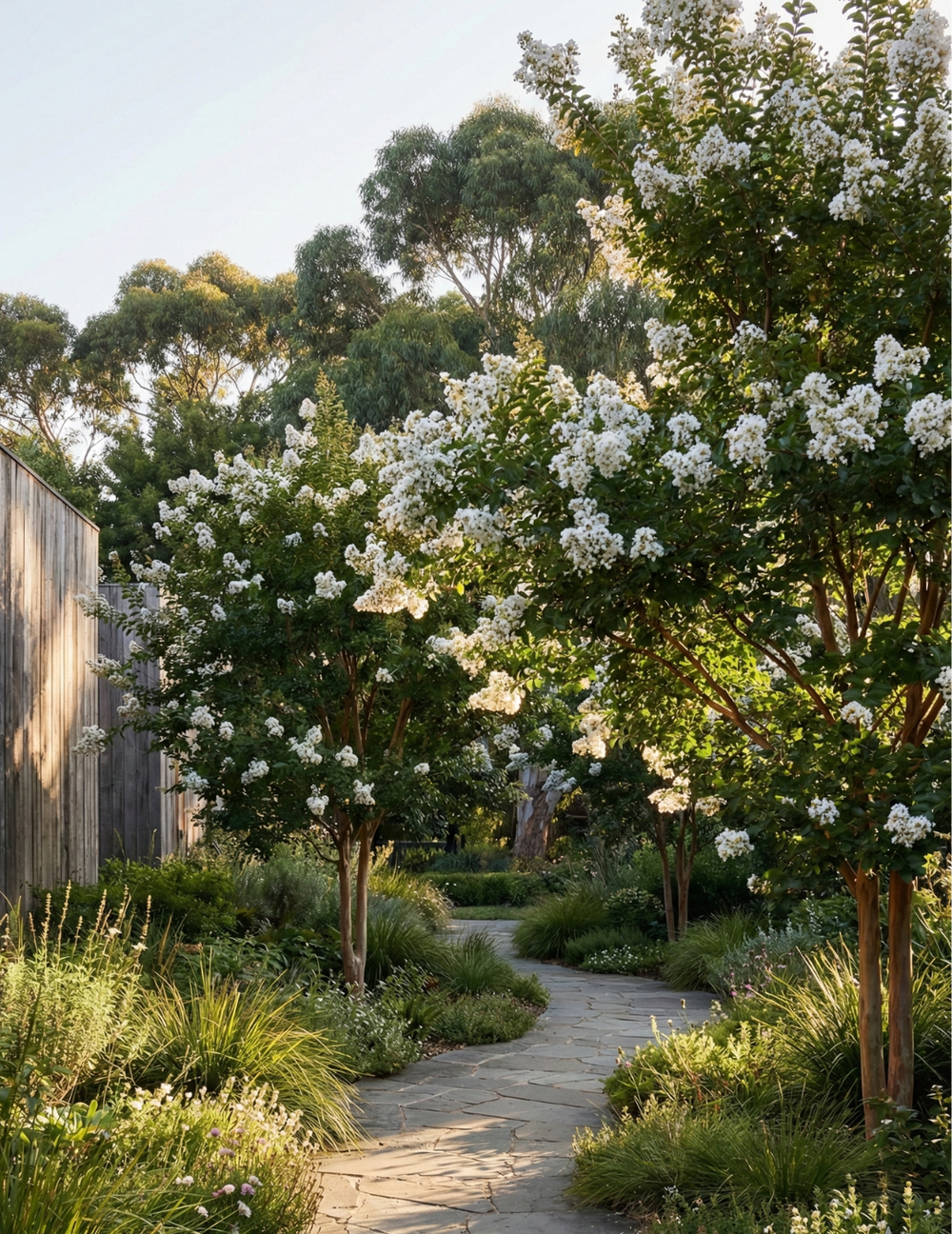
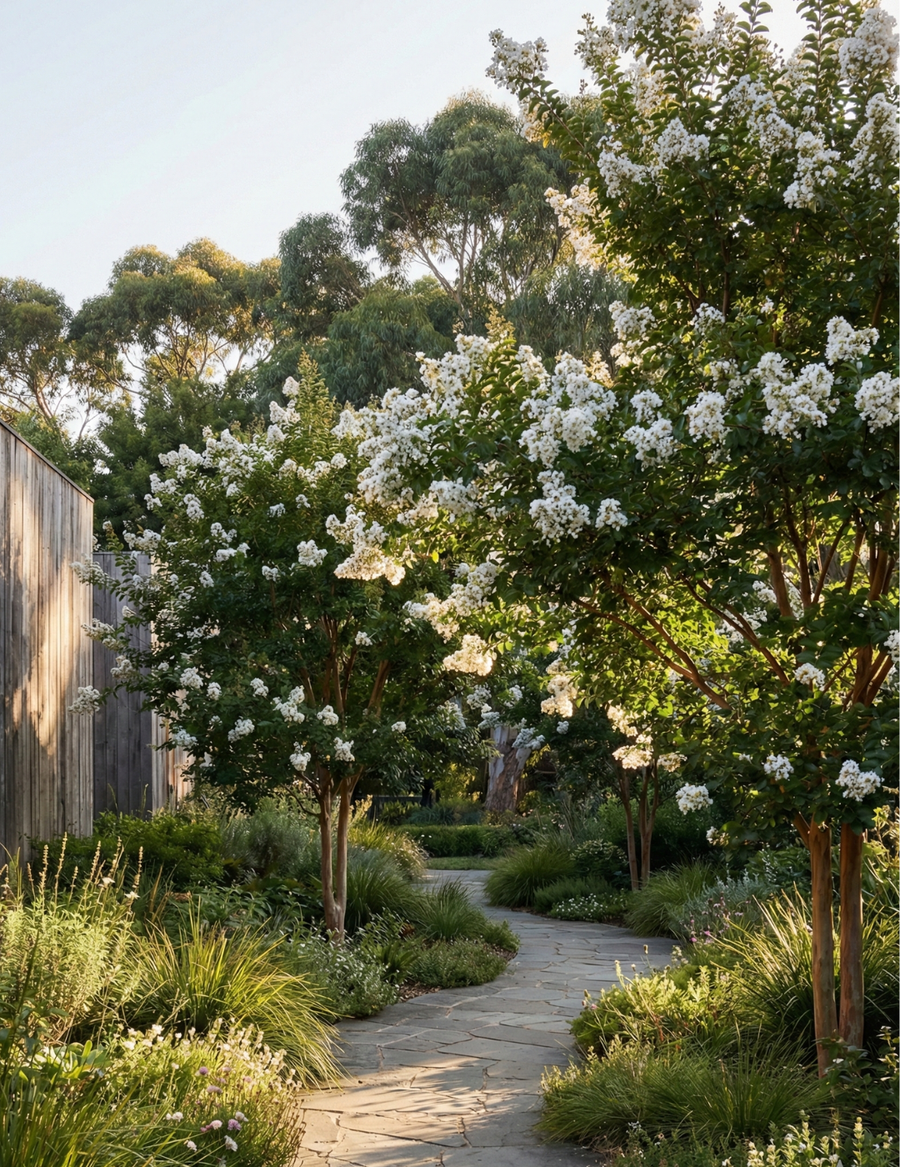
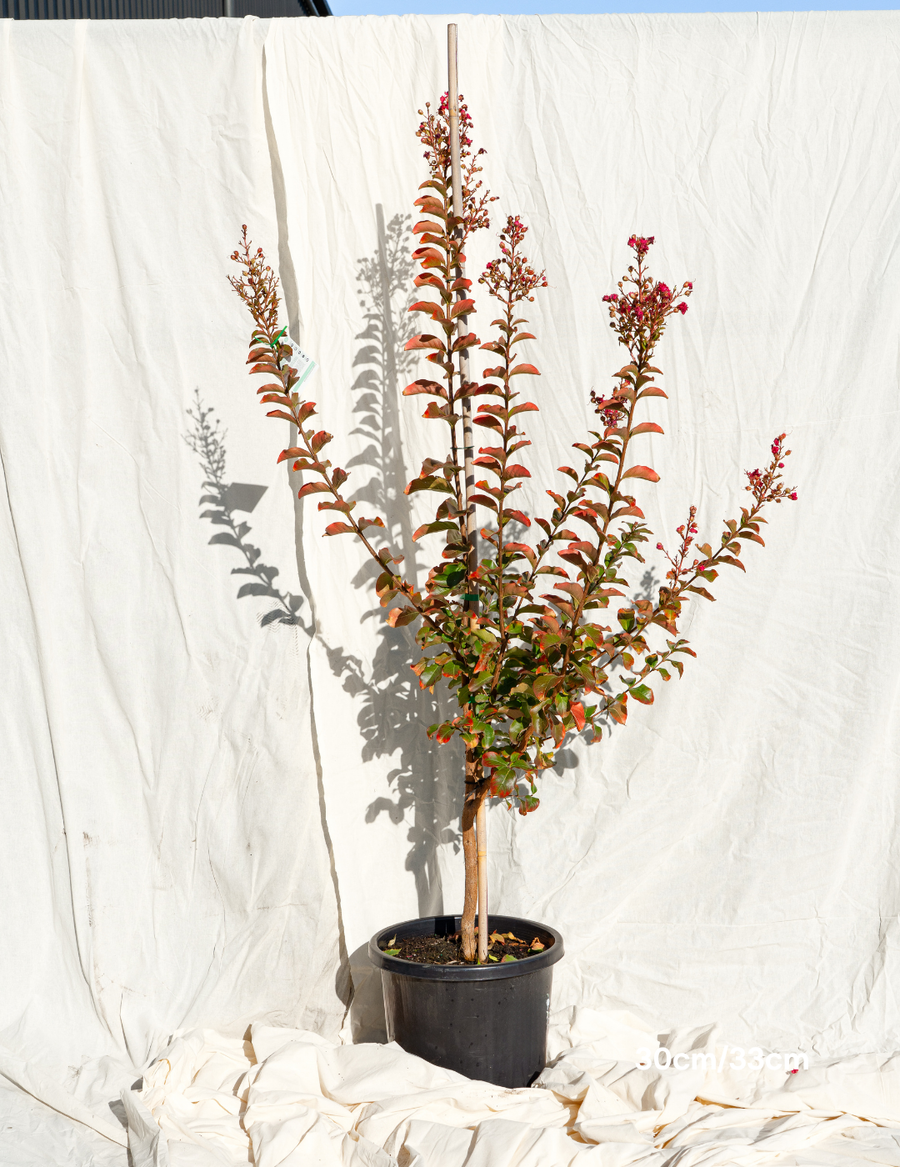
Lagerstroemia indica 'Natchez', known as White Crepe Myrtle, is a fast-growing, drought-tolerant flowering tree admired for its profuse white blooms, lush dark green foliage, and striking exfoliating bark. Growing 6-8 metres tall and 3-4 metres wide, it makes a bold statement in avenue plantings, residential gardens, and public landscapes.
Blooming from early summer through autumn, Natchez Crepe Myrtle offers months of beautiful floral display while its glossy leaves turn vibrant red-orange in autumn, adding seasonal contrast. The cinnamon-brown peeling bark reveals smooth cream and tan patches, providing visual interest year-round.
Thriving in full sun, this resilient tree tolerates heat, urban pollution, and poor soils. Its low-maintenance nature makes it perfect for busy homeowners, landscapers, and councils seeking reliable, long-lasting beauty. It looks excellent in sunny spaces, resonating with those who want a stunning, easy-care tree that brightens any landscape.
Frequently Asked Questions
About Lagerstroemia indica 'Natchez' White Crepe Myrtle
How tall does Natchez Crepe Myrtle grow?
Natchez grows to 6-8 metres tall and 3-4 metres wide, making it one of the larger crepe myrtle cultivars.
How fast does Natchez grow?
Natchez is moderately fast-growing, adding 50-80cm per year in warm conditions with adequate water.
When does Natchez flower?
Natchez produces masses of pure white blooms from early summer through to autumn, typically December to April across most Australian climates.
Is Natchez drought tolerant?
Yes. Natchez is highly drought and heat tolerant once established, and thrives in full sun positions across most Australian climates.
How far apart should I plant Natchez for an avenue?
Plant 4-5 metres apart for a full canopy avenue, or 2-3 metres for a denser flowering screen.
Is Natchez deciduous?
Yes. Natchez is deciduous. Leaves turn vibrant red-orange in autumn and drop in winter, revealing its striking cinnamon-brown exfoliating bark.
How do I prune Natchez Crepe Myrtle?
Prune in late winter while the tree is bare, taking out crossing branches, thin twiggy growth and any suckers from the base. Avoid the hard topping often inflicted on crepe myrtles, which spoils the natural vase shape and hides the exfoliating bark. Light structural pruning is enough. Flowers form on new wood, so a tidy up before spring costs you nothing in summer.