Rhapis excelsa – Lady Palm
Couldn't load pickup availability
Current Stock Height Guides
Height guide disclaimer: Height ranges are approximate only. As living products, plant heights naturally vary between individual plants, batches, and seasons. No guarantee is given that supplied plants will fall within the stated range. If minimum heights are required, you mustconfirm current batch heights with Evergreen Trees Direct prior to purchase. Variation in height is normal and is not grounds for return, refund, replacement, or compensation.
Mature Height & Width
Mature Height: 2m to 4m
Mature Width: 1.5m to 3m
Rhapis excelsa – Lady Palm is expected to grow 10cm to 30cm per year (slow–moderate).
Root Ball Dimensions
Use this as a reference when digging your planting hole. We recommend digging at least 10% wider than the dimensions below to encourage strong root development.
- 30cm Pot: 33cm (W) × 30cm (D)
- 40cm/45L Pot: 44cm (W) × 41.5cm (D)
- 50cm Pot / 70L Pot: 55cm (W) × 41.8cm (D)
- 100L Bag: 50.6cm (W) × 52.8cm (D)
- 150L Bag: 66cm (W) × 55cm (D)
- 200L Bag: 71.5cm (W) × 60.5cm (D)
- 300L Bag: 88cm (W) × 63.8cm (D)
- 400L Bag: 99cm (W) × 66cm (D)
- 500L Bag: 122cm (W) × 66cm (D)
- 750L Bag: 134cm (W) × 69cm (D)
- 1000L Bag: 146.3cm (W) × 71.5cm (D)
- 2000L Bag: 176cm (W) × 82.5cm (D)
Trade
Trade
We supply advanced trees to landscapers, developers, architects, and councils Australia-wide. Trade clients receive fast quotes, expert advice, and access to premium stock with reliable freight.
Shipping
Shipping
Shipping is calculated at checkout based on the pallet space your order occupies in the truck and your delivery location.
There is no charge to calculate your freight.
Contact
Contact
Have a question or a list to send through to us?
Email: sales@evergreentrees.com.au
Phone: (03) 7042 3318
Share this product

About Your New Rhapis excelsa – Lady Palm
Rhapis excelsa, the Lady Palm, is a clumping fan palm with slender cane-like stems wrapped in fibre and deep green fronds split into broad ribbed segments. It suckers slowly into a dense upright clump. Small cream flowers appear in summer, but the foliage and the fine vertical stems are the point.
It prefers part to full shade and moist, well drained soil with plenty of organic matter. Growth is slow, 10 to 30 centimetres a year. It suits warm temperate, subtropical and tropical gardens, and it is frost sensitive, so it needs a protected or frost free position in cooler districts.
Lady Palm is used in shaded courtyards, narrow side gardens, atriums and lift lobbies, and it is among the best palms for interiors and low light. Grouped, it makes a soft screen where a hedge would not grow. In a pot near an entry it holds its form for years.
Frequently Asked Questions
About Lady Palm
What is a Lady Palm?
Rhapis excelsa is a clumping fan palm from southern China, grown for its slender cane-like stems and deep green fronds divided into broad ribbed segments. It spreads slowly by suckering to form a dense, upright clump. Cream flowers appear in summer, but the foliage is the reason to plant it.
How big does Lady Palm grow?
Clumps typically reach 2 to 4 metres tall and 1.5 to 3 metres wide over many years. Growth is slow at 10 to 30 centimetres a year, so a plant stays in scale for a long time. Indoor specimens generally settle at the lower end of that range and stay there.
Does Lady Palm need sun or shade?
Part shade to full shade suits it best. It is one of the few palms that thrives in genuinely low light, which is why it is used indoors and in narrow shaded courtyards. Direct hot afternoon sun yellows and burns the fronds. Filtered light under a canopy gives the richest colour.
Is Lady Palm frost tolerant?
No. It is frost sensitive, and cold damages the fronds, so it needs a frost free or well protected position. In cooler parts of Australia grow it under a verandah, in a courtyard with overhead shelter, or in a pot that can be brought indoors over winter. Warm, humid conditions suit it.
Can Lady Palm grow in pots and indoors?
Yes, and it is one of the best palms for both. Use a free-draining potting mix in a pot at least 40 centimetres wide, keep it out of direct sun, and water when the top few centimetres dry. Indoors it tolerates low light and air conditioning better than most palms.
How far apart should I plant Lady Palm for screening?
Space plants 1 to 1.5 metres apart for a dense informal screen, or 80 centimetres apart for a tighter, more formal line. Because the clumps expand slowly, closer spacing is worth the extra plants if you want cover quickly. Allow 3 metres apart for a soft textured avenue.
How do I care for Lady Palm?
Keep the soil moist but never waterlogged, and enrich it with compost or other organic matter. Feed in spring and again in summer with a palm fertiliser. Remove old or damaged fronds at the base. Wipe indoor foliage occasionally so the leaves stay clean and free of dust.

Evergreen Trees Direct Has Been Featured In:
Plant Your Rhapis excelsa – Lady Palm With:
Type: Garden Supplies
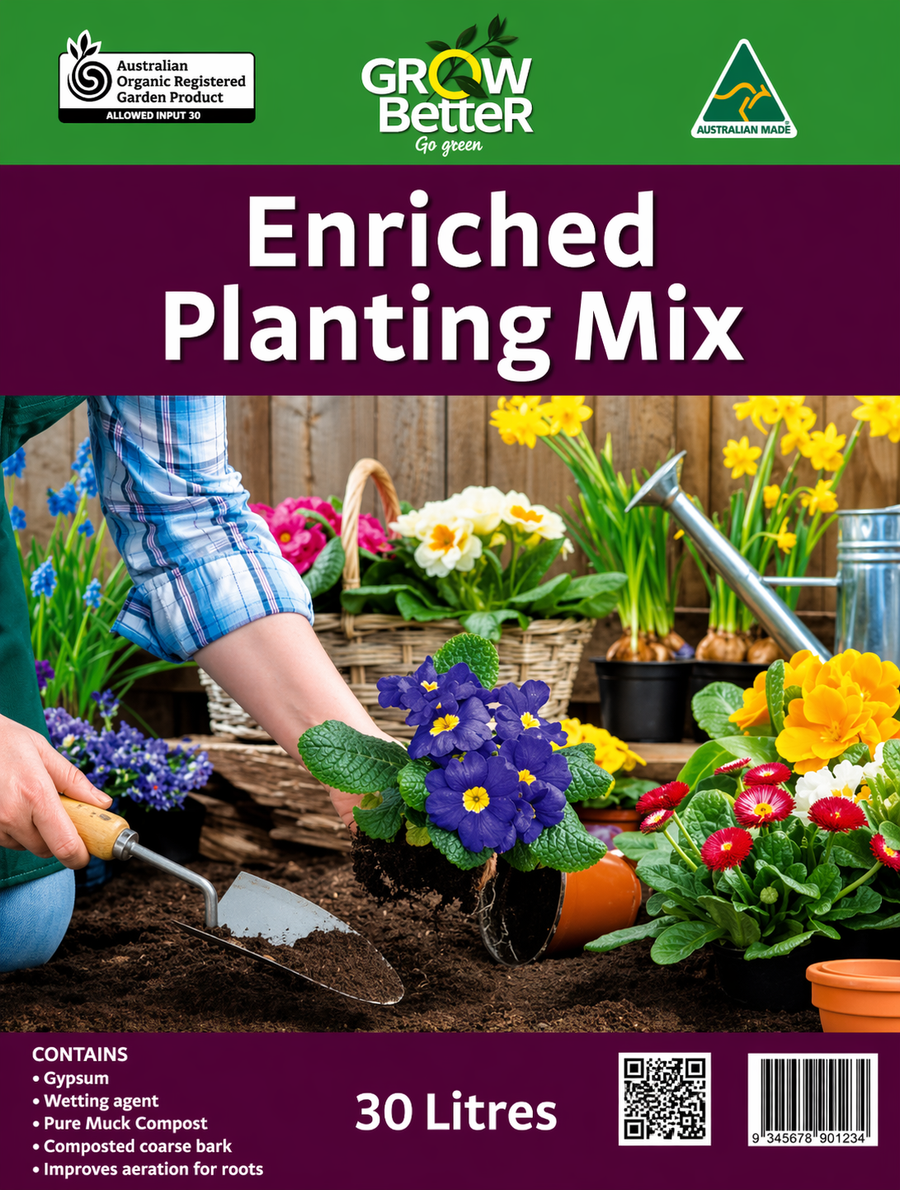
Enriched Planting Mix (AO Certified)
Type: Feature Trees
Ficus microcarpa ‘Flash’ – Pleached Ficus
Type: Hedging and Screening Trees
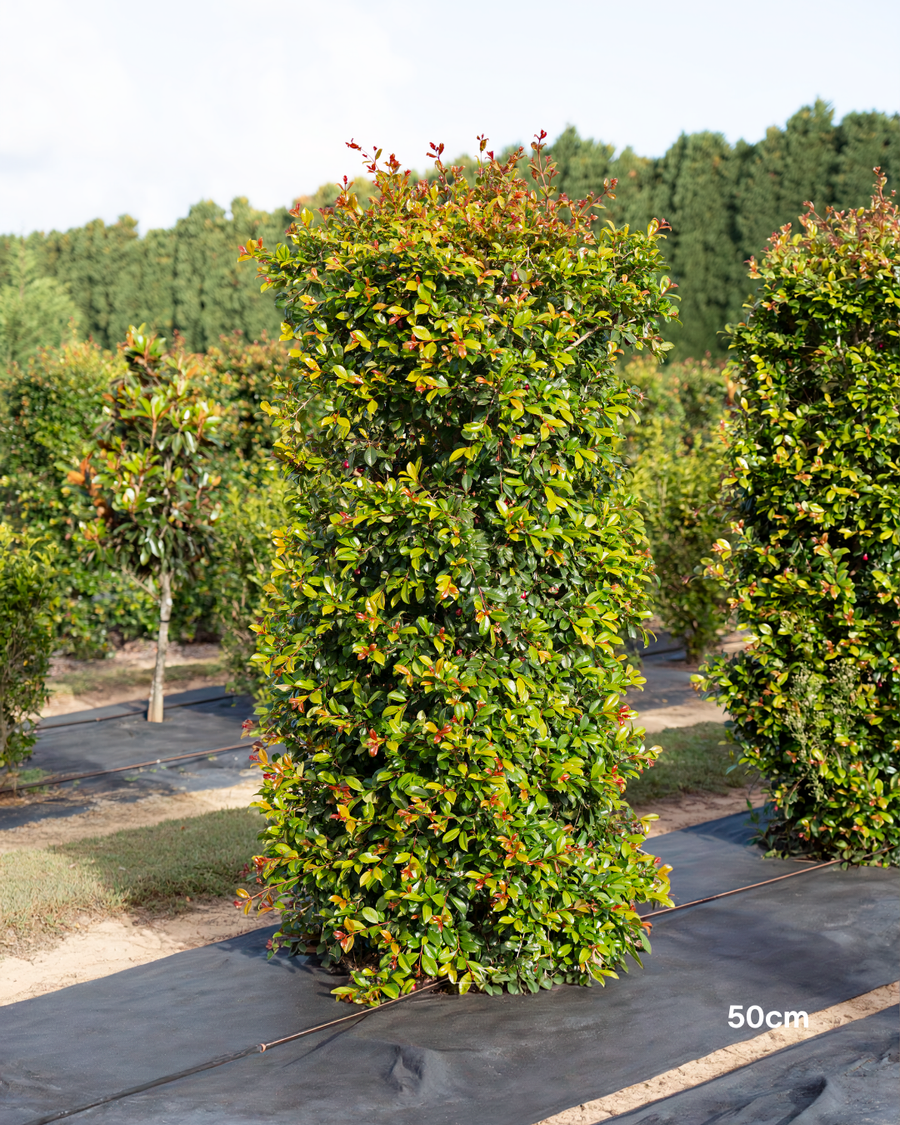
Syzygium australe 'Resilience' Lilly Pilly
Type: Hedging and Screening Trees
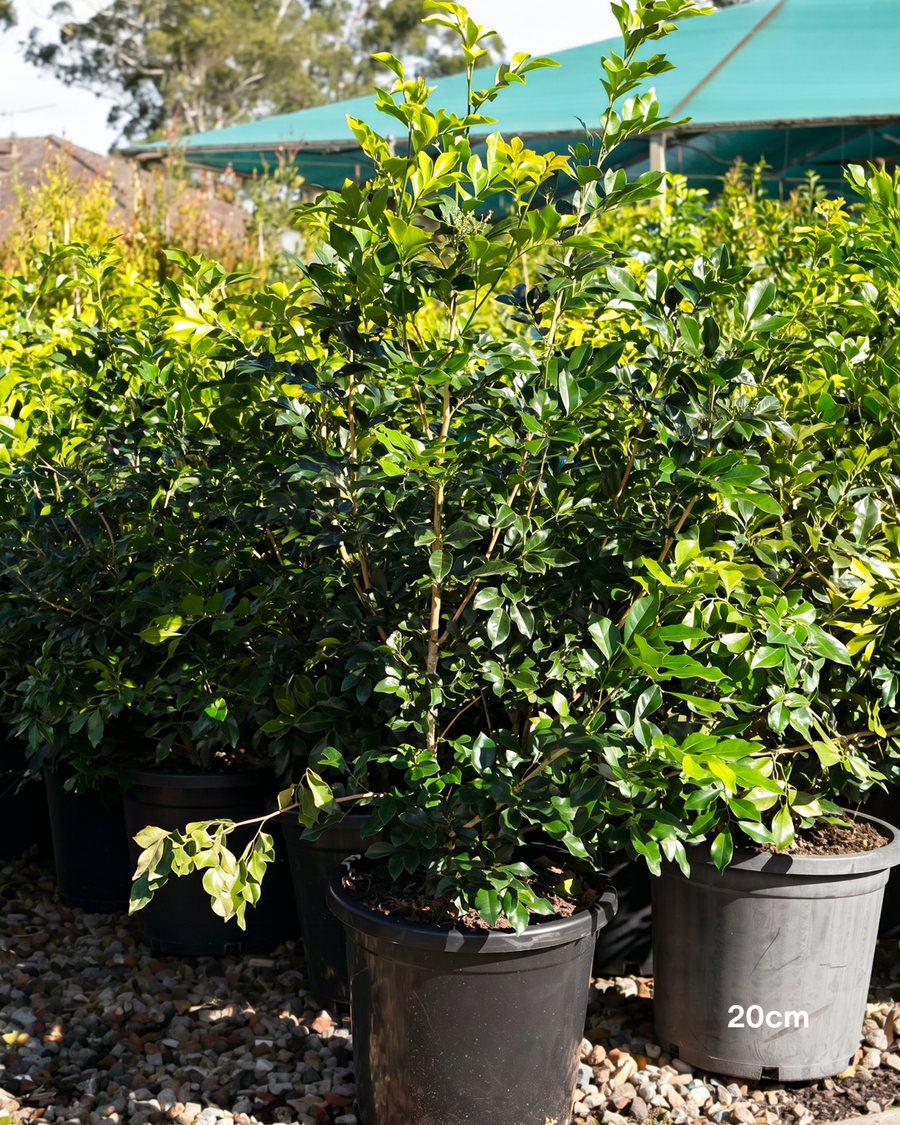
Murraya paniculata Orange Jasmine
Type: Evergreen
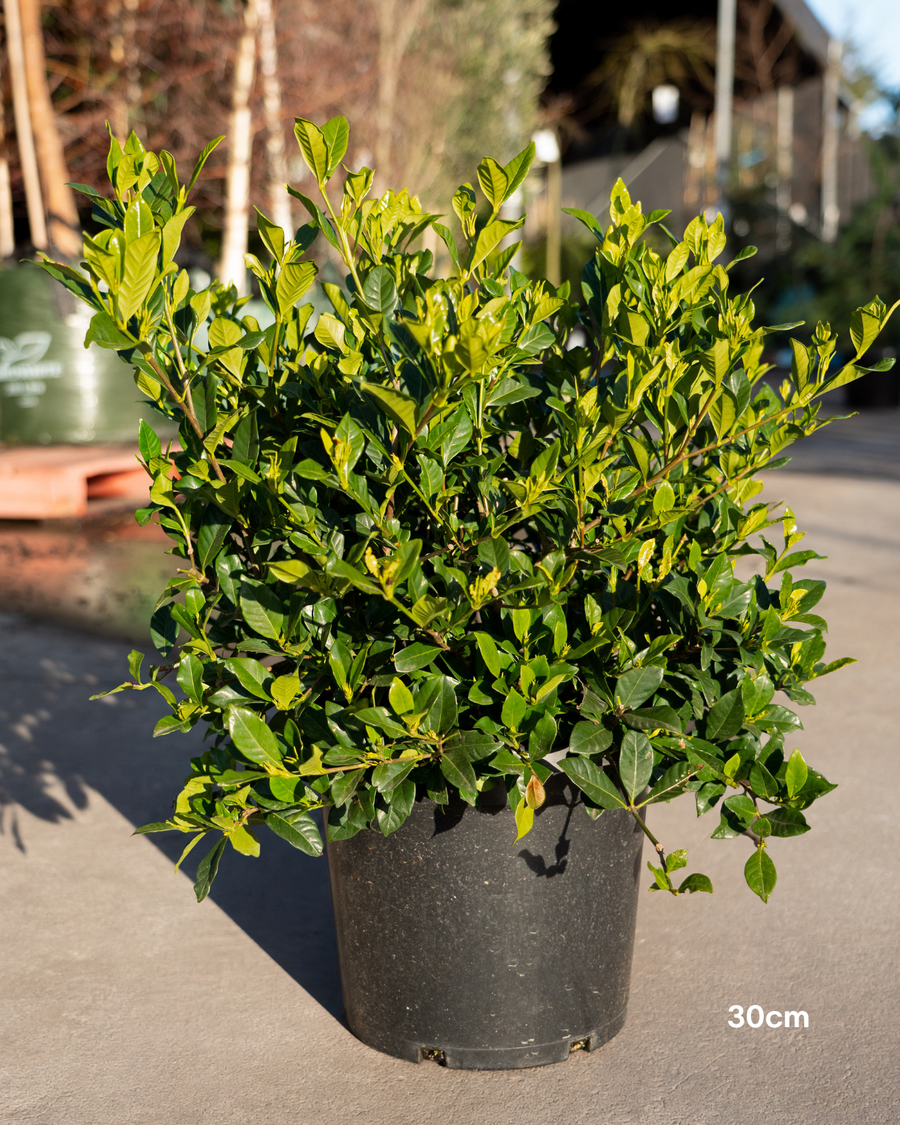
Gardenia augusta ‘Magnifica’ – Magnifica Gardenia
Type: Feature Tree
Lagerstroemia indica 'Natchez' White Crepe Myrtle
Type: Feature Tree
Lagerstroemia indica 'Tuscarora' Dark Pink Crepe Myrtle
Uses in my Garden
Uses in my Garden
Rhapis excelsa – Lady Palm works in an:
Is Rhapis excelsa – Lady Palm Evergreen or Deciduous?
Rhapis excelsa – Lady Palm is an Evergreen (foliage year round) Tree
Mature Height & Width
Mature Height: 2m to 4m
Mature Width: 1.5m to 3m
Rhapis excelsa – Lady Palm is expected to grow 10cm to 30cm per year (slow–moderate).
Growth Rate of Rhapis excelsa – Lady Palm
Rhapis excelsa – Lady Palm is expected to grow 10cm to 30cm per year (slow–moderate).
They are considered to have a:
Frost Tolerance & Ideal Climate to plant Rhapis excelsa – Lady Palm
Is Rhapis excelsa – Lady Palm frost tolerant?
Rhapis excelsa – Lady Palm is Frost Sensitive – May suffer damage from frost, best in frost-free or protected spots.
Does Rhapis excelsa – Lady Palm Flower?
Rhapis excelsa produces small, yellowish to cream flowers on short panicles, typically during the warmer months. While not ornamental, these subtle blooms sit discreetly among the foliage and are followed by small fruit, with the palm valued primarily for its lush, fan-shaped leaves and elegant, architectural form.
Does Rhapis excelsa – Lady Palm flower?
Flowering Period:
Flower Type:
Flower Colour:
Cream
Is Rhapis excelsa – Lady Palm an Australian Native Tree?
No
Rhapis excelsa – Lady Palm is Native to Southern China and Taiwan, where Rhapis excelsa grows naturally as an understory palm in subtropical forests.
What is the Wildlife Value of Rhapis excelsa – Lady Palm ?
Its dense, multi-stemmed clumping habit provides excellent shelter for small birds and beneficial insects, creating protected microhabitats within the garden. While not a heavy nectar producer, the structure of the palm supports shade-loving invertebrates and contributes to overall garden biodiversity.
How much Sunlight does Rhapis excelsa – Lady Palm need?
Rhapis excelsa – Lady Palm will thrive best in:
Preferred Soil?
Preferred Soil?
Rhapis excelsa performs best in well-drained loam or sandy loam soils with an acidic to neutral pH. It will also tolerate lighter sandy soils when enriched with organic matter to improve moisture retention. Avoid heavy clay or poorly drained areas unless significantly improved, as excess moisture around the roots can cause stress and decline. Keep the soil evenly moist during establishment, then gradually reduce watering as the palm matures.
Is Rhapis excelsa – Lady Palm Drought Tolerant?
Is Rhapis excelsa – Lady Palm Drought tolerant?
As a young plant it requires regular watering to establish well. Once established, Rhapis excelsa develops moderate drought tolerance, maintaining its fresh green foliage through dry periods when grown in well-drained soil. Occasional supplementary watering during extended heat helps preserve frond quality and density.
Planting Information
How To Plant Your Rhapis excelsa – Lady Palm
Recommended Planting Spacing For Your Rhapis excelsa – Lady Palm
Rhapis excelsa – Lady Palm is expected to grow 10cm to 30cm per year (slow–moderate).