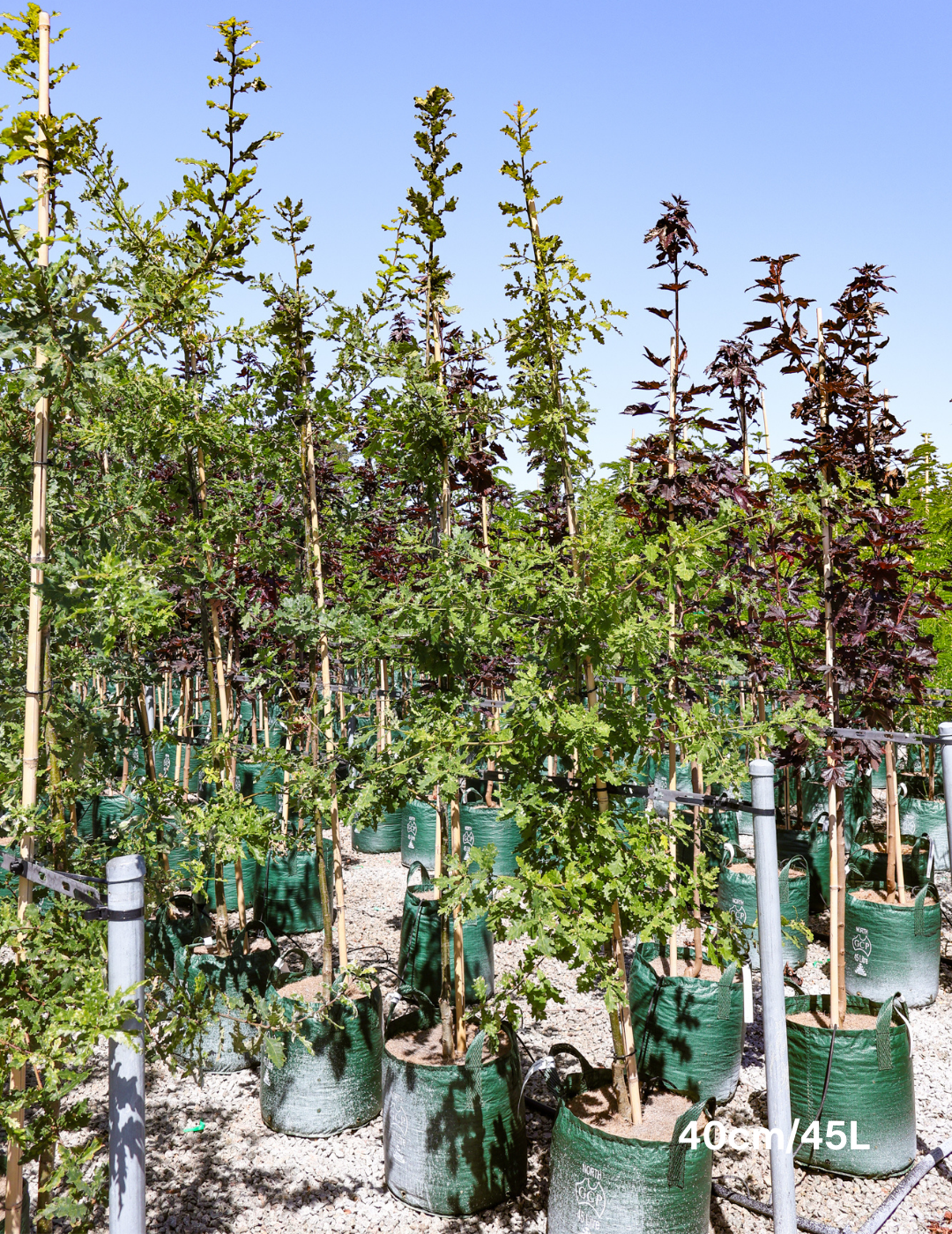
Quercus robur 'Fastigiata' is the columnar form of the English Oak, holding its branches tight and vertical around a strong central leader. The classic lobed, dark green leaves turn yellow then russet brown in autumn, and yellow green catkins appear in spring ahead of acorns carried on long stalks.
Full sun, well drained soil and moderate water suit it, and it copes with clay, compaction, urban air and dry spells once established. It is frost hardy through heavy repeated frost, which makes it dependable in cool and cold inland districts. Growth is around 30 to 60 centimetres a year.
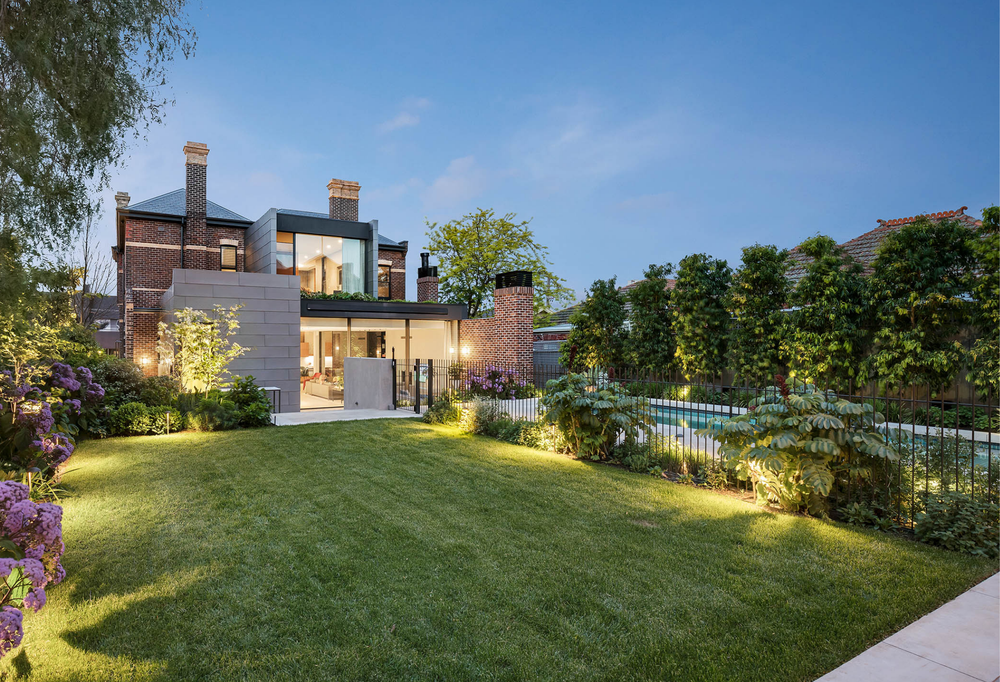
Mature height is 15 to 20 metres with a width of only 4 to 6 metres, so it holds a formal line down a driveway, street or property entrance without crowding it. Rural landowners use it for shelter rows. The narrow crown gives you oak presence where a spreading canopy will not fit.
Frequently Asked Questions
About Upright English Oak
What is Quercus robur 'Fastigiata'?
It is the narrow upright form of the English Oak, also sold as the Upright Oak or Cypress Oak. It carries the same lobed dark green leaves and stalked acorns as the species but holds its branches close and vertical around a central leader, giving a column instead of the familiar spreading canopy.
How big does the Upright English Oak grow?
It reaches 15 to 20 metres tall and only 4 to 6 metres wide at maturity, so it is tall without ever being broad. The narrow habit is genetic and needs no pruning to maintain. Full height takes several decades, and the tree is very long lived once it has settled in.
How fast does it grow?
Moderate, around 30 to 60 centimetres a year. Growth is steadier on deep soil with summer water and slower on shallow or compacted ground. As with most oaks the first few years go largely into root development, after which vertical extension becomes noticeably more consistent from season to season.
Is it frost tolerant?
Yes. It is frost hardy and survives heavy and frequent frost without damage, which makes it dependable in the tablelands, alpine fringes and cold inland districts where many trees struggle. It also handles hot dry summers once established, so it copes with the wide temperature swings of inland Australia.
Does it produce acorns?
Yes. Yellow green catkins appear in spring, followed by acorns carried on long stalks, which is the feature that separates Quercus robur from other oaks. Cropping generally begins once the tree is well into its second decade, and quantities vary a good deal from one year to the next.
How far apart should I plant them for an avenue?
Allow 3 metres between trunks for a uniform avenue, which suits the narrow crown well. For individual feature trees give 3 to 4 metres so each column stands clear. For a tall informal screen along a boundary, 1 to 1.5 metres apart will close the gaps sooner.
How do I prune and care for it?
Very little pruning is needed. Remove any competing leader in the first few winters so the column stays true, and take out dead or crossing wood while the tree is bare. Water deeply through the first two summers, mulch each spring and keep turf back from the base of the trunk.