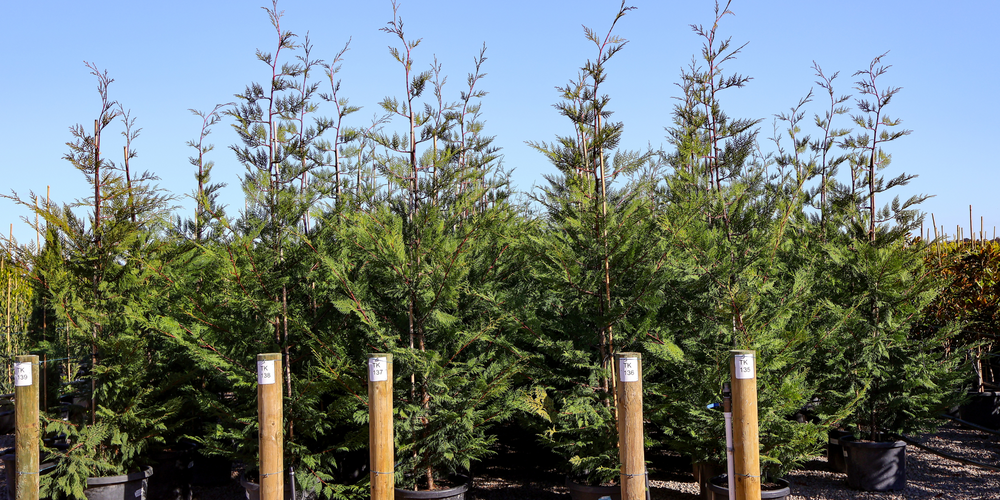
Metasequoia glyptostroboides is a deciduous conifer, which is a rare thing. It carries soft fern like foliage through spring and summer in a bright fresh green, turns pink gold and rust through autumn, then drops the lot and stands bare over winter on a straight fluted trunk.
It is fast. In deep rich soil it puts on around 1.2 metres a year, reaching about 25 metres tall with a 6 metre canopy. The form is a clean pyramid, narrow for the height, with red brown fibrous bark and small pendulous cones.
Unlike most conifers it does not mind damp ground. Deep, moist, slightly acidic soil is where it performs best, and it will take a low spot or a creek line that would kill a pine or a cypress. Full sun, and regular water while it establishes.
This is a tree for scale and for time. Parks, rural properties, large gardens, dam edges, driveway avenues and wide street planting. It was known only from fossils until living stands were found in central China in the 1940s, which is where the common name comes from.
Frequently Asked Questions
About Dawn Redwood
How big does Dawn Redwood grow?
Around 25 metres tall with a canopy about 6 metres across. It is tall for its width, which is part of why it works in avenues and along driveways where a broad spreading tree would not fit. Allow room for the height and for an extensive root zone.
A conifer that drops its leaves?
Yes. Dawn Redwood is one of a small handful of deciduous conifers, along with the larches and the swamp cypress. The soft needles colour up and fall every autumn and the tree stands bare through winter, then flushes fresh green again in spring.
How fast does it grow?
Fast in good conditions, around 1.2 metres a year in deep rich soil with regular moisture. On poorer or drier ground it slows considerably, so soil preparation and watering through the first few years make a real difference to how quickly it gets away.
What autumn colour does it give?
The fern like foliage turns pink gold through rust and copper before dropping. It is a warmer, softer colour than a maple or a liquidambar, and the fine texture of the foliage gives the whole canopy a glow rather than a block of colour.
Will it grow in wet ground?
Better than almost any other conifer. It wants moisture and tolerates damp, low lying ground and creek and dam edges that would kill a pine or cypress. It is not a swamp plant and still wants the soil to drain eventually, but a wet corner of a property is a reasonable home for one.
What soil does it prefer?
Deep, moist, slightly acidic soil gives the fastest growth and the best colour. It will grow in neutral soil. Shallow, dry or strongly alkaline ground is where it struggles, and in those conditions growth is much slower than the figures quoted.
Is it frost tolerant?
Yes, frost hardy. It handles cold winters well and suits Victoria, the ACT, Tasmania, inland NSW and the Adelaide Hills. Cold autumns also sharpen the colour.
Why is it called a living fossil?
It was described from fossil records and believed extinct, until living trees were found in central China in the 1940s. Seed was distributed worldwide from that one discovery, so nearly every Dawn Redwood planted today traces back to those stands.