- Mature height
- 4m to 8m (approx.)
- Mature width
- 2m to 4m
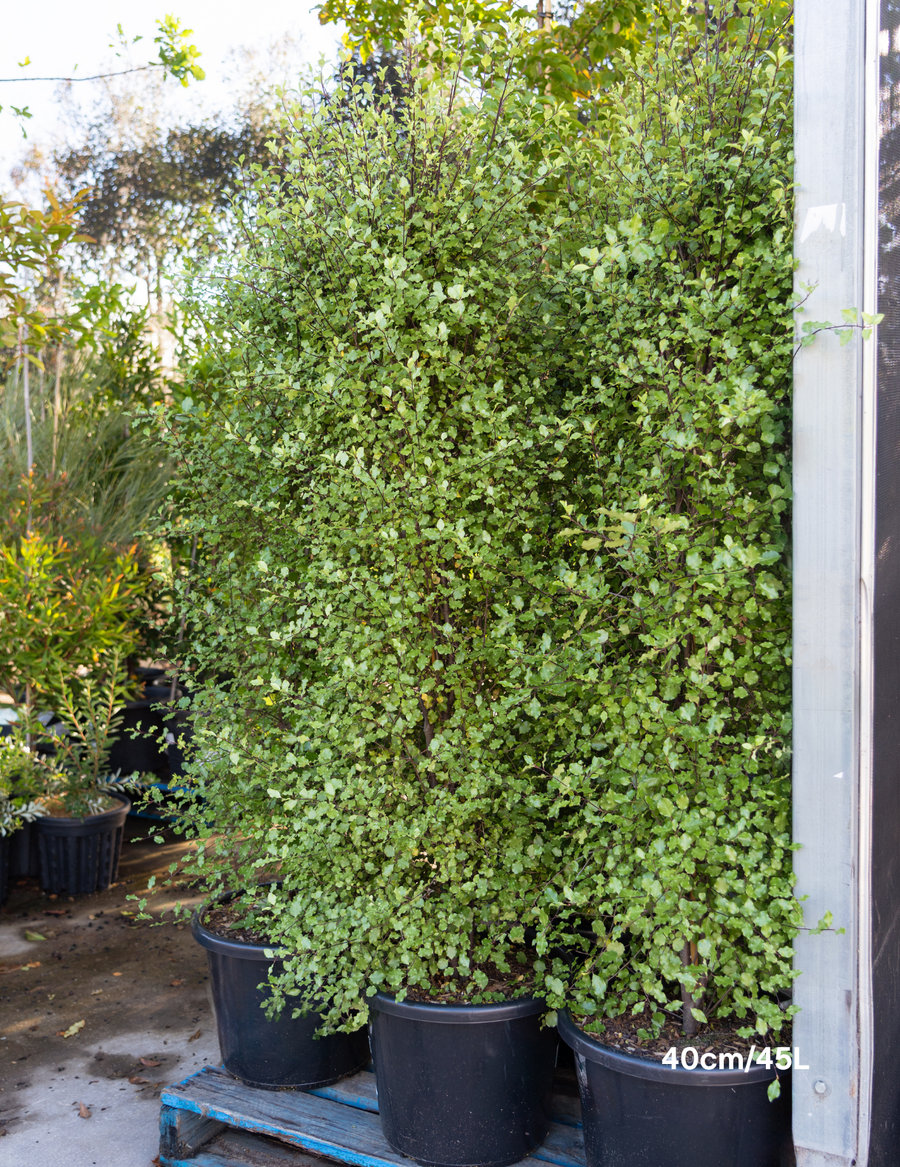
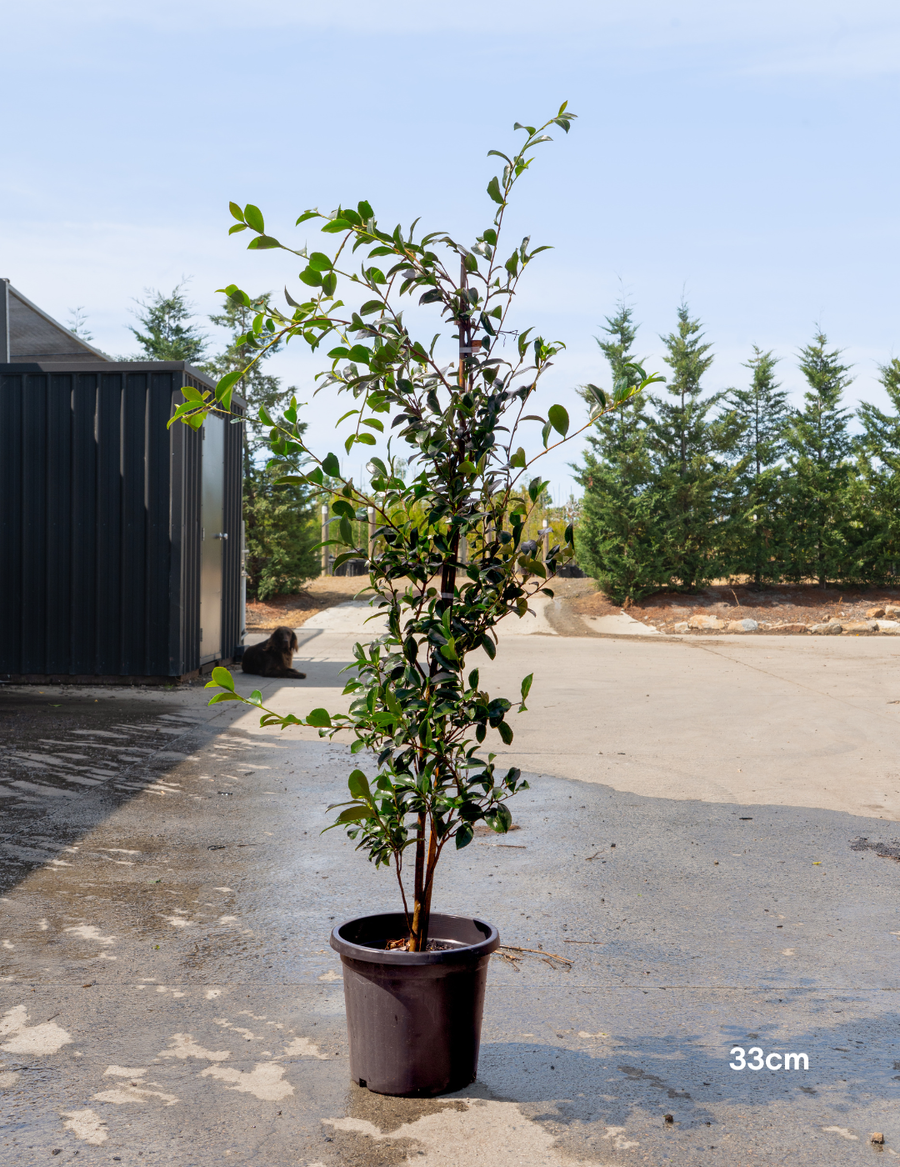
Laurus nobilis, the Bay Tree or Sweet Bay, is one of the most reliable evergreen hedging plants available. Grown here in natural hedging form, it carries dense, glossy dark green aromatic foliage from the ground up, and the leaves are the true culinary bay used in cooking.
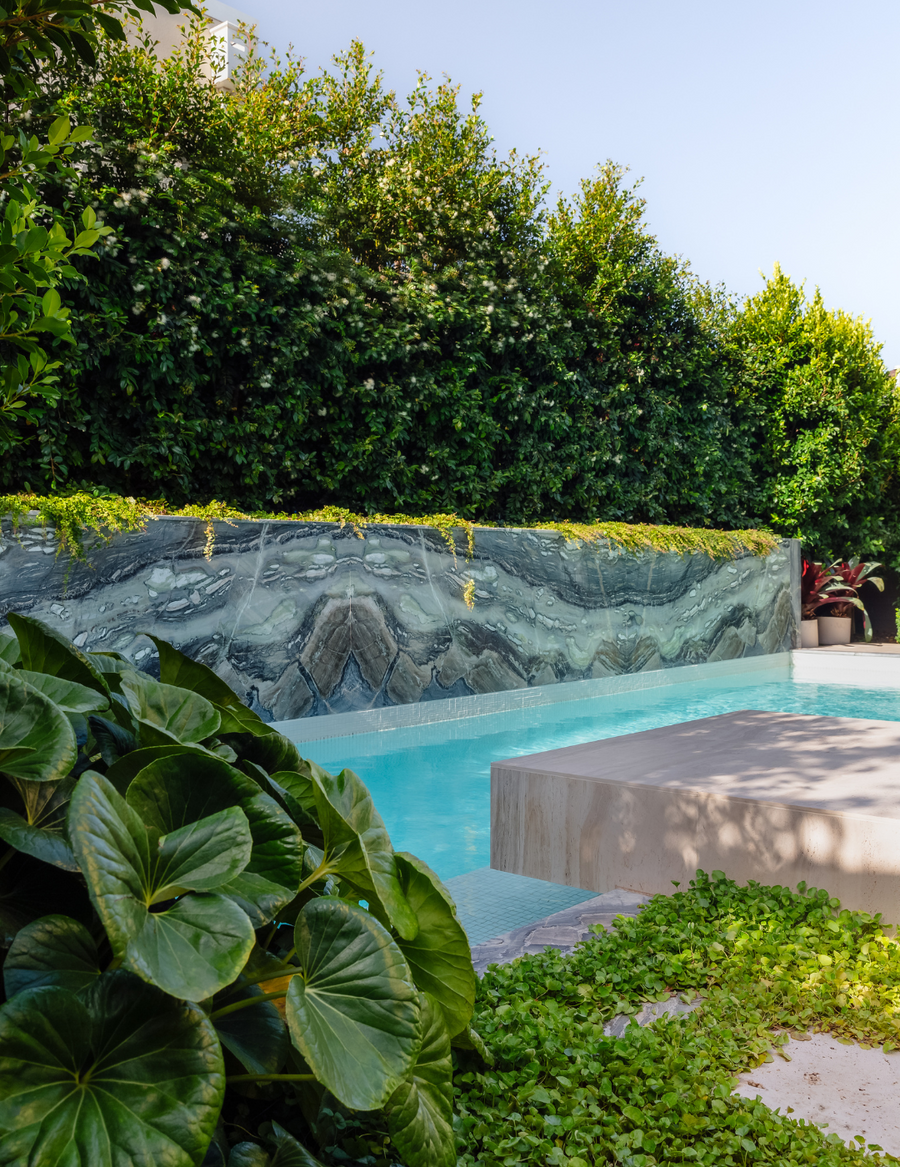
Left unclipped, Bay Tree reaches 6-10 metres tall and 2-4 metres wide. As a hedge it is most often held between 1.5 and 3 metres. Its slow, steady growth and excellent response to pruning mean it holds a crisp line with only two or three light clips a year, making it a low-effort choice for formal hedges, screens, and windbreaks.
Bay Tree thrives across most Australian climates in full sun to part shade, tolerating heat, light frost, and coastal exposure once established. It is low maintenance, long-lived, and reliably evergreen, holding its structure and fresh aromatic foliage year-round.
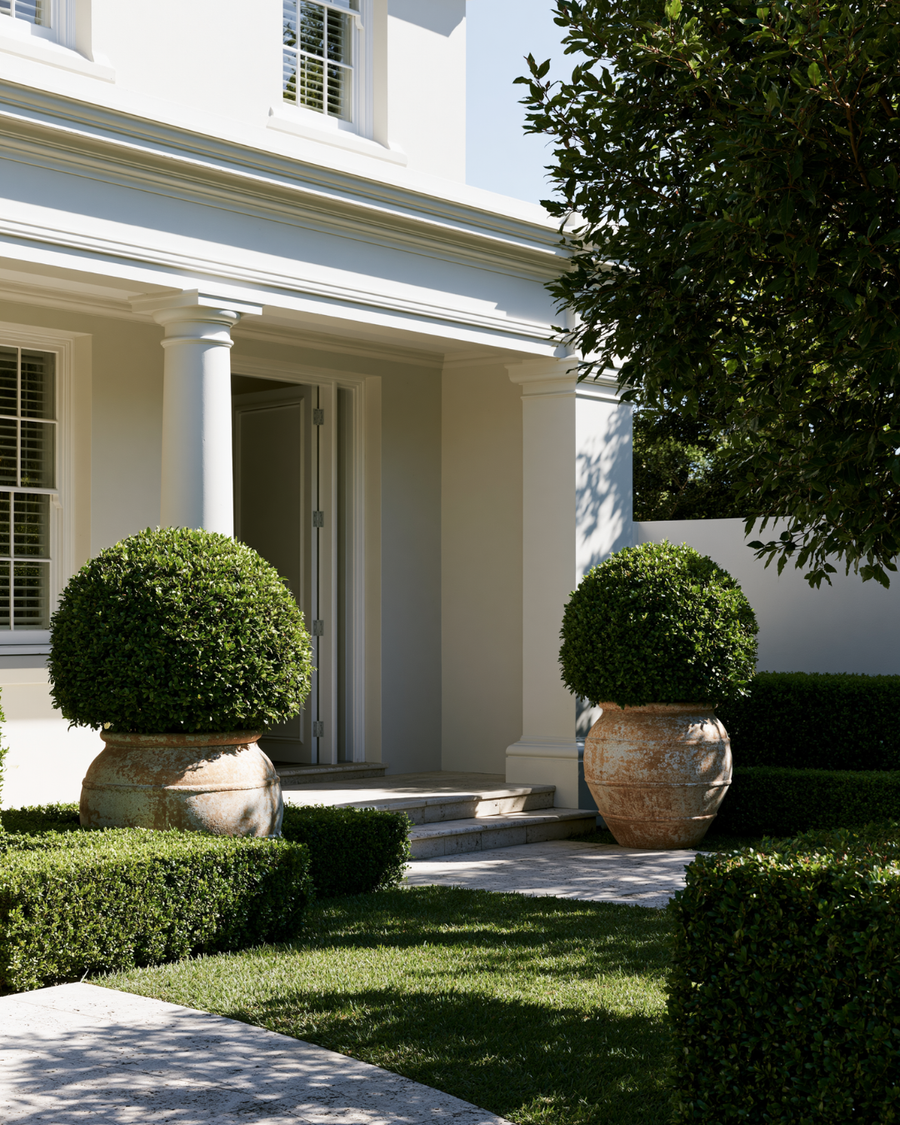
Looking for a shaped Bay? This listing is natural hedging form, supplied as a bushy plant ready to clip into a hedge or screen. For clipped balls, double balls and triple balls, see Laurus nobilis Bay Tree - Topiary Forms. For a tighter, denser hedge with less pruning, the improved cultivar Miles Choice is worth a look. All three share the same edible aromatic foliage.
Frequently Asked Questions
About Laurus nobilis Bay Tree Hedging
How far apart should I plant a Bay Tree hedge?
Plant 80 centimetres apart for a tight formal hedge, or 1 to 1.5 metres apart for a denser informal screen.
How tall does Bay Tree grow?
Laurus nobilis grows to 6-10 metres tall and 2-4 metres wide, but as a hedge it is most commonly maintained between 1.5 and 3 metres.
How fast does Bay Tree grow?
Bay Tree is slow to moderate growing, adding 15-30cm per year once established. This slow rate is part of why it holds a formal hedge line so well.
How often does a Bay hedge need pruning?
Two to three light clips a year keeps a formal Bay hedge crisp. Tip prune in late winter and again in summer to build density.
Are Bay Tree leaves edible?
Yes. Laurus nobilis is the true culinary bay. The aromatic leaves are widely used fresh or dried in stocks, soups, slow-cooked dishes, and marinades.
Where does Bay Tree grow best in Australia?
Bay Tree thrives across most Australian climates in full sun to part shade, tolerating heat, light frost, coastal exposure, and a wide range of well-drained soils once established.