- Mature height
- 6m to 10m
- Mature width
- 4m to 6m
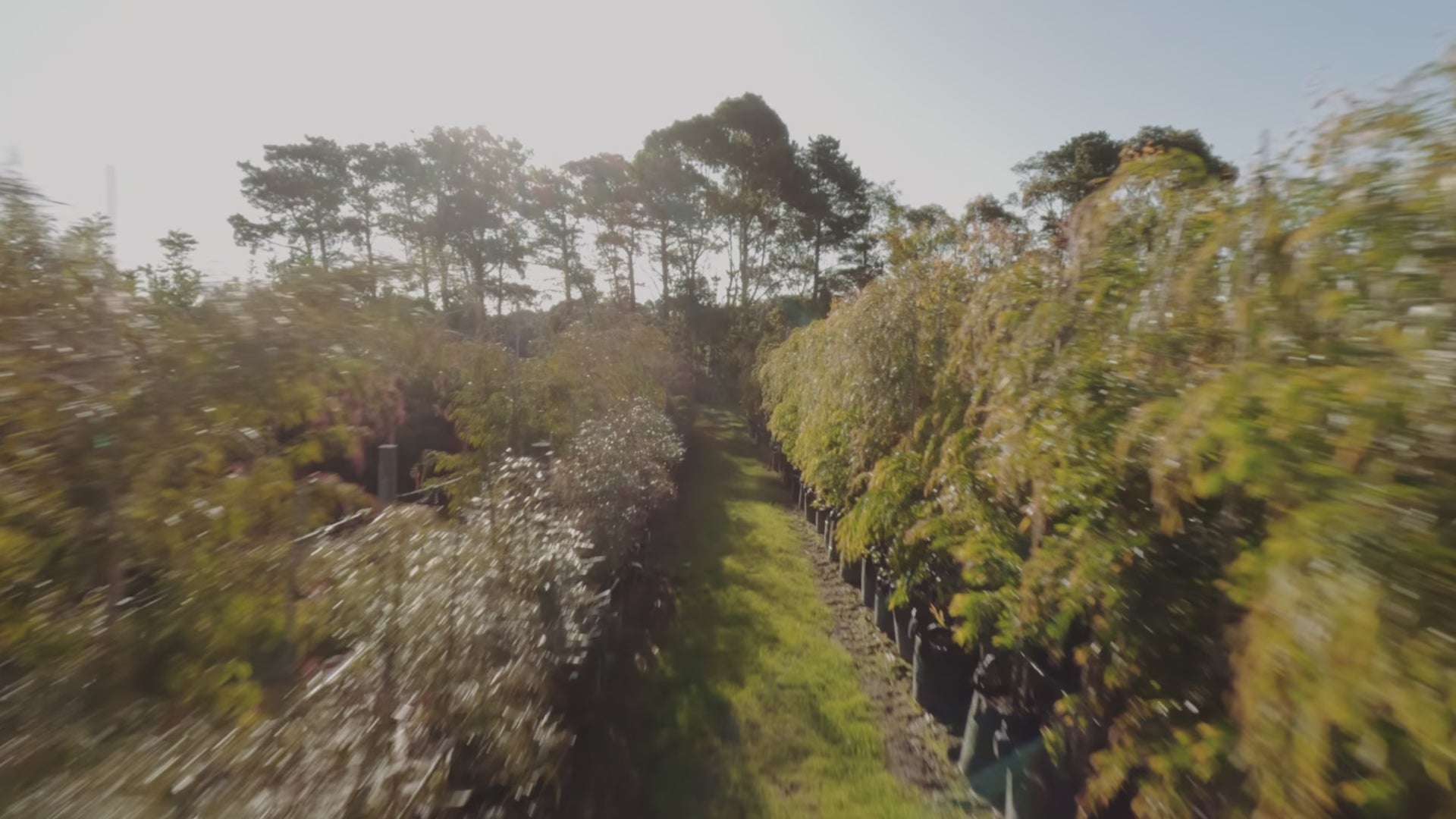
Geijera parvifolia, commonly called Wilga, is an Australian native evergreen tree with fine, narrow, grey green leaves on weeping branchlets. The canopy is soft, rounded and constantly moving in the wind. Small cream flowers appear in clusters through spring and summer, and crushed foliage carries the citrus scent typical of the rue family.
This is a dry country tree, at home in full sun on free draining, poor or sandy soils, and highly drought tolerant once established. Inland, semi arid and warm temperate districts suit it, and it takes wind along with light to moderate frost. Growth is moderate at 20 to 40 centimetres a year with very little maintenance needed.
Reaching 6 to 10 metres tall and 4 to 6 metres wide, Wilga is used for shade in dry gardens, in native and revegetation plantings, and along avenues and civic streetscapes. Occasional lifting of the lower branches is all the shaping it wants. On tough inland sites it performs where most exotic trees struggle.
Frequently Asked Questions
About Wilga
What is a Wilga tree?
Wilga is Geijera parvifolia, an evergreen tree native to the inland of eastern and southern Australia. It belongs to the citrus family and has aromatic foliage, fine weeping leaves and a rounded crown. Graziers know it as a drought fodder tree; in landscaping it is valued for its soft texture and its ability to survive on very little water.
How big does Wilga grow?
Mature trees generally reach 6 to 10 metres in height with a canopy 4 to 6 metres across, forming an upright, rounded shape with weeping outer growth. Size at the lower end is more common on dry, shallow inland soils, while trees with access to water and depth reach the top of the range. Allow the full width when planting.
Is Wilga drought tolerant?
It is one of the most drought tolerant trees available for Australian conditions. Established specimens carry on through extended dry periods with no supplementary water, which is why they persist across the inland grazing country. Young trees still need deep watering every week or two through the first two summers so the root system can get down into the profile.
Where does Wilga grow best in Australia?
It grows best in inland, semi arid and warm temperate districts, including western New South Wales, inland Queensland, the Victorian Mallee and much of inland South Australia. It also grows well in Perth and other dry summer areas. Sites with heavy, poorly drained soil or high summer humidity are the ones where it performs least reliably.
Is Wilga frost tolerant?
It tolerates light to moderate frost once established, which covers most inland districts where it is planted. Young trees in their first winter are more vulnerable, so protect them in cold areas until the trunk hardens. In alpine or severe frost country it is not the safest choice, and a proven cold climate native would be better suited.
When does Wilga flower?
Small cream flowers appear in loose clusters through spring and summer, roughly September to February depending on rainfall and district. The display is subtle rather than showy, sitting among the fine foliage, and it attracts native insects and small birds. Flowering is followed by small fruit, and neither creates any meaningful litter problem under the tree.
How do I care for a Wilga?
Water deeply but infrequently through the first two summers, then leave it to rainfall. Mulch to conserve moisture, keeping mulch off the trunk. Prune only to lift the lower branches for clearance or to tidy the shape, and do it after flowering. It rarely needs feeding, and heavy watering or rich soil does more harm than good.