Skip to content

Volume Discounts Apply At Checkout

Citrus paradisi 'Ray Ruby' – Ray Ruby Grapefruit

Citrus paradisi 'Ray Ruby' – Ray Ruby Grapefruit

Evergreen · Full Sun

Mature size: 3m–5m high × 2m–4m wide

  • Evergreen
  • Full Sun
  • Mature height3m–5m
  • Mature width2m–4m
  • Frost Sensitive
  • Good in pots
  • Flowers

Deep red flesh that colours more strongly and holds longer than Marsh, with sweet low bitterness fruit hanging on the tree from winter into spring.

Regular price $9,490.00
Sale price $9,490.00 Regular price
Tax included. Shipping calculated at checkout.
Pot size
Available batches
Size: 300L
Current height guide
Please enquire
Pot size
300L

Approximate only. Minimum height important? Confirm with us.

Height guide & disclaimer

Height guide disclaimer: Height ranges are approximate only. As living products, plant heights naturally vary between individual plants, batches, and seasons. No guarantee is given that supplied plants will fall within the stated range. If minimum heights are required, you must confirm current batch heights with Evergreen Trees Direct prior to purchase. Variation in height is normal and is not grounds for return, refund, replacement, or compensation.

Quantity

Order multiple sizes

Mix pot sizes and batches in one order.

Size / batchEachQuantity
300LApprox. height: Enquire for current heights$9,490.00

Height guide & disclaimer

Height guide disclaimer: Height ranges are approximate only. As living products, plant heights naturally vary between individual plants, batches, and seasons. No guarantee is given that supplied plants will fall within the stated range. If minimum heights are required, you must confirm current batch heights with Evergreen Trees Direct prior to purchase. Variation in height is normal and is not grounds for return, refund, replacement, or compensation.

Subtotal before discounts & delivery$0.00

Delivery is calculated at checkout.

Ask a question

The fields marked * are required.

Compare trees

Choose two trees and compare the same pot size.

    About Citrus paradisi 'Ray Ruby'

    Citrus paradisi 'Ray Ruby' is a red fleshed grapefruit, an evergreen tree with a broad rounded canopy of large glossy leaves. The fruit is smooth skinned with a rosy blush, and the flesh holds a deeper red than Marsh and keeps that colour well into the season. White blossom is strongly scented.

    It grows 3 to 5 metres tall and 2 to 4 metres wide at a moderate rate, wanting full sun, deep free draining soil and steady water while fruit is filling. Grapefruit needs heat to build sugar, so it does best in subtropical and warm temperate districts. Young trees are frost sensitive.

    Ray Ruby sits in home orchards and larger edible gardens where there is room for a full canopy, and it works as a shade giving feature near a paved terrace. Fruit hangs on the tree for months once ripe, so a single mature tree supplies a household right through winter and into spring.

    Frequently Asked Questions

    About Ray Ruby Grapefruit

    What is a Ray Ruby grapefruit?

    Citrus paradisi 'Ray Ruby' is a red fleshed grapefruit selection grown for flesh that is noticeably deeper red than Marsh and stays that way as the fruit matures. The skin carries a pink blush over yellow. Flavour is sweeter and less bitter than white grapefruit, which is why it has largely replaced older red types.

    How is Ray Ruby different from Marsh grapefruit?

    Marsh is a white grapefruit with pale yellow flesh and a sharper, more bitter edge. Ray Ruby has red flesh that colours up strongly and holds through the season, and the eating flavour is rounder and sweeter. Tree size and growing needs are much the same, so the choice comes down to fruit colour and taste.

    How big does Ray Ruby grow?

    Expect 3 to 5 metres tall and 2 to 4 metres wide as a garden tree, with a broad rounded canopy. Growth is moderate at around 30 to 50 centimetres a year. Pruning after harvest holds it at picking height, and grapefruit takes a hard reduction better than most citrus if it outgrows its space.

    When does Ray Ruby grapefruit ripen?

    Fruit ripens from winter into spring, roughly June through October depending on how warm the district is. Grapefruit improves on the tree, so leave it hanging and pick as needed rather than harvesting all at once. Fruit taken early is acidic. The longer it hangs, the sweeter and deeper coloured it gets.

    Do I need two trees to get fruit?

    No. Ray Ruby is self fertile, so a single tree sets a full crop on its own. Bees still improve set, so avoid spraying insecticide while the tree is in flower. What limits cropping in practice is shade, cold at flowering and irregular watering rather than any lack of a pollinating partner.

    Where does grapefruit grow best in Australia?

    Grapefruit wants heat and length of season, so it is at its best in subtropical Queensland, northern New South Wales, the Sydney basin, the Riverland and warm inland districts. It will crop in Melbourne and Adelaide in a sheltered north facing spot, though fruit takes longer to sweeten and stays more acidic.

    How do I care for a Ray Ruby grapefruit tree?

    Feed with a complete citrus fertiliser in early spring and again in late summer, and water deeply and evenly while fruit is sizing, as erratic watering splits skins and drops fruit. Mulch broadly but keep it off the trunk. Remove any shoots below the graft. Watch for citrus leaf miner and scale.


    Key growing information
    Mature height3m to 5m
    Mature width2m to 4m
    PositionFull Sun
    Growth per year30cm to 50cm per year (approx.)
    FrostFrost Sensitive
    FoliageEvergreen (foliage year round)
    FormRounded · Broad · Dense
    UsesEdible Garden · Feature Tree · Shade Tree · Plant in Pots (or) Suitable for Pots
    Foliage

    Evergreen (foliage year round)

    Position
    • Full Sun
    Form
    • Rounded
    • Broad
    • Dense
    Use
    • Edible Garden
    • Feature Tree
    • Shade Tree
    • Plant in Pots (or) Suitable for Pots
    Mature height
    3m to 5m
    Mature width
    2m to 4m

    Planting Information

    How To Plant Your Citrus paradisi 'Ray Ruby' – Ray Ruby Grapefruit

    Site: Choose a warm, free draining position in full sun with shelter from cold wind and room for a broad canopy.

    Soil preparation: Enrich a wide area with quality compost and aged manure, as grapefruit roots range well beyond the planting hole.

    Hole: Dig twice as wide as the root ball and the same depth.

    Planting: Set level with the surrounding soil and keep the graft union well clear of the surface, backfill, firm in, then water deeply.

    Recommended Planting Spacing For Your Citrus paradisi 'Ray Ruby' – Ray Ruby Grapefruit

    Feature tree: 4 metres apart to allow the broad canopy to develop fully.

    Home orchard: 3.5 to 4 metres between grapefruit trees so air moves through and each canopy carries a full crop.

    Pot or container: A 60 centimetre or wider pot suits a single tree on a paved terrace.

    Citrus paradisi 'Ray Ruby' – Ray Ruby Grapefruit is expected to grow 30cm to 50cm per year (approx.).

    • Medium Growth Rate

    Long Term Care For Your Citrus paradisi 'Ray Ruby' – Ray Ruby Grapefruit

    Watering: Water deeply twice weekly through the first 12 months, then weekly in dry weather. Even moisture through fruit fill prevents split skins and fruit drop.

    Mulching: Apply a 5 to 7 centimetre layer of organic mulch across the root zone, keeping it 5 centimetres clear of the trunk.

    Pruning: Prune after harvest to hold the tree at picking height and open the centre. Remove any shoots arising below the graft union.

    Fertilising: Apply a complete citrus fertiliser in early spring and again in late summer, with trace elements if leaves show yellowing between the veins.

    Pest and disease: Watch for citrus leaf miner on new flushes, scale, aphids and bronze orange bug. Collect and remove fallen fruit to reduce fruit fly pressure.

    Planting Your Citrus paradisi 'Ray Ruby' – Ray Ruby Grapefruit in Different Soil

    Citrus paradisi performs best in deep, fertile, free draining loam or sandy loam at a slightly acidic to neutral pH. Adaptable to a range of soils when drainage is improved with organic matter.

    Sandy soil: Free draining and suitable. Mulch heavily and feed more often, as nutrients leach quickly.

    Clay soil: Improve drainage with gypsum and coarse compost, or plant on a raised mound.

    Loam: The preferred soil for the deep root system a long hanging crop needs.

    pH: Slightly acidic to neutral preferred. Correct alkaline soils to avoid iron and zinc deficiency.

    Uses in my Garden

    Uses in my Garden

    • Edible Garden
    • Feature Tree
    • Shade Tree
    • Plant in Pots (or) Suitable for Pots

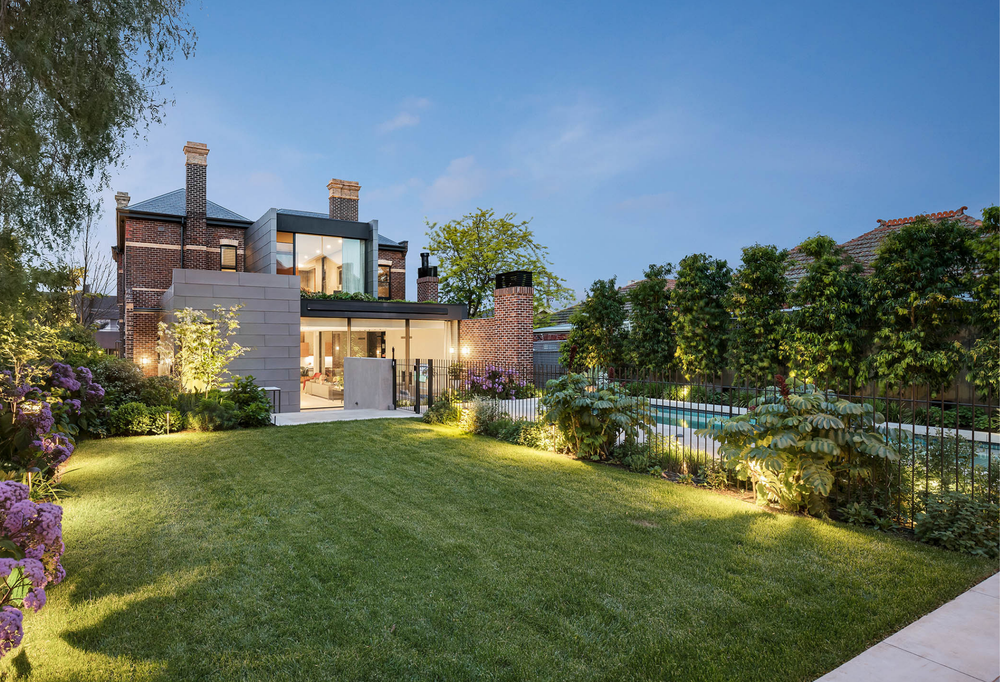
    Citrus paradisi 'Ray Ruby' – Ray Ruby Grapefruit works in an:

    • Edible Garden – integrates fruit, herbs, and productive plants.
    • Mediterranean Style Garden – timeless courtyard look with stone, pots, and bold greenery.
    • Low-maintenance Garden – resilient choices for easy care and year-round appeal.
    • Tropical Garden – lush, leafy planting for a resort-style atmosphere.

    Is Citrus paradisi 'Ray Ruby' – Ray Ruby Grapefruit Evergreen or Deciduous?

    Citrus paradisi 'Ray Ruby' – Ray Ruby Grapefruit is an Evergreen (foliage year round) Tree

    Mature Height & Width

    Mature Height: 3m to 5m

    Mature Width: 2m to 4m

    Citrus paradisi 'Ray Ruby' – Ray Ruby Grapefruit is expected to grow 30cm to 50cm per year (approx.).

    Growth Rate of Citrus paradisi 'Ray Ruby' – Ray Ruby Grapefruit

    Citrus paradisi 'Ray Ruby' – Ray Ruby Grapefruit is expected to grow 30cm to 50cm per year (approx.).

    They are considered to have a:

    • Medium Growth Rate

    Frost Tolerance & Ideal Climate to plant Citrus paradisi 'Ray Ruby' – Ray Ruby Grapefruit

    Is Citrus paradisi 'Ray Ruby' – Ray Ruby Grapefruit frost tolerant?

    Citrus paradisi 'Ray Ruby' – Ray Ruby Grapefruit is Frost Sensitive – May suffer damage from frost, best in frost-free or protected spots.

    Does Citrus paradisi 'Ray Ruby' – Ray Ruby Grapefruit Flower?

    Citrus paradisi 'Ray Ruby' carries masses of strongly scented white flowers through spring, generally September to November, followed by fruit that sizes over summer and colours from autumn. The blossom is a heavy draw for bees and the glossy evergreen canopy carries the tree between crops.

    Does Citrus paradisi 'Ray Ruby' – Ray Ruby Grapefruit flower?

    • Yes - Flowers

    Flowering Period:

    • Spring

    Flower Type:

    • Fragrant
    • Pollinator-attracting

    Flower Colour:

    White

    Is Citrus paradisi 'Ray Ruby' – Ray Ruby Grapefruit an Australian Native Tree?

    No

    Citrus paradisi 'Ray Ruby' – Ray Ruby Grapefruit is Native to Citrus paradisi arose in the Caribbean as a hybrid of sweet orange and pomelo. 'Ray Ruby' is a Texan selection of the red grapefruit line, chosen for flesh that colours more deeply and holds that colour longer than earlier red types.

    What is the Wildlife Value of Citrus paradisi 'Ray Ruby' – Ray Ruby Grapefruit ?

    Fragrant spring blossom is a strong nectar and pollen source for honeybees, native bees and hoverflies. The broad dense evergreen canopy also gives small birds shelter and shade through summer, and fallen fruit feeds insects and larger birds late in the season.

    How much Sunlight does Citrus paradisi 'Ray Ruby' – Ray Ruby Grapefruit need?

    Citrus paradisi 'Ray Ruby' – Ray Ruby Grapefruit will thrive best in:

    • Full Sun

    Preferred Soil?

    Ray Ruby performs best in deep, fertile, free draining loam or sandy loam at a neutral to slightly acidic pH. Grapefruit is a heavy feeder that carries fruit for many months, so soil depth and fertility matter more than for smaller citrus. Avoid heavy clay and any position where water sits, since root rot in grapefruit shows up as thin foliage and small acidic fruit.

    Is Citrus paradisi 'Ray Ruby' – Ray Ruby Grapefruit Drought Tolerant?

    Is Citrus paradisi 'Ray Ruby' – Ray Ruby Grapefruit Drought tolerant?

    Young trees need regular deep watering to build a productive root system, particularly in hot weather. Once established Ray Ruby shows moderate drought tolerance, but grapefruit holds a heavy crop for many months and even watering through fruit fill is what prevents split skins and premature fruit drop.

    Frequently Asked Questions

    Frequently Asked Questions

    Q: What is a Ray Ruby grapefruit?
    A: Citrus paradisi 'Ray Ruby' is a red fleshed grapefruit selection grown for flesh that is noticeably deeper red than Marsh and stays that way as the fruit matures. The skin carries a pink blush over yellow. Flavour is sweeter and less bitter than white grapefruit, which is why it has largely replaced older red types.

    Q: How is Ray Ruby different from Marsh grapefruit?
    A: Marsh is a white grapefruit with pale yellow flesh and a sharper, more bitter edge. Ray Ruby has red flesh that colours up strongly and holds through the season, and the eating flavour is rounder and sweeter. Tree size and growing needs are much the same, so the choice comes down to fruit colour and taste.

    Q: How big does Ray Ruby grow?
    A: Expect 3 to 5 metres tall and 2 to 4 metres wide as a garden tree, with a broad rounded canopy. Growth is moderate at around 30 to 50 centimetres a year. Pruning after harvest holds it at picking height, and grapefruit takes a hard reduction better than most citrus if it outgrows its space.

    Q: When does Ray Ruby grapefruit ripen?
    A: Fruit ripens from winter into spring, roughly June through October depending on how warm the district is. Grapefruit improves on the tree, so leave it hanging and pick as needed rather than harvesting all at once. Fruit taken early is acidic. The longer it hangs, the sweeter and deeper coloured it gets.

    Q: Do I need two trees to get fruit?
    A: No. Ray Ruby is self fertile, so a single tree sets a full crop on its own. Bees still improve set, so avoid spraying insecticide while the tree is in flower. What limits cropping in practice is shade, cold at flowering and irregular watering rather than any lack of a pollinating partner.

    Q: Where does grapefruit grow best in Australia?
    A: Grapefruit wants heat and length of season, so it is at its best in subtropical Queensland, northern New South Wales, the Sydney basin, the Riverland and warm inland districts. It will crop in Melbourne and Adelaide in a sheltered north facing spot, though fruit takes longer to sweeten and stays more acidic.

    Q: How do I care for a Ray Ruby grapefruit tree?
    A: Feed with a complete citrus fertiliser in early spring and again in late summer, and water deeply and evenly while fruit is sizing, as erratic watering splits skins and drops fruit. Mulch broadly but keep it off the trunk. Remove any shoots below the graft. Watch for citrus leaf miner and scale.

    Compare sizes side by side

    300L

    Enquire for current heights

    Heights are approximate and vary between individual trees.

    Citrus paradisi 'Ray Ruby' is loved for its Deep red flesh that colours more strongly and holds longer than Marsh, with sweet low bitterness fruit hanging on the tree from winter into spring.

    We take pride in supplying A+ grade advanced trees. When stock at our farm is not yet ready, we work with our trusted trade suppliers to source the best available trees for your garden.

    Plant Your Citrus paradisi 'Ray Ruby' – Ray Ruby Grapefruit With:

    youtube Load video:

    Evergreen Trees Direct Has Been Featured In:

    Perfect Substitutes for Citrus paradisi 'Ray Ruby' – Ray Ruby Grapefruit

    Follow Us On Instagram

    @evergreentreesdirect ↗
    Evergreen Trees DirectEvergreen Trees DirectEvergreen Trees DirectEvergreen Trees DirectEvergreen Trees Direct
    youtube Load video: