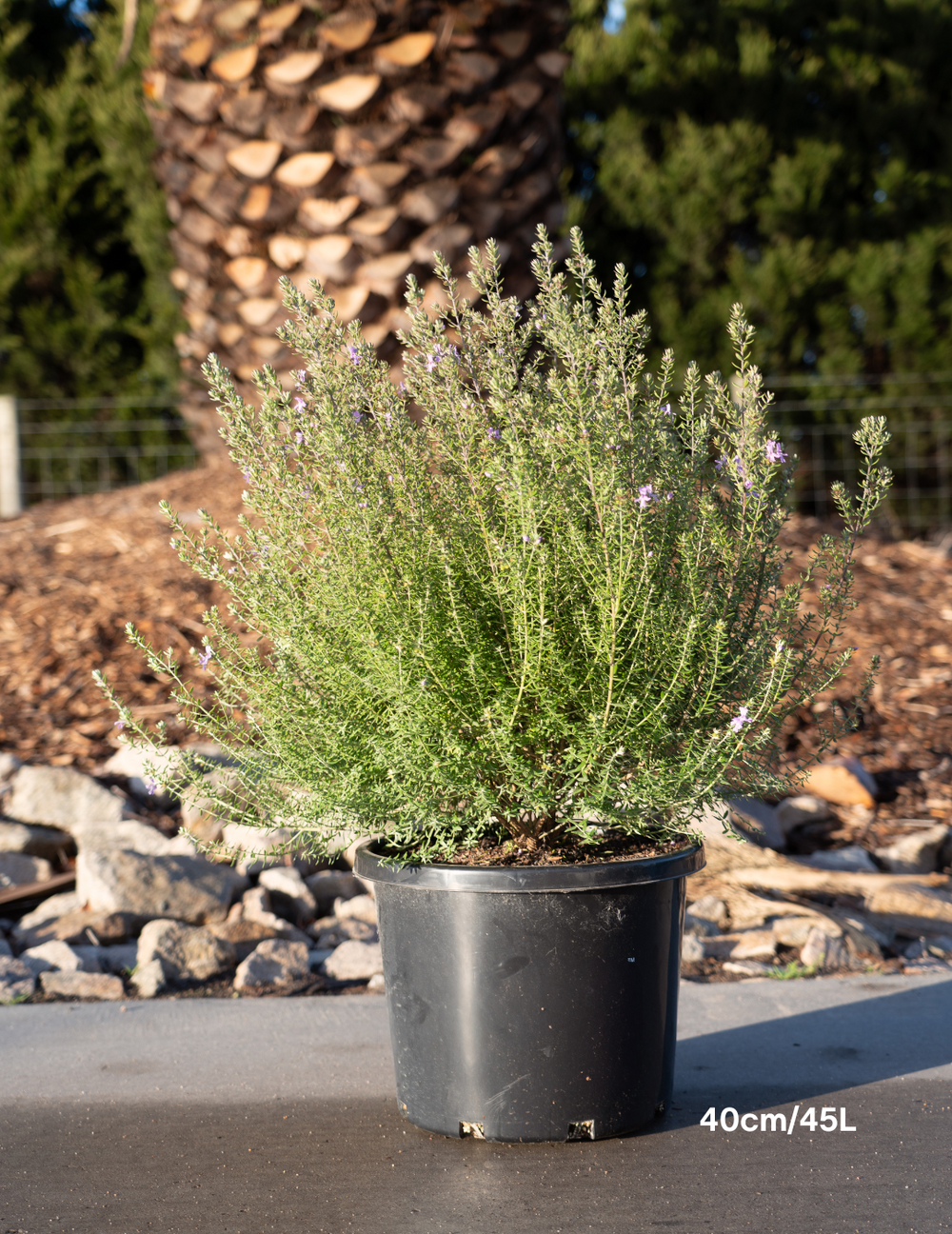
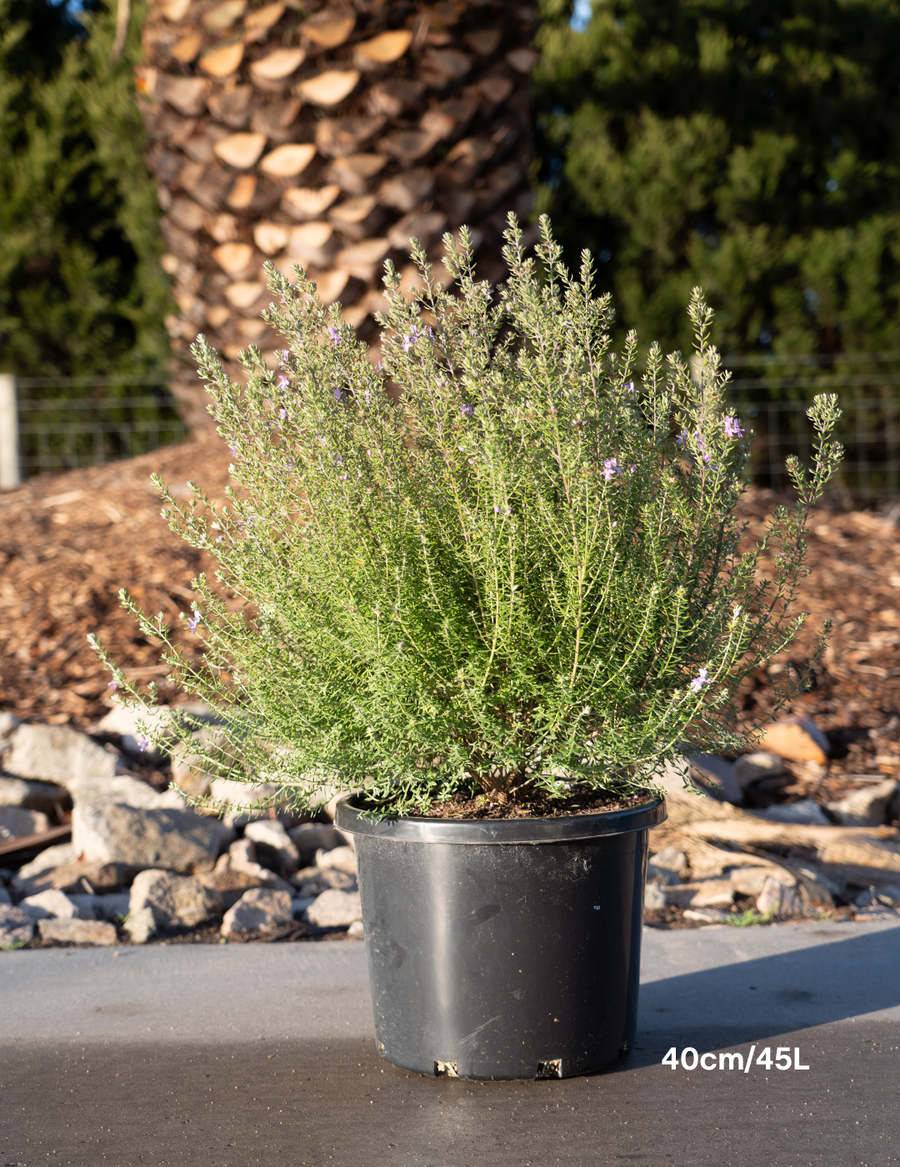
- Mature height
- 2m to 4m including standard height
- Mature width
- 1.5m to 2.5m canopy spread
Camellia sasanqua ‘Snow’ Standards are white flowering sasanquas grown on a single clear trunk with a clipped rounded head. The small glossy evergreen leaves form a tight ball, and pure white flowers with gold stamens open across it from autumn through winter, dropping their petals cleanly as they finish.
Position them in morning sun with shelter from strong afternoon heat and wind, in acidic soil that drains freely. Growth of 20 to 50 centimetres a year keeps the head compact and easy to hold in shape. Established plants take light to moderate frost. Staking is worthwhile until the trunk thickens.
Matched pairs flanking a front door, a row down a driveway, or a repeated line in a formal bed all make use of the same quality: a clean vertical with a defined head. Underplant with something low and the composition finishes itself. For formal projects on tight sites, they carry structure efficiently.
Frequently Asked Questions
About Snow Standard Camellia
What is a ‘Snow’ standard camellia?
It is Camellia sasanqua ‘Snow’ trained onto a single bare stem with a rounded head of foliage clipped on top. ‘Snow’ is a white flowering sasanqua with small glossy leaves. The standard form is produced in the nursery over several years, so what you buy already has its trunk height and shape set.
How tall do they grow?
Total height is around 1.8 to 2 metres, comprising a clear stem of roughly 1 to 1.2 metres and a head kept at 1 to 1.5 metres across. The trunk will not grow taller, so the height you choose is the height you keep. Only the head changes size, and clipping controls that.
Can they be grown in pots?
Yes, and formal pots are one of the most common uses. Choose a container at least 50 centimetres wide and heavy enough to counterbalance the top growth, since standards catch wind. Use an acid loving potting mix, water consistently through summer, and refresh the top layer of mix each spring.
When do they flower?
Through autumn and winter, generally March to July. The timing shifts a few weeks earlier in warmer districts and later in cool ones. Because the head sits at eye level, flowering is more noticeable than on a ground level shrub, and the clean petal drop keeps paving underneath tidy.
Are they frost tolerant?
Once established they handle light to moderate frost. Young standards are more exposed than a shrub because the head sits up in the cold air, so give them shelter for the first two winters and keep the root zone mulched. Avoid autumn feeding, which encourages soft growth going into the cold.
Do camellias have invasive roots?
No. The root system is fibrous and shallow rather than deep and questing, so camellias are safe to plant near paving, pipes and boundaries. A standard in a pot has an even smaller footprint. The trade off is that shallow roots dry out fast, so mulch and consistent watering matter.
How do I maintain a standard camellia?
Shear the head lightly after flowering to keep it round, never removing more than about a third of the growth. Rub off any shoots that appear on the trunk. Feed once flowering finishes, water deeply through summer, and check the stake and ties each year so they do not cut into the bark.