- Mature height
- 2m to 5m
- Mature width
- 2m to 4m
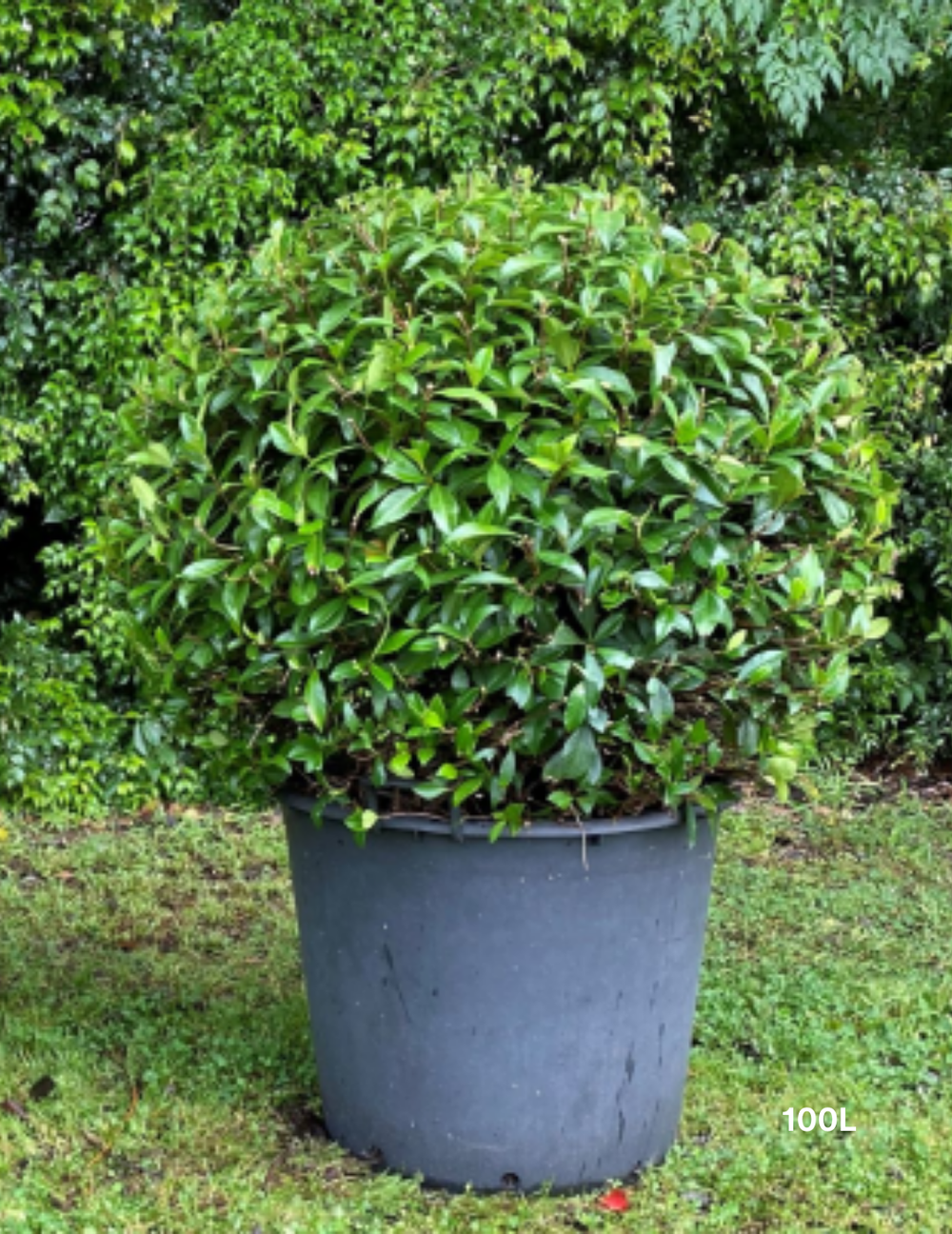
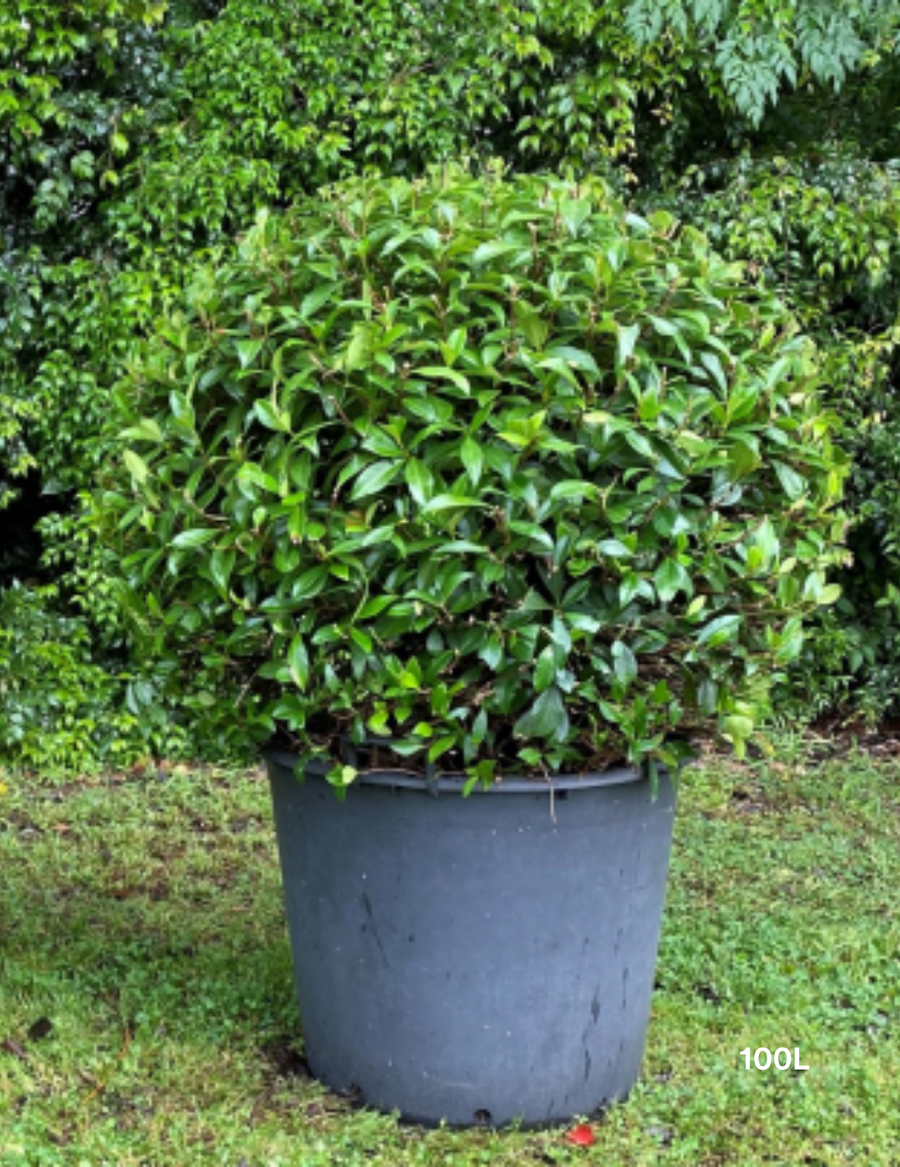
Camellia japonica is the classic camellia, an upright rounded evergreen shrub with thick glossy dark green leaves and large flowers through winter and spring. Flower colour varies with the selection supplied and ranges across white, pink and red in single, semi-double and formal double forms. Growth is dense and the plants are notably long lived.
It wants partial shade or filtered light rather than open sun, in well drained slightly acidic soil that holds moisture. Growth is 20 to 50 centimetres a year, slower than the sasanqua types, reaching around 2 to 4 metres tall and 1.5 to 2.5 metres wide. Light to moderate frost is tolerated once established, suiting cool and warm temperate climates.
Camellia japonica is planted under established trees, on the shaded southern side of a house, through woodland style beds and in formal gardens where evergreen mass is needed. It holds a garden together in the months when deciduous planting has nothing to give. Small and advanced sizes are both available, so it fits new beds and mature gardens alike.
Frequently Asked Questions
About Japonica Camellia
What is Camellia japonica?
Camellia japonica is an evergreen flowering shrub from east Asia, the most widely grown species in the genus and the parent of thousands of named cultivars. It is grown for large winter and spring flowers held against thick glossy dark foliage. In Australian gardens it has been a standard shade shrub for well over a century.
How big does Camellia japonica grow?
In garden conditions it reaches roughly 2 to 4 metres tall and 1.5 to 2.5 metres wide, with very old specimens exceeding that. The exact size depends on the cultivar and how much light and root room it has. Pruning after flowering keeps it at whatever height suits the position without harming the plant.
How fast does it grow?
Growth is 20 to 50 centimetres a year, which is slow to moderate. Japonica camellias are not a quick screening solution, and buying an advanced size is the usual answer where an immediate result is required. The upside of slow growth is a dense, well furnished plant that needs very little pruning to stay in shape.
Does it need sun or shade?
Partial shade or filtered light suits it best. As an understorey species it is adapted to growing beneath a canopy, and full exposed sun yellows the leaves and can scorch them outright. Morning sun with afternoon shade produces the best combination of flowering and foliage quality in most Australian gardens.
When does Camellia japonica flower?
Flowering runs through winter and spring, generally June to October depending on the cultivar and district. Individual plants flower for six to ten weeks. Buds form during the previous summer and autumn, so keeping the plant watered through those months has more effect on next winter's display than anything you do at flowering time.
Is it frost tolerant?
Yes, established plants handle light to moderate frost comfortably, which covers cool temperate gardens throughout Victoria, Tasmania, the ACT and the New South Wales tablelands. The foliage is unaffected by ordinary winter cold. Open flowers can be browned by a hard frost, so gardens in colder districts benefit from overhead canopy or a sheltered wall.
How do I care for Camellia japonica?
Keep the soil moist but never waterlogged, watering deeply through summer and autumn while buds are forming. Mulch with pine bark or leaf litter over the shallow roots. Feed with a camellia or azalea fertiliser after flowering, and again in early autumn. Prune only after the last flowers fall, removing whole branches rather than shearing.