- Mature height
- Naturally grows 2m to 4m (approx.) (Topiary height is maintained by pruning)
- Mature width
- 2m to 2.5m
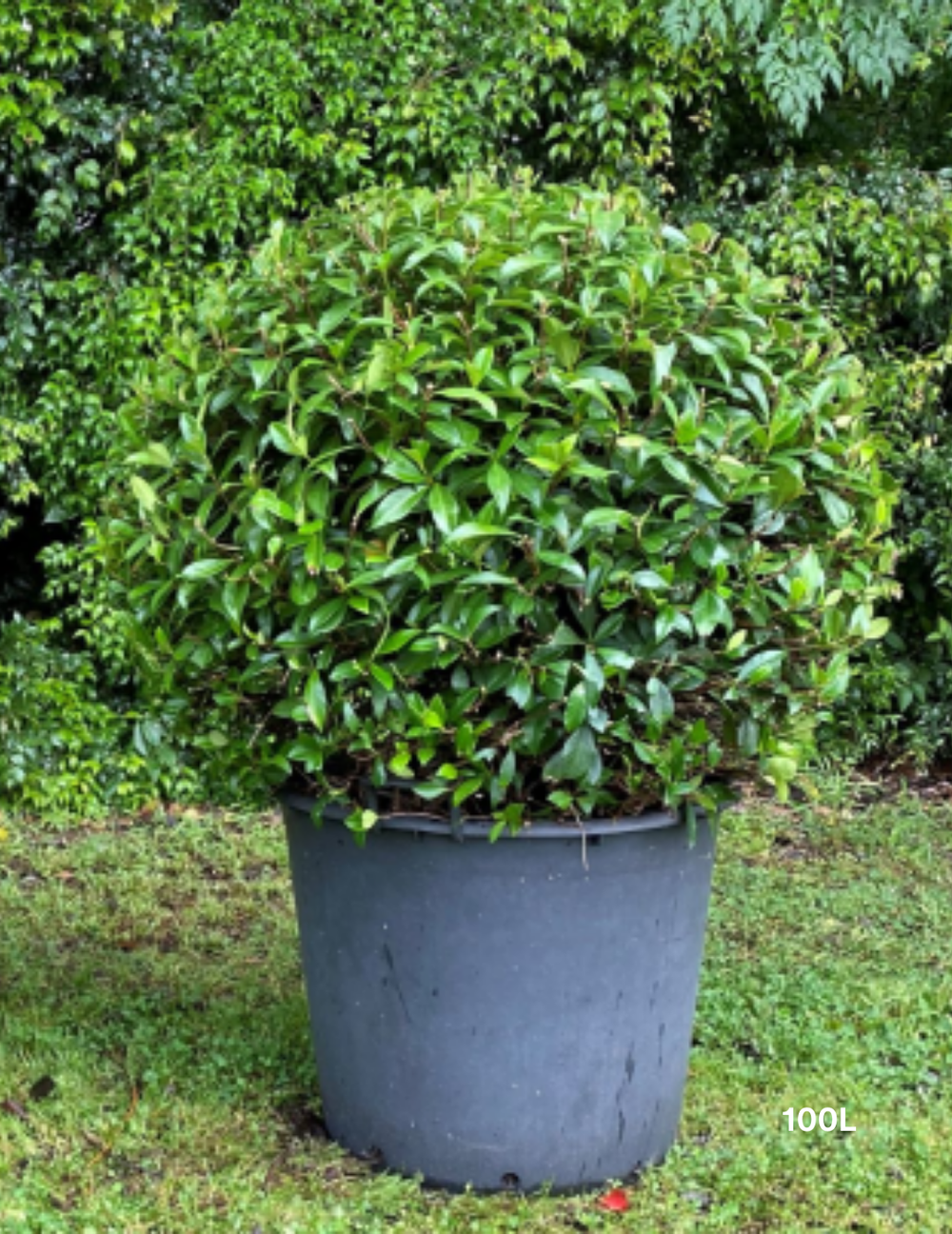
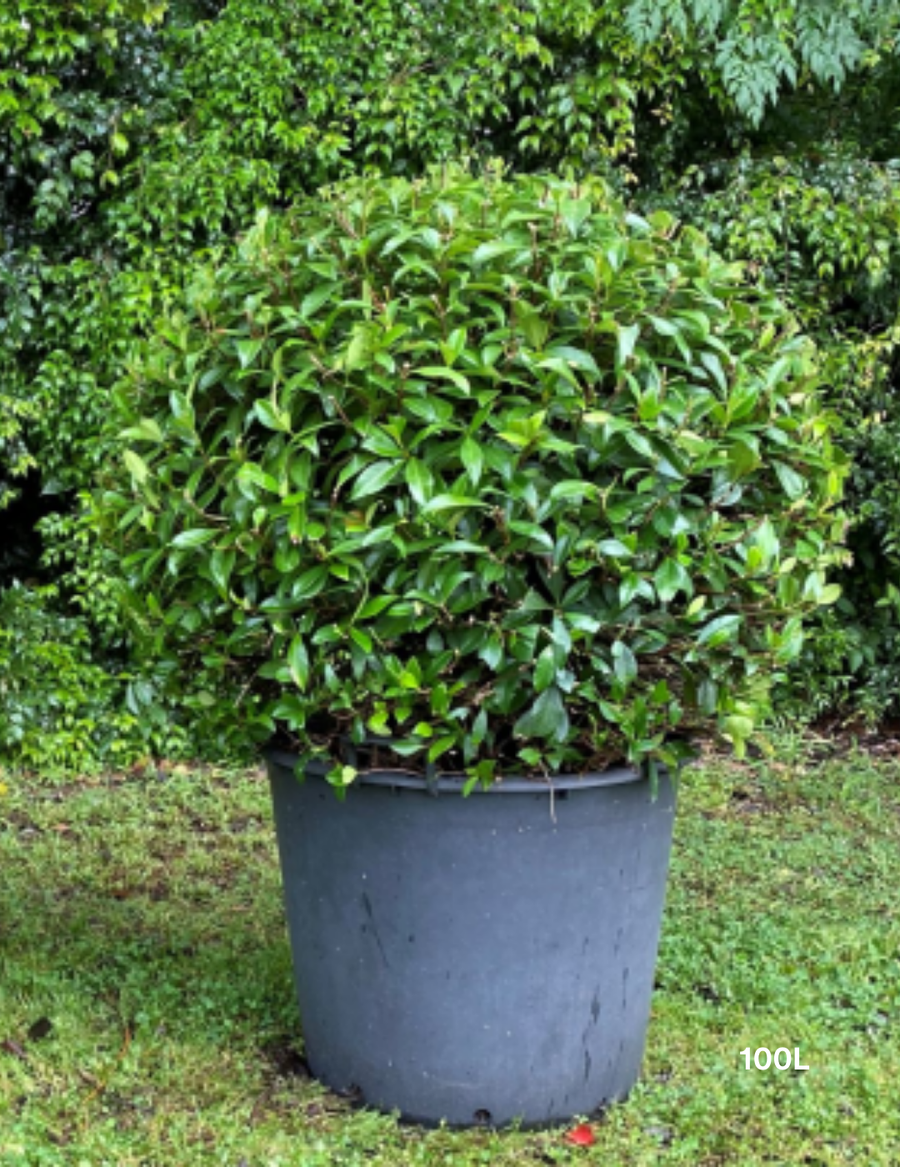
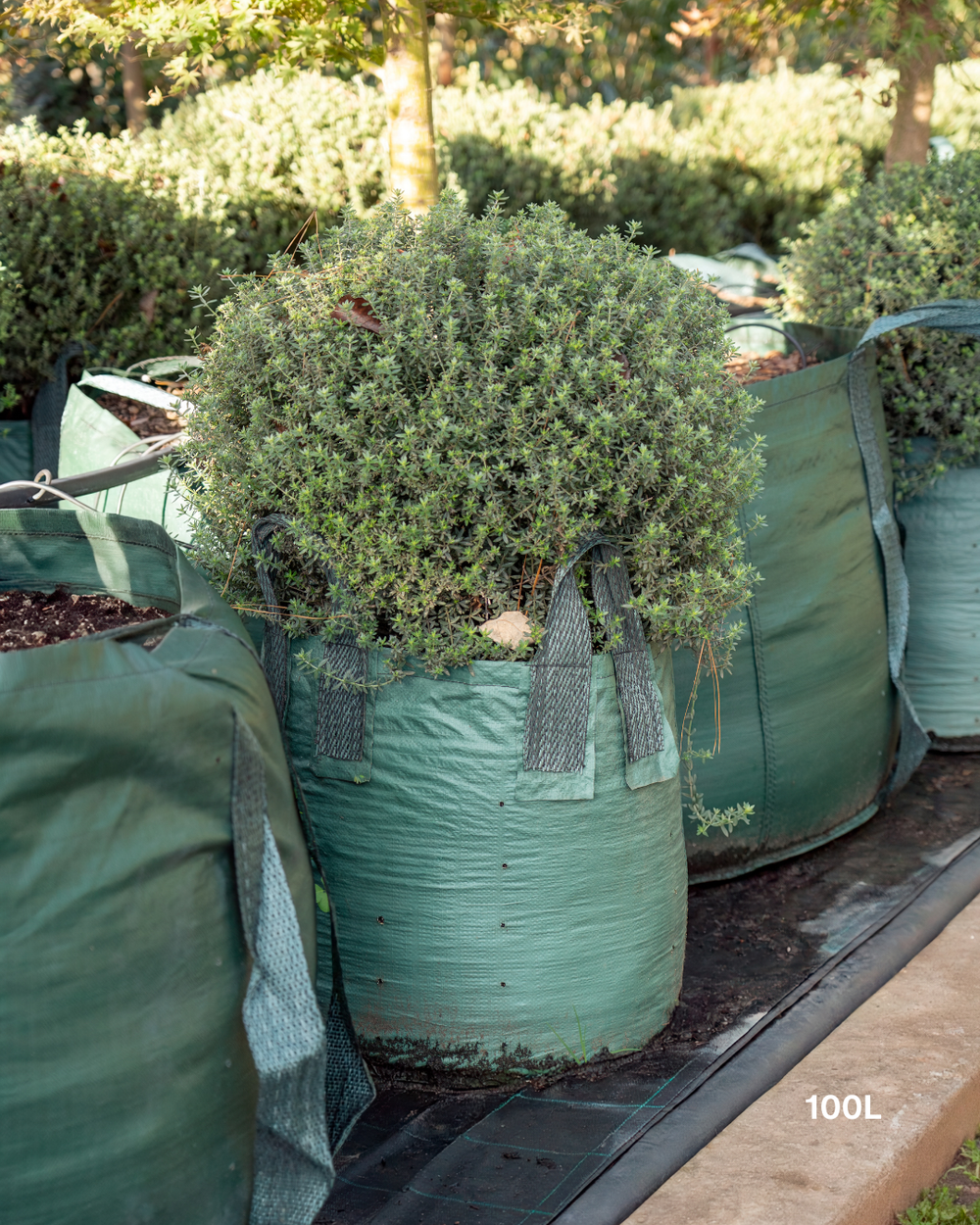
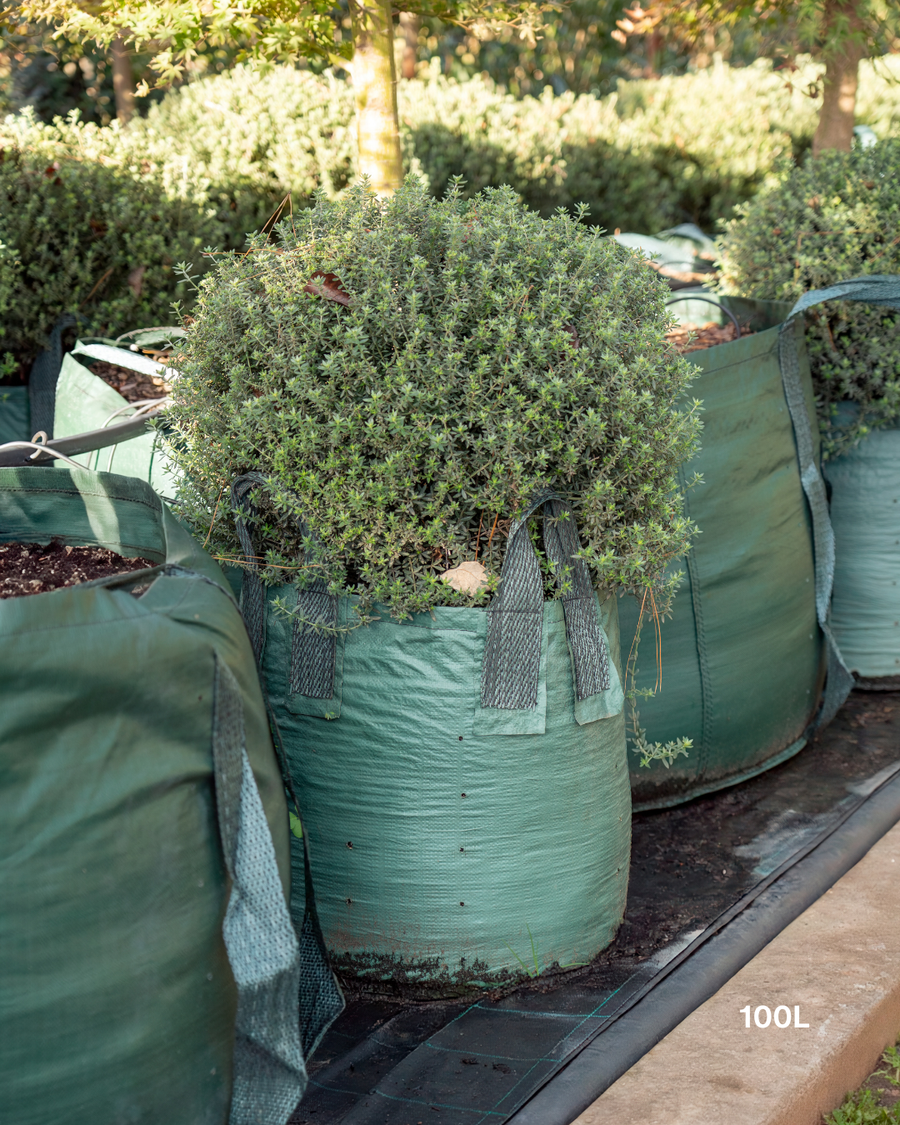
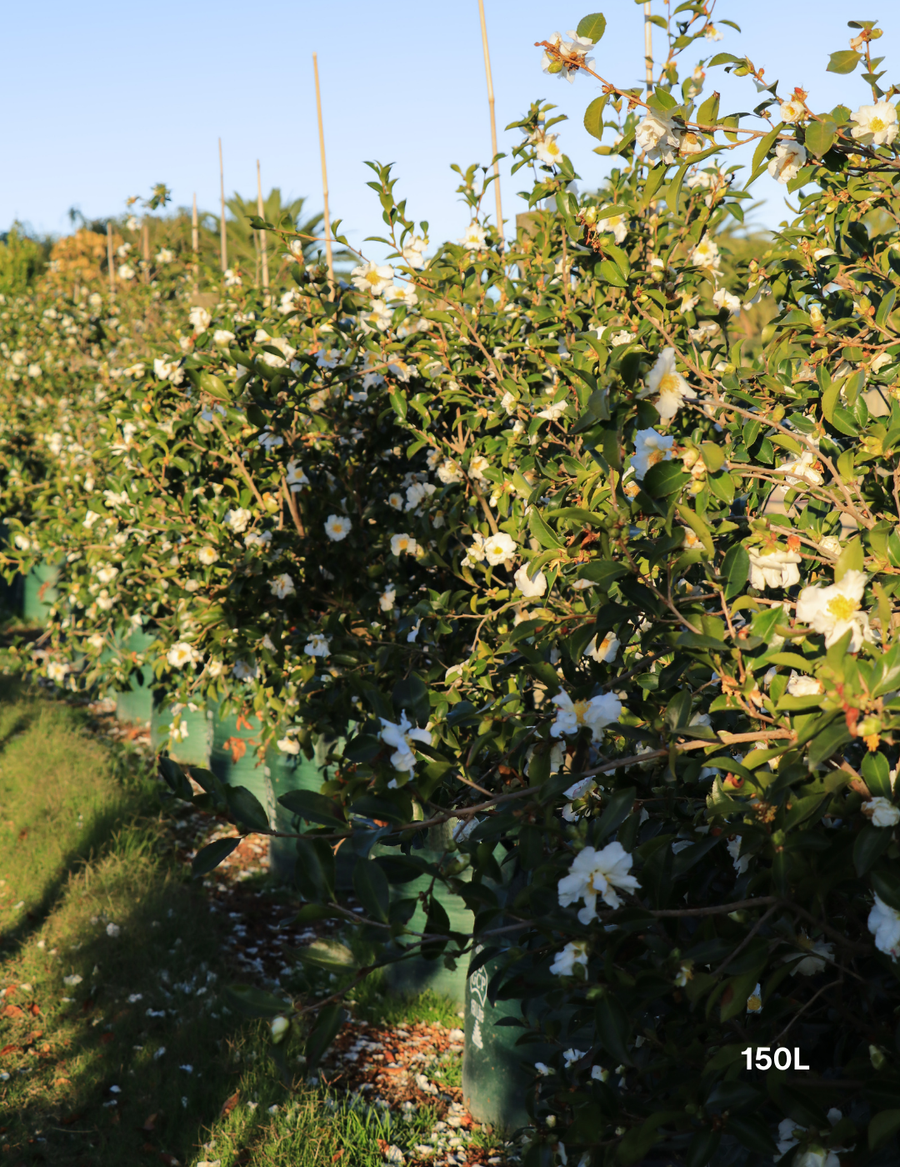
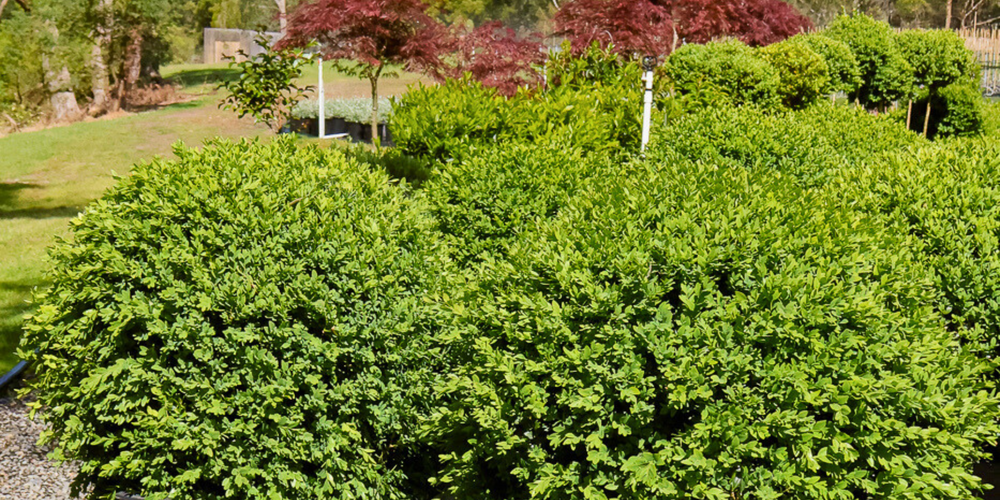
Camellia japonica 'Fran Honeyer' is an evergreen shrub presented here as a clipped topiary ball. Rich pink formal double flowers open from late winter into mid spring above thick glossy dark green leaves. The sphere is built up in the nursery over several years, so the plant arrives as a finished form rather than a starting point.
It performs best in partial shade or morning sun, with protection from hot afternoon exposure. Soil should be free draining, humus rich and slightly acidic. Growth is slow to moderate, which is why the shape holds so well between trims. Light to moderate frost is tolerated once established, and cool to warm temperate districts suit it.
Balls of this kind are used in pairs at an entry, repeated along a path, set into a raised bed or placed as single accents in a lawn. A 40 to 50 centimetre wide pot carries one specimen on a courtyard or balcony. Because the form is already made, a planting reads as complete on the day it goes in.
Frequently Asked Questions
About Fran Honeyer Camellia
What is Camellia japonica 'Fran Honeyer'?
It is an evergreen camellia cultivar with deep pink formal double flowers, trained and clipped into a topiary ball. The species, Camellia japonica, is a long lived shade tolerant shrub from east Asia. In this form the plant is grown for its architecture as much as its flowers, giving a clean geometric shape that stays green all year.
How big are the topiary balls?
The clipped head sits at roughly 70 to 90 centimetres across, with overall plant height around 1 to 1.3 metres including the base. Regular trimming holds it at that size indefinitely. If left unclipped the plant would eventually revert to a natural shrub of 3 to 4 metres, so ongoing shaping is what keeps the form.
When does Fran Honeyer Camellia flower?
Flowering runs from late winter into mid spring, generally July through October in most southern Australian gardens. Warmer coastal districts start a few weeks earlier and cool highland gardens a little later. The formal double blooms are held well against the dark foliage, and flowering continues over roughly eight to ten weeks rather than in one flush.
Does it need sun or shade?
Partial shade is the preference, ideally with gentle morning sun and shelter from hot afternoon light. Camellia japonica scorches in strong exposed sun, particularly on a clipped surface where every leaf sits at the outside of the plant. A position under high tree canopy, on an eastern wall, or in a courtyard with reflected light suits it well.
Can it grow in pots?
Yes, and containers are one of its most common uses. A pot 40 to 50 centimetres wide holds a single specimen for a courtyard, entry or balcony. Use a premium potted colour or camellia mix, make sure the drainage holes stay clear, and water more often than you would in the ground, since pots dry out quickly in summer.
Is it frost tolerant?
Yes, once established it handles light to moderate frost, which covers most cool temperate parts of southern Australia. The foliage is unaffected by ordinary winter cold. A severe frost while flowers are open can mark the petals, so in frost prone gardens a position with overhead protection from a wall or canopy keeps the display looking better.
How do I care for and clip a Camellia topiary ball?
Trim lightly two or three times a year, taking only the new growth, with the main cut straight after flowering ends in spring. Keep the sphere even by working around the plant rather than finishing one side. Feed with a camellia fertiliser after that prune, mulch to hold moisture, and water deeply rather than briefly.