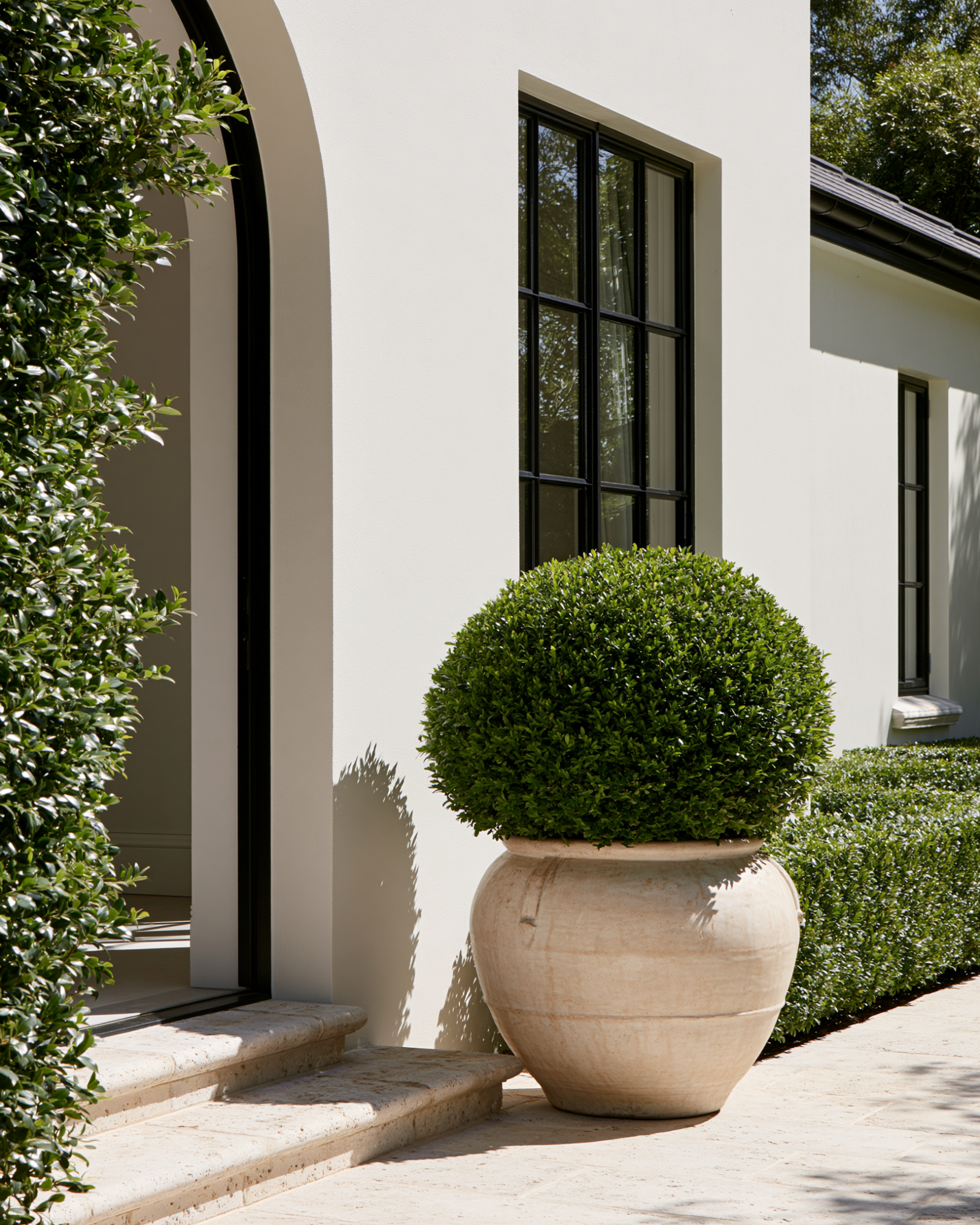


Buxus sempervirens English Box Topiary Balls
Buxus sempervirens English Box Topiary Balls
Couldn't load pickup availability
Current Stock Height Guides
Current Stock Height Guides
Height guide disclaimer: Height ranges are approximate only. As living products, plant heights naturally vary between individual plants, batches, and seasons. No guarantee is given that supplied plants will fall within the stated range. If minimum heights are required, you mustconfirm current batch heights with Evergreen Trees Direct prior to purchase. Variation in height is normal and is not grounds for return, refund, replacement, or compensation.
Mature Height & Width
Mature Height & Width
Mature Height: Naturally grows 2m - 5m Approximately (Topiary height is maintained by pruning)
Mature Width: 0.5m – 1.2m
Buxus sempervirens English Box Topiary Balls is expected to grow Approx. 15 – 25 cm per year.
Root Ball Dimensions (Height & Width)
Root Ball Dimensions (Height & Width)
Use this as a reference when digging your planting hole. We recommend digging at least 10% wider than the dimensions below to encourage strong root development.
- 30cm Pot: 33cm (W) × 30cm (D)
- 40cm/45L Pot: 44cm (W) × 41.5cm (D)
- 50cm Pot / 70L Pot: 55cm (W) × 41.8cm (D)
- 100L Bag: 50.6cm (W) × 52.8cm (D)
- 150L Bag: 66cm (W) × 55cm (D)
- 200L Bag: 71.5cm (W) × 60.5cm (D)
- 300L Bag: 88cm (W) × 63.8cm (D)
- 400L Bag: 99cm (W) × 66cm (D)
- 500L Bag: 122cm (W) × 66cm (D)
- 750L Bag: 134cm (W) × 69cm (D)
- 1000L Bag: 146.3cm (W) × 71.5cm (D)
- 2000L Bag: 176cm (W) × 82.5cm (D)
Trade Customers
Trade Customers
We supply advanced trees to landscapers, developers, architects, and councils Australia-wide. Trade clients receive fast quotes, expert advice, and access to premium stock with reliable freight.
Shipping Cost
Shipping Cost
Shipping is calculated at checkout based on the pallet space your order occupies in the truck and your delivery location.
There is no charge to calculate your freight.
Contact Us
Contact Us
Have a question or a list to send through to us?
Email: sales@evergreentrees.com.au
Phone: (03) 7042 3318
VOLUME DISCOUNTS
Discounts Apply Automatically At Checkout
Share this product
Evergreen Trees Direct Has Been Featured In:


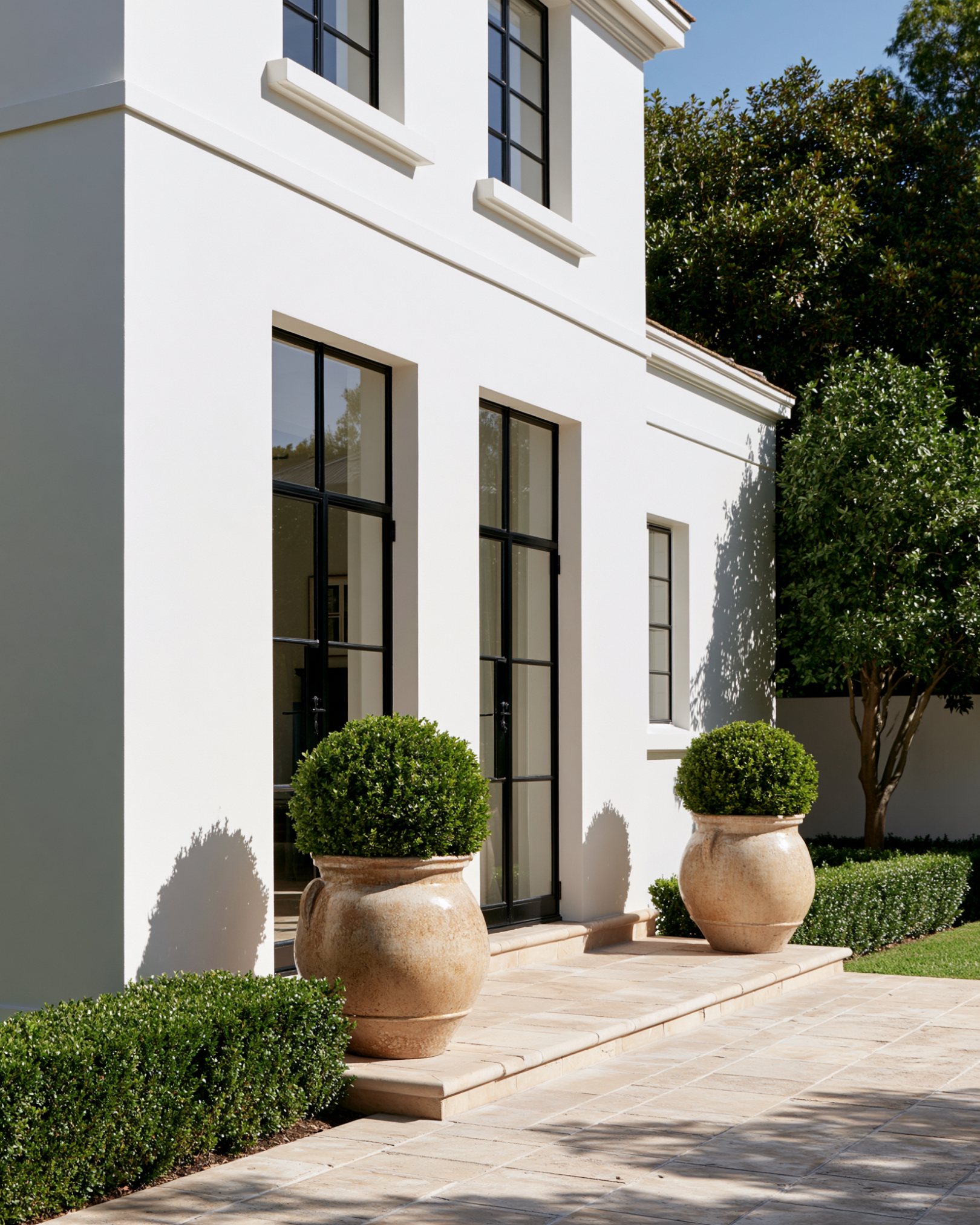
About Your New Buxus sempervirens English Box Topiary Balls
Buxus sempervirens English Box Topiary Balls are pre-clipped formal evergreen specimens, available in three mature sizes and ready to place. The tight, fine, dark green foliage holds a precise rounded form year-round and gives the classic formal topiary look that no other Buxus replicates. As one of our most consistently strong-selling products, our English Box topiary balls are well-shaped, well-rooted, and arrive in proportion to the pot size.
English Box performs best in cool to temperate climates and is slow growing at around 15 to 25 cm per year in good conditions, which is exactly why it holds sharp formal shapes so well. It thrives in full sun to part shade with well-drained, slightly acidic to neutral loamy soil, and is frost hardy, drought tolerant once established, and excellent in containers. Two light clips per year, in spring and again in late summer, keep the ball form crisp.
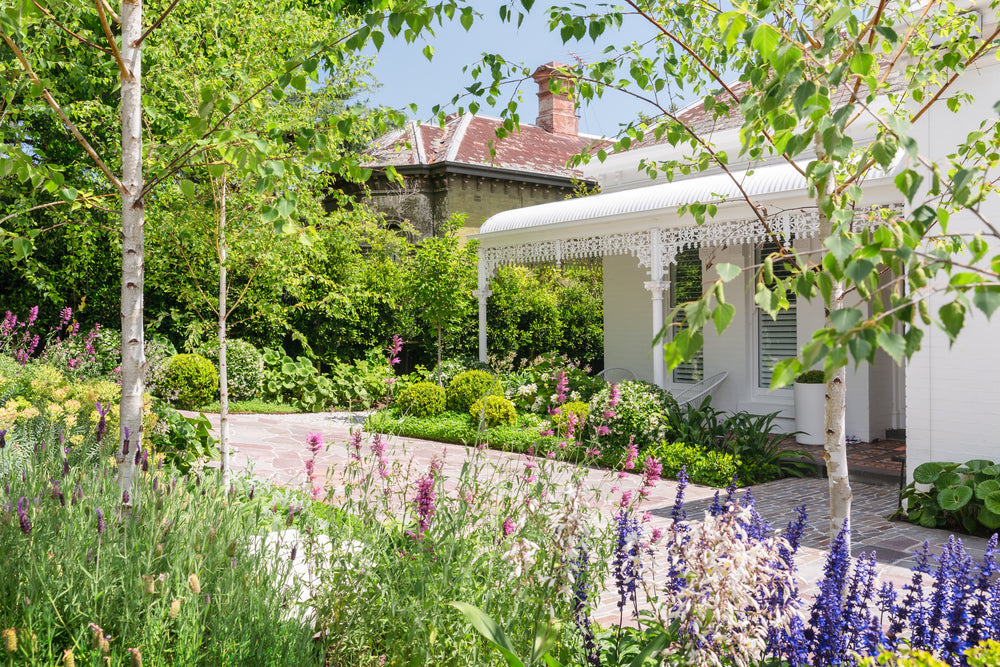
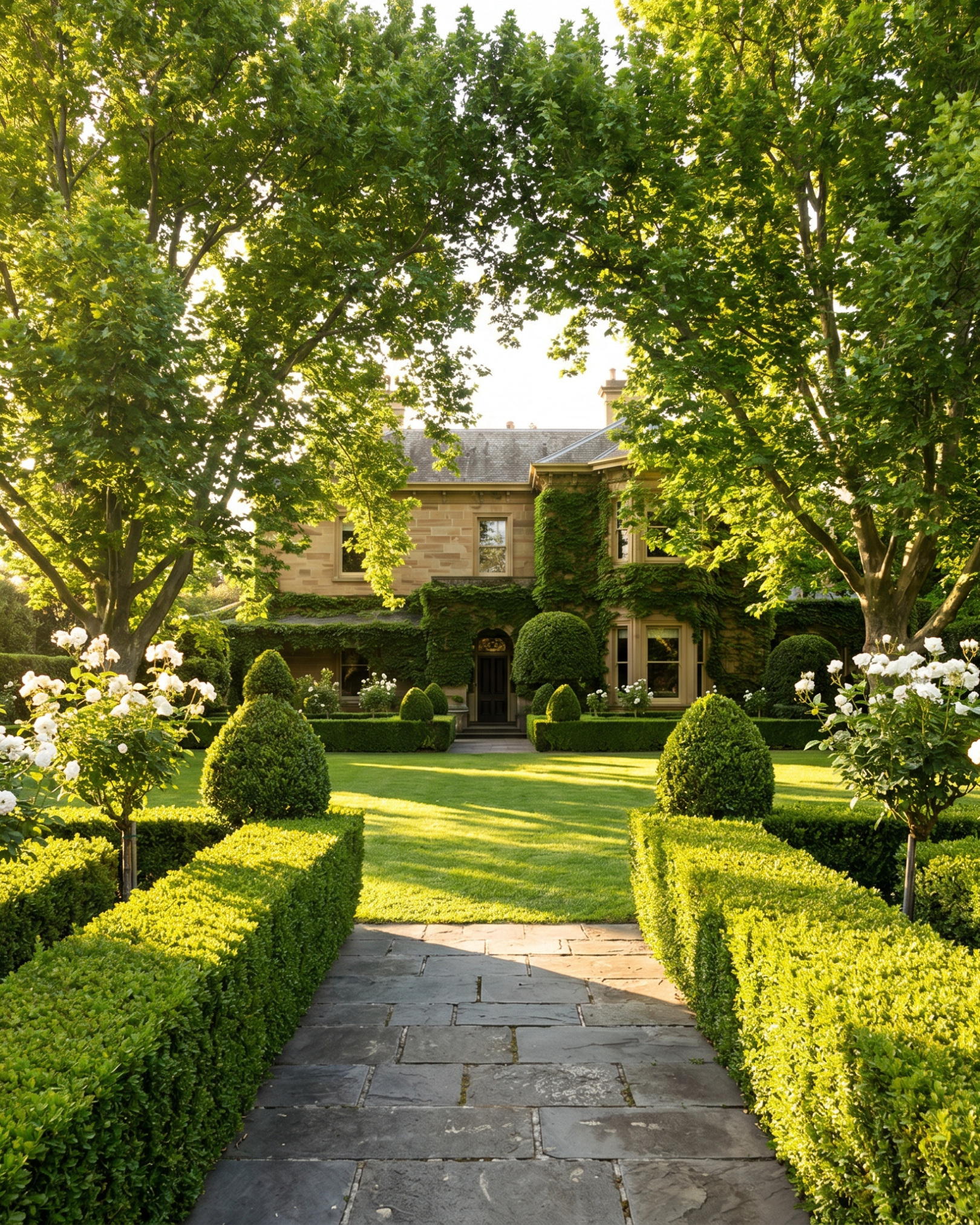
They look excellent flanking entrances, lining formal pathways, anchoring symmetrical garden beds, defining parterre and knot gardens, and in pairs in classic urns and decorative pots at front doors. Buxus sempervirens is the original topiary plant and remains the benchmark for traditional and contemporary formal design, with a level of finesse and density that fast-growing alternatives cannot replicate.
Frequently Asked Questions
About Buxus sempervirens English Box Topiary Balls
What size are the English Box topiary balls when they arrive?
Our English Box topiary balls arrive pre-clipped and ready to place at the size you order. The 30cm/33cm pots have ball diameters of approximately 30 to 45 cm, the 40cm/45L pots have ball diameters of 40 to 55 cm, and the 50cm/75L pots have ball diameters of 50 to 70 cm. They are well-rooted and in proportion to the pot.
How fast does Buxus sempervirens grow?
English Box is slow-growing, adding approximately 15 to 25 cm per year once established in good conditions. This slow growth rate is one of the reasons it holds sharp formal shapes so well, and why mature pre-clipped specimens command a premium over seedling-grown stock.
What is the difference between English Box, Japanese Box, and Shaggy Box?
English Box (Buxus sempervirens) has the smallest, finest leaves and the tightest formal texture, ideal for traditional parterres and clipped balls. Japanese Box (Buxus microphylla japonica) has slightly larger leaves, grows faster, and handles heat better. Shaggy Box (Buxus bodinieri) has soft, rounded leaves, much better blight resistance, and is the best choice for humid subtropical climates where English Box can struggle.
Where does English Box grow best in Australia?
English Box performs best in cool to temperate regions including Victoria, the ACT, the NSW Southern Highlands and Central Tablelands, Tasmania, and the elevated parts of South Australia and Western Australia. In humid coastal or hot subtropical regions, consider Buxus bodinieri Shaggy Box or Japanese Box instead for better long-term performance.
How do I prune English Box topiary balls?
Lightly clip in spring and again in late summer or early autumn to maintain the ball shape. Avoid pruning in the heat of summer or during frost periods. Use sharp shears for the cleanest formal finish, and step back regularly to check the symmetry of the form.
Can English Box grow in pots?
Yes. English Box is the classic potted topiary plant and pre-clipped balls look particularly striking in pairs at entrances and on terraces. Use a minimum 30L pot for the 30cm/33cm size and scale up from there, with a quality potting mix and a slow-release fertiliser applied twice yearly.
Is English Box susceptible to disease?
English Box can be affected by box blight, particularly in humid conditions where foliage stays wet. To reduce risk, ensure good air circulation around each plant, avoid overhead watering, and prune to maintain airflow through the canopy. In high-humidity regions, Buxus bodinieri Shaggy Box is a more disease-resistant alternative.
How do I plant a topiary ball?
Choose a well-drained position in full sun to part shade with slightly acidic to neutral loamy soil. Dig a hole twice the width of the root ball and the same depth, mix compost through the backfill, set the topiary ball so the top of the root ball sits level with the surrounding soil, and water in deeply. Mulch around the base, keeping the mulch clear of the trunk.

Plant Your Buxus sempervirens English Box Topiary Balls With:


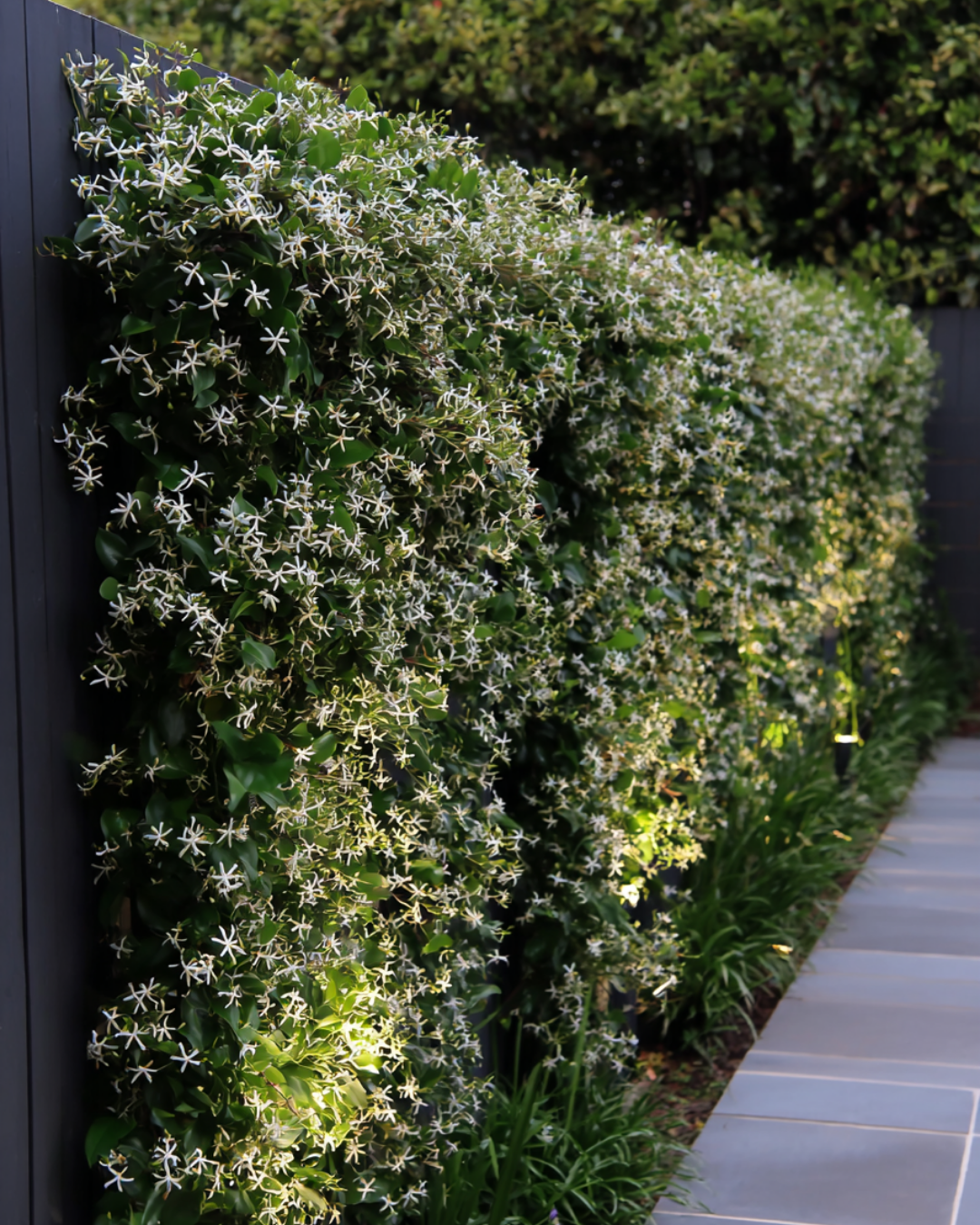
Type: Feature Plant
Trachelospermum jasminoides – Star Jasmine
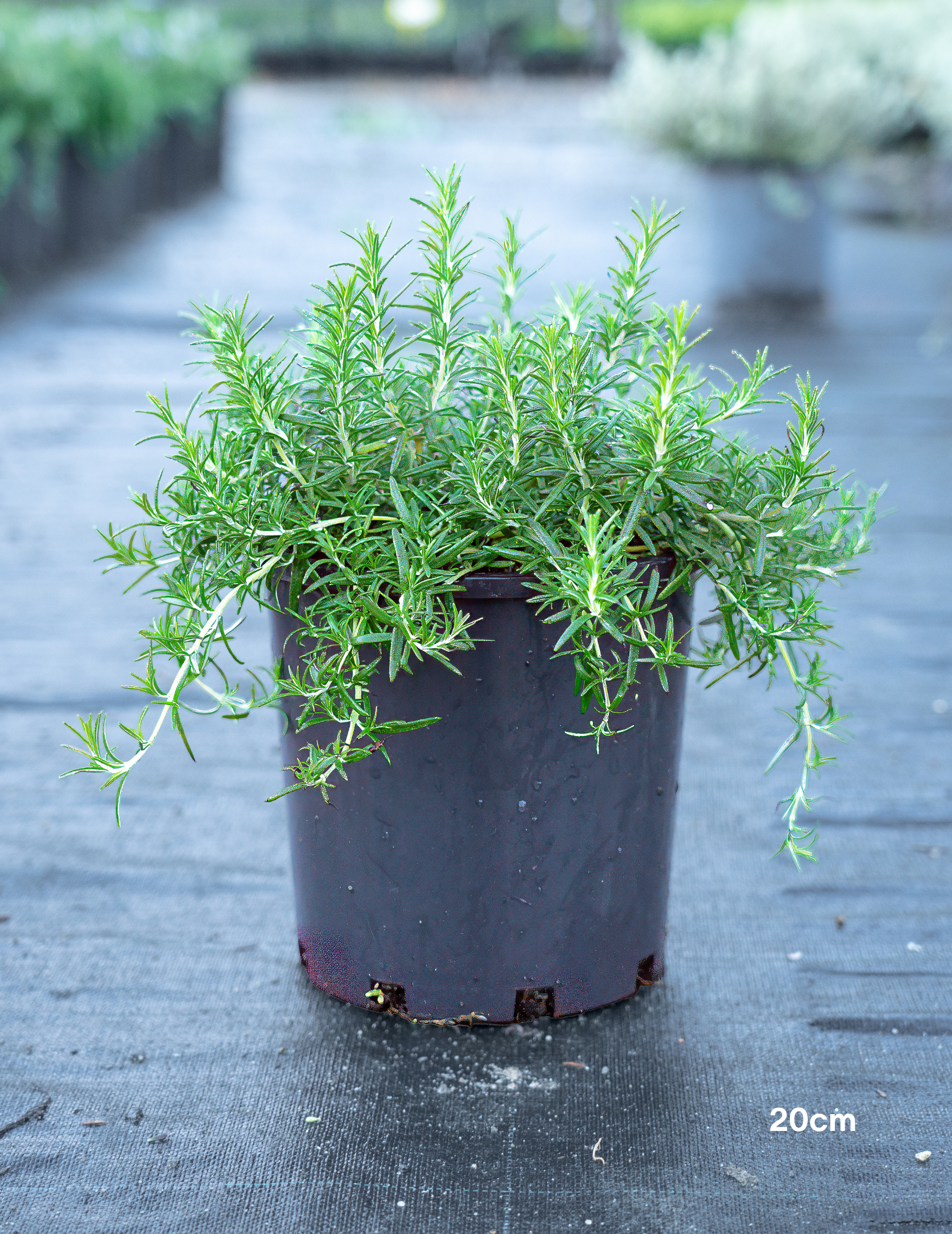
Type:
Rosmarinus officinalis – Rosemary
Type: Climbers & Groundcovers
Hedera canariensis Canary Island Ivy
Type: Native Grass
Lomandra longifolia 'Tanika'®
Type: Evergreen
Gardenia augusta ‘Magnifica’ – Magnifica Gardenia

Type: Hedging and Screening Trees
Camellia sasanqua 'Setsugekka'
Uses in my Garden
Uses in my Garden
Buxus sempervirens English Box Topiary Balls works in an:
Is Buxus sempervirens English Box Topiary Balls Evergreen or Deciduous?
Is Buxus sempervirens English Box Topiary Balls Evergreen or Deciduous?
Buxus sempervirens English Box Topiary Balls is an Evergreen (foliage year round) Tree
Mature Height & Width
Mature Height & Width
Mature Height: Naturally grows 2m - 5m Approximately (Topiary height is maintained by pruning)
Mature Width: 0.5m – 1.2m
Buxus sempervirens English Box Topiary Balls is expected to grow Approx. 15 – 25 cm per year.
Growth Rate of Buxus sempervirens English Box Topiary Balls
Growth Rate of Buxus sempervirens English Box Topiary Balls
Buxus sempervirens English Box Topiary Balls is expected to grow Approx. 15 – 25 cm per year.
They are considered to have a:
Frost Tolerance & Ideal Climate to plant Buxus sempervirens English Box Topiary Balls
Frost Tolerance & Ideal Climate to plant Buxus sempervirens English Box Topiary Balls
Is Buxus sempervirens English Box Topiary Balls frost tolerant?
Buxus sempervirens English Box Topiary Balls is Frost Hardy – Survives heavy and frequent frost without damage.
Does Buxus sempervirens English Box Topiary Balls Flower?
Does Buxus sempervirens English Box Topiary Balls Flower?
Buxus sempervirens produces tiny, pale yellow spring flowers that are subtle but pleasantly fragrant. These little blooms provide a valuable early pollen source for native bees and hoverflies, even though they are not showy.
Does Buxus sempervirens English Box Topiary Balls flower?
Flowering Period:
Flower Type:
Flower Colour:
Not Applicable
Is Buxus sempervirens English Box Topiary Balls an Australian Native Tree?
Is Buxus sempervirens English Box Topiary Balls an Australian Native Tree?
No
Buxus sempervirens English Box Topiary Balls is Native to Europe, North Africa, and western Asia, where Buxus sempervirens grows naturally in woodlands and rocky slopes.
What is the Wildlife Value of Buxus sempervirens English Box Topiary Balls ?
What is the Wildlife Value of Buxus sempervirens English Box Topiary Balls ?
Its evergreen, tightly branched structure offers shelter for small insects and ground-dwelling wildlife, while its fragrant spring flowers support early-season pollinators. The dense canopy also enhances micro-habitats within classic, formal and cottage-style gardens.
How much Sunlight does Buxus sempervirens English Box Topiary Balls need?
How much Sunlight does Buxus sempervirens English Box Topiary Balls need?
Buxus sempervirens English Box Topiary Balls will thrive best in:
Preferred Soil?
Preferred Soil?
Buxus sempervirens performs best in well-drained loam or sandy loam soils and prefers slightly acidic to neutral conditions. It may struggle in heavy clay or poorly drained areas unless improved with organic matter to enhance aeration and reduce compaction. Keep soil evenly moist during establishment, then transition to deep, occasional watering as it matures and maintains its strong, compact form.
Is Buxus sempervirens English Box Topiary Balls Drought Tolerant?
Is Buxus sempervirens English Box Topiary Balls Drought Tolerant?
Is Buxus sempervirens English Box Topiary Balls Drought tolerant?
As a young plant it requires regular watering, but once established Buxus sempervirens develops moderate drought tolerance. It performs reliably in low-water gardens and maintains its dense, formal topiary shape with occasional deep watering during extended dry periods.

Planting Information
How To Plant Your Buxus sempervirens English Box Topiary Balls
How To Plant Your Buxus sempervirens English Box Topiary Balls
Recommended Planting Spacing For Your Buxus sempervirens English Box Topiary Balls
Recommended Planting Spacing For Your Buxus sempervirens English Box Topiary Balls
Buxus sempervirens English Box Topiary Balls is expected to grow Approx. 15 – 25 cm per year.
Long Term Care For Your Buxus sempervirens English Box Topiary Balls
Long Term Care For Your Buxus sempervirens English Box Topiary Balls
Planting Your Buxus sempervirens English Box Topiary Balls in Different Soil
Planting Your Buxus sempervirens English Box Topiary Balls in Different Soil
Frequently Asked Questions
Frequently Asked Questions