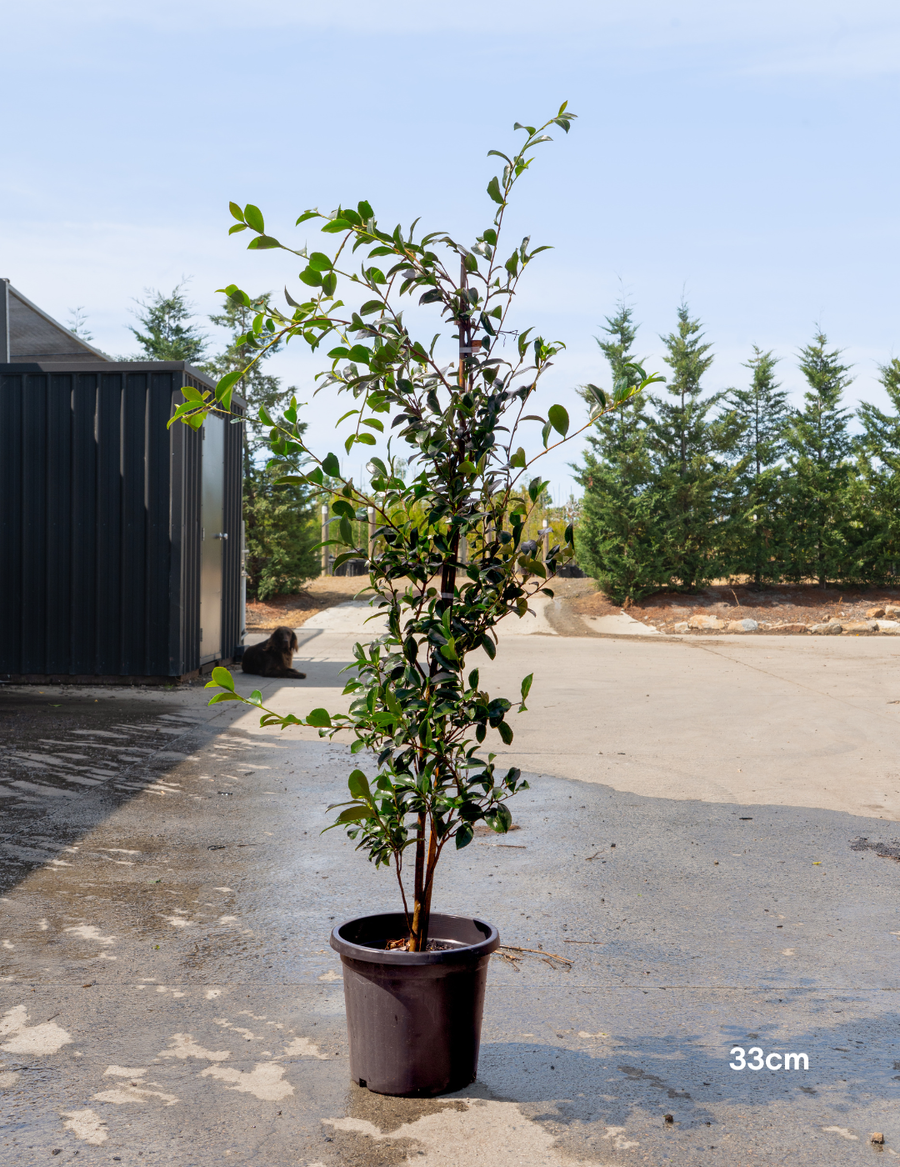
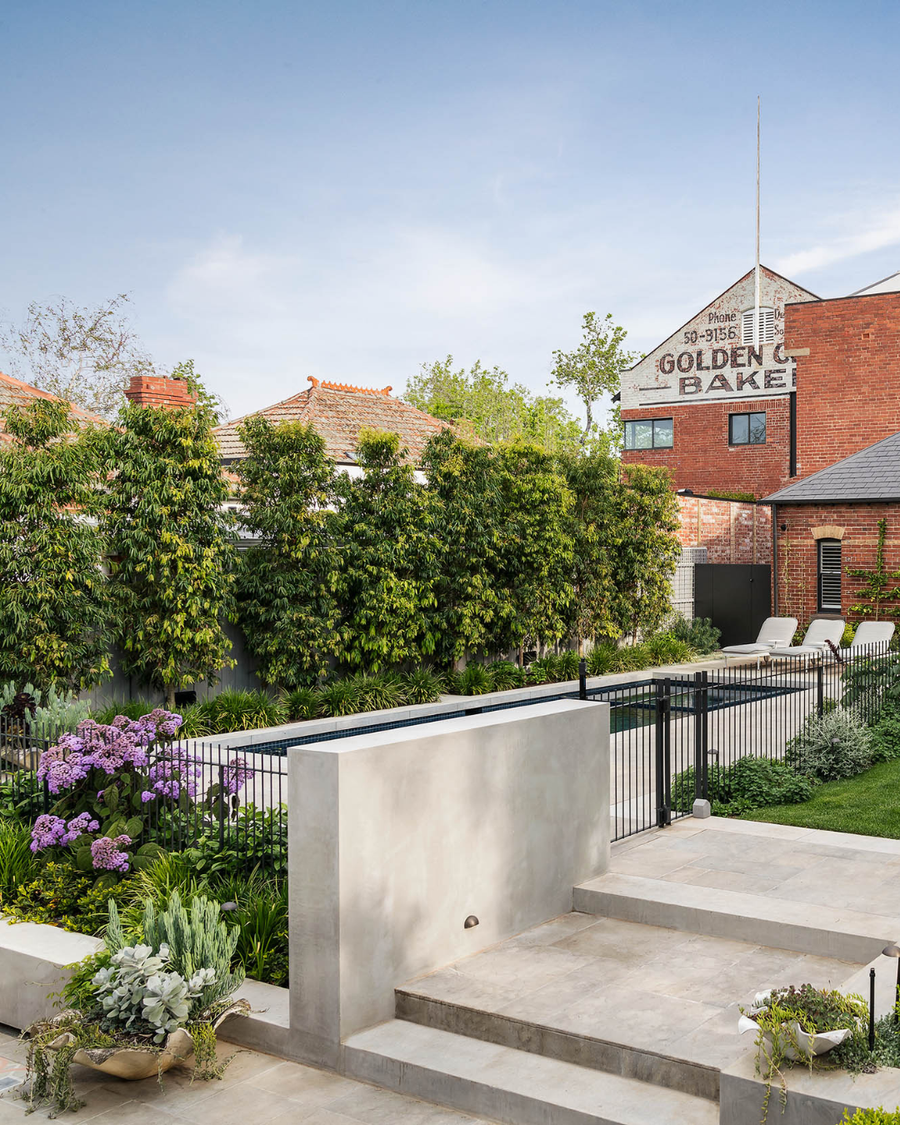
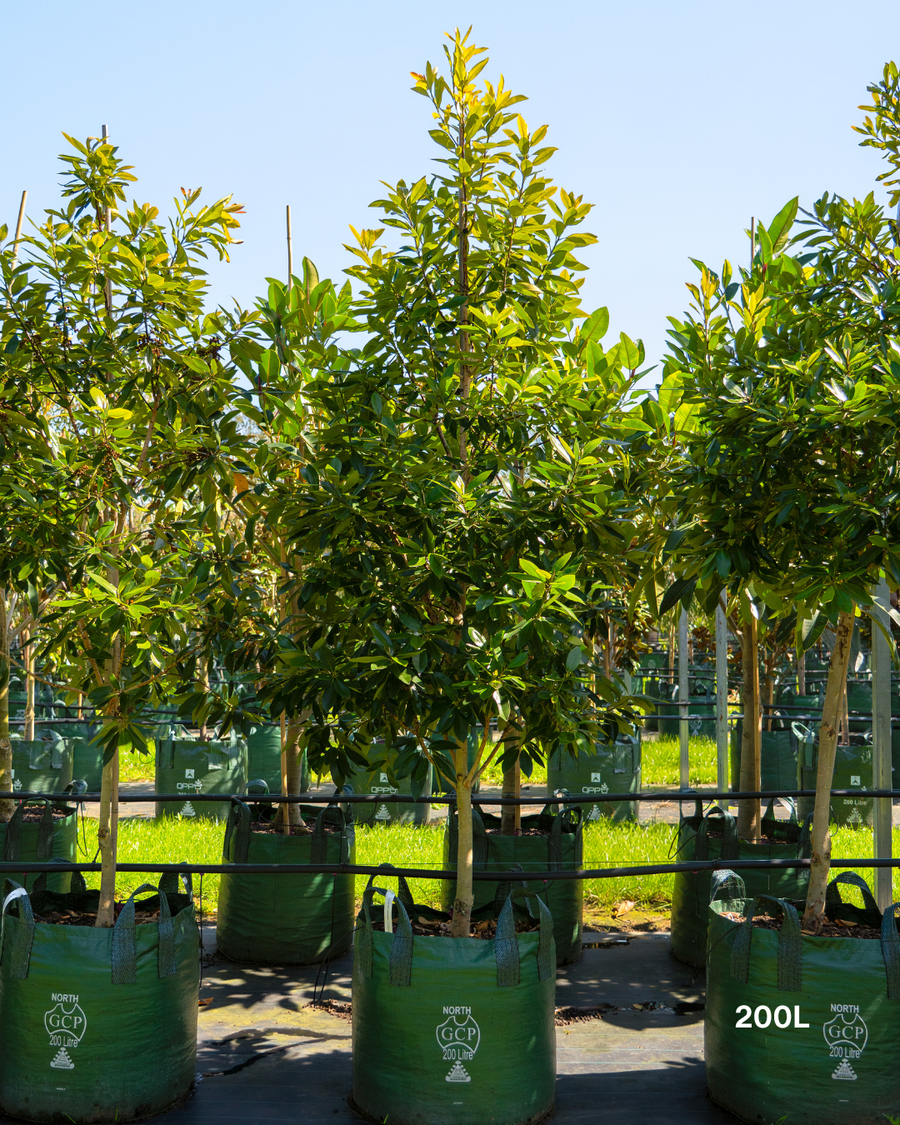
- Mature height
- 7m to 8m
- Mature width
- 6.8m to 8m
Agonis flexuosa 'Lemon & Lime' is a variegated form of the Western Australian Willow Myrtle, an evergreen native tree with fine weeping foliage. Each narrow leaf is edged in cream to lemon over mid green, and new growth flushes brightest, so the canopy reads as a soft wash of colour rather than hard variegation.
It grows 40 to 70 centimetres a year to 6.8 to 8 metres high and about as wide, in full sun to light shade. Sandy and limestone soils suit it, salt wind does not trouble it, and established trees handle dry summers. Light frost is tolerated, though young trees need shelter in cold inland districts.
The weeping habit and pale foliage make it useful as a lawn specimen, a street tree in coastal suburbs, or a screen when planted about three metres apart. Crush a leaf and it smells of peppermint. Roots are not considered aggressive, so it can sit reasonably close to paving and driveways.
Frequently Asked Questions
About Lemon & Lime Willow Myrtle
What is Agonis flexuosa 'Lemon & Lime'?
It is a variegated form of the Western Australian Willow Myrtle, an evergreen native tree with fine weeping foliage. Each narrow leaf carries a cream to lemon edge over mid green, brightest on new growth, and the leaves smell of peppermint when crushed. Small white flowers appear along the stems in spring and summer.
How big does it grow?
It reaches about 6.8 to 8 metres high and 6.8 to 8 metres wide at maturity, forming a rounded weeping canopy roughly as broad as it is tall. Plan for the full width when siting it near buildings or boundaries. It can be held lower with light annual pruning if a smaller tree is wanted.
How fast does it grow?
Around 40 to 70 centimetres a year once established, which is moderate to quick for a native tree. Trees planted at 100 litre size give usable canopy in the first season. Growth is fastest in warm coastal conditions with occasional deep watering, and slower in cold or very dry inland gardens.
Where does Lemon & Lime Willow Myrtle grow best in Australia?
It is at its best in Perth, Adelaide, coastal New South Wales and Victoria, and the milder parts of south east Queensland, where it takes sandy and limestone soils in its stride. Established trees tolerate light frost, but young plants are damaged by hard frost, so protect them through their first two winters inland.
Is it suitable for coastal positions?
Yes. The species grows naturally on the south west coast of Western Australia, directly behind the dunes, and tolerates salt-laden wind and sand. It is one of the more dependable variegated trees for beachside streets and gardens. In extreme front line exposure the canopy will lean with the prevailing wind.
How far apart should I plant it for a screen?
For a dense informal screen, plant 3 metres apart and let the canopies knit together. For a clipped formal hedge, 2 metres apart works well. As a row of individual feature trees or an avenue, 3 to 4 metres apart lets each canopy develop its full weeping form.
How do I care for Lemon & Lime Willow Myrtle?
Water deeply through the first two summers, then only in prolonged dry weather. Prune lightly after flowering to keep the canopy dense; it responds well to a trim but avoid cutting hard into old bare wood. Mulch out to the drip line, keeping it off the trunk, and feed with a low phosphorus native fertiliser in spring.