Afrocarpus falcatus – Podocarpus / Outeniqua Yellowwood
Afrocarpus falcatus – Podocarpus / Outeniqua Yellowwood
Couldn't load pickup availability
Current Stock Height Guides
Current Stock Height Guides
Height guide disclaimer: Height ranges are approximate only. As living products, plant heights naturally vary between individual plants, batches, and seasons. No guarantee is given that supplied plants will fall within the stated range. If minimum heights are required, you mustconfirm current batch heights with Evergreen Trees Direct prior to purchase. Variation in height is normal and is not grounds for return, refund, replacement, or compensation.
Mature Height & Width
Mature Height & Width
Mature Height: 15m to 25m
Mature Width: 6m to 10m
Afrocarpus falcatus – Podocarpus / Outeniqua Yellowwood is expected to grow 30cm to 60cm per year (moderate).
Root Ball Dimensions
Root Ball Dimensions
Use this as a reference when digging your planting hole. We recommend digging at least 10% wider than the dimensions below to encourage strong root development.
- 30cm Pot: 33cm (W) × 30cm (D)
- 40cm/45L Pot: 44cm (W) × 41.5cm (D)
- 50cm Pot / 70L Pot: 55cm (W) × 41.8cm (D)
- 100L Bag: 50.6cm (W) × 52.8cm (D)
- 150L Bag: 66cm (W) × 55cm (D)
- 200L Bag: 71.5cm (W) × 60.5cm (D)
- 300L Bag: 88cm (W) × 63.8cm (D)
- 400L Bag: 99cm (W) × 66cm (D)
- 500L Bag: 122cm (W) × 66cm (D)
- 750L Bag: 134cm (W) × 69cm (D)
- 1000L Bag: 146.3cm (W) × 71.5cm (D)
- 2000L Bag: 176cm (W) × 82.5cm (D)
Trade
Trade
We supply advanced trees to landscapers, developers, architects, and councils Australia-wide. Trade clients receive fast quotes, expert advice, and access to premium stock with reliable freight.
Shipping
Shipping
Shipping is calculated at checkout based on the pallet space your order occupies in the truck and your delivery location.
There is no charge to calculate your freight.
Contact
Contact
Have a question or a list to send through to us?
Email: sales@evergreentrees.com.au
Phone: (03) 7042 3318
Share this product
About Your New Afrocarpus falcatus – Podocarpus / Outeniqua Yellowwood
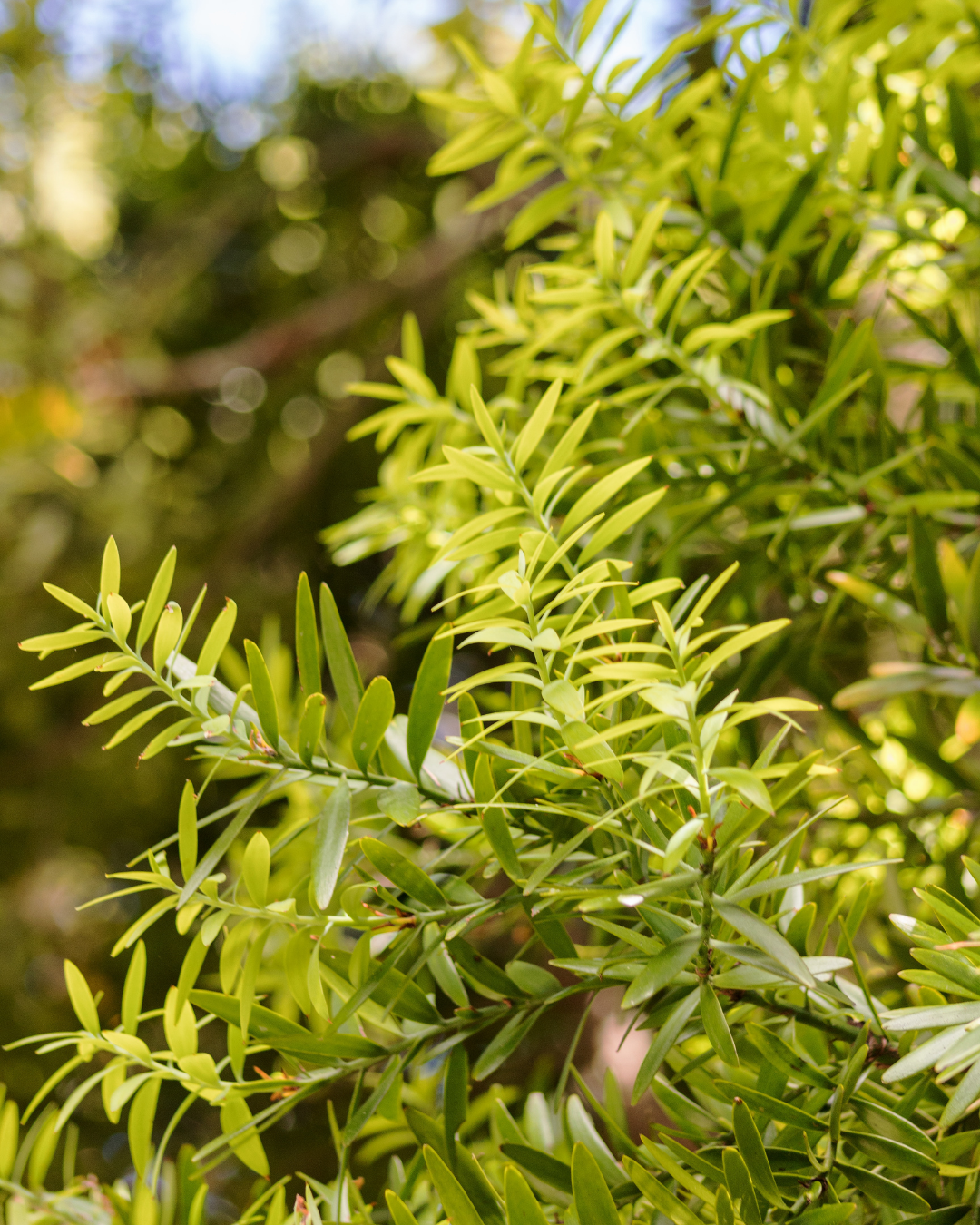
Afrocarpus falcatus, sold here as Podocarpus or Outeniqua Yellowwood, is a tall evergreen conifer from southern Africa and was once classified as Podocarpus falcatus. It carries narrow, lance-shaped leaves of deep green on softly layered branches, and matures into a straight-trunked tree with smooth grey bark and a high, conical crown.
Growth is moderate at 30 to 60 centimetres a year, and the tree suits temperate, subtropical and Mediterranean climates across the eastern seaboard as well as Adelaide and Perth. Full sun to light shade gives the densest habit, and any reasonably drained soil will do. Established trees take light to moderate frost, dry spells and salt-laden coastal wind.
Mature specimens reach 15 to 25 metres tall and 6 to 10 metres wide, which places them in parks, large gardens, civic plantings and avenues. Younger stock clips readily into a tall formal screen or a windbreak. Where a project needs a long-lived evergreen with a clean trunk and no litter problem, this is a dependable choice.
Frequently Asked Questions
About Afrocarpus falcatus
What is Afrocarpus falcatus?
Afrocarpus falcatus is an evergreen conifer from southern Africa, formerly classified as Podocarpus falcatus and still widely sold in the trade as Podocarpus. It forms a straight trunk with smooth grey bark and a high conical crown of narrow dark green leaves. Female trees carry small fleshy seed cones that birds take. It is long lived and low maintenance in cultivation.
How big does Afrocarpus falcatus grow?
In an open landscape position it reaches 15 to 25 metres tall and 6 to 10 metres wide at maturity. That is the size to plan around in parks, avenues and large gardens. In a smaller garden, or where it is clipped as a screen from a young age, it is easily held at 4 to 6 metres with annual trimming.
How fast does Afrocarpus falcatus grow?
Growth is moderate at 30 to 60 centimetres a year once the tree is established, quicker in warm coastal conditions with regular water and slower on dry inland sites. Advanced stock from 100 litre and larger containers gives you immediate height, and trees put on their strongest extension growth in the first few seasons after planting.
Is Afrocarpus falcatus frost tolerant?
Yes, established trees handle light to moderate frost without damage. Young plants in their first two winters are more vulnerable, so in frost prone districts such as the Southern Highlands or the Adelaide Hills, plant in spring and protect the leader through the first cold season. Mature specimens also tolerate drought and salt-laden coastal wind.
Can Afrocarpus falcatus be used as a hedge or screen?
Yes. It clips well when started young and holds a dense face. For an informal screen plant 2 to 3 metres apart, and for a clipped formal hedge plant 1.5 metres apart. As a free-standing feature tree allow 3 to 4 metres between trees, or 3 metres for an even avenue where the crowns are meant to meet.
Does Afrocarpus falcatus have invasive roots?
The root system is fibrous and is not regarded as aggressive, which makes it one of the safer large conifers to use near paving and services. Even so, a tree of 15 to 25 metres needs room, so set it at least 4 to 5 metres away from buildings, pipes and boundary walls and give it deep, unrestricted soil.
How do I care for Afrocarpus falcatus?
Water deeply twice a week through the first two summers, then taper off as the roots establish. Mulch to about 75 millimetres and keep it clear of the trunk, and apply a slow release fertiliser in early spring. Prune only to lift the crown or shape a screen. It has few pest problems and asks for little else.
Evergreen Trees Direct Has Been Featured In:


Plant Your Afrocarpus falcatus – Podocarpus / Outeniqua Yellowwood With:


Type: Garden Supplies
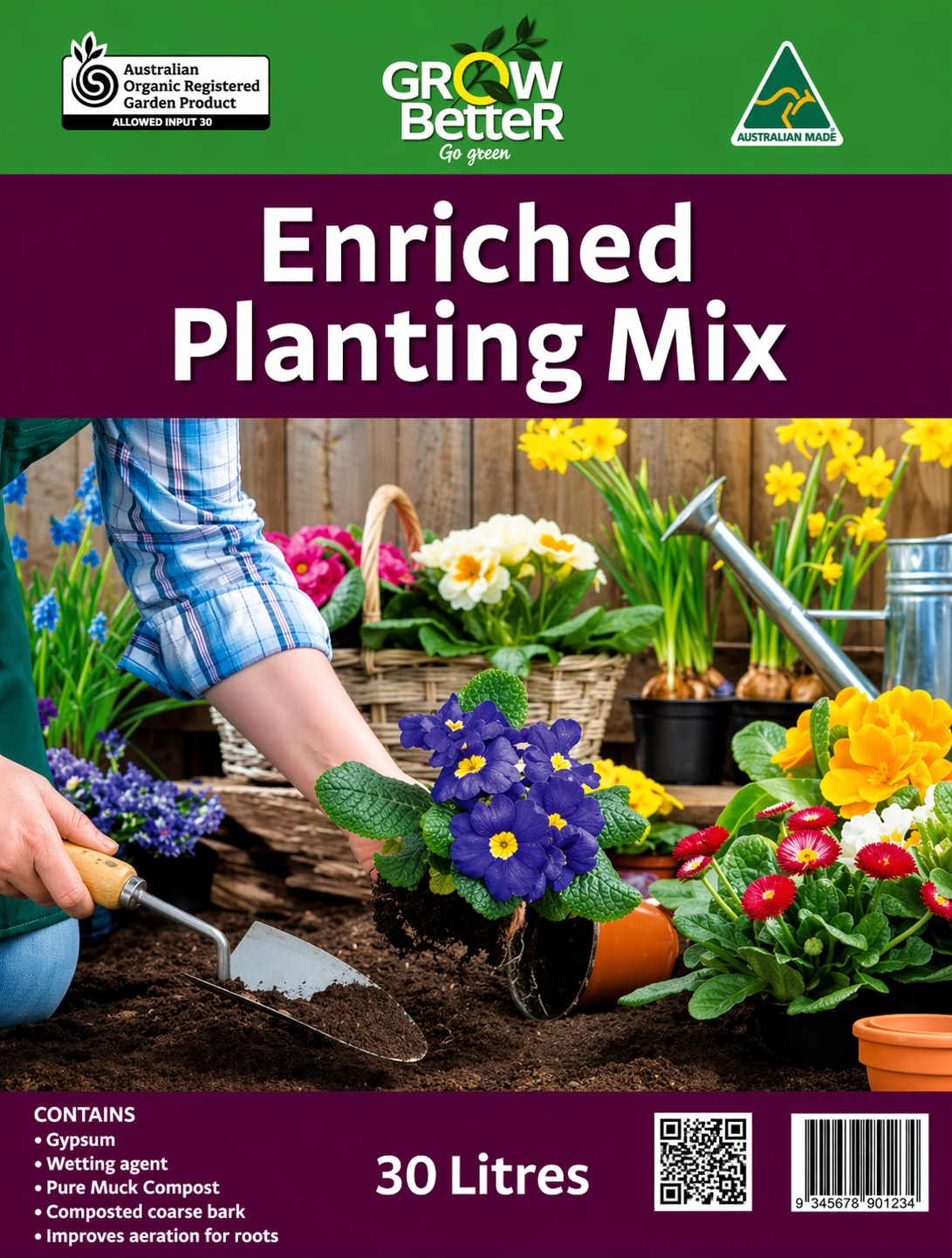
Enriched Planting Mix (AO Certified)

Type: Australian Native
Casuarina glauca 'Cousin It'

Type: Hedging and Screening Trees
Camellia sasanqua 'Setsugekka'

Type: Hedging and Screening Trees
Pittosporum tenuifolium 'Silver Sheen'

Type: Australian Native
Melaleuca nesophila

Type: Evergreen
Gardenia augusta ‘Magnifica’ – Magnifica Gardenia

Type: Hedging and Screening Trees
Acmena smithii 'Sublime' Lilly Pilly
Uses in my Garden
Uses in my Garden
Afrocarpus falcatus – Podocarpus / Outeniqua Yellowwood works in an:
Is Afrocarpus falcatus – Podocarpus / Outeniqua Yellowwood Evergreen or Deciduous?
Is Afrocarpus falcatus – Podocarpus / Outeniqua Yellowwood Evergreen or Deciduous?
Afrocarpus falcatus – Podocarpus / Outeniqua Yellowwood is an Evergreen (foliage year round) Tree
Mature Height & Width
Mature Height & Width
Mature Height: 15m to 25m
Mature Width: 6m to 10m
Afrocarpus falcatus – Podocarpus / Outeniqua Yellowwood is expected to grow 30cm to 60cm per year (moderate).
Growth Rate of Afrocarpus falcatus – Podocarpus / Outeniqua Yellowwood
Growth Rate of Afrocarpus falcatus – Podocarpus / Outeniqua Yellowwood
Afrocarpus falcatus – Podocarpus / Outeniqua Yellowwood is expected to grow 30cm to 60cm per year (moderate).
They are considered to have a:
Frost Tolerance & Ideal Climate to plant Afrocarpus falcatus – Podocarpus / Outeniqua Yellowwood
Frost Tolerance & Ideal Climate to plant Afrocarpus falcatus – Podocarpus / Outeniqua Yellowwood
Is Afrocarpus falcatus – Podocarpus / Outeniqua Yellowwood frost tolerant?
Afrocarpus falcatus – Podocarpus / Outeniqua Yellowwood is Frost Tolerant – Can handle light to moderate frost once established.
Does Afrocarpus falcatus – Podocarpus / Outeniqua Yellowwood Flower?
Does Afrocarpus falcatus – Podocarpus / Outeniqua Yellowwood Flower?
Afrocarpus falcatus produces very small, inconspicuous pale-yellow flowers in spring, followed by fleshy ornamental seed cones. While subtle, these seasonal structures contribute to its natural cycle and provide a gentle highlight against its deep green foliage.
Does Afrocarpus falcatus – Podocarpus / Outeniqua Yellowwood flower?
Flowering Period:
Flower Type:
Flower Colour:
Not Applicable
Is Afrocarpus falcatus – Podocarpus / Outeniqua Yellowwood an Australian Native Tree?
Is Afrocarpus falcatus – Podocarpus / Outeniqua Yellowwood an Australian Native Tree?
No
Afrocarpus falcatus – Podocarpus / Outeniqua Yellowwood is Native to Southern Africa, particularly South Africa, Swaziland, and Mozambique, where it grows in montane and coastal forests.
What is the Wildlife Value of Afrocarpus falcatus – Podocarpus / Outeniqua Yellowwood ?
What is the Wildlife Value of Afrocarpus falcatus – Podocarpus / Outeniqua Yellowwood ?
Its dense evergreen canopy offers shelter for small birds, while its seed cones provide food for fruit-eating birds and beneficial insects. The tree’s stable, layered structure also supports a cool micro-habitat that enhances biodiversity in larger gardens and landscapes.
How much Sunlight does Afrocarpus falcatus – Podocarpus / Outeniqua Yellowwood need?
How much Sunlight does Afrocarpus falcatus – Podocarpus / Outeniqua Yellowwood need?
Afrocarpus falcatus – Podocarpus / Outeniqua Yellowwood will thrive best in:
Preferred Soil?
Preferred Soil?
Afrocarpus falcatus performs best in well-drained loam or sandy loam soils and tolerates slightly acidic to slightly alkaline conditions. It may struggle in heavy clay or waterlogged positions unless improved with organic matter to enhance drainage. Keep soil evenly moist during establishment, then transition to deep, occasional watering as the tree matures and develops strong drought resilience.
Is Afrocarpus falcatus – Podocarpus / Outeniqua Yellowwood Drought Tolerant?
Is Afrocarpus falcatus – Podocarpus / Outeniqua Yellowwood Drought Tolerant?
Is Afrocarpus falcatus – Podocarpus / Outeniqua Yellowwood Drought tolerant?
As a young tree it benefits from consistent watering, but once established Afrocarpus falcatus develops good drought tolerance. It remains reliable through dry periods and maintains its strong, upright form with minimal supplementary watering.

Planting Information
How To Plant Your Afrocarpus falcatus – Podocarpus / Outeniqua Yellowwood
How To Plant Your Afrocarpus falcatus – Podocarpus / Outeniqua Yellowwood
Recommended Planting Spacing For Your Afrocarpus falcatus – Podocarpus / Outeniqua Yellowwood
Recommended Planting Spacing For Your Afrocarpus falcatus – Podocarpus / Outeniqua Yellowwood
Afrocarpus falcatus – Podocarpus / Outeniqua Yellowwood is expected to grow 30cm to 60cm per year (moderate).
Long Term Care For Your Afrocarpus falcatus – Podocarpus / Outeniqua Yellowwood
Long Term Care For Your Afrocarpus falcatus – Podocarpus / Outeniqua Yellowwood
Planting Your Afrocarpus falcatus – Podocarpus / Outeniqua Yellowwood in Different Soil
Planting Your Afrocarpus falcatus – Podocarpus / Outeniqua Yellowwood in Different Soil
Frequently Asked Questions
Frequently Asked Questions