Skip to content

Volume Discounts Apply At Checkout

Acacia baileyana - Cootamundra Wattle

Acacia baileyana - Cootamundra Wattle

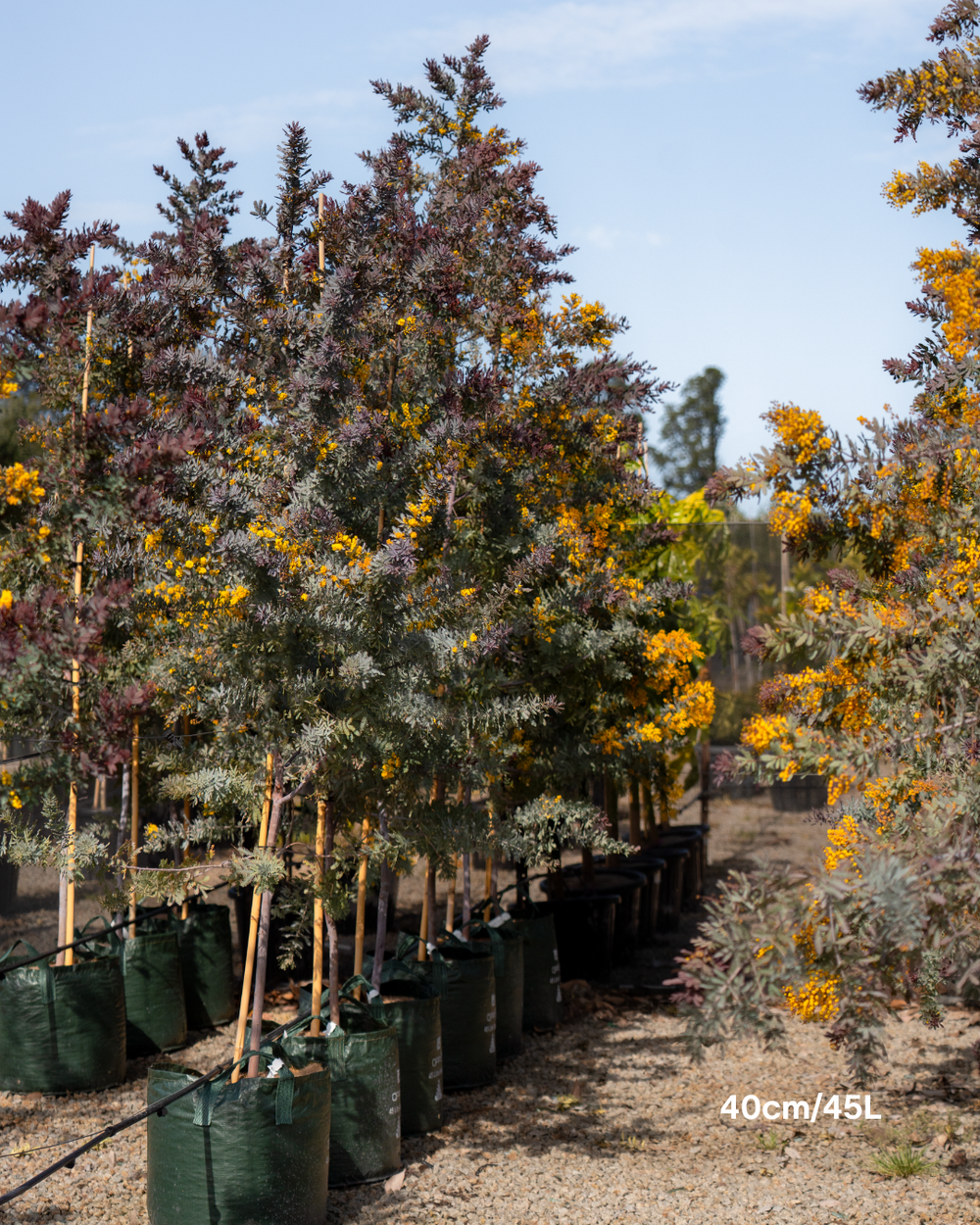
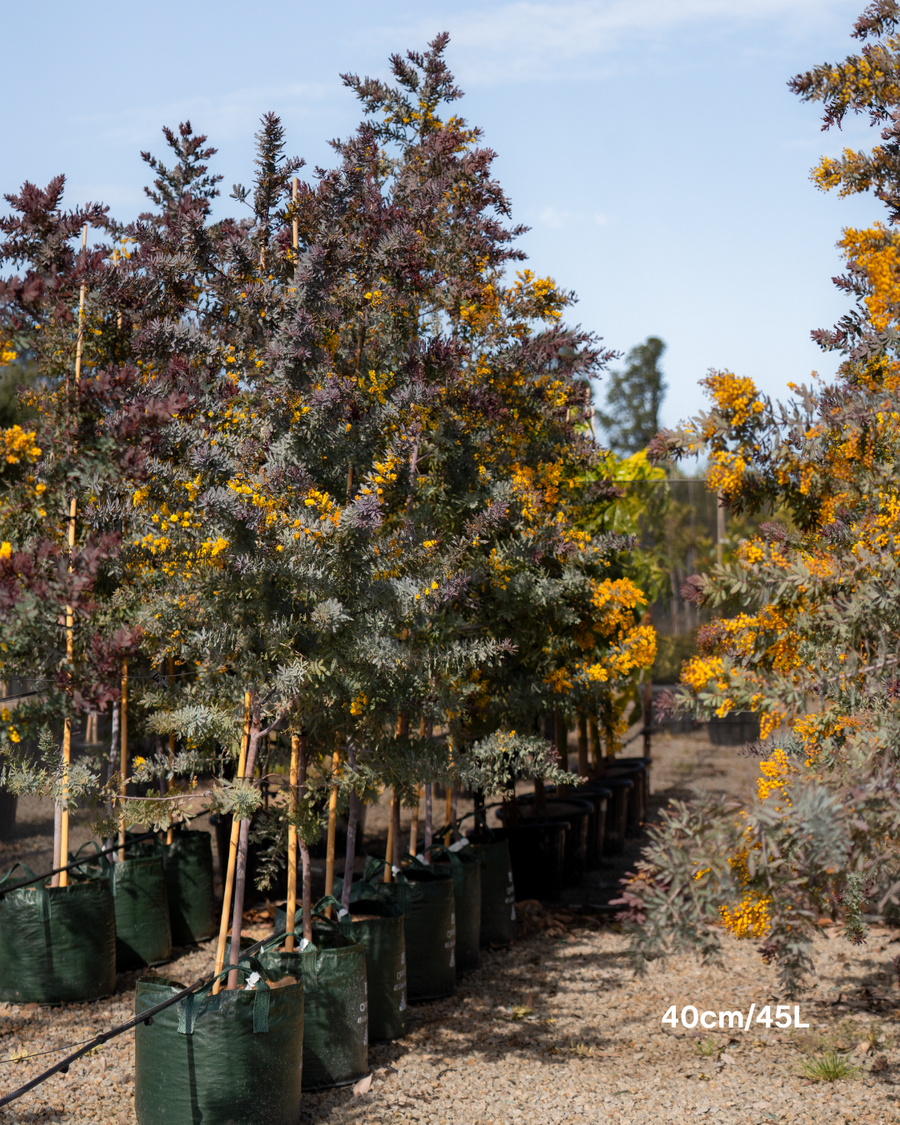
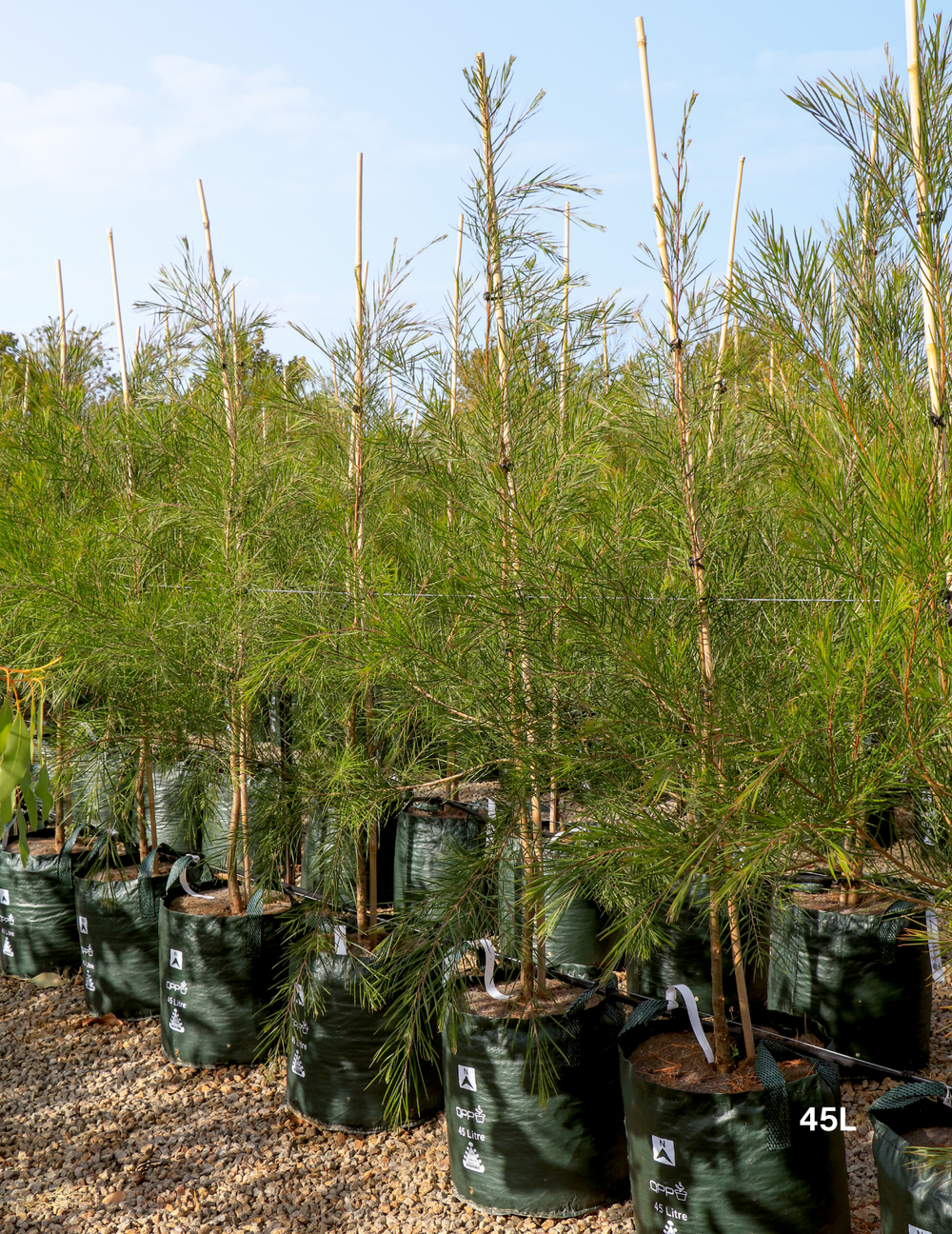
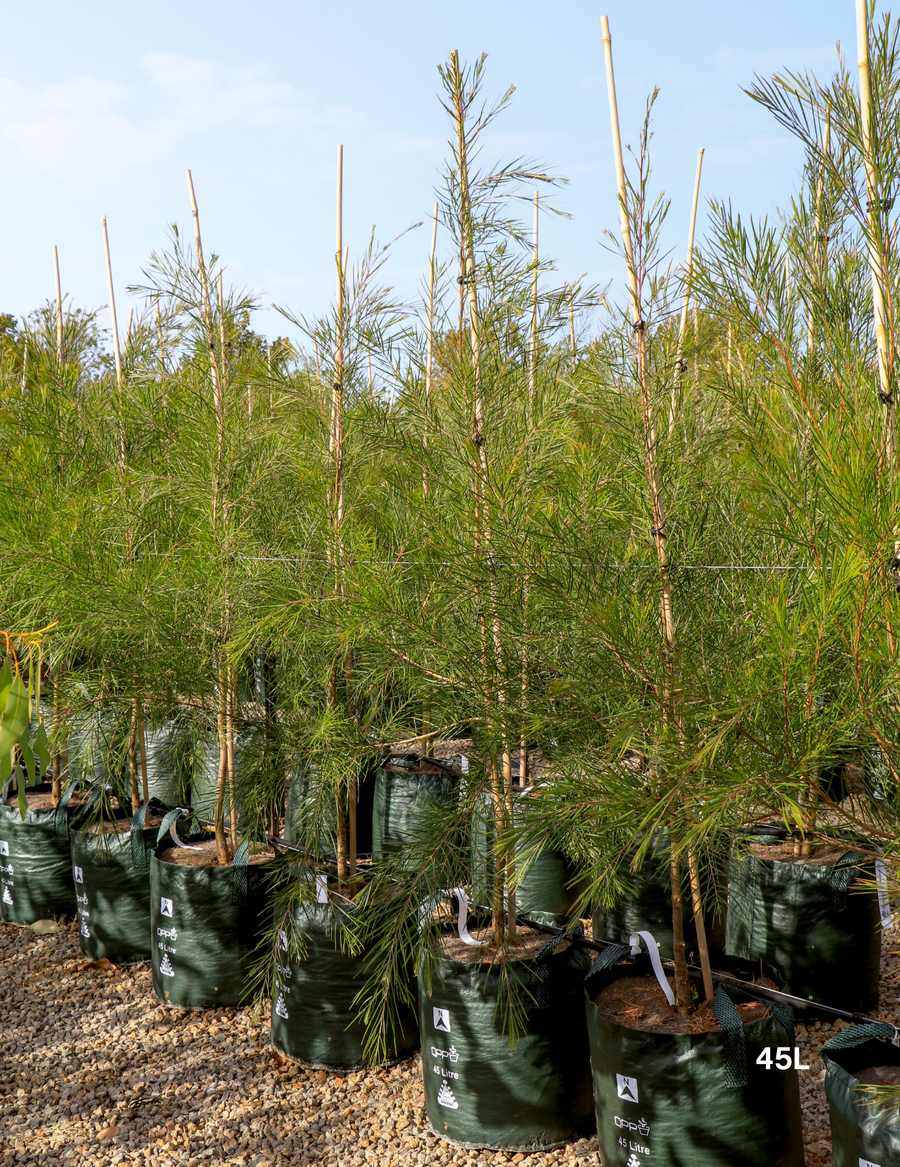
The straight species, with soft silver blue-green feathery foliage rather than the purple new growth of 'Purpurea', and masses of golden ball flowers in late winter when little else is in bloom. Grows taller than 'Purpurea' at 6 to 8 metres.

Regular price $230.00
Sale price $230.00 Regular price
Tax included. Shipping calculated at checkout.
Pot size
Available batches
Size: 40cm/45L
Current height guide
Please enquire
Pot size
40cm/45L

Approximate only. Minimum height important? Confirm with us.

Height guide & disclaimer

Height guide disclaimer: Height ranges are approximate only. As living products, plant heights naturally vary between individual plants, batches, and seasons. No guarantee is given that supplied plants will fall within the stated range. If minimum heights are required, you must confirm current batch heights with Evergreen Trees Direct prior to purchase. Variation in height is normal and is not grounds for return, refund, replacement, or compensation.

Quantity

Order multiple sizes

Mix pot sizes and batches in one order.

Size / batchEachQuantity
40cm/45LApprox. height: Approx. 1.2m – 2.1m$230.00

Height guide & disclaimer

Height guide disclaimer: Height ranges are approximate only. As living products, plant heights naturally vary between individual plants, batches, and seasons. No guarantee is given that supplied plants will fall within the stated range. If minimum heights are required, you must confirm current batch heights with Evergreen Trees Direct prior to purchase. Variation in height is normal and is not grounds for return, refund, replacement, or compensation.

Subtotal before discounts & delivery$0.00

Delivery is calculated at checkout.

Ask a question

The fields marked * are required.

Not sure how many trees you need?

Plan your hedge

Enter the length of your boundary, then choose how closely you want to plant.

Choose your planting spacing

Enter your boundary length to see how many trees you need.

Measure only the boundary you intend to plant—exclude gates and gaps. Spacing is centre to centre. Quantities are rounded up for one row, allowing roughly half the spacing at each end. Site conditions and pruning affect the final hedge.

Compare trees

Choose two trees and compare the same pot size.

    About Acacia baileyana

    Acacia baileyana is the straight species Cootamundra Wattle, the one with soft silver blue-green feathery foliage rather than the purple new growth of 'Purpurea'. The fine bipinnate leaflets give the whole tree a light, almost misty texture that holds all year.

    Through late winter and early spring it covers itself in masses of bright golden ball flowers, often so densely that the foliage disappears behind them. It is one of the earliest and heaviest flowering wattles, and it lands at a point in the year when very little else is in bloom.

    It grows fast, 1 to 2 metres a year, to a mature 6 to 8 metres tall and 3 to 5 metres wide. That is taller than 'Purpurea', so allow more room. Full sun, tolerant of light to moderate frost, drought and poor soils once established, and adaptable across sandy, loam and clay-loam ground.

    Like most fast wattles it is short-lived at around 15 to 20 years, so it is best used where quick impact matters more than longevity, or as a fast screen while slower long-term trees establish behind it.

    Frequently Asked Questions

    About Acacia baileyana

    What is the difference between Acacia baileyana and 'Purpurea'?

    Foliage colour and size. The straight species has silver blue-green feathery foliage all year. 'Purpurea' is a selection of the same species whose new growth flushes deep purple before hardening to silver-grey. The species also grows larger, to 6 to 8 metres against 4 to 6 metres for 'Purpurea'. Flowers are identical golden yellow on both.

    How big does it grow?

    6 to 8 metres tall and 3 to 5 metres wide at maturity, with a spreading canopy. It reaches usable size quickly, growing 1 to 2 metres a year.

    When does it flower?

    Late winter into early spring, typically July through September depending on your district. The golden ball flowers open in such quantity that they often hide the foliage completely.

    How long does it live?

    Around 15 to 20 years, which is normal for a fast-growing wattle. Plan for replacement, or use it as a quick screen while slower long-term trees grow up behind it.

    Does it self-seed, and where should I avoid planting it?

    Yes, it sets hard, long-lived seed that birds and ants move around, and outside its natural range on the NSW western slopes it has naturalised in parts of Victoria, NSW, south-east Queensland, south-west WA and the Adelaide region. It is not a Weed of National Significance and is only formally declared in the ACT. In a suburban or urban garden it is not a problem. The practical rule is simple: do not plant it on a property that backs onto remnant bushland, heathland or grassy woodland, and do not dump prunings or seed-bearing waste in a reserve.

    Is it frost tolerant?

    It handles light to moderate frost once established. Young plants are more vulnerable through their first winter in colder inland districts, so mulch the root zone and give them shelter from the worst wind.

    How far apart should I plant it for a screen?

    2 to 3 metres apart for an informal screen. As individual feature trees, allow 4 metres so each canopy can develop fully at its mature 3 to 5 metre width.

    How do I care for it?

    Very little is needed. Water deeply through the first 12 months, then only in extended dry spells. Tip prune after flowering to keep the canopy dense and to reduce seed set. Use a low-phosphorus native fertiliser, as wattles resent high-phosphorus blends. Avoid heavy pruning into old wood.


    Foliage

    Evergreen (foliage year round)

    Position
    • Full Sun
    Form
    • Spreading
    Use
    • Feature Tree
    • Screening or Privacy
    • Driveway Border
    • Rural Property Planting
    • Windbreak
    Mature height
    6m to 8m
    Mature width
    3m to 5m

    Planting Information

    How To Plant Your Acacia baileyana - Cootamundra Wattle

    Site: Full sun in a free-draining position with room for a 3 to 5 metre canopy. Avoid planting where the property backs onto remnant bushland.

    Hole: Dig twice the width of the root ball and the same depth.

    Planting: Position level with the surrounding soil, backfill gently, firm in and water deeply. Stake in exposed sites, as fast top growth can outpace the root system early on.

    Mulch: A 50 to 70 mm layer of organic mulch over the root zone, kept clear of the trunk.

    Recommended Planting Spacing For Your Acacia baileyana - Cootamundra Wattle

    Informal screen: 2 to 3 metres apart for a fast, dense line.

    Feature tree: 4 metres apart so each canopy develops fully at its mature 3 to 5 metre width.

    Windbreak or rural planting: 3 metres apart in a staggered double row for the fastest shelter.

    Acacia baileyana - Cootamundra Wattle is expected to grow 1m to 2m per year (fast-growing).

    • Fast Growth Rate

    Long Term Care For Your Acacia baileyana - Cootamundra Wattle

    Watering: Deep watering twice weekly through the first 12 months. After that, only a deep soak in extended dry periods.

    Pruning: Tip prune straight after flowering. This keeps the canopy dense, reduces seed set and helps the tree carry its own weight. Avoid cutting back into old wood, as wattles reshoot poorly from bare timber.

    Fertilising: A slow-release low-phosphorus native blend in early spring. Do not use standard high-phosphorus garden fertiliser.

    Pest and disease: Hardy. Borers and galls can appear on stressed or ageing trees, which is one reason to keep water up through the first summers.

    Planting Your Acacia baileyana - Cootamundra Wattle in Different Soil

    Sandy soils: Excellent and free-draining. Mulch well through the establishment period.

    Loam soils: Ideal, giving the fastest growth and heaviest flowering.

    Clay soils: Clay loam is tolerated well. Heavy clay needs gypsum and compost through the planting area, or a raised mound.

    pH preference: Unusually broad, growing across acid, neutral and alkaline ground.

    Fertiliser note: Use a low-phosphorus native blend. Wattles are sensitive to the high-phosphorus fertilisers sold for general garden use.

    Uses in my Garden

    Uses in my Garden

    • Feature Tree
    • Screening or Privacy
    • Driveway Border
    • Rural Property Planting
    • Windbreak

    Acacia baileyana - Cootamundra Wattle works in an:

    • Australian Native Garden – celebrates local plants with natural character.
    • Wildlife Garden – planting to attract birds, bees, and pollinators.
    • Low-maintenance Garden – resilient choices for easy care and year-round appeal.
    • Modern Garden – sleek, minimal, and design-led planting.

    Is Acacia baileyana - Cootamundra Wattle Evergreen or Deciduous?

    Acacia baileyana - Cootamundra Wattle is an Evergreen (foliage year round) Tree

    Mature Height & Width

    Mature Height: 6m to 8m

    Mature Width: 3m to 5m

    Acacia baileyana - Cootamundra Wattle is expected to grow 1m to 2m per year (fast-growing).

    Growth Rate of Acacia baileyana - Cootamundra Wattle

    Acacia baileyana - Cootamundra Wattle is expected to grow 1m to 2m per year (fast-growing).

    They are considered to have a:

    • Fast Growth Rate

    Frost Tolerance & Ideal Climate to plant Acacia baileyana - Cootamundra Wattle

    Is Acacia baileyana - Cootamundra Wattle frost tolerant?

    Acacia baileyana - Cootamundra Wattle is Frost Tolerant – Can handle light to moderate frost once established.

    Does Acacia baileyana - Cootamundra Wattle Flower?

    Acacia baileyana flowers from late winter into early spring, typically July to September, carrying bright golden ball flowers in such quantity that they frequently hide the foliage. It is among the earliest and heaviest flowering wattles, arriving at a point in the year when very little else is in bloom.

    Does Acacia baileyana - Cootamundra Wattle flower?

    • Yes - Flowers

    Flowering Period:

    • Winter
    • Spring

    Flower Type:

    • Fluffy

    Flower Colour:

    Yellow

    Is Acacia baileyana - Cootamundra Wattle an Australian Native Tree?

    Yes

    Acacia baileyana - Cootamundra Wattle is Native to Native to the western slopes and tablelands of New South Wales, particularly around Cootamundra, where it grows in dry sclerophyll woodland. Its natural range is small, but it has been planted across southern Australia for well over a century.

    What is the Wildlife Value of Acacia baileyana - Cootamundra Wattle ?

    The heavy golden flowering of Acacia baileyana is a major late-winter pollen source for native bees and other pollinators at a lean point in the season. The fine dense canopy gives shelter and nesting cover for small birds, and insects drawn to the foliage bring insectivorous birds in behind them.

    How much Sunlight does Acacia baileyana - Cootamundra Wattle need?

    Acacia baileyana - Cootamundra Wattle will thrive best in:

    • Full Sun

    Preferred Soil?

    Acacia baileyana is adaptable across sandy, loam and clay-loam soils and tolerates acid through to alkaline pH, which is unusually broad. Drainage is the one requirement. Use a low-phosphorus native fertiliser, as wattles resent the high-phosphorus blends sold for general garden use.

    Is Acacia baileyana - Cootamundra Wattle Drought Tolerant?

    Is Acacia baileyana - Cootamundra Wattle Drought tolerant?

    Acacia baileyana needs deep watering through its first 12 months to establish. After that it is genuinely drought tolerant and holds condition through extended dry periods on little or no supplementary water, which reflects its origins in dry sclerophyll woodland on the NSW western slopes.

    Frequently Asked Questions

    What is the difference between Acacia baileyana and 'Purpurea'?

    Foliage colour and size. The straight species has silver blue-green feathery foliage all year. 'Purpurea' is a selection of the same species whose new growth flushes deep purple before hardening to silver-grey. The species also grows larger, to 6 to 8 metres against 4 to 6 metres for 'Purpurea'. Flowers are identical golden yellow on both.

    How big does it grow?

    6 to 8 metres tall and 3 to 5 metres wide at maturity, with a spreading canopy. It reaches usable size quickly, growing 1 to 2 metres a year.

    When does it flower?

    Late winter into early spring, typically July through September depending on your district. The golden ball flowers open in such quantity that they often hide the foliage completely.

    How long does it live?

    Around 15 to 20 years, which is normal for a fast-growing wattle. Plan for replacement, or use it as a quick screen while slower long-term trees grow up behind it.

    Does it self-seed, and where should I avoid planting it?

    Yes, it sets hard, long-lived seed that birds and ants move around, and outside its natural range on the NSW western slopes it has naturalised in parts of Victoria, NSW, south-east Queensland, south-west WA and the Adelaide region. It is not a Weed of National Significance and is only formally declared in the ACT. In a suburban or urban garden it is not a problem. The practical rule is simple: do not plant it on a property that backs onto remnant bushland, heathland or grassy woodland, and do not dump prunings or seed-bearing waste in a reserve.

    Is it frost tolerant?

    It handles light to moderate frost once established. Young plants are more vulnerable through their first winter in colder inland districts, so mulch the root zone and give them shelter from the worst wind.

    How far apart should I plant it for a screen?

    2 to 3 metres apart for an informal screen. As individual feature trees, allow 4 metres so each canopy can develop fully at its mature 3 to 5 metre width.

    How do I care for it?

    Very little is needed. Water deeply through the first 12 months, then only in extended dry spells. Tip prune after flowering to keep the canopy dense and to reduce seed set. Use a low-phosphorus native fertiliser, as wattles resent high-phosphorus blends. Avoid heavy pruning into old wood.

    Compare sizes side by side

    40cm/45L

    Approx. 1.2m – 2.1m
    Heights are approximate and vary between individual trees.

    Acacia baileyana is loved for its The straight species, with soft silver blue-green feathery foliage rather than the purple new growth of 'Purpurea', and masses of golden ball flowers in late winter when little else is in bloom. Grows taller than 'Purpurea' at 6 to 8 metres.

    We take pride in supplying A+ grade advanced trees. When stock at our farm is not yet ready, we work with our trusted trade suppliers to source the best available trees for your garden.

    youtube Load video:

    Evergreen Trees Direct Has Been Featured In:

    Perfect Substitutes for Acacia baileyana - Cootamundra Wattle

    Follow Us On Instagram

    @evergreentreesdirect ↗
    Evergreen Trees DirectEvergreen Trees DirectEvergreen Trees DirectEvergreen Trees DirectEvergreen Trees Direct
    youtube Load video: