



Skip to content

OUR END OF FINANCIAL YEAR SALE IS LIVE!

20% OFF ORDERS OVER $1,500 - DISCOUNT APPLIES AUTOMATICALLY AT CHECKOUT

Top Trees for Avenue Planting: 11 Picks to Elevate Your Grand Entrance

Top Trees for Avenue Planting: 11 Picks to Elevate Your Grand Entrance

A practical guide to choosing and planting trees for avenues. Eleven picks across classic American shade, Mediterranean column, refined European, dramatic autumn colour and iconic Australian native. Match the tree to the architecture, get the spacing right, and the avenue reads as designed from year one.


Avenue PlantingCivic LandscapesDrivewayFormal Garden

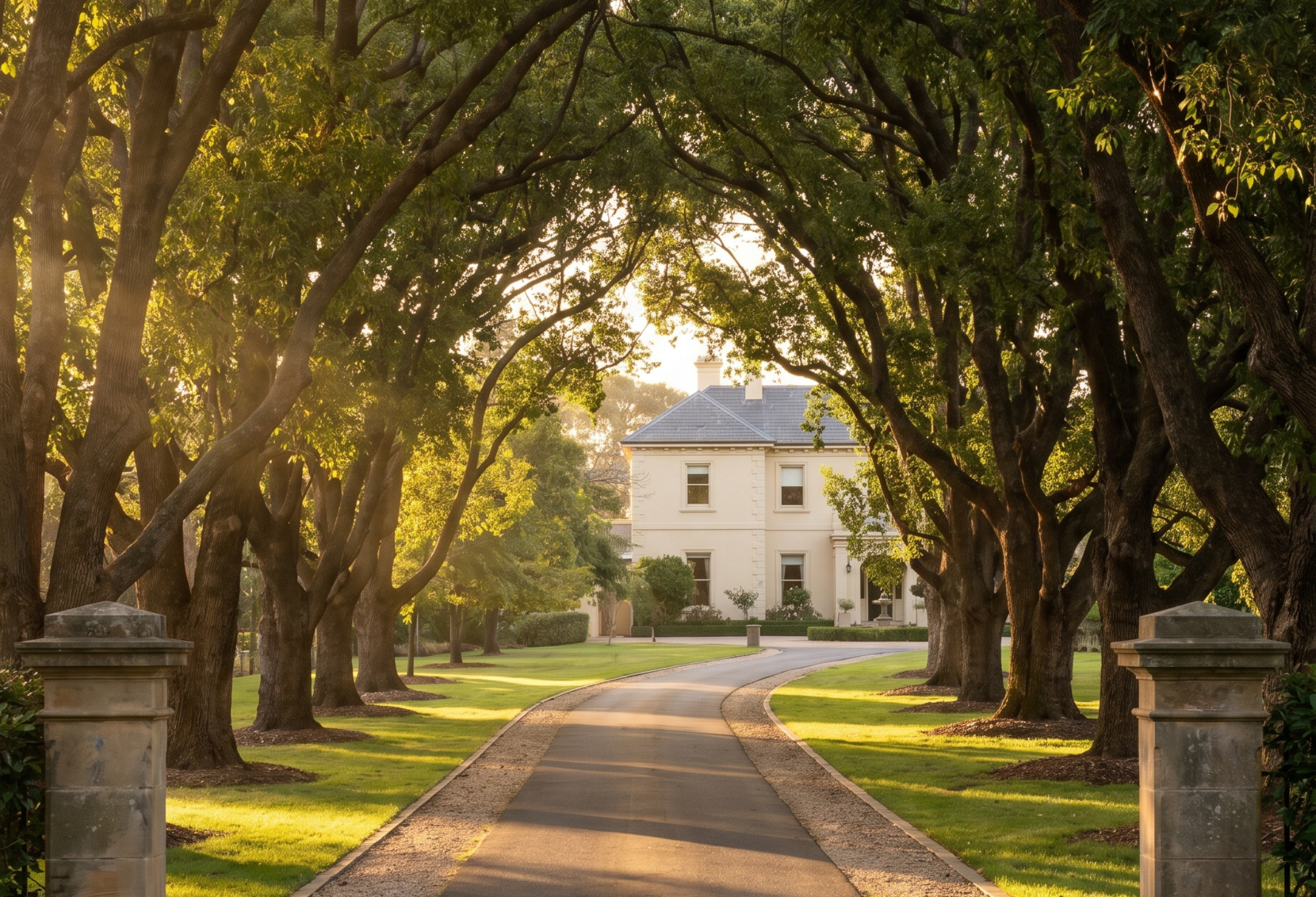
A well-planted avenue is the single most powerful curb appeal move a house can make. Matched trees in matched spacing along the driveway create the sense of arrival that every grand entrance needs. The right pick lasts for decades and reads as designed from year one, with proper structure that only deepens with maturity.

This guide is for anyone planting an avenue, from a 20-metre suburban driveway to an 80-metre rural drive to a civic boulevard. The eleven picks below cover every architectural style, every property scale and every climate zone. Choose well and the trees will outlast the house.

Match the tree to the house architecture

The avenue is the first thing visitors see, and it should feel like an extension of the house style rather than a planting decision made independently. The species you choose either confirms the house architecture or fights against it. A row of Pencil Pines beside an English country house misfires. A row of Pin Oaks beside an Italian villa misfires. The right pairing reads as a single composed property statement.

For Italian and Mediterranean architecture, Cupressus 'Glauca' Pencil Pine is the centuries-proven choice. For English country houses, Tilia cordata 'Greenspire', Quercus palustris (Pin Oak) or Ulmus parvifolia (Chinese Elm) all suit the style. For formal modern Australian, Pyrus 'Chanticleer', 'Capital' or Snow Pear deliver tight columnar form. For civic boulevards and grand estates, Platanus 'Bloodgood' (London Plane) carries the scale. For cool-climate seasonal showpieces, Acer rubrum 'October Glory' is unmatched. For rural Australian properties, Corymbia maculata (Spotted Gum) is the iconic native choice.

Scale matters: the wrong tree size ruins everything

The single biggest mistake on avenue planting is choosing a tree too big for the property. London Plane is iconic on civic boulevards but planted on a suburban driveway it becomes a structural problem within a decade. Pin Oak suits rural estates but overwhelms a 20-metre driveway. Match the tree to the scale and the avenue works for the life of the property.

For suburban driveways of 15 to 30 metres, choose tight columnar trees: Pyrus 'Chanticleer', Pyrus 'Capital', Snow Pear, Cupressus Pencil Pine, or Acer 'October Glory'. For country house drives of 30 to 80 metres, Tilia 'Greenspire', Ulmus parvifolia or Quercus palustris all suit the scale. For rural and estate drives of 80 metres or longer, the larger picks come into their own: Platanus 'Bloodgood', Corymbia maculata, Pin Oak. Get the scale match right and the avenue reads as proportioned from the day of planting.

Evergreen versus deciduous: the trade-off

An avenue is a long-term commitment, so the evergreen-versus-deciduous decision matters more here than in any other planting. Evergreens hold their structure through winter and read as formal year-round, but cast permanent shade and bring no seasonal change. Deciduous trees let winter light through to the driveway and the house (welcome in cool climates) but pause their visual impact during the dormant months.

For year-round consistent structure, choose Cupressus 'Glauca' Pencil Pine or Corymbia maculata Spotted Gum. Both maintain their form through every season. For seasonal drama, every other pick on this list is deciduous and delivers a flowering or autumn-colour moment in exchange for winter bareness. Cool-climate properties typically benefit from deciduous; warm-climate properties often want evergreen to balance the heat. Match the climate and the architectural priority to the decision.

Spacing for mature canopy interlock

The most common avenue mistake after wrong-tree-for-scale is planting too far apart. Trees spaced beyond their mature canopy width never close, the avenue never reads as an avenue, and the planting feels accidental rather than designed. The smaller the gap, the faster the avenue closes into the tunnel of canopy that defines a properly executed entrance.

Recommended spacings by species: Pencil Pine 2 to 3 m for rhythmic spaced columns; Pyrus 'Capital' 3 to 4 m; Pyrus 'Chanticleer' and Snow Pear 5 m; Acer 'October Glory' 6 to 8 m; Pin Oak, Tilia 'Greenspire' and Chinese Elm 8 m; London Plane and Spotted Gum 10 to 15 m. Plant at the tighter end of these ranges if you want faster canopy interlock, at the wider end for greater air movement and more distinct individual specimens.

Before you start: what you'll need

A site plan with measured spacing
The avenue lives or dies on uniformity, and uniformity starts with the plan.

Measure the full length of the avenue and mark out the planting positions before you order trees. Use marking spray or stakes at each intended tree position. Walk back and forward along the line and confirm the spacing reads correctly to the eye.

The most expensive avenue planting mistake is buying trees, planting them, then realising the spacing is wrong. The second-most-expensive is buying enough trees for a row when you actually only have room for half that number, because the species you chose needs wider spacing. Plan first. Order second. Plant third.
Soil preparation across the entire row
Prepare the soil for every planting position to the same standard.

Open each planting hole twice as wide as the rootball and the same depth. Loosen the surrounding soil with a fork to a metre around each hole. Mix the excavated soil 50/50 with aged compost and a moisture-retaining additive (coco coir or aged manure).

For clay soils, add gypsum to the bottom of each hole and through the backfill mix. The uniformity of growth across an avenue depends on consistent soil preparation. One hole done well and twenty done badly produces an uneven avenue that takes a decade to correct.
One quality stake per tree, plus soft ties
Crooked young trees become crooked mature trees.

An avenue depends on uniform vertical trunks. Stake every tree at planting with a single hardwood stake driven outside the rootball on the windward side. Use adjustable soft ties at two heights (low and mid) on the trunk.

Remove stakes after 18 to 24 months once the trunk is self-supporting. Check ties every six months and loosen as trunks thicken. A crooked tree in a row of straight ones ruins the entire avenue effect; the staking work in year one prevents that for the life of the planting.
Sharp pruning tools for canopy training
Canopy training is the multi-year work that turns young trees into a mature avenue.

Buy sharp bypass secateurs for small wood, a sharp pruning saw for thicker branches, and a sharp pole-pruner for high work as the trees mature. Wipe blades with metho between trees to prevent disease spread.

The canopy training work happens each winter for deciduous species and each spring for evergreens. Without these tools, the work doesn't happen and the avenue grows up scruffy.
A species-appropriate feed at planting and ongoing
Match the feed to the species.

Most picks in this guide take a slow-release general fertiliser at planting and again each spring. Corymbia maculata (Spotted Gum) is the exception and needs a low-phosphorus native plant feed only.

Apply a half-rate first feed for newly planted trees, full rate for established ones. Liquid seaweed every six weeks through warm months supports the canopy growth needed for a closed-canopy avenue.

How to keep your tree happy

Water through establishment for matched growth
Consistent moisture across the entire row is what produces matched growth.

Deep weekly soak through the first two summers. Use a drip-line irrigation system that delivers identical water to each tree, rather than hand-watering which inevitably becomes uneven across the row.

The most common cause of uneven avenue growth is uneven establishment watering. After year two, deep fortnightly soak in dry weeks. After year three, most species need only occasional supplementary water in extreme drought.
Lift the canopy progressively for clearance
For shade-canopy avenues (Pin Oak, London Plane, Tilia, Chinese Elm, Spotted Gum), lift the canopy in stages as the trees mature.

Remove the lowest one or two branches each winter once the tree is well-established. The goal is at least 2.5 m clearance for residential driveways (vehicles and pedestrians) and 4 m or more for civic avenues.

Lift evenly across all trees in the row at the same time. Identical pruning produces an even canopy. Removing more from one tree than another breaks the uniformity that makes an avenue read.
Feed annually for canopy growth
Avenue trees benefit from consistent annual feeding to drive the canopy fill that closes the avenue.

Apply slow-release tree and shrub fertiliser in early spring for most species. Use low-phosphorus native plant food for Corymbia maculata (Spotted Gum). Top up with liquid seaweed every six weeks through the warm growing months.

Apply the same rate to every tree in the row. Uneven feeding produces uneven growth. Mark the application clearly so it's not missed for any tree.
Mulch the full row, refresh annually
A continuous mulch run along the row reads better visually and provides better growing conditions than individual mulch rings.

Apply 75 to 100 mm of organic mulch (sugar cane, pine bark, or eucalyptus chip depending on aesthetic) along the entire avenue row. Keep mulch 50 mm clear of every trunk to prevent collar rot.

Refresh annually before summer. The mulch retains soil moisture, suppresses weeds, moderates root-zone temperature, and visually finishes the avenue planting.
Replace failures urgently to maintain uniformity
An avenue with a missing tree reads as broken.

If any tree in the row dies or is damaged beyond recovery, replace it within the same dormant season. Source a replacement of the same species and the closest matching size you can find. Stake firmly and water more intensively through the first season to catch up to the established row.

The asymmetry of a missing tree in a matched row undermines the entire avenue effect. Prioritise quick replacement over economising on the new tree.

Perfect pairs for the front garden

Pyrus 'Chanticleer' columns + Buxus hedge underneath
The classical formal entrance composition.

A row of matched Pyrus 'Chanticleer' as the columnar canopy along both sides of the driveway, with a low clipped Buxus hedge running along the base on both sides.

Why it works: the Pear delivers the white-blossom spring moment and burgundy autumn colour at canopy height. The Buxus provides the formal green band at ground level that reads year-round, even when the Pears are bare in winter. Together they create the European-formal avenue style that suits Australian heritage homes.
Pencil Pine pair at the gate + Lavender row
The Italian villa entrance.

A matched pair of Cupressus 'Glauca' Pencil Pines flanking the property entrance, with a row of Lavandula running along the driveway in front of the columns.

Why it works: the silver-blue Pencil Pine pair carries the iconic Mediterranean column form at the gate. The Lavender at the base brings the silver-flowering Provence atmosphere into the entrance. Drought-tolerant, suited to Mediterranean climates, evergreen year-round.
Tilia 'Greenspire' avenue + Hornbeam hedge underneath
The European country house composition.

A row of Tilia cordata 'Greenspire' as the symmetrical pyramidal canopy along both sides of the drive, with a Hornbeam (Carpinus betulus) hedge clipped to chest height running underneath.

Why it works: the Tilia delivers the formal European avenue with summer fragrance. The Hornbeam hedge holds dried leaves through winter (a distinctive English country detail) and provides the lower structural band the Tilia canopy floats above.
London Plane civic + low Buxus parterre
The civic boulevard composition.

Massive Platanus 'Bloodgood' London Plane trees running both sides of a substantial drive, with a low Buxus parterre forming geometric patterns in the verge between the trunks.

Why it works: the Plane carries the civic scale with iconic mottled bark and massive canopy. The Buxus parterre delivers the formal ground-level detail that reads from the drive and signals serious garden design. Requires substantial scale to work; not for suburban driveways.
Spotted Gum + Lomandra ground layer
The iconic Australian rural drive.

A row of matched Corymbia maculata Spotted Gum delivering the dappled bark and tall native canopy, with sweeping drifts of Lomandra 'Tanika' at the ground layer running between the trunks.

Why it works: native at every level, drought-tolerant, low-maintenance, and absolutely Australian in character. Suits rural NSW, Victoria and South-East Queensland properties. The Spotted Gum bark is the visual highlight; the Lomandra movement underneath softens the avenue without competing for attention.
Pin Oak + bluebells underneath for autumn
The English country house autumn moment.

A row of mature Quercus palustris Pin Oaks along the drive, with English bluebells naturalised underneath. Autumn delivers the brilliant red-bronze Oak colour overhead while bluebell foliage is dormant.

Why it works: the Pin Oak is the autumn-colour standout of the avenue species, and the bluebells deliver an unexpected springtime carpet at the ground layer when the Oaks are still bare. Two seasonal showpieces from one composition. Suits cool-climate properties (Southern Highlands, Adelaide Hills, Macedon Ranges).
Snow Pear silver + Stachys at base
The silver-tone avenue.

A row of Pyrus nivalis Snow Pear delivering silver foliage in the canopy, with a sweep of Stachys byzantina Lamb's Ears at the base of the row.

Why it works: silver at canopy height and silver at ground level reads as a deliberate tonal choice rather than an accidental one. The combination suits modern Australian architecture and Mediterranean-coastal hybrid styles. Drought-tolerant once established.
October Glory + matched pair of Buxus topiary at gate
The cool-climate showstopper.

A row of Acer rubrum 'October Glory' delivering brilliant red autumn colour along the drive, with a matched pair of Buxus topiary balls in matching ornamental pots at the gate entrance.

Why it works: the autumn drama of October Glory is the property's signature moment; the formal Buxus pair at the gate signals deliberate design year-round. The pair anchors the entrance even when the Maple is bare in winter.

Caring for your tree through the seasons

Spring: feed, plant new replacements, shape young trees
The major maintenance season for avenue trees.

Apply slow-release tree and shrub fertiliser (or low-phosphorus native for Spotted Gum) in early spring as growth restarts. Use a half-rate first feed for newly planted trees and full rate for established ones.

Plant any replacement trees once soil temperatures rise. Refresh the mulch run along the entire row to 75 to 100 mm. Shape young trees with light formative pruning to encourage clean vertical trunks. Inspect stakes and ties; replace any that have rotted. The work done in spring sets up the rest of the year.
Summer: water deeply, manage growth flush
The most demanding season for avenue establishment.

Deep weekly soak through dry weeks for trees in years one and two. Drip-line irrigation across the entire row produces the most uniform growth.

Monitor for the summer growth flush; this is when canopy interlock progresses fastest. Inspect for any species-specific pest pressure (aphid on Tilia, scale on Pin Oak). Apply liquid seaweed every six weeks to support the canopy fill. Net Pyrus against birds if fruit production is unwanted.
Autumn: enjoy colour, mulch refresh, structural prep
The reward season for deciduous avenue species.

Pin Oak, October Glory and Snow Pear all peak in autumn colour. Pyrus 'Chanticleer' delivers its burgundy moment. Tilia and London Plane turn yellow. Allow the spectacle to develop.

Apply final light feed in early autumn for evergreen species. Top-dress the mulch run before winter rain. Begin to identify which trees need structural pruning attention through the dormant winter months ahead.
Winter: structural pruning and planning
The structural work season for deciduous avenue species.

Major formative pruning on all deciduous trees while dormant: lift canopy progressively, remove crossing or damaged branches, maintain symmetrical form across the row. Work systematically along the row in one session, pruning each tree identically.

Plant any new deciduous additions while dormant. Apply lime if soil pH testing shows below 6.0 (most avenue species prefer slightly acidic to neutral). Plan any spring planting work. Order replacement trees for early spring delivery if any gaps need to be filled.

Pruning: when, how, and why it matters

Train clean trunks for canopy clearance
The most important multi-year pruning work on an avenue.

For shade-canopy avenues (Pin Oak, London Plane, Tilia, Chinese Elm, Spotted Gum), lift the canopy progressively as the trees mature. Remove the lowest one or two branches each winter once the tree is well-established.

Aim for at least 2.5 m clearance under the canopy for residential driveways (vehicles and pedestrians) and 4 m or more for civic avenues. Lift evenly across all trees in the row at the same time. Identical pruning produces an even canopy.
Pencil Pine: light shape in spring
Cupressus 'Glauca' Pencil Pine needs only light annual shaping.

In spring after the first flush of growth, lightly trim back any side growth that breaks the tight columnar form. Never cut into old wood. Pencil Pines have very limited ability to reshoot from hard wood and a heavy cut creates a permanent dead patch.

The natural form of Pencil Pine is the design; maintenance pruning supports it rather than imposing a new shape. One light pass a year is enough.
Pyrus: dormant winter thinning prune
All Pyrus species benefit from a winter dormant prune to maintain form and stimulate flowering.

Late winter while the tree is bare, remove any crossing branches, water-shoots and inward-growing wood. Maintain the columnar form by pruning back any wayward side branches that break the vertical line.

'Chanticleer' and 'Capital' both reward thinning that opens the centre of the canopy for air and light. Snow Pear takes the same treatment. Use sharp bypass secateurs and make clean cuts close to the branch collar.
Deciduous shade trees: late winter structural prune
Pin Oak, London Plane, Tilia, Chinese Elm, October Glory and Tulip Tree all take their structural pruning in late winter while dormant.

Remove crossing, damaged or inward-growing branches. Lift the canopy progressively if working on the lower-clearance schedule. For Tilia 'Greenspire', maintain the natural pyramidal form; resist heavy reductions.

For London Plane, the species responds well to pollarding (a heavy formal cut back to a permanent framework each winter) if a strict architectural form is wanted. This is the European tradition and produces the iconic short-trunked civic boulevard look.
Spotted Gum: minimal intervention
Corymbia maculata needs almost no active pruning.

Remove only crossing, damaged or low branches in late winter while dormant. Use a sharp pruning saw. The species develops its iconic open vase form naturally; do not attempt to shape it tighter.

Avoid removing the lower branches too early in life; the lower canopy provides shade and contributes to the natural form. Wait until the tree is well-established (10+ years) before lifting the canopy for clearance work.

Our favourite picks

1. Quercus palustris (Pin Oak)

The Pin Oak is the classic American shade avenue tree. Pyramidal form when young, broadening to a graceful spreading canopy with age, brilliant red-bronze autumn colour, and the kind of clean upright trunk that's perfect for high-canopy avenue planting where you want cars and people walking underneath.

Type
Large deciduous shade-tree avenue
Height
15 to 20m
Width
10 to 12m
Growth rate
Moderate to fast
Foliage
Glossy mid-green summer, brilliant red-bronze autumn
Flowers
Insignificant catkins in spring
Form
Pyramidal young, spreading with age
Conditions
Full sun, well-drained soil, frost hardy, drought tolerant once established
Maintenance
Low. Light formative pruning when young.
Best for
the centuries-long classic American shade avenue, or a brilliant red-bronze autumn show on a grand rural drive.

Why we love it

Quercus palustris combines centuries of longevity (a Pin Oak planted today will outlive several owners of the property) with brilliant autumn colour that lights up the avenue every year. The high straight trunk allows vehicles and people to pass underneath without obstruction, and the species handles urban conditions, frost and drought once established. The classic American boulevard tree.

Perfect pair

Plant in matched rows of six or more along long driveways for the classic boulevard effect, spaced 8 to 10m apart. Combine with Platanus 'Bloodgood' on the largest avenues for layered shade canopy.

Tips for planting

Plant at 8 to 10m spacing for mature canopy interlock. Stake young trees so they grow straight (critical for an avenue). Train a single leader for the cleanest trunk. Allow 5m clearance from buildings for mature canopy.

The centuries-long American shade avenue.

Shop Quercus palustris

2. Pyrus calleryana 'Chanticleer' (Chanticleer Ornamental Pear)

'Chanticleer' is the strongest naturally narrow columnar Ornamental Pear. Tight upright pyramidal form holds matched trees in clean lines along the driveway, pure white spring blossom carpets the avenue, glossy summer leaves shine, and the autumn colour is reliable burgundy red. No fruit drop. The pick for the formal modern Australian driveway.

Type
Columnar deciduous flowering avenue tree
Height
8 to 12m
Width
4 to 5m
Growth rate
Moderate to fast
Foliage
Glossy mid-green summer, burgundy-red autumn
Flowers
Pure white blossom in spring on bare branches
Form
Tight upright pyramidal
Conditions
Full sun, adaptable soil, frost hardy, drought tolerant once established
Maintenance
Low. Minimal pruning required.
Best for
a tight columnar Ornamental Pear for a suburban driveway, or white spring blossom plus burgundy autumn.

Why we love it

'Chanticleer' was bred specifically to hold a tight columnar form without much pruning, which means matched trees naturally stay in clean lines. The four-season interest (spring blossom, summer glossy leaves, autumn burgundy, winter sculptural silhouette) means the avenue is a feature year-round. No fruit drop on driveways (the fruit is tiny and sterile).

Perfect pair

Plant in matched rows at 5m spacing for a formal columnar avenue, or pair with Pyrus 'Capital' for alternating-cultivar interest with matched habit.

Tips for planting

Plant at 5m spacing for the classic columnar avenue effect. Stake young trees straight. Light formative prune in winter only if needed. Full sun for strongest autumn colour.

The columnar Pear avenue with four-season interest.

Shop Pyrus calleryana 'Chanticleer'

3. Pyrus calleryana 'Capital' (Capital Ornamental Pear)

'Capital' is the other formal columnar Ornamental Pear, with an even tighter upright habit than Chanticleer. Slightly narrower silhouette, same pure white spring blossom and burgundy autumn colour. The choice when the avenue space is tight and you want the strictest columnar form.

Type
Narrow columnar deciduous flowering avenue tree
Height
8 to 12m
Width
3 to 4m
Growth rate
Moderate to fast
Foliage
Glossy mid-green summer, burgundy-red autumn
Flowers
Pure white blossom in spring on bare branches
Form
Very narrow strict columnar
Conditions
Full sun, adaptable soil, frost hardy, drought tolerant once established
Maintenance
Low. Minimal pruning required.
Best for
the narrowest columnar Pear for the tightest avenue strips, or matched rows in a suburban side run.

Why we love it

Where Chanticleer holds 4 to 5m wide, 'Capital' stays at 3 to 4m which means it fits driveways and side strips where Chanticleer would feel too broad. The strictly columnar silhouette gives the strongest formal repetition effect for the modern Australian house. Same white blossom and autumn colour as Chanticleer, just on a tighter footprint.

Perfect pair

Plant at 3 to 4m spacing for the strictest columnar avenue. Pair with Pyrus 'Chanticleer' on broader avenues, or match in matched rows on their own.

Tips for planting

Plant at 3 to 4m spacing for narrow-format avenues. Stake young trees straight. Full sun for strongest autumn colour.

The narrowest formal Pear avenue.

Shop Pyrus calleryana 'Capital'

4. Pyrus nivalis (Snow Pear)

The Snow Pear is the silver-foliage avenue tree. Silver-grey leaves through summer, pure white blossom on bare branches in spring, silver-grey winter bark and structure. A refined avenue choice for silver-palette gardens, cool climates, and Mediterranean-style country homes.

Type
Silver-foliage deciduous avenue tree
Height
6 to 8m
Width
4 to 5m
Growth rate
Moderate
Foliage
Silver-grey spring to summer, orange-red autumn, silver-grey winter bark
Flowers
Pure white spring blossom on bare branches
Form
Rounded upright
Conditions
Full sun, well-drained soil, frost hardy, cold tolerant, drought tolerant once established
Maintenance
Low. Minimal pruning required.
Best for
a silver-grey refined avenue tree, or four-season silver tones for a sophisticated entrance.

Why we love it

Most avenue trees are green. Snow Pear delivers silver tones across every season (silver foliage in summer, silver bark in winter), which lifts the entire avenue's palette and reads as refined rather than predictable. Smaller scale than Pin Oak or London Plane, which makes it the pick for moderate-sized driveways where huge canopy trees would overpower.

Perfect pair

Plant in matched rows of 4 to 6 for refined silver-toned avenue. Combines beautifully with Cupressus 'Glauca' Pencil Pine for layered Mediterranean silver palette at the gates.

Tips for planting

Plant at 5m spacing for matched avenue. Best in cool to cold climates for strongest silver colour. Light prune in winter dormancy only if needed.

Silver elegance across every season.

Shop Pyrus nivalis

5. Cupressus sempervirens 'Glauca' (Italian Pencil Pine)

The Italian Pencil Pine is the iconic Tuscan villa avenue. Strict narrow upright form, silver-blue scale conifer foliage, full Mediterranean drought tolerance, and an architectural silhouette that's been planted along driveways and around grand estates for centuries. The Mediterranean avenue classic.

Type
Evergreen Mediterranean conifer avenue
Height
8 to 12m
Width
1 to 1.5m
Growth rate
Moderate
Foliage
Dense silver-blue scale conifer, evergreen
Flowers
Insignificant
Form
Strict narrow upright column
Conditions
Full sun, well-drained soil, frost hardy, drought tolerant
Maintenance
Very low. Naturally narrow, no clipping needed.
Best for
the iconic Mediterranean Pencil Pine avenue, or Tuscan refinement on a long driveway.

Why we love it

Pencil Pines deliver vertical architecture rather than canopy shade, which means the avenue effect comes from rhythmic repetition rather than tree-to-tree canopy interlock. The silver-blue colour catches winter light and the strict columnar form gives any avenue a Mediterranean estate feel. Almost no input once established, and the species lives for centuries (which is partly why Mediterranean estates have such mature Pencil Pine avenues).

Perfect pair

Plant at 2m spacing for tight rhythmic avenue, or wider 3m spacing for stately spacing. Pair with Pyrus nivalis for layered silver Mediterranean entrance.

Tips for planting

Plant at 2 to 3m spacing for avenue effect. No clipping needed. Full sun for the silver-blue colour. Position where the strict vertical silhouette reads against sky or rendered wall.

The Mediterranean estate avenue, centuries proven.

Shop Cupressus sempervirens 'Glauca'

6. Tilia cordata 'Greenspire' (Small-leaved Linden / Greenspire Linden)

'Greenspire' is the formal European Linden bred for street and avenue planting. Compact upright habit, heart-shaped leaves that turn buttery yellow in autumn, fragrant cream summer flowers that feed bees, and the kind of refined formal presence that's been planted along European country house drives for centuries.

Type
Formal deciduous European avenue tree
Height
12 to 15m
Width
6 to 8m
Growth rate
Moderate
Foliage
Heart-shaped mid-green summer, buttery yellow autumn
Flowers
Small fragrant cream summer flowers, prolific bee food
Form
Compact upright pyramidal
Conditions
Full sun, adaptable soil, frost hardy
Maintenance
Low. Light formative pruning when young.
Best for
the formal European avenue tree, or fragrant summer-flowering shade for a country estate drive.

Why we love it

Tilia cordata 'Greenspire' was specifically selected from the species for compact upright habit that suits street and avenue planting, where the standard Tilia cordata is too sprawling. The result is a tree that holds a tight formal column for the avenue while delivering classic European refinement: heart-shaped leaves, fragrant summer flowers that fill the air with honey scent, and golden autumn colour.

Perfect pair

Plant in matched rows of six or more at 6 to 8m spacing for the classic European avenue, or pair with Quercus palustris for layered European shade canopy on the largest avenues.

Tips for planting

Plant at 6 to 8m spacing for canopy interlock at maturity. Stake young trees straight. Light formative pruning to maintain single leader. Allow 6m clearance from buildings.

The fragrant European Linden avenue.

Shop Tilia cordata 'Greenspire'

7. Platanus x acerifolia 'Bloodgood' (London Plane Tree)

The London Plane is the iconic European boulevard tree. Massive spreading shade canopy, dramatic mottled bark that exfoliates in patches of cream, grey and olive every year, and the kind of architectural shade tree that lines the great boulevards of Paris, London and Madrid. The 'Bloodgood' selection is disease-resistant. The avenue tree for the largest properties.

Type
Large deciduous shade avenue tree
Height
20 to 25m
Width
15 to 20m
Growth rate
Fast
Foliage
Large maple-shaped mid-green summer, butter-yellow autumn
Flowers
Insignificant, distinctive seed balls hang through winter
Form
Massive spreading rounded canopy with mottled bark
Conditions
Full sun, adaptable soil, frost hardy, drought tolerant once established, urban pollution tolerant
Maintenance
Low. Periodic structural pruning while young.
Best for
the iconic boulevard avenue, or massive shade canopy plus mottled bark on a large property.

Why we love it

Few trees match the London Plane for civic-scale boulevard impact. Disease-resistant 'Bloodgood' carries all the iconic features (mottled exfoliating bark in cream/grey/olive patterns, massive shade canopy, urban pollution tolerance, centuries of longevity) without the disease pressure that affects older Plane cultivars. The species was literally bred for civic avenue planting in 17th-century London.

Perfect pair

Reserve for the largest rural avenues and properties. Plant in matched rows of six or more at 12 to 15m spacing for the massive canopy effect. Pair with Quercus palustris on long mixed-canopy estate driveways.

Tips for planting

Plant at 12 to 15m spacing minimum for mature canopy interlock. Needs space for the mature 15 to 20m spread. Allow 8m clearance from buildings. Structural pruning while young to lift canopy.

The iconic European boulevard tree at civic scale.

Shop Platanus x acerifolia 'Bloodgood'

8. Ulmus parvifolia (Chinese Elm)

The Chinese Elm is the elegant vase-form shade avenue tree at a smaller scale than the Plane Tree. Beautiful dappled bark in grey and olive patches, fine-textured leaves on a graceful vase silhouette, drought-tolerant once established, and the species holds leaves longer in autumn than other elms. The refined avenue choice for moderate-scale driveways.

Type
Medium deciduous vase-form avenue tree
Height
10 to 15m
Width
8 to 12m
Growth rate
Moderate
Foliage
Fine glossy mid-green summer, yellow autumn
Flowers
Insignificant late-summer flowers
Form
Elegant vase form with dappled exfoliating bark
Conditions
Full sun, adaptable soil, frost hardy, drought tolerant once established
Maintenance
Low. Light formative pruning when young.
Best for
an elegant vase-form deciduous avenue, or a drought-tolerant alternative with dappled bark.

Why we love it

Where the London Plane wants civic boulevard scale, the Chinese Elm delivers similar refined elegance at a fraction of the size. The exfoliating bark patterns are arguably more beautiful than the Plane's (more nuanced colour transitions in olive, grey and pale cream). The vase form lifts a clean canopy that suits avenues where you want shade without the immense scale of a Plane or Pin Oak.

Perfect pair

Plant in matched rows at 8m spacing for elegant moderate-scale avenue. Pair with Tilia 'Greenspire' for layered European-Asian shade canopy effect on longer drives.

Tips for planting

Plant at 8m spacing for canopy interlock. Stake young trees straight. Train a single leader and lift the canopy as the tree matures. Drought-tolerant once established.

The elegant vase-form avenue with stunning dappled bark.

Shop Ulmus parvifolia

9. Liriodendron tulipifera (Tulip Tree)

The Tulip Tree is one of the most distinctive deciduous trees in cultivation. Unique tulip-shaped leaves (genuinely shaped like a tulip outline) become a talking point with every visitor approaching the property, cup-shaped greenish-yellow summer flowers are unusual on a large shade tree, and the brilliant golden autumn colour lifts the entire avenue. Tall straight trunk perfect for high-canopy avenue planting. Reserve for properties with space for the 20m+ mature canopy.

Type
Large dramatic feature deciduous avenue tree
Height
20 to 25m
Width
10 to 15m
Growth rate
Fast
Foliage
Distinctive tulip-shaped mid-green summer, brilliant golden autumn
Flowers
Cup-shaped greenish-yellow flowers in summer
Form
Upright pyramidal with high straight trunk
Conditions
Full sun, well-drained soil, frost hardy
Maintenance
Low. Light formative pruning when young.
Best for
distinctive tulip-shaped leaves at avenue scale, or a brilliant golden autumn show on a large estate drive.

Why we love it

Liriodendron tulipifera delivers two things that no other avenue tree on this list does: genuinely distinctive tulip-shaped leaves that visitors notice and remember, and one of the strongest golden autumn colour shows in cultivation.\n\nThe leaf shape is the unique selling point. Where Pin Oak, London Plane and Linden all carry conventional leaf shapes, Tulip Tree carries leaves shaped like a tulip outline that look almost too unusual to be real. Combined with brilliant gold autumn, that distinctiveness reads as a deliberate design choice rather than a default species.\n\nReserve for properties large enough to handle the 20m+ mature spread.

Perfect pair

Plant in matched rows of six or more at 12 to 15m spacing for the dramatic estate avenue, or pair with Ginkgo biloba for layered distinctive-leaf golden autumn show. Pair with Quercus palustris on the largest avenues for layered tall American shade canopy.

Tips for planting

Plant at 12 to 15m spacing minimum for mature canopy interlock. Needs space for the 20m+ spread. Allow 8m clearance from buildings. Light formative pruning when young to train single straight leader.

Tulip-shaped leaves, golden autumn, distinctive at avenue scale.

Shop Liriodendron tulipifera

10. Acer rubrum 'October Glory' (October Glory Canadian Maple)

'October Glory' is the dramatic red autumn Maple selected specifically for reliable autumn colour in Australian conditions. Brilliant red foliage in autumn lights up the entire avenue. Upright oval form, fast establishment, and the kind of seasonal showpiece that turns a driveway into theatre every autumn. Prefers cool to cold climate.

Type
Deciduous flowering avenue tree with brilliant autumn colour
Height
8 to 12m
Width
6 to 8m
Growth rate
Moderate to fast
Foliage
Mid-green summer, brilliant red autumn
Flowers
Small red spring flowers
Form
Upright oval
Conditions
Full sun, well-drained slightly acid soil, frost hardy, cool to cold climate preferred
Maintenance
Low. Light formative pruning when young.
Best for
a dramatic red autumn Maple avenue, or a cool-climate showpiece on a sophisticated drive.

Why we love it

Most red maples grown in Australia produce inconsistent autumn colour because they were bred for the cool climates of New England and southern Canada. 'October Glory' was selected specifically for reliable strong red colour in the slightly warmer southern Australian conditions, which means an avenue planted with matched 'October Glory' trees produces a consistent red show every autumn. A genuinely dramatic seasonal feature avenue.

Perfect pair

Plant in matched rows of 4 to 6 at 6 to 8m spacing for the autumn red avenue. Combines beautifully with Pyrus 'Chanticleer' for layered burgundy-and-red autumn colour.

Tips for planting

Plant at 6 to 8m spacing. Prefers cool to cold climate for strongest red autumn colour. Slightly acid soil for richest colour. Full sun. Light prune in winter only.

The brilliant red autumn avenue.

Shop Acer rubrum 'October Glory'

11. Corymbia maculata (Spotted Gum)

The Spotted Gum is the iconic NSW native avenue tree. Tall straight trunk lifts a graceful canopy of slim sclerophyll leaves, the distinctive dappled grey-green bark sheds annually to reveal fresh patterns underneath, and the species is what councils plant for civic avenues across coastal NSW. The native avenue classic with feature bark.

Type
Tall native canopy avenue tree with feature dappled bark
Height
15 to 25m
Width
8 to 12m
Growth rate
Moderate
Foliage
Slim lance-shaped sclerophyll leaves
Flowers
White flowers in winter feeding honeyeaters when little else flowers
Form
Tall straight trunk with graceful canopy and dappled bark
Conditions
Full sun, well-drained soil, frost tolerant, drought hardy
Maintenance
Almost none. Bark sheds itself.
Best for
an iconic NSW native avenue, or dappled bark and decades-long lifespan on a rural property.

Why we love it

Corymbia maculata is the most planted native avenue tree in NSW because it combines the visual drama of dappled exfoliating bark with iconic Australian shade canopy and centuries of longevity. The dappled grey trunk pattern deepens with age. Winter flowers fill a critical gap in honeyeater feeding, which means the avenue is also habitat. A genuinely sustainable native answer to the Plane Tree.

Perfect pair

Plant in matched rows of six or more at 8 to 10m spacing for civic-scale native avenue, or pair with Banksia integrifolia at the avenue entrance for layered native habitat planting.

Tips for planting

Allow 8m clearance from buildings for mature canopy spread. Plant in full sun on free-draining soil. No fertiliser needed. Best suited to rural and semi-rural properties.

Iconic dappled bark on the long-lived NSW native avenue.

Shop Corymbia maculata

Frequently asked questions

Which tree is best for a suburban driveway avenue?
For suburban driveways of 15 to 30 metres, the columnar species deliver the strongest avenue effect at the right scale: Pyrus 'Chanticleer' or Pyrus 'Capital' for white blossom and burgundy autumn, Pyrus nivalis Snow Pear for silver foliage, Cupressus 'Glauca' Pencil Pine for Italian-villa style and year-round evergreen structure, or Acer rubrum 'October Glory' for dramatic autumn colour. All five stay narrow enough to suit suburban scale and read as composed at maturity.
How wide should I space avenue trees?
Recommended spacings by species: Pencil Pine 2 to 3 m for rhythmic spaced columns; Pyrus 'Capital' 3 to 4 m; Pyrus 'Chanticleer' and Snow Pear 5 m; Acer 'October Glory' 6 to 8 m; Pin Oak, Tilia 'Greenspire' and Chinese Elm 8 m; London Plane and Spotted Gum 10 to 15 m. The smaller the gap, the faster the canopy closes into the avenue tunnel.
Evergreen or deciduous for an avenue?
Evergreens (Cupressus Pencil Pine, Corymbia maculata Spotted Gum) hold structure through winter and read as formal year-round, but cast permanent shade. Deciduous species (Pyrus, Pin Oak, Tilia, London Plane, Chinese Elm, Tulip Tree, October Glory) let winter light through to the driveway and house (welcome in cool climates) and deliver seasonal colour. Match the climate and architectural priority to your decision. Most cool-climate properties benefit from deciduous; many warm-climate properties prefer evergreen.
How long until an avenue looks established?
With correct spacing and good soil, a Pencil Pine avenue closes its visual rhythm within 3 to 5 years. A Pyrus 'Chanticleer' avenue starts reading as an avenue within 5 years and looks fully established by year 8. Larger species (Pin Oak, Tilia, London Plane) take 10 to 15 years for the canopy to interlock fully. Mature avenue character continues to deepen for 30 to 50 years; the canopy interlock is the first major milestone.
What's the best Australian native for avenue planting?
Corymbia maculata (Spotted Gum) is the standout Australian native for avenue planting. The dappled bark is a visual highlight, the canopy delivers substantial shade, and the species suits rural NSW, Victoria and South-East Queensland properties. Lifespan exceeds a century. Banksia integrifolia (Coast Banksia) works as an informal native avenue for coastal properties. Both deliver authentic Australian character and tolerate Australian climates without protection.
Should I plant a matched pair at the gate or a continuous row?
Both work, depending on the property scale. A matched pair at the gate (two large specimen trees flanking the entrance) creates a formal portal and works with any of the larger picks; this is the right choice for shorter driveways. A continuous double row of matched trees running both sides of the entire driveway reads as a more substantial avenue but needs six trees per side minimum to deliver the effect. Most properties combine both: a strong matched pair at the gate plus a shorter run of matched trees along the drive.