Quercus palustris - Pin Oak
1000 in stock
Couldn't load pickup availability
Current Stock Height Guides
Trade Customers
Trade Customers
We supply advanced trees to landscapers, developers, architects, and councils Australia-wide. Trade clients receive fast quotes, expert advice, and access to premium stock with reliable freight.
Share this product
About Quercus palustris - Pin Oak
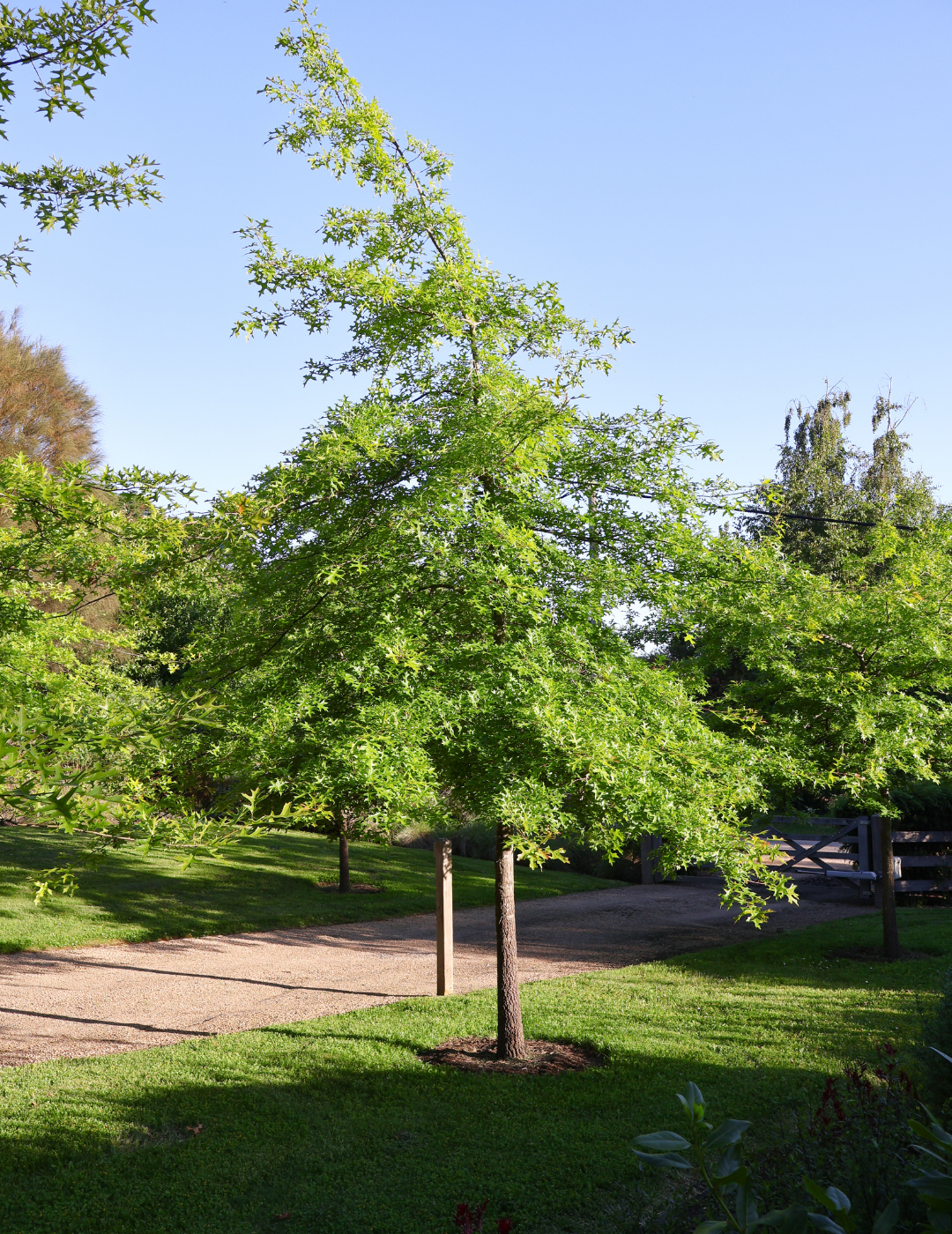
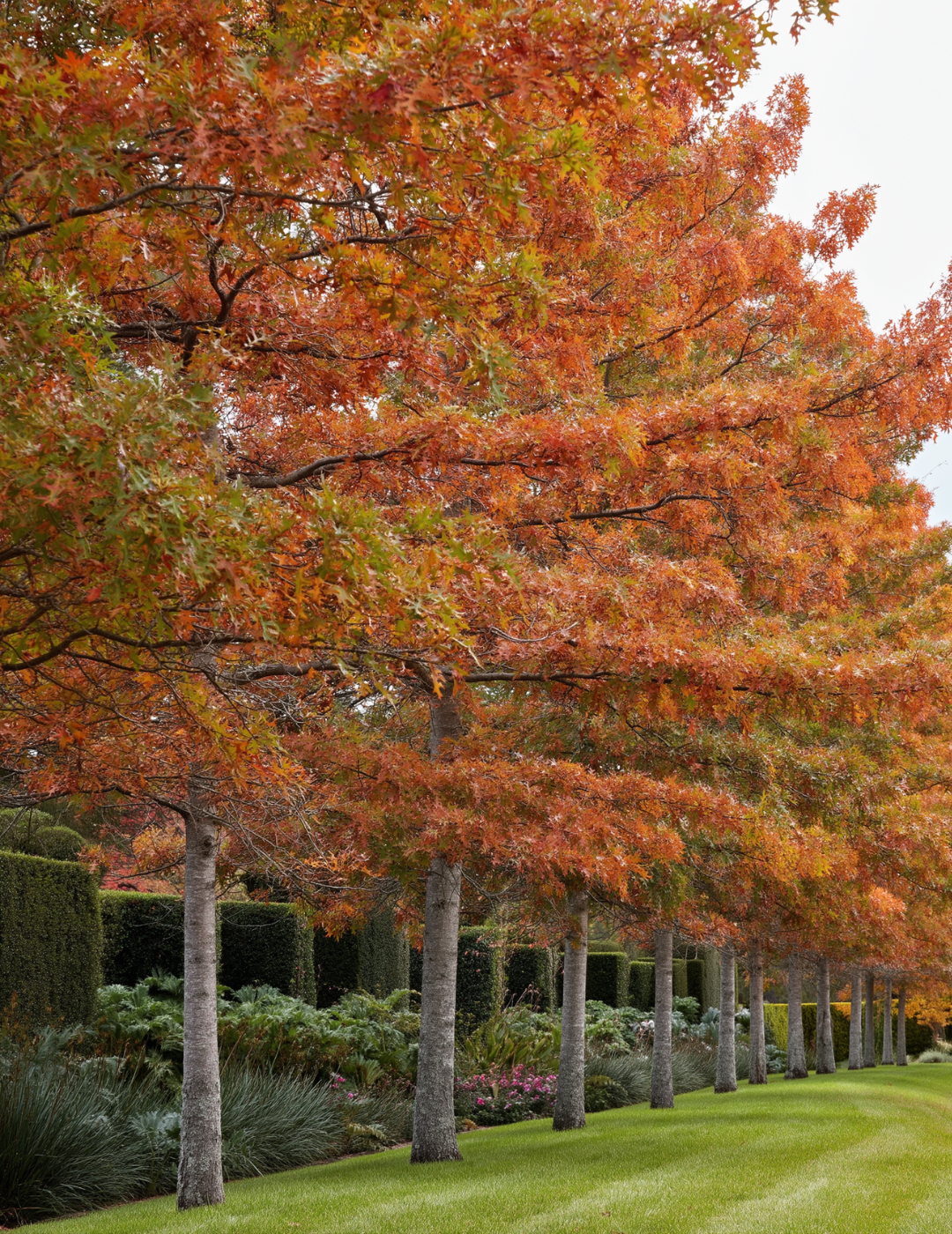
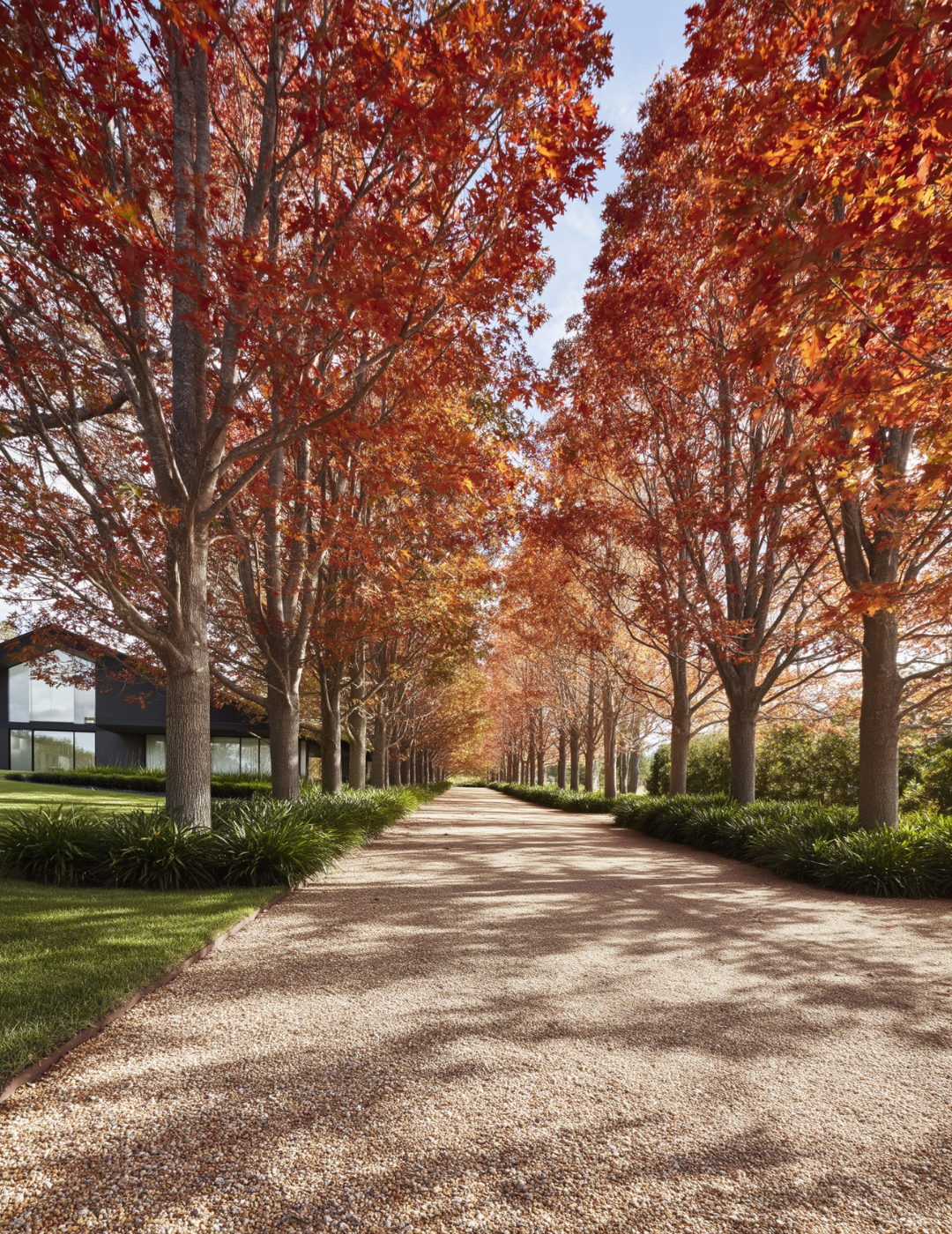
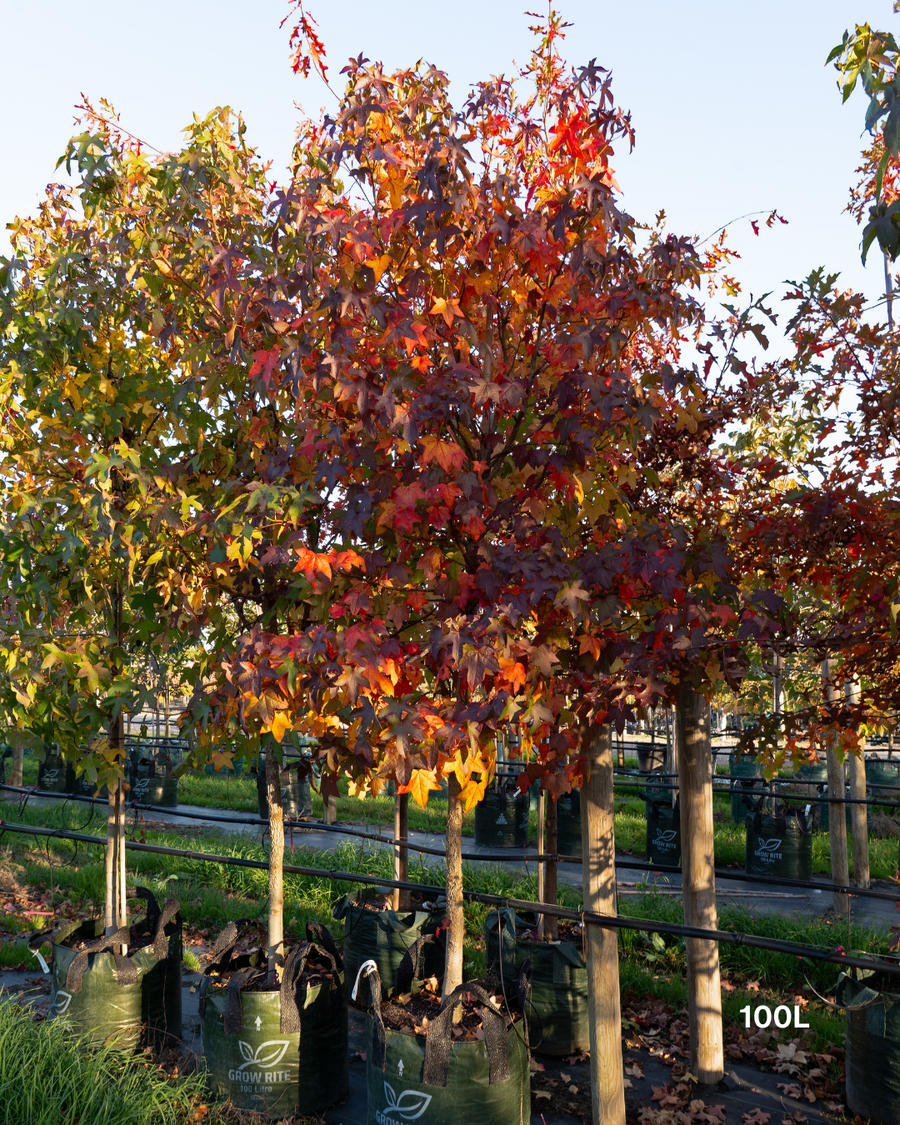
Quercus palustris (Pin Oak) looks excellent as a striking, pyramidal feature tree that adds strong architectural form and vibrant seasonal colour to gardens and landscapes. Its deeply lobed, glossy green foliage turns brilliant red and russet in autumn, creating eye-catching contrast and dynamic visual interest.
Growing to 9–15 metres in height and width, Pin Oak is well-suited for avenue planting, parklands, and large residential gardens where shade and structure are key. Its dense canopy with a dominant central leader and spreading lower branches offers excellent shelter and shade.
Pin Oak performs reliably in urban settings, tolerating pollution, compacted soils, and a wide range of soil types, including clay and acidic soils. It requires minimal maintenance, with occasional pruning to maintain shape and deep watering during dry periods.
This tree looks excellent when paired with underplantings of shade-tolerant perennials or spring bulbs, which can enhance its seasonal appeal. It is an outstanding choice for functional and ornamental use, including erosion control and damp-site revegetation, providing lasting beauty and resilience in varied landscape applications.
Key Information to Know
Evergreen / Deciduous
Quercus palustris - Pin Oak is an Deciduous (Defoliates throughout colder months) Tree
Mature Height & Width
Mature Height: 15m - 25m Approximately
Mature Width: 9 – 15 m
Quercus palustris - Pin Oak is expected to grow Approx. 60 – 90 cm/year (Fast)a.
Frost Tolerance
Is Quercus palustris - Pin Oak frost tolerant?
Quercus palustris - Pin Oak is Frost Hardy – Survives heavy and frequent frost without damage.
Flowering Information
Quercus palustris produces small, inconspicuous catkins in spring, followed by characteristic acorns later in the year. While the flowers are not ornamental, the Pin Oak is celebrated for its deeply lobed foliage and vibrant autumn colours, typically in shades of red, bronze and russet.
Native Information
Is Quercus palustris - Pin Oak an Australian Native? No
Quercus palustris - Pin Oak is Native to Eastern and central United States, where it grows naturally in moist lowlands, floodplains, and along streams.
Wildlife Value
Its dense, pyramidal canopy provides excellent shelter and nesting habitat for small birds, while its foliage supports a broad range of beneficial insects that underpin local food webs. The acorns that follow in autumn also offer a valuable seasonal food source for wildlife, making the Pin Oak a strong biodiversity-enhancing species.
Sunlight Information
Quercus palustris - Pin Oak will thrive best in:
Preffered Soil
Quercus palustris performs best in well-drained loam soils with an acidic pH. It will also tolerate sandy loam if enriched with organic matter to improve moisture retention. Avoid alkaline soils, compacted ground or waterlogged conditions unless significantly improved, as these can cause leaf chlorosis and restrict growth. Keep the soil evenly moist during establishment, then gradually reduce watering as the tree matures.
Botanical Information
Common Name: Pin Oak
Genus: Quercus
Botanical Species: palustris
Family: Fagaceae
Botanical Name: Quercus palustris
Landscape Uses
Landscape Uses
Quercus palustris - Pin Oak works in an:
Planting, Spacing & Care
-
-
-
-
Quercus palustris - Pin Oak is expected to grow Approx. 60 – 90 cm/year (Fast)a.
Root Ball Dimensions (Width × Depth) For Planting
Use this as a reference when digging your planting hole. We recommend digging at least 10% wider than the dimensions below to encourage strong root development.
- 30cm Pot: 33cm (W) × 30cm (D)
- 40cm/45L Pot: 44cm (W) × 41.5cm (D)
- 50cm Pot / 70L Pot: 55cm (W) × 41.8cm (D)
- 100L Bag: 50.6cm (W) × 52.8cm (D)
- 150L Bag: 66cm (W) × 55cm (D)
- 200L Bag: 71.5cm (W) × 60.5cm (D)
- 300L Bag: 88cm (W) × 63.8cm (D)
- 400L Bag: 99cm (W) × 66cm (D)
- 500L Bag: 122cm (W) × 66cm (D)
- 750L Bag: 134cm (W) × 69cm (D)
- 1000L Bag: 146.3cm (W) × 71.5cm (D)
- 2000L Bag: 176cm (W) × 82.5cm (D)
Ideal Conditions
Ideal Conditions
Thrives in
Frost Tolerance
Frost Hardy – Survives heavy and frequent frost without damage.
Drought Tolerance
As a young tree it requires regular deep watering during establishment. Once established, Pin Oak develops moderate drought tolerance and performs reliably through warm, dry periods when grown in well-drained, acidic soil. Occasional supplementary watering during extended heat helps maintain canopy density and strong seasonal colour.
Flowering Information
Does Quercus palustris - Pin Oak flower?
Flowering Period:
Flower Type:
Flower Colour:
Yellow
Quercus palustris produces small, inconspicuous catkins in spring, followed by characteristic acorns later in the year. While the flowers are not ornamental, the Pin Oak is celebrated for its deeply lobed foliage and vibrant autumn colours, typically in shades of red, bronze and russet.
Frequently Asked Questions
We have been featured in